ALBERTINA MODERN in Vienna invites you into the fascinating world of comics, cartoons and fine art. Renowned artist Brian Donnelly, aka KAWS, is juxtaposed with a selection of contemporary artists who have made their mark in the world of pop culture and crafted names for themselves through individual interpretations of comic and graphic art in the exhibition, KAWS. Art & Comix, on view through 27 September 2026.
Comics are a visual narrative tool that conveys emotions, challenges expectations and opens a dialogue understood across cultures in an accessible way. Each artist translates their ideas into different stylistic variations, featuring influential icons such as Öyvind Fahlström, Keith Haring, Roy Lichtenstein and many more. KAWS acts as the central figure placed in dialogue with other modern and contemporary artists to examine how the comic aesthetic interacts with everyday life and the emotions it elicits in viewers. The universal understanding of comics is evolving and finding space in different contexts to address modern sensibilities.
One can easily recognise a KAWS piece: there is no denying the mark he has made on pop culture, working with artists such as Kanye West and Pharrell Williams, multiple brands including Dior, Nike, BAPE and even collaborating with Reese’s. His work relies on shared visual memory and repetition, and his creations exist outside a narrative, allowing viewers to grapple with themes of identity, loss and familiarity. While working at Jumbo Pictures, he was introduced to celluloid painting used by animators. He applied this technique to street advertisements, altering their appearance. At a time when street art was increasingly becoming a subculture itself, KAWS utilised these unauthorised public interventions to launch his career on bus stops and photo booths with his signature crossed-out eyes.
Partnering with Bounty Hunter, a Japanese streetwear label, KAWS debuted his first vinyl sculptures in 1999 with immediate success, especially in Japan. Wanting the public to be free to observe his work without feeling excluded by the art community, he started by showing his work on the streets and has gone full circle by installing his sculptures in public spaces, on water and even floating in the air so they are open to everyone. Keith Haring opened a Pop Shop in the 1980s, aiming to interact with art lovers in an accessible, inclusive way. His store was the birthplace of KAWS’ love for comic commerce in ways that allowed all consumers to interact with their favourite characters and have them exist within their lives, whether through a T-shirt, posters or toys. The public was able to engage with art.
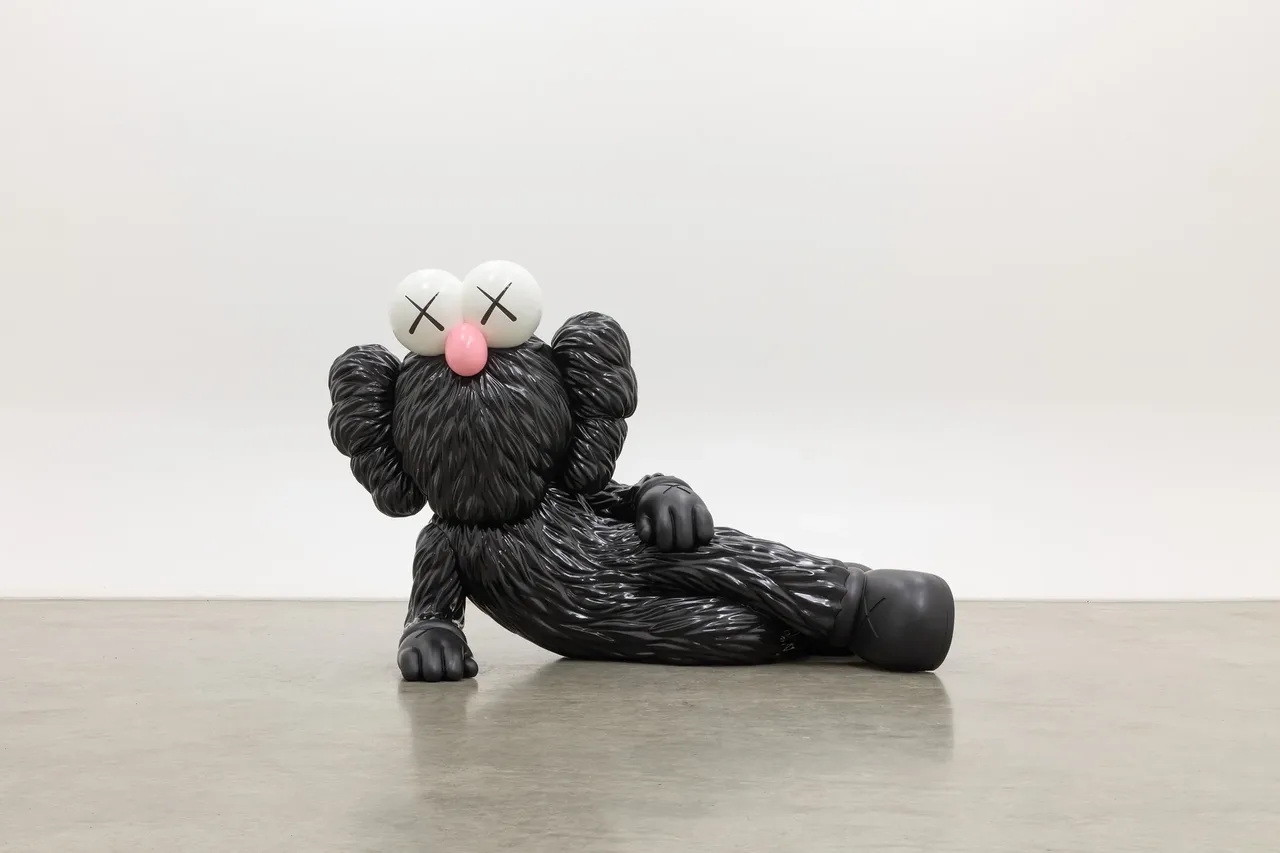
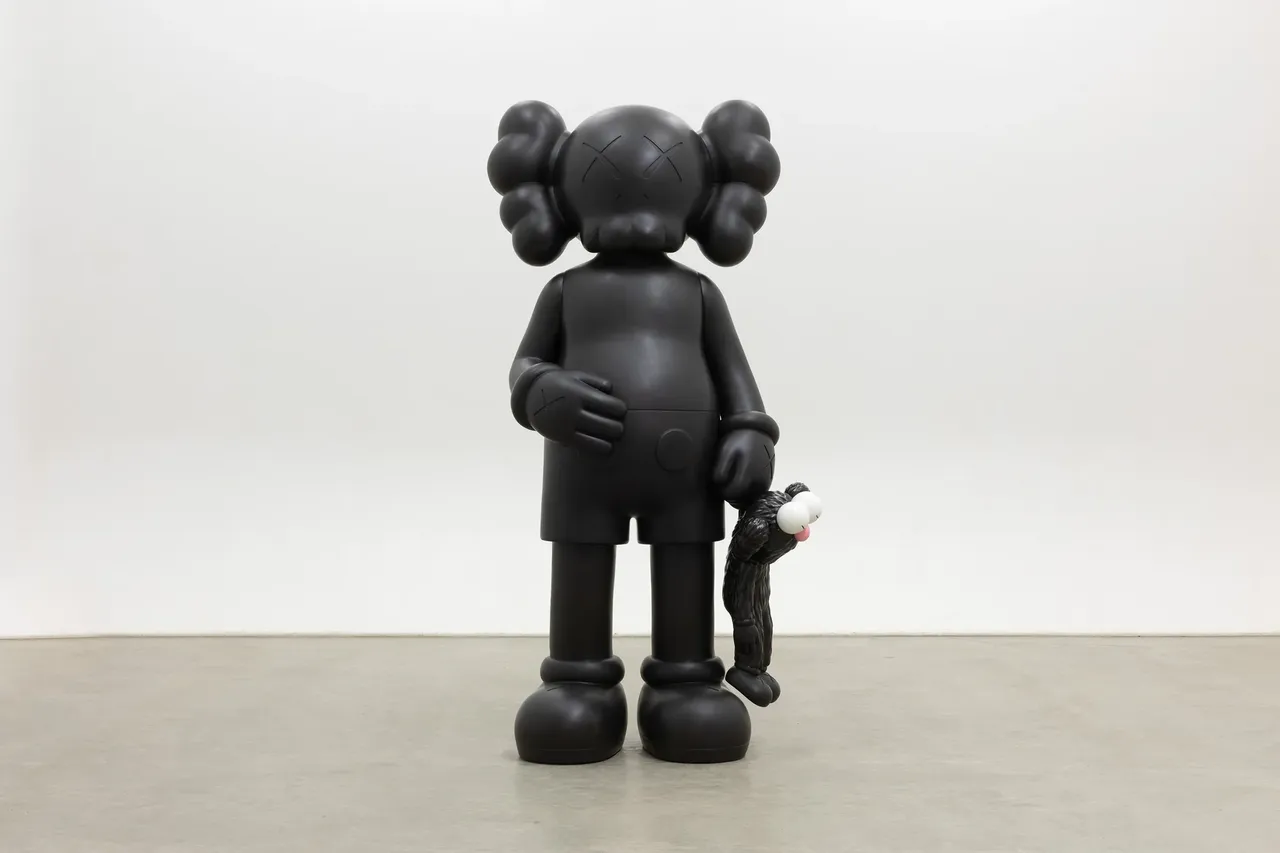
His signature style has been reimagined through his various characters. Time Off is his BFF figure, posing with one hand propped up while lying down, drawing from the visual of Venus in a similar pose and showing how art is ever evolving and reinterpreted through differing creative perspectives. Mickey Mouse inspires the Companion figure, featuring white gloves and chunky shoes. Monster cereals feature the characters Count Chocula, Franken Berry, Boo Berry and Frute Brute on the cover of the boxes. KAWS brought these figures to life in his Monsters collection. Many of his pieces have an X drawn on the eyes, and often on the hands and feet, as his signature and as an act of subversion. In animation, crossed-out eyes are used to show a character is hurt or dead; KAWS uses this motif to give his work a melancholic, vulnerable tone.
Well-known childhood characters such as Mickey Mouse, Donald Duck and the Pink Panther are reinterpreted in many artists’ work displayed at the exhibition. The interplay between personal memory and pop culture is twisted into new contexts. These characters move beyond childhood nostalgia and become a tool for translating emotions and narratives by drawing on familiarity. Joyce Pensato, for example, takes Mickey Mouse’s cheerful disposition and replaces it with a more sinister, disturbing appearance, altering the shared memory. Cartoon characters are exaggerated, draped and photographed in Eliza Douglas’ work as she questions the relationship between consumer culture, identity and the divide between low and high art. Blalla W. Hallmann’s blasphemous, provocative depictions of Disney figures within Christian stories such as the Nativity and the Crucifixion examine the adoration of icons, commenting on faith and power.
The exhibition KAWS. Art & Comix is on view until 27 September 2026 at ALBERTINA MODERN, Karlsplatz 5, Vienna.
KAWS. TIME OFF, 2021. Photo: Courtesy KAWS Studio
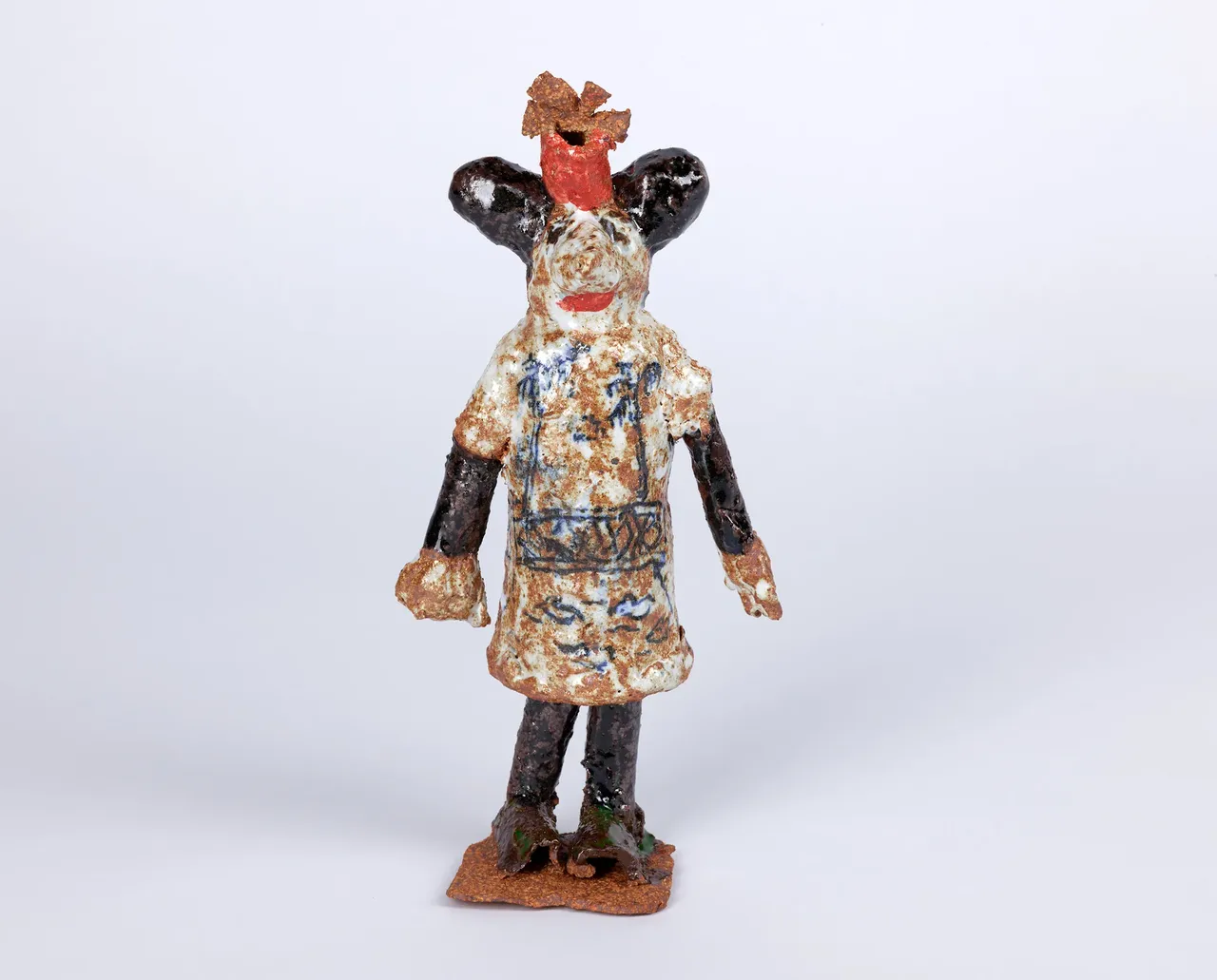
dalena Suarez Frimkess. Untitled, 2024. © Magdalena Suarez Frimkess, The ALBERTINA Museum, Vienna. Photo: The ALBERTINA Museum, Vienna
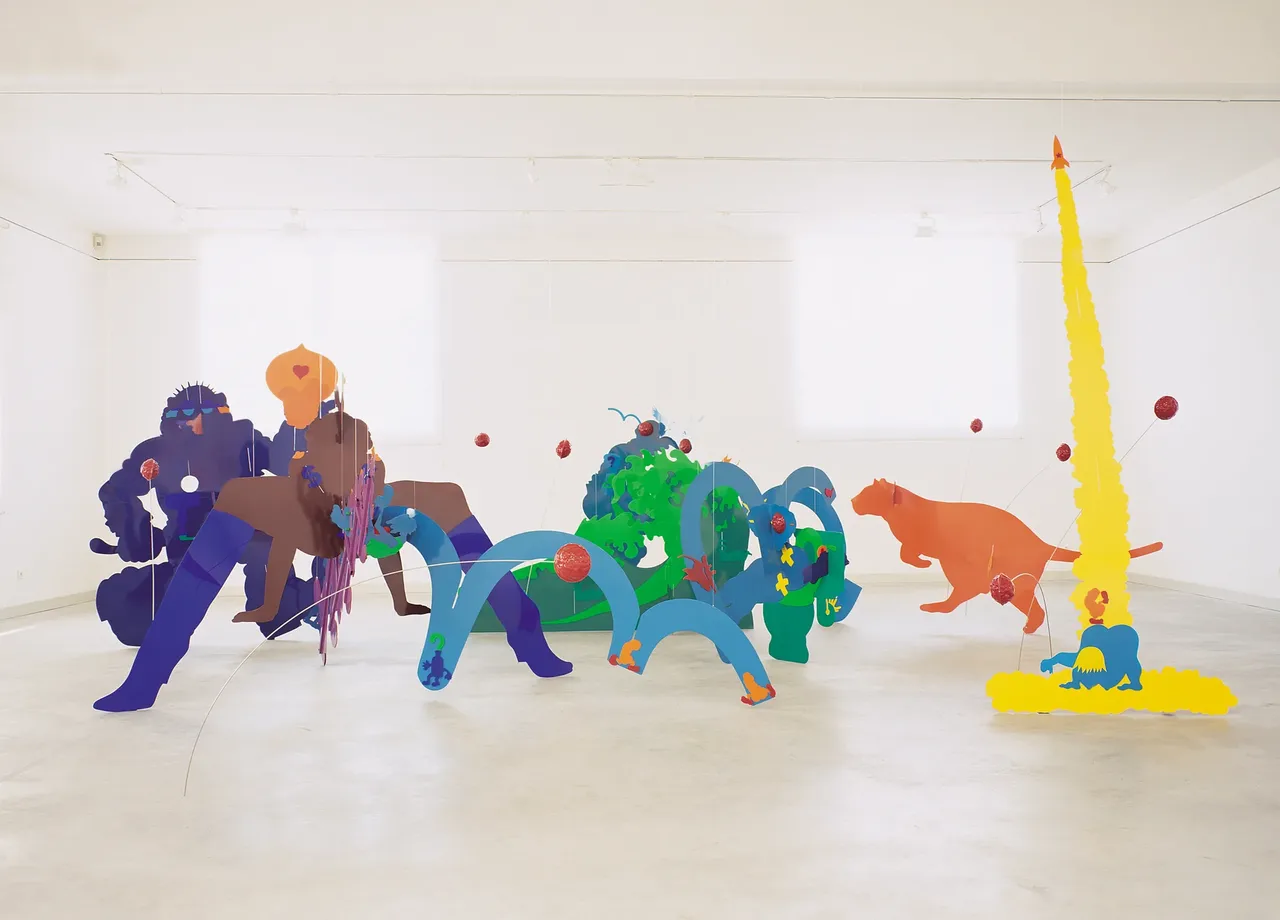
Öyvind Fahlström. Meatball Curtain (for R. Crumb), 1969. Courtesy Aurel Scheibler © Bildrecht, Vienna 2026. Photo: Rocco Ricci / Courtesy Aurel Scheibler, Berlin
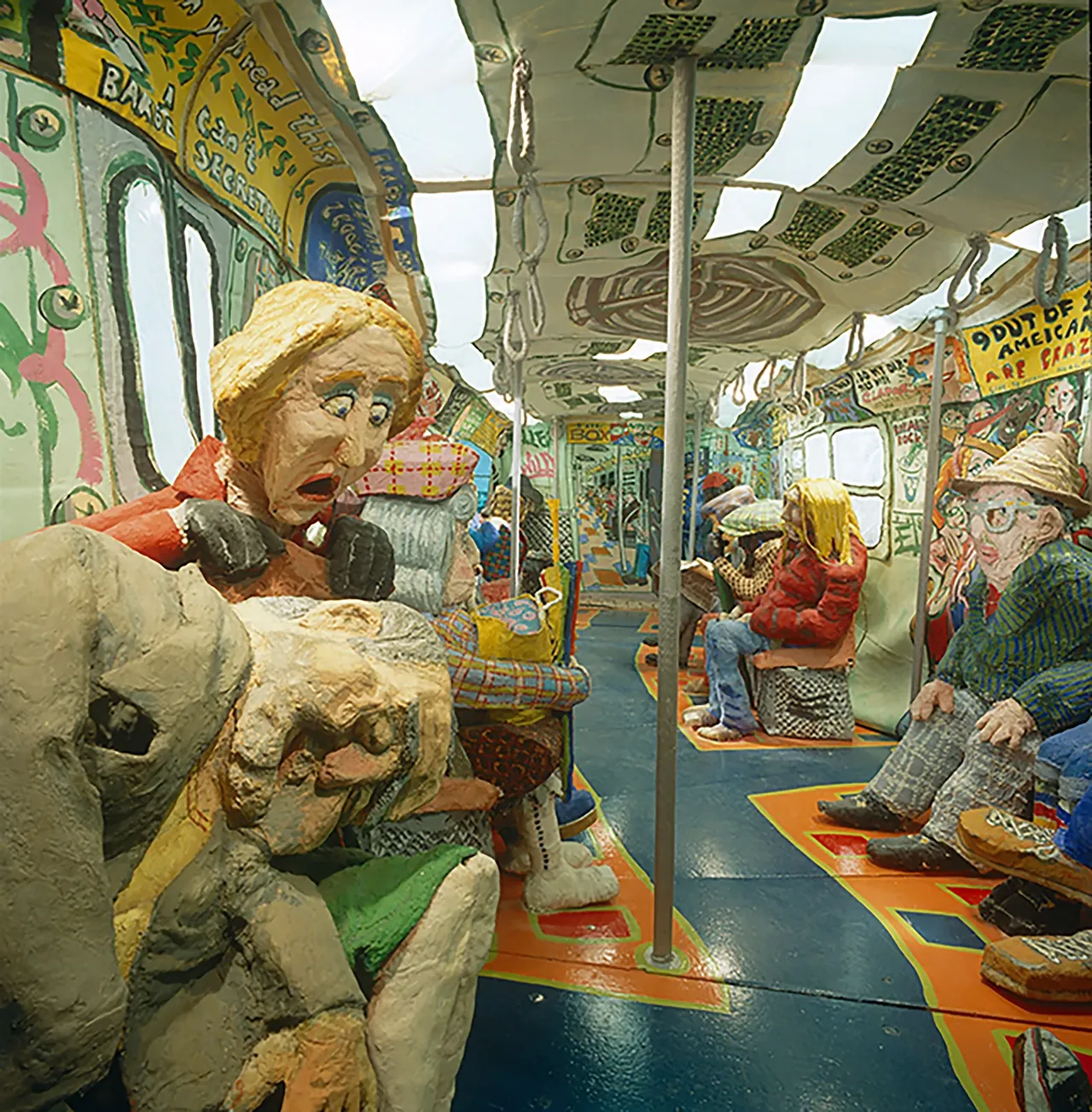
Red Grooms, Mimi Gross & The Ruckus Construction Company. Ruckus Manhattan: Subway, 1975/76. © Bildrecht, Vienna 2026. Photo: Lepkowski Studios, Berlin
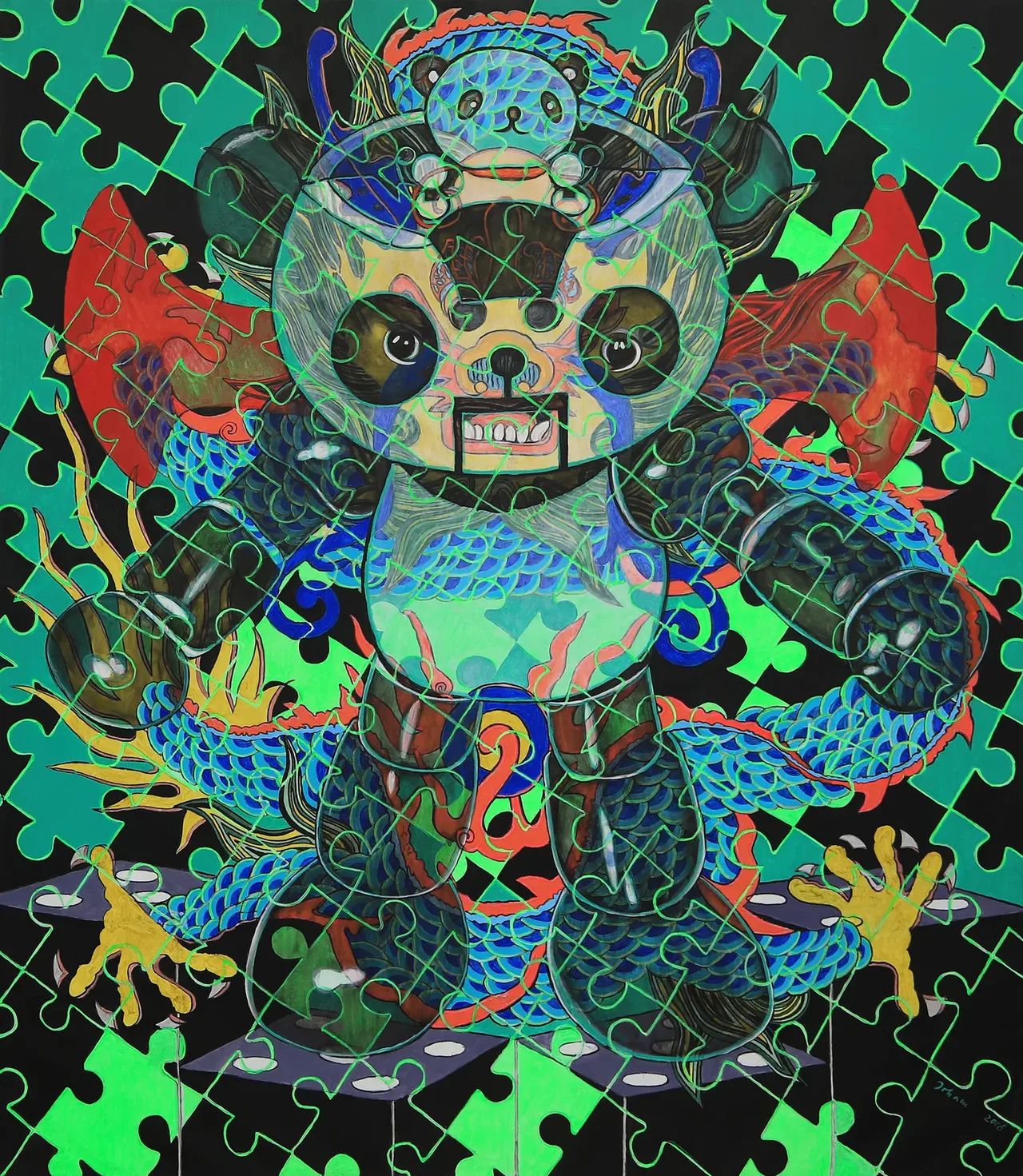
Isolde Maria Joham. Puzzle-Panda, 2008. © Isolde Maria Joham. Photo: Nicole Wiedenbeck
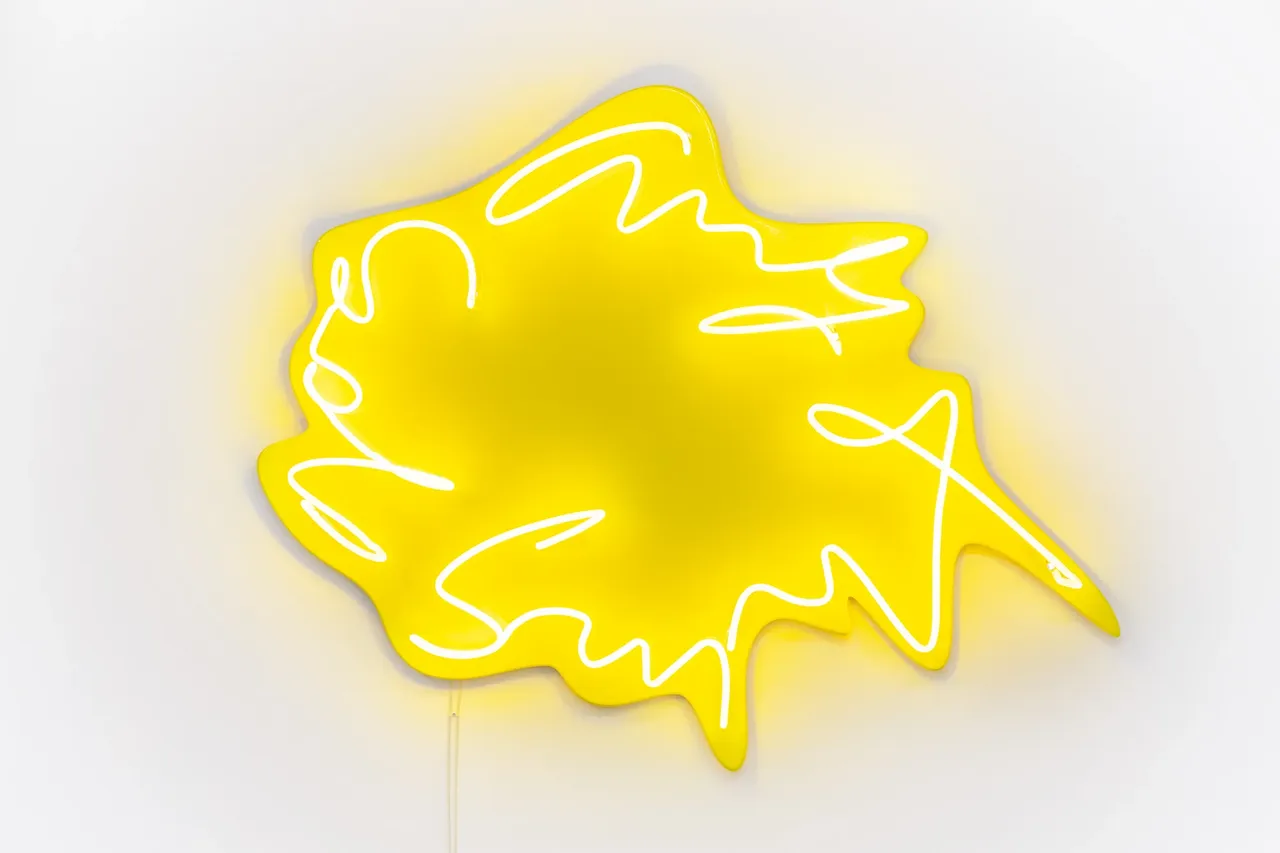
Brigitte Kowanz. Anything goes, 2014. Courtesy Galerie Krinzinger, Vienna © Estate Brigitte Kowanz/Bildrecht, Vienna 2026. Photo: Peter Hoiß
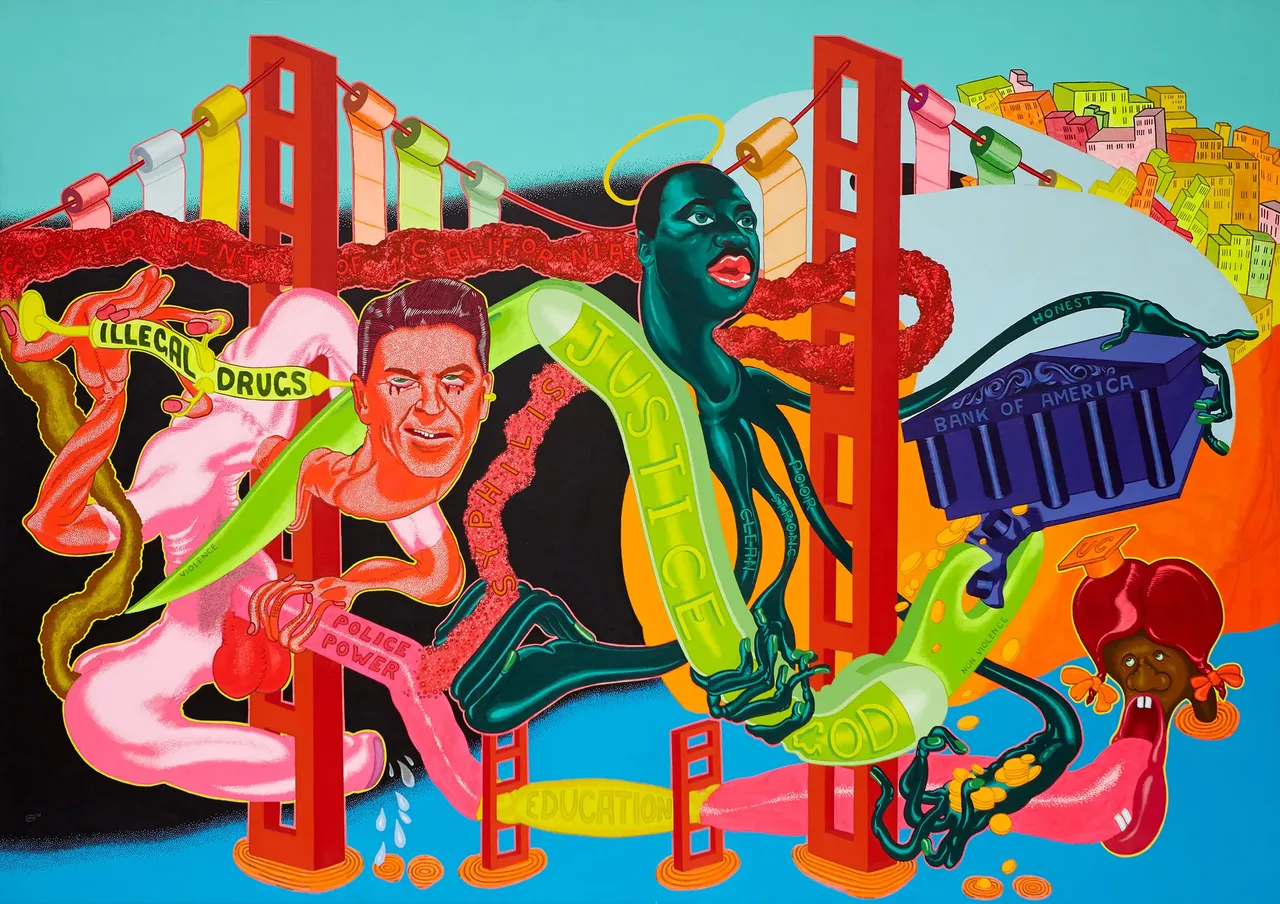
Peter Saul. The Government of California, 1969 © 2026 Peter Saul / Bildrecht, Vienna 2026. Photo: Courtesy KAWS Studio
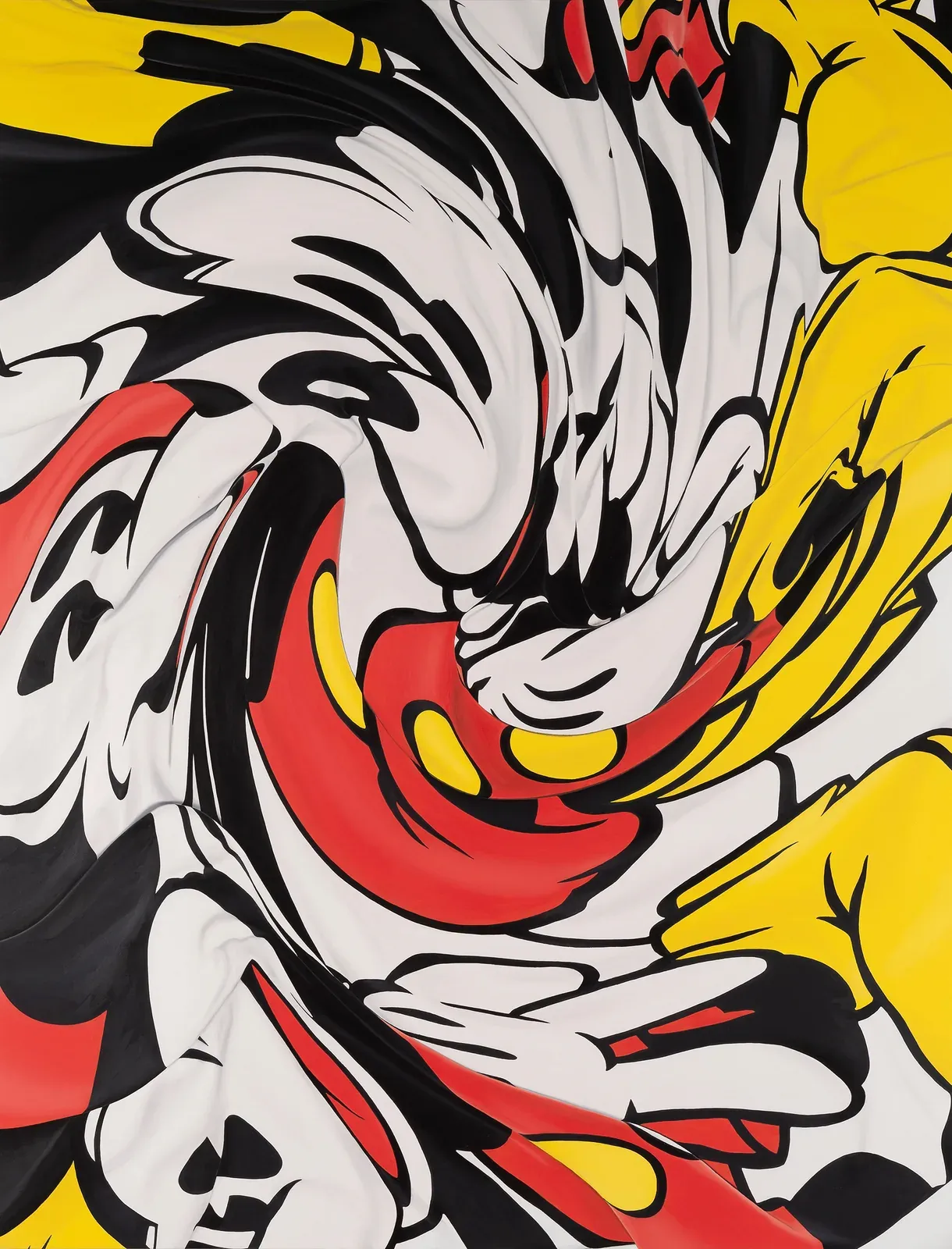
Eliza Douglas. Untitled, 2022. Museum Folkwang, Essen © Eliza Douglas, Courtesy Air de Paris, Romainville, Greater Paris. Photo: Marc Domage