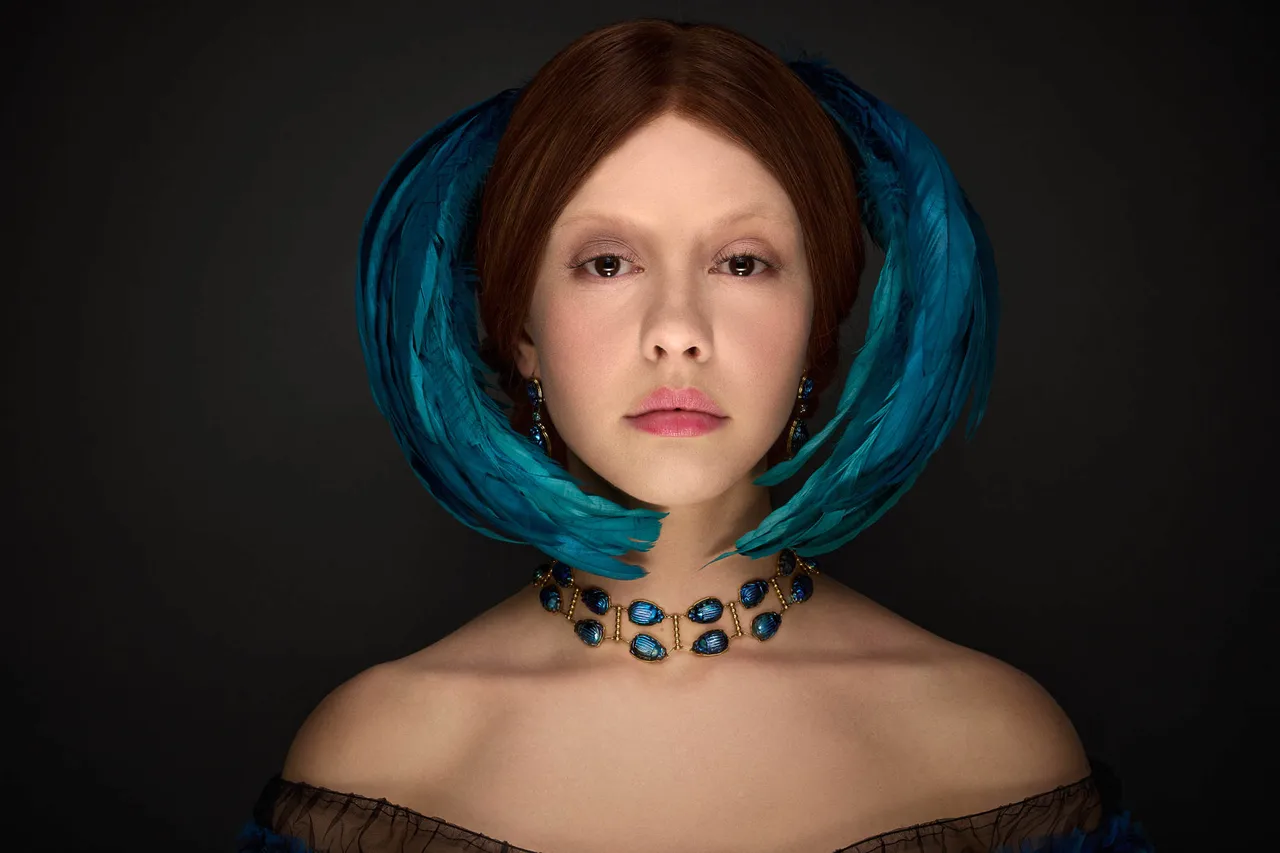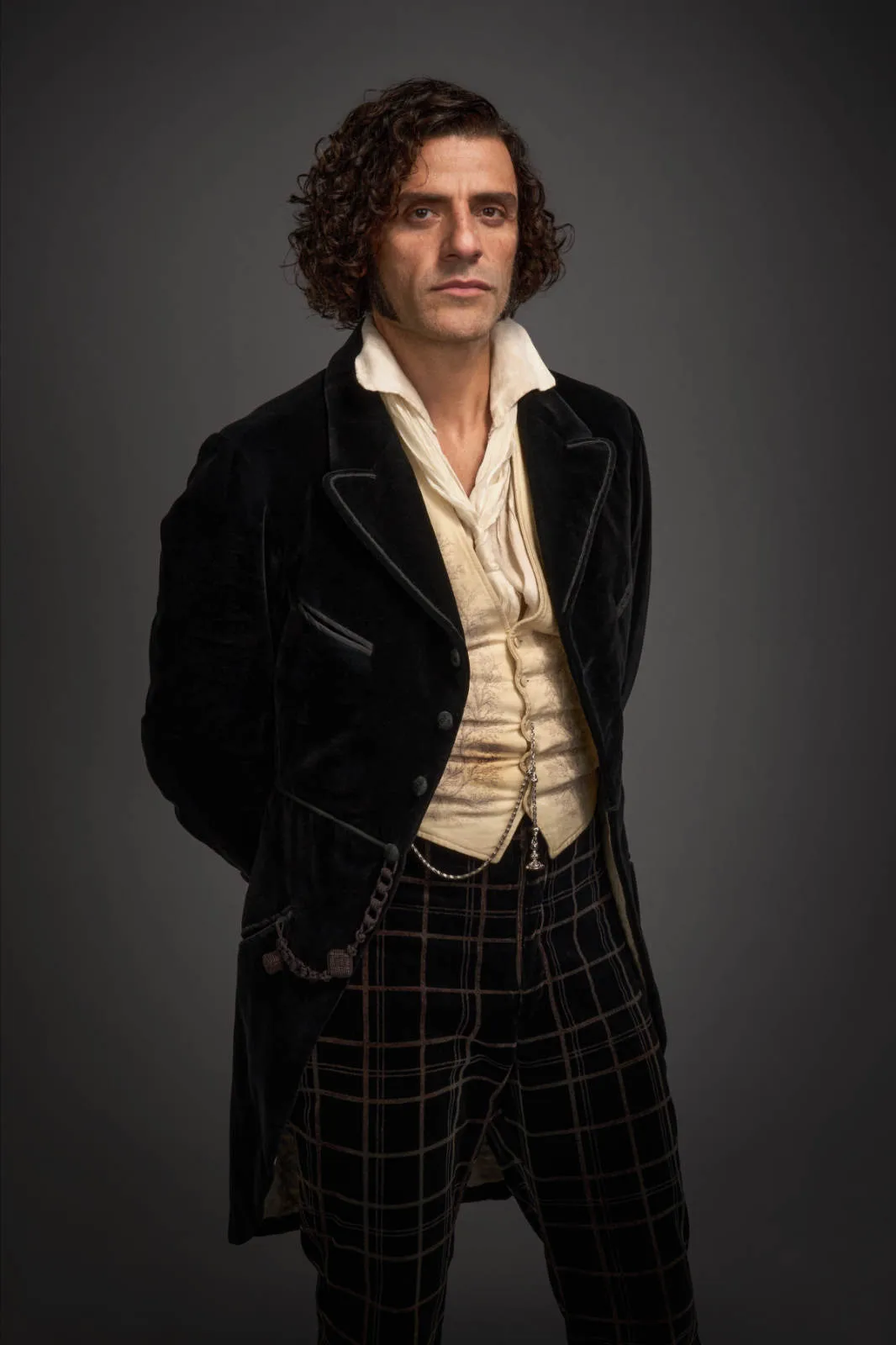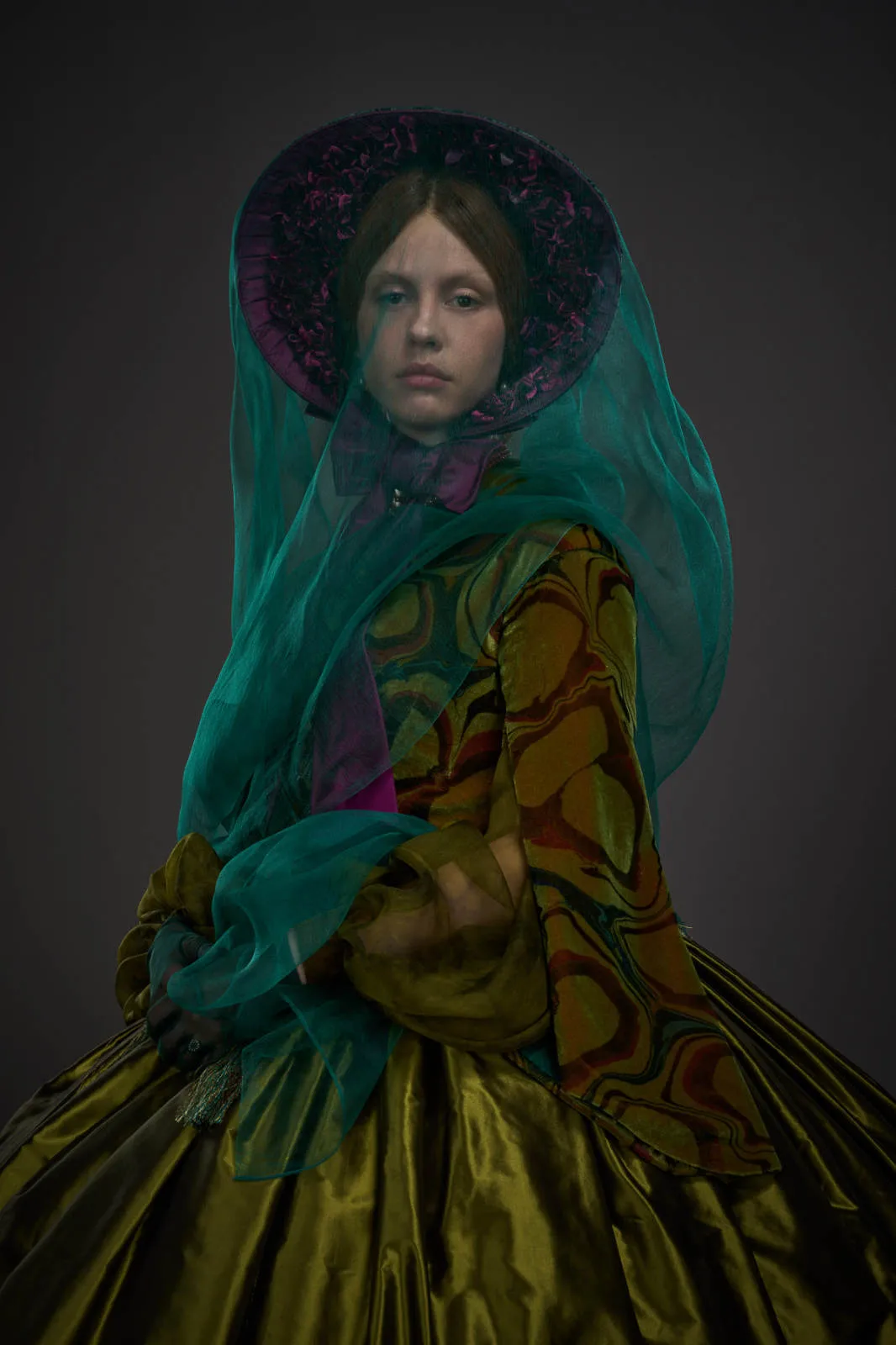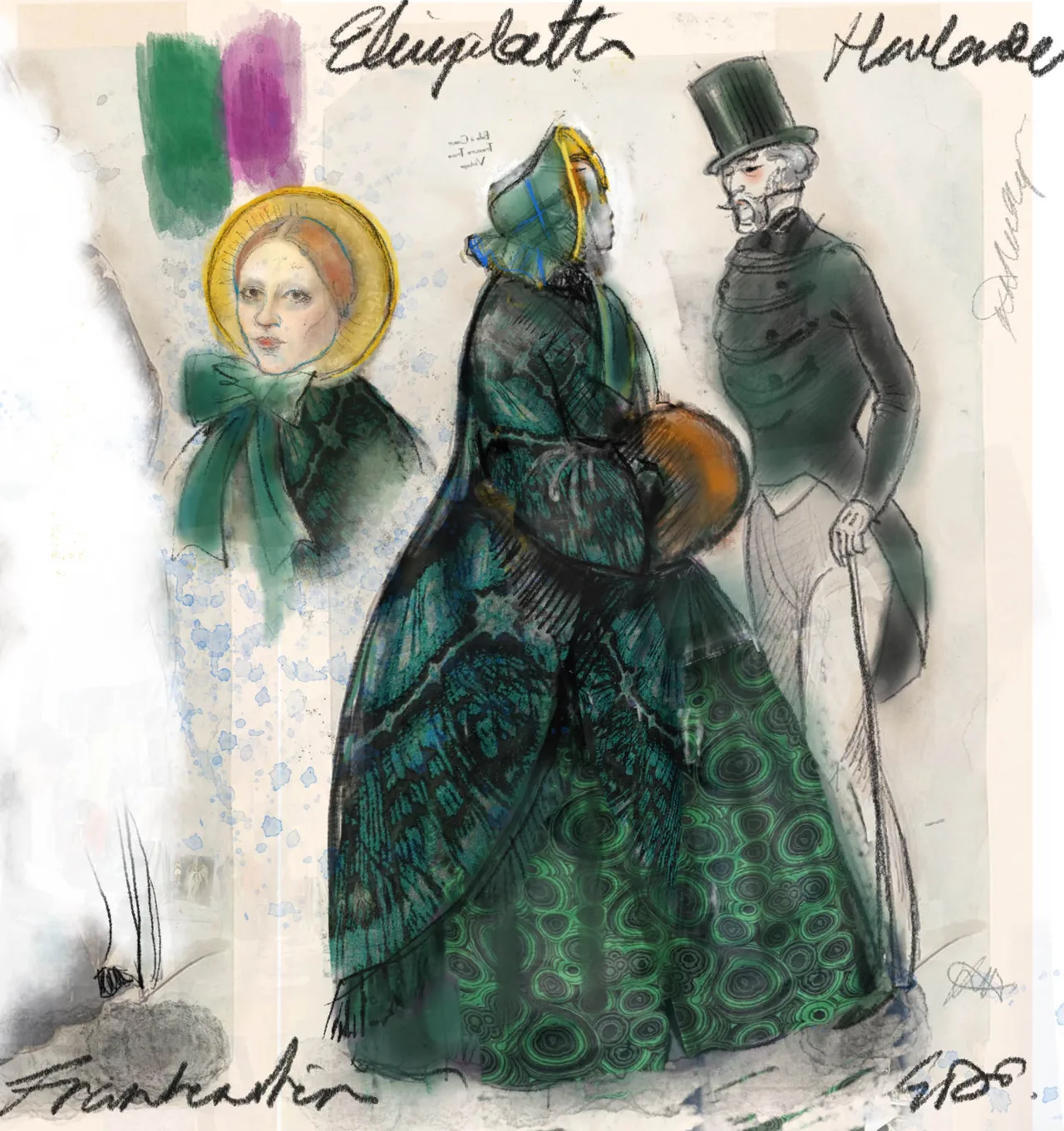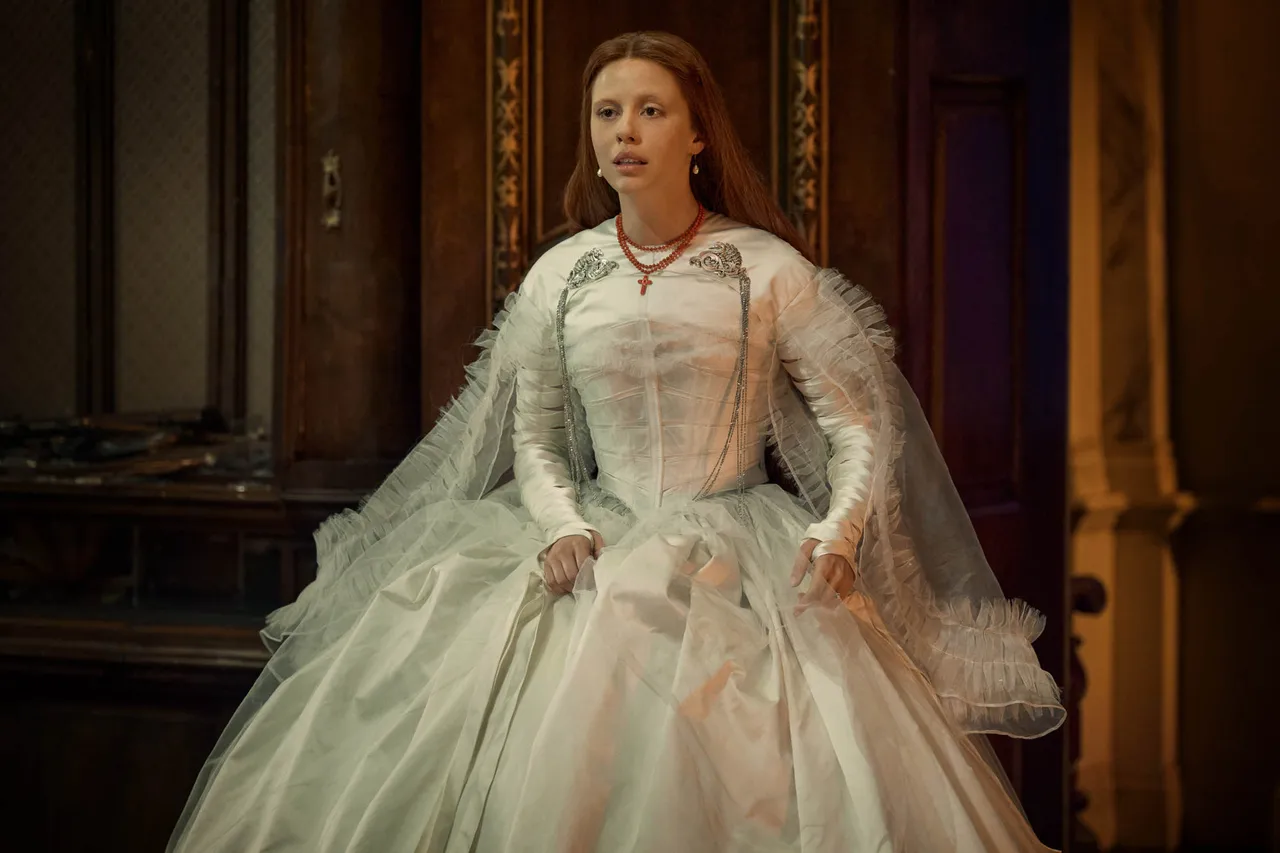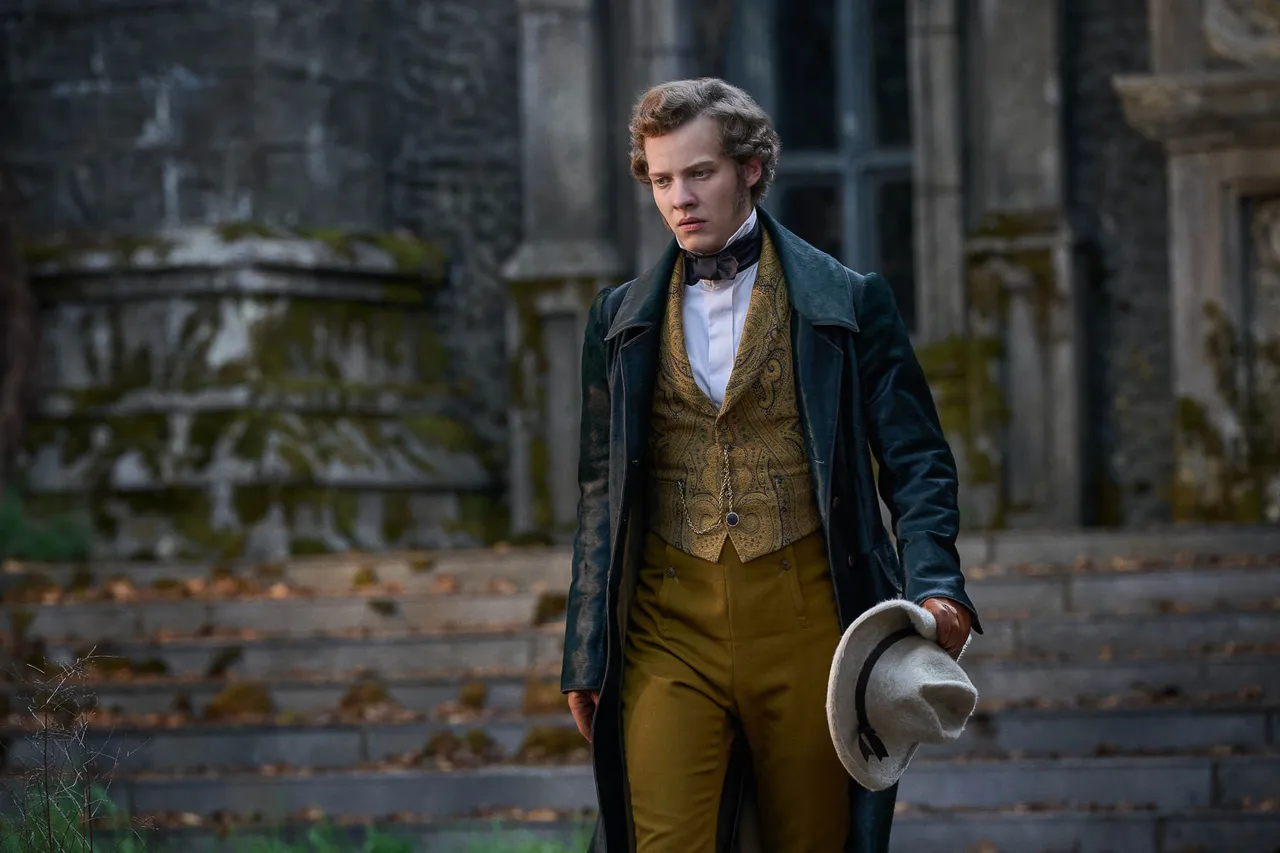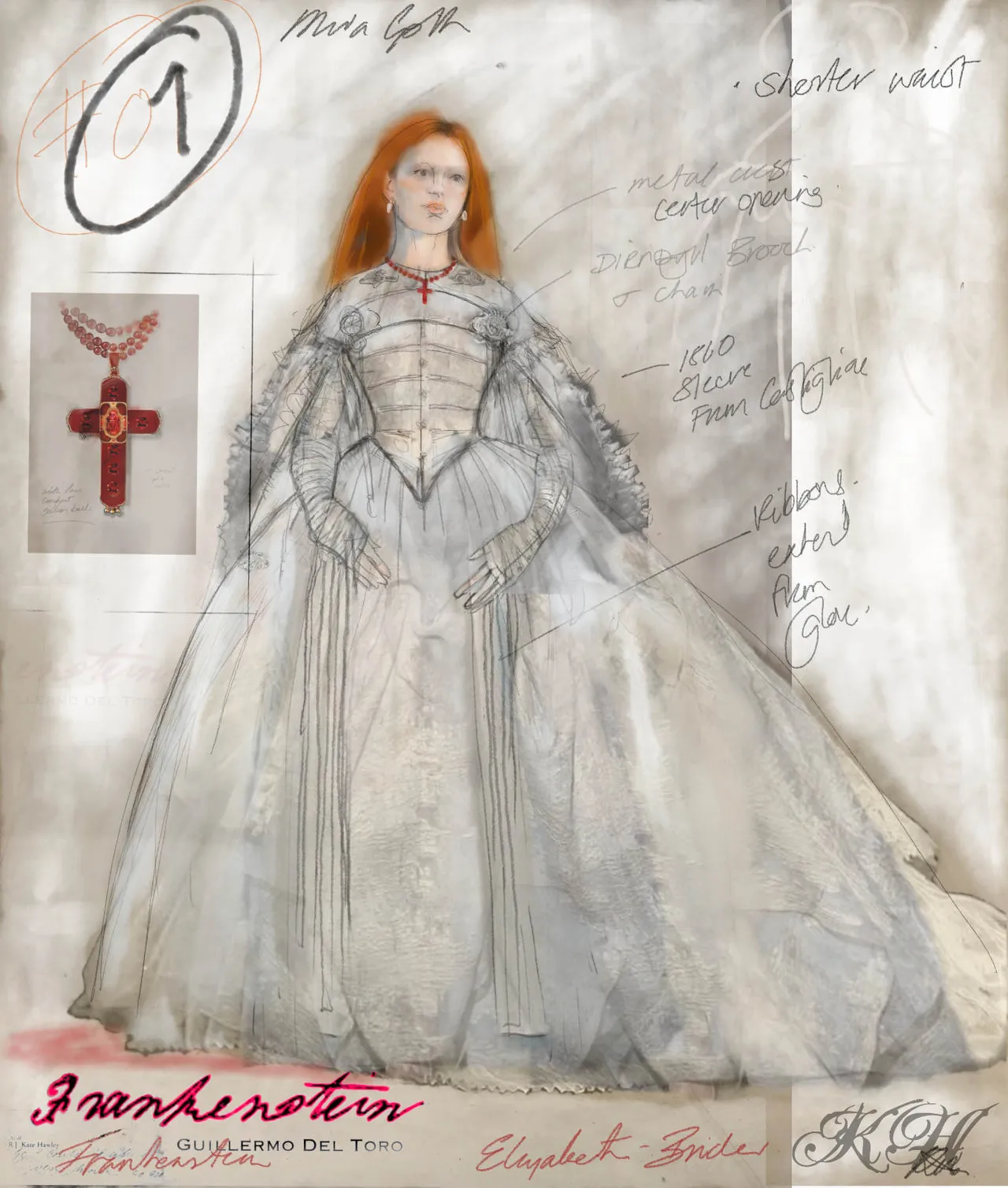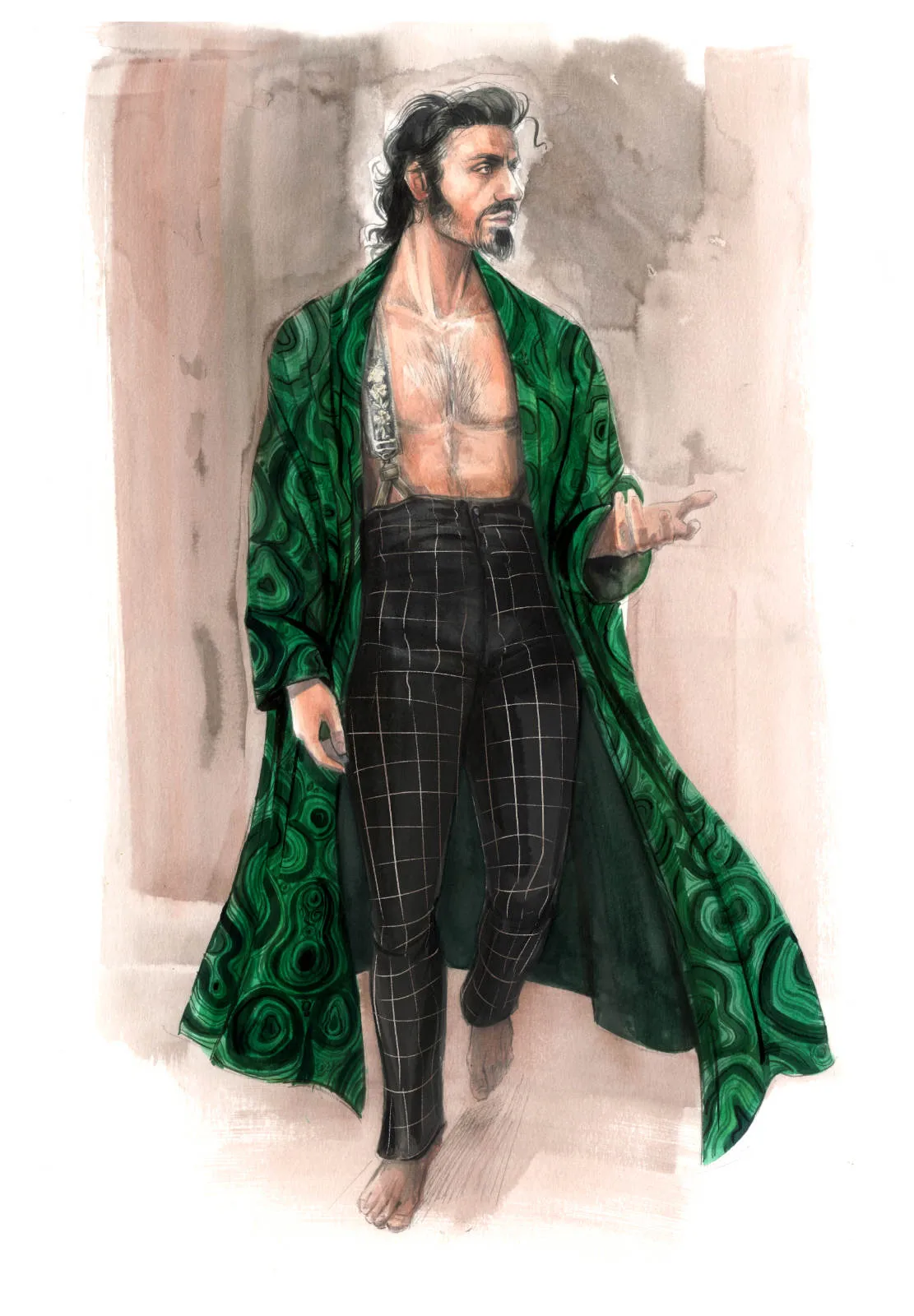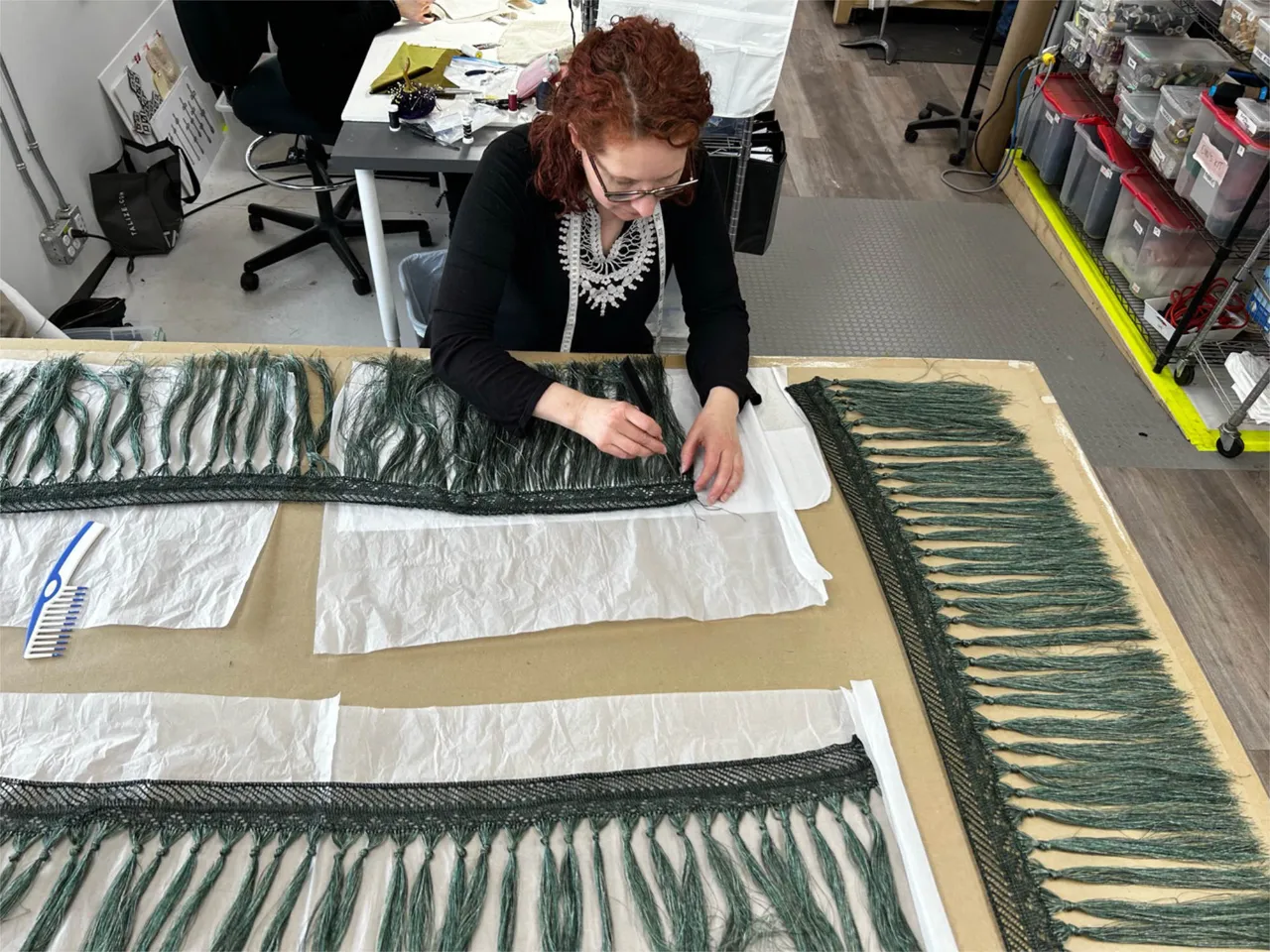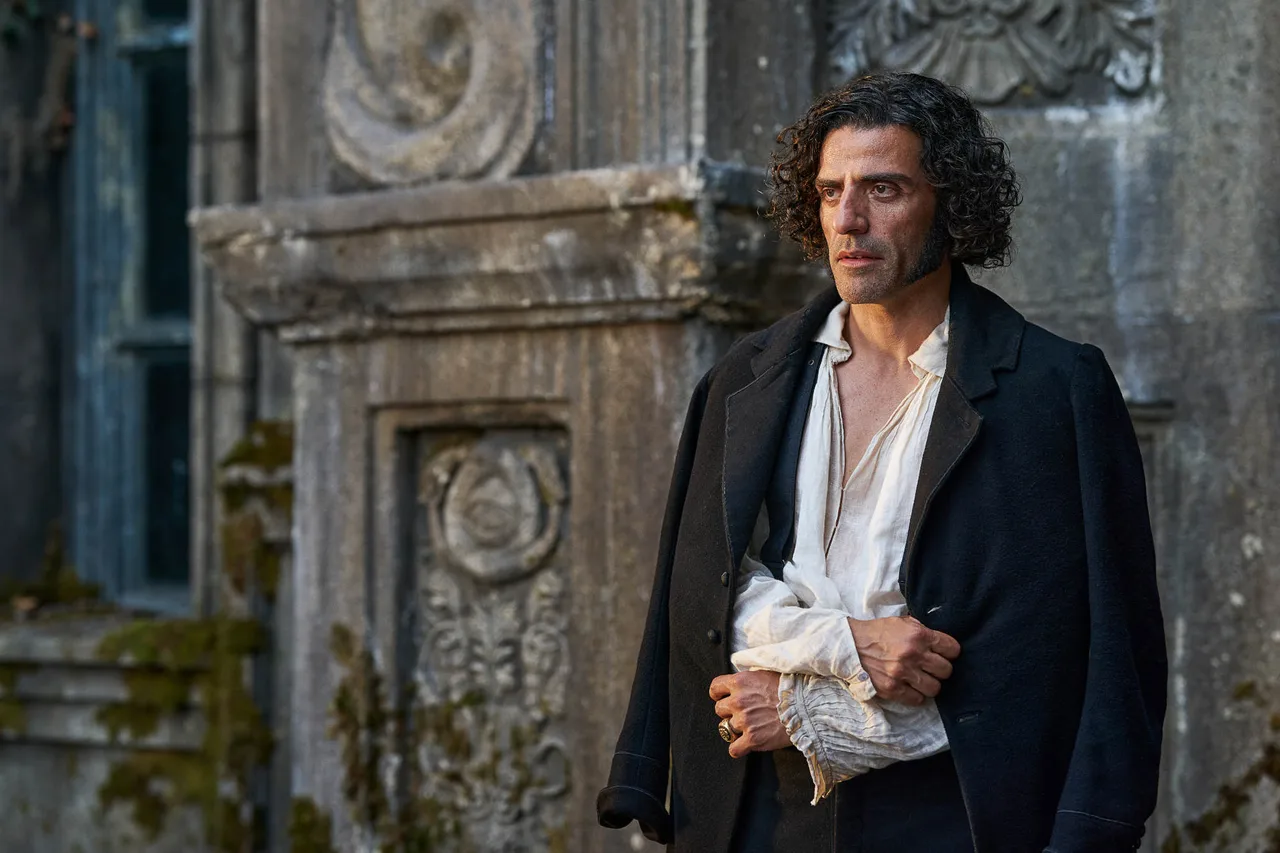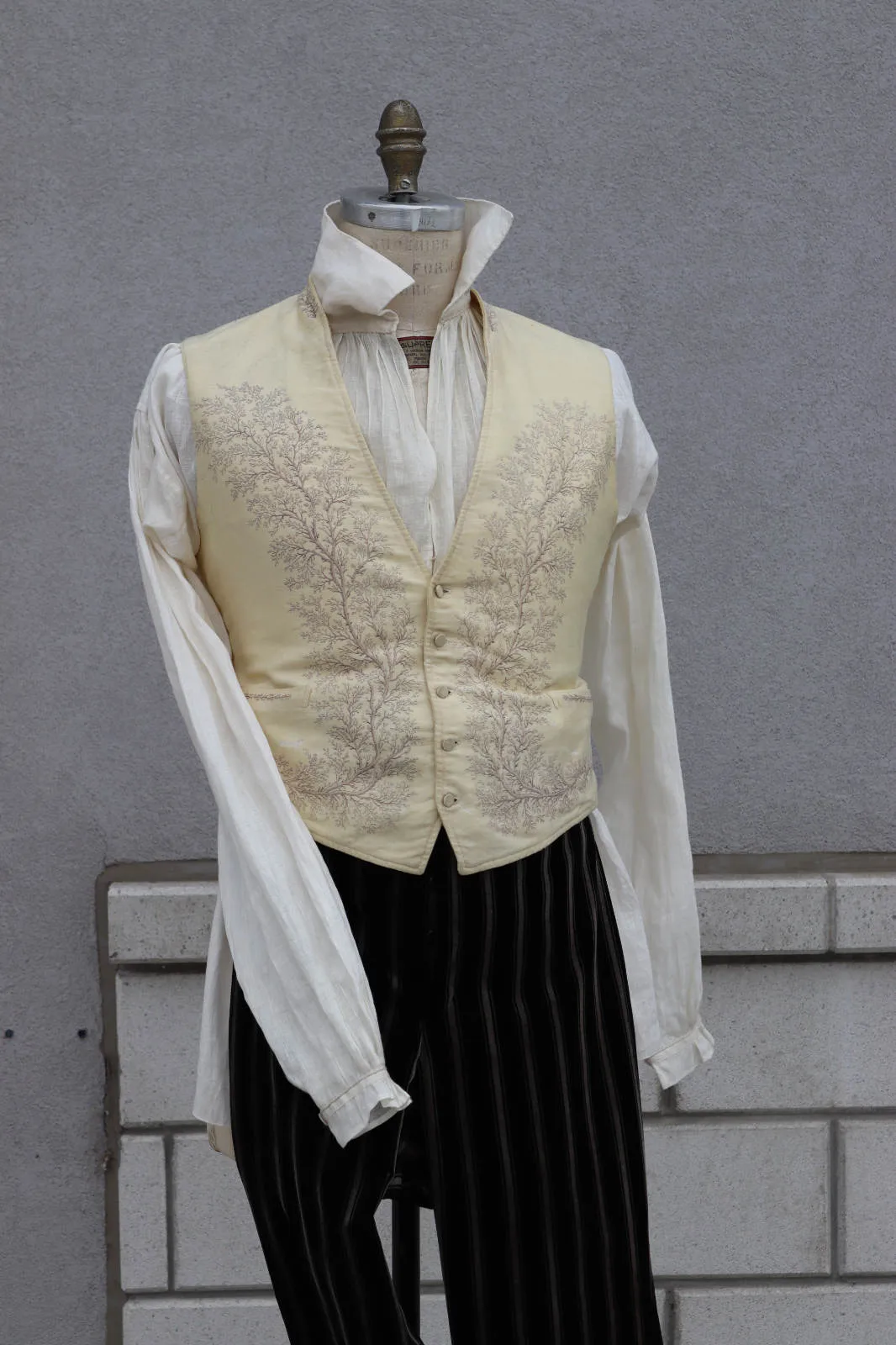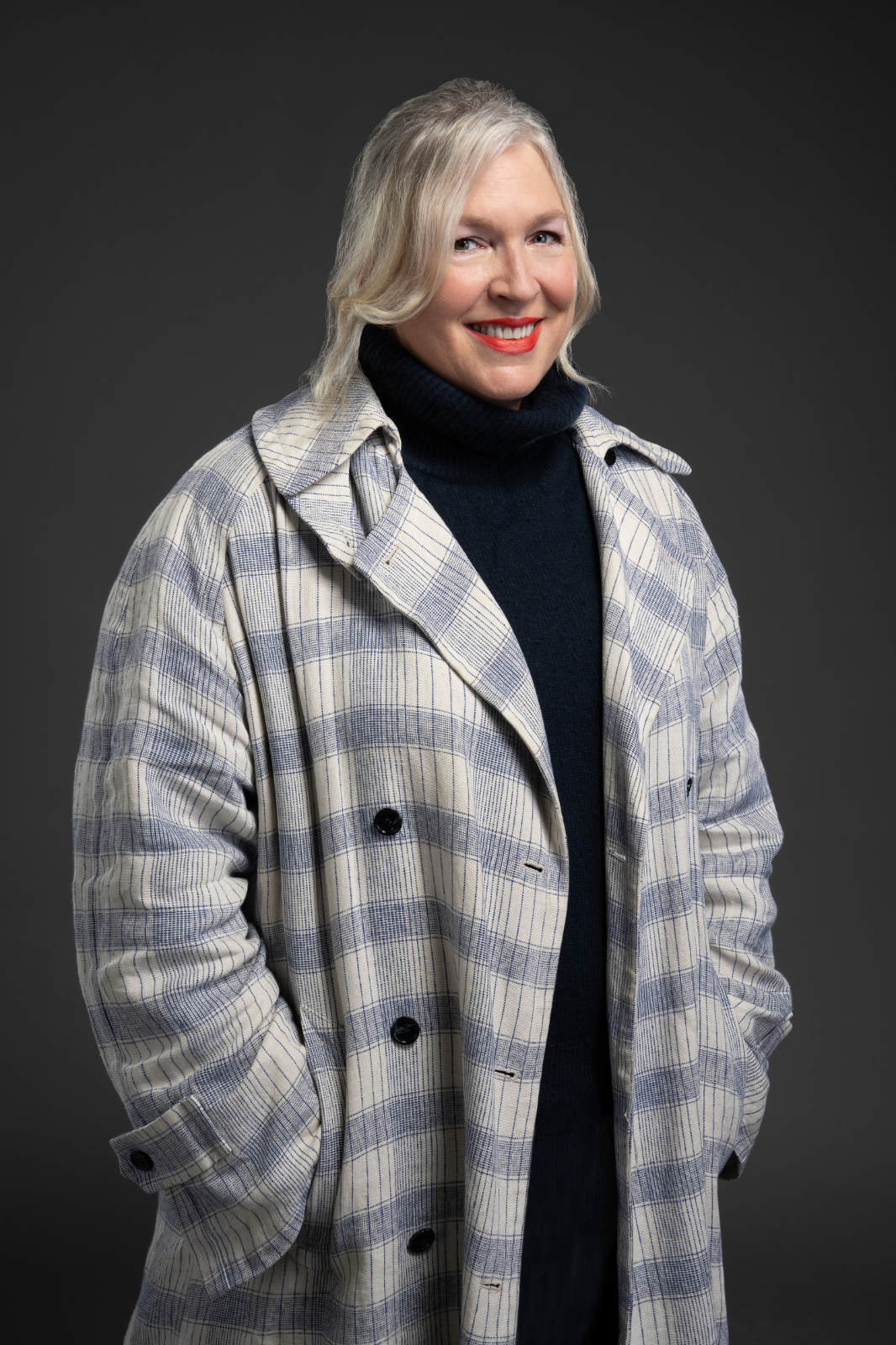
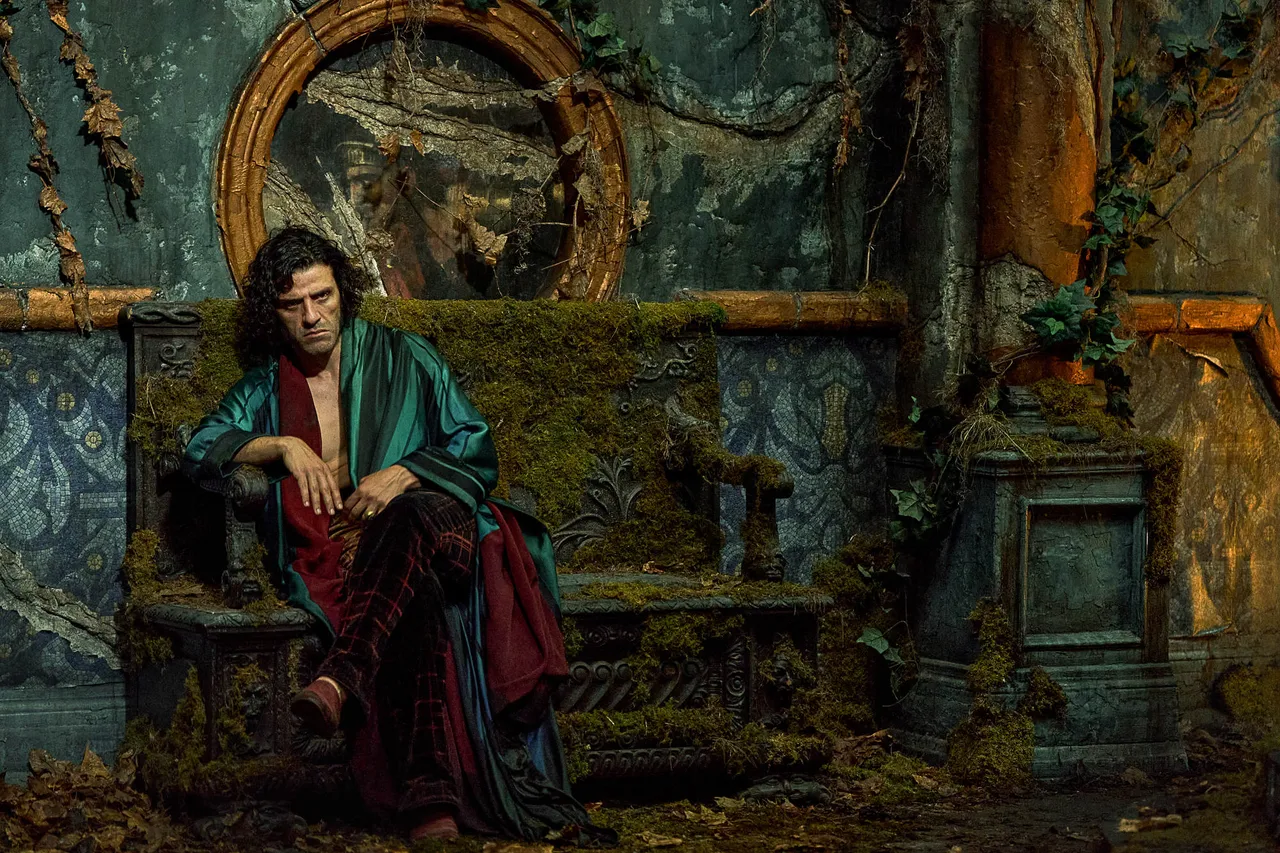
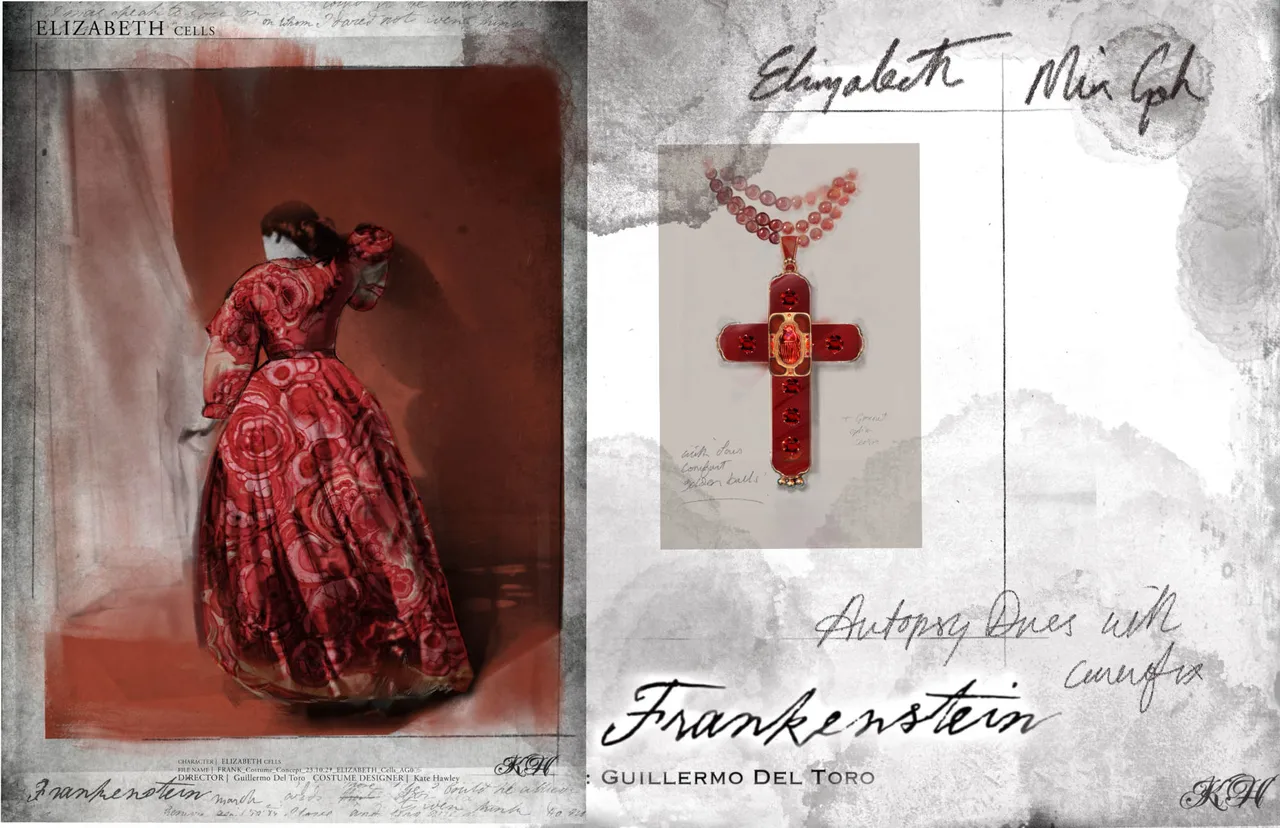
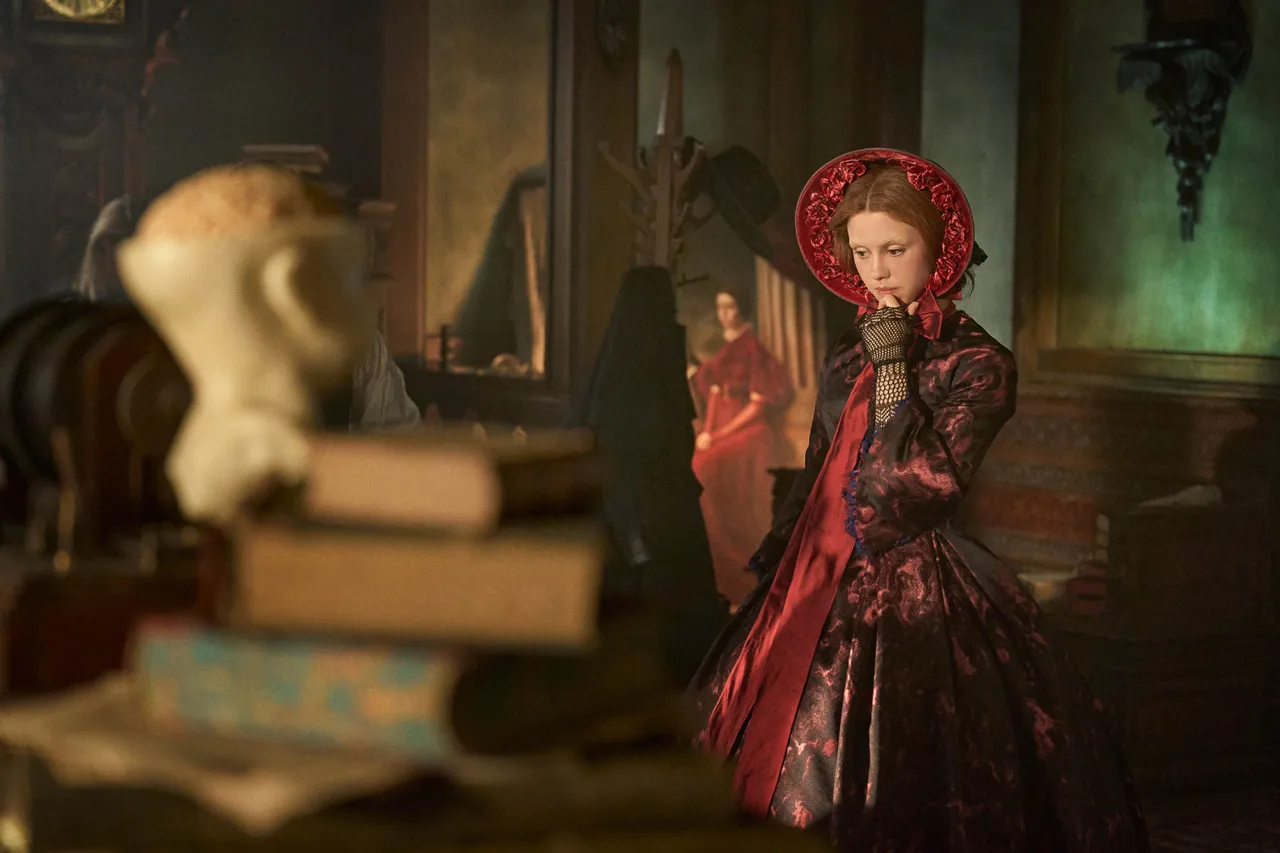
By now, everyone has seen it. The soft blue feathers framing Mia Goth’s face like the seductive figure from an oil painting. The scarab necklace glinting at her throat. The vivid red veil drifting through the film’s first part. The rosary. There is Oscar Isaac with wild hair, Jacob Elordi with grey, scarred skin. Since its release last November, Guillermo del Toro’s Frankenstein has hypnotised audiences with its dreamlike world. But not everyone knows who is behind many of those haunting, otherworldly details: It’s the costume designer Kate Hawley.
Raised in Wellington, New Zealand, Hawley began her career in theatre and opera before moving into film, where she has imagined and created costumes for worlds inhabited by humans, monsters, aliens, and robots. Her work spans films such as Pacific Rim, Crimson Peak, Suicide Squad, and Edge of Tomorrow. On stage, she has designed sets and costumes for the Royal New Zealand Ballet, the New Zealand Festival, and the New Zealand Opera Company.
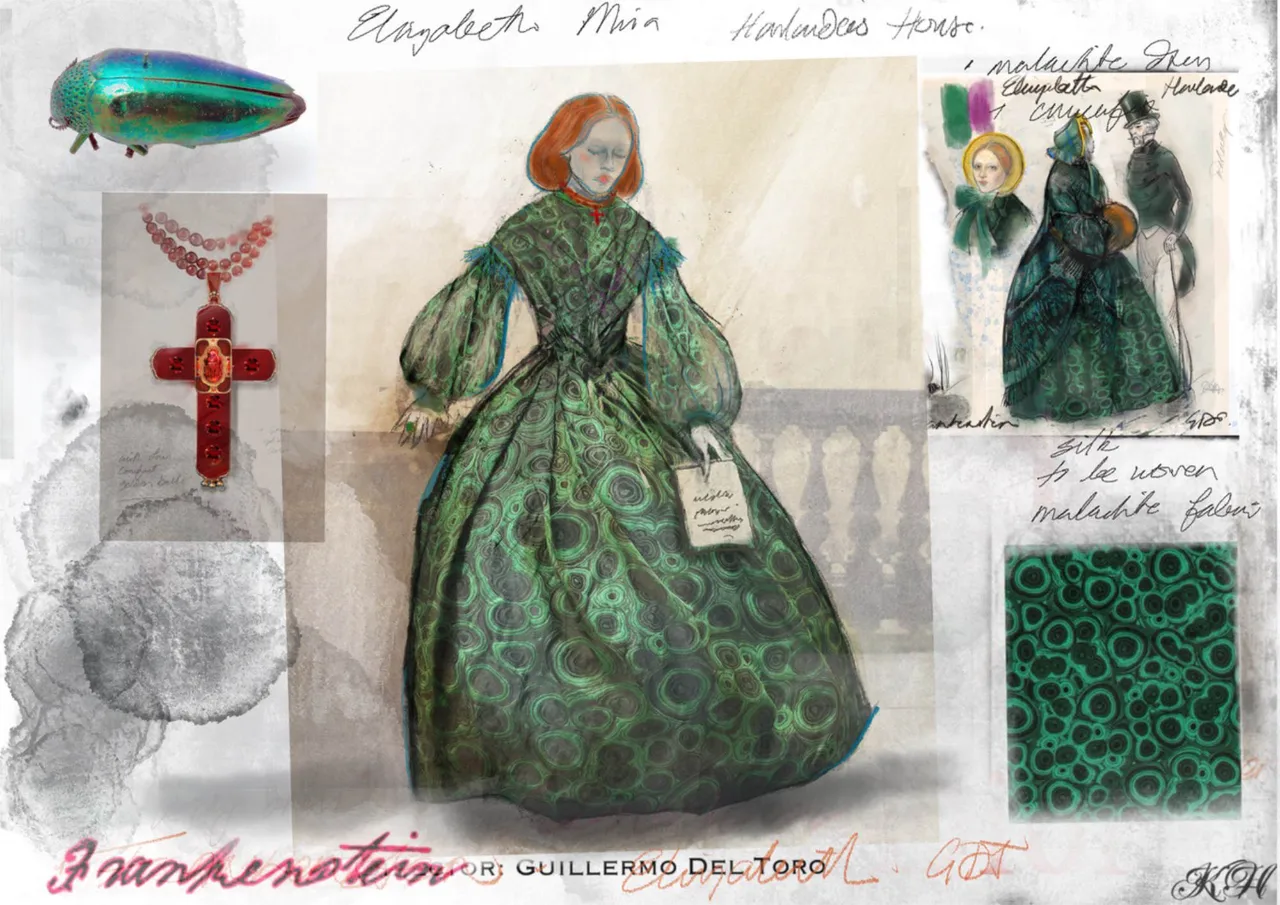
For Guillermo del Toro’s Frankenstein, Hawley plunged into the world of Mary Shelley, collecting patterns, studying historical clothing, shapes and textiles. She explored anatomy and formed a cinematic partnership with Tiffany & Co., weaving delicate jewellery and objects into the fabric of the story. It’s basically about all these magical details that bring the film’s vision of humanity and transformation to life, giving it a vibrancy that is both haunting and mesmerising. It is passion, it is craft, it is hard work, and it has clearly paid off. At the 98th Academy Awards, Frankenstein arrives as one of the year’s most celebrated films, with eight nominations including Best Picture, Best Supporting Actor, Best Adapted Screenplay and, naturally, Best Costume Design.
With the ceremony approaching this weekend, we sit down with Hawley to uncover the genius behind the looks. We ask about her favourite piece in the Tiffany Archives, the balance between historical accuracy and personal touch, what happens when an actor does not like their costume and (keeping with the enchanting tone of Frankenstein) what kind of creature she would be.
Hi Kate, are you excited about your Oscar nomination?
Oh, yeah, absolutely. It’s amazing, but it takes a while to process that it’s real. I was the last person to get the news because I was in New Zealand, so we were five or six hours behind everybody else. I remember, when I woke up, I had so many missed calls. And I thought, oh, that’s lovely, and went back to sleep (laughs).
It must be so exciting! And the awards are so soon…
Yes! It’s so wonderful to be nominated along with so many of your colleagues. It makes the journey really exciting. I guess it might be a bit different if I was doing it on my own. And it also demonstrates Guillermo’s work and how he regards us all as one department. The fact that so many of us have been nominated is because that strength of vision under his guidance is across all of us. You know, we’re all on the same page.
You’ve worked with Guillermo before. In Pacific Rim, for example, or Crimson Peak. What makes the bond between the two of you special?
I don’t want to say anything he might not. Guillermo loves art. He loves artists. Everyone on his team benefits from that and thrives because he is genuinely interested in the process and in artistic integrity. You can’t be lazy. You’re allowed to be a craftsperson, and in a world that moves faster and faster, it’s lovely as artists and all the craftspeople involved for that to be appreciated. It makes the process quite joyous.
He’s also an amazing intellectual, a true renaissance man. His knowledge of art history, literature — those are things I’m interested in and have loved from the beginning. So, there’s a shared language of books and references. It’s wonderful, but I don't mean it to sound like it's always the same language. It changes. For example, I know he likes a palette of amber and blues, but each time, every project, we explore it in a new way. He’s always going, let’s try this, let’s pursue another direction! Your brain is being fed in the pursuit of ideas, and I love that.
He’s also an amazing intellectual, a true renaissance man. His knowledge of art history, literature — those are things I’m interested in and have loved from the beginning. So, there’s a shared language of books and references. It’s wonderful, but I don't mean it to sound like it's always the same language. It changes. For example, I know he likes a palette of amber and blues, but each time, every project, we explore it in a new way. He’s always going, let’s try this, let’s pursue another direction! Your brain is being fed in the pursuit of ideas, and I love that.
I also read that you’ve connected through books, right?
Yeah, it was my bookshelf.
What’s a fictional character from this bookshelf that you’re currently fascinated by?
I think we designers are sort of split personalities. We can be lots of things and want to explore lots of things. It’s always a new flavour, a new ingredient. Someone might mention a name, and I think, oh, I could dive into that world because I see the pursuit of something. Or another character comes up, and I think, I could dive into that world too. We’re kind of shapeshifters in that way. I would never want to be defined by one thing. Every character is a discovery. The new is what interests me — finding new languages, new ways of doing things. I love that part of the process. But I also love my books. In the end, there are probably at least half a dozen characters sitting there that I would love to do.
In the past, you’ve worked with all kinds of creatures: Aliens, monsters, robots. If you were a creature, what kind of creature would you be? A mermaid, a mage?
No, I don’t know if I’d be a mermaid. I might be a giant, stomping Norse goddess. There’s something wonderful about the original Norse tales. Or maybe I’d be Thordis. I don’t know why I’m going so heavy all of a sudden, but I feel like I’d probably be a slightly awkward, stomping giantess. Maybe a troll lady. Something like that.
That sounds strong and powerful.
Yeah, I’d be an amazing troll. I love them in those old mythologies because they are so visceral and magical in an elemental way. I was brought up on all the original myths and fairy tales, so I love their raw quality. There is an appalling side to them, a wildness, and I love that ancient feeling.
Once you’ve found a character you have never worked on before, how do you start? What’s the first thing you do to build a costume design?
Well, it depends on whether it comes from a literary source or a script. That changes the process. For Frankenstein, I started with the script, then went back to the book, looked at the historical context, and made timelines. But mostly, it’s about being in the dream of it. When you read the script, you have to allow yourself to sit with it, without immediately interpreting or designing, just trying to see what the director sees, the world, the atmosphere. Because sometimes your first clue to a character might be the smallest little detail, like the back of a heel on a step. It is not always obvious, like Darth Vader walking in a cape. You are listening to the language and tone in the words, the musicality of the script or novel, and the character is part of that.
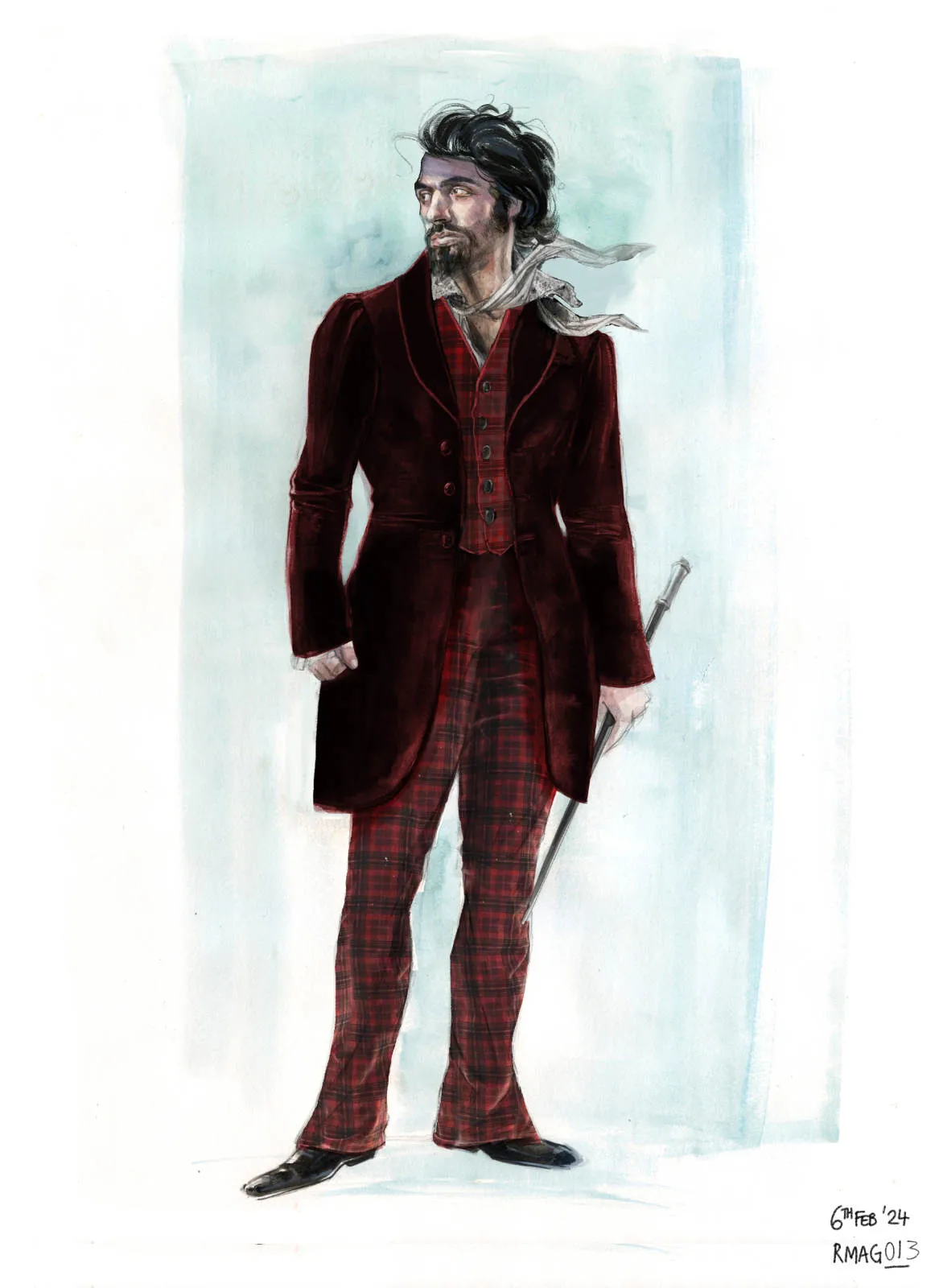
So, I try not to lock things in too early. I keep everything organic and then play with silhouettes and ideas to keep it alive. I might not start at the beginning, I might start at the end, or in the middle of the story. I might have one clear moment that I can see and I’ll start to draw. That could be a texture, a colour, or a detail that feels right. I discuss it with Guillermo, and it becomes one piece I hang on the wall. Then you keep distilling, refining, throwing away things. You might have one thing that is a clue to the language and it opens the door. For example, when we started talking about anatomy, and with Mike and Guillermo talking about the creature, we saw the repetition and pattern. So that became the dream of Frankenstein.
So, I try not to lock things in too early. I keep everything organic and then play with silhouettes and ideas to keep it alive. I might not start at the beginning, I might start at the end, or in the middle of the story. I might have one clear moment that I can see and I’ll start to draw. That could be a texture, a colour, or a detail that feels right. I discuss it with Guillermo, and it becomes one piece I hang on the wall. Then you keep distilling, refining, throwing away things. You might have one thing that is a clue to the language and it opens the door. For example, when we started talking about anatomy, and with Mike and Guillermo talking about the creature, we saw the repetition and pattern. So that became the dream of Frankenstein.
In an organic process, things can change quickly, so, what happens if an actor or an actress doesn’t like their look at all?
That has definitely happened. Sometimes you can bring a horse to water, but you can’t make them drink. You have to listen, really listen, to what they are feeling and what they are discovering in their performance. Sometimes it is a conversation the actor needs to have with the director first, and then they come back to you once they have processed it. My job is to support that. As a costume designer, you sometimes act like a psychologist, approaching different needs in different ways. It could even be something physical. An actor might say, I am not comfortable wearing that, and you have to find alternatives. Sometimes it is a tiny tweak, sometimes it requires redesigning a character, but the goal is always to get to something we are all happy with. That means leaving ego at the door, which is not always easy under tight deadlines.
That is why Guillermo is invited to fittings. It is crucial. With him there, the fittings can even become a rehearsal. I listen to him and Oscar talk, even if it is about scenes unrelated to costumes, and it informs my work. We also often invite Dan Laustsen, we get input on hair and makeup. The more people who see what is happening, the better. There is nothing worse than information being lost or miscommunicated. Sharing knowledge helps everyone contribute.
That is why Guillermo is invited to fittings. It is crucial. With him there, the fittings can even become a rehearsal. I listen to him and Oscar talk, even if it is about scenes unrelated to costumes, and it informs my work. We also often invite Dan Laustsen, we get input on hair and makeup. The more people who see what is happening, the better. There is nothing worse than information being lost or miscommunicated. Sharing knowledge helps everyone contribute.
I love it because in the end, you have to talk equally. Every opinion counts.
Yeah, but Guillermo is still a benevolent dictator. He is the boss. He is brilliant at sharing things. His door is always open. He is editing the film as we are filming. He can go to the editing suite and see the cut, he has the overall vision in his mind. With my job, I know these characters, I know the actors, I know what I am doing. I have a sense of what Tamara is doing, a sense of what Dan is doing, but Guillermo has the whole picture. And in the end, we are still surprised. You think: you clever bastard, I did not realise we were doing that!
What’s a character you’ve designed that you personally struggled with the most so far?
Sometimes they are the most simple characters. I can overthink things in my process because I am one of those people who asks, what else could it be? For example, if we are dressing a policeman, and they are wearing blue, I might think, does it have to be blue? Sometimes I can be my own worst enemy as well as it being my biggest strength. But in the end, it depends on who you are working with, whether they are interested in the same things and whether there is chemistry and a shared language. All those things factor into the struggle of making a character work or not.
I know that Guillermo had some Easter eggs, sort of, in Frankenstein. The red, for example. Or the amber and blue you mentioned earlier. Details that represent himself.
Yeah! Also, the angel has the same scar line as the creature.
That’s really cool! Is there also a detail that represents your work and your taste?
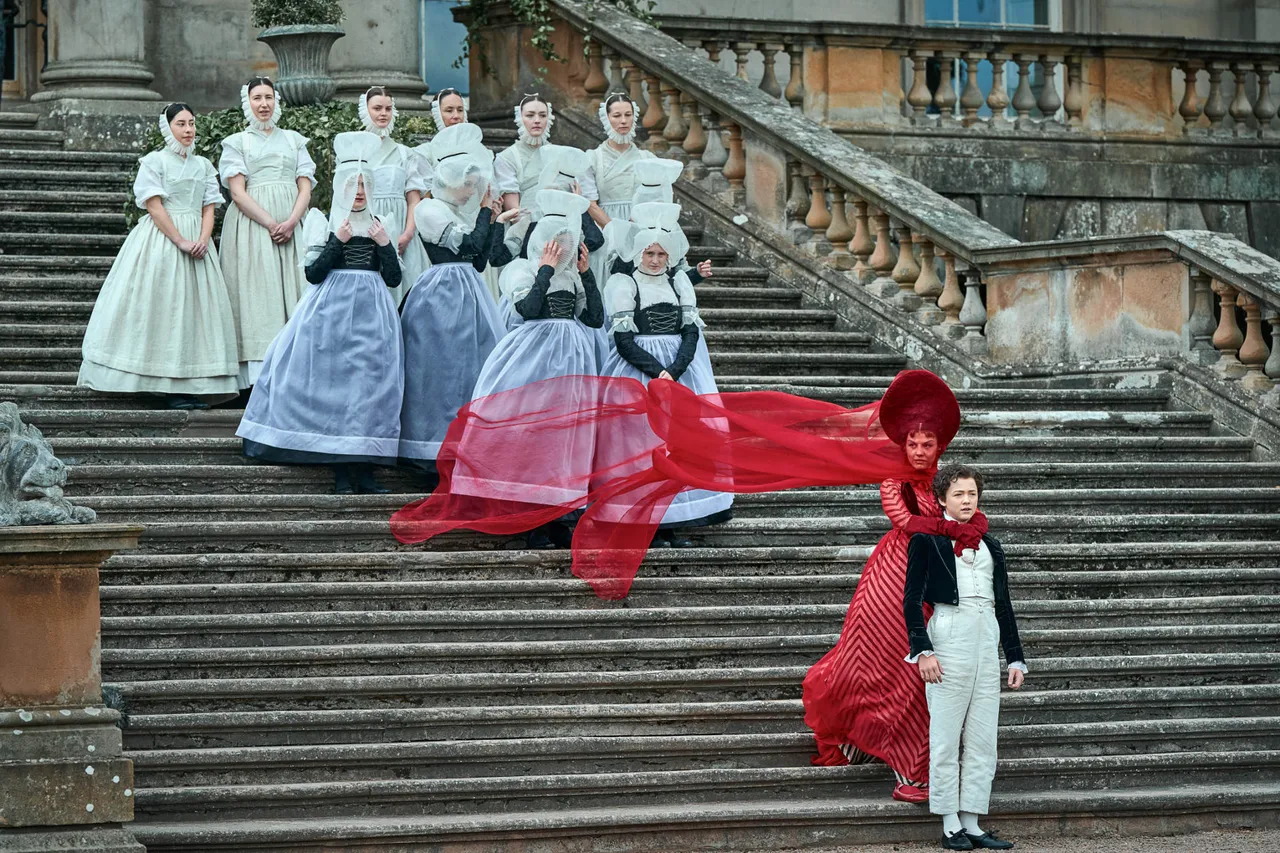
It is a schizophrenic taste. I am not always refined. I was just going back and did a recent post on the Frankenstein household. There is the hand pointing upwards towards God, a sort of vigil that Leopold Frankenstein, the father, wears on his hat, as do the household servants. I would say that is very Kate. It is not that I always like spines and hands, but sometimes it is just that little expression that is different. Guillermo lets us get away with it because he embraces that stuff, and then he will come back with ten better ideas for something else.
In preparation for the movie, you went into the Tiffany archives. To me, that sounds like a dream come true! How was it?
Oh, it was like a dream come true! When Christopher introduced me to the archives, it felt a bit like a fairy story moment. Christopher and Christina run the archives, and Christopher, like Guillermo, has this huge knowledge of art and really understood the language we were working in. He introduced me to the work of Meta Overbeck, who worked for Louis Comfort Tiffany. She was this young woman in his studio, which Tiffany set up away from Tiffany & Co., to create jewellery as art. He was very interested in organic forms. I felt a connection immediately. So, in the Morse Museum, I saw a book with Overbeck’s drawings. I think she might have been eighteen or something. Julia Munson was another woman, but looking at their work, painting universes and galaxies into jewellery, it was incredible.
Tiffany’s work has always fascinated me. As a child I loved it, as a teenager I was more critical, partly because of knock offs. But seeing the depth, the colour layers, how organic it was, and understanding that these women were making lamps and stained-glass and pushing the boundaries of jewellery, it was extraordinary. Doing the research, going into the archives, it taught me so much about colour and layering. It is like alchemy, a magic world, and celebrating that is wonderful.
Tiffany’s work has always fascinated me. As a child I loved it, as a teenager I was more critical, partly because of knock offs. But seeing the depth, the colour layers, how organic it was, and understanding that these women were making lamps and stained-glass and pushing the boundaries of jewellery, it was extraordinary. Doing the research, going into the archives, it taught me so much about colour and layering. It is like alchemy, a magic world, and celebrating that is wonderful.
Was there a piece that you fell in love with but didn’t include into the movie?
Yes. There was another pink scarab I wanted to use. And then there was this piece called The Medusa, that was created by Louis Comfort Tiffany. It’s this wild, almost Lovecraftian organic form. We couldn’t use it, but it really symbolised Victor Frankenstein and the artist. Seeing it in real life, not touching it, just looking at it, was overwhelming. It is the sort of piece that makes you cry.
For Frankenstein, you also studied a lot of fashion from the 1860s. How do you balance historical accuracy and modern storytelling?
That was very much something Guillermo wanted me to look at. We have to remember he set it against the Crimean War, so there is a level of historical accuracy to address, dealing with reforms and all of that. The silhouette is always where you start because it helps the audience define the period, and through that era the silhouette changes a lot.
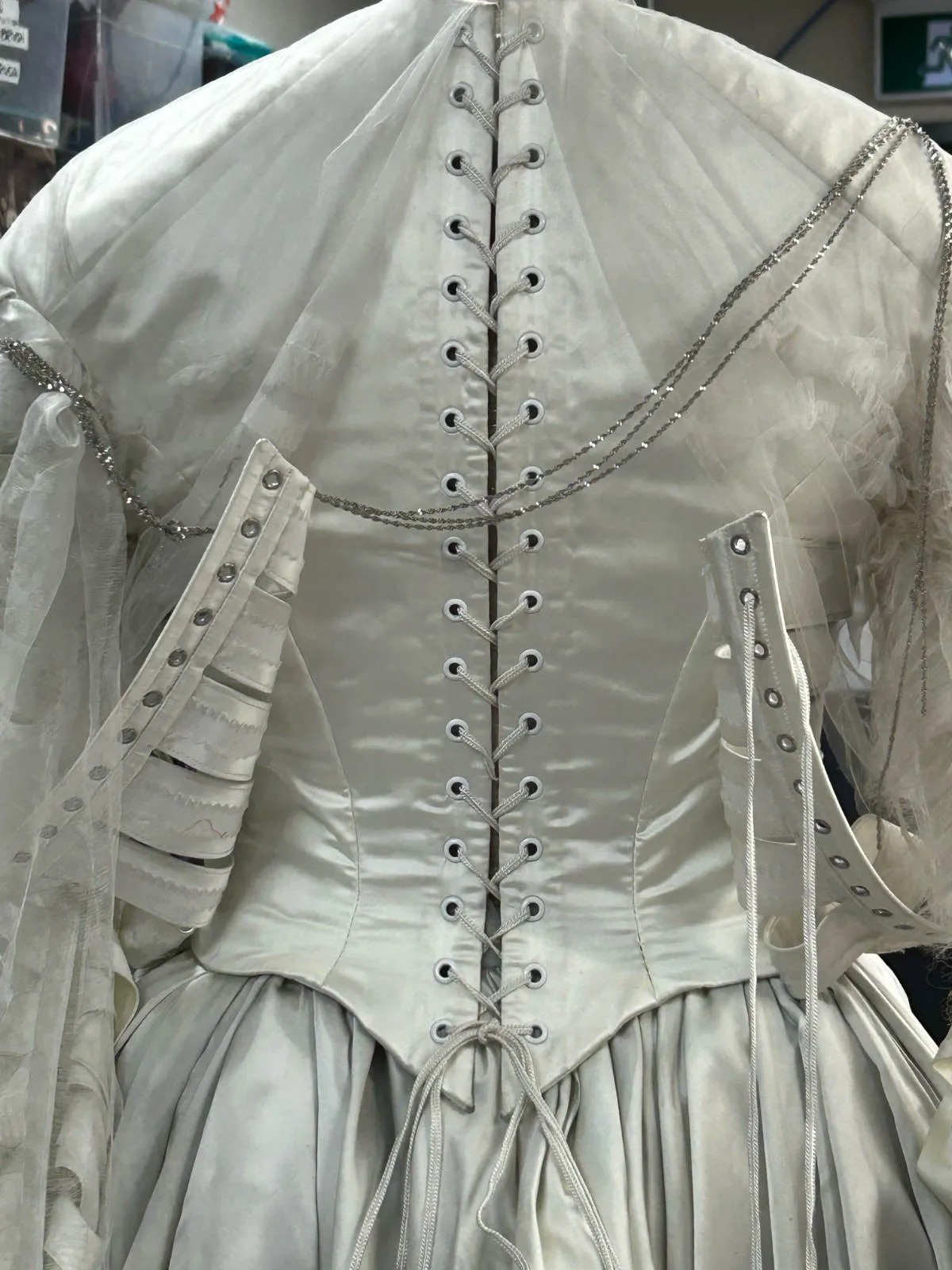
But I’m always surprised by history when you really look at it. Some textiles feel incredibly modern, even from the 18th century. You look at the patterns and think, that could be used today. What helps is that you have all the themes of the world being created, so you are immediately translating that. The skirt and the crinoline became a canvas. Patterns were used a lot in period context, but we made them reflect the world of the characters. Choosing the colours, though historical, also answers to the dreamlike world, the melancholy, and even the 1960s references of Hammer Horror. People do not change, and even in historical periods, many made their own clothes up until the 1890s. It was an individual expression. So ultimately, it is about serving the character. Every choice, colour, textile, pattern, and detail can give a modern note or push it further into the past.
But I’m always surprised by history when you really look at it. Some textiles feel incredibly modern, even from the 18th century. You look at the patterns and think, that could be used today. What helps is that you have all the themes of the world being created, so you are immediately translating that. The skirt and the crinoline became a canvas. Patterns were used a lot in period context, but we made them reflect the world of the characters. Choosing the colours, though historical, also answers to the dreamlike world, the melancholy, and even the 1960s references of Hammer Horror. People do not change, and even in historical periods, many made their own clothes up until the 1890s. It was an individual expression. So ultimately, it is about serving the character. Every choice, colour, textile, pattern, and detail can give a modern note or push it further into the past.
Okay, last question: If you could choose an era to visit for just one day, which one would it be? Would it be the Victorian era? Would it be…
No, no, no. I kind of had little dreams as a kid of the 18th century, but it depends on the location and whether I could go fully immersed, if I would have to deal with sanitary wear and all of that, or whether I could just be an invisible presence, observing. There are a lot of… requirements around that. But I think I’d want moments in history to go back to, not a whole time period, just moments of being an observer.
Can you think of one?
I’d like to go back early. Maybe the plague? Or I would like to see how the people did the graphics on the walls of Pompeii. Humanity hasn’t changed. Or I would like to see Cleopatra for a moment, that would be amazing.