Vitangelo Moscarda is the protagonist of Luigi Pirandello’s book One, No One and One Hundred Thousand. One day his wife casually tells him that his nose is crooked. Impossible, he thinks. He looks at himself in the mirror every day and has never noticed it. That innocent comment triggers an unsettling realisation: the image he has constructed of himself is different from the image everyone has of him. In fact, everyone carries a different version of him in their imagination, each different from the other. If you start to think about it intensely, it could make you go nuts, as it does to poor Vitangelo. But after all, aren’t we all a hundred thousand different people depending on the context?
To some, you can be the intimidating boss at work; to others, the loving partner or mother, the crazy and extroverted one in the friend group, or the anonymous stranger with headphones at the metro. With her new collection, Julie Kegels embrace this fluidity and explore how women transform throughout the day, inhabiting multiple selves with grace and madness alike.
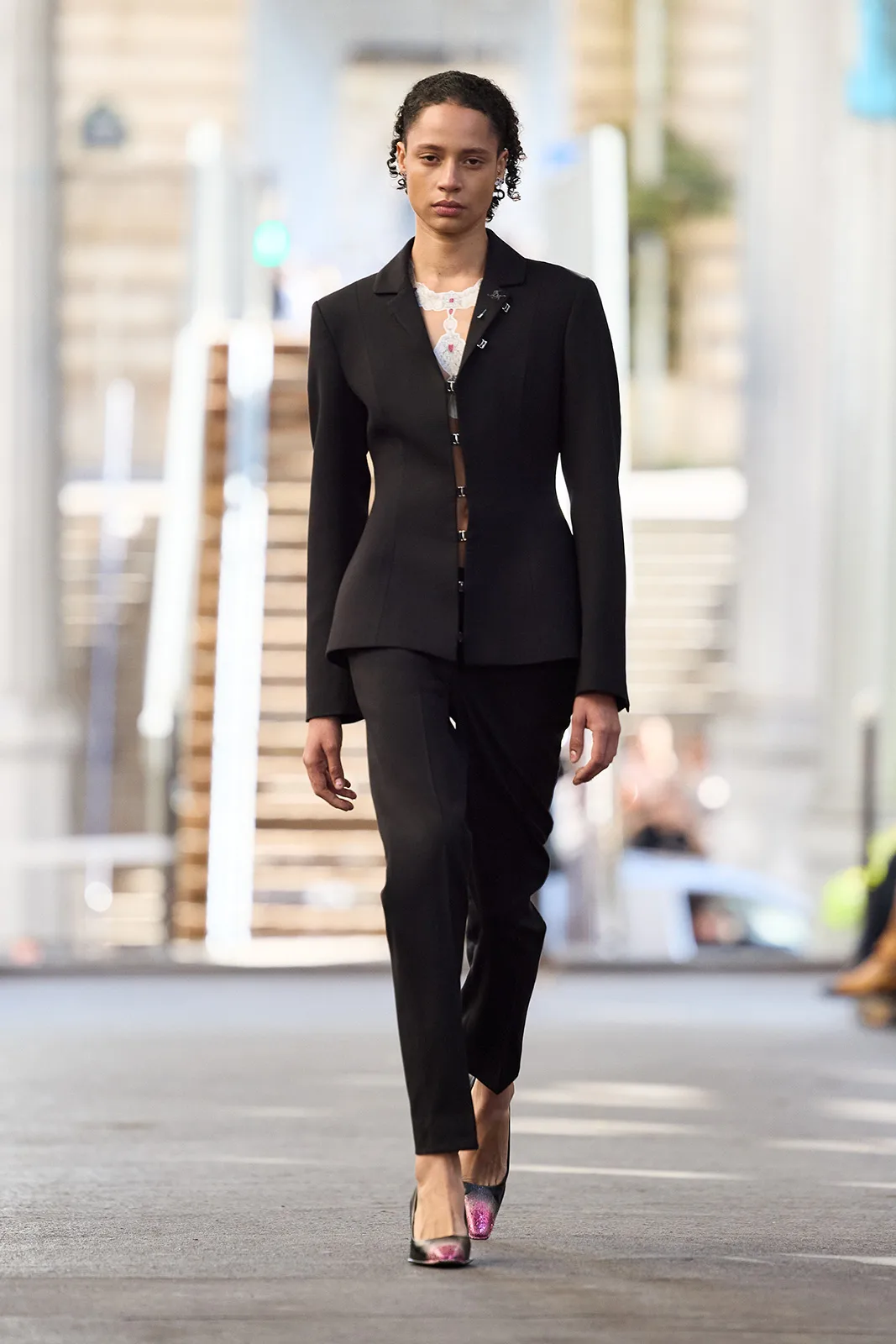
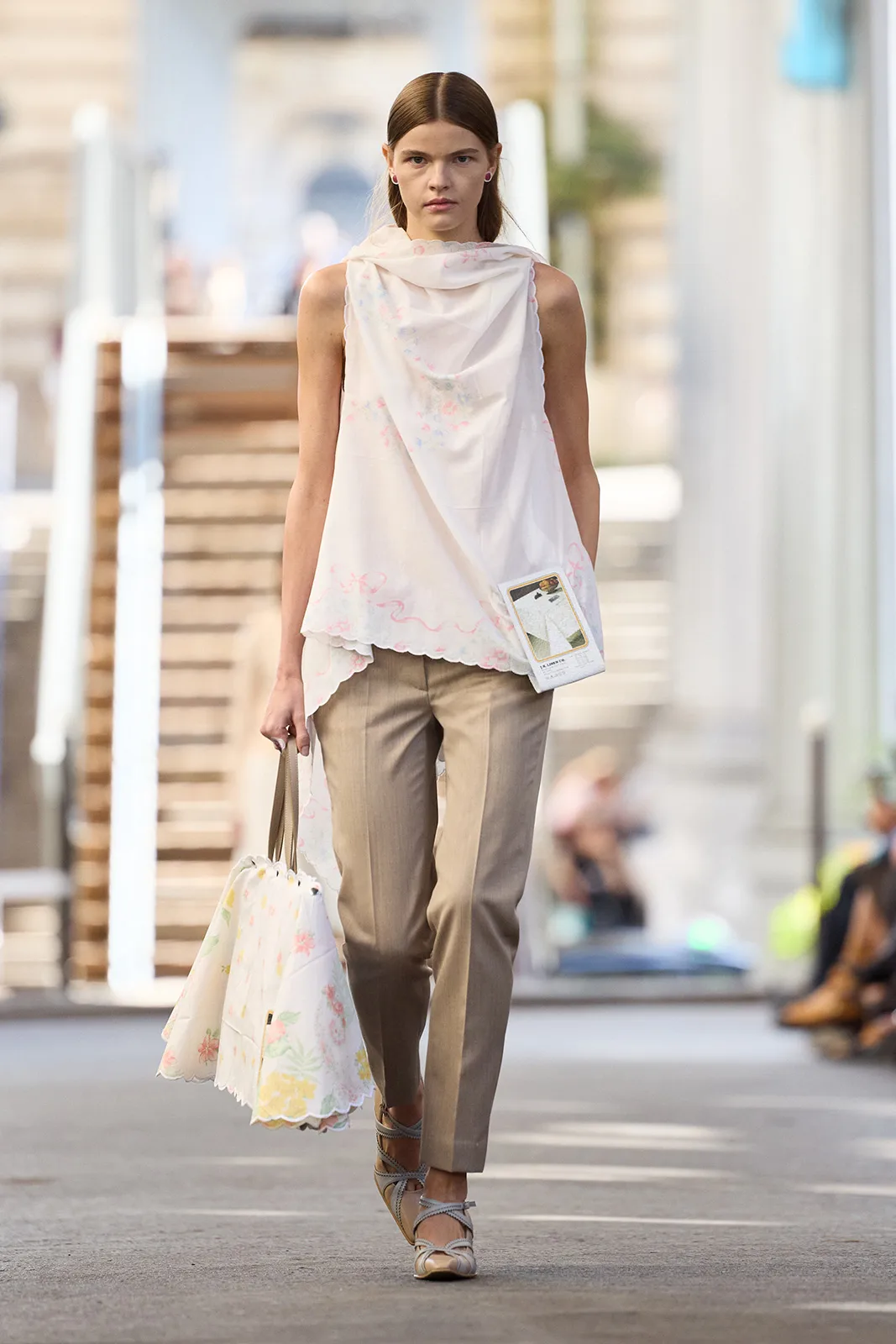
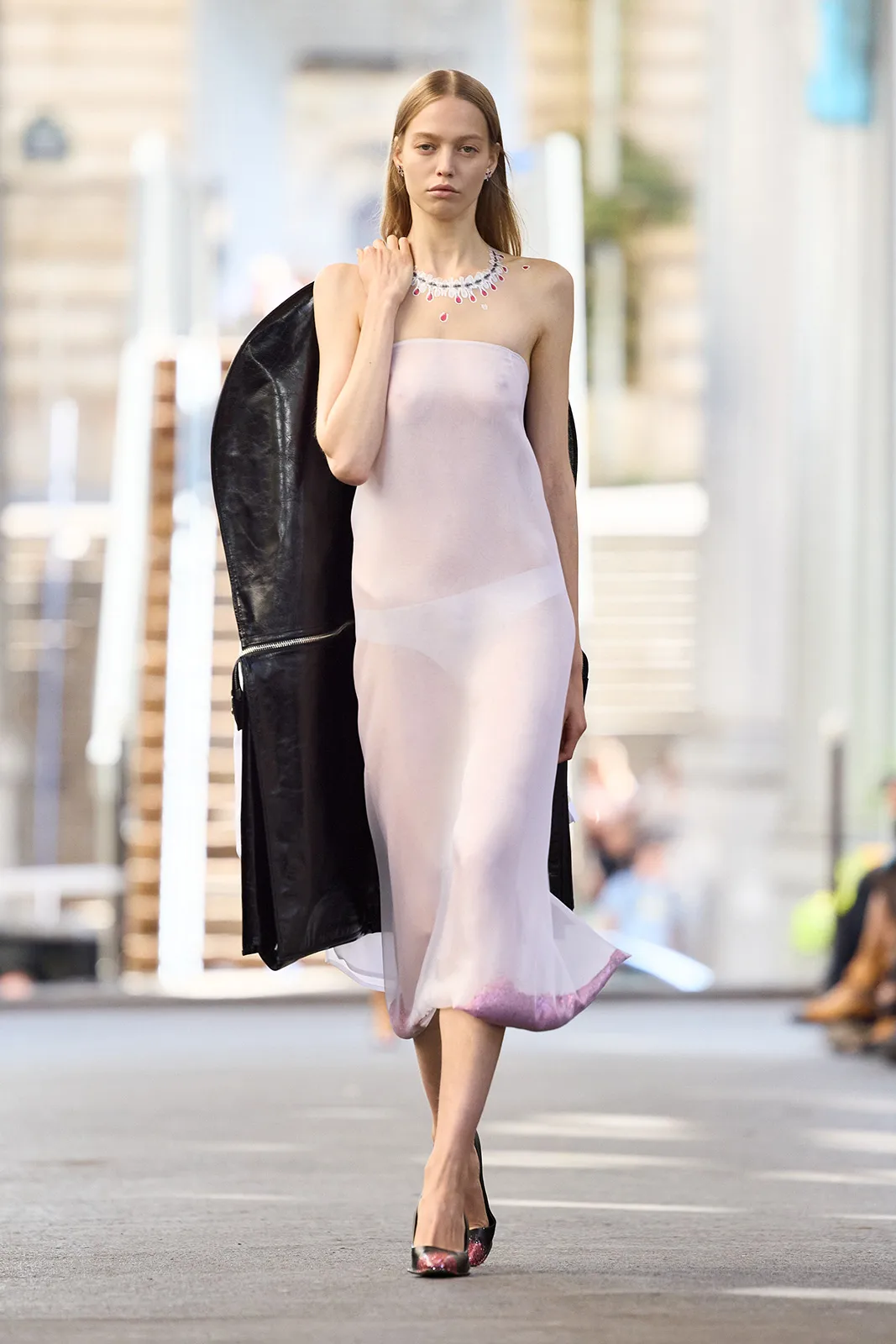
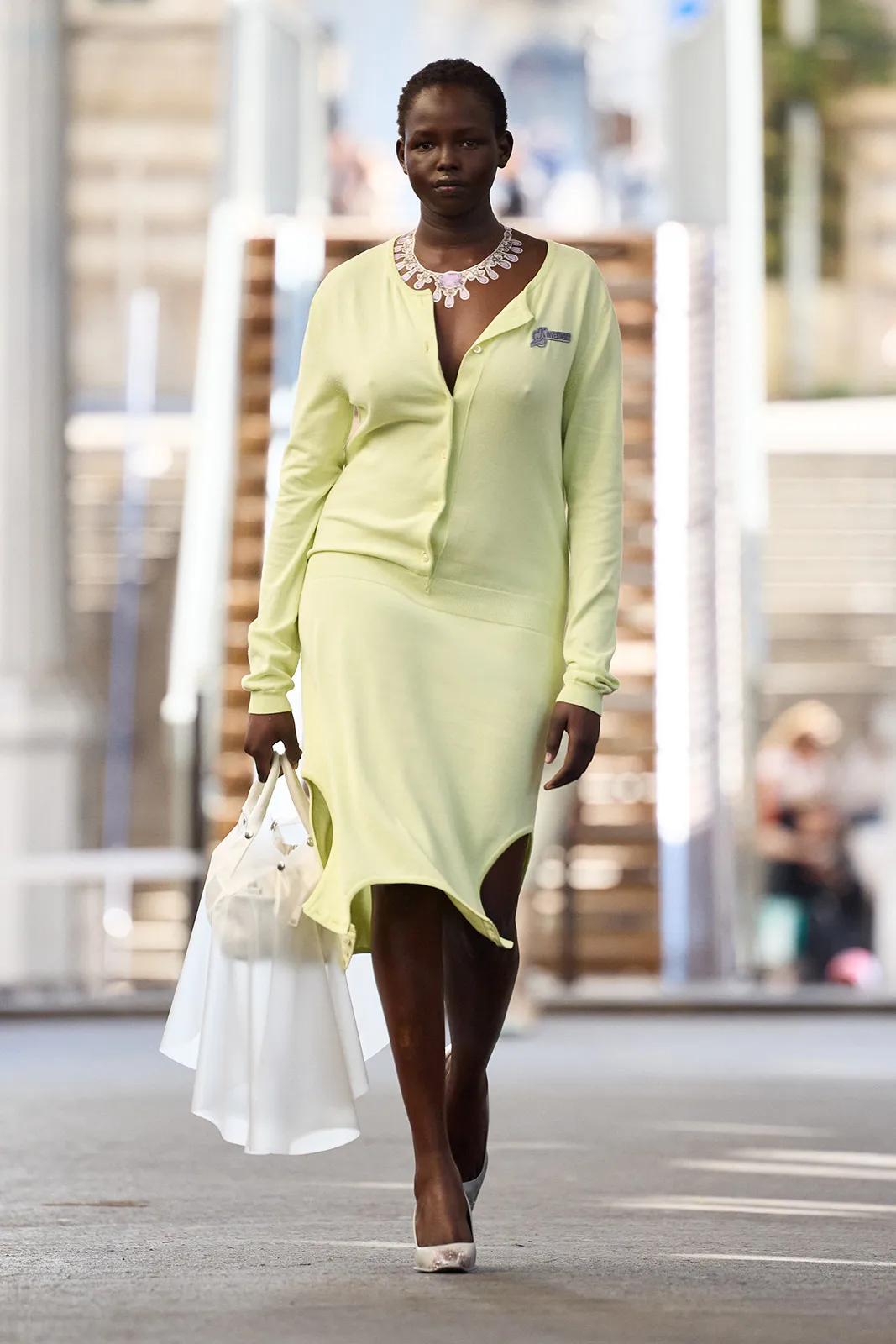
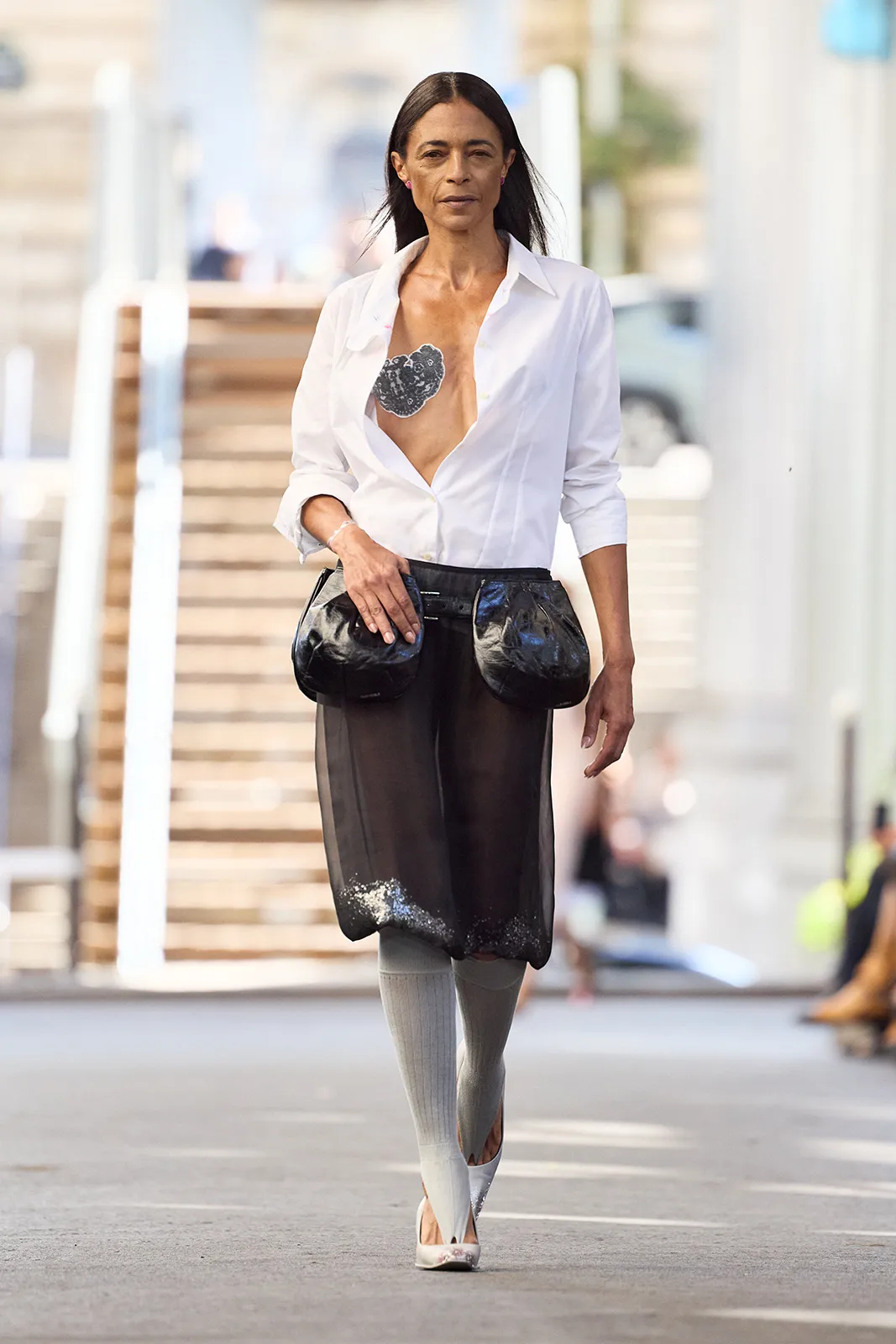
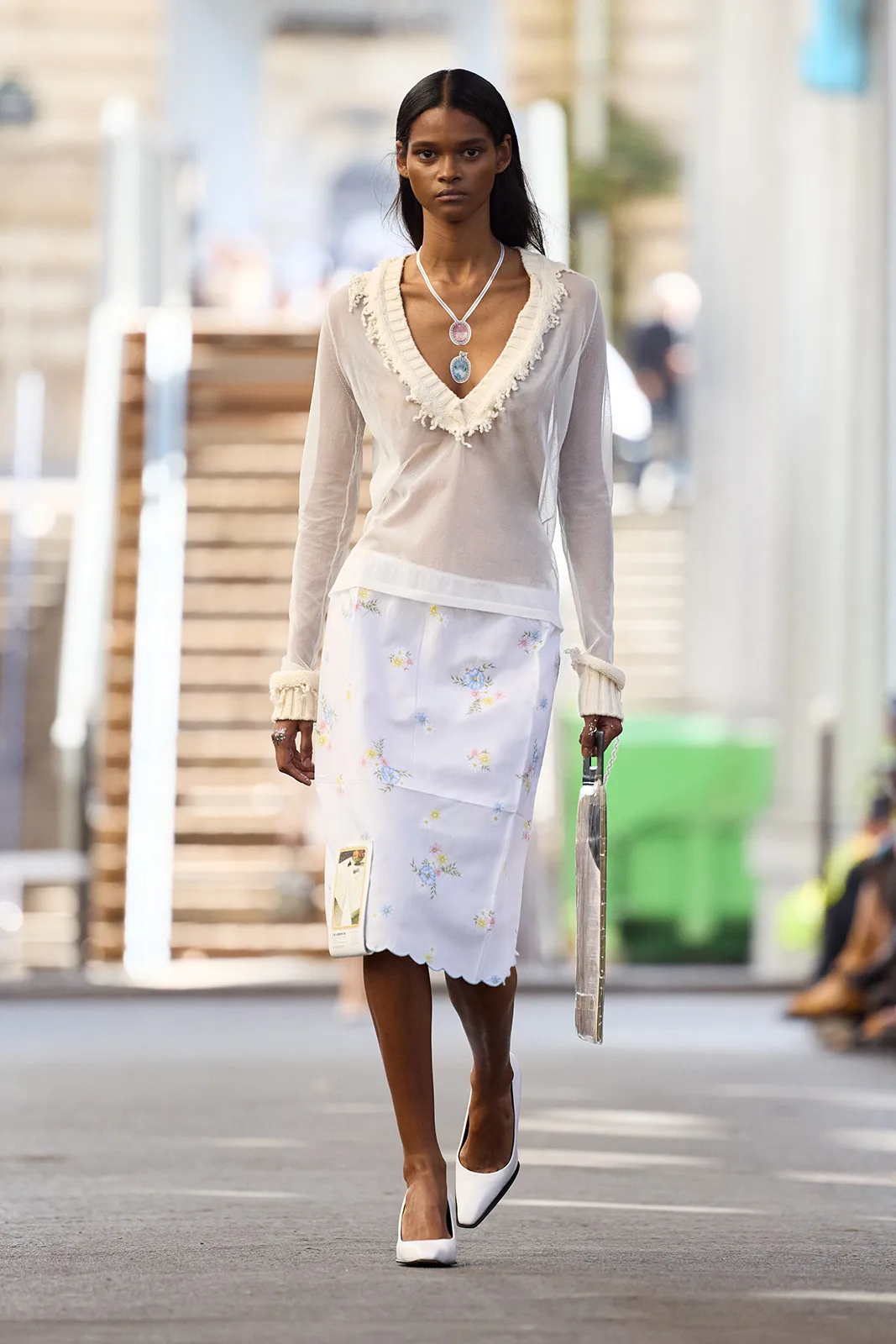
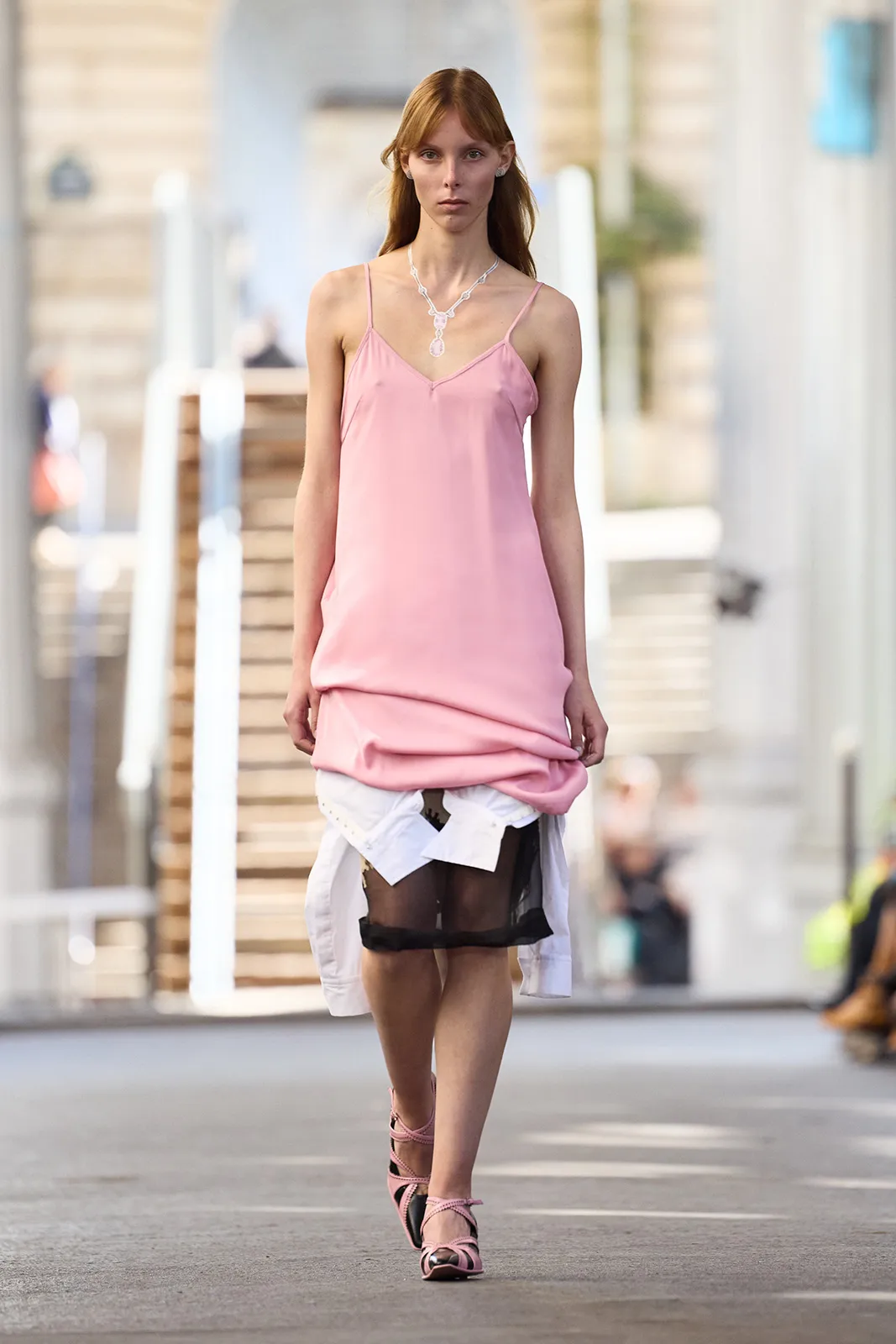
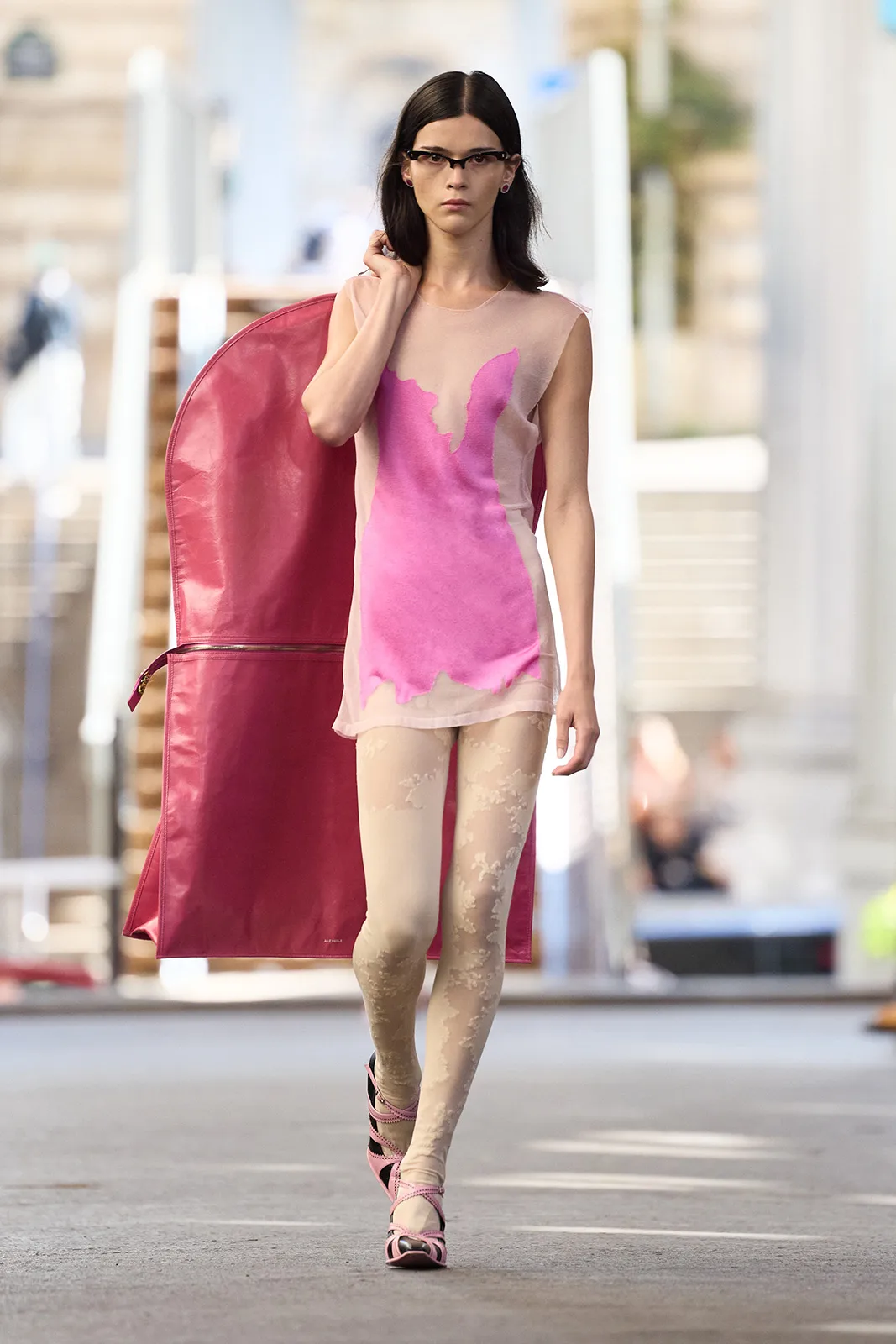
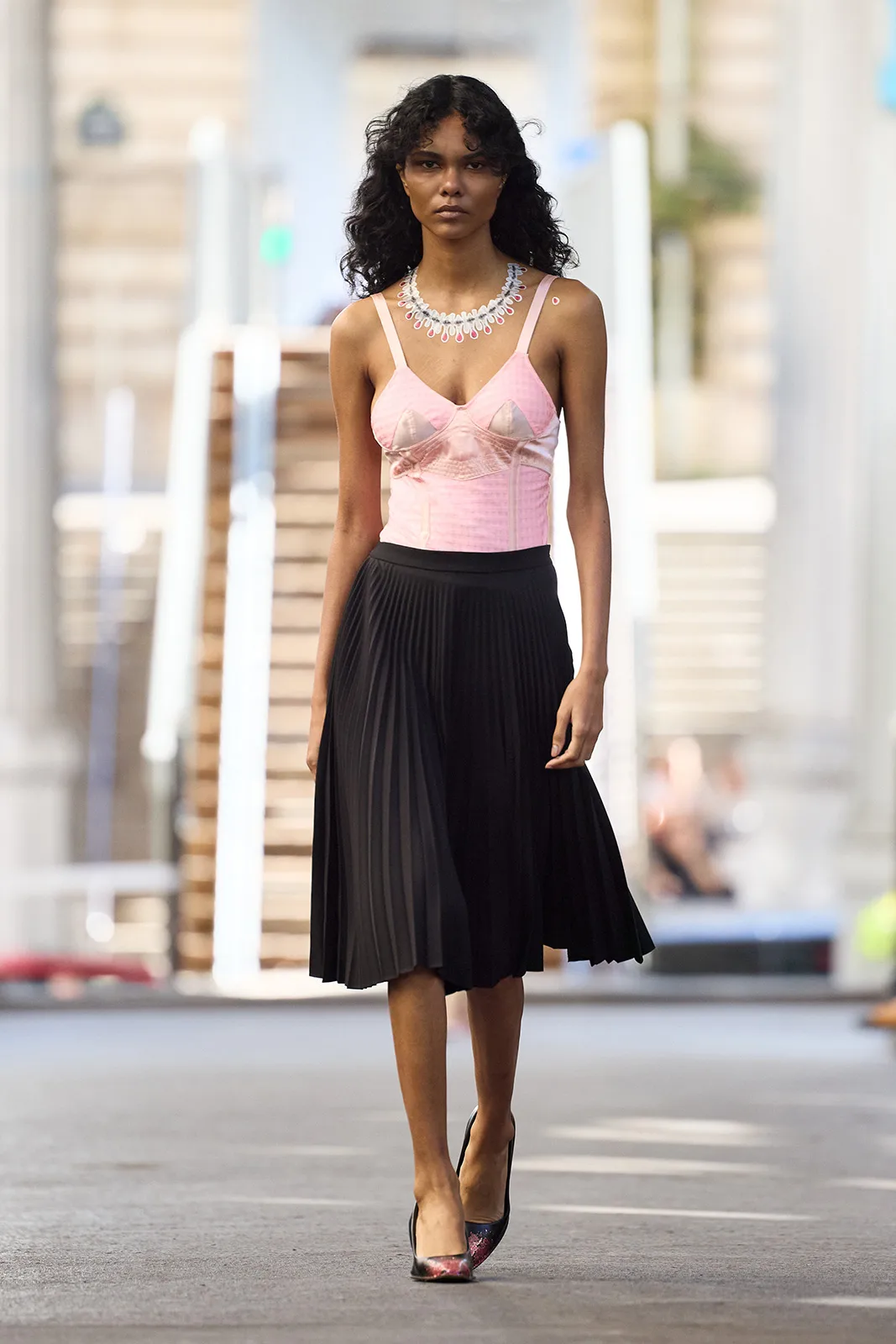
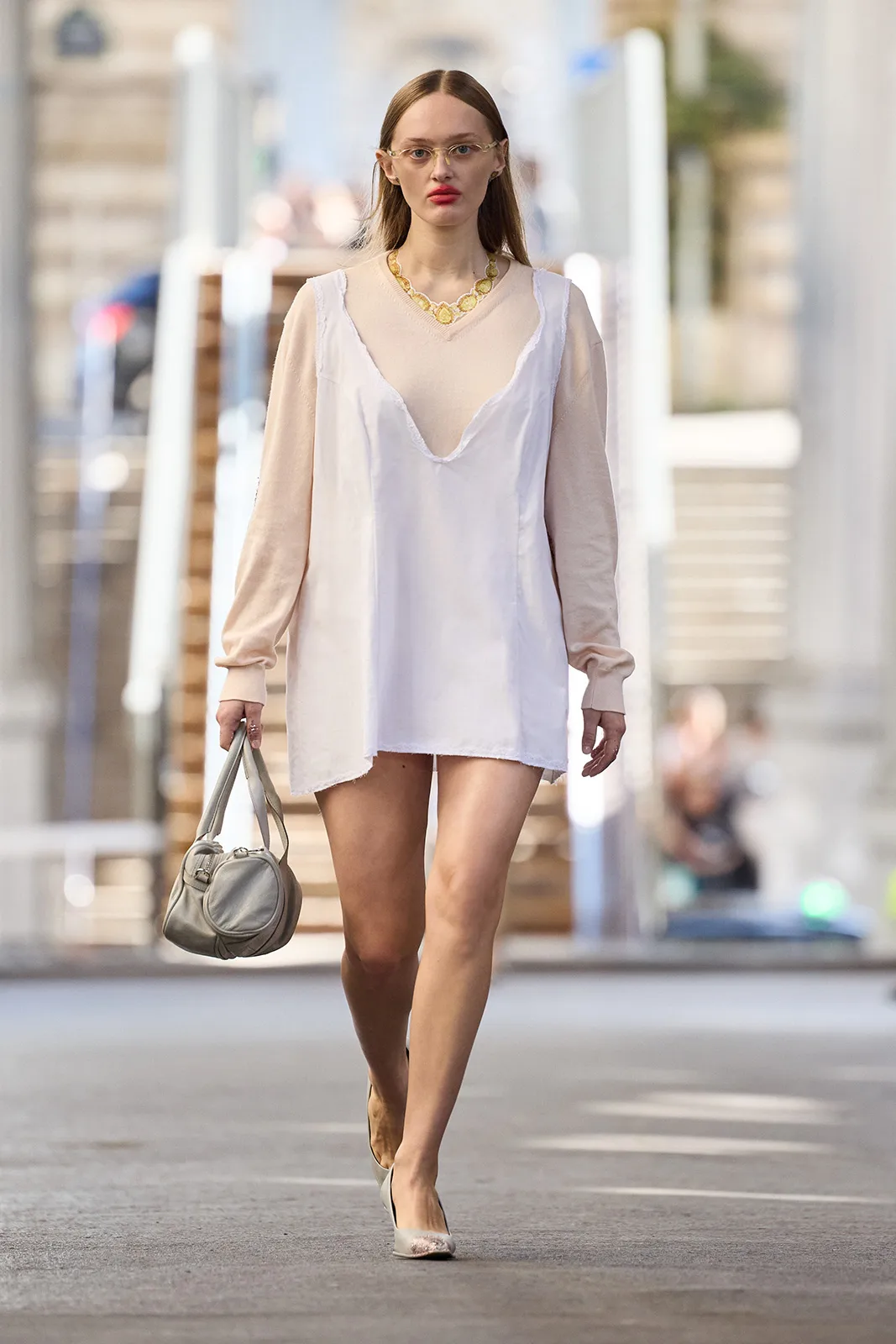
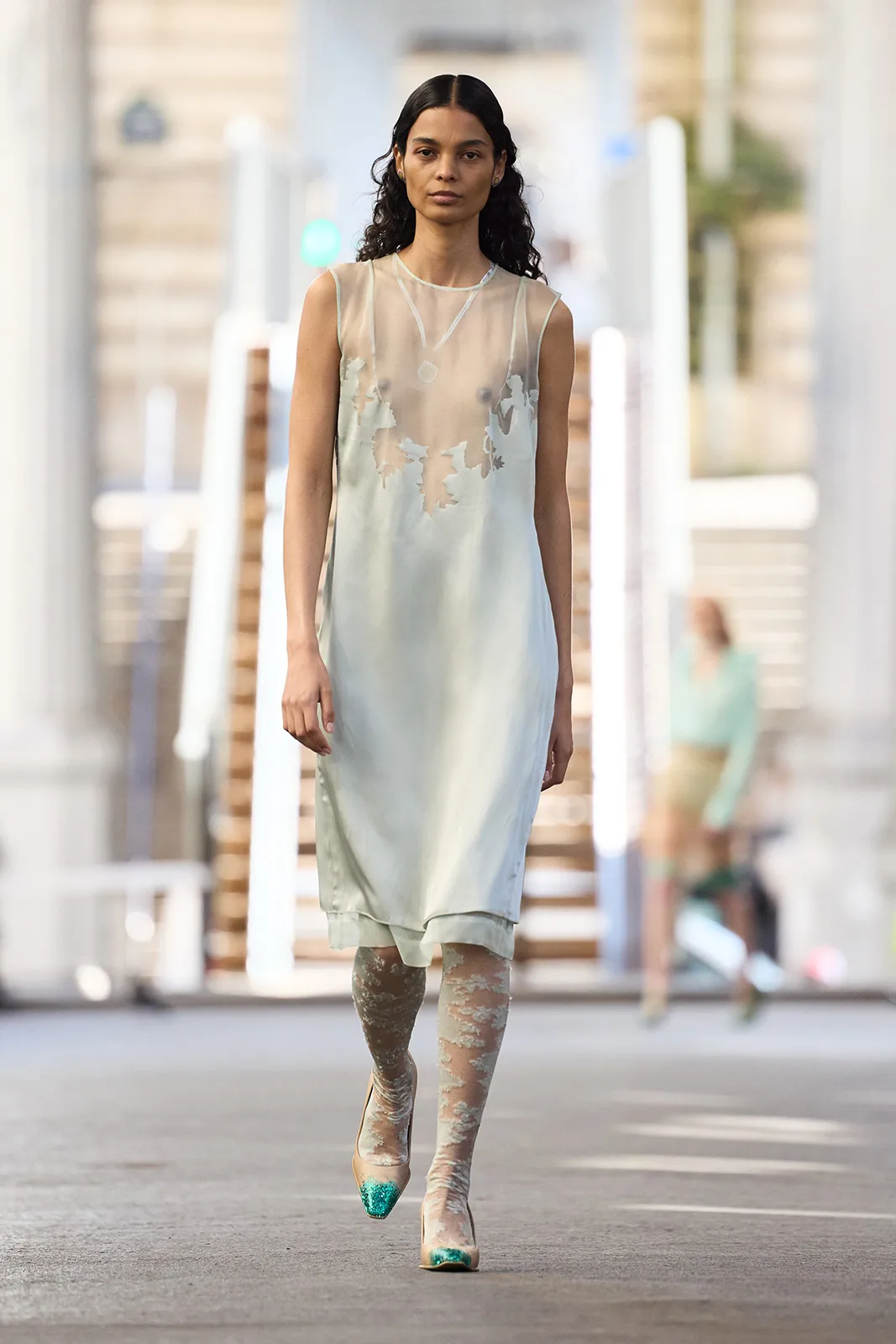
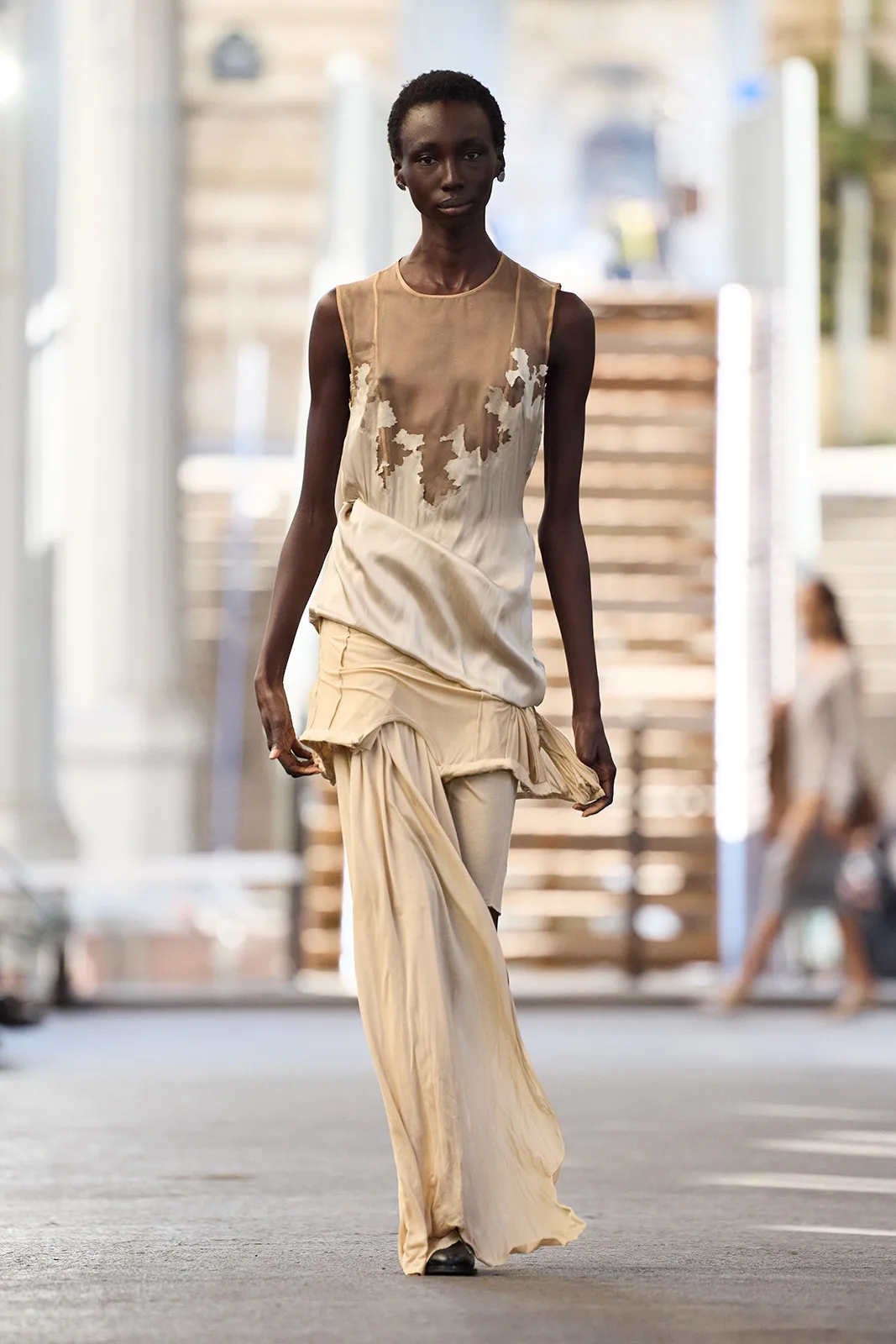
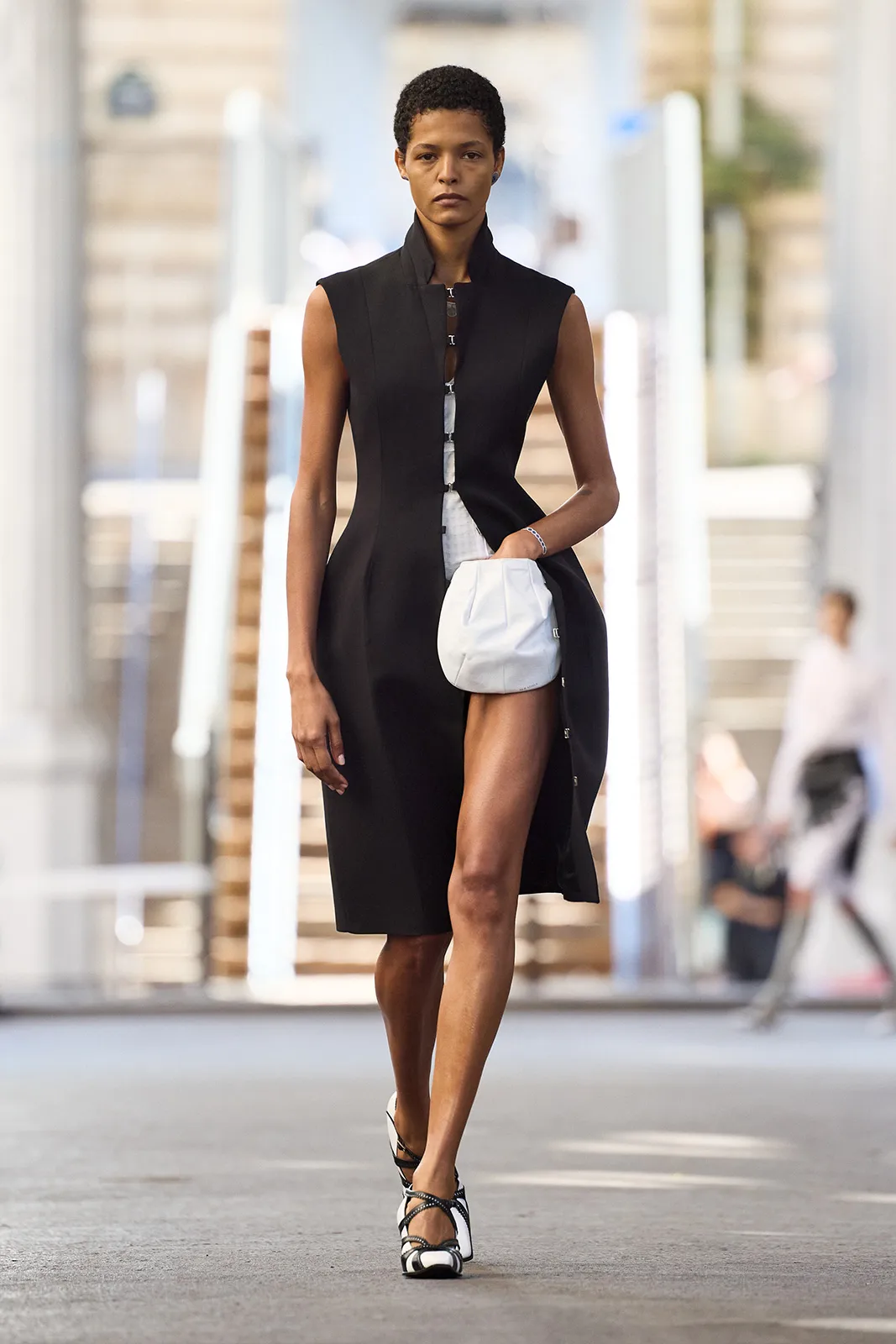
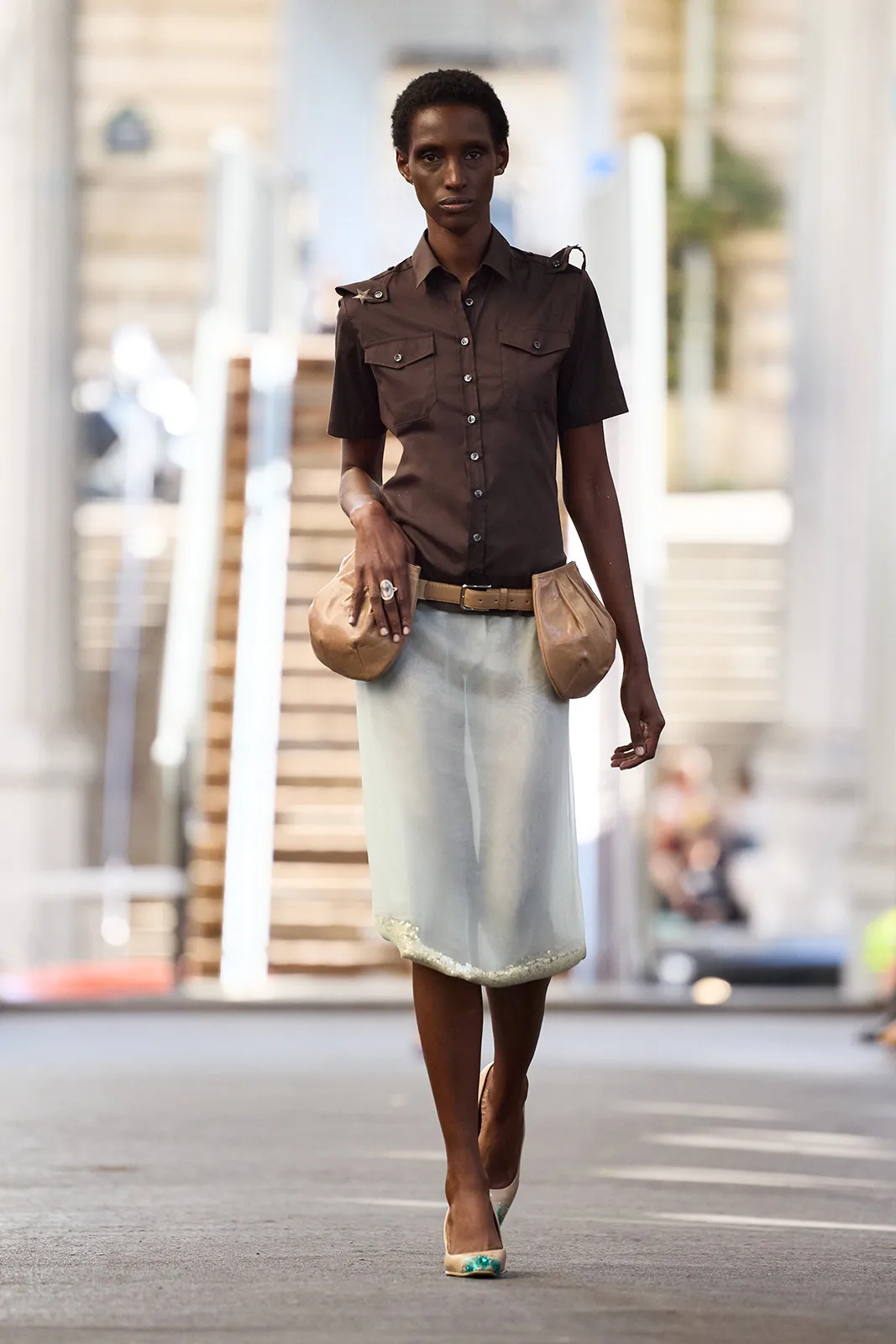
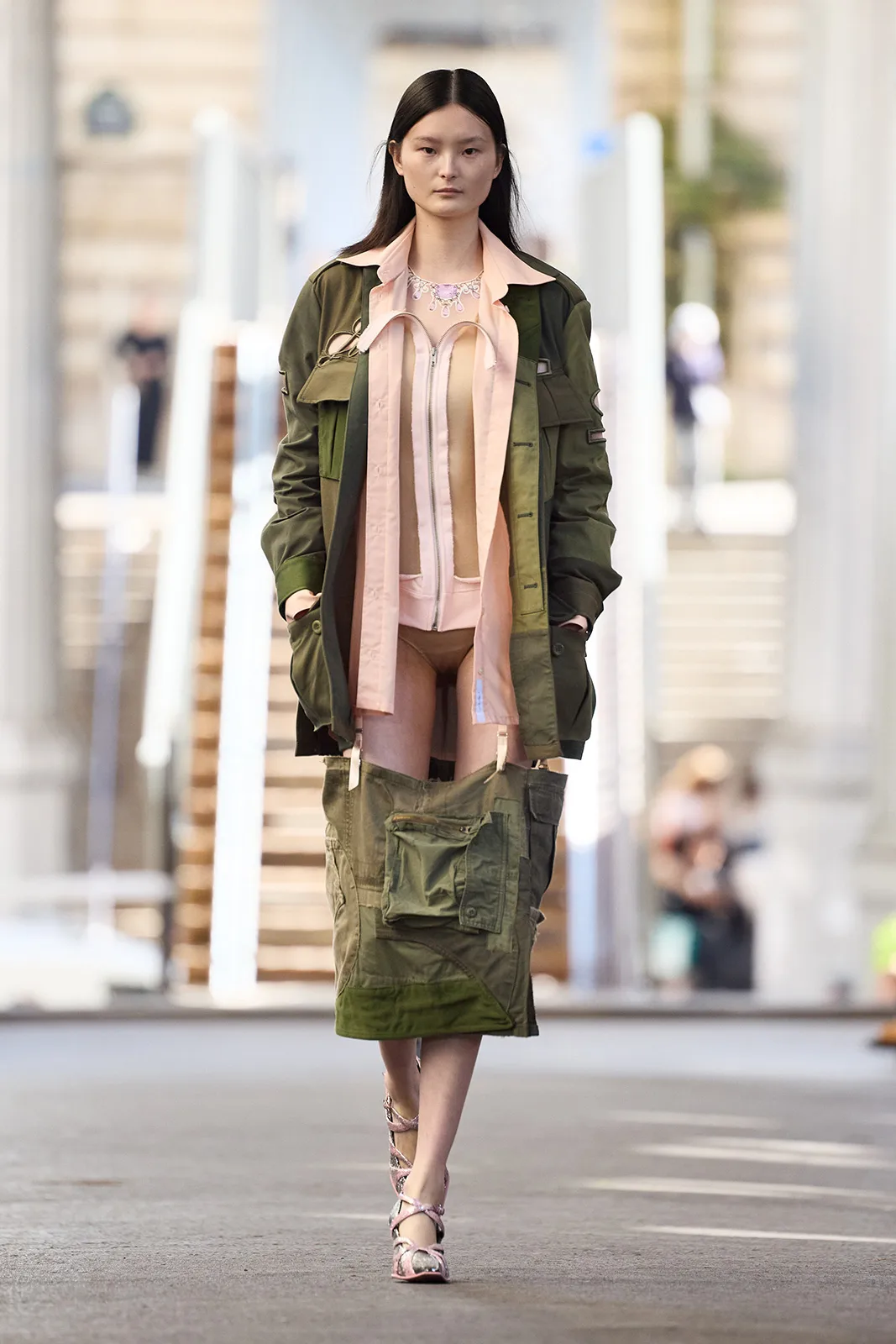
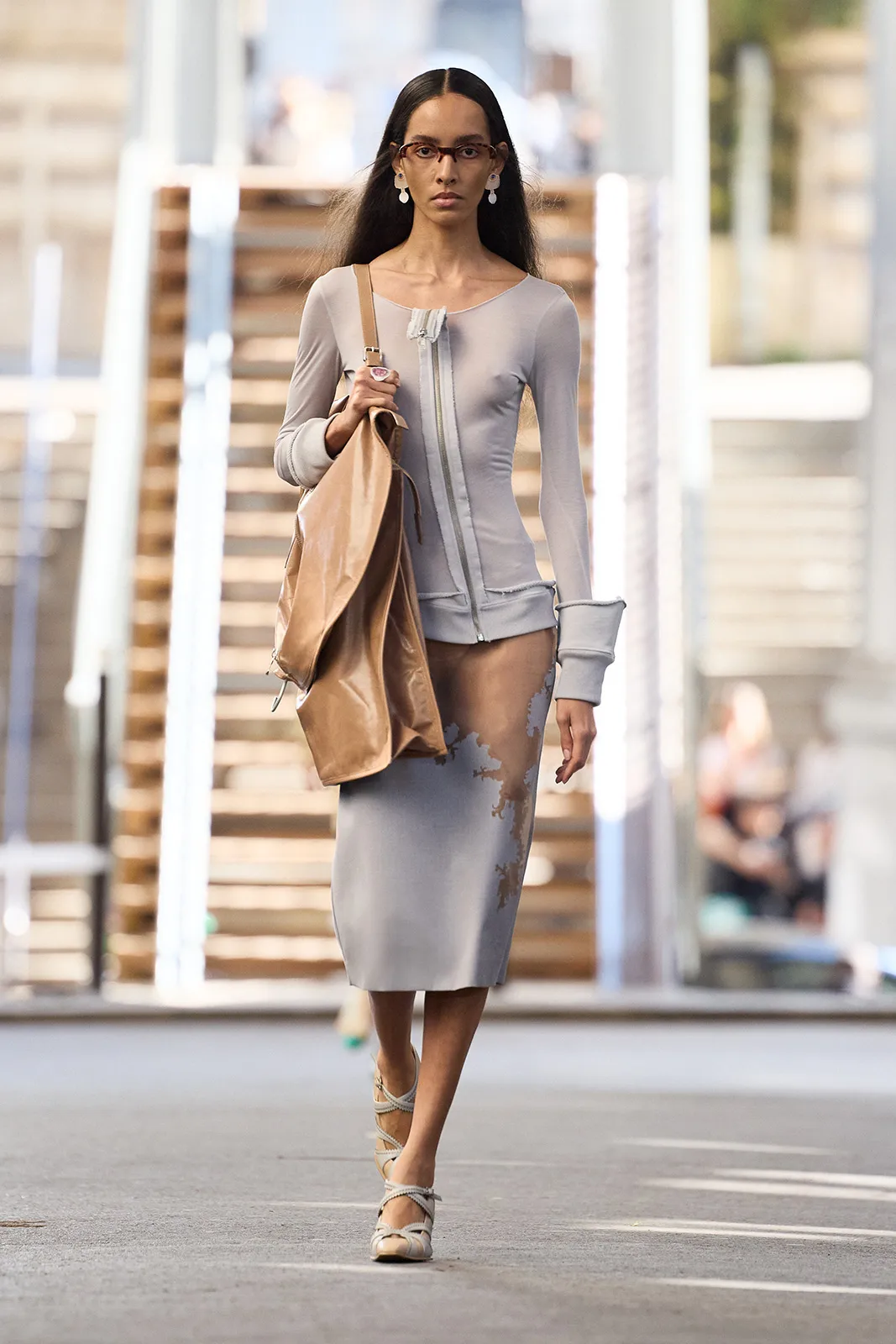
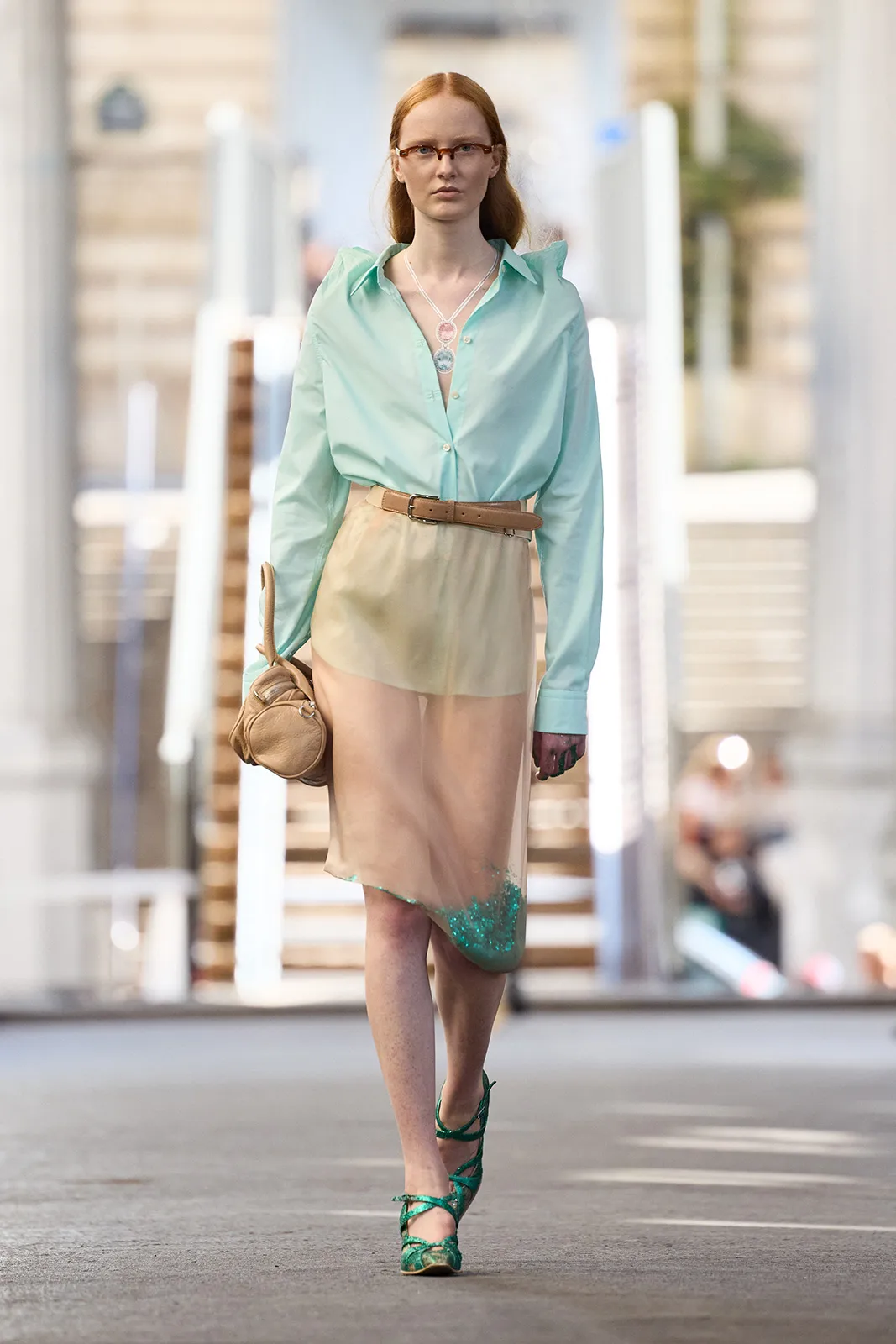
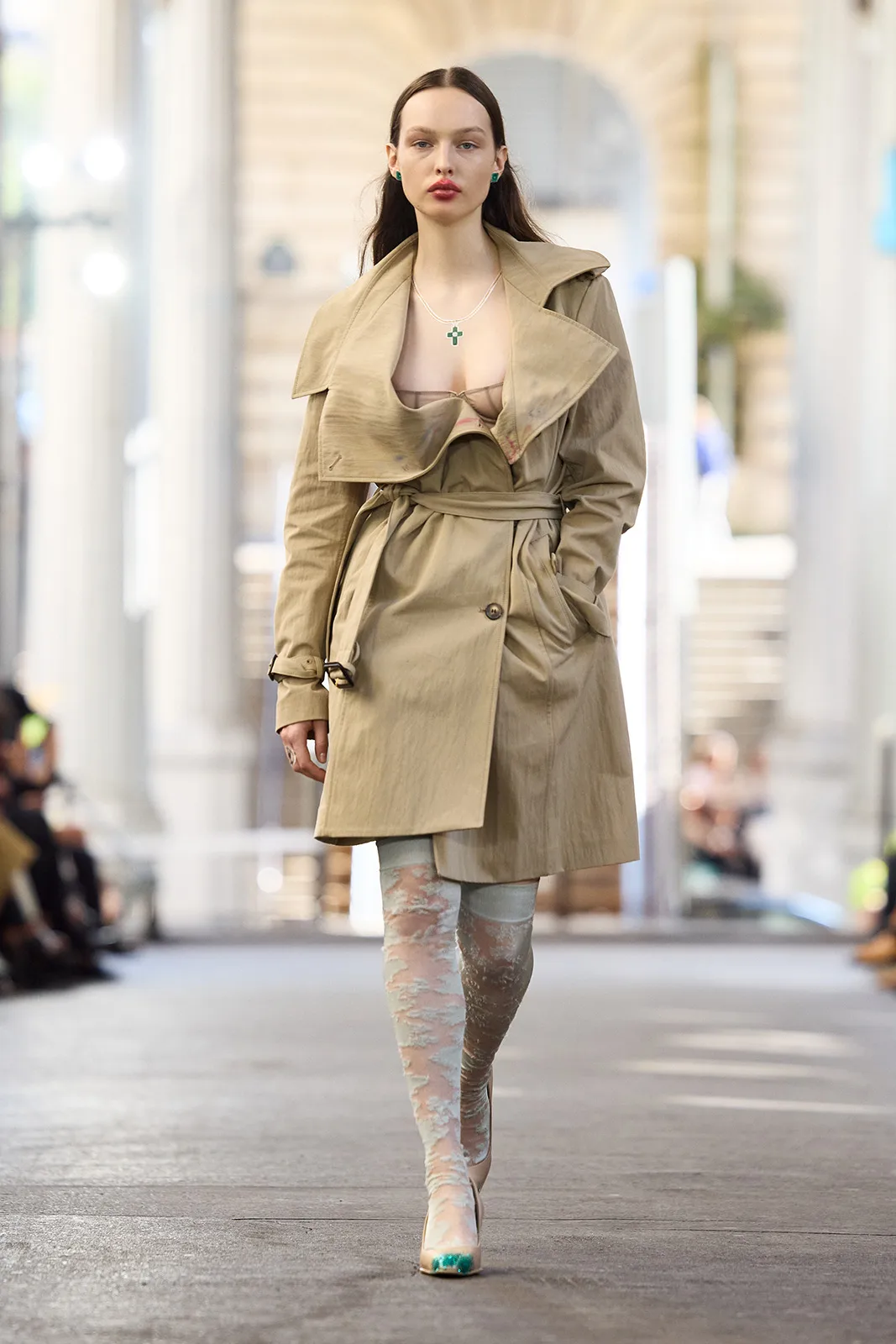
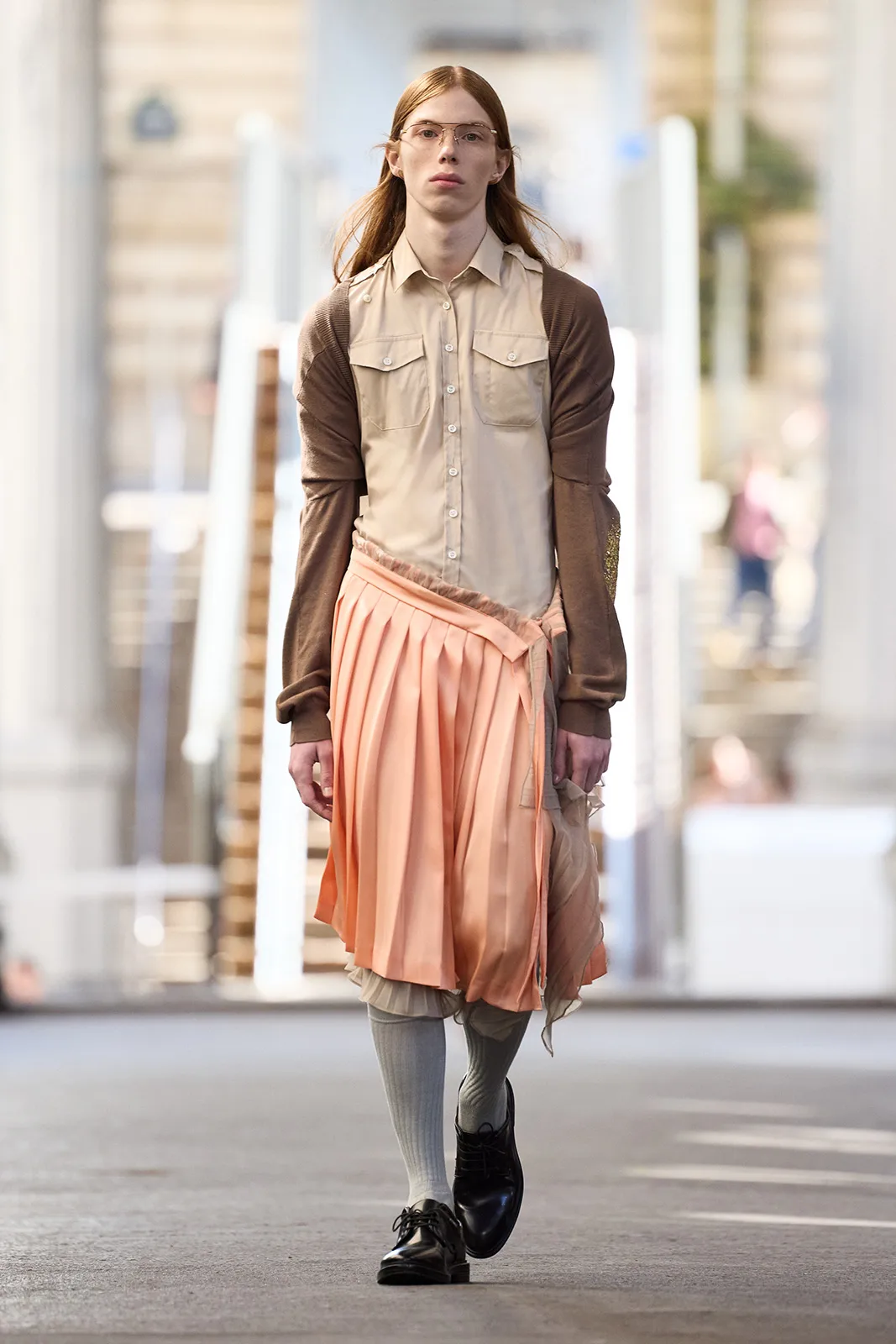
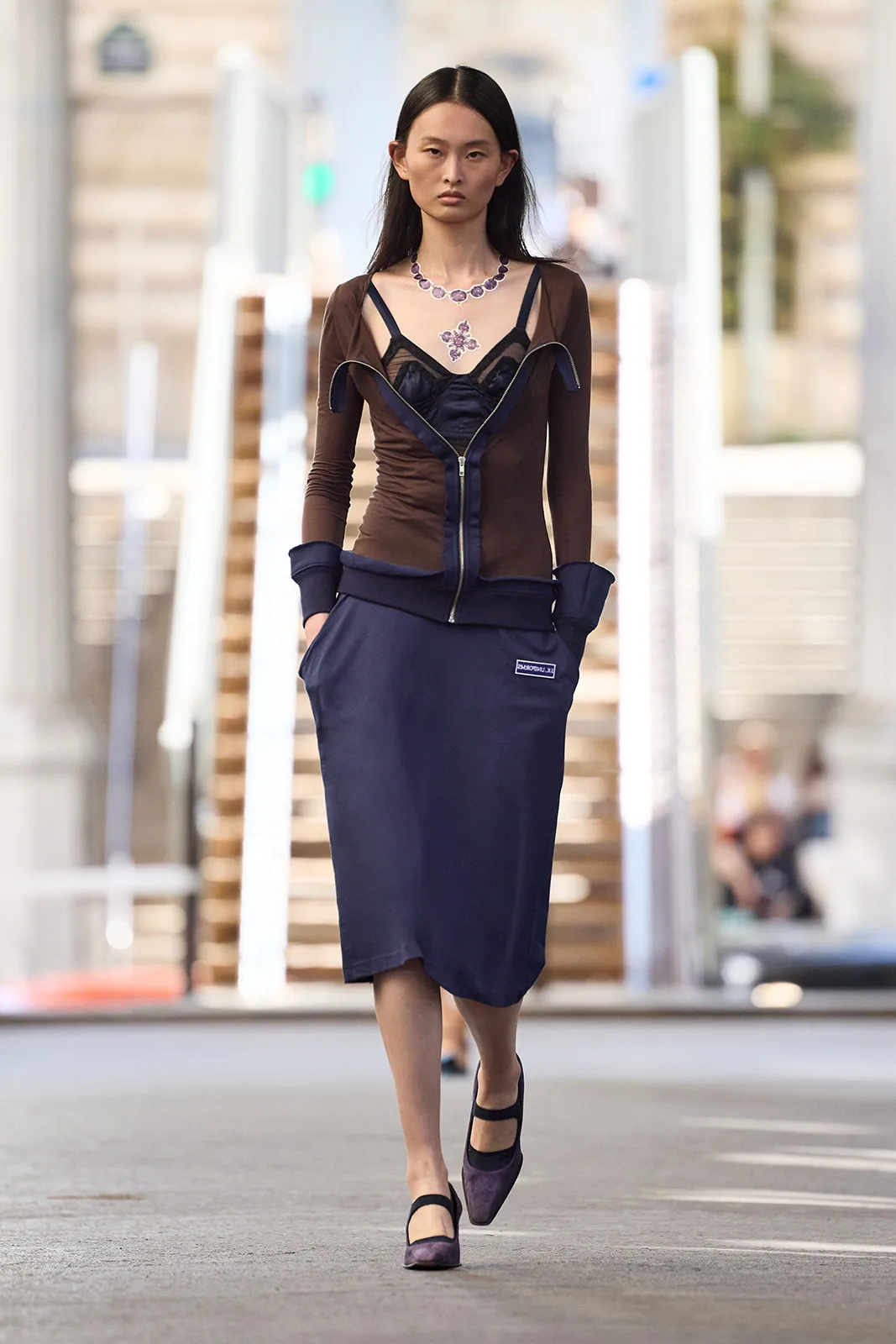
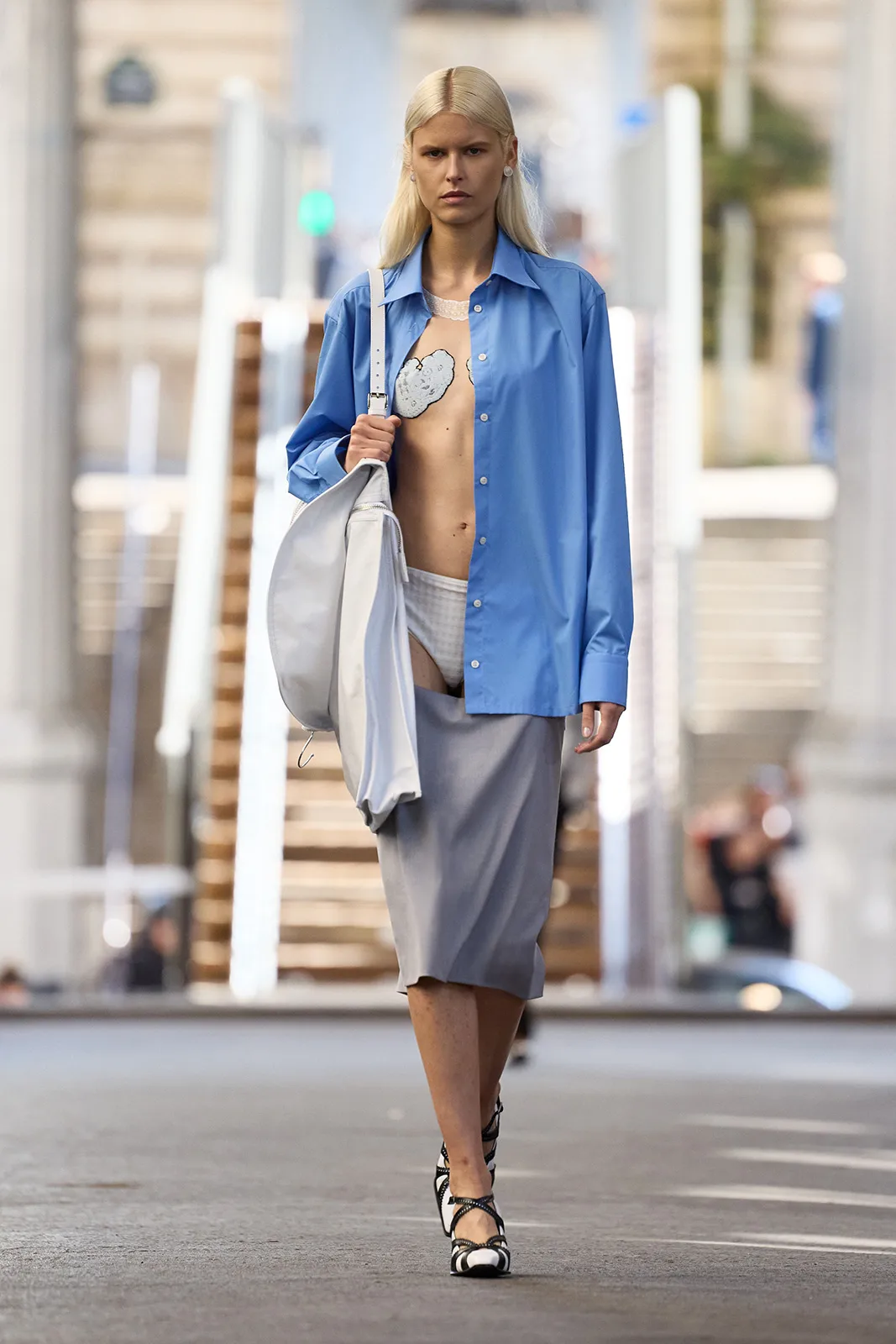
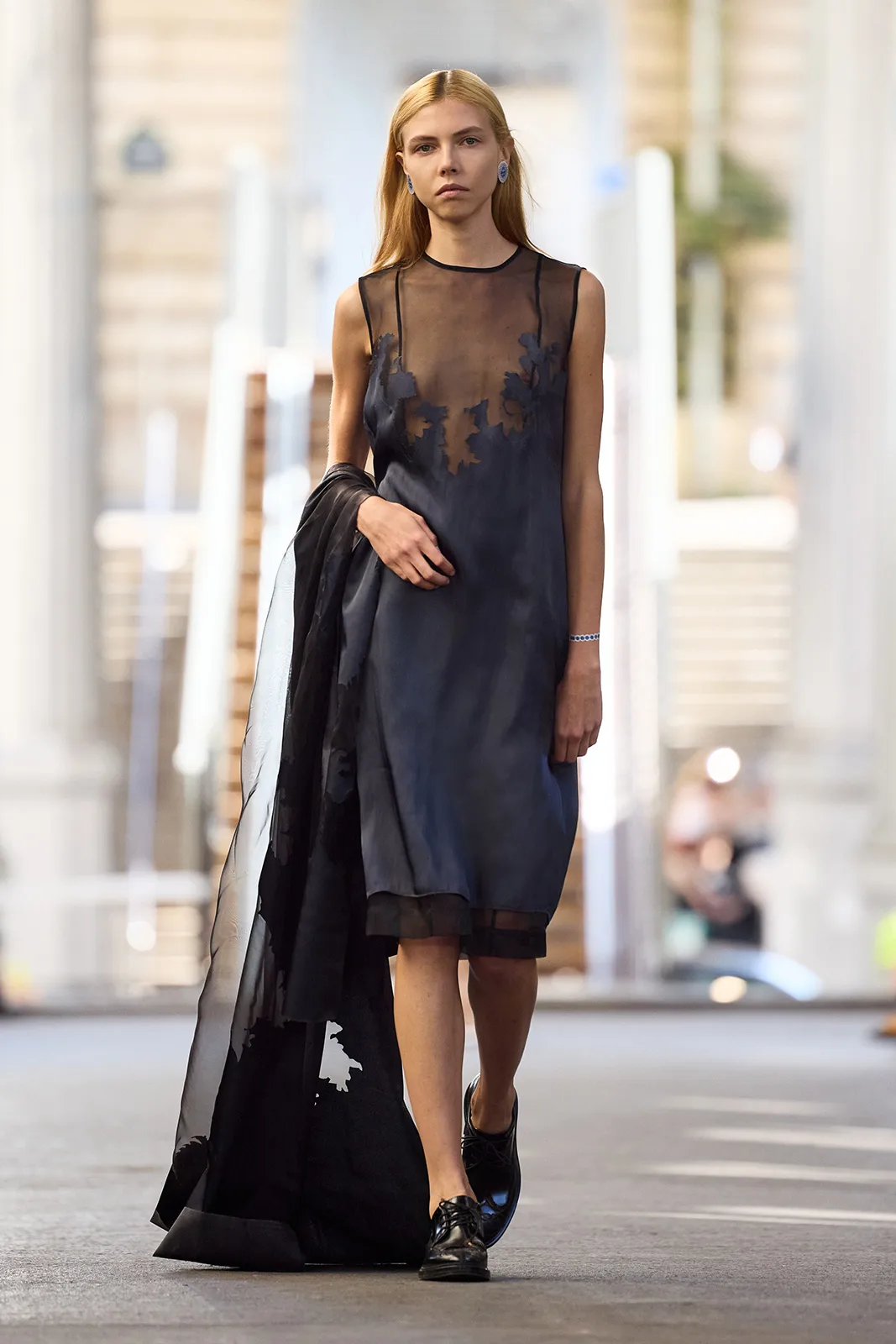
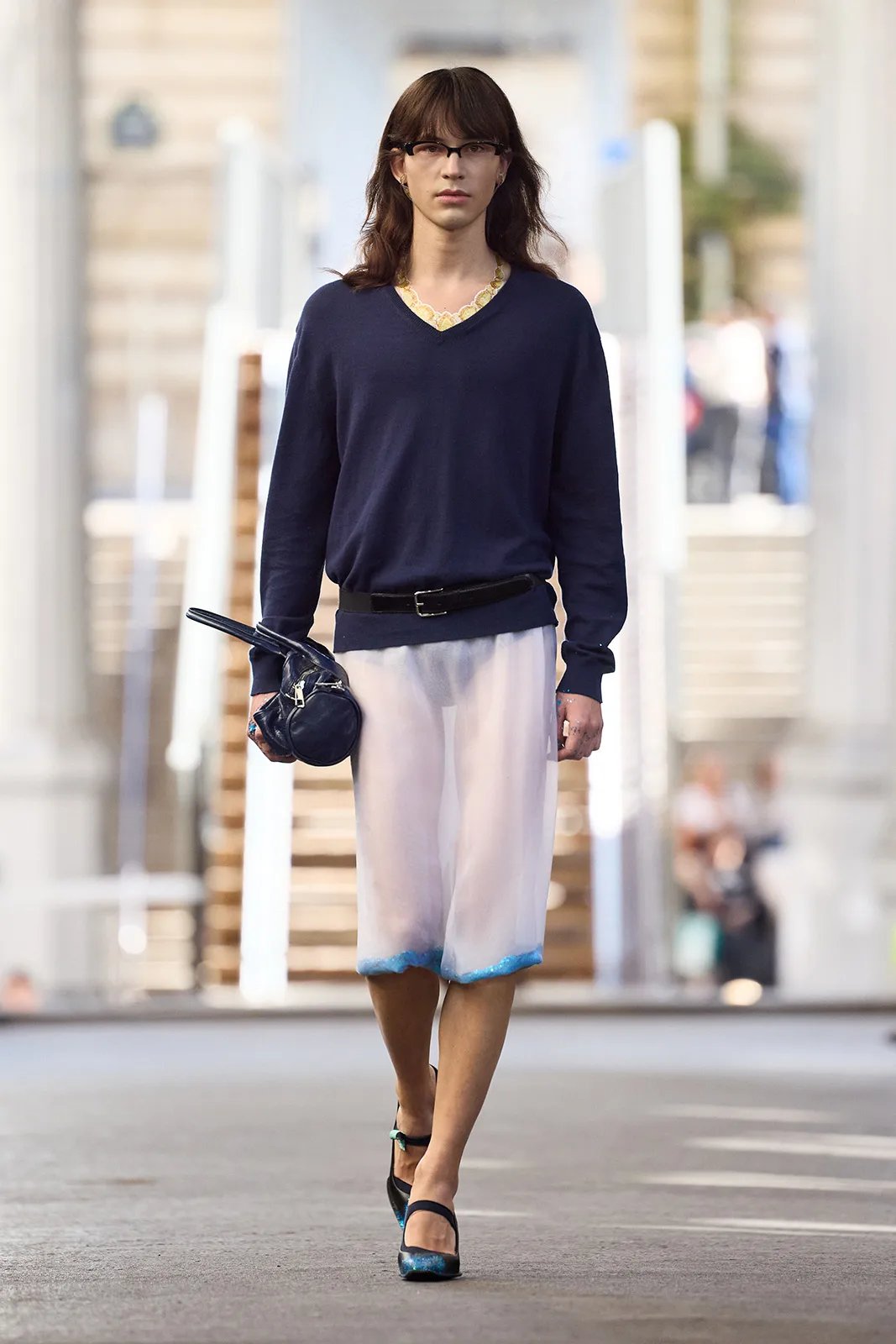
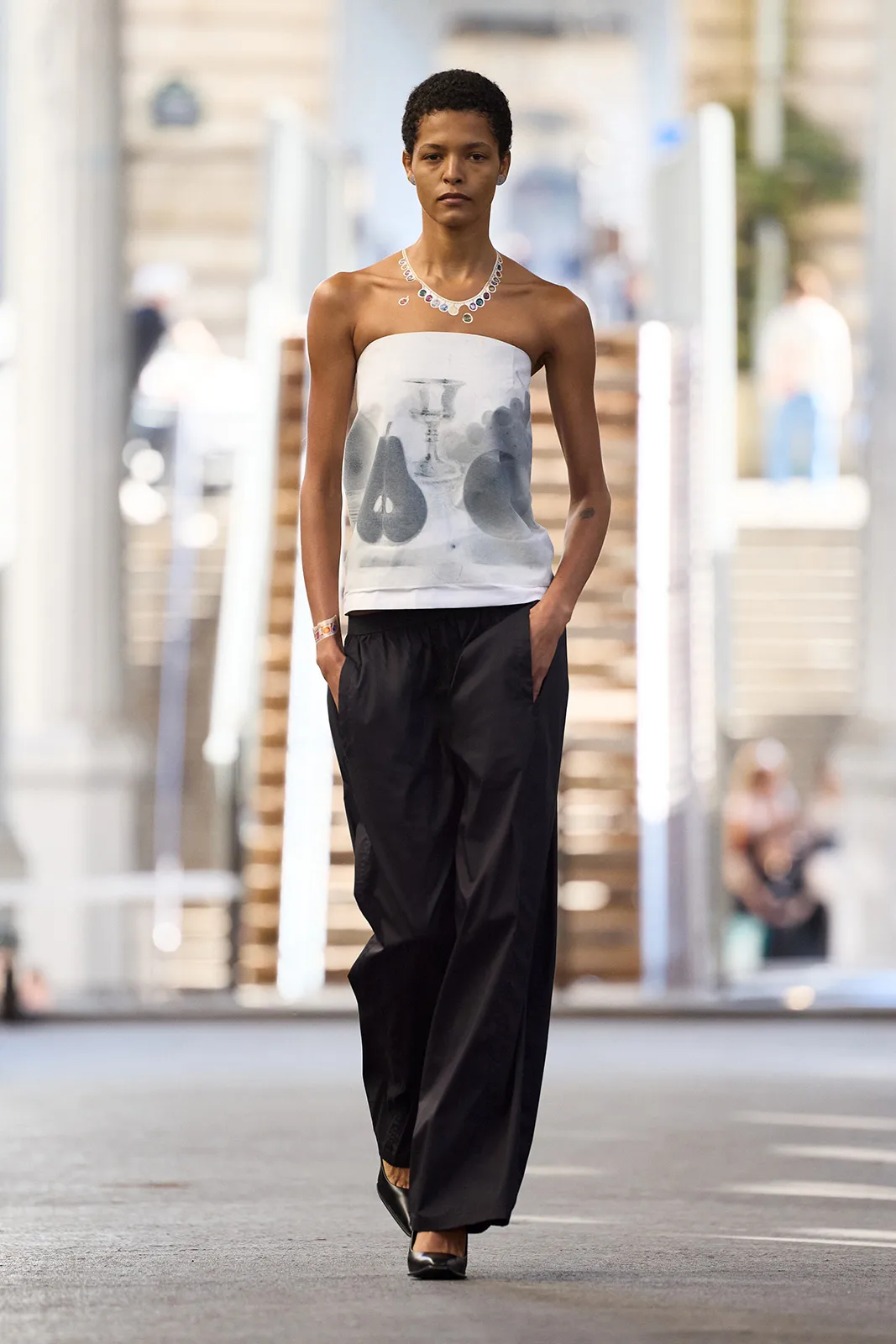
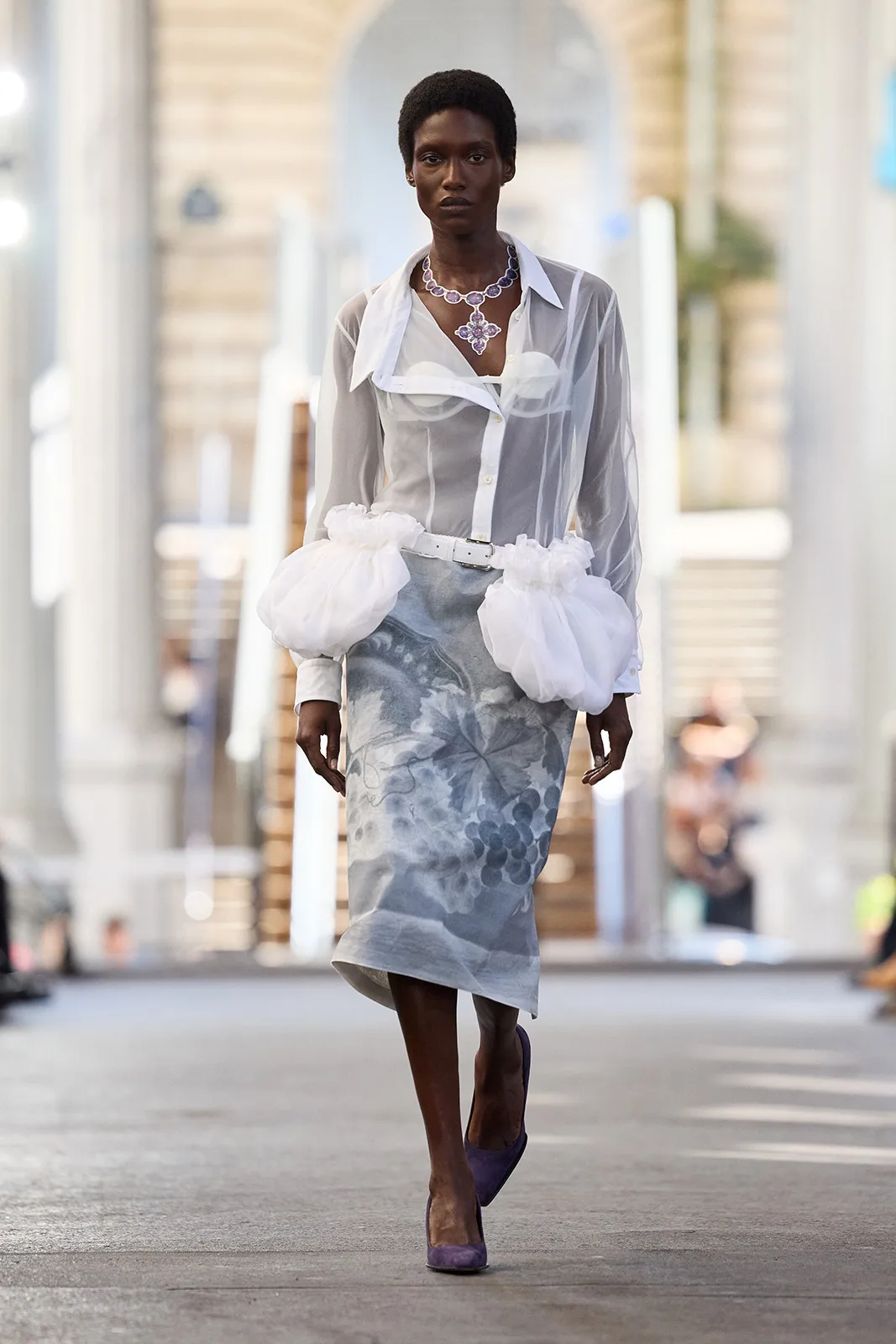
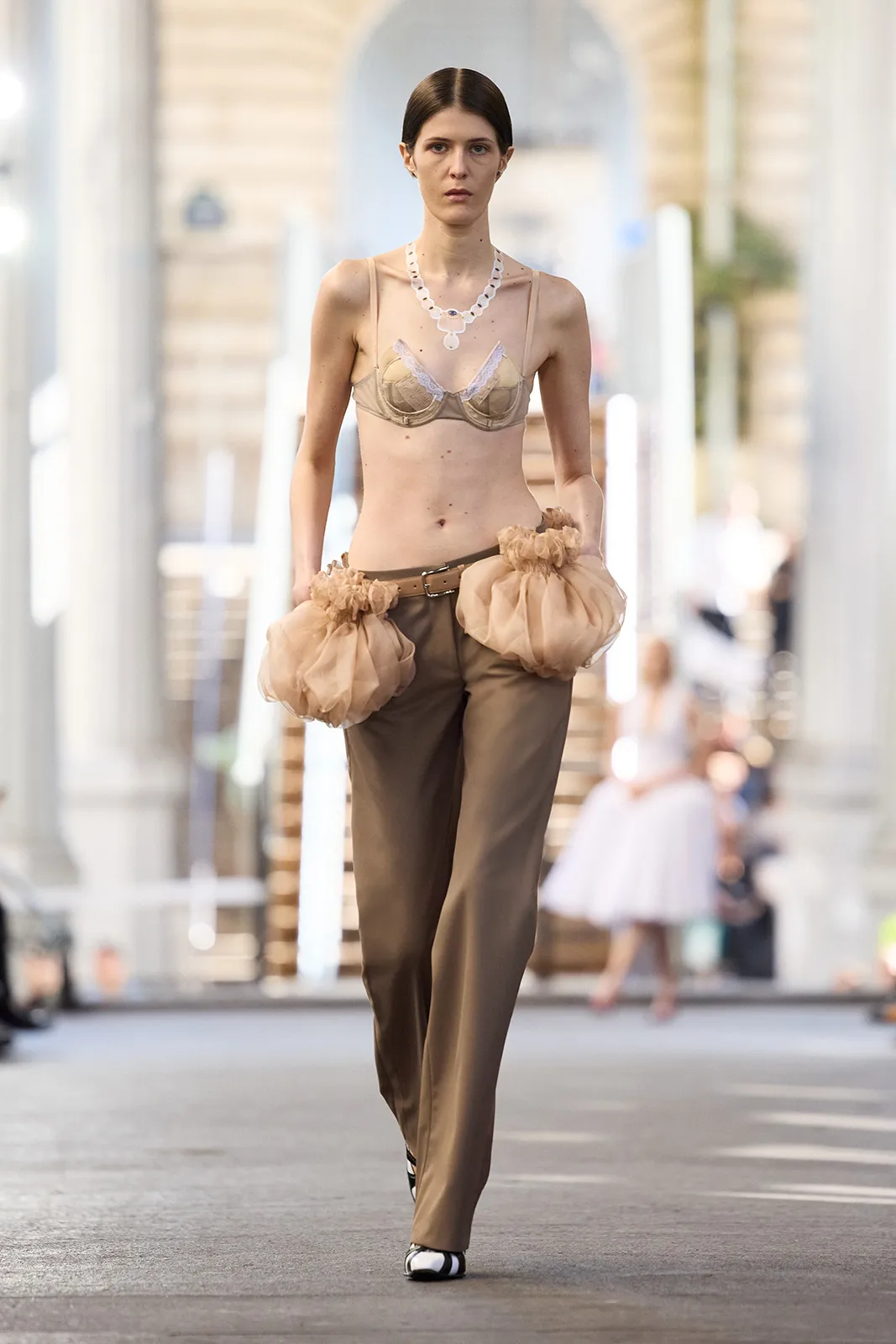
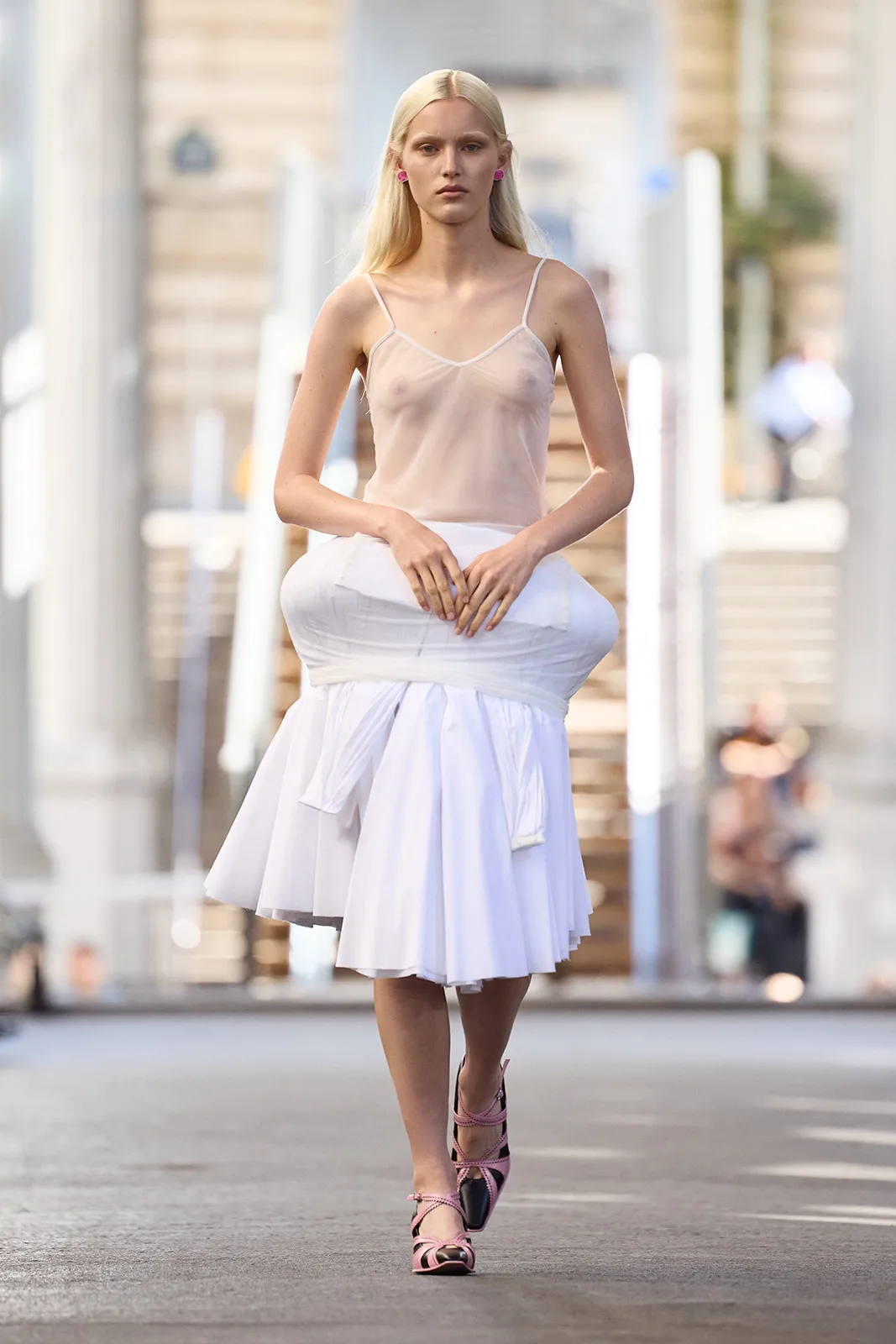
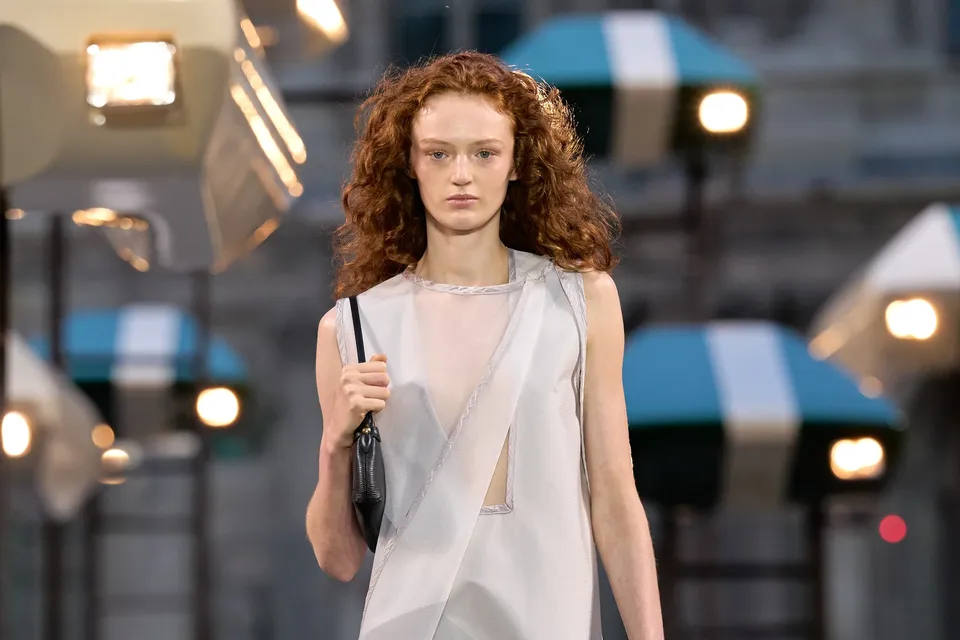
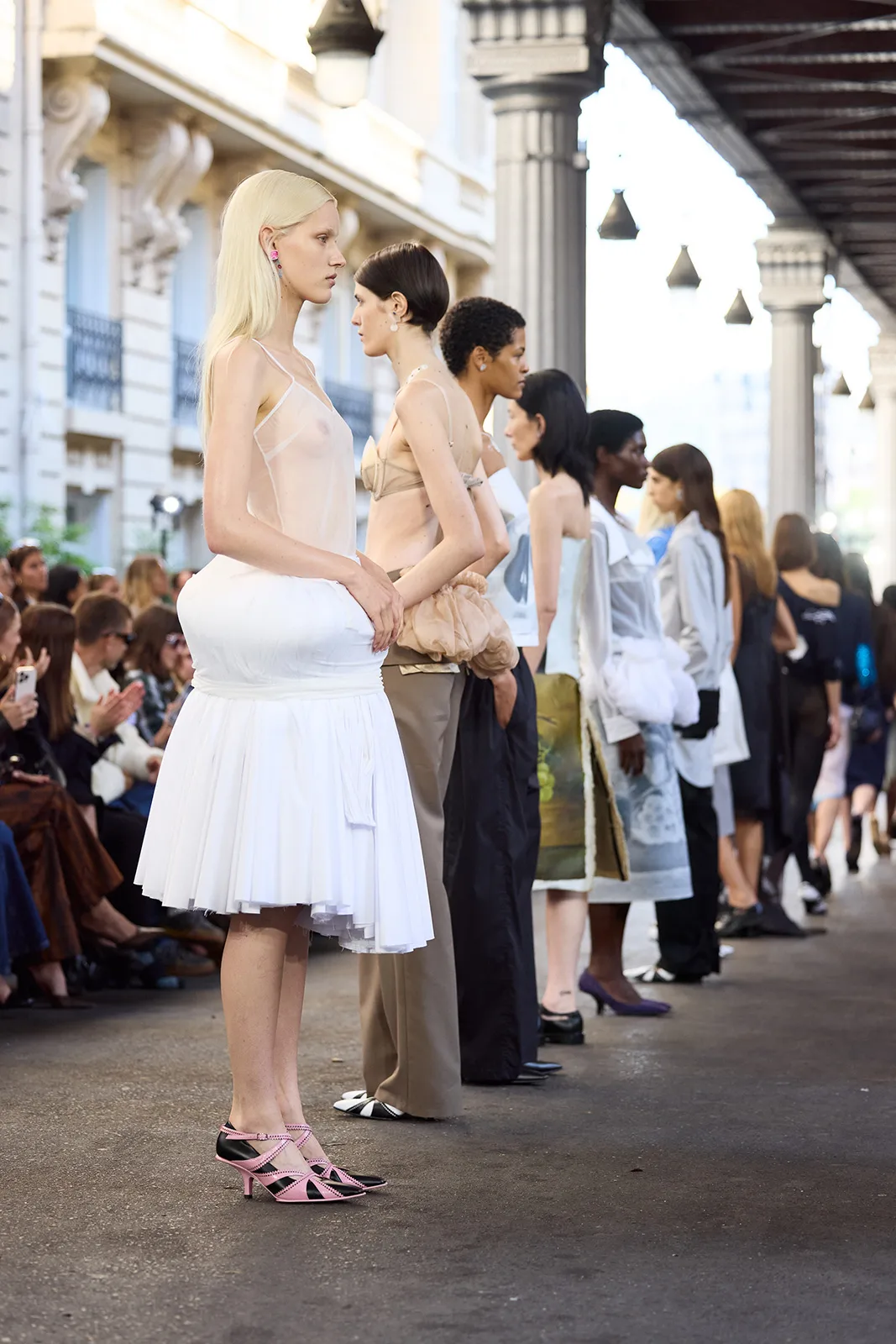
“Now here you go again; you say you want your freedom. Well, who am I to keep you down?” Dreams by Stevie Nicks plays in the background, and the question echoes beneath the Passy metro station while the collection unveils itself in a palette of pastel shades and black and white contrasts. The women seem to be rushing from the office to a party, transforming themselves from one persona to another. The looks aren’t perfect, but they make sense when you are in a rush and have no time to put on a perfect outfit: skirts are only half tucked, lingerie is exposed, and the collars of the shirts are stretched and stained with lipstick because there wasn’t enough time to open all the buttons and put the shirt on properly.
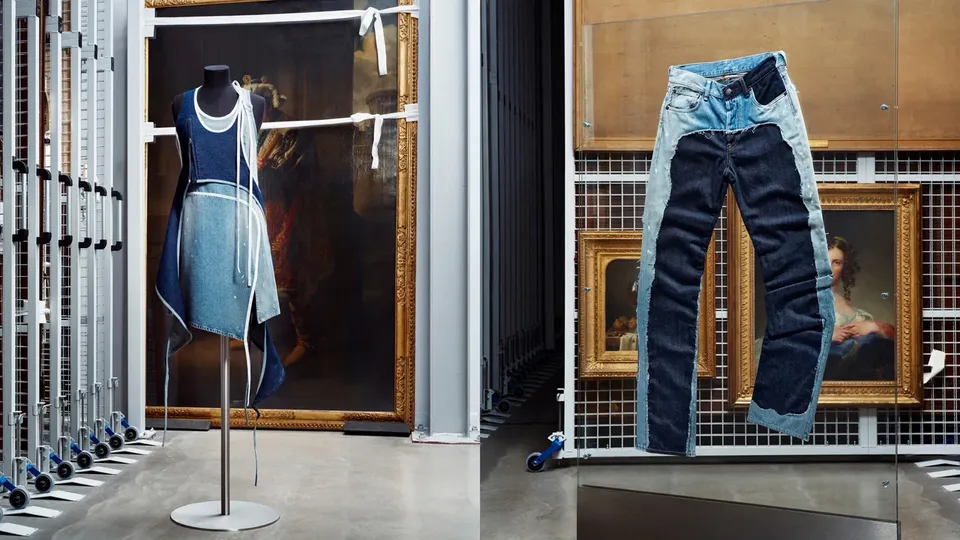
Like a magic trick, dresses unfold and become bubble skirts and slip dresses. Transparencies, layering, and prints become a playful language. A sheer skirt reveals the shirt tucked beneath. Uniforms are deconstructed and reassembled, undercut by slits and draped folds. Garment bags are reimagined as tote bags, reflecting the act of change and adaptation with a touch of humour.
A chorus of thirty-two voices overlaps, each carrying a tone of regret, and even if we feel almost suffocated by this stream of consciousness, there is still a glimmer of hope: we can end up like Vitangelo, filling our minds with endless questions until we are consumed by how others perceive us until we become no one, or we can just embraces the chaos of our hundred thousand personalities that together shape the one.