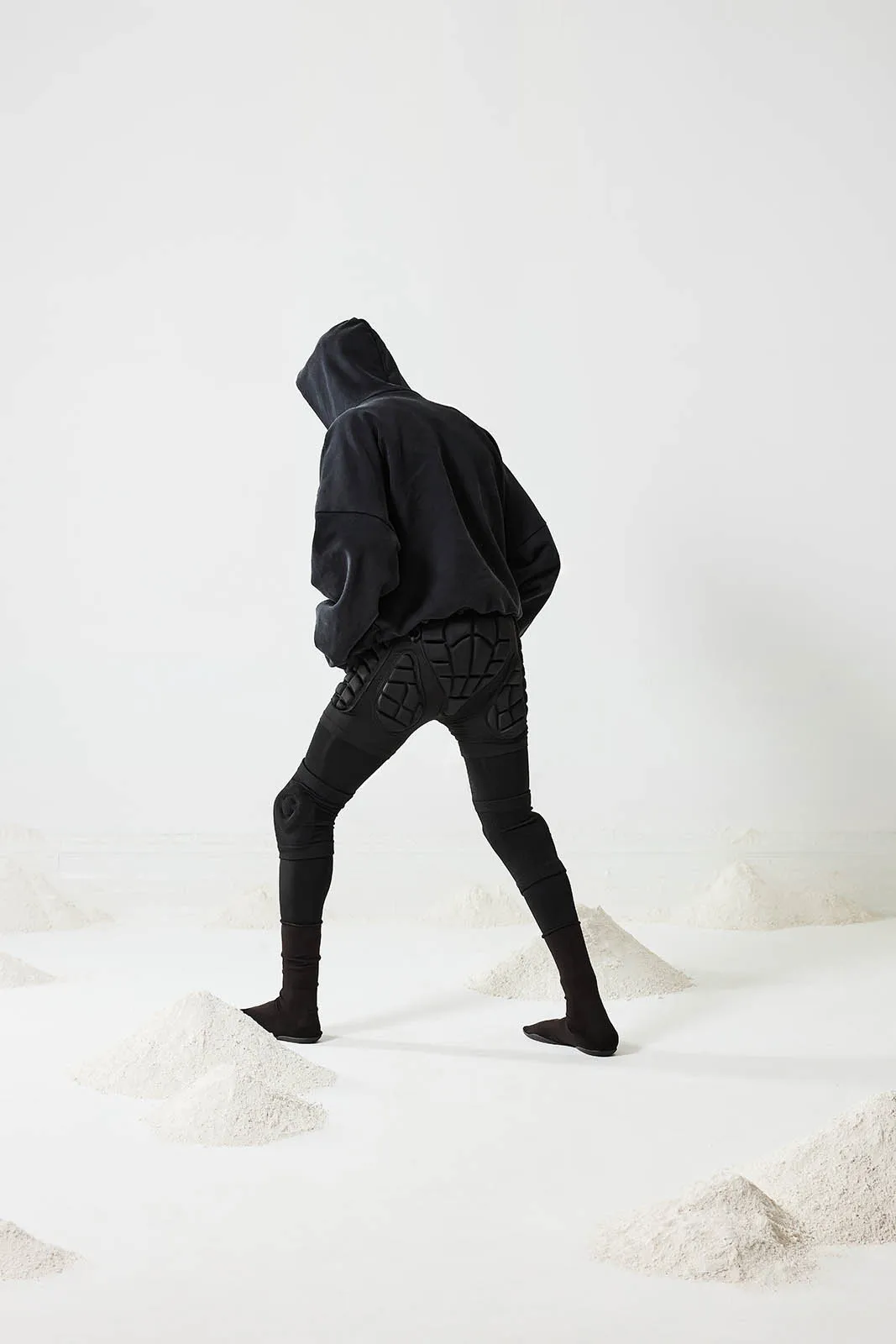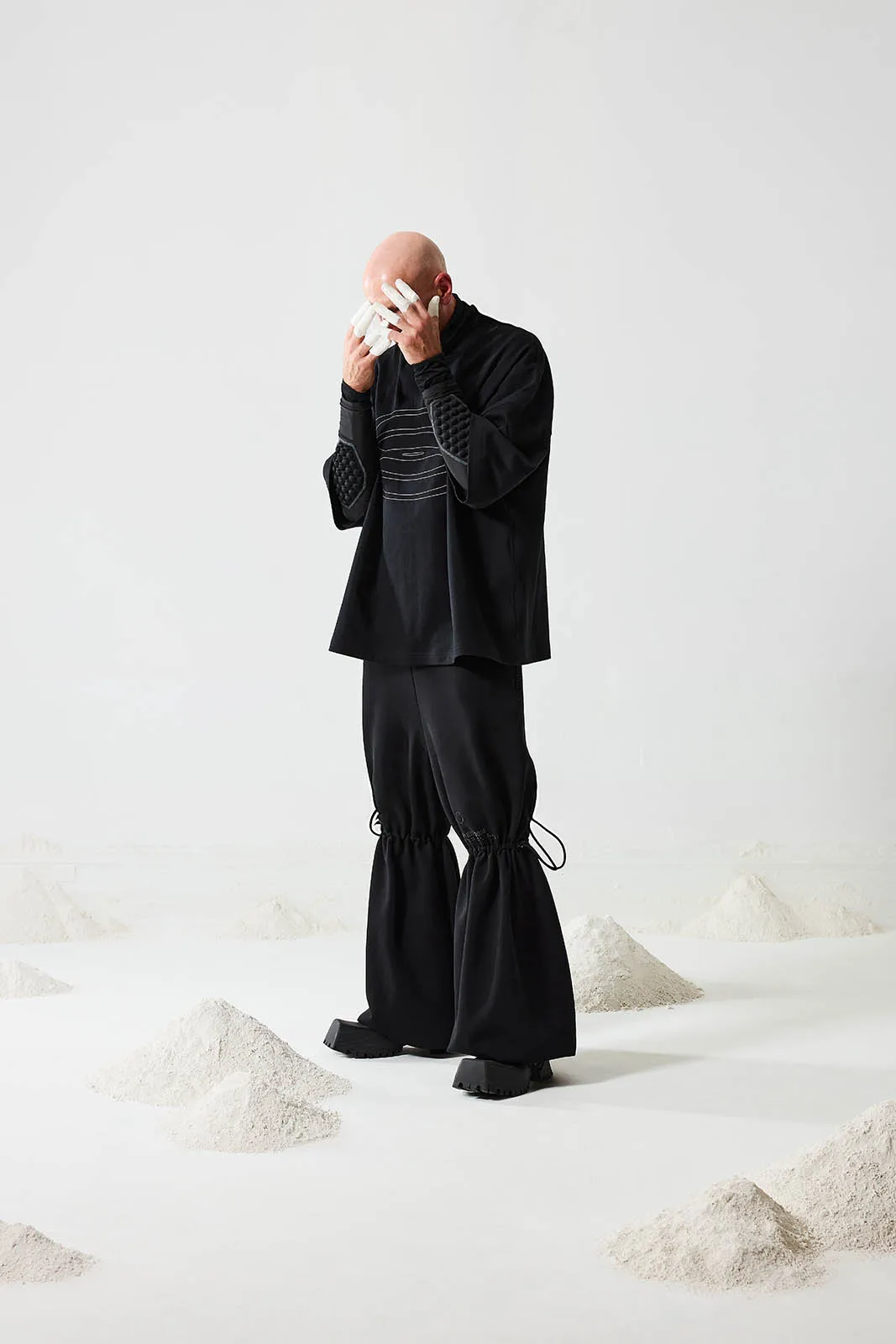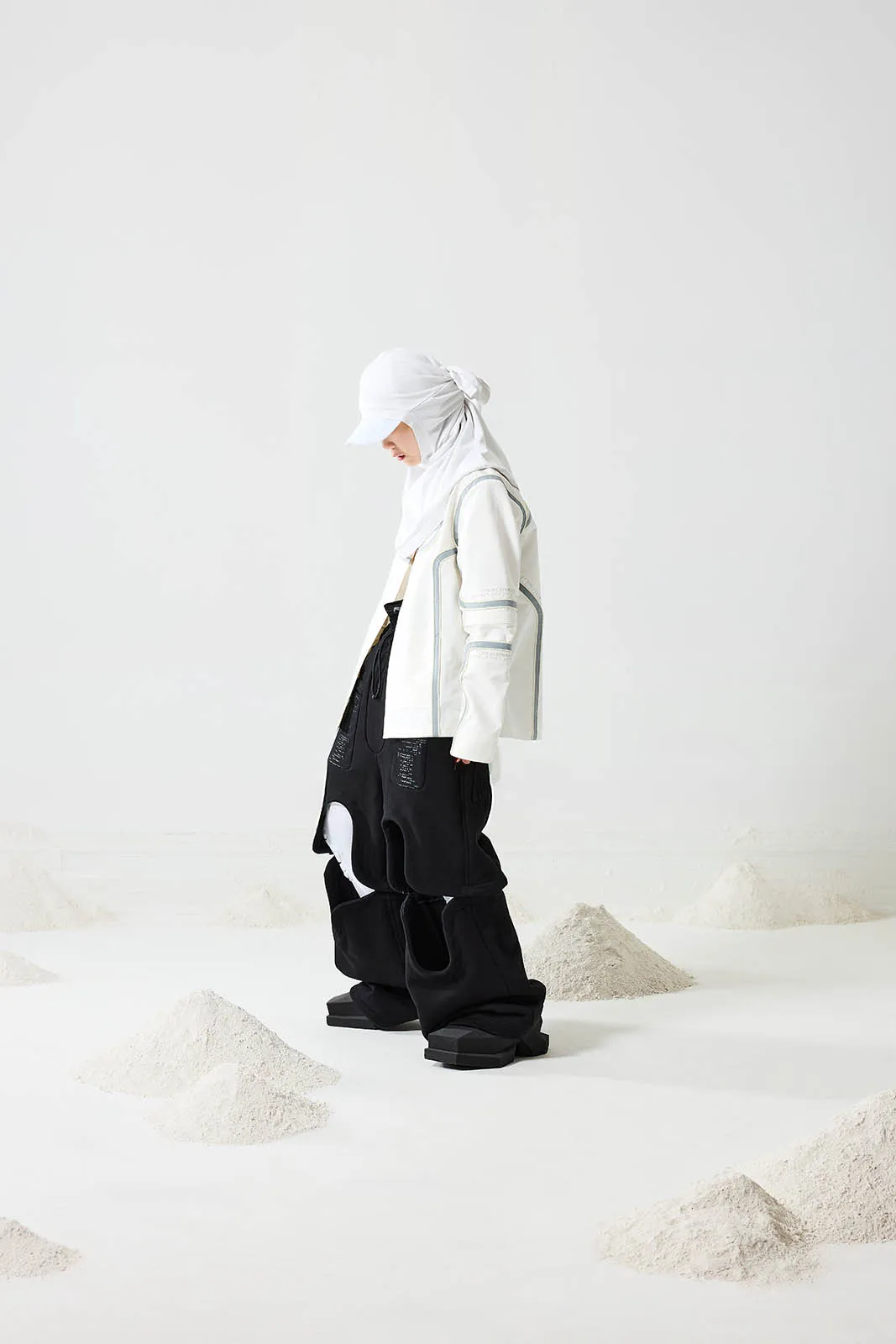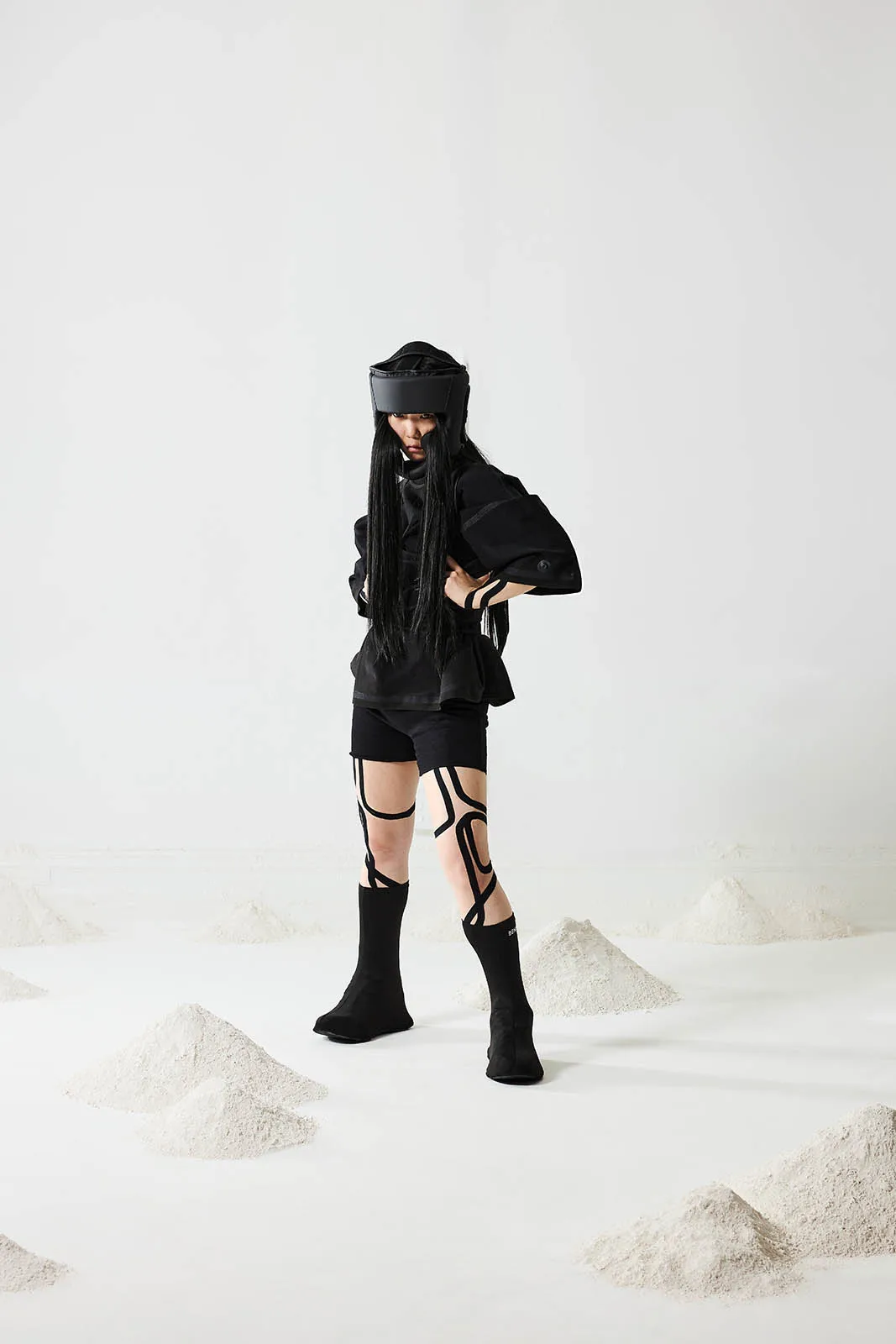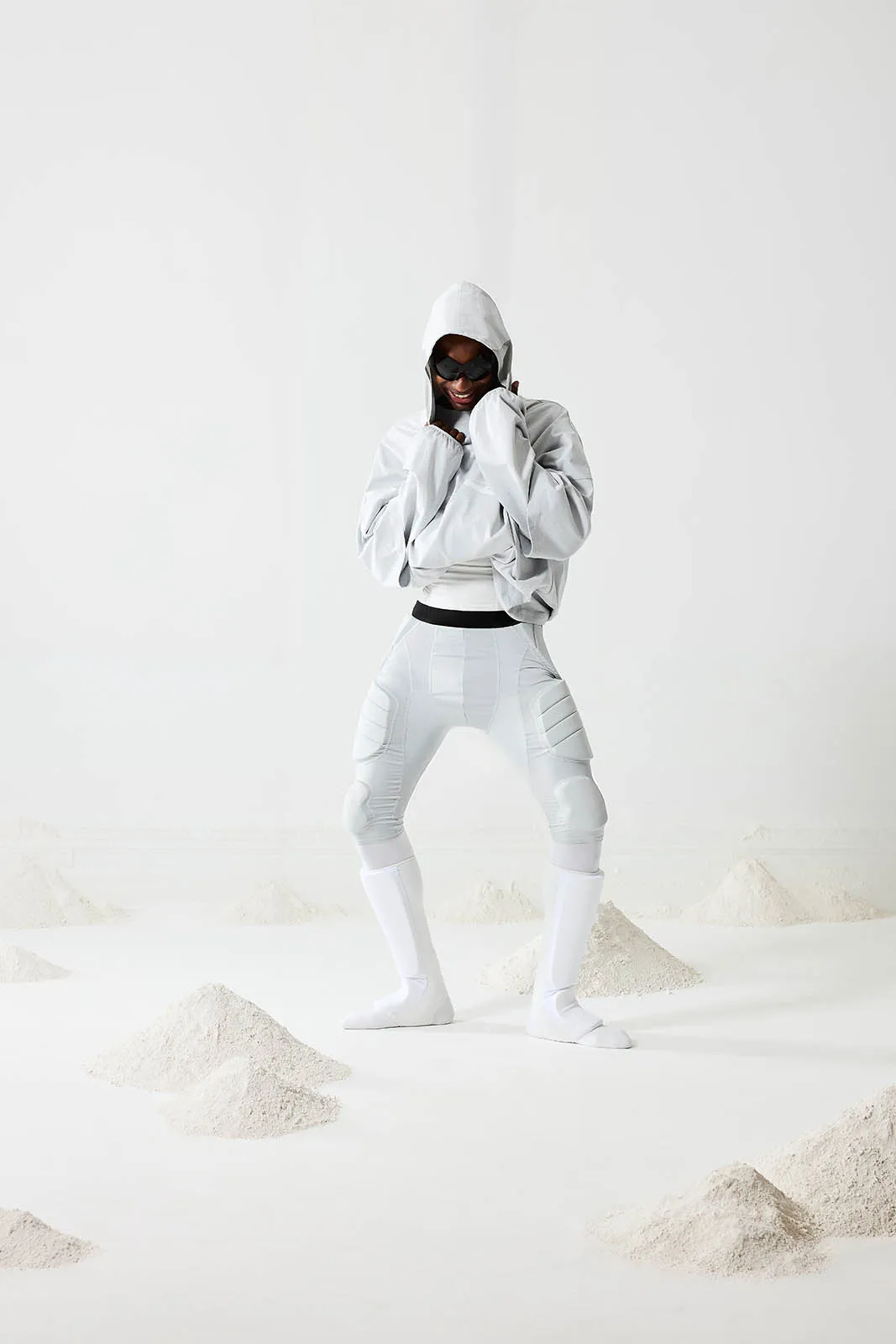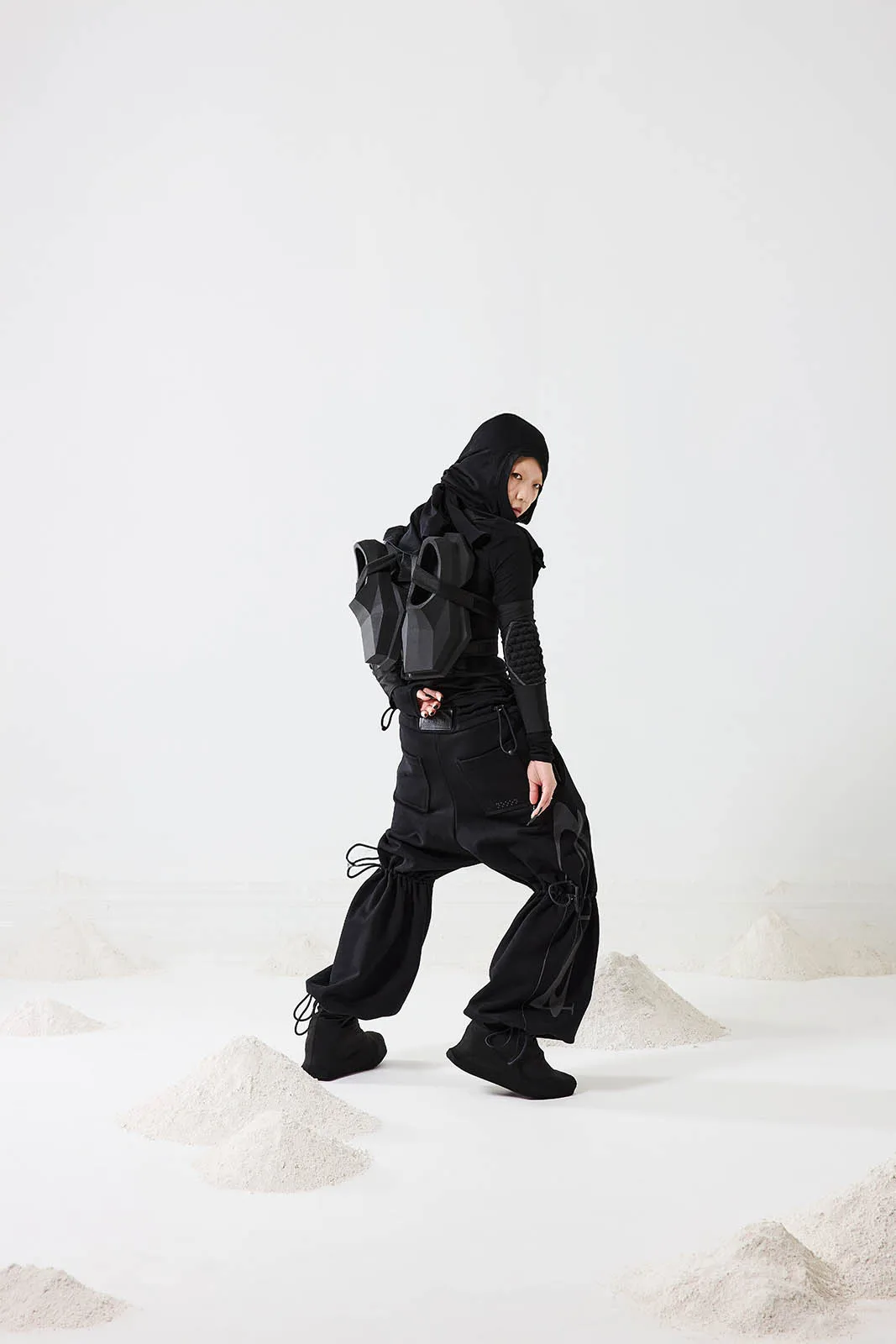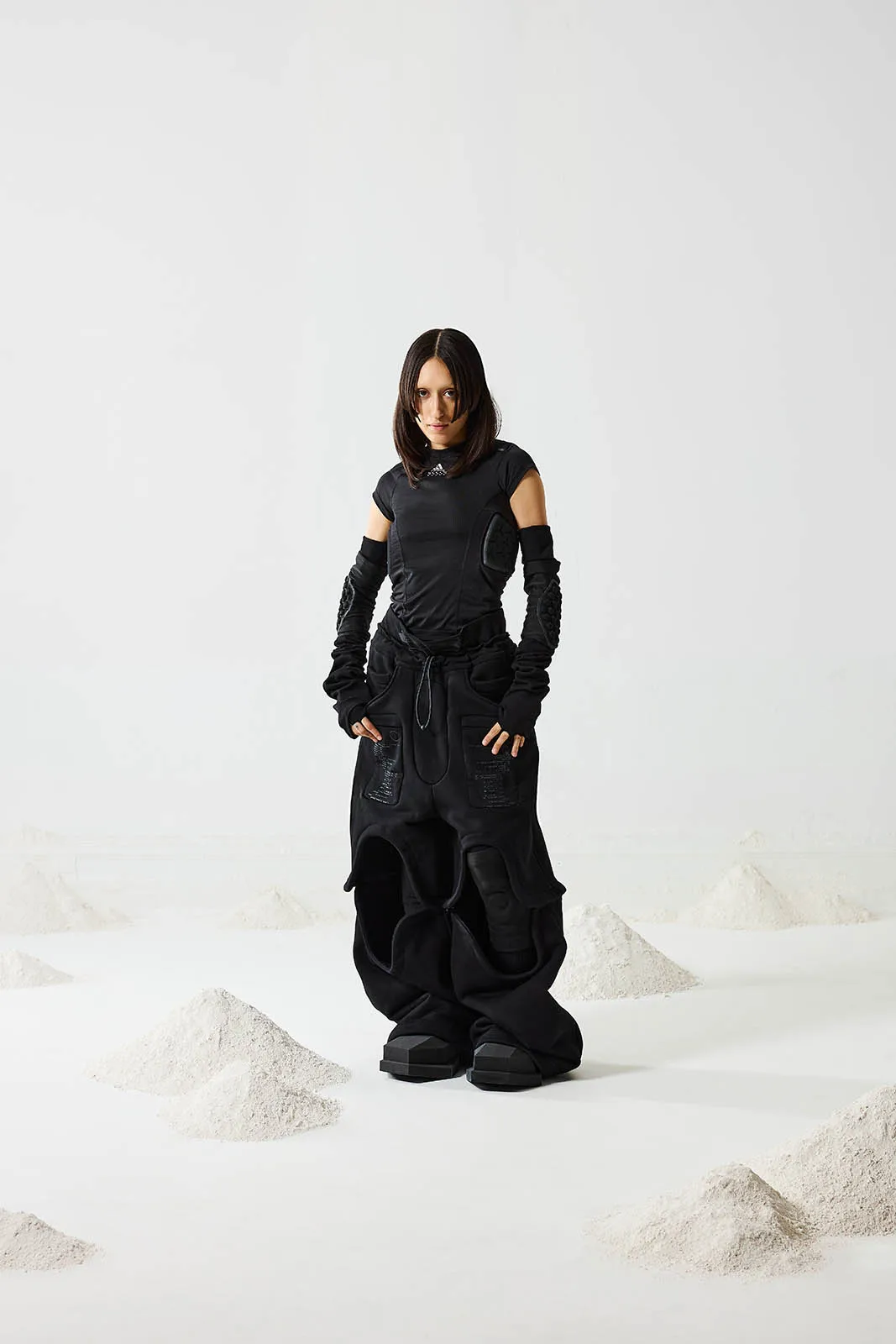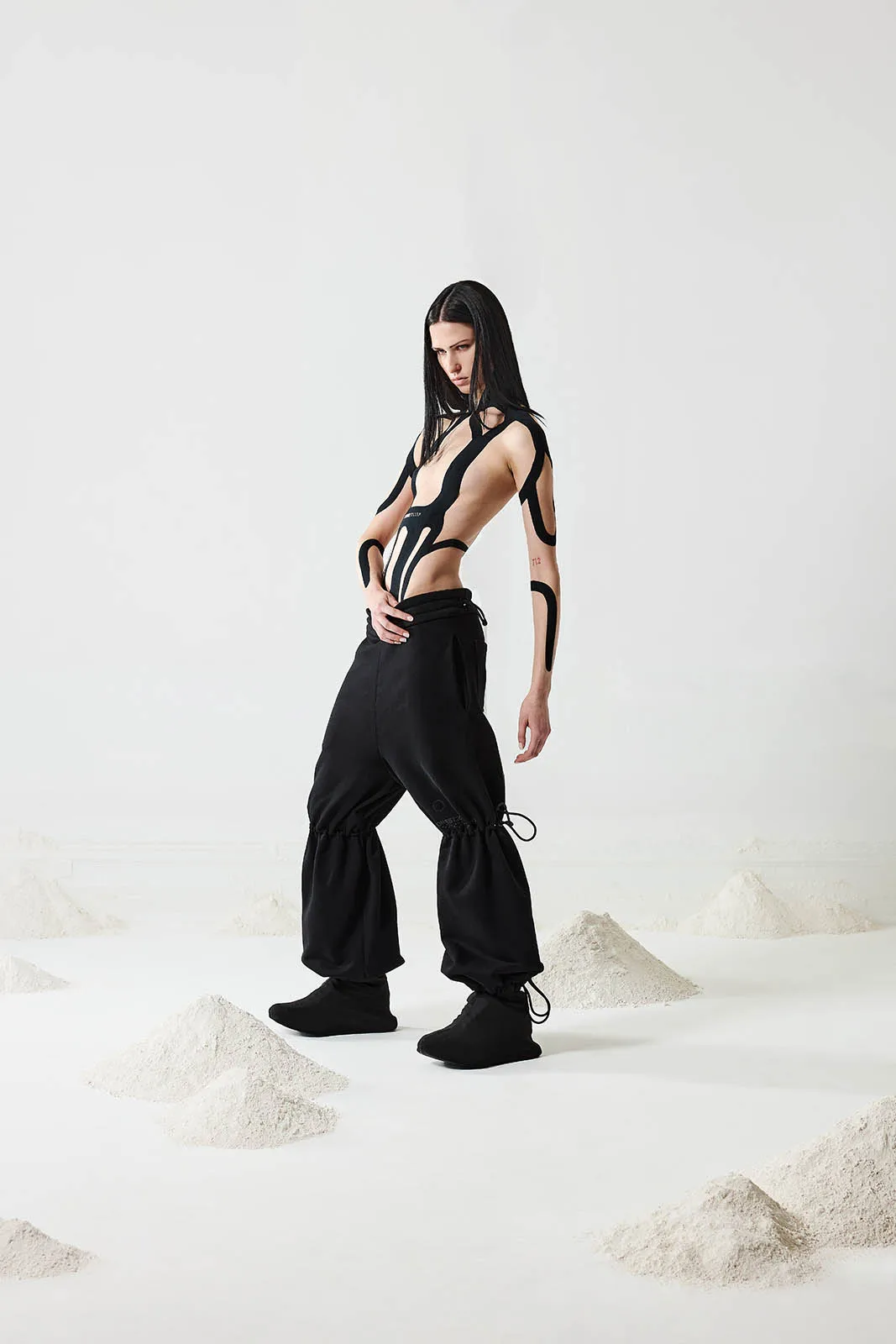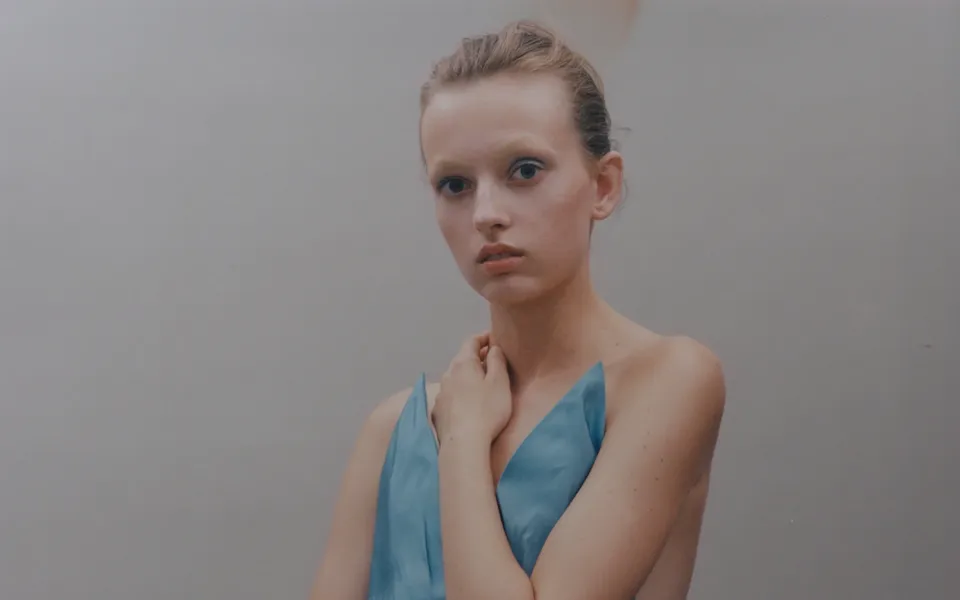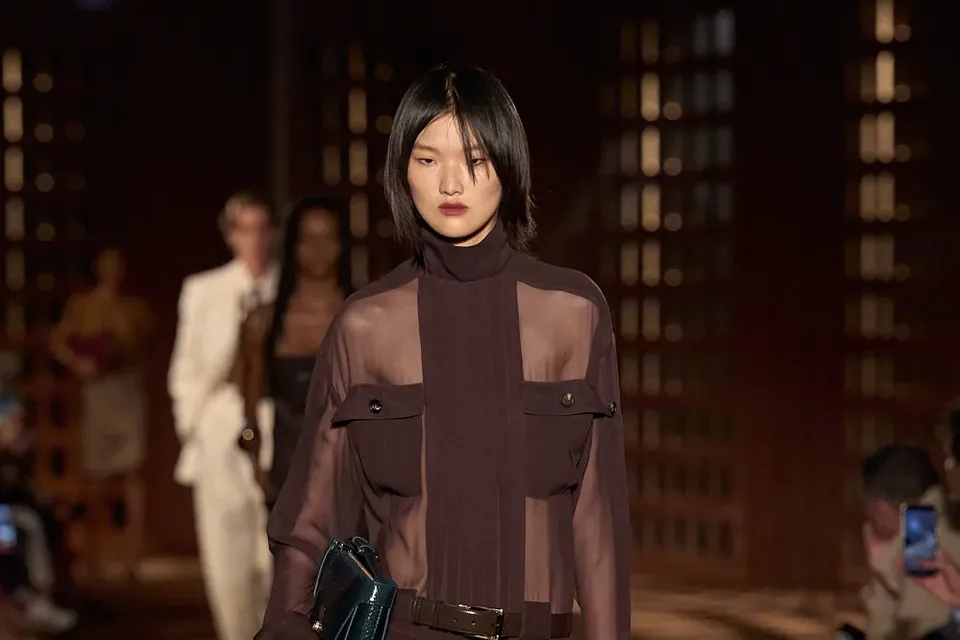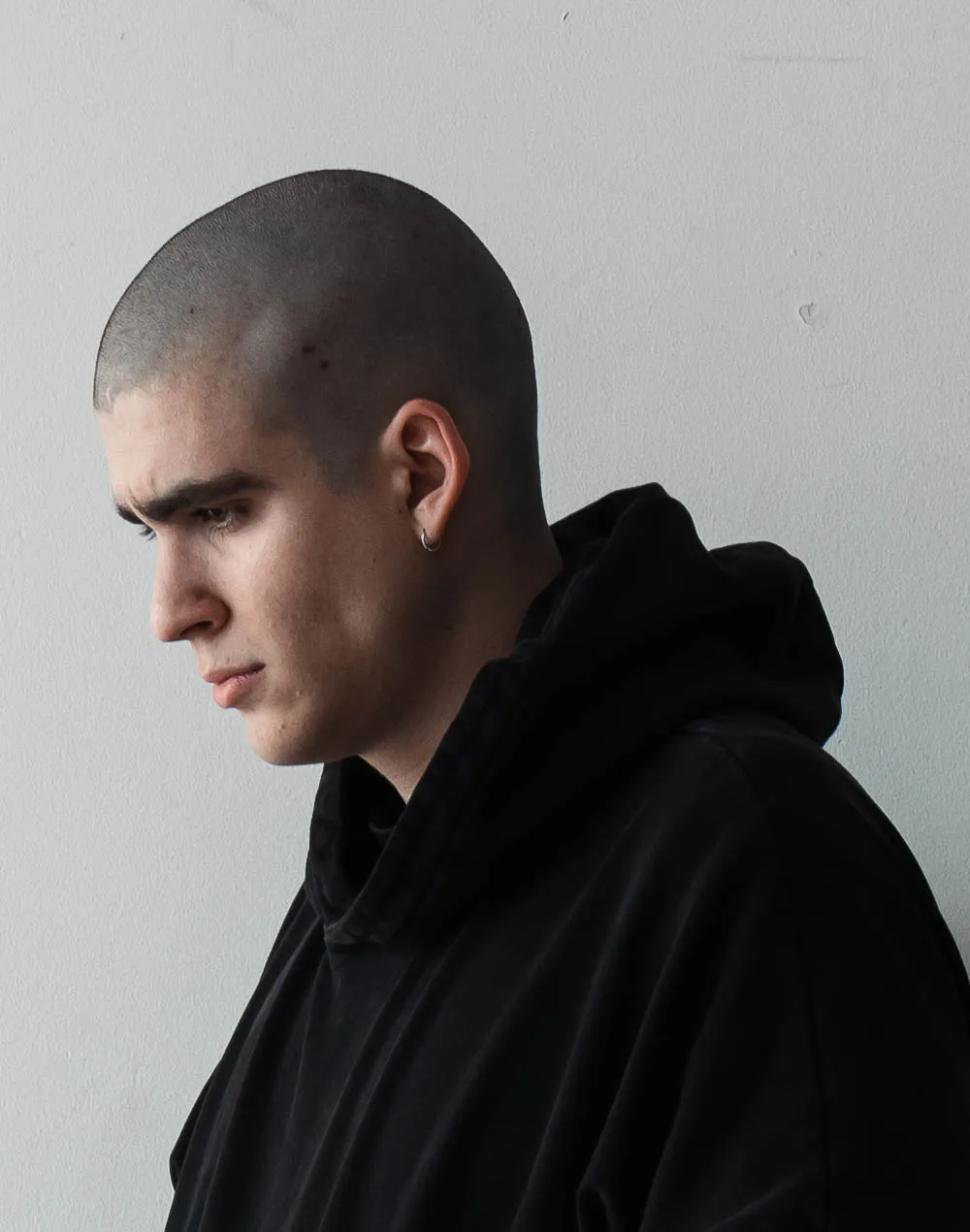
Form follows function. Shape derived from purpose. At least, that’s the design principle that American architect Louis Sullivan, as well as the members of the Bauhaus, taught us in the late 19th and early 20th centuries. And while they were stuck in the eternal debate over whether this design principle allows for ornamentation or not, there’s one rising fashion designer and creative director who seems to have the connection between design and purpose figured out: Jose Peon, the Cuban-born Parsons student and founder of the brand Nooon.
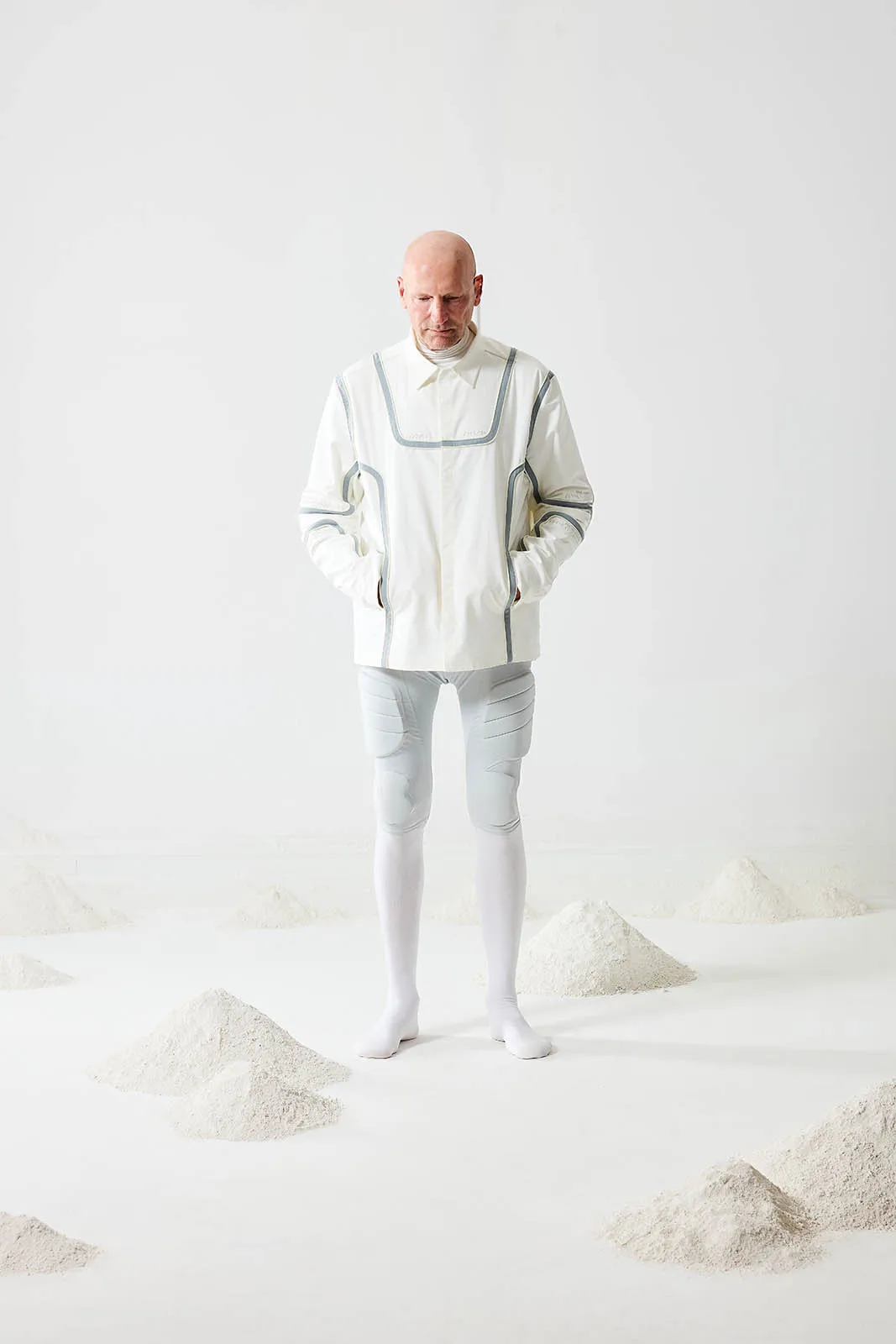
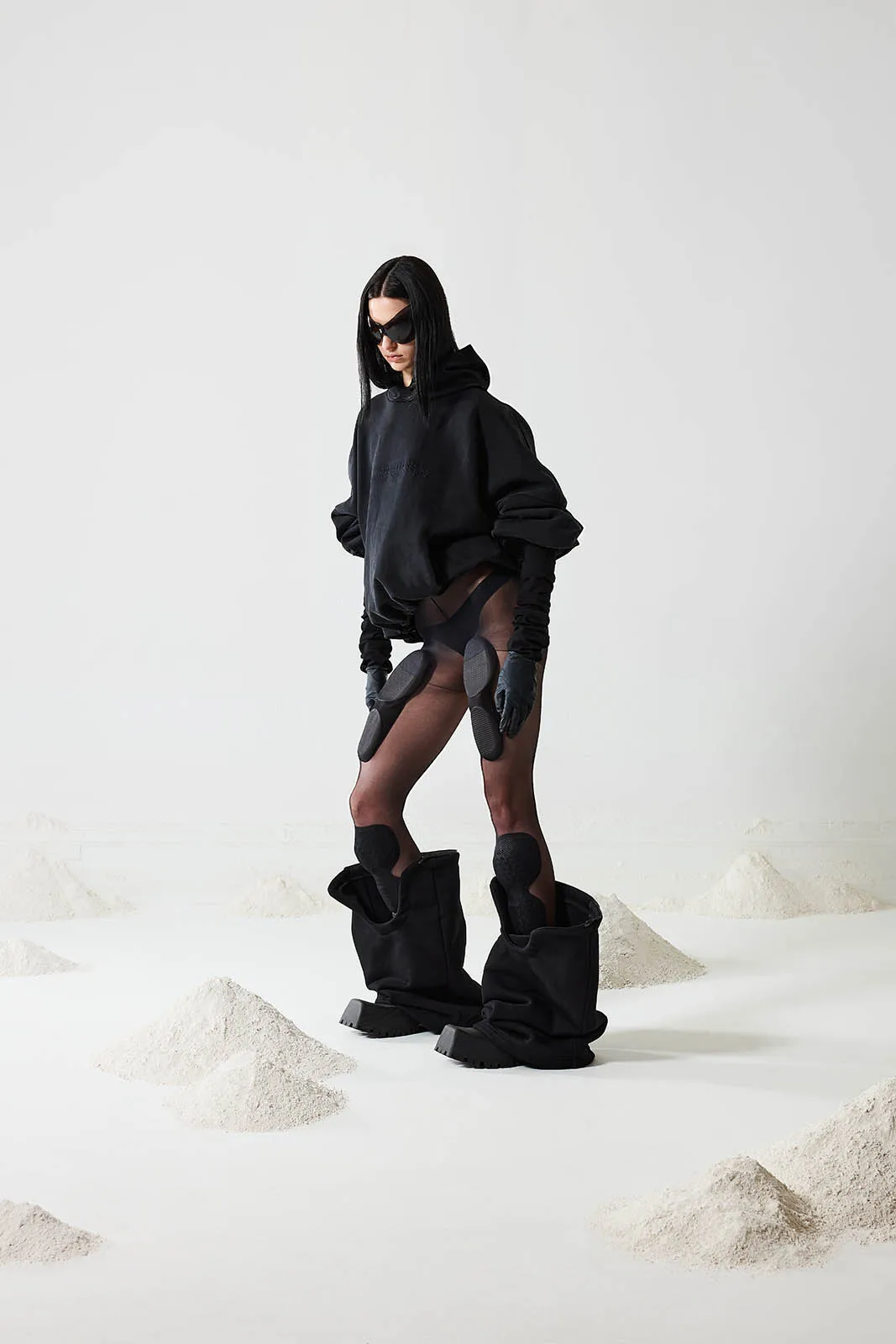
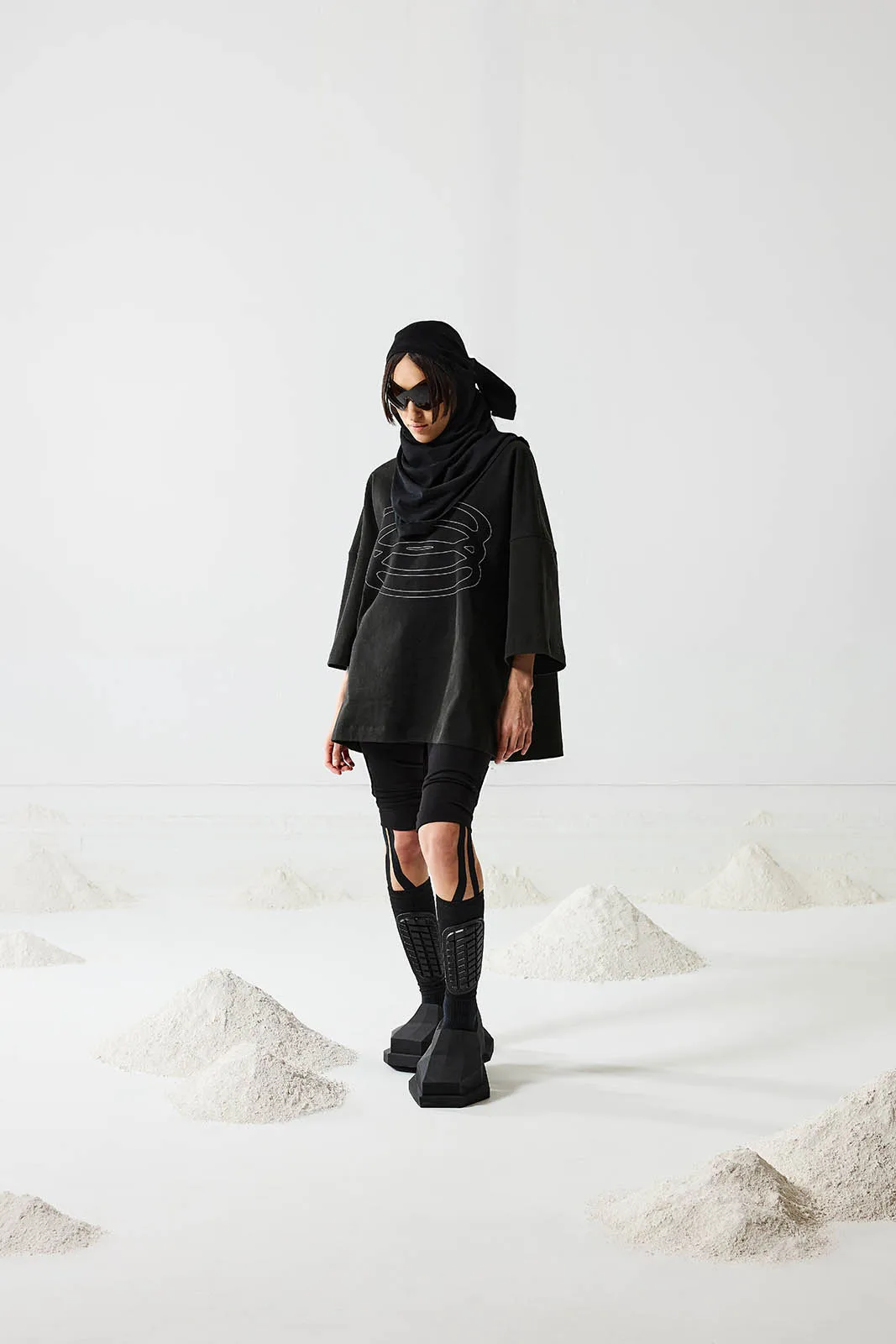
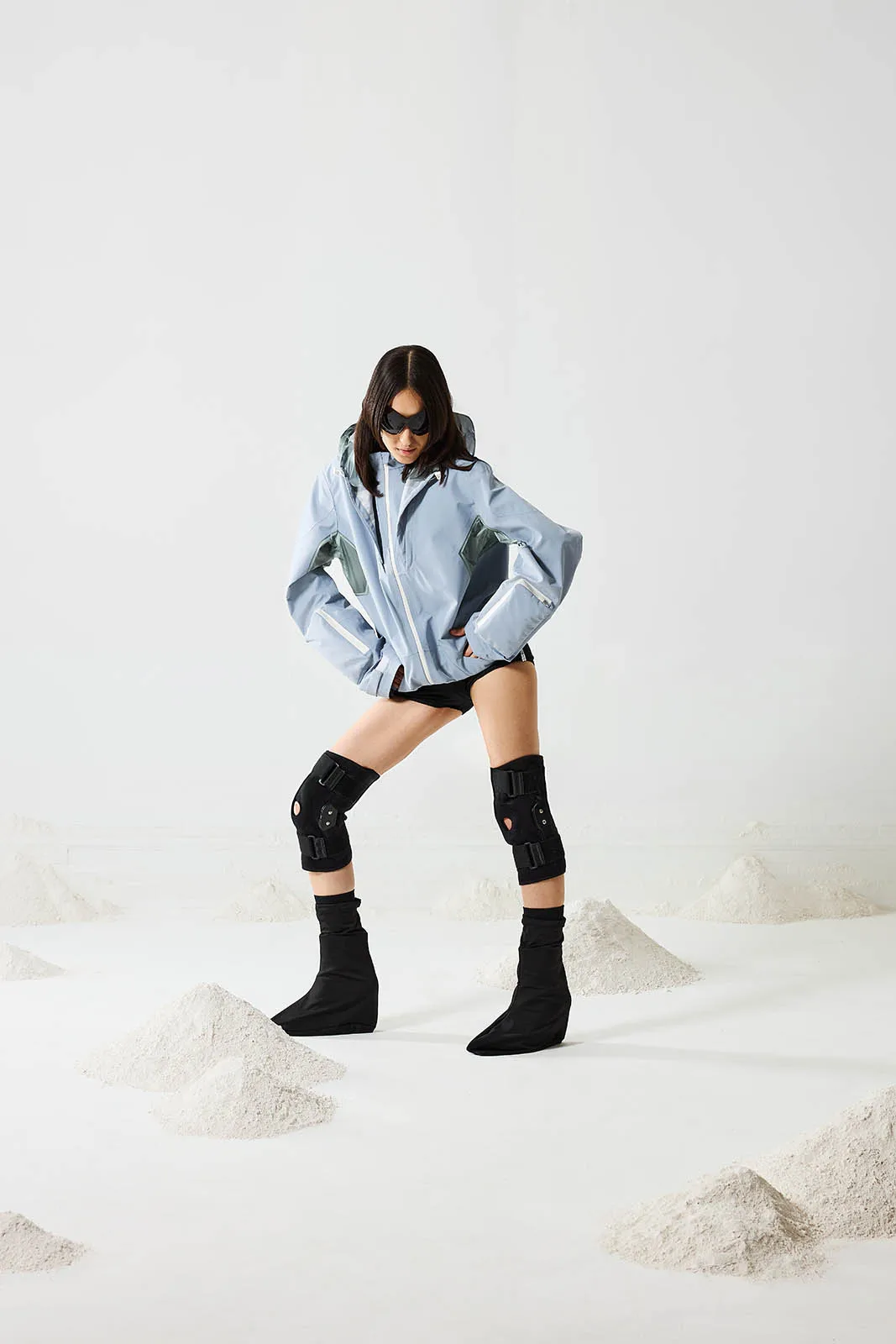
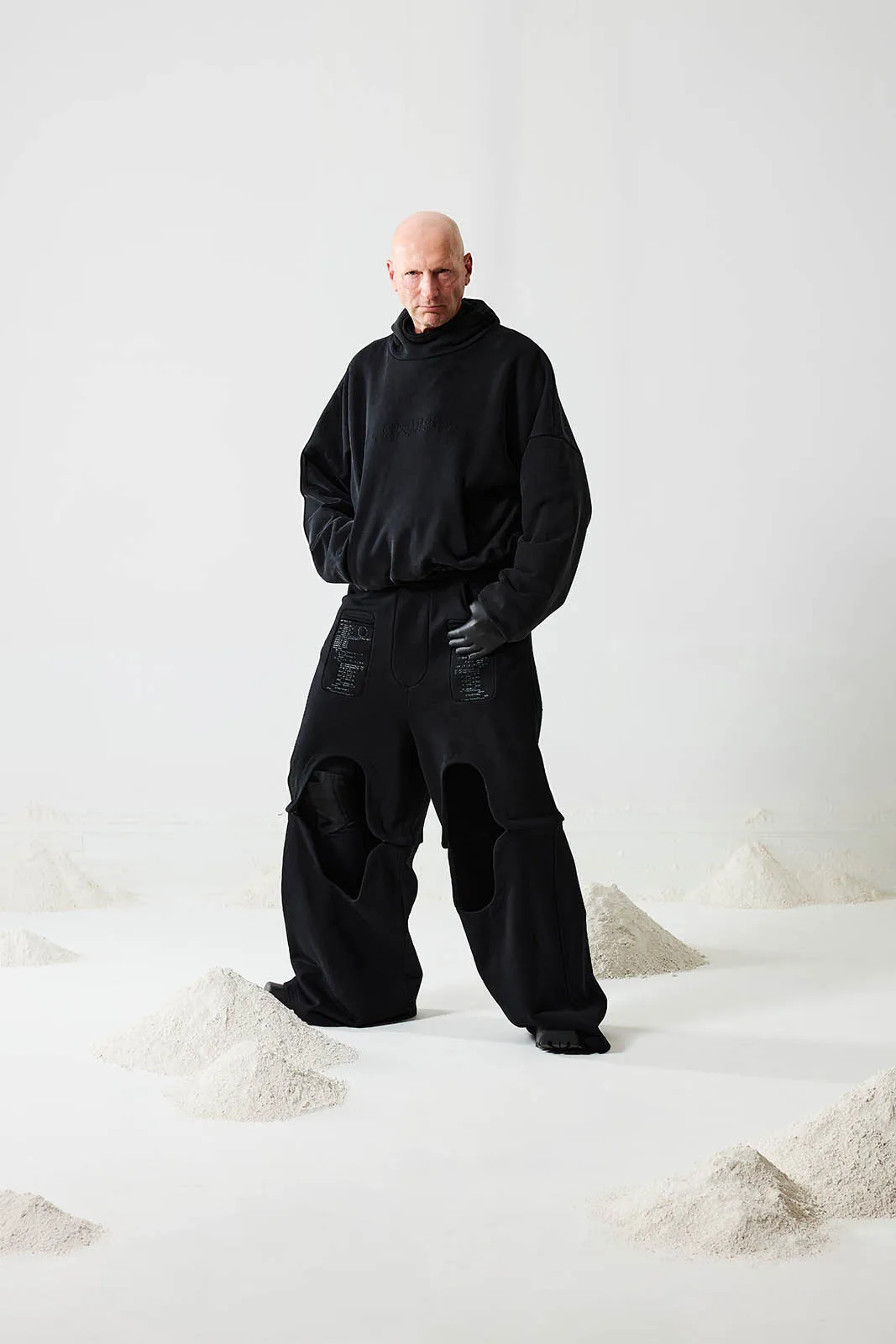
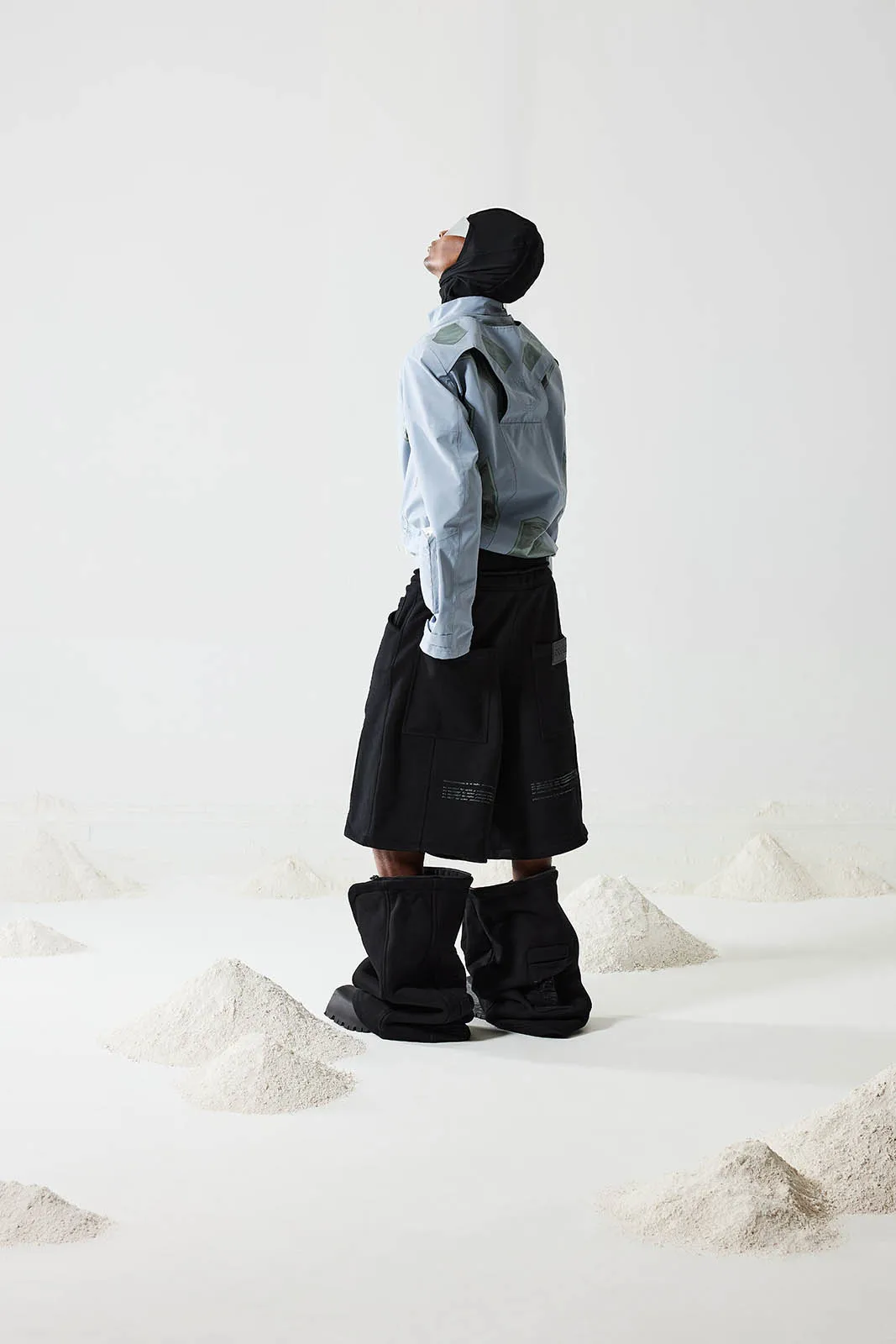
Instead of getting lost in that never-ending dispute, Peon’s pieces simply focus on utility, without sacrificing their abstract shapes, apocalyptic details, or dark beauty. They are bold and exaggerated: oversized hoods, asymmetrical vests, and floor-length down jackets that feel like sci-fi ball gowns from the future. Chunky shoes with sharp silhouettes that could be worn in Minecraft. Monochrome raincoats and tights reinforced with armoured protection at the knees and back. The colour palette: mostly black, cold grey, and vibrant whites.
What you can’t see at first glance: Peon combines his sculptural constructions with bonded fabrics, modular details, reversible garments, taped seams, 3D-printed accessories, and hidden technologies such as the integration of an NFC tag. And because of that, his latest collection, Reboot, turned out to be a unique, tool-driven exploration of function, memory, and modern streetwear. It reflects on how fashion can create personal, cultural, and systemic transformation by creating tension between progress, utility, and symbolism, all brought to life with subtle storytelling.
And since we’ve all been a bit bored of the classic ‘form follows function’ mantra for a while now, we sat down with Peon to talk about the perfect future-proof garment, useless accessories, reset points and stores that (without giving too much away) might just be opening their doors very soon.
Hi Jose! What made you feel bold and strong today?
Honestly, just getting up and working.
You’re currently studying fashion design at Parsons; do you remember the moment you decided to apply there?
Yes. When I came to the US and started thinking about university, I wanted to prove a point by graduating from the “best” design school in the country. After some research, I watched an interview with Ye where he mentioned Parsons, so I applied. It was the only school I applied to, and if I hadn’t gotten in, I’m not sure I would’ve gone to university at all.
Cuba vs. New York: two very opposite cultural worlds. How do these influences manifest in your work?
Cuba taught me to work with what was available and still create something meaningful. The US gave me access to more resources, more options, and more people. The contrast between those two experiences shows up often in my work.
What were the biggest challenges in starting your brand, Nooon?
The hardest part has been doing everything on my own. At first, I knew very little about how anything worked, and it took time to figure out the systems. Looking back, those challenges gave me a broader set of tools and ways of thinking that I use today. For specific moments like campaigns or production, I get to work with a few people I trust and who trust me in most recent times. A dream of mine is to keep growing with them and continue working together at the highest levels. They believed in me when very few people did, and that means everything.
I have to ask, what does the brand’s name stand for?
Nooon is about balance and mistakes. Noon is the middle of the day, a reset point. By extending it, Nooon puts the user at its centre. The story behind the name comes from a series of events, but that’s something I’ll share another day.
Your latest collection, Reboot, creates a tension between utility and symbolism. What does the collection symbolise for you?
For me, Reboot was about restarting. When I began developing the collection, a lot was happening in my life, and its success or failure would shape the next few years. And it did.
Do you have a favourite piece in the collection?
The reversible T-shirt with seam tape. It feels simple, but it represents a lot of what I want to do.
What drives you to keep exploring?
I always ask myself: how can this be better? What would improve utility, practicality, and simplicity? I want clothes to improve people’s lives and the way they’re protected and enhanced by what they wear. That’s what keeps me moving in fashion.
The NFC tags are an important part of the collection. What inspired them?
I wanted each garment to offer something beyond just being worn. With the tag, it connects directly to our store. Right now, it’s a simple concept, but I plan to add a lot more functionality over time. Development is still in the early stages.
Is there any material or tech you want to explore next?
I’m working on a lot of exciting things. With OH, a new company I’m building, we’re creating immersive experiences and concepts. Our first pilot is the Nooon Store, which will be worth exploring when it launches.
What responsibility does fashion have today?
I think fashion’s responsibility is the same as it’s always been: to protect and enhance. We might assign more meaning to it today, and we should, but at its core it’s still a basic necessity in most places.
What makes a future-proof garment in your opinion?
Something you actually want to keep wearing. If it’s comfortable, well-constructed, and feels relevant, it lasts.
What’s the most useless piece in your wardrobe?
I own very little clothing and mostly wear new Nooon samples for testing. Everything else usually ends up with friends or family. So right now, I’d say nothing, because my wardrobe is mostly Nooon, and at its core, it’s built on functionality. That or the first prototypes of Nooon 3D-printed shoes; those are unwearable.
To wrap it up: what do you ultimately hope to achieve?
I want to create a reality strong enough for myself that it allows me to change the realities of others for the better. The more I achieve, the closer I’ll get to that dream.