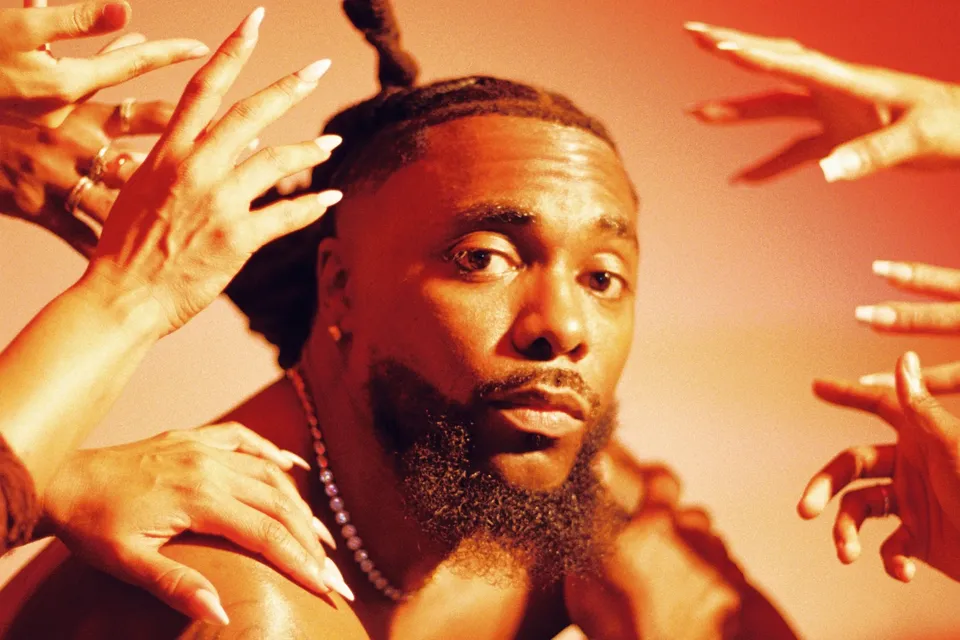
After becoming one of last summer's unavoidable soundtracks with Edge of Desire, Jonas Blue now seems more interested in feeling than formula. The producer behind defining hits of the last decade such as Fast Car and Perfect Strangers has spent years mastering crossover success, but this latest chapter feels more club-rooted and emotionally direct. We spoke with him shortly after his North American tour and just before the release of Girl, out today through Defected Records.
Built around the euphoric simplicity of early 2000s house music, Girl looks backwards without sounding stuck there. During our conversation, Jonas reflects on an era "before streaming and algorithms", when dance music was driven more by emotion and energy than strategy, speaking openly about instinct, creative pressure and why the simplest ideas are sometimes the ones that stay with people the longest. From the pressure behind global success to the feeling of hearing a track and instantly smiling, Jonas Blue sounds more connected than ever to the reasons he started making music in the first place.
First of all, thank you so much for taking the time to speak with us. How are you today? Are you finally back home after the North American tour?
Yeah, feeling really good actually. It's been a crazy few weeks, but in the best way. North America was amazing; the energy at the shows was unreal. I've finally had a minute to get back home properly, reset a little bit and get ready for everything coming next with the new music.
After spending so much time living out of a suitcase, what's usually the first thing you do once you properly get home again?
Honestly, something really simple. I'll usually just spend time with family and my dog, Quincy, have a proper coffee and sit in silence for a bit. Touring is amazing, but it's very full-on, so those normal moments mean a lot when you finally get home.
You're only days away from releasing Girl. How are you feeling now that the countdown is properly on?
Excited. I'm really excited. I've been sitting on this record for a while, and it already feels special when I play it out. You can see people reacting to it instantly, which is always a good sign. I think it captures a side of me that people haven't heard in a while.
There's something very nostalgic and carefree about Girl, but it still feels fresh at the same time. Do you remember the original starting point for the track: where you were, what you were feeling and the atmosphere you wanted to capture while giving shape to it?
Yeah, completely. I was listening to a lot of early 2000s house again at the time, all of those records that felt effortless and uplifting without trying too hard. I wanted to recreate that feeling of hearing a track in a club or on the radio and instantly smiling. The session itself was really natural. Nothing felt forced. We weren't chasing a trend; we were just chasing a feeling.
You've spoken about reconnecting with the playful energy of early 2000s house music. Do you feel like this new chapter is bringing you closer to the music that originally made you fall in love with club culture?
Definitely. That era shaped me massively. Before streaming and algorithms and all of that, it was really about emotion and energy. A lot of those tracks were simple but timeless. This chapter feels like I'm reconnecting with the roots of why I started making dance music in the first place.
One thing you mentioned about Girl is missing that era where house tracks were simple, catchy and instantly made people feel good. Do you think dance music sometimes overthinks itself now?
Sometimes, yeah. I think with social media and pressure around numbers and trends, people can lose the feeling a bit. Some of the biggest dance records ever made are actually very simple. It's about emotion, groove and connection. People don't care how technically complicated something is if it makes them feel something.
You described the session for Girl as something that "just flowed naturally" without overthinking. Is that kind of instinctive process harder to reach nowadays, when there's so much pressure and expectation around every release?
It can be. There's definitely more noise around music now than there used to be. But I've learned over the years that the best records usually happen when you stop trying to control everything. If you walk into a studio already thinking about streaming numbers or TikTok moments, you're probably making music for the wrong reasons.
Last year felt like a real turning point with Edge of Desire. At what moment did you realise the track was connecting on another level?
Probably when I started seeing the reaction in clubs before the record was even officially out. People were filming it, asking for IDs, singing melodies back, and you could feel something building organically. That's always the best feeling because you know it's real.
It also feels like Edge of Desire marked a shift in the way people were looking at you creatively, moving from a more commercial space into something more rooted in sound, groove and club culture. Did you feel that change happening as well from your side?
Yeah, I did. And honestly, it felt very natural. I've always loved club culture and underground dance music, even during the more commercial years. I think people are now seeing more of the musical DNA that's always been there underneath everything.
You've experienced huge streaming numbers before, but when you see a track crossing well over 100 million streams, can that still feel surreal or difficult to process emotionally?
Absolutely. I don't think you ever fully get used to it because you remember being the kid making music in your bedroom, hoping one day someone might hear it. Numbers are amazing, but what really hits me is knowing a song has become part of people's lives somewhere in the world. That's the part that stays with you.
Does that level of success also create pressure? When a track reaches those kinds of numbers, do you actually have time to enjoy and celebrate it properly, or does your mind immediately move on to what comes next?
A bit of both. I think creatives naturally keep moving forward. You appreciate the moment, but your brain is already thinking about the next record, the next show, the next idea. I've definitely gotten better at slowing down and appreciating things though, because early on I probably didn't do that enough.
When you think back to yourself ten years ago, around the release of Fast Car with Dakota, does it feel like your idea of success and what really matters in music has changed a lot since then?
Massively. Back then, success probably meant charts and numbers because everything was happening so quickly. Now I think more about longevity and connection. Making records that still mean something years later is the real goal.
You've built a catalogue full of massive records, but what do you think people still misunderstand about success in dance music? What's the side of it that nobody really sees?
Probably the balance. People see the big shows and the highlights online, but they don't always see the constant travelling, the pressure, the lack of sleep, and being away from people you care about. It's an amazing life, and I'm grateful for it every day, but it takes a lot mentally and physically as well.
In just over a month, you'll be heading to Japan for tour dates there as well. How does it feel knowing your music connects with people on the other side of the world, in places that once probably felt very far away?
It's honestly incredible. Japan has always had such a strong appreciation for music and culture, so every time I go there, it feels really special. Growing up, I never could've imagined travelling the world because of songs I made on my laptop. That part still blows my mind.
You're also launching SENSES at Hï Ibiza this summer. What can you tell us about the vision behind this new residency and this chapter in Ibiza?
Ibiza has always been a huge part of dance music culture for me, so launching SENSES at Hï feels massive. The vision is really about creating an experience that's immersive musically and visually. I want it to feel emotional, euphoric and properly connected to the dancefloor, not just people standing there filming on their phones.
Who are you listening to the most lately? And is there any artist you think we should be paying attention to or interviewing soon before they completely blow up?
I've been listening to a lot of different stuff recently, everything from classic house to newer house and melodic records. There are so many exciting producers coming through right now. I think people should definitely keep an eye on some of the younger UK and European producers pushing groove-led dance music again because that scene is getting really exciting.
What's your dream collaboration right now?
There are a few. Someone like Fred again.. would be really interesting because I love how emotional and raw his music feels. I also think doing something with Jungle could be incredible if the right record happened naturally.
Looking back at everything so far, what's been the moment that made you stop and think, "Wow, this is really happening"?
Probably hearing Fast Car on the radio for the first time. That was a surreal moment because my whole life changed so quickly after that. It was the first time I really understood that music I'd made privately was suddenly connecting with millions of people.
And finally, after everything you've achieved already, what still gives you that same excitement you had when you first started making music?
That feeling when you make something and instantly know it's special. That never changes. Whether it's in a tiny studio session or playing a new record to a crowd for the first time, that excitement is still exactly the same as when I started. That's what keeps me addicted to music.