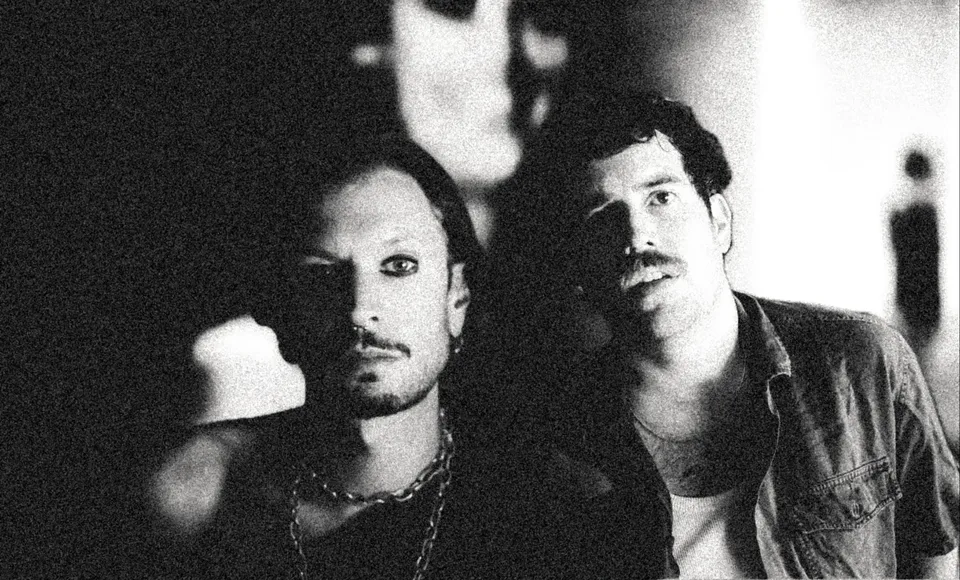
There’s a strange comfort in heartbreak when someone else narrates it for you. Joji, born George Kusunoki Miller, has been doing this quietly and brilliantly for nearly a decade — firstly as a viral internet figure, then as one of the most distinctive voices in contemporary alternative pop and R&B. Piss in the Wind, his fourth studio album and first since leaving 88rising, marks a return after a three-year hiatus. It is both familiar and unfamiliar, tender and tough. The project feels like a diary scattered across twenty-one tracks, oscillating between lo-fi introspection, shoegaze textures, and occasional bursts of alt-pop audacity. It’s a fragmented, messy, and deeply human album that, much like the artist himself, perfectly fits into the category of new and experimental ‘croonerism.’
Joji’s past is impossible to ignore. The internet persona of Filthy Frank and Pink Guy (absurd, shocking, controversial) continues to hover in the public imagination — a reminder of his evolution from chaos to introspection. But if Piss in the Wind proves anything (beyond the original visual metaphor), it’s that Joji has learned to speak without the mask, showing a more intimate side to channel grief, longing, and impermanence into a cinematic sound. The whole album is a piece that gains value when listened to with eyes closed, letting the psyche conjure its own images; a cadavre exquis evoked through oneself.
At its core, Piss in the Wind is a meditation on memory, heartbreak, and emotional inertia. Tracks like Past Won’t Leave My Bed and Love You Less confront the aftershocks of love, lingering like ghostly echoes that refuse to fade. The album’s twenty-one tracks vary dramatically in length and style: brief, sketch-like pieces coexist with cinematic ballads, giving the record a sense of fragmented narrative, as if the listener is rifling through Joji’s private notebook, peeking at unfinished thoughts and polished confessions alike.
The opener, Pixelated Kisses, is a jolt: trap-inspired beats, psychedelic textures, and a sudden aggressiveness that departs from Joji’s characteristic melancholy. It reminds us that while the singer has matured, he has not abandoned experimentation or risk. In contrast, If It Only Gets Better is gentle, acoustic, and introspective — a meditation on hope amidst uncertainty. Here, Joji’s vocal fragility carries the weight of someone reckoning with impermanence, delivered over syncopated bass and understated harmonies that nod back to his lo-fi beginnings.
Perhaps the album’s most emotionally potent moment comes with Past Won’t Leave My Bed, a piano-driven ballad that recalls the haunting intimacy of Glimpse of Us. Joji navigates lingering memories with a restrained, devastating tenderness; the production swells with strings and subtle reverb, framing lyrics that feel lived-in and confessional: “A single note of my persistent hopeless lullabies / I know that I can't sleep forever.” In Love You Less, shoegaze and indie-rock elements surface, providing tension and push-pull dynamics that mirror the emotional ambivalence of the lyrics. Across these moments, Joji proves himself a master of emotional architecture, constructing soundscapes that feel at once personal and universal.
Yet, the album’s ambition is double-edged. Many tracks are brief, giving Piss in the Wind a sketch-like, sometimes scattershot feel. Critics and fans alike have noted a lack of cohesion — the sense that the album is a collection of experiments rather than a singular narrative. And that’s where the essence of this project lies: in its fragmentation. Joji is willing to let the album breathe in imperfection, leaving gaps that listeners must fill with their own reflection. It is a risk that certainly affects accessibility (the album requires an attentive listen) in favour of an honest work.
The album also showcases an array of collaborators: Giveon lends his velvet timbre to Piece of You and its narrative about collapse (“Three or four times, I'm not even sure / Can't do love now without the back-and-forth”); 4Batz adds texture to Fade to Black; while Yeat and Don Toliver infuse certain tracks with rhythmic complexity, creating moments of contrast that highlight Joji’s versatility. Even in collaboration, he remains the lens through which every story, lyric, and note is filtered. Piss in the Wind bridges Joji’s past and present. The lo-fi intimacy of Ballads 1, the glimmering production of Nectar, and the heartbreak of Smithereens all echo here, but filtered through a more experimental, genre-fluid lens. Hip-hop, alt-pop, indie rock, and shoegaze collide with melancholic R&B, creating a tapestry that is uneven but compelling.
The album thrives in these juxtapositions: aggression and tenderness, brevity and expansiveness, intimacy and spectacle. It also thrives through generational images: Can’t see sh*t in the club contains a visual poem much deeper than the title suggests (“It’s a little too dark in this spot / I ain’t try to talk about a lot / Sometimes I pretend that I forgot / But every time I close my eyes”), as his voice shines within the sadness.
Joji’s journey from YouTube provocateur to introspective musician is inseparable from this work. The tension between his public past and private present infuses the album with an undercurrent of self-consciousness, as if he is both hiding from and revealing himself to the listener. Health challenges, live performance interruptions, and debates over authenticity versus polish all hover around Piss in the Wind, reminding us that the artist is navigating real-life struggles while creating art. It’s in his most recent music where we find an unexpected vulnerability — one that is occasionally ‘incorrect’ and chaotic, but achieves the connection and feel of the real thing.
Piss in the Wind is not an easy album. It is messy, fragmented, and occasionally uneven. But it is honest, and it is risky in both sound and lyrics. How do you follow up something like Smithereens? Well, if you are an artist willing to produce something with heart, you do it with a collection of confessions, experiments, and meditations that invite the listener into your inner life: a world of heartbreak, reflection, and fleeting joy. Some will find it incomplete; others will revel in its openness. Either way, it marks another step in Joji’s transformation: from viral provocateur to melancholic alchemist — one willing to translate current human feelings into music that lingers long after the last note fades. It feels dangerously close to what ‘taking a picture’ of our inner world feels like right now. For those willing to lean in, Piss in the Wind is an echo: a reflection of what it means to remember, to hurt, and to keep moving forward, even when the past refuses to leave.