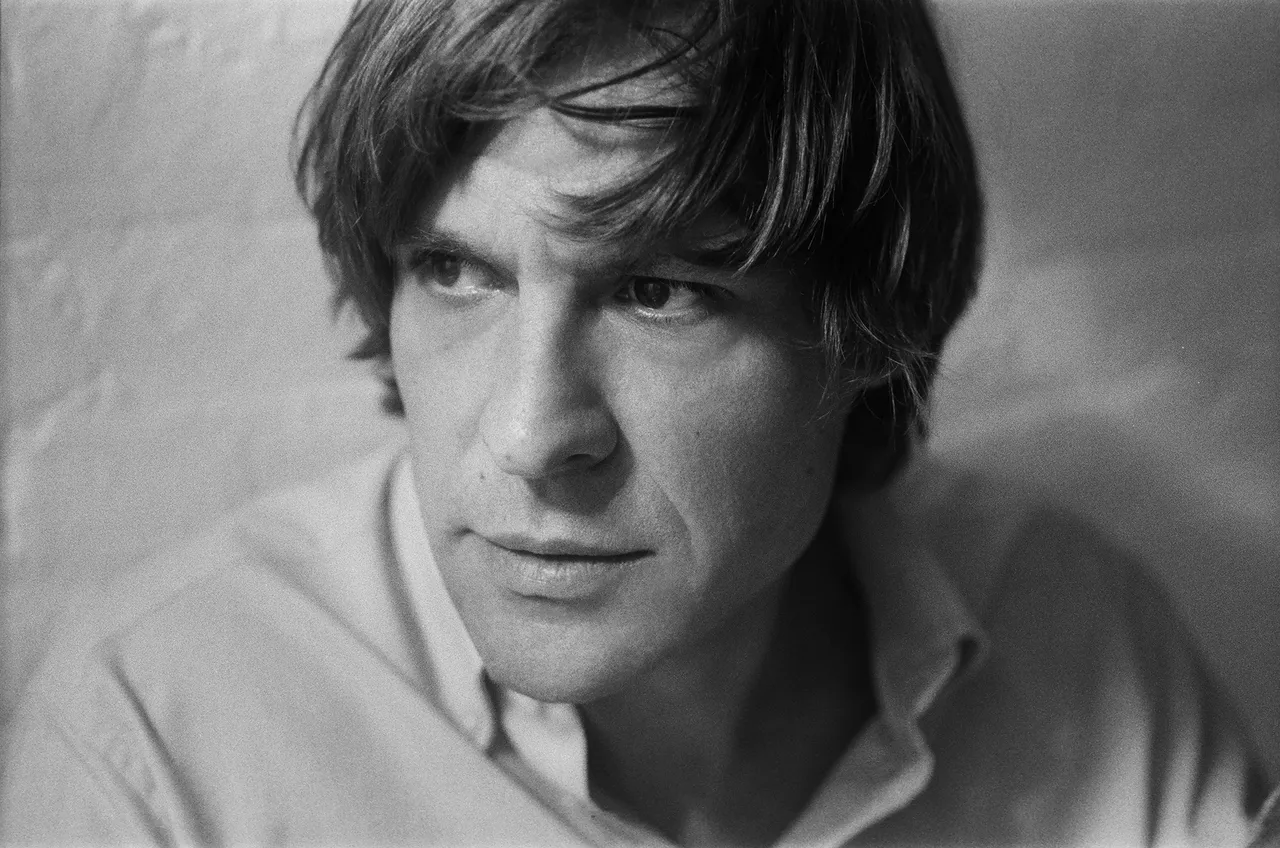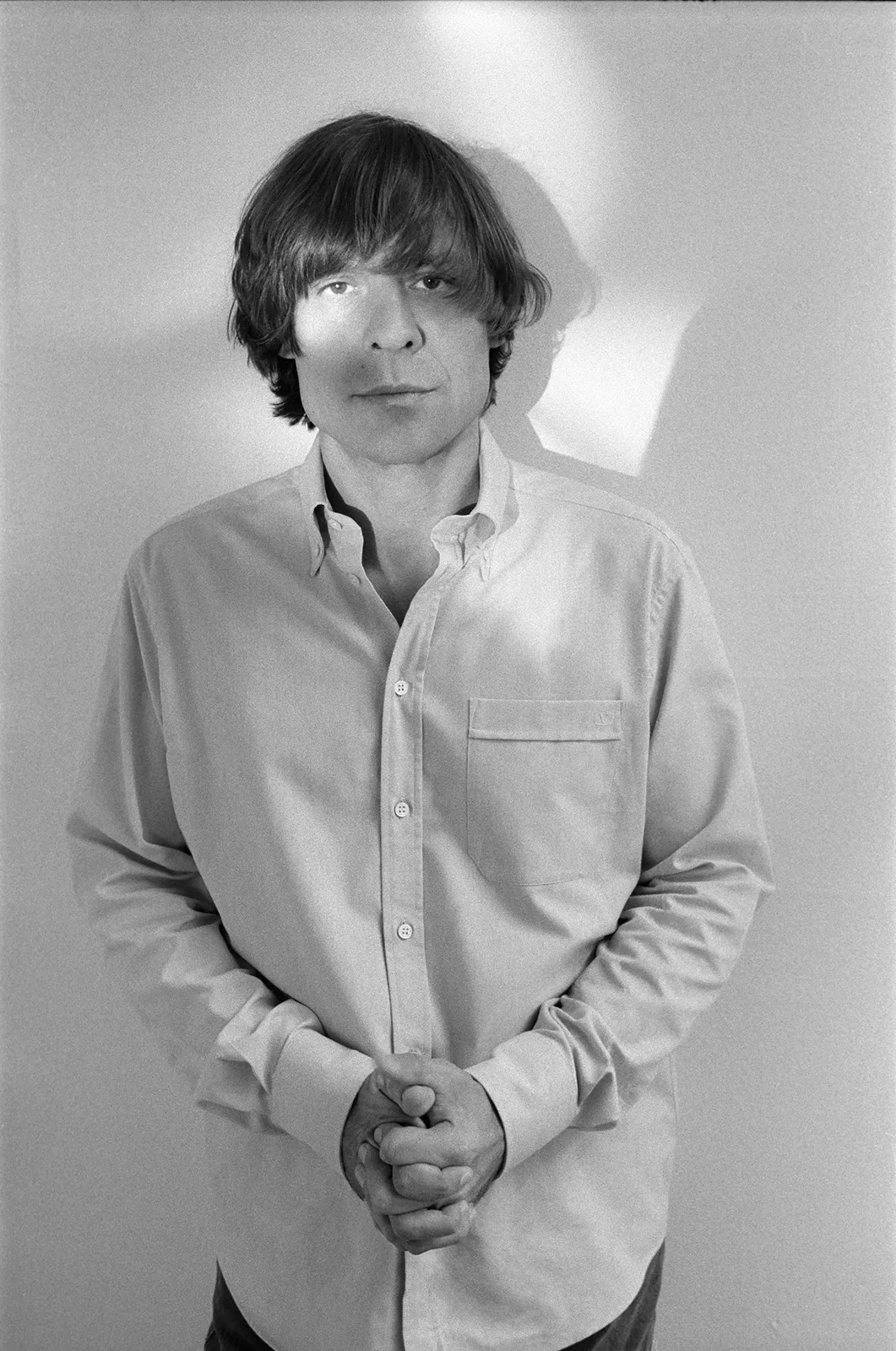
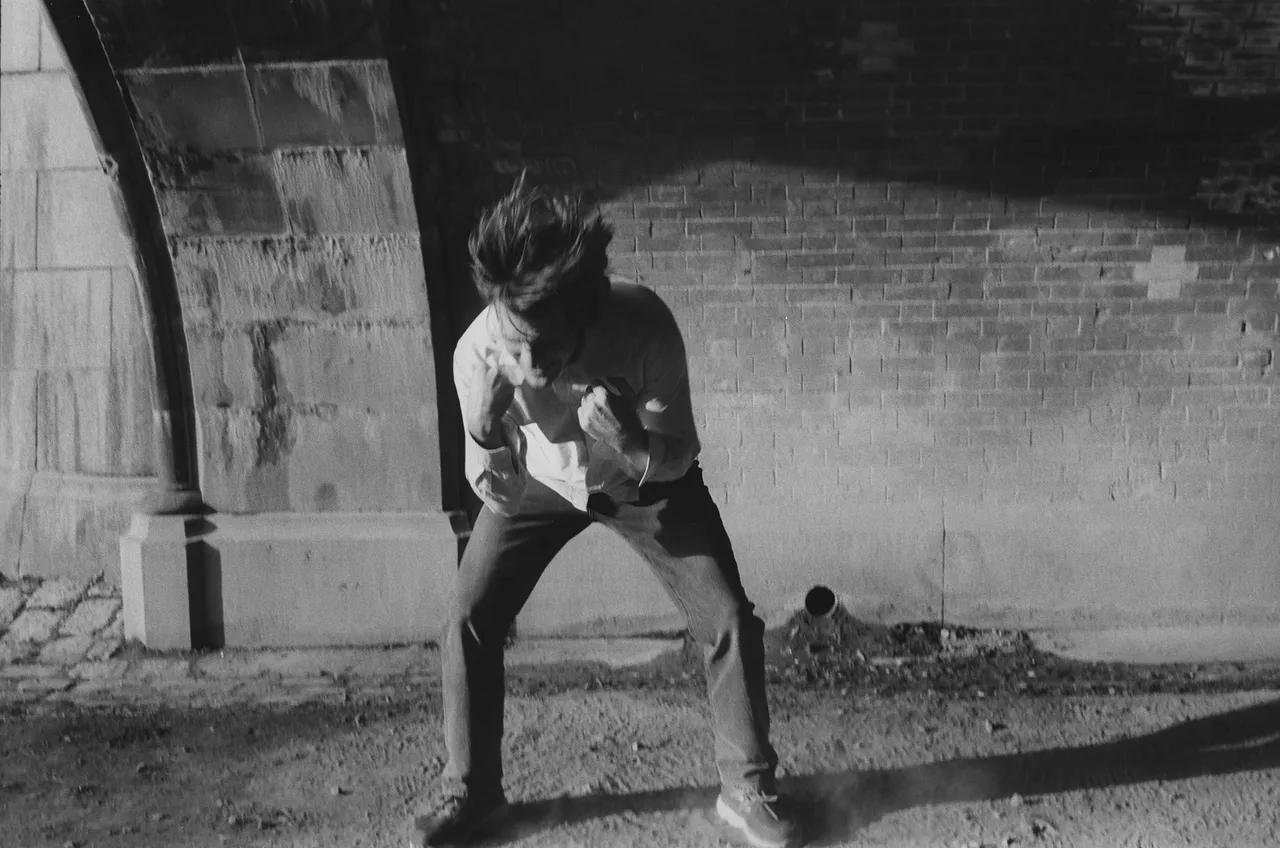
John Maus paces stages like a man possessed, tearing at his hair, striking himself with the microphone, embodying what he terms "the hysterical body”; a physical display of intensity meant to combat the play-acting inherent in staged music. Blood, sweat or tears, the wager for Maus is always the same: that unmediated emotional expression might pierce through the ambient irony of contemporary culture to reach something resembling truth.
But sincerity alone does not inoculate against catastrophe. In 2018, Maus's brother and bandmate Joe tragically died while on tour in Latvia from an undiagnosed heart condition. His uncle and aunt followed within months. Then January 6th, 2021: Maus attended the Capitol protests to discuss scoring a documentary, was photographed at the scene, and responded to the ensuing controversy by tweeting Pope Pius XI's 1937 encyclical Mit Brennender Sorge. The gesture was interpreted as evasive, coded, insufficient. Festival cancellations arrived. Ariel Pink, his oldest collaborator and "very first fan,” claimed publicly that Maus was "1001% on Team Trump.” For an artist who positions himself within radical leftist discourse, the accusations constituted a wholesale misreading of his political and aesthetic commitments.
Later Than You Think emerged a phoenix from this wreckage. Recorded in the Ozarks across twenty weeks, the album incorporates Latin hymns, references George Floyd's murder, and closes with pure Gregorian chant. It is an album about mourning, complicity, and the search for redemption through faith and artistic discipline. I spoke with Maus in Bristol on November 5th, 2025, hours before his performance at Simple Things festival, about monastic withdrawal, the co-optation of Christianity, and whether symbolic gestures can ever adequately communicate political position in an age of interpretive hysteria.
It’s a real pleasure to be meeting with you today! Firstly, how are you doing? You’re in the middle of what you call your “American Pilgrimage” tour; now extended to the UK and Europe. Tonight, is Simple Things in Bristol, you’ve sold out shows in London, New York, LA. How does it feel to be back on stage after so long?
It’s been wild. I mean, I’ve done a lot of shows these last few months. it’s actually pretty gruelling, man. But it feels good. It feels right. I don’t want to wait seven years again between records, you know? I want to stay at it. I’ve got ideas about pushing it further, getting more in touch with what’s happening now. But that’s never been my strength. I usually have to look under rocks, see what others aren’t doing. In any case, it’s great to feel this energy again. The fans have been amazing. I came into this thinking I might do a few small club dates, and then suddenly it’s a real tour. It’s humbling.
Let’s get right into your new album. The title Later Than You Think comes from that phrase carved into Orthodox monks’ skulls: “Hasten to do the work of God.” In our culture, artists are expected to feed the content machine endlessly. What does it mean to you to embrace memento mori? Are you advocating slowness and introspection?
Yeah, I mean... death is the limit, right? You can’t fit it into those systems. There’s a whole Heideggerian angle; that it’s authentic to keep death ever before your mind. Even if you’re secular, it’s a meditation worth doing. I remember the Romans had that old tombstone line, “Quid sumus, quid erimus” — “what you are, we once were; what we are, you shall be.” You can’t go wrong meditating on finitude. It keeps things grounded.
It’s kind of like being aware of the finite nature of everything, right?
Yeah, but also eternity. It’s more than just “life is short.” It’s “what you become, you always will have been,” once you think beyond our time. There’s something comforting in that, too.
The opening track references George Floyd’s murder and the Minneapolis unrest. You sing, “Because we built it, we can watch it go up in flames / Because we killed him, we will watch it go up in flames.” Who is the “we” in that lyric? You, the audience, the state, or everyone collectively?
It’s a collective we. As twisted as it sounds, we’re all complicit in how the world is structured. It’s not just me, not just the cops, not just “Them.” There’s a kind of untruth, call it Archons or dominions or just power structures, and we all play a part in it. Even if just by inertia. It’s the hardest thing: to do something truly different. So yeah, we means humanity in general.
I just want to clarify; when you say “we all play a part”, do you mean just those in the US specifically, or more so globally?
I mean, the problems are most acute in the US, sure. But really it applies everywhere. Any time people cooperate with the status quo, no matter what country, to some extent they’re complicit in the injustice. It’s hard work to break out of that. So, yeah; the lyric indicts structures of injustice in general.
You’ve consistently argued that your use of church modes isn’t just 80s nostalgia but an engagement with harmonies “associated with the divine.” On this new album you go even further back; you have a Gregorian chant on Adorabo. Are you mining these ancient forms as a rejection of modern sonic trends, or do you think synths and medieval modes simply offer more colour and possibility than today’s pop conventions?
Yeah, all of the above. Modern popular music, especially post-war, has really narrowed. In a lot of post-80s pop, you don’t get key changes or adventurous harmony. It’s mostly stuck in one diatonic space, you know? That feels more like medieval polyphony, where multiple lines make triadic harmony without ever really “modulating” through keys like in Beethoven. It’s interesting, because if you look at it historically, Western harmony started with plainsong and organum; literally ancient chants. That’s the seed of all our harmonic adventure. So by going back, I’m tapping into the root, the germ of our harmonic language. There’s a direct line from Gregorian chant to, say, the Lydian mode in film music to modern synths. The origin carries invocations of prayer and the divine, and cinema taught us to associate certain modes with horror with the ethereal. I am riffing on that whole history when I bring those modes into modern synth practice.
Is the drift away from those modes related contextually to a drift away from church and spirituality?
There is a connection. Much of that old musical thinking is tied to ecclesial development. The way music was written down, the practices, the forms, they grew inside church life. Even if people forget that, the origin remains. It still haunts the music.
In the bio for Later Than You Think, there’s a line that your live persona has been described as a kind of “hysterical body” on stage; something you’ve said yourself as an antidote to play-acting. You have called that an attack on play-acting. After personal loss and public controversy over the past years, how has your relationship to radical sincerity changed? Is the hysterical body still an adequate vessel for truth?
It’s kind of the only move I know! I mean, what else am I going to do? I came up on late-punk stuff where part of the point was to smash expectations, to make something sound like nonsense at the limit of what music is. If you’re truly earnest or sincere these days, it does often come off as absurd or even comical. That’s just how it is now. Any heartfelt act looks a bit ridiculous in our ironic age. So yeah, I embrace that. The gamble is: if I go fully sincere, people might see past the absurdity to the meaning underneath. It’s a wager. I’ve done it in different forms, but basically if I’m on stage, raw sincerity wrapped in a bit of chaos is what I have.
You have returned to Catholicism after a lengthy lapse, while also critiquing the American-right for co-opting Christian imagery for the purpose of evangelical bigotry. How do you reconcile your faith with the political use of Christian symbols by forces you ostensibly oppose?
I actually don’t think they’re synonymous. Christianity is like any tool; it can be used in different ways. Sure, in the public eye it’s been painted by reactionaries, and that’s awful. But look at history: there have always been two sides. In any church you had some pushing with empire, and some like Dorothy Day working with the resistance. It’s not inherently one or the other. At its core, I think Christianity is meant to interrupt all worldly powers. It’s an announcement that there’s something beyond Caesar’s kingdom. The whole idea was to turn the pagan cosmos upside down; to spit on the “archons,” so to speak. Not to reinforce it. So yes, sure, some have used it to justify the status quo, but others used it to scream in protest. A religion that leaves no stone unturned, no power unjudged, that’s the original revolutionary idea. It has a subversive core, salvation through humility, not domination. That’s fundamentally anti-state. When people say “evangelical,” I say: if anything, the true Gospel is a call to question all states. It’s not a patriotic anthem, it’s an alternative sovereignty.
So you’d say the evangelists who use it are kind of in a dialectical prison of their own construction? Mastering one state but slaves to their logic?
Exactly. If Jesus came back, he’d call that out the same way he called out the Romans and the Pharisees. Honestly, if we’re talking evangelicals: I think the faith itself is supposed to judge “all the powers that be,” consign them to the fire. It’s not Reagan or any specific leader. But of course, in practice people are two-faced about it. Even progressives will parrot the right words while backing empire; “Oh we just elected an African-American president so everything’s fine.” It’s obfuscatory.
For sure; it reminds me of that meme "they say the next bombs will be sent by a woman"; the Democrats will enact policies reflecting American Imperialist ambitions just as much as Republican "war hawks", but will put a rainbow onto the plane to act as if that justifies the egregious violence and destabilisation.
Yeah, I know the one. I mean, I'm post-Marxist, a radical or whatever, but I have liberal friends. These guys always tell me “c'mon man you gotta be an adult”, but these are the same people who tried to recuperate Dick Cheney!
I mean, where I'm coming from is it's fundamentally just the good cop, bad cop thing, because whichever cop is on duty, Gaza is getting flattened either way. It's just the one side are sad about it and the other side are really happy about it. They’ll sing songs about it. Those are the two choices. And I’m told by my liberal friends to just be an adult and vote for the ones that are sad about it, you know?
I mean, where I'm coming from is it's fundamentally just the good cop, bad cop thing, because whichever cop is on duty, Gaza is getting flattened either way. It's just the one side are sad about it and the other side are really happy about it. They’ll sing songs about it. Those are the two choices. And I’m told by my liberal friends to just be an adult and vote for the ones that are sad about it, you know?
I’d like to address the whole Capitol incident. You went to the Capitol on January 6th, 2021, to discuss scoring a film. You posted Pope Pius XI’s Mit Brennender Sorge as a response, which you now admit wasn’t clear enough. Looking back, do you believe referencing a papal encyclical was sufficient in ‘clearing your name’ by evidently illustrating your "anti- Trumpian" position? Or were you perhaps, as an academic and theorist, overestimating your audience’s capacity to decode your position?
No, it clearly wasn’t enough. (Laughs.) I mean, I immediately disavowed any political meaning. I’ve tried to clear the air on Reddit and elsewhere, but there’s always someone calling me a Nazi no matter what I do. Truth is, I wasn’t ready for the social media environment at the time. I was living in rural Minnesota, off-grid, not engaging in those circles. Once you’re in the internet machine you have to know how it decodes everything, what looks like what. In hindsight, I guess I should have thought more about the optics.
As a result of all that, you were dropped from an ElectroniCON festival in 2023, lost friendships, faced accusations of fascism. In a 2018 Wasted Talent interview you talked about the “hysterical pitch” of politics and how quick people are to label anyone alt-right. Having lived through your own cancellation, do you see it as a puritanical sect within the left failing to engage with complexity, or do you accept that your presence at the January 6th Capitol, cross-examined with other controversies such as your lack of publicly disavowing the politics of Sam Hyde and Million Dollar Extreme back in 2016, or donating $500.00 to Trump’s PAC in early 2020, warranted the conclusion of some of your sympathies towards the alt-right?
I mean, I disavowed Sam Hyde’s stuff immediately when people raised it, and I’m happy to have political disagreements with anybody as friends I hate that man! But people need black-and-white. They want a statement: “I condemn Sam, I condemn X.” But I don’t see it as quite like being either an enabler or a card-carrying anything. It just shows how zero nuance there is. Everyone’s in their trench. There’s no room to say, I donated to Bernie too, by the way! (laughs at the mix-up). I know on paper it looked messy, but people jump straight to conspiracies: “Oh, he’s alt-right.” No, it was a mix-up and a misunderstanding. I mean watching Bernie get screwed twice killed me. Anyway, I've made my peace with all of it.
Ariel Pink, you have described as your “very first fan,” you called him “the zeitgeist embodied”, claimed on the podcast Wrong Opinions that you’re “1001% on Team Trump.” How do you reconcile your anti-authoritarianism, made explicit on the track Tous Les Gens Qui Sont Ici Sont D’ici with Pink’s public characterisation of you? What’s your relationship like with him now?
Ariel and I have been friends since college. He’s been a huge influence on me, musically and otherwise. I actually saw him just in LA last month. We chatted, he knows where I stand. I told him outright, “I don’t support Trump or anything like that.” I won’t speak for him, you know? You’d have to ask him about why he says what he says. But he’s still my friend. I care about him, man. He’s been through the wringer too, in his own way. It’s sad all around, honestly. All I can do is keep talking to him and everyone else like humans. We’ll probably tease out that thread eventually. He’s still an incredible musician.
You talk a lot about monastic practice, the monks chanting the hours seven times a day, and you’ve connected it to this idea of “destituent power” (like Bartleby’s “I would prefer not to”). But those monks aren’t out there agitating in the streets; they’re in devotion. Is it really a revolutionary act, or is it just turning political action into an aesthetic? Is there something inherently subversive about that withdrawal?
Well, first, remember people like Dorothy Day; the Catholic Worker movement; they turned faith into activism. But let’s think about it philosophically. One could say those monks are simply adoring the transcendent seven times a day. To some revolutionary Marxists, maybe that’s just a passive stance, not political enough. But I don’t buy that entirely. What if the devotion is the point? Imagine: while the world is busy chasing power, these monks are turning their whole being toward the infinite. From one perspective, that’s as subversive as anything; it denies the legitimacy of every worldly power. It doesn’t collapse them, it eclipses them with something higher.
Switching gears a bit: You’ve spoken about creating sound through visual representation, literally drawing the sign of the cross in your spectrograph to generate the phasing effect on Disappears, and synthesising the jarring noise sequence in Losing Your Mind from scratch as pure data. You’re here essentially encoding religious iconography into the waveforms itself, invisible to the listener yet structurally determinative. I find this fascinating! I’d love to hear your reasonings behind this. How does this approach alter your relationship to composition as an art form?
I love this process! I want to keep doing more of it. One way to think about it is this: what feels more radical? You could write a thirty minute piece of synthesised sound with the usual pretence of serial technique, something in the spirit of Stockhausen, which ends up sounding like the music of technocratic bureaucrats. Or you could work inside an idiom and interrupt it with those synthesised forms. You cannot get a real surprise without an idiom to push against. That tension is what interests me.
You taught philosophy at the University of Hawaii, wrote a 338-page dissertation on communication technologies and social control, then seemingly abandoned academia. Do you miss teaching? There’s an almost didactical impulse in how you discuss your influences — Bach, Badiou, Bartleby — as if you’re trying to educate your audience out of their complacency. Has your music become a form of pedagogy by other means?
(Laughs) Oh man, maybe I sound like a pretentious asshole half the time, right? Look, I never really took to teaching. I co-taught a class here and there during my PhD, but it was always boring. I’d just read notes or the book chapters. I never found my stride on that. Once I got out of the University, I kind of dropped it completely. I got into music, touring, writing, and I drifted away from all that French theory and stuff. Now I’m going back and filling in the gaps; reading Aquinas, Duns Scotus, Plotinus, all that classical metaphysics stuff. It’s been interesting to see it side by side with Nietzsche and the modern theorists I used to love. Suddenly a lot of that stuff that seemed profound now just looks like it’s hiding being behind a veil of the sublime. Honestly, I think I’d get more clarity from all those medieval philosophers. They know how to talk about “being” without calling it “sublime mystery.” But yeah, no, I don’t miss the lectern. I think this is where I belong; performing, writing, thinking on the fly.
So you’re brushing up on the Neoplatonists, Scholastics, stuff you never had time for before?
Exactly. I just realised I never read Bonaventure or Nicholas of Cusa or even Aquinas when I was doing Derrida and Deleuze all day. So now I’m kind of doing my own curriculum. It’s fun. It helps me understand where the modern stuff might have gone sideways. Like, when Nietzsche talks about a “will to power” or Derrida about the “infinite text,” I can see the critique from the standpoint of, say, Aquinas’ transcendentals; that being is one, true, beautiful. That stuff matters. Without those anchors, everything just drifts into a chaotic plane of intensity.
You’ve long railed against lazy genre labels and comparisons. Still, critics keep lumping you in with hypnagogic pop, chillwave, baroque indie, whatever. How do you reconcile your dislike for genre with the reality that people will always put you in some context, for better or worse?
I mean, labels can be useful to a degree, insofar as they help people find new music. But honestly, I don’t care much what genre box I'm put in. If someone wants to write “hypnagogic pop” or “synth-baroque” or whatever else, then fine. It’s all just taxonomy. I guess I should sit down and learn Wikipedia genres if it’ll make people happy. At the end of the day, it doesn’t change the music itself. For me, it’s all one big thing. Every song is part of one long event, one artist’s conversation with the universe. As long as the work gets out there, it doesn’t matter what they call it.
In an interview with Stereogum, you said, “I thought my legacy would speak for itself.” You’ve now made seven albums over two decades, survived your brother’s death, nearly lost your marriage, been publicly crucified for your politics, withdrawn into monk-like isolation, rediscovered faith, and returned with what many call a masterpiece. Could one call this a Dostoevsky-esque redemption arc? Wouldn’t that make for a pretty decent legacy?
Well, thank you, that’s a nice way to put it. I don’t know if I’m ready to judge any of it as a “masterpiece” or think too much about my legacy. I just hope people end up listening and finding meaning in it. I do my best on each record, and after that, what happens happens. Maybe it looks heroic or tragic, I don’t know. I just hope people enjoy the music and performances. Time will tell if any of it lasts.
On a lighter note; I’ve noticed that you have TikTok now! How’ve you been finding the platform? How do you feel knowing that kids on TikTok are now discovering tracks like Hey Moon and Cop Killer sandwiched between viral 15-second dance trends and saccharine “hope-core” content-fodder?
Yeah, I’m on TikTok. I figured what, why not? Part of the point is kind of making fun of it anyway. Everything on TikTok is obviously part of what I critique: the imperative to “consume, communicate, enjoy” like I talked about in the dissertation. But since everyone’s on it, why not get my hands dirty? I just put up bits of songs or funny clips. It’s not me trying to subvert TikTok; it’s me using TikTok to point people at the music. If some kid sees my song on a dance video and then gets curious, hey, more power to it. At least they found the music, you know? If some Gen Z kid hears Hey Moon while making a dance or montage and decides to dig deeper, that’s awesome. I want my music to permeate through the younger generation, regardless of how they come across it.
Are there any artists of the new generation that you’d consider collaborating with in the near future?
I’d love to work with someone like Bladee. This guy’s the real deal. He’s what punk means for his generation; totally DIY, pushing boundaries. A collab with him would be amazing.
Finally; I want to ask about the “performative male” trend. You know the meme; men ostentatiously reading Intermezzo in coffee shops, curating Spotify playlists of Clairo and Mitski, photographing their tote bags filled with feminist literature. Whilst it might all be a psyop funded by a Big Bookstore/Big Coffee Shop coalition to sell more iced matcha and Sylvia Plath tote bags, there’s also a darker reading: that mocking young men for engaging with literature and introspective female artists is symptomatic of rising anti-intellectualism, a contempt for masculine vulnerability and intellectual curiosity. Where do you stand on the discourse?
(Laughs) I mean I can’t say I’m familiar with the term, but it sounds fun. Men enjoying feminist literature or music sounds good by me! I do think mocking introspection or discouraging reading is lame. Anti-intellectualism is definitely dangerous. If anyone has a tote bag full of books, feminist or otherwise, more power to you.