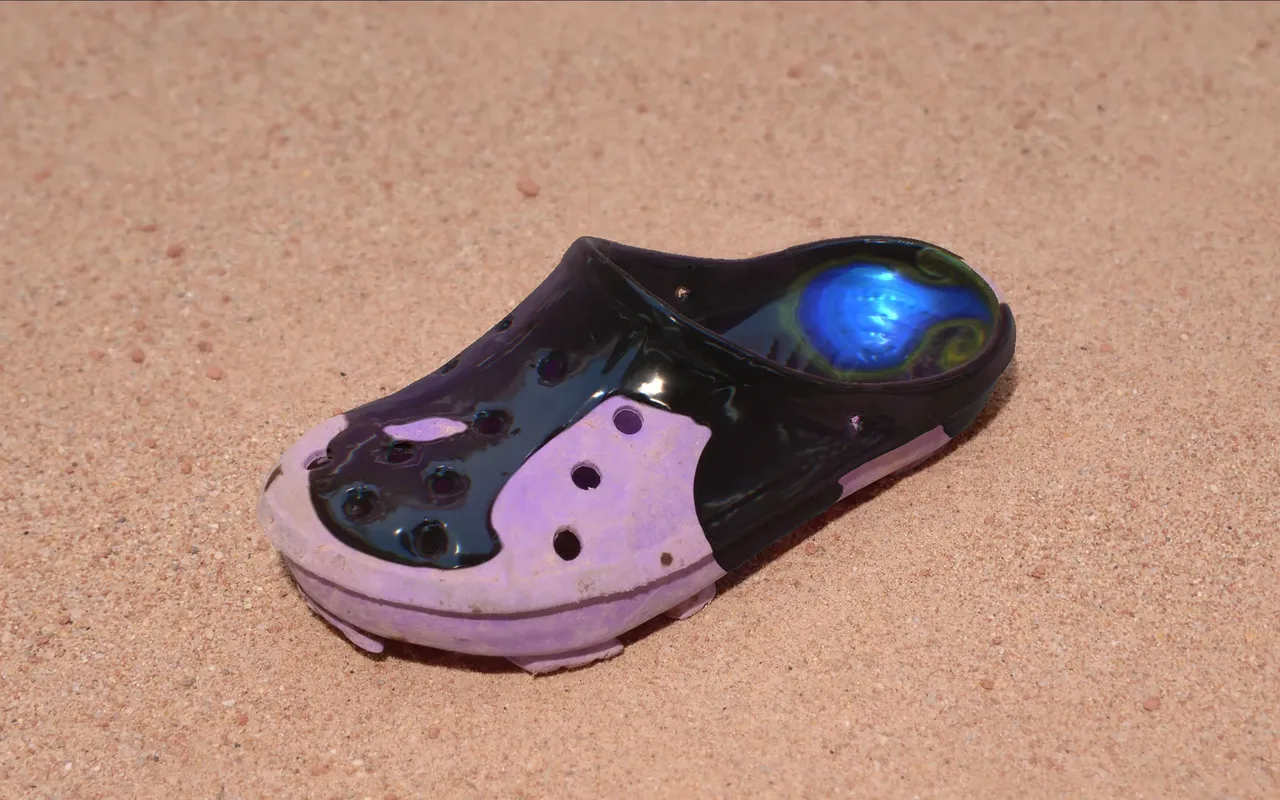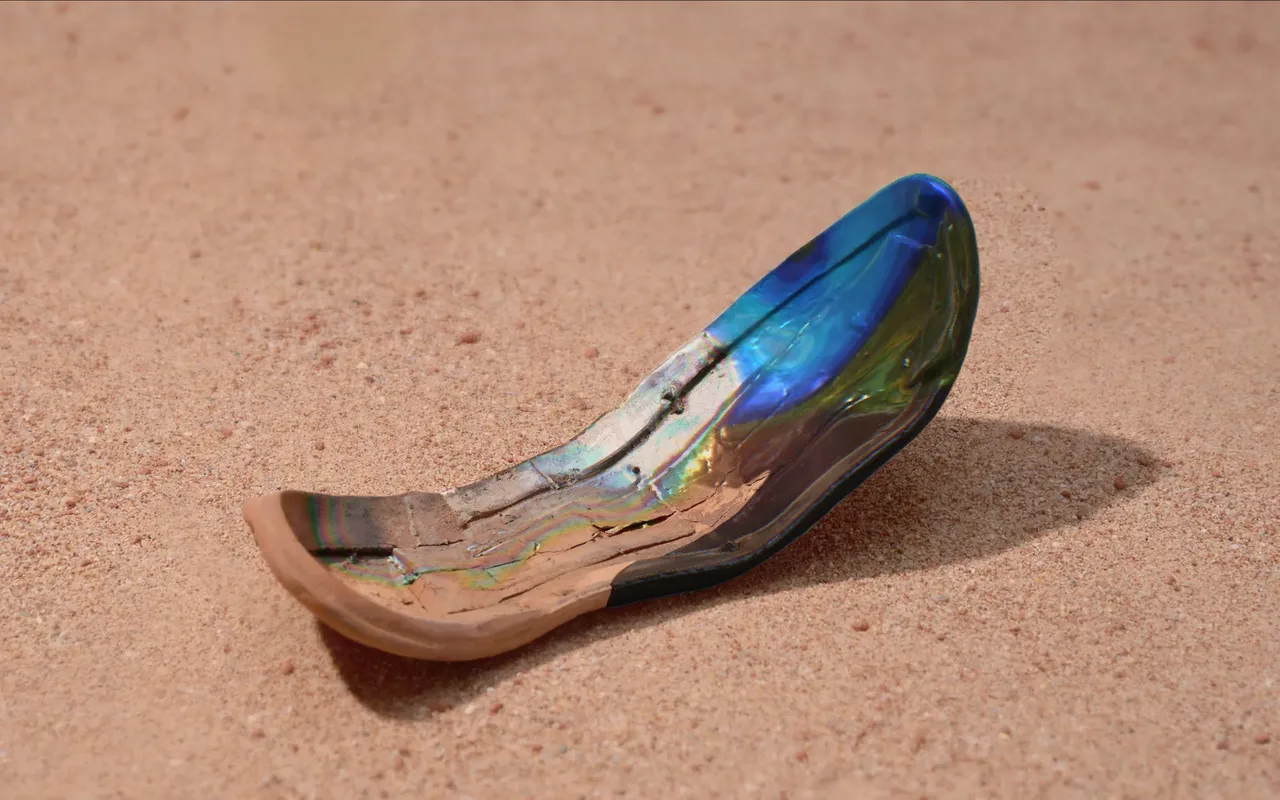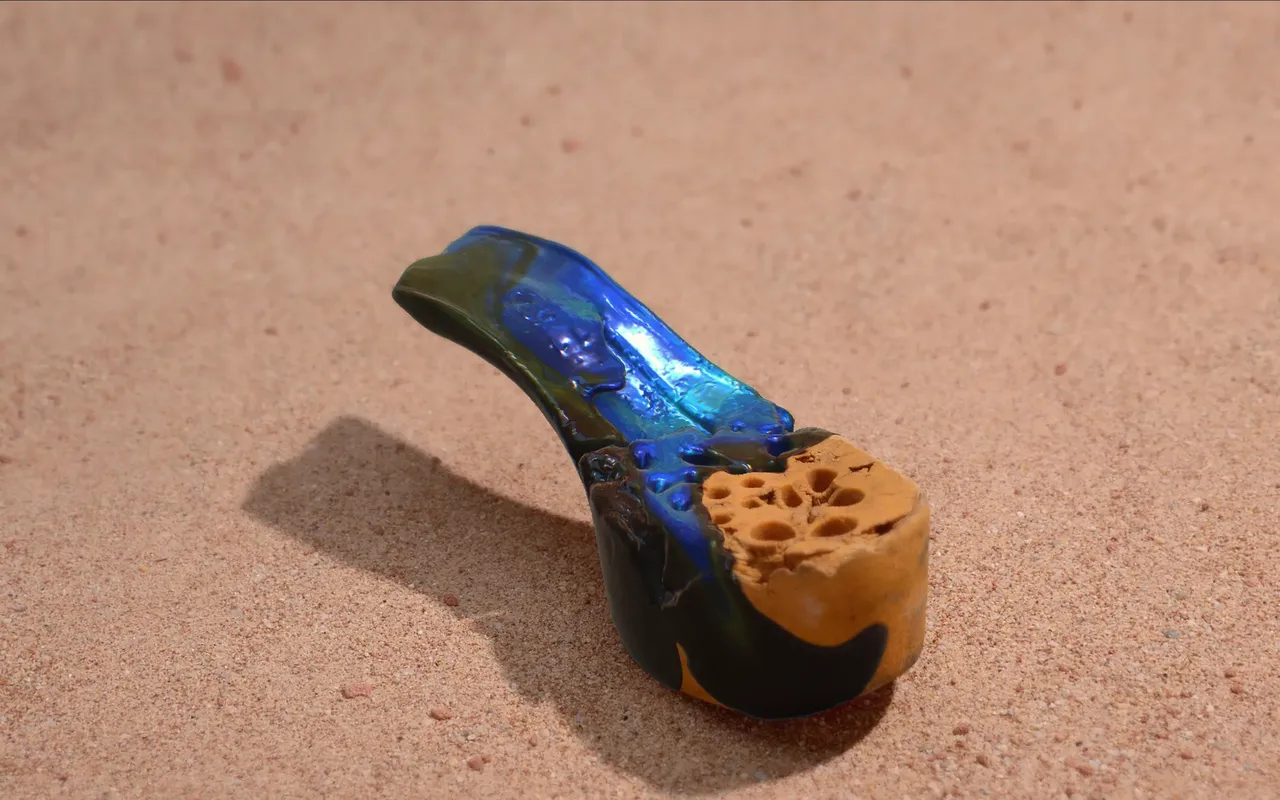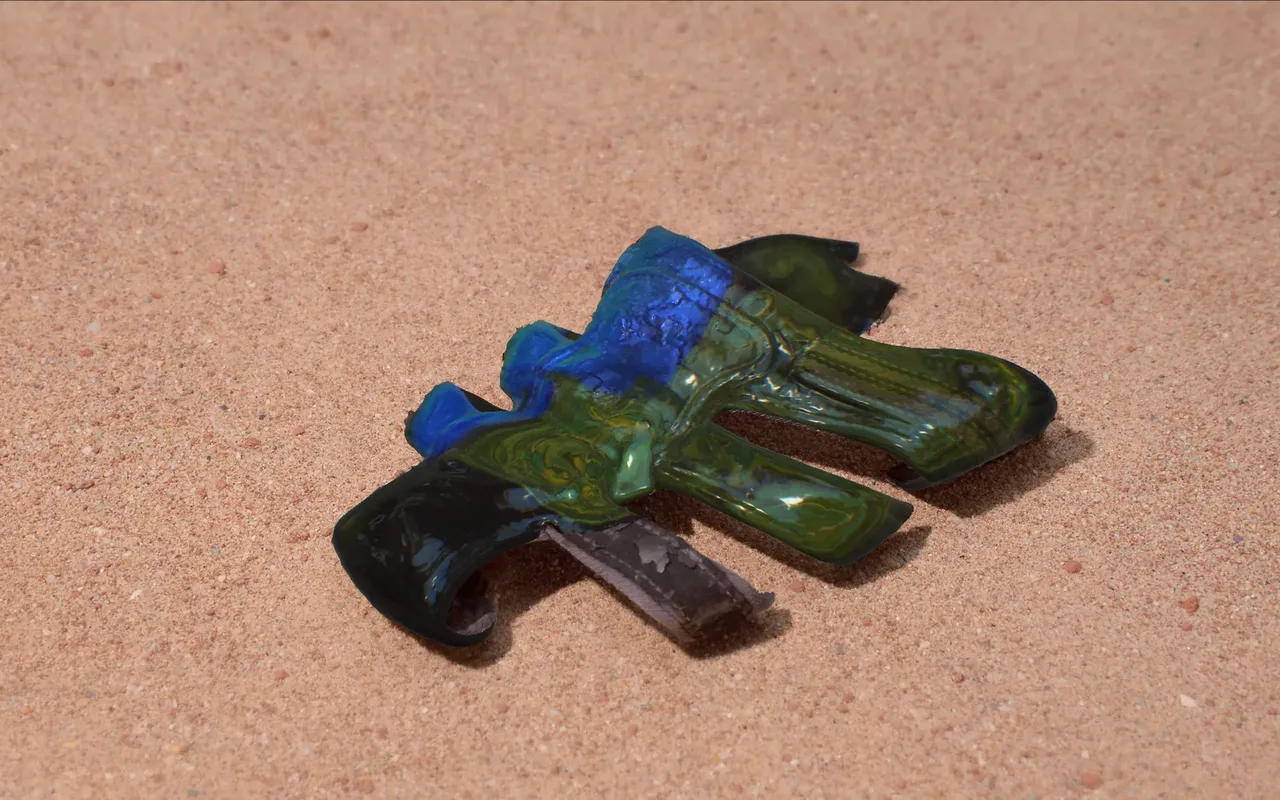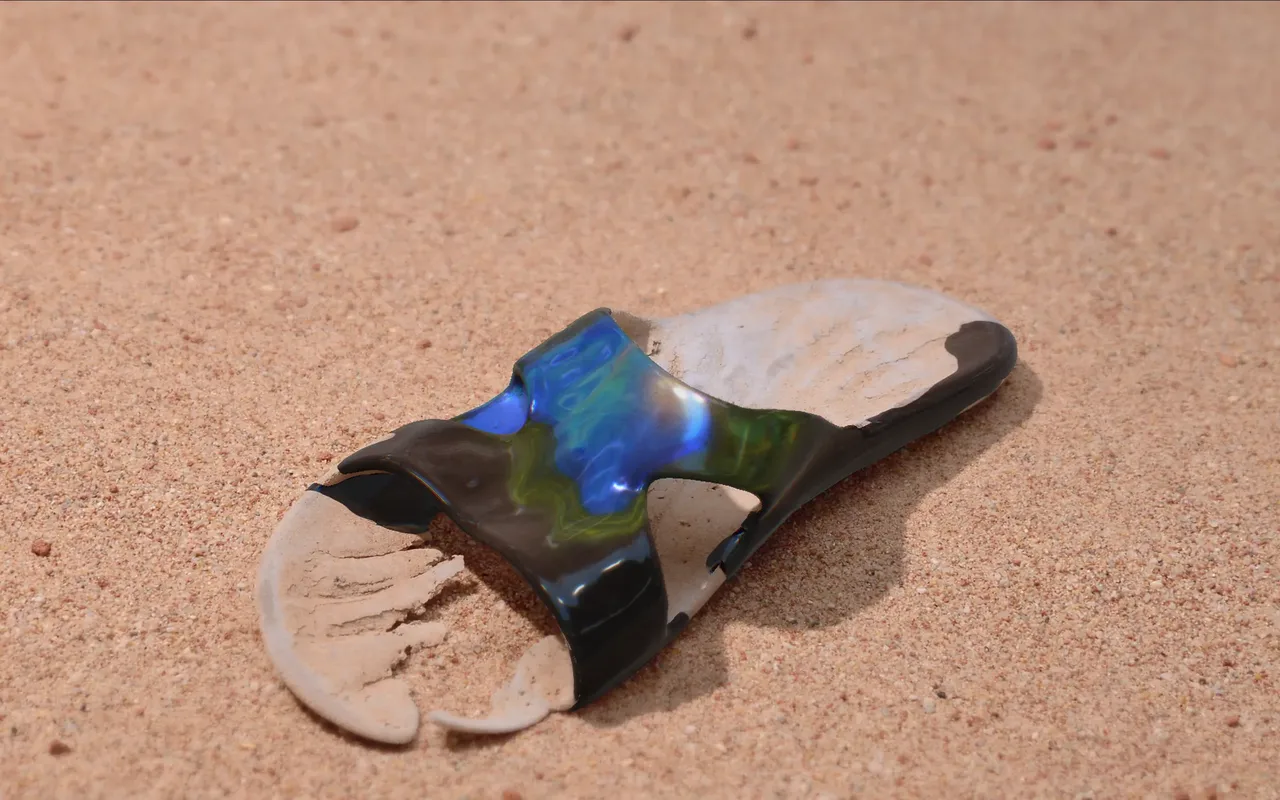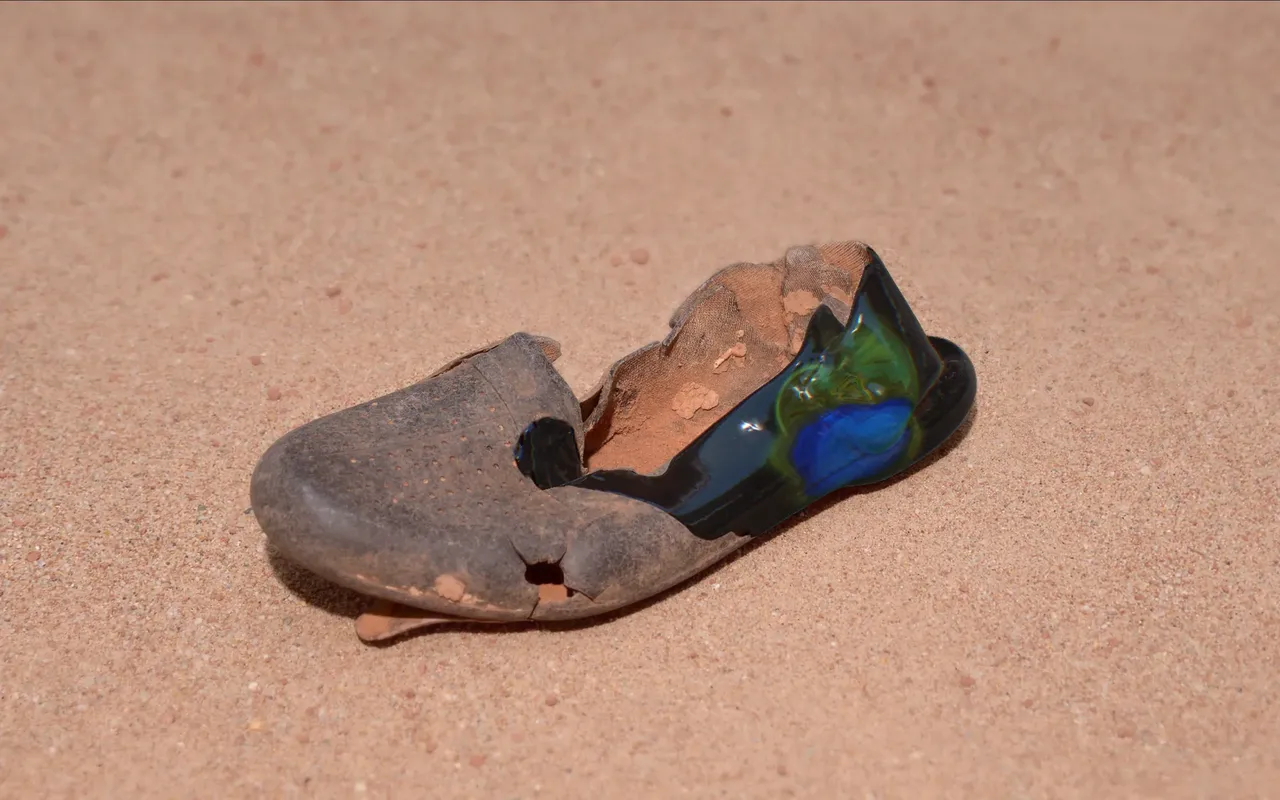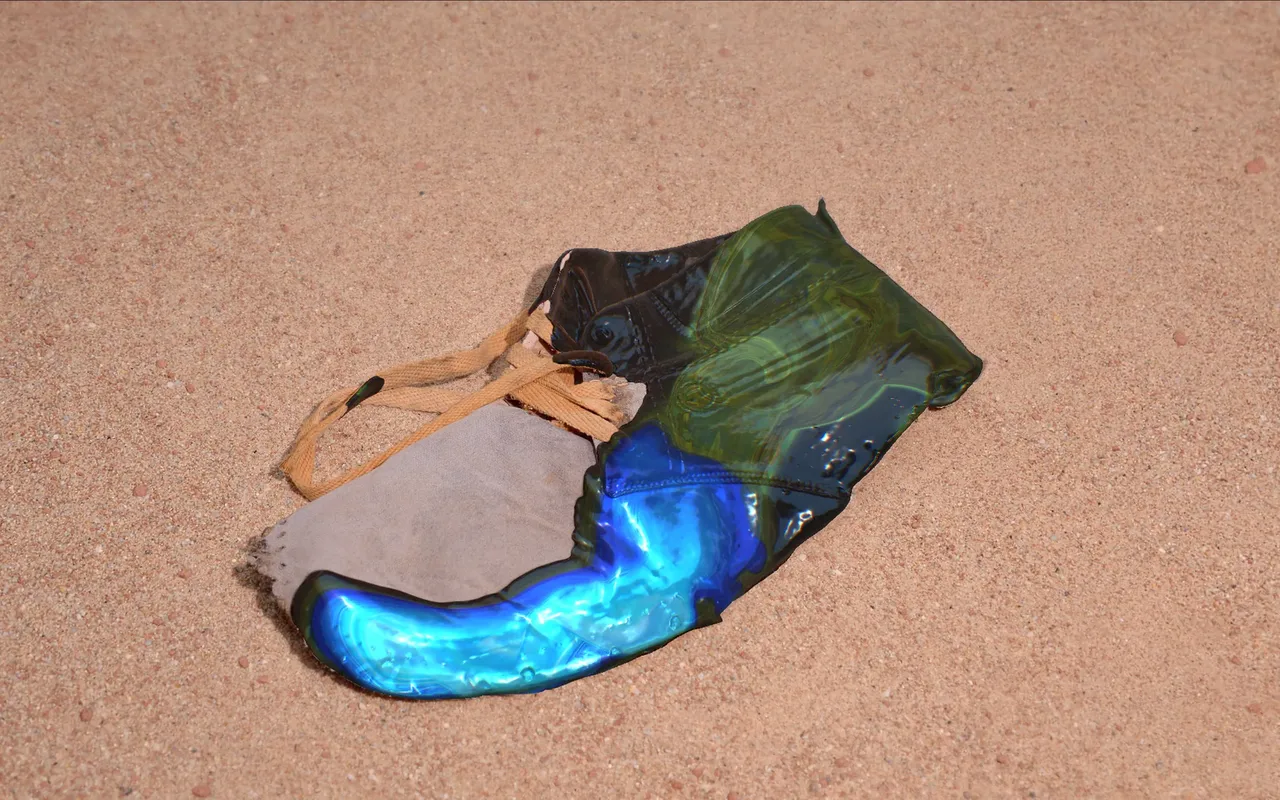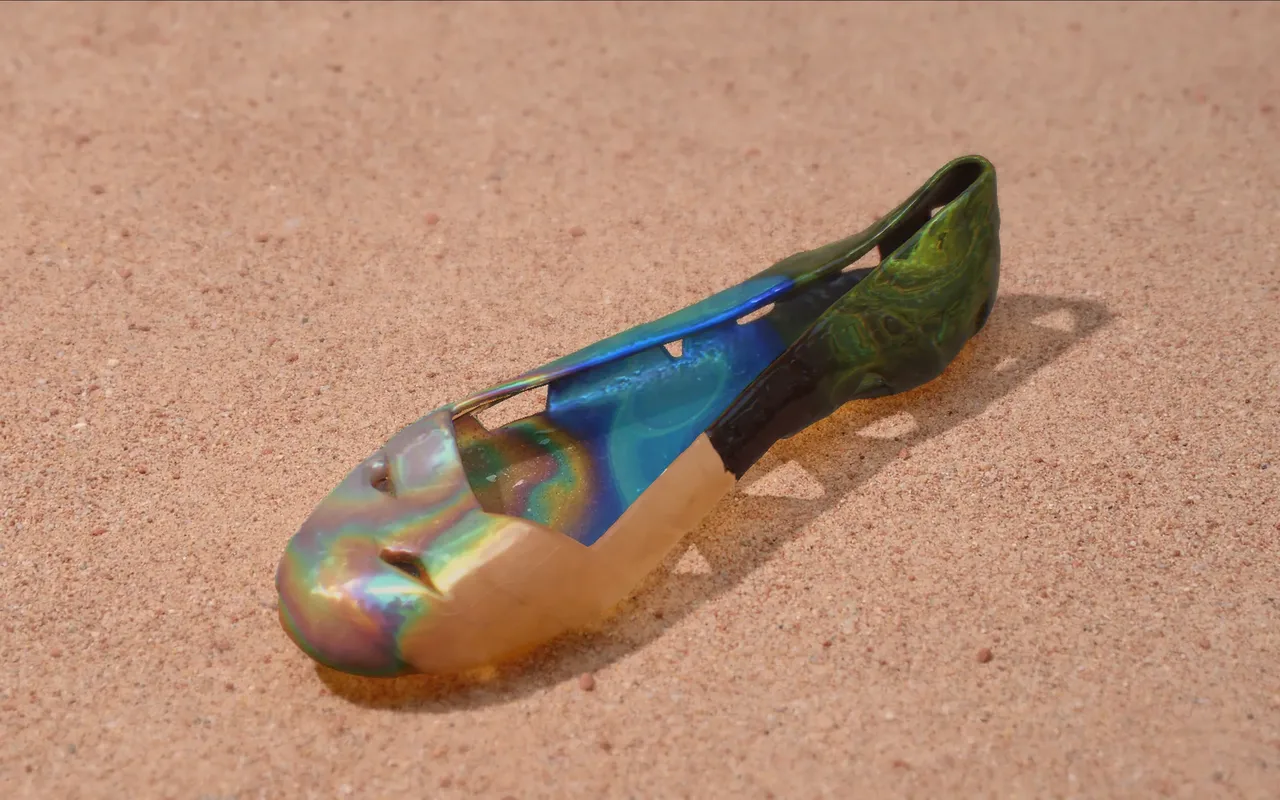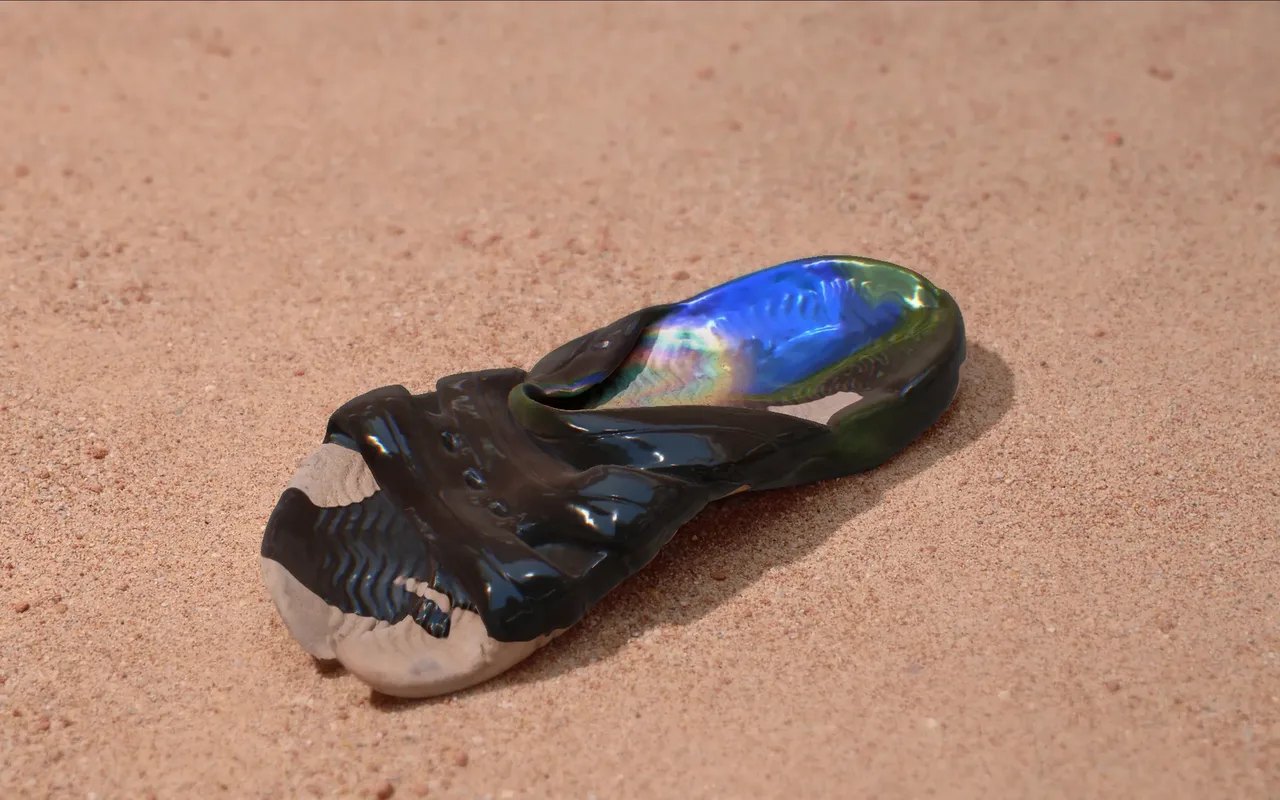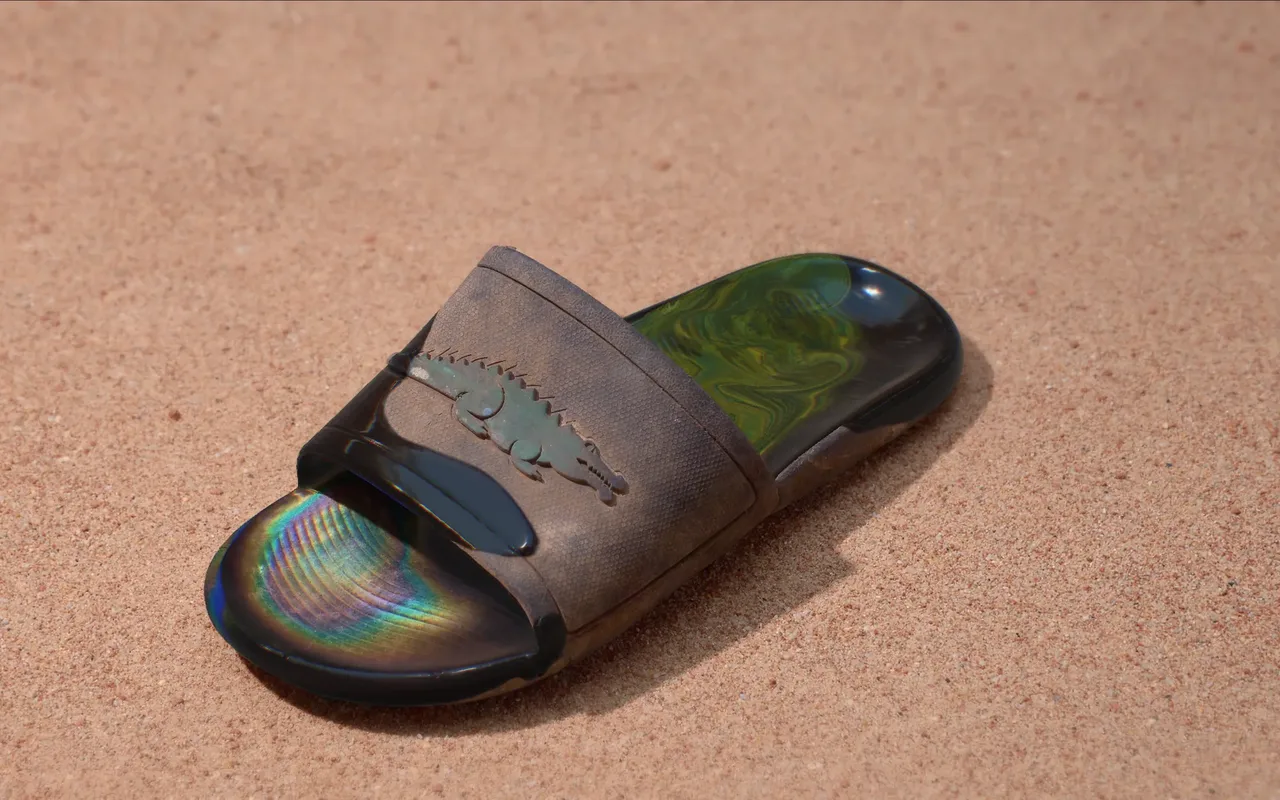
On September 22, the autumn equinox, Irish artist John Gerrard completed SPIRITS, the year-long digital artwork developed with LACMA’s Art + Technology Lab that has been unfolding season by season since last December. With the arrival of Autumn Equinox (Atlantic Ocean), its fourth and final chapter, all ninety-six virtual sculptures can now be experienced together for the first time. The full circle is finally visible, but the materials behind it will be around for considerably longer.
Gerrard began with objects most of us would probably walk straight past: discarded plastic sandals and shoes collected from the shores of the Pacific and Indian oceans, the Mediterranean Sea and the Atlantic Ocean. Each was photographed in high resolution and transformed into a luminous digital sculpture, turning something abandoned into the starting point for a much bigger conversation about our dependence on petroleum, plastics and forever chemicals. The final twenty-four come from the shores of Morocco and complete a journey that has followed both the oceans and the changing seasons.
If all of this sounds rather technical, experiencing it is surprisingly intuitive. Open SPIRITS in your browser and one of these worn shoes appears as a three-dimensional object that you can move, rotate and transform with your finger. Each touch introduces new layers across its surface, from oil slicks to ocean currents, while a generative soundscape evolves alongside your movements. Keep going and the sound eventually moves beyond the range of human hearing. It’s still there; you simply can’t perceive it anymore—an idea that feels particularly fitting when the material at the centre of the work can remain on Earth for an almost unimaginable amount of time.
Gerrard calls these sculptures “image objects.” They aren’t videos or conventional 3D models, but worlds rendered live using Gaussian splatting. Yet the technology never feels like the point in itself. It gives us another way to look at something painfully familiar and consider what happens after an object has supposedly disappeared from our lives.
The artist has appeared in these pages before. In 2017, we mentioned his work as part of Berlin Atonal commissioned installation programme. Since then, he’s continued exploring the systems that sit behind contemporary life, particularly the relationship between technology, energy and environmental damage, while his work has reached institutions including LACMA, Museo Nacional Thyssen-Bornemisza, and the Hirshhorn Museum. Nearly ten years later, SPIRITS gives us another good reason to check back in.
SPIRITS brings those concerns directly into something we carry around every day: our screens. Its four chapters began with the Pacific on the winter solstice, before moving through the Indian Ocean in spring and the Mediterranean in summer. Autumn turns to the Atlantic, with Gerrard describing this final group as “a rising electronic lament for a heating earth.”
All four chapters can now be experienced together through December 21, when the year-long cycle comes to an end. Until then, Gerrard asks us to spend some time touching, turning and looking closely at objects someone else discarded long ago. Plastic can disappear from our sight remarkably quickly. From the planet, not so much.