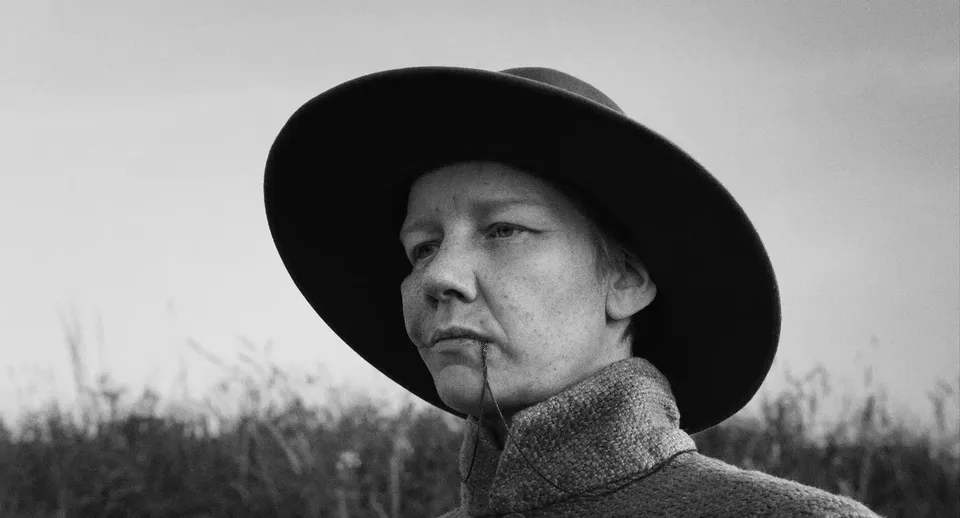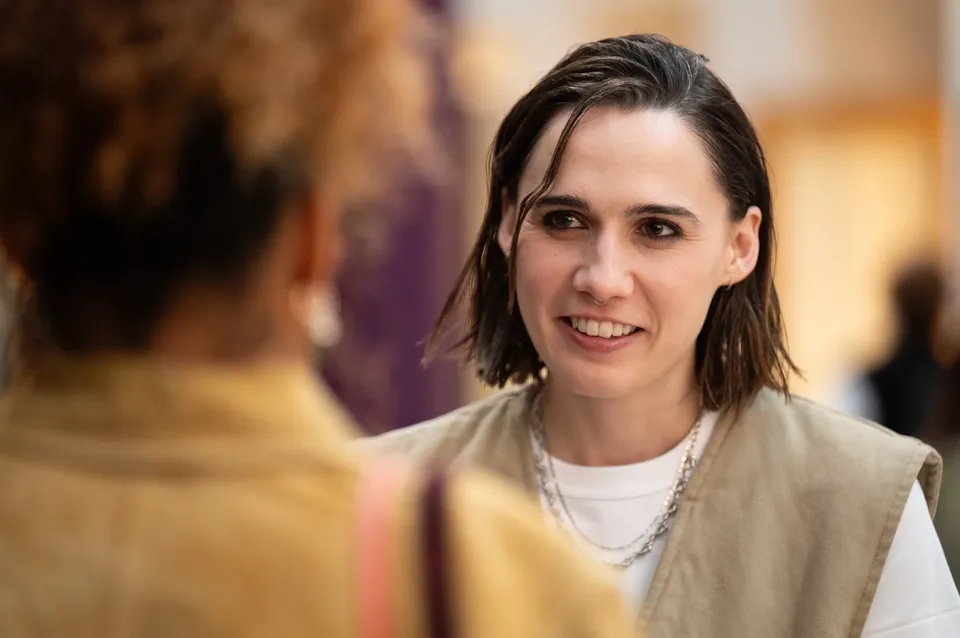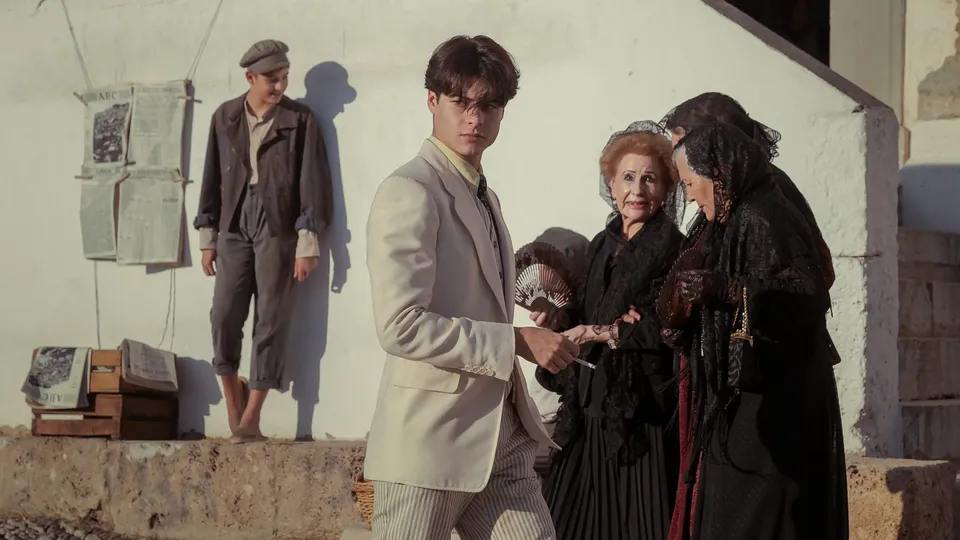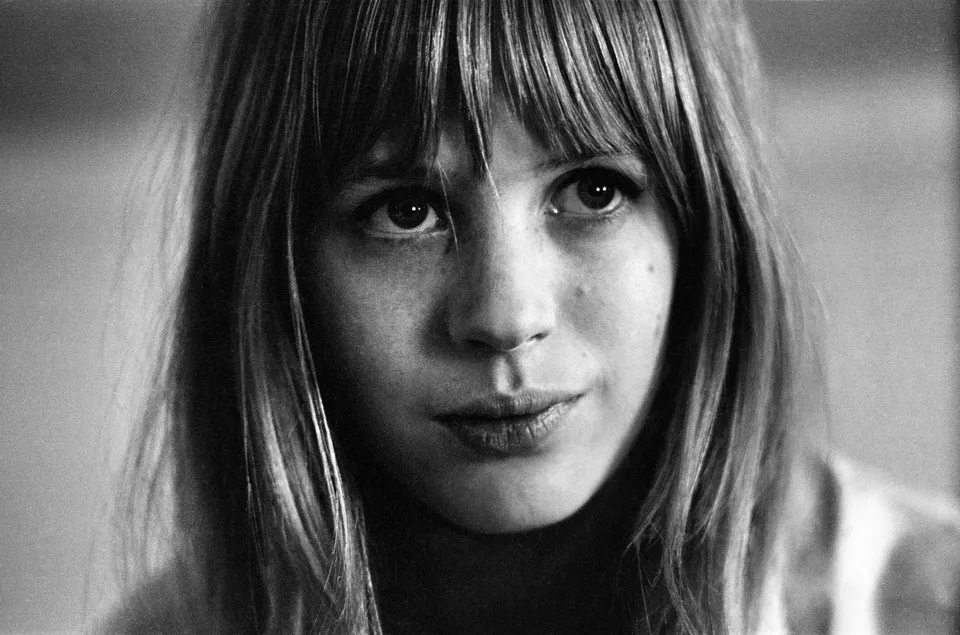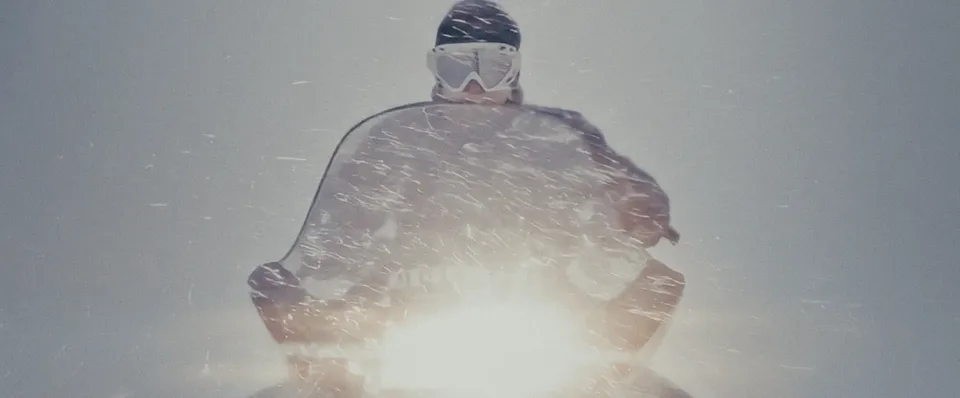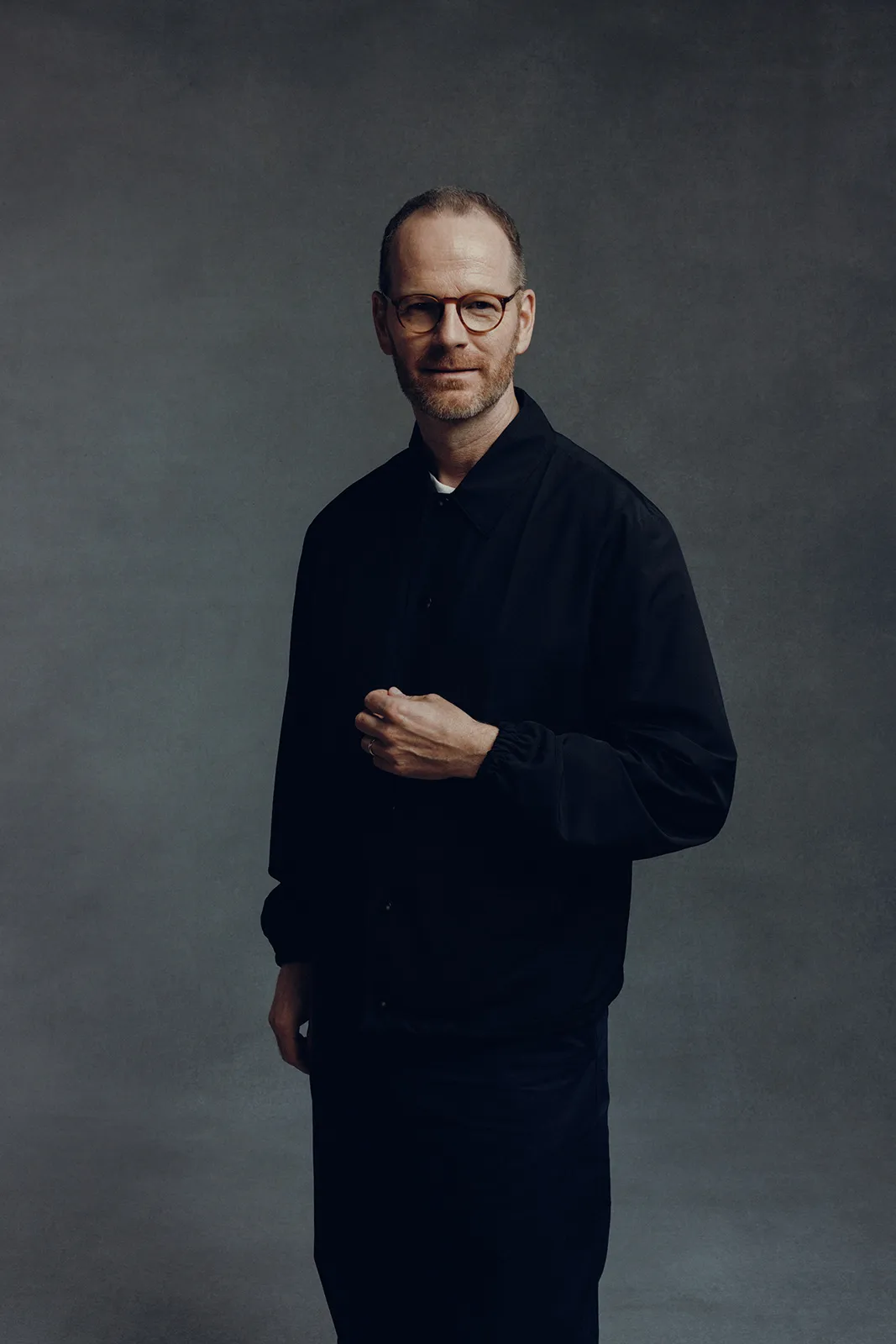
To speak with Joachim Trier is to witness a mind that treats film not as a spectacle, but as a sensitive instrument for measuring the human soul. The Norwegian director, born in 1974, emerges from a unique alchemy of influences. His journey begins in the gritty, asphalt poetry of skateboarding, a discipline of flow, fracture, and momentary flight that forged him in the counter-cultural spaces of 1980s Oslo. This foundation in observing the body in motion was later refined through a rigorous cinematic apprenticeship at the UK’s National Film and Television School. There, surrounded by masters like Stephen Frears and Mike Leigh, the visually obsessed young Trier learned to deeply value character and performance, shaping the humanist core that defines his work.
Interview taken from METAL Magazine issue 53. Adapted for the online version. Order your copy here.
This humanist ethic extends to his practice. He consistently champions the collaborative nature of filmmaking, defying the cult of individual genius by framing all creative successes as shared achievements. It is this path, from the physical grammar to the heart of human emotion, that has yielded his profound cinema of the inner self.
Trier’s work is a cartography of quiet revolutions. He maps the tremors of the heart, the fragility of intimate relationships, the unspoken grievances that calcify between lovers and family members, the quiet collapse of masculine composure. In an age shouting with absolutes, his films are masterclasses in nuance, arguing that the most radical act left is to simply look, to listen, to be vulnerable. This is the core of his now-famous manifesto, declared at Cannes: “Tenderness is the new punk.” It is a philosophy that rejects the bombast of machismo and the easy comfort of polarisation, proposing instead a courageous, collective softness.
“The world is fractured, and maybe we need to be vulnerable and show vulnerable characters. We kind of came to the conclusion that tenderness is the new punk. It’s what I need right now — I need to believe that we can see the other, that there is a sense of reconciliation, that polarisation and machismo aren’t the only way forward,” Joachim stated during the Cannes 2025 Sentimental Value press conference.
From the chronicles of becoming in the Oslo Trilogy to the intricate familial archaeology of his latest masterpiece, Sentimental Value, Trier builds narratives not around villains, but around the haunting, flawed symphony of people trying to connect. He is an architect of emotional space, using the very language of cinema, the rhythm of a montage, the pause of a black screen, the revelation of a gaze, to invite us directly into a character’s consciousness.
This conversation is a journey into that creative ethos. We traverse from his punk past to his deeply empathetic present, exploring how a director can frame silence, how inherited trauma can be sculpted into narrative, and how a camera can practise a form of radical empathy. Trier offers no easy resolutions, only the hard, beautiful work of reconciliation. In a fractured, loud, polarised, and aggressive world, his films become a sacred, collective darkroom where we develop not just a clearer picture of each other, but a fragile, necessary blueprint for a way forward.
Thank you so much for your time, Joachim. This issue is built around a powerful statement you made at the Cannes Film Festival this year, where Sentimental Value received an extraordinary nineteen-minute standing ovation and went on to win the Grand Prix. During the press conference, you defined something that has since become a kind of manifesto: “Tenderness is the new punk.” Having you as the original source of this idea is invaluable. And while we’re on beginnings, I wanted to ask you about your own starting point. I read that you were a talented skateboarder before becoming a filmmaker. I live in Barcelona, right next to the MACBA — the Contemporary Art Museum — in an area famous for its skate culture. I don’t know if you’re familiar with it.
Yes, I know the area. I have skated there.
That’s wonderful that you did. It’s such a temple of skating culture. It makes me wonder, did the camera naturally enter your life through skating? I’m thinking about how skateboarding is so deeply visual; they are always filming. Did you actually start by filming your own skate sessions? Was capturing those movements your first introduction to thinking like a director?
I didn’t film there, but I remember when I was a sponsored skater in the early-to-mid 90s. I travelled to Barcelona for a major international competition — the one right before the Olympics. We skated inside the arena, but also all over the city. It was an incredible experience. I travelled by train as part of a European skating tour, hitting several cities, and Barcelona was always a highlight. I’ve been back many times since, and it’s a place I truly love.
But yes, my roots are in skateboarding. What people may not know is that skateboarding was actually illegal in Norway from 1979 to 1989. The government had passed a law to protect kids from so-called dangerous toys, things like dolls that could catch fire, and somehow skateboards were mistakenly included. So, when I started skating in 1986, I essentially smuggled a board into the country. That experience placed me squarely within a countercultural space. I was going to punk concerts, engaging politically, and living with this sense that the adults in charge were clueless. We knew skateboarding was beautiful, not dangerous at all. Even if you broke an arm, you healed. It was part of the experience. That underground skate culture shaped me. And I suppose, in a way, this story serves as a prelude to our conversation about tenderness and punk.
Then, in 1989, skating suddenly became legal, and almost overnight, it turned commercial. There were Norwegian championships, media coverage, suddenly everyone loved it. It was strange, the same thing we’d been doing illegally for years was now mainstream. People embraced and loved skateboarding, of course, but its sudden surge into a mainstream movement truly encapsulated the spirit of the 90s for me. The same thing happened with underground music. When Nirvana broke through, we appreciated their success, but we also wondered, what about Sonic Youth, Pixies, Hüsker Dü, or Dinosaur Jr.? These were the bands we had been listening to all along. Why weren’t they embraced in the same way? It was a confusing period, watching everything you valued being absorbed into the mainstream.
But yes, my roots are in skateboarding. What people may not know is that skateboarding was actually illegal in Norway from 1979 to 1989. The government had passed a law to protect kids from so-called dangerous toys, things like dolls that could catch fire, and somehow skateboards were mistakenly included. So, when I started skating in 1986, I essentially smuggled a board into the country. That experience placed me squarely within a countercultural space. I was going to punk concerts, engaging politically, and living with this sense that the adults in charge were clueless. We knew skateboarding was beautiful, not dangerous at all. Even if you broke an arm, you healed. It was part of the experience. That underground skate culture shaped me. And I suppose, in a way, this story serves as a prelude to our conversation about tenderness and punk.
Then, in 1989, skating suddenly became legal, and almost overnight, it turned commercial. There were Norwegian championships, media coverage, suddenly everyone loved it. It was strange, the same thing we’d been doing illegally for years was now mainstream. People embraced and loved skateboarding, of course, but its sudden surge into a mainstream movement truly encapsulated the spirit of the 90s for me. The same thing happened with underground music. When Nirvana broke through, we appreciated their success, but we also wondered, what about Sonic Youth, Pixies, Hüsker Dü, or Dinosaur Jr.? These were the bands we had been listening to all along. Why weren’t they embraced in the same way? It was a confusing period, watching everything you valued being absorbed into the mainstream.
Exactly. That means your roots are deeply embedded in that underground, illegal Norwegian skate scene. And what you’re describing is a recurring pattern, the mainstream constantly absorbs these subcultures. Capitalism has a way of... well, consuming and absorbing them, swallowing these raw, authentic movements, and repackaging them for mass consumption. We’ve seen it happen again and again: piercings, tattoos, all forms of radical individualism eventually get commodified and turned into a mainstream product.
That’s very well put. That was certainly the dynamic of the 90s. It was a recurring phenomenon during that decade. In reaction to this mainstream absorption, a counter-movement emerged, one rooted in irony and emotional distance. I think it was a defense mechanism for many of us, a way to navigate that complex space where genuine appreciation coexisted with the commodification of culture. We saw the same pattern in independent film. Suddenly, Tarantino was a massive mainstream phenomenon. And don’t misunderstand me, we liked his films. But it made us wonder: “Wait, isn’t this supposed to be underground?”
Yeah, and Robert Rodriguez, also in that Tarantino sphere, this crazy director was huge, at least in Spain. His early movies felt deeply underground, yet they found massive success. That thought of a vibrant, specific cultural scene suddenly reaching global prominence brings me directly to your work and your marvellous Oslo Trilogy. In a way, you’ve placed Oslo on the cinematic map alongside cities like New York, London or Paris. In fact, in response to the appreciation for your new film Sentimental Value, this summer cinemas in cities like Berlin reprogrammed the trilogy: Reprise, Oslo, August 31st, and The Worst Person in the World. My question is, how do you feel about this legacy, and how do people in a small country like Norway feel about you becoming such a defining cultural figure on the global stage?
I’m pleasantly surprised. I’ve always been very committed to making these films with my group. We’re like a gang. I work with the same writer, Eskil Vogt, and the same editor, Olivier Bugge Coutté. We do what we do, and I’m very grateful that the awards for “Sentimental Value” and the success of “The Worst Person in the World” have brought attention to my earlier work, so more people get to see it. That makes me genuinely happy.
Although I’ve never sought personal attention, sometimes in Oslo, moments like this happen. Just this morning, I was taking my two very young daughters to daycare, and a woman on the street stopped me, a total stranger. She said: “Oh, thank you for making great films.” She looked at my daughter and said: “Your dad makes really nice films.” And my daughter, four and a half years old, replied: “Yeah, he does.”
Then, as we walked away, she asked me, “Dad… everyone sees your films?” I just smiled. At her age, she obviously hasn’t seen my adult films yet, but it was sweet to hear her say it. I would say, it goes in periods. Right now, people are talking about me, but maybe in a couple of years, while I’m working on the next one, they won’t. And I think that’s probably healthy for my family.
Although I’ve never sought personal attention, sometimes in Oslo, moments like this happen. Just this morning, I was taking my two very young daughters to daycare, and a woman on the street stopped me, a total stranger. She said: “Oh, thank you for making great films.” She looked at my daughter and said: “Your dad makes really nice films.” And my daughter, four and a half years old, replied: “Yeah, he does.”
Then, as we walked away, she asked me, “Dad… everyone sees your films?” I just smiled. At her age, she obviously hasn’t seen my adult films yet, but it was sweet to hear her say it. I would say, it goes in periods. Right now, people are talking about me, but maybe in a couple of years, while I’m working on the next one, they won’t. And I think that’s probably healthy for my family.
Following that thread of family — your daughters, the morning walk, the conversations — it feels like this personal dimension resonates deeply in your new film, Sentimental Value, which moves distinctly towards family dynamics and the inner consciousness of its characters. You present a whole cluster of relatives, a family, a home, but also inherited pain and trauma with remarkable balance. How did you approach building such a varied, yet equally compelling, inner world for each of them?
I will start from the other end. What you mentioned about the internal world of the characters, that’s truly important to me and my team. In cinema, it’s often easy to create external antagonists, evil forces or clearly bad characters to generate conflict. But I’m not particularly interested in that. I lean more toward the humanist tradition, understanding people, being curious about behaviour, observing without judgment, and allowing the audience to form their own perceptions.
I also find it exciting to play with film language, to bend it in ways that convey a character’s inner life without relying solely on dialogue but through behaviour: the structure of scenes, the rhythm of montage, moments of voiceover are all tools to immerse the viewer in a character’s consciousness. That’s been a thread in all my films, and it’s something I keep exploring.
In this film, the premise was to tell a story about reconciliation, but also about what remains unspoken in families, something I think every family carries. Being a father myself has made me aware of how much we communicate beyond words, how much is transferred unconsciously. In Sentimental Value, there’s an undercurrent of inherited grief and unspoken emotions, things never discussed yet deeply felt. I wanted to explore the father figure, Gustav Borg, as a paradox, who is on the one hand patriarchal and self-centred, yet on the other hand through his art capable of sublimation, of expressing a complex emotional life. The tension between Gustav the artist and Gustav the father, the social person, that’s where the film lives.
I also find it exciting to play with film language, to bend it in ways that convey a character’s inner life without relying solely on dialogue but through behaviour: the structure of scenes, the rhythm of montage, moments of voiceover are all tools to immerse the viewer in a character’s consciousness. That’s been a thread in all my films, and it’s something I keep exploring.
In this film, the premise was to tell a story about reconciliation, but also about what remains unspoken in families, something I think every family carries. Being a father myself has made me aware of how much we communicate beyond words, how much is transferred unconsciously. In Sentimental Value, there’s an undercurrent of inherited grief and unspoken emotions, things never discussed yet deeply felt. I wanted to explore the father figure, Gustav Borg, as a paradox, who is on the one hand patriarchal and self-centred, yet on the other hand through his art capable of sublimation, of expressing a complex emotional life. The tension between Gustav the artist and Gustav the father, the social person, that’s where the film lives.
And you characterise everyone with a bright side and a dark side; each character is so distinctly crafted, yet each earns a similar level of empathy from the viewer. It feels like a kind of emotional symphony.
I try to find that balance. I believe we connect with people through their vulnerability. It’s the imperfections, the yearning for identity, the sheer chaos of being human. We all carry that sense of, “Am I this person? They tell me I’m this character, but I feel like many things.” That internal dissonance. Within a family, this becomes even more pronounced. Members assume roles, often unspoken, driven by necessity or reasons they themselves don’t fully understand. The two sisters in the film, for example, have each taken on such roles.
The story, for me, isn’t about resolving everything neatly by the end. That would feel false. Life isn’t that simple. Instead, it’s about whether the family can move forward, even slightly. Perhaps reconciliation lies in accepting the shortcomings of those around us, acknowledging their flaws, and our own, without the expectation of a perfect resolution.
The story, for me, isn’t about resolving everything neatly by the end. That would feel false. Life isn’t that simple. Instead, it’s about whether the family can move forward, even slightly. Perhaps reconciliation lies in accepting the shortcomings of those around us, acknowledging their flaws, and our own, without the expectation of a perfect resolution.
This idea of reconciliation and your focus on sensitivity and vulnerability seems to connect directly with evolving notions of masculinity, moving away from the traditional, often toxic archetype of the man who must always decide, provide, and fix things, toward a masculinity that embraces vulnerability, flaws, and inner chaos. What are your thoughts on this shift?
I think we’re talking about roles, and I need to approach this carefully. As an artist, I’m cautious about rigid definitions of identity and gender; these are deeply individual and fluid matters. To declare an old masculinity versus a new masculinity makes me hesitant. I need to state that from the outset. That said, storytelling allows me to explore these ideas through individual characters, and through them, perhaps enlighten broader truths, with gender naturally informing this exploration.
Gustav Borg represents a generation, particularly in post-war Norway, that buried trauma. People were so wounded they lacked the capacity to process subtler emotions. He survived a strict childhood where men weren’t permitted to cry. Instead, as you say, he was allowed only to fix things. I recall research by psychologists distinguishing between emotional empathy and action empathy. They found many men are conditioned by society to jump into problem-solving before truly feeling with others, whether parents, siblings, or anyone else. This drive to act, whether cultural or biological (a discussion that’s still open), creates a burden. Men often feel compelled to say something intelligent or resolve situations immediately. That urgency can block the capacity to simply sit with complex emotions, to fully experience them. Actions can be complicated and absolute, sometimes hindering their ability to sense the complexity of feelings.
Since Reprise, I’ve explored male characters who are vulnerable, emotional, and incapable of fulfilling expected heroic roles. That openness to emotions and genuine contact is what interests me personally and artistically, and I believe it’s what you’re asking about. With Sentimental Value, I wanted to offer hope against polarisation. A family can mirror larger societal dynamics, though ultimately interpretation belongs to the audience. I aimed to infuse the film with a hopeful kindness, showing that we needn’t always be tough or strong, nor enemies. We must learn to truly listen to one another.
Gustav Borg represents a generation, particularly in post-war Norway, that buried trauma. People were so wounded they lacked the capacity to process subtler emotions. He survived a strict childhood where men weren’t permitted to cry. Instead, as you say, he was allowed only to fix things. I recall research by psychologists distinguishing between emotional empathy and action empathy. They found many men are conditioned by society to jump into problem-solving before truly feeling with others, whether parents, siblings, or anyone else. This drive to act, whether cultural or biological (a discussion that’s still open), creates a burden. Men often feel compelled to say something intelligent or resolve situations immediately. That urgency can block the capacity to simply sit with complex emotions, to fully experience them. Actions can be complicated and absolute, sometimes hindering their ability to sense the complexity of feelings.
Since Reprise, I’ve explored male characters who are vulnerable, emotional, and incapable of fulfilling expected heroic roles. That openness to emotions and genuine contact is what interests me personally and artistically, and I believe it’s what you’re asking about. With Sentimental Value, I wanted to offer hope against polarisation. A family can mirror larger societal dynamics, though ultimately interpretation belongs to the audience. I aimed to infuse the film with a hopeful kindness, showing that we needn’t always be tough or strong, nor enemies. We must learn to truly listen to one another.
“The world is fractured, and maybe we need to be vulnerable and show vulnerable characters. We kind of came to the conclusion that tenderness is the new punk.”
Yes.
Also, while making this film, I listened to a lot of The Beatles, John Lennon, and similar musicians. What I tried to express at Cannes is that my younger self used to believe counterculture and counterposition required aggression against power, and that remains necessary. But now we also need empathy, softness, and a yearning for contact and connection. We must show that battles aren’t always won through force, especially between individuals. Sometimes we succeed by humbly listening and genuinely engaging, by believing in the possibility of meeting one another. Does this make sense?
That makes perfect sense. Now, this notion of emotional empathy and listening to others reminds me of your earlier film Louder Than Bombs, where you explore similar themes through a war photographer’s lens. Like Sentimental Value, it’s also about a family, this time American, failing to talk about trauma, intertwined with societal struggles and suicide. But I wanted to ask you about a specific visual moment: when the oldest son discovers his mother’s photograph, then the mirror, then sees the lover. The composition immediately reminded me of Velázquez’s Las Meninas. In that painting, the painter appears in his own work, reflected in a mirror, playing with who is looking at whom. It’s precisely what you do in that scene with Isabelle Huppert’s character. Did you have this reference in mind?
I know Velázquez, but I wasn’t consciously referencing that particular painting. Though I see the connection you’re making, the layers of gaze, the mirror revealing hidden truths, totally!
I thought it was genius, and it also made me think of Antonioni, whom I believe you admire. Blow-Up, specifically that process of discovering truth by enlarging reality, peeling back layers through the photographic gaze. You achieve something similar here, but through reflection and emotional revelation rather than photographic enlargement.
Absolutely. Antonioni was a master at questioning perception itself, whether what we see is truth or simply another layer of the narrative.
This conversation about perception and layered truths makes me think about how you structure your films. To continue exploring the formal choices in your work, let’s return to Sentimental Value and its structure: you use these black screens between scenes, creating pauses, almost like a moment for public reflection. It also connects with broad notions of fragmentation.
Exactly. The fragmentation mirrors the family’s disconnected state early in the film. Then, around the final third, the flow becomes more cohesive as the drama between them deepens and finds rhythm. This formal shift is very intentional. In a film dealing with such explicit intimacy and emotion, I believe it’s vital to leave interpretive space for the audience. Those black beats function as pauses, a way of saying, we’ll leave you for a moment, and then return. They create a rhythm, moving between characters while allowing viewers room to sit with what they’ve felt, to draw their own connections. I don’t want to force the story on anyone. It’s about finding that formal balance — guiding, but not controlling, the emotional experience.
Understanding each other, finding common ground, do you see gentleness as a form of resistance through collectivity? In your latest film, how do you connect the internal world of cinema (cinema inside cinema), the intimacy of family, and the way these stories transfer into reality, to build a kind of collective body? How do you view cinema’s role in moving from fictional narratives to shaping shared human experience?
I appreciate that premise. I grew up experiencing cinema as a collective experience, in theatres, watching new releases or rediscovering classics at the cinémathèque. Today, we inhabit a very fragmented reality, where we are constantly served images with a purpose, often an aggressive purpose of selling us objects or ideas, and it’s done on a very meticulous, individualist level. I believe cinema can propose something different: a more open, collective experience.
It’s about showing an image that demands time, that refuses to be absolutist. It can be an open image, where a human face can mean different things to different viewers. Then, when it goes dark and the film ends, you find yourself in a town square of conversations. Perhaps you go with friends and need to talk about what you’ve just felt. That collective sensation is something I long for. It hasn’t disappeared, it’s still there. Our task and the best thing we can do is to create films that are truly worth seeing together, without resorting to populism. That may be the most meaningful contribution we can offer.
It’s about showing an image that demands time, that refuses to be absolutist. It can be an open image, where a human face can mean different things to different viewers. Then, when it goes dark and the film ends, you find yourself in a town square of conversations. Perhaps you go with friends and need to talk about what you’ve just felt. That collective sensation is something I long for. It hasn’t disappeared, it’s still there. Our task and the best thing we can do is to create films that are truly worth seeing together, without resorting to populism. That may be the most meaningful contribution we can offer.
Returning to this concept of a collective body and shared humanity and when we speak about society as a whole, not just governments or institutions, but people in their daily lives, how do you perceive this collective empathy taking shape in Norway regarding Palestine? And how does that relate to your belief in cinema as a space for shared feeling? It strikes me as a real-world example of the kind of radical empathy we’ve been discussing.
For my part, I signed a letter of solidarity early on, alongside hundreds of others in the film industry, condemning the situation in Gaza. On a personal level, I’ve supported the work of organisations like Doctors Without Borders. And it’s true that Norwegian society has been among the most consistent in its humanitarian stance. I believe our politicians have generally sought a thoughtful balance, and there has long been a clear, humanist movement in Norway in support of the Palestinian people. The situation is, of course, devastating. Regarding the cinema industry, especially Cannes, I didn’t hear anyone being told they couldn’t address it. The silence, if there was any, felt more organic than imposed.
“Cinema can offer a space to slow down, to inhabit someone else’s sensitivity, to appreciate vulnerability not as weakness, but as a radical act.”
You said that seeing and understanding each other won’t fix everything, but can it help?
To be clear, I don’t make films with the illusion that they can solve everything. What I try to create is a humanist space, a reminder that politics, in any society, grows from the bottom up. It begins with how we treat each other in our daily lives. How to explain it... When you’re heartbroken and hear a sad love song, you feel connected to something beyond yourself. Cinema can serve that same function, connecting us emotionally. Then, it’s up to individuals in society to carry that feeling forward, to translate it into something meaningful. I’m not suggesting my films have a clear, direct purpose or meaning. The role of art is more subtle than that.
A final question about commodification. Would you ever consider directing a Hollywood commission that went against your principles of moral vulnerability and tenderness, even for a substantial financial incentive?
Oh, no, it’s not even a consideration. I see myself as a free European artist. That said, I must acknowledge that tremendous films are made in America, just as they are in Iran, Japan, Norway, Spain, and beyond. It’s not about America versus Europe; wonderful cinema emerges across cultures. What’s beautiful is that film still finds ways to persist, to fight its way through. Personally, I’m deeply grateful for the European co-financing system. It allows multiple entities to contribute modestly, rather than relying on one major commercial entity that could dictate terms. This structure lets me, my producers, and my team retain creative ownership; we decide what the film is about. That artistic freedom is precious, and I don’t take it for granted. I know it’s a privilege not available everywhere. So, thank you for the question, but the truth is, I don’t even see that path for myself. I’m committed to doing my own work. I need to write my own stories with my co-writer, Eskil. That’s where I do belong.
I can tell you’re a true cinephile. I’ve seen those clips of you at a video or CD library where you selected movies, then chose and analysed scenes; you talked about films you saw when you were just nine years old! That passion really comes through. The references in your work are fantastic to discover. And those small gestures, those quiet observations, are precisely where the strength in softness lives. They aren’t loud, they don’t demand attention, yet they define the core of human connection. In that sense, your work embodies your manifesto: tenderness is punk.
Indeed! Tenderness is punk. And that’s why I think it resonates now, because the world feels so loud, polarised and aggressive. Cinema can offer a space to slow down, to inhabit someone else’s sensitivity, to appreciate vulnerability not as weakness, but as a radical act.
And I have to say, I was truly happy when you agreed to this conversation about the power of care as resistance.
Thank you for talking with me. These were really profound questions.