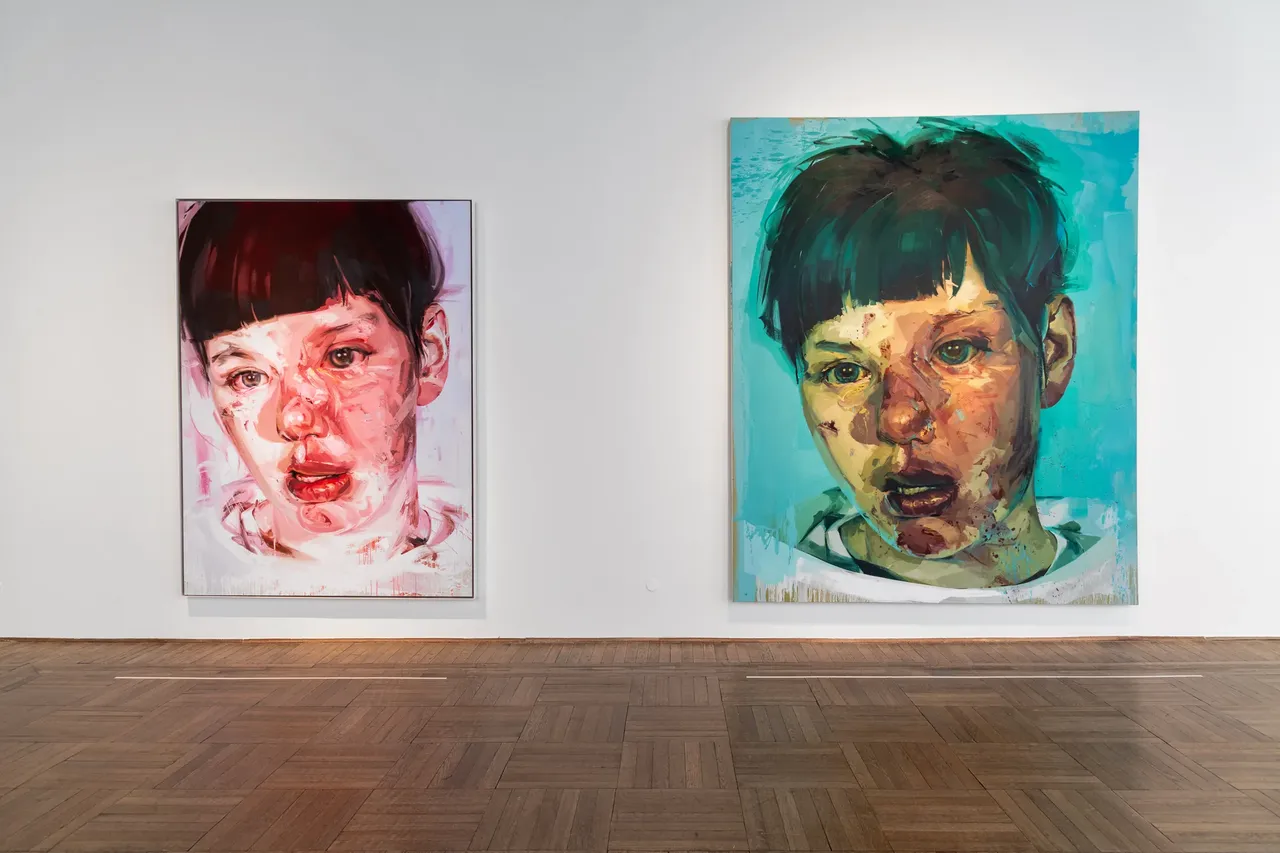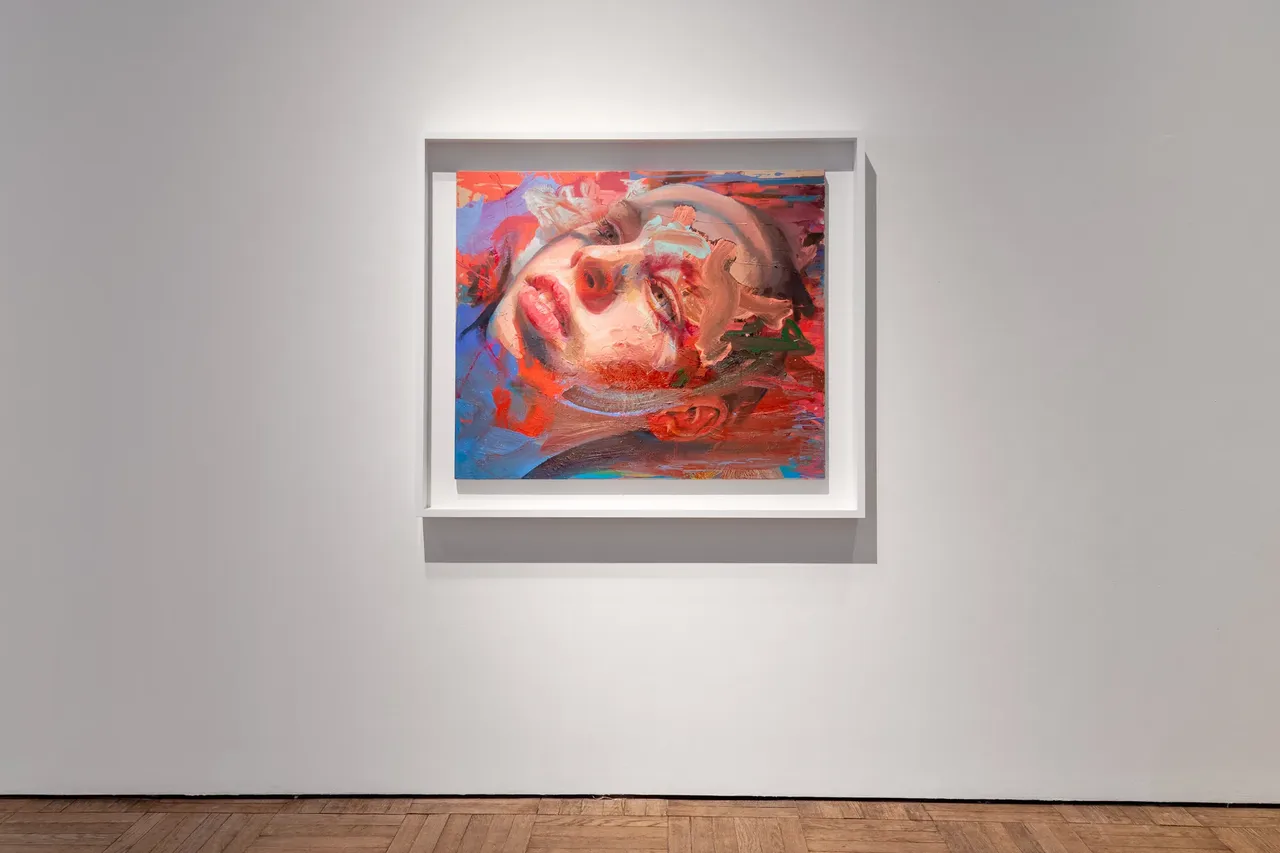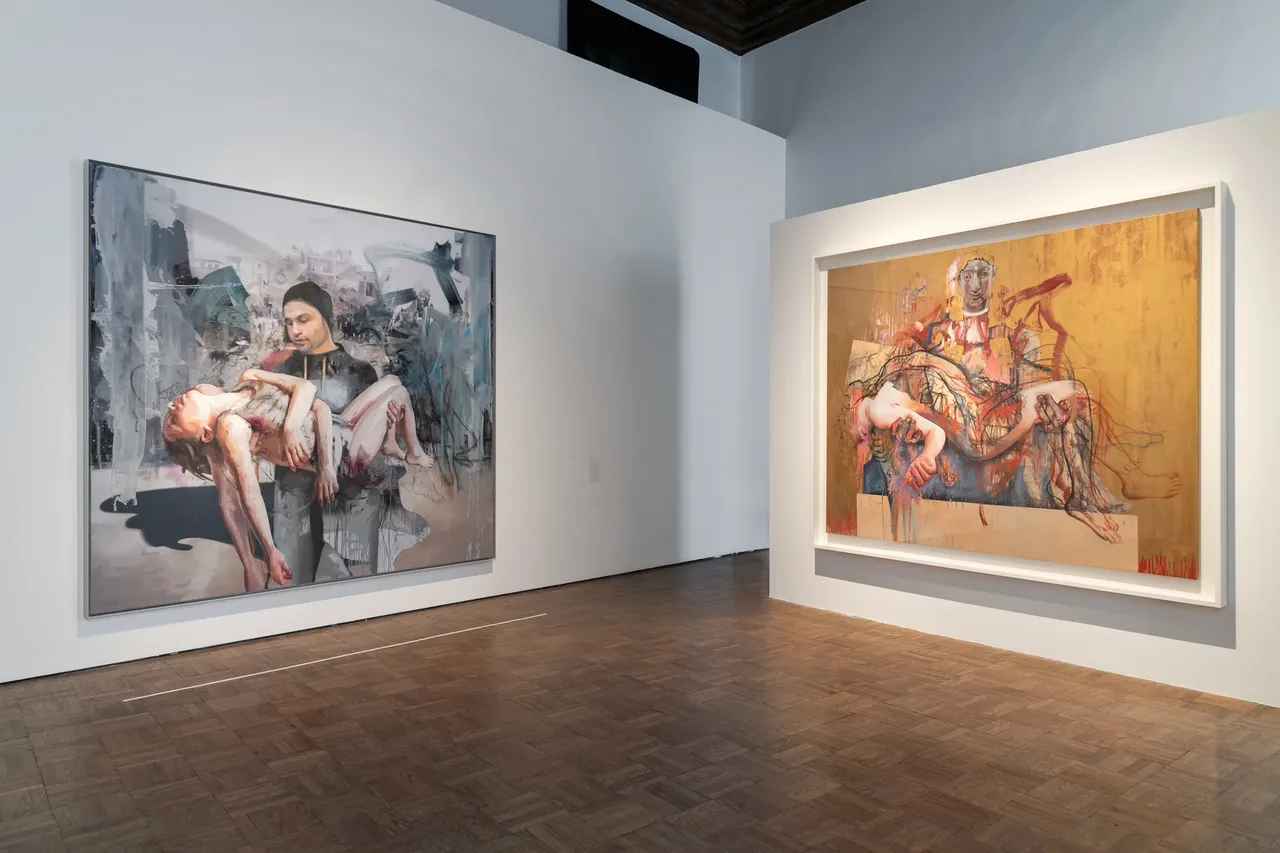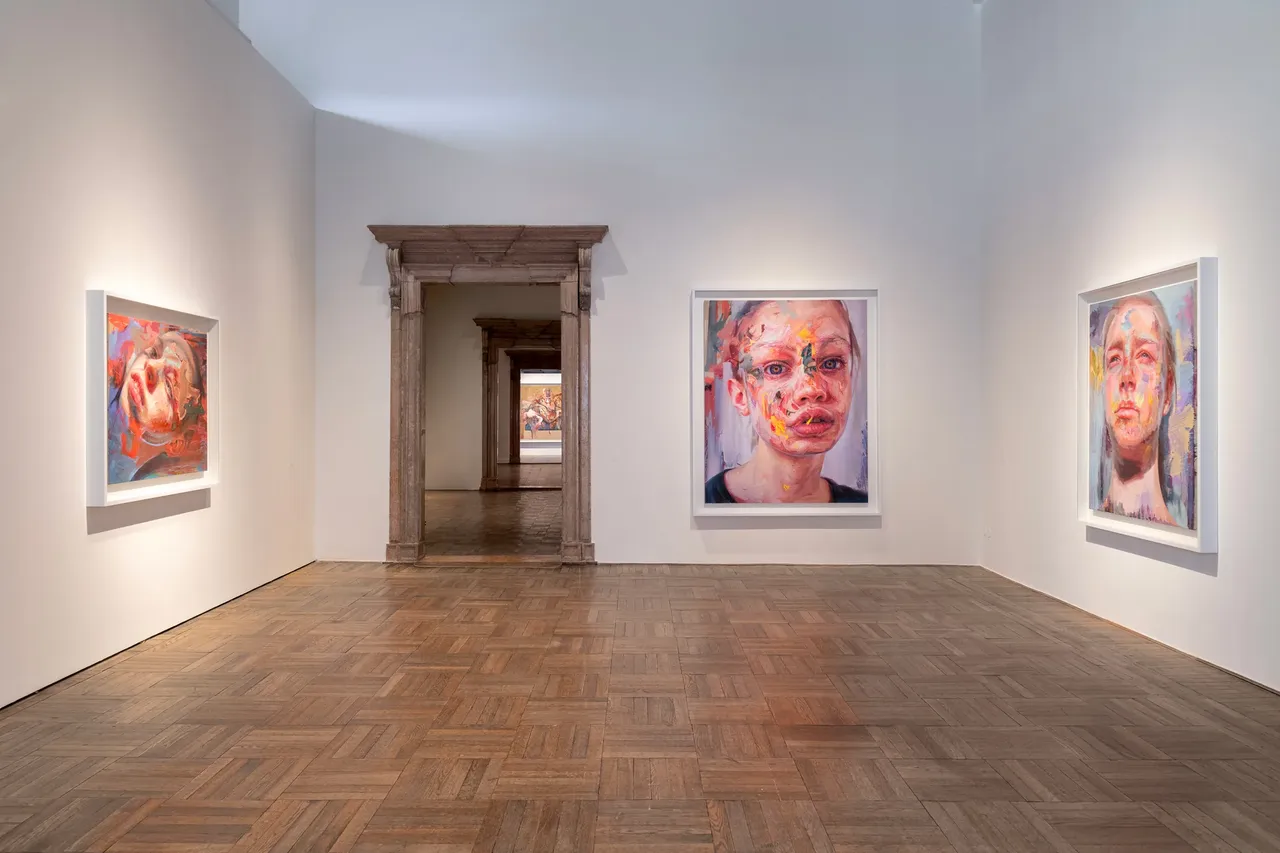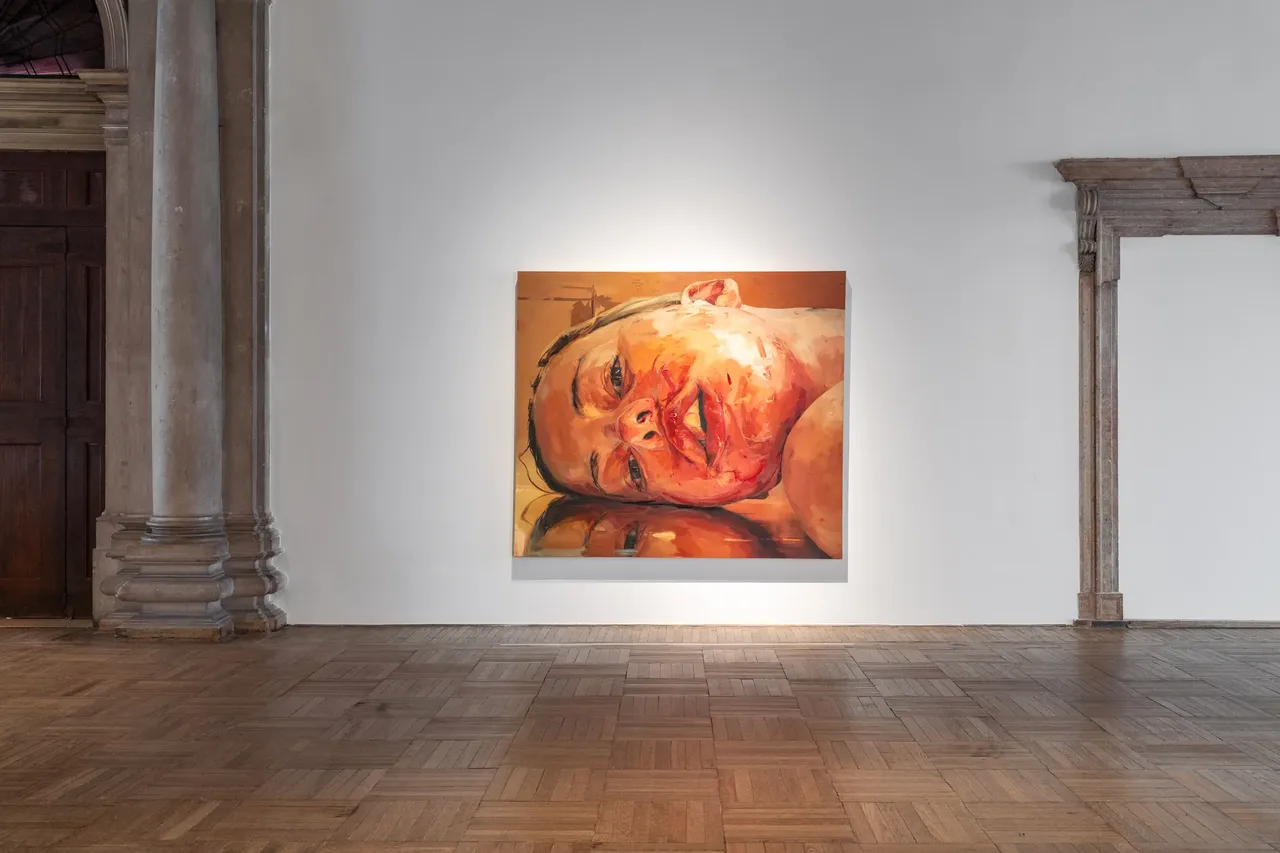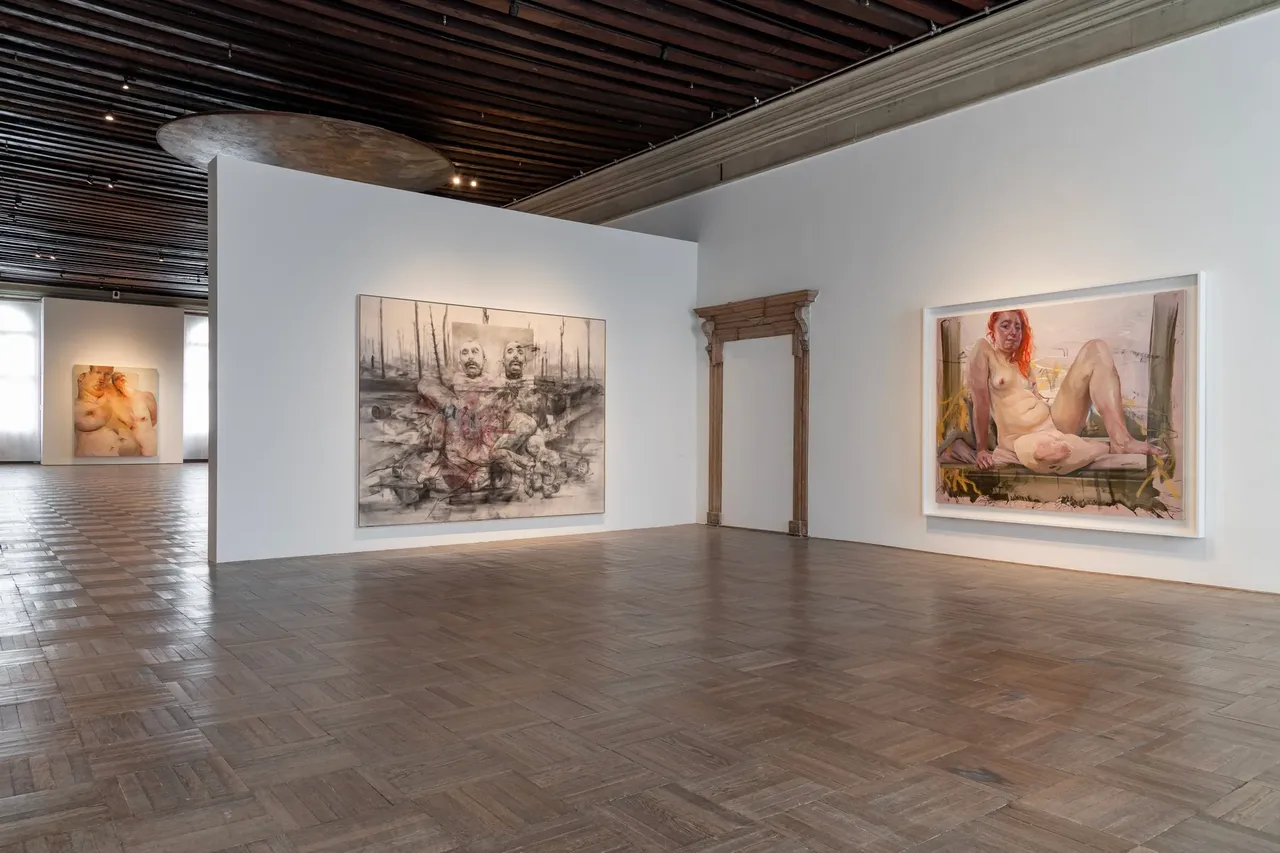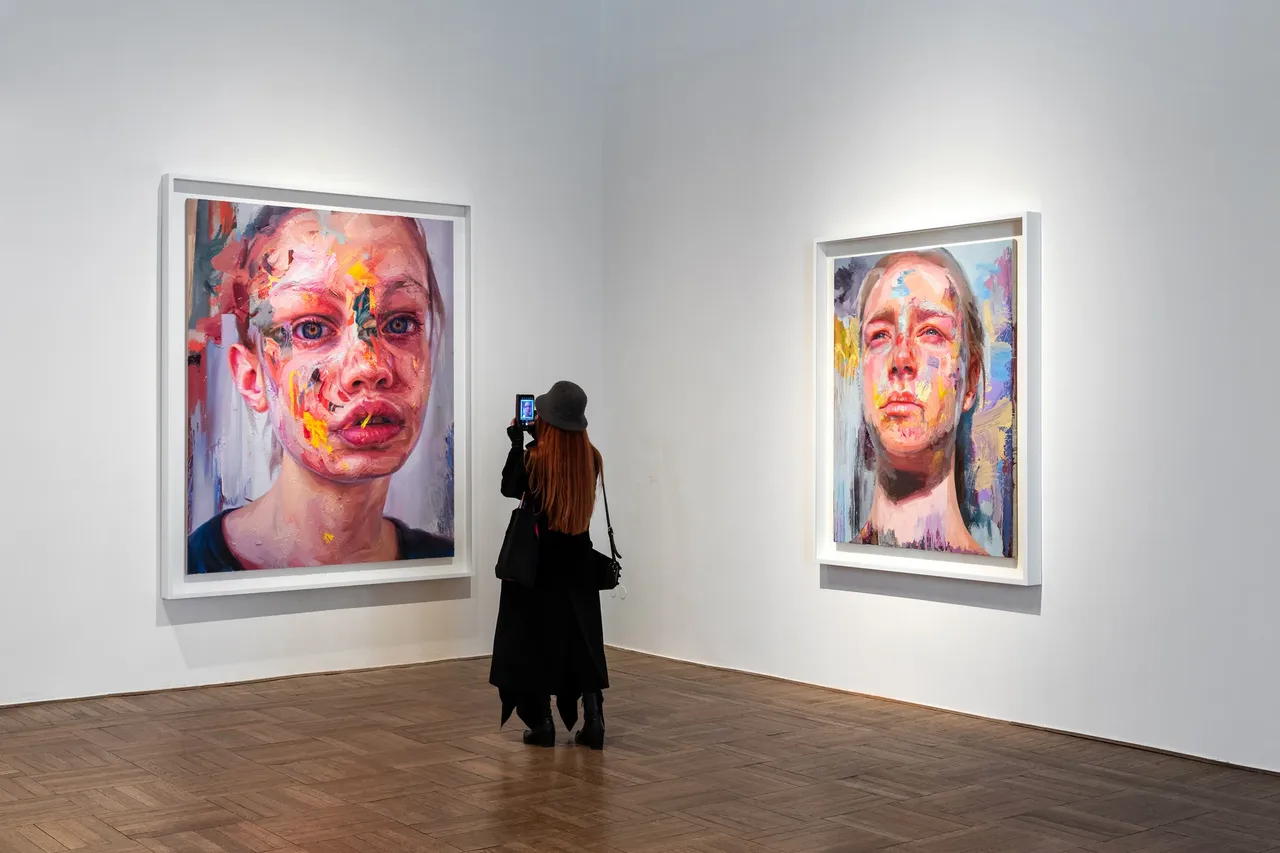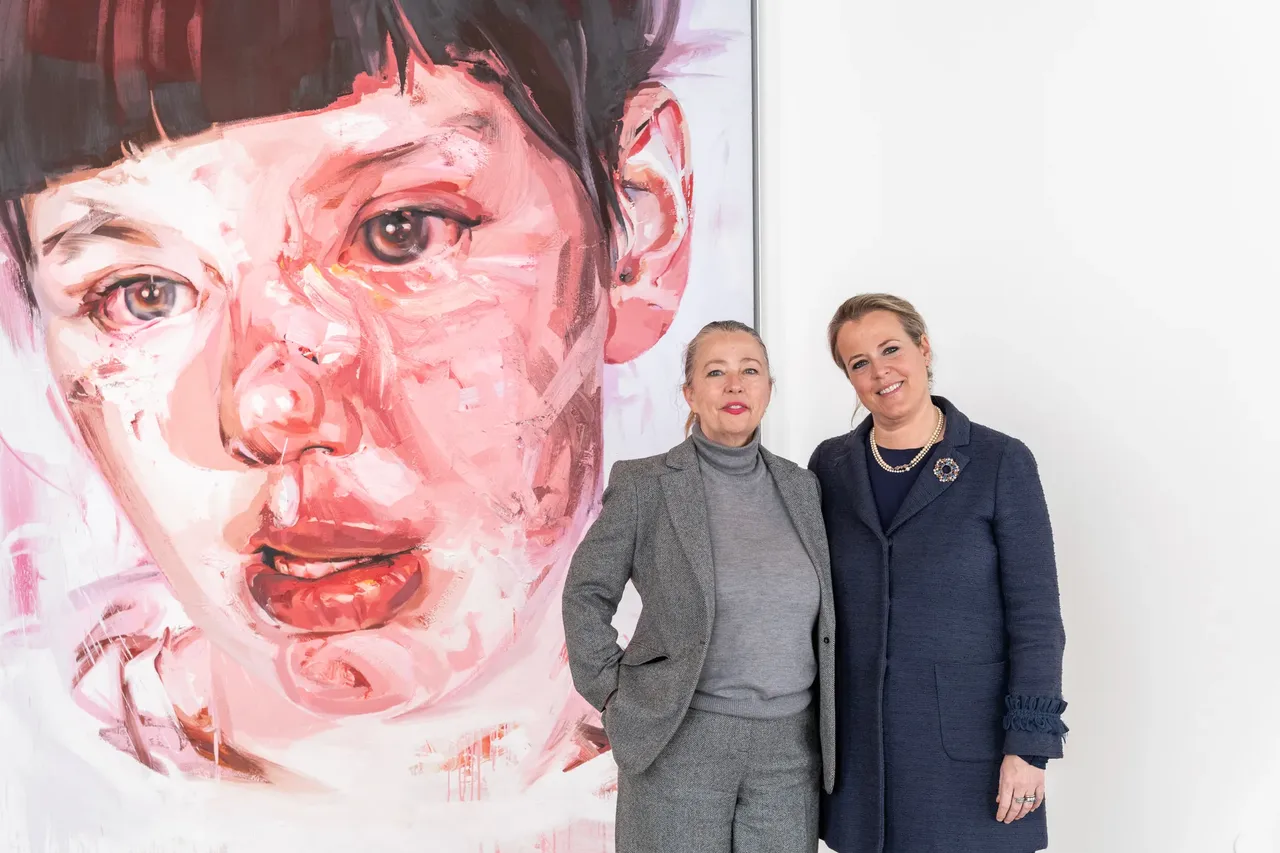
Monumental is one of the first words that come to mind as you enter the rooms of Ca’ Pesaro. Big eyes on giant and colourful canvases seem to follow you as you walk through the exhibition. At first glance, it feels a bit overwhelming. But after a few exchanged glances, a sort of intimacy begins to emerge between these bodies, presented to us with all their flaws, and our curious gaze. As part of this year’s Venice Biennale, the works of Jenny Saville will be on view at Ca’ Pesaro, one of the city’s most beautiful palazzos, from March 28th to November 22nd.
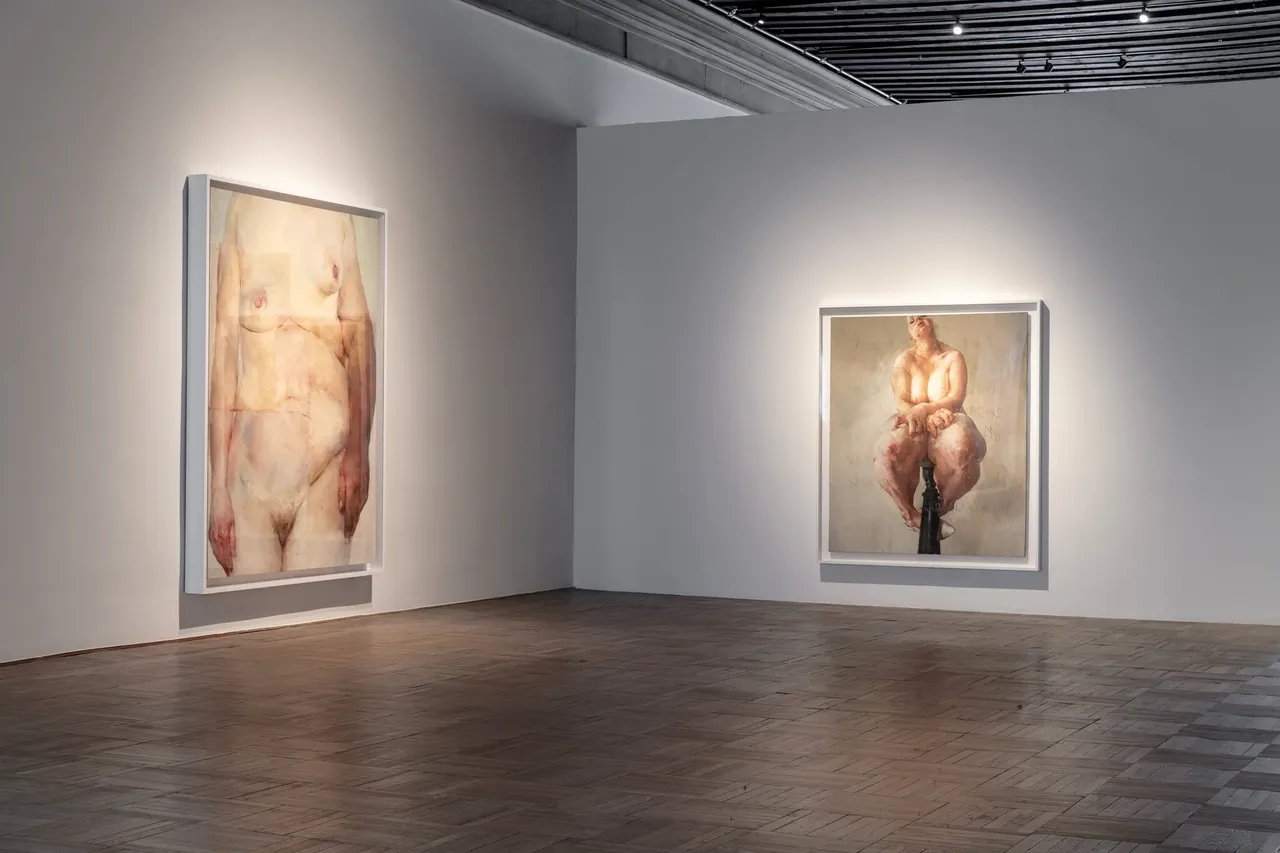
Saville started showing her work in the 1990s. While many of her contemporaries moved towards conceptual practices, she stayed loyal to painting at a time when many people thought it was over — too traditional, too tied to portraiture and old masters. Then she arrived with Propped, her graduation piece, and suddenly everything changed. Charles Saatchi saw her degree show when she was only twenty-three years old, bought the entire thing and funded her for a year. A nice reminder that sometimes, being perseverant pays off in the end.
The first rooms of the exhibition focus on her early works from the ‘90s. You know Egon Schiele, right? Well, it’s no surprise that the Viennese artist is one of Saville’s favourites. Her figures have that same energy: raw, slightly disturbing, but completely hypnotic. They attract and repel at the same time. You kind of want to look away — but you can’t. Paintings like Hybrid (1997) or Fulcrum (1998) are perfect examples. The female body is not idealised, sexualised or filtered through the male gaze. Instead, it is dissected and reconstructed with almost surgical attention. There is no attempt to make them smaller, prettier or easier to consume. In a way, Saville feels like the Victor Frankenstein of painting. She takes flesh apart and puts it back together again, creating bodies that become these huge manifestos of female empowerment.
Propped is still one of the strongest works in the exhibition and it hasn’t aged at all. Across the body, there is a text written backwards, almost scratched into the surface of the painting. It is a quote by feminist philosopher Luce Irigaray: “If we continue to speak this sameness, to speak as men have spoken for centuries, we will fail each other.” And then there is the scale. Everything is massive. Monumental canvases are not just an aesthetic choice for Saville, they are a way of forcing these bodies to take up space. They demand attention. You cannot reduce them to an image on a screen or a quick glance.
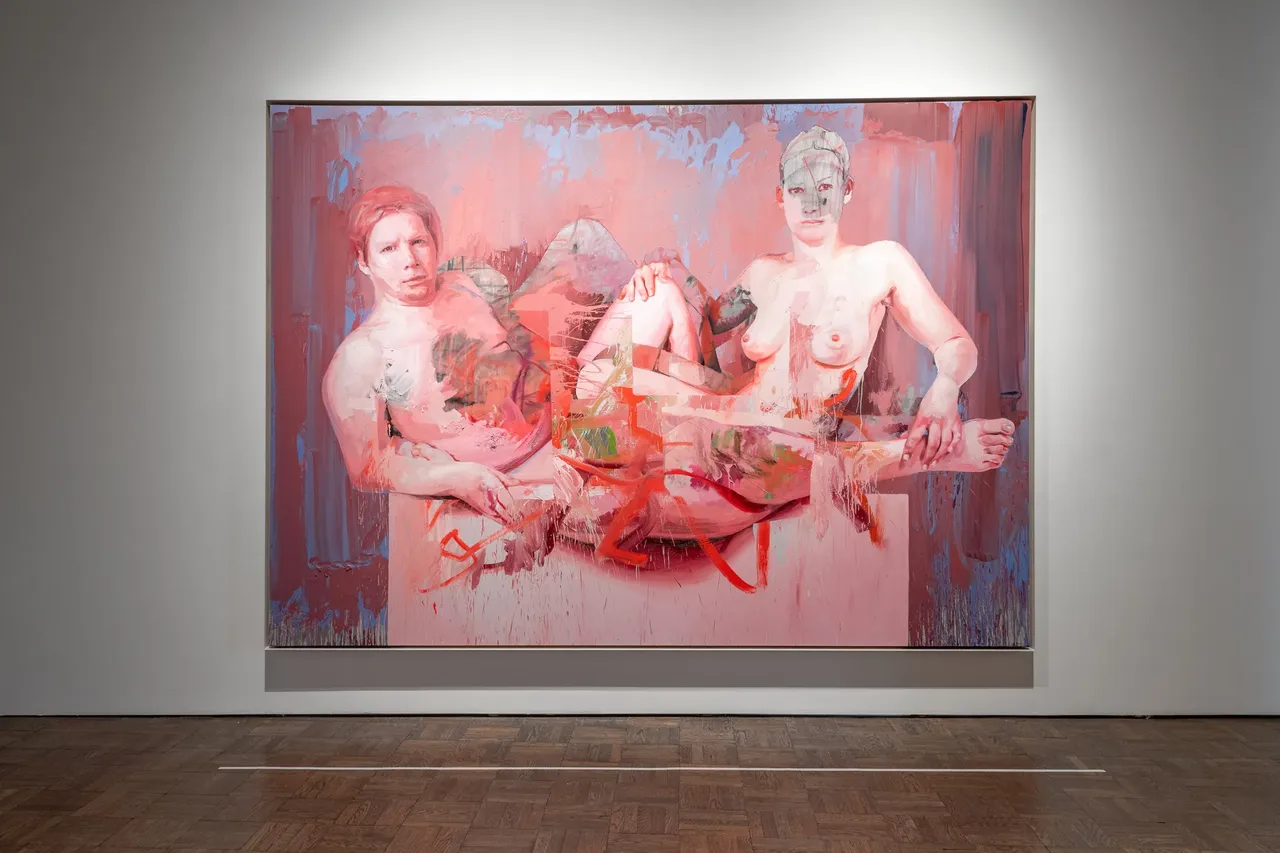
Saville has this sentence written in her studio, ‘push the paint,’ which we could borrow to summarise the exhibition at Ca’ Pesaro. She pushes painting until it starts feeling alive. As you move through her solo show, the colours become brighter, the brushstrokes looser, the paintings more layered. In the second to last room, there are these huge maternal figures that look like contemporary Madonnas, with clear Byzantine references. And then, in the final room, everything becomes mythological and more calm. Danae, Venus, and classical Venetian painting all come back but completely transformed through Saville’s style. The bodies seem to dissolve into the paint like blurred pictures. It feels very Venice somehow. Dramatic, beautiful and slightly decadent.
Saville describes painting as a political act, especially nowadays, as we are living through difficult times both politically and culturally. To keep painting for her means to continue to add something positive to the world. A painting is a unique and authentic surface, something that can’t be replicated. In a time where everything feels fast, artificial and uncertain, maybe that is exactly what makes traditional practices like painting still matter.