At the end of January, Jen Awad released the single Afterlife. Today, the track enters a new chapter with the premiere of its official music video, directed by Awad herself. The visual arrives not as an add-on, but as an essential extension of the song’s universe, reinforcing her instinct to build worlds that move between sound and image.
Based in Los Angeles, Awad has shaped a career defined by authorship. Before stepping fully into music, she worked in fashion, creating custom pieces for artists such as Kali Uchis and Bebe Rexha. That sense of visual control remains central to her practice. Her catalogue, which includes tracks like Hungover, Love Is Dead, and Basic Bitch, reveals a songwriter drawn to emotional directness and narrative tension.
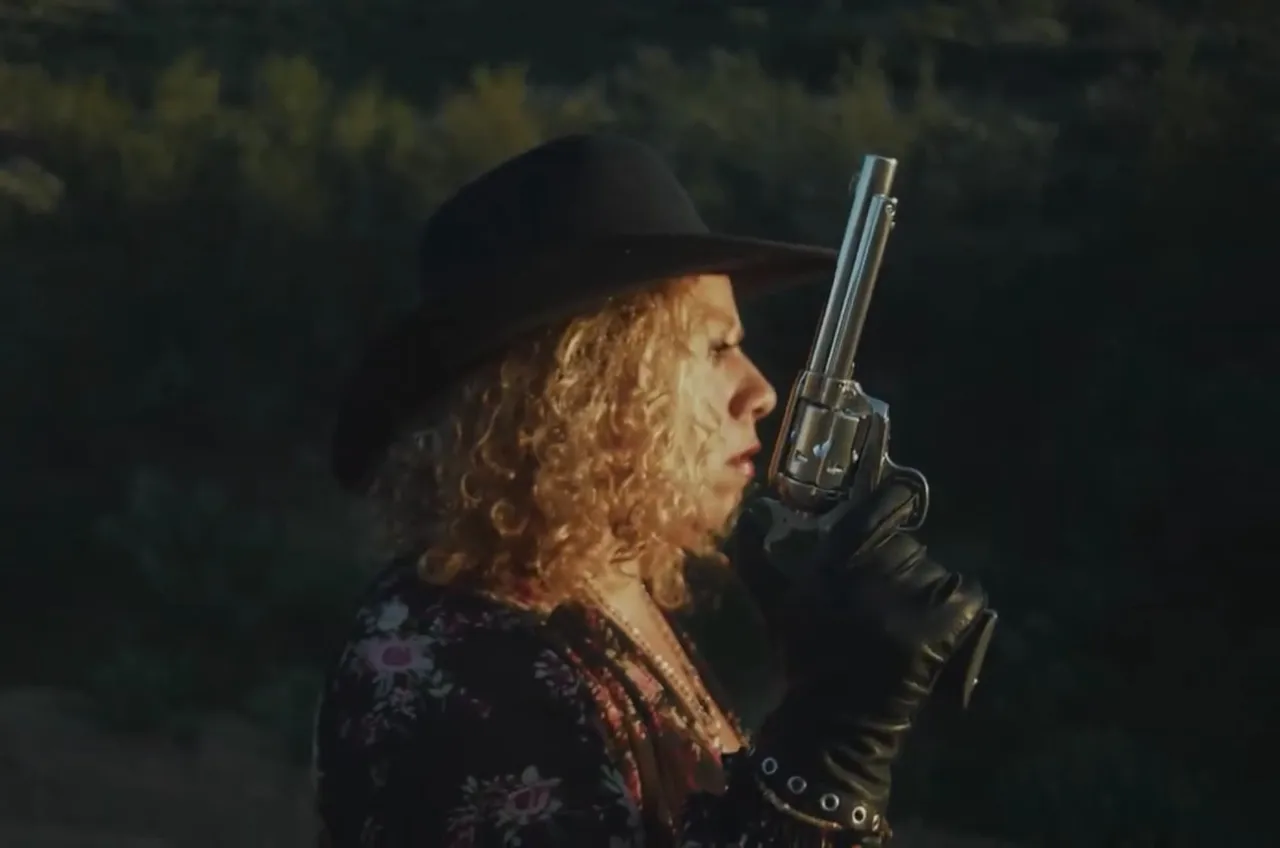
For Afterlife, Awad collaborates with composer Will Bates, whose background in film and television scoring adds a cinematic undercurrent to the track. The video’s cinematography, editing and colouring by Charlie Lazuli support a controlled visual language that mirrors the song’s emotional restraint. Rather than illustrating the lyrics in a literal way, the piece expands the emotional field of the track, allowing silence and space to carry as much weight as performance.
Beyond her recorded work, Awad has also cultivated a physical space for her artistic vision through Valley of the Dolls, a recurring Los Angeles gathering where music, fashion, and live spectacle intersect. The project functions as a testing ground for new material and unexpected collaborations, reinforcing her interest in creating immersive environments. That same commitment to experience echoes through the visual world of Afterlife.
“Hearing Afterlife, you might assume it calls for a Purple Rain scale visual, something sweeping and romantically cinematic. That expectation is exactly what made me want to move in the opposite direction,” says Awad. While making the record in Ibiza with composer Will Bates, he would put spaghetti westerns on for his kids as we disappeared into the studio to write, and their stark emotional tension lingered with me. I became fascinated with the idea of creating a world where nobody wins. A duel, a wedding, a grave, guns, horses. The narrative was intentionally left open, inviting the viewer to find their own meaning inside it,” Awad explains.