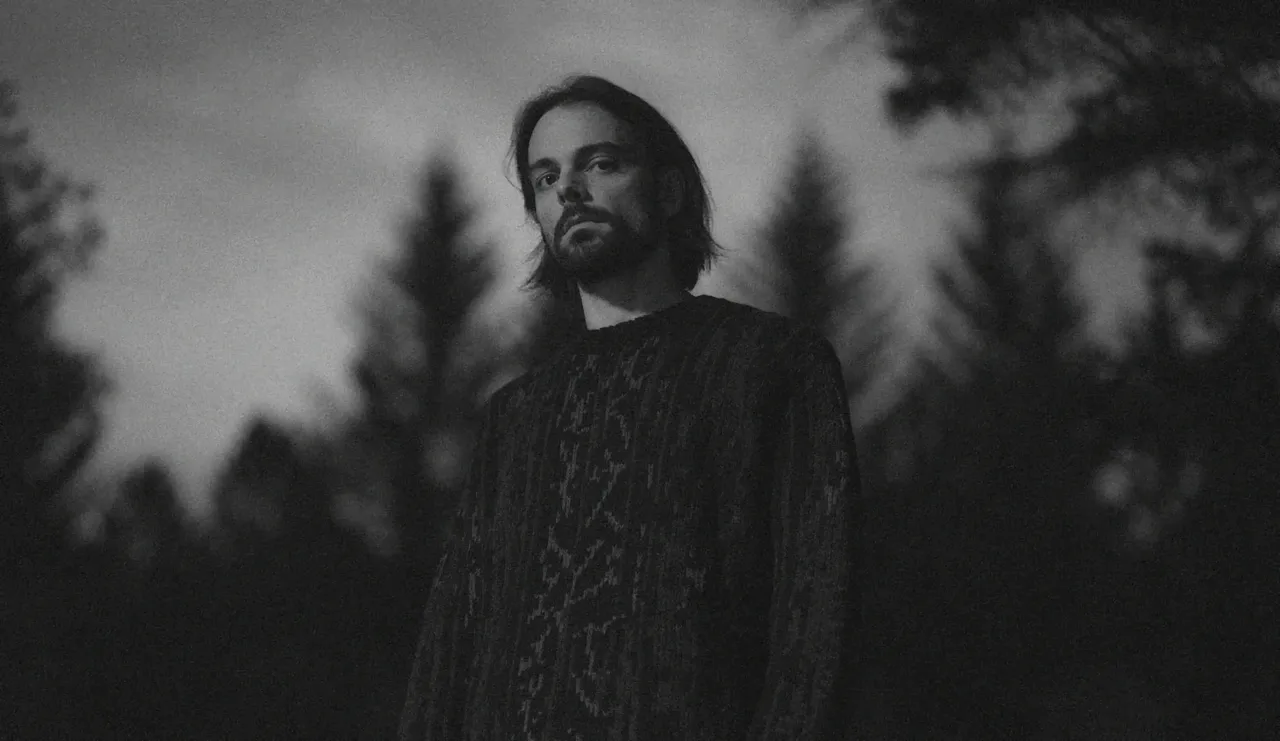
For much of his career, Janus Rasmussen has moved between musical worlds. Best known as one half of Kiasmos alongside Ólafur Arnalds, the Faroe Islands-born, Reykjavik-based artist has spent years refining a sound that balances emotional depth with technical precision, whether through electronic productions, instrumental compositions or collaborative projects. Yet with Inert, Rasmussen arrives at something more personal. Rather than narrowing his influences into a single identity, he embraces them all, weaving together post-classical textures, UK garage rhythms, breakbeats and his own vocals in his most expansive solo statement to date.
The album’s title reflects its central theme: breaking free from creative inertia. After years of making music that wasn’t always fully aligned with his instincts, Rasmussen set out to create a record without self-imposed boundaries. The result is a collection that shifts between introspection and dancefloor release, vulnerability and propulsion, while remaining united by a singular artistic voice. “I stopped thinking too much about what kind of music I was ‘supposed’ to make and just followed instinct instead,” he tells us. As Inert unfolds, one thing becomes clear: creative freedom isn't a destination for Rasmussen, but a practice of remaining curious, unpredictable and open to change.
Inert feels like a turning point in your solo work. What triggered this shift toward breaking free from inertia in both your creative process and your mindset?
What triggered it was feeling like I’d been making music that wasn’t always fully true to my nature as a songwriter and producer. It’s not that I disliked the music I was making, but throughout my career I’ve moved through so many different genres, from folk and indie bands to pop and electronic music. With Inert, I wanted to allow all of those sides of my musical life to exist together instead of trying to narrow myself into one lane. That felt very freeing creatively, and also very honest.
You have often told stories through instrumental music. What led you to bring your own voice forward on this record, and how did that change the way you write and produce?
My first experiences making music were always tied to singing and playing guitar. I come from a pretty classic band-practice background, writing songs in rehearsal spaces with friends, so vocals were originally a huge part of my identity as a musician. It was only later, after moving to Iceland and becoming more immersed in electronic music and projects like Kiasmos, that I drifted more toward instrumental music.
After many years of that, I started missing the emotional directness of using my own voice. Bringing vocals back into the process changed everything. Writing melodies and lyrics that can truly carry a song is incredibly challenging, and it adds another layer of vulnerability to the production. Suddenly every word, every phrasing choice, and every melody has to feel believable. It makes the whole process much more personal.
After many years of that, I started missing the emotional directness of using my own voice. Bringing vocals back into the process changed everything. Writing melodies and lyrics that can truly carry a song is incredibly challenging, and it adds another layer of vulnerability to the production. Suddenly every word, every phrasing choice, and every melody has to feel believable. It makes the whole process much more personal.
Tracks like Murk and Fumes carry a strong sense of tension and release. Were you thinking about the physical experience of the dancefloor while making them, or did that come naturally?
I don't think too consciously when I'm writing these songs. It's usually more about capturing a feeling or a moment than trying to design a specific dancefloor reaction. Murk, for example, started very organically with two close friends of mine. We were just jamming in the studio and the song kind of appeared out of nowhere. Later, I kept working on it on my own, and over time it naturally evolved into something more club-driven.
Fumes was the complete opposite. I wrote it alone one morning at home with a tiny setup in my office, probably still half asleep. Somehow this strange, intense track just came out. So I think the physicality in the music happens naturally because I'm simply following whatever feels exciting or emotionally right in the moment.
Fumes was the complete opposite. I wrote it alone one morning at home with a tiny setup in my office, probably still half asleep. Somehow this strange, intense track just came out. So I think the physicality in the music happens naturally because I'm simply following whatever feels exciting or emotionally right in the moment.
Your music balances emotional depth with technical precision. How do you keep that sense of vulnerability without over-refining the sound?
I’m very drawn to emotional music. Deep down, I’m probably a bit of an emo person. At the same time, I'm also extremely obsessive when it comes to production and technical details, sometimes to the point where I have to stop myself from overworking things. For me, the challenge is always finding the balance between refinement and preserving the original spark that made the song exciting in the first place. You want the music to feel detailed and intentional, but not so polished that it loses its humanity or unpredictability.
How do your roots in the Faroe Islands and your life in Reykjavik continue to influence your sound and artistic perspective today?
Growing up in the Faroe Islands had a huge impact on me because it's such a small and tightly connected community, especially musically. You grow up playing wherever you can, making music with friends simply because there's a genuine need to create something together. Then, when I moved to Reykjavik around 2008, everything opened up. I was introduced to entirely new scenes, club culture, electronic music, and a much broader artistic community. That period changed me a lot creatively.
Even today, Reykjavik is incredibly inspiring. My studio is in a building surrounded by maybe twenty or thirty other studios, and there's this constant exchange of ideas happening around you. You hear what people are making, you talk, you get inspired, and there's even a healthy sense of creative competition in the best possible way. It pushes you forward.
Even today, Reykjavik is incredibly inspiring. My studio is in a building surrounded by maybe twenty or thirty other studios, and there's this constant exchange of ideas happening around you. You hear what people are making, you talk, you get inspired, and there's even a healthy sense of creative competition in the best possible way. It pushes you forward.
On Inert, you move between post-classical elements, UKG-inspired rhythms, and breakbeat textures. How do you approach blending these styles while keeping a coherent identity?
With Inert, I consciously wanted to let go of the idea that I needed to stay within one genre or one identity. I stopped thinking too much about what kind of music I was ‘supposed’ to make and just followed instinct instead. The album moves between very different moods and styles, but I think the thread connecting everything is simply my own taste and sensibility. Some songs are club-oriented, some are ambient, some are emotional, some are chaotic, some have vocals and some don't. But that's also how I am as a person.
I think it's important sometimes to allow yourself to follow your instincts fully and worry about categorisation later. That freedom was very important for this record, and in the end I feel like the album represents me more honestly than anything I've done before.
I think it's important sometimes to allow yourself to follow your instincts fully and worry about categorisation later. That freedom was very important for this record, and in the end I feel like the album represents me more honestly than anything I've done before.
Collaboration has played a big role in your career. Did working on a more personal solo project feel liberating, or did it come with new challenges?
It was definitely both liberating and challenging. On one hand, it was amazing to have complete freedom and follow every idea exactly where I wanted without compromise. Nobody was there to tell me an idea was too strange, too emotional, or too far outside expectations. But the difficult side of that freedom is that you can become trapped in your own head. There were moments during the album where I doubted myself a lot and kept going back and forth creatively. Collaboration naturally creates momentum because you're constantly exchanging ideas and reacting to each other. When you work alone, you have to generate all of that energy internally. So while I love working on my own, I would never want to stop collaborating entirely. I need both experiences.
“You want the music to feel detailed and intentional, but not so polished that it loses its humanity or unpredictability.”
The album shifts between introspective moments and more club-driven energy. Do you see that contrast as a reflection of your inner world, or as a conscious artistic choice?
It's honestly just a reflection of how I naturally work. Some days I arrive at the studio wanting to make something energetic, rhythmic, and club-focused. Other days I'm feeling more introspective and want to write something fragile or emotional. I think albums should reflect the full spectrum of who you are emotionally, especially now when so much music culture pushes artists toward simplified identities. If I'm making a full-length record, I want it to feel human and honest rather than overly curated into one mood or aesthetic.
Your sound design is detailed but never overwhelming. In the studio, do you start with experimentation, or do you usually have a clear direction from the beginning?
I experiment constantly when I'm making music. I rarely begin with a completely clear vision of where something is going to end up. Usually it starts with a sound, a chord progression, a beat, or even just a texture that triggers some emotional reaction in me. Then I follow that instinctively and see where it leads. Sometimes it becomes a song immediately, and other times it completely transforms along the way. I almost wish I worked in a more structured way sometimes, but experimentation is really at the core of how I create. That unpredictability is what keeps music exciting for me.
After years of evolving across different roles, what does creative freedom mean to you now, and how has that definition changed over time?
Creative freedom means more to me now than ever before, but strangely it also feels harder to maintain today. The music industry increasingly wants artists to fit neatly into categories so algorithms, playlists, and marketing systems can easily define them. I understand why those systems exist, but creatively I've always resisted that way of thinking. I change constantly as a person. Every few years my tastes evolve, my influences shift, and the kind of music I want to make changes with it. So at this point in my life, creative freedom means allowing myself to follow those changes fully instead of trying to maintain a fixed identity for the sake of consistency or career strategy. Even if that makes things more difficult commercially, I'd still choose that path. Remaining creatively curious and unpredictable feels more important to me than fitting neatly into expectations.