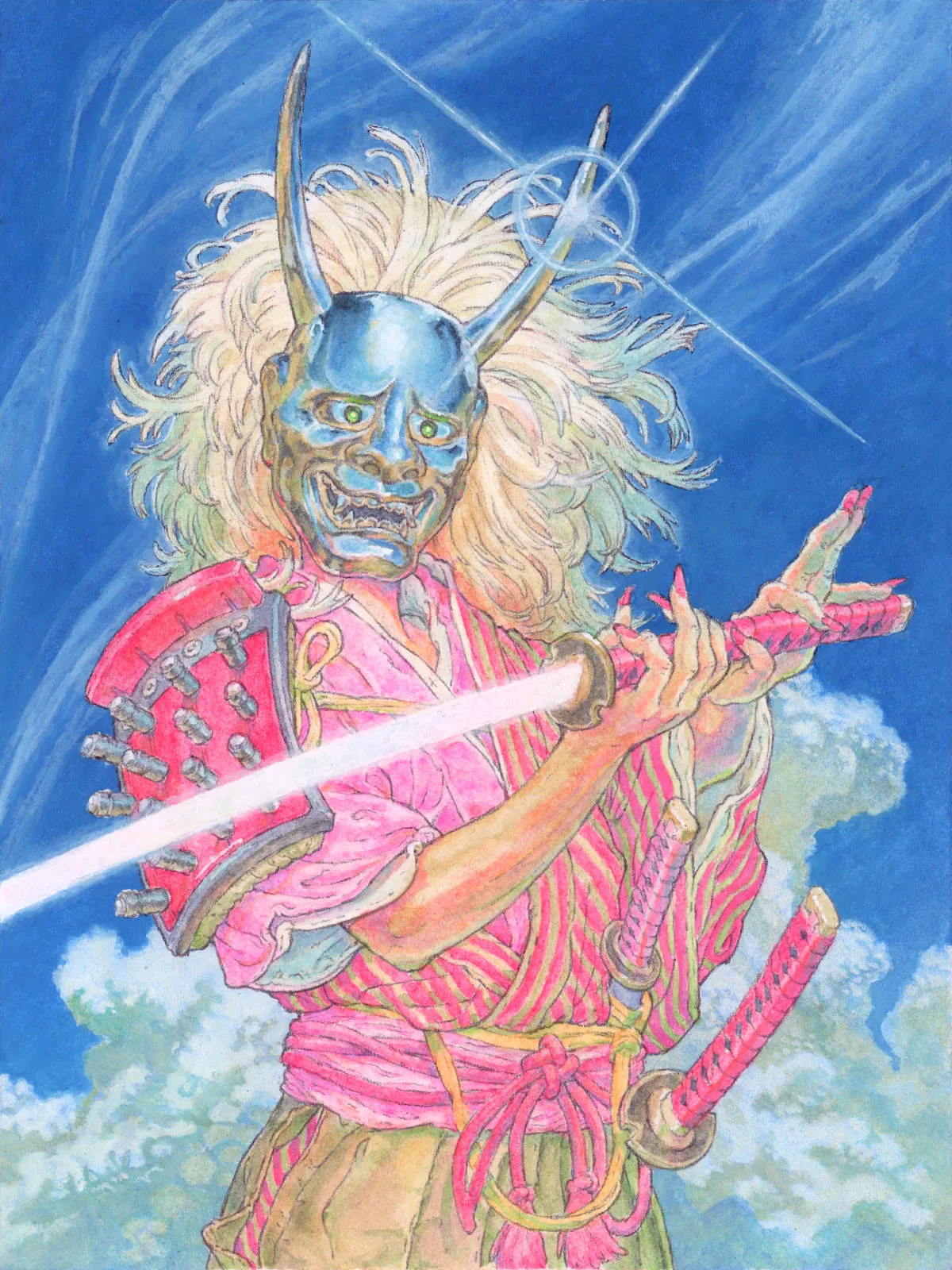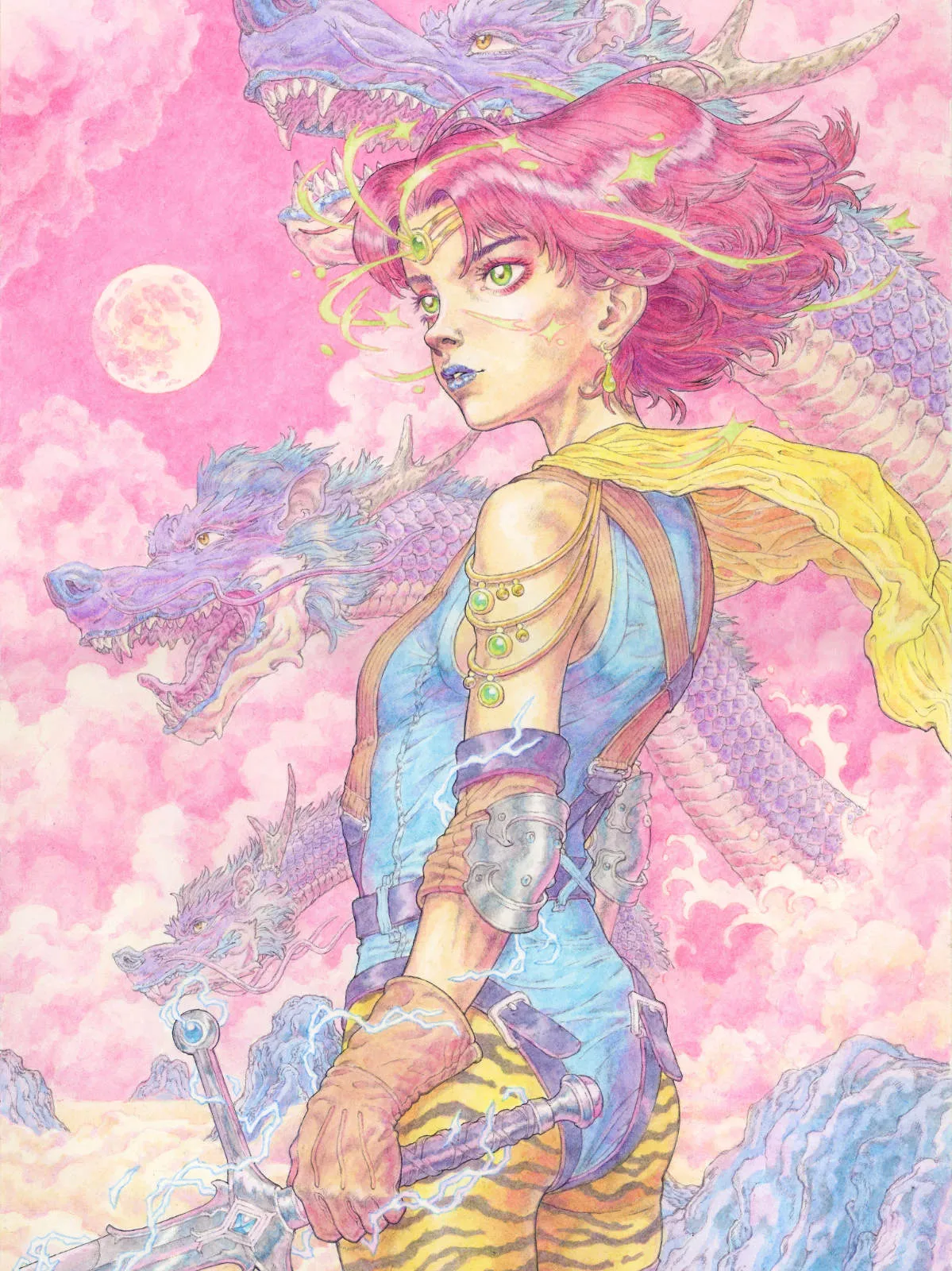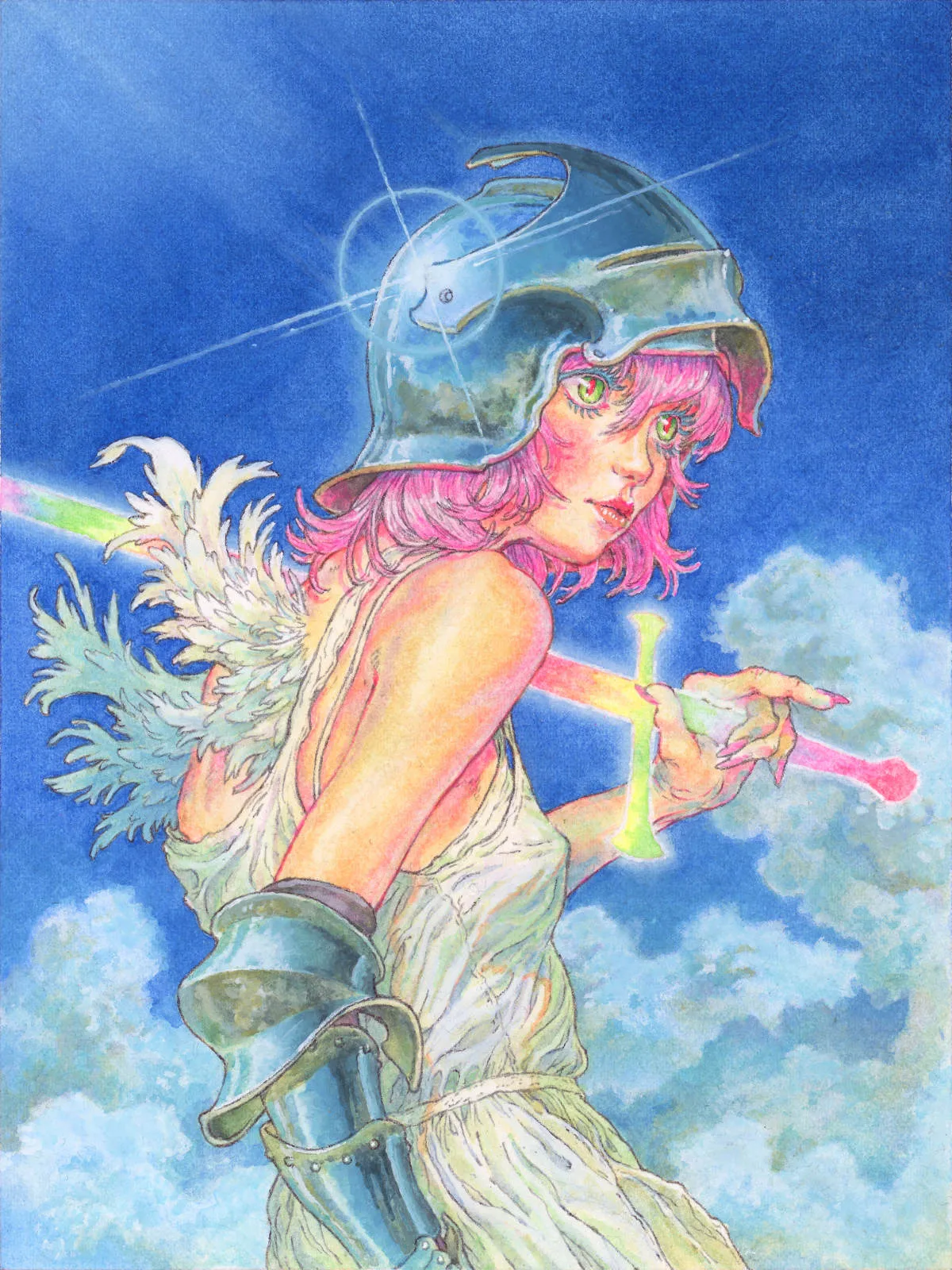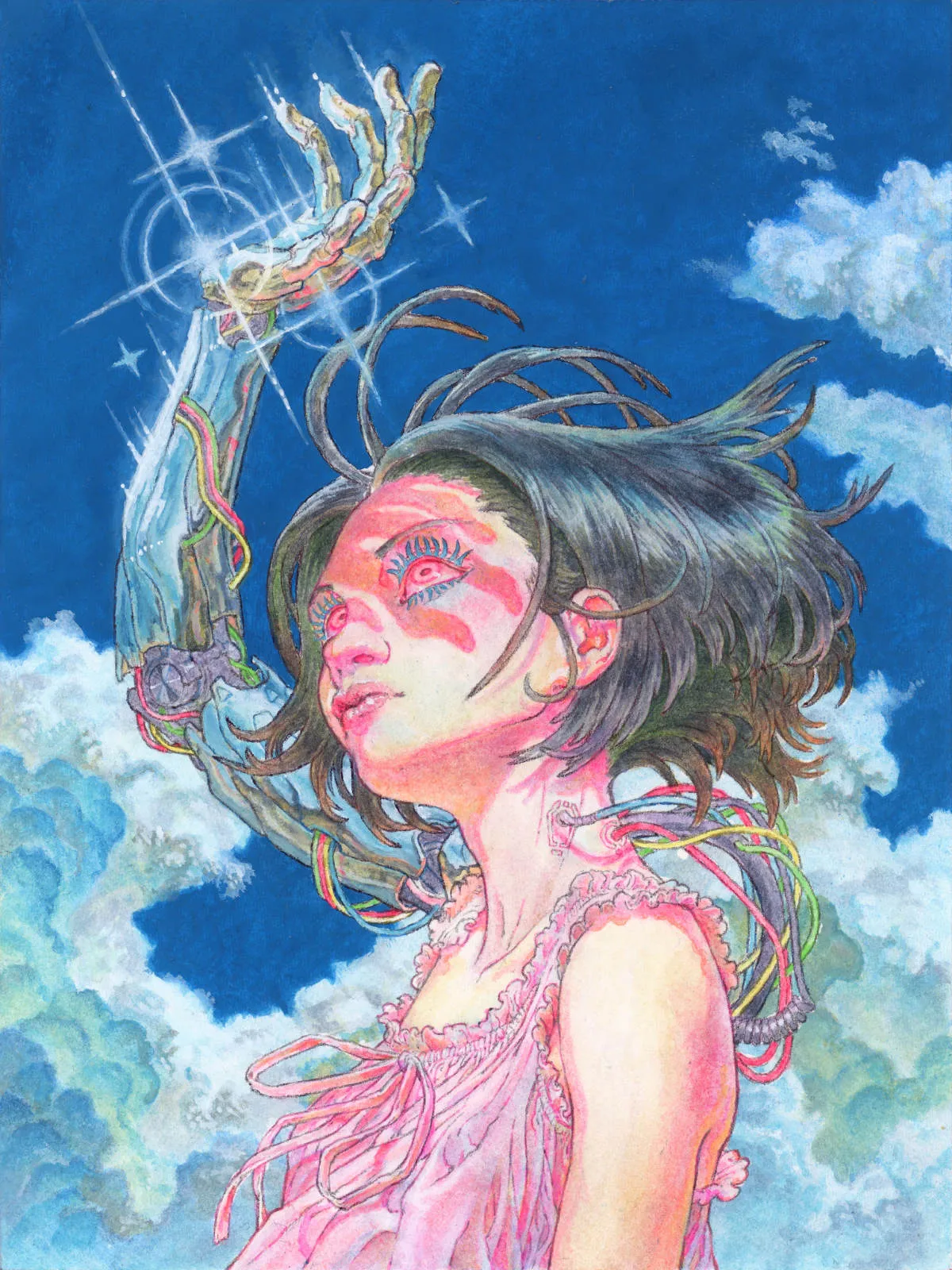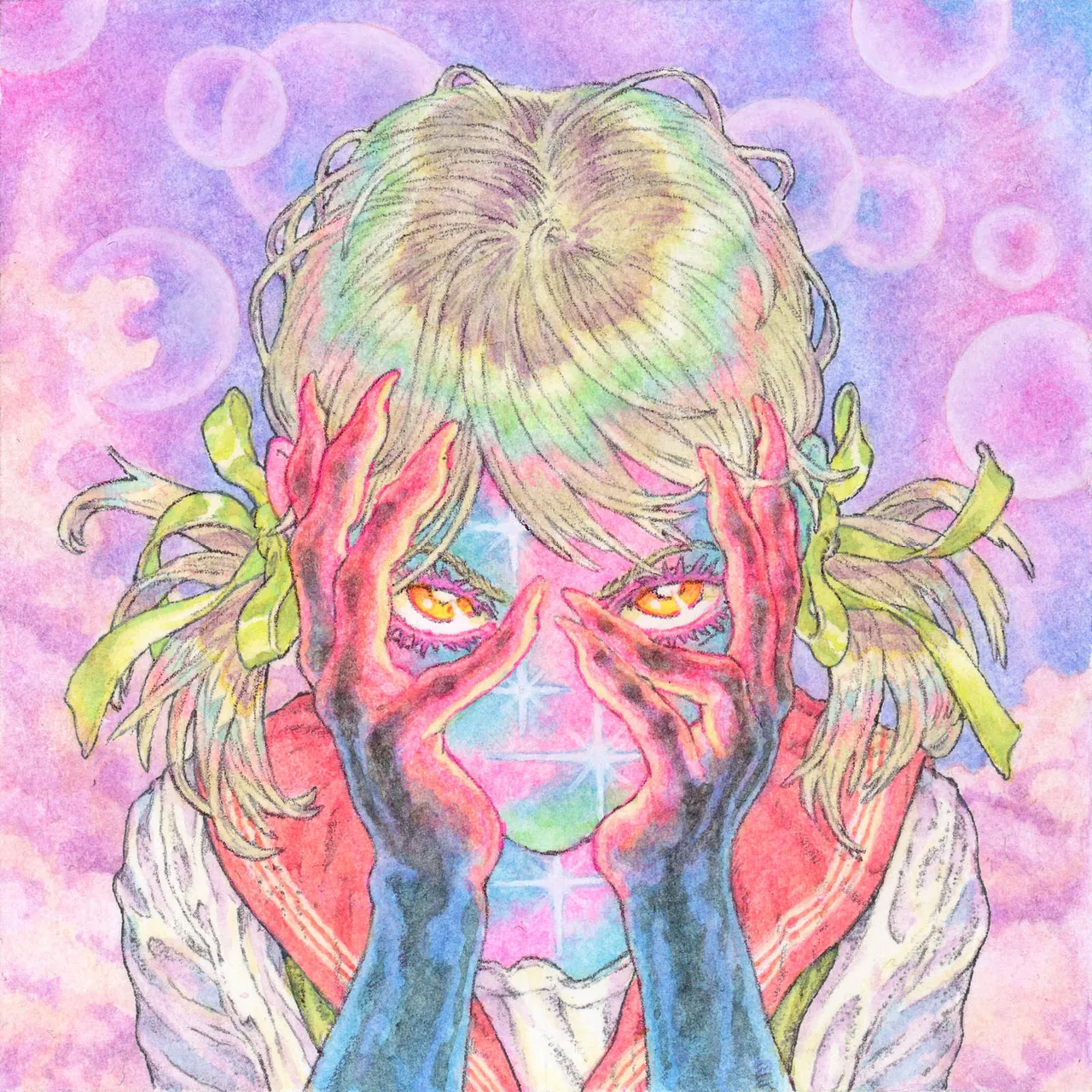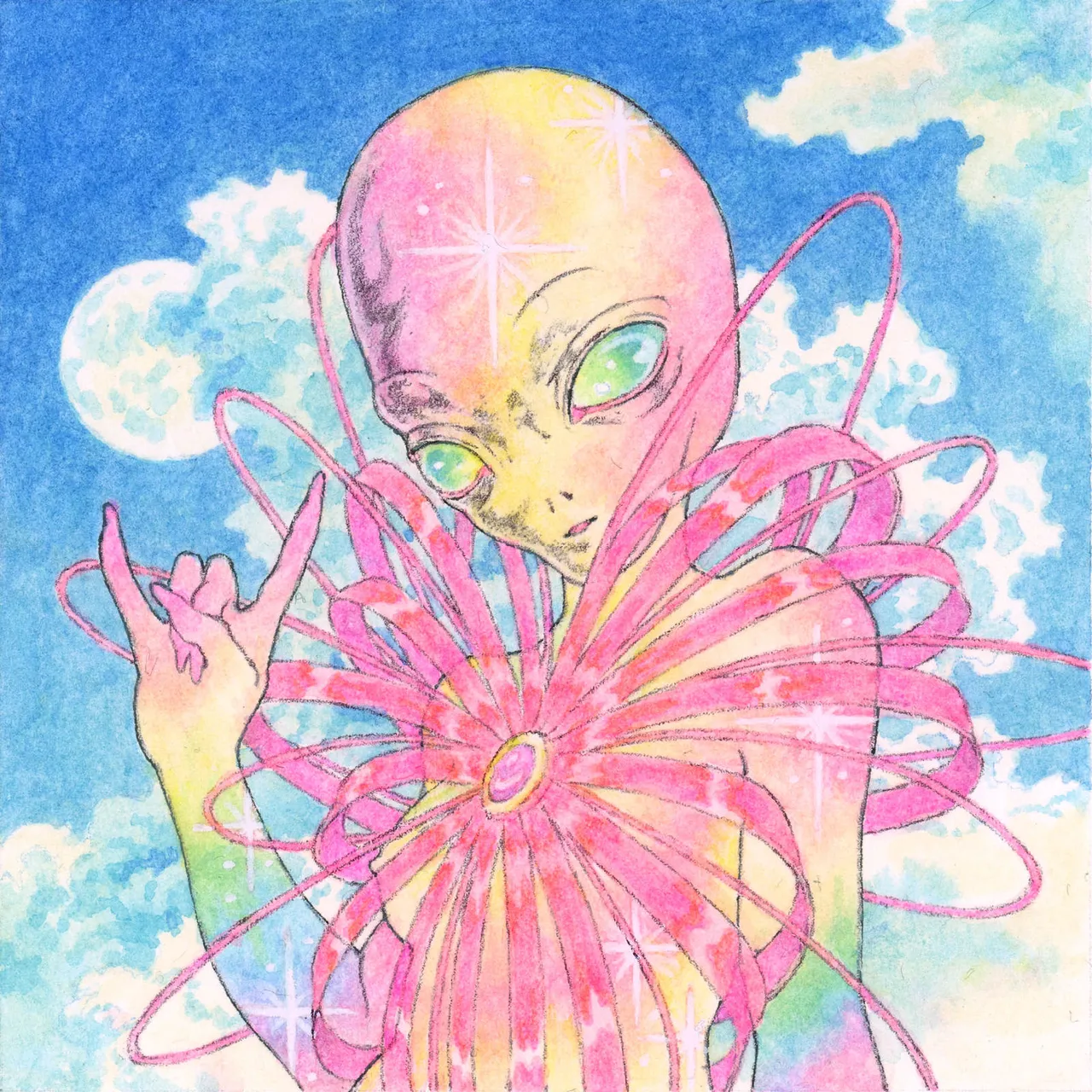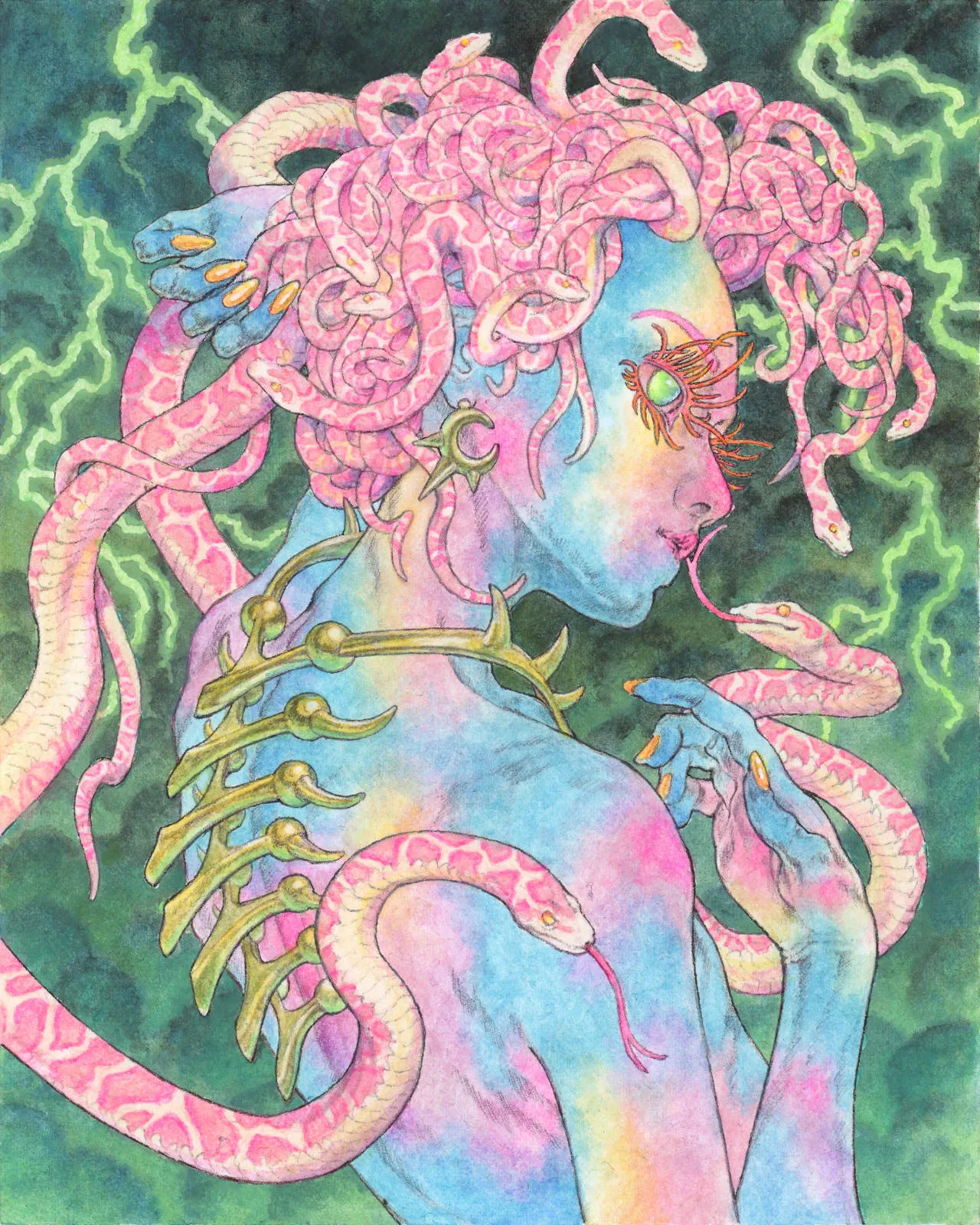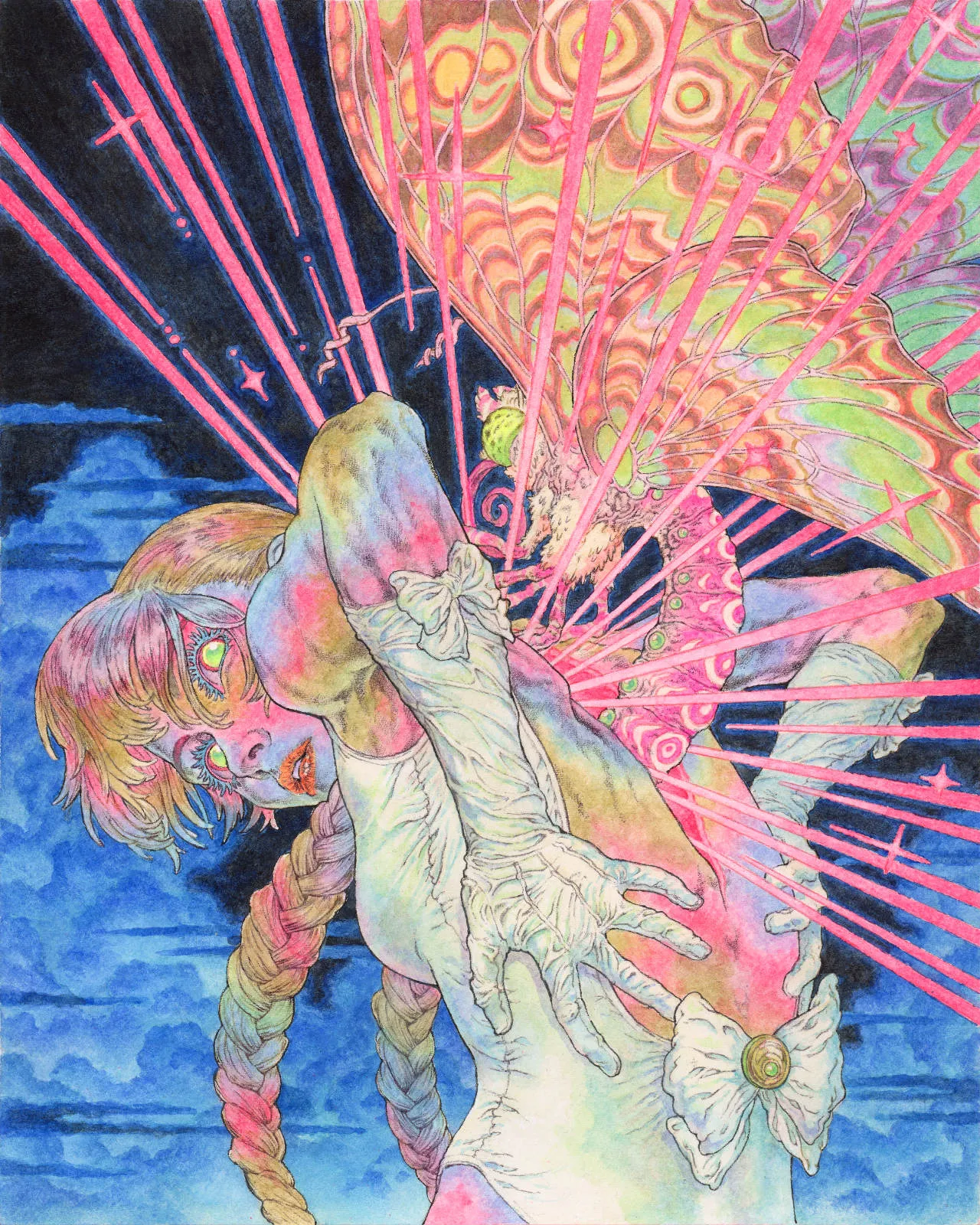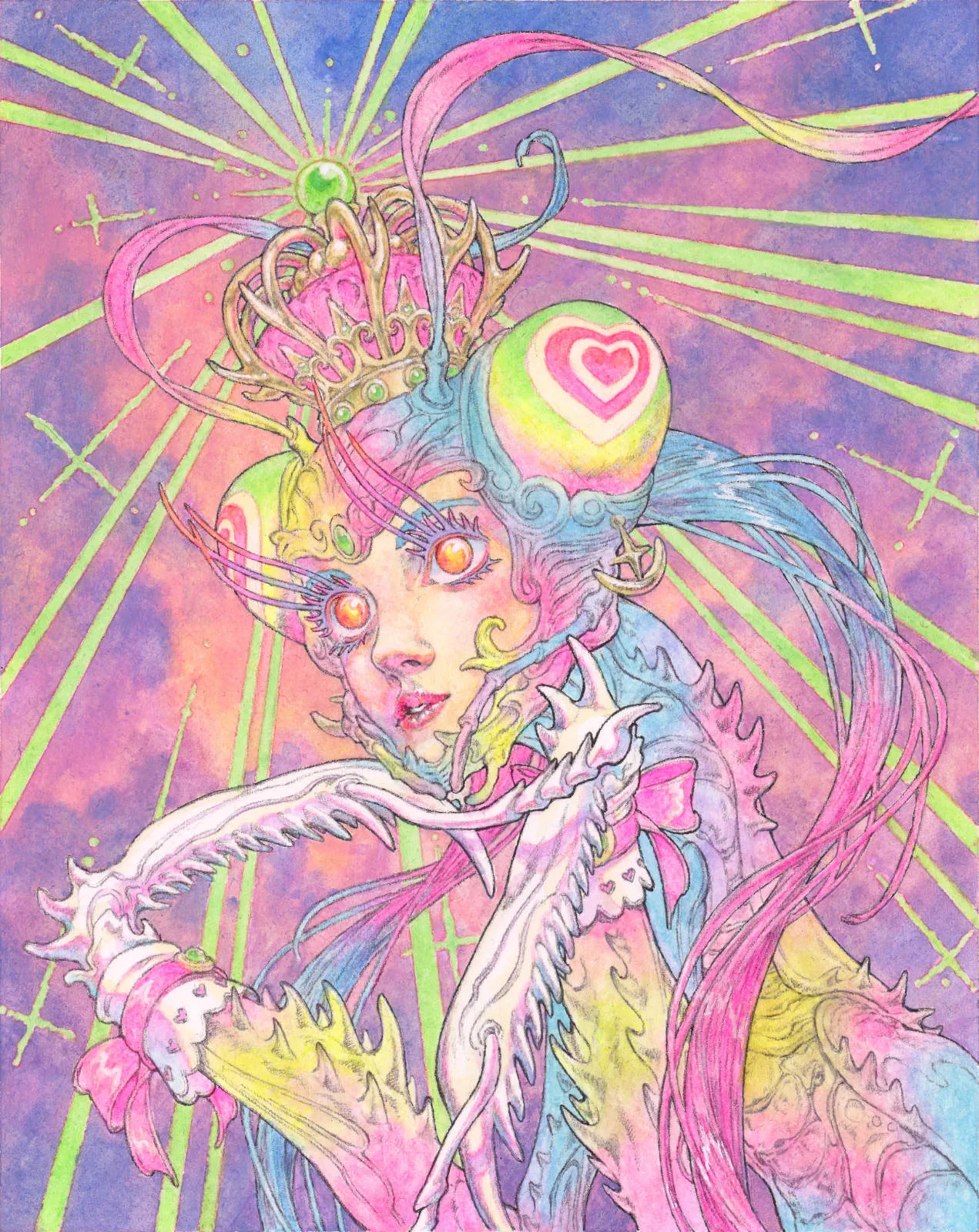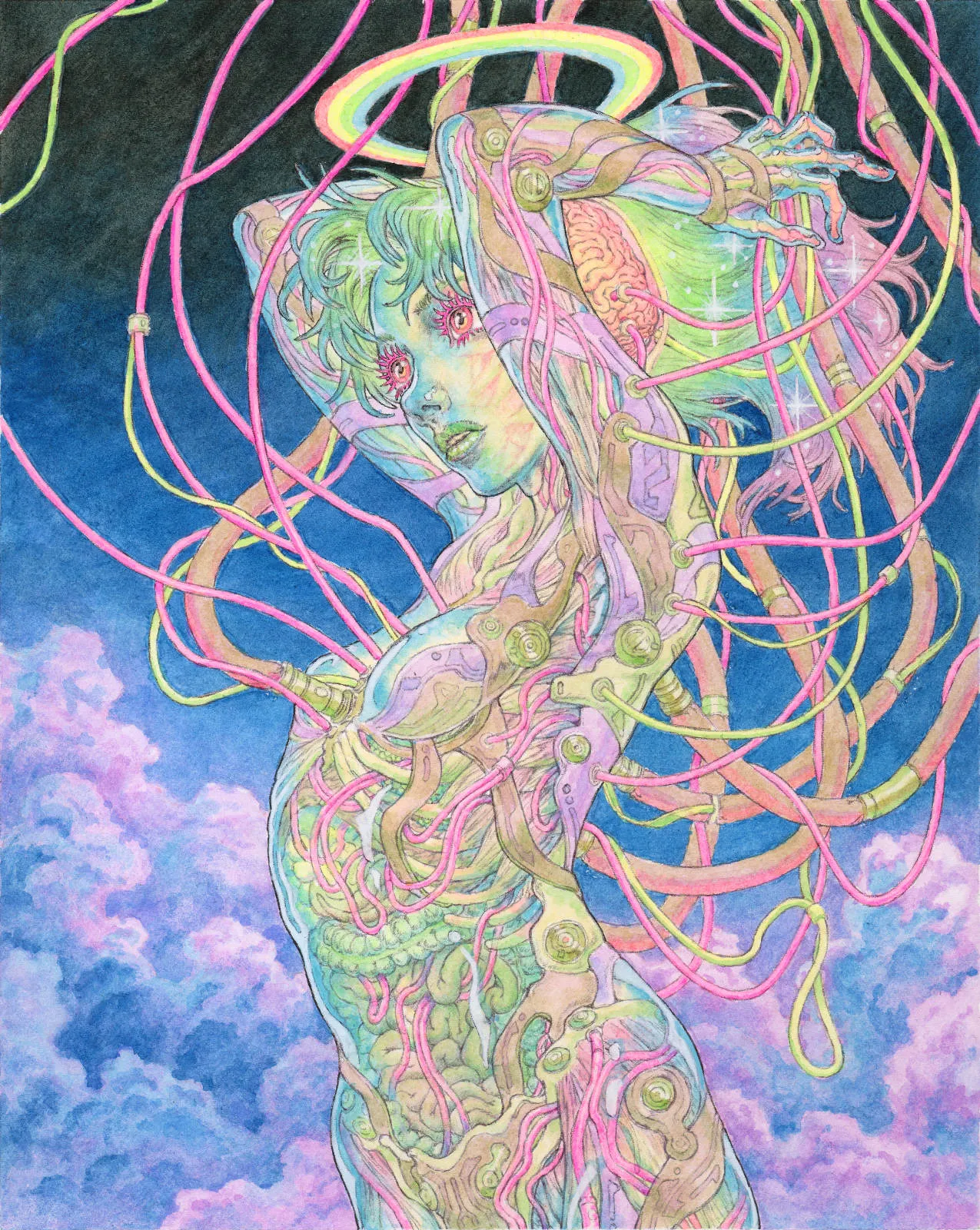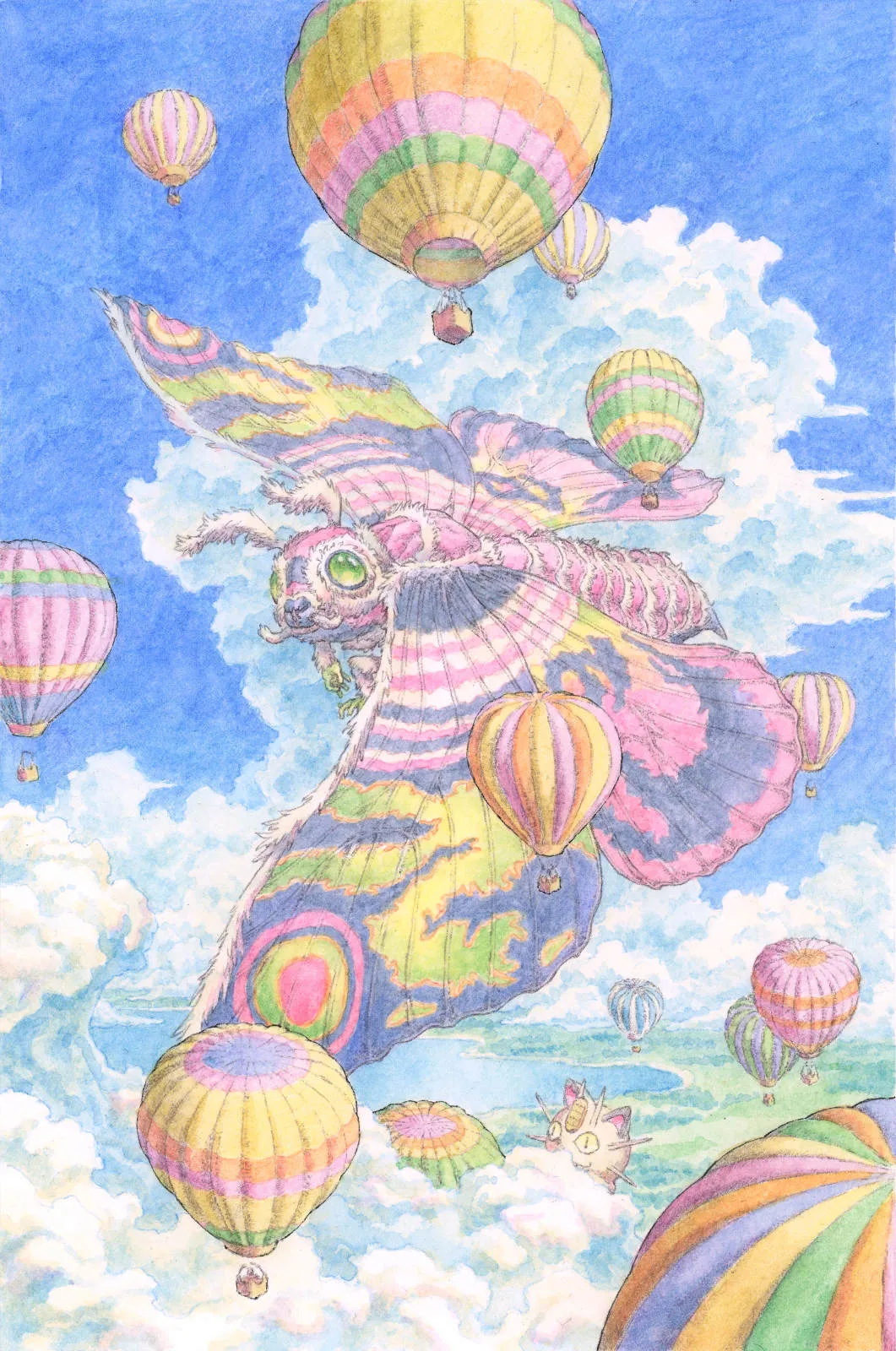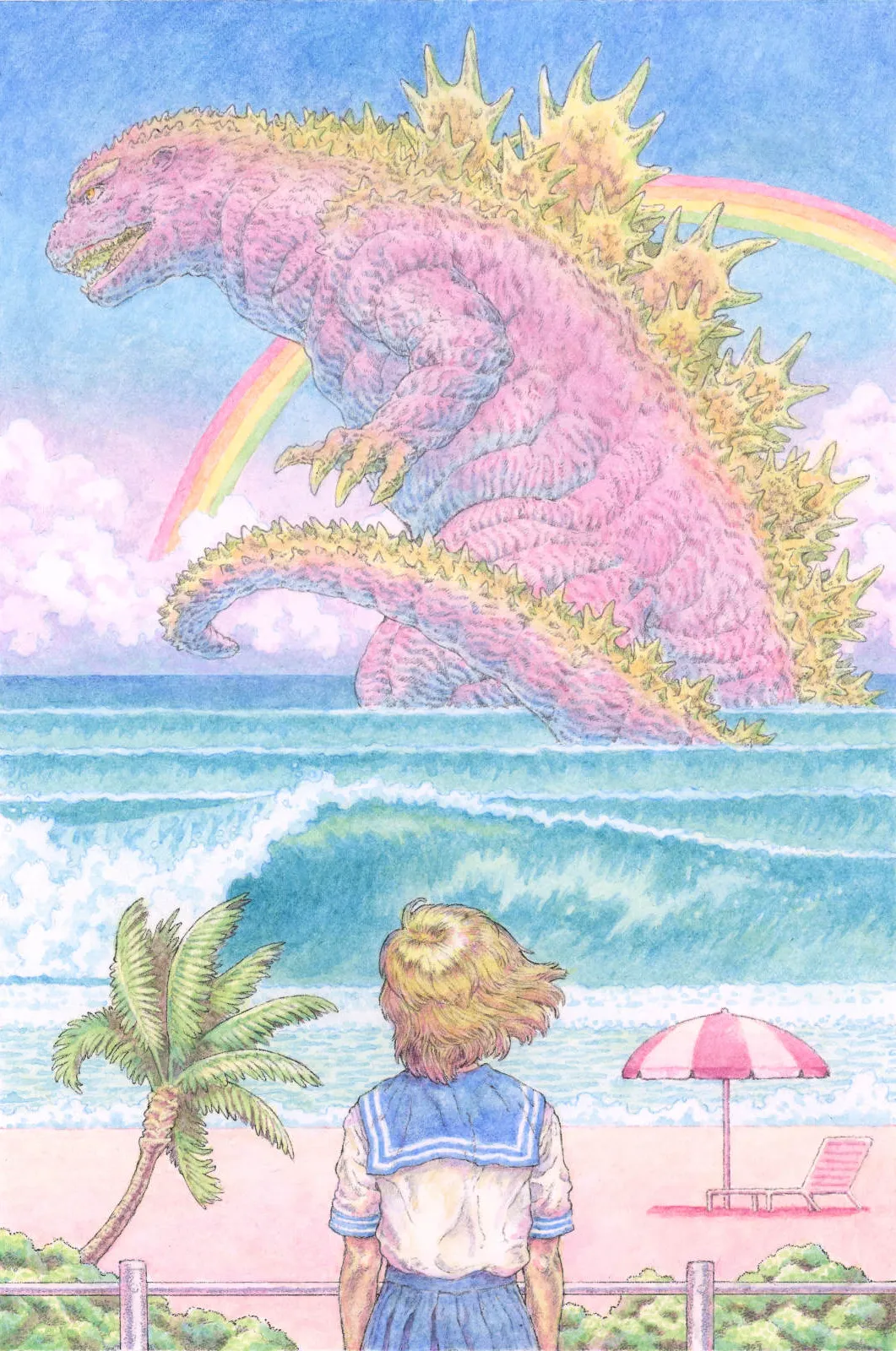
In an artistic landscape shaped by immediacy and automation, Jackson Howell clings to gesture, painting tools, and the brushstroke as witnesses to the process. As a self-described analogue artist, he embraces a practice pierced by the influence of Japanese art and by the inherent imperfections that come from an artist’s hand.
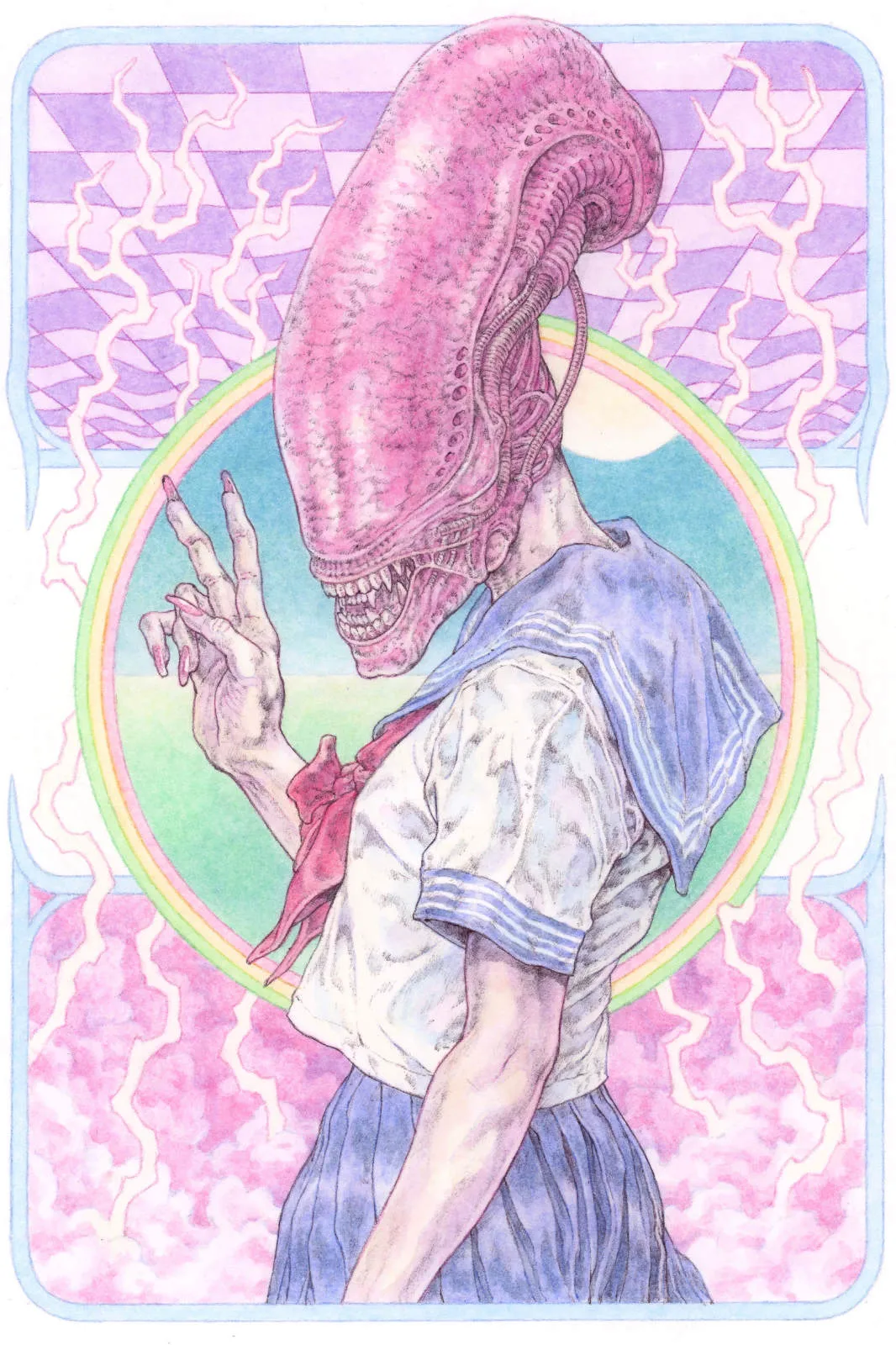
While Howell doesn’t disparage digital techniques, his work is a commitment to the handmade in the era of generative AI, but also an exercise in contrasts driven by an innate passion that aims to keep the conversation alive. Through a psychedelic lens, he engages with pop culture from a manga aesthetic, while intertwining traditional elements in scenes where the ordinary is punctured by the unsettling. Within this tension, he creates a visual universe in which the familiar is corrupted, inviting the viewer to find beauty in discomfort.
In conversation with METAL, Howell reflects on traditional painting, the looming threat of artificial intelligence, and the art of drawing creepy things in order to feel comfortable.
When did art enter your life?
Very early. Like most kids I would draw and paint for fun, I didn’t have any obvious talent, I simply never stopped. My twin brother and I would spend most of our time making stuff and drawing monsters or silly little characters. Gradually, it became integral to my life — everything revolves around it now, but it took time and dedication to transition my practice from a hobby to something all-encompassing.
You describe yourself as an analogue artist. What does that label mean in a context where digital tools dominate classical illustration?
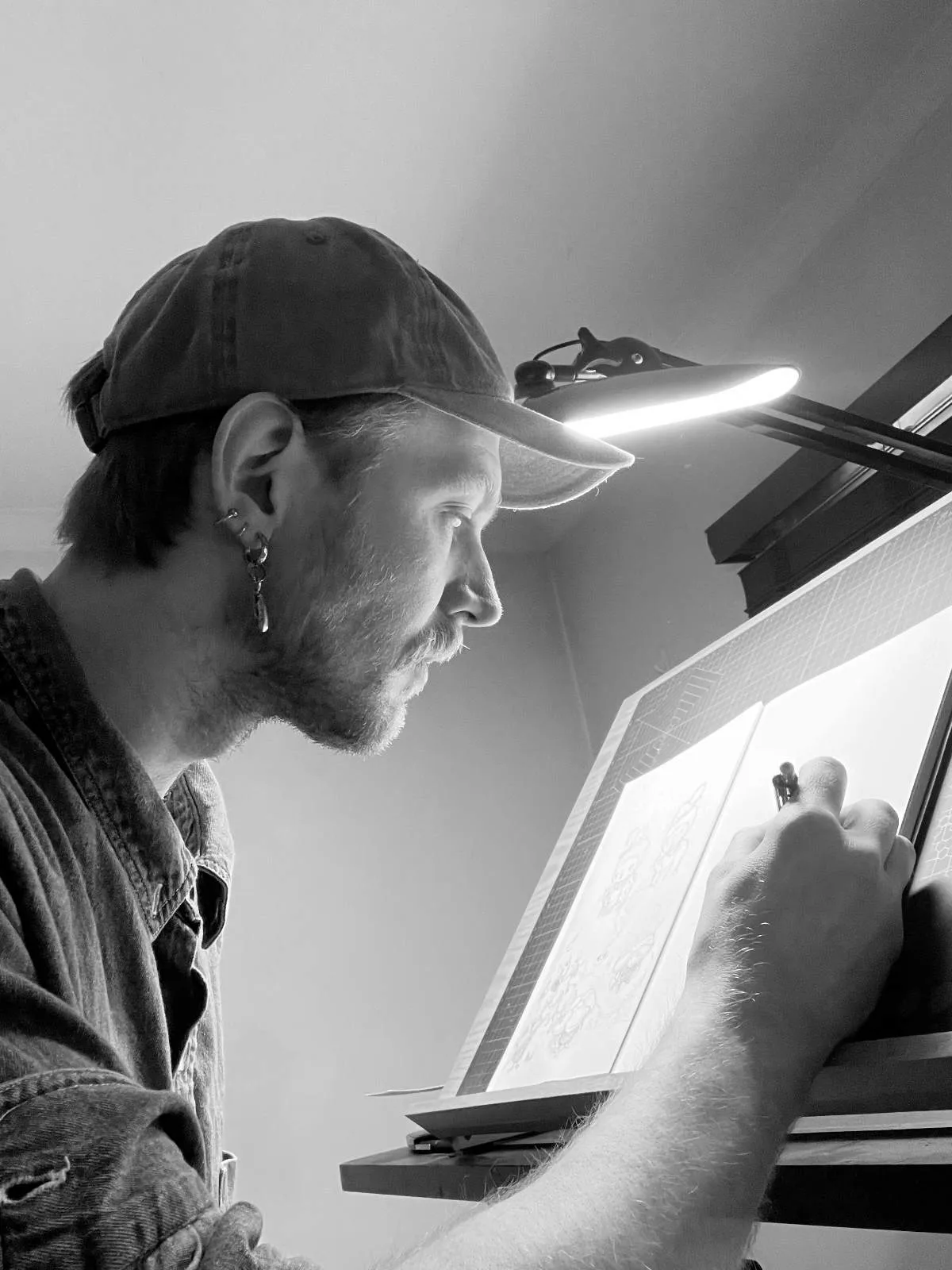
I use this descriptor to explain my painting process. From start to finish my artwork is all traditional, that is to say, non-digital. I greatly admire digital artists but the tools they use don’t appeal to me or the way I like to work. I want people to understand that my artworks are tangible artefacts existing in physical space before they are converted to digital files to be shared on social media.
Your drawings don’t hide the gesture or the process: the line work is visible, the pencil shading, the way colour interacts with the paper. You work with traditional techniques in a social and professional context that prioritises speed and technology. This seems to have become a form of resistance. Is that the case, or is it simply an aesthetic stance intertwined with your natural way of working?
As technology has become further intertwined with the art making process, I’ve noticed I prefer work with the inherent imperfections which come from an artist’s hand. It’s like a guarantee someone made it, committed many hours of work to an idea which was important to them, a story they wanted to tell and share. Not to discount digital artists’ efforts by any means, it’s just my preference since the advent of generative AI art. Unfortunately, it’s a lot easier to tell on sight if something made without digital tools isn’t authored by gen-AI. My own workflow is based first and foremost on my preference for traditional tools rather than any kind of anti-digital ideology.
“I want people to understand that my artworks are tangible artefacts existing in physical space before they are converted to digital files to be shared on social media.”
You’ve mentioned you like “drawing creepy things.” What moves you to the unsettling?
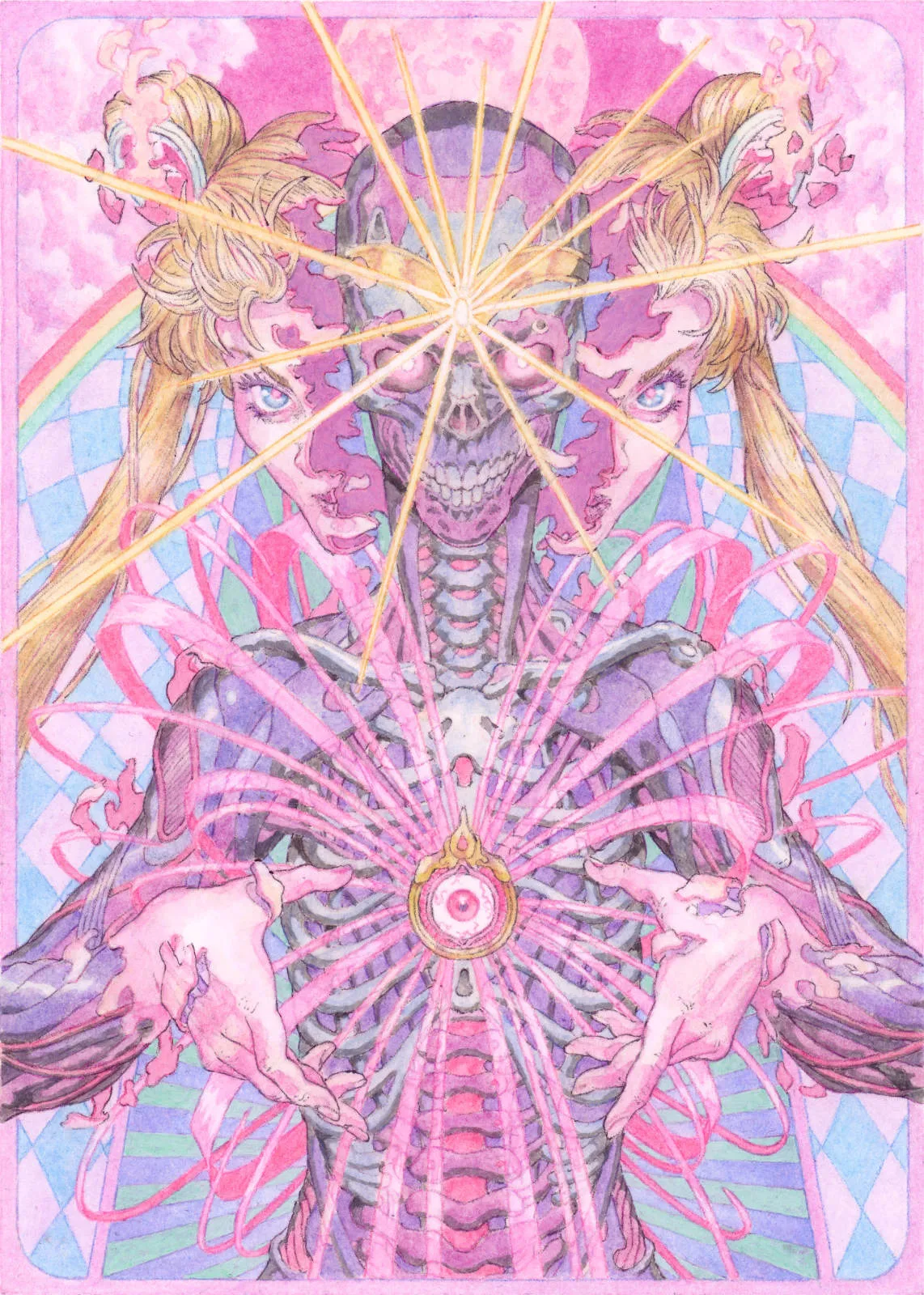
It’s a really intriguing way to explore any kind of subject matter. When the familiar is corrupted or transformed into something repulsive or alien, it can lead to all kinds of interesting interpretations. I think there is beauty to what people find unsettling, I try to emphasise that in my work.
Do you see it as a way of processing fear, or just as pure visual pleasure?
Definitely a bit of both. I think an artist is always processing their own thoughts and philosophies, whether consciously or not. I find macabre imagery so compelling because it represents a fear that everyone grapples with in some way.
You’re from Australia, but your artistic imagery is deeply connected to Japan. How do your roots and your inspirations coexist in your work?
The anime aesthetic strongly influences my approach to image-making. Watching Pokemon, Sailor Moon and Dragon Ball Z as a kid definitely sparked my interest in drawing. It’s a place of comfort that I’m always returning to. Strong as the presence of the anime aesthetic is in my work, I try to ensure that I’m not simply imitating that style. What I hope to do is take influence from the art that inspired me so much as a child and respond to what other creators have done. I like to think that art as a conversation that we are all having.
Your illustrations follow a manga aesthetic. What was your first contact with it like?
I think the first thing I saw that resembled manga was the Pokemon Red Version manual. I remember seeing Ken Sugimori’s watercolour illustrations with such bold expressive line work and vibrant hues. It made me want to make art. I certainly decided on exploring watercolour because of this core memory.
What does this graphic language offer you that you don’t find in others?
To me it is purely a stylistic preference. I like the emphasis of line and colour, there’s so much that can be achieved focusing on these elements. I actually do find similarities in other art styles and movements. Take ukiyo-e as an example, or art nouveau, both have a heavy emphasis on line and colour among other similar and distinct aspects. I’d say that manga is one example of many art styles that influence my art practice.
All your work seems to follow an editorial line, a kind of pictorial universe. What led you to create such a specific aesthetic within your practice?
My own biases on what’s visually pleasing mixed with what I think will best suit the subject matter I want to explore I suppose. I think with each piece I make, I’m striving to learn something and do something that I haven’t already done. However, it’s important to me that there is cohesion within my body of work. I return to certain symbols and design language as a way of expressing specific ideas and themes that reoccur within my art.
Sometimes your images are intertwined with everyday elements, like a highway or a high-voltage cable, mixed with fictional components, while other times they directly reference fantasy popular culture. How does this balance operate within your work?
It really depends on the story I’m telling. These elements create context for characters to exist in; I’m always thinking about how each element of an image adds to the narrative of the piece. Sometimes a composition calls for a more abstract surreal setting, other times I think a more realistic scene is appropriate. The character usually dictates what elements are needed, what will amplify the mood I want to go for.
Your work also often combines traditional imagery, such as a geisha, with contemporary elements like a mobile phone. What interests you about bringing these two worlds together?
Blending disparate elements together is a core part of my image-making. It’s my way of attempting to capture a viewer’s imagination. Something interesting happens when opposing concepts come together in an image. Questions arise; people have to come up with their own conclusions. I like to imagine that everyone sees something different when they look at my work.
“When the familiar is corrupted or transformed into something repulsive or alien, it can lead to all kinds of interesting interpretations.”
Is there a middle ground between these two approaches?
For sure, I think these approaches utilise tools that I’m comfortable using no matter what subject matter I’m exploring. I don’t really see them as separate. Both are a wholistic part of my creative process.
What is your creative process like, then? Where does the inspiration for an illustration come from?
Typically, I like to start with something superficial. A pose that I think is interesting, a feature that would be fun to draw, a costume, a prop. I’ll sketch, find references, create thumbnail compositions. Slowly the idea becomes more appealing as I work, it’s a tedious process. Sometimes the character or narrative reveals themselves as I work, sometimes I have a concept in my mind that I want to give shape to. Mostly I have to be interested in what I’m making, which can lead to scrapping a lot of ideas.
It’s clear that Pokemon is one of your main sources of inspiration, but Sailor Moon, among others, also makes appearances (especially in the details of Japanese school uniforms and that magical girl aesthetic). But it is always kind of psychedelic. What role does this psychedelic layer play in the way you reinterpret these references? Is it intentional, or does it emerge naturally from your way of drawing?
I like to play with visual metaphor and symbolism in my work. Often, this involves surreal imagery, representing familiar concepts in a non-literal way. The psychedellic aspect is incidental. My way of depicting the ideas that I want to present to people just happen to involve a lot of colour and detail. I like to dissect, transform, and subvert characters and pop culture references when I reinterpret them, rather than simply painting someone else’s intellectual property. I want to express what other people’s art means to me or allow others to reconsider what it means to them.
As an analogue artist, what challenges do you think the world of illustration is facing with the advance of AI?
It’s an uncertain time to be a working artist. Generative AI can certainly do some impressive things. However, I think the general public is starting to understand that it has enormous drawbacks environmentally, intellectually, and psychologically. In terms of art, I feel optimistic. I think there’s a growing sentiment that people are quite sick of AI-generated art. I hope that people are beginning to understand how limiting it can be. By that I mean how much it can limit a person’s creativity and imagination by relying on an image generator to create something for them.
I tried using it once, out of curiosity. It felt like giving myself a lobotomy, choosing to let a machine generate an image for me rather than taking the time to create something. It makes me really happy to see artists still working hard to learn and hone their skills rather than take the easy way out. I get a lot of people commenting on my work asking how long something took to finish. People really appreciate something tangible and human-made; that’s not something that AI can compete with. I see art as a conversation, what I make can be interpreted differently by everyone who sees it. It’s a very special thing, for another person to connect with your artwork, they imbue it with their own meaning. As long as humans are making art, we can keep the conversation alive.
I tried using it once, out of curiosity. It felt like giving myself a lobotomy, choosing to let a machine generate an image for me rather than taking the time to create something. It makes me really happy to see artists still working hard to learn and hone their skills rather than take the easy way out. I get a lot of people commenting on my work asking how long something took to finish. People really appreciate something tangible and human-made; that’s not something that AI can compete with. I see art as a conversation, what I make can be interpreted differently by everyone who sees it. It’s a very special thing, for another person to connect with your artwork, they imbue it with their own meaning. As long as humans are making art, we can keep the conversation alive.