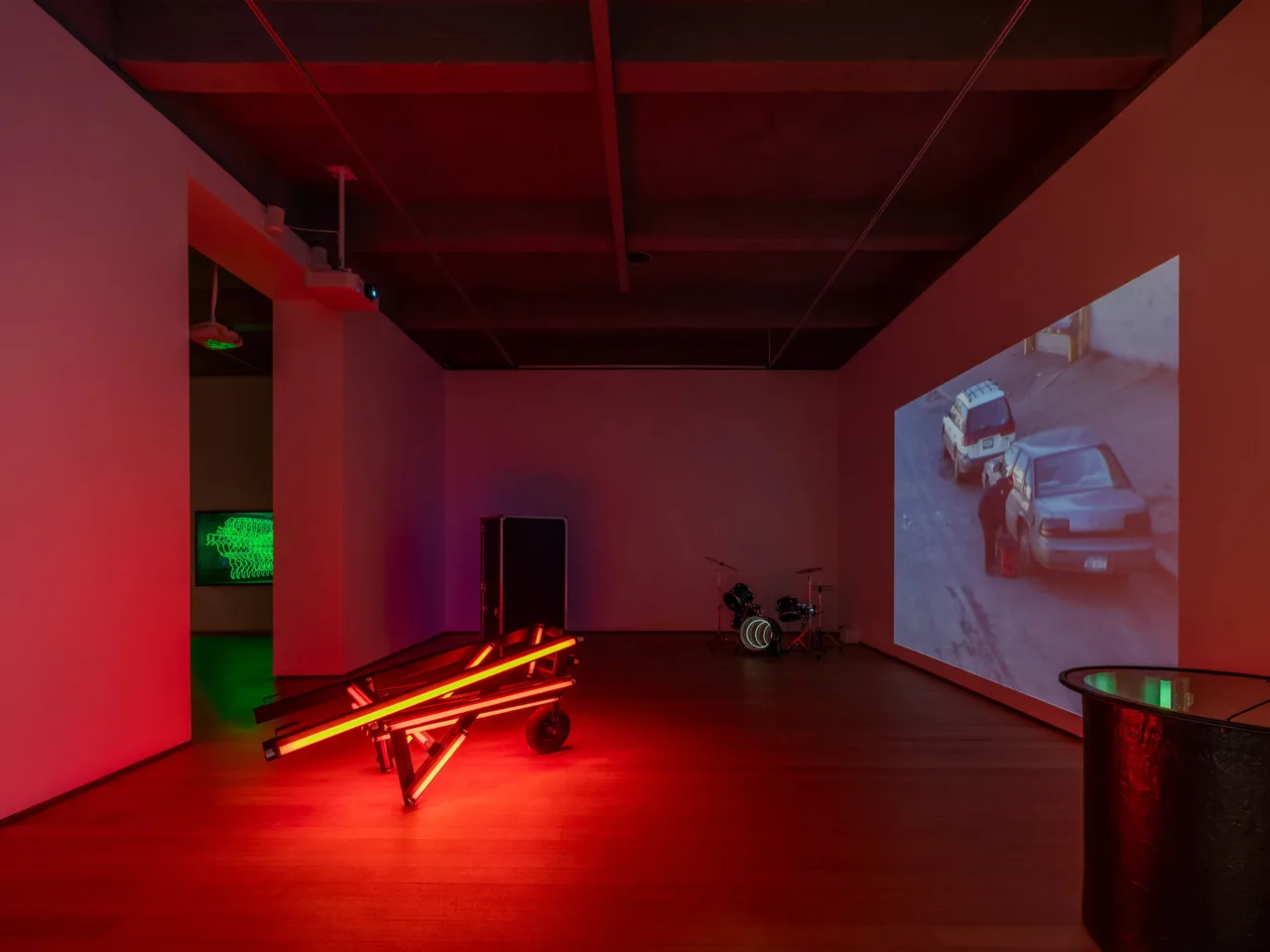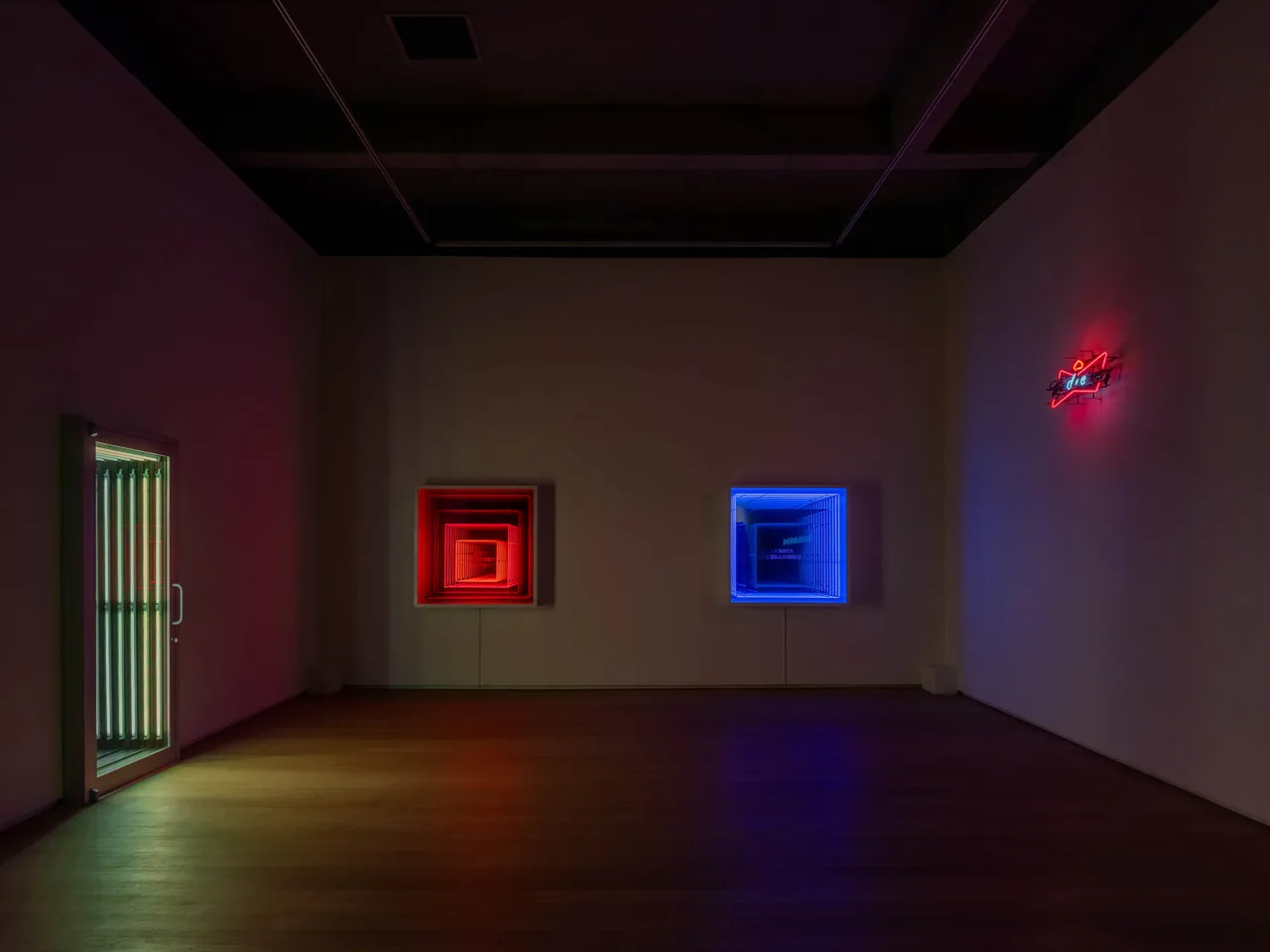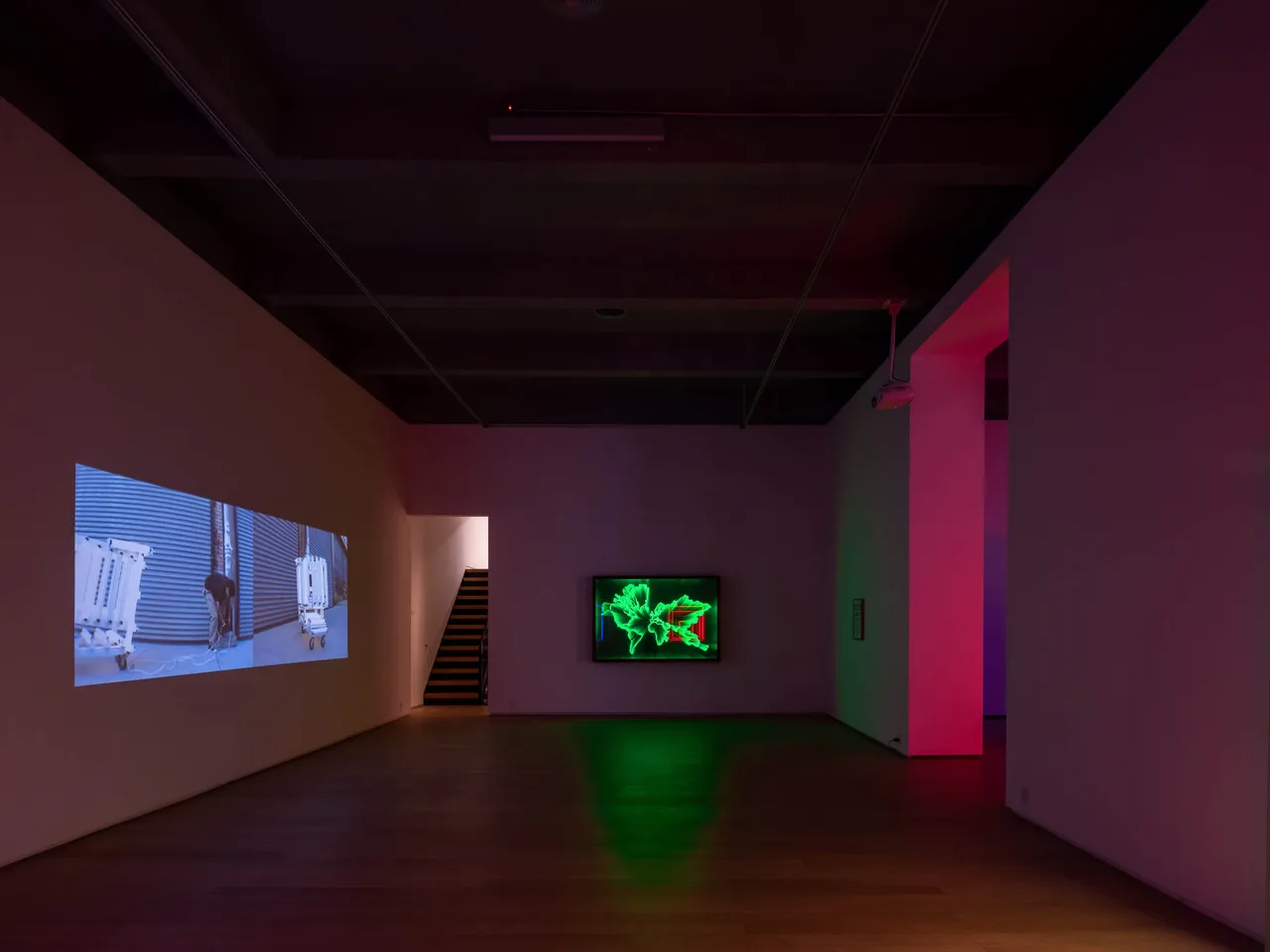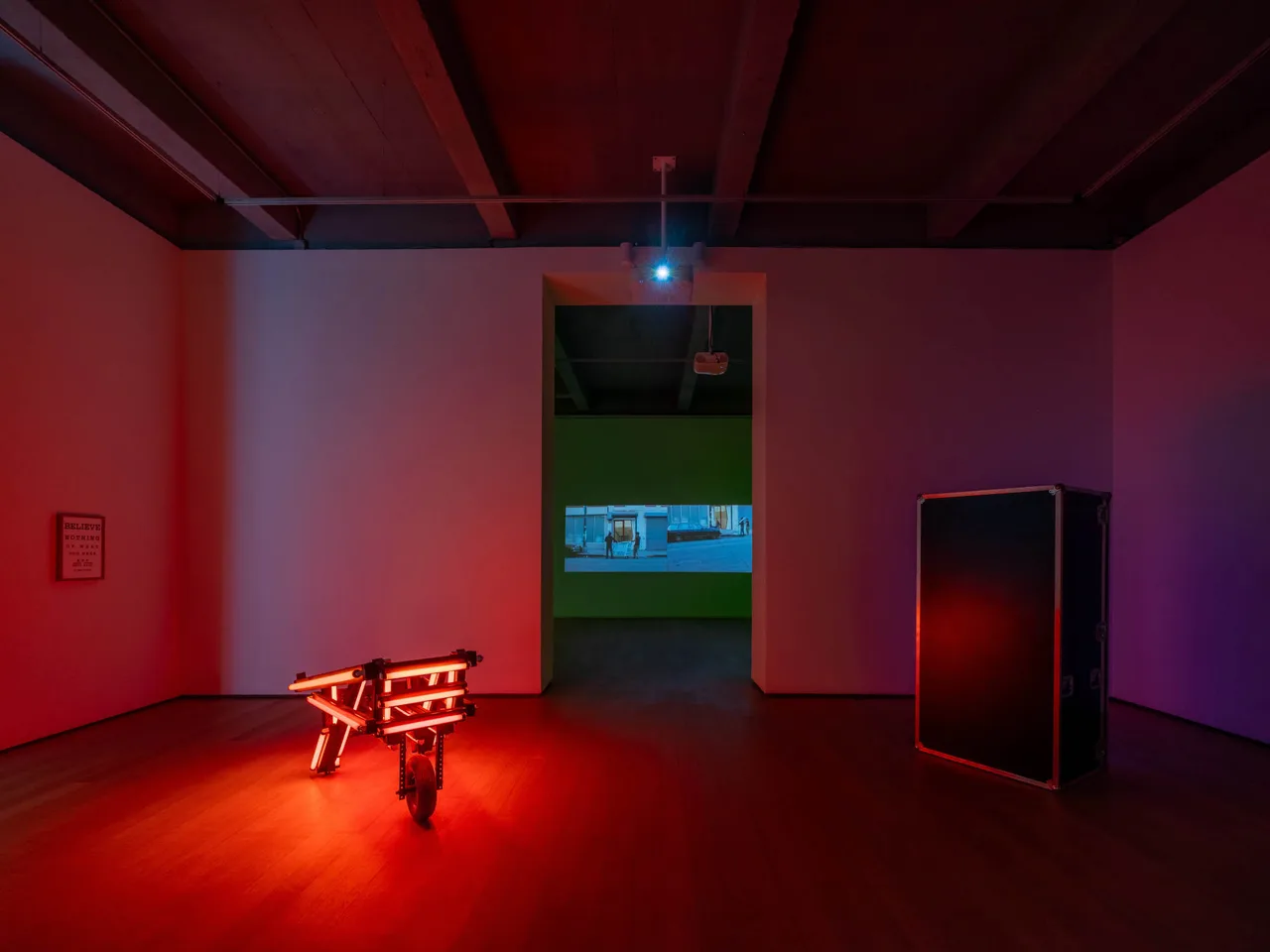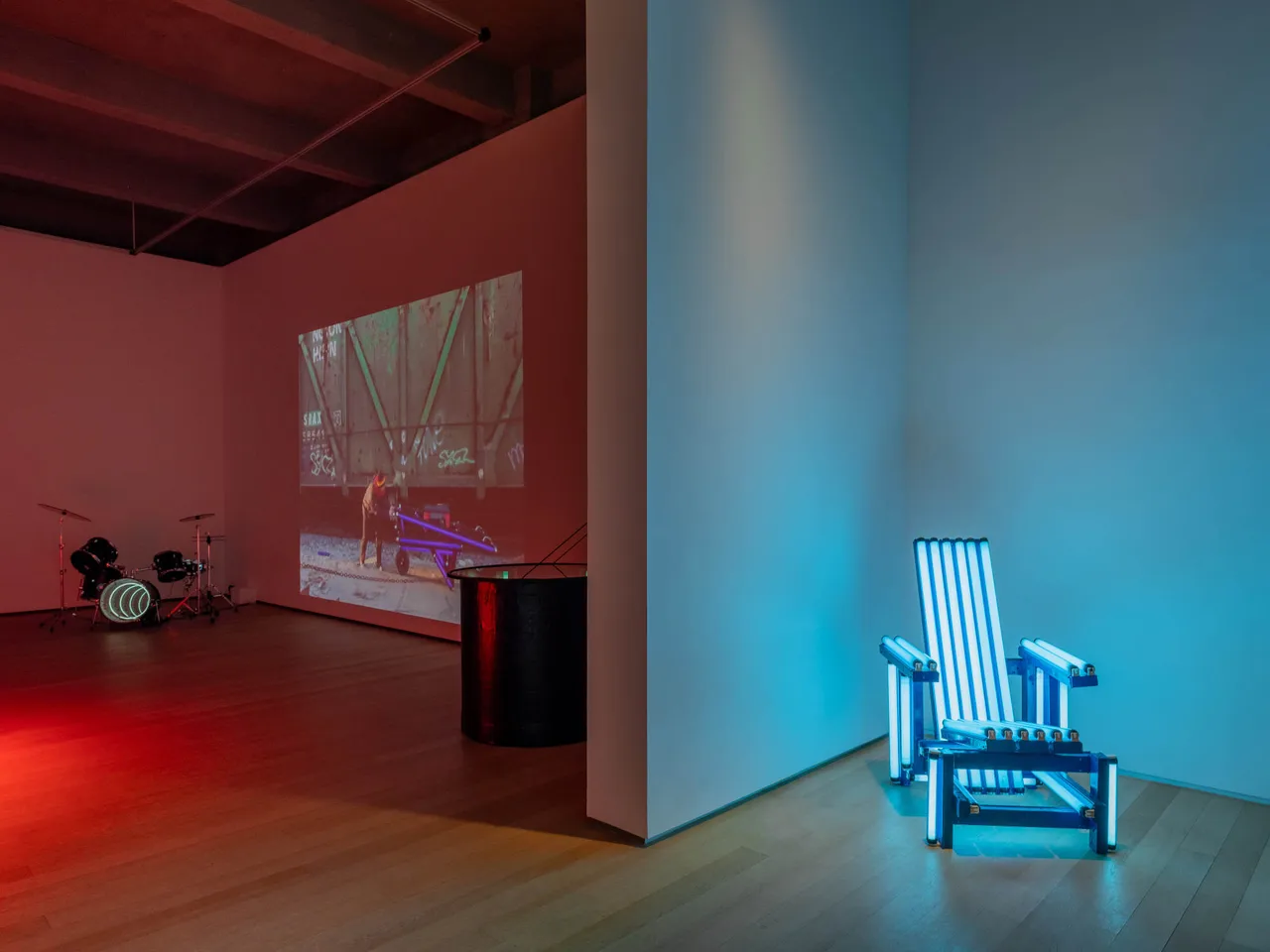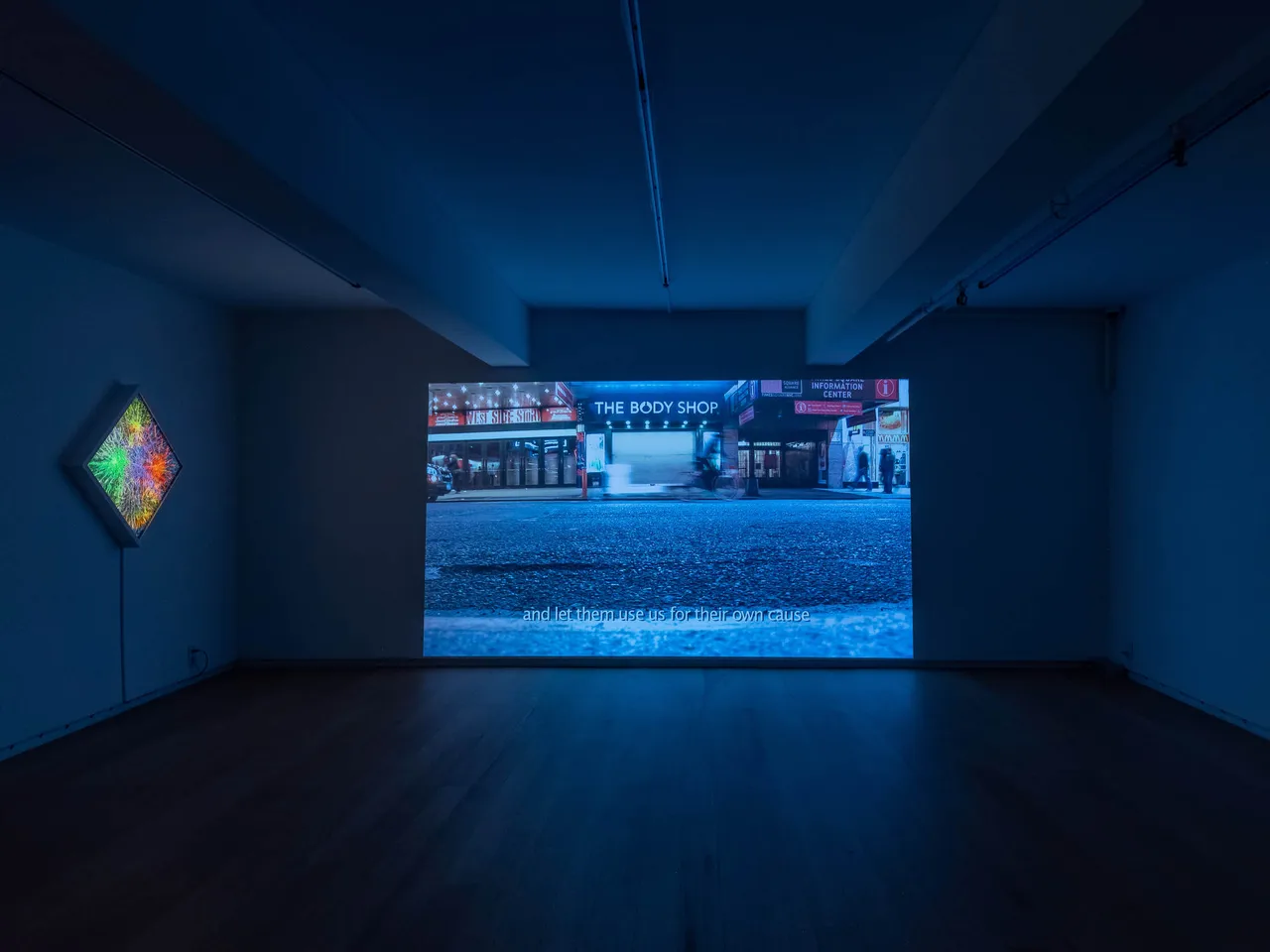
Neon lights illuminate common objects that make up distinct, unassuming parts of our lives, but with a rebellious outlook. A drum kit with a hypnotising swirl inside the kick, a modular wheelbarrow, or what looks to be a lounge chair take on vastly different meanings in this Chilean artist’s exhibition at New York City’s Templon Gallery. Iván Navarro contemplates the human condition under authoritarian regimes and political turmoil through his use of light, sculpture, and video in Light Years, a chronological retrospective of the artist’s work on display until March 21st.
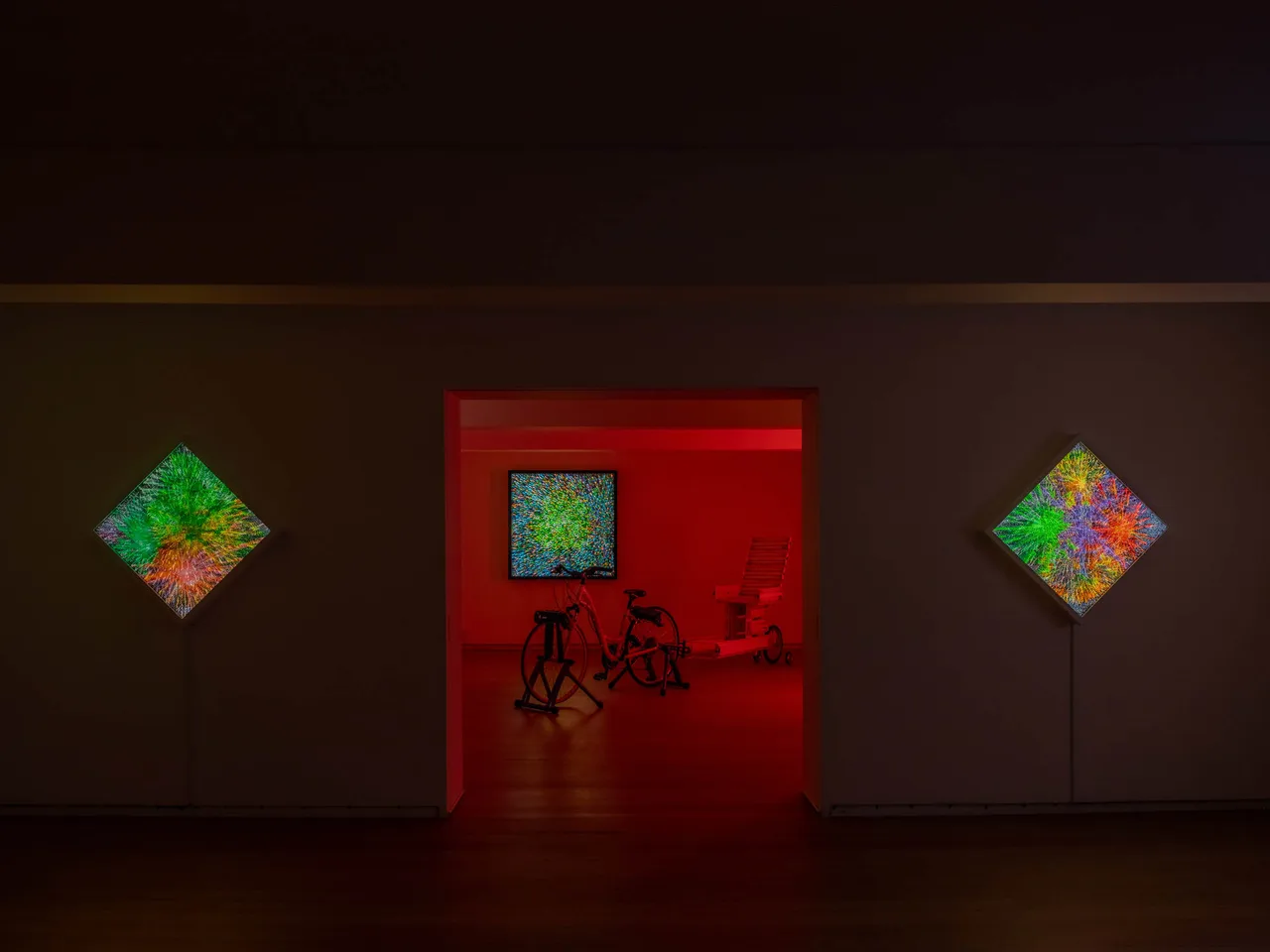
Growing up in Chile under the Pinochet dictatorship, Navarro is uniquely positioned to understand and comment on the social atmosphere we find ourselves in today. Since the start of his career, he’s used his oeuvre to shine a light on the integral parts of resistance through “electrically animated sculptures activated through movement and video performance.” In his piece, Resistance, a man cycles on a stationary bike to generate electricity to illuminate the chair trailing behind. Navarro was inspired by those who use bicycles as a mode of transportation for business, namely the immigrant community. The action of cycling to generate electricity directly relates to the power of immigrants to stimulate an economy and culture.
Inspired by Dutch designer Gerrit Rietveld’s Red and Blue Chair, Navarro created the Blue Electric Chair (2004). While Rietveld’s original design was meant to represent harmonious and forward-thinking ideas, Navarro reorients us to see the shape of an electric chair used for the death penalty in many countries and referencing the torture technique under Pinochet. Grounded in his experience of living under, and fleeing from, a dictatorship, his pieces highlight the human rights abuses that informed his political enlightenment.
Music as a cultural connector and political tool is another central theme to Navarro’s work. In Light Years, Drums (2009) represents the use of music in protest and as a medium of communication. Throughout his oeuvre, sound plays a role in the experience. Whether that’s silence, the sounds of the world, or music itself, sonic stimulation (or lack thereof) elicits an emotional response in your body.
His 3D canvases with neon-sign-like lettering display the words ‘Esto es malo, no se puede mirar’ [This is Bad, One Can’t Look], or ‘Nada (ello dirá)’ [Nothing (It Will Say)]. They represent what it is to witness suffering, how it becomes censored, and, taking inspiration from Goya, the futility of war. His neon sculptures allude to the massive disappearances of citizens, the methods of torture, and the petrifying experience of not knowing what lies ahead. Taller canvases with deep black hallway-like abysses or infinite mirrors invite us to consider our “experience of the world: endless, unstable and in constant surveillance.” Navarro’s work may look happy, bright, and upbeat, but his motivations and material communicate an urgent need for reflection and action.
The exhibition Light Years by Iván Navarro is on view through March 21st at Templon Gallery, 293 10th Ave, New York, NY.