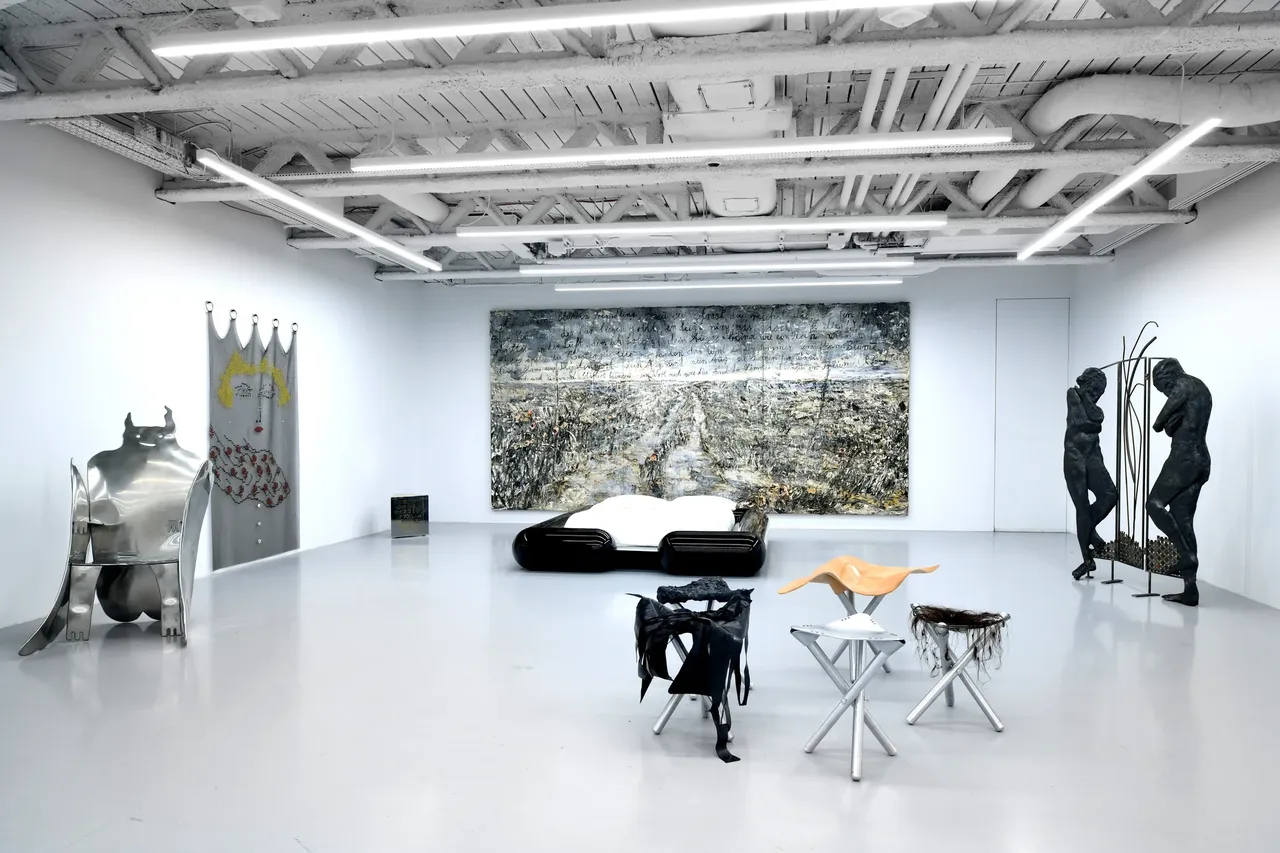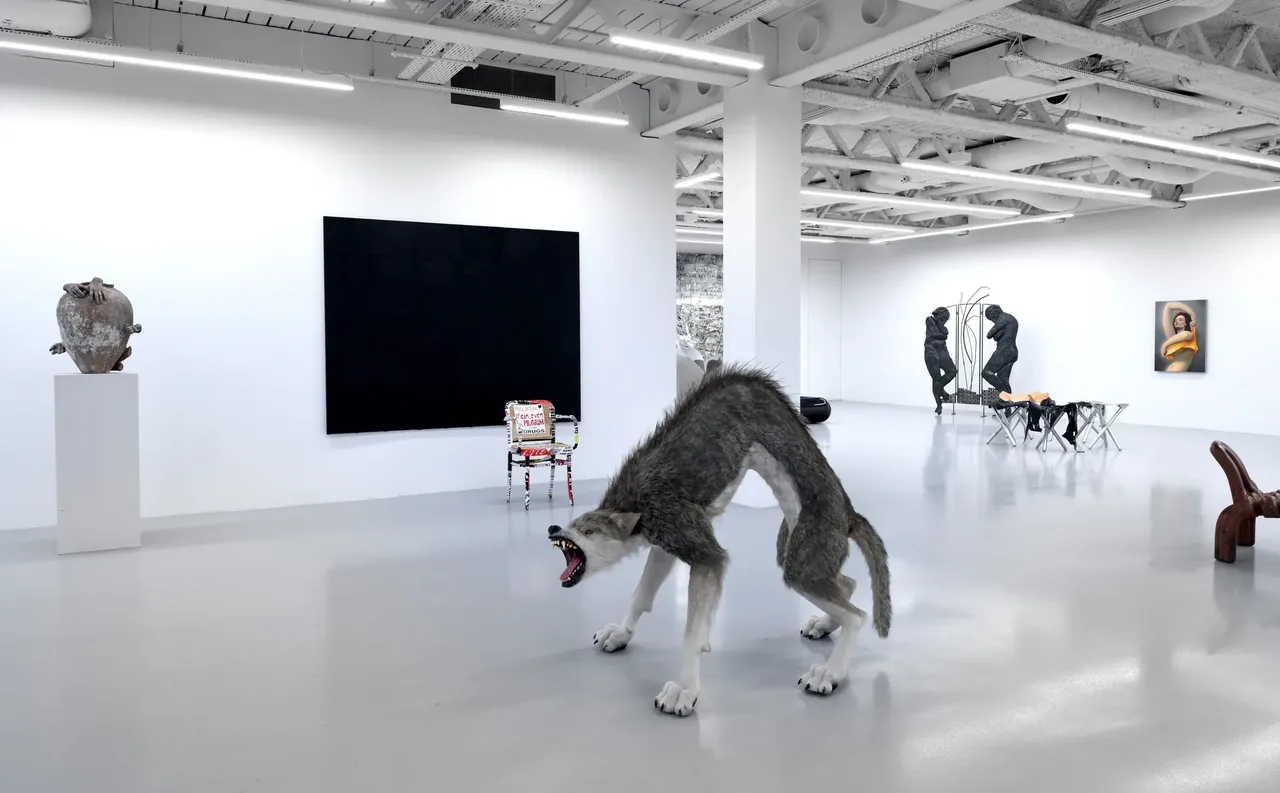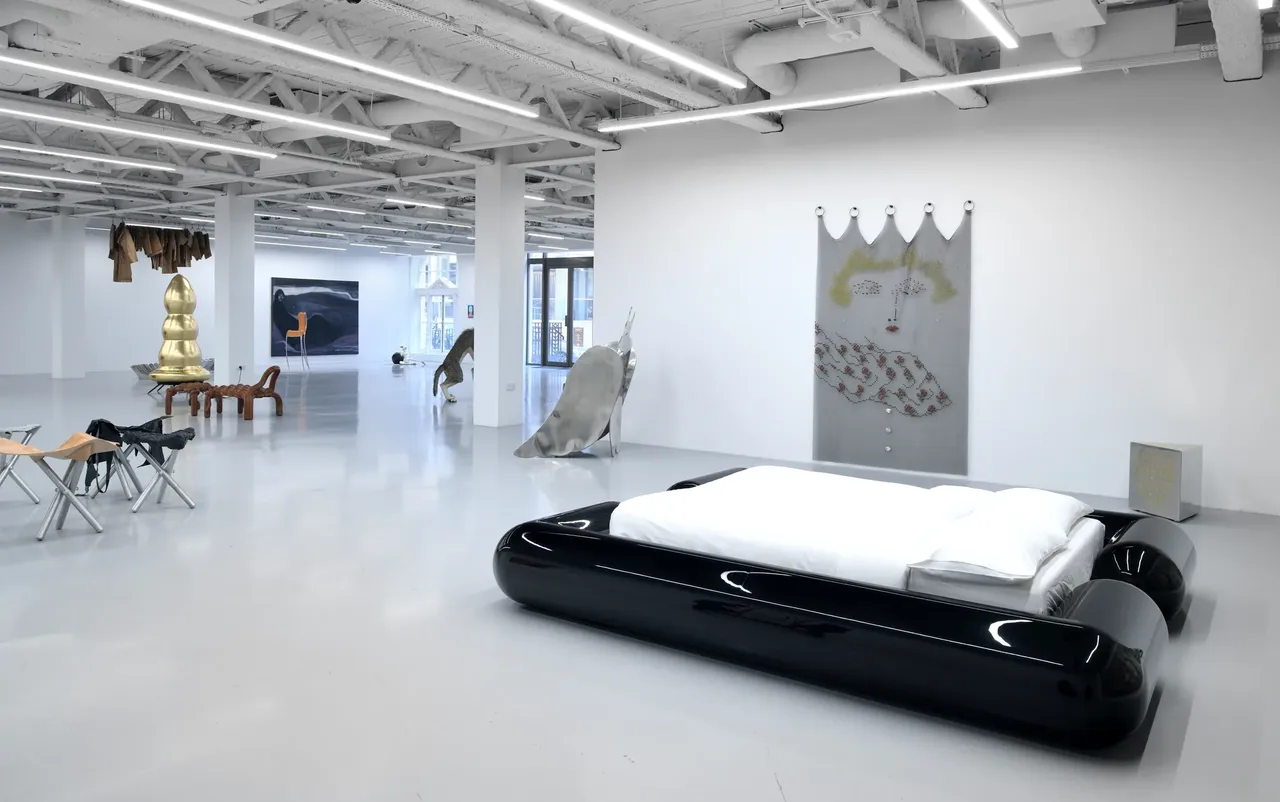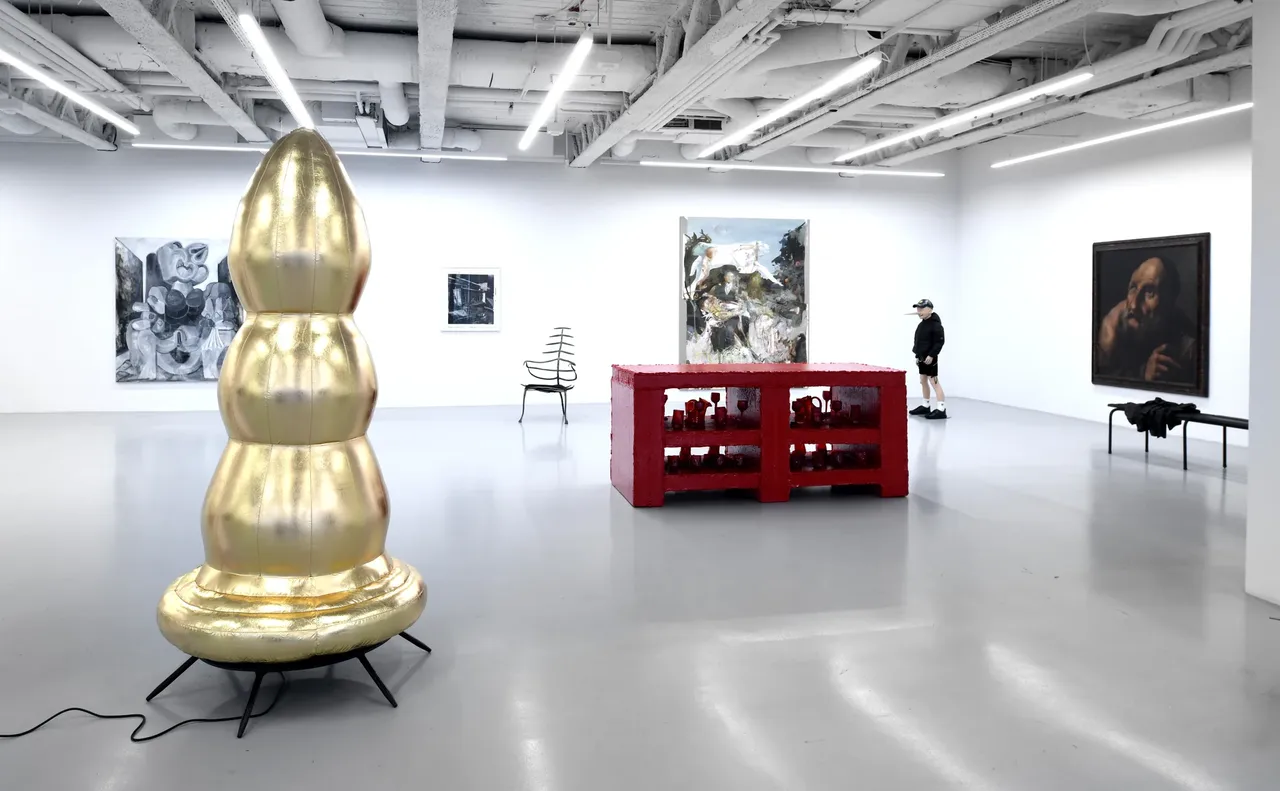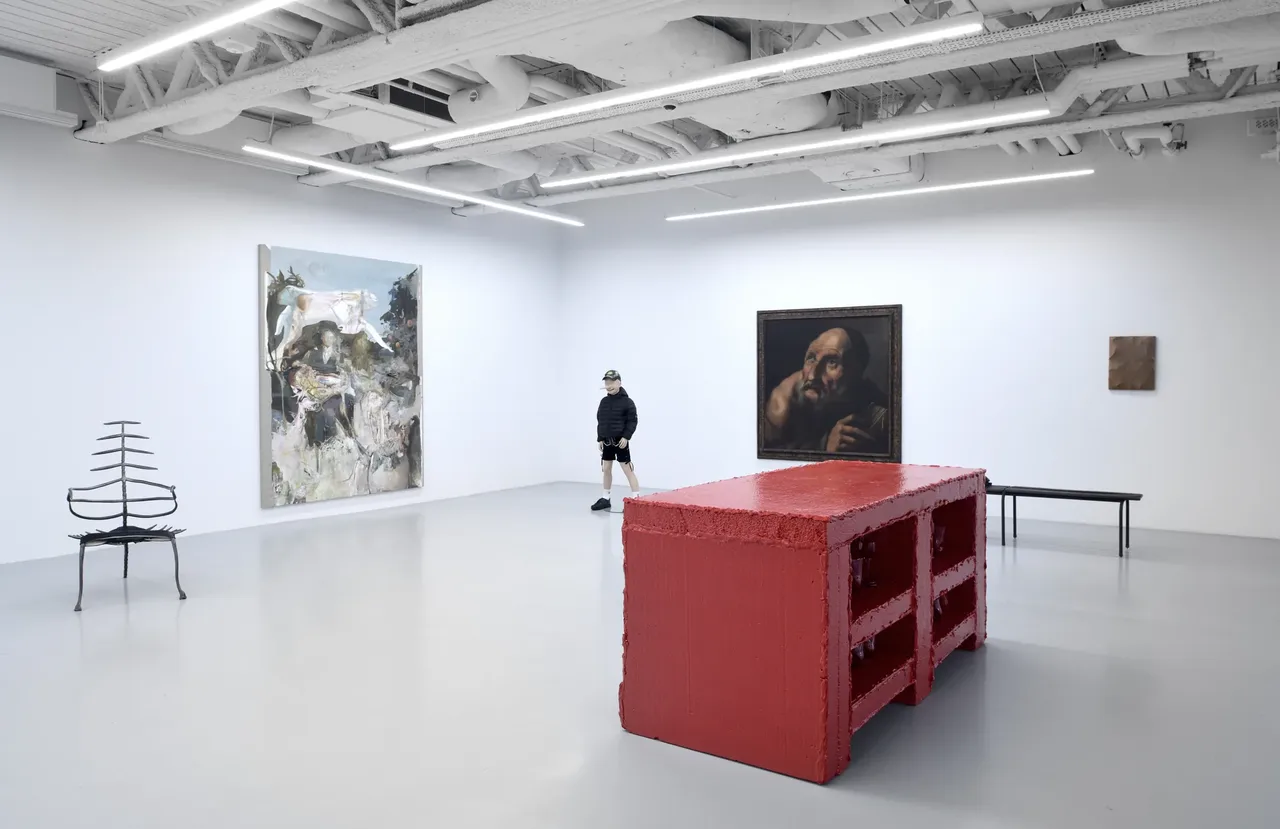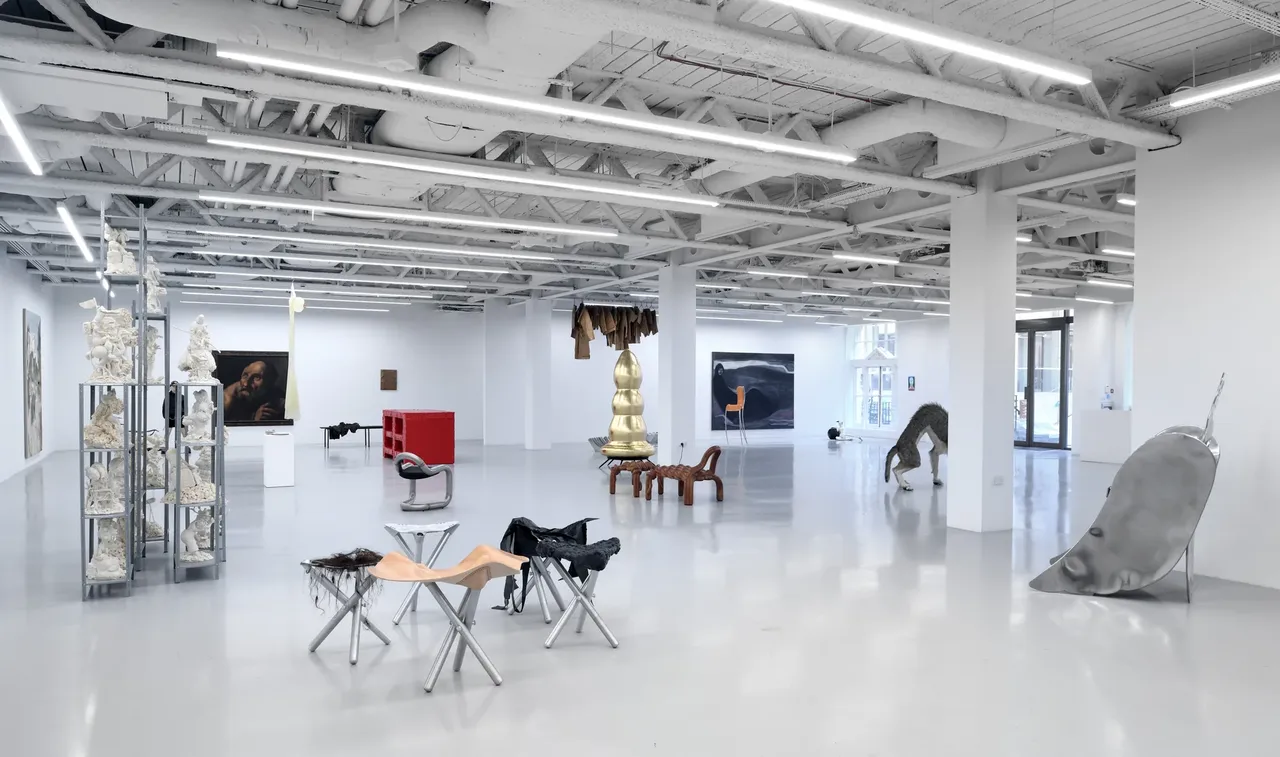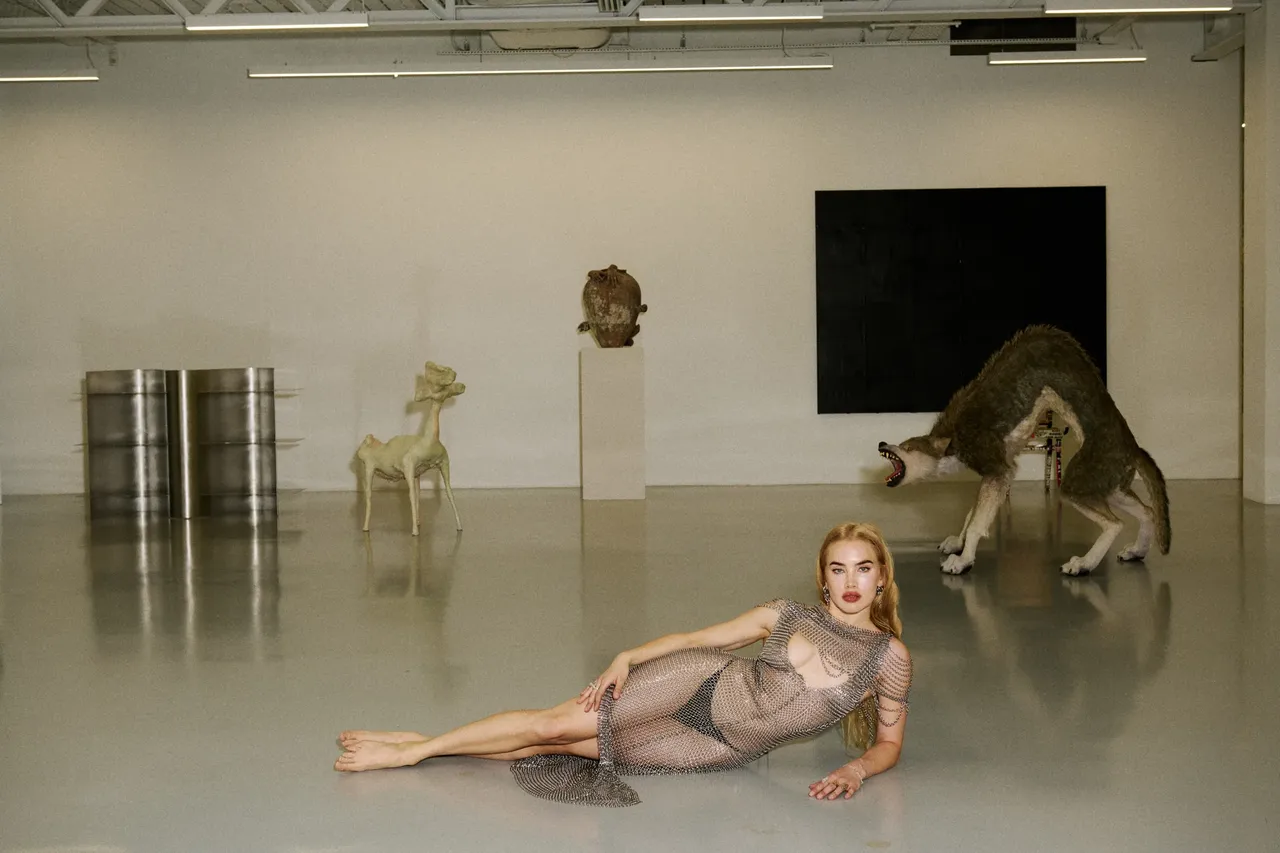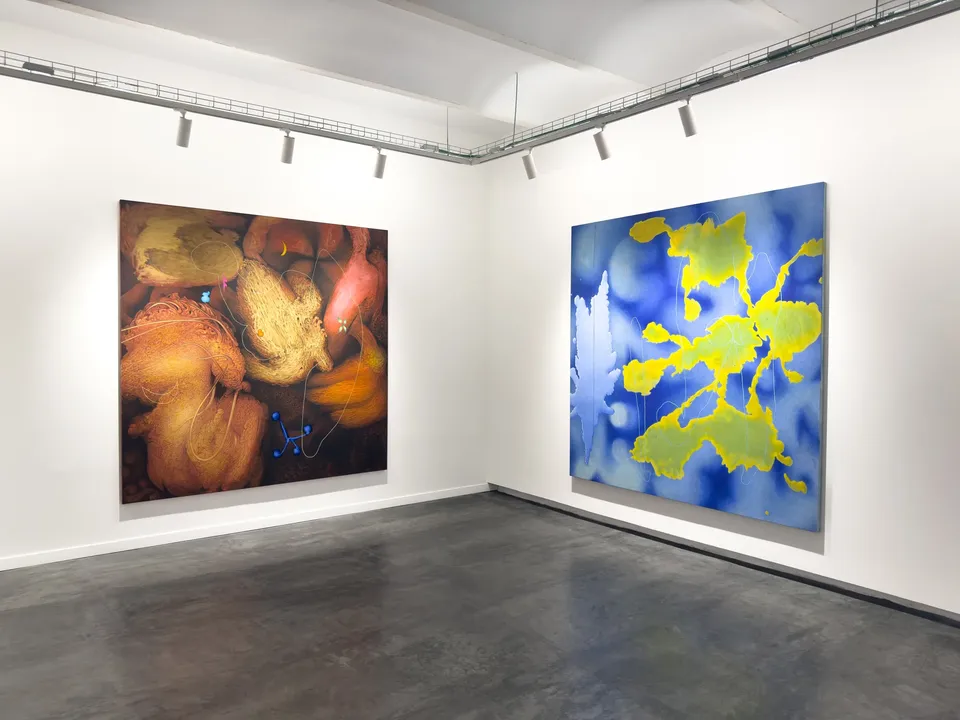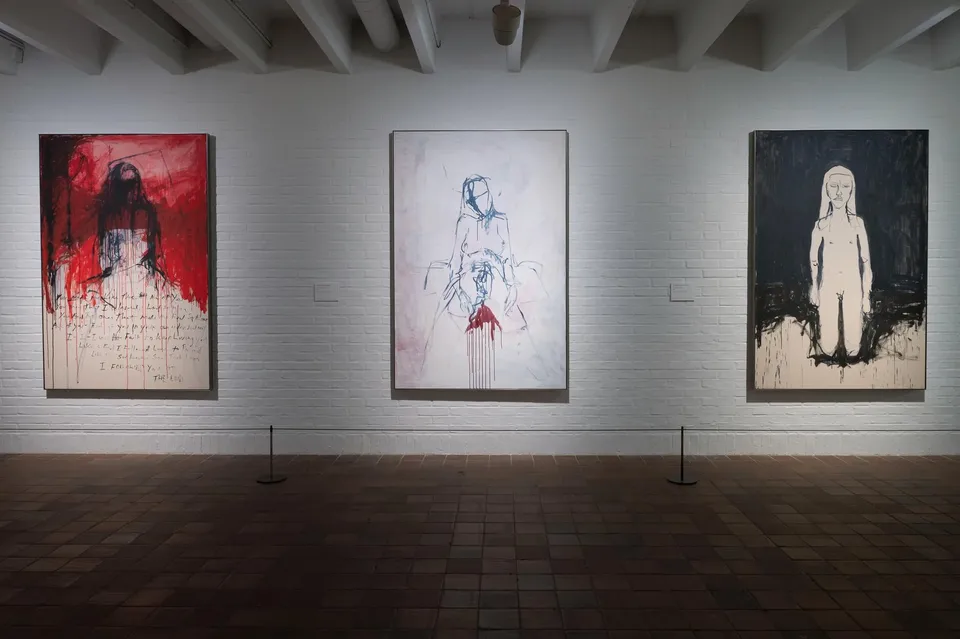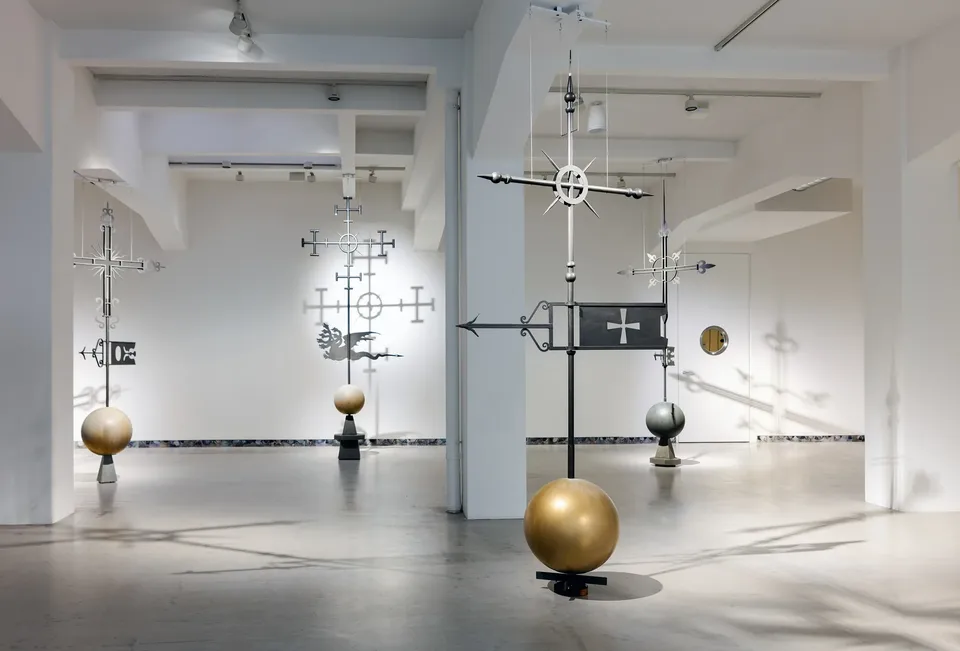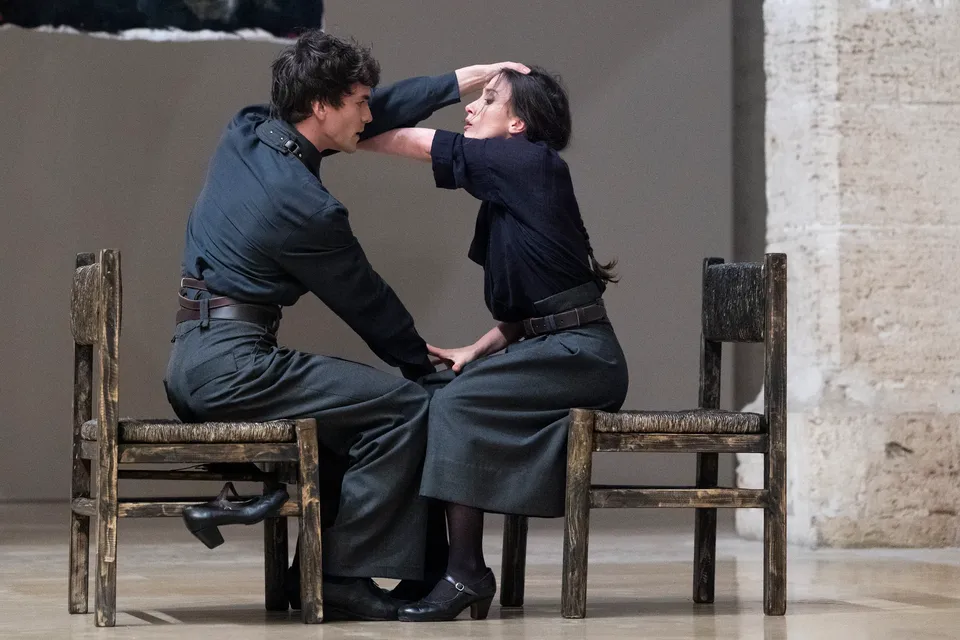
You’ve definitely heard of Isamaya Ffrench or, at least, seen her work: she’s teamed up with brands like Nike, she’s launched her own beauty and makeup brand (penis-shaped lipsticks included), and is a fashion favourite among the industry. Her new creative adventure is Studio Iron, a platform that blurs the line between art, design, and object, and through it, she has curated a group show at London’s Saatchi Yates gallery, on view through 14 June. We take the opportunity to sit down with her and discuss dissolving hierarchies in creative fields, pairing works by artists like Marina Abramović and Paul McCarthy, and future plans.
Hey Isamaya, it’s a pleasure to have you here. You’ve described Studio Iron as a platform for “collapsing and reconfiguring the hierarchies traditionally imposed between art, design, and object”. What initially sparked your desire to challenge these specific boundaries?
It came from a frustration with how rigidly categories are enforced across art, design and craft, when in reality the most interesting work exists between them. My background in product design and beauty has always sat outside those structures, so Studio Iron is a way of formalising that instinct. It’s about creating a space where function, object and expression are part of the same continuum rather than separate disciplines.
The exhibition at Saatchi Yates is described as a “dystopian dreamworld” and a “bleak post-industrial landscape”. What about this aesthetic of alienation and unease feels most relevant to you right now?
I don’t overthink it too much. I tend to follow instinct and what feels honest and relevant. For me, that often means stripping things back to get closer to the truth of something. The aesthetic comes out of that process rather than being something I consciously construct.
Why was Saatchi Yates the right environment to launch this inaugural statement?
Because it exists within a traditional fine art context. Introducing Studio Iron there creates a tension that allows the work to challenge expectations from within an established system rather than outside it. That contrast is important in how the ideas are understood.
The show features heavyweights like Marina Abramović, Anselm Kiefer, and Jannis Kounellis. How did you go about selecting artists who could speak to this specific vision?
It wasn’t about illustrating a theme so much as identifying a shared sensibility. Artists like Marina Abramović, Anselm Kiefer and Jannis Kounellis all engage with material, weight and endurance in different ways. Others bring in questions of function or authorship. The selection is built around tension between permanence and disposability, use and symbolism, control and collapse.
How do you see the grotesque humour of Paul McCarthy interacting with the industrial weight of Jannis Kounellis, for example?
They operate in very different registers but speak to similar underlying conditions. One is excessive and confrontational; the other is restrained and material-focused. Bringing them together creates a dialogue between chaos and control, and that tension allows new readings to emerge.
“I don’t overthink it too much. I tend to follow instinct and what feels honest and relevant.”
Do you view works like Jordan Wolfson’s chair or Anne Imhof’s benches as functional or symbolic?
I think it raises a question about what we define as art. A chair embellished with stickers can become something else depending on who made it. That shifts how we read and value it, and exposes how constructed those hierarchies are. The function is still present, but it’s complicated by authorship.
How has the concept of Studio Iron evolved from its initial spark to this exhibition?
It began as a curation focused more on design, and developed as I took over the Saatchi Yates space. The addition of fine art helped build a clearer aesthetic and conceptual framework and allowed the philosophy of Studio Iron to be expressed through contrast and dialogue between disciplines.
Studio Iron is described as your newly launched design gallery. Does this mean we can expect a permanent space, or a continued series of curated platforms?
There’ll be a permanent space opening later this year, alongside ongoing curated interventions. The intention is to build something that can exist in different formats without losing its core identity.
You’re currently producing a documentary on beauty standards. Is there a crossover between that work and Studio Iron?
Yes, both are about questioning systems that feel fixed. Whether it’s beauty or art, there’s an interest in understanding who defines those standards and how they shape perception. Both projects are about creating space to look at those structures more critically.
The exhibition poses several questions to visitors. Is the goal to provide answers?
No, it’s more about creating a space where questions can exist without needing resolution. The aim is to allow people to sit with ambiguity and come to their own understanding.