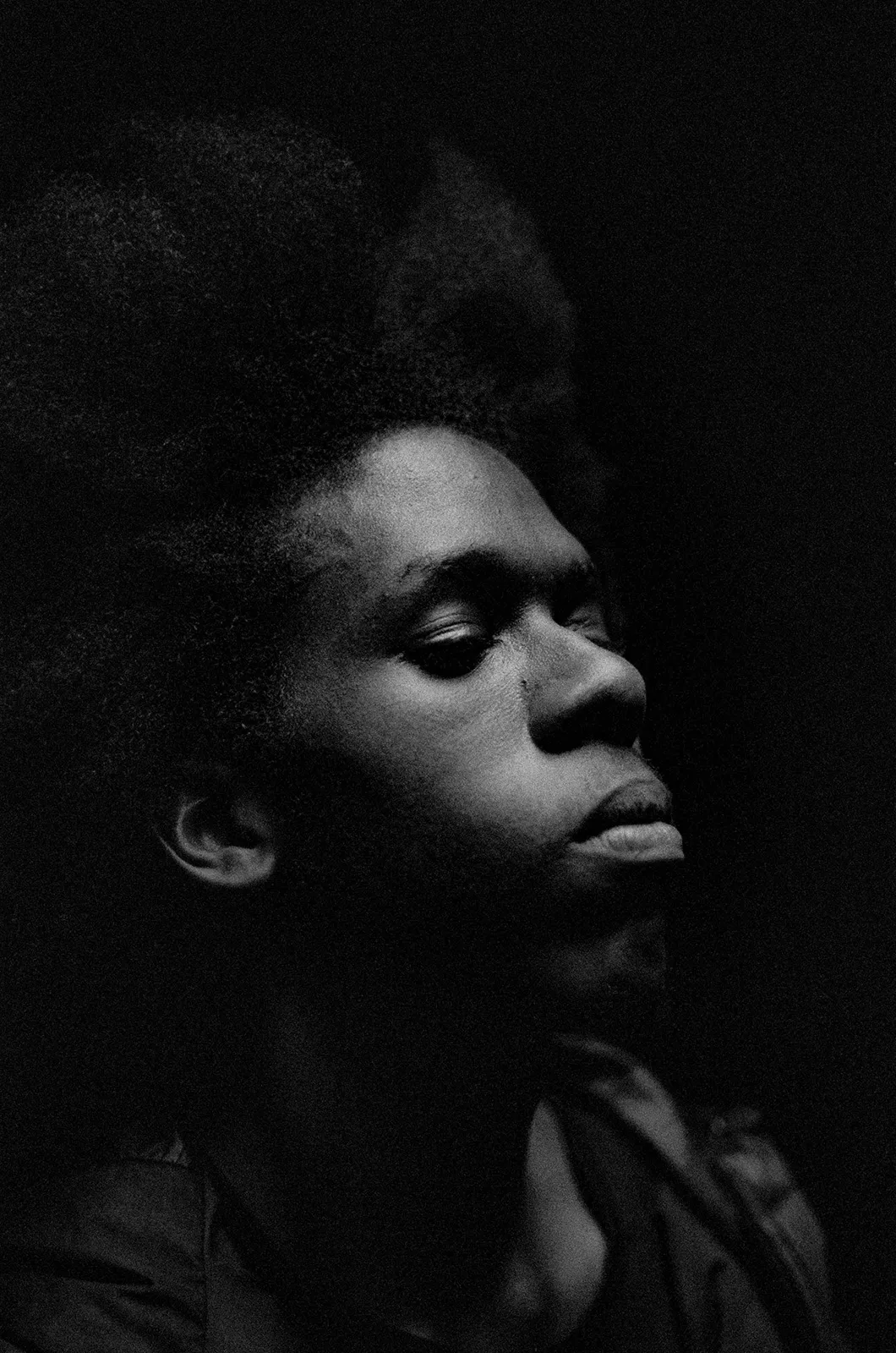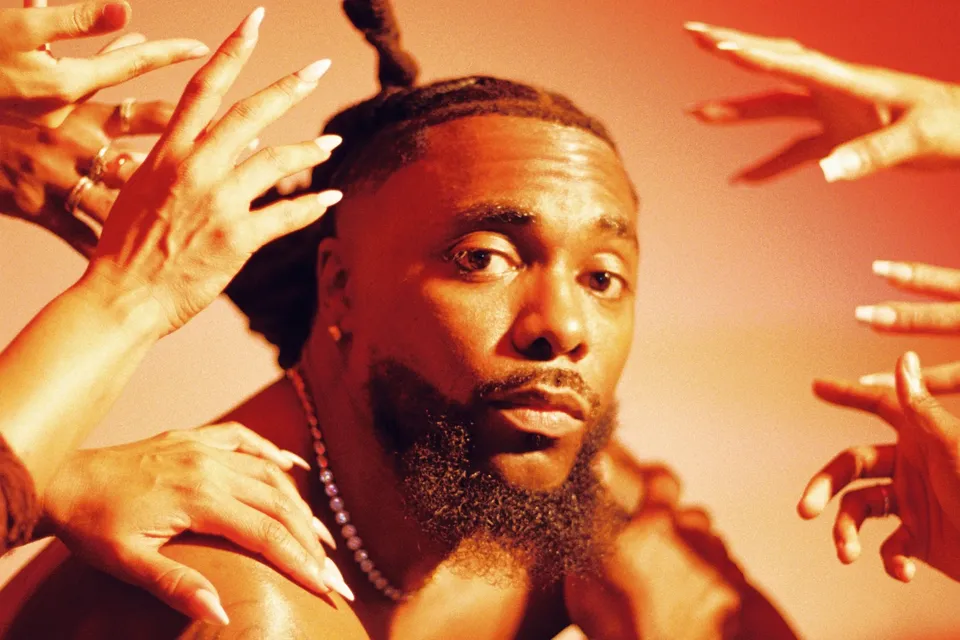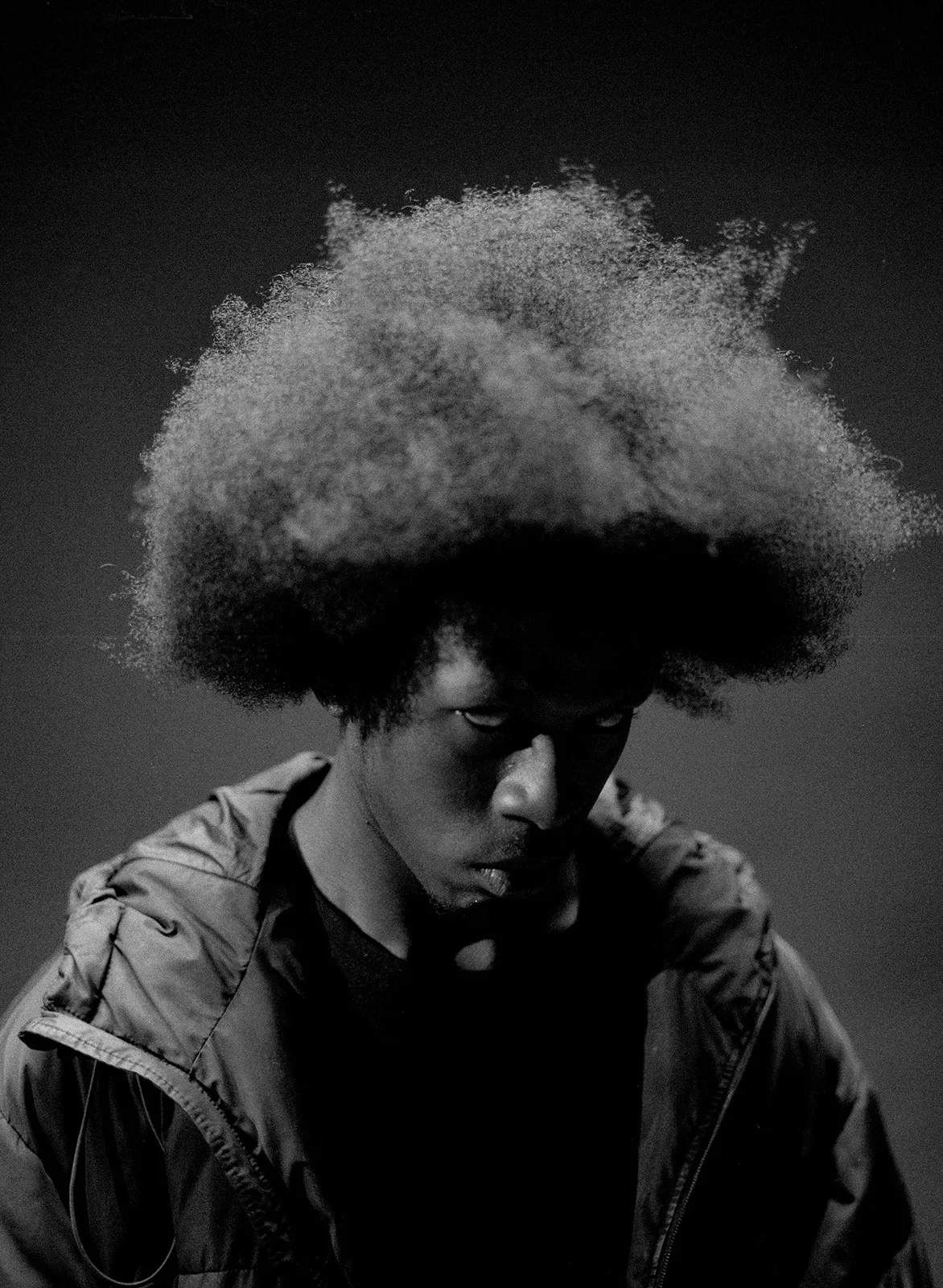
Only a handful of artists can disarm our ability to dissect and assess and Isaiah Hull, with his linguistic dexterity and embodied performance, stands firmly within that class. Pocomania is an earth-shattering debut. Taking its name from the Jamaican Creole religious practice, the album’s nuanced presentation of spirituality, Black empowerment, and British politics is both mystifying and illuminating, provocative and cathartic — all underpinned by Hull’s genius for lyrical visualisation.
The album is a cultural lifeform: alive, breathing, reactive. It engages with Black British identity with a complexity more akin to theatre or the novel than to conventional music releases, as Hull metamorphoses through characters, voices, and perspectives that transcend the topography of typical albums.
It is a joy to hear from Isaiah Hull about his work and world, though in truth, we only scratched the surface. To truly understand the depths of his artistry would require far more space than this format allows.
Congratulations on the release of Pocomania, it’s a powerful body of work. The title references a form of African folk religion brought to Jamaica, but how does Pocomania specifically influence the album’s vision? What does it mean to you on a personal or spiritual level?
Thank you, thank you for listening and recognising. I won’t go into my own spiritual practices here but since finding Pocomania for myself, it has given word, permission and space for a manic energy I experience in real time. This album wouldn’t have been made or named without the tradition and history it is from.
Spirituality has always moved through your music: sometimes explicitly, like in the song Gorillax (“Politics and church are distractions from the Holy One”, “By the way my God is black”), and sometimes more subtly, through the meditative scope of tracks like fossil fuel with aloisius with long runtimes that create almost a prayer-like journey. On Pocomania, the songs are shorter and more direct, with none going over 3:30. Was this a deliberate shift? How do you reframe or reinterpret spiritual themes in this tighter format?
I appreciate your attention to UNU here and fossil fuel, in terms of runtimes of songs, ideally it’s as long or short as it needs to be until the feeling is honoured.
I am someone who listens to songs that are one minute long for eight hours in a day, which puts time into perspective. I have maybe an obsessive ear and I know people who do the same. I haven’t stopped making music of long runtimes, check my Aloisaiah playlist on Spotify, check aloisius’ unfolding roses as they unfold.
I would like to say that when I am in a prayer state, meditating on words or sound, publicly or privately, time is decentral. I have always made varied short form three track EP/longform Cruel Britannia pieces, it’s just what kind of shape the idea requires from me. Pocomania is urgent, full of mantra as that’s the way the words need to be sent.
I want to ask about your live performances, especially with the tour dates coming up in Norway and France. The set from State 51 London is so visceral and carries a kind of melancholic gravitas. One striking moment is when you veil your head, temporarily blinding yourself, which made me think of seers, prophetic blindness, and trance states. Are these symbolic gestures planned with spiritual traditions in mind? What do you aim to conjure in the space between you and the audience?
I appreciate it, melancholic gravitas you know. When I veil myself it’s for me, to reach an internal space with etiquette. I’ve been on stage and forgotten my flag or scarf and felt without. I am aware of the connotations, I know what it looks like. I want to be closer with the audience, I’m learning that, I’m always telling people to come closer.
In the same State 51 set, there's a moment where you release this unfiltered wail: it's raw and completely disarming. On Fishcaels and Revival, you also manipulate your voice in ways that feel deeply embodied and symbolic. It made me think of spirit possession or ancestral invocation, ideas often associated with Pocomania. How do you approach voice as a vehicle for transformation? What does vocal experimentation mean to you?
There’s a list of people who I saw crying with their voice. From Capleton to Pertrelli Purple, Owen O’Sapien, Sindysman, Mavi, Kendrick Lamar, Danny Brown, Anna Korbel, who really cried with their voices before I was there. So when I did unlock the truthful cry in my own voice, I found a raw way of telling ugly truth, found characters, pockets of pain, humour and song. Voice can be creepy, urgent, sarcastic, ironic, I have more access now than I ever did before.
Your poetry is dense with layers, overflowing with imagery, shifting personas, and recurring mantras. A Is For Africa channels that inventiveness into a protest form, using the alphabet to build a tapestry of Black empowerment and resistance, while also breaking the pattern to emphasise key phrases. What drew you to that structure? You’ve mentioned it’s “for the children”, could you expand on that?
It wasn’t so deliberate, as soon as I wrote the phrase A is for Africa and it fit in the beat, I just followed the thought until I got to Z. There's many literary methods used in rap and poetry and writing, this one happened smoothly. It’s for the children to hear, remember and sing, to grow up on, a new alphabet.
Your lyricism often feels like it’s surfacing from a dream or trance state. In the song Reach, you say: “My stream is glitching / The dead sea salt has my baby body twitching”, which feels self-referential to the writing process, like you are being pulled into another realm mid-thought. Can you take us inside your writing process? Do the songs flow naturally, or is it a process of navigating through chaos toward clarity?
Sometimes the songs flow naturally from chaos to clarity, or the opposing direction. Sometimes like with that line from Reach I believe it’s a resample from a conversation with aloisius just before recording. I can be a sponge in a space when I’m writing I can magpie sentences from conversations around me and interpolate them into my writing.
When I wrote Reach it really was like let me get this off my chest before I fall asleep, but like three days in a row. I was full of emotion and needed to get something out, writing is how. When I’m really fluent and light-handed, I can be a deft cartographer of my emotional landscapes. I love words, I love the way alliteration happens, I love putting myself in a challenging position with vowels and syllables and trying to marry two words together because of the way they sound when the way they might mean is far apart. I don’t know how to bring you into the writing process remotely, I think listening to my music, reading my poetry is bringing you in.
There’s a powerful undercurrent of anger on this album, especially around the UK’s treatment of Black culture; Union Jack and A Is For Africa come to mind, and across previous releases like Cruel Britannia. At the same time, your work is never just political nor singularly focussed, it holds multitudes. Do you see this album as carrying a unified message? Or is it more about channelling your personal politics into something expressive and expansive?
Fuck the queen.
You’ve collaborated widely in the past, but with Pocomania being your debut album, did you approach it as a solitary project to protect a personal vision? Or were there collaborators who played key roles behind the scenes, even if they’re less visible?
The vision didn’t need defending; I didn’t stop anyone from anything in the process of recording and making the music of Pocomania. Me and Kwes [Darko, producer] just made time and space for each other in July 2023, it was done. There was the possibility of one feature which I’d still like to do in the future, but yeah, I am proud that it’s ten tracks that I’m holding down vocally myself. This felt like completing my main storyline away from my multiplayer. People were still involved of course. Kwes, Aloisius, Bikôkô is sampled on Union Jack and shoutout to Noirtier, my heart, who helped with Talawah.
You’re from Old Trafford, Manchester — how has that place shaped your musical identity? Can you tell us about the poetry and spoken word scenes you were involved in, and how that early community fed into your evolution as an artist, especially around your TEDx talk at 19?
Old Trafford is grime, rap, drill, niche, reggae, dancehall, sufi, gospel. Manchester as a city is a musical place. I am proud of OT, proud of Slay, Deedot, Kapez to say a few.
I learned, digested, rejected, hibernated, familied, collected, disconnected, taught, trusted in the poetry/art/theatre-y spaces of South Manchester. I continue to walk with a foundation of confidence, experience and invention from those years of my life forward. Got love for my TEDx talk but I could do better, they should invite me to do another one I’m much more in sync with my wisdom now than I was then, I really wrote it on the day.
Pocomania feels like a pivot from previous bodies of work — more compact, more urgent. These tracks hit hard and fast, but still carry your signature intensity. Where do you see your sound going next? Is this a new phase, or part of a wider creative arc?
Billy Woods.