We are all confused, I am sorry to say, and we all feel it. With each passing day, this overwhelming feeling grows stronger; there are so many worrying things happening in the world, an ironic inability to communicate with each other in the age of communication, and a loss of hope in finding a common solution to the social crisis we are currently experiencing. But giving up is never an option. Speaking to Isabelle Albuquerque is like experiencing a gorgeous flower bloom. Not only does she talk about her work in a very gentle, colourful and close way, but as you converse with her you end up learning about the many layers of her work. Her dialogue feels organic but with a lot of hard work and thought put into it at the same time. And it reinforces the idea that we need to keep trying to connect, to understand each other, to feel, as she says, “the way we belong to each other,” with our memories, our traumas, and our joys.
Interview taken from METAL Magazine issue 53. Adapted for the online version. Order your copy here.
There are artists who sculpt with material, and there are artists who sculpt with life. With pain and the quiet pulse of longing. Isabelle Albuquerque does both. She studied architecture and theatre at Barnard College and lives and works in her native Los Angeles. Her works breathe, bruise, and shimmer like bodies whispering their own names back into the world. In an age that worships sharpness, she makes a different kind of incision: the slow carving of sincerity.
She speaks of Louise Bourgeois as one might speak of a mother, of eroticism as language, of sculpture as a portal where ghosts stay warm. She has held fire, literally, watched her family’s archive turn to ember, and from that loss birthed work that refuses disappearance. Her figures do not just ask to be looked at; they ask to be witnessed. They remind us that tenderness is not softness, but stamina: a rebellion against numbness, a hand held steadily in the storm. In her world, nothing is fixed, everything is becoming. To belong is not to be still, but to breathe together. Some of the answers we need lie in the art of listening to an artist who looks both to the past and the future to create new possibilities.
Albuquerque will present “Alien Spring,” a new series of sculptures, in a solo exhibition at Nicodim New York in November 2025. This is one of our many discussion points in conversation with her; hopefully an exchange as inspiring as the way flowers turn to each other in the garden.
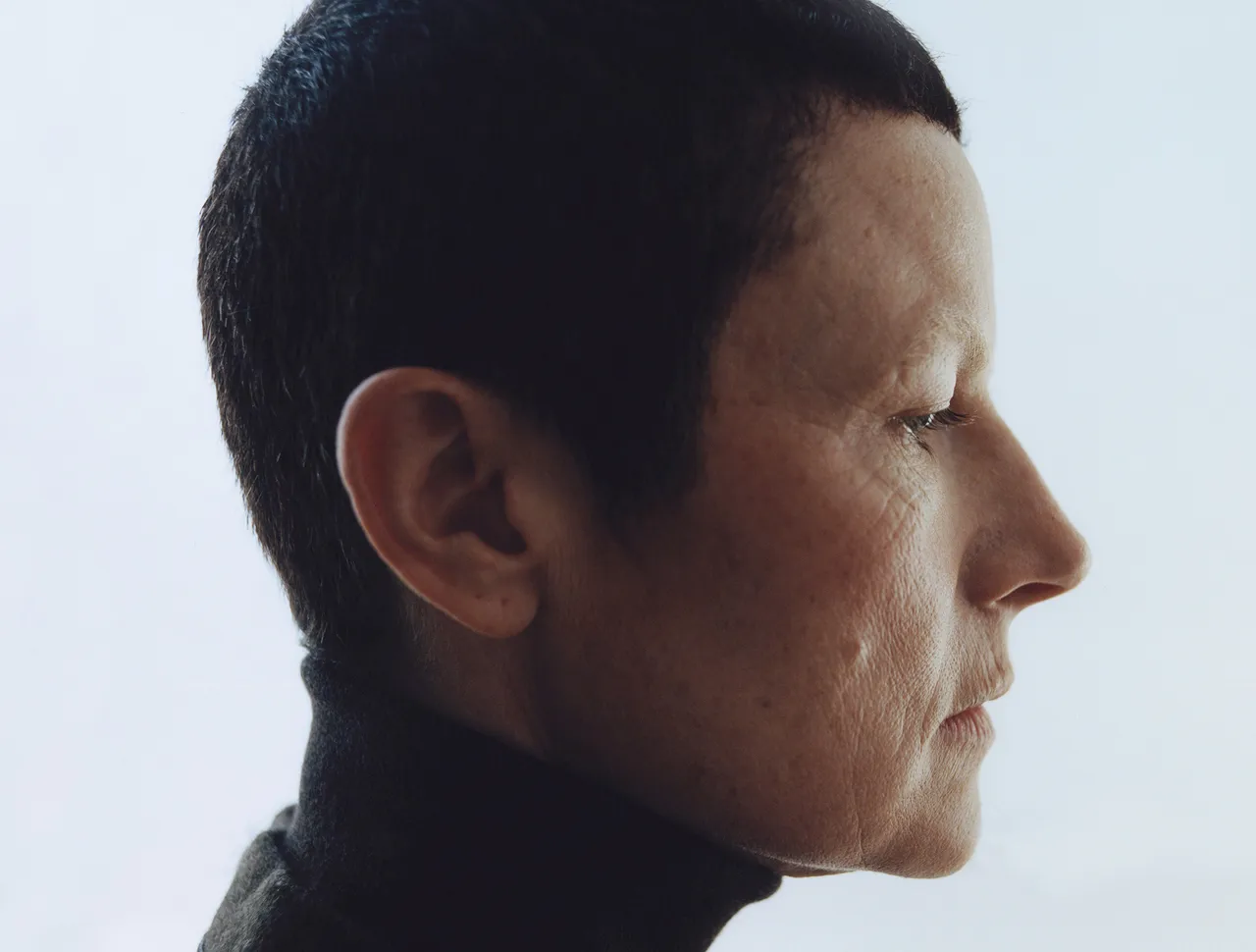
Turtleneck jumper HERMÈS.
Hi Isabelle, it’s a pleasure to talk to you!
Hi!
It’s an exciting time for you these days, you have several projects going on. One of them is the show at the Lumber Room, “The Wandering Womb.” And if I’m correct, it opened just some days ago. How was it?
It was incredible. There were lines around the block, which is always fun. It was a total dream. I don’t think there’s ever a time that Louise Bourgeois hasn’t been like a mother figure to me and really everyone I love. So, to be able to be in conversation with her work… I spent the last year with Libby Werbel, the curator, just like often spending days gazing at those pieces in person, which I mean, I can die happy. I’m still processing it. I’ll probably be processing it for the rest of my life. It was a really good night.
I’m so happy to hear that. When I found out about this exhibition, I immediately wondered what it is like to put together a show with the work of such an incredible artist that sadly is no longer with us. What does she mean to you? Do you remember the moment in your life when you discovered her work?
It’s not the first time that I’ve been in conversation with an artist from the past, I really see art history as like a call and response. And I never see a single sculpture as a body alone; I always see it in a relational context. Also, as time-travel objects too. So that part of working with someone who’s no longer here, I’m just really interested in that. I really am interested in the history of sculpture and the history of erotic art. It’s like my great passion to be able to work with someone who speaks so precisely to eroticism and desire. I don’t feel like I’m working with a ghost; I feel like I’m working with someone who’s still changing all of us all the time.
The first time… There’s never been a moment I can remember that Louise Bourgeois wasn’t there. My mum and I would give each other her books. That was part of our gifting. There was never a moment that I didn’t have her in my mind. When I made my series of work called “Orgy for Ten People in One Body.” the first sculpture of the orgy was drawn on top of a Louise Bourgeois book. So, she’s so integrated in me and so many of us, I know that’s what I love about her too. Like, the love of Louise does not discriminate. I don’t know anyone, even if they don’t like her work, who can’t be confronted with it and confronted with themselves.
The first time… There’s never been a moment I can remember that Louise Bourgeois wasn’t there. My mum and I would give each other her books. That was part of our gifting. There was never a moment that I didn’t have her in my mind. When I made my series of work called “Orgy for Ten People in One Body.” the first sculpture of the orgy was drawn on top of a Louise Bourgeois book. So, she’s so integrated in me and so many of us, I know that’s what I love about her too. Like, the love of Louise does not discriminate. I don’t know anyone, even if they don’t like her work, who can’t be confronted with it and confronted with themselves.
You explained how this project works in deconstructing the female nude, in a recent interview with Beyond Noise. And then you said that it was your “love letter to art history” but also your “fuck you” to it. I really love that, because nowadays it feels like everything is so polarised that it feels like you must have one and only one-sided opinion.
Well, to be in relationship with anything is to be in a relationship with shit and gold, right? So that is exactly like being able to hold things, two things in one hand, it’s so important. I was working with the female figure. Throughout art history, the art of female nude, which I’ve always loved, is about control and oppression. It just always has been. So, it’s about objectification. I was actually making objects, but trying to make something that also was a subject. So that alone was about holding two things in one hand. How do you make an object that’s a subject when it’s always been an object, and it’s that back and forth, it’s really walking a line, it’s wrong. Like, half the time you’re making it, it’s totally wrong. But I’m interested in that. I just love nude sculpture. Who doesn’t. It’s so intoxicating. But I always also had an unsettled feeling that the nude herself didn’t have the power, which made no sense to me, because it had so much power over me.
This takes me to something else you mentioned: “It’s so hard for us women to see out of our own experience.” And I think that kind of relates to this unsettling feeling, especially when talking about sculptures of nude bodies, both men and women may feel different things because of the way we might have been brought up. Do you think that masculinity is changing a little bit?
I mean, not so different. The work is so much about shame, too. I think that’s like something that connects all of us. But, yeah, I think masculinity is completely changing. I mean, we call it masculinities now. I love many men, and I see them like me multiplying. I’ve definitely seen the change from masculinity to masculinities, and I’m really interested in that. And I think there’s so much more room there for men and women. Like it was so tight before, it was a cage, and I feel like the bars are slowly expanding. I mean, masculinity is hot! We want more (laughs). I like the expansion. I do feel the expansion.
(Laughs) I do too! How was the process of making the sculptures of “Orgy for Ten People in One Body?” Because even though you’re an artist, and this is your project and your idea and your whole conceptualisation, they’re sculptures based on your own body. So, was it interesting for you? Did you learn something new about yourself?
When I started “Orgy for Ten People in One Body” I wasn’t an artist, you know, I wasn’t making fine art, I was doing performance and other kinds of things, but so much of it was a healing process around shame. I think so many people dissociate from their bodies for many reasons. We’re taught to do that because it’s much easier to control a dissociated body than an associated body. But this was something I was working through. I’m always a perpetual late bloomer. I started this project when I was thirty-six, and I was just coming to terms with my body. I had kind of an unusual one, half my body was a little more male and more female, and I had to have some surgeries and different things as a teenager. And it was just a blur for most of my life, like I saw my head, I was all about thought, you know, which is great, but not much about the rest. The process was terrifying for me. I was never nude, you know. And now I look at it thinking, oh my gosh, you were so afraid. So, I think I’ve become braver through it, and not alone. I made that work with a group of incredibly sensitive people. When you cast your body, a lot of trauma often releases from it. It’s no small thing. It was something done in community. And I completely transformed through this work. I mean, the whole thing is about transformation. And it did transform me.
“I’ve definitely seen the change from masculinity to masculinities, and I’m really interested in that. There’s so much more room there for men and women.”
Do you have a group of people, friends or family, given that there are so many women in your family that have been artists, to whom you show your work first before exhibiting it?
I never show my mum my work until it’s in the gallery or in public. She never even comes in my studio. I think so much of that is so huge in my mind and heart that it’s almost like a protective measure. And I hope as I get older she can come earlier, but for now, it’s a no-entry zone, which is not her favourite thing (laughs). I have the best mum in the world, and I can’t even let her in my studio, but she understands. And then I do have several artists that I do pretty regular studio visits with, so we’re in and out of each other’s studios, and I’m seeing the process and seeing things develop, and really so much of our conversations become the work, at least for me. So yeah, I can’t really look at a sculpture without kind of hearing the voices of my closest friends.
Speaking about family, I wanted to ask you about something terrible that I just found out. Your family house was burned in 2018 when there were fires in Malibu, if I’m correct. I am so sorry you went through this. It’s awful by itself, of course, but in your case, it wasn’t just a house like we all understand, but also an archive to many of the works your family have done for years. I guess it’s so difficult to face something like that. If I’m correct this is the reason why you started working with bronze for your sculptures.
Well, so there were four generations of my great-grandmother, my grandmother and my mother’s work all burned. And you know, my mum had thousands of paintings and drawings, all the records of my great-grandmother, and all the plays of my grandmother… The “Orgy” was born out of this fire, I was the archivist of my family before that, and suddenly that position was no longer available. It’s so unusual. I’m so lucky to have so many generations of women who were able to make art, that’s just almost unheard of, and to see all of their voices silenced felt so in parallel with the art, the art historical canon of women’s voices just being burnt out. So, they’re there, but there’s nothing to see for it. And it did really motivate me wanting to make a body of work where the information we held was in the body, because there were no objects. I just find it really powerful, and maybe just as powerful as everything that burned. One of the few things that survived in the fire were these three bronze heads. So, I became very interested in materials that could last over time, or that could survive disasters. I mean, now we’ve all been touched by some kind of climatic drama, you can’t help but think like, oh, what survives that? And nothing really survives but the longing or the attempt to try, that’s such a human thing and such an art thing, to try and say, no, no, no time, you’re not going to destroy me. But it’s also, you know, it’s a lie, it’s a fantasy. And I love fantasy.
I wonder if you, being born into this family with so many generations of artists, rejected this idea of becoming an artist in the beginning. Or was it completely natural, as if you knew it was your calling since you were young.
I tried very hard to not be an artist for many, many years, and I was able to keep it at bay, mostly because I just wasn’t interested in the pain. You know, it just comes with a lot of pain, which I was kind of up close with, and I’m not a sadomasochist. I’m not. I think that’s one of the reasons I started so late. I didn’t go to art school. I didn’t really try not to be one. But then when I was thirty-six, which is actually when I thought I was going to have children, and instead of children, the work came in through my body, like it just took control. It was like, no more fucking around here. I think I’ve softened and become much more receptive of that and grateful for all of it, but I definitely fought it for most of my life, not because I didn’t love art. It was really the pain I was afraid of and maybe didn’t need to be. There’s pain in everything to do. It’s just part of life. So yeah, I think it was probably unwarranted.
Have you discovered anything interesting within the feedback from your audience, like reactions, or messages about how your art might have changed them? And if that has been the case, was it something satisfying?
With the “Orgy,” it unlocked so much memory for people. So, I can hear my friends’ conversations in the sculptures, I often will hear strangers; they’ll tell me a sexual experience or a trauma or something that comes out when they’re kind of confronted with the work. I guess the thing I learned in the feedback is the way we belong to each other, and our memories, our traumas, our joys belong to each other. And an object can do that like a sculpture can do that, what I’ve learned the most is how to hold that with the most kind of lightness. Do you know what I mean?
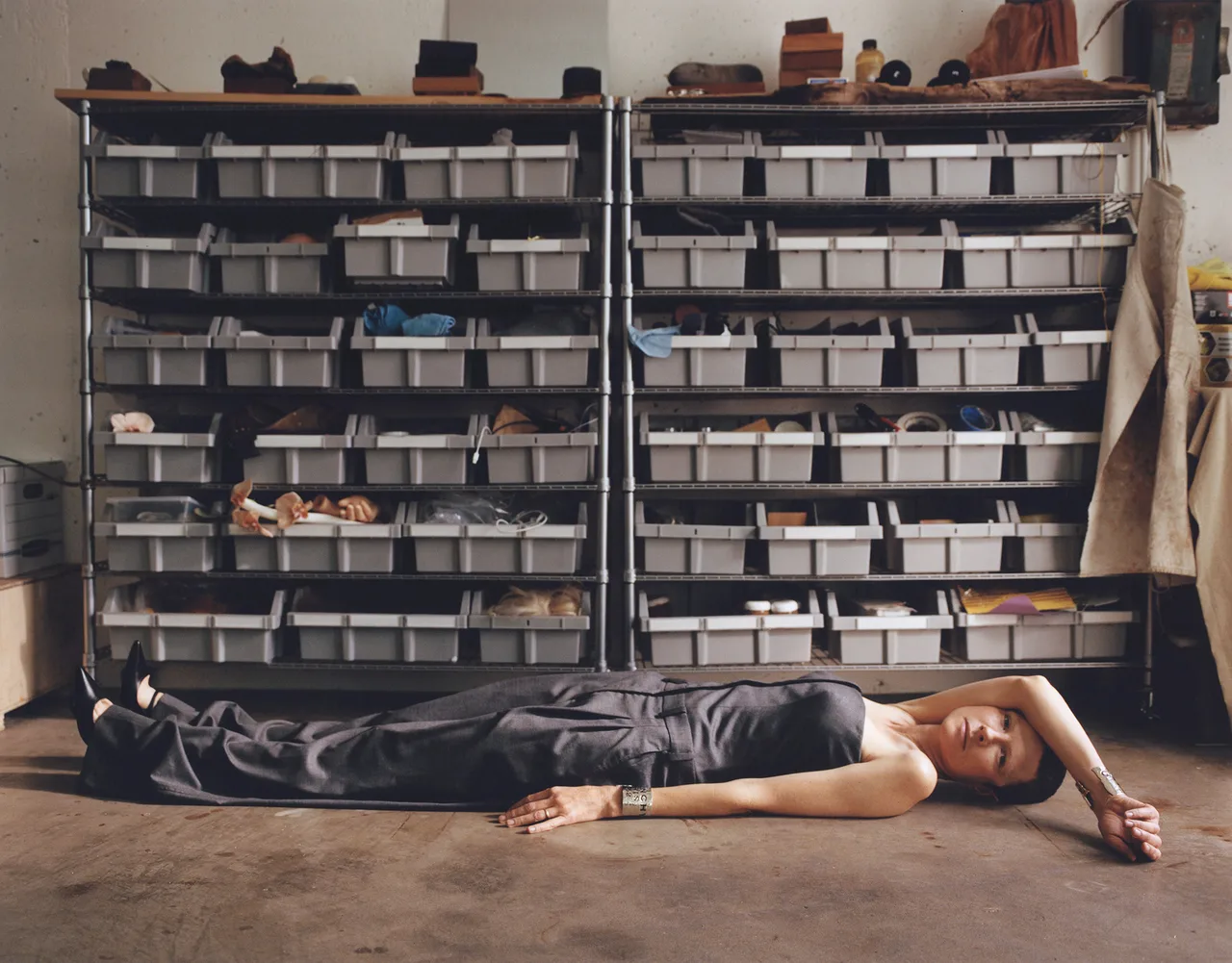
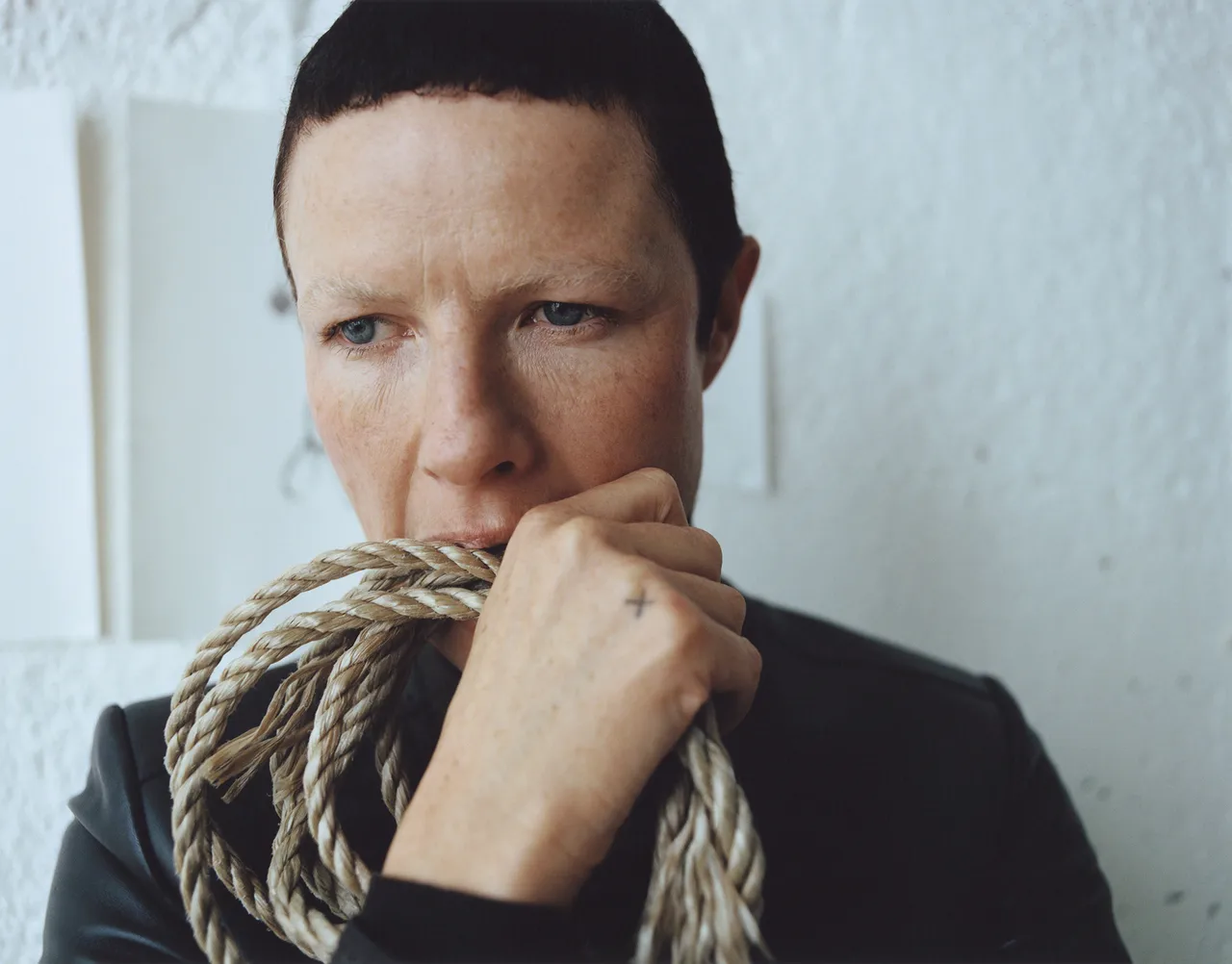
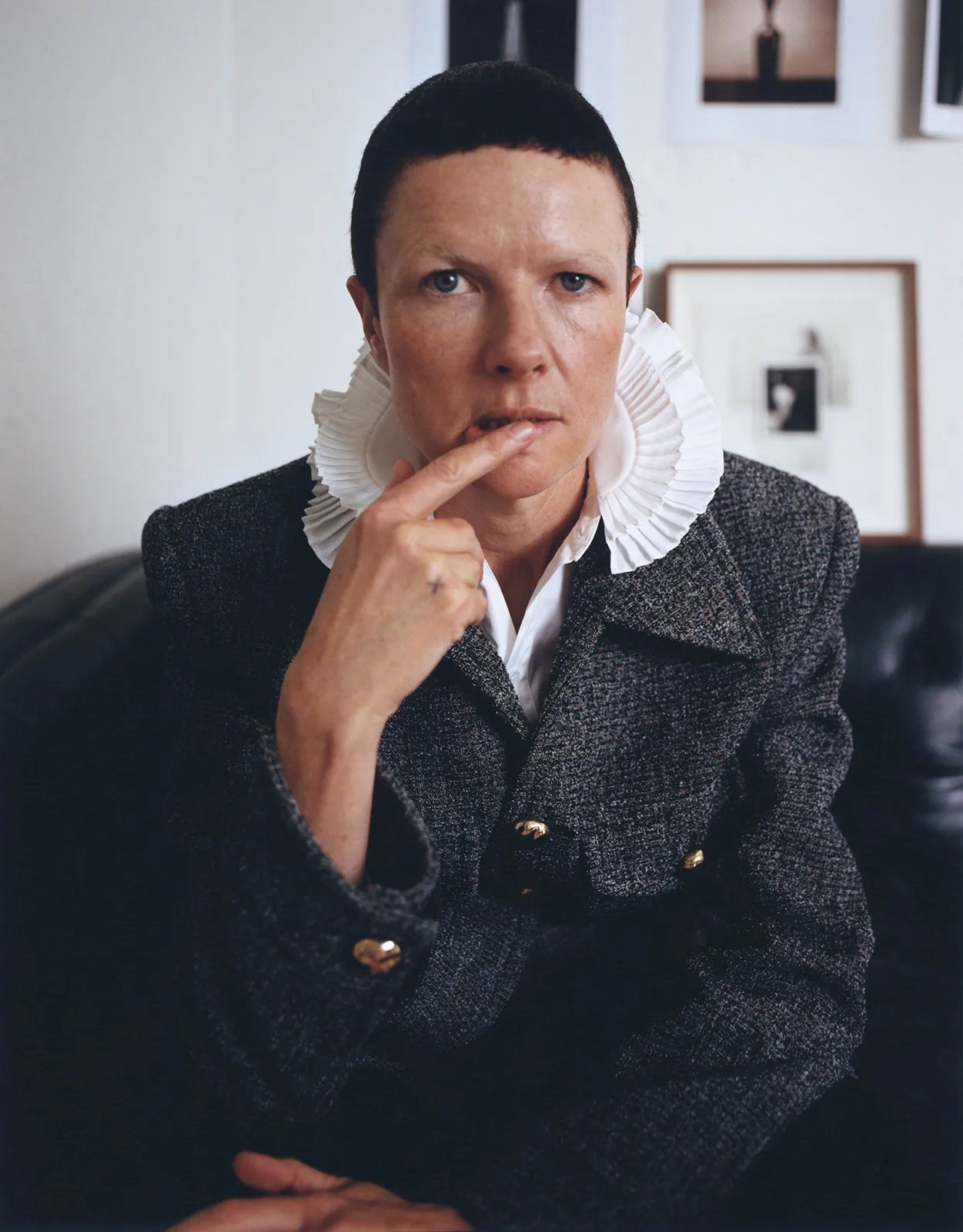
Full look GIVENCHY BY SARAH BURTON.
I do, and it takes me back to the idea of tenderness and how present it is, really, everywhere. Do you remember the first time that you learned what punk was?
My dad’s a punk, so he’s always been that way. I have a complicated relationship with it. Part of me is like, come on, stop hitting cops and stop being so fucking crazy (laughs). But of course, I also love it and find it romantic and beautiful. So, yeah, I think my sister’s kind of a punk too. I think it’s something I feel close to.
And now, what is punk for you?
Well, punk has been so co-opted. It was co-opted the moment the Sex Pistols dropped their first thing, right? Like that was the whole thing about being co-opted too, which is so much holding two things at once, again. But I think in its most powerful form, then or now, it gives us access to our wildness, right? And even like a leather jacket, holding a skin of a cat or a cow, there’s something pretty primal about that. It just connects us to the part of us that’s wild and that wildness needs to be expressed. So even after, even in all its co-option that’s still there. I still feel connected to that. And we all have a need for that. It gives us access to the part of us that’s a wolf.
One of the things I was quite intrigued about when learning about “Orgy for Ten People in One Body” was reading in the curatorial text that “the sculptures give body to a post-capitalist mythological world to come in which a patriarchal language of form has been derailed and subverted by female heroes.” This immediately reminded me of something very specific. When Björk released her album “Utopia” some years ago, and she described it as an eco-fantasy. She thought of it as an island created after an eco-disaster where women arrived to create a new, better society, and they’d bring kids and music, and eco-friendly technology. What’s the world you would like to imagine?
Well, I’m imagining a new world right now that I’m making this erotic garden where we learn. I’m really trying to learn from plants. You know, they go in-between. They go back and forth between gender constantly. They have birth with and without sex. They have sex with different species. It’s absolutely incredible. If you look at the face of a flower, it’s the fantasy of a bee. They are attracting a whole other species to pollinate. So, that kind of expansiveness, which exists when you walk down the street and look in any park or on the side of the sidewalk, is all around us. It is something that I’m most deeply trying to learn from right now.
This is the project called “Alien Spring,” right?
Yes, this is a new body of work, and they’re like these biophilic, kind of futuristic forms that contain the human and planet world, but they’re still so deep in animals before, but plants and flowers have such high intelligence, and there’s just so much there. So, I feel like I’m only just starting to get to understand what they’re like, they’re basically singing out all the time, you know? That is a kind of world I want to live into. It’s very symbiotic. There are tons of communities. There’s much deeper levels of communication, which maybe we’ll be able to have that soon too.
I don’t know much about plants and how they behave, but I’ve always heard that they are super intelligent, like they have systems of communication that we can’t even imagine.
Their erotics are so interesting. I was thinking about what you said about Björk. You know, the first erotic sculpture is called “Ain Sakhri Lovers.” It was made after climatic change. It was many thousands of years ago, and people went from being nomadic to being domestic, and that’s when they first started making erotic sculptures, because people were in the home, and like so often, these really big changes on the planet led to a different kind of work. But plants, Darwin was obsessed with orchids. And there’s this orchid called Darwin’s Orchid, that he was looking for forever. There was this moth that had this super long nose, and he knew that there would be a flower that would respond to that nose. I think he was about eighty, Louise Bourgeois’s age when she did the spiders, but he found an orchid with this huge blossom that went all the way that hit the moth’s nose. So, I guess what we find there is they’re so responsive; there’s just no issue. They’re just flipping in between gender and colour, and they’re expressing so much in so many different ways and constantly in response. And that’s an interesting world.
Absolutely. How is this project going? What can we expect to see?
We’re close. I started the work about a year ago during the last fires they had in LA, which came right up to the door of my studio. And the whole Canyon here was just ash. I had been dating my mountain, living on this mountain that was my girlfriend for a little while. So, I really knew every flower, every inch of her, and then she was burned to a crisp. So, it was pretty intense. But through that, I started imagining these other kinds of plants that would grow out of the ash, and that’s what will be in the presentation. And the thing I’m most happy about with this work is, so far all my sculptures have been quite lonely, no one touches each other. They might be about multiplicity, but the actual works are never touching, and here the flowers just started making out.
You said before that you became an artist at thirty-six, but you were part of the performance duo Hecuba, alongside Jon Beasley for several years. What do you remember from those days? Did that experience teach you anything that you might have taken into your new phase as an artist?
A lot of people who saw my performance and see the sculpture say it is the exact same thing; the performances were quite wild. There was a big chunk of it where we tried to live as two people in one body, which obviously has so influenced the sculpture. So, we shaved all the hair off our bodies, we dressed the same, we tried to merge, which is so much of what I’m taking into the sculpture, too. And I really learned from that, which was interesting, because I continue to explore these kinds of ideas of multiple beings in one body, or multiple beings throughout and this erasure of boundaries is something I both struggle with and am interested in. The thing that was maybe most surprising, we toured for three years as these two people in one body and there were exciting things about it, like being able to just not even speak and make something together, and this creative thing. But he was also my lover, you know. So, we lost the erotic gap, we became so one that I got really depressed and there was no one to reach towards. I think what that work taught me the most was like the importance of the gap, the boundary, even though I’m constantly kind of erasing them, but the importance of the space. We’re talking about the theory and the space around the sculpture, the space around the form, the space around the body.
I see, sometimes artistic work can be so intense, and I imagine you would need to detach from it every now and then. Do you have little guilty pleasures or things that you love to do because they help you, like taking little breaks from other things?
This is so funny. When I was doing the “Orgy,” people would be like, what’s your studio practice? And I was like, masturbation. Like, no, I’m literally jacking off all of the time. That’s my studio practice. Now, a lot of guilty pleasure in the studio. My first thing I got in was a bed. You know, to give you an idea (laughs). It’s very generative for me. And now, as I’m making the garden the “Alien Spring” series, I walk a lot. So that’s probably the most pleasurable. I wouldn’t call it a guilty pleasure, but deeper pleasurable thing, I walk at night, I wake up at three in the morning, and I walk my mountain. It’s also an extension of thinking, the way it connects the left and right brain.
And what about emptiness? I’m thinking of maybe moments like the days after opening a new show, after so much work and intensity, how do you take care of your mental health?
I die for those moments. I know people talk about the blank page being so scary. I’m like, give me boredom. I’m really easily stimulated. I seek out moments of emptiness. Maybe because I am ultra-sensitive and feel things pretty deeply.
Has tenderness ever been a form of resistance for you in any circumstance?
This is the best advice my mum ever gave me, and I think it is around tenderness. When I was a kid, I would dress in men’s clothes when I was in first grade, and I remember I’d wear a suit and tie. This was a different time; there’s so much more openness now. But I remember there was a group of girls who were saying to me all the time that I looked like a boy. And I remember telling that to my mum, I think I was seven or eight, and she gave me the best advice. She said: “Well, I think what you should say back to them is that they look like a girl.” And so, I remember I went back to school the next day and they went on about it and I just said, well, you look like girls, and they never picked on me again. So yeah, best advice, Mama.
That’s very cool! Isabelle, thank you so, so much. It’s been lovely to talk to you. Congratulations on your fantastic work. I wish you the best with this and “Alien Spring!”
Thank you and thank you for the thoughtfulness and intention, I really felt. It felt so good talking to you. Thank you!
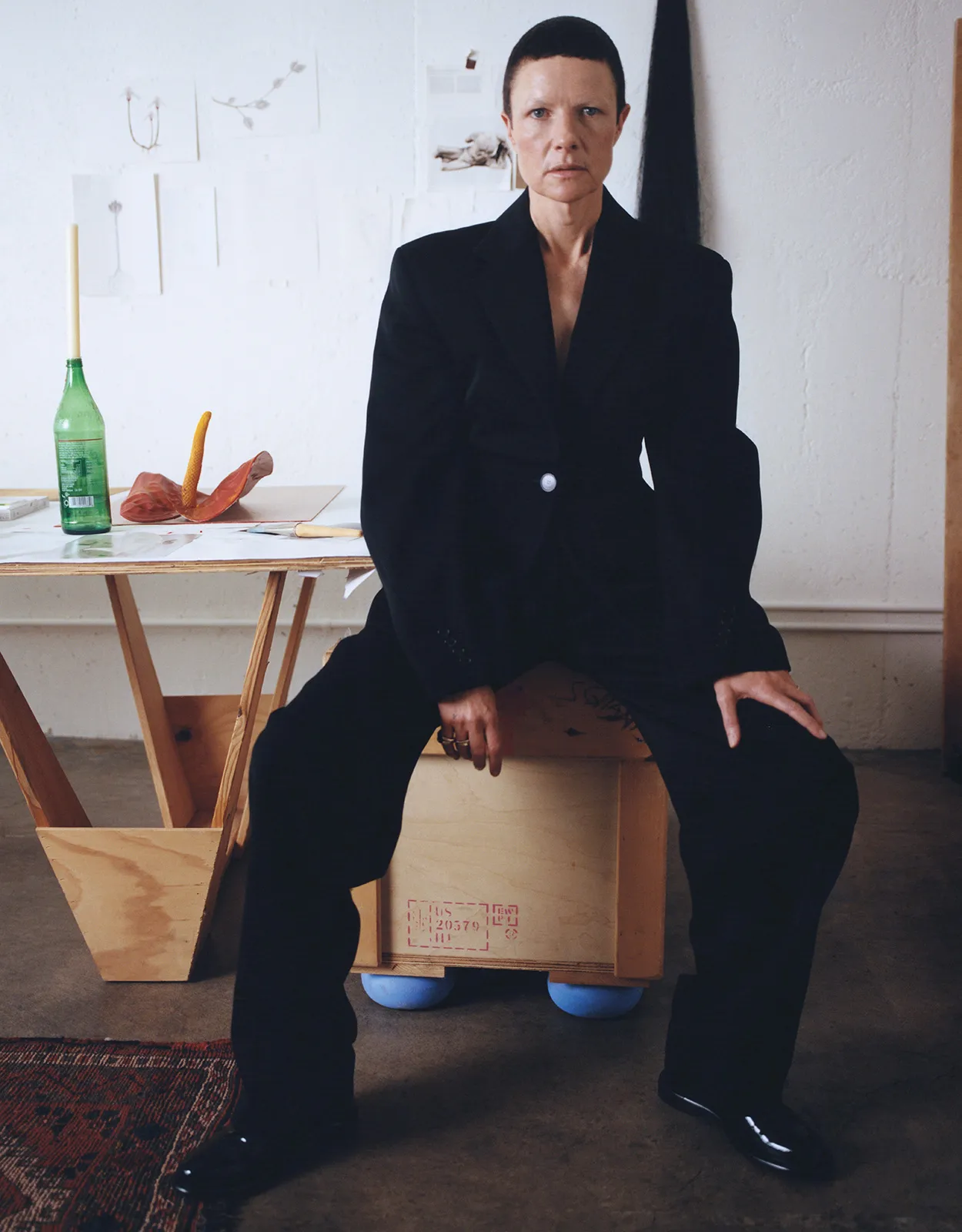
Full look GIVENCHY BY SARAH BURTON.
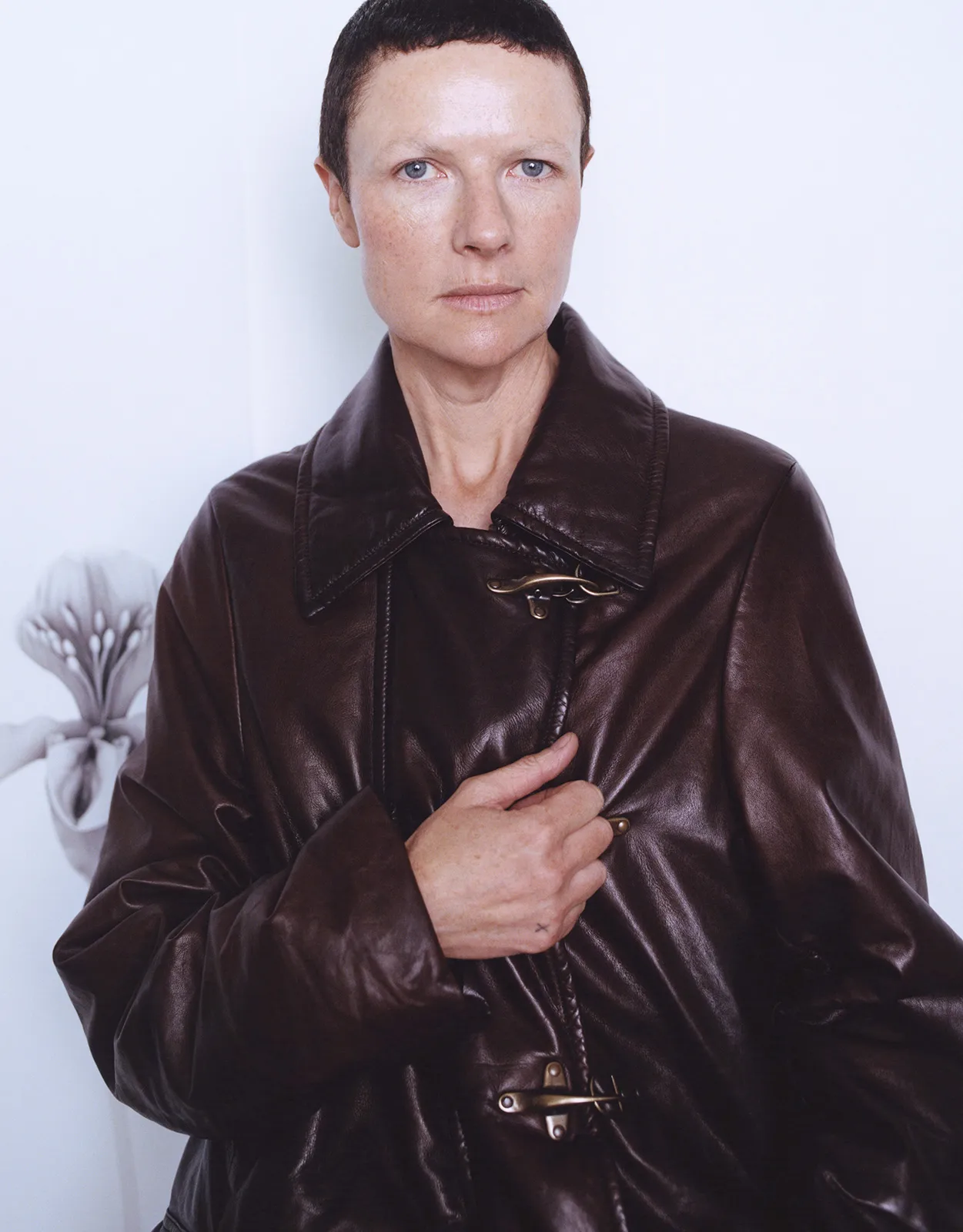
Full look LOEWE.
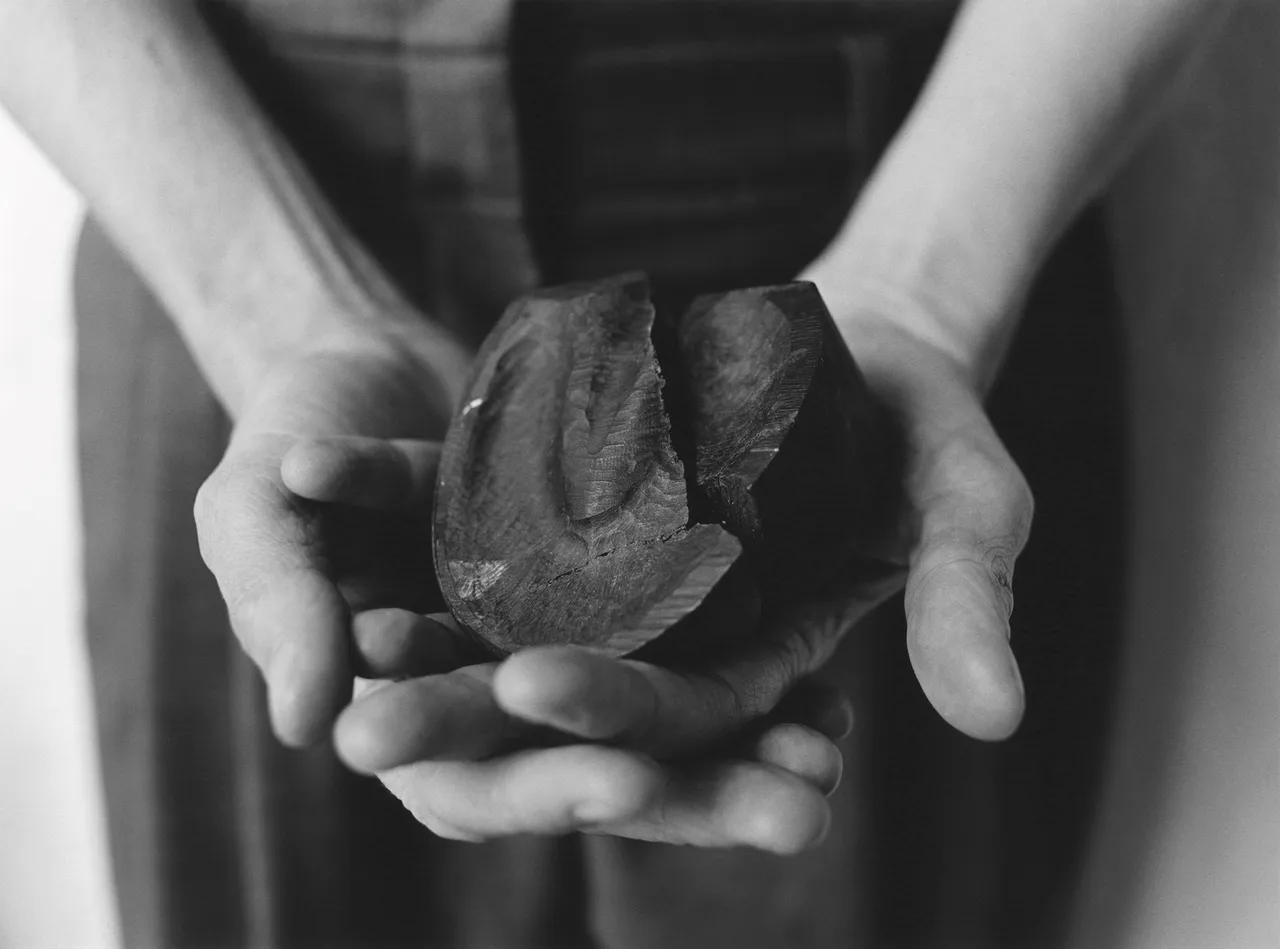
Full look VALENTINO.
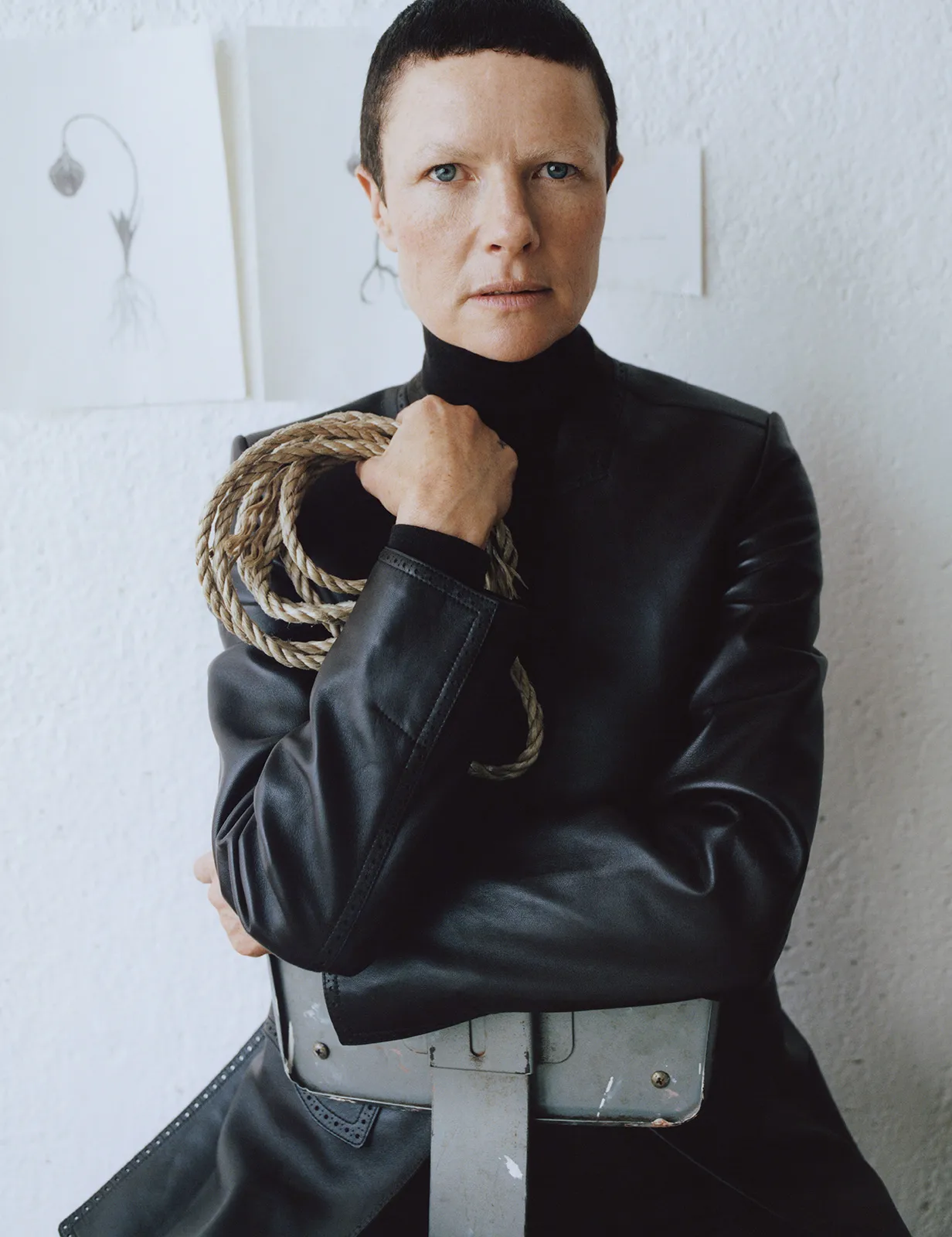
Full look HERMÈS.