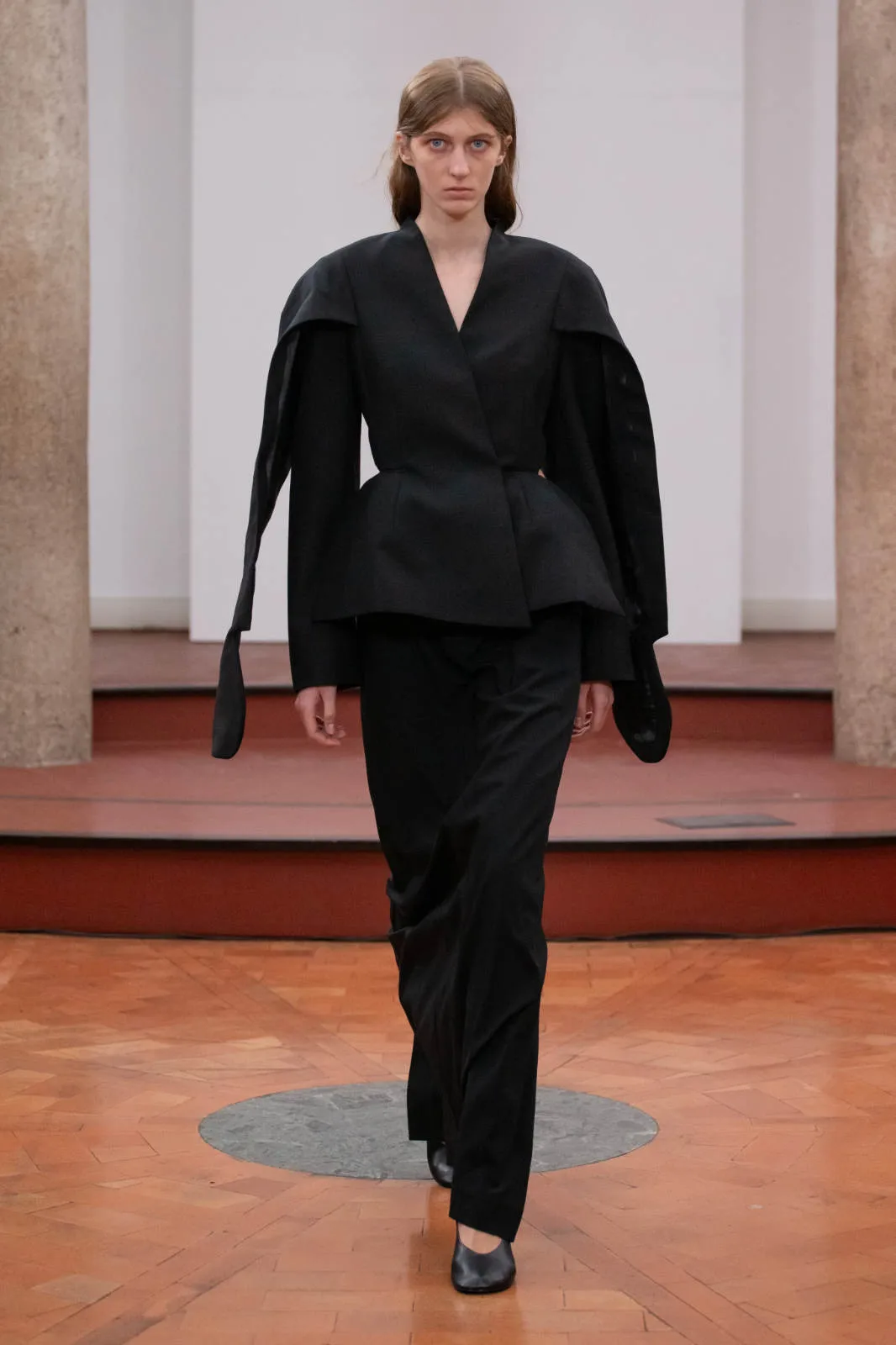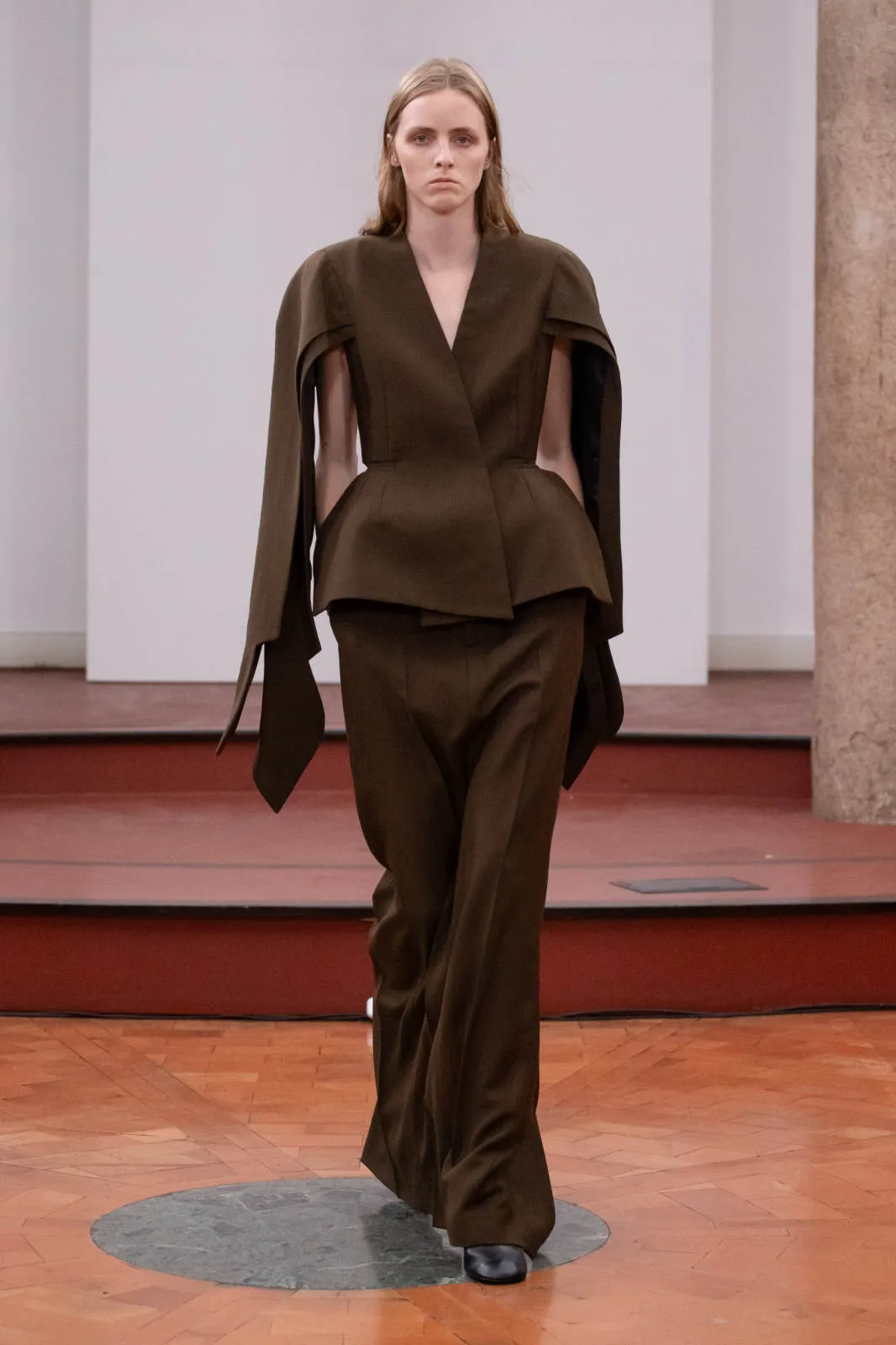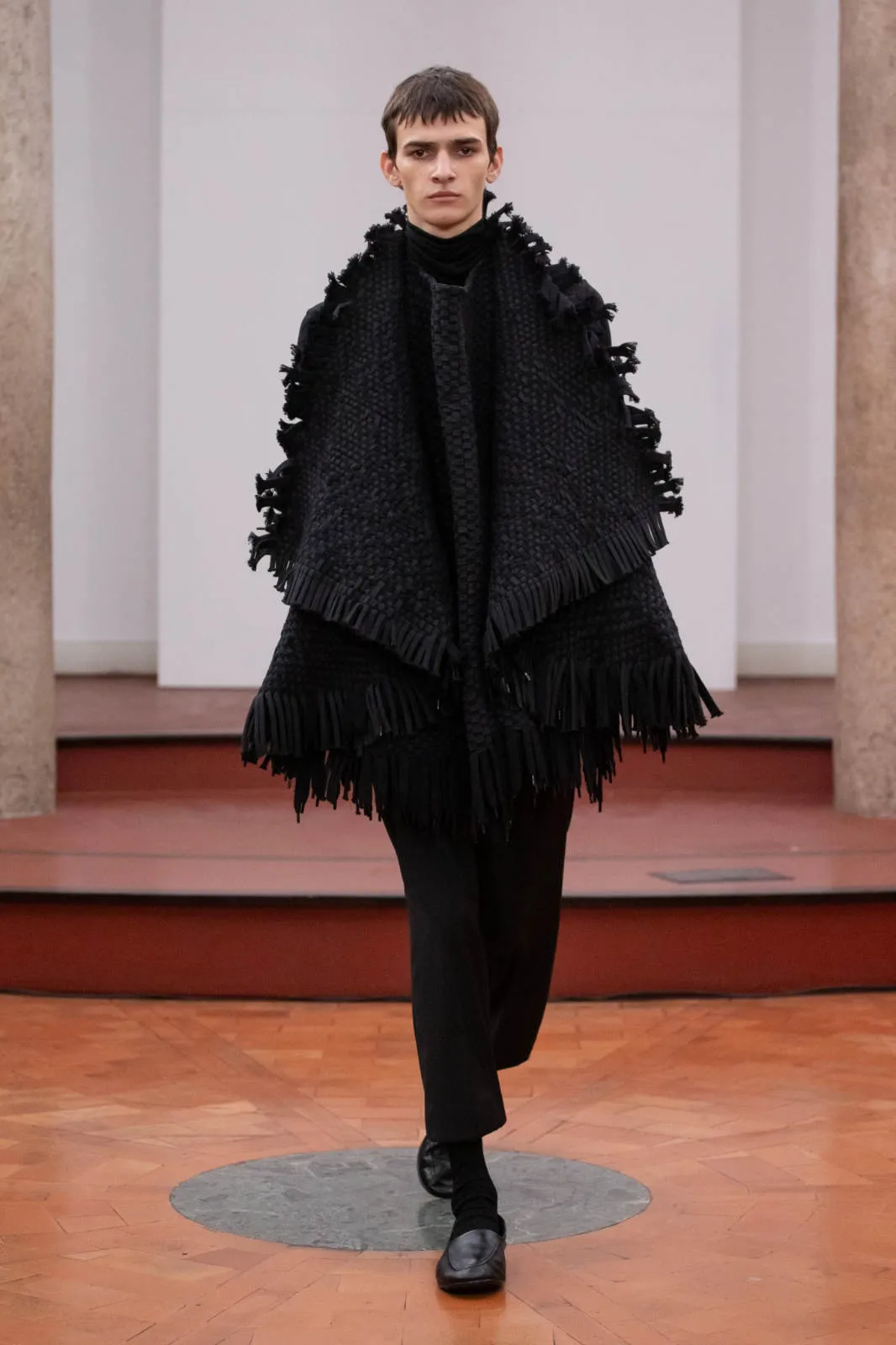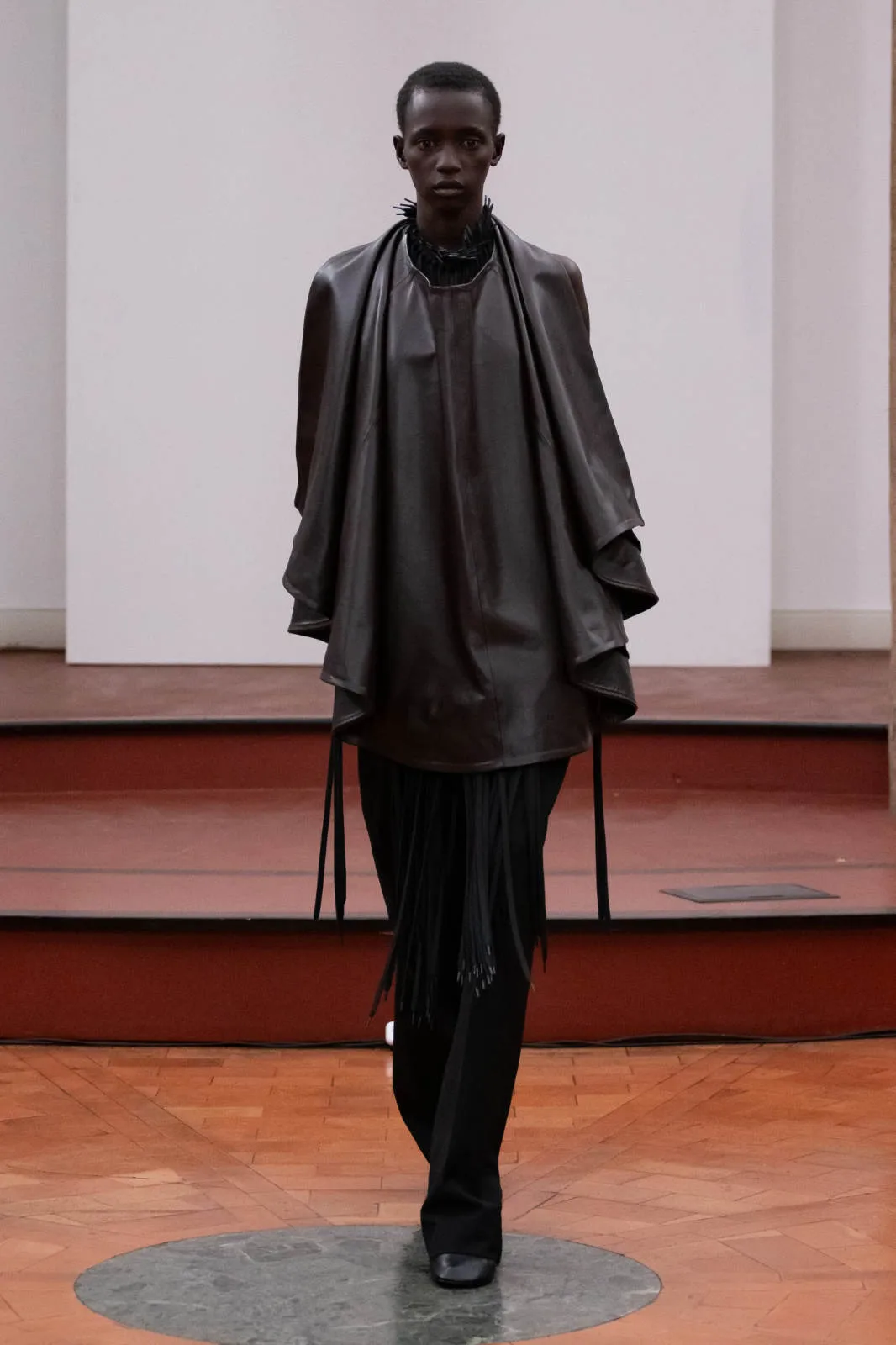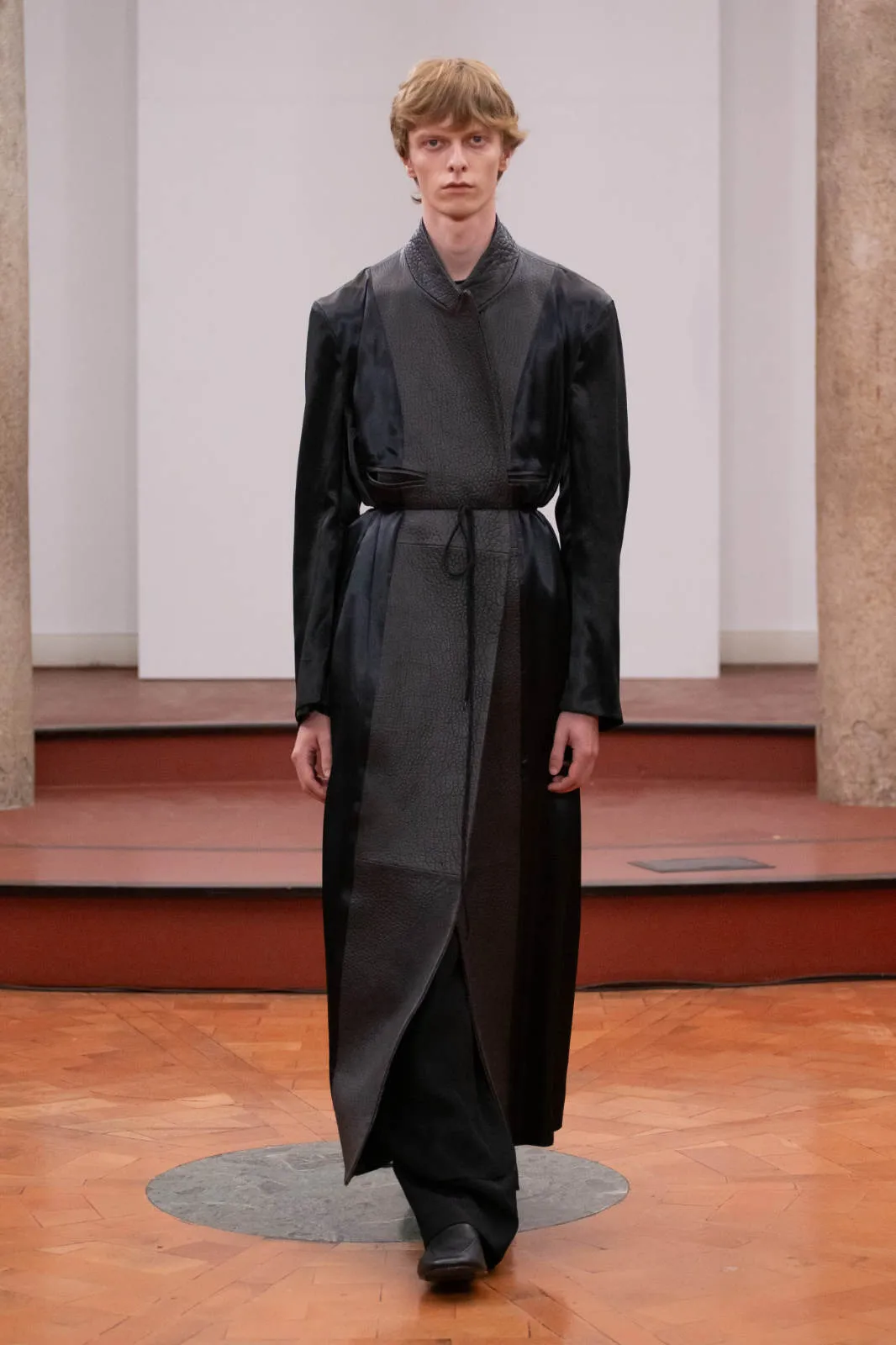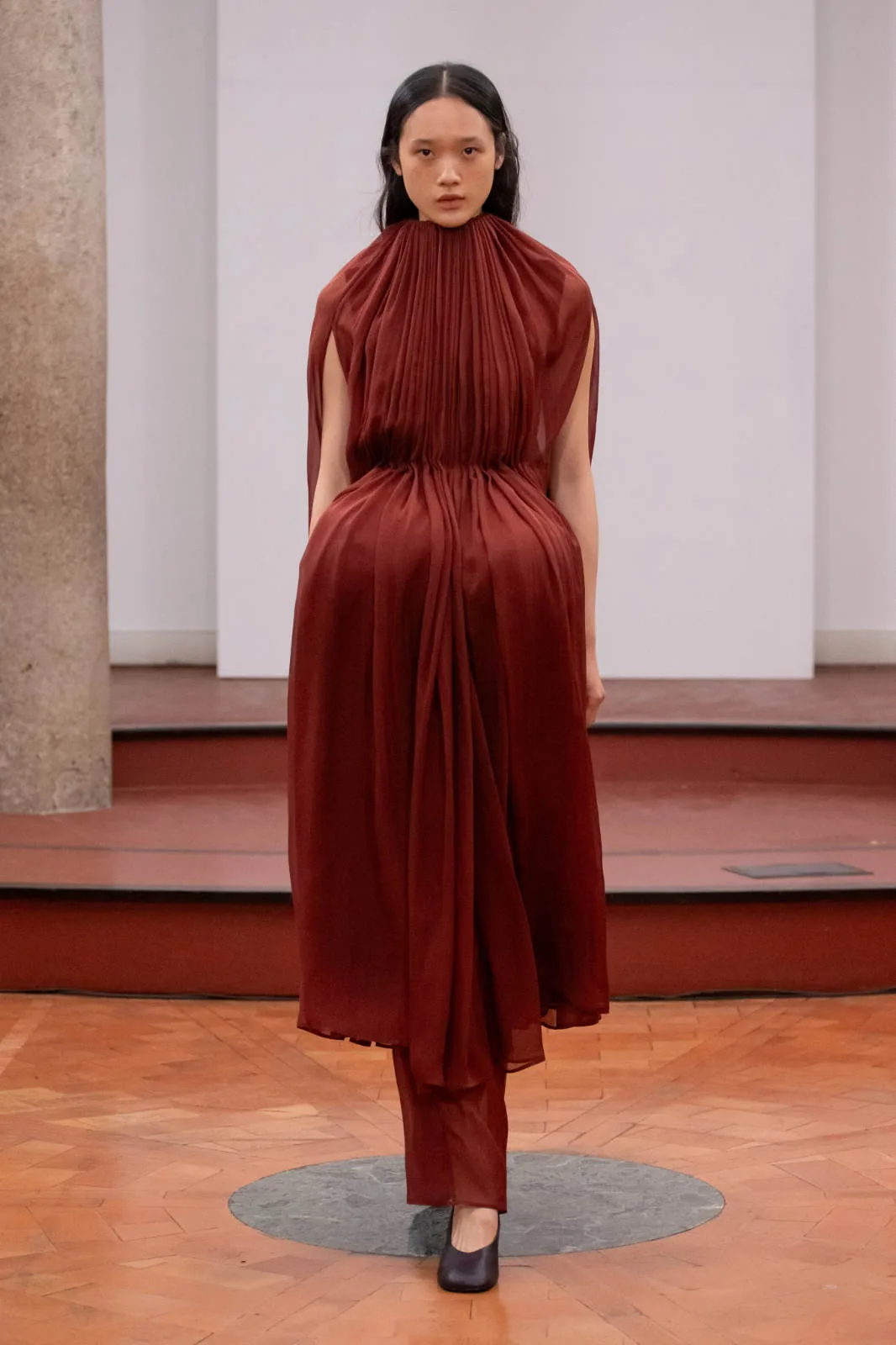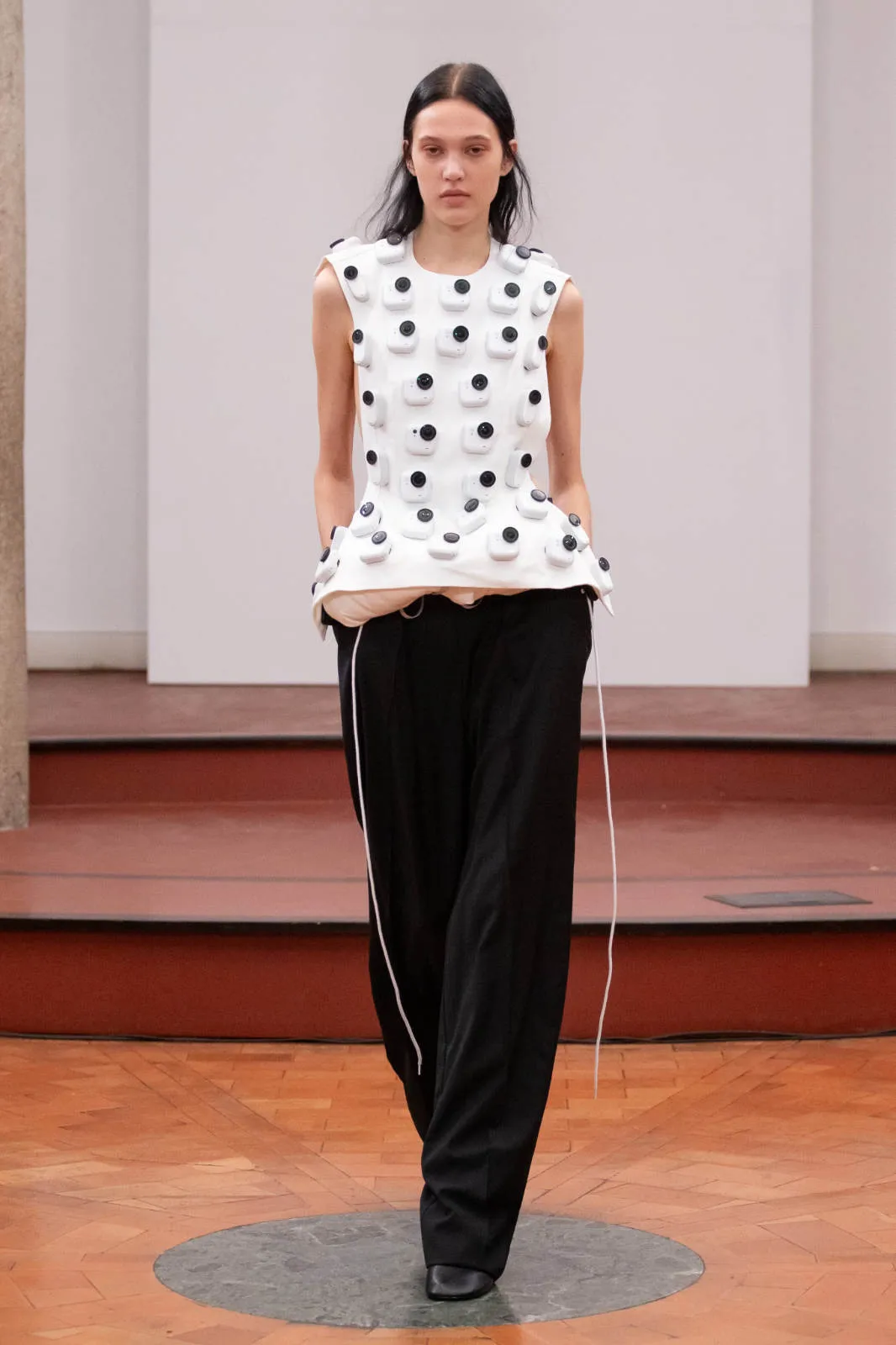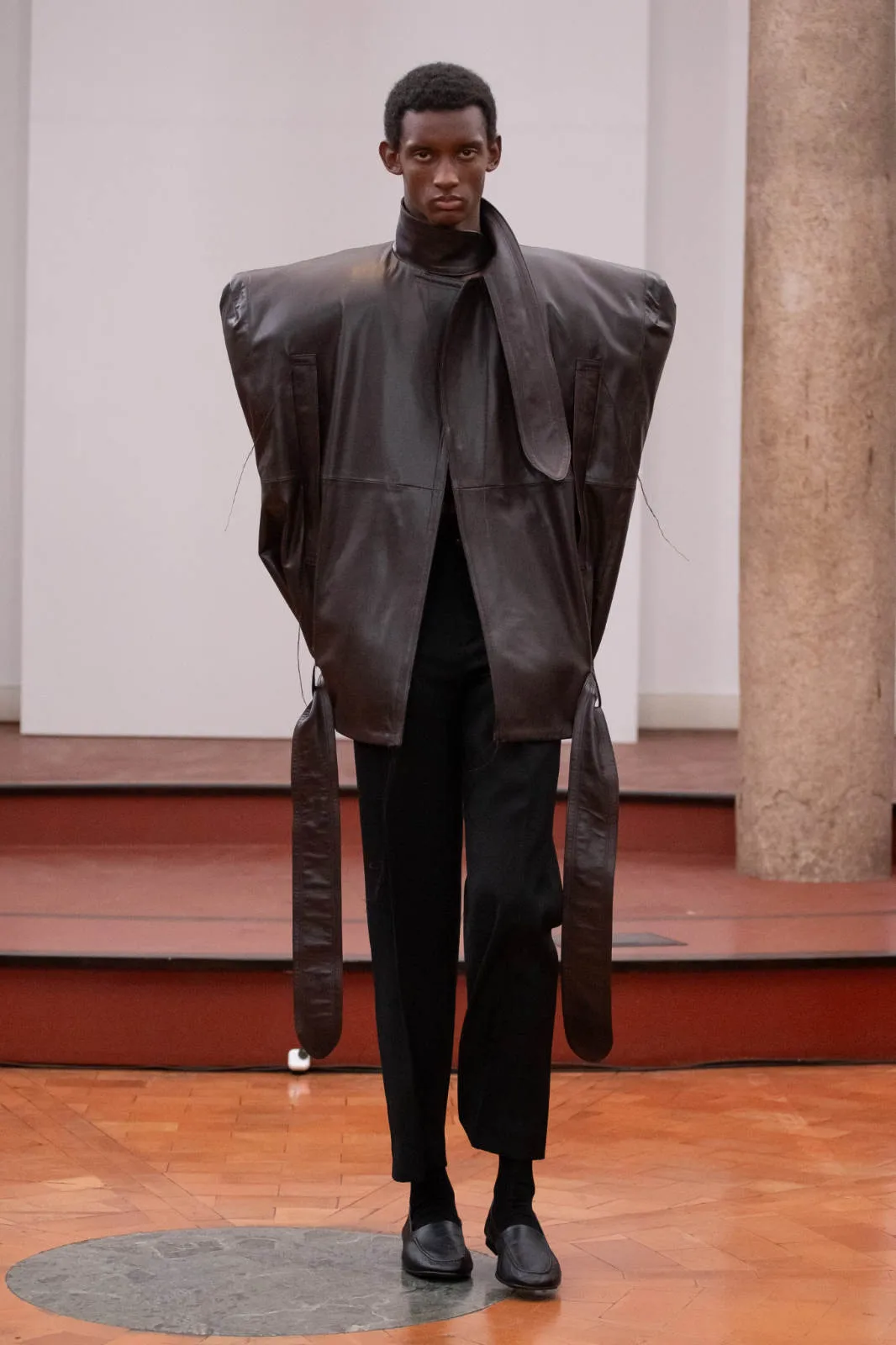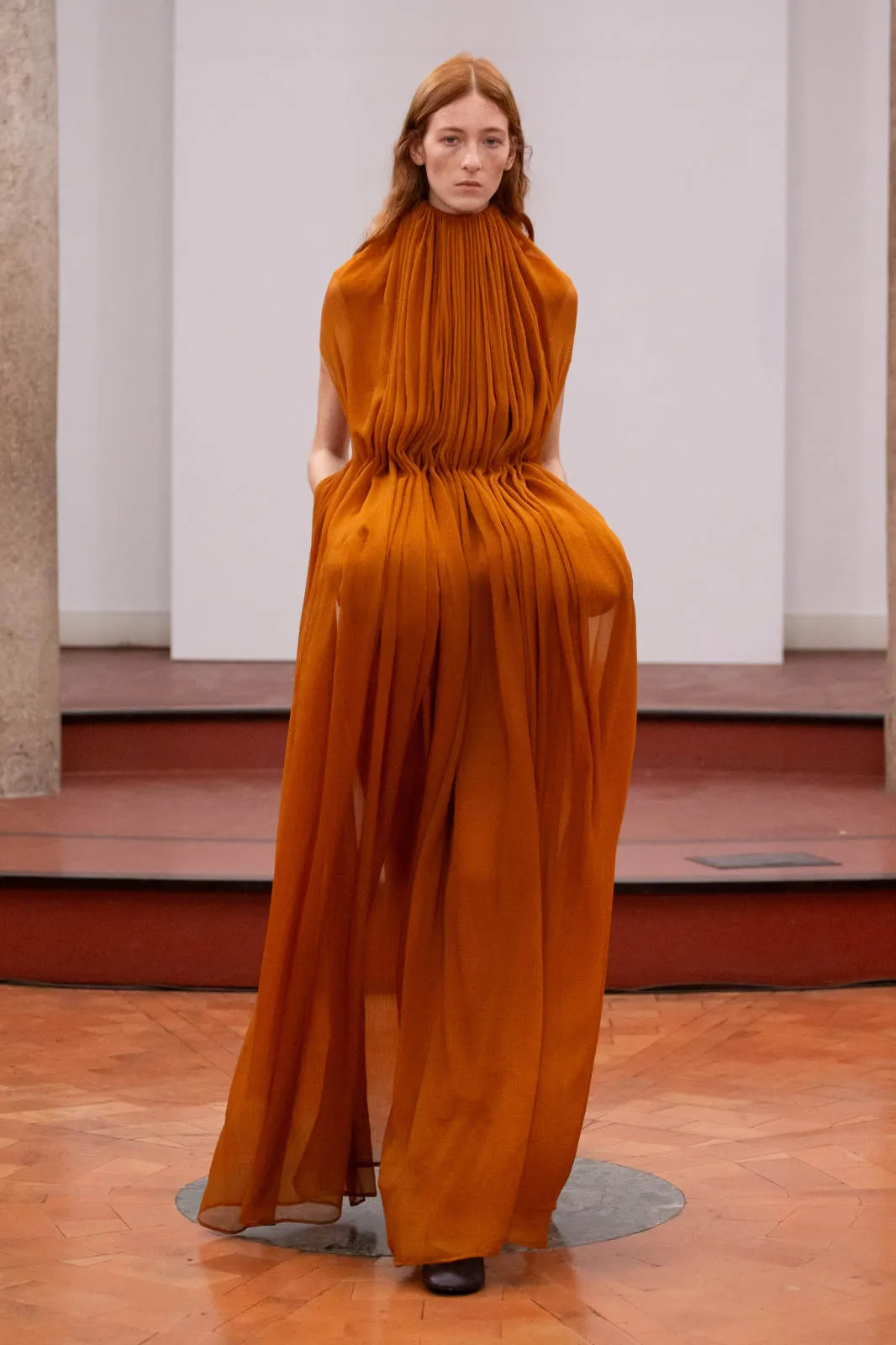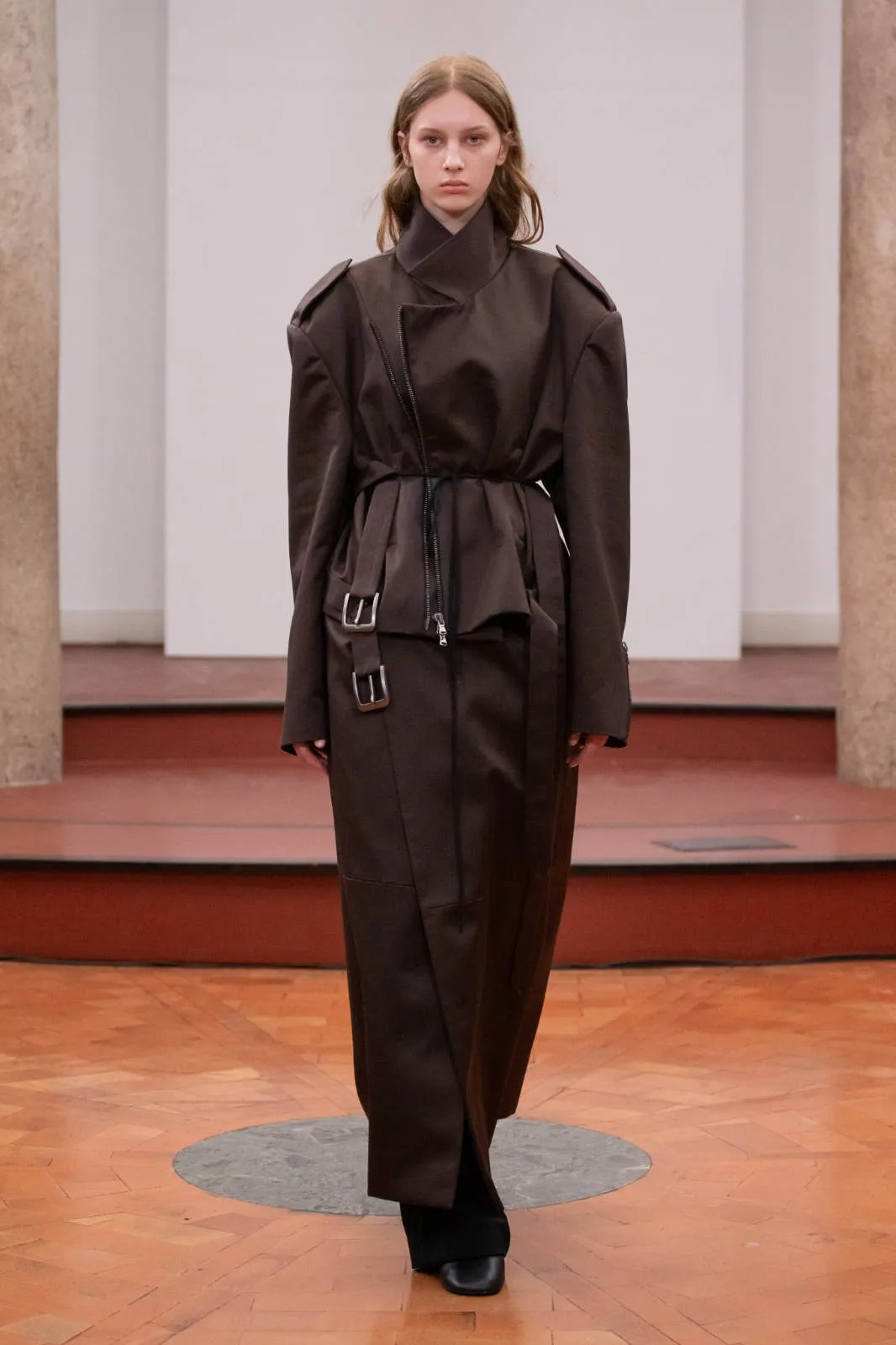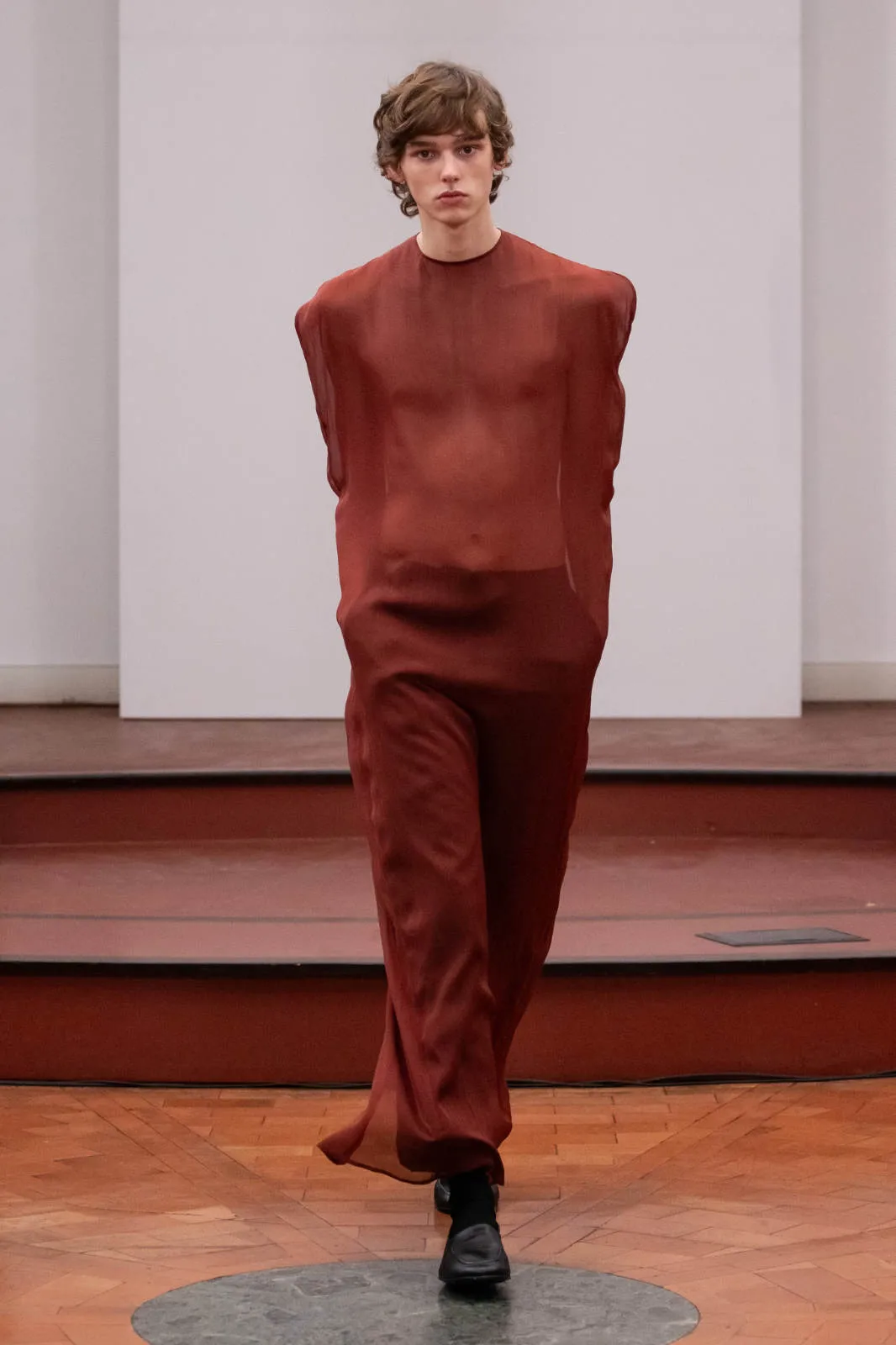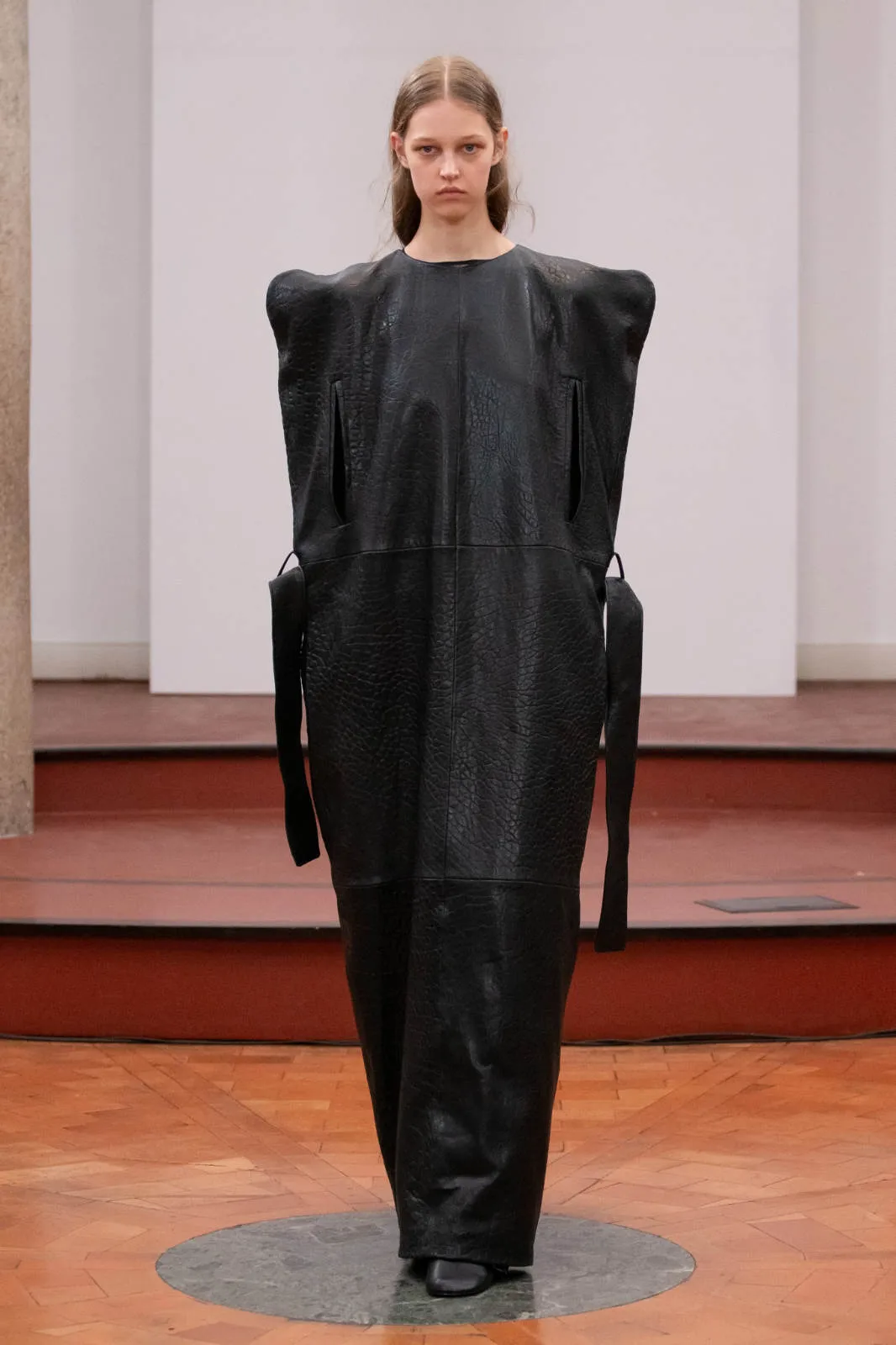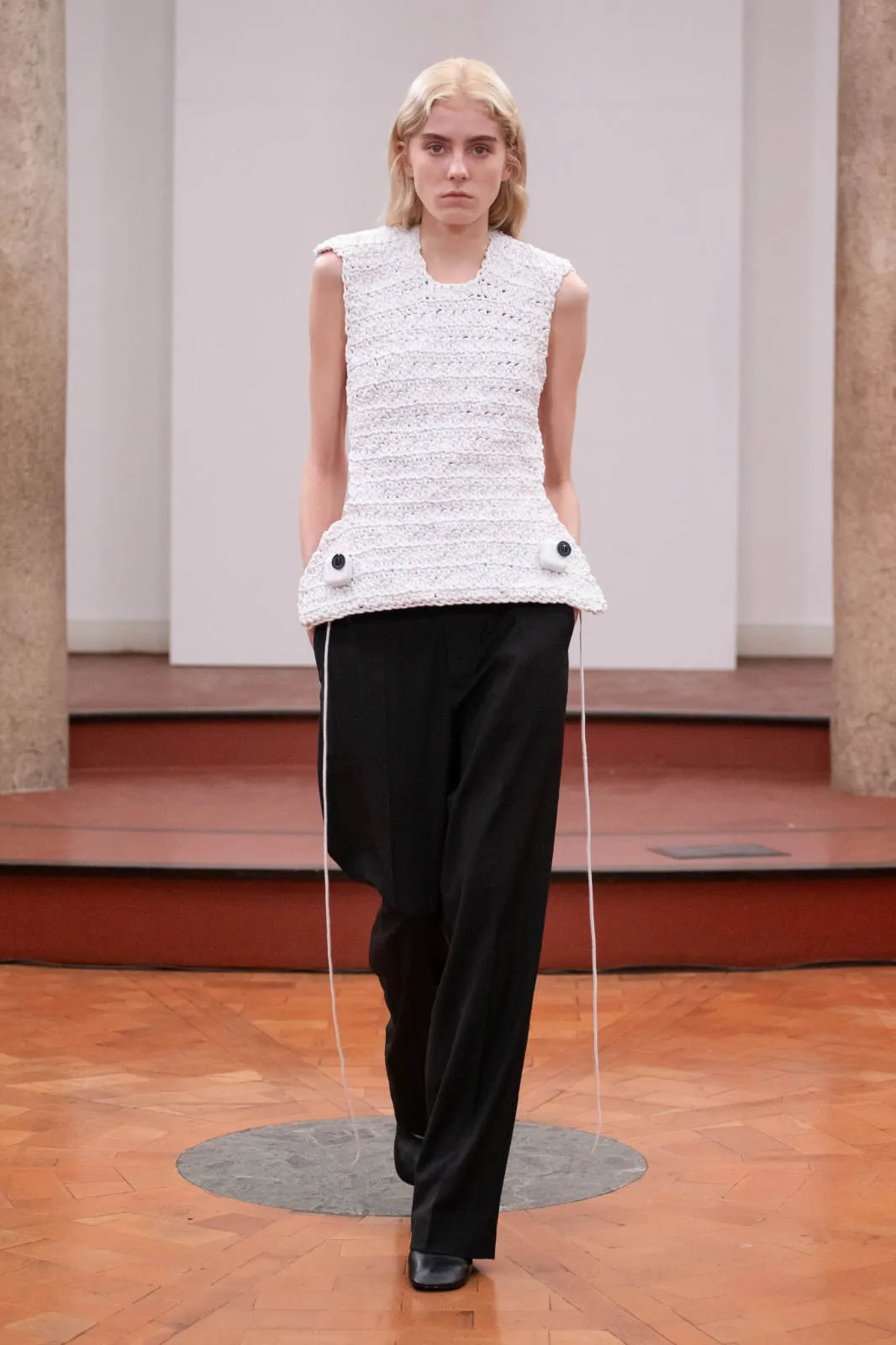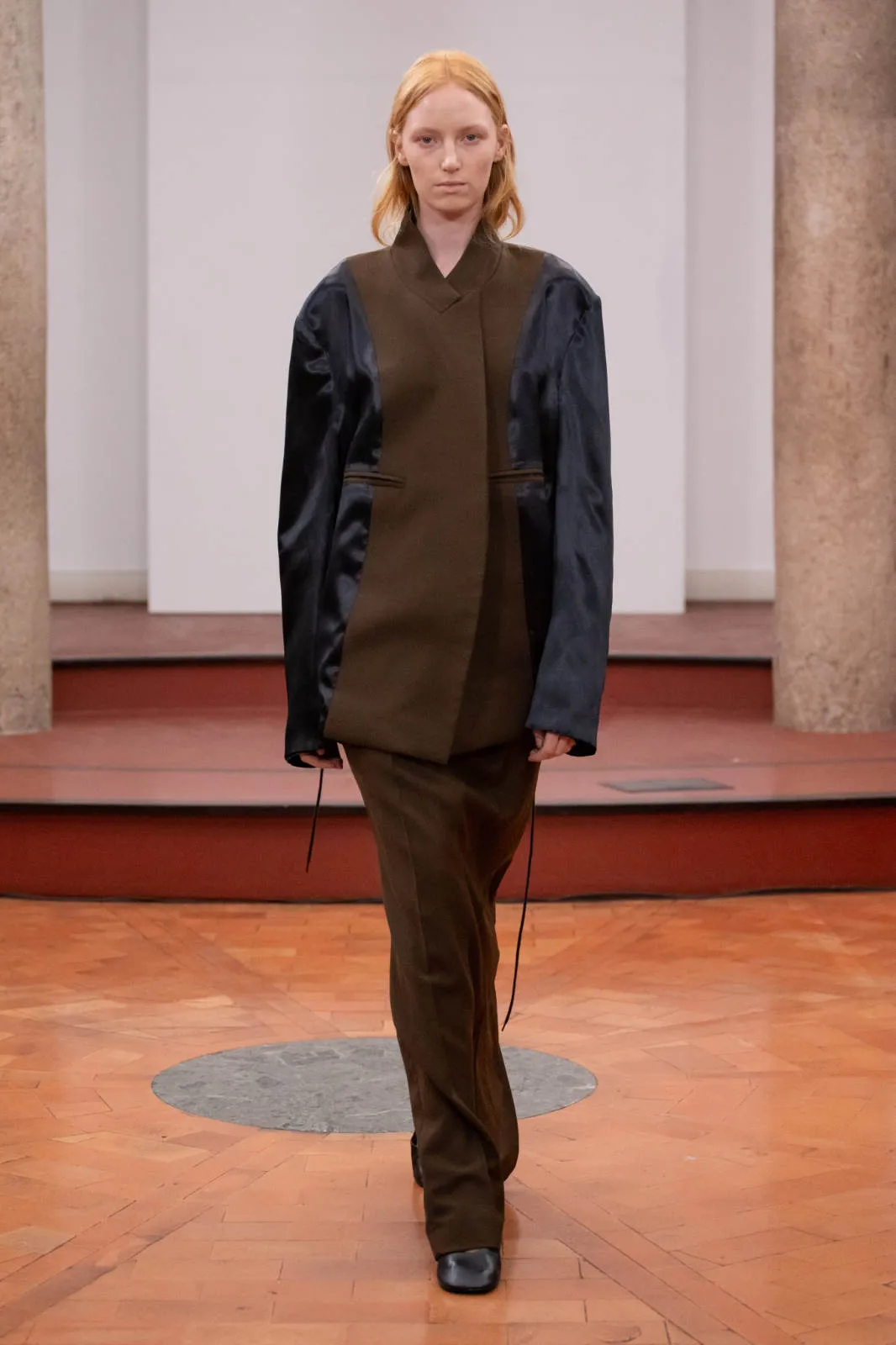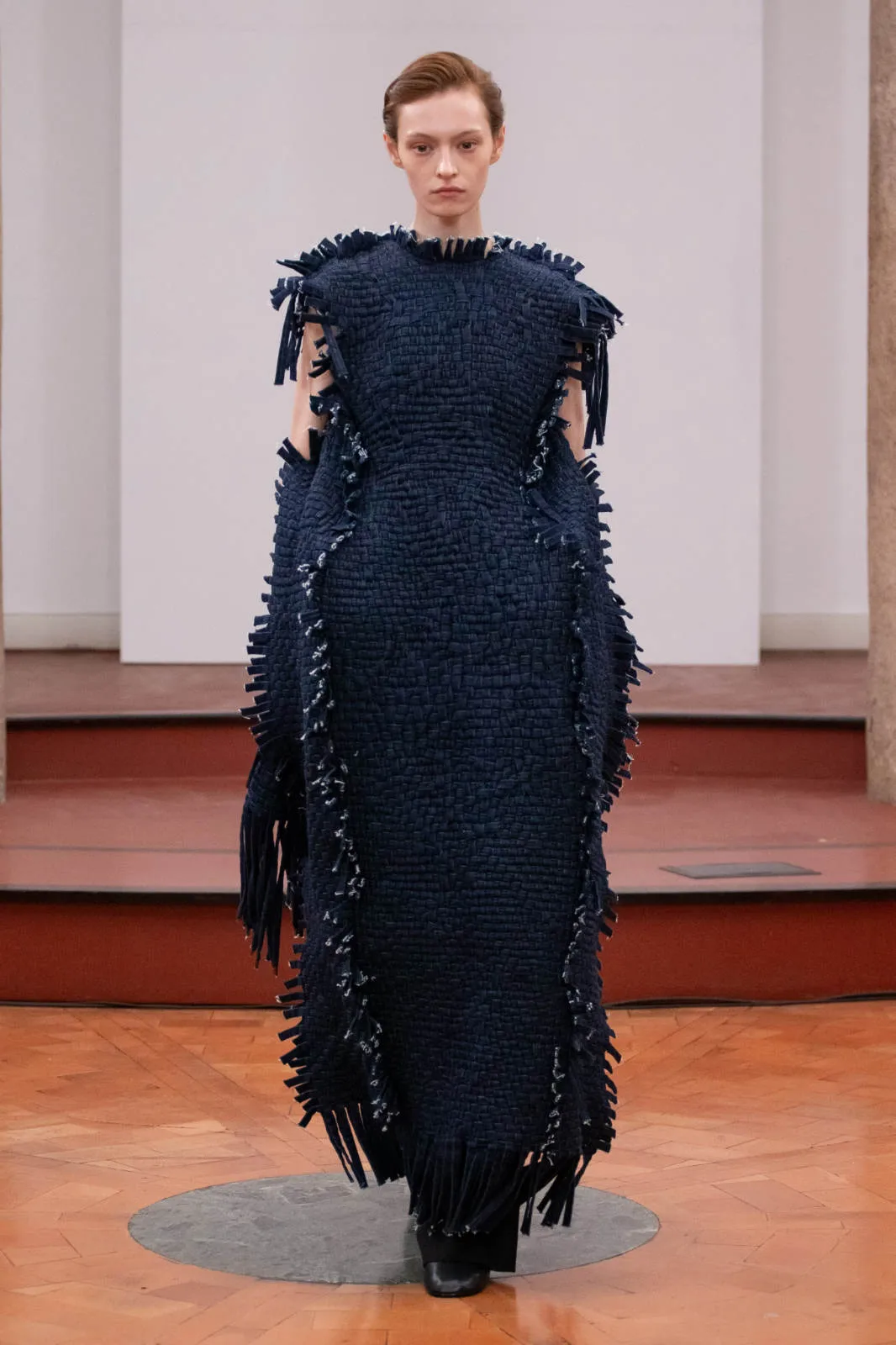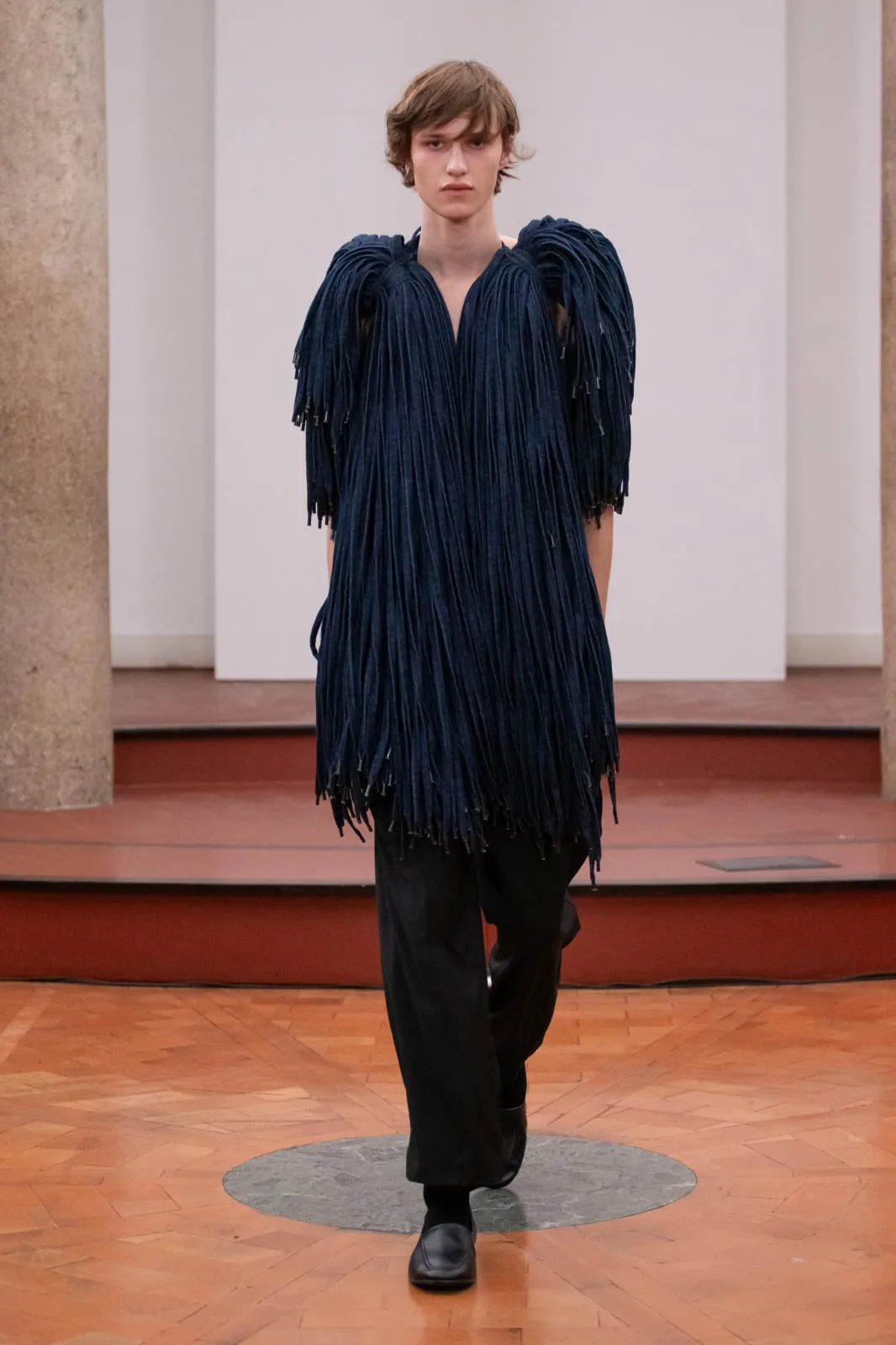
For Georgian Azerbaijani designer Galib Gassanoff, Institution was never conceived as a conventional fashion label. The Milan-based designer frames it instead as a living structure shaped by memory, labour, and inherited craft. Rooted in a childhood surrounded by textiles, his work quietly prioritises the human hand over industrial speed, allowing garments to function as cultural testimony as much as clothing. From his recent win of the Zalando Visionary Award 2026 to his nomination as a 2026 LVMH Prize semi-finalist and the storytelling hidden beneath the garments, we discover what's behind the name everyone has their eyes on.
The word 'institution' has a powerful, even somewhat distant connotation. Which “institution” first shaped you in your life, and how did that feeling translate into the brand name?
I think the first institution any of us encounter, the one we experience and that shapes us, is family. It’s a structure we often overlook because of the bonds we share, whether emotional or biological. In my case, I was raised in a strict, traditional household with many unwritten rules that shaped daily life. Patriarchal ideology was present, subtly but constantly, pressuring you as a boy to become the next patriarch. That experience made me question the structure itself. It pushed me to rethink these systems and move toward seeking equal rights and representation for all genders and to challenge the rigid frameworks embedded in society.
This tension is constantly present in my work. 'Institution' means establishing a system that gives voice to marginalised artisan communities, uniting craftsmen and craftswomen from different regions under one roof, and institutionalising an alternative structure built on equality, visibility, and respect.
This tension is constantly present in my work. 'Institution' means establishing a system that gives voice to marginalised artisan communities, uniting craftsmen and craftswomen from different regions under one roof, and institutionalising an alternative structure built on equality, visibility, and respect.
You came to Milan at a very young age for fashion education. During that time, was there a moment when you felt alone or “out of place,” and can you still see traces of that feeling in your designs today?
I was surprised. In 2013, I expected Milan to be a very advanced, technologically refined city, but instead I discovered something more traditional. Moving there wasn’t actually a planned decision. I won a contest in Georgia called BeNext, which gave me a one-year scholarship to study in Milan. Three months later, I moved to a completely new country. It all happened very quickly. The beginning was challenging, of course. There is always a moment of feeling unfamiliar or slightly out of place when you relocate so suddenly. But I was fortunate. I met wonderful friends early on, and within a few months I already felt more comfortable.
In many ways, Milan felt liberating compared to where I came from. I grew up in a provincial environment with strict values and constant judgement. Arriving in Milan felt like a breath of fresh air. That contrast, between restriction and freedom, still influences my work today.
In many ways, Milan felt liberating compared to where I came from. I grew up in a provincial environment with strict values and constant judgement. Arriving in Milan felt like a breath of fresh air. That contrast, between restriction and freedom, still influences my work today.
Craftsmanship and heritage hold a central place in your collections. Is there a concrete or emotional object from your childhood or family that has been passed down to you, and how does this object influence your design language?
I grew up surrounded by carpets, playing on them, sleeping with their patterns around me on the walls and floors, and washing them barefoot in cold summer water. Over time, I developed a deep attachment to them. My grandmother’s carpet, woven in the early 1970s as part of her marriage dowry, was passed down to me, and now I keep it in Milan. It’s very special to me because I’ve been observing it since a very young age.
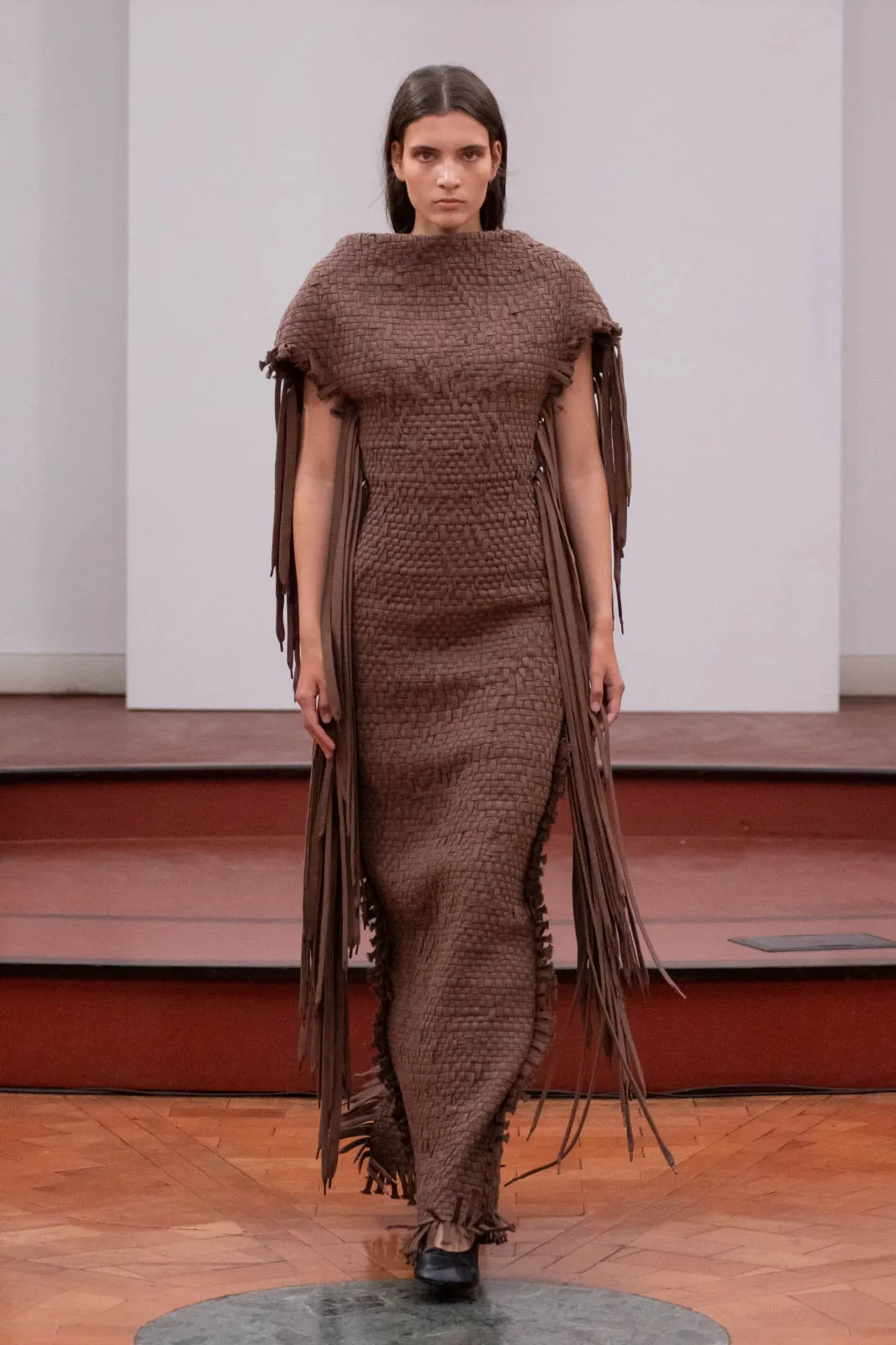
Carpet-making in general holds a central place in my design language. My ancestors were shepherds and carpet makers, and through my work, I aim to transform this ancient tradition into new shapes and weaves, giving it a contemporary life while honouring its history.
Carpet-making in general holds a central place in my design language. My ancestors were shepherds and carpet makers, and through my work, I aim to transform this ancient tradition into new shapes and weaves, giving it a contemporary life while honouring its history.
You describe Institution as a structure, even a living organism, rather than a brand. What are the boundaries of this structure, the ethics or rules, and what would you never do?
I think any craft made by human hands is a living organism. Without the people who practise it, the craft will die, and many of these traditions are truly endangered.
Institution is a project that prioritises craftsmanship. Unfortunately, our scale is small, so the direct impact we can make is limited. But the way we work can serve as an example for established brands and companies, which could have a significant effect on preserving human skill and positively impacting the lives of artisans.
What I never prioritise is industrialising our production just for the sake of numbers. If we have a certain positioning, we need to deliver the right product and the exclusivity that comes with it.
Institution is a project that prioritises craftsmanship. Unfortunately, our scale is small, so the direct impact we can make is limited. But the way we work can serve as an example for established brands and companies, which could have a significant effect on preserving human skill and positively impacting the lives of artisans.
What I never prioritise is industrialising our production just for the sake of numbers. If we have a certain positioning, we need to deliver the right product and the exclusivity that comes with it.
While the fashion world demands speed, visibility, and constant production, you speak from a slower, more contemplative place. What does maintaining this pace take away from your personal life, and what does it help you preserve?
I’m preserving my integrity, which is also central to my message. Our eyes are tired of seeing too much, of receiving too much information and of constant flashes every day. We need to ask: what value does this bring to society, and what story does it add to your own?
I don’t make clothes for insecurities. I make clothes that tell stories of lives, that help preserve heritage, and when you wear them, you become part of that positive impact. I’m not in a rush, and there is no need to be.
I don’t make clothes for insecurities. I make clothes that tell stories of lives, that help preserve heritage, and when you wear them, you become part of that positive impact. I’m not in a rush, and there is no need to be.
In your designs, there is a constant dialogue between the past and the present. How is the relationship you have with your past in your own life? Is there a period you have gone back to and repaired or consciously closed?
The past is always there; it will never disappear. I wouldn’t change much about it, because it shaped me into the person I am today. I am always in dialogue with the past, appreciating its beauty, but I focus on moving forward in my life and work, always looking ahead while staying connected to my roots and grounded in my origins.
Awards that bring great visibility, such as the Zalando Visionary Award, can liberate a designer as much as they can create pressure. At this point, how do you balance expectations with your own intuition?
My own expectations are the highest, and I am always the most demanding of myself. I try to balance this by not overdoing it. My goal is to grow steadily, step by step, while staying true to who I am and what I value. My intuition guides me through the process, and so far, it’s working well.
You tell a story through Institution, but you are still at the centre of the story. If only one feeling were to remain from this project, what would you want the viewer or wearer to feel?
Most of the time, when you acquire a piece from a brand, you don’t know who made it. With an Institution piece, you can be sure that I made at least the paper pattern myself, if not the entire garment. I think it’s special to own a piece from a brand where the designer is still personally involved in its realisation.
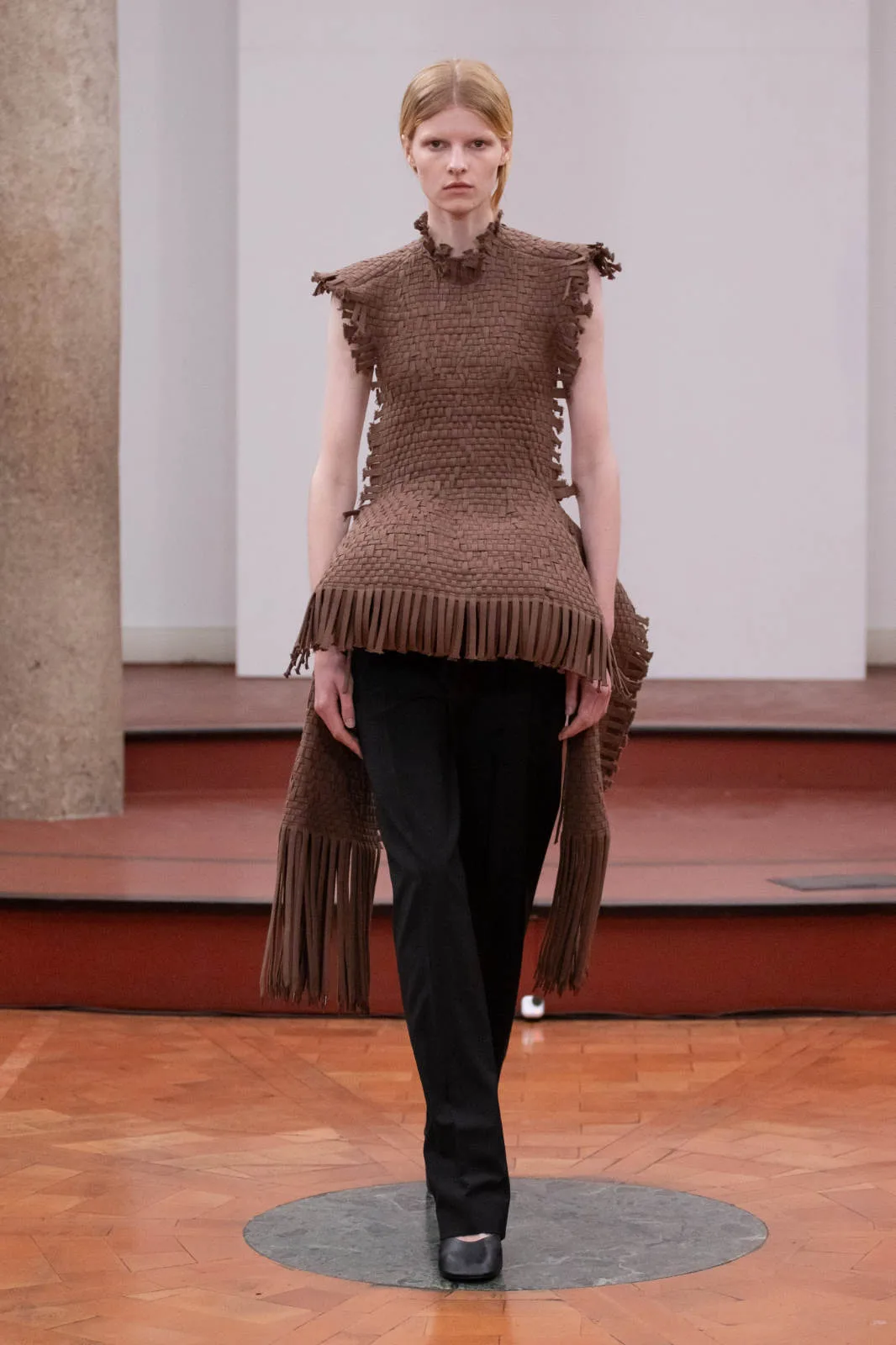
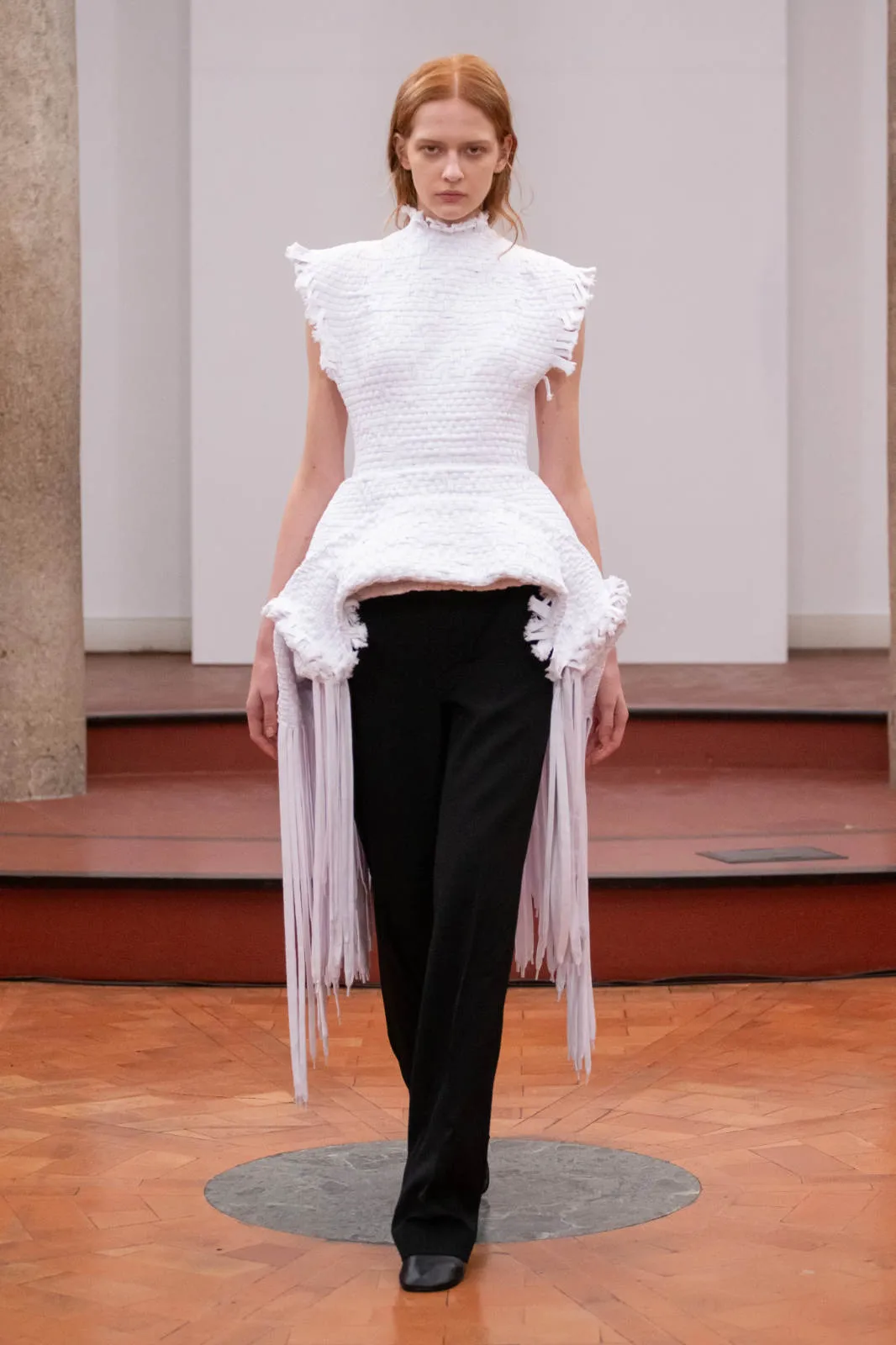
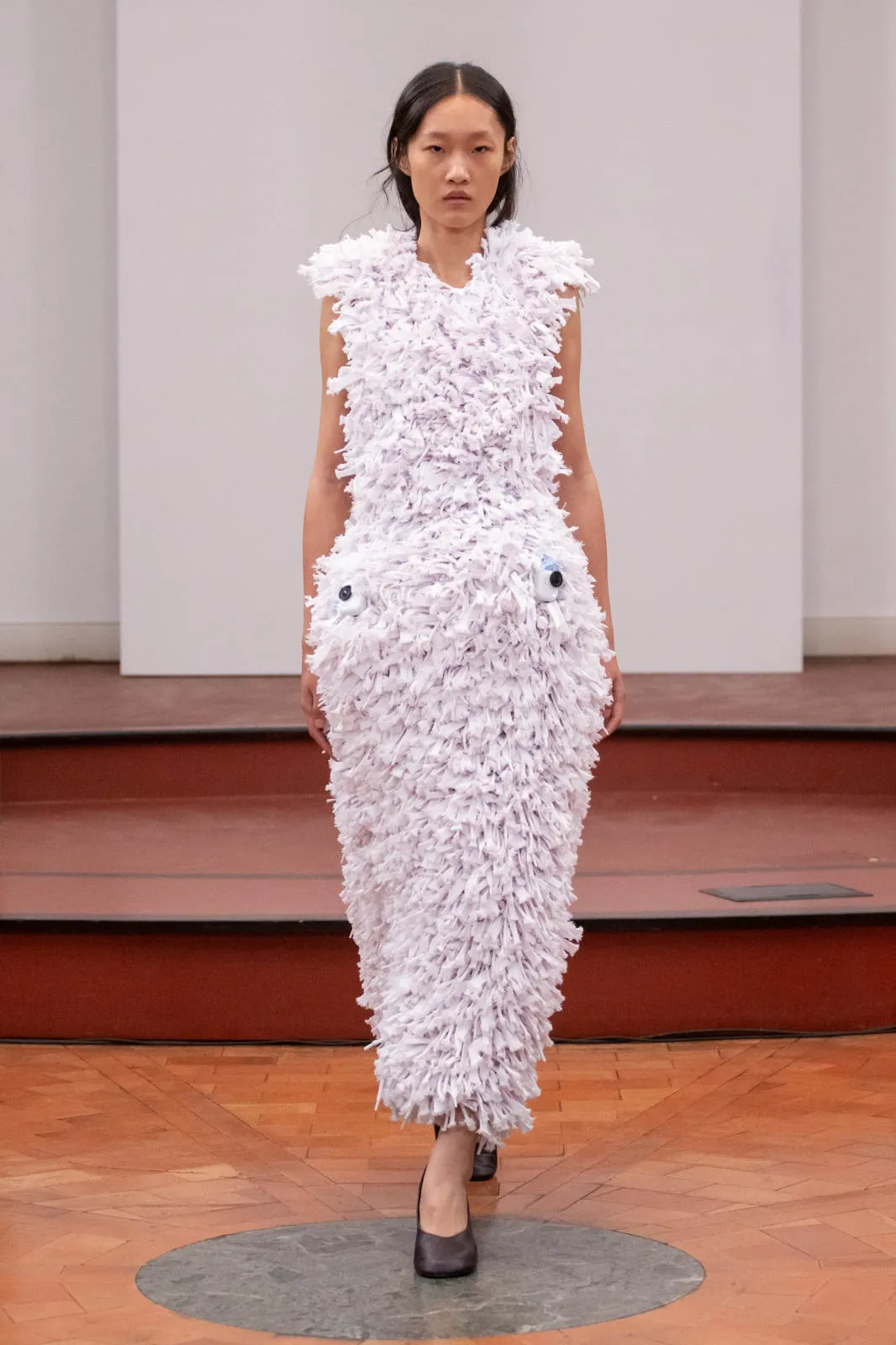
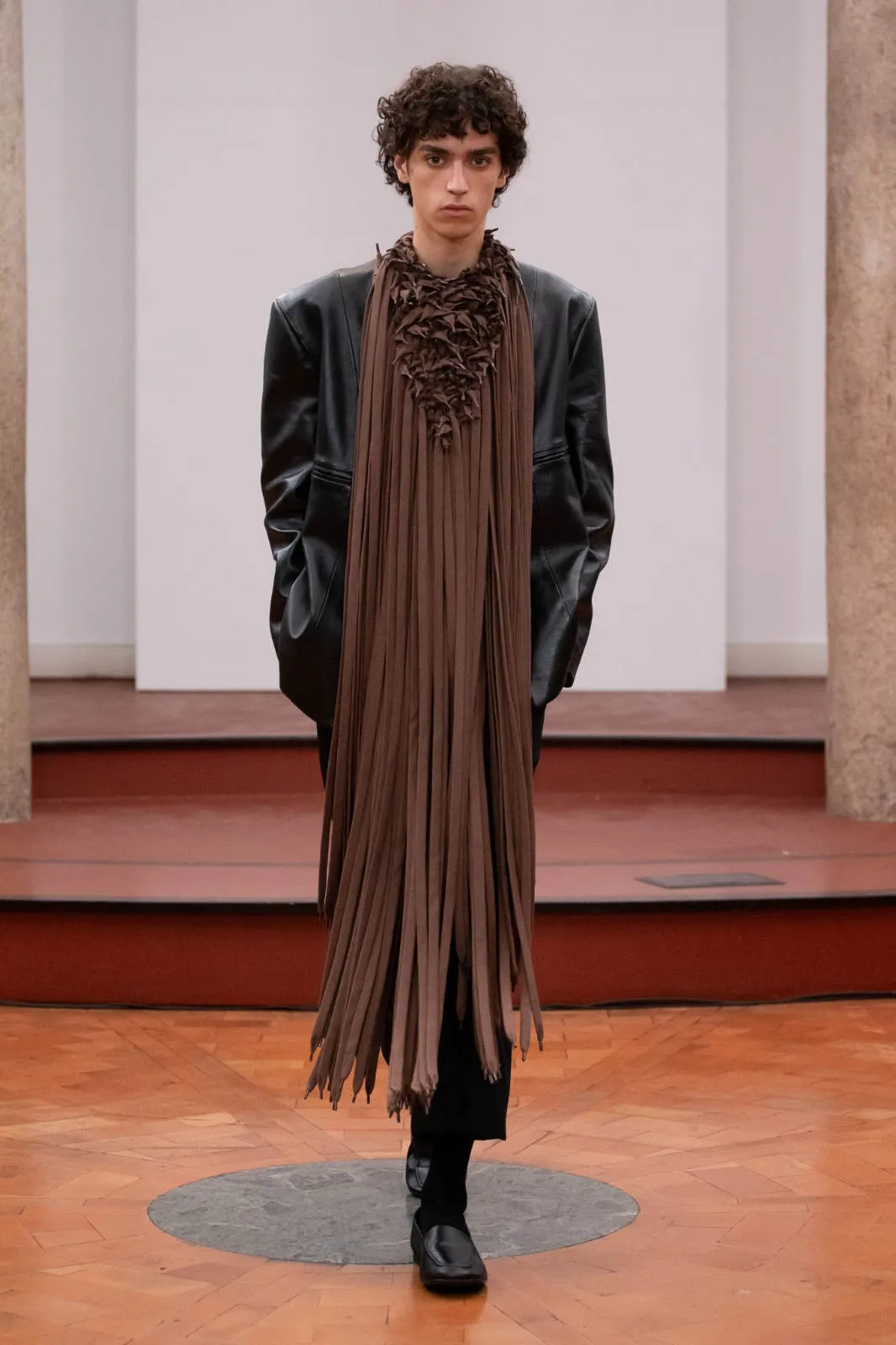
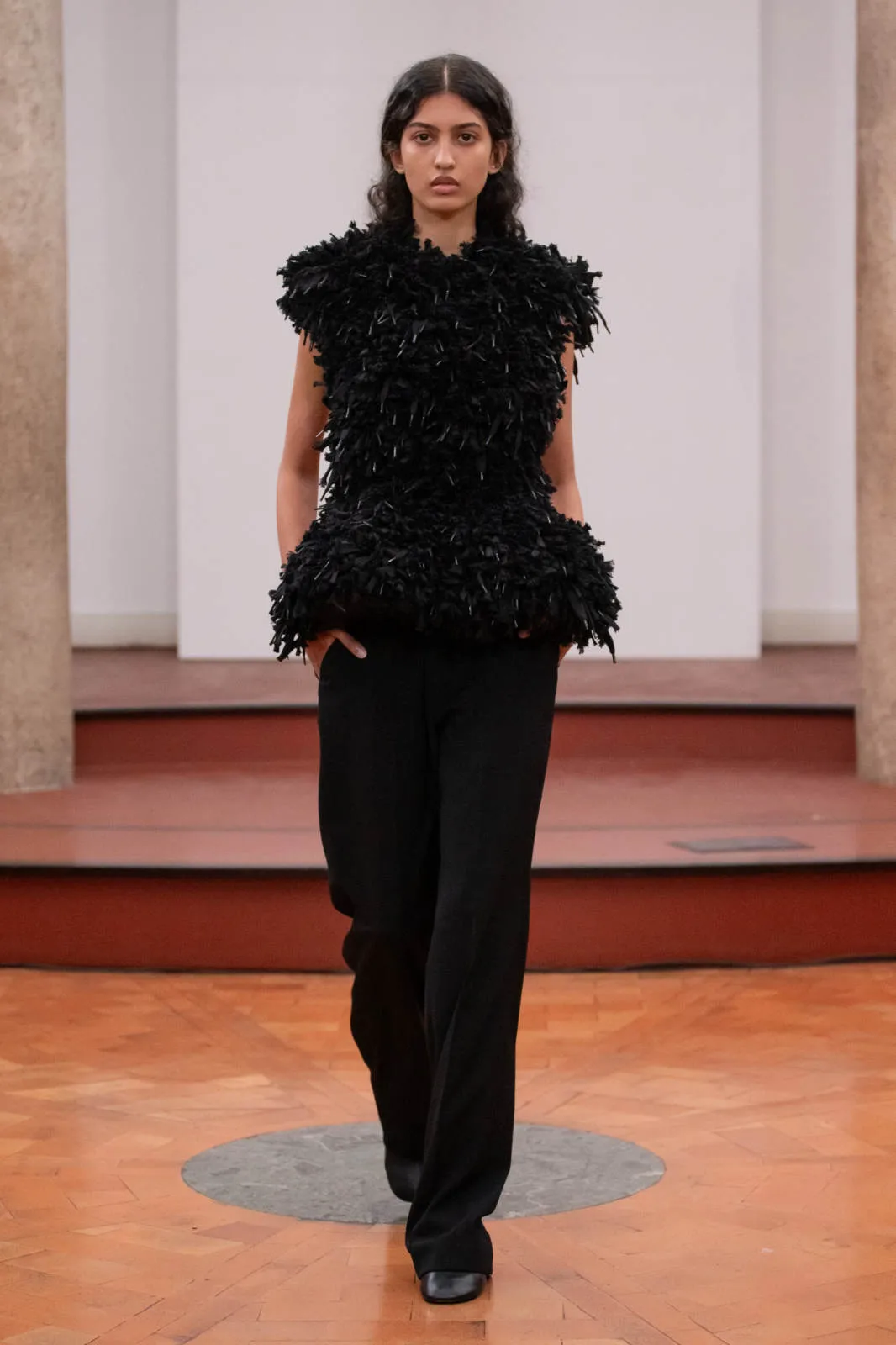
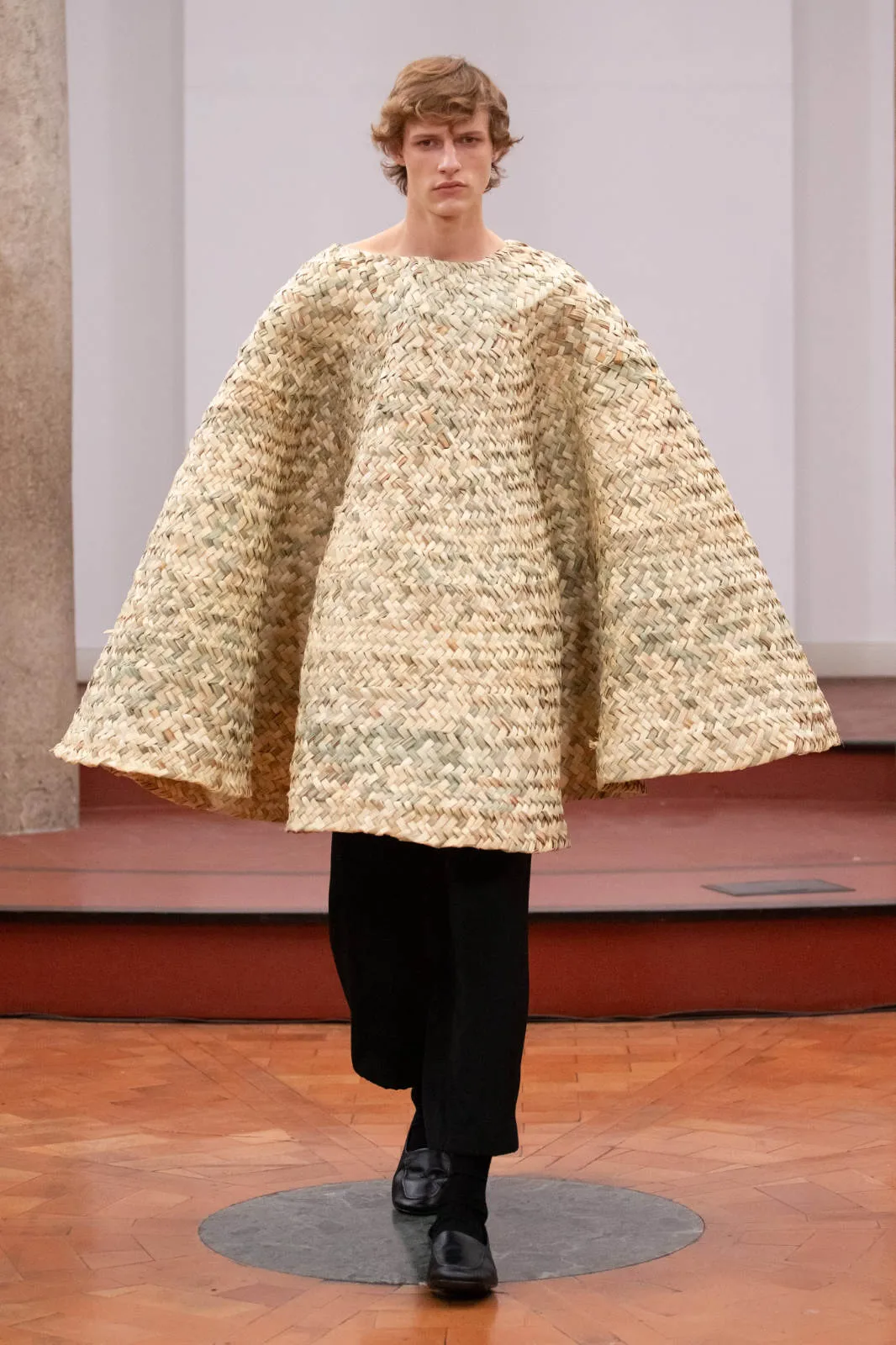
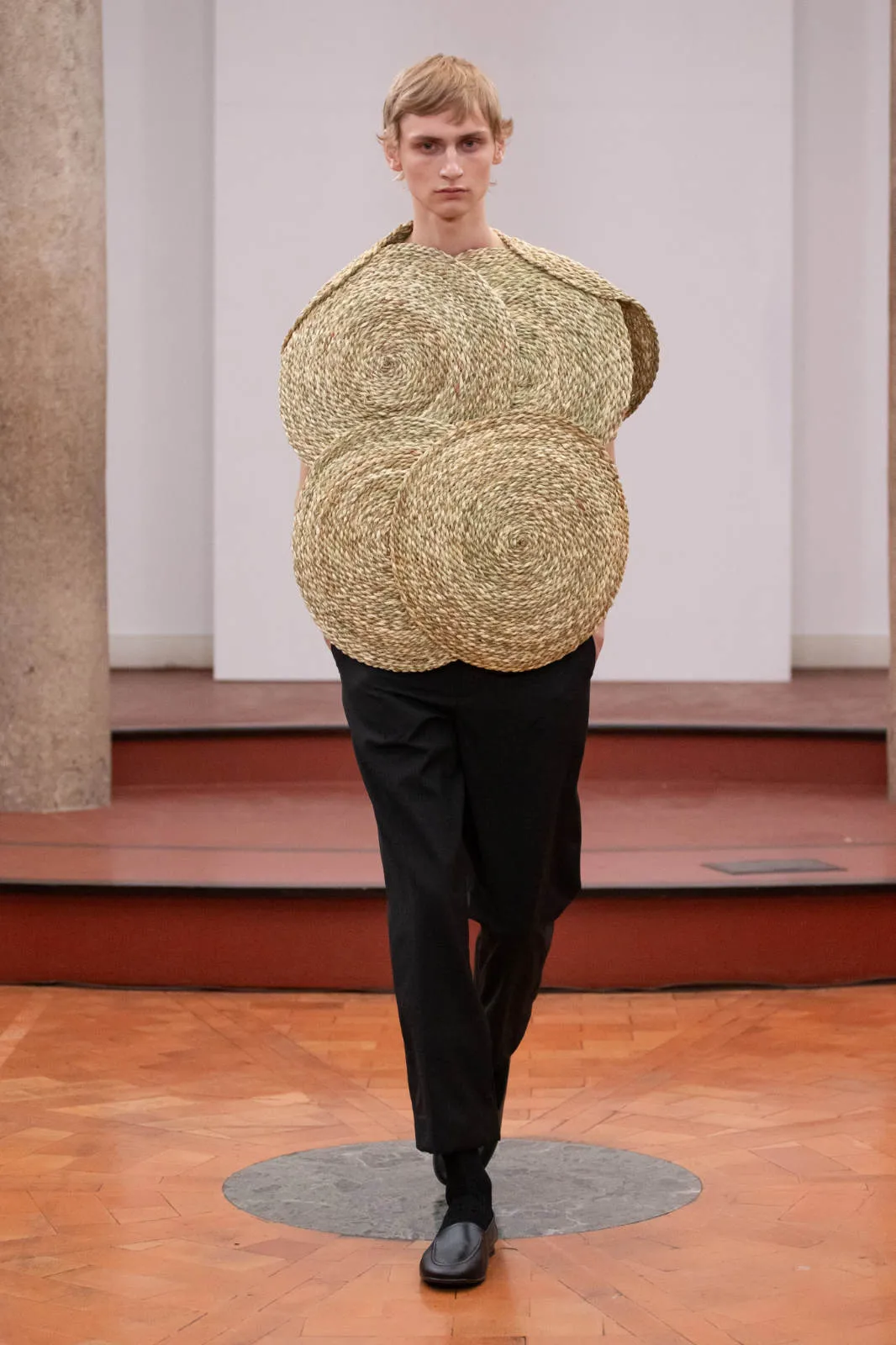
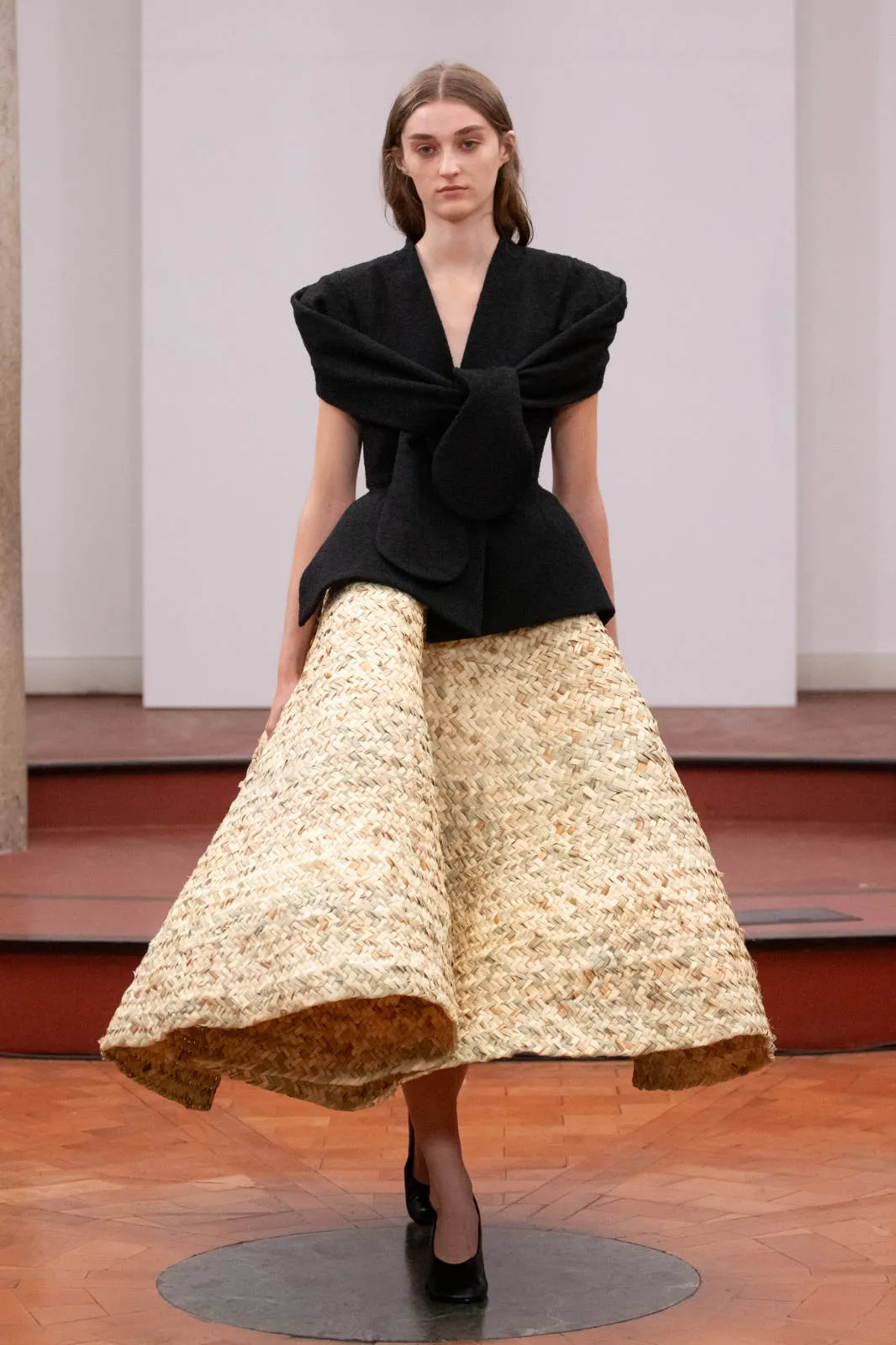
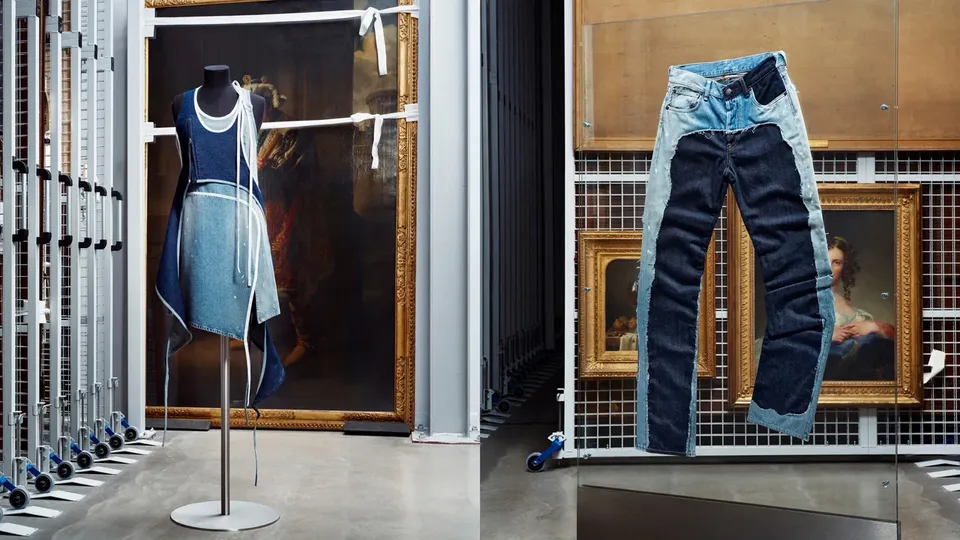
In your collections, you work with materials that are “not traditionally clothing,” such as bulrush, rattan, denim laces, and textures reminiscent of a floor mat. When choosing a material, what convinces you first: aesthetics, the story, or the labour behind that material?
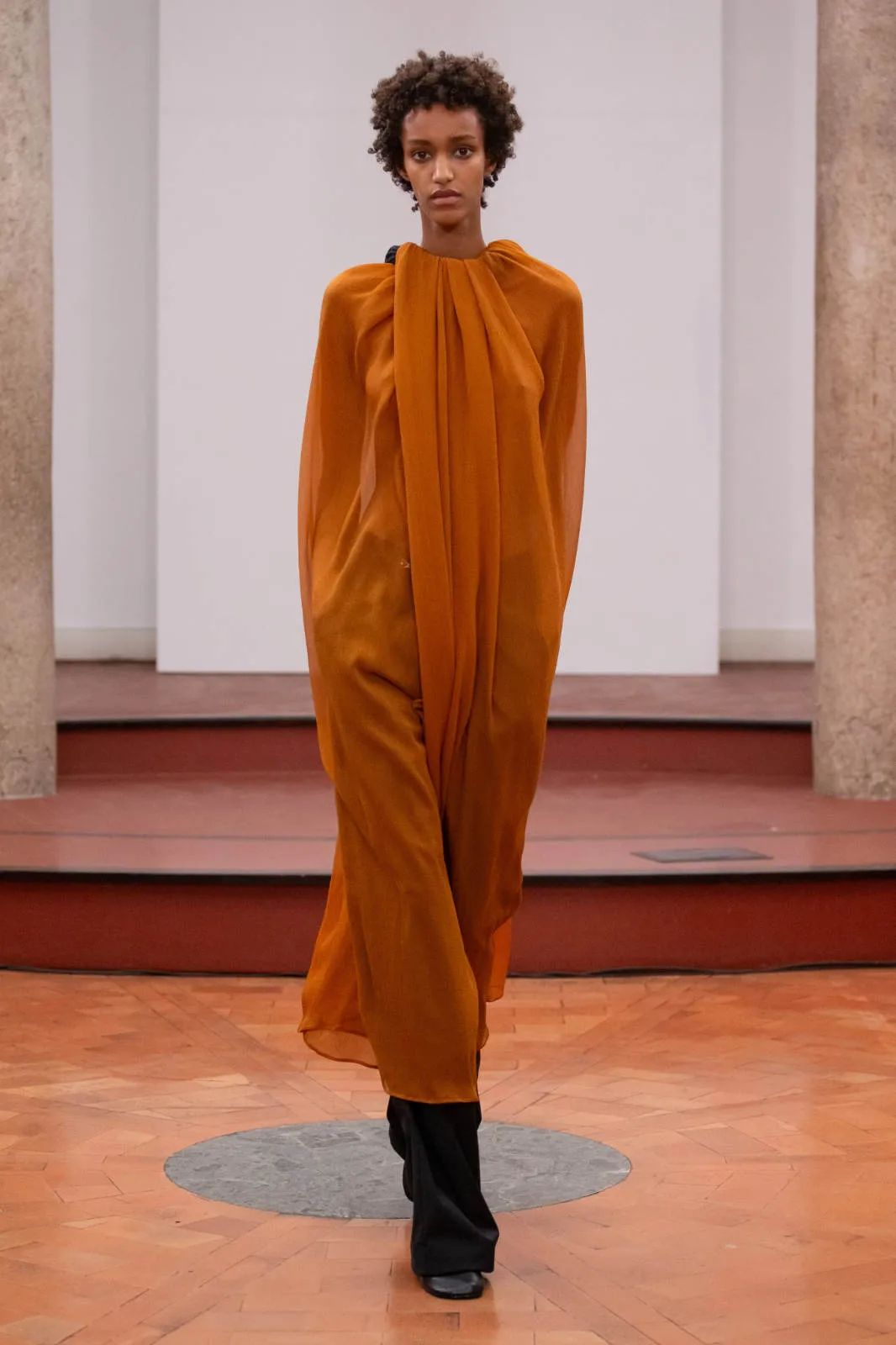
I work with many materials, but they have one thing in common: more than 90% of them are natural fibres, which is very important to me. Most of these textures are woven by hand, either on a vertical loom in our studio in Milan or with our artisan communities in the Kvemo Kartli region of Georgia and the Masalli region of Azerbaijan. The traditions of weaving behind these works often serve as starting points.
Many pieces go beyond clothing; they become wall pieces, objects, or collectibles. This reflects the dialogue I aim to create between art, craftsmanship, and fashion.
Many pieces go beyond clothing; they become wall pieces, objects, or collectibles. This reflects the dialogue I aim to create between art, craftsmanship, and fashion.
Including a technique in your collection that only thirteen women weavers in Azerbaijan still know is very powerful but also a huge responsibility. When working with such fragile crafts, how do you determine where you stand as a designer?
For me, the role of the designer shifts. I’m not there to “use” the craft. I’m there to listen to it. These techniques carry memory, geography, and silence. They existed long before my collection; my responsibility is to create a space where they can breathe in a contemporary context without losing their dignity. As a designer, I stand in a position of responsibility, not authorship. The craft is not decoration; it is the core. My job is to frame it carefully, protect it economically, and ensure that the women who hold this knowledge are recognised not as suppliers but as collaborators.
Some pieces are almost “unwearable” or deliberately surreal. Where does the function of a garment end for you, and where does it begin to exist as an object or cultural testimony?
A garment begins with the body, but it can expand beyond utility into emotion, memory, or statement. When a piece feels “unwearable," it’s usually because it’s amplifying something: a tension, a history, a feeling that a conventional silhouette can’t express. At a certain point, a garment becomes more than clothing; it becomes testimony. Wearing it becomes a conscious act, not just a practical one.
Working with natural materials evokes a sense of time that is much older than sustainability. Do you consciously want the materials you use at Institution to belong to another time rather than today's fashion calendar?
I think we need to be conscious of what we put on our skin, on our bodies. I suggest simplifying skincare routines and wearing natural fibres instead of wearing petroleum-based products in different forms.
At Institution, I want materials to feel rooted, almost displaced from the present moment. When something exists slightly outside of time, it resists trends, and that resistance, for me, is a form of integrity. I’m not interested in today’s fashion calendar if it’s all about sparkle without meaning. I’d rather stay in my atelier, stitching.
At Institution, I want materials to feel rooted, almost displaced from the present moment. When something exists slightly outside of time, it resists trends, and that resistance, for me, is a form of integrity. I’m not interested in today’s fashion calendar if it’s all about sparkle without meaning. I’d rather stay in my atelier, stitching.