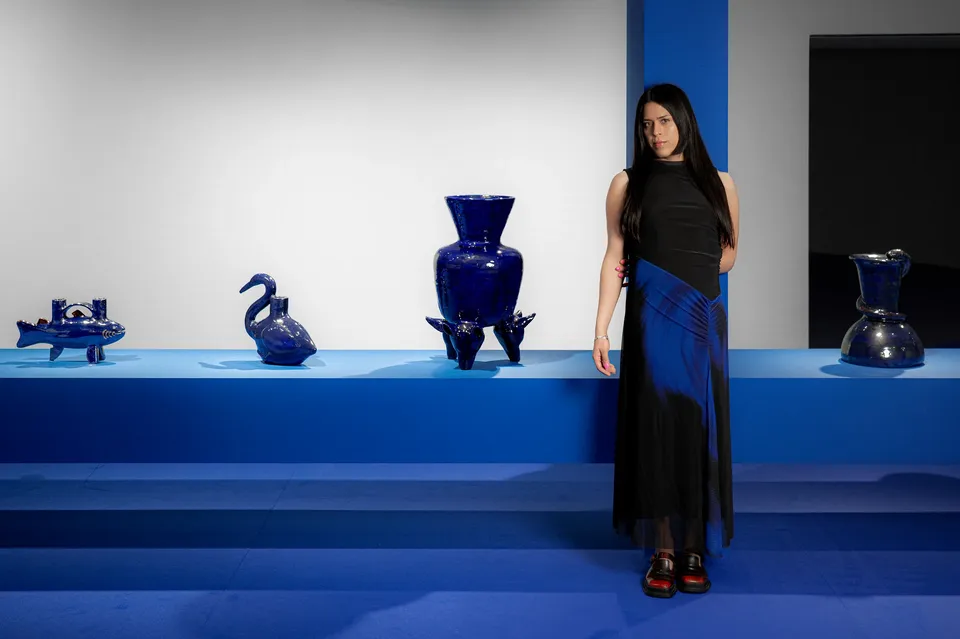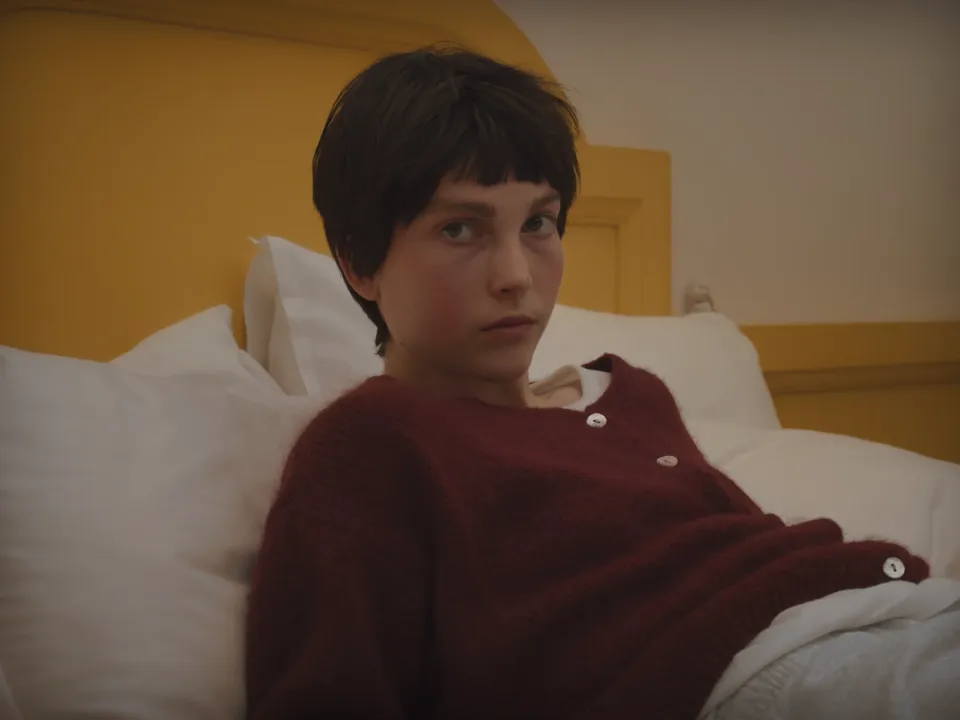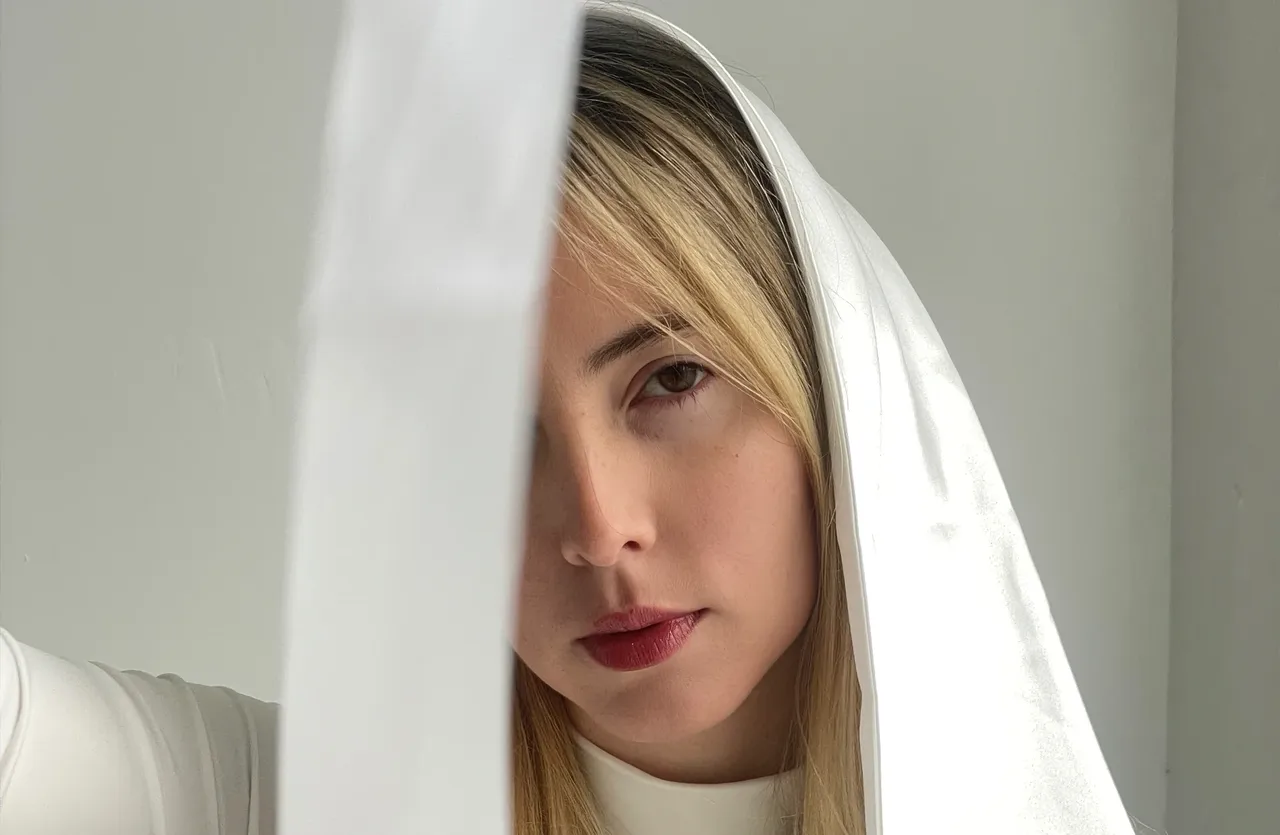
There are things that need no introduction, not because they don’t deserve one that gives them their due, but because an introduction can sometimes dull the impact of encountering something new: a new sound, a new approach, a new thought. That is exactly what happens when you enter the work and universe of Hyd. In both their artistic practice and their music, they invite you into a world of other shades and nuances, one they are unafraid to explore. Hold Onto Me Infinity, their new second album, continues this exploration of the thresholds between the earthly and the otherworldly.
Across twelve carefully balanced songs, the sound becomes a kind of sensory physics: something designed not only to be heard, but to be felt at a cellular level - as in Light Span, an emotional limbo - where vibration replaces distance and listening becomes a bodily event. It’s a record shaped by questions that hover between metaphysics and embodiment: where do people go after they leave, and what does that absence feel like: buoyant, weightless, or somehow still present in another form? These are not abstract speculations so much as felt inquiries - as in Make Me Believe - approached from inside the body and mind, where listening becomes a way of sensing what cannot be seen. It is almost like developing a conceptual system for relating to what is no longer here.
Dunham’s sense of connection - as heard in Freak - and collaboration runs through the album, where relationships persist beyond physical proximity or even presence. Watch You Cry explores the act of witnessing emotion in others. Moments shared with SOPHIE remain active within the work, sometimes difficult to return to, yet still carrying a charge, like a voice suspended in time that continues to speak. Makeover becomes a kind of contemporary archival artifact of internet and pop culture history. Hyd describes the album as a multisensory dialogue, where the boundaries between seeing, hearing, and feeling begin to dissolve.
The record unfolds as an environment in motion, alive with echoes of collaboration and shared worlds built alongside artists including Benny Long, Saint Patrick, Finn Keane, Tjörvi, Marcus Andersson, Michael Bailey-Gates, Bobbi Salvör Menuez, and many others, each contributing to an ecosystem that is as relational as it is sonic. In conversation, Dunham returns again and again to the act of listening: as attention, as contact, as a way of staying close to what cannot be held. We are then transported into a space of discovery, a psychological surface where things can be felt differently.
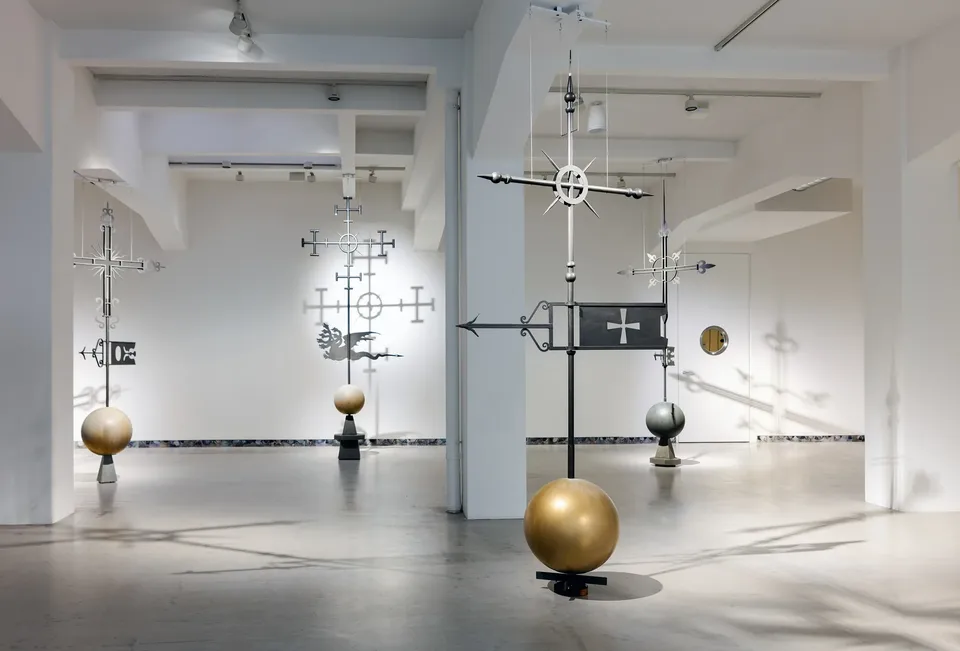
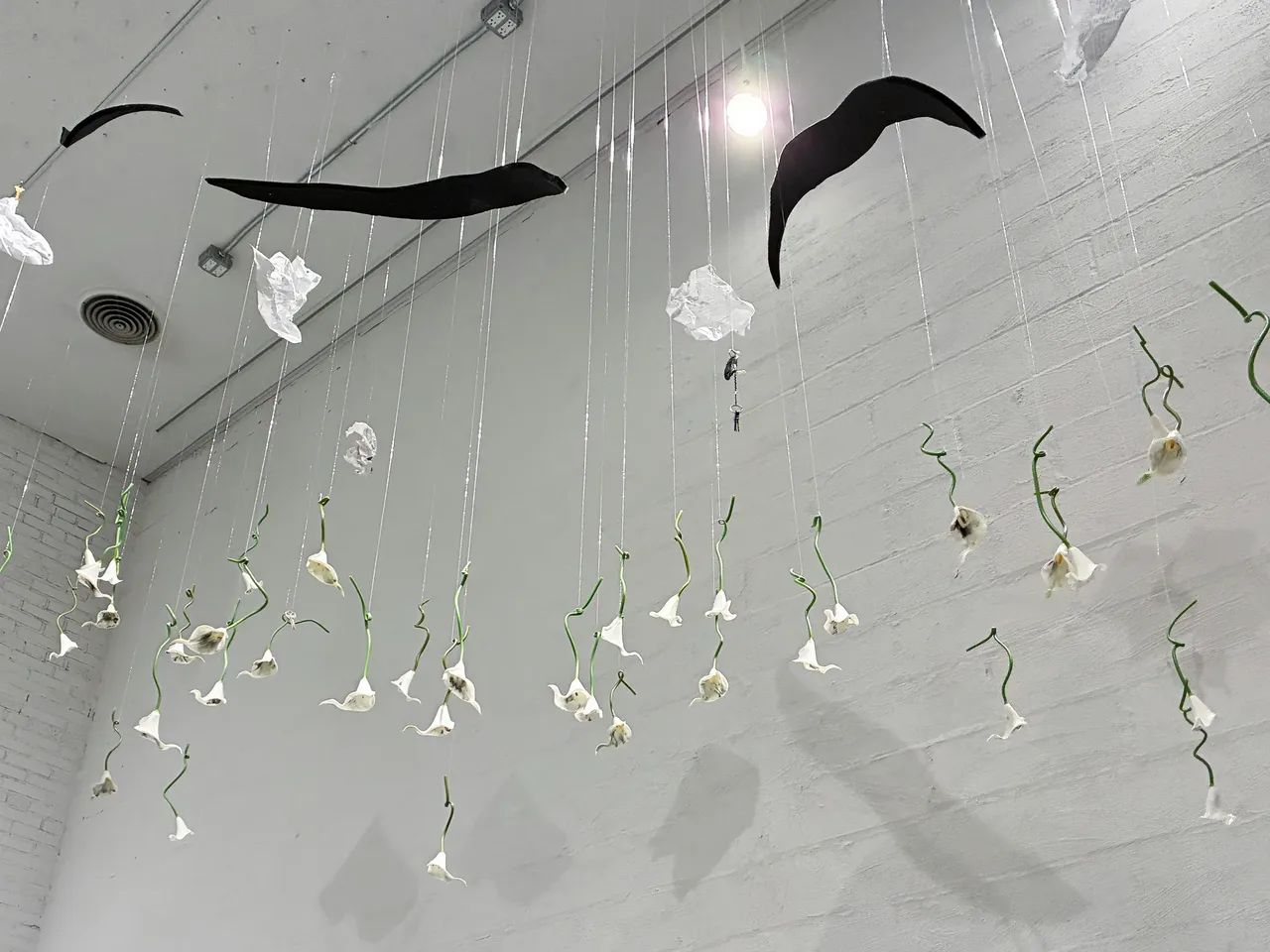
Their concurrent exhibition Never Is Over, on view at Company Gallery in New York until the 13th of June, stages this directly: voices held in fragile vessels, light-sensitive materials that only reveal themselves through rupture, and sonic frequencies that seem to exist at the edge of perception. Together, these works suggest a continuous loop between presence and absence, as if each form is always becoming another.
What follows is an interview, taking place just before their North American tour, that traces these connections and references from Sally Ride to The Neverending Story, from their incredible method of verifying that you are indeed a freak to the significance of chocolate chip cookie buttons; between the intimate act of listening and the possibility that nothing, once felt, ever fully leaves.
Your new album is about to be released into the world. I’ve had the chance to listen to it and was completely blown away. The first thing that stood out to me was the production: it feels like a very particular kind of sound architecture, which is quite difficult to achieve nowadays within experimental or alternative pop soundscapes. How happy are you with the final result?
It’s kind of a miracle that it’s here to me. I was really close to putting it into a vessel and burying it in the ground, but somehow we’re here now.
There’s a huge sense of depth throughout the album: not just in its layers, but in something almost ethereal. There are so many details: the delicate percussion in both Freak and Make Me Believe, the synths in Take Care of Me, the textures in Light Span. What was the process of curating the album’s sonic world like?
It started with adding a matchstick to volcanic gas, leading to an air-forward bubbling up from underlayers of the earth. The bouncing kept getting bigger until it was more bodied and brash, even. But the truth about these big drums is that inside is a pretty soft and even tender voice. I wanted the sonic palette to be big but really, on a cellular level, make people vibrate. Or want to vibrate. I guess the sound could be described as alive.
“I love thinking about where people go after they leave here. If it is actually buoyant and bright, or does it feel weightless? Expansive or something else?”
Angel, the first song on the album, asks where the dead go and how they return to us in new forms. Did making this album change your own beliefs about absence, memory, or the afterlife?
I love thinking about where people go after they leave here. If it is actually buoyant and bright, or does it feel weightless? Expansive or something else? I started listening to the sound of black holes and other echoes in space and also interviews with Sally Ride (the astronaut) when she first got to space. She talked about a feeling of belonging that I also kind of understand. I feel it in the air sometimes too. Hold Onto Me Infinity is a reflection of research I have been doing around this over the last couple of years. So, it holds prisms and conversations within it, mostly with people I love, some who aren’t here anymore.
The opposite of absence is presence, and that’s what I spent time listening for while making this album. Can something else come through? Is it possible for there to be the presence of someone who can no longer be seen, here? What if I am not alone, actually, even though I’m the only one here in this studio? In my life at large? These types of questions. Not to be so existential, because in order to hear the answers, I found I had to really be inside my body and listen through feeling. And that’s really where things started getting freaky with the album.
The opposite of absence is presence, and that’s what I spent time listening for while making this album. Can something else come through? Is it possible for there to be the presence of someone who can no longer be seen, here? What if I am not alone, actually, even though I’m the only one here in this studio? In my life at large? These types of questions. Not to be so existential, because in order to hear the answers, I found I had to really be inside my body and listen through feeling. And that’s really where things started getting freaky with the album.
In Freak, there’s a really compelling narrative about connecting with someone, whether as friendship or something deeper. It has so many layers of meaning, and I can clearly see a queer interpretation of it, especially in the way language and labels are reclaimed or transformed. What can you tell us about this song?
Yes. First off, I love freaks. Anyone who feels like they aren’t from around here, or haven’t found a way to connect into whatever is going on earthside. This song is about that moment where you think you find someone else who is like you, but in order to be sure you might have to look to a series of clues and receive help from a past or future version of yourself.
In my case, this song takes place in Texas, in high school, with my first crush, and realising that the only way I could be close to her was through proxies like becoming the boy she was kissing in her car. Or becoming the cake she delivered to my room at 4 am with a Flannery O’Connor story baked inside. The video, made with my dear friend Kelly McCormick, features a version of me as a quantum time-travelling villain helping out a past version of me to locate secret intel. Making this video felt like a rehearsal for the rest of my life in pure joy.
In my case, this song takes place in Texas, in high school, with my first crush, and realising that the only way I could be close to her was through proxies like becoming the boy she was kissing in her car. Or becoming the cake she delivered to my room at 4 am with a Flannery O’Connor story baked inside. The video, made with my dear friend Kelly McCormick, features a version of me as a quantum time-travelling villain helping out a past version of me to locate secret intel. Making this video felt like a rehearsal for the rest of my life in pure joy.
The video is fantastic. Watching it and reading about your work made me think about your solo art show at Company Gallery in New York. I was wondering how parallel the development of the exhibition and the album were, and if they influenced one another creatively.
It’s pretty wild: Hold Onto Me Infinity and Never Is Over happening at the same time. I love multisensory dialogues, when you get a taste in your mouth of something you’re looking at. When sound you hear becomes a texture you can see. Both bodies of work are extensions of this research.
In Never Is Over, your solo exhibition, unassuming vessels placed throughout the gallery contain recorded voices of the departed who have some connection to you. The accompanying text explains: “These sounds can only be heard if the objects themselves are broken open, the light-sensitive contents inside are unlocked by the sun, and the voices set free.” What has the response to this piece been like so far?
I love it when people spontaneously start crying. I mean, in all circumstances, I just love it. At the opening, I hid in the dark and watched people experiencing the piece, and this kind of stuff is something I love about exhibitions. You really get to use all senses to make something new. I worked with Saint Patrick on the score and the sound of black holes, and also people's voices who I love who are no longer here.
Then, the song with the same title on the album contains this verse: “Left me in a cloud of doubt / Even though you're not here / I still see you laughing at the piano / Saying 'it's okay to cry' / In the way that it's over / Never is really over.” When I looked up the lyrics more closely, it suddenly clicked, and I realised the song is about SOPHIE. It’s incredibly beautiful. In that sense, Makeover is not just a standout moment on the album, it feels like a piece of internet and pop culture history. If I'm correct, you worked on this song with SOPHIE, and it was first heard in Washington, D.C. around 2016. Listening to it now feels like a treat for many reasons, one of them being how incredible the two of you sound together. It's not the first time we've heard your collaborations, but this one feels especially fitting within Hold Onto Me Infinity. What was it like working with her on this song?
We started Makeover at home in LA one morning. Usually she would go out for a coffee and bring me back a chocolate chip cookie button. This morning I had been in sass level ten mode (aka almost lethal levels of sass) and said to her, ‘1-800, this ain’t working, at all,’ about her days-long open suitcase on the floor, and she started laughing, and that was the catalyst for the song. This kind of stuff was a big part of how we communicated.
The lyric “Are those your clothes sprawled out across the floor?” was also the landscape of our bedroom at the time. We had been in LA for maybe a year, and there was this idea about becoming new. Like that we get to choose to be a new version of ourselves at any time. And maybe that can happen through new choices or new practices or new things aka “New car, new body, new activewear, new everything…" but really Makeover held this other note. That at any moment you could make yourself new again.
Later, the lyrics became more broad strokes: do we get to return here again to earth, or do we only get one life here, or “do we get more,” as in can we come back again to earth after we leave. This was a special fixation for me for reasons I didn’t understand at the time, but then now I understand why.
Sometime last year, I was driving to meet her brother Benny Long, who is also a brilliant producer, and the Notes app on my phone from that original session appeared. I had just locked my car and thought, oh wow. And as I scrolled down, I saw the second verse. Sometimes I have a hard time going back into these spaces SOPHIE and I made together because it holds so much for me, but getting to hear her voice in that session really carries me. Sometimes in sessions when I open them, I can hear her laughing too just after a recording or things like that. It feels like a present hidden in time for this moment right now. That, or I choose to see it that way.
The lyric “Are those your clothes sprawled out across the floor?” was also the landscape of our bedroom at the time. We had been in LA for maybe a year, and there was this idea about becoming new. Like that we get to choose to be a new version of ourselves at any time. And maybe that can happen through new choices or new practices or new things aka “New car, new body, new activewear, new everything…" but really Makeover held this other note. That at any moment you could make yourself new again.
Later, the lyrics became more broad strokes: do we get to return here again to earth, or do we only get one life here, or “do we get more,” as in can we come back again to earth after we leave. This was a special fixation for me for reasons I didn’t understand at the time, but then now I understand why.
Sometime last year, I was driving to meet her brother Benny Long, who is also a brilliant producer, and the Notes app on my phone from that original session appeared. I had just locked my car and thought, oh wow. And as I scrolled down, I saw the second verse. Sometimes I have a hard time going back into these spaces SOPHIE and I made together because it holds so much for me, but getting to hear her voice in that session really carries me. Sometimes in sessions when I open them, I can hear her laughing too just after a recording or things like that. It feels like a present hidden in time for this moment right now. That, or I choose to see it that way.
Looking Up I See a Cloud is one of the most reflective moments on the album. It features some of your most beautiful lyrics; this verse in particular feels like a magnificent poem: “Even though you're not around / You're all around / Past all the sounds / Between here and now.” The song seems to reference a deeply personal experience. What can you tell us about this track?
It’s really about this moment of listening for someone who you can't see anymore. Maybe that's in a breakup or a friend lost or the loss of a person. It is a reminder for me that even if you can't see someone, it doesn't mean she isn't there with you in another form. And it's just about listening. And hearing in a new way.
“My work really comes through in moments where I need to feel connected beyond things that I can see. So, for me, it is a real practice of surrendering as much as possible.”
In Take Care of Me, you sing: "New formations galvanizing inside me / Full surrender / What does it mean? / Can I stay here?" It's a really striking description, almost like the starting point for many of the explorations that unfold throughout the album. The press release also describes Hold Onto Me Infinity as a record "that channels grief into a study of how love persists beyond the limits of flesh - and through a process of transmutation can be alchemized into heat, rhythm, vapor, and light." What are the main things you learned while creating this work? Was the process cathartic or soothing for you in any way?
I couldn't believe the ease that came. I thought it would be like entering into the Swamp of Loneliness in The Neverending Story that I would get lodged in forever. But it's incredible how alchemy works. When I entered into that space again, tears transformed into heat, grounded in effervescence and feeling. It was so bodied and surprising, the album. And hot. Just really unexpected, but I guess that is one of the gifts of getting to be on earth. Seeing things move from one form to another. My work really comes through in moments where I need to feel connected beyond things that I can see. So, for me, it is a real practice of surrendering as much as possible.
The second single, Watch You Cry, came from thinking about tears in space and the water cycle on Earth. Your work often treats emotion almost like a physical substance: tears, vibrations, frequencies, light. Does thinking materially about feelings help you process them differently?
I think it allows me access to depths I can't get to otherwise. I have always been this way, really. The materials really inform how I process things. But also, these ecological processes.
You're about to tour North America and present the album live. How are rehearsals going? Given your wider artistic practice, how have you approached conceiving the live show?
The live show might be my favourite part of making music. I love being in a room together singing. Rehearsals have involved vaporised metal, flashlights and clean white socks. I hope I can pull it off. There’s this element of going so far beyond what is physically possible that I almost can't do it that really gets exciting to me.
Looking back at your debut EP in 2021, how do you feel about the work you've developed over the last few years?
It feels like a conversation I have been having for years now that is held in a sonic format. Some of it was with SOPHIE, some of it was with myself, but a lot of it is with the universe at large. For a while it was just for me, but I feel really honored to get to share it with other people. I love my collaborators so much: SOPHIE, Benny Long, Hudson Mohawk, Finn Keane, Saint Patrick, Tjörvi, Chris Lyons, Marcus Andersson, Michael Bailey-Gates, Tourmaline, Bobbi Salvör Menuez, Aaron Chan, Hedia Maron, Jeff and Cascine, Aimee Goguen, Kelly McCormick, Azsa West. Just getting to make new worlds with my friends that then we get to live in. And I get to activate, it's very profound to me. And something that with PC Music, we have done together for such a long time. It's really special to get to witness people in their practice for all of these years.
Finally, what's next for Hyd?
Make You Cry video directed by Azsa West comes out June 1 and for this one we will be riding, hard. See you there?
If I don't, too, become vapor, I will. Thank you so much for your time, all the best with the album, the tour and your solo show.
So grateful for you, Antonio, and all of the care you took with this interview. Honored to get to do this with you.