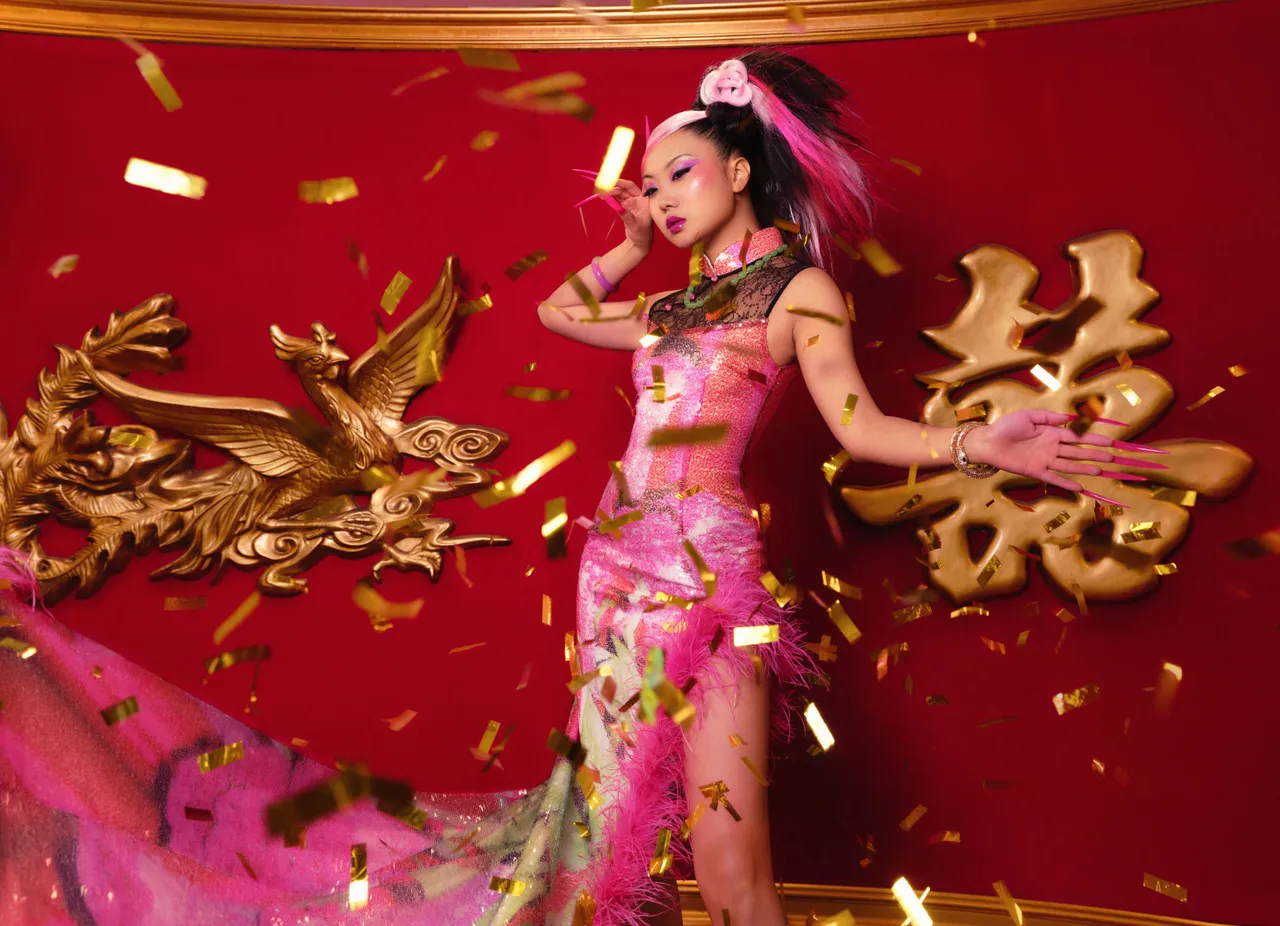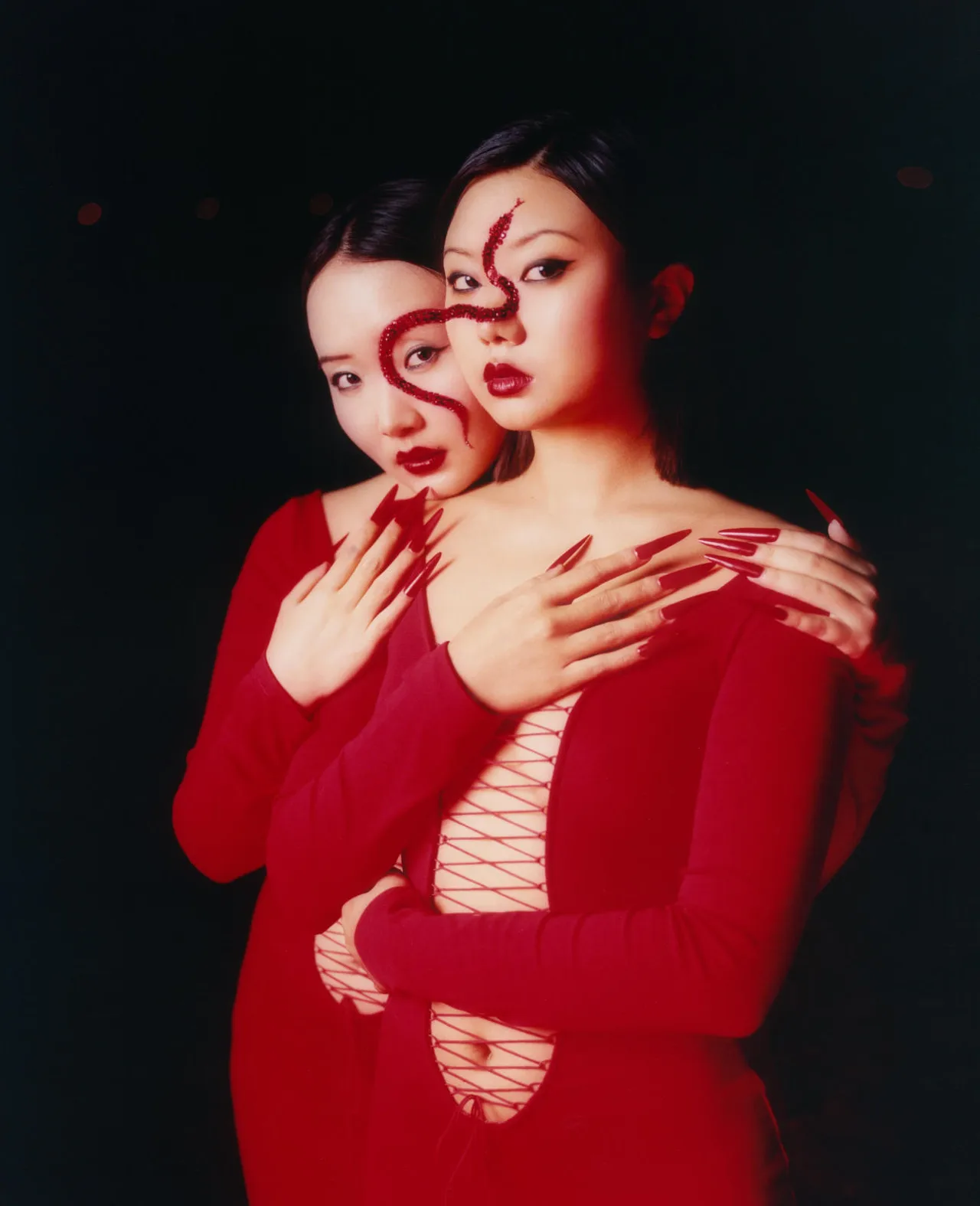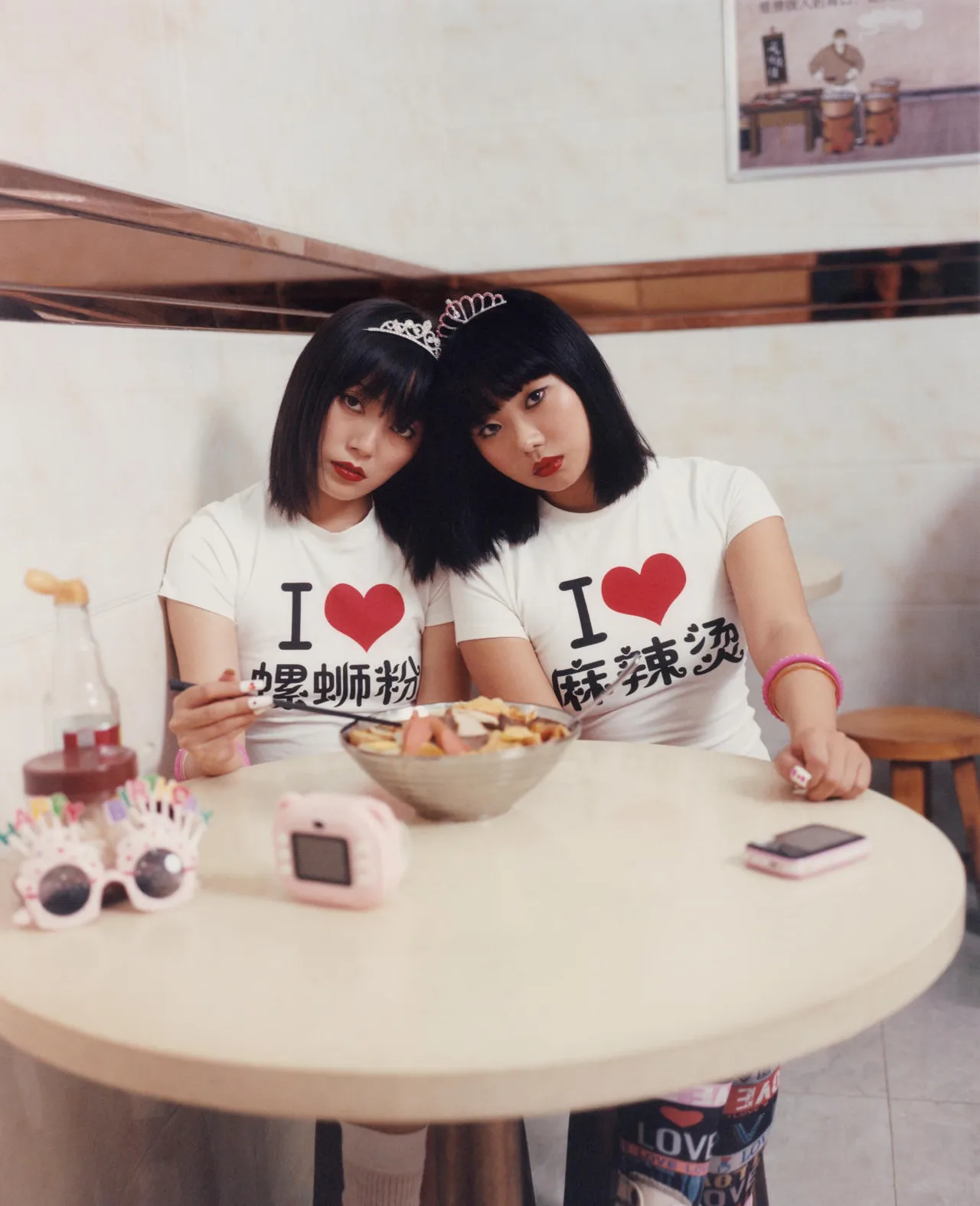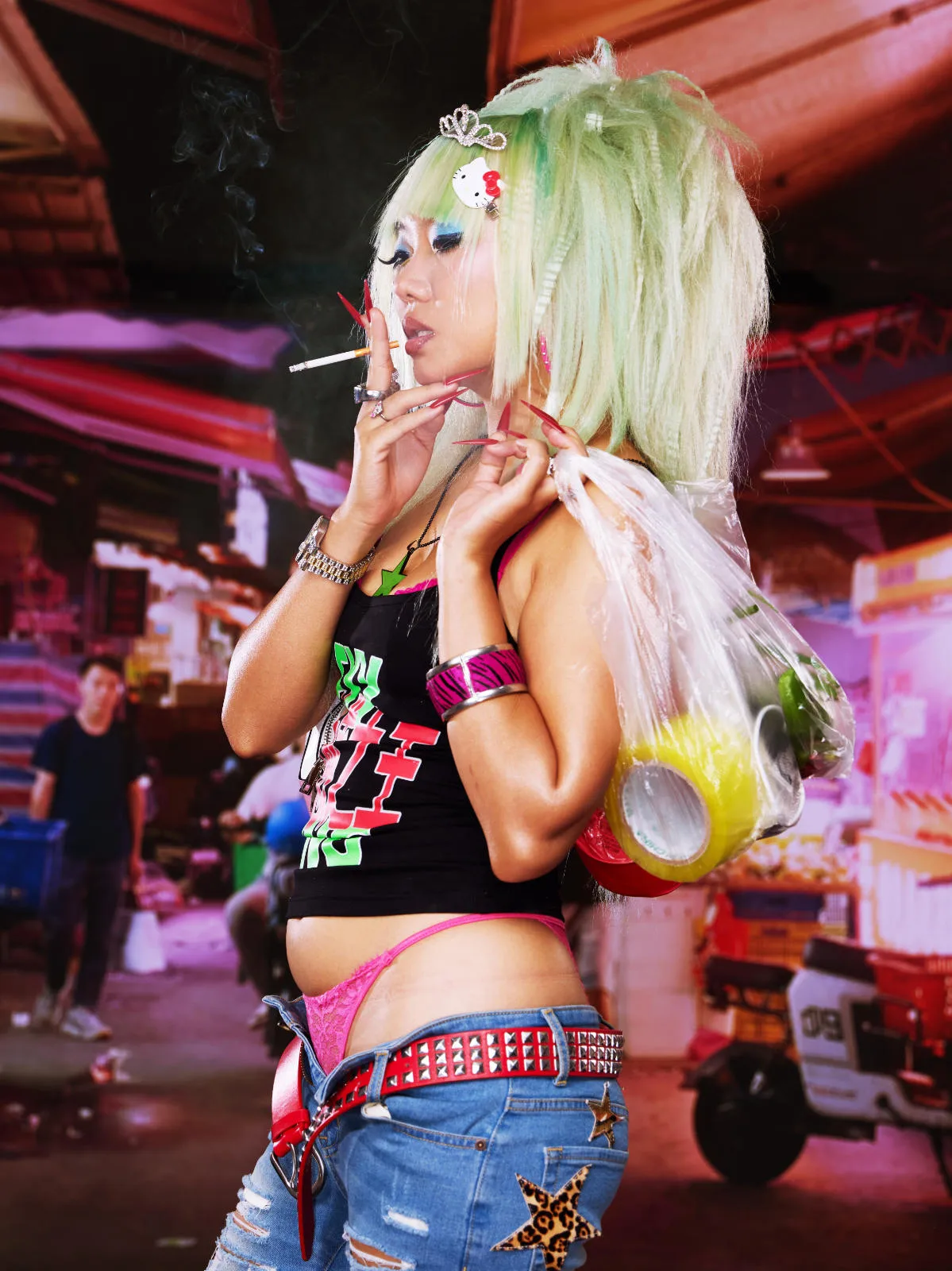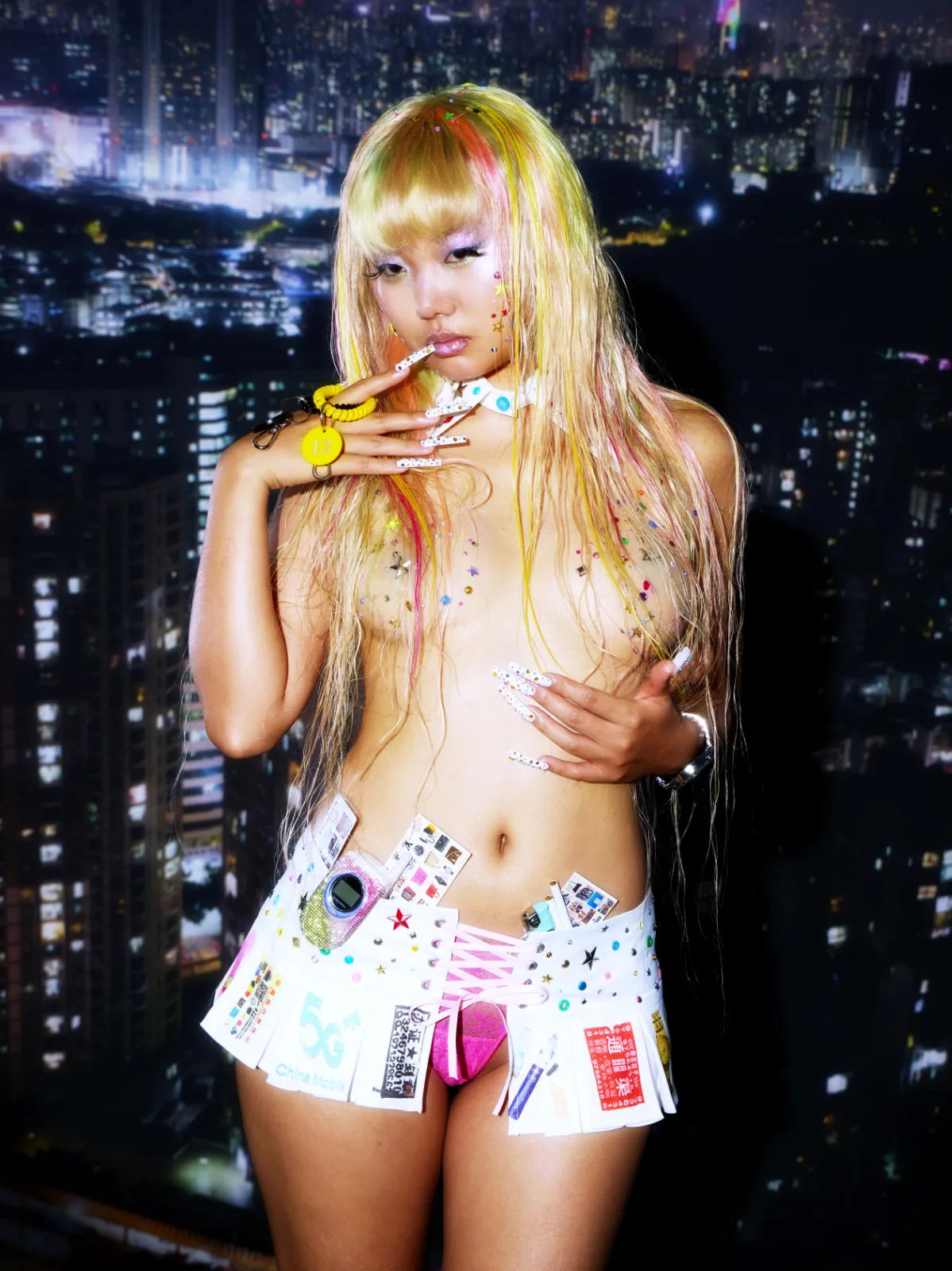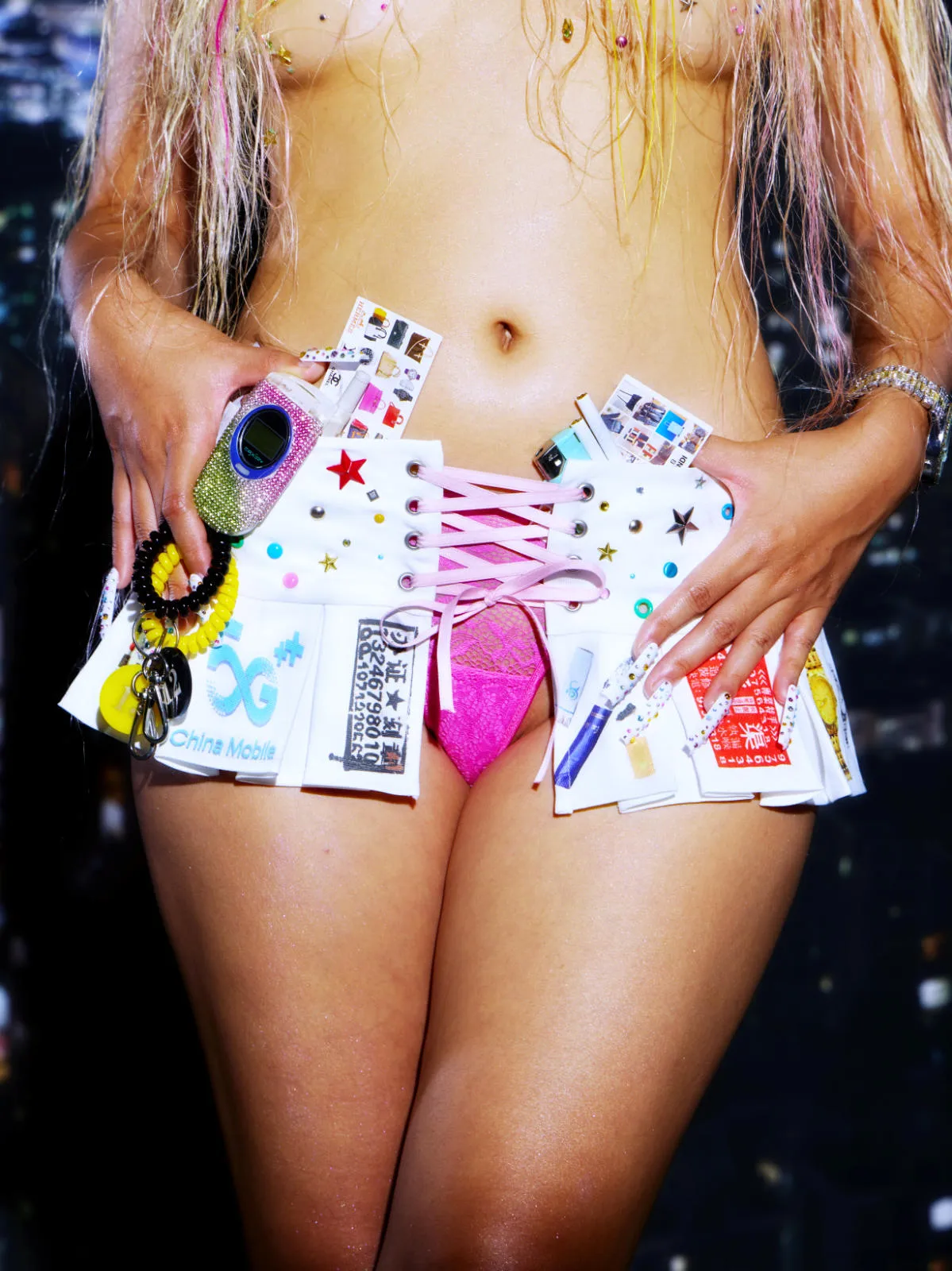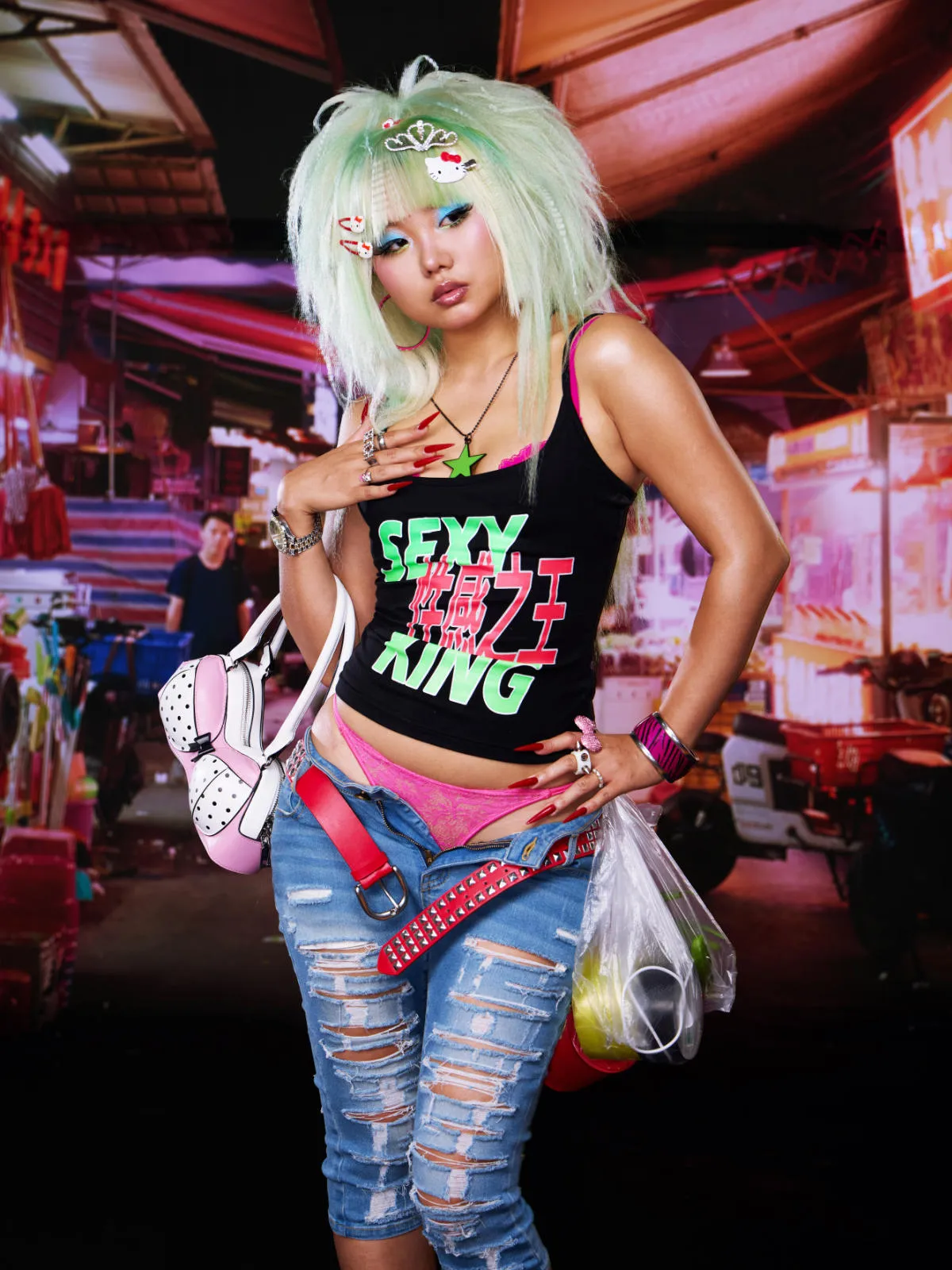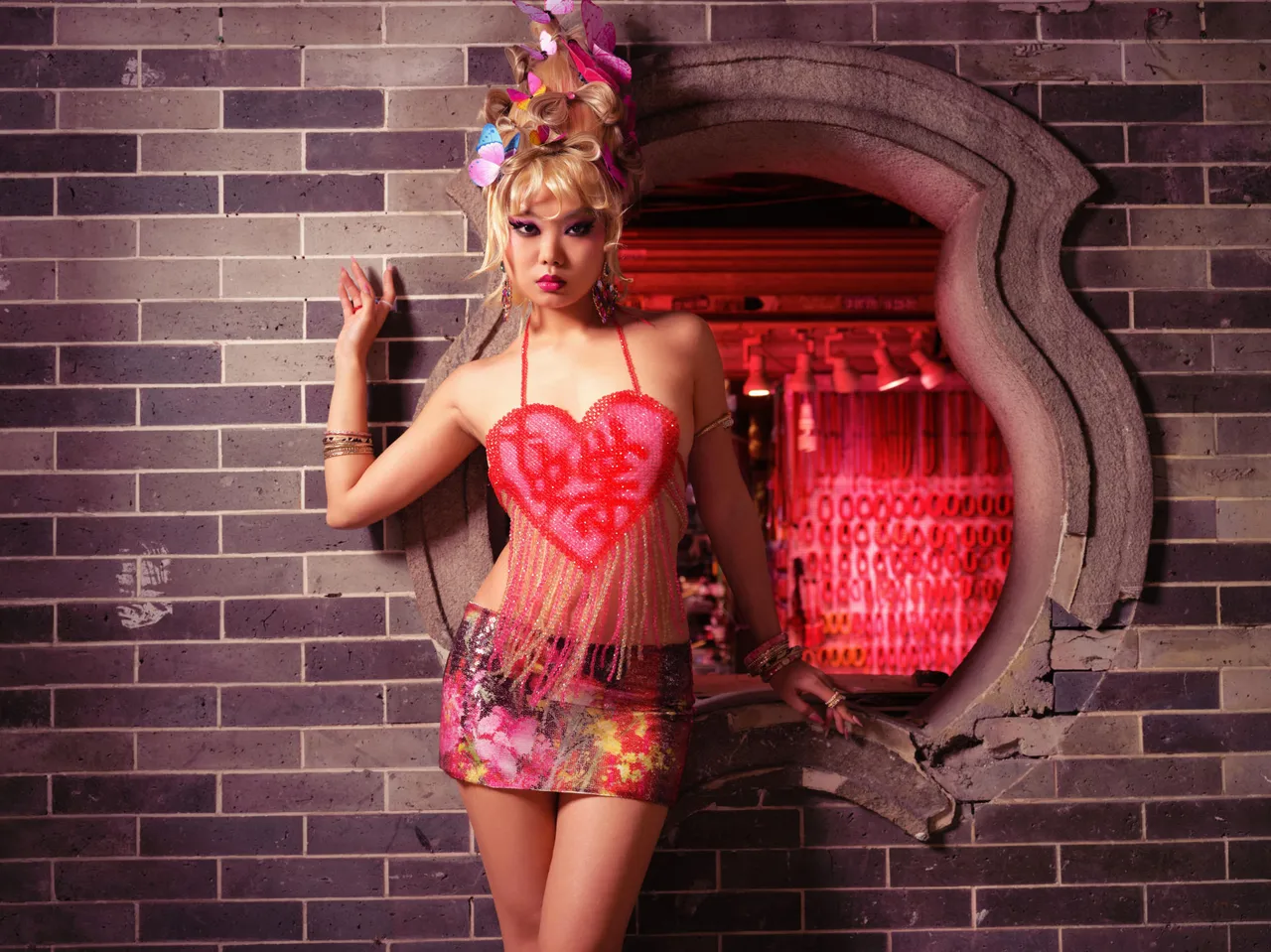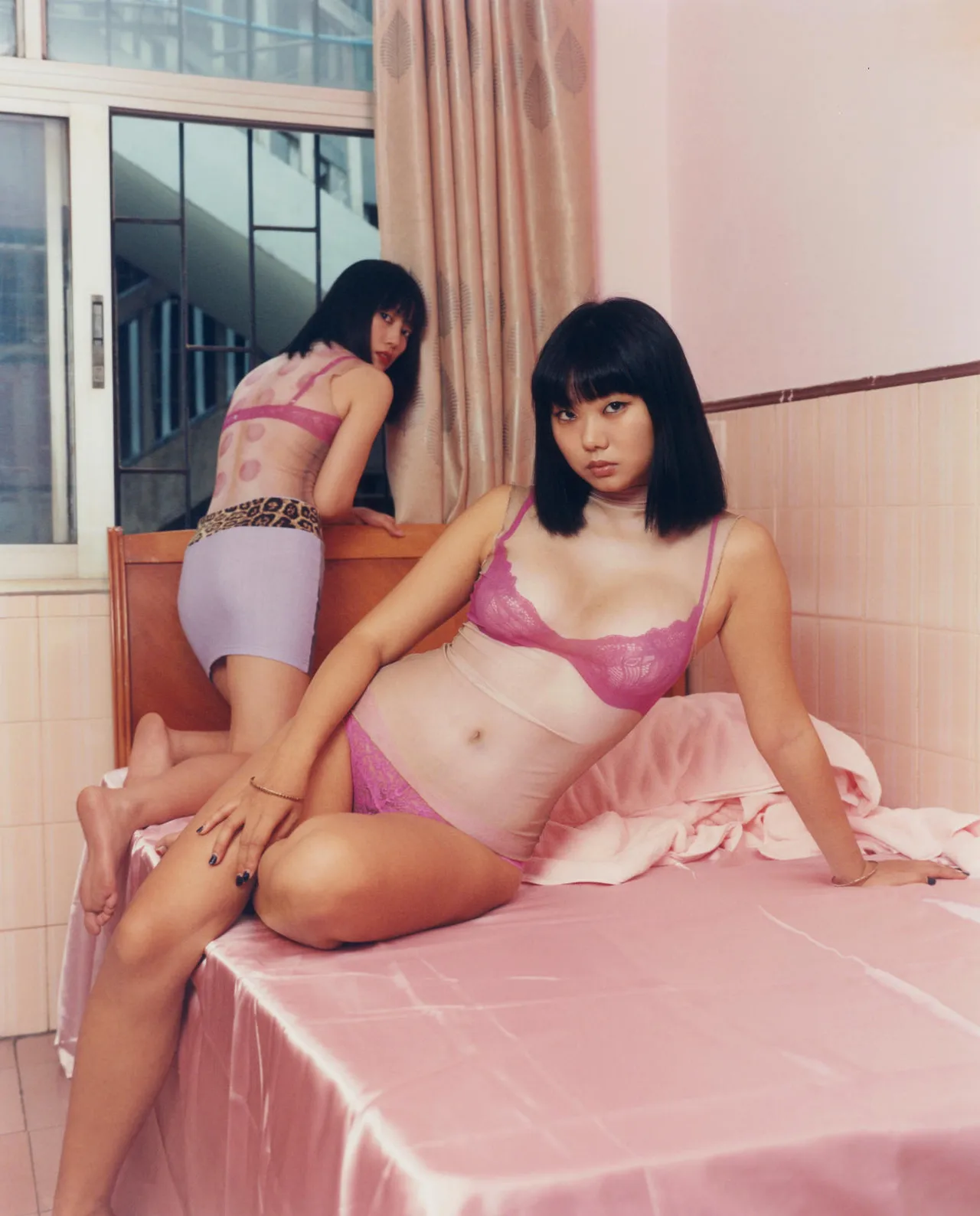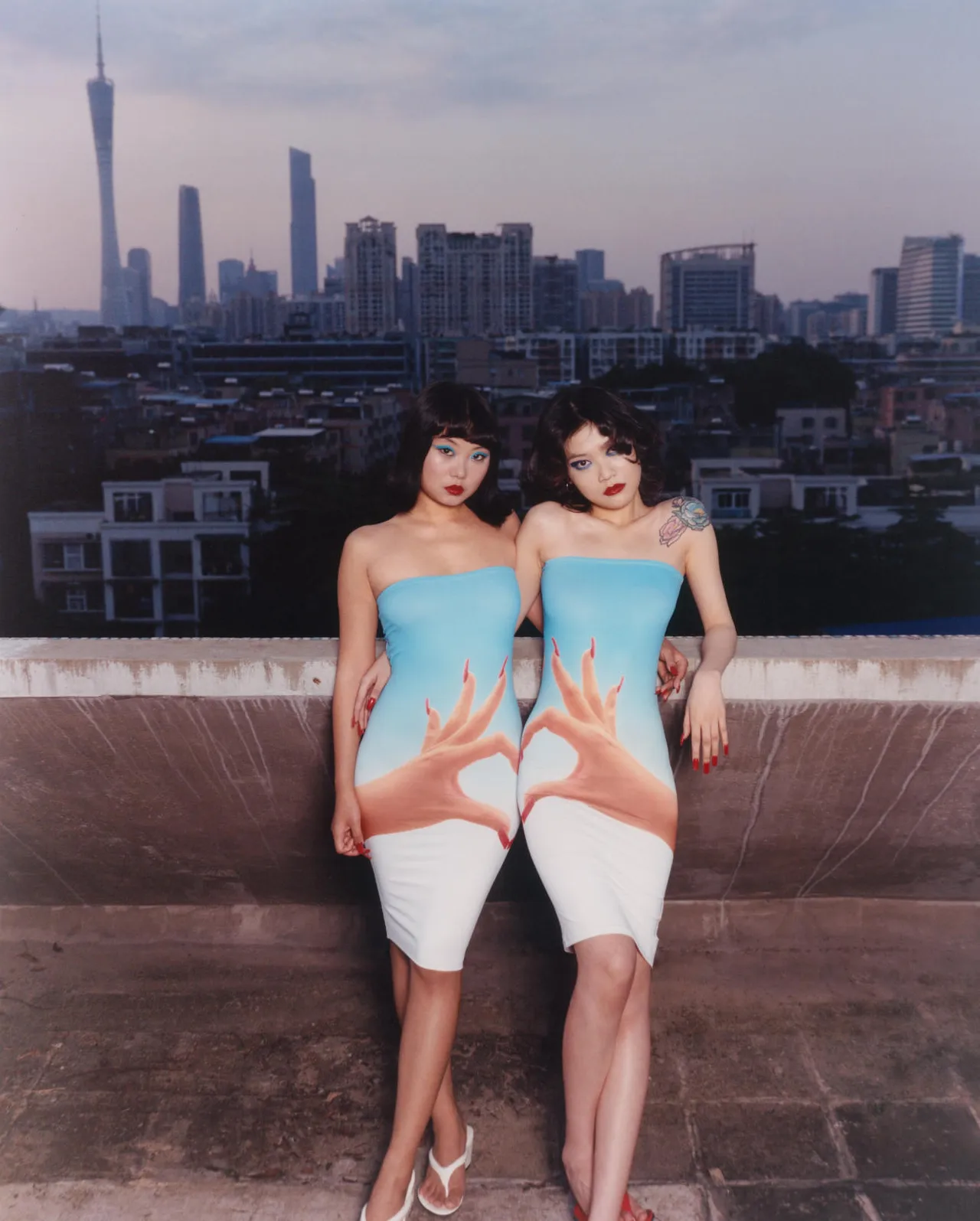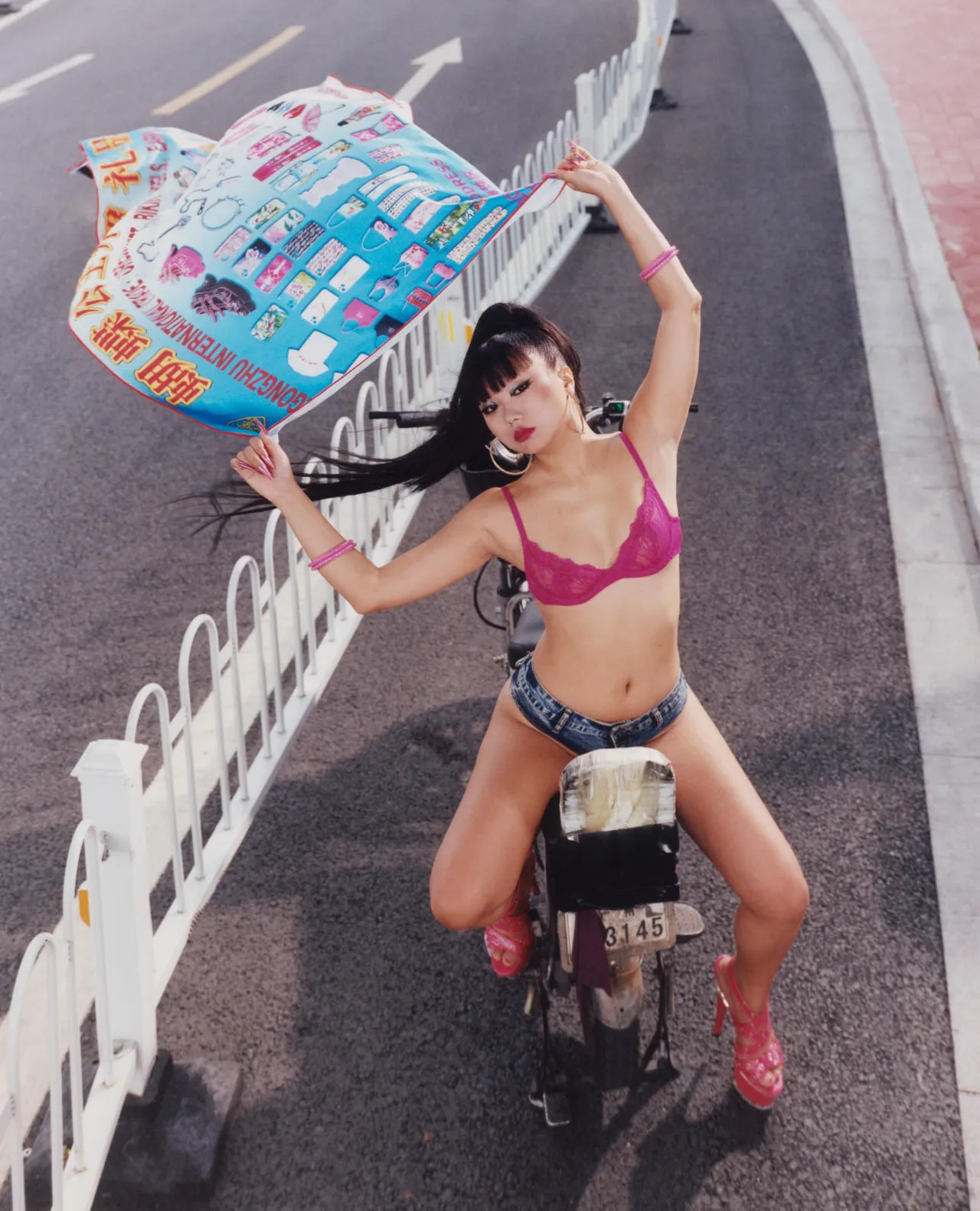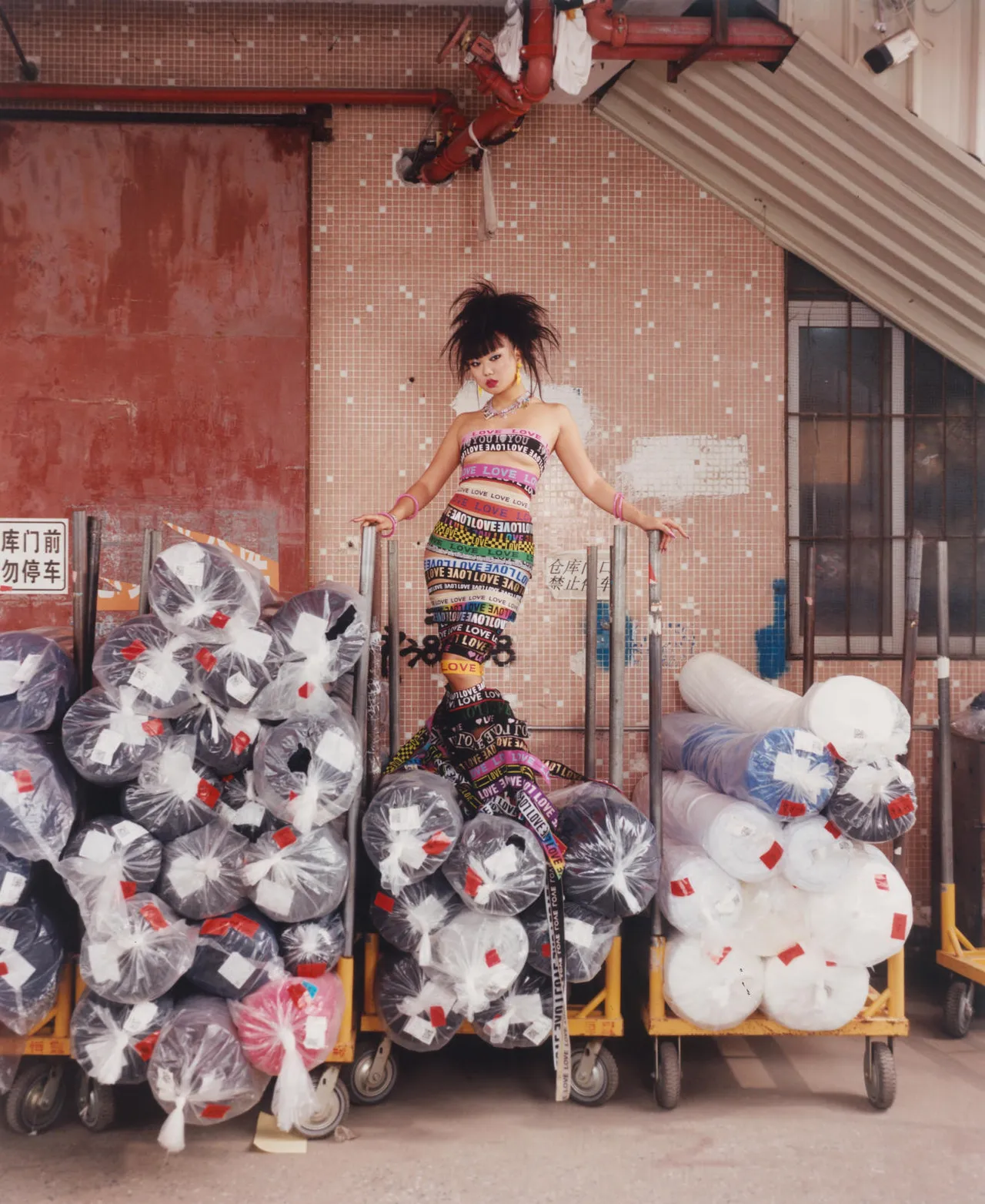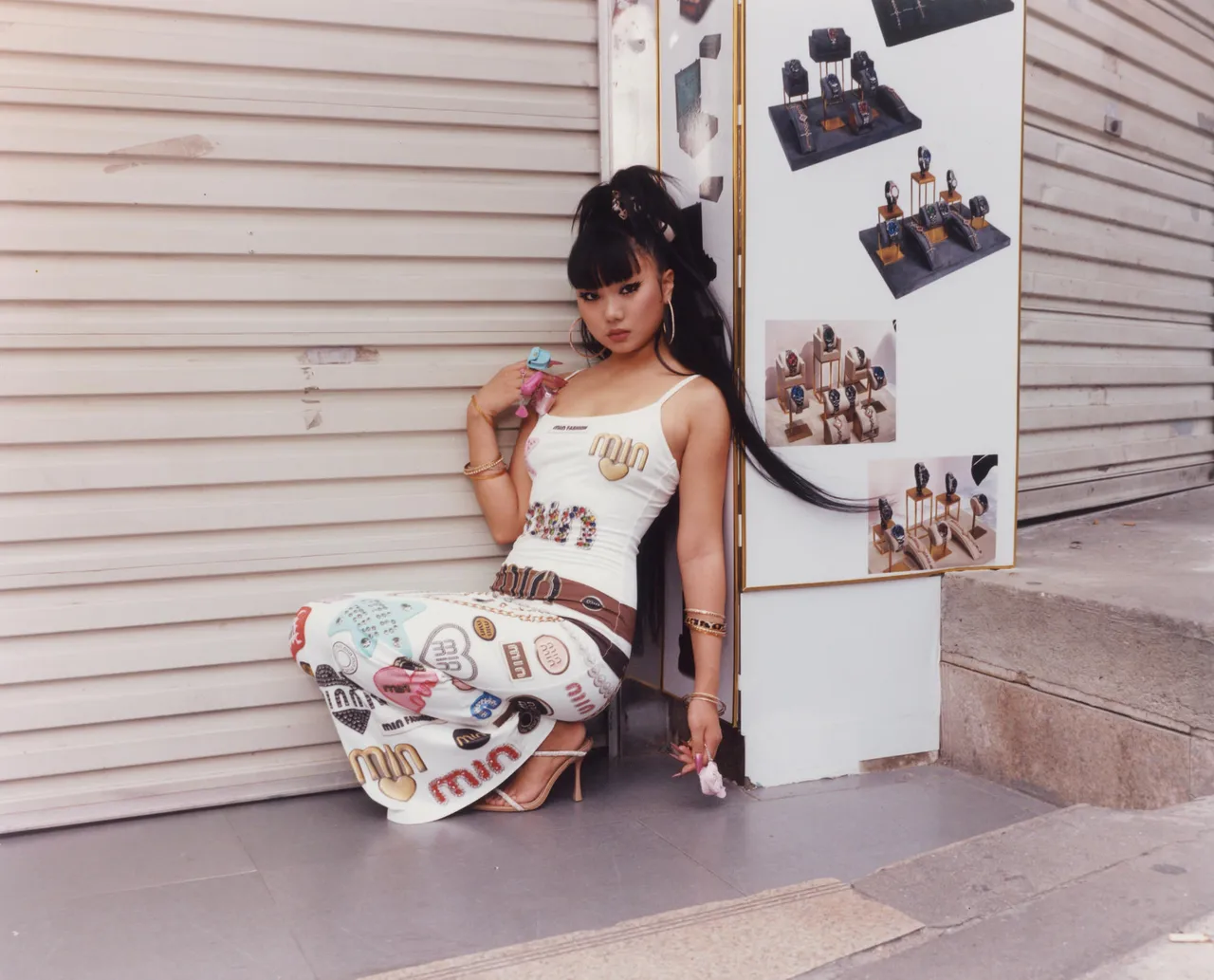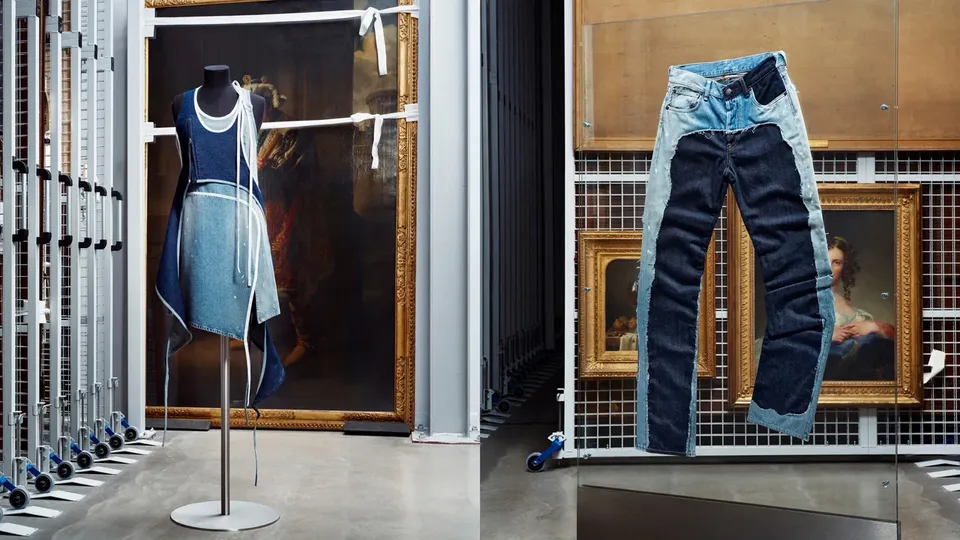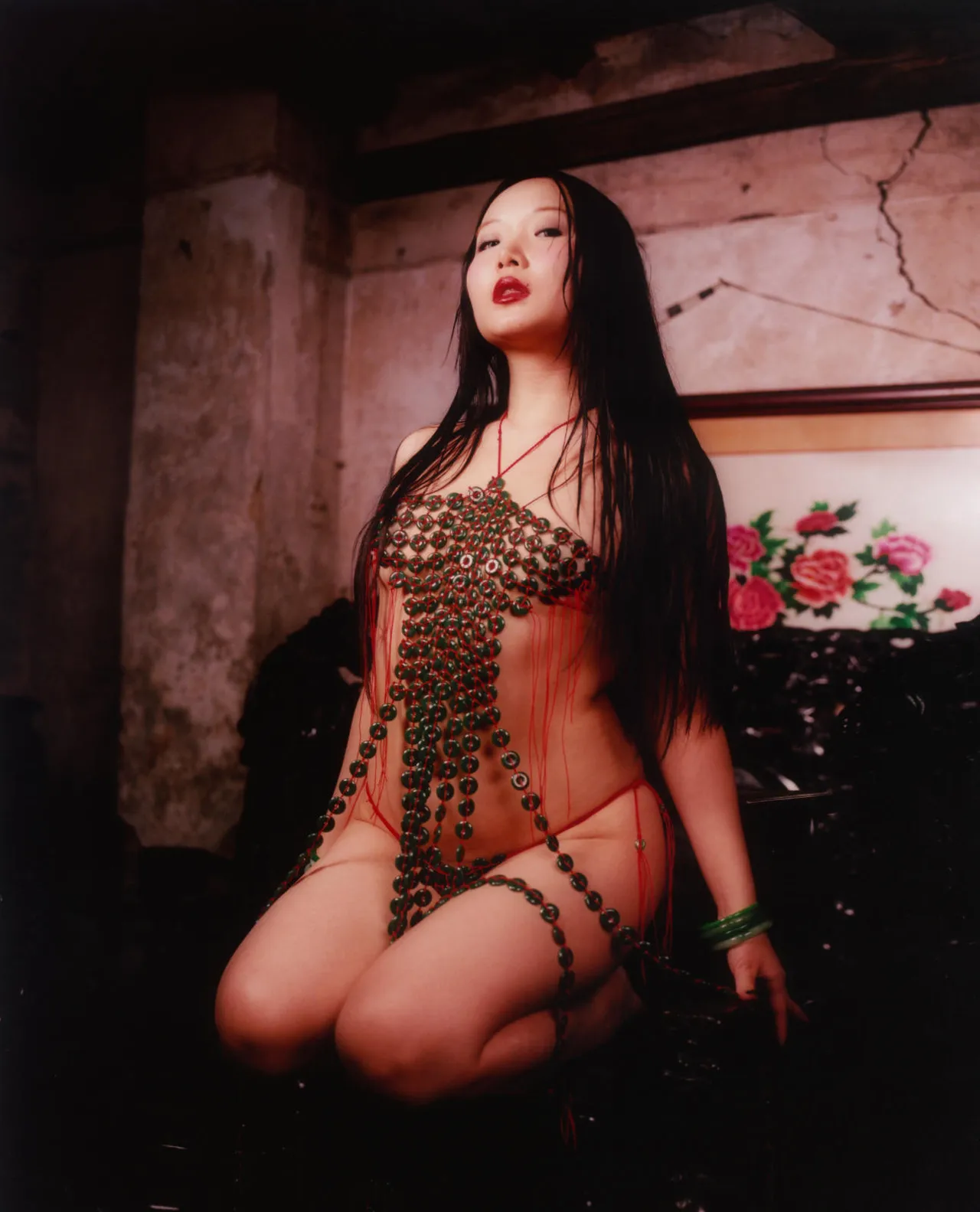
Imagine a ball gown shaped like a bell, but instead of an elegant fabric like satin or tulle, there are huge close-ups of faces printed on it. Imagine colourful mesh tops and heart-shaped bags that are circled by metallic spikes. Imagine tattooed bodysuits, tops with cunty slogans on the chest and a polka dot bra. Just that the last one isn’t a bra, it’s actually a purse. Sounds fun? Yeah, because it is. It’s the designs of HuDieGongZhu, the China-based brand founded by Butterfly Princess.
Butterfly Princess, that’s the dreamy pseudonym for Min Min. Since 2020, she draws inspiration from daily life, her personal experiences, and very-real human emotions. The outcome is fearless and camp, sometimes emo. It’s post-irony and post-internet while exploring and reinterpreting traditional Chinese designs. And, above all, it’s always dedicated to expressing thoughts from the perspective of the modern woman in a direct, in-your-face, and raw way. No matter what others might think of it. The goal: To make people (and especially women) feel strong. Confident. Bold. Without the need to be perfect.
We had the chance to meet Min Min and together, we immersed into a conversation about seriousness and humour. About finding a balance, about what the kingdom of the butterfly princess looks like, and about whose faces the designer would like to print onto a bikini.
Hi Min Min, what’s your favourite butterfly?
Actually, I’m not very familiar with real butterflies and I don’t have a favourite species. What I’m drawn to is the abstract idea of the butterfly itself.
On your website, you call yourself “Butterfly Princess”. What inspired that name?
I started calling myself Butterfly Princess in 2018. At that time, I was beginning to make a dating magazine and wanted to give myself a new name for this role as an editor-in-chief. I randomly chose “butterfly” for its colourful, beautiful yet fragile imagery, and paired it with “princess” — a slightly dreamy, slightly whimsical identity. An adult calling herself a princess is actually quite absurd and humorous, but at the same time, it carries a sense of strength.
How has living and creating in China specifically shaped your sense of aesthetics, rebellion, or humour?
The collision between thousands of years of deep historical culture and rapid modern development has created many fascinating contemporary social phenomena in China. These phenomena have directly influenced and inspired me. A lot of my sense of rebellion and humour also comes from internet culture.
Your work sits at the intersection of camp, couture, and post-internet aesthetics. How do you balance humour with seriousness in your design language?
I’m not particularly interested in seriousness. I prefer to express ideas through humour. In my opinion, a good piece of work is one that can make people smile knowingly. If a garment can function like a meme, something that resonates with viewers and makes them want to share it, then it’s very efficient. That said, not all of my work relies on cleverness or irony. Sometimes I also enjoy expressing ideas through complex and delicate craftsmanship.
“Not all of my work relies on cleverness or irony. Sometimes I also enjoy expressing ideas through complex and delicate craftsmanship.”
You work a lot with patterns and prints. How do you select them?
I enjoy using very direct symbols, often slogan-like texts or everyday objects. By removing them from their original context and placing them into a new one, I like to create a sense of contrast.
Many of your pieces almost feel like characters: vase dresses, spiked hearts, faces. Do you ever imagine stories or personalities behind them?
To be honest, I don’t see the pieces themselves as characters with lives. Instead, I imagine the roles people enter and the personalities they take on when wearing these clothes.
I love the photo you posted on your Instagram of the vase dress. It’s a beautiful shape. How long did you work on it, and what does the vase stand for?
The dress took about a month to complete. To me, the vase is a very contradictory symbol. It appears delicate and quiet, used to hold and display beauty, yet it is empty, fragile, and easily broken. In many ways, it resembles the position women occupy in many social narratives: meant to be looked at and decorated, while their inner weight is ignored. I wanted to place this ‘container’ onto the body, turning it from a background object into the subject itself. When the vase becomes clothing and part of the body, it no longer exists just to hold other people’s expectations.
Which face (alive or dead) would you most love to see printed on a bikini?
Elon Musk and Donald Trump.
A lot of your patterns include traditional Chinese elements. What’s the most surprising thing you’ve discovered while researching traditional clothing or motifs?
They are actually very bold. Many traditional motifs are presented as dignified and elegant, but when you look closely, they are full of desire, power, symbolism, and even violence. This made me feel even more certain that reinterpreting them in a playful or provocative way is completely valid.
Your use of traditional Chinese motifs is sometimes loving, sometimes mischievous. How do others react to that, and do you ever worry about provoking too much?
The general public has become much more accepting, but there are always people who feel shocked. Sometimes I do worry about my own position, I have to say.
You often explore desire and vulnerability at the same time. What does the combination of those two emotions reveal about modern womanhood?
I think modern women are expected to have neither desire nor vulnerability. What I want to express is this state of being ‘not allowed.’ Placing desire and vulnerability together is a way of acknowledging that women are not a single function or a single image, but real individuals who are constantly shifting.
Is there a part of yourself you didn’t feel safe expressing when you were younger, but now express through the brand?
I’ve never really thought about this question, and I don’t think so. In a way, I feel that I was braver when I was younger. I often want to return to that fearless state.
Who’s a strong woman in your life that inspired you?
I am surrounded by many female friends who run their own brands, and many of them are pioneers in the industry. I truly admire and look up to them, both for their talent and their character. For example, Yu Luqi who’s the founder of Nodress. There’s Rui Zhou who founded RuiBuilt, and Yue Qiqi. Whenever I face difficulties or feel like escaping or retreating, I ask myself, what would they do?
What’s one thing you’re afraid to try in your work, but secretly want to?
So many things! It feels like every day is a battle with my own laziness and cowardice.
What does the kingdom of the Butterfly Princess look like?
It isn’t clean or perfect. It’s a little chaotic, a little emotional, a little cheap, and a little sacred. Everyone is allowed to enter, and everyone is a princess – especially those who have never felt like one.