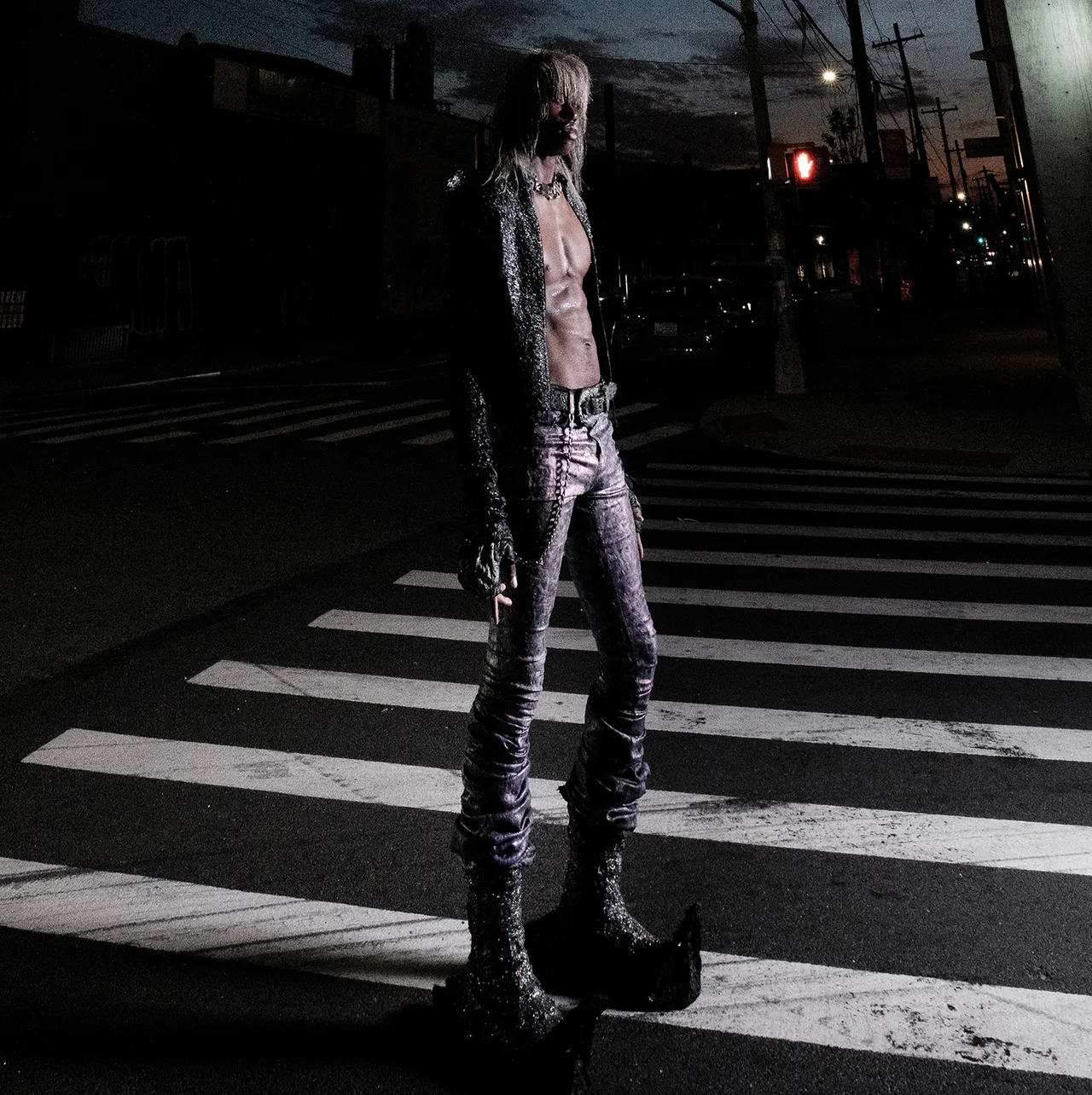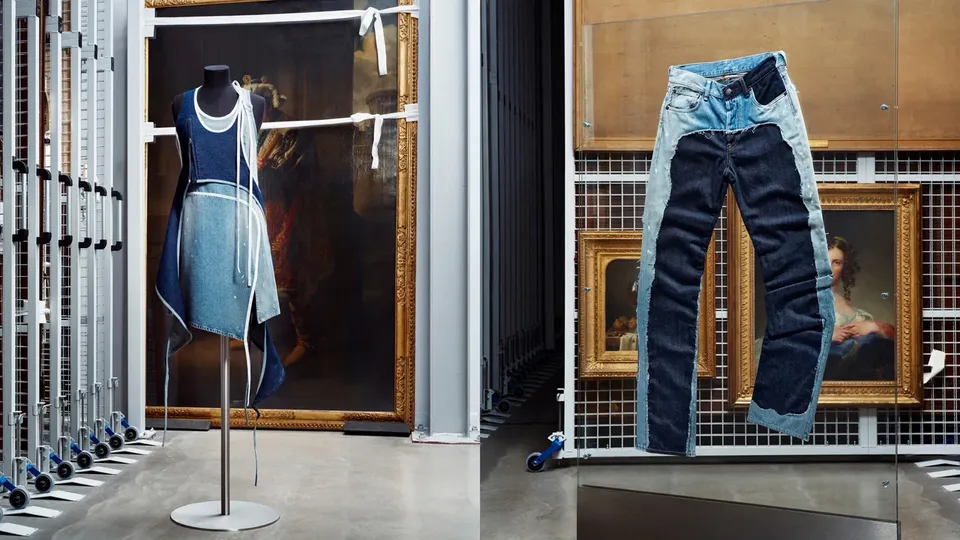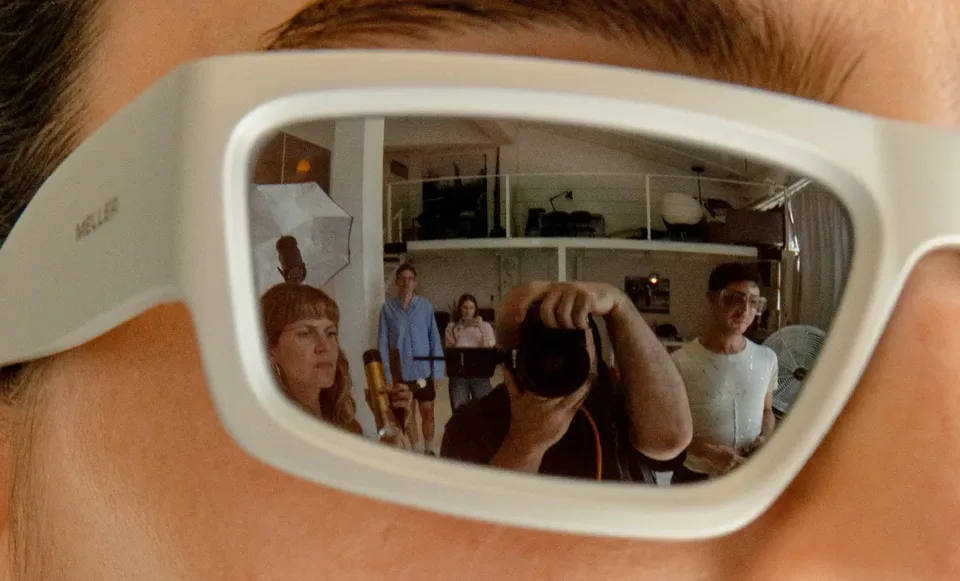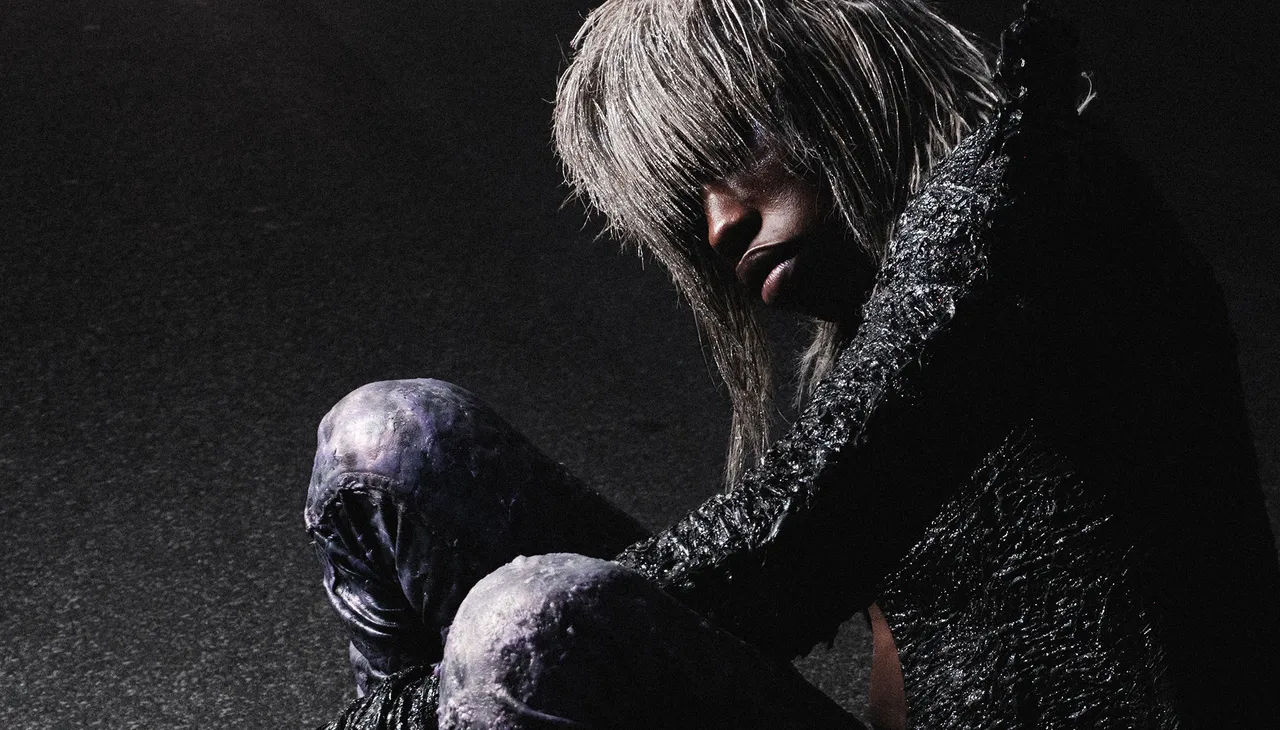
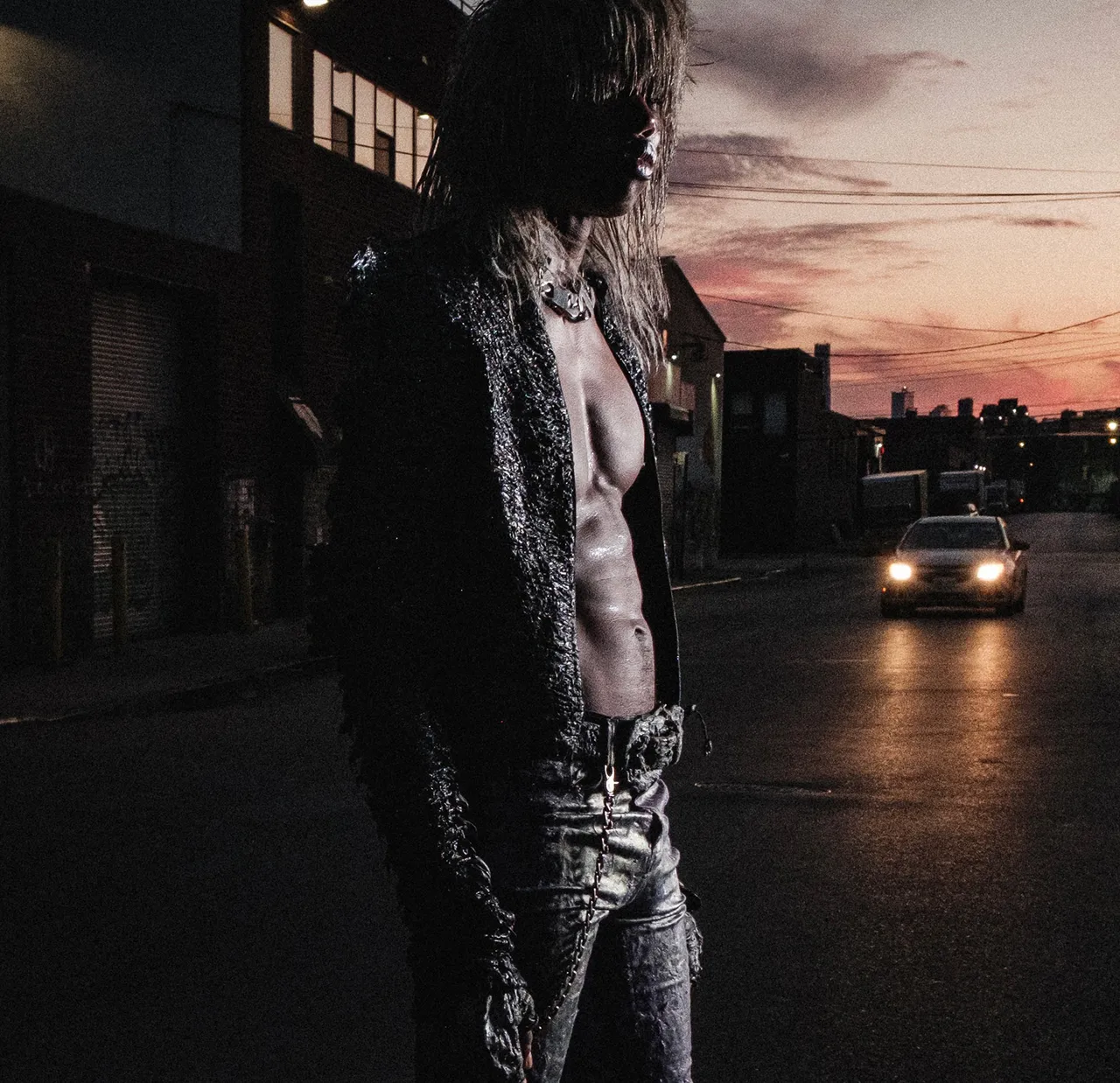
Within a fashion landscape where algorithmic minimalism and high-street rebrands of counterculture are trending, Hubane’s wearable sculptures glitter as visceral, androgynous, cyberpunk statements. Emulating what a character might wear in a futuristic movie, the brand’s pieces span 3D printed neuromancer biker glasses with black polarised lenses, to an Æ-paradigm shift jagged helmet, to abstract art on canvas. Many of Hubane’s wearable pieces are hand-sculpted in New York, featuring a proprietary Vernum Material. What ties them together, aesthetically, is a rebellion from commercialised fashion and a move towards building a futuristic eco-system where Hubane’s art pieces all contribute to its world-building.
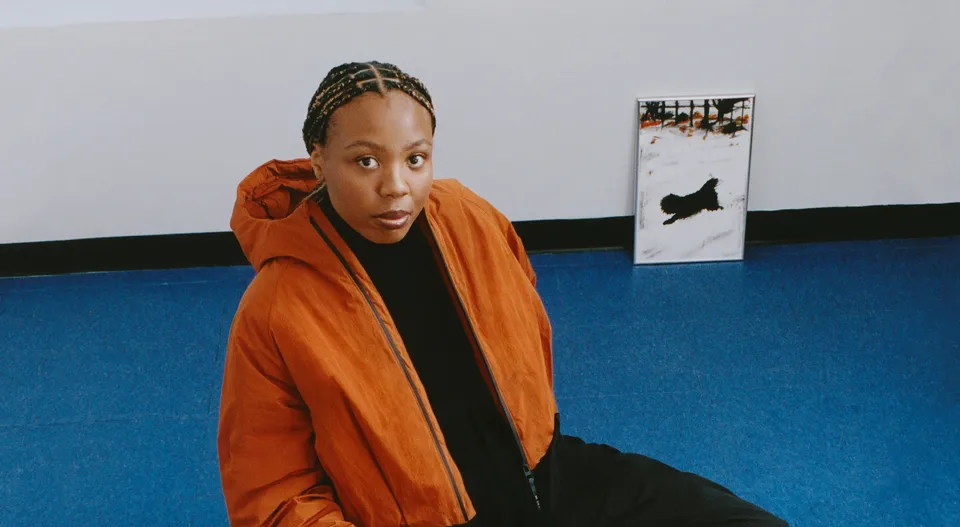
We got the chance to talk to Israel Yanir, the Atlanta-born artist behind Hubane’s chrome mask. In conversation, we covered how Hubane spawned from the dystopian-feeling culture during the pandemic, his ethos, and the future direction of Yanir’s brand as we look towards the next Fashion Week.
In Hubane you merge canvas paintings, sculpture, fashion, music, and even film. How did this eclectic mix come together? What is it that ties the different aspects of Hubane together?
I would say this came about in the development of each discipline. I was listening to a lot of music as I was designing my clothes; even as I was doing the paintings and sculptures. I've always listened to music as I've created, and all that has inspired my taste for music but also my way of expressing myself to music. Even when it came to doing the painting sculptures, that really came directly from me just beginning making clothes. And the way I began making clothes was by just getting sharpies and drawing on clothes that I bought from the thrift store. Once I was using the clothes from the thrift store and T-shirt as a canvas, I really wanted to make pieces I can put up on my walls as well. So that's why I started doing painting. And even the sculptures also came from when I first started sculpting the boots and sculpting the Vernum pieces; I was like, oh I wanna make actual sculptures out of this, because I'm already doing that with the wearable sculptures that I'm creating. So really, this all kind of bounced off each other.
Since you mention music as part of your artistic development, what kind of musical artists did you first gain inspiration from?
Well as a kid I was always inspired by Michael Jackson. He was a real big inspiration of mine, to the point where I would learn all his dance moves cause I was passionate about dancing. I'd learn a dance move and then, school. I was probably around like six at the time and even throughout elementary, other schools were finding out about me doing it and I would go perform at those schools. I performed at my school, before that, the school my mum was teaching at. And I just felt a lot of strong joy expressing myself in that way. And as life goes, things evolve I developed my own style and a lot of that came from me being inspired by Michael Jackson when I was a kid, and even André 3000.
You know, especially me being from Atlanta as well, growing up my mum put me on to André 3000. I was now seeing what he was doing, seeing the boundaries he was pushing. And even heavy metal. My aunt put me on that one day in the car and I connected with it so, so strongly, like on a different level. I will say my music is a combination of heavy metal with the way that I'm distorting my voice, to use my voice as an electric guitar. And I can apply this to a lot of different other genres like pop, rap, and even funk or blues. All of those different genres I'm able to apply the same rawness from heavy metal and, that's something I've been passionate about since I was a kid. So it's really a dream come true to be doing that now.
You know, especially me being from Atlanta as well, growing up my mum put me on to André 3000. I was now seeing what he was doing, seeing the boundaries he was pushing. And even heavy metal. My aunt put me on that one day in the car and I connected with it so, so strongly, like on a different level. I will say my music is a combination of heavy metal with the way that I'm distorting my voice, to use my voice as an electric guitar. And I can apply this to a lot of different other genres like pop, rap, and even funk or blues. All of those different genres I'm able to apply the same rawness from heavy metal and, that's something I've been passionate about since I was a kid. So it's really a dream come true to be doing that now.
Your Felicity Reborn helmet is presented as a wearable sculpture. How do you decide when a piece transcends being a hand-sculpted piece that is worn, entering the realm of gallery art instead?
Well, to be honest, every piece I make is intended, even if it’s just a T-shirt, to be something to put on the wall in a gallery. Like when I first started to make my own clothes I was really inspired by this Kerwin Frost interview with Ian Connor and A$AP Rocky. In the interview, they talked about the differences between pieces and clothes, and pieces that are maybe something you can wear but you can also put it up for display, you know, as an art piece. That really inspired me to make everything that I wore, everything that I created for my brand literally an art piece that you can so happen to wear. So really, they're all art pieces you can put in a gallery, but there are certain sculptures that aren't able to be worn that are really just a display piece primarily.
You have hinted towards debuting a collection during Fashion Week. Can you shed a little more light on what stage-set, narrative, or experiential framework you’re planning for the show?
Well, I'd say right now we're in a space where we're kind of departing from the dystopian direction we were going in to more of a utopian, galactic direction and our collection will definitely be presenting that. It'll be a lot more sculptural. It'll be a lot more refined. And we're not too sure what location will look like yet, but it's definitely gonna be a space that has a strong futuristic feel to it.
Your collection Vernum Dawn was created during the pandemic in 2020. What kind of mindset was the collection created from, and how does Vernum Dawn evolve over time?
That mindset evolved from the visual decision I made to see the bright side of a very uncertain time. You know that when the pandemic was happening, before the collection was made, it had just made everyone leave school, leave campus all hours and they were like, “We don't know how long we're gonna be home; how long the public is gonna be closed.”During that time I was putting all my eggs in the basket of being an entrepreneur with my brand, like I wasn't looking for a job or anything. I was looking to push my brand. I was wearing my clothes on campus and because we couldn't be in public areas any more it was like — I had to switch it up.
So I really took to making my brand online a lot stronger, but also around that time of the Vernum Dawn collection spring was coming around and at that time my bro Graham’s grandparents who lived in Maryland were letting me and my bro Justin chill with them. In the Maryland area we were able to see all the flowers and the trees. The scene was so beautiful; there was a lot of flowers and because of spring, and because it was springtime I was looking up translations for the collection and vernum has to do with spring. But also, I look at spring as being a new beginning; a new bright beginning, and that's the direction I took with that collection. To be honest, that's been a continual thing I've been building upon. That's where I was during that time.
So I really took to making my brand online a lot stronger, but also around that time of the Vernum Dawn collection spring was coming around and at that time my bro Graham’s grandparents who lived in Maryland were letting me and my bro Justin chill with them. In the Maryland area we were able to see all the flowers and the trees. The scene was so beautiful; there was a lot of flowers and because of spring, and because it was springtime I was looking up translations for the collection and vernum has to do with spring. But also, I look at spring as being a new beginning; a new bright beginning, and that's the direction I took with that collection. To be honest, that's been a continual thing I've been building upon. That's where I was during that time.
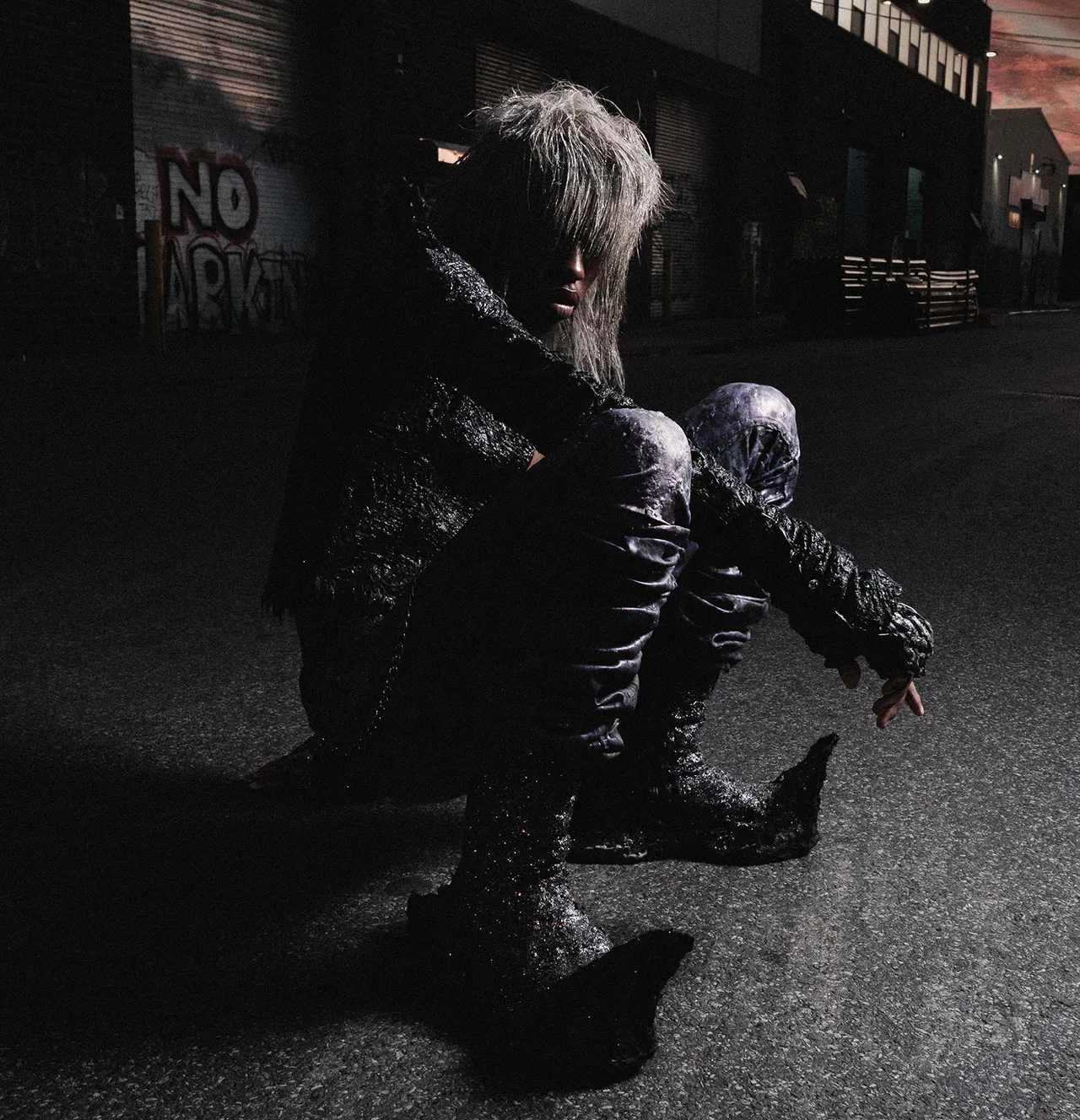
You say Hubane is a fashion label rooted in the action of redefining reality, and many of your designs, like your futuristic sunglasses, feel otherworldly. Would you say that Hubane has sci-fi aesthetics, or does that feel limiting?
It definitely does have a sci-fi aesthetic. You know, growing up of course everything I'm inspired by, I'm not usually inspired by direct references. It's really just my built-up subconscious of things: everything I'm watching and everything else I just enjoy. And I enjoyed a lot of sci-fi movies, a lot of them. From the futuristic scenery to the galactic space exploration movies. I’m inspired by all that and I grew up watching all that.
Another way you go about redefining reality is by focusing on unisex collections. What is the significance of this decision for Hubane? Has your relationship to masculinity and femininity shifted through designing genderless garments?
Yeah it's really just like, I feel like making clothes that are just limited to gender is limiting. Certain silhouettes can enhance the figure; enhance how a man or woman may wear it. You know, even certain ways women's jackets fit and how sleek they fit and how it really shows off your body, that’s something that men and women can benefit from. A lot of menswear pieces can just be limited to big boxy boring silhouettes, in my opinion. Even though there are a lot of cool ones, when there's no limit you can wear whatever you want and push your creativity to the furthest point.
What is the most chaotic or noticeable thing in your studio right now? Tell us what’s haunting your creative space.
I will say, right now, I'm reworking these older pieces that I did just for fun. And when I get started on something I like to go in. So I made a pile of the pieces on my chair. I'm just knocking out a bunch of pieces but as for the ones that are waiting to be done, they’re all together and almost like a little monster. I'm just knocking out a little project, a little side quest.
If Hubane had a score around which its pieces are designed, who wrote it? What would it sound like?
I would say Vangelis. Yeah, for sure. He did the Blade Runner soundtrack and I like his use of sense. That was really one of the original cyberpunk soundtracks that inspired a lot that came after so it's something that really planted a seed in my brain to where whenever I hear some synth and a beautiful melody it just really speaks to me on a different level. It also raises my frequency on a different level, so that's definitely something that I will say resonates.
You have said that with Hubane you aim to send the message that people can use their passion to positively impact the world. What does it mean for you to design with positive impact in mind?
To me what it means to design a positive impact, with consideration, is to create what is authentic to you and something that you think bring joys to others whilst also bringing joy to yourself. Something that you could also see as pushing boundaries further. You know that's really important to me. Pushing the boundaries further; showing that there’s always more we can do. Like, there is always little things, like little hidden messages that you can learn from certain work and then apply in a different direction. And then it's gonna take a world of its own. It’s about always being inspired and aiming to inspire others.
Your website notes that every Hubane piece is handmade by Israel Yanir using “the best available and sustainable material regarding fabric, fit, and fabrication”. Could you take us through the process of selecting and working with these materials? How do you balance ecological responsibility with your creative vision?
Well, I mean every piece I make is made to last. I want each piece to be passed down from generation to generation and not just some piece that is gonna just be thrown out and add to the waste, you know? I want that for all the pieces I make and material that I use.
I use a lot of like cotton materials and start off with certain materials like that, or nylon, but what I do is I enhance the materials with my material combinations. I really just mean, like, the mixed medias that I create that all fall underneath the title of Vernum material. And when I add this material to the cotton or nylon, what it does is it makes that material a lot stronger, makes it waterproof, durable you know, makes it a lot stronger so the pieces will be able to be used for much longer, which is a way of being sustainable with how we produce our pieces, and how our pieces are meant to last.
I use a lot of like cotton materials and start off with certain materials like that, or nylon, but what I do is I enhance the materials with my material combinations. I really just mean, like, the mixed medias that I create that all fall underneath the title of Vernum material. And when I add this material to the cotton or nylon, what it does is it makes that material a lot stronger, makes it waterproof, durable you know, makes it a lot stronger so the pieces will be able to be used for much longer, which is a way of being sustainable with how we produce our pieces, and how our pieces are meant to last.