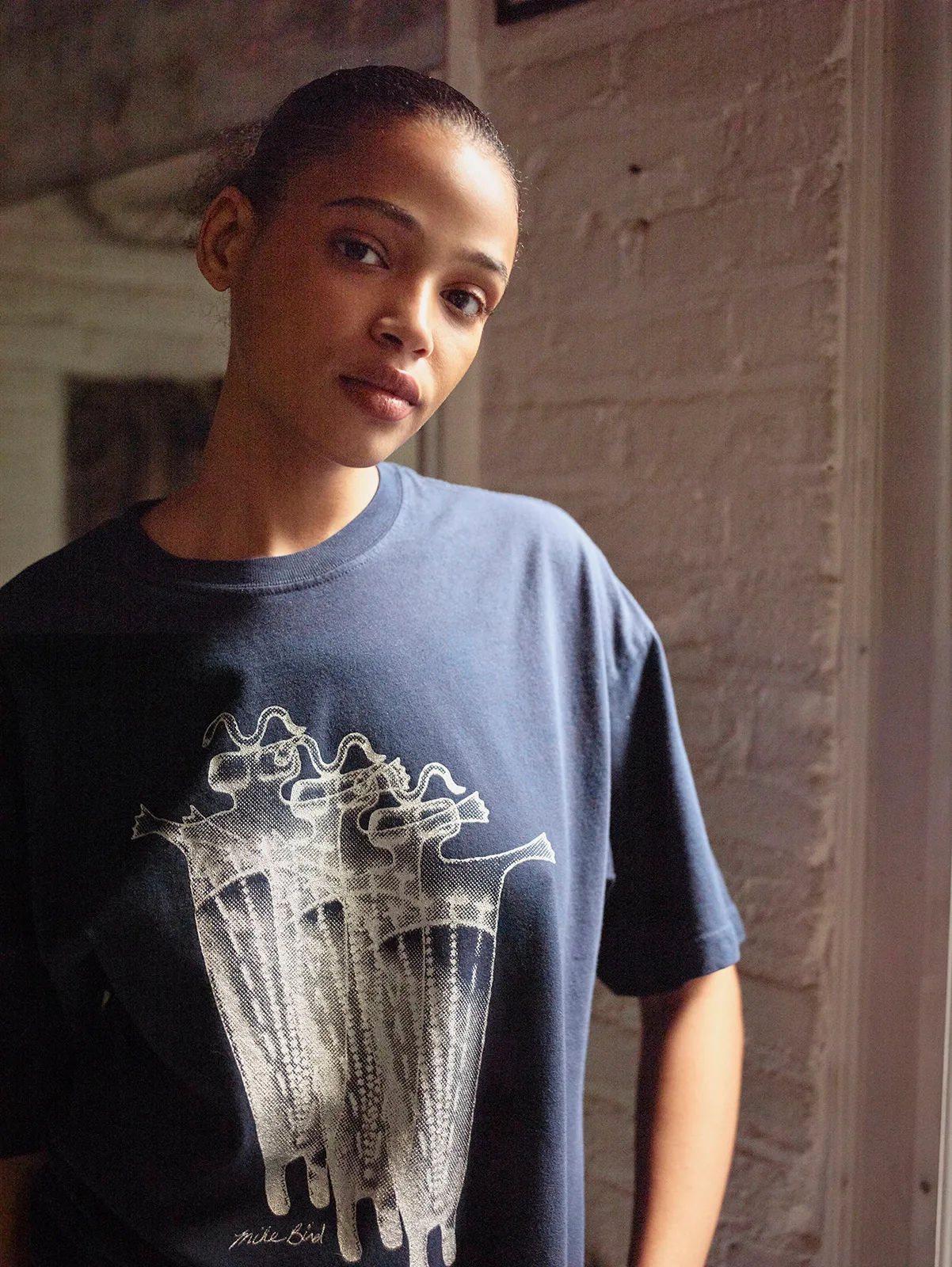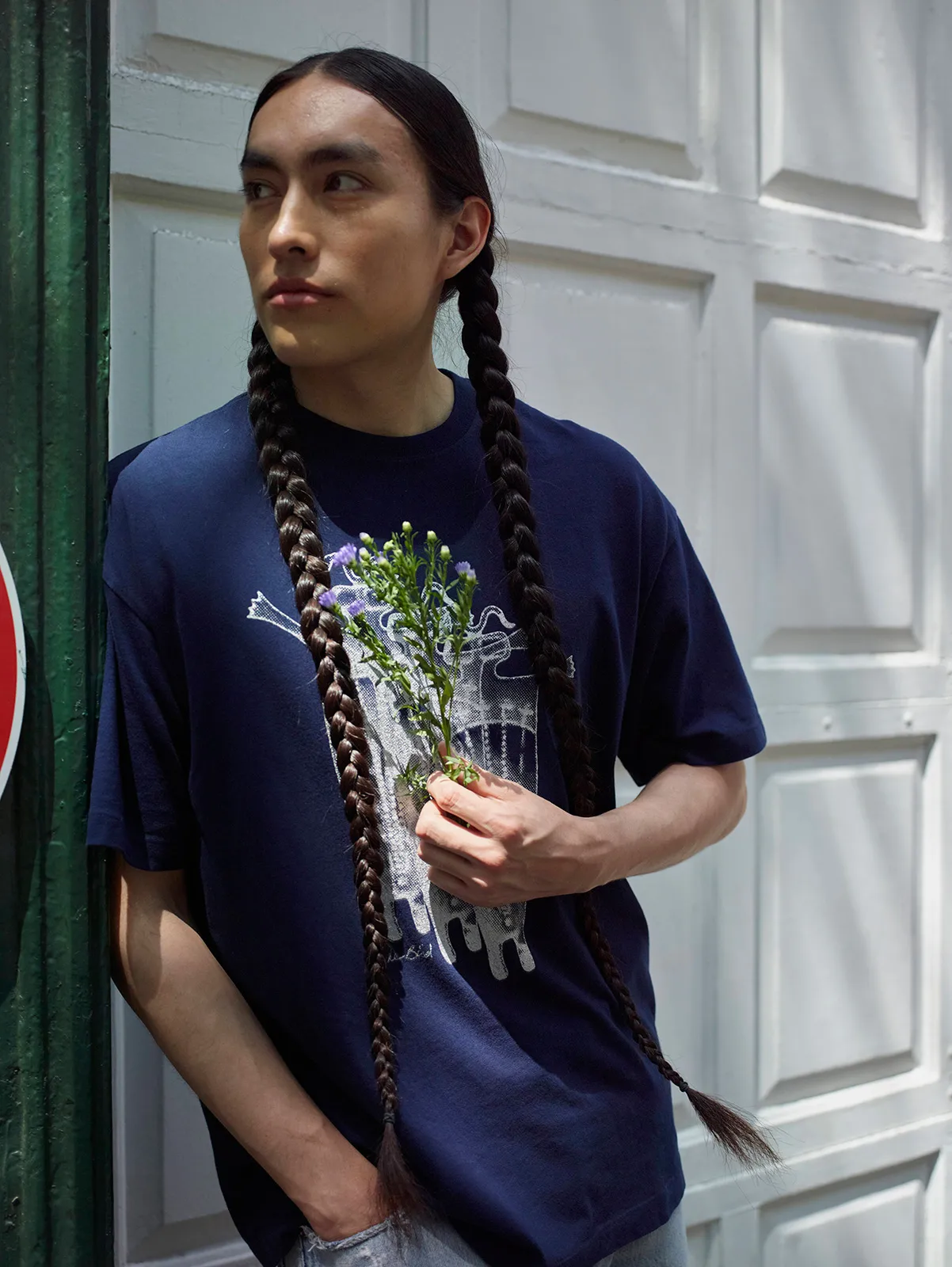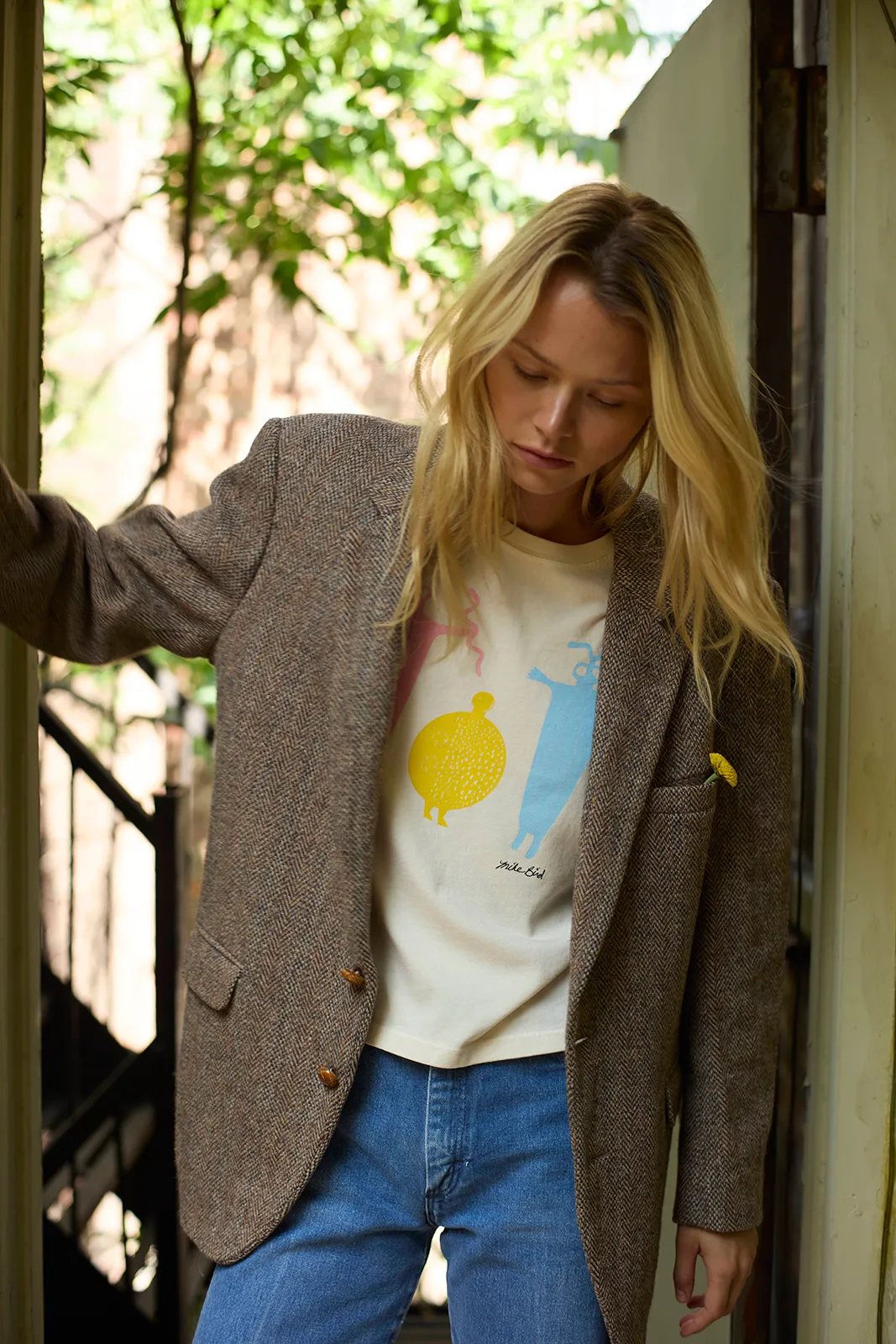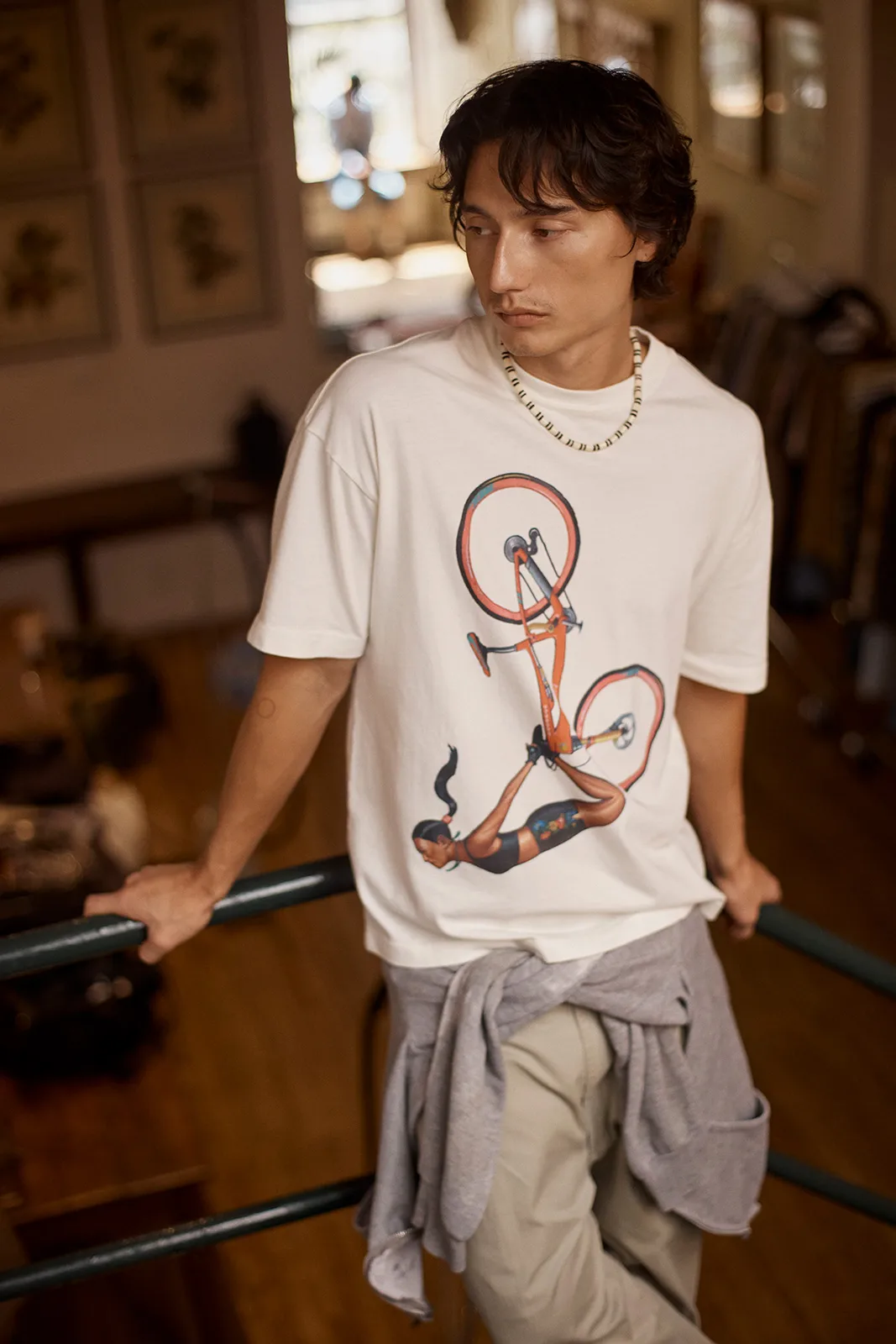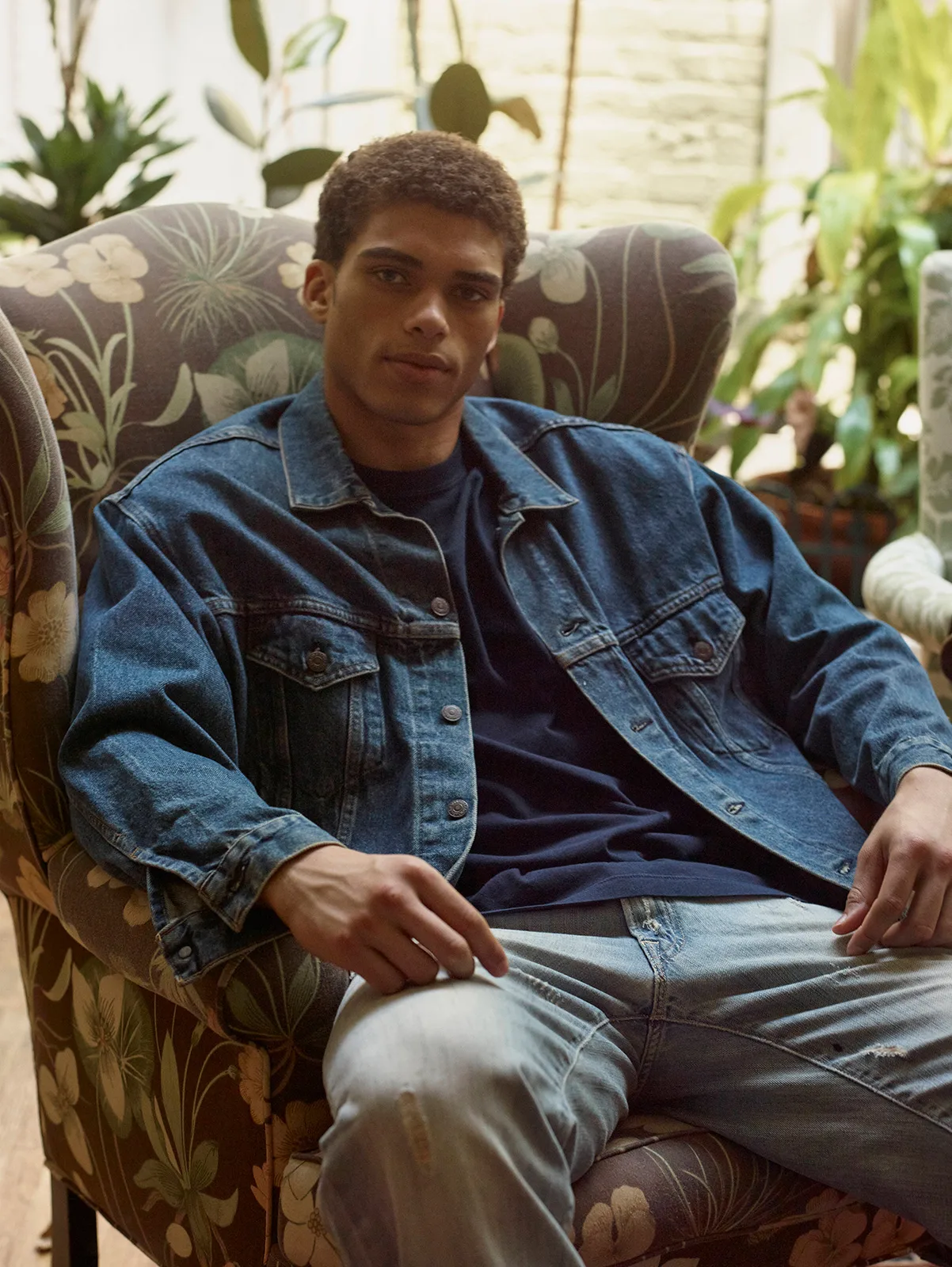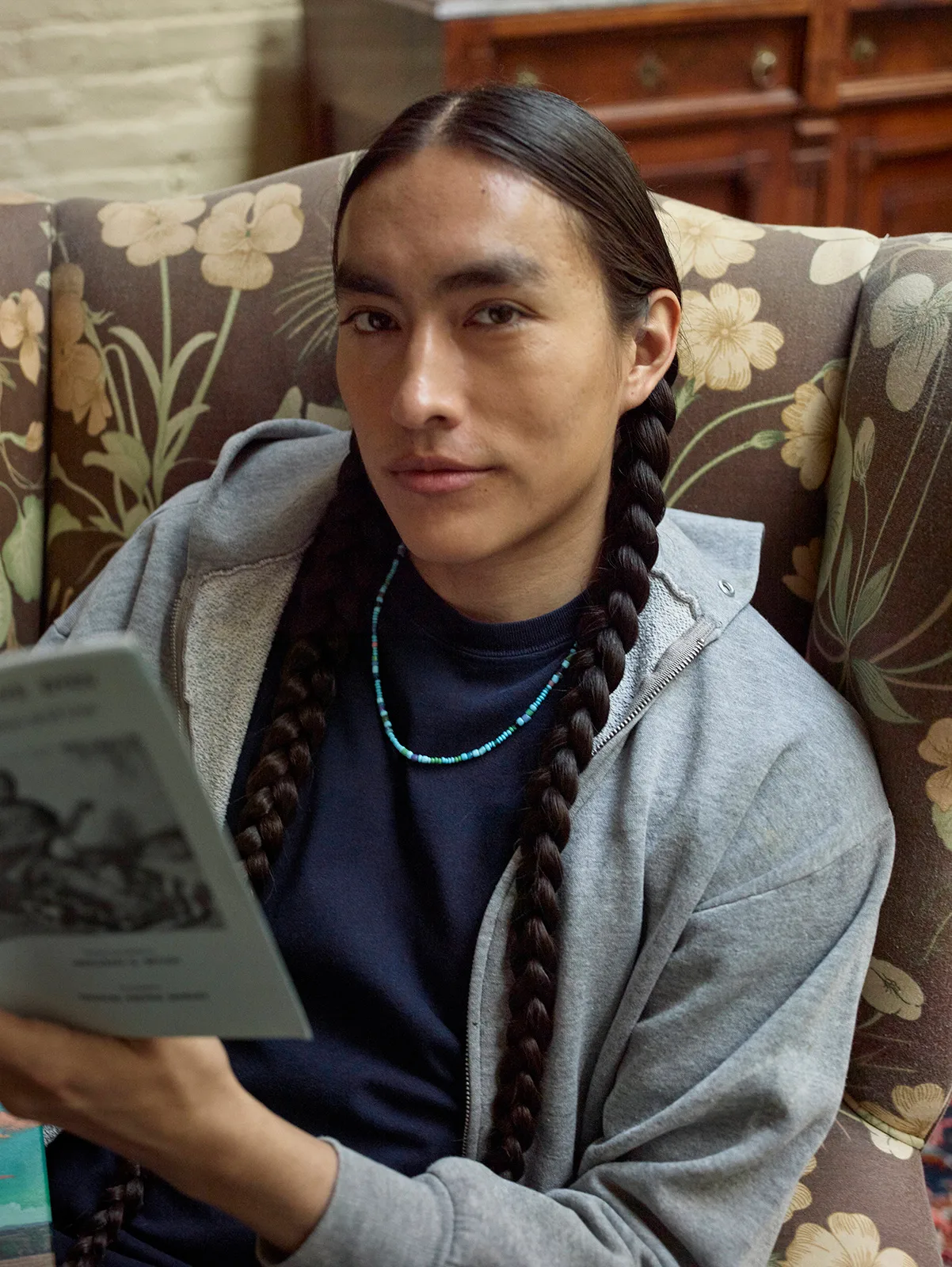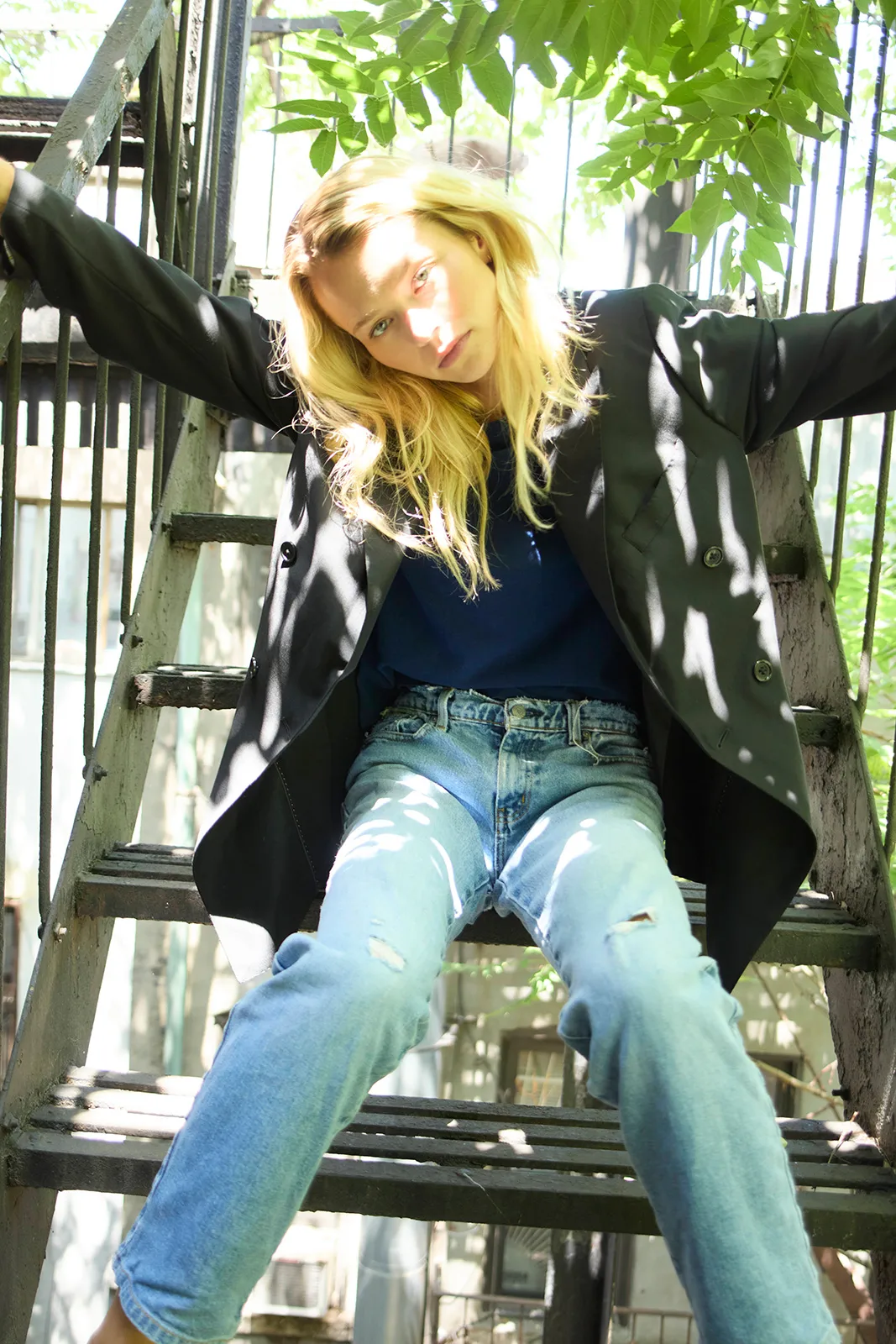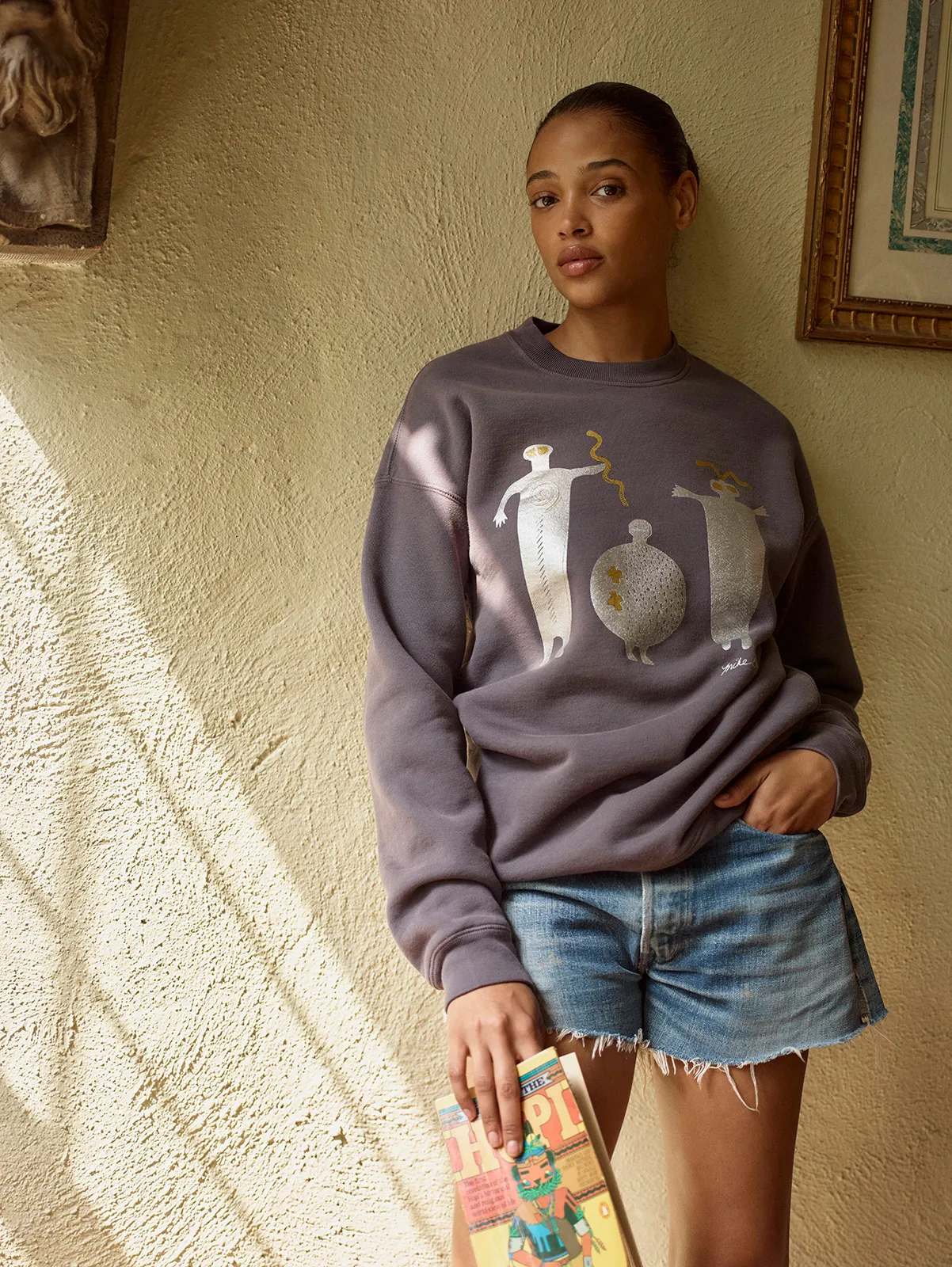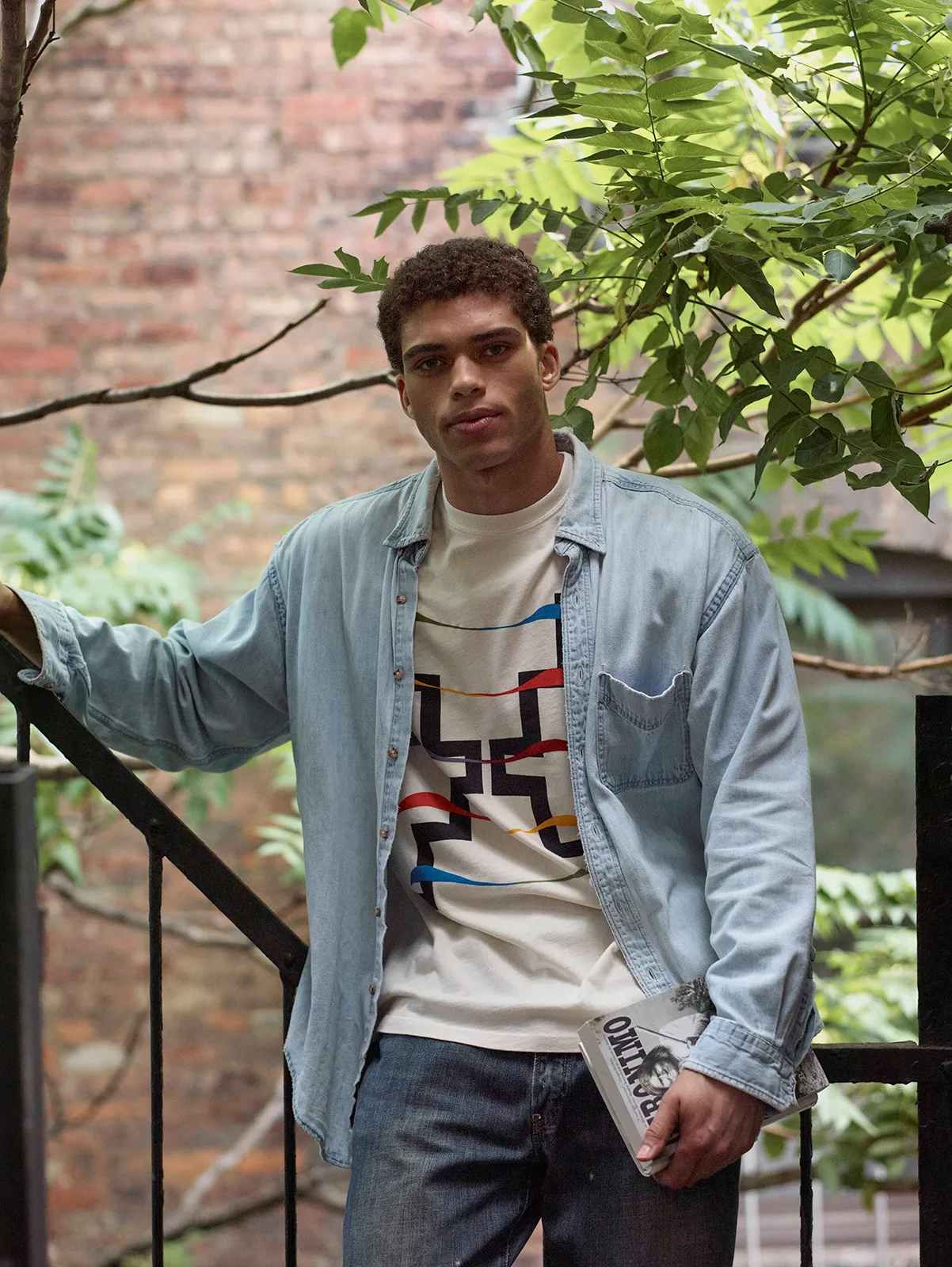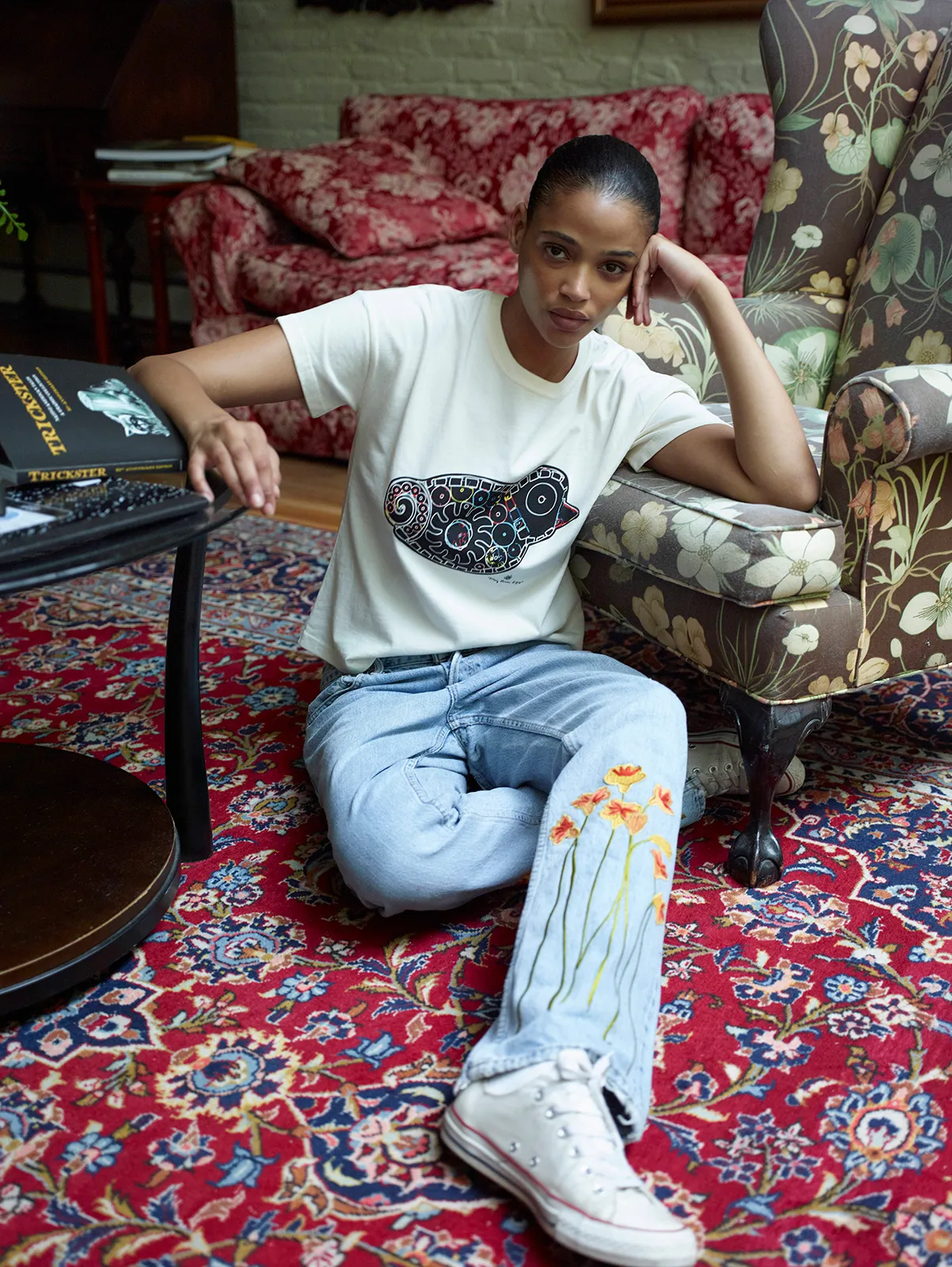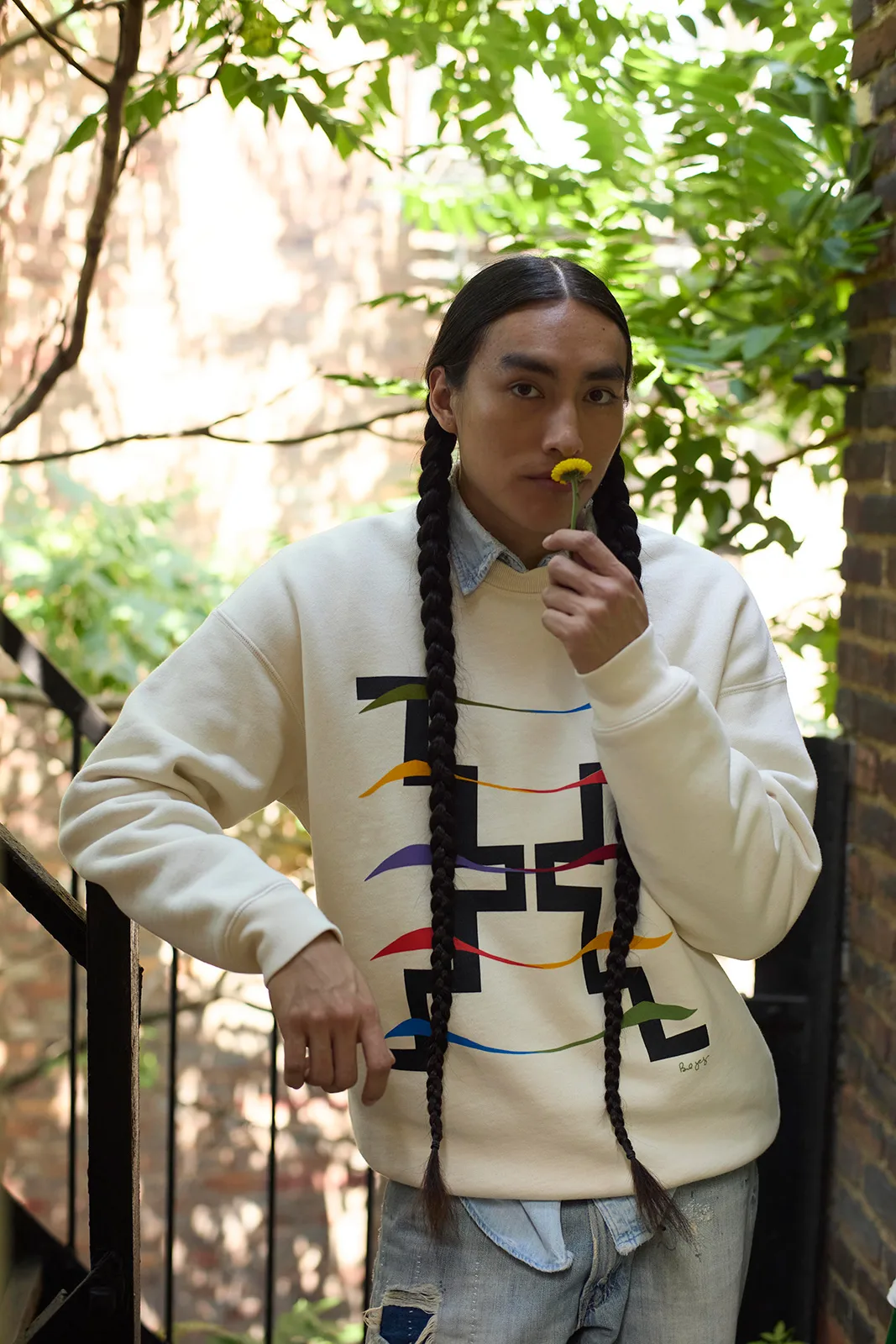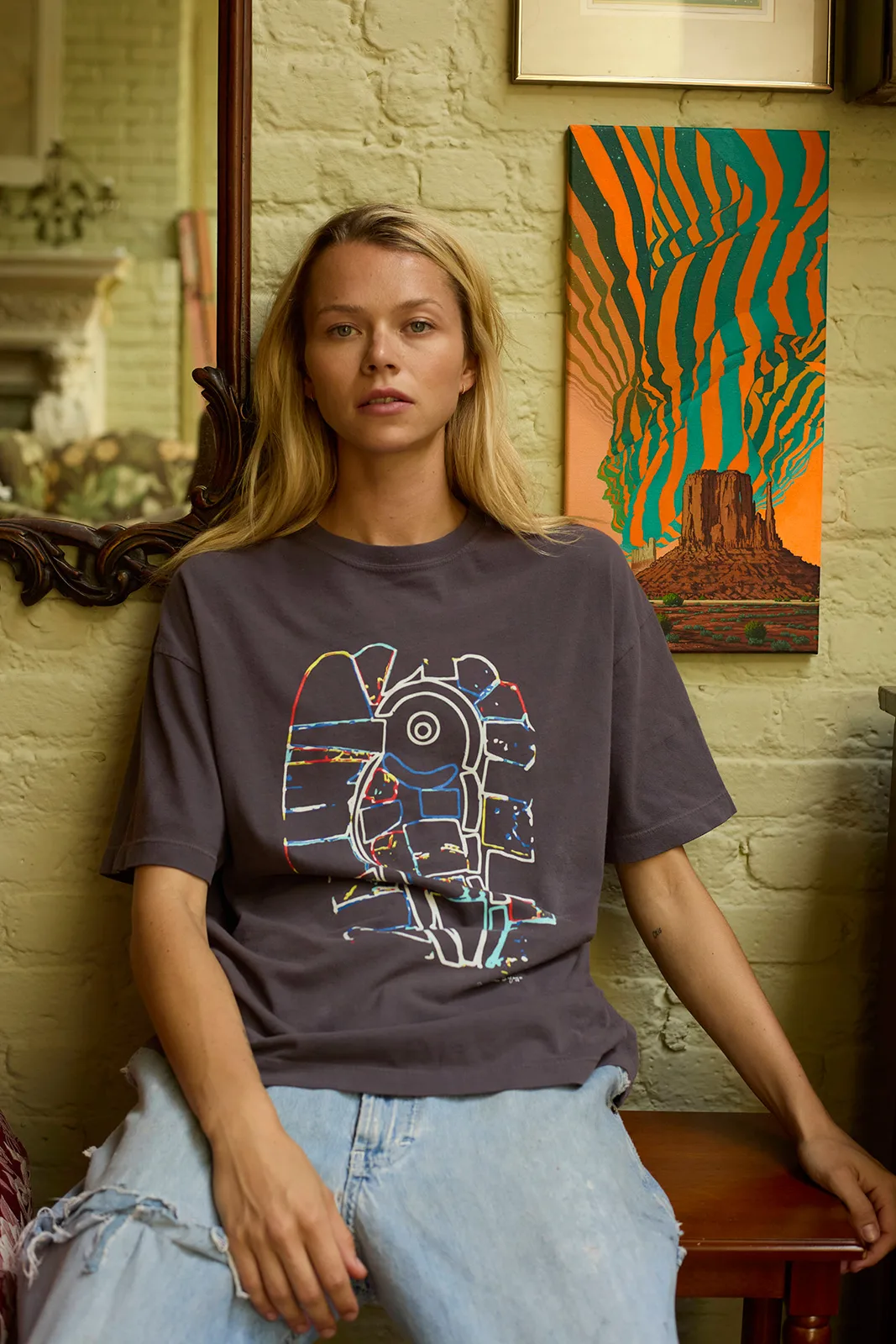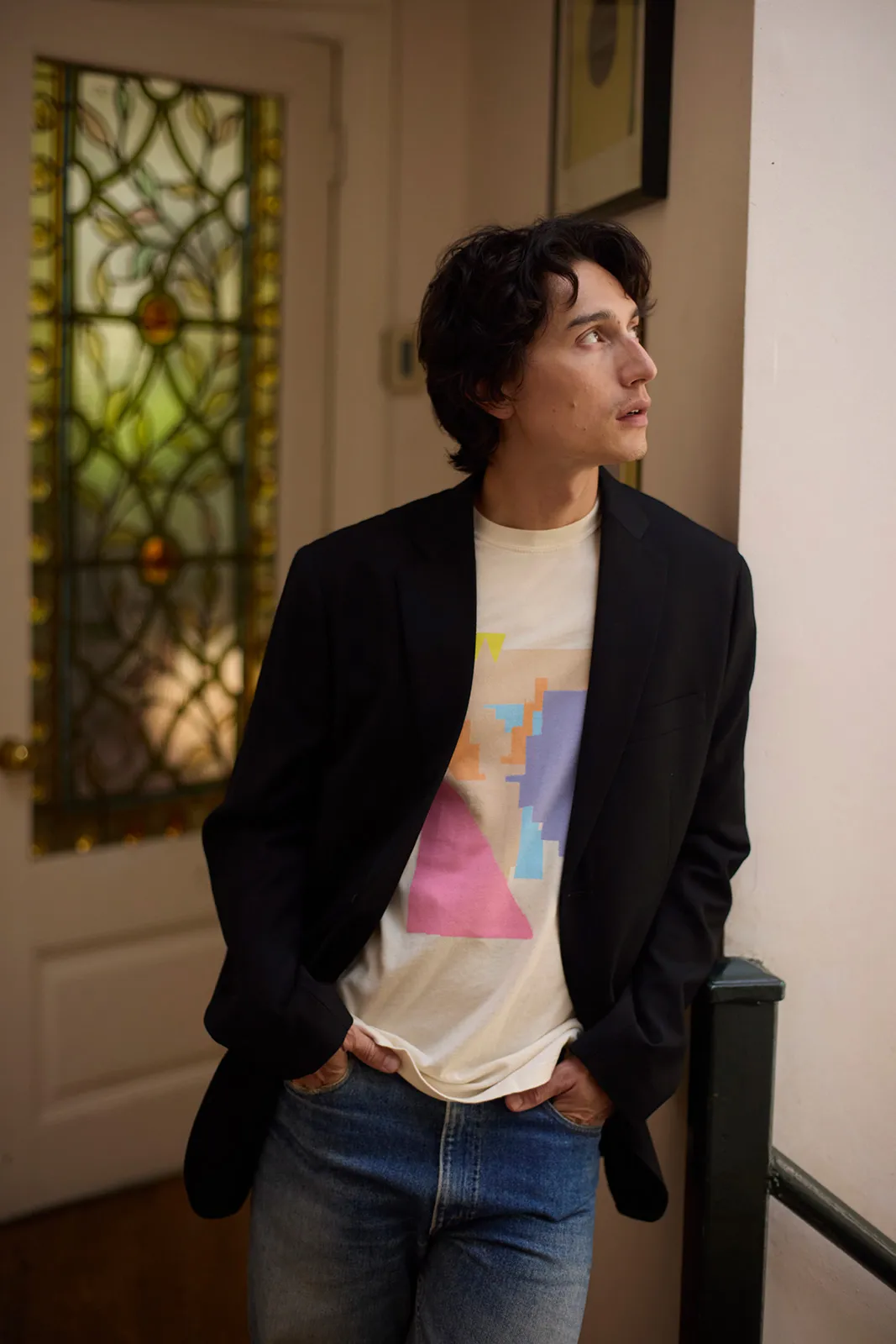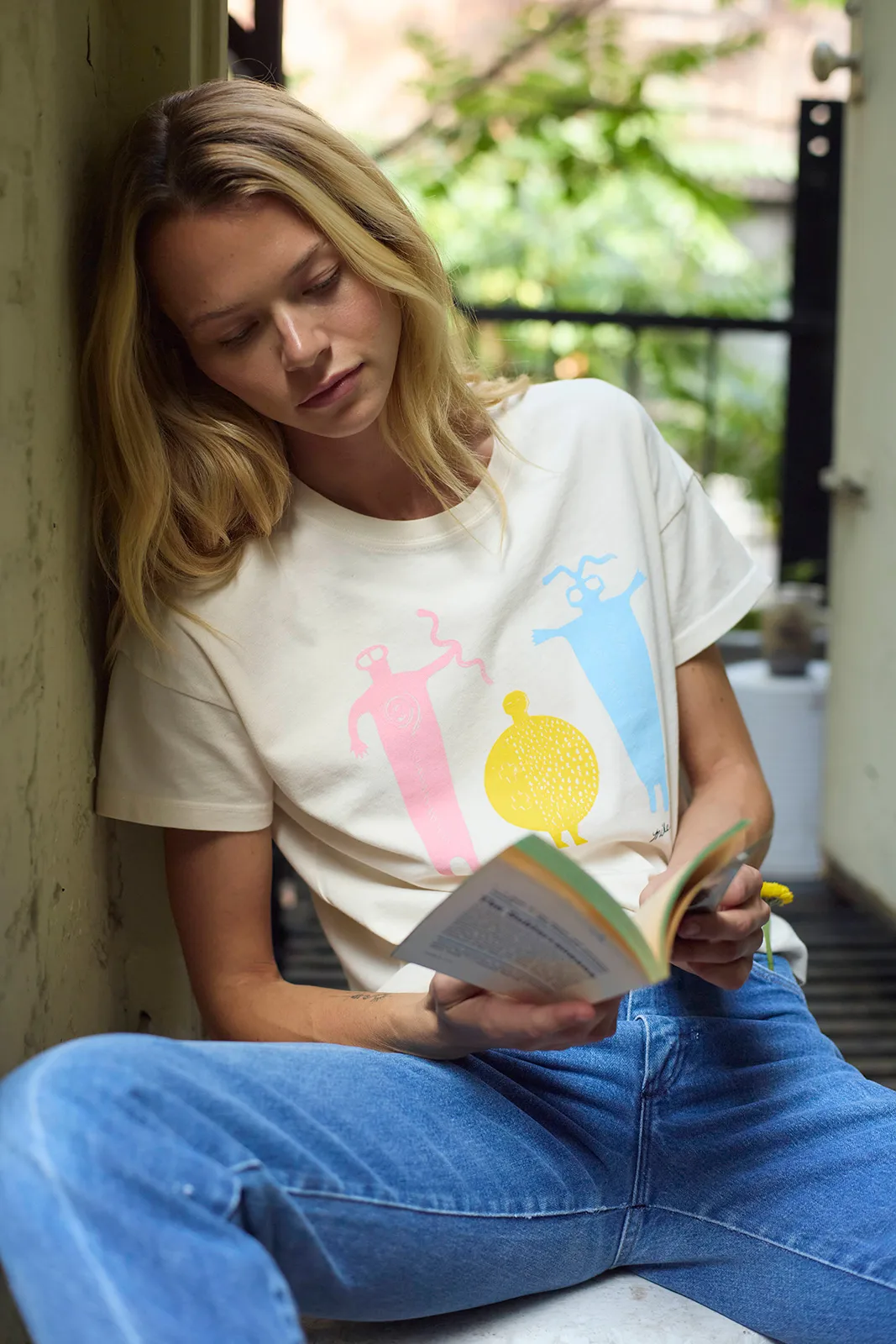
There is something deeply grounding about physical cultural output. When what you want to say is too complex to be put into words, sometimes it means doing it with your hands and body instead: knitting, sculpting, weaving, carving, drawing to illustrate and communicate through an object. Cultural objects, namely fashion, are what come out of Hosh, DY Begay and Tom Tarica’s project that celebrates First Nations artists, specifically Native Americans.
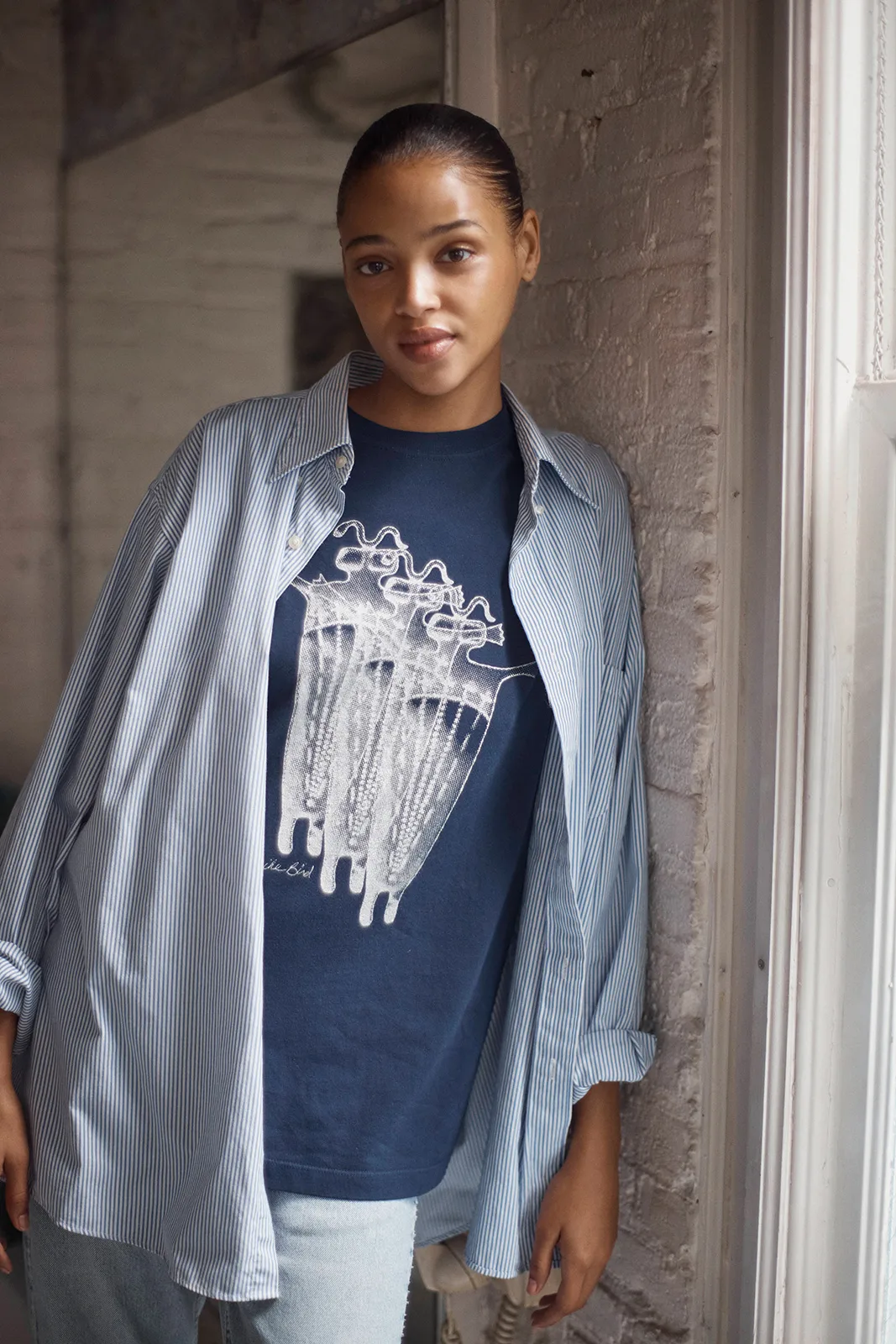
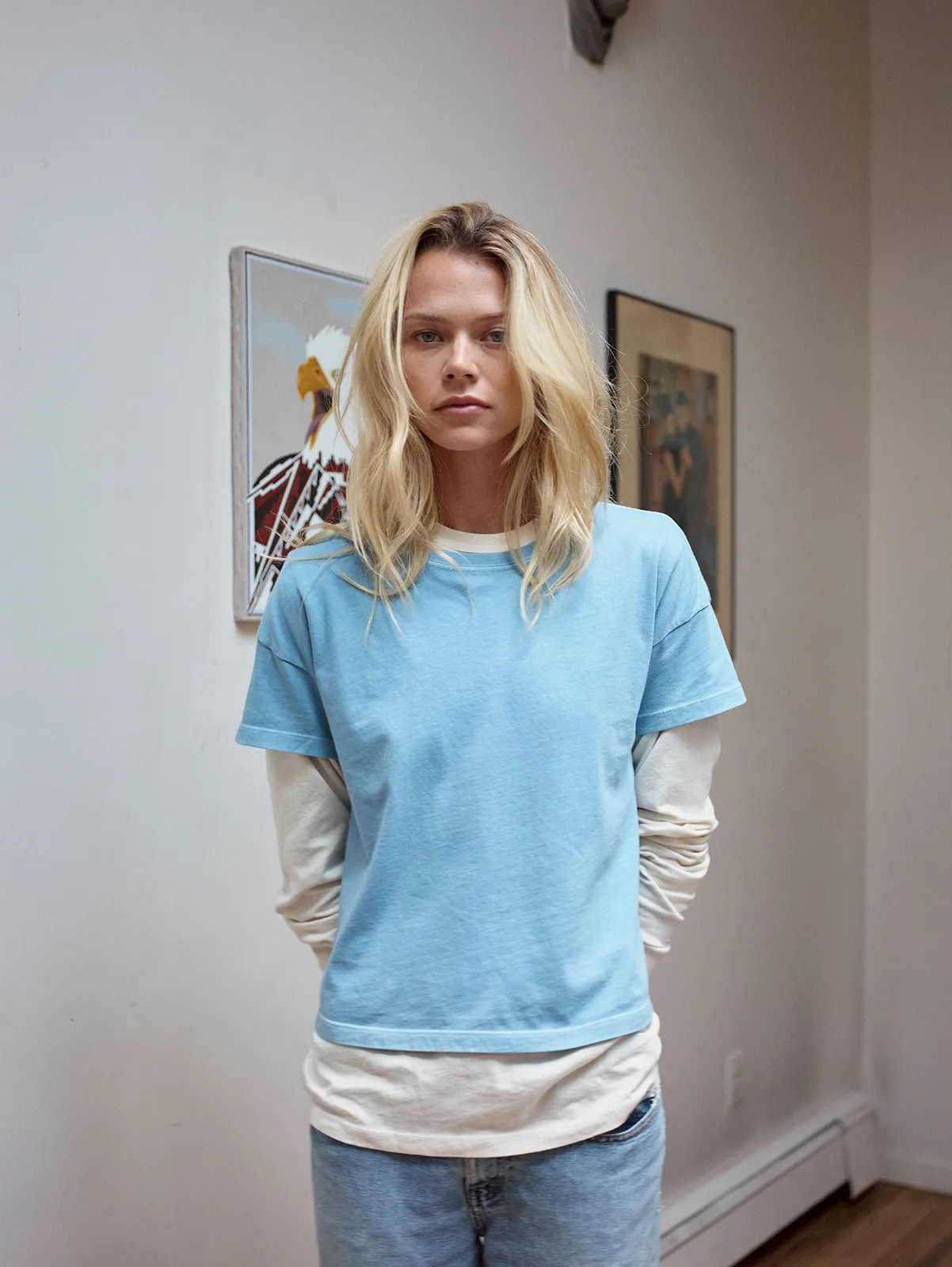
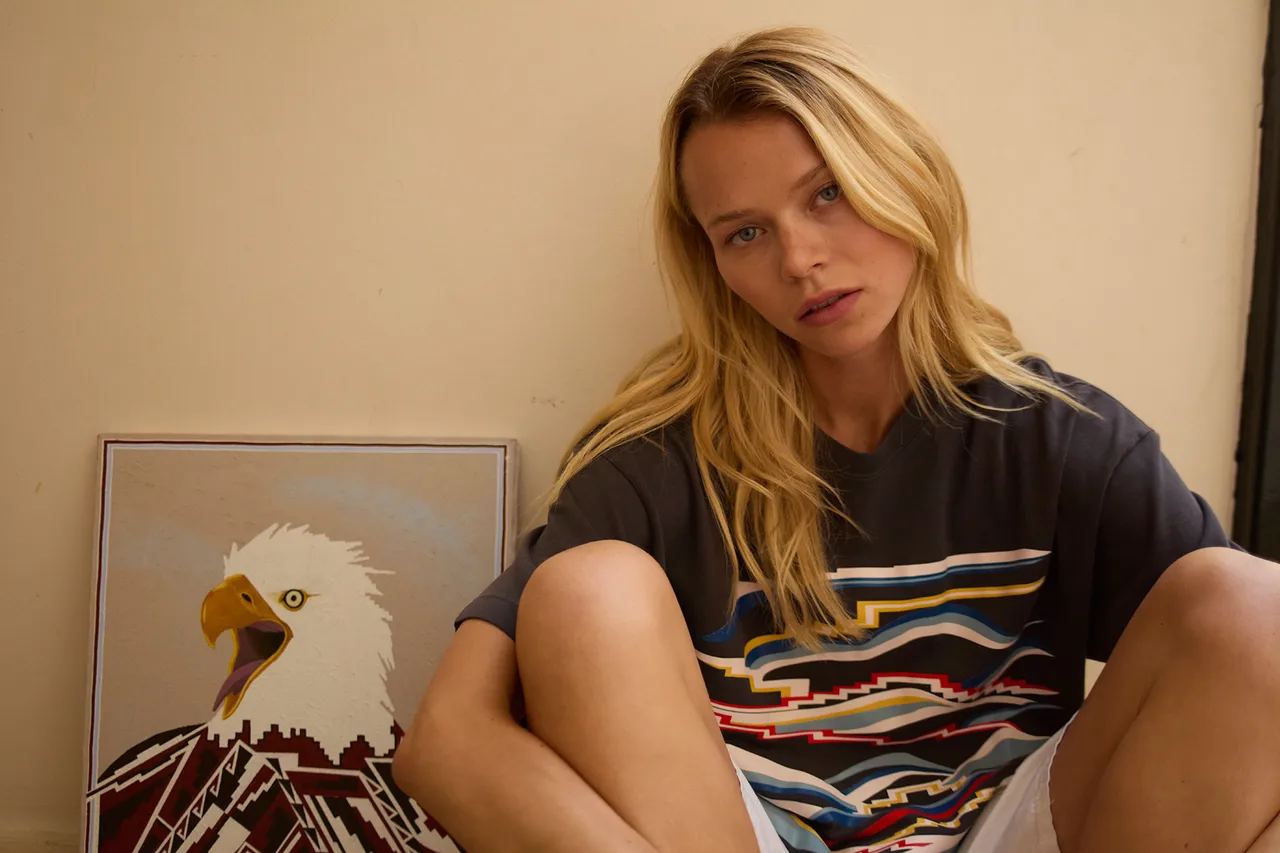
DY Begay is a Diné (Navajo) contemporary artist weaver known for her work that often synthesises elements of her home Tsélaní, interpreted as “many rocks”, into powerful tapestries that hold reverence for the environment. On this latest collection in support of Indigenous Peoples’ Day, the second Monday of October, she was also joined by her sisters Berdine Begay and Berdina Charley, both artists in their own right. The women’s intelligent use of colour and form is present on each tapestry they offered to Hosh, coloured with natural dyes. The tapestry designs have then been translated with digital tools to create accessible art-objects and garments: including DY’s first blanket for Hosh, and limited-edition t-shirts, caps and sweater.
DY Begay’s Black Mesa knitted blanket is based on the original woven work and exudes gravitas. The artist shared, “Black Mesa was inspired by the mesas north of Leupp, Arizona. One summer evening I stopped to watch the sunset, and the colours felt like a painter had splattered them across the land. Sunrise and sunset are my canvases, they fill me with endless hues and curiosity. The landscape changes constantly with light, weather, and seasons, and I try to carry that vision into my weaving.” Reverence for and connection with the environment is important, so is the ongoing life in historic weaving methods passed down for generations, that this collection supports. Complex techniques are made wearable at Hosh.
Experimental and abstract, not long ago DY Begay’s artwork was exhibited at Smithsonian under the title Sublime Light. The family now impressively counts six generations of weavers, a legacy that DY and her sisters Berdine and Berdina also carry forward, with their own added interpretations. Berdina explained that, encouraged by DY, she began to use more weaving styles alongside the traditional techniques, to find her own unique interpretations and voice. Regional patterns now meet other techniques including wedge weave and soumak twinning in Berdina’s art. The t-shirt, hat and sweatshirt translations are odes to her tapestry Regional Notes. This shows an interest in music, specifically B.B. King’s quote “the beautiful thing about learning is that nobody can take it away from you”. Meanwhile Berdine’s statement on her art Over The Border reads, “I was inspired by the tension between separation and passage, blending bold motifs with layered colours to evoke movement, transition, and crossing into new terrain. Where boundaries fracture, a new landscape emerges.” Profound and thought provoking, each work preserves some legacy of the modern Tótsohnii clan.
Hosh makes a clear statement, that heritage is relevant to contemporary culture and Native art is alive, modern and wearable.