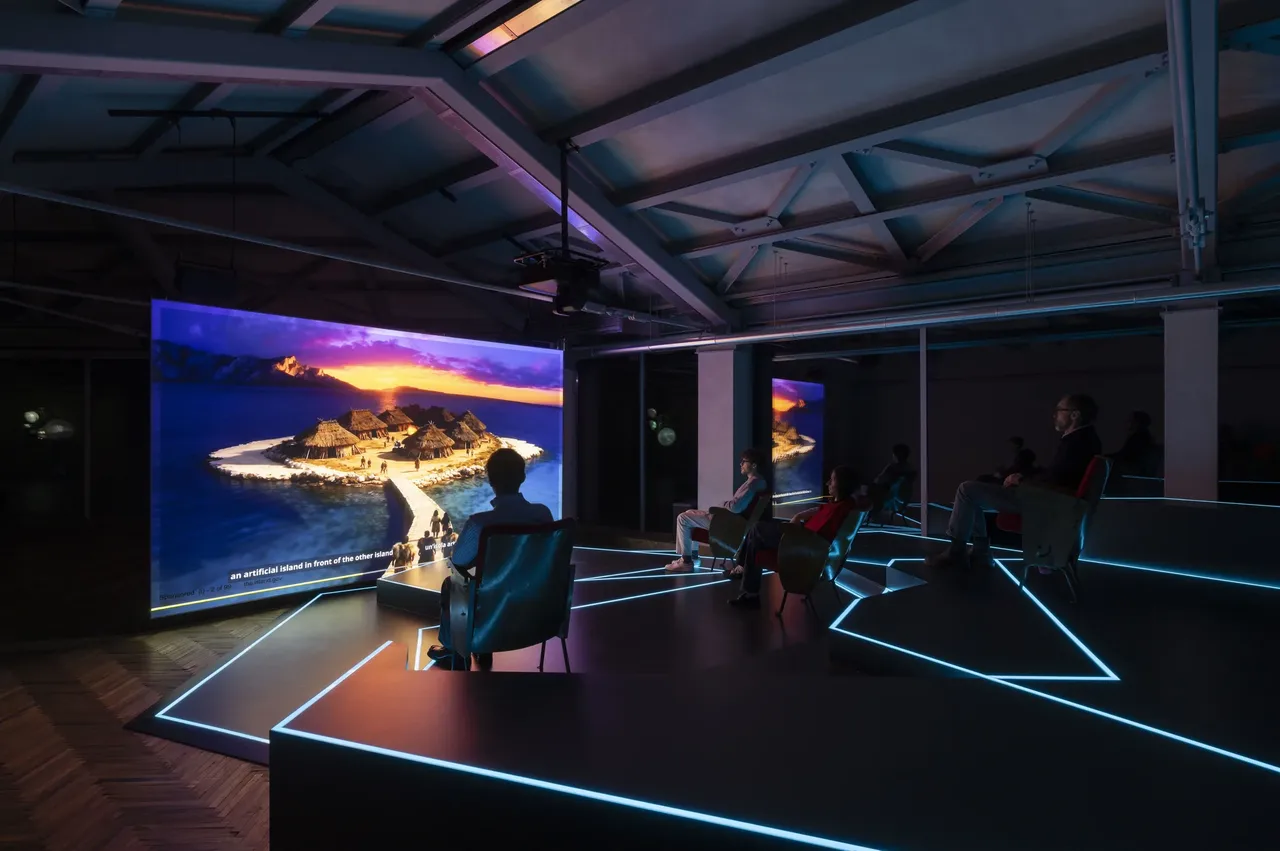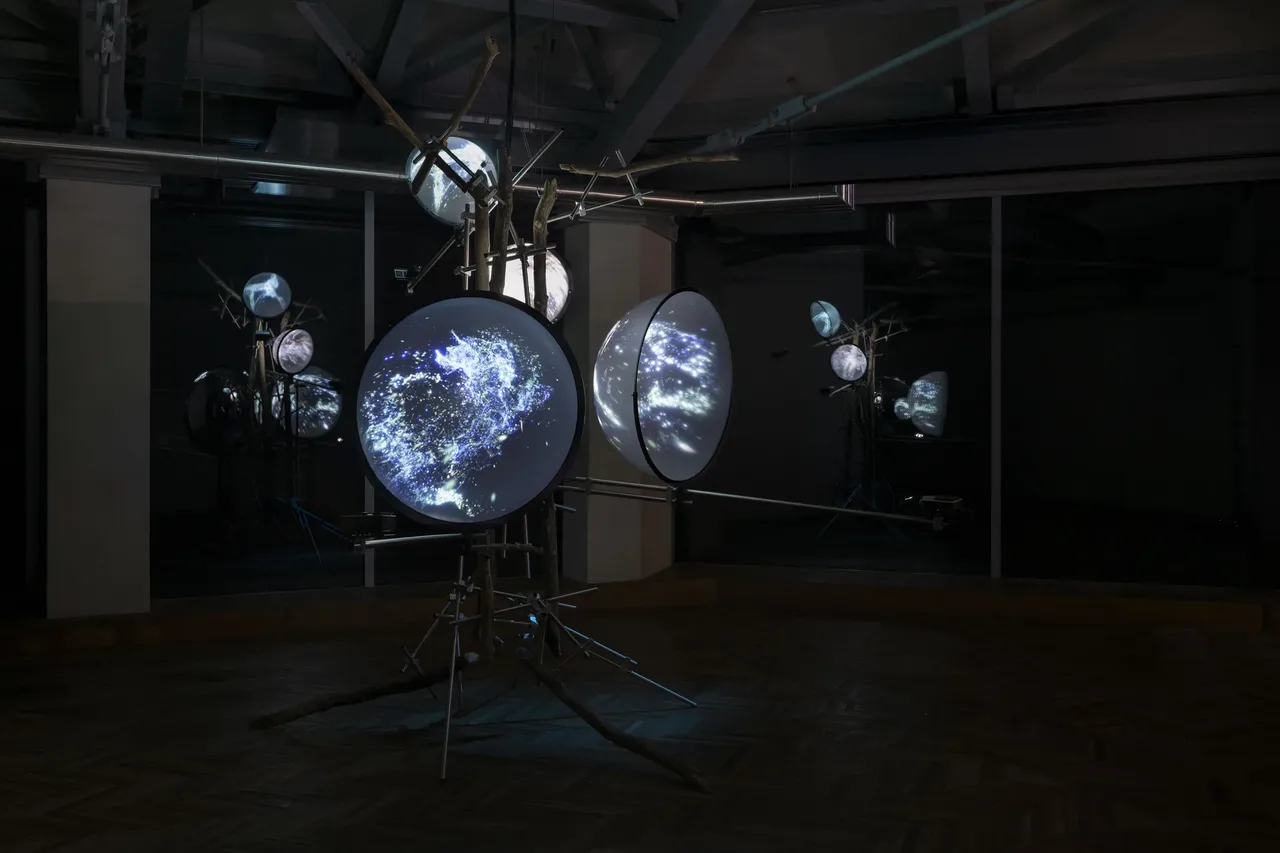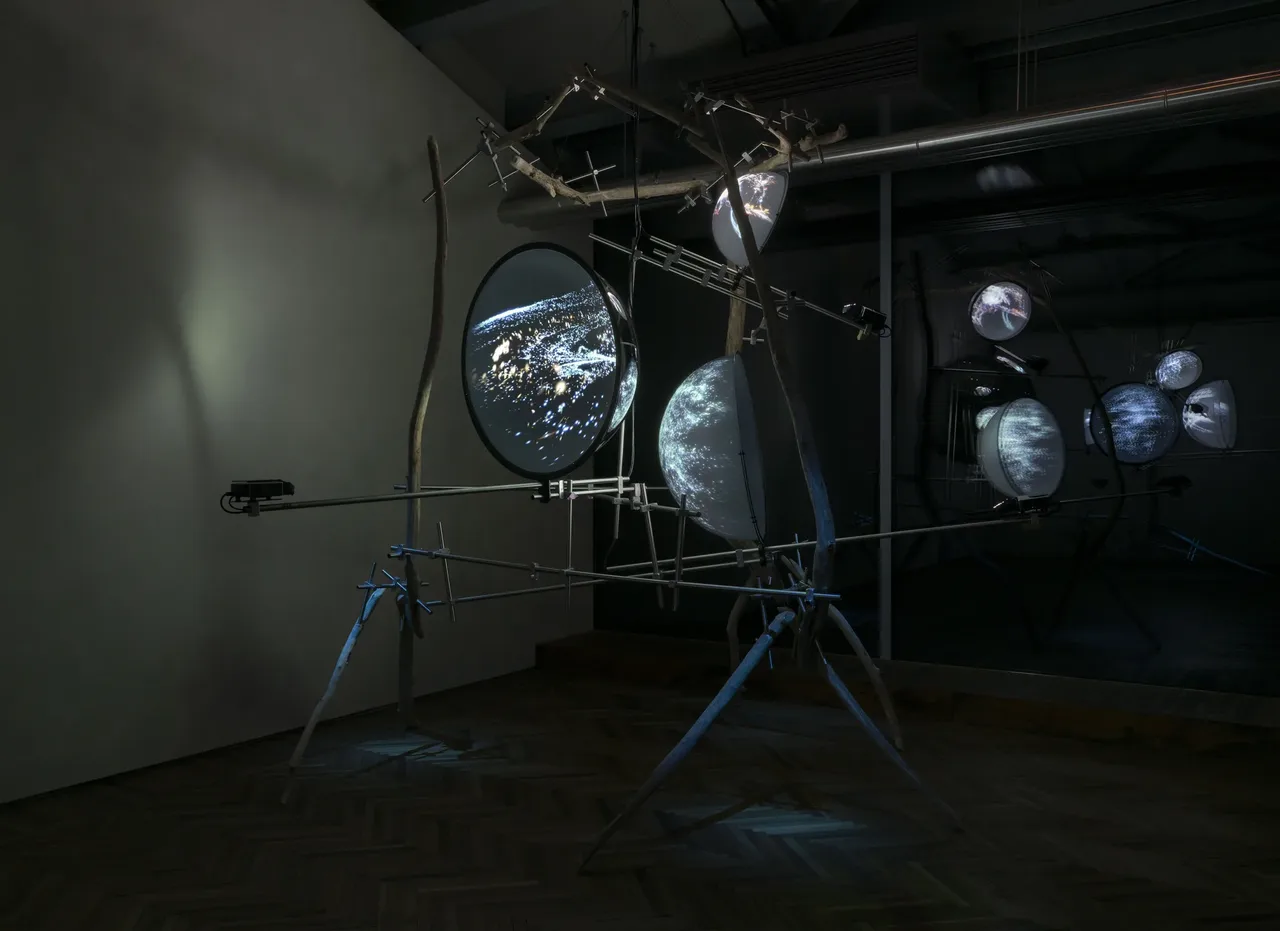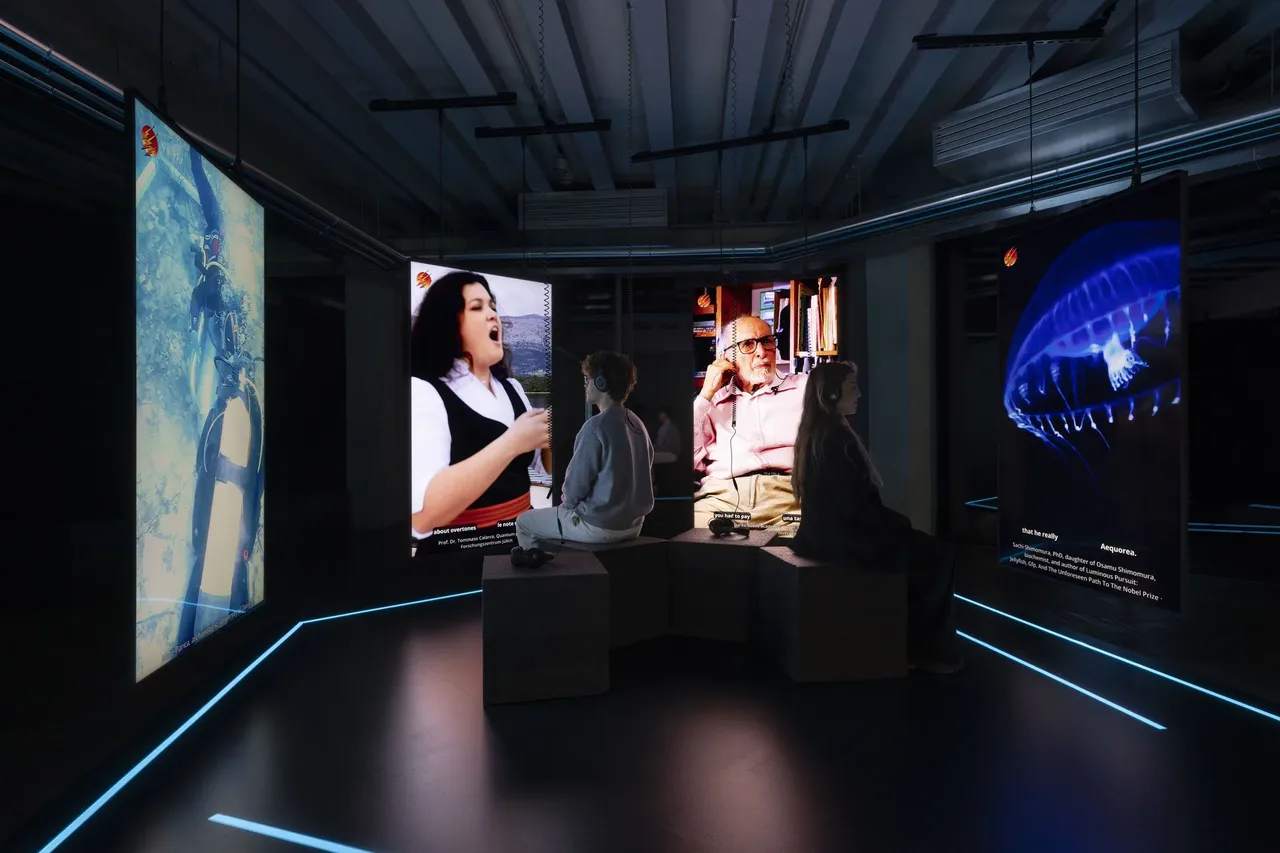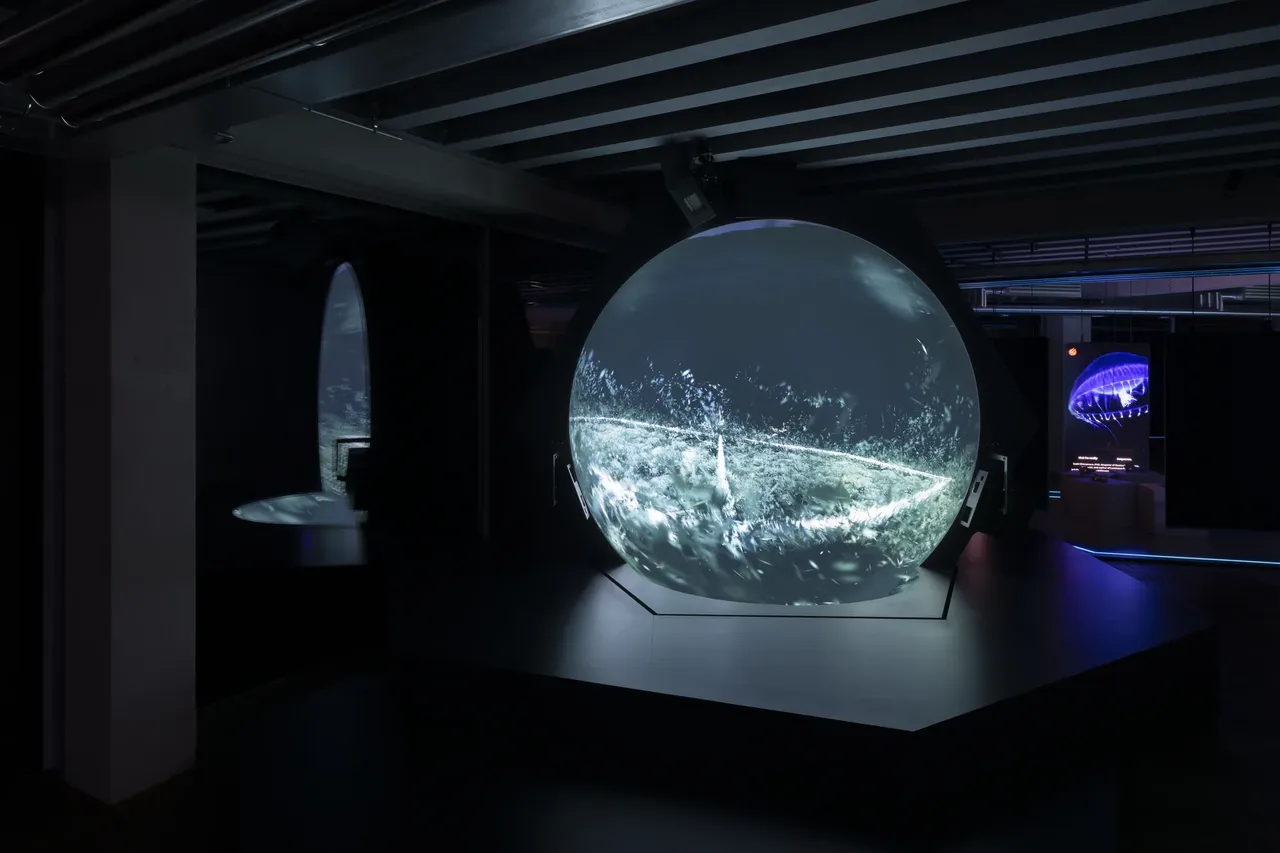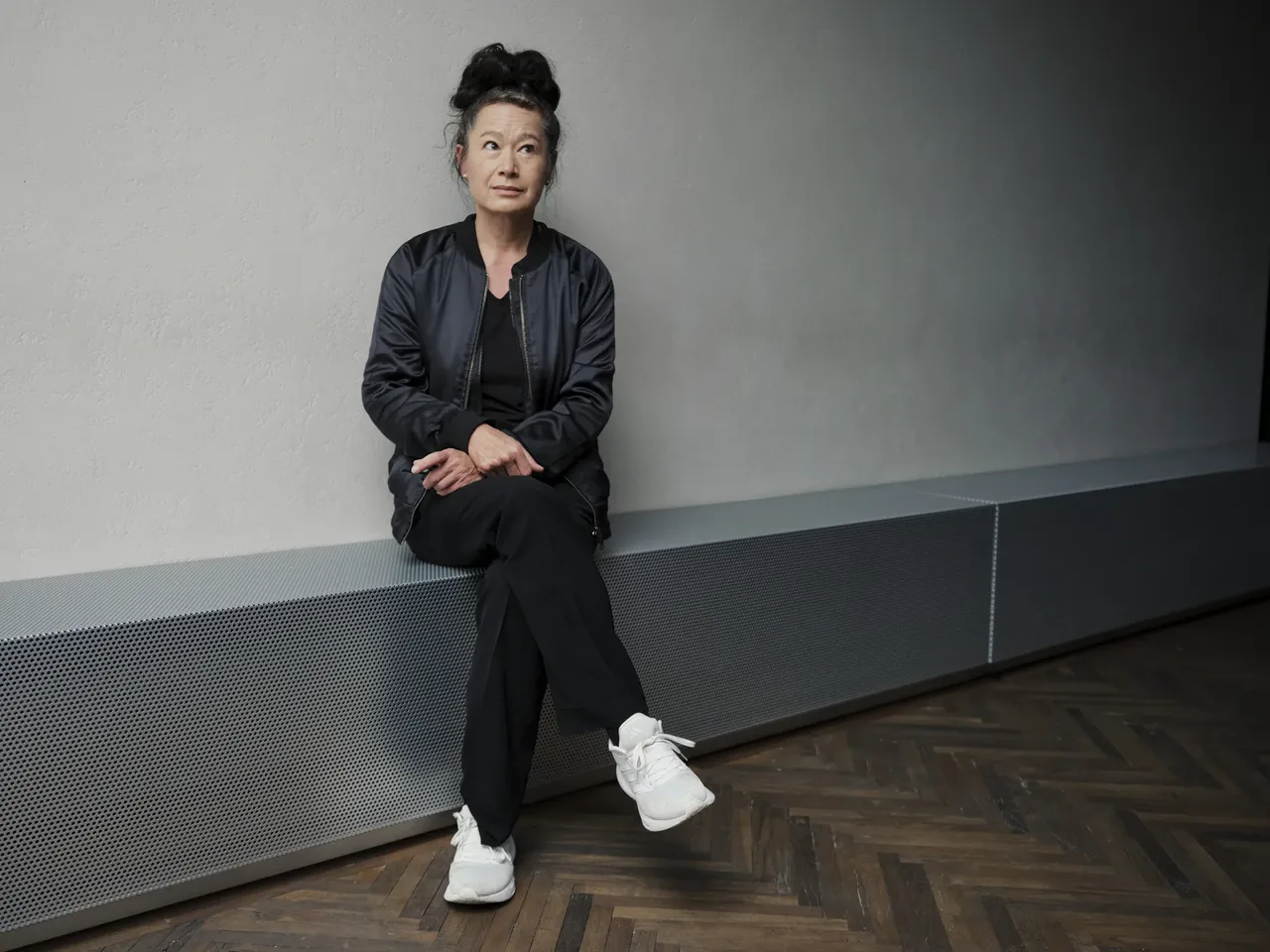
Driftwood props up installations of light orbs cut in half that expose what looks like faraway galaxies. Bioluminescent plankton spills out from its LED projection as video interviews with scientific experts and AI-generated battles engage a specific part of our brains that yearns for (over)stimulation. The most recent exhibition and film from Hito Steyerl, The Island, on display until 30 October at the Osservatorio Fondazione Prada in Milan, are urgent reflections on the rapidly progressing climate crisis, authoritarian use of AI, and politicisation of science.
Steyerl, a German filmmaker and researcher, situates herself at the intersection of documentaries and experimental film focusing on themes such as technology, science, and, in this case, reality. The Island comes at a time when AI content is oscillating between complete slop and made-to-look-real images and videos that force us to question our abilities to distinguish between reality and fiction. The exhibition's mediums include 3D scans of a neolithic island, LED screen projections, poems, driftwood, but most importantly, it is centred around Croatian-Canadian academic, Darko Suvin's, conception of science fiction.
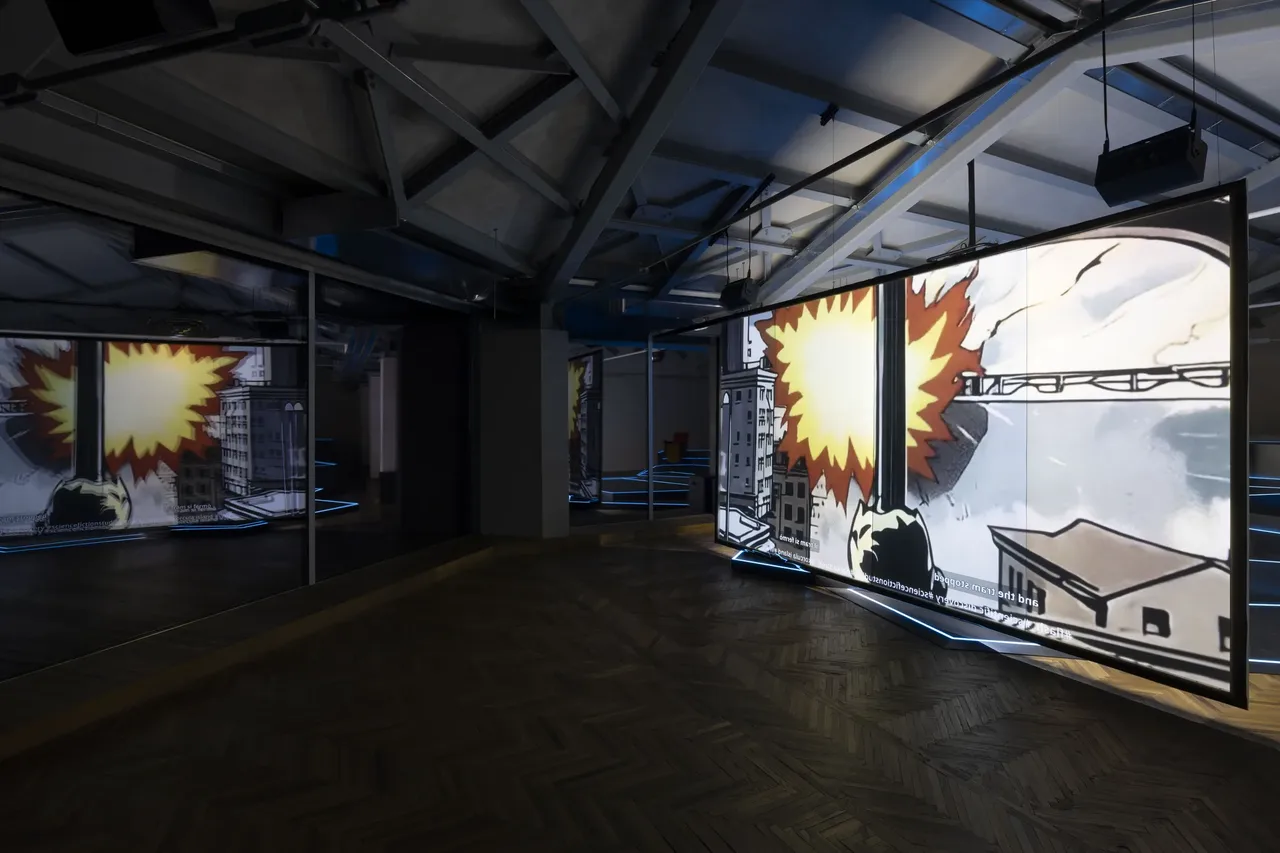
Suvin called science fiction the "literature of cognitive estrangement" as the genre is able to create parallel worlds for readers who live in hostile circumstances. The fictional worlds are a form of escapism, but they also confront an abnormally accurate depiction of reality. Steyerl's film, divided into four interrelated worlds – the discovery of an underwater Neolithic island, the scientific innovation of bioluminescent plankton, Suvin's legacy, and the Flash Gordon comics of WWII – borrows from quantum technology. Through jumps in space and time, she shows how these very real worlds are existing at the same time, albeit on different planes.
Similarly, the divide of ontology (what exists) and epistemology (what we think we know) in The Island is exposed by Steyerl contrasting scientific experts explaining archaeological and physical theories and Croatian folkloric song with haphazardly generated CGI and AI content. The projected content on separate screens surrounds visitors, almost mimicking the dual screen stimulation phenomenon. Steyerl shows that there are multiple worlds, branches, and perspectives that run simultaneously, but that one of these worlds, or ontologies, is prioritised in contemporary media. In favouring one over another, you destroy the other worlds which do not fit in. As we indulge AI, the scientific world and the traditional world are rendered obsolete.
At the centre of the film is the Neolithic Island, which serves as the stage for the rest of the exhibition. Using an island as the anchor for her foundational themes, we see how the seclusion of these bodies of land functions to perpetuate covert operations associated with extraction and exploitation. Contemporary examples such as tax-havens, private trafficking ports, and the abuse of resources are invisible and hyper-visible all at once, now more than ever with the rapid evolution of AI.
Our algorithms determine our information, meanwhile AI erodes our abilities to distinguish between real and fake, thus, creating thousands of parallel worlds. The danger of AI slop is not solely its lack of authenticity, but the ideological messaging that is tucked into using and consuming it. Steyerl doesn't necessarily offer a concrete solution to this problem of mental deterioration and delusions, but her emphasis on the scientific method bestows upon us a tool to be critical, to verify, and to ground ourselves.
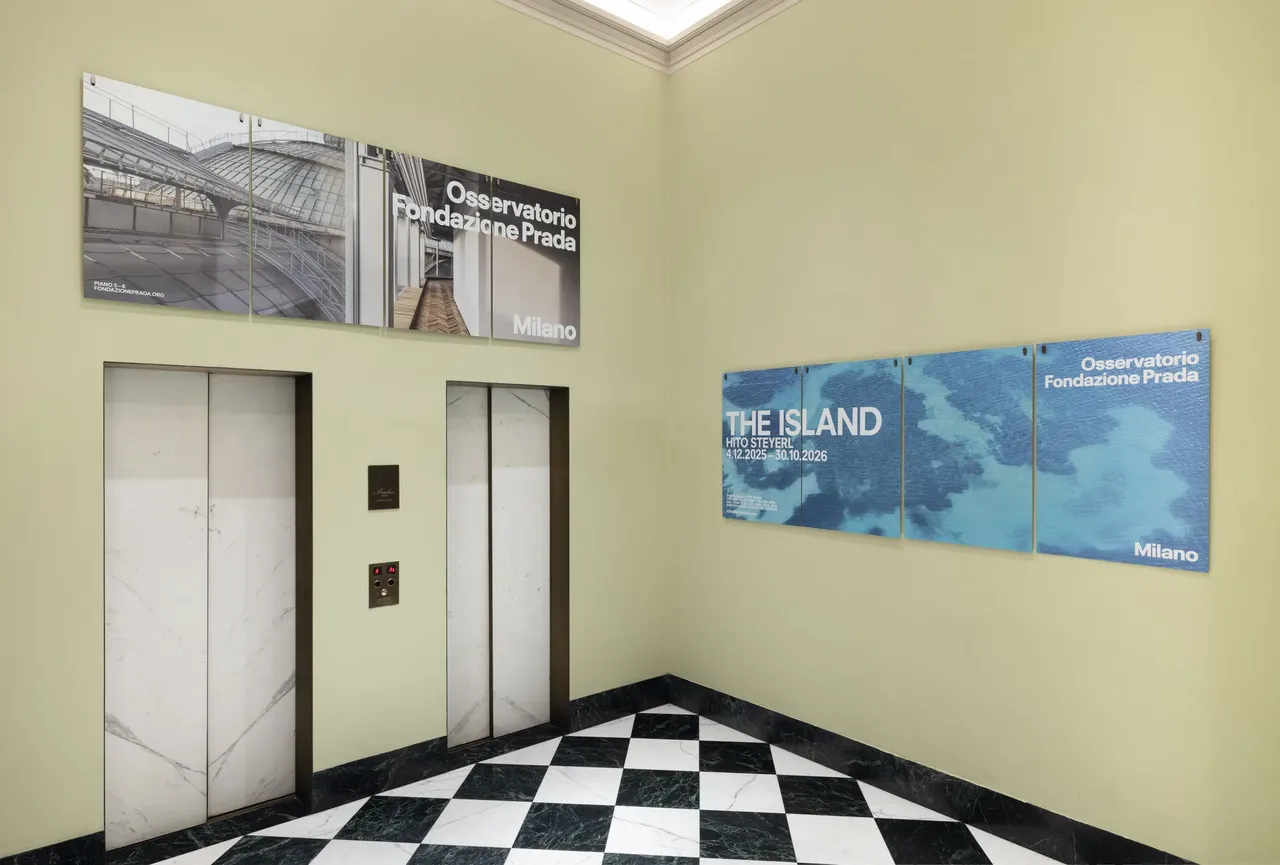
The exhibition The Island by Hito Steyerl is on view through October 30 at Osservatorio Fondazione Prada, Galleria Vittorio Emanuele II, Milan.