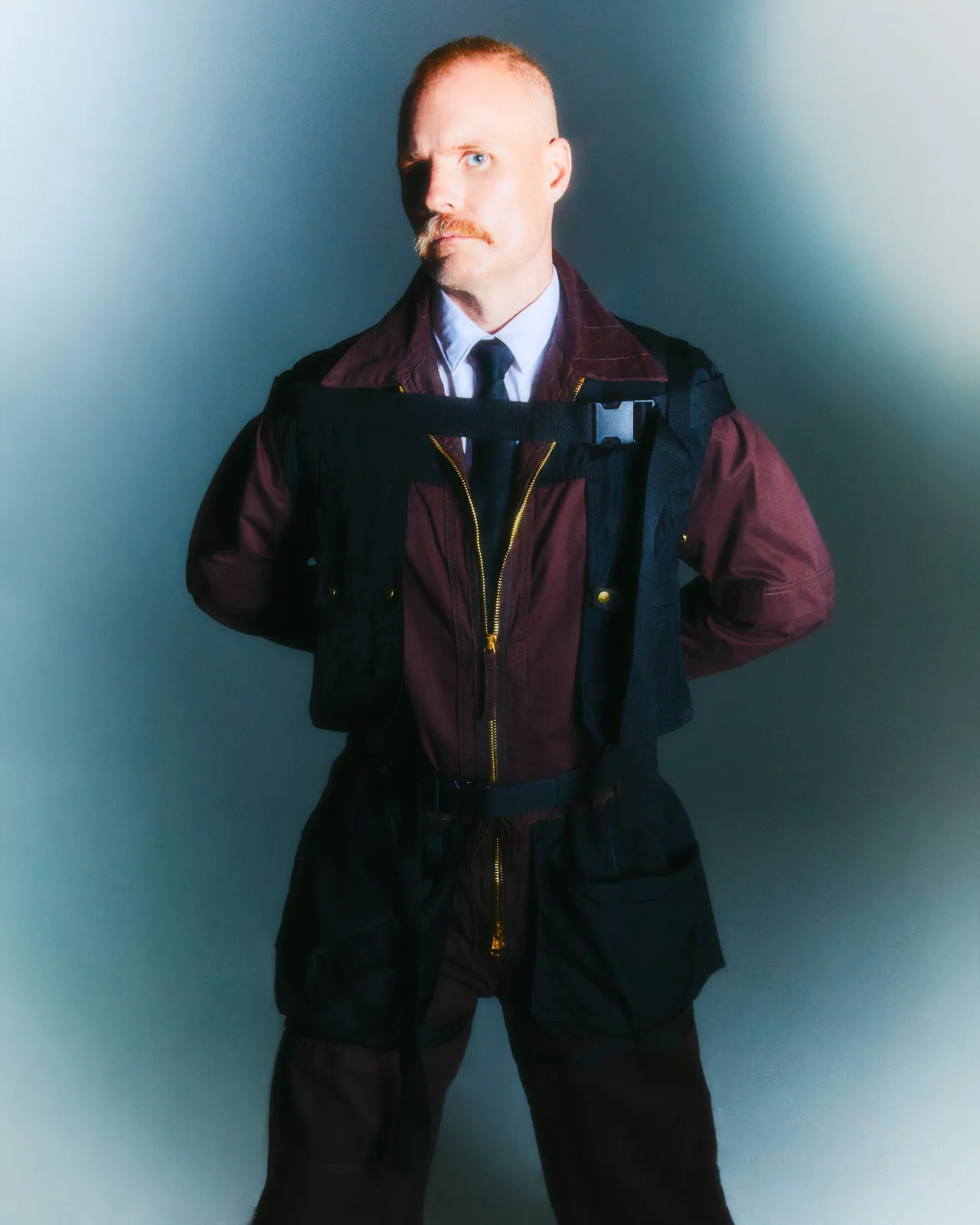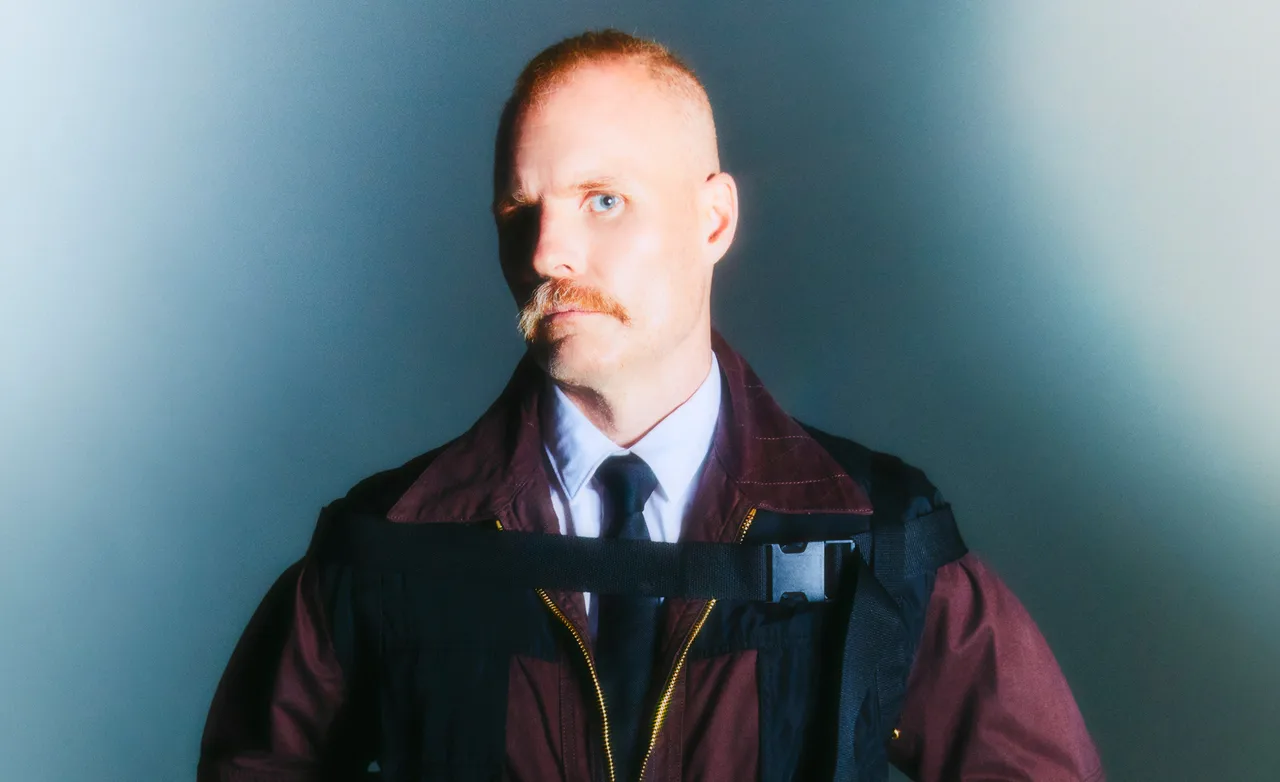
After a period of introspection, Hercules & Love Affair returns to the club with Someone Else Is Calling, an EP that feels both immediate and full-circle. Written between Iceland, Belgium, and the dancefloor itself, the record reconnects Andy Butler with the physical, communal pulse that has always defined the project, balancing emotional release with movement-driven songwriting shaped by collaboration and instinct.
The EP also unfolds through a strong visual language, with two music videos expanding its themes of desire, vulnerability, and shared energy. Filmed in Mexico City and directed by Tatsumi Milori, the video that comes along with the lead single, Someone Else Is Calling, places queer nightlife and collective resilience at the center of the narrative. As Butler puts it, “It was a joy to turn the music into visuals in such a short period,” allowing sound, body, and image to move together.
Instead of framing it as a comeback, Butler sees this moment as a continuation. The exchange drifts through rhythm, bodies, and creative chemistry, from late-night studio decisions to the emotional openness of Crossed Lines, capturing a project that feels present and alive again.
Where are you answering us from today, and how do you feel about starting this new year?
I am in my living room in a small city near the French border, a town full of potential and wonder, in front of a fire, having just completed a series of energy-shifting activities. These holidays often invite a certain pause.
When you look back at the past months, what feels most present for you right now?
I am still leaning into the slowness of the winter, but my creativity is bubbling, and I have started letting the natural flow of “what comes out” come out.
Someone Else Is Calling came out recently. How are you sitting with the EP now that it is out in the world and no longer just yours?
Well, I am enjoying it immensely. It was a joy to make, a joy to rework with Quinn Whalley and Margo Broom, and a joy to turn the music into visuals in such a short period, really over the course of eight weeks.
When you started working on these tracks, did you already feel the pull of the dancefloor, or did that direction take shape as the music evolved?
I suppose I went to Iceland to work on the Hips & Lips project, really quite focused on that, but I did open up a few synths before leaving, in the off chance Elín Ey and I had some free time and a desire to do something totally different than tracking live drums, guitars, brass, etc. for a really great indie pop record. We ended up with some time on our hands; I opened up a few sessions with those synths, and the flow just began. Elín has made and collaborated on electronic music a lot, for instance, on my last two full-length albums, so I knew she’d be up for it.
As you just said, the first spark for this EP happened in Iceland, while you were focused on very different material. What changed in that moment when making dance music suddenly felt necessary again?
I guess I sort of just answered it, but I think the most important change was: let’s just have fun with something different. As writing partners, we have written in many different genres.
You recently spoke about your love for dancing and how Crossed Lines became a space to explore that. What does dancing offer you that working alone in the studio does not?
That was a really special moment for me. I danced in my twenties formally but did not pursue that as a career, though technically I did dance with a company at one point. Definitely in part due to my training, which was a Merce Cunningham technique-heavy programme, I developed a love of internalising music and then kinaesthetically communicating with it. I do it around my house. Some people tune into rhythm; I love to tune into melody and expressiveness. I also use my body a lot in the sports realm: kickboxing of all types, yoga, and meditation.
Crossed Lines feels especially open and exposed. Did you approach that track differently from the rest of the EP?
Funny enough, that was born out of the Hips & Lips project. I wrote the song during the “COVID days”, and it had me reflecting a lot on misinformation, fractured alliances, miscommunication, etc. I had it sitting around and asked Elín if she might sing it. We initially thought this could go into another body of work (Hips & Lips), but ultimately decided that the more organic, folk, country and indie rock direction belonged there. This was Hercules.
Writing with the club in mind often brings the body to the forefront. How did thinking about movement influence the way you wrote and shaped these songs?
Well, there is a bump and flow. Most of my dance music starts with rhythm and chord progression, a chord progression that elicits certain emotions and thereby specific movements. We knew some of these songs would drift, and others would, despite the overuse of the word “pump”.
The EP features the voice of Elín Ey. How did that creative exchange take shape on this project?
Elín and I have been collaborating for over a decade. She first recorded with me in 2014 when I was preparing the album Omnion. She has two sisters; they make dance music under the name Sísí Ey, and they contributed a song called Running, which addressed the refugee crisis at the time. She then appeared on In Amber solo, singing Dissociation. Out of that session, we kind of realised our alchemy.
This release was co-produced with Quinn Whalley https://www.instagram.com/oldwalkingman/?hl=en What did working together open up for you creatively?
Quinn is an out-of-the-box thinker and also a pragmatist. It’s a great combination. What might sound “wrong” to someone else sounds right to him, and when it’s in the mix, your mind is changed. He is not afraid of the excessive either, which is a wonderful quality. I think it shows in his work across his many bands.
As the tracks began to come together, how did you sense which ideas truly belonged to Someone Else Is Calling?
It was clear what belonged where. In some ways, the songs wrote themselves.
Living in Belgium seems to have brought you closer to certain scenes and energies again. How has your everyday environment influenced your relationship with club culture?
Well, I live near a great record store that is truly a mom and pop. The owner loves to just play music and dance in his shop. But before I moved here, when living in Ghent, and even when I briefly lived in Brussels, I got very into the outsider dance world of Crammed Discs, Les Disques du Crépuscule, and even more into the new beat and techno scene that emerged there very early on.
You released a video for the lead single, Someone Else Is Calling, filmed in Mexico City. What made that visual world feel like the right way to introduce the EP?
First off, Mexico is one of my all-time favourite places to be and to play. The crowds are unpretentious and have their own style, and most importantly, they dance. In all fairness, practicality also played into it. Elín lives in Iceland, I live in Belgium, and we were in Mexico City for a show. I said, “We have five days. When will we see each other again?” So I got into action and contacted Sebastian Ayala, an artist and producer I had recently seen in San Miguel de Allende, and he jumped into action.
The video, directed by Tatsumi Milori, centres on queer nightlife and shared energy. How important was it for you to translate ideas of movement, appetite and self-possession into images?
When I make videos, historically, directors bring treatments, but in recent years, I have decided to bring the treatment to them. Tatsumi graciously welcomed it but also turned it on its head. I had seen her ability to capture the sentiment of Mexico and the Mexican people through a raw yet delicate touch, and as I do with all my videos, once the director is in vision mode, I let go.
A few days later, you released another video connected to this EP. How do you see the relationship between the different visual pieces and the music itself?
The emotional nature of the songs is very different, but in a way, the rawness of Elín cutting her hair was the beginning of the shedding addressed in the following video. The magic Tatsumi conjured transported us into another almost imaginary place. Someone Else Is Calling is very outward projecting, whereas Crossed Lines feels like an internal dialogue. If you listen closely to the very beginning of the Someone Else Is Calling video, you will hear something that comes next. Continuity was built in.
Mexico appears once again as a meaningful place in this project. How has your long relationship with the city shaped your understanding of community and resilience?
The country itself is rooted in a warmth and generosity of spirit that, particularly in nightlife, embraces diversity in a way I have not seen in many places. I also feel this generation is returning to DIY. People take risks, and musically it feels progressive.
Now that you have some distance from the process, is there a track on the EP that you hear differently since its release?
They all feel different now, which is to be expected after being so deeply immersed in the creative process.
After putting out Someone Else Is Calling, do you feel more grounded in what Hercules & Love Affair represents today?
I believe in what I have put out, from beginning to end. It has been an exercise in collaboration, risk-taking, evolution, and saying what I need to say. That was true at the beginning, and it will remain so moving forward.
As you look ahead to 2026, what are you hoping for, creatively or personally?
A lot more dancing, a lot more moods, a lot more enjoyment, and inviting people into those experiences with us, recorded or live.