Goodie Mob, OutKast, T.I., Future, 2Chainz. What do all these names have in common? They are all rappers from Atlanta, to name just a few. The Big Peach has been like a factory, producing insanely talented hip-hop artists year after year. Elaborating on the established sounds of West and East Coast rap, Southern rap takes inspiration from the blues movement, incorporates heavy 808 bass, and emphasises club life in the lyrics. A club life that has also helped to make or break their careers through the influence of strippers. Hajar Benjida’s Atlanta Made Us Famous exhibition at Amsterdam’s Foam museum until 25 March, 2026, depicts the women who are smack-dab in the middle of the Atlanta hip-hop scene: the dancers of Magic City Nightclub.
The club has been a cultural hub for years, with artists trying out their material and seeing if it hits. If the girls dance to it and can liven up the crowd with your music, you’re in. If not, back to the drawing board. In her intimate yet daring series, Benjida goes behind the staff doors to get to know the women who have been the real creative directors in Atlanta’s hip-hop community. She doesn’t want to just capture them as performers but as entrepreneurs, business women, mothers. She wants us to see them in their entirety, not just fragmented bits of a person. Strippers, nightlife performers, dancers – whatever you want to call them – have always carried a taboo that comes with the adult entertainment industry. Spoken about in hushed tones as deviant, unprofessional, or not real work.
In Atlanta Made Us Famous, Benjida implores us to leave our preconceptions at the door and understand their work as a form of art in and of itself. They all have their own style, whether it’s the make-up, the hairstyles, the accessories, or the lingerie — the attention to detail shows a distinct aesthetic for each woman. But we don’t see them dancing or performing for others. We see the women backstage, counting their money, showing off their ensembles, looking fiercely and at the same time, softly, into the camera.
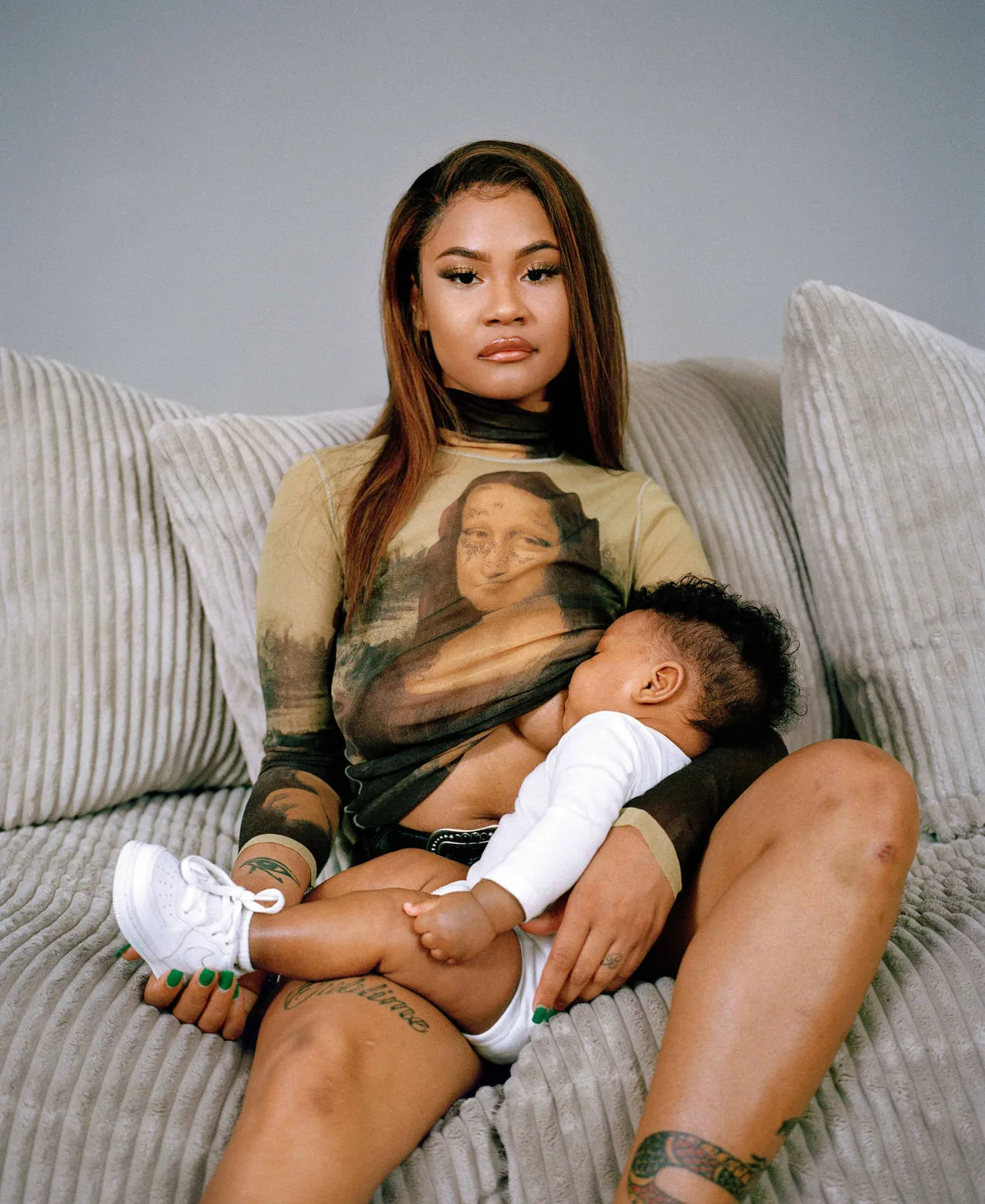
Part of seeing these women holistically means to also portray them outside of the club in their personal, private lives. Working on this project since 2018, Benjida was able to form a close relationship with the women, allowing her access to depict intimate moments such as Cleo and Her Son Andy at Home (2019), where Cleo is seen breastfeeding her baby. Or a year later in Cleo and Her Son Andy (2020), we see them outside their home, marking a real estate investment. In showing the range of human experience, Benjida humanises a population who’s had their humanity questioned and neglected. And this makes sense for her considering how she got her start.
Her very first project was comparing Young Thug photographs to famous paintings. While this turned into somewhat of a meme online, it also talks back to the common narrative among older people that rappers are ‘tacky.’ This same message translates into Atlanta Made Us Famous by standing up to the negative image of strippers. And above all else, having confident Black women take agency over how their bodies are represented challenges the status quo that compartmentalizes and polices Black women’s sexuality.
The exhibition Atlanta Made Us Famous by Hajar Benjida is on view through March 25, 2026, at Foam, Keizersgracht 609, Amsterdam.
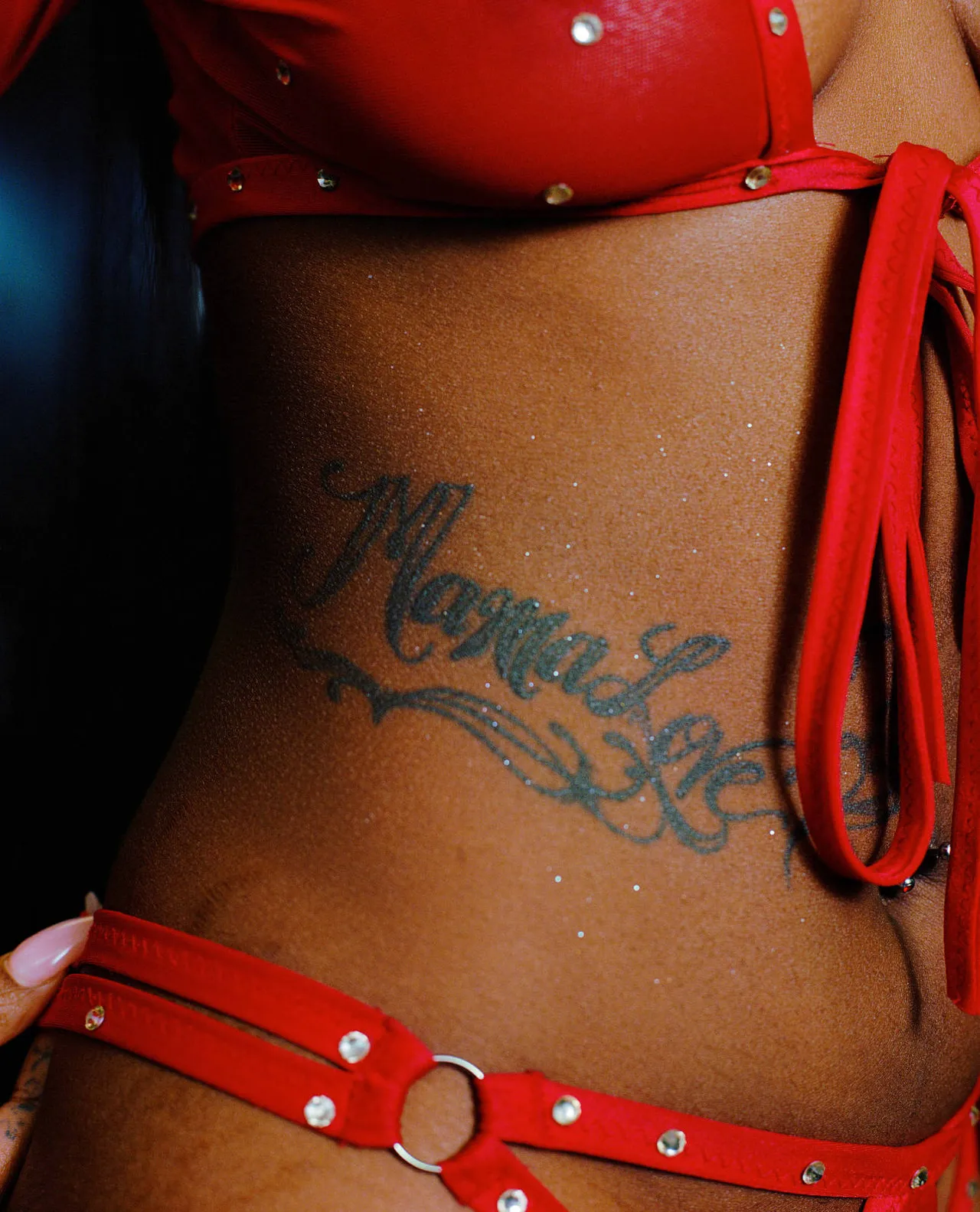
Charlene (Mama Love), 2019 © Hajar Benjida.
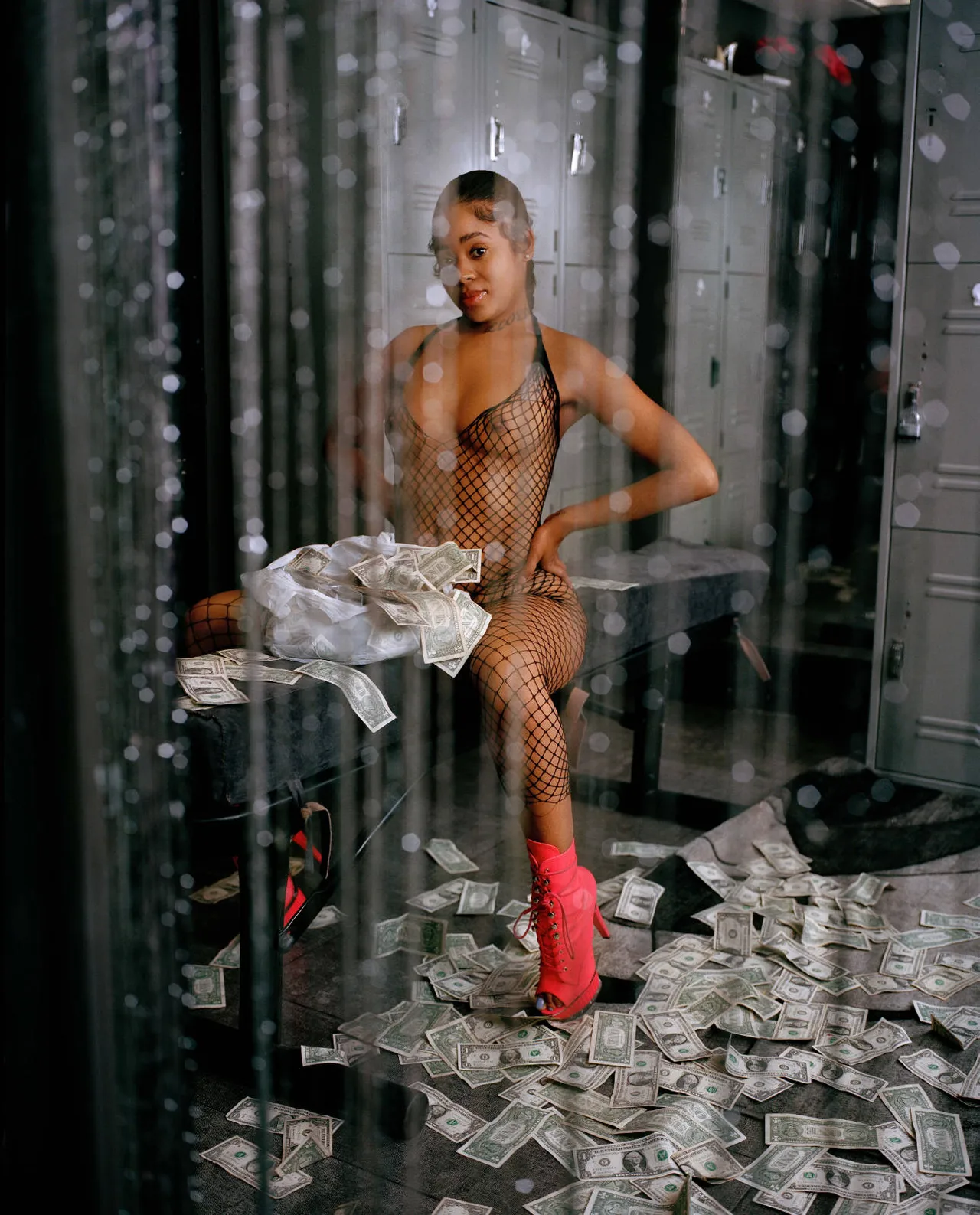
Barbi Billionz, 2023 © Hajar Benjida.
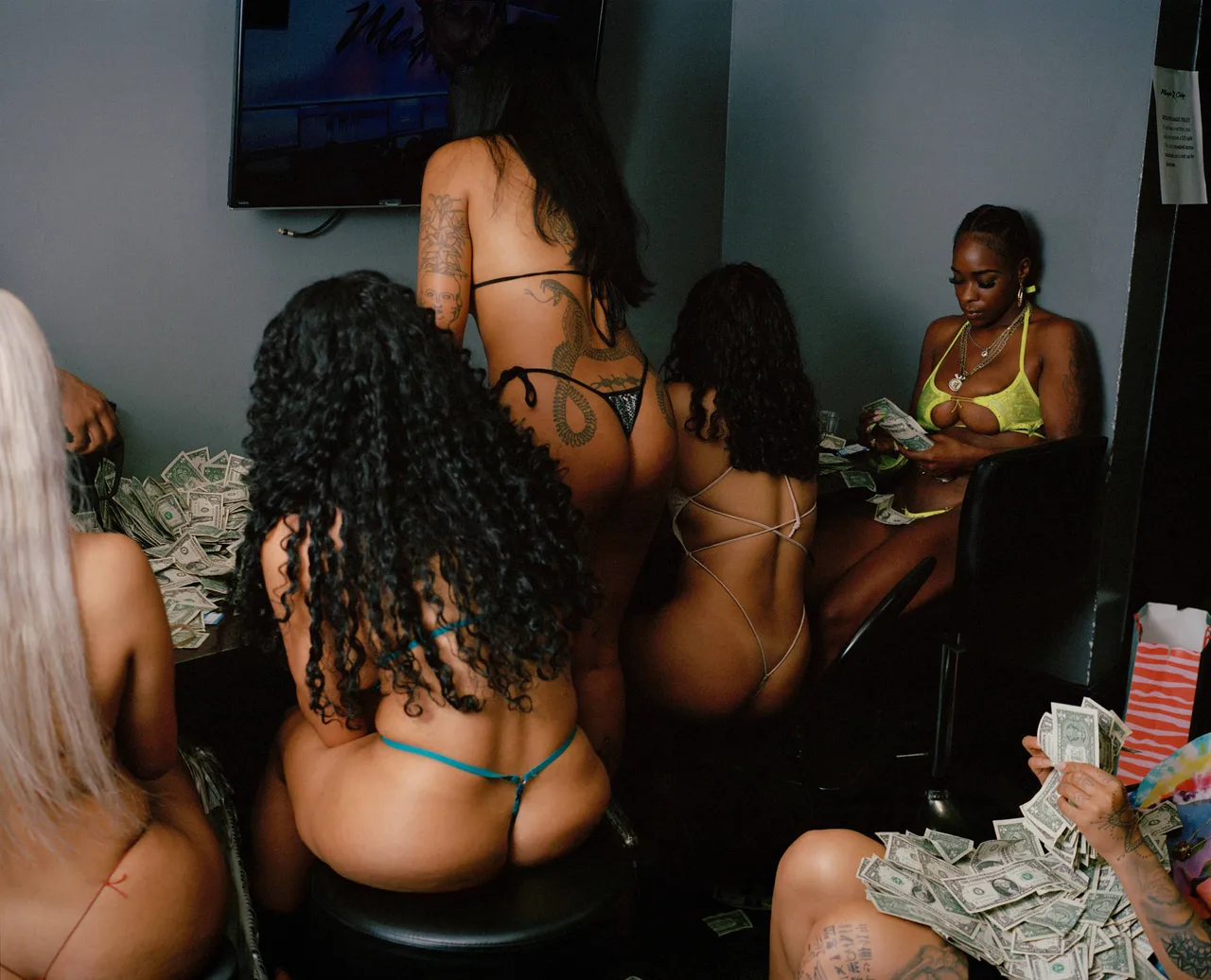
Money count after music video shoot at Magic City, 2025 © Hajar Benjida.