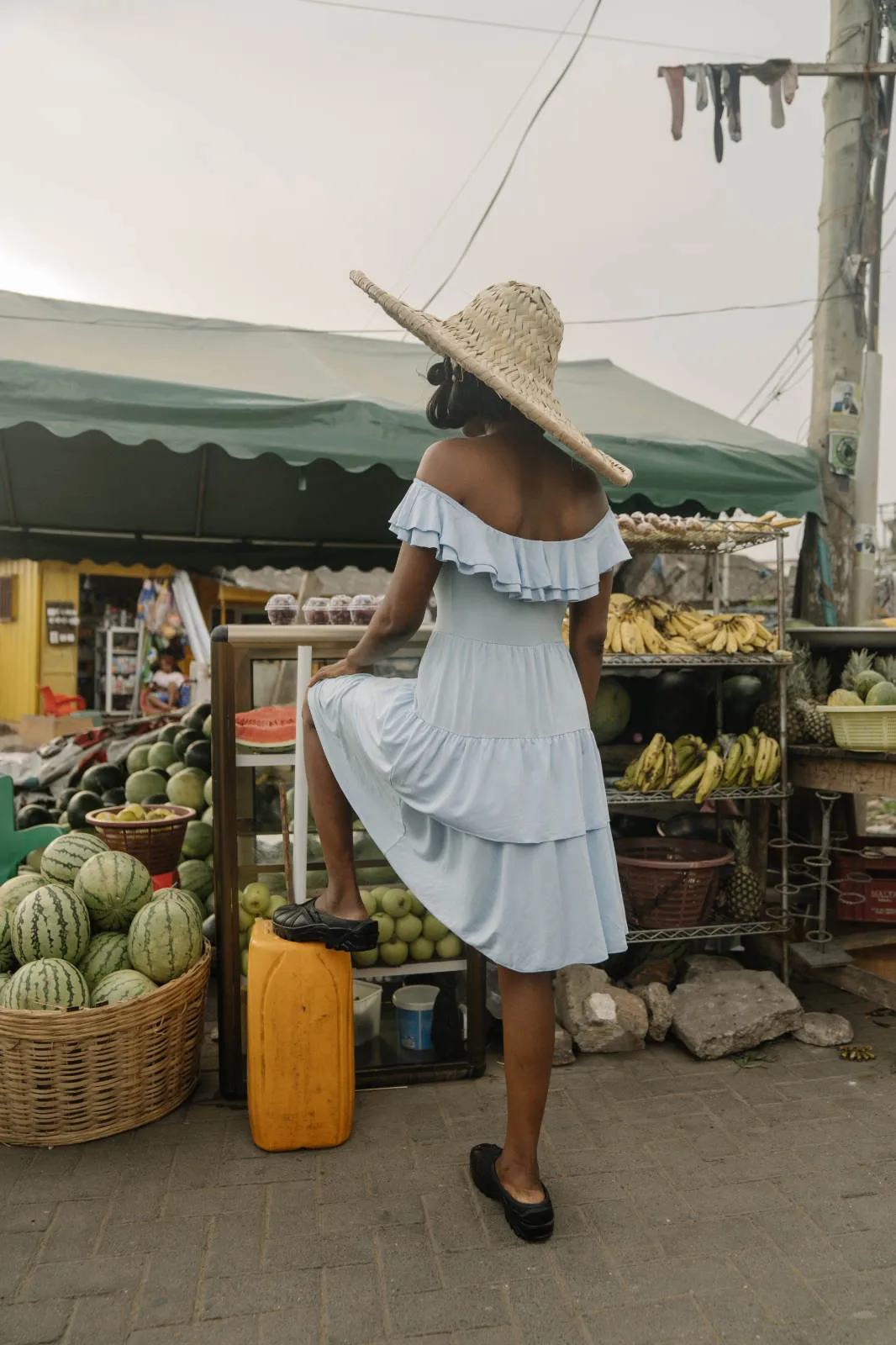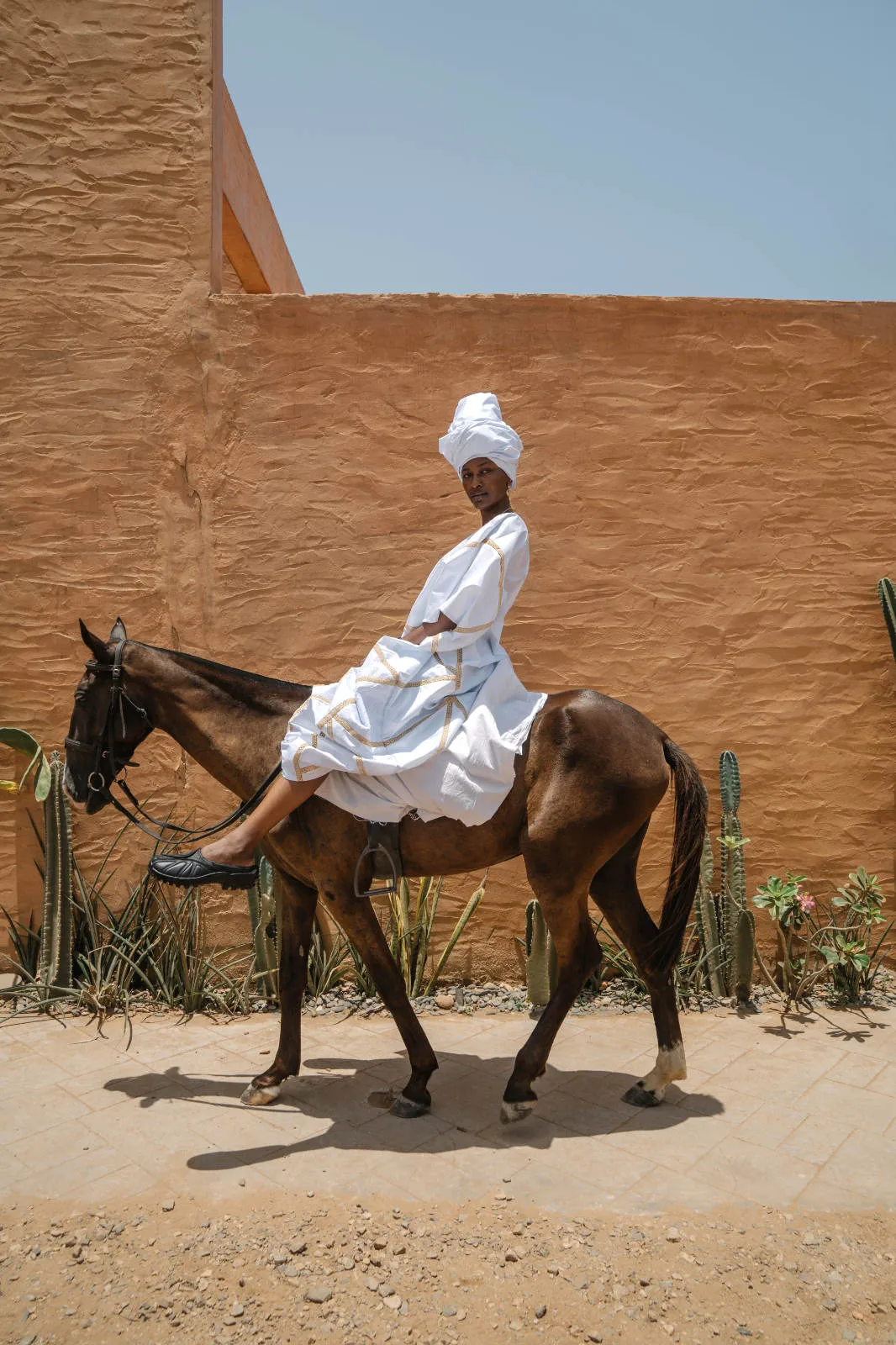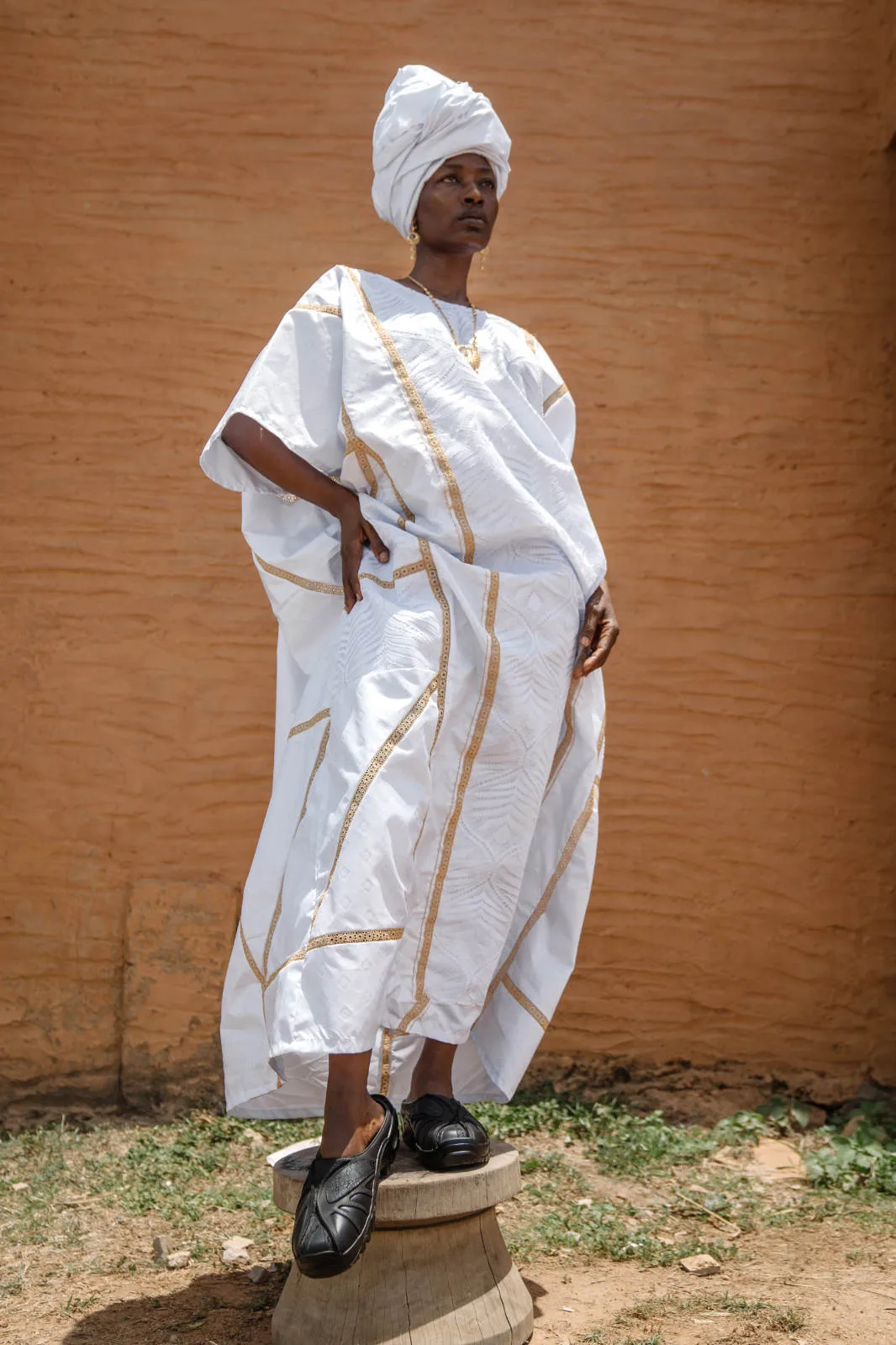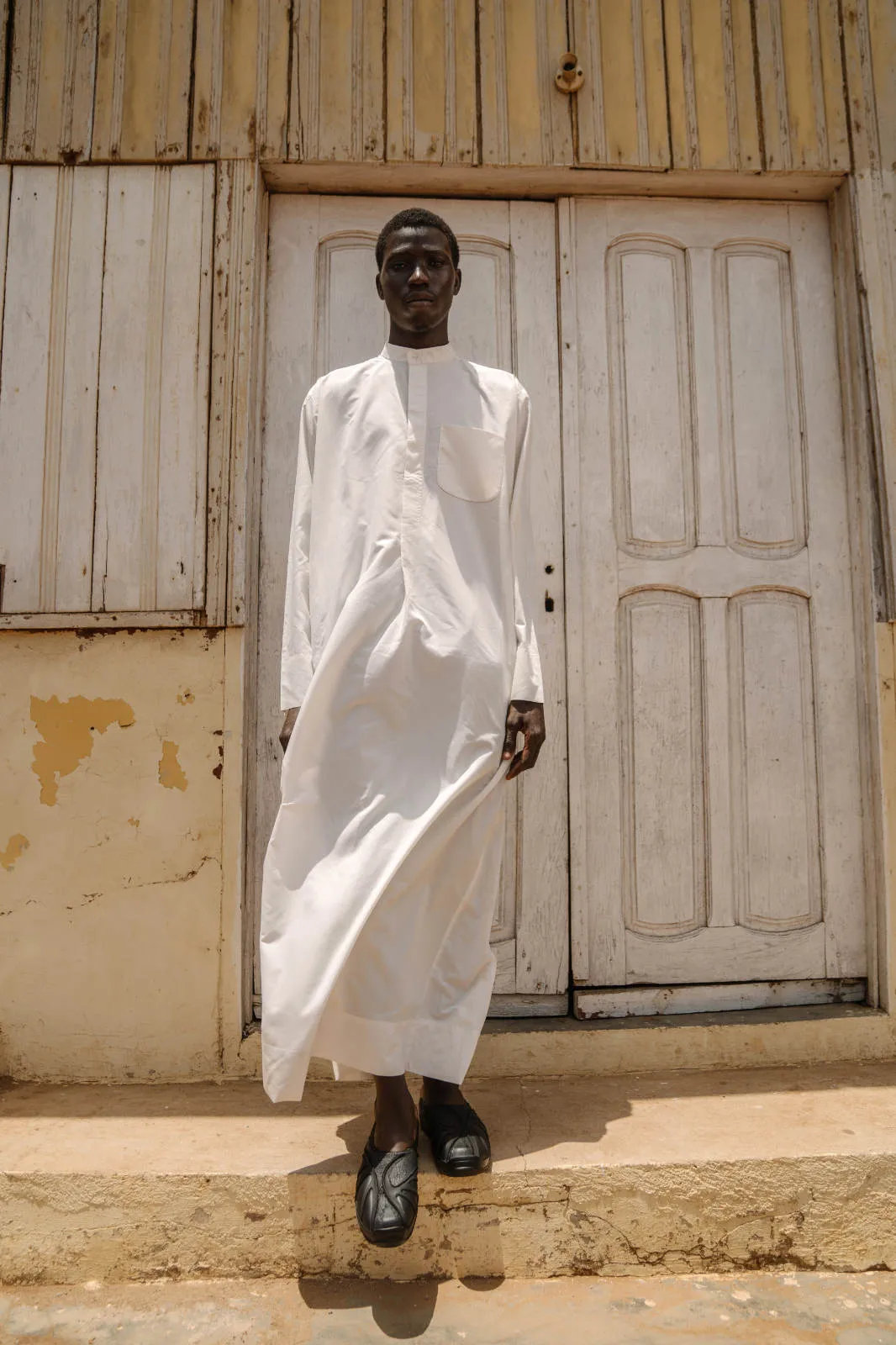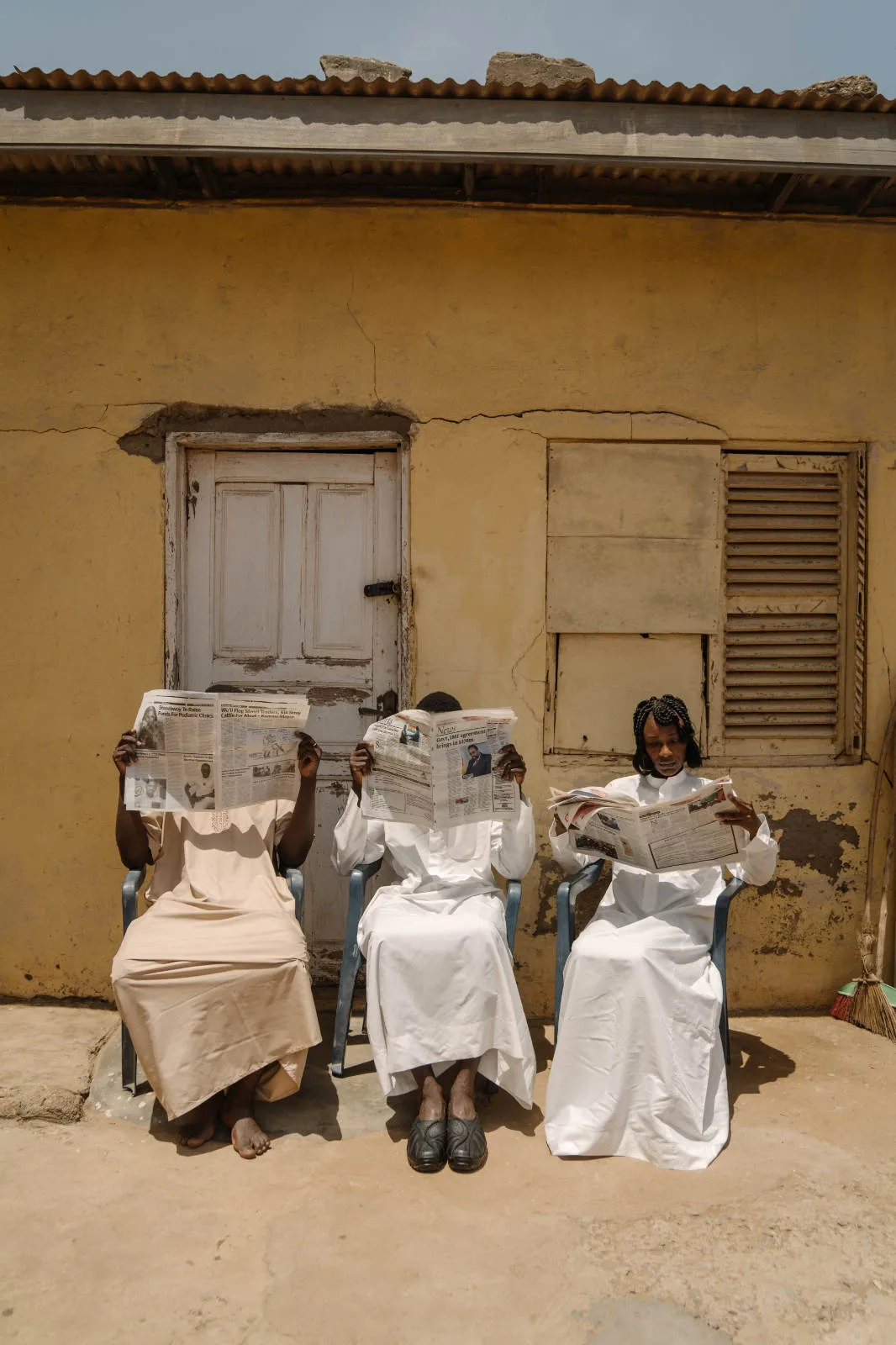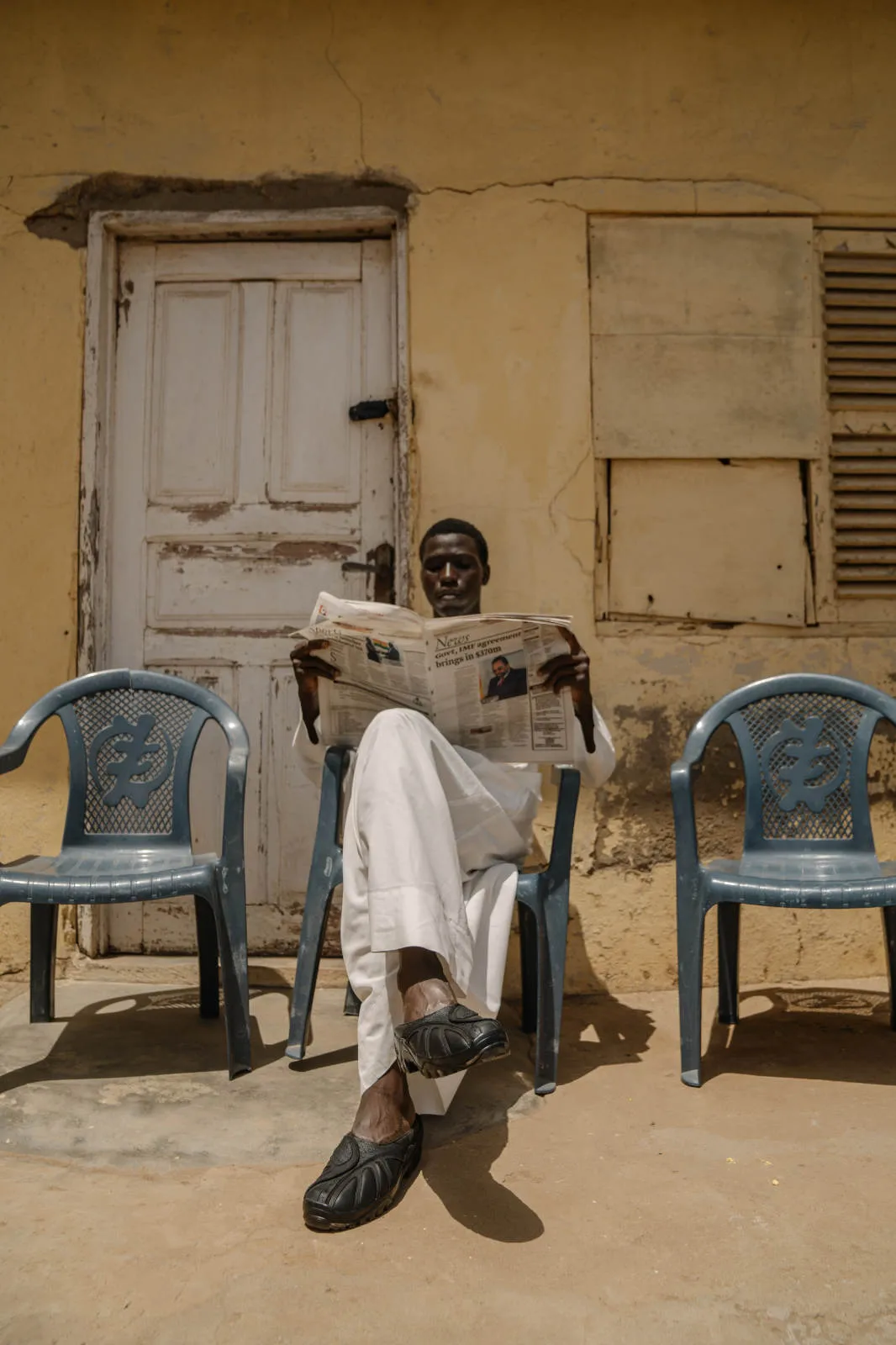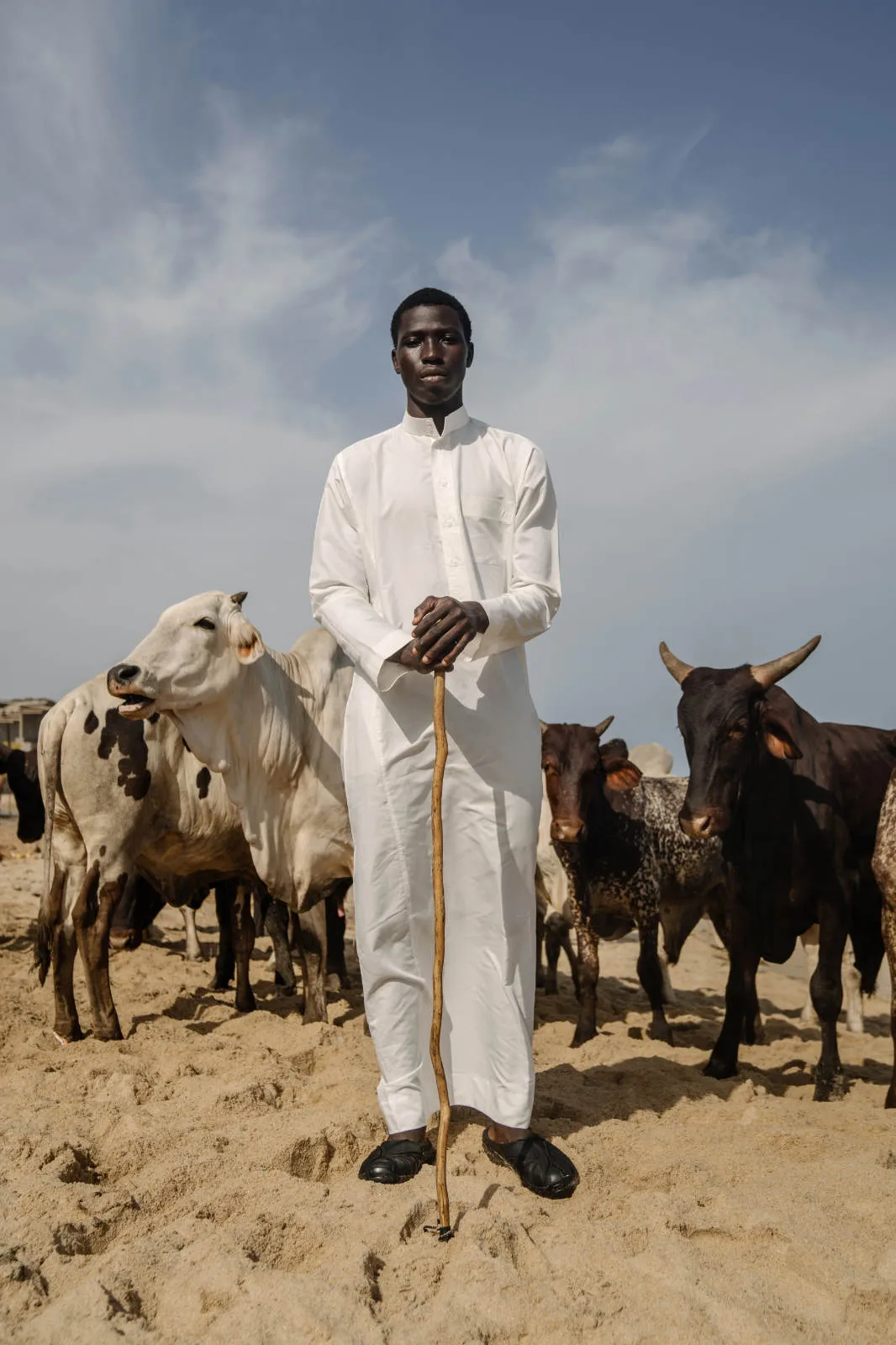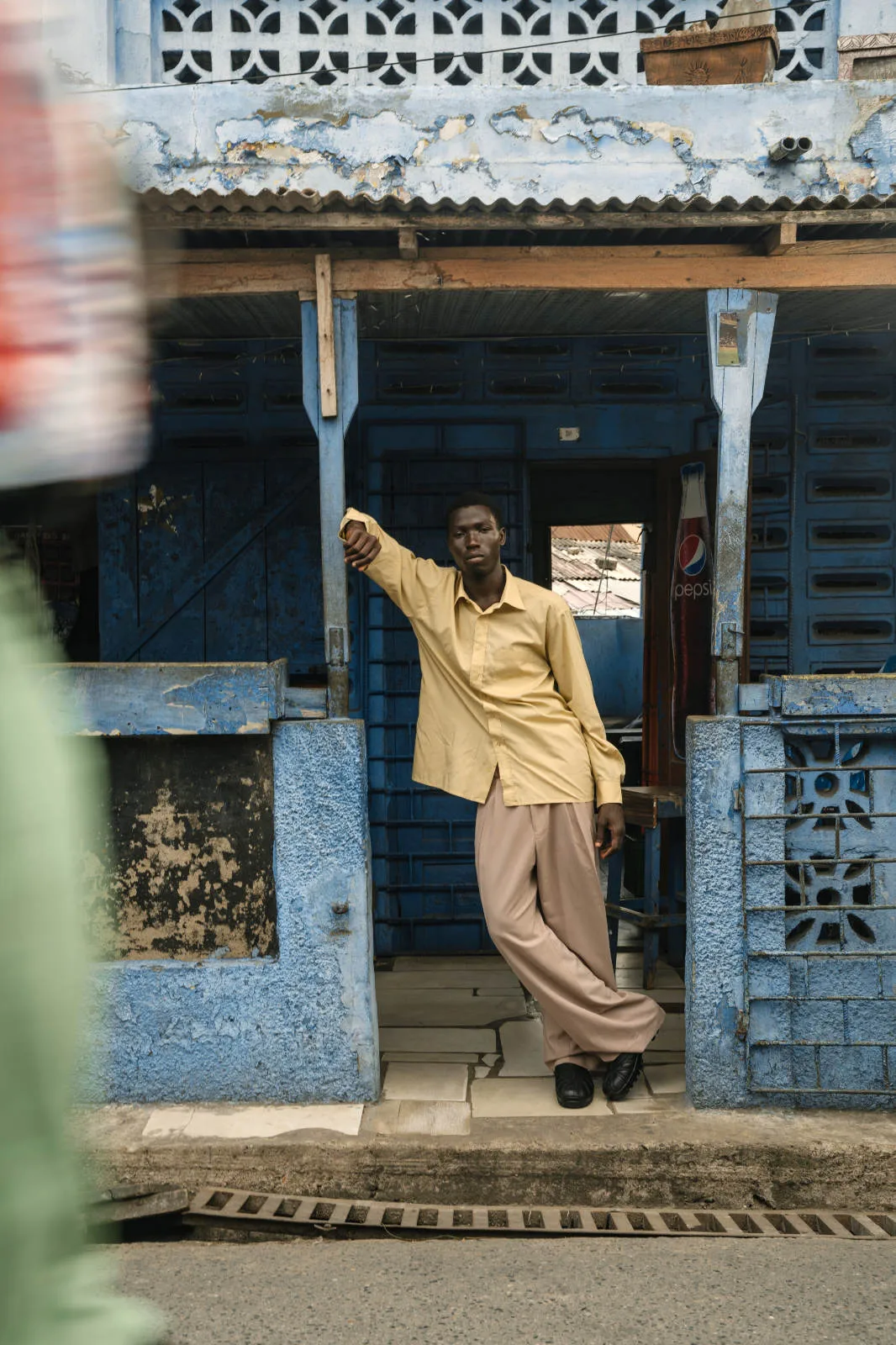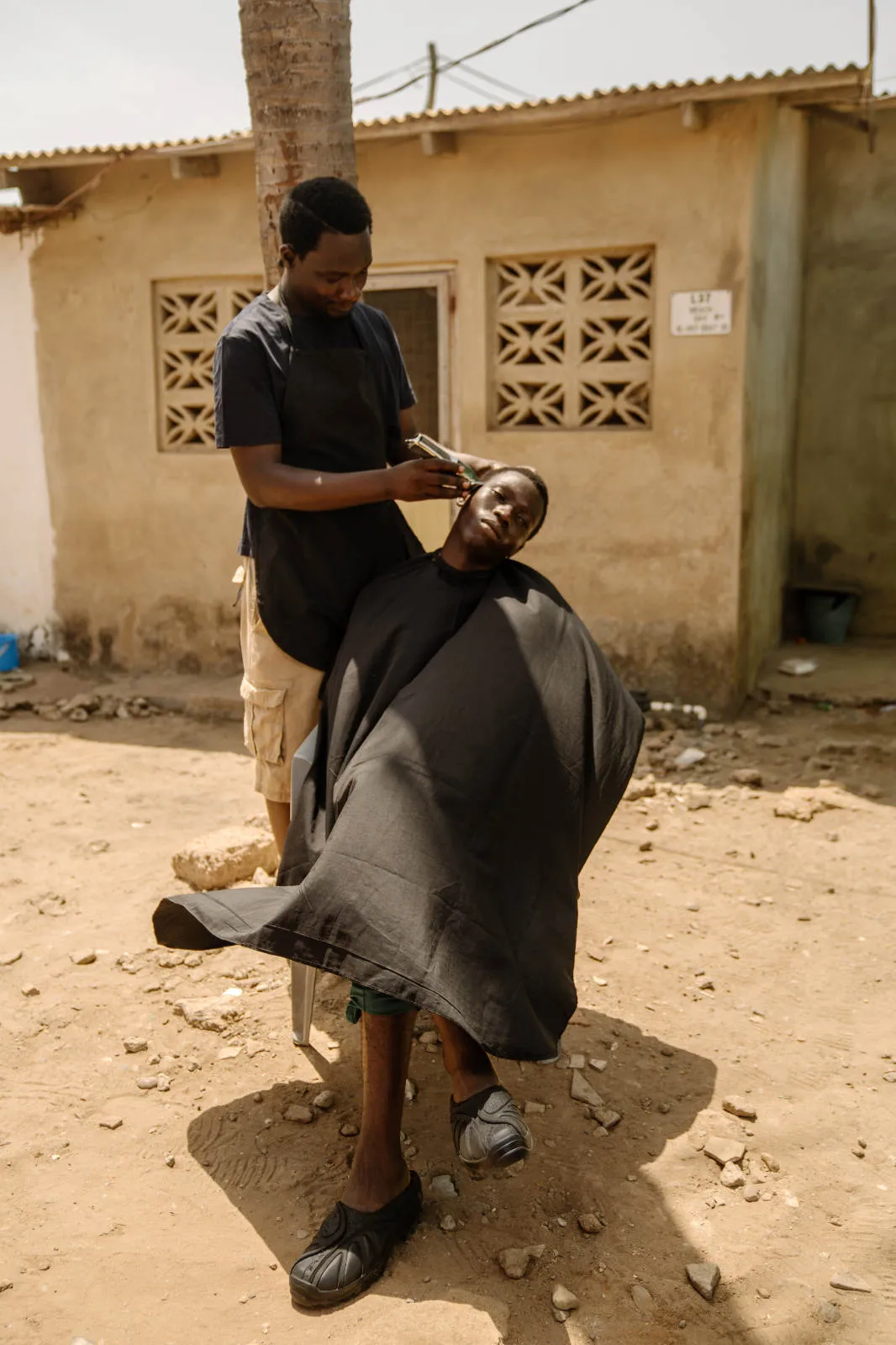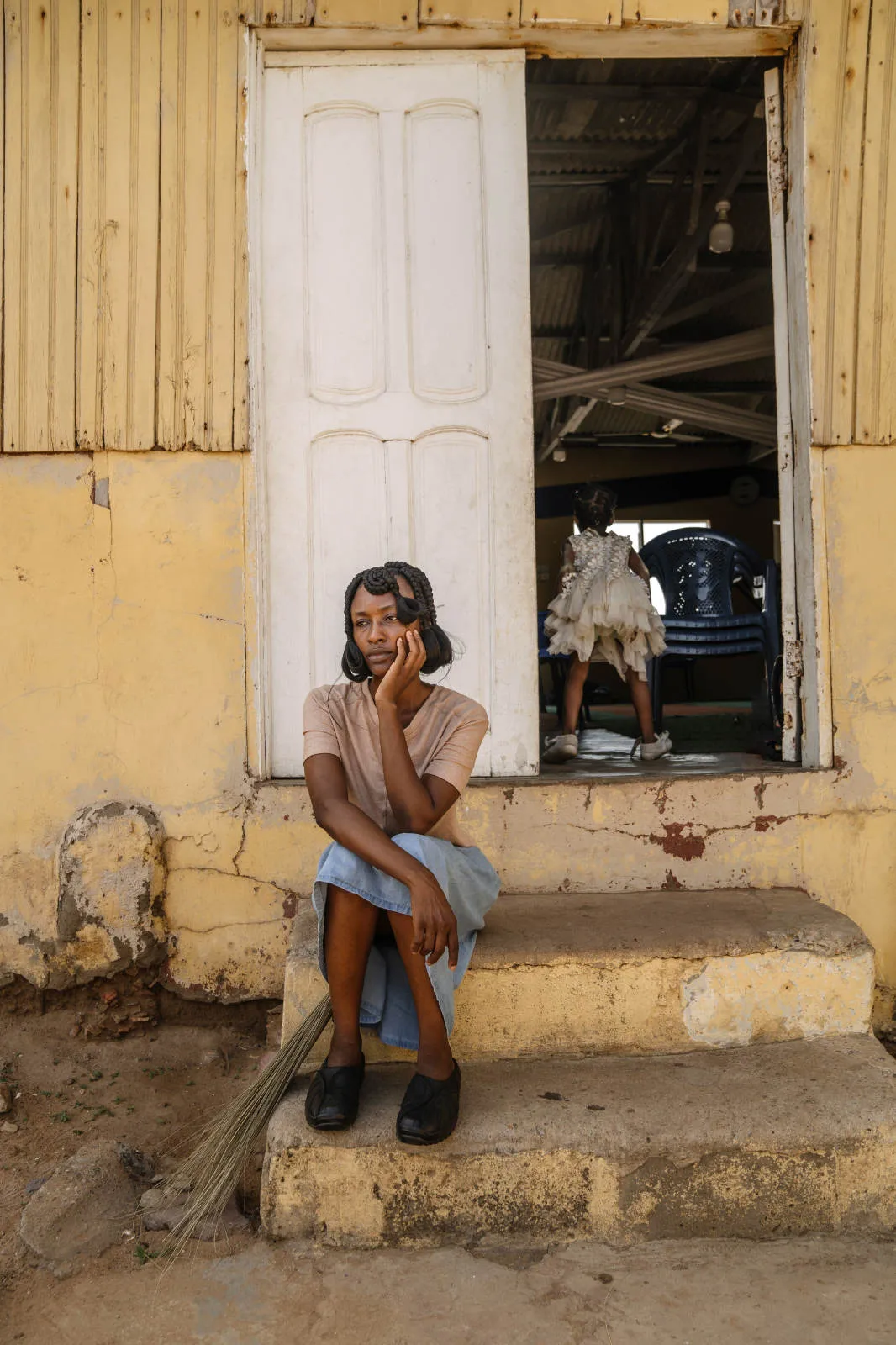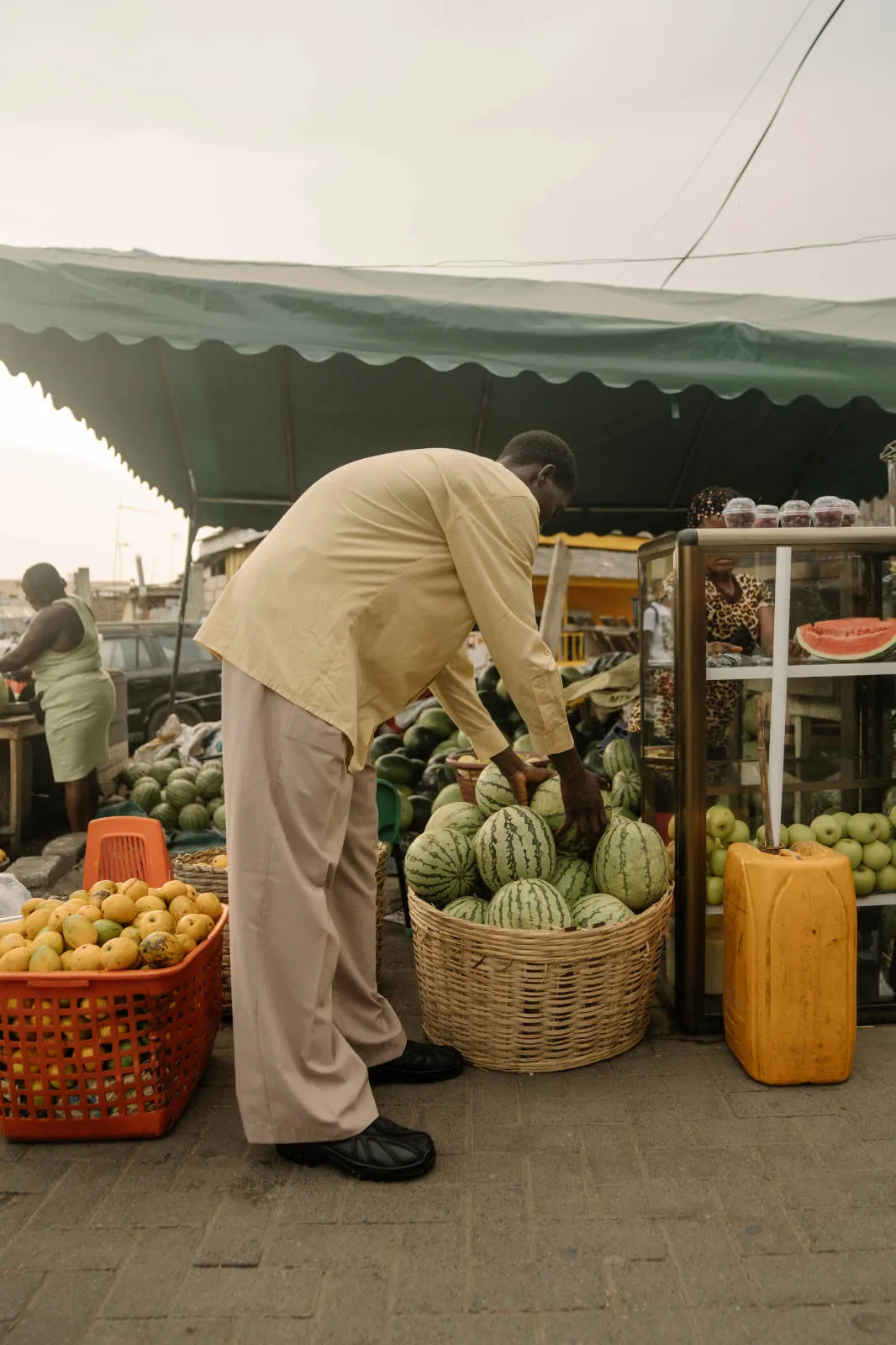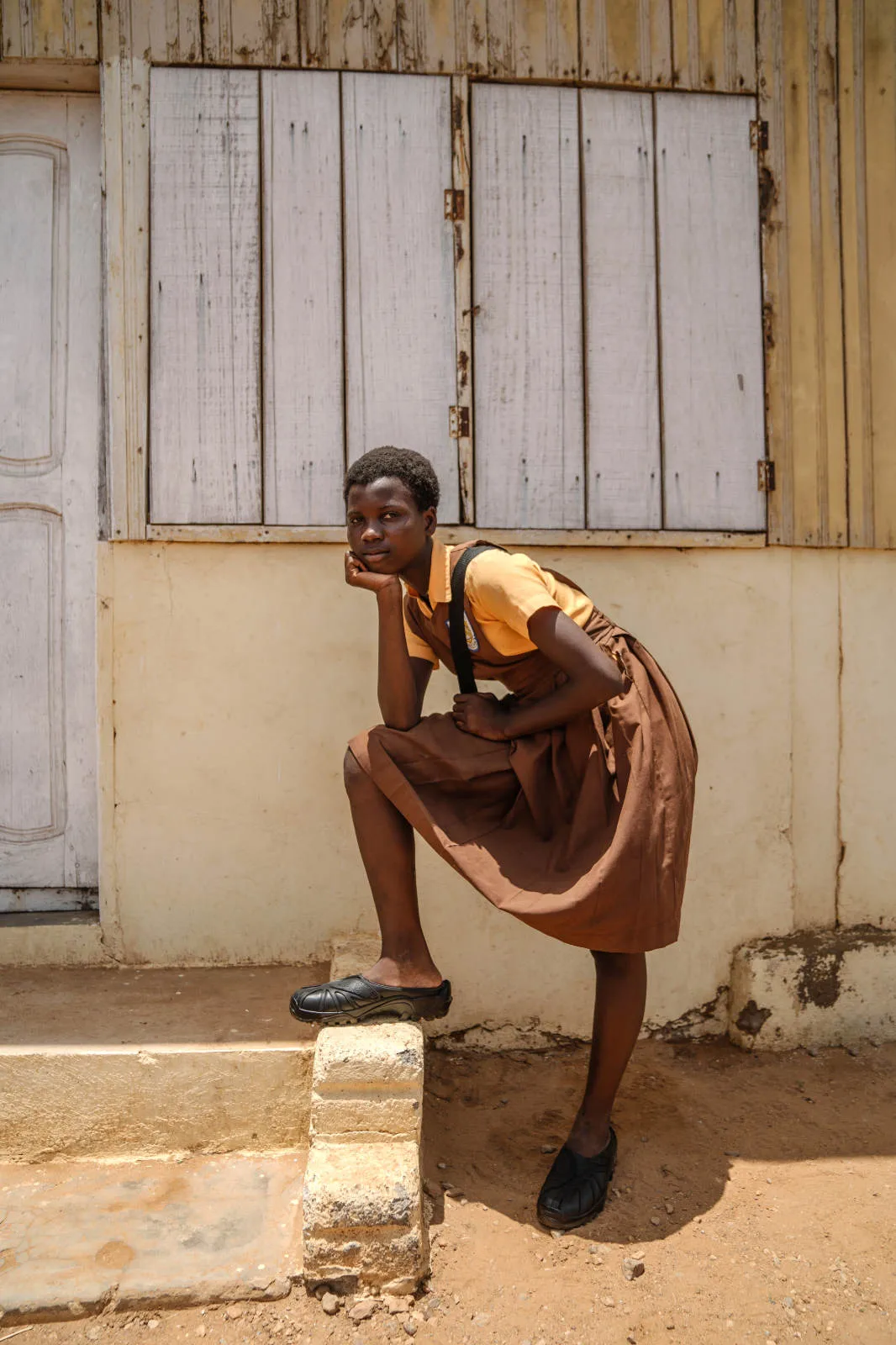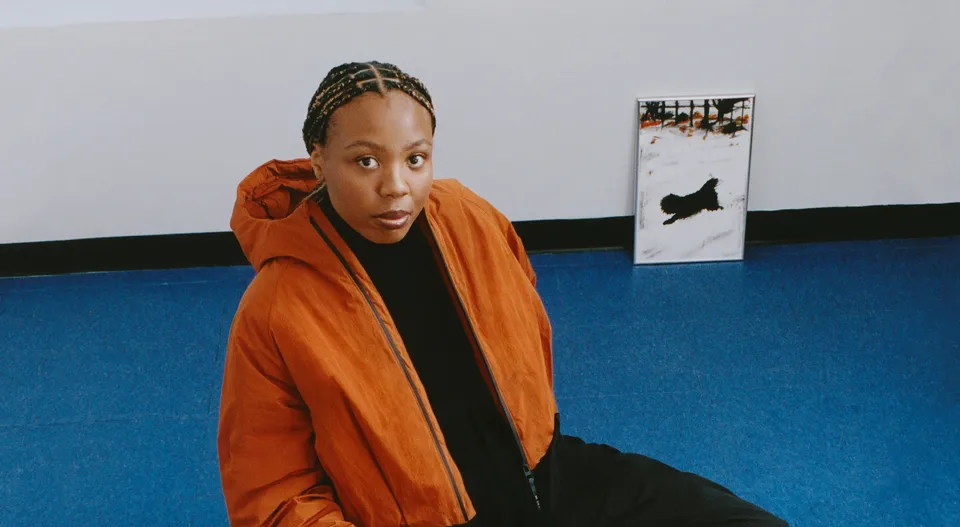
The GTN Mule shoe is Giles Tettey Nartey’s first object designed for everyday wear and is the result of a collaboration with Demon Footwear. True to his method, Tettey Nartey began by drawing, writing, testing, filming and gathering references until he found a convincing direction, a starting point for construction. At the heart of this collaboration is his interest in understanding how a gesture becomes form and how an object can acquire real meaning through use.
Developed over fourteen months of testing and adjustments, the shoe combines engineering with a strong cultural knowledge. Giles designs the shape and material, but it is the wearer who completes the work: creases and patina record the life of the shoe-object in motion. While production and material experience remain in Montebelluna, the imagery is set in Accra. We spoke with the artist to learn more about his new work.
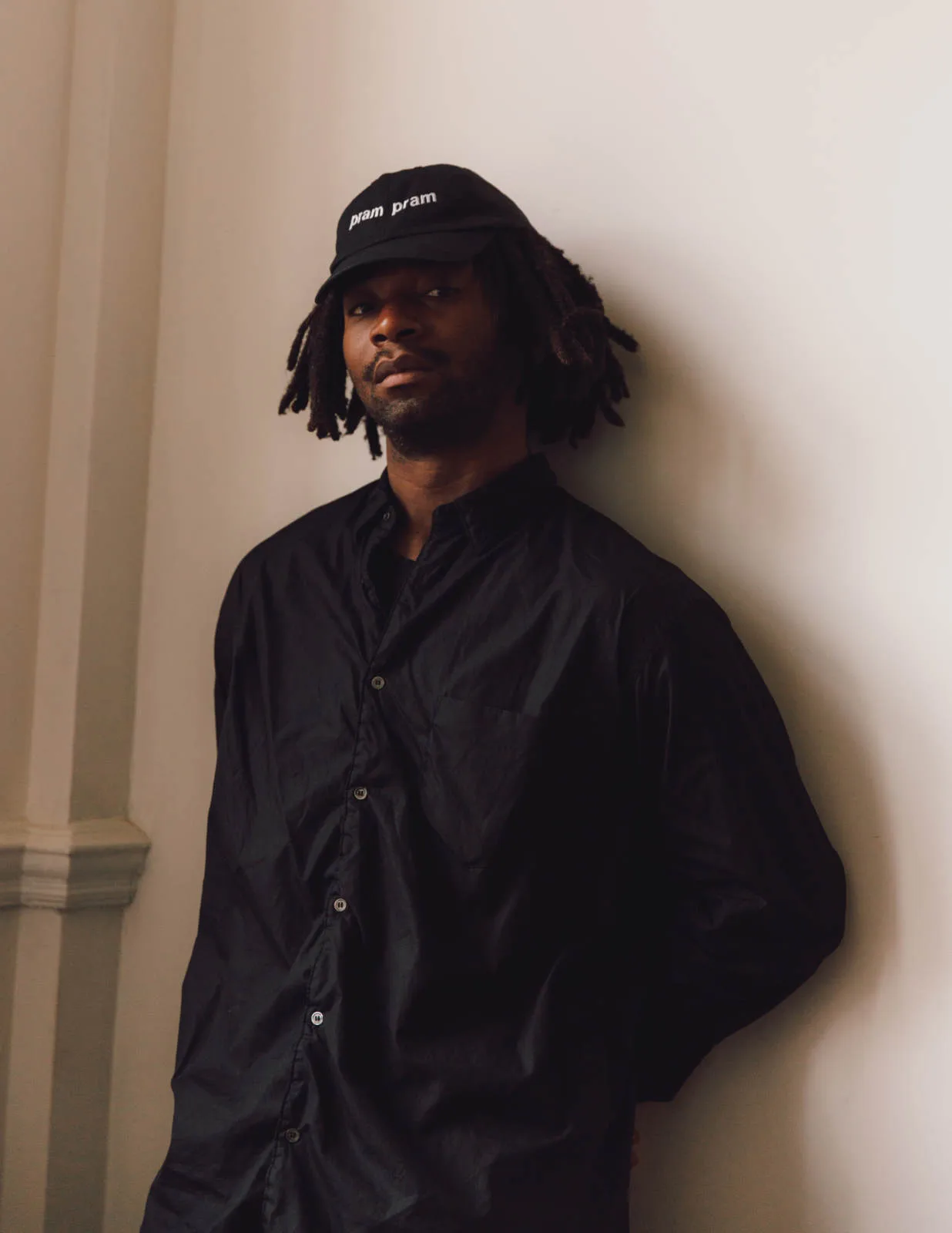
Hello Giles, it's a pleasure to speak with you. How are you and where are you answering us from?
I’m well, thank you. I’m answering from my studio in Bermondsey, South London, between teaching and studio work, with Accra very present in my thoughts at the moment.
As an artist, architect and researcher, your work has been seen in film, installations, performance and objects. How do you experience your creative process? Which phase do you enjoy the most?
I experience the process as a sequence of translations: research into form, form into material decisions, and material into a situation where use can activate the work. I move between drawing, writing, making tests, filming, and assembling references until a direction for my language becomes clear enough to build with. The part I love most is seeing an idea come alive — the moment it becomes physical.
Your new project, The GTN Mule, is in collaboration with Demon Footwear. This is no coincidence, as your relationship with Alberto Deon, the Italian brand’s creative director, dates back to when you studied at The Polytechnic University of Milan. What has it been like working together for the first time and combining your two practices?
Alberto and I met in 2014 at Politecnico di Milano and stayed in touch for years, speaking loosely about making something when the timing aligned. Working together now felt right: the trust was already there, and the project demanded a serious commitment to testing and refinement. I brought a research-led approach to form and cultural meaning; Demon brought deep manufacturing knowledge. The outcome sits inside that conversation, engineered with discipline and shaped as a bearer of narrative.
It’s also the first time you've created an object for people to wear and experience. How did you approach the design when the exhibition space took a back seat and you had to focus on an everyday product?
I approached it as a real, everyday object first. It had to be comfortable and well made. At the same time, it allowed me to test ideas that run through my wider work, how a gesture becomes a form, and how an object can hold meaning through use. A shoe is in constant contact with the body and the ground, so it carries the work into daily life rather than an exhibition or institutional space.
You describe the GTN Mule sandal as a “living archive” capable of recording gestures, movement and use. How do you feel about losing control of the work when it can be experienced and worn by someone else?
I welcome it. The shoe only really becomes complete once it’s worn. I design the form and the material, but the wearer finishes the work through use. Marks over time — creases, scuffs, changes in shape — show how someone moves and lives in it. That’s the point, the archive is made through everyday wear as it becomes a record of where it has been, how it has been used, and by whom.
“I experience the process as a sequence of translations: research into form, form into material decisions, and material into a situation where use can activate the work.”
The project stems from the convergence of two processes: manufacturing as engineering and manufacturing as cultural inscription. How did you find that balance between both? Was it a complicated process?
It wasn’t complicated, but it was rigorous. We spent about fourteen months testing, adjusting, and refining. Engineering set the practical requirements and the limits of what was possible. The cultural side shaped the design decisions: the bumps, the proportions, the surface details, and how the shoe meets the ground. That balance sits at the centre of my wider practice, so the mule became a clear way to express a contemporary West African design language within a highly engineered manufacturing process.
On several occasions, you have expressed your desire to tell stories through materials, so I understand that the choice of black leather is not in vain. Why this material and what are you trying to express through it?
When I say I tell stories through material, I mean I use form and material to hold and communicate histories and culture. The object becomes a way of transmitting those ideas, in the same way an oral storyteller uses voice and rhythm to carry meaning. Black leather relates directly to where the shoe is made, Italy. I wanted the material choice to be local and honest to that context, while the design carries a different geography in its thinking.
Montebelluna and Accra appear in this project as two cultural and inspiring territories. What did you learn from this combination and what elements did you decide to keep local?
I learned that both places treat making as intelligence, but they apply it differently. What stayed local was clear: production and material expertise stayed in Montebelluna. The shoe’s context, how it should appear, move, and be understood, stayed in Accra, because the project needed a West African imaginary to complete it.
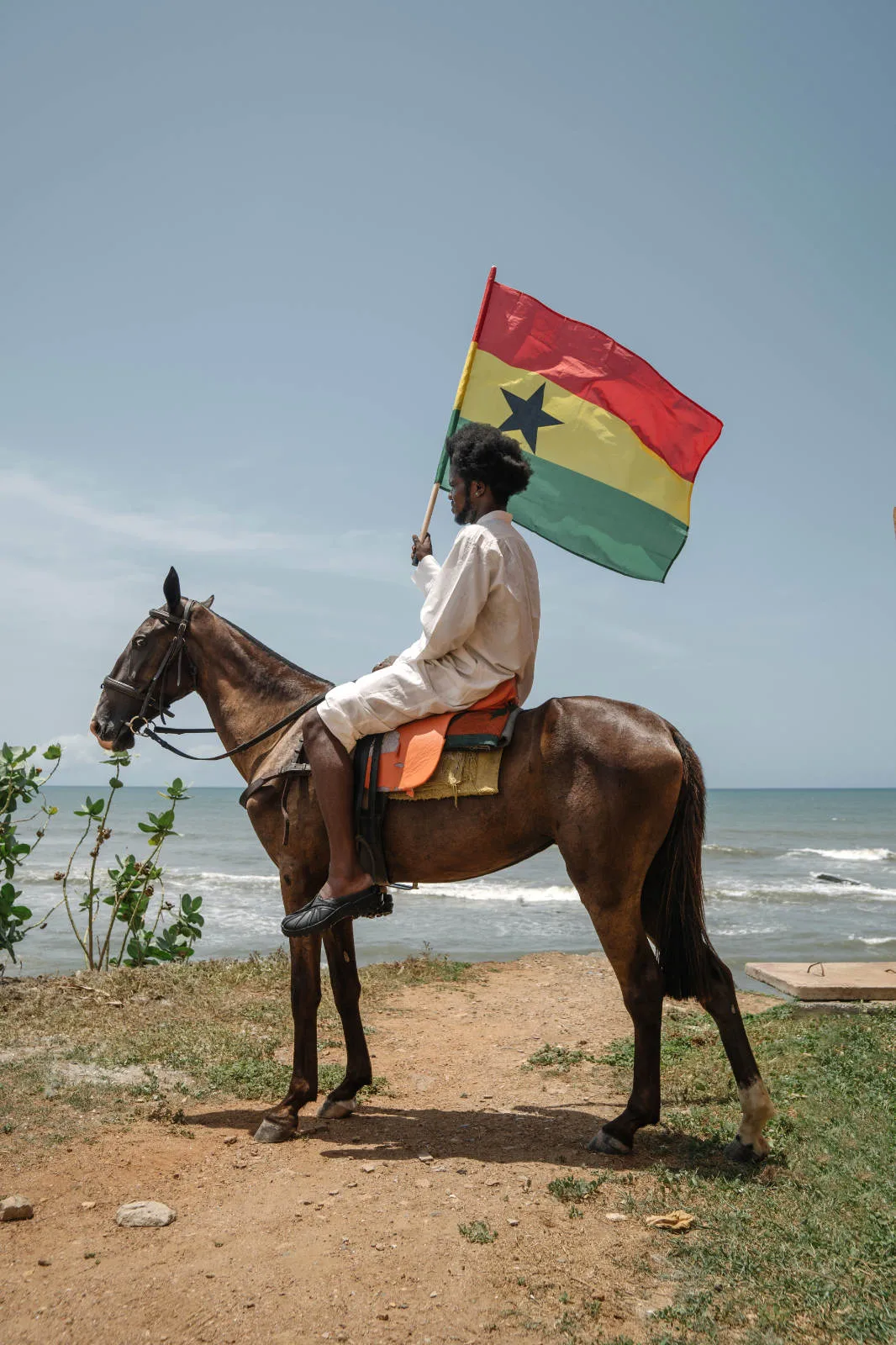
The campaign was photographed by Natālija Gormaļova and takes us into everyday life in Accra. How was the process of combining your two perspectives? What was most important for you to preserve and express through the images?
The shoot was creatively directed by me, so I approached Natālija with a clear idea of the world I wanted the shoe to sit in and we worked closely to shape this. The main thing for me was to place the shoe in real situations in Accra, not in a studio setting. I wanted the campaign to focus on everyday life, ordinary moments, movement, and the street, without turning the city into a spectacle.
You often talk about the material cultures of West Africa as a living design intelligence. How would you describe this everyday choreography that you consider to be the source of a unique and living design logic?
I see it as design that comes from daily use and daily limits. People work with what is available and improve things through carrying, balancing, adapting, repairing, and reusing. The body and the street set the standards. Movement, uneven ground, heat, shade, transit, and social life shape how objects are made and how they perform. Over time, that builds a clear design logic where practicality and visual language develop together.
Looking ahead to this year, do you have any creative goals or projects you want to start working on?
This year I want to keep developing my language across different mediums and scales, from small architectural builds to continuing film work that treats design as narrative. I’m focused on projects that can move between institutions and real everyday life. I also want to keep building platforms through teaching and curatorial work, so the practice stays open to dialogue, craft lineages, and contemporary ways of making.