If the Fondation Louis Vuitton is known for one thing, it is its unerringly good taste when it comes to choosing the artists it presents. Again and again, the institution has focused on figures who shaped the 20th and 21st centuries like few others. Jean-Michel Basquiat, for example. Marina Abramović. Louise Bourgeois. David Hockney, Andy Warhol and Mark Rothko. The list speaks for itself. Now, until March 2nd, 2026, visitors are invited to spend time with the latest addition to this line-up: Gerhard Richter, the German painter, sculptor, and photographer who literally blurred reality.
What does “blurred reality” mean in Richter’s case? It means photography-based paintings that look almost printed at first glance, then reveal themselves as thick oil paint, created through large-scale projections on canvases. It means close-ups, smudges, and brushstrokes that soften edges and undo certainty. There are seemingly realistic images interrupted by sudden, impulsive stains, and later, vast abstract murals that grow more expressive with time until they end up in dynamic pencil and ink drawings. Born in Dresden in 1932 and trained in the strict traditions of mural painting, Richter left East Germany in 1961, just before the Berlin Wall went up. That rupture, between systems, ideologies and images, never really healed. Whether he paints a family member, a landscape, or a field of colour, nothing is taken directly from the world. Every image is filtered through a photograph or a drawing first, already held at a distance, already under suspicion.
The exhibition by Fondation Louis Vuitton stretches across 34 rooms and more than six decades, moving strictly chronologically from 1962 to 2024. Overall 275 works, borrowed from 104 institutions and private collections, map out a practice that constantly shifts yet always feels unmistakably Richter. Early paintings such as Tisch from 1962, to give you a glimpse, show everyday objects rendered with almost clinical precision. Only to be disrupted by a huge, monochrome, seemingly impulsive stain of brushstrokes in the painting’s centre. A few years later, in Ema (Nude on a Staircase) from 1966, Richter’s then wife descends a staircase in an image that looks photographic at first but quickly starts to feel suspended and oddly unreal. Blurred, like a photograph taken in motion. Look closer, and you can see how, as the oil paint was still wet, Richter took a wide brush and softly blurred the lines. And if it feels familiar, that is no accident. Ema is a quiet, intimate nod to Duchamp’s Nude Descending a Staircase No. 2 from 1912.
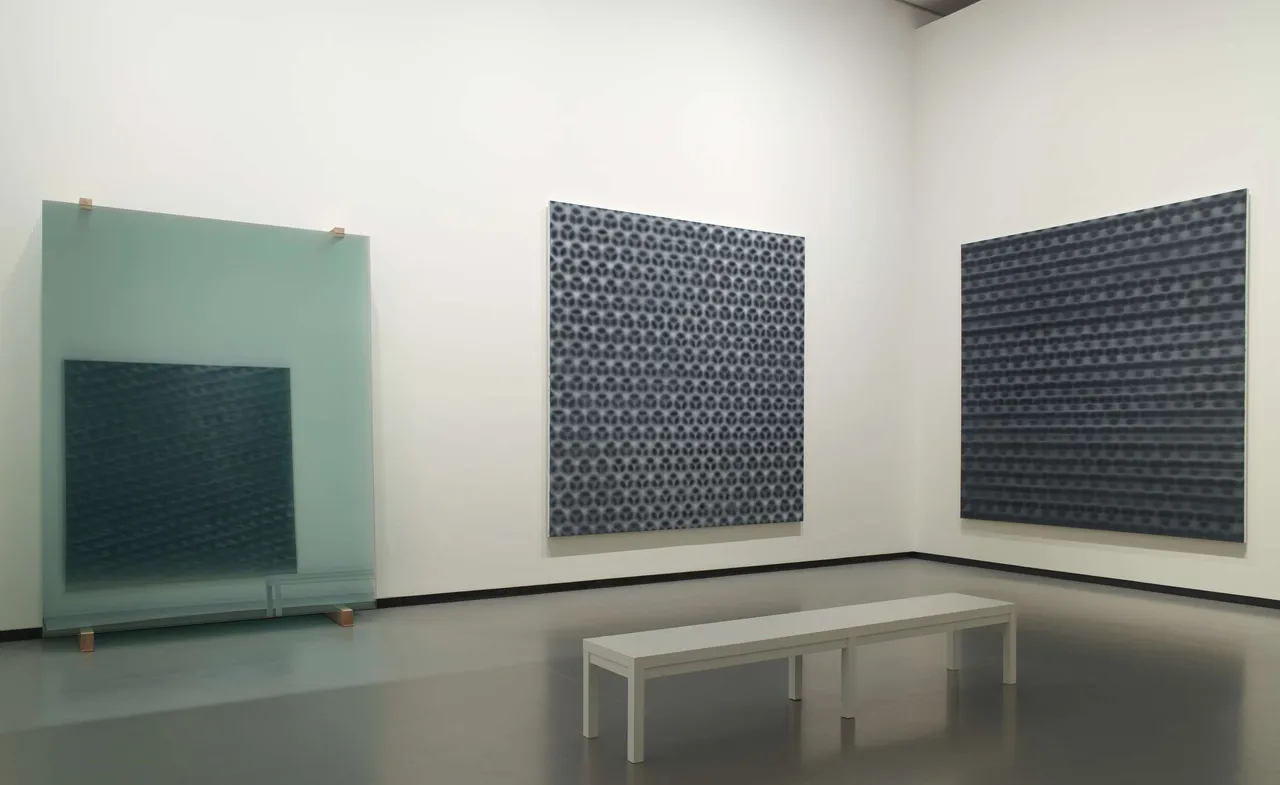
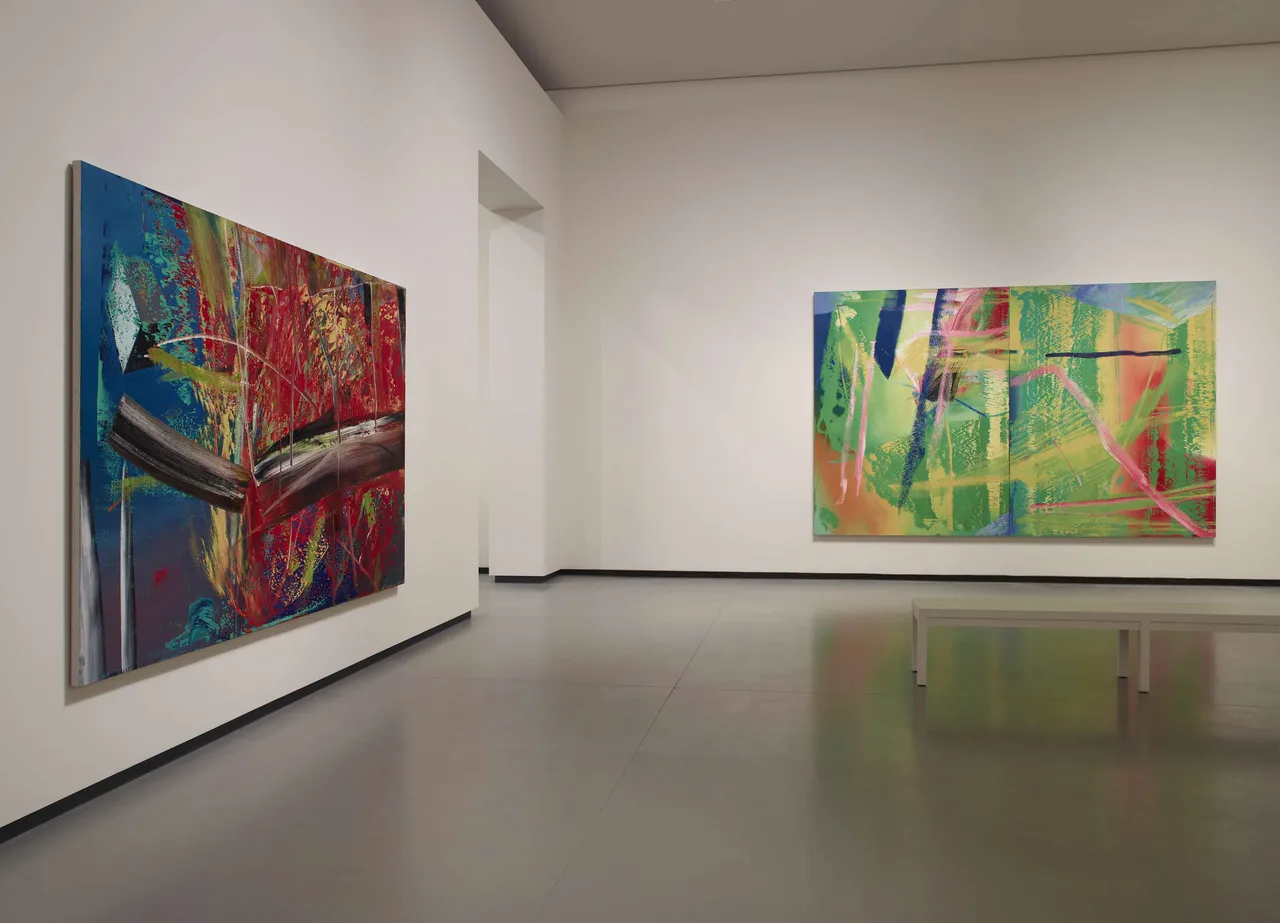
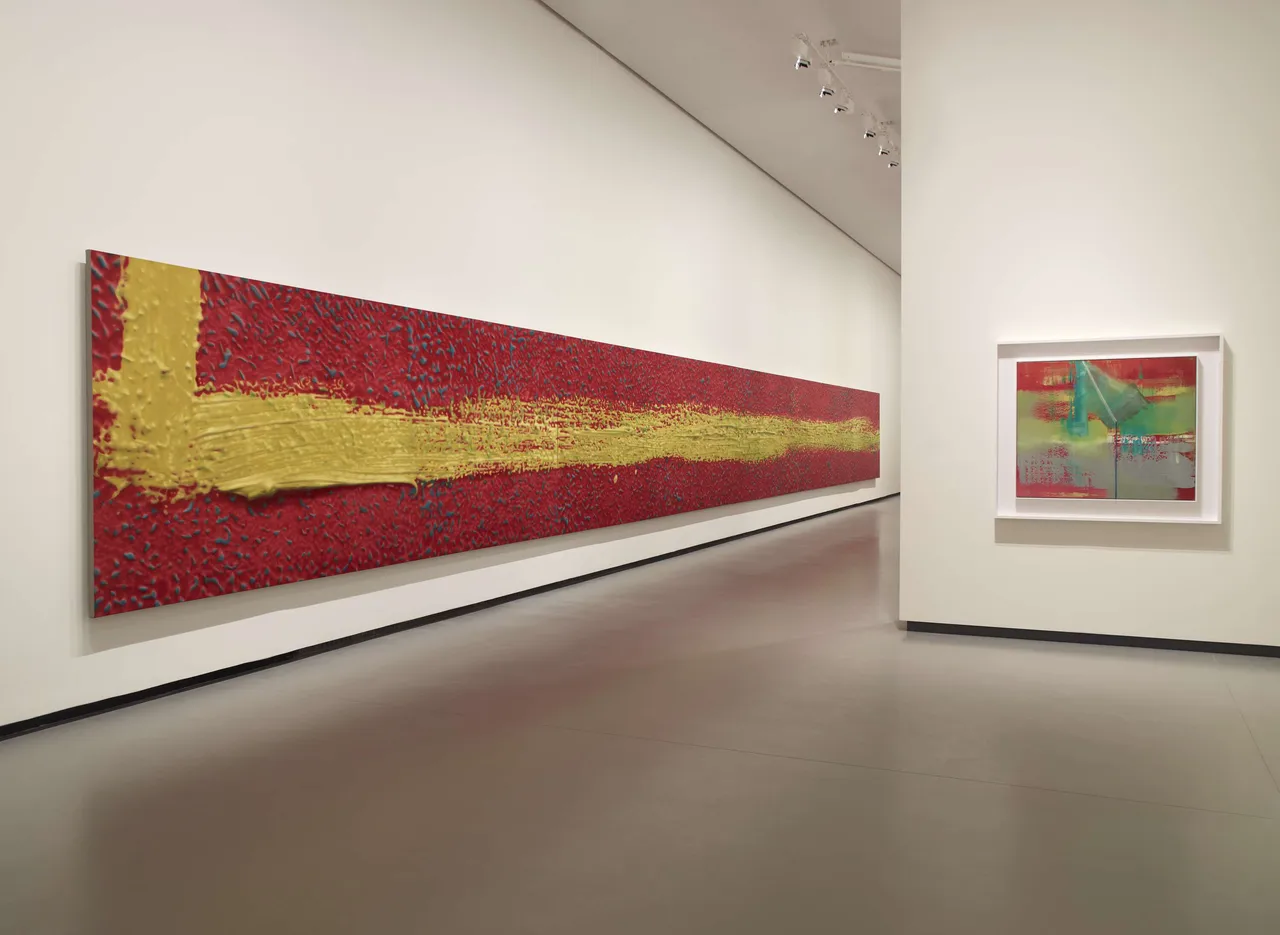
As the decades unfold, Richter refuses any neat, linear development. Figuration and abstraction exist side by side, often in the same years and sometimes even in the same room. The 1970s bring radical investigations into representation, from the cool detachment of the Grey Paintings (1974-1975) to the almost encyclopedic ambition of the 48 Portraits, which were painted for the 1972 Venice Biennale. In the 1980s and 90s, colour surges forward in large abstract canvases like Lilak (1982)—a 260×200 cm mural with vibrant greens, magentas, and yellows layered on top of each other, dissolving into one another, and creating strong strokes and dynamic movements. A darker historical weight emerges in the series October 18, 1977 (1988), on the other hand. It’s the artist’s haunting and deeply personal response to Germany’s recent past. Later works introduce chance into the process. Chance scraped across the canvas with a squeegee, chance organised into grids of colour, and chance held in careful balance with control.
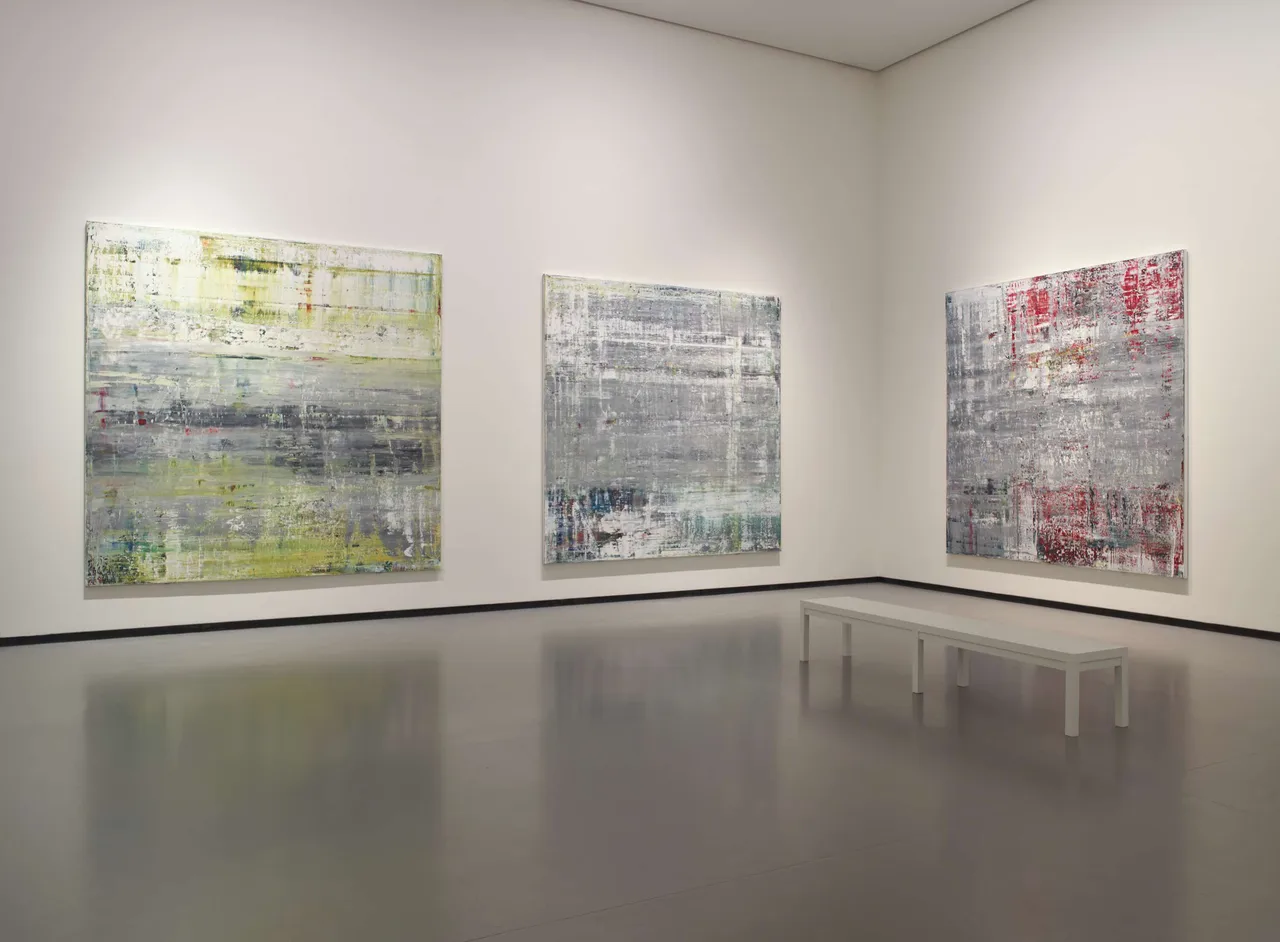
The final rooms feel both resolved and open-ended. After years spent experimenting with glassworks and digital images, Richter returned to painting with works shaped by the unrepresentable, most notably the series of grey colours, Birkenau (2014), a group of works inspired by photographs that were taken inside a Nazi extermination camp and were completed before Richter stopped painting in 2017. Since then, drawing has become his main focus.
Seen together, these works make clear why the German artist has always resisted categorisation. Portraits, landscapes, abstractions, and reflections in glass are not separate phases but parallel ways of thinking. A dialogue between reality, deconstruction and reduction, between the visual and the non-visual, you could say. Bernard Arnault, President of the Fondation Louis Vuitton, summed it up in the exhibition press notes: “His approach is unique and profound, personal and universal. Like a communion.”
With all its contradictions and its restless exploration of materials and techniques, the exhibition allows Richter to be exactly the artist he always insisted on being, without being pinned down to a single genre or box. Because in the end, grasping his work is too diverse anyway. Too hard to capture in just one sentence. Too complex, too powerful. So, our personal recommendation: go to Fondation Louis Vuitton and experience it yourself. Allow yourself to immerse in the multifaceted beauty of abstraction and accompany Richter on his journey through figuration. And in case you were wondering, Richter nowadays lives and works in Cologne and is considered one of the most expensive living artists. Good for him!