Last week, London’s Regent’s Park once again turned into the epicentre of the art world and became home to Frieze Art Fair. And although by now the galleries have already packed up their crates and moved on to Paris’ Grand Palais for the next showdown at Art Basel, let’s take one last stroll through the aisles of the British fair, where the art world met to talk, to trade, and to keep the business alive.
Upon entering the enormous white Frieze tent, you quickly found yourself in the Focus section, an area dedicated to younger galleries presenting emerging artists. In an effort to energise the fair and give visibility to the next generation of artists, this sector was moved closer to the entrance in 2024. And it worked: in the past, you had to wade through the booths of well-established positions before discovering new voices — probably bleary-eyed and art-OD’d by then. This new setup, however, allows fresh work to be seen with fresh eyes.
Right at the start of the section, Mika Horibuchi and New York gallery 56 Henry addressed an experience that is very familiar to many young artists. Horibuchi transformed the booth into the corridor of a fictional institution during application season. There were numerous hyperreal drawings of a perfect apple – an evergreen when it comes to showcasing technical skill – that had the potential to stir up long-forgotten memories (or trauma) for anyone who’s ever submitted a portfolio to an art school jury. Horibuchi’s presentation played with repetition, practice, and perfection, demonstrating not only technical skill but, more importantly, a good dose of humour and conceptual depth.
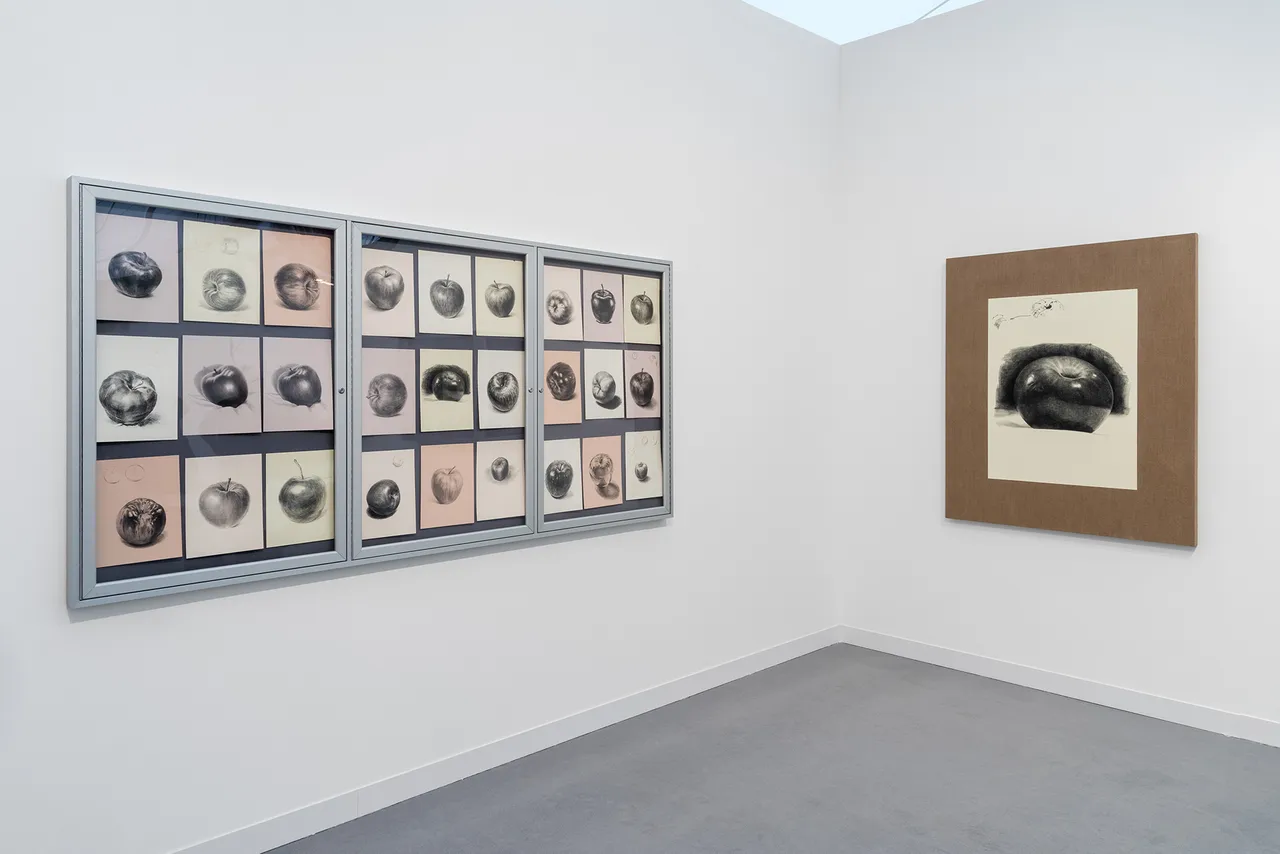
Courtesy of the artist and 56 Henry, New York and PATRON, Chicago. Photo credit Ian Vecchioti.
Also tackling the Sisyphean rhythm of trial and error defining both art-making and the universal experience of performing adulthood was Enrique López Llamas’ work at Mexican gallery Llano. His video installation El otro protagonista de la noche loops through sixteen vignettes, fragments of coming-of-age stories speaking of anxiety, insecurity, and persistence. Around it, a group of objects extended the video into sculpture: hand-painted replicas of the artist’s accessories, props, and costumes, moving between self-portrait and object. Llamas’ work observes the artist’s role with irony — a humorous reflection on what it means to be a man, an artist, and a subject shaped by pop culture.
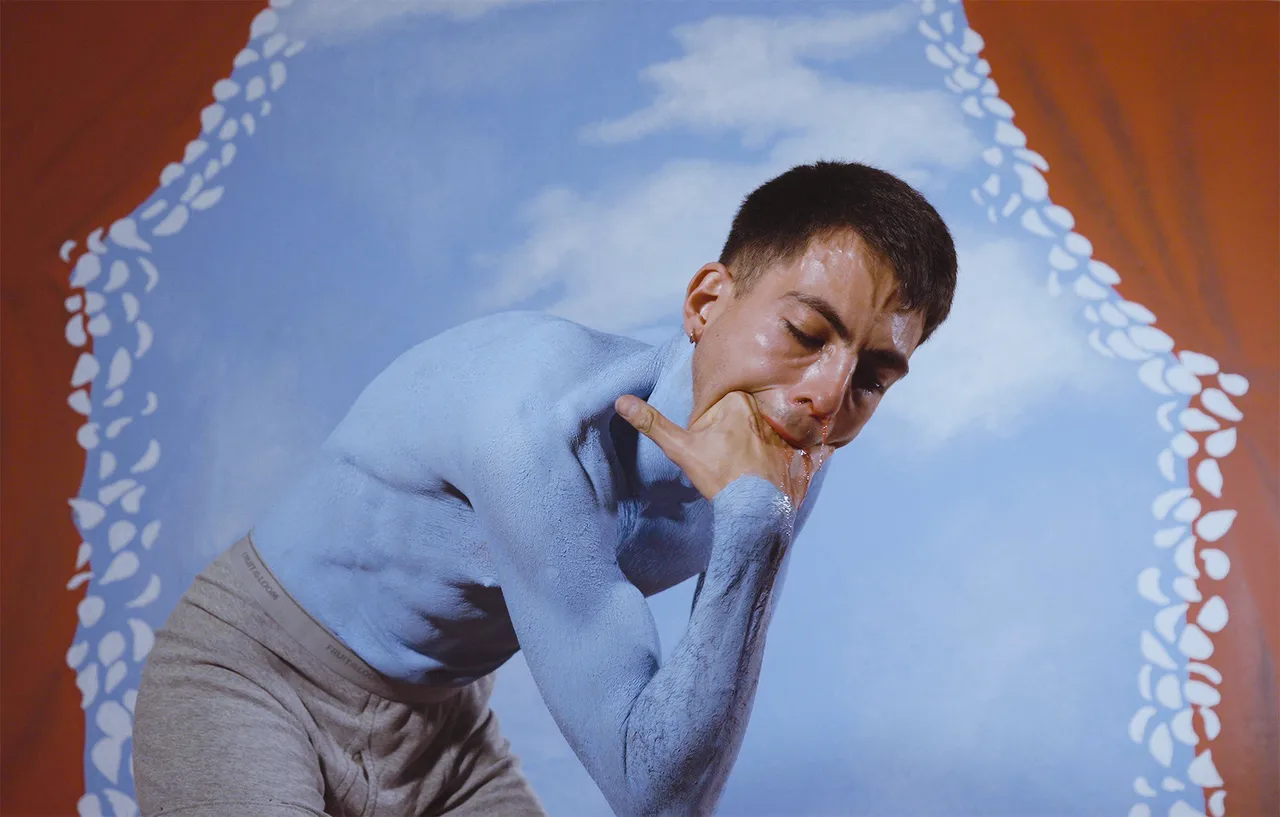
Courtesy of the artist and LLANO (Mexico City).
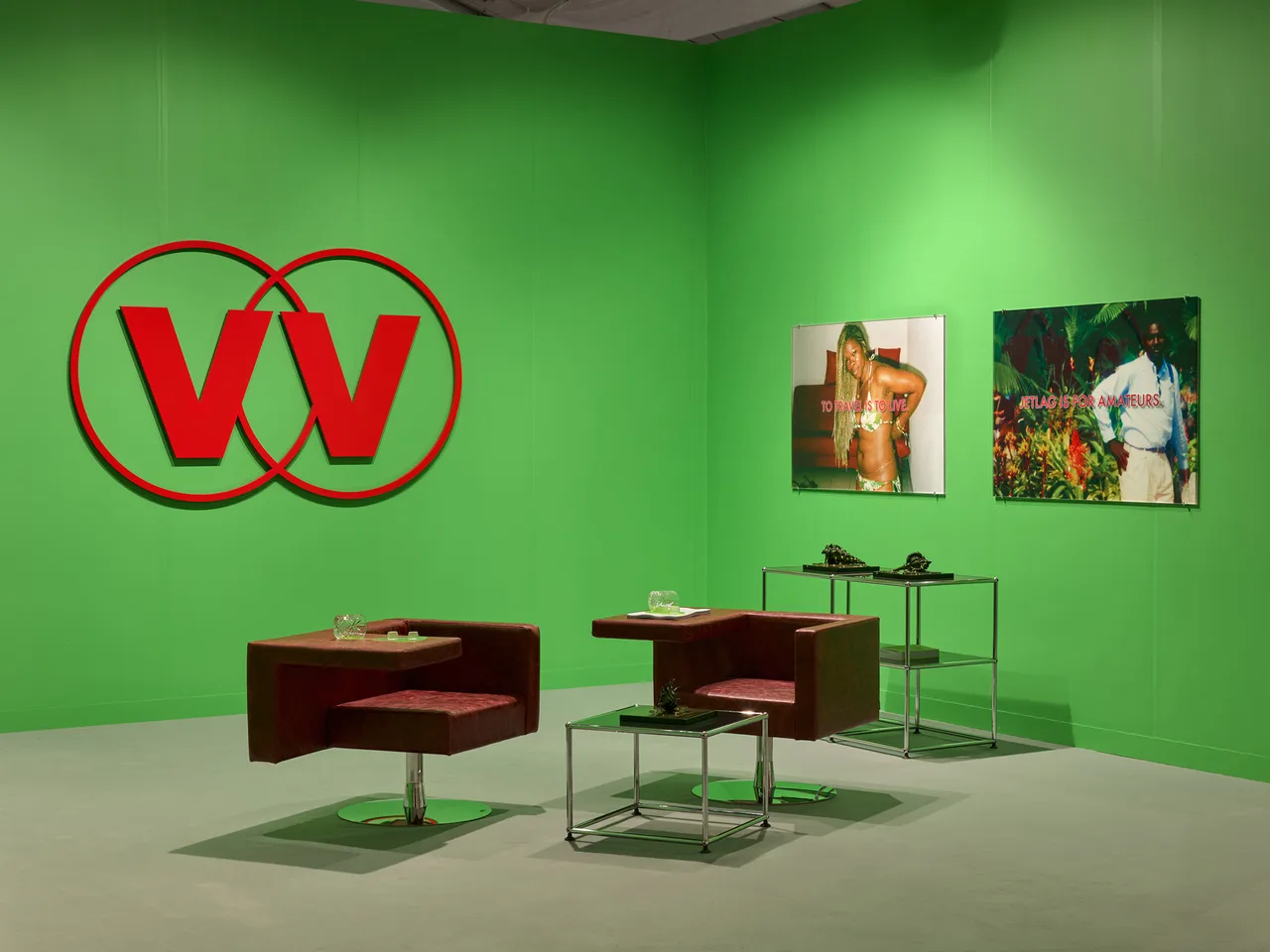
Not far from there, Christelle Oyiri turned the booth of London-based gallery Gathering into a fictional travel agency called Venom Voyage. Bilious green walls, designer leather chairs, spilled glasses filled with green slime, and prints showing Black people in Caribbean settings overlaid with slogans like “Don’t be a tourist – be a traveller” or “Jetlag is for amateurs” created an eerie corporate atmosphere. The work links the visual language of aggressive travel marketing with the environmental poisoning of Oyiri’s native Martinique and Guadeloupe through chlordecone, a chemical banned in the US in 1976 but used in France until 1993. With Venom Voyage, Oyiri questions the reality of utopian holiday destinations and their distorted imaginaries, trading truth for irony.
Courtesy of the artist and Gathering.
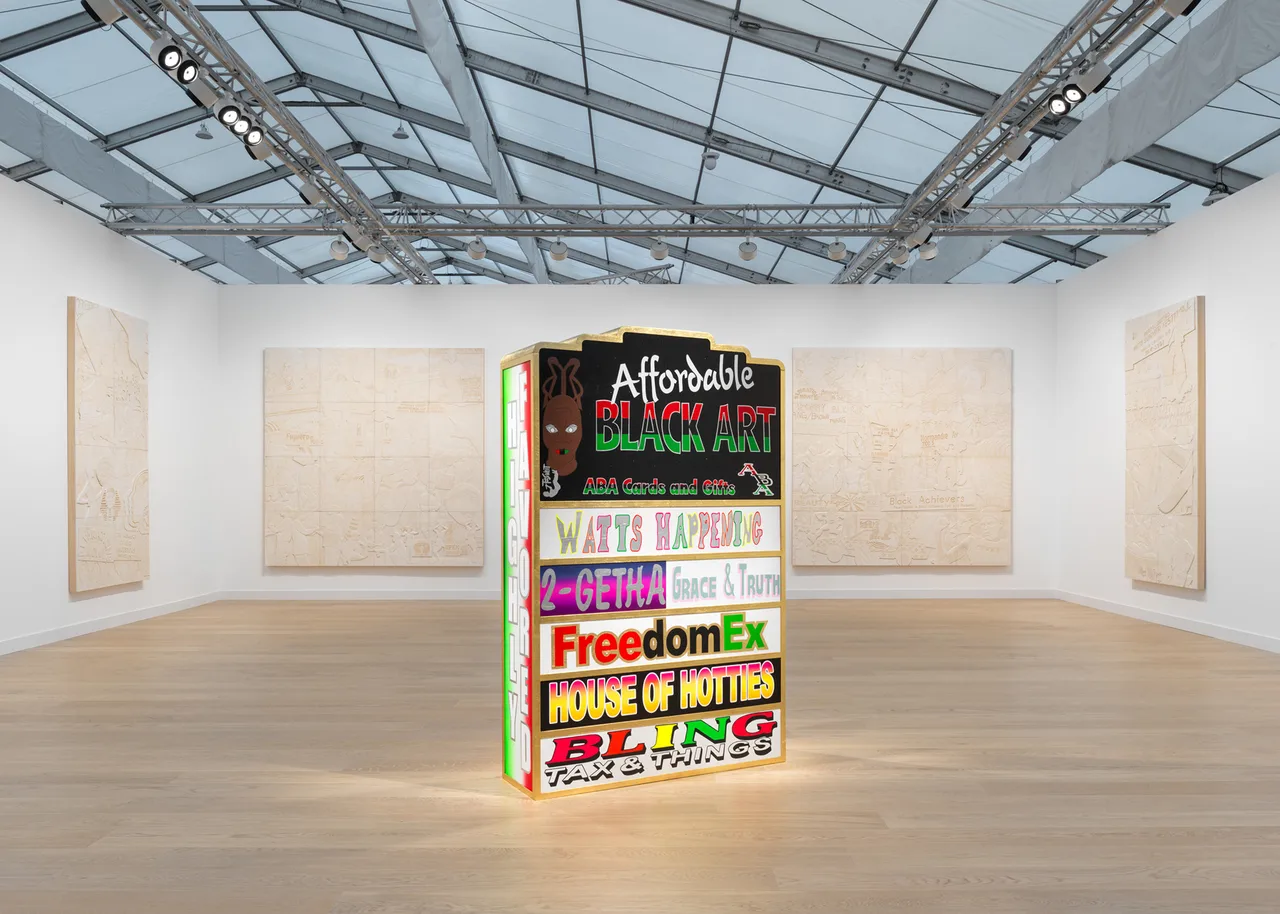
Fast forward to the other side of the fair, where visitors entered the domain of blue-chip galleries, which were perfectly staged to do what they do best: sell. Perhaps our interest waned, or maybe our eyes were simply tired. Either way, many booths here felt curated for easy transactions rather than conversation. One exception was Gagosian, which devoted its entire booth to Lauren Halsey — and sold out on the fair’s opening day nonetheless. Halsey’s installation brought together her signature sculptural reliefs and dense wallpaper compositions, translating the histories, architecture, and vernacular poetics of South Central Los Angeles into a monumental, world-building ode to the vibrancy and resilience of Black life.
© Lauren Halsey - Photo: Maris Hutchinson Courtesy Gagosian.
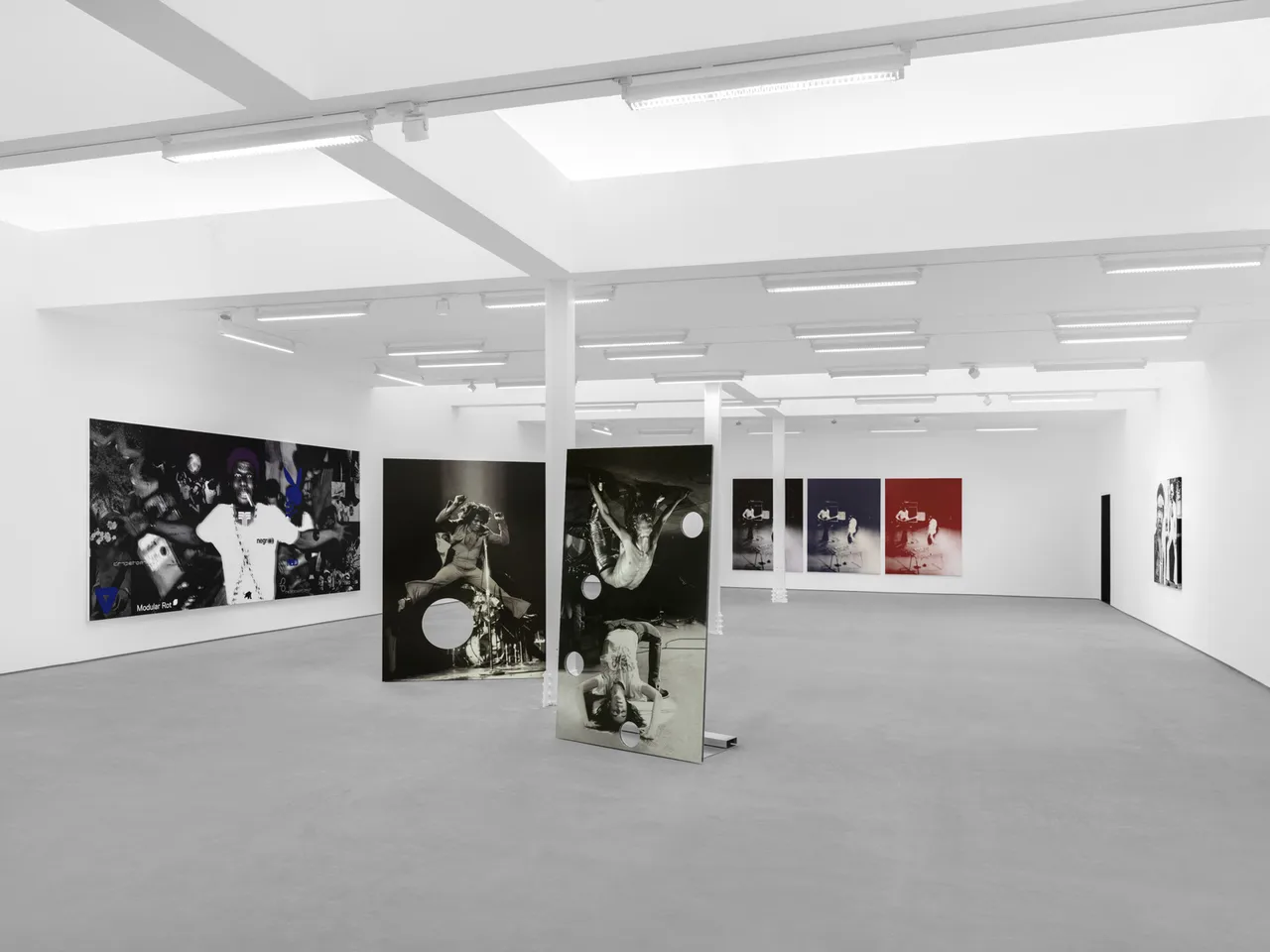
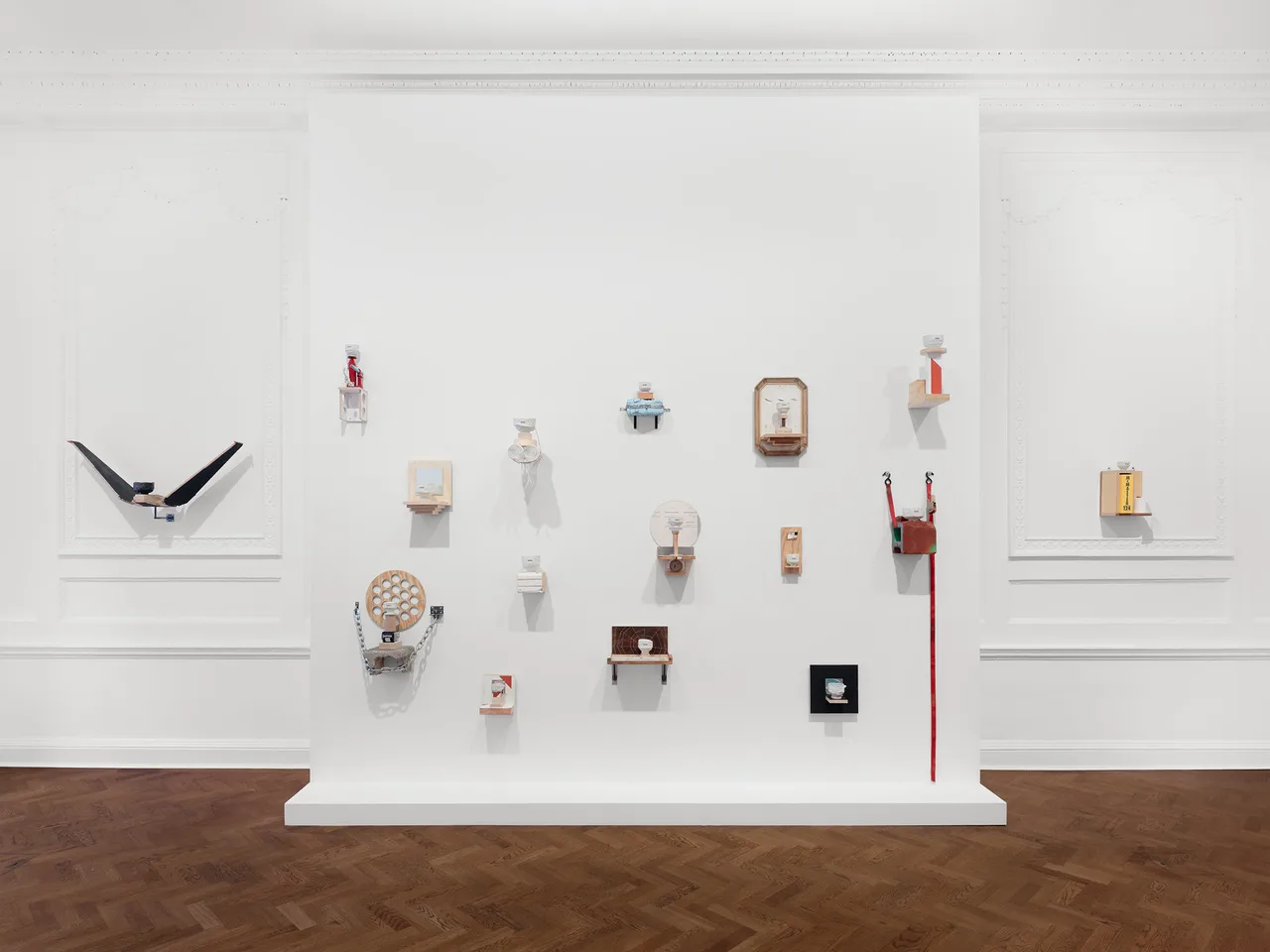
Beyond the fair, the city’s galleries also put on their A-game for Frieze Week. At Sadie Coles HQ, Arthur Jafa took over the space with his first solo exhibition there, presenting two new moving-image works, monumental photographs, and his first exploration of painting — all guided by his ongoing mapping of Black culture, pulsing along the rhythm of music. A short walk away, Thaddaeus Ropac hosted Tom Sachs, who turned craftsmanship into ritual. His bricolage pedestals held hand-made, NASA-labelled porcelain cups. On the corridor of the gallery, a functioning bar called La Mezcaleria served espresso and mezcal, where a hundred Coca-Cola bottles were hand-filled as a limited Sachs edition. Meanwhile, at David Zwirner, Victor Man dimmed the lights and filled the gallery with enigmatic paintings inhabited by figures caught in the fragile space between life and death.
© Arthur Jafa. Courtesy the Artist and Sadie Coles HQ, London. Photo: Katie Morrison.
Courtesy line Tom Sachs : “A Good Shelf”, installation view at Thaddaeus Ropac London, October 2025. Courtesy Thaddaeus Ropac gallery, London · Paris · Salzburg · Milan · Seoul. Photo: Eva Herzog.
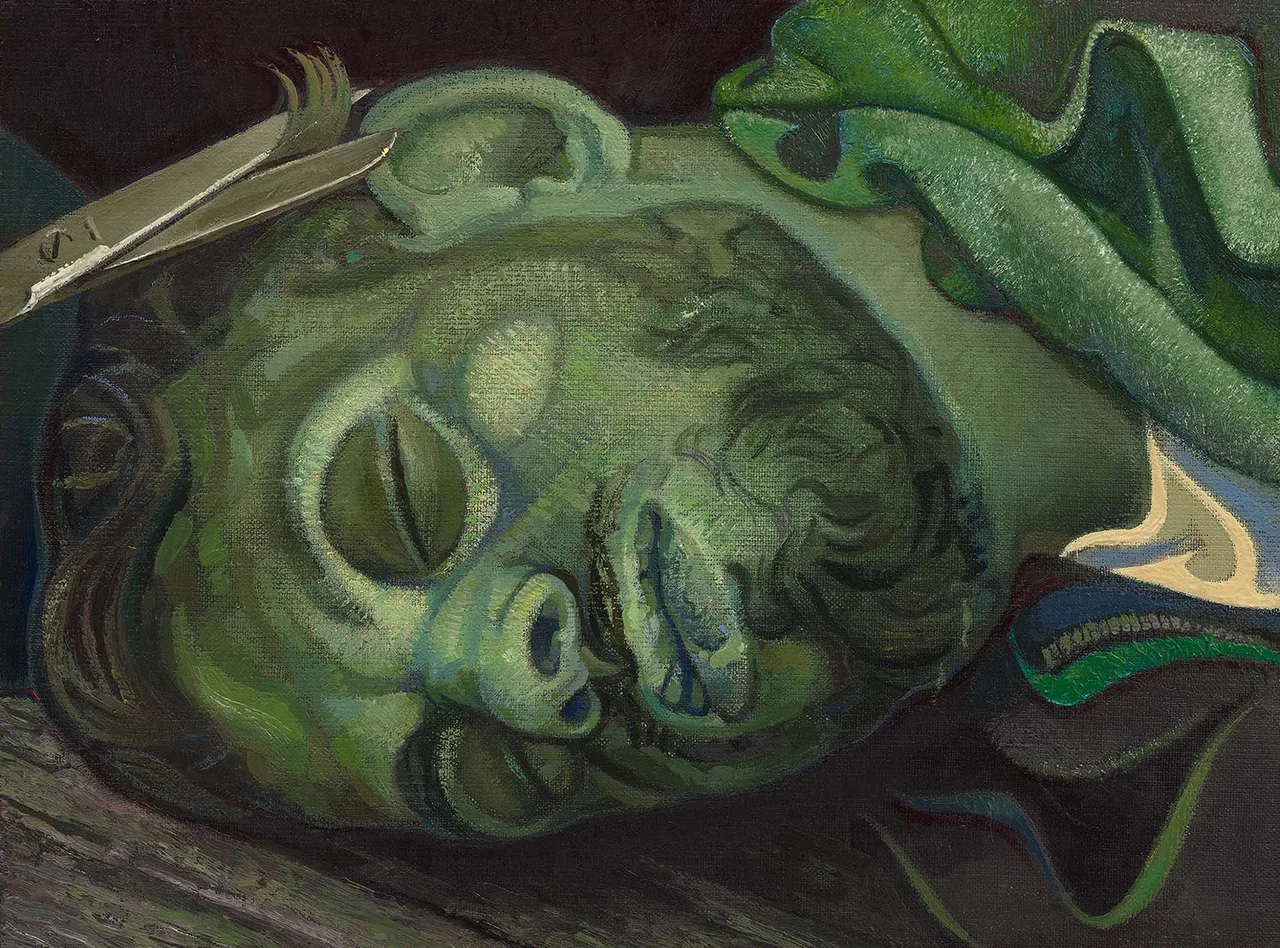
Umbra Vitae, 2024-2025 © Victor Man. Courtesy David Zwirner - Photography: Def Image.
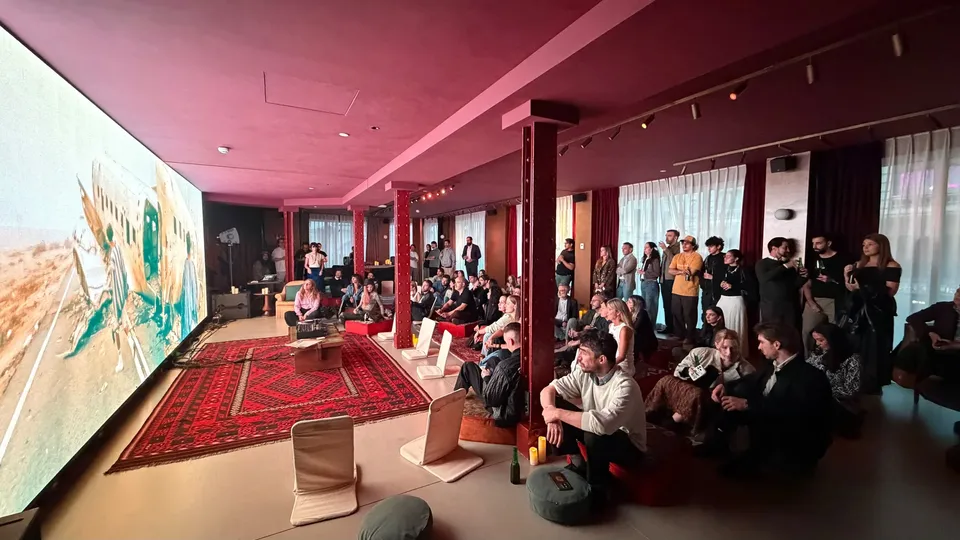
A clear off-site highlight was Prada’s 13th iteration of its contemporary cultural series Prada Mode, this time in collaboration with artists Elmgreen & Dragset. The duo transformed Town Hall, a recently renovated landmark near King’s Cross, into a fictional cinema. On screen: The Audience, a constantly out-of-focus, barely discernible film in which visitors had to rely on the audio track to follow its story, revolving around a conversation between a couple about their creative struggles. Hyperrealistic sculptures of spectators in the cinema seats engaged with the film at varying levels of attention, inviting visitors to question their own role in the experience. Was the audience the artwork? The movie? Or was it us, sitting in the velvety, green cinema chairs, trying to make sense of it all? As often in their work, Elmgreen & Dragset’s immersive installation created an atmosphere that felt slightly off, yet deeply familiar.
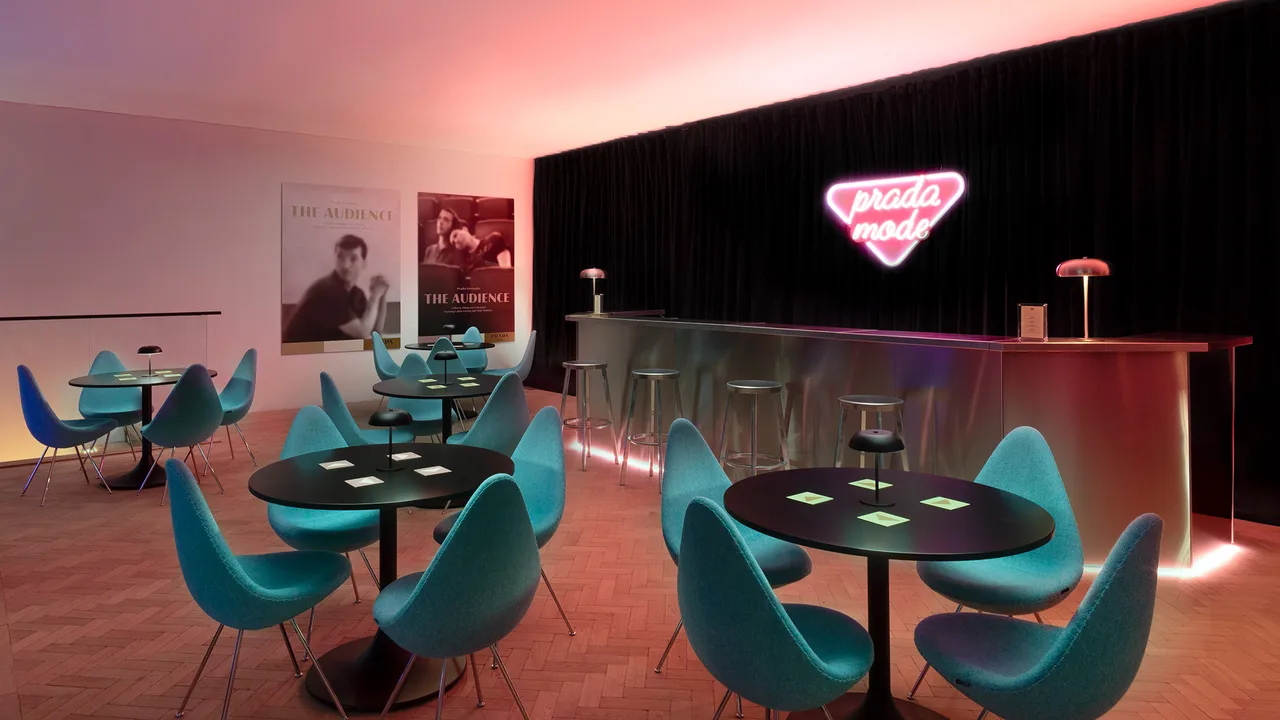
Courtesy of Prada.
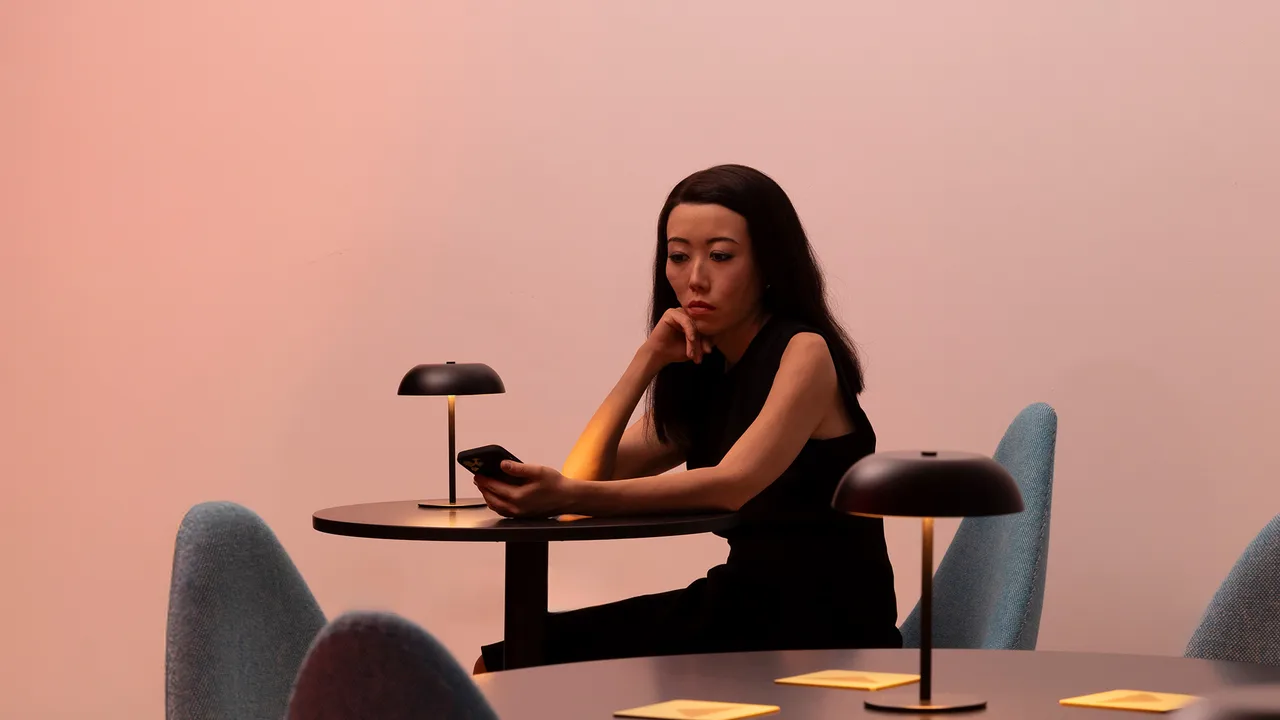
Courtesy of Prada.
It’s almost as if their installation was a mirror of Frieze itself: a coded environment full of visual cues and unspoken rules dictating where to look, how to act, and what to expect. Yet while the overall scene feels familiar, even painfully predictable at times, there are still those rare moments of surprise — works and ideas that make you pause, double-check, smirk, or at least raise an eyebrow in disbelief.
Between the predictable and the unexpected, Frieze London was the art world in a nutshell: part storytelling, part selling, part admiration, part disapproval — all happening under the roof of a giant white cube where meaning and market are constantly… in negotiation.