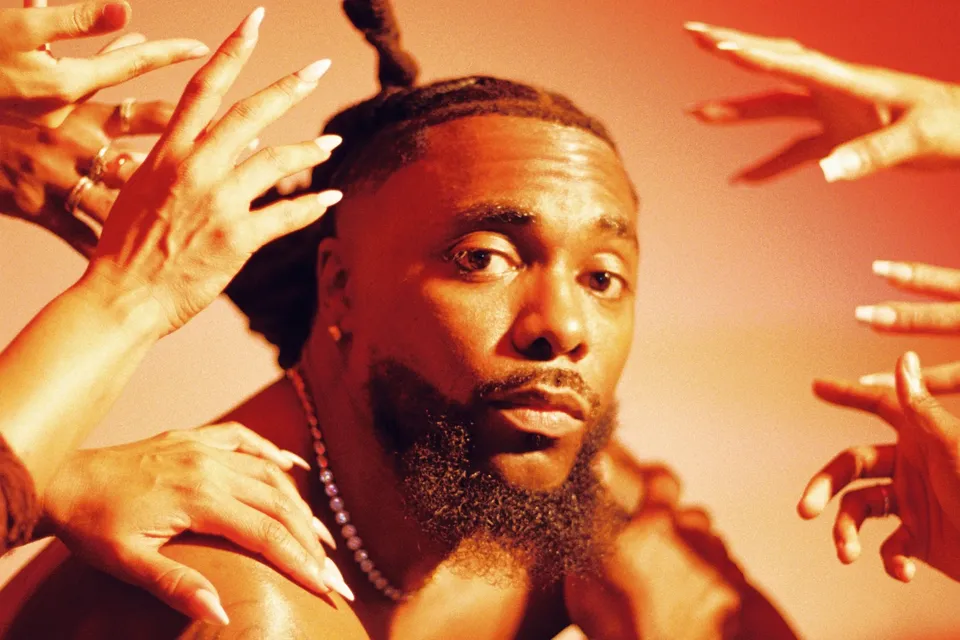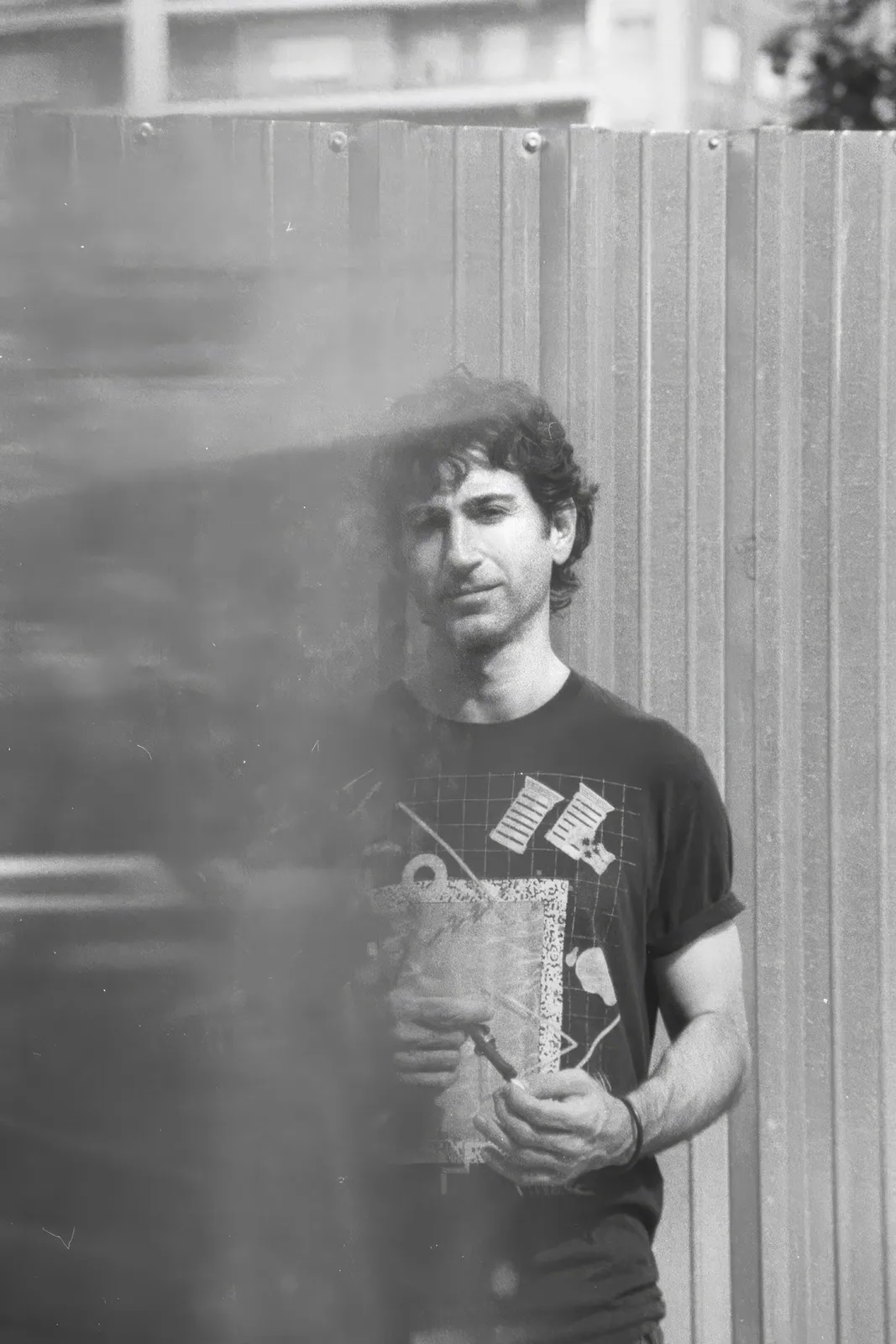
The opening piano riff sets the tone for an emotional and mysterious project from Fred Issid. His debut album, Topology, is an expansion of one of his first songs by the same name. Accompanying the songs is a visual project made in collaboration with Christian Franco that elaborates on the themes of relationships, love, confusion, and enlightenment.
The narrative of Issid’s LP follows a story of self-actualisation with all its confusion, backsteps, and insights. In writing and composing the project, the artist presents a vulnerable look at his own entangled identities and how he grew to understand and accept them. The melodic, classical piano in the background of each song offers a touchstone for the genre-bending album to come back to, grounding not only the message, but also the listener and even Issid himself. It reminds us of where he came from and what he wants to take with him into his new self — and what we want to take with us into our new selves.
Topology serves as more than just a body of work, but a true performance. One where you feel as though you have crawled through dark interconnected tunnels, choosing your path, until you see that glimmer of light. We speak with him about his love for piano, his evolution as an artist and human, and how AI can be responsibly used in art.
Hi Fred! How are you doing today?
I’m good, just having my morning coffee and having my mind thinking of very eclectic things, mostly related to music and of my future plans with it!
If you had to choose, what is your favourite type of piano to play?
That’s a very good question and it really depends on my mood or what I am trying to achieve musically or emotionally. But if we are talking about a brand, a Steinway & Sons grand piano would be perfect — one day… But I also like playing on an upright piano. Some of them have the right type of intimate sound I love.
I liked that the album investigates and analyses human relations, both platonic and romantic. Can you explain that decision to me?
I needed answers. I needed closure, and this is what this album permitted me to do, explore these situations in my life. I also needed relief, undo the knots, and be able to sing it out. The best self-administered therapy I could have done to move on from it. There is also something very beautiful and satisfying about taking a sticky situation and making art with it. It’s like a constructive reference of messy emotions, and somehow it’s easier to accept and let go of it. In more basic black-and-white terms, it’s like taking something negative and transforming it into something positive.
“There is something very beautiful and satisfying about taking a sticky situation and making art with it.”
The message and investigation are more artistic than scientific overall. Have you discovered anything about human relations through music making?
One of the hardest parts in human relationships is acceptance. As humans we are so complex and complicated, and acceptance is not something very easily achievable. So, yes, this album taught me to accept many things that don’t necessarily have clear answers or perfect justice. That is definitely the magic of creating for me — it enables acceptance.
There is an underlying relationship between yourself and the piano. I imagine this is because of your training as a pianist.
I started to learn the piano when I was six, so it developed at the same time as my other skills as a human, so I could say that the piano is like one of my organs — the one that allows me to materialise and communicate my raw emotions. It’s all energy at first, there is something that drives me to sit at the piano and the minute I start playing, that energy starts to take form in the melodies that seem to emerge from that raw energy. So, the piano is like a gateway to what comes next.
MoM is my favourite song from the album, and you’ve said that it’s also the most intimate for you. What helped you to write and compose it?
Ohhhh, I’m so glad you like it! It’s the most intimate and personal one for me because, the way I see it, whether we want to be affected by them or not, our parents are an extension of ourselves — and vice versa. Whatever happens to them affects you in an unconditional way. It’s a very visceral kind of relationship, and there is almost no escape from it. So, if a conflict arises, it hits harder than anything else, and the search for a resolution can become almost an obsession. Until a solution is found, both your body and your soul feel unsettled.
“The best thing about getting older is the tools and armour you acquire to confront and explore whatever you choose to venture into.”
Topology was originally a song that you worked on for years before it became an album. It seems like each stage in the creative process also marked a new era for you. Throughout the years and its evolution, the project has maintained its message of human connection. What does it mean for you to have it produced in this way?
Yes, that’s true! In 2012, I was using this app one day and, by manipulating the touchscreen, I came across a series of sounds that drew me into a sonic world I had never experienced before. I knew that one day I would turn them into a track. It was only later that I presented these sounds to one of the musicians on my album, @finalversion3, and he worked his magic, expanding them and shaping them into what you hear now. I later added this poem as the lyrics. There is no greater satisfaction for me in life than turning fragmented ideas into completed tracks.
The last song on the album is dedicated to your piano teacher, Alissa. What was the most important thing you learned from her, besides playing and loving the piano?
It’s exactly what I say in the song: she made me understand classical music in such a clear way. She gave me countless moments of clarity, illuminating my mind with rushes of ASMR-like sensations and understanding. My technique and musicality reached their peak when I began taking regular lessons with her. She pushed me to become the best pianist I could be.
She wasn’t always easy to deal with, but any conflicts were always about how to make the piece sound the best it possibly could, out of respect for the music and the composer. Piano teachers can sometimes be very harsh and say deeply hurtful things, but she always managed to convey her vision without making it feel personal. It was all about the music — the love and respect she had for it, and her remarkable ability to communicate that with such clarity. Thank you, Alissa, thank you!!!
She wasn’t always easy to deal with, but any conflicts were always about how to make the piece sound the best it possibly could, out of respect for the music and the composer. Piano teachers can sometimes be very harsh and say deeply hurtful things, but she always managed to convey her vision without making it feel personal. It was all about the music — the love and respect she had for it, and her remarkable ability to communicate that with such clarity. Thank you, Alissa, thank you!!!
The last time we spoke, you had worked with Christian Franco for the Stall music video. How has it been working with him again for an even bigger project?
It was always the plan to work with him throughout all of Topology. Christian has been my right hand for this entire project, and he helped me make all of it happen. I have the privilege of working with someone who knows me inside out and believes in me — I couldn’t have found a better artistic partner. When you find an artist who understands your vision and has the means and artistic tools to support it, cherish them! It’s a rare gift. I will never have enough ways to thank him. Te quiero muchísimo!
Xenogenesis is the name of the audiovisual project with Christian, representing growth and discovering your identity. How do you see yourself in those phases of growth?
I feel I’m still growing and figuring things out, but perhaps the difference now is that the fundamentals of my being feel stronger, and that’s something that took me a very long time to discover. I don’t think I’ll ever truly stop figuring myself out. It’s definitely my curiosity that drives me to ask questions, to try new things, and to push the boundaries of my comfort zone as much as possible. The best thing about getting older is the tools and armour you acquire to confront and explore whatever you choose to venture into, like a video game character who becomes more equipped and stronger as the levels progress!
In the audiovisual project, you used AI not just as a tool, but as a collaborator. With all the controversy surrounding it, what do you think are the advantages to using this technology?
I understand the general concern around AI; it definitely can be used in harmful ways. But it’s like any new tool we’re not yet accustomed to. Any tool, when used maliciously, can be dangerous, even deadly. It all comes down to how it’s used and the consequences that follow if it’s misused (just as a knife can be used to chop vegetables, or to kill). When it comes to using AI in art, I think it’s an incredible advantage. I’m completely in favour of it and can’t wait to see how it evolves. I once heard Björk say in an interview, while making her album Homogenic, that people accused computer-made music of being soulless. Her response was that the computer is merely a tool with a human behind it — and if the music lacks soul, it’s not the computer’s fault. If there’s no soul in the music, it’s because no one put it there.
AI can, of course, be used in a tasteless way, but I believe we’ll always be able to tell the difference.
AI can, of course, be used in a tasteless way, but I believe we’ll always be able to tell the difference.
You are Spanish-French Canadian. How has your heritage influenced your music? Can we expect a song in Spanish or French in your future?
It’s funny, because I’ve only written one song in French so far. I’ve begun writing songs for my next album, and I want the same song to exist in two versions, one in French and one in English. Maybe even in Spanish! I started learning English when I was twelve and went on to do all my studies in English, so both my analytical and emotional mind tend to shape what I think and feel in English (in French as well, but it’s hard to tell sometimes which language you think in, or even dream in). Another key reason I wrote in English is that it’s a universal language, and I wanted as many people as possible to understand the lyrics I choose to express myself with.