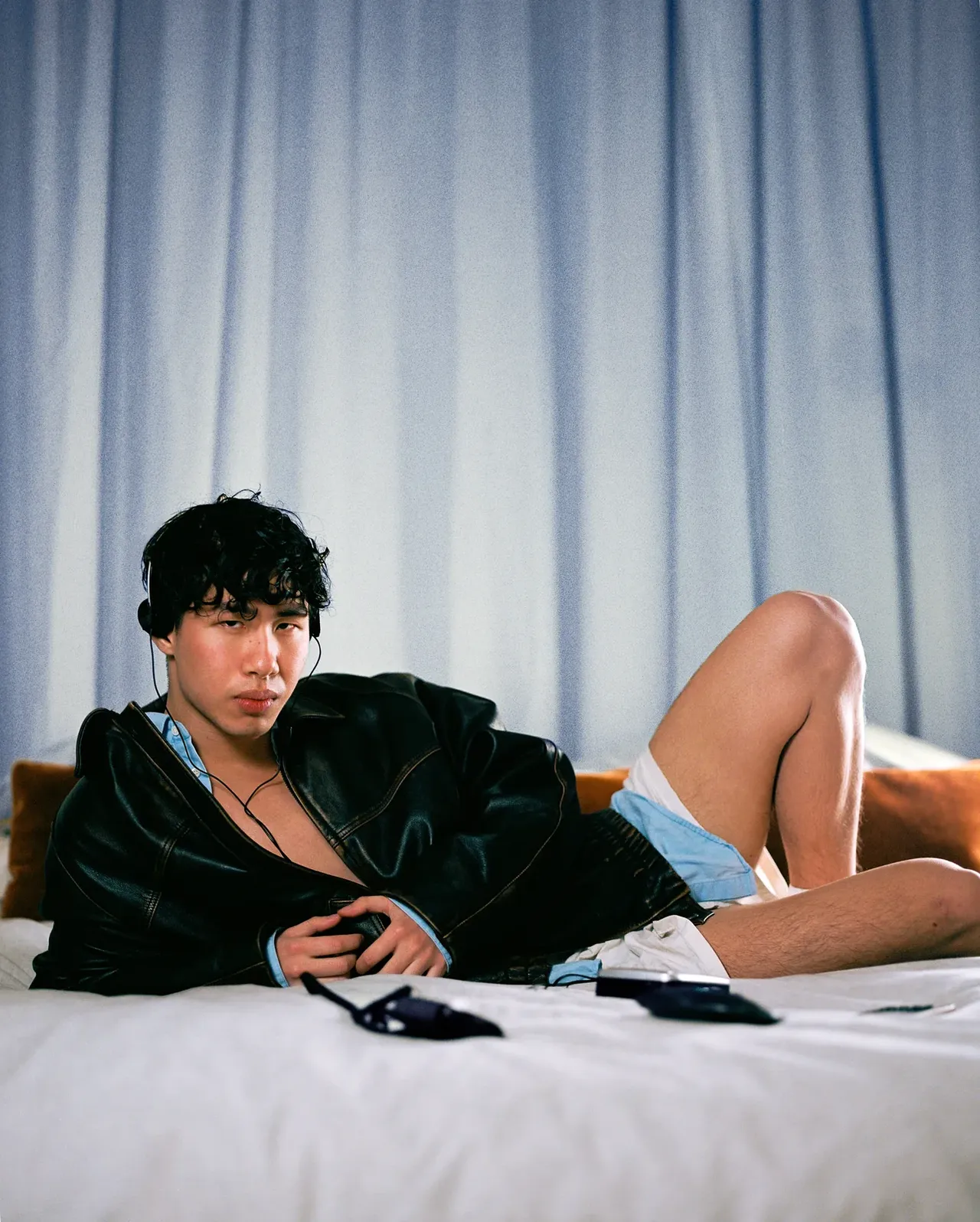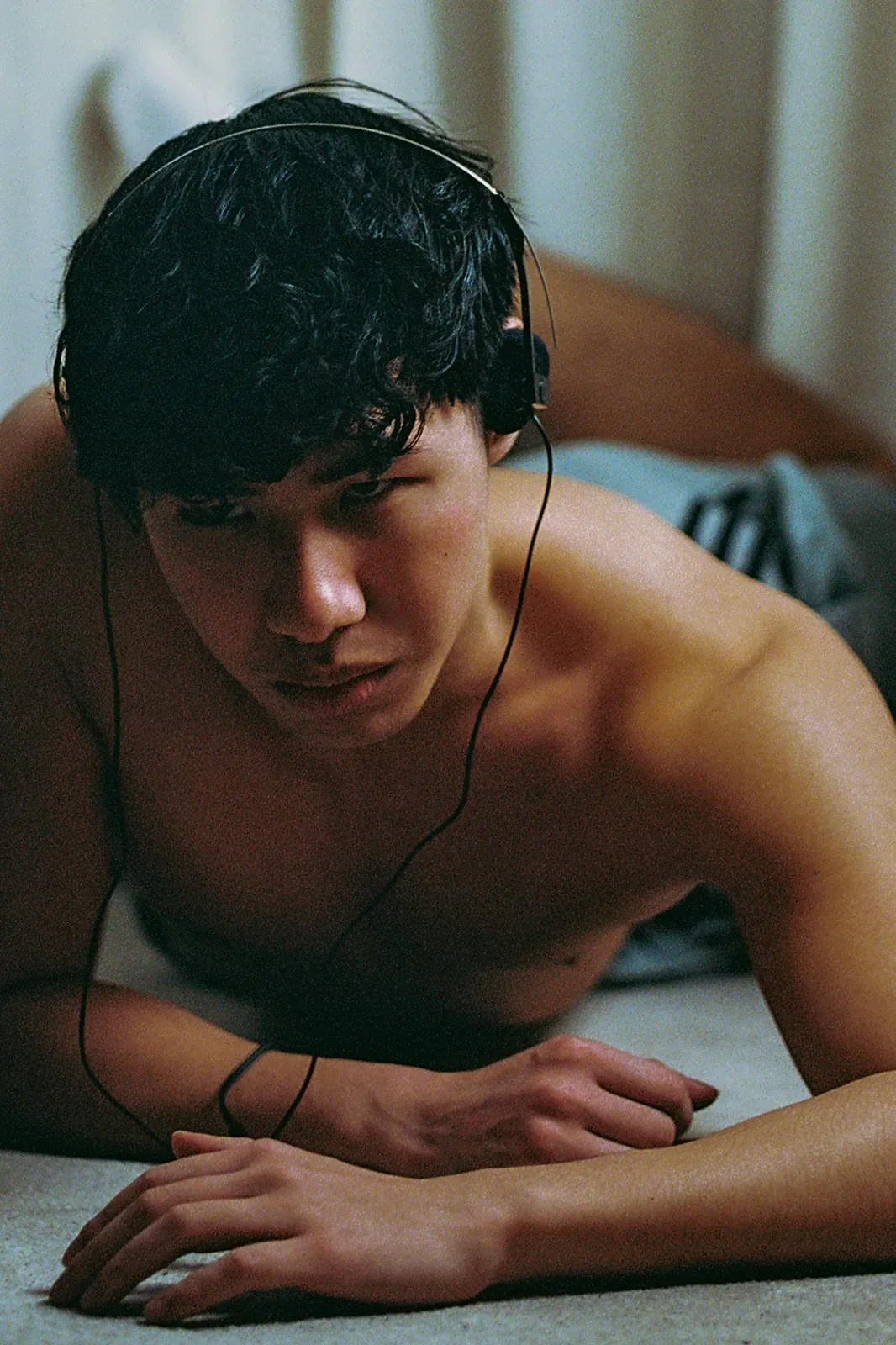
Somewhere between London nights and Vienna stillness, Filius, aka Erik Chen, exists in that blurry space between bedroom producer and emotional engineer. As a kid, he was literally pressing his ear against his mum’s cheek just to hear how food sounded, and that same obsession with sound still runs everything he does. Only now, instead of vegetables, it’s feelings getting fed through laptops, plugins and slightly broken systems. After years of quietly building, DJing across Europe and bouncing between club culture, fashion sets and late-night studio spirals, he’s finally stepping out with something that feels less like random drops and more like a full world.
His new single, Thinking About You, is a pretty perfect entry point into that world. It sits somewhere between glossy electronic-pop and something way more fragile underneath. The production feels sleek at first, but then the glitches creep in, the vocals stack and blur into each other; suddenly it’s not that clean anymore. It’s messy in a very intentional way, like corrupted nostalgia or a memory buffering in real time. There’s emotion, but it’s filtered, doubled, and slightly distorted. The kind of track you could hear in a club at 2am and still feel it’s a bit too much.
If someone had never heard of you before, what would you want them to understand about you first? Who is Filius right now, in your own words?
I mean, the easiest version is sadboi bedroom producer. Pouring emotions into the computer, synthetic pop coming out the other side. That’s the shorthand. With my music, I like seeing what happens when you push something very human through something that isn’t. You feed it all this raw stuff, and some of it sticks, like residue. I have this idea that I come back to — whether any of these complex feelings stay in there? Some of it must stick around in the circuitry, you know? That’s probably where it sits right now. Boy, synthetic, emotional.
What was your relationship with music like growing up? Do you remember the first moment you thought, “that’s what I want to do”? What triggered a shift?
I think it started with listening before anything else. Not even music, just sound. My parents always tell this story: I used to press my ear against my mum’s cheek while she was eating, just to hear it properly. Different vegetables sounded different. Broccoli was the best. Really crisp! That stayed. I’ve always been a bit fixated on how things sound up close.
I started piano when I was about five (this Asian stereotype is real lmao). But I never really stuck to the way it was meant to be taught. I’d play things back by ear instead of reading properly, which didn’t go down well with my teacher. I think they wanted accuracy, and I was more interested in following my intuition and shifting things slightly to see what happened. That’s probably where it tipped for me. The pattern of me listening, then changing. Then everything else just rolled from being chronically on YouTube and discovering FL Studio. I don’t remember deciding, this is what I want to do. It was more that I fell in love with that process.
I started piano when I was about five (this Asian stereotype is real lmao). But I never really stuck to the way it was meant to be taught. I’d play things back by ear instead of reading properly, which didn’t go down well with my teacher. I think they wanted accuracy, and I was more interested in following my intuition and shifting things slightly to see what happened. That’s probably where it tipped for me. The pattern of me listening, then changing. Then everything else just rolled from being chronically on YouTube and discovering FL Studio. I don’t remember deciding, this is what I want to do. It was more that I fell in love with that process.
You haven’t released music since 2020, at least publicly. What’s been going on behind the scenes during that time? Did that time away change how you see yourself as an artist?
I feel like moving to London and having your frontal lobe developing really changes the way you view everything (laughs). I never stopped making music in this period; it just never made it out of the hard drive. I moved to London a couple years ago, and it shifted things. In Austria, I was working almost entirely on my own. Here it’s different. You’re still in your bedroom at 3am, but there’s more friction around you. You’re surrounded by so many artists, subcultures, communities, and opinions. You play something for people whose taste you trust, and they don’t react, or they question one small part of it, and that stays with you. It makes you more exact.
A lot of that time went into unlearning habits I didn’t realise I had. Things that sounded finished but weren’t really mine. I started producing everything myself, partly out of necessity, partly because I wanted to understand why something held or fell apart. Same with vocals, recording, re-recording, working out what actually sounds authentic to me instead of just good. Now it feels different. Not easier, but more defined. The tracks relate to each other. There’s a logic to it. Before it was just individual pieces. Now it feels like a body of work.
A lot of that time went into unlearning habits I didn’t realise I had. Things that sounded finished but weren’t really mine. I started producing everything myself, partly out of necessity, partly because I wanted to understand why something held or fell apart. Same with vocals, recording, re-recording, working out what actually sounds authentic to me instead of just good. Now it feels different. Not easier, but more defined. The tracks relate to each other. There’s a logic to it. Before it was just individual pieces. Now it feels like a body of work.
A lot of artists rush to release music early on, but you’ve taken your time. Was that a conscious decision or just how things unfolded?
It was deliberate. I knew there was a transition in place in terms of the context and approach to my music, so I wanted to take my time and fully explore my new tools before I released anything. Moving changed the conditions more than anything. I was DJing, getting a residency at iconic queer venue Dalston Superstore, and at the same time modelling. I ended up on sets for Nike, dancing in artificial rain for hours, everything controlled down to the smallest detail. There was a campaign for Shygirl, a fellow electronic artist whom I had really admired for years. Working on different sets of this scale, I learnt how much gets refined or cut before anything reaches the audience. Being around that shifts your sense of what’s finished. You start noticing what actually holds up under pressure. It fed back into the music quite directly. The gap people see now isn’t really a gap. It’s the process.
“I like the idea that machines aren’t as neutral as we think they are. When something glitches, I don’t hear it as a mistake. It feels more like something raw slipping through.”
You’re based between London and Vienna, which have very different cultural rhythms. How does moving between those cities shape your sound or your mindset?
They move at completely different speeds, and I think I need both. London feels very immediate. A lot of my time here has been tied to playing out. The rooms are small; the crowd is right there. You play something, and within seconds you know whether it’s connecting. It makes everything more physical, less theoretical. Vienna is almost the opposite. I’ve played in much larger, more historic spaces there, sometimes venues that are literal castles. Sound travels differently, and you’re not getting that same immediate reaction back. It gives you more space, but also more responsibility to shape what you’re doing without relying on the crowd to guide you. That difference feeds into how I work when I’m not playing and I’m moving between those two states all the time.
Alongside your work as a musician, you’ve been active as a DJ across Europe, with residencies in places like O-der Klub and U4 in Vienna, and regular nights at Dalston Superstore in London as you mentioned. Your sets move across different styles and moods rather than sticking to one lane. How has playing live shaped the way you think about making music? What do you enjoy most about being behind the decks?
Playing regularly, you start to pick up on things you wouldn’t notice otherwise. Not just big reactions, but smaller shifts in the room. When people start drifting, when they lean back in, when something unexpected resets everything. I remember seeing Peggy Gou at O-der Klub, and what stayed with me wasn’t any one track; it was how controlled everything felt. She could hold a track longer than you expect and still keep people locked in. That made me think differently about pacing.
That carries into the music as well. Early on I was more focused on what works immediately. Now I’m more interested in sprinkling in elements of surprise. What I enjoy most about being behind the decks is that balance between control and risk. You’re guiding the room, but you’re also reacting to it in real time. Introducing something that makes people hesitate for a second, that slight WTF is this? When that clicks and the room goes off, that’s when I’ve done my job right.
That carries into the music as well. Early on I was more focused on what works immediately. Now I’m more interested in sprinkling in elements of surprise. What I enjoy most about being behind the decks is that balance between control and risk. You’re guiding the room, but you’re also reacting to it in real time. Introducing something that makes people hesitate for a second, that slight WTF is this? When that clicks and the room goes off, that’s when I’ve done my job right.
Being so present in nightlife spaces, from iconic venues to more underground scenes. Has that environment influenced the kind of artist you want to become, beyond just the music itself?
Nightlife has a way of stripping things back. When you’re in those spaces regularly, you realise pretty quickly that people can tell when something is trying too hard to please everyone. Different rooms demand different things, but the ones that really work tend to have a very clear identity. They’re not adjusting themselves constantly. I think being around that made me less interested in covering ground and more interested in narrowing things down. Early on I was pulling from a lot of different genres, just trying things out. That was necessary. But over time it became more about what to leave out. What actually feels like mine, and what doesn’t. So, the influence goes beyond music. It’s more about how you position yourself. Not trying to meet every expectation, but being clear enough that people either connect with it or they don’t. It’s not about pleasing all crowds in 2026!!!
You’ve also worked across fashion and creative projects, collaborating with names like Rankin, Nike or artists like Mura Masa, Shygirl or SG Lewis. How did that side of your work come into your life?
It came in quite organically. I started out just building a portfolio and saying yes to things that felt aligned, even if they were small. Those early projects are where you actually learn how these environments function, how a set runs, how people communicate, and where you fit within it. Over time that led to being invited into bigger ones. I’ve shot with Rankin a few times now, which was quite surreal considering I’d been aware of his work from a really young age, watching him on Germany’s Next Top Model. It was great schooling. To be honest I’ve been so lucky in terms of the people I’ve been around. Mura Masa and SG Lewis are some of my favourite musicians, and having worked with them on music videos, I learned so much about how performance translates on camera. But also, so many NDAs were signed for upcoming things, so more of that in the future, actually!!
You move quite naturally between music, fashion and nightlife. Do you see all of this as one connected universe or different modes of expression? Where do you place yourself within that, as a musician or as someone building a wider creative world?
First of all, thank you so much; that’s really kind! I see it as one connected thing, but with a clear centre. Music is always the starting point. Most of it still happens very privately, in a bedroom. But even at that stage it doesn’t feel isolated. I’m usually already picturing where that sound lives. Not in a literal sense, but the kind of environment it belongs to and how it should feel to be inside it. That’s where the other parts come in. Fashion, visuals, and the spaces I’m playing in are ways of making that internal world more tangible. Not decoration, more like translation. I see myself as a musician first, but not only in the sense of just making tracks. It’s more about building a space around the music that feels consistent, where everything is coming from the same place.
“If someone steps into my music and just moves, that’s one layer. But if they also feel that slight weight underneath, that sense that something’s pressing against the surface, then it’s working.”
There’s something really compelling about how you embrace imperfection in your sound, like when you say your music “glitches on purpose”. What does a perfect imperfection mean to you?
I like the idea that machines aren’t as neutral as we think they are. When something glitches, I don’t hear it as a mistake. It feels more like something raw slipping through, a moment where the system doesn’t fully contain itself. That’s usually the part I end up keeping. A perfect imperfection is very controlled in a way. It’s not about things breaking completely; it’s about holding them right at the point where they almost do.
You can hear the tension between something precise and something slightly unstable. I like to think of it as the machine showing a bit too much. Not in a dramatic way, more like a small leak. Something you weren’t meant to hear. Sometimes it’s almost like the machine is crying a little.
You can hear the tension between something precise and something slightly unstable. I like to think of it as the machine showing a bit too much. Not in a dramatic way, more like a small leak. Something you weren’t meant to hear. Sometimes it’s almost like the machine is crying a little.
After building this world somewhat quietly over the years, what do you want people to feel the first time they really step into the Filius universe?
I’d love for the listener to move and to be moved. If someone steps into my music and just moves, that’s one layer. But if they also feel that slight weight underneath, that sense that something’s pressing against the surface, then it’s working. There’s a lot of emotion stored in this electronic music, so hopefully that resonates on multiple levels.
Looking ahead to this new phase, how do you see the future of your project? Are you thinking in terms of singles, a larger project, or something more fluid for this next chapter?
I like the idea of releasing things one by one first, letting people enter the world through different doors, rather than explaining the whole thing too neatly. I’ve got some singles planned, but I don’t really think of it as just a singles project. There are too many songs now that feel connected — same emotional weather, same little universe. Some are more bedroom sadbois, some are more club-facing, and some sit somewhere between the two. But they all come from the same place. So yes, there’s definitely a wider project pending.
What kind of space do you want to occupy in the current music scene? Do you feel like you belong somewhere specific or not?
I don’t really feel like I belong to one specific corner of it. I sit somewhere in-between a producer and a pop artist but also between private and public. My space probably leans inward. A bit of a sadboi computer at the club. Music that wants to be social but still feels like it’s coming from a very private place. There’s definitely a group of artists right now who sit in that space, where the production is in the same hands as the performer. If there’s a dinner table for that, then yeah, assign me a seat somewhere between Underscores, Sam Gellaitry and PinkPantheress.
If someone listens to you for the first time this year, what would you like them to take away from it?
That there’s no such thing as too many vocal layers. I want it to feel like fifteen versions of me are all trying to say the same thing at once and none of them fully agree. It’s very that. Ariana, what are you doing here?