I often wonder how many people would have ended up being artists if they had the chance, the time, or the money. As lovely as it may seem to be recognised as an artist and to enjoy the glamour that surrounds those who succeed, it is, without a doubt, a very overlooked and undervalued field in our society. Yes, we can talk about how moving a piece feels or how brilliant a designer is, but those with a voice and the power to shape the cultural scene should also use it to support emerging artists and give them the opportunities they deserve. Otherwise, art will only continue to be pretentious and elitist, becoming inaccessible and, ultimately, empty. But not all is lost; there is still hope thanks to programmes such as the Fendi Design Award, a new initiative dedicated to nurturing and promoting hidden talent, giving us the chance to keep creativity alive.
This annual prize is curated by designer Giulio Cappellini, who leads a jury composed of internationally renowned design figures, including Cristina Celestino, Joseph Grima, Neri & Hu, Rossana Orlandi, Josh Owen, and Patricia Urquiola. To fully appreciate this project, we first need to understand what Fendi Casa stands for. We could sum it up in one term: savoir-faire. In interior design, that goes hand in hand with craftsmanship and quality, but it reflects something much broader than the making of sofas or dining tables. It’s about shaping a way of living, an attitude toward space, comfort, and detail.
Out of the seventy submissions received for this edition, VIA by Gustav Kraft was announced as the winner on April 19 during Milan Design Week. His project will be brought to life during the December edition of Design Miami 2026, with the opportunity to evolve into a full collection with Fendi Casa in 2027.
Each proposal offers a distinct perspective on material experimentation, storytelling, and reinterpretations of Roman heritage. What emerges from this unique opportunity is a clear sense of how contemporary design continues to engage with cultural legacy, not as something static to be preserved but as a living material to be reimagined, questioned, and transformed through new generations of creative voices. Ultimately, it is through initiatives like this that access to the cultural scene is starting to open up.
Gustav Kraft - VIA
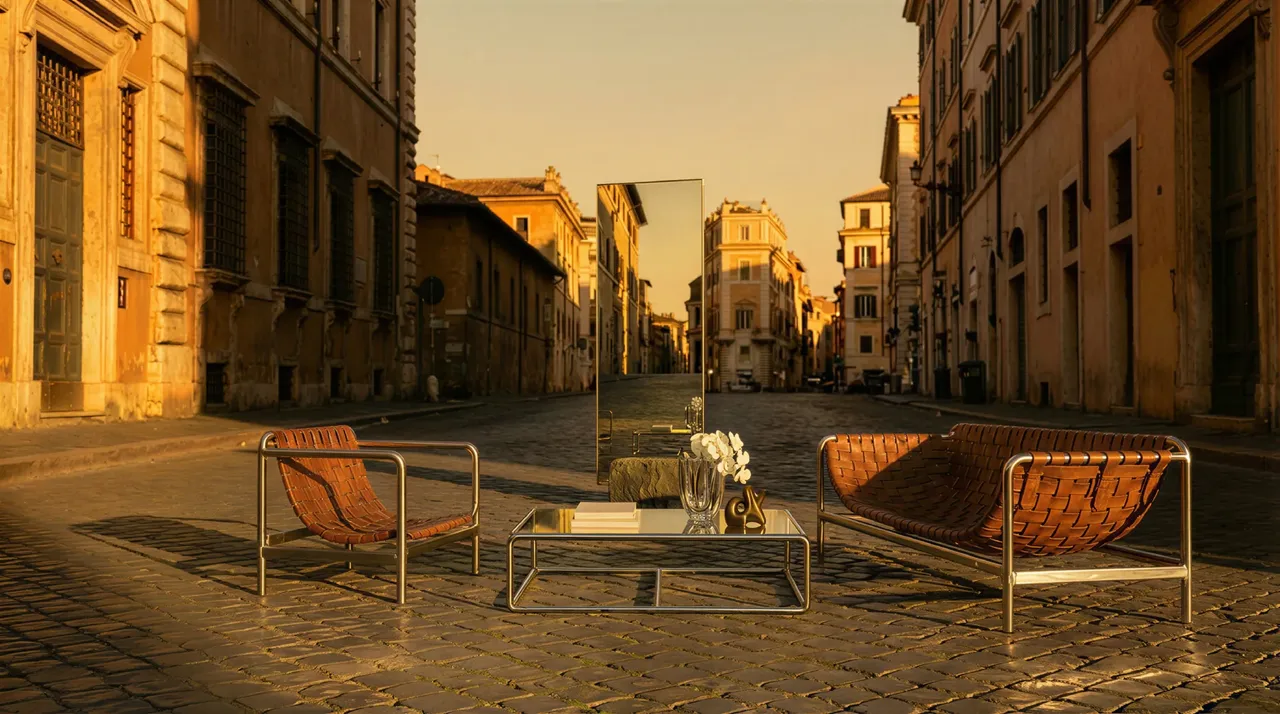
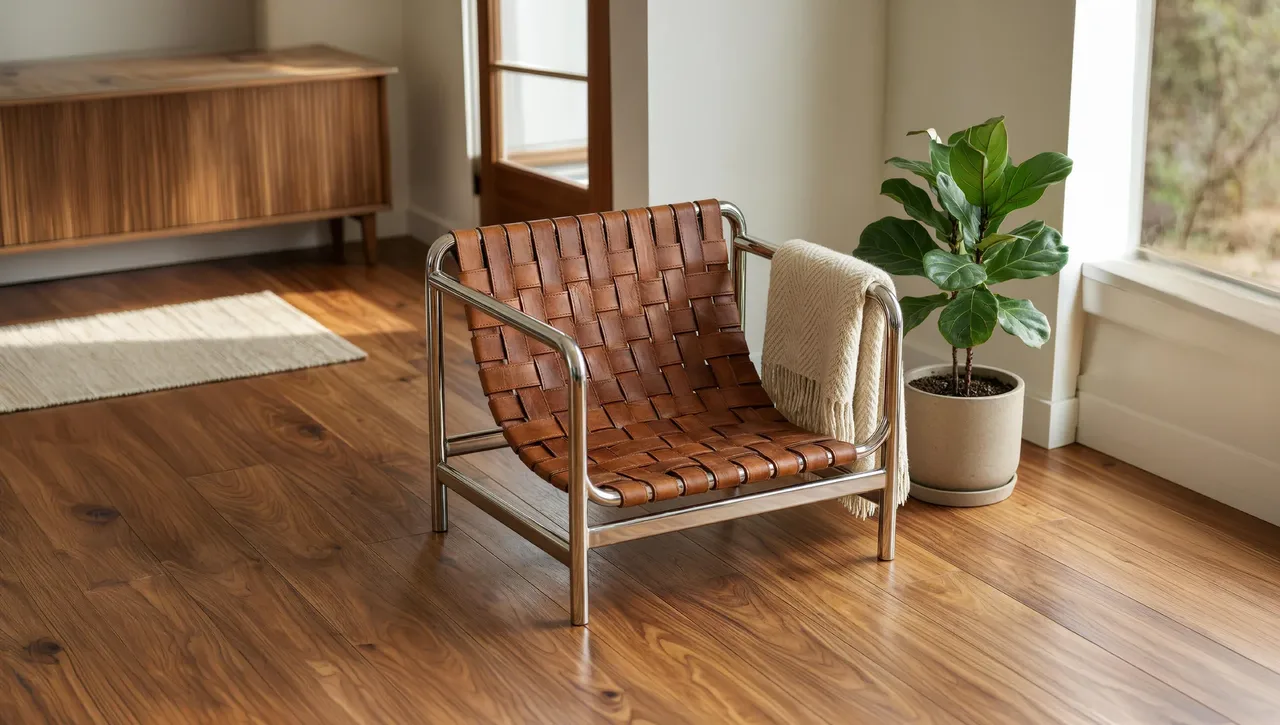
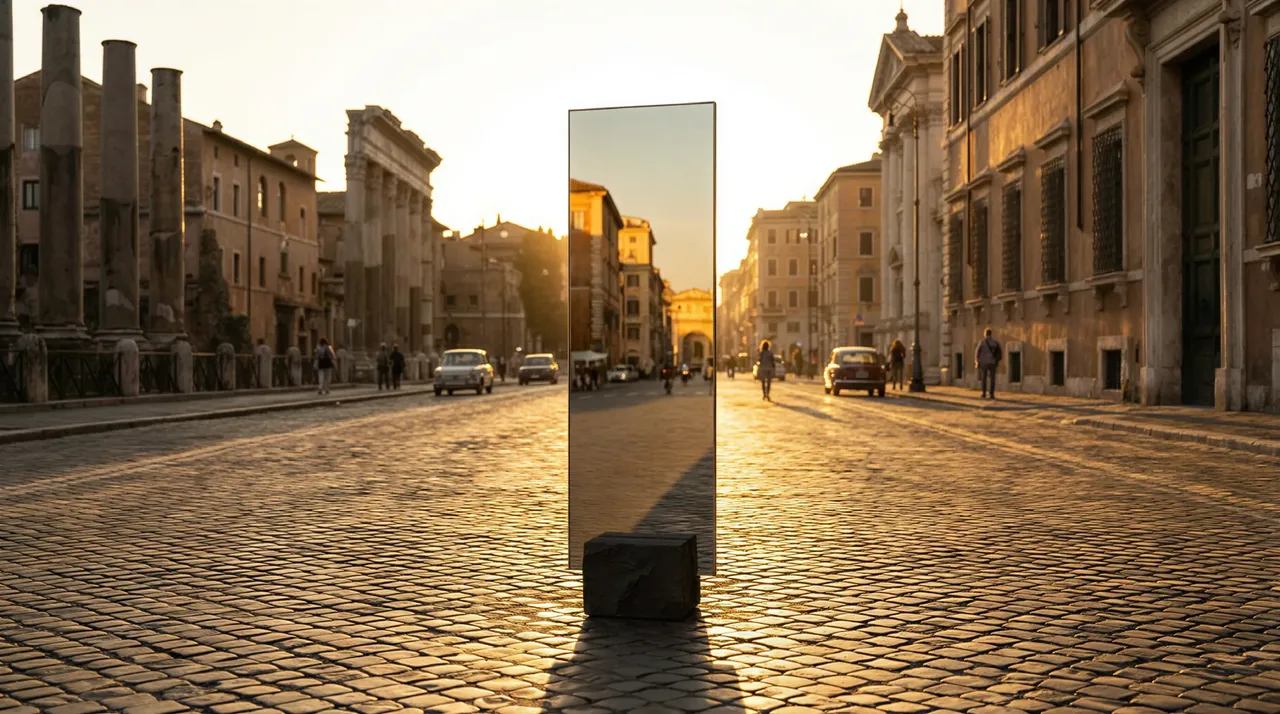
So what makes his designs so special? His project begins with a small basalt block known as the sampietrino, the stone that has paved the streets of Rome for centuries, reinterpreting it as the foundation of a furniture collection. The materials he chooses seem to distil the essence of the city itself. The leather, for instance, echoes Rome’s roadways, every strap crossing over another becoming a quiet meeting point between stones. The steel structure, with its welds left exposed, embraces imperfection in a way that softly reveals Craft’s love letter to the city.
The rug beneath the furniture extends this narrative, its patterns recalling the city’s streets seen from above. And where there are chairs, there is also a table, in this case made of glass, suggesting the fragility of things under the weight of time. The final gesture comes with the mirror, whose ultra-thin steel frame rests on a single, heavy sampietrino block.
Mimisol Arjona, Hugo Crevet, Luc Hosy, Valeria Lupo and Dhruv Vyas - Tempus Aurea
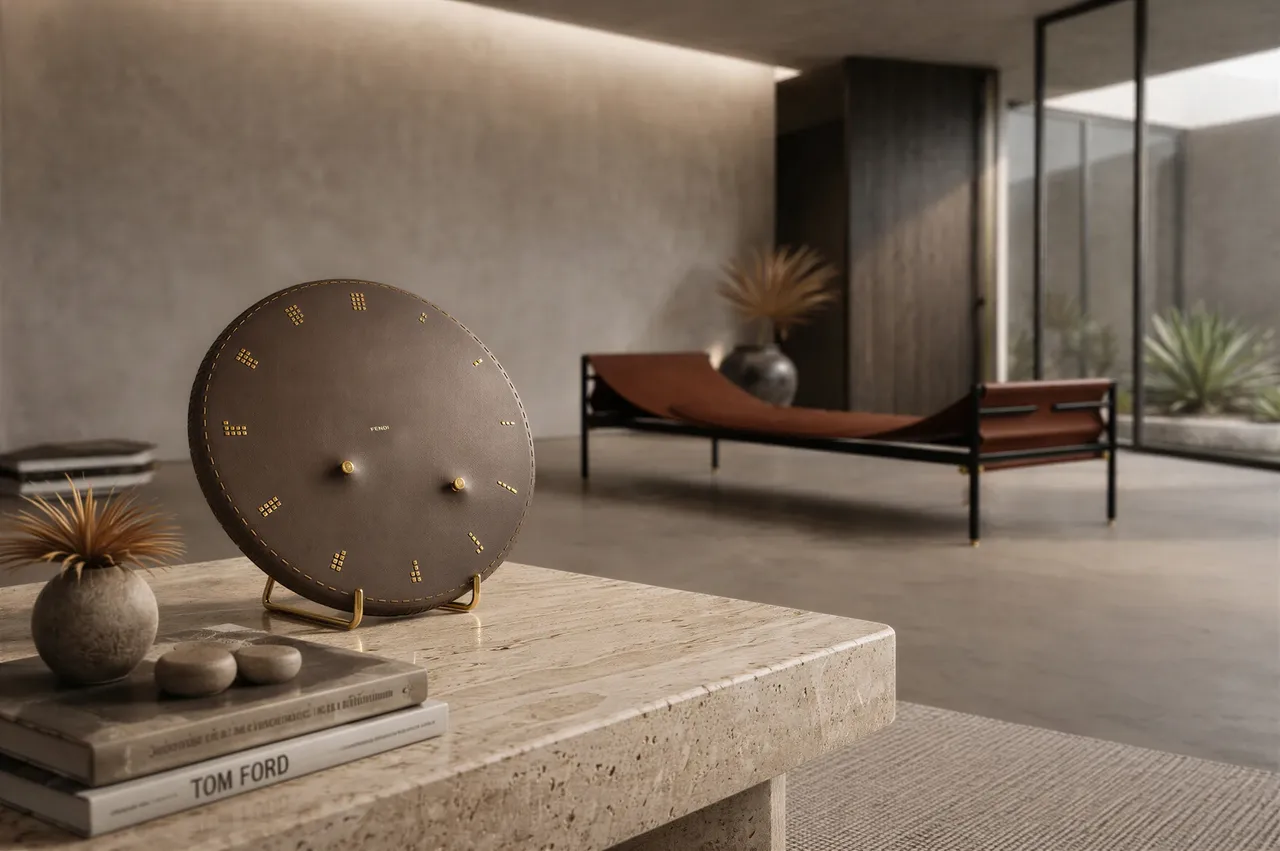
Now, Tempus Aurea (Golden Time) is a collective project built around two objects that reimagine an ancient Roman domestic ritual through the lens of Maison Fendi. The artists revisit functional archetypes, the solarium and the lecti, using them to deconstruct ideas of light and time as part of everyday life.
Solarium reinterprets the sundial as a wall clock made of leather. Unlike modern clocks, it reads time through shadows and textures, echoing older, slower ways of measuring the day. Otium transforms the idea of the lecti into a space of pause, a resting bench defined by a single sheet of tightly stretched leather. An object designed for stillness, thought, and quiet observation. Together, these pieces establish a dialogue between measuring time and inhabiting it. As a pair, they suggest that luxury is not found in abundance alone but in the ability to slow down, to pay attention, and to fully inhabit the present.
Mahra Mustafa - Velare Capsule Collection
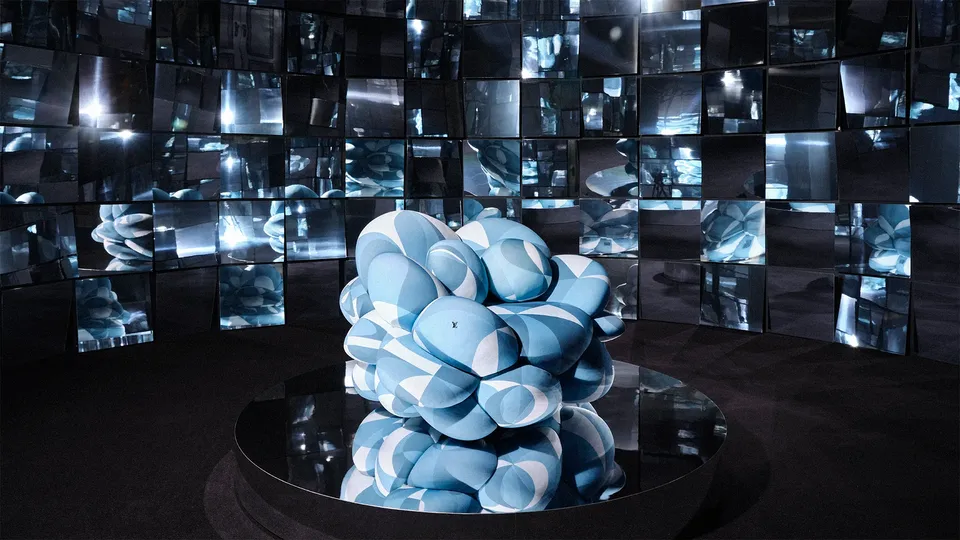
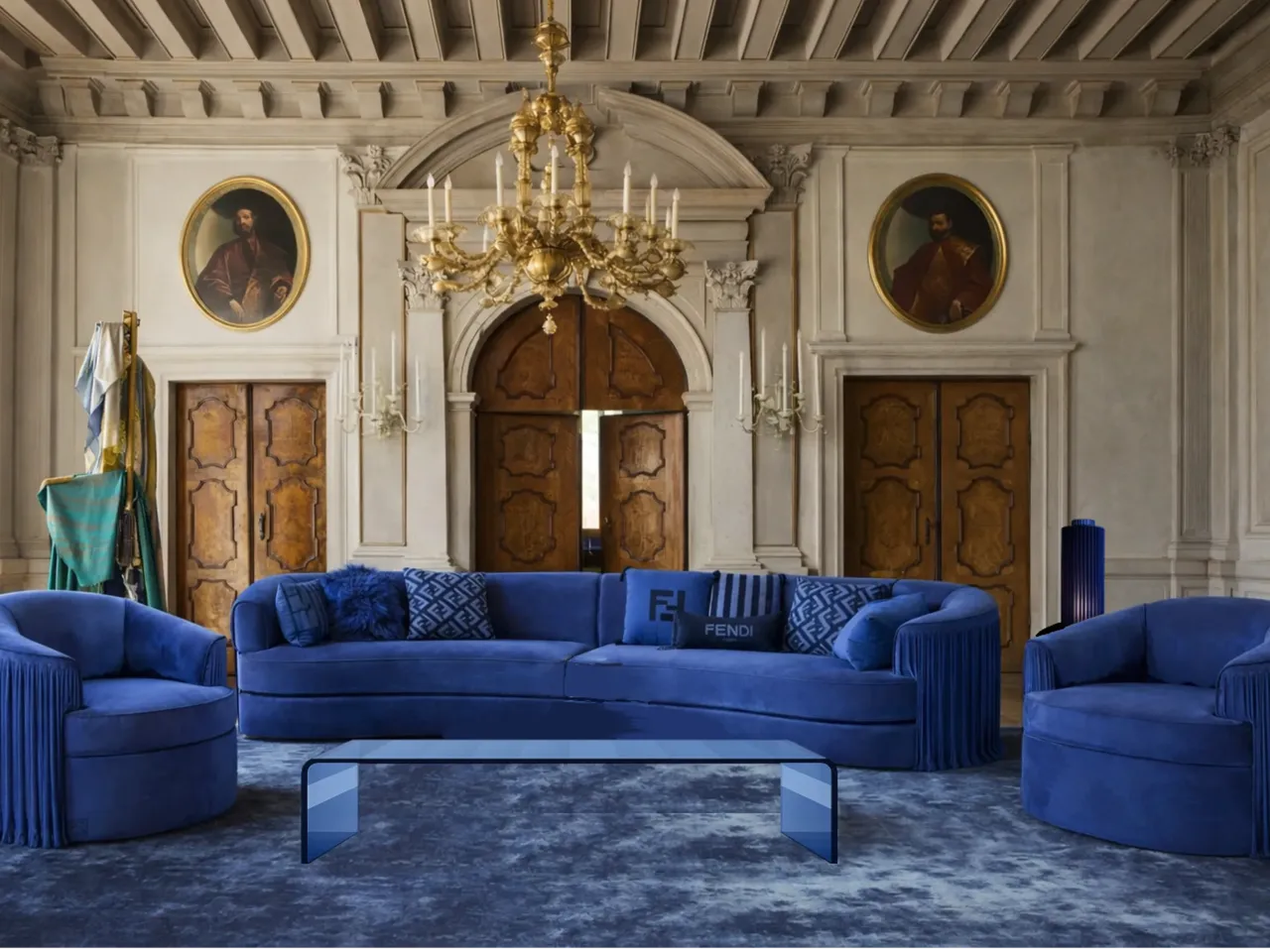
Rome feels like an enchanted city, with its ancient ruins, columns, and sculptures. There seems to be a kind of spell that distorts time, making it feel almost surreal. Velare is born from this sensation, combined with the intention of reinterpreting the soul of Fendi Casa, a house that represents Rome at its purest. The collection does not return to the past through nostalgia but instead draws from it as a source of inspiration, unfolding into a veil of refined elegance. It brings together fluid silhouettes, delicate fringe details, and glass accents in a deep blue palette, forming a cohesive ensemble of chairs, a sofa, a table, and a rug. The whole composition evokes the atmosphere of Roman twilight, where still objects catch the light and seem almost alive, suspended in subtle movement.
Samina Ilyas and Isabella Maria Motta Gallego - Rovine
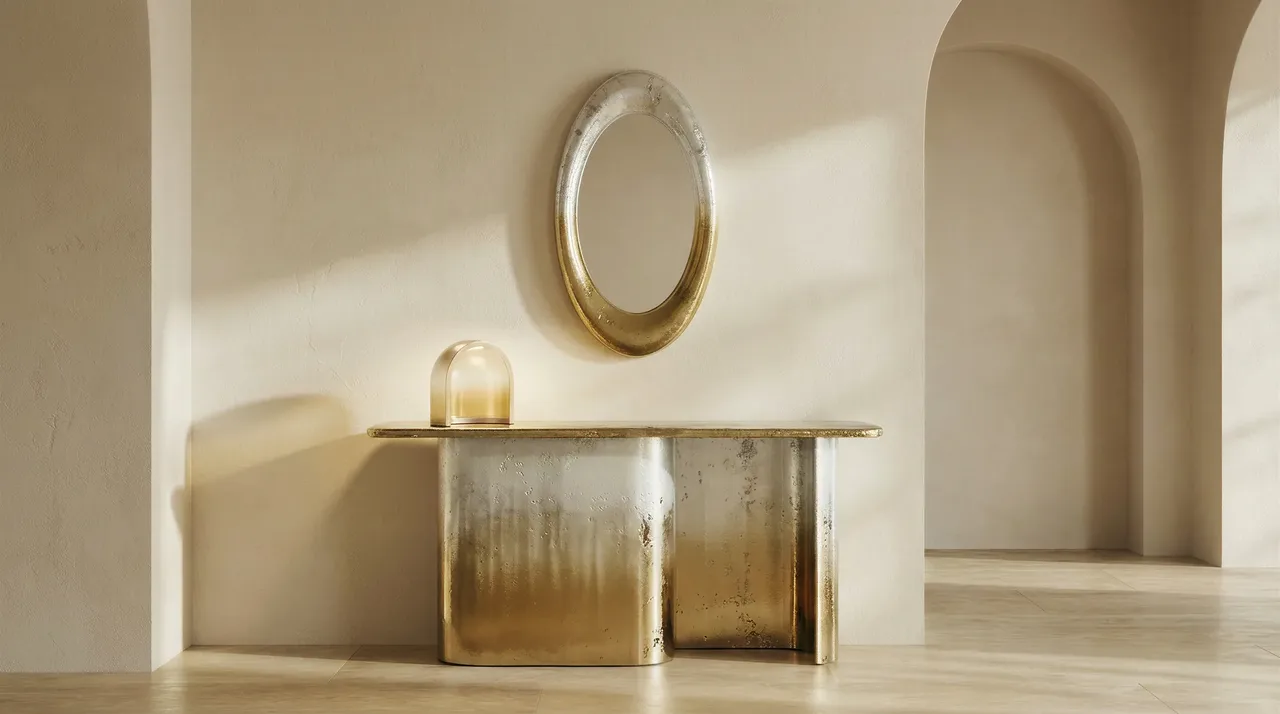
We have all felt, at some point, an unexpected rush of nostalgia for something we have never truly experienced. A distant era, a place never visited, or a memory that feels inherited rather than lived. Rovine emerges from this sensation, anemoia, bringing a fragment of Rome into the domestic space. The collection translates the textures and presence of ancient ruins into a contemporary language, where history is not replicated, but reimagined.
A key material approach lies in the use of silvered mirror surfaces, deliberately treated and partially eroded to create shifting perceptions of form. Drawing inspiration from Interior of the Pantheon by Giovanni Paolo Panini, Samina and Maria reinterpret classical references through a deconstructivist lens: forms are broken, layered, and subtly displaced, allowing light to move across and within them.
Pierferdinando Arcella - Convivium
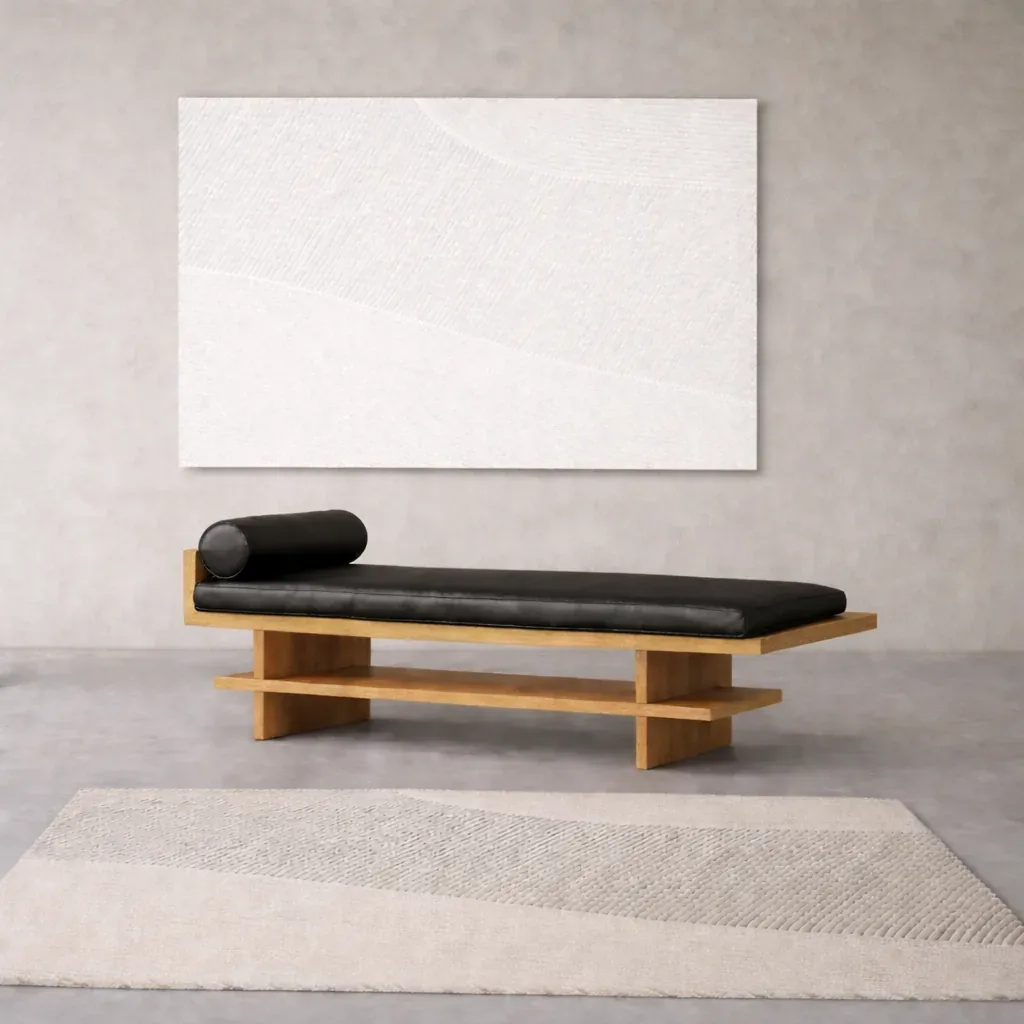
There is something truly exceptional about the structure of the Roman lecti: a piece of furniture designed not for sleep, but for presence, for sitting, observing the room, engaging in conversation, or lingering in one’s own thoughts. It was never about rest but about awakening the mind.
With Arcella’s vision, this ancient intention is reinterpreted through a contemporary lens. Rooted in the traditions of the convivium and the triclinium, the piece bridges past and present through a restrained, contemporary language. Its low wooden frame, integrated shelf base, black upholstered cushion, and cylindrical bolster come together to propose a new form of shared experience, one that feels both intimate and deliberate.
Muskaan Agarwal and Matilde Brambilla - Fendi Fitness Kit
The Fendi Fitness Kit reimagines exercise within the luxury home, bringing wellness into a space traditionally defined by stillness. As the contemporary domestic environment evolves into a multifunctional setting, the collection introduces a new category of sculptural objects that double as tools for movement, seamlessly merging function and decoration.
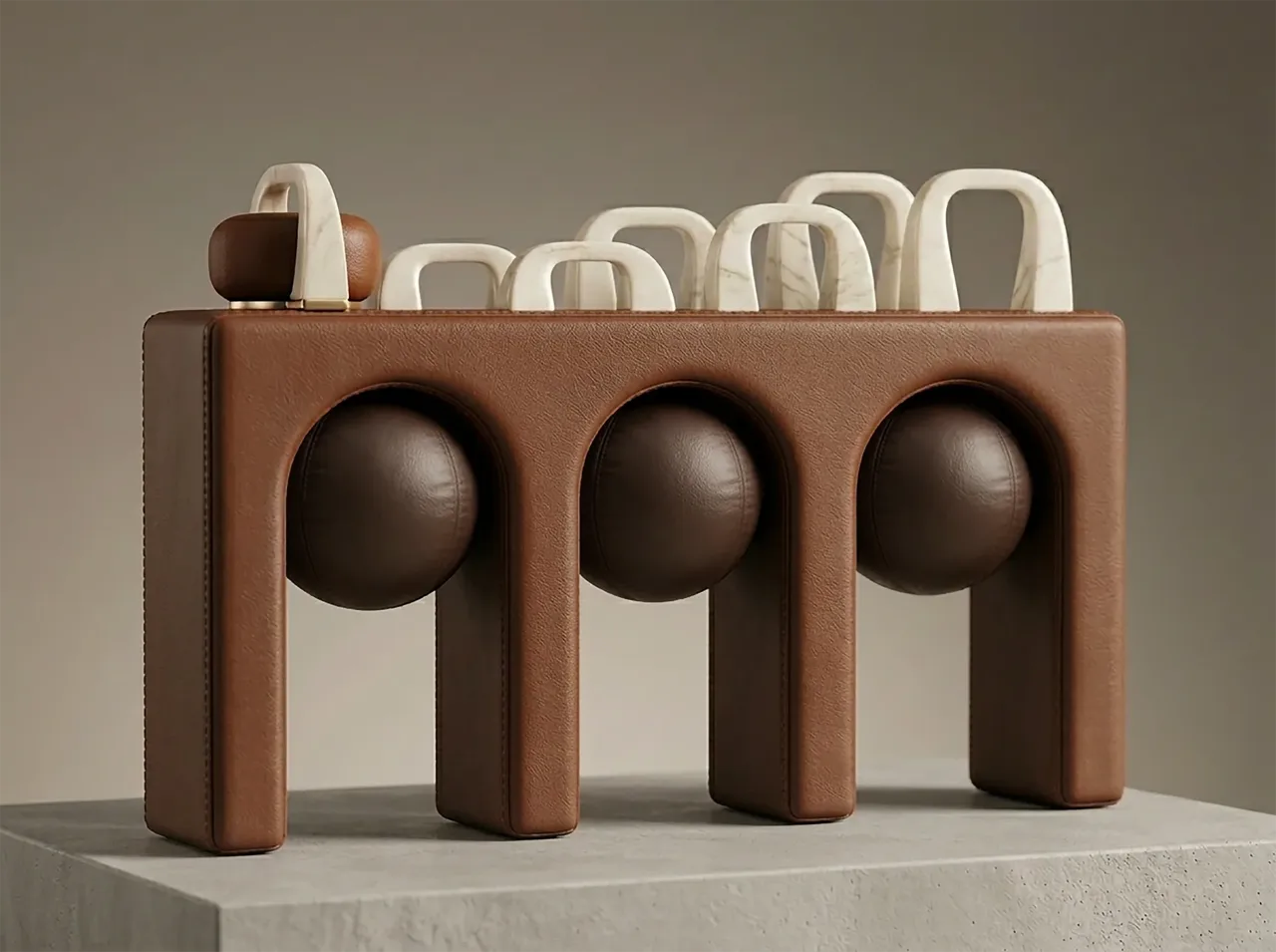
Drawing from Roman architecture and Fendi’s house codes, the design balances utility with a strong sculptural presence. The bench, defined by brown leather padding, arched cutouts, and a series of marble-looped handles that trace its surface, is conceived as an intentionally visible object, one that operates both as functional equipment and as an emotionally resonant centrepiece within the home.