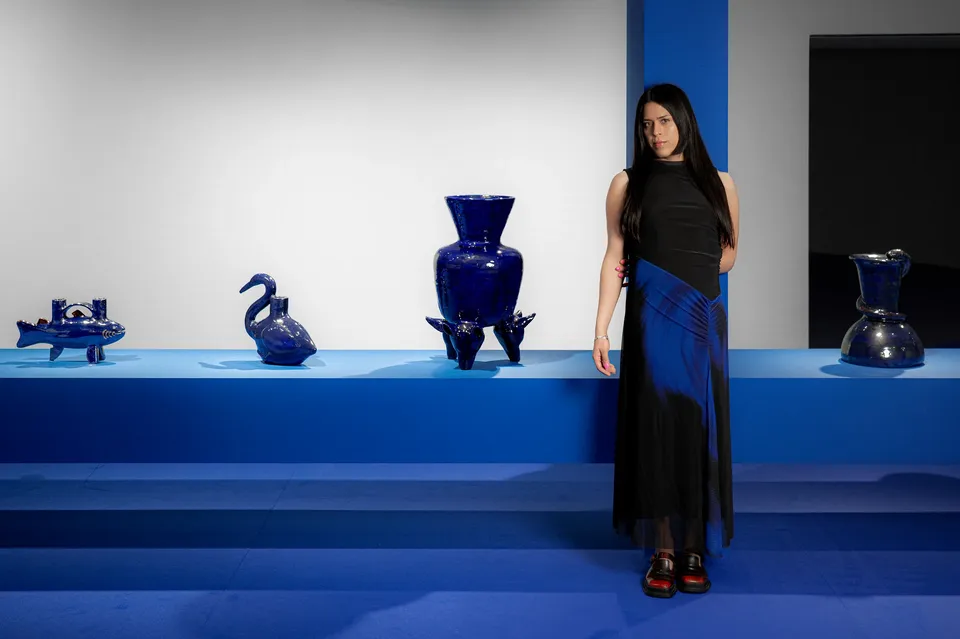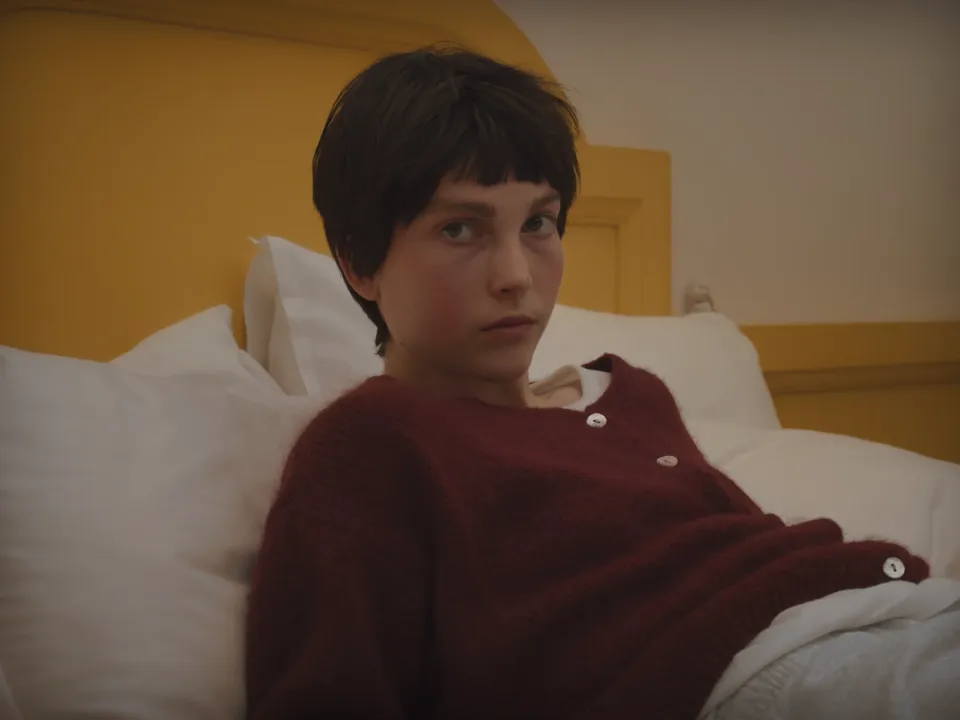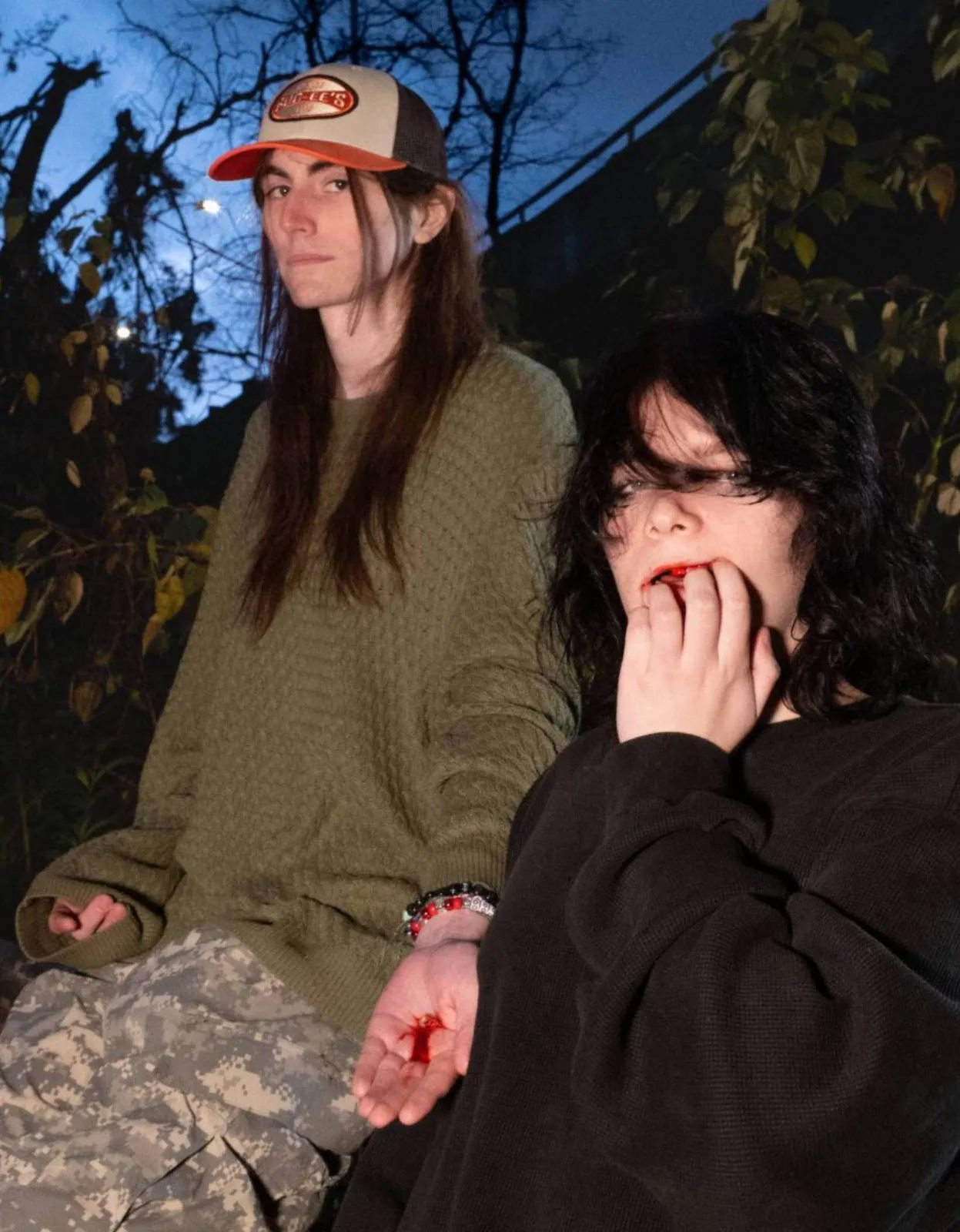
Whether you’re head banging, punching, or desperately flailing on the dance floor, there is no one right dance move for this Canadian-American duo, just so long as you’re shedding your outer shell and revealing your most unashamed self. Noelle Stockwood and Juno Callender transformed from strangers into bandmates and then into best friends through the genre-bending group, Femtanyl. After releasing their debut album, Man Bites Dog, earlier this month, the pair are now embarking on a US tour, ending with a festival appearance at Primavera Sound in Barcelona.
Started by Noelle in 2023 and later joined by Juno in August 2025, Femtanyl’s mission is simple: cultivate a space where everyone can unleash their inner freak. The internal mayhem of your mind isn’t just welcomed but encouraged through their completely unfiltered and unapologetic nature. Man Bites Dog uses body horror, dark lyrics, and intense screams contrasted by some more mellow tracks to show their versatility and represent the true human experience. Taking inspiration from punk, digital hardcore, screamo, computer music, and techno, their sound is uniquely adept at setting people free. It also makes their specific genre even harder to pin down. But that’s the point: their music is about rejecting conformity and blending the most liberating aspects of each genre.
They’ve grown immensely since their inception, learning from the greats of experimental music like Danny Brown and Machine Girl. And today, we have the pleasure to speak with Noelle and Juno about the artistic evolution of their music, developing and experimenting with their own identities, and the community of their fanbase.
Good morning! Are you guys in Seattle right now?
Juno: Yeah, we are currently at my place. It’s three minutes away from Noelle’s house.
Are you guys based in Seattle full-time or split between Toronto and Seattle?
Noelle: We were originally split, but around eight months ago, I moved up to Seattle so we could work on the album full-time together.
That was around the time when Femtanyl transitioned from a solo artist to you two being a duo, right?
Juno: Yeah, but we also worked remotely for a while before that. We sent a lot of project files back and forth between Seattle and Toronto, but that wasn’t necessarily ideal. We still got a lot of work done, but the difference between how efficiently we worked together after Noelle moved up here was night and day.
The album was written and recorded virtually between Toronto and Seattle. What were the most challenging, and also rewarding, parts of that experience? I’m sure it must’ve created an interesting creative dynamic.
Noelle: We fell into this weird time sync where I’d wake up and Juno would have sent me a file that she had been working on, and then I would be like, yo, this is awesome. Then I’d work on it for the entire day and then she would wake up and work on it until like 5:00 a.m. We were never really awake at the same time except for maybe two hours.
Juno: We had a weird, regimented sleep schedule like Noelle was talking about. I would always wake up to something that she had sent me with a very long explanation of what she did. I would take that and work on it, and she would go to bed and then I would basically do the same thing and send it back to her right before she woke up. It was fun every day waking up and listening to what had changed, but then on the other hand, it doesn’t hold a candle efficacy-wise to working together in the same room at the same time on the same thing.
Juno: We had a weird, regimented sleep schedule like Noelle was talking about. I would always wake up to something that she had sent me with a very long explanation of what she did. I would take that and work on it, and she would go to bed and then I would basically do the same thing and send it back to her right before she woke up. It was fun every day waking up and listening to what had changed, but then on the other hand, it doesn’t hold a candle efficacy-wise to working together in the same room at the same time on the same thing.
“Music gave me a way to not be hurting anymore. I've come to a much more appreciative place in my life.” Noelle
What’s the creative process like when you guys are together and working? How has that shifted for you now?
Noelle: We barrel through things because we get very excited. We put something down and then we run around the room for a second and then we sit back down and do something else and then do the same thing.
The name Femtanyl is a nod to transfem identities and the drug fentanyl. How did you come up with it?
Noelle: The name alludes to drugs being used as a way to cope, but then music became that over time and the drugs were completely left in the past. Music gave me a way to not be hurting anymore. I've come to a much more appreciative place in my life.
You’ve said that being a trans woman, or transfem, comes with a high level of experimentation with yourself and also through interests like music. How is that journey of self discovery represented in your music?
Noelle: When I first started transitioning, music was the only place I could feel that aspect of myself. I could augment my vocals and talk about it openly. It again became my outlet because I wasn’t on any hormones and just sitting in my room thinking, this sucks, dude. I feel good that there is a type of music for trans people that’s just about being an idiot and being unfiltered and messy and rough around the edges. There’s a lot of pressure on trans people to be very manicured and, with this music and space, it’s nice that we can all get in a room and just be really loud and sweaty and a bit embarrassing.
Juno: Music and art were so important for feeling like my identity was creatively accepted and made me feel so comfortable in expressing and exploring it. In a situation where we’re already held to such a monstrously high standard as trans people, it’s nice to have music that is focused on the trans experience and uplifting the community. With Femtanyl, we do that, but we also go in an alternate direction where we're trying to portray it as close to the human experience as possible.
Juno: Music and art were so important for feeling like my identity was creatively accepted and made me feel so comfortable in expressing and exploring it. In a situation where we’re already held to such a monstrously high standard as trans people, it’s nice to have music that is focused on the trans experience and uplifting the community. With Femtanyl, we do that, but we also go in an alternate direction where we're trying to portray it as close to the human experience as possible.
You can feel and hear the artistic chemistry in the new album, but it’s very interesting because I was reading about how the first time you two met was onstage.
Noelle: Thank you, and yeah it was a couple hours beforehand. My manager at the time, Zazzy, reached out to Juno because, at that time, all the Femtanyl music was made unmixed on a shitty old iMac, and it sounded pretty bad coming out of a live environment. I thought, this needs something else, I think we need a live drummer. And she reached out to Juno and asked, you play drums, right? And Juno didn't really… (laughs).
Juno: I didn’t, but I was like, I’ll lock in. I'll do it.
Noelle: So she practiced all the songs on drums, and then we met on the day of our first show together and we played it without any kind of rehearsal — and it went pretty well.
Juno: I didn’t, but I was like, I’ll lock in. I'll do it.
Noelle: So she practiced all the songs on drums, and then we met on the day of our first show together and we played it without any kind of rehearsal — and it went pretty well.
How did each of you enter the digital hardcore/rave scene?
Noelle: I fell into it. I started making Femtanyl music and a lot of the more abrasive qualities of it. It was what I liked to make, but it was also the only thing I knew how to do. I went as maximalist as possible with it to make something crazy. I found it exciting when I started playing shows and people would go crazy and mosh to the music, so I leaned into that. It's really fun to be able to be a small part of that space.
Juno: I feel like I’m karmically finally getting the excuse to make the music that I’ve always wanted to make. I come from the DIY music touring scene, I grew up touring in a lot of screamo bands and hardcore groups, but my passion was always for what you would call ‘computer music.’ Growing up, the only music I listened to was either electronic rave music or digital hardcore aesthetics. Think Death Grips, Machine Girl, Atari Teenage Riot, etc. Femtanyl is finally like a wish fulfilled because, meeting Noelle, we complement each other well and we can make the music we want to.
Juno: I feel like I’m karmically finally getting the excuse to make the music that I’ve always wanted to make. I come from the DIY music touring scene, I grew up touring in a lot of screamo bands and hardcore groups, but my passion was always for what you would call ‘computer music.’ Growing up, the only music I listened to was either electronic rave music or digital hardcore aesthetics. Think Death Grips, Machine Girl, Atari Teenage Riot, etc. Femtanyl is finally like a wish fulfilled because, meeting Noelle, we complement each other well and we can make the music we want to.
You mentioned Machine Girl and I know you also collaborated with Danny Brown. What was the biggest learning curve that you both went through working with them as these pioneers of experimental music?
Noelle: Danny was a very startling uptick in our career because up until that point, I had never done anything very professionally in music — I was just making very loud beats on a laptop and sampling. He asked me to come out and produce for Stardust. Suddenly, I was in an actual studio that was being paid for and I was fucking terrified. You’re on the clock and sometimes you don’t get anything good done in a day and you feel terrible. But it taught me to be more comfortable in a space where you have to perform.
I’ve been listening to Danny Brown and Machine Girl since I was a baby, and I never thought in my life I would meet these guys, let alone work with them in any capacity. So I had to learn to just be a normal person, chill out and not be a little freak (laughs).
Juno: I’d say Machine Girl especially taught us how to be on tour. How to be professional and lock in and not make stupid mistakes, which was very sweet of them. I had the pleasure of performing with Machine Girl on their first US tour in 2016 as a small little hardcore child. Then, touring with them as Femtanyl put us in a prime position to be taught a thing or two about how to actually accomplish a successful digital hardcore tour.
I’ve been listening to Danny Brown and Machine Girl since I was a baby, and I never thought in my life I would meet these guys, let alone work with them in any capacity. So I had to learn to just be a normal person, chill out and not be a little freak (laughs).
Juno: I’d say Machine Girl especially taught us how to be on tour. How to be professional and lock in and not make stupid mistakes, which was very sweet of them. I had the pleasure of performing with Machine Girl on their first US tour in 2016 as a small little hardcore child. Then, touring with them as Femtanyl put us in a prime position to be taught a thing or two about how to actually accomplish a successful digital hardcore tour.
“There’s a lot of pressure on trans people to be very manicured and, with this music and space, it’s nice that we can all get in a room and just be really loud and sweaty and a bit embarrassing.” Noelle
You’re about to embark on your month-long tour in the US and you’re also heading to Barcelona for Primavera Sound. What is the difference for y’all between performing at festivals versus your more traditional concert or rave venues?
Noelle: This is our first big festival. We played a very small festival in Berlin last year, but we were kind of in a daze. That festival wasn’t too different from normal venues because it was much smaller, but I'm excited to play Treefort at the start of the tour and then Primavera. I think we're mostly excited to see the other people playing.
Juno: I just hope that our schedule allows us to see people. This has been a dream come true. As an obsessive music follower, every time Primavera would happen, I would just immediately go on YouTube and watch. Hopefully there’s a little Juno out there doing the same thing for our set.
Juno: I just hope that our schedule allows us to see people. This has been a dream come true. As an obsessive music follower, every time Primavera would happen, I would just immediately go on YouTube and watch. Hopefully there’s a little Juno out there doing the same thing for our set.
I’m sure there is. With your upcoming tour, is the space that you create in each venue different, or does it have more of a common community that feels like it’s removed from space and time?
Noelle: In terms of our fan base, it’s decently uniform across a lot of places. You get a little bit of variation per city, some show cultures are a bit different. But our fans typically show up and go crazy and have a great time. Our fan base is a bit younger than a lot of our contemporaries, so their first experiences with this kind of music are at our shows and it’s very fun to see them fall in love with that environment like I did at a young age.
Juno: The live show experience is such a sacred and important thing to being a music fan that a lot of what we try to bring to it is creating a space where it becomes impossible to focus on anything but the music and the live performance. We want everybody there to transcend into the Femtanyl space for that hour. I want people to be able to feel like they’re getting plucked from their lives and then they need to take some time to readjust back to their normal life afterwards.
Juno: The live show experience is such a sacred and important thing to being a music fan that a lot of what we try to bring to it is creating a space where it becomes impossible to focus on anything but the music and the live performance. We want everybody there to transcend into the Femtanyl space for that hour. I want people to be able to feel like they’re getting plucked from their lives and then they need to take some time to readjust back to their normal life afterwards.
You both have been in this show scene for a really long time. How have you seen it change over the years from when you were standing in the crowds to now you being on stage?
Noelle: It’s certainly gotten younger. Many people who seek out this music now are in their teen years. It is nice to see a new generation of people starting to get excited about it.
Juno: The biggest thing for me was the development of crowds pre and post pandemic. Shows definitely feel different now. A lot of people got into this kind of music over the course of the pandemic and now they’re able to express that by going to these live shows. There’s a flow of energy that feels a lot more intense. People know what it’s like to lose it, and they want to hold on to that feeling for as long as possible now.
Juno: The biggest thing for me was the development of crowds pre and post pandemic. Shows definitely feel different now. A lot of people got into this kind of music over the course of the pandemic and now they’re able to express that by going to these live shows. There’s a flow of energy that feels a lot more intense. People know what it’s like to lose it, and they want to hold on to that feeling for as long as possible now.
“I’m karmically finally getting the excuse to make the music that I’ve always wanted to make.” Juno
Noelle, you also design the visuals yourself, right?
Noelle: Yeah! Most of it. The cover for Man Bites Dog was done by the artist Dyoudim https://www.instagram.com/dyoudim/ – they’re fantastic. But I like to handle most of it myself because I grew up doing visual art. I went to school for animation — I thought that's what I was going to do my entire life. Then, during college, I put a lot of effort into music and that ended up taking over. It feels nice to still be able to draw because so much of my life is making music, so sitting down and working all day on an art piece keeps me grounded. It’s very fulfilling in a way that music is not to me. It’s a lot more meditative. Music is rewarding, but with art, I get to take it at my own pace. I enjoy the process of drawing and painting, and it rewards me in a different way.
To end on a high – maybe silly – note, if you had to describe Man Bites Dog as a dance move, what would it be?
Noelle: It would be the punch or accidentally elbowing somebody in the face. Or it’s flailing. It’s a desperate flail.
Juno: I feel like it’s that one hardcore dance move ‘picking up change’ where you lean down and you throw your arms back behind and hit whoever’s behind you. It’s a chaotic person who has never danced before in their life put in a situation where they have to dance.
Juno: I feel like it’s that one hardcore dance move ‘picking up change’ where you lean down and you throw your arms back behind and hit whoever’s behind you. It’s a chaotic person who has never danced before in their life put in a situation where they have to dance.