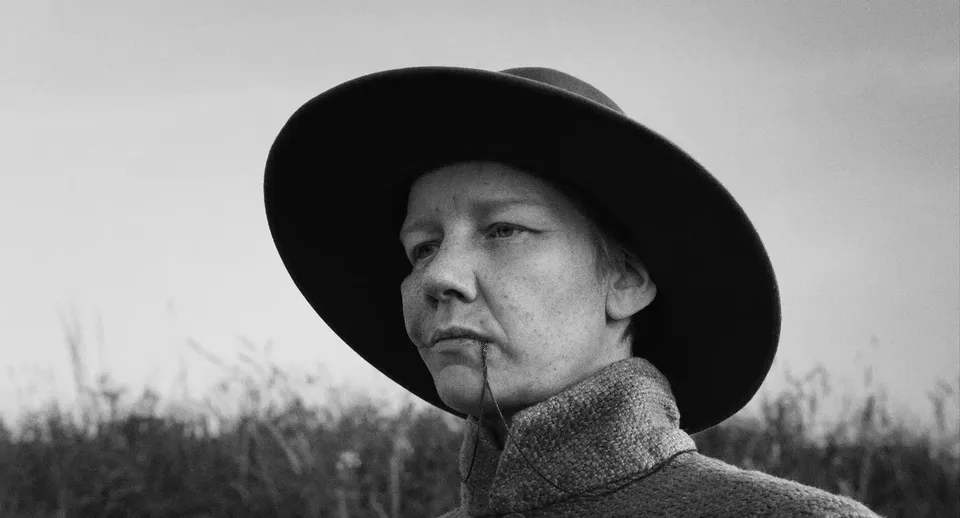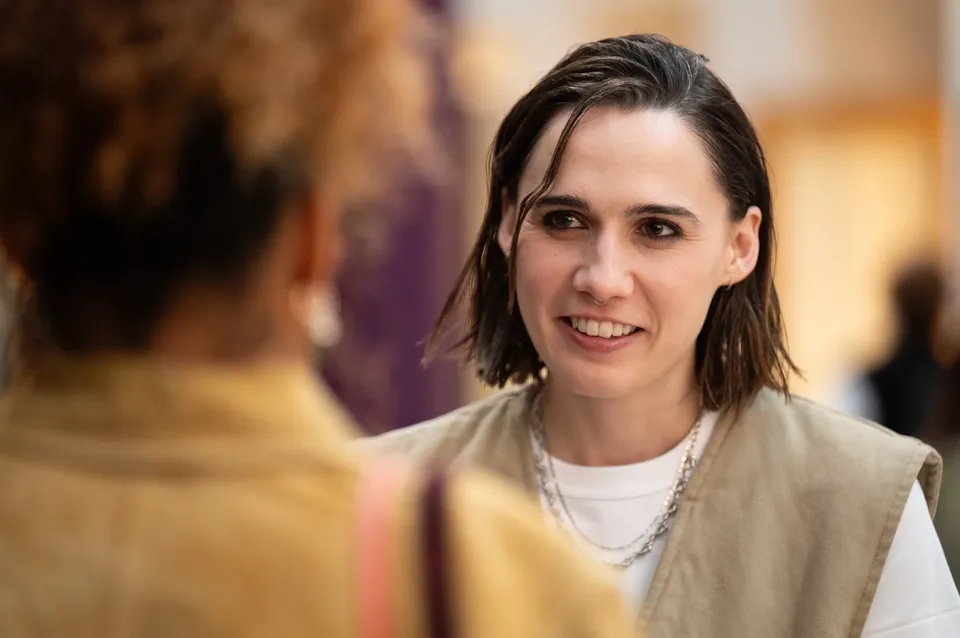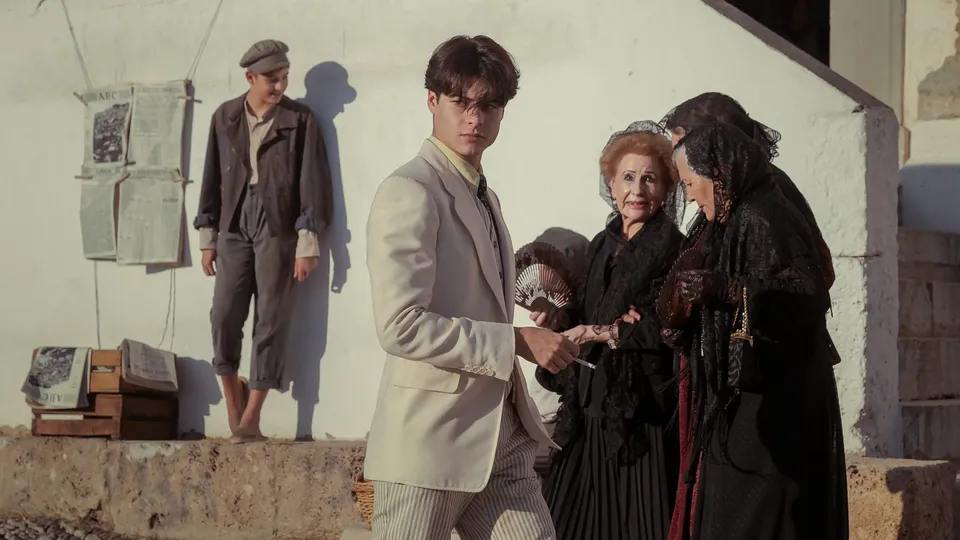
After a controversial and unexpected Golden Lion at the Venice Film Festival, beating The Voice of Hind Rajab, the independent spirit of Jim Jarmusch (Ohio, 1953) — present in Night on Earth (1991) or Paterson (2016) — returns to cinemas with Father, Mother, Sister, Brother. A film made up of three minimalist stories about the drama and comedy of family bonds.
For better or worse, both family and Jim Jarmusch’s way of making films are natural institutions we cannot choose. Father, Mother, Sister, Brother is a reflection that ranges from the uncomfortable silences that reverberate in the living room of any home to the importance of sharing the tenderness of an embrace. And in times of gatherings, meals, and long after-dinner conversations, it does no harm to revisit our own family universe and consider just how well we really know it.
The film is a triptych of family stories that take place in three different locations: the United States, Dublin and Paris. In each of them, a pair of adult siblings, more or less estranged, must reunite with parental nostalgia and bonds atrophied by time. In Father, Mother, Sister, Brother there are no heated arguments, no dead rising again, nor spectacular falls, but there is an audacious and unhurried search for new frontiers. Reaching poetry through minimalism and artifice, or comedy and drama through a sense of estrangement.
Jarmusch takes particular pleasure in the details that surround everyday life. Moments as mundane as matching the colour of one’s clothes with another family member’s, or spotting a group of skaters in the distance, become wholly unexpected symbols. For this very reason, it is in the simplicity of the mise-en-scène, in the purest Yasujirō Ozu style, that the film finds all the expressive force it needs. In this endless source of love and conflict that is the family, there is room for everything, from nostalgia to dry humour.
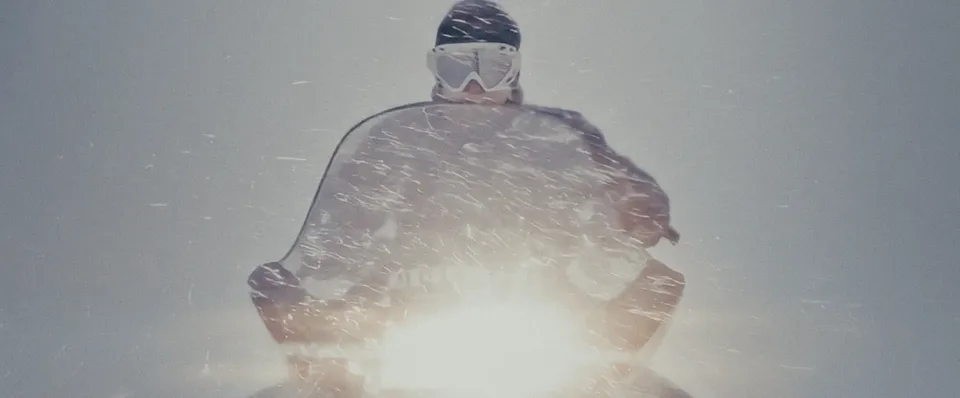
At a time when much of contemporary cinema pursues beauty through naturalism and photochemical processes, it is refreshing that someone like Jarmusch dares, for instance, to do something as different as using chroma key to shoot most of the scenes that take place inside a car — one of the narrative constants of his filmography, alongside Coffee and Cigarettes (2003). Like much independent cinema, his new feature should be approached with an open mind and a willingness to enter the subtle game of framing, dialogue and editing proposed by the American filmmaker.
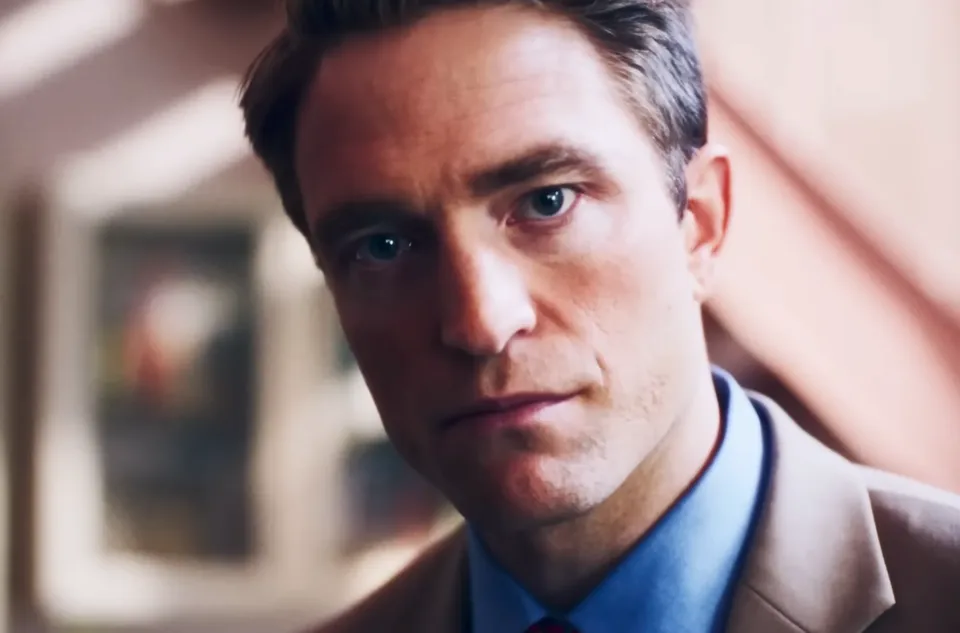
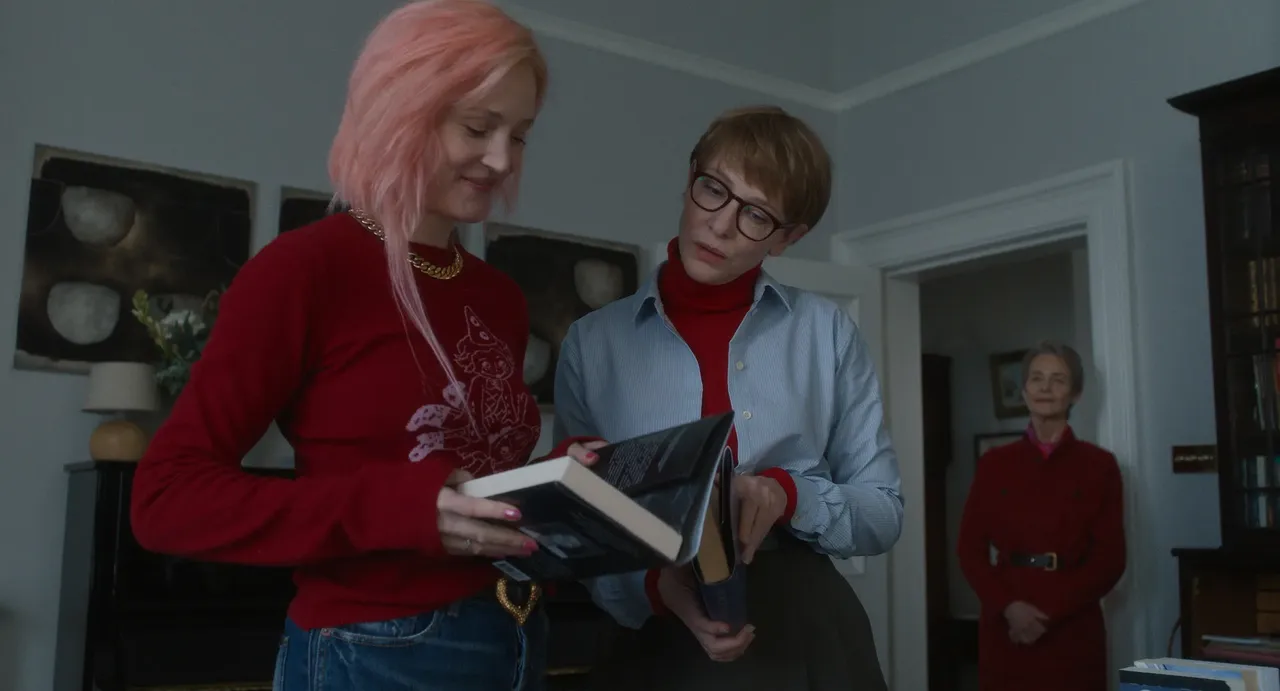
Not everything can be a risk, and when it comes to characters and cast, Jarmusch plays it safe. In the first act, for example, Tom Waits embodies an eccentric, hermit-like father, as false as he is brazen, whom his son — Adam Driver, a recently divorced man so good-natured he borders on foolish — scarcely seems to know. As usual, the film is full of genuine, peculiar and amusing performances. The same is true of Cate Blanchett who, despite what many might think, is not the mother of his fable but the daughter of Charlotte Rampling, a stiff and distant Irish mother.
Once one immerses oneself in the family, it is impossible not to be carried away by memory. Fully aware of this, Jarmusch frames all his reunions within a faint atmosphere of nostalgia. Each of the three acts is separated by a brief interlude of images and music that invite us to stay and live within them, where we see nothing in particular. A beautiful nebula of lights, digital grain and confetti that moves to the rhythm of a splendid soundtrack composed by Jarmusch himself together with the British singer-songwriter Anika. But, as with everything, poetry emerges from the most insignificant of things.