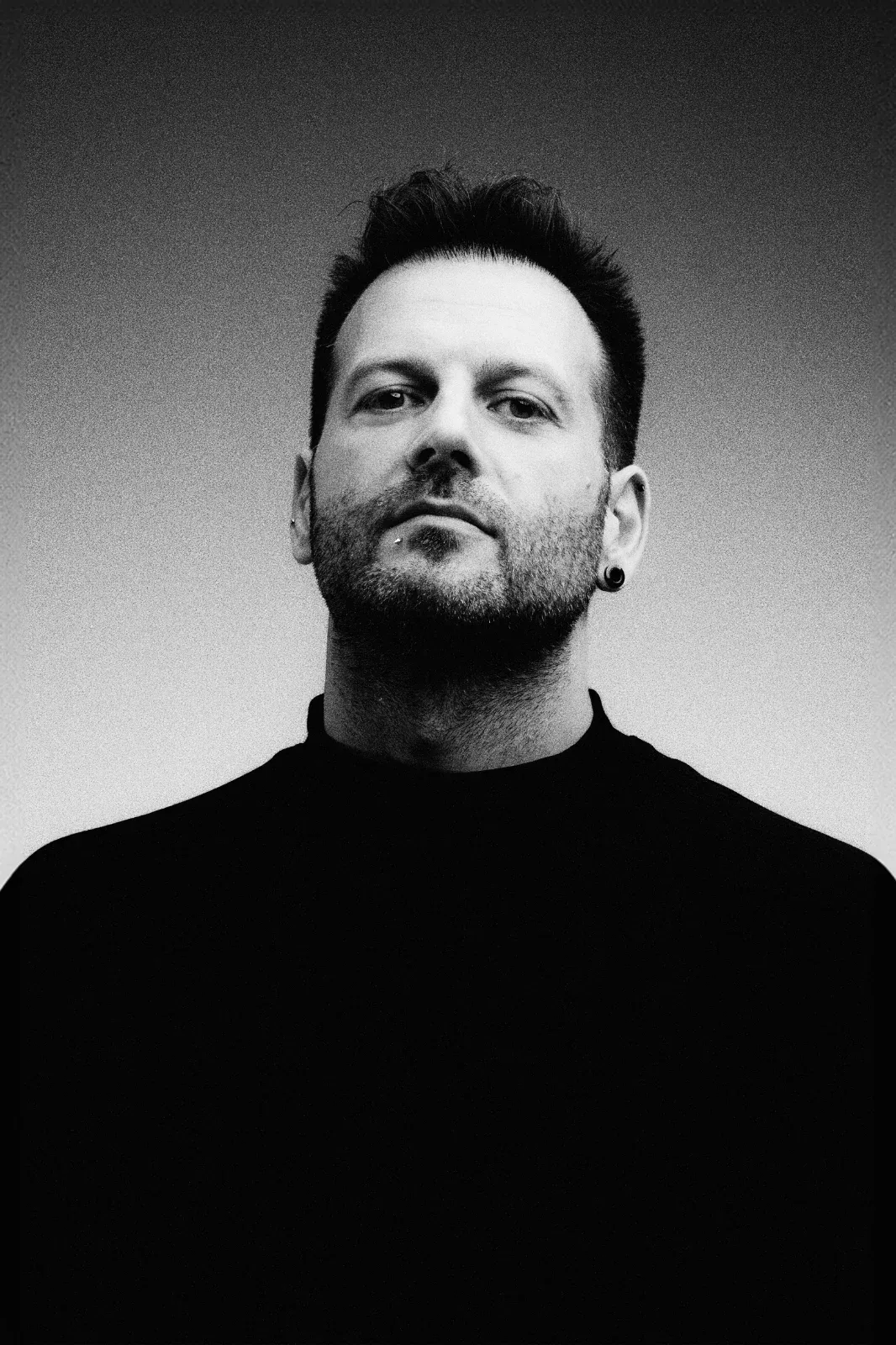
What does it mean to finish something on purpose in a culture that rarely knows how to stop? We speak to Enrico Sangiuliano just days after Absence and the final NINETOZERO chapter reaches zero, closing a cycle designed to disappear. In an industry obsessed with staying visible, his instinct moves differently, holding onto the intensity of a moment, then stepping away before it fades into habit.
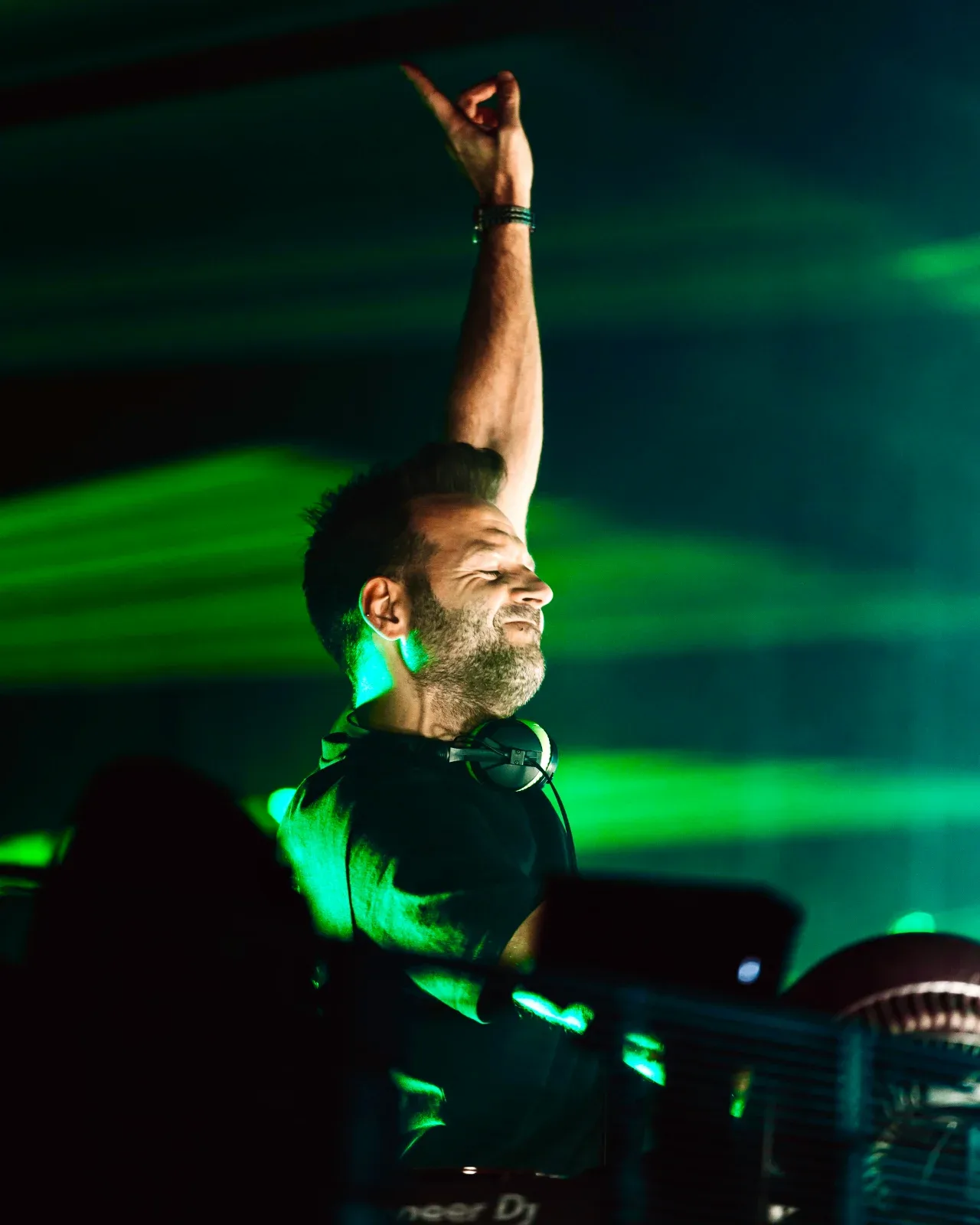
In Lisbon, during the last SOLO all-nighter, that idea became real. “It was about accepting the end, celebrating impermanence,” he says. The night stretched and folded in on itself, shaped as much by the crowd as by him. NINETOZERO was never just a label; it carried a sense of intention that ran through every release and every gathering, something precise but never rigid, something that could only exist for a limited time and still echo after.
That same clarity appears when he speaks about authorship. When a track reaches millions, “it’s no longer only mine,” he reflects. The focus shifts, not toward control but toward awareness, knowing when to hold on and when to let things move beyond you. These days, he leans into that pause. Time slows, space opens, and what matters comes back into view. “Don’t rush,” he says. Not everything is meant to stay, and that is exactly where its weight begins.
Enrico, welcome! We’re speaking just after the release of Absence, the EP that closes the entire NINETOZERO cycle. How has this final countdown felt?
A mix of calm, pressure, and gratitude. When you build something with its ending already written into its code, the final days don’t feel random, they feel necessary. I felt emotional but also very clear.
You conceived NINETOZERO as a project with its end already written into its DNA. When you first imagined it, did you already know how that final moment would look or feel?
When I first imagined the label, I didn’t know every detail of the ending but I knew its emotional weight. Zero couldn’t feel like a simple finish; it had to feel like a return to the source. The exact form revealed itself later, but the destination was already there.
In a recent message, you wrote: “Ten numbers. Ten releases. Ten all-night gatherings.” It almost sounds like a ritual. Did you experience this project more as a label or as a kind of artistic journey?
I never experienced it as just a label. It felt like a structure, a discipline, a story I had chosen to live through sound. A manifesto of living and breathing music. The releases, the visuals, and the gatherings all belonged to the same ritual.
NINETOZERO also became a platform for other artists, from established names like Charlotte de Witte to emerging producers through the community remix projects around The Techno Code. How important was that sense of collaboration within the label’s vision?
Collaboration was an interesting ingredient to introduce at certain points in the story, only when it felt like it made perfect sense. I never wanted it to feel like a closed monologue. Other artists expanded its meaning, but only when it was a calling to interpret a part of the path, while the community remixes showed that an idea could travel, transform, and return with a different soul.
Designing something that would self-destruct at release number zero is quite radical in a music industry that usually celebrates permanence. Why was it important for you that NINETOZERO would eventually disappear?
It mattered because permanence easily becomes inertia. In an industry obsessed with continuity and over-presence, I wanted something that had a reason to exist and an equally meaningful reason to end. The limit gave every chapter more weight, and to me, full responsibility and voice, anchored in the present moment.
“When you build something with its ending already written into its code, the final days don’t feel random, they feel necessary.”
You described the project as “a cycle of listening, making and letting go.” What did the act of letting go teach you during these four years?
Letting go taught me that completion is part of the creative process. It showed me not to confuse attachment with meaning, and not to keep something alive just because it has once been loved.
With Absence you reach zero. Conceptually, what does that number mean for you now?
Zero becomes a kind of womb: apparently empty but full of everything that came before. It isn’t the negation of the journey; it is its compression into essence.
The title track explores silence, background noise, and the almost inaudible sounds of your studio environment. What drew you toward the idea of absence as the final statement of the project?
Absence is the most honest final statement. After so much sound and evolution, what remains becomes more meaningful than what could be added. It is a return to listening and an invitation to pay attention to what and how we listen.
There’s even a moment where your breathing can be heard in the recording. Were you trying to shift the listener’s attention toward a different kind of listening?
The whole background of the track is a field recording of my room, the studio where this final chapter took shape. When you record a space, you capture everything that lives in it. That was the sound of that room, in that moment. There was a bit of rain, the noise of the machines, and I was there as well, so my breathing became part of it. It was simply present. Part of the silence of that space.
The main track, Step Into The End, feels almost ceremonial, with spoken words, horns and a violin framing a powerful techno structure. Can you tell us more about it?
It is a threshold. Different elements converge into one final movement forward. Step Into The End is a journey that brings together everything that has been explored sonically throughout NINETOZERO. It unfolds over ten minutes, giving space for each element to exist on its own, from violin to kickdrum, but also to interact and create something more complex when combined. There’s a sense of openness in it, but also a certain epicness and emotional weight. At its core, it carries a kind of courage. The idea of stepping forward, of accepting the end, and jumping into absence.
Your manifesto track, The Techno Code, sparked a lot of discussion. Do you feel techno still has room for philosophical ideas or has the culture become more functional over time?
Techno still has room for lots of philosophy, maybe more than ever. When things become too functional, they risk losing depth. That dimension has always been there, even when unspoken.
“Techno still has room for lots of philosophy, maybe more than ever. When things become too functional, they risk losing depth.”
The NINETOZERO SOLO all-night-long shows were deeply connected to this era. What does playing the entire night allow you to express that shorter festival sets simply cannot?
For me, the all-nighter is the essence of DJing. It’s the most complete expression of what this role is about. When you play all night, you’re creating a path. You start from silence and you slowly shape the energy, the rhythm, the direction. You create tension before intensity, you allow things to breathe, you build, you release, you take people somewhere and then bring them back. It’s a full cycle. There are moments to push, moments to hold back, moments to let go. And within that, something real can happen, something that is not planned in detail but discovered in the moment.
An all-nighter is also a dialogue. You don’t just give, you also absorb, you listen, you learn. The room teaches you; the people shape the journey with you, and that exchange becomes part of the set itself. There’s nothing against a two-hour festival set, it can be powerful, direct, intense. But it’s a different language. It’s like opening a map. An all-nighter is more like an atlas: it allows you to explore the full territory, to go deeper, to lose yourself and find something unexpected. For me, nothing is as deep as that.
An all-nighter is also a dialogue. You don’t just give, you also absorb, you listen, you learn. The room teaches you; the people shape the journey with you, and that exchange becomes part of the set itself. There’s nothing against a two-hour festival set, it can be powerful, direct, intense. But it’s a different language. It’s like opening a map. An all-nighter is more like an atlas: it allows you to explore the full territory, to go deeper, to lose yourself and find something unexpected. For me, nothing is as deep as that.
The final NINETOZERO SOLO gathering took place in Lisbon. How was it?
It was honestly a massive night! A full descent through the arc of NINETOZERO, moving through the peak moments but also the deepest and most introspective ones. It was about accepting the end, celebrating impermanence, and sharing that moment together. There was a strong sense of union, with the crowd, with the people who had followed this journey, and with everyone present that night. Many had been to previous SOLO shows, and there were many many friends coming from Italy, Portugal, the UK, Belgium, and beyond. It became a gathering, something bigger than the event itself. And now, it still resonates.
Some of your tracks, including Moon Rocks and Reflection, have surpassed twenty million streams on Spotify, and The Age Of Love remix has more than one hundred million. When a piece of music reaches that scale, does it change the way you hear it yourself?
At that scale, the track is no longer only mine. I still hear the craft but I also hear the lives people project into it. It changes the echo, the perception.
Going much further back, when you listen today to By Train from 2009, what do you recognise in that younger version of yourself?
Wow, By Train! I recognise instinct, hunger, a certain innocence and a big care for details. It is rougher but the identity is already there.
“Visibility often rewards what is loud, not necessarily what is deep. When it becomes a substitute for substance, something gets lost.”
The techno world has become increasingly driven by numbers, followers and social media presence. Do you feel that visibility sometimes overshadows talent?
Yes. Visibility often rewards what is loud, not necessarily what is deep. When it becomes a substitute for substance, something gets lost.
And in your opinion, do the best artists eventually find their place or is the ecosystem more complicated than that?
It is more complicated than meritocracy. Timing, context, and resilience all play a role. But strong artistic identity and talent always last longer than momentum.
Outside the studio and the club, what helps you stay grounded as a person? Do you have routines or hobbies that keep you connected to life beyond music?
What grounds me is creating moments of silence and stillness through meditation, but also simply by making space in a very full life. I try to create pauses, to slow things down, and to take care of my body through conscious choices. Being in nature, respecting what surrounds me, and staying connected to the environment are also very important. At the same time, I need to reconnect with my roots. Spending time with family and lifelong friends is something essential. It reminds me of where everything started. And then there is connection in a broader sense: building relationships, sharing moments with people, being part of a community. And of course, spending time with Charlotte, creating our own space where we can simply be. That is something very precious.
Is there any advice you’d like to share with young artists who are trying to find their place in this industry?
Don’t rush. Build your identity slowly. It takes time and errors. Protect your joy and fun. Don’t confuse visibility with value. What you create today may reveal its meaning much later.
What’s next for you?
What comes next is not clear yet, and that is the best thing. It is a luxury and also the reward of completing NINETOZERO. There is Absence now, and later we will see. I just finished a very intense body of work and I don’t feel the need to define what comes after. Right now, I prefer not to know. So, to answer your question, what’s next in the very near future is space, pause and regeneration.
If you had to choose just one dream to make it true, what would it be?
To stay curious more than certain. To keep evolving without losing what made me feel alive in music. Freedom, in a simple way. To create honestly, to follow what feels true, and to stay connected to that space between sound and silence. And maybe, over time, to build something that goes beyond me.