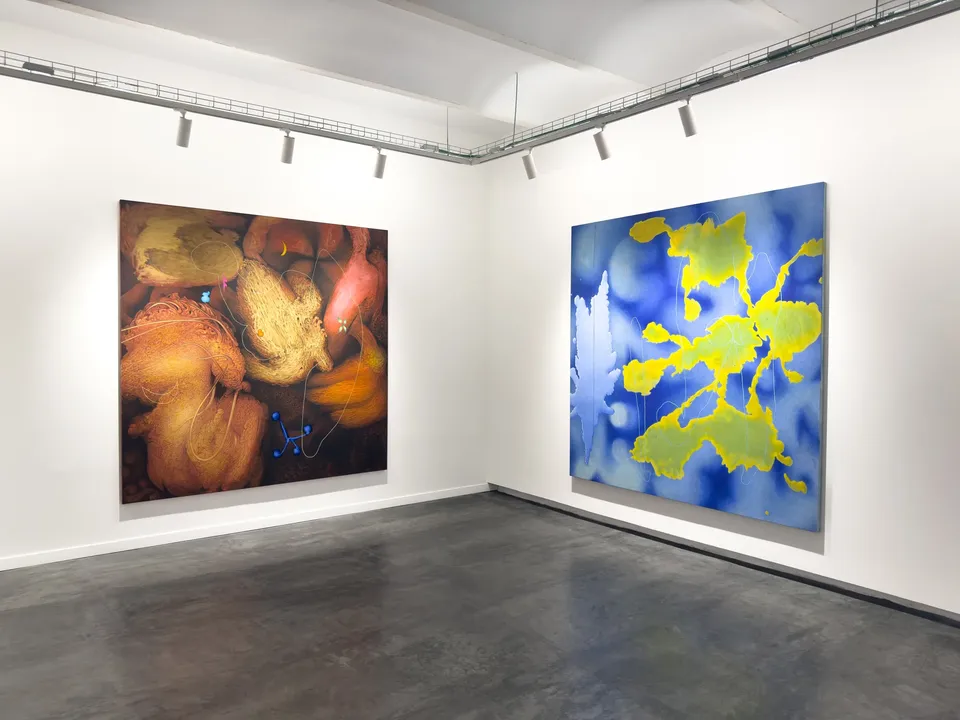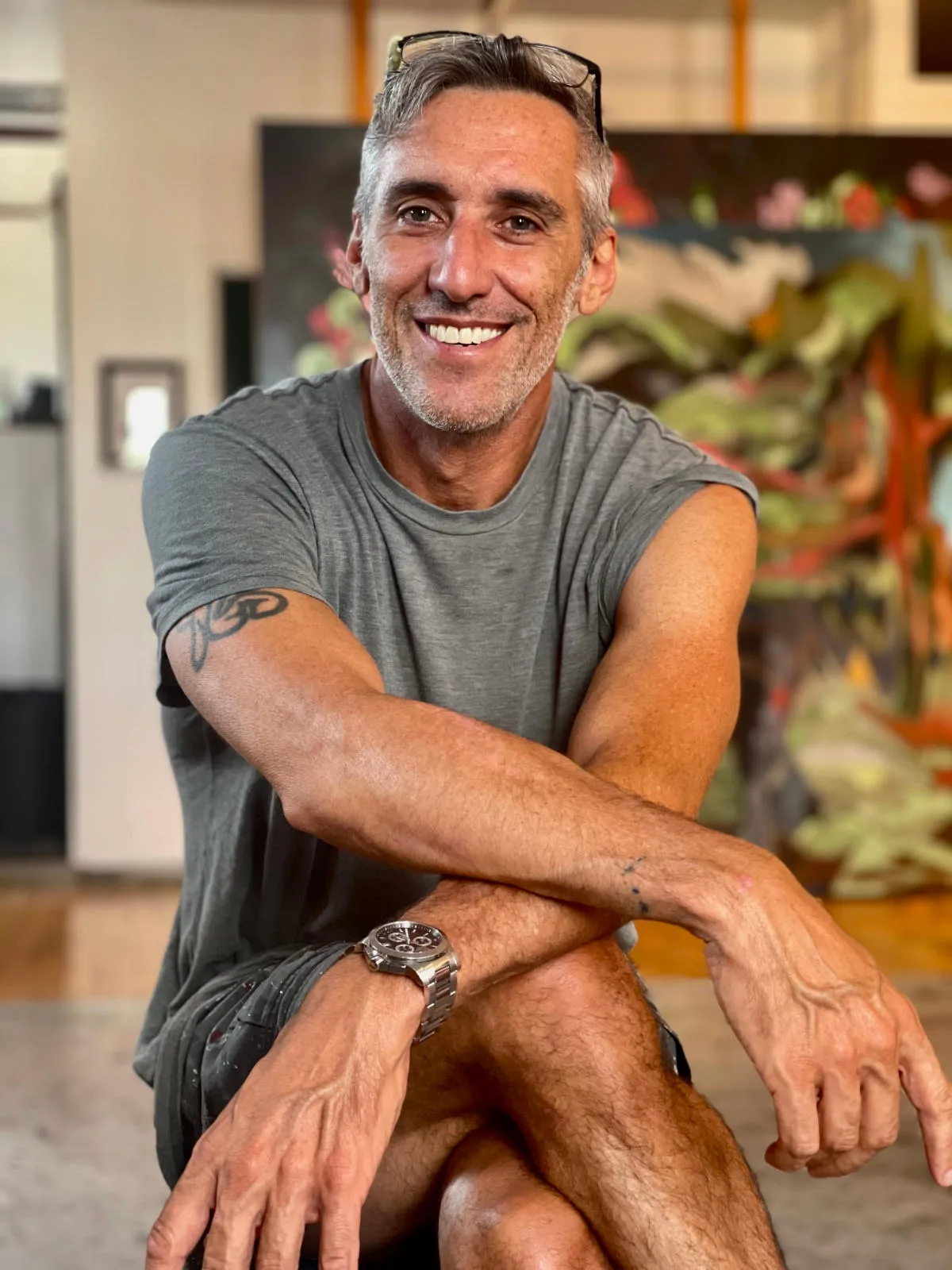
Looking at Emilio Perez’s paintings, you can imagine the sound of the ocean water hitting against the rocks and smell the sticky Caribbean air as its humidity swaddles you like a baby in a blanket. He paints the places we dream of, where we all want to go but have yet to experience — where nature feels larger than life. A treat for tired eyes.
His work has always been abstract, dealing with the sea and nature, drawing on landscapes from all over the world, but especially the Caribbean. You can see it in the way the palm trees sway in the wind, how the warmth of the colours wash over you like the warm waves, and in the hint of a flame tree in the corner. It’s no secret that Perez is inspired by the Caribbean, being Cuban-American himself, but as he paints in his New York studio, his brush leads him to expand into other environments, defying labels and developing a world of his own creation.
The sea and nature remain as cardinal themes in his work, which we see even in his earlier works where he would paint first, then cut out forms with an X-Acto knife, the final product looking almost like mosaic tiles. Through these pieces, you become immersed in the technique, the flow, and the intricacy of each cut that make up images of trees, flowers, indiscernible people. His works are like looking out at the world from underwater — warped, blurred, and moving with the waves.
We speak with Perez about his evolution as an artist, his inspirations from nature, and the flimsiness of identity.
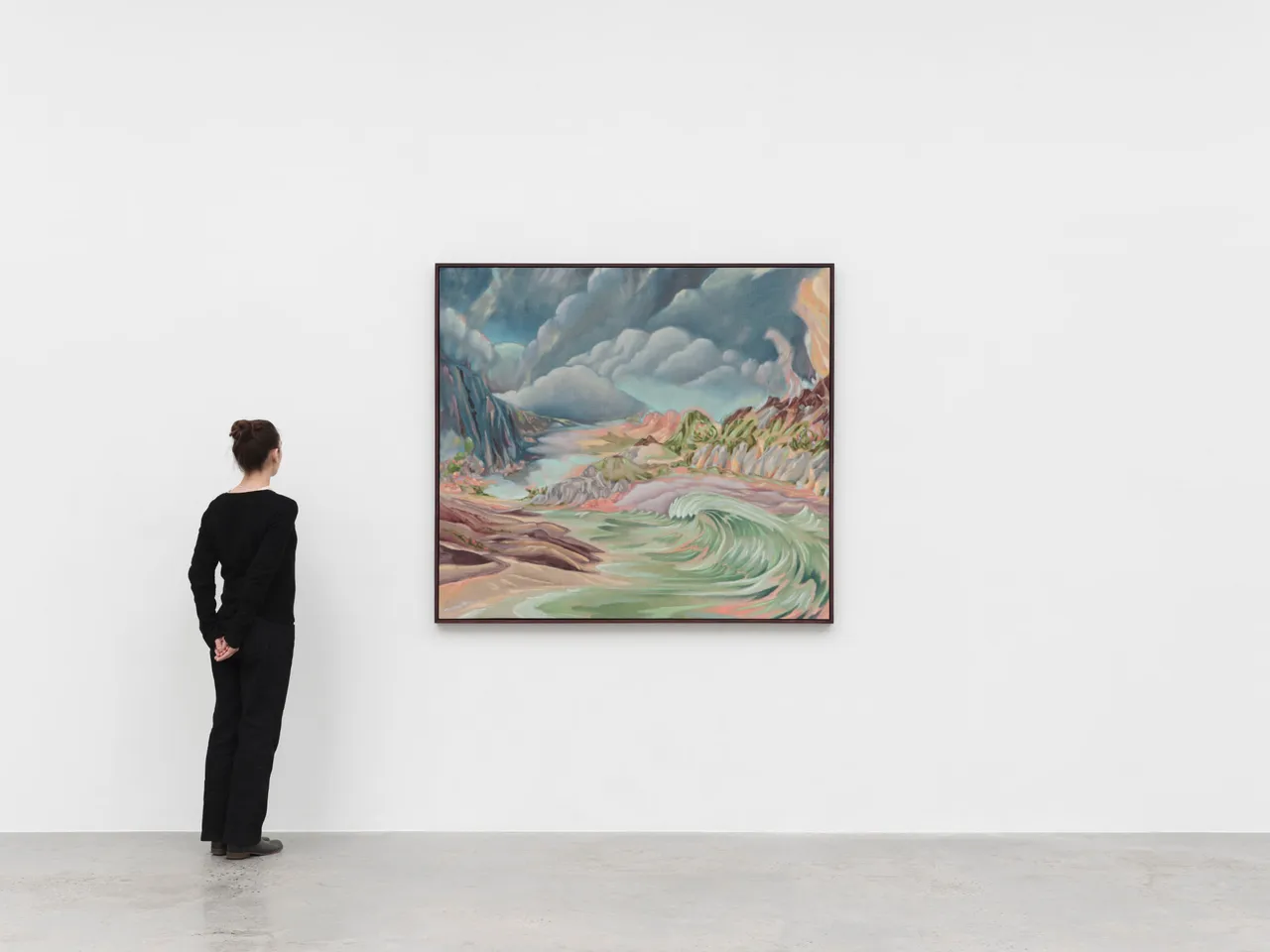
The Unspoken Tide, 2025 Photo © White Cube (Frankie Tyska)
I’ve seen that you play the congas. What is your go-to song to play?
Music and rhythm have always been part of my process, but I can’t say I have a go-to song. Instead, the congas are there as a tool to help me clear my mind and think, as much as they are there to have fun playing along to music and occasionally annoying my neighbours. I often play them when I step back to look at a painting and contemplate the next thing I’m going to do. The rhythmic patterns help me focus.
You’ve talked about how surfing and the sea inspire you. Where is your favourite place you’ve surfed?
Having spent most of my life living on or near the ocean, it has always been a source of inspiration and escape. The beauty of surfing is that you have no choice but to be present. You are constantly adjusting to your surroundings, and everything is always moving. When you’re riding a wave, you’re reacting intuitively to what the ocean sends your way. It’s a unique moment in time that can never be repeated just like a brushstroke.
My favourite place to surf is pretty much anywhere there are waves and the water is warm, and of those places Puerto Rico has always been one of my favourites. I’ve been going down there for years, and since 2020 I’ve kept a small studio where I spend part of the winter painting.
My favourite place to surf is pretty much anywhere there are waves and the water is warm, and of those places Puerto Rico has always been one of my favourites. I’ve been going down there for years, and since 2020 I’ve kept a small studio where I spend part of the winter painting.
Do you have any rituals or preparations you do before beginning your creative process?
My one ritual is showing up. I never know when inspiration is going to come, so I just try to make sure I’m in the studio when it happens. I typically go to the studio every day and spend the first half of the day on emails and to-do lists, but I rarely start painting before early afternoon.
“The experience of painting in shorts and flip-flops after a swim, with the sound of palms swaying in the breeze, is a far cry from the sirens and garbage trucks in Brooklyn.”
Nature is the main focal point of your paintings, engaging with primarily Caribbean landscapes. Being Puerto Rican, your work really speaks to the dream state I’ve felt when immersed in Caribbean nature. Why was painting the Caribbean important for you?
Even with my early abstract work, nature has always been the most important source of inspiration. Although my paintings aren’t specifically about the Caribbean, they share a sensibility, and I certainly draw inspiration from there. Having lived in Rio as a child and growing up in Miami, I’ve always been connected to tropical landscapes.
The times I’ve been in Cuba, I’ve felt a deep spiritual connection, which I attribute to my personal and family history. In Puerto Rico, I feel a similar connection but more rooted in the landscape and nature itself, which helps me tap into a certain energy, one that comes through especially in the work I make while I’m there.
The times I’ve been in Cuba, I’ve felt a deep spiritual connection, which I attribute to my personal and family history. In Puerto Rico, I feel a similar connection but more rooted in the landscape and nature itself, which helps me tap into a certain energy, one that comes through especially in the work I make while I’m there.
What is the difference when you’re in the city and painting versus when you’re in the Caribbean surrounded by nature? Do you draw from memory or imagination?
My studios in Brooklyn and Puerto Rico could not be more different. Despite drawing from the imagination to create my work, I do notice subtle differences in the paintings depending on where they’re made. The experience of painting in shorts and flip-flops after a swim, with the sound of palms swaying in the breeze, is a far cry from the sirens and garbage trucks in Brooklyn.
In the city, I’m working from memory and sensation, things that linger. In the Caribbean, everything is immediate. Making art has always been an escape for me, so I’m never painting a literal view of my surroundings, no matter where I am. I’m painting how experiences, places, and even sounds and smells feel in my body, and filtering them through my imagination.
In the city, I’m working from memory and sensation, things that linger. In the Caribbean, everything is immediate. Making art has always been an escape for me, so I’m never painting a literal view of my surroundings, no matter where I am. I’m painting how experiences, places, and even sounds and smells feel in my body, and filtering them through my imagination.
You are the son of Cuban immigrants and have spoken about the connection you feel to the Caribbean. What does it feel like when you go back to Cuba specifically compared to other Caribbean islands?
My first trip to Cuba was in 2000, to work on a research project about the history of performance art in the 1980s, and all of my subsequent trips were also for art-related projects. Before that first visit, Cuba only existed in my imagination and in the stories of others. It was important for me to go so I could begin building my own relationship with a place that has influenced so much of my identity.
Cuba carries a different weight for me. It’s familiar, but there’s an emotional gravity. I feel both connected and slightly undone. It’s powerful and feels like I’m reconnecting with a part of myself that existed before I did.
Cuba carries a different weight for me. It’s familiar, but there’s an emotional gravity. I feel both connected and slightly undone. It’s powerful and feels like I’m reconnecting with a part of myself that existed before I did.
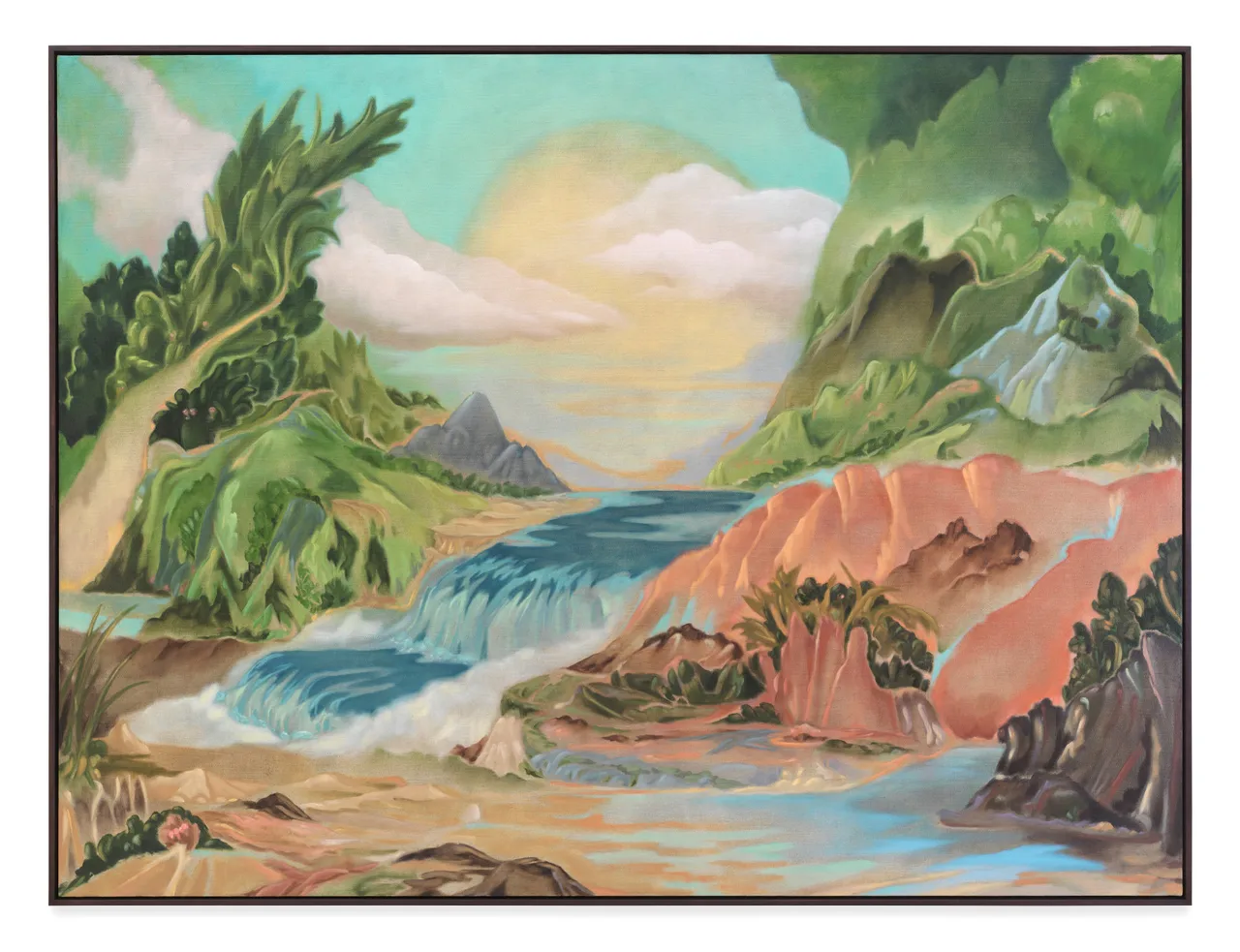
In the Garden of What Was, 2024 Photo © Bienvenue Steinberg & C (Inna Svytasky)
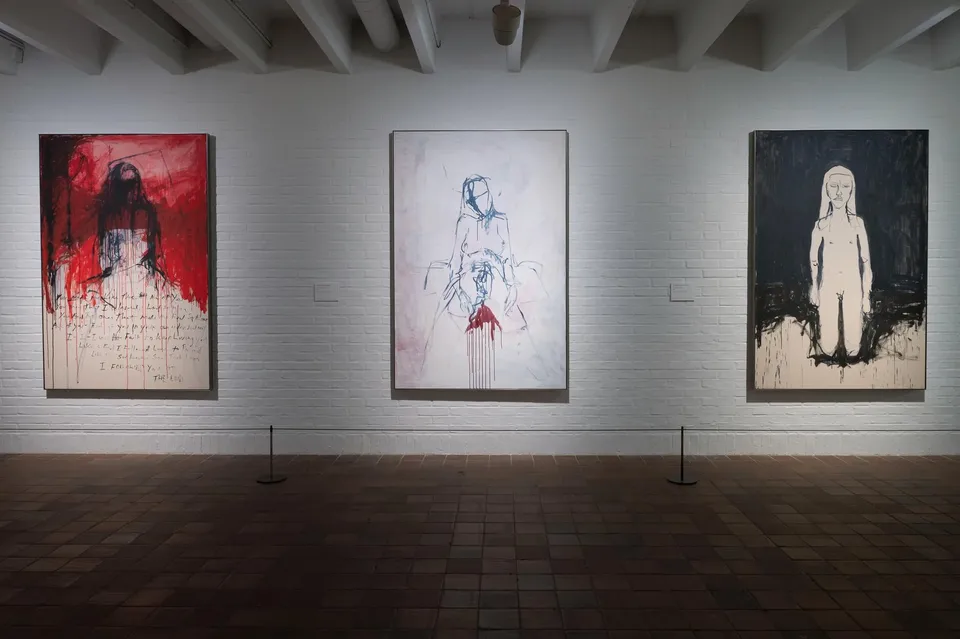
Your paintings from 2008 to 2019 use a very different technique than those of today. You used an X-Acto knife to slice away the layers of paint. When creating these pieces and cutting the images out, what is going through your mind?
I actually started making this work in the early 2000s, and it has always been about intuition, spontaneity, and flow. I’ve described it as a conversation between the purity and expressiveness of a brushstroke and the immediacy of mark-making. Because the process is reductive, cutting into the surface and peeling away the top layer of paint to expose the background, it allows me to be as loose and expressive as I wanted with the initial application of paint, knowing I could always pull an image out of the chaos.
By intuitively reacting to the brushstrokes, I allow the painting to serve as a roadmap for the drawing. What’s going through my mind is actually very little. It’s like a long drive: you leave home and arrive at your destination with little recollection of what happened in between. It’s pure flow.
By intuitively reacting to the brushstrokes, I allow the painting to serve as a roadmap for the drawing. What’s going through my mind is actually very little. It’s like a long drive: you leave home and arrive at your destination with little recollection of what happened in between. It’s pure flow.
Your technique in earlier works is very different from your more recent paintings. How would you evaluate your own evolution? Do you feel it’s been more organic than planned, or a bit of both?
My work has always evolved organically. I often feel like I’m just a vehicle channelling a creative energy with little say in the matter, I’m simply using my sensibilities and experiences to steer the ship as best I can. The new landscapes are really a return to my earliest influences: nature and my love of classical painting.
Although I had never made work like this before, I wanted to challenge myself to do something new. I had never made anything even remotely representational and felt it was time to switch things up. But the goal in both bodies of work hasn’t changed: I’m interested in making paintings that inspire the viewer’s imagination and reveal themselves over time.
Although I had never made work like this before, I wanted to challenge myself to do something new. I had never made anything even remotely representational and felt it was time to switch things up. But the goal in both bodies of work hasn’t changed: I’m interested in making paintings that inspire the viewer’s imagination and reveal themselves over time.
The titles of your most recent works reference time — the passing of time, a moment, or even being stuck in time. It reminds me of how our relationship to nature is dwindling and thought of in the past tense. What was your process in coming up with these titles?
The titles usually come at the very end, once the painting has had time to reveal what it wants to be. I’ve always felt that the work carries its own sense of time, moments stretching, collapsing, or looping back, the way memories and dreams do. That’s usually what I’m responding to.
I try to keep the titles vague and mysterious, not to hide anything, but to leave enough space for the viewer to create their own meaning. For me, they’re markers of a feeling rather than statements: something that acknowledges the passage of time, or the way we drift in and out of it, without closing the door on interpretation.
I try to keep the titles vague and mysterious, not to hide anything, but to leave enough space for the viewer to create their own meaning. For me, they’re markers of a feeling rather than statements: something that acknowledges the passage of time, or the way we drift in and out of it, without closing the door on interpretation.
“People have a tendency to label things, and while I would never ignore my Cuban roots, I’m the sum of many parts and experiences that go far beyond cultural identity.”
There is a big Caribbean (specifically Cuban and Puerto Rican) community in New York and Miami, where your work is often shown. But you’ve shown in London in 2025. What was it like showing your pieces to an audience with a large Caribbean population from other islands?
Throughout my entire career, I’ve always wanted to connect with a broad audience and have tried to avoid categorising my work in terms of specific themes or places. People have a tendency to label things, and while I would never ignore my Cuban roots, I’m the sum of many parts and experiences that go far beyond cultural identity. I like to meet people where they are, so no matter where I show my work, audiences can find their own way to connect.
You’ve spoken about how art provided you with your own identity — something that allowed you to escape or reinterpret labels like Cuban, American, Cuban-American. What do these labels mean to you now?
I recognise now, after many years, how much my experience as a first-generation Cuban-American contributed to my path as an artist. When I was a teenager, I felt caught between two worlds, never feeling fully Cuban or fully American, and although I didn’t realise it at the time, I was searching for an identity I could call my own.
It turns out the identity I was looking for found me through art. Through becoming an artist, I was able to understand my personal history and connect with people all over the world. I’m very proud of my Cuban heritage because it has informed so much of who I am, but I’m not a big fan of labels. In my opinion, labelling someone based on place, cultural background, or religion gives a very narrow view of a much bigger and more complex picture.
It turns out the identity I was looking for found me through art. Through becoming an artist, I was able to understand my personal history and connect with people all over the world. I’m very proud of my Cuban heritage because it has informed so much of who I am, but I’m not a big fan of labels. In my opinion, labelling someone based on place, cultural background, or religion gives a very narrow view of a much bigger and more complex picture.
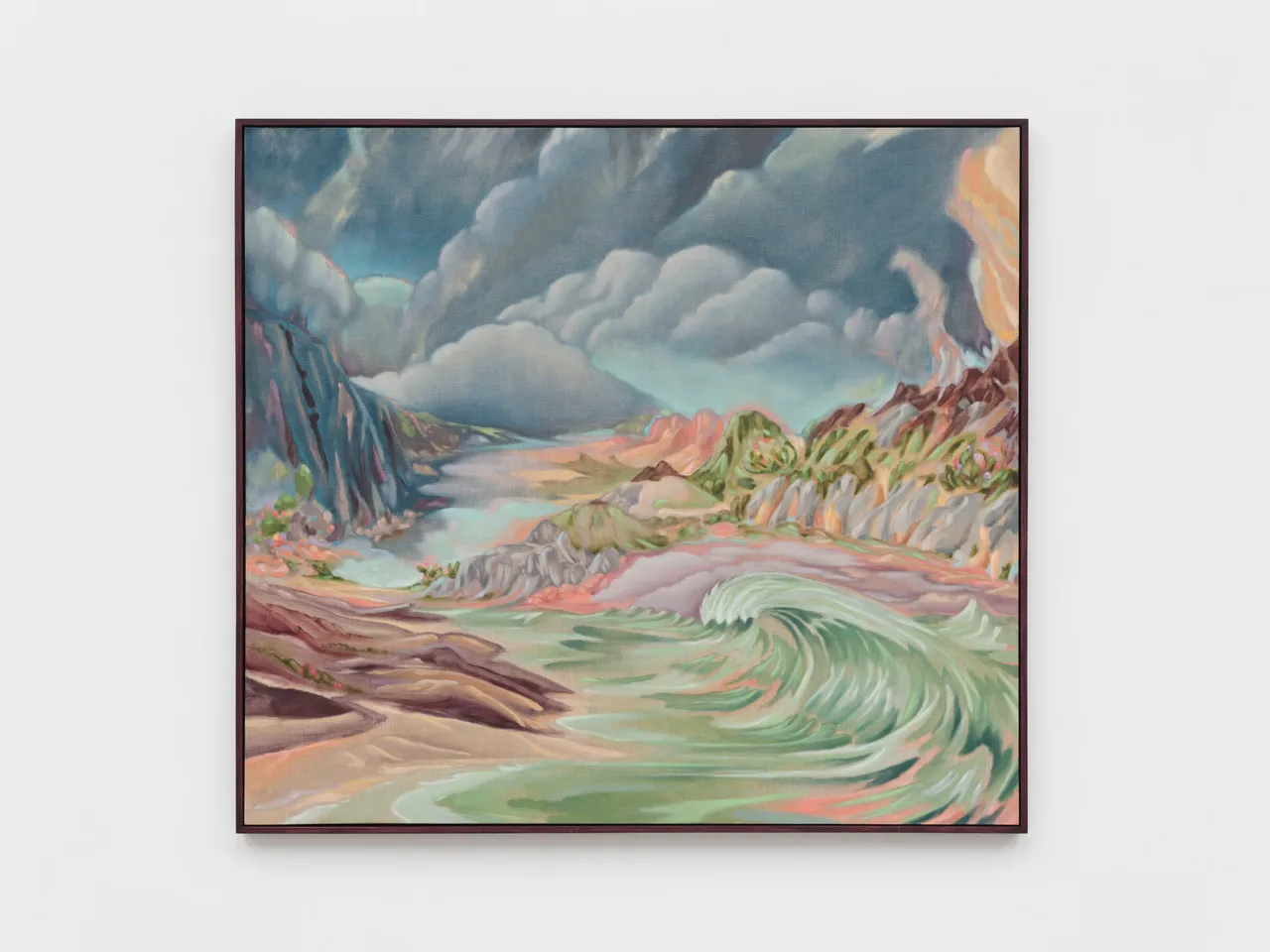
The Unspoken Tide, 2025 Photo © White Cube (Frankie Tyska)
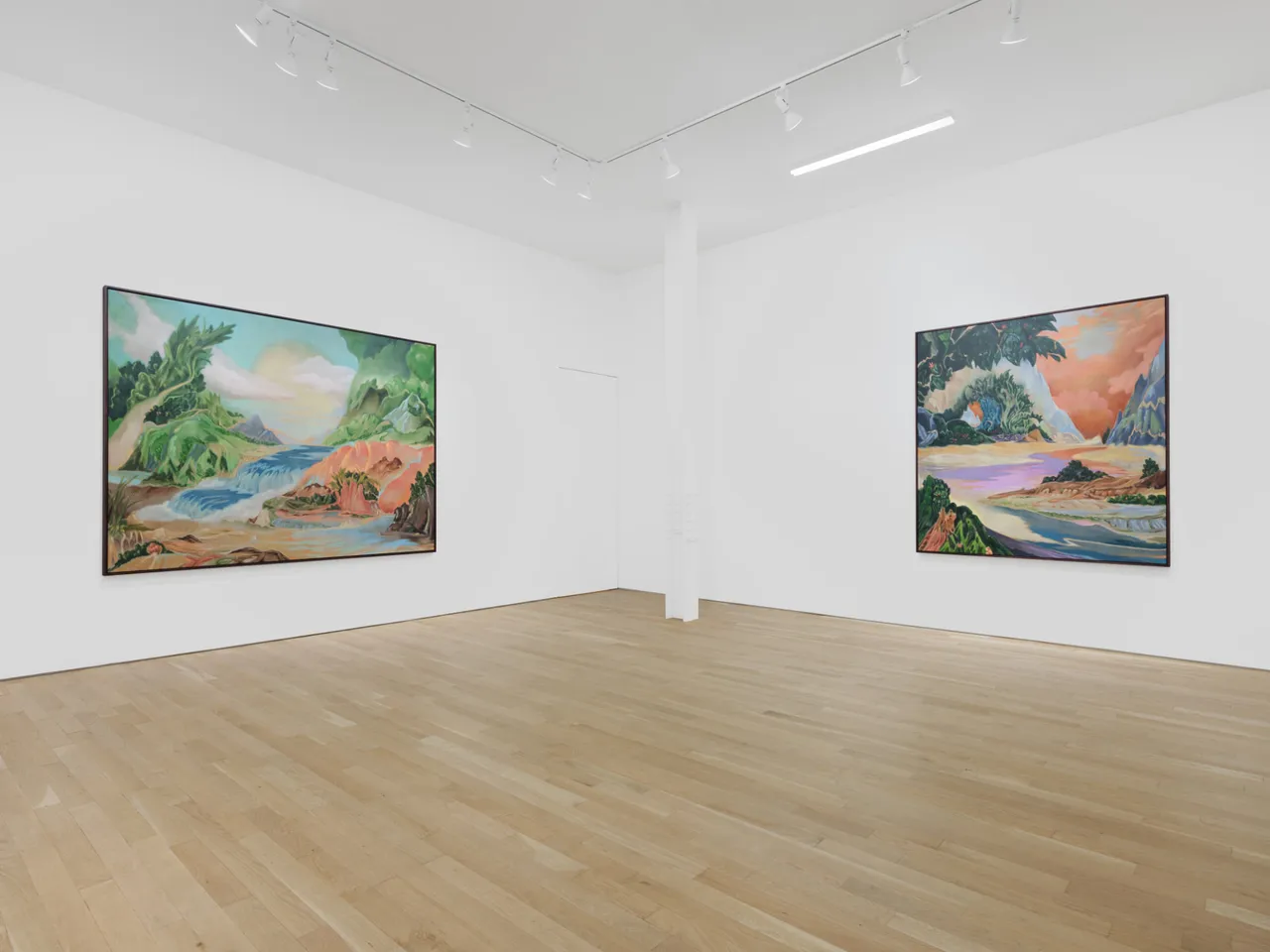
The Invention of Nature, 2024 (installation 2) Photo © Bienvenue Steinberg & C (Inna Svytasky)
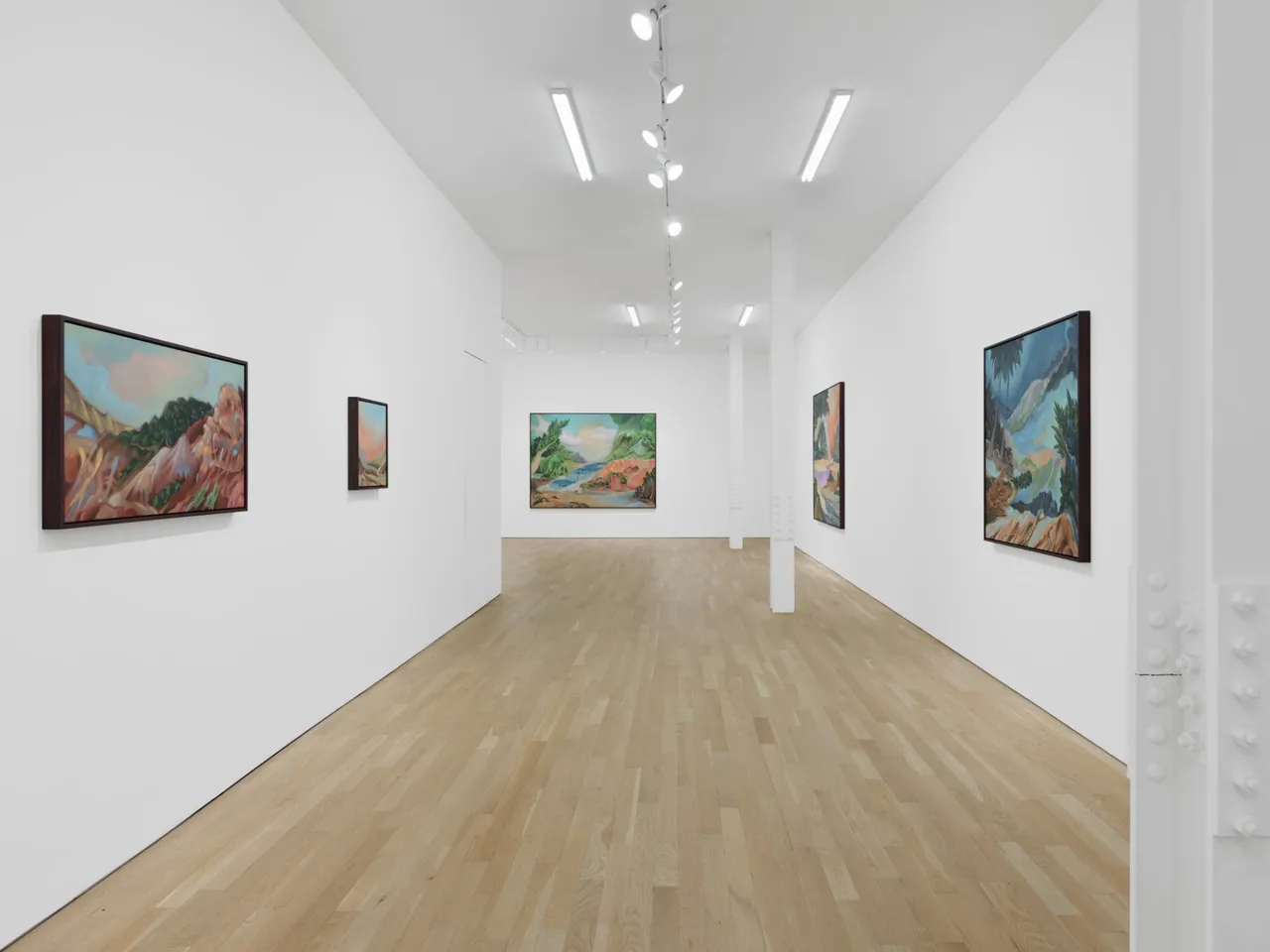
The Invention of Nature, 2024 (installation 3) Photo © Bienvenue Steinberg & C (Inna Svytasky)
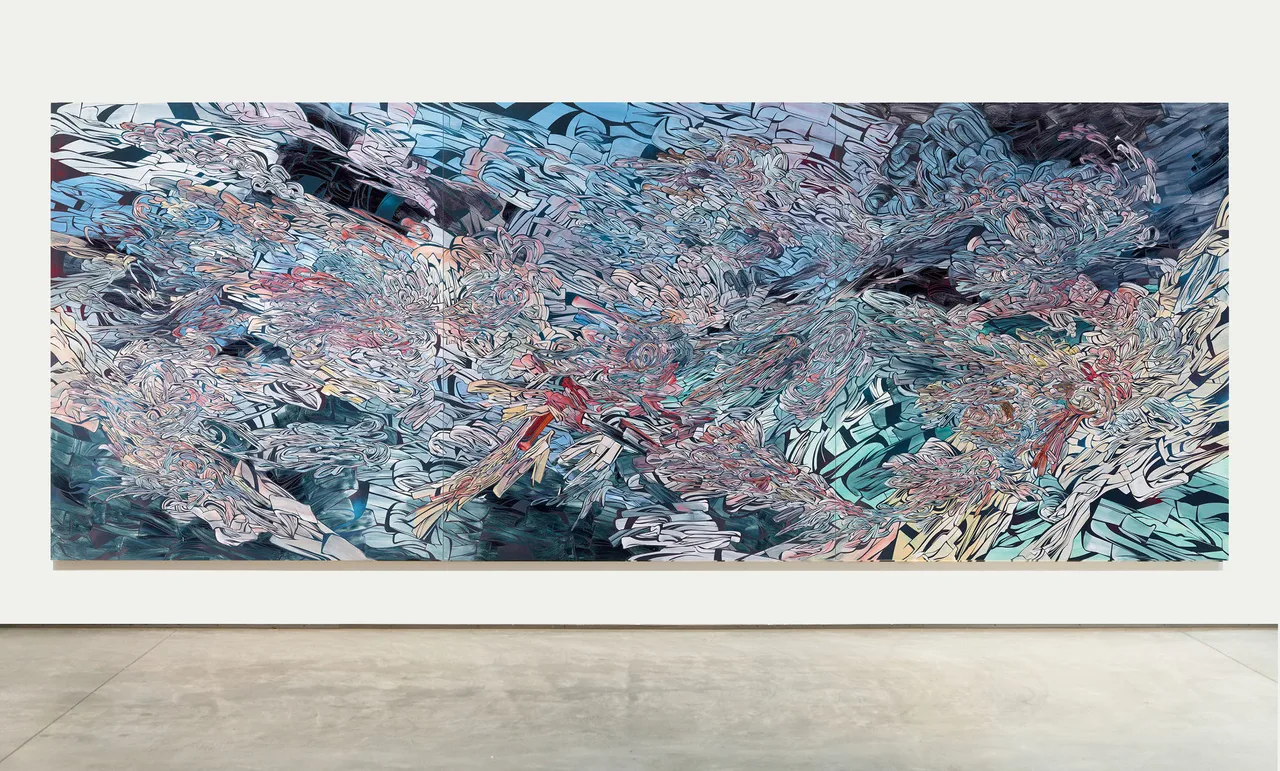
All I Can Say, 2011 Photo © Michael Bodycomb
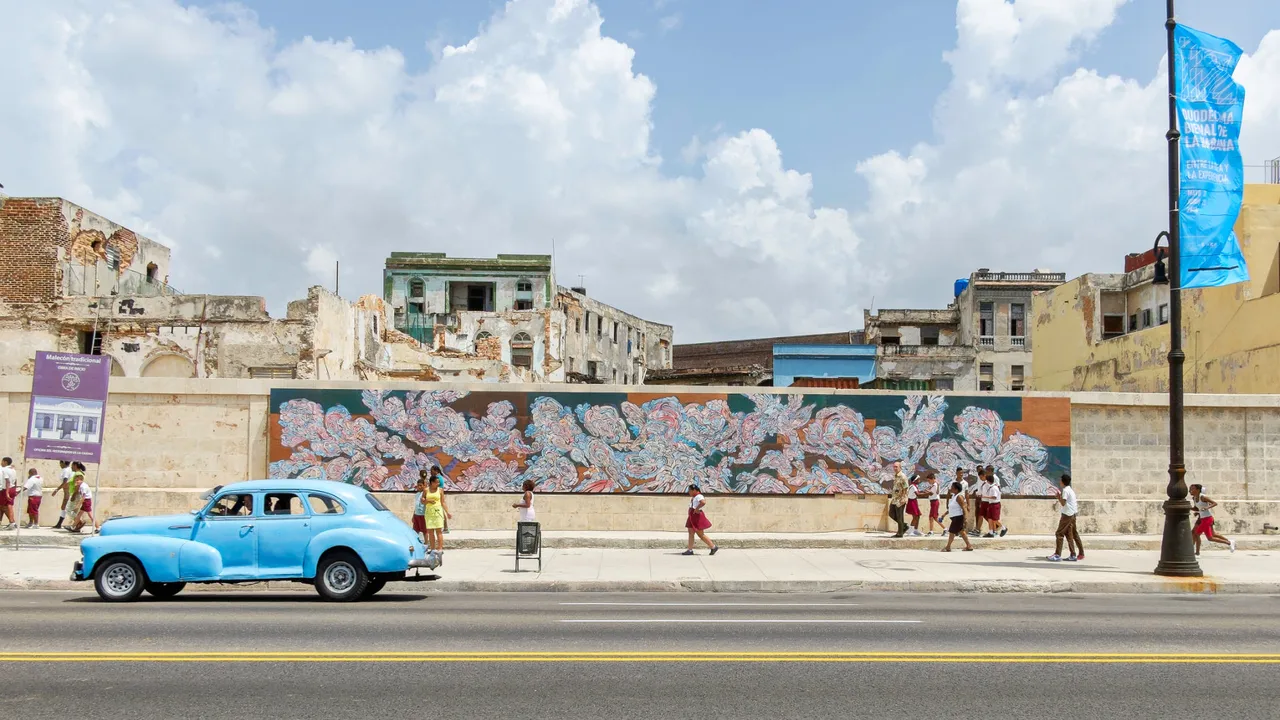
Un Verso Sencillo, 2015 - Detras Del Muro, 12th Havana Biennial Photo © Emilio Perez