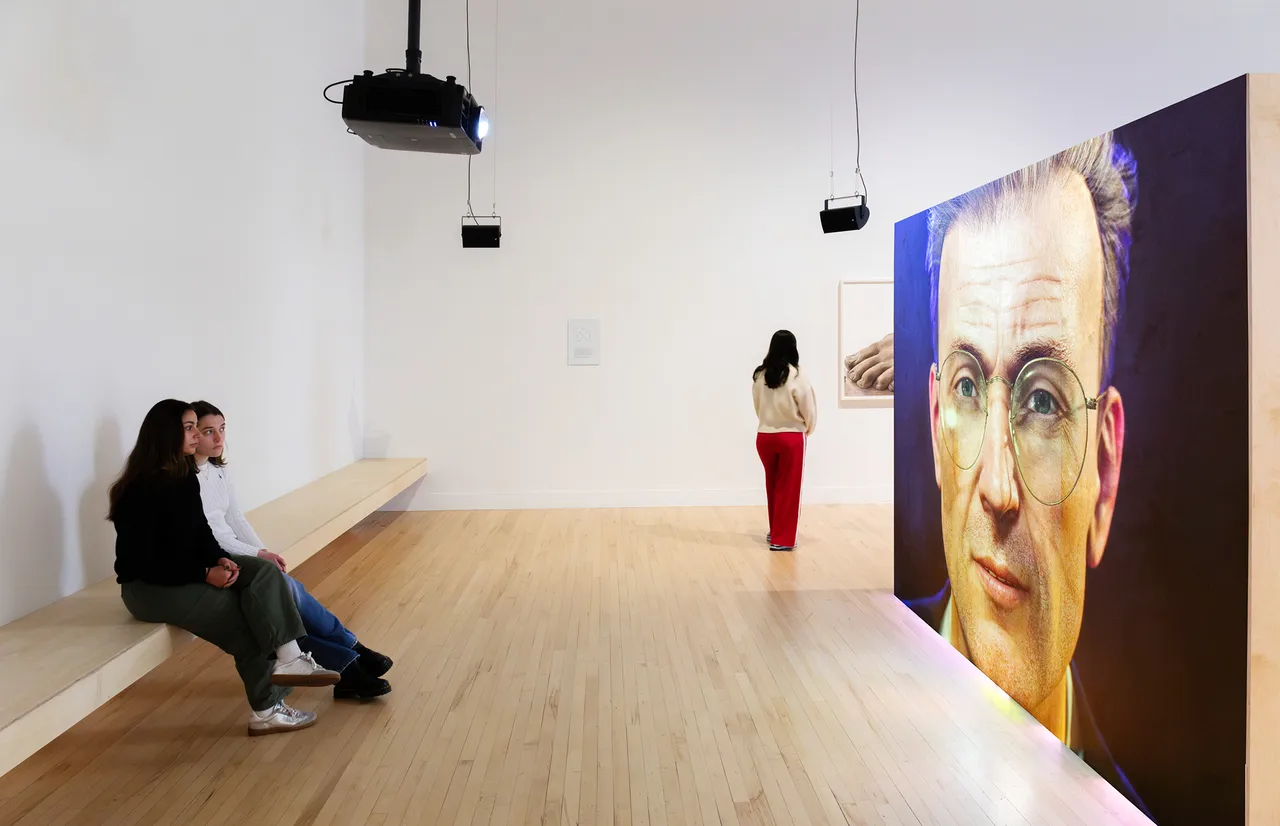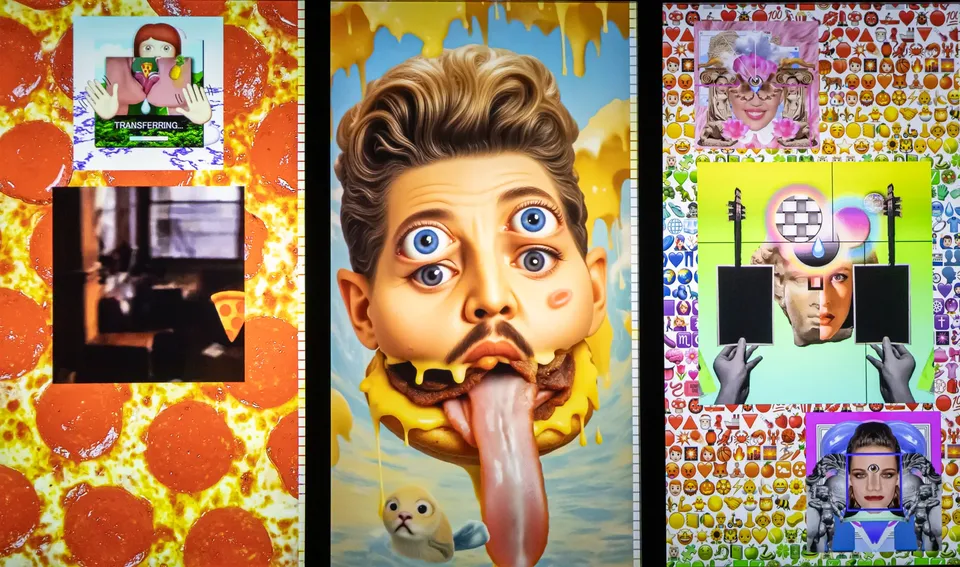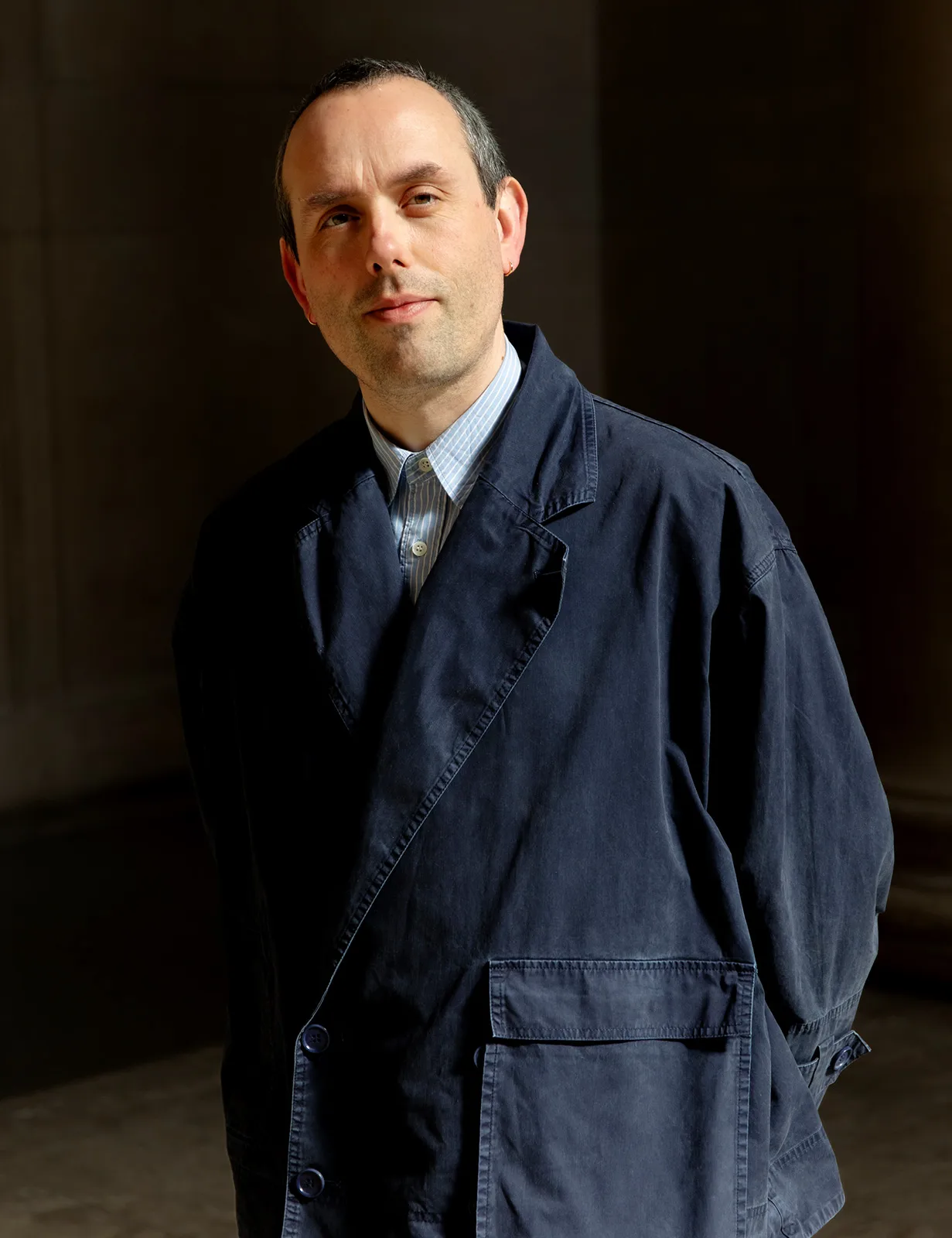
Hailed as one of the most influential British artists working today, vanguard digital artist and poet Ed Atkins (b. 1982) launches a major fifteen-year retrospective of his prolific career at Tate Britain, on view through August 25, to remind us of “life’s messy” unraveling realities, exploring intimacy with digital life against the physical world. He loves playing with your perception in an enjoyable way — from hyperrealistic digitalism to basic CGI 1.0., a tension between real and digital runs through Atkins’ entire career-spanning exhibition.
Born in Oxford in 1982 and now based in Copenhagen, Ed Atkins has spent the last fifteen years probing what feels like the great existential question of our time: where does digital existence end and human feeling begin? This retrospective reveals an artist who uses himself as both subject and guinea pig, crafting computer-generated videos that mess brilliantly with the gap between what we see on screen and what we actually feel.
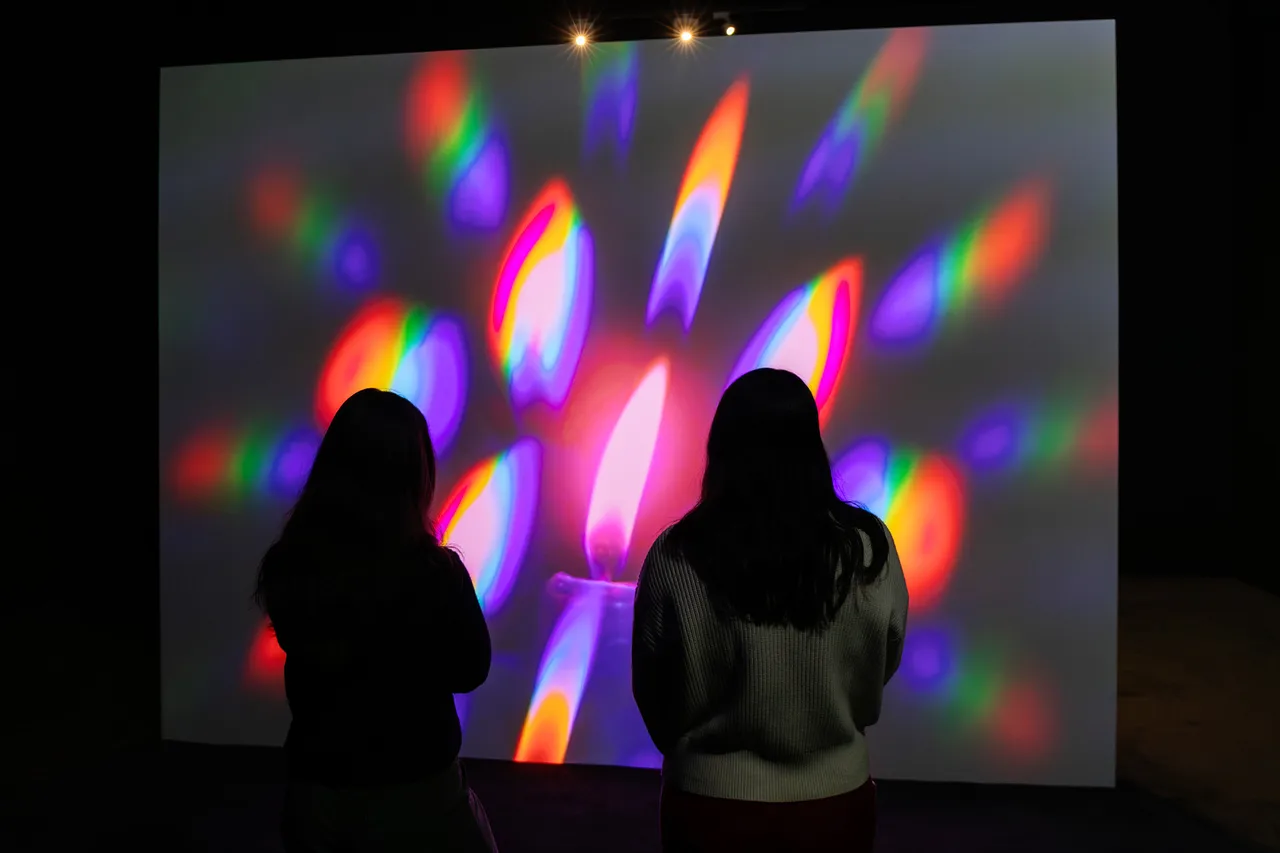
Since his days at the Slade, Atkins has pursued this inquiry with what feels like melancholic obsession. Early works spliced found footage with jarring audio and jump cuts, while later pieces like How It's Made pair factory footage with Proust readings until something as mundane as candle-making becomes alien and fearful. His brutal self-portraits, drawn from the most unflattering angles alongside captions where he destroys his own appearance, reveal an artist mining his own vulnerability as raw material.
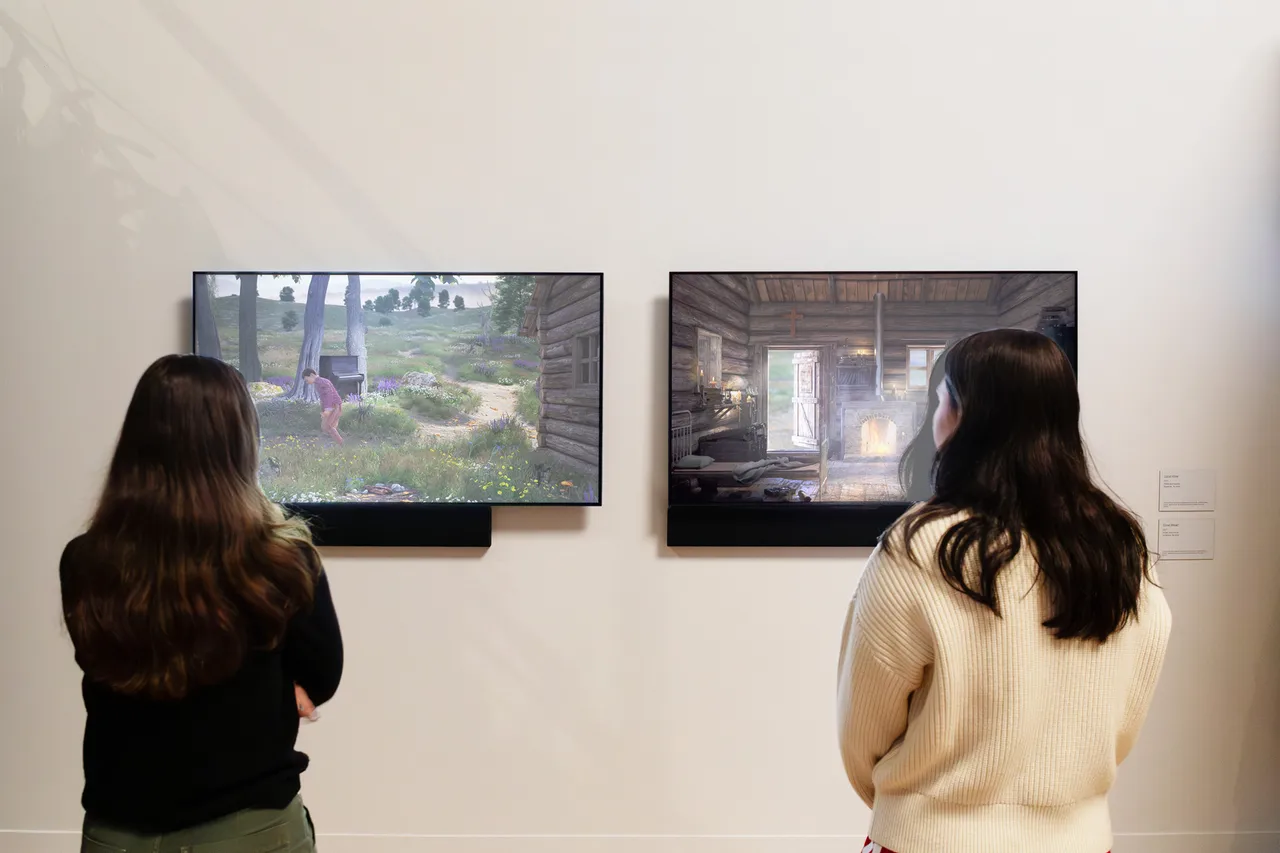
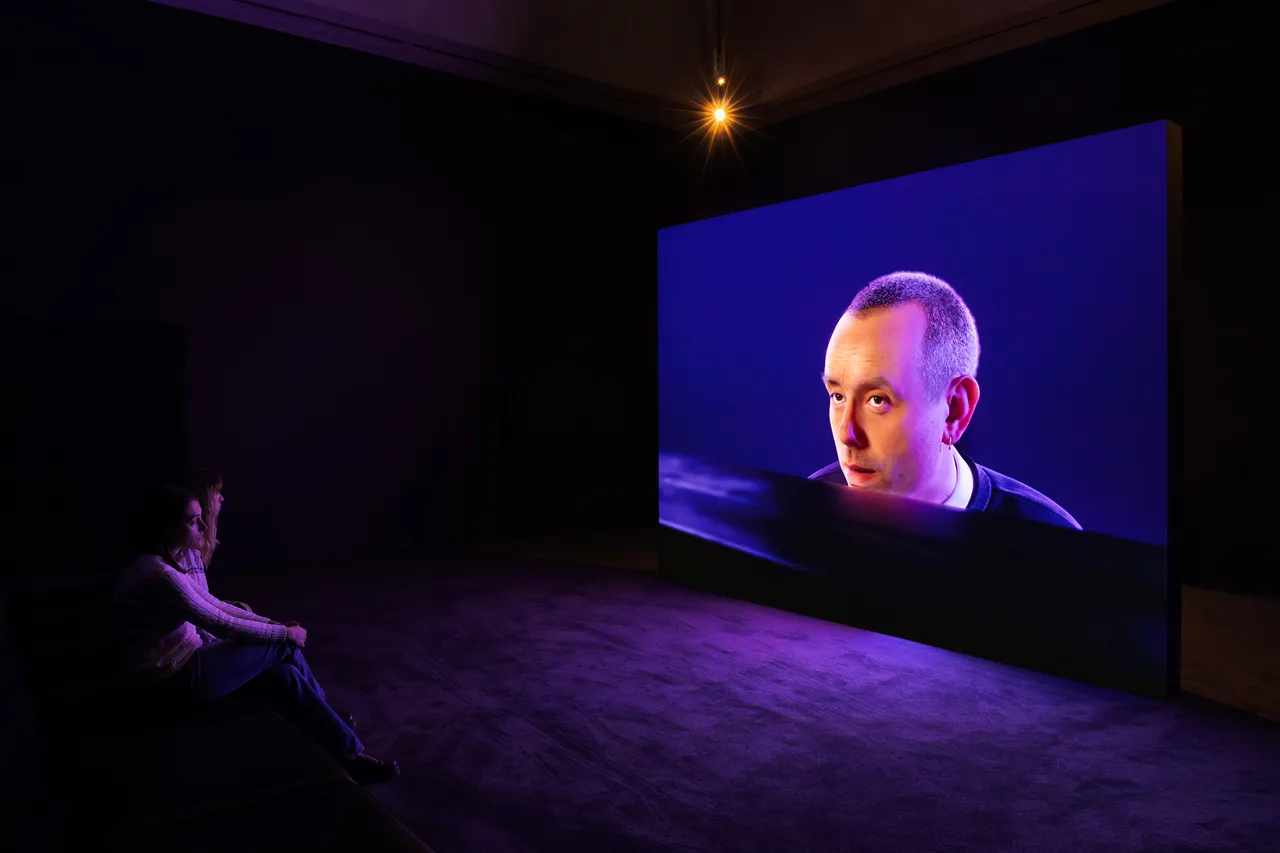
The exhibition's standout piece, Pianowork 2, shows what appears to be a pianist struggling through some mysterious sequence, sweating and sighing through every chord. The catch? It’s Atkins as a digital clone, rendered so perfectly imperfect you can count every stubble hair, except for those uncanny, slightly too-smooth CGI eye movements. He’s actually playing Jürg Frey’s minimalist Klavierstück 2, but without reading the wall text, you’d swear he was winging it through sheer panic.
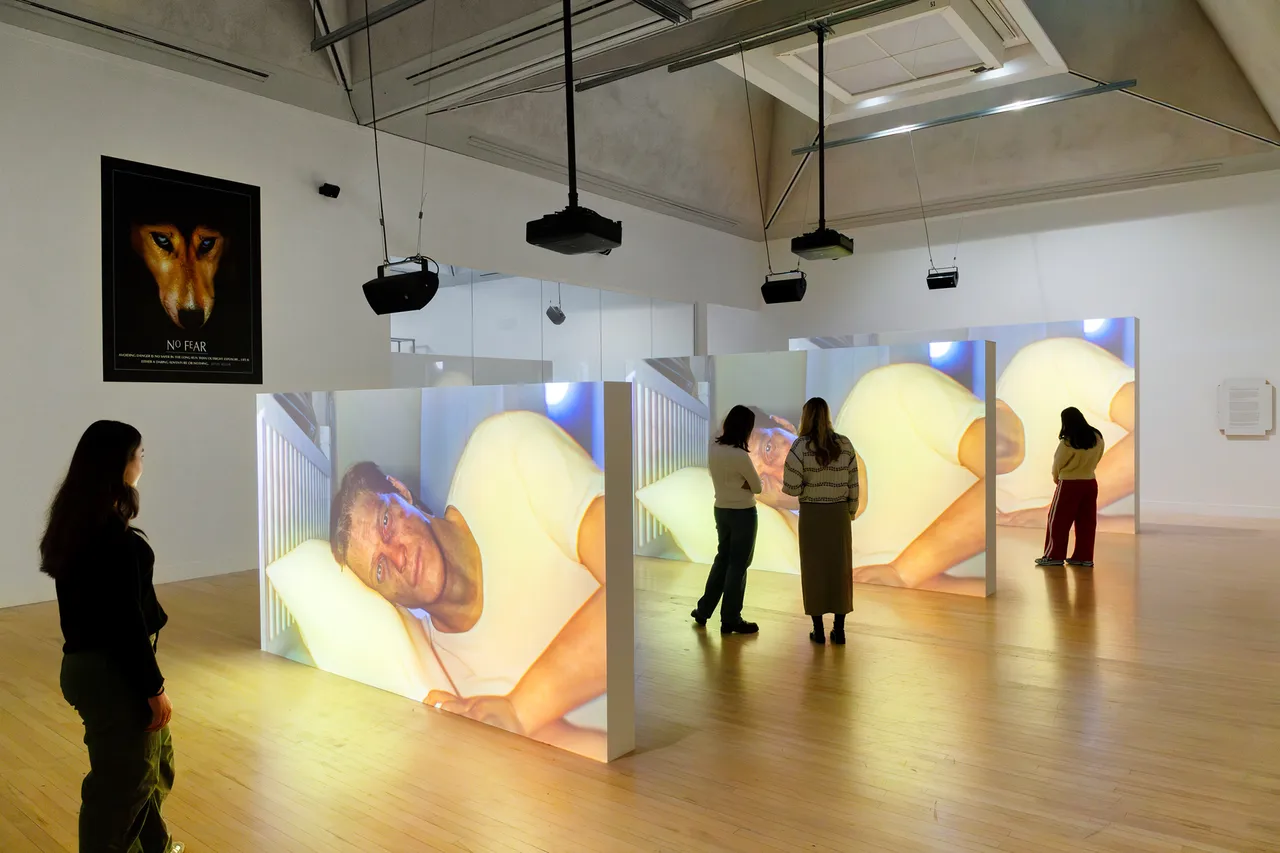
Hisser emerged from an unsettling news story about a Florida man who disappeared when a sinkhole opened beneath his bedroom. “I started to fantasise about every story ending like this. Sinkholes opened up abruptly under beds throughout history, throughout literature and cinema. This idea attracted and consoled me,” Atkins explains. The work functions as digital exorcism: “Hisser brims with things I wanted to exorcise. Feelings I wanted to see, ordeals I wanted to put the character through. I wanted him to apologise and to be punished, to suffer.”
The video loops across three screens, creating disorienting scale confusion — the bedroom resembles both theatre stage and elaborate dollhouse. Atkins mapped his own facial movements onto a customised stock figure from Turbosquid marketplace: “So I am in there too, performing, wearing the figure like a mask or a skin.” He began calling these characters ‘surrogates’ or “emotional crash-test dummies” — figures capable of enduring what he cannot. “Oh, to be swallowed by the earth and never retrieved,” he muses.
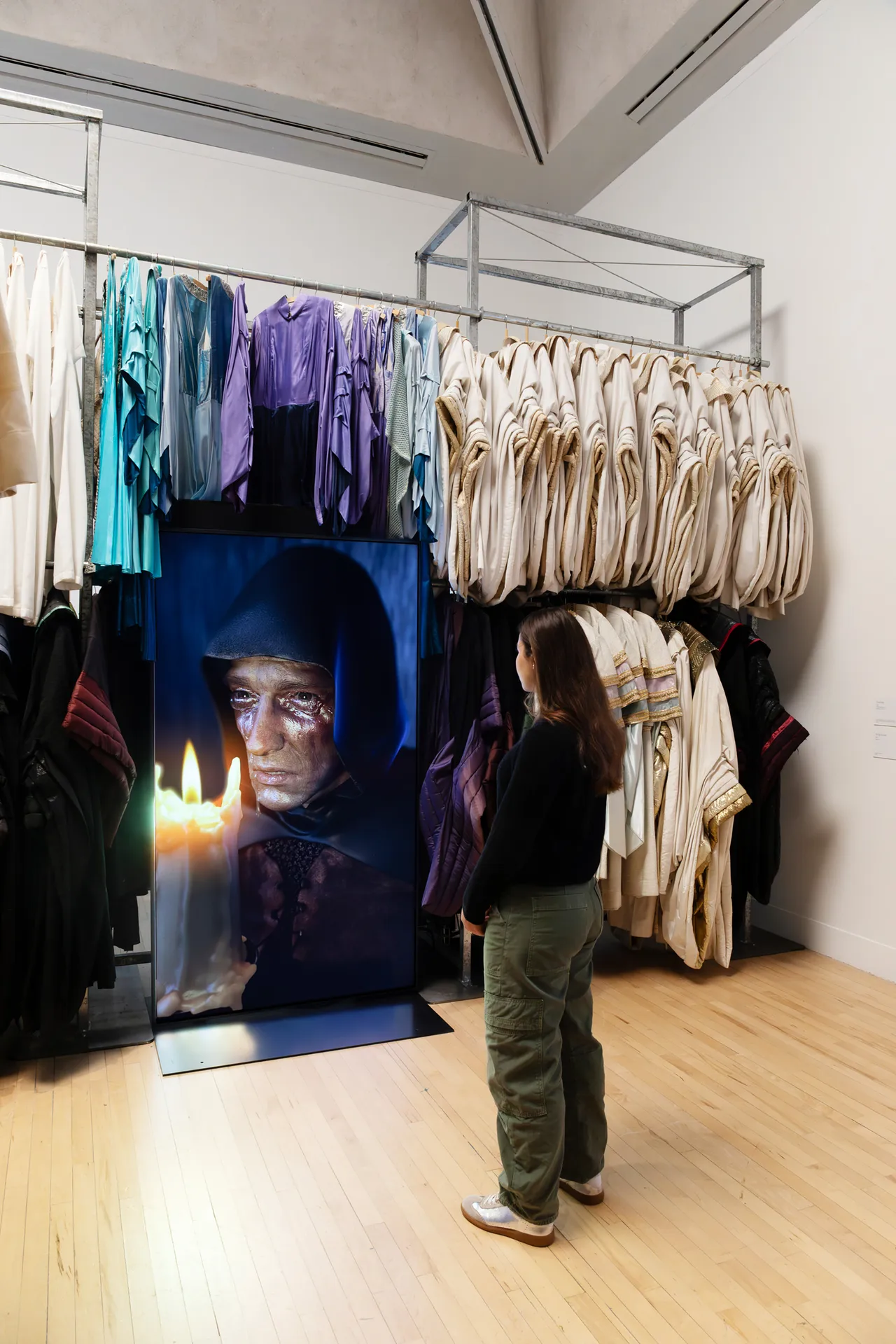
Old Food stages a pseudo-historic world of peasantry and eternal ruin among costume racks sourced from Berlin’s Deutsche Oper. The characters weep continuously without cause. “I had the title Old Food long before I made any of the work. Food seems at such profound odds with the digital. The tears in these videos have the same weird feeling,” Atkins notes. These heavy, soiled costume husks stand between viewers like theatrical ghosts, “absent their animating actors. The audience completes the work, as the only living bodies in the room.”
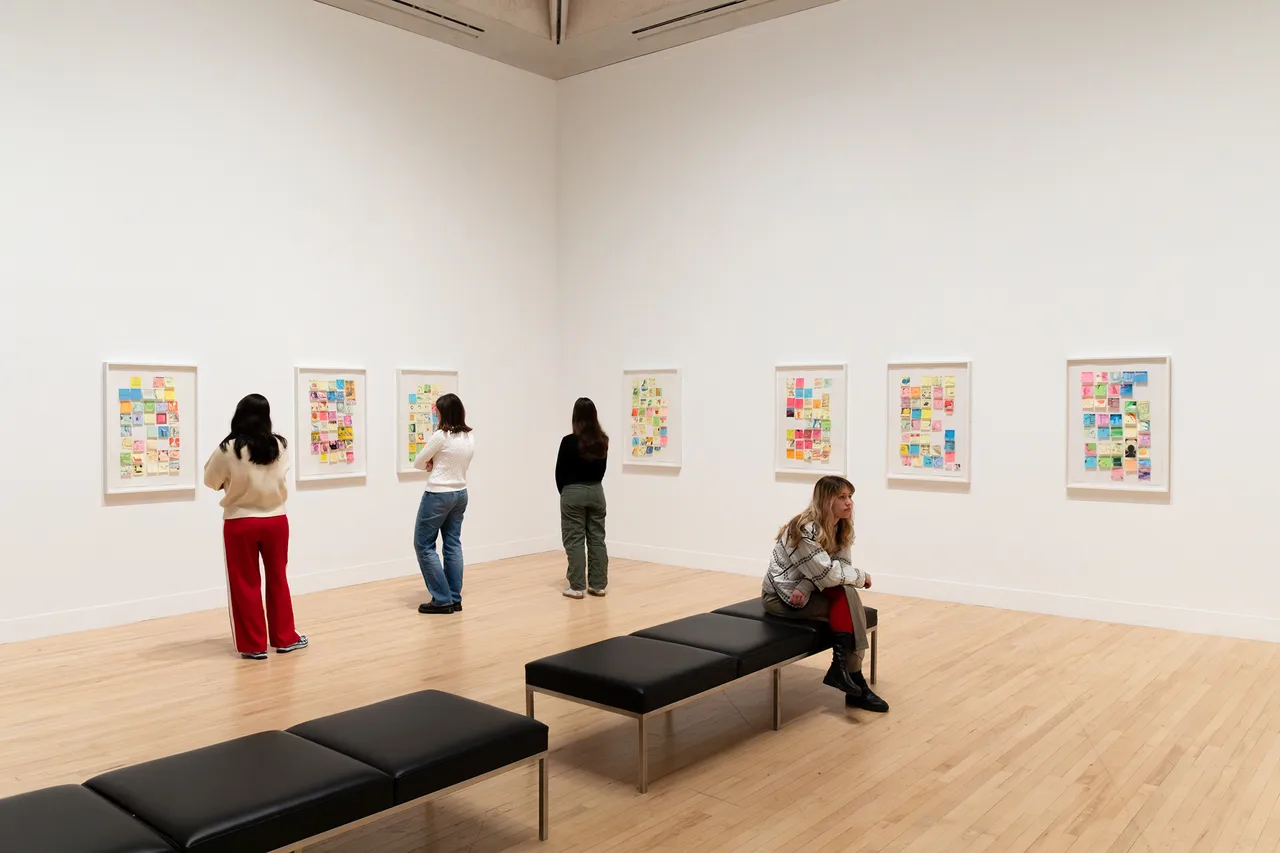
During AI’s recent renaissance, Atkins adopted early GPT technology to extend historical lists by Antonin Artaud (written in 1943 while confined in a psychiatric hospital) and Sei Shōnagon (circa 1000 CE). “I used GPT 3 to extend both lists. This was an early version of the AI that felt wild and unpredictable. The new entries GPT 3 generated are sometimes hilarious, sometimes impossible, and sometimes shockingly violent.” Machine-embroidered until nearly illegible, these texts radiate “like magic spells.”
His pencil drawings reward close inspection — realistic monochrome red works that initially resembles RGB print separations, until you catch the beauty of actual pencil texture breaking through the digital illusion. It's a perfect metaphor for Atkins’ broader project: the persistent humanity that refuses to be fully digitised.
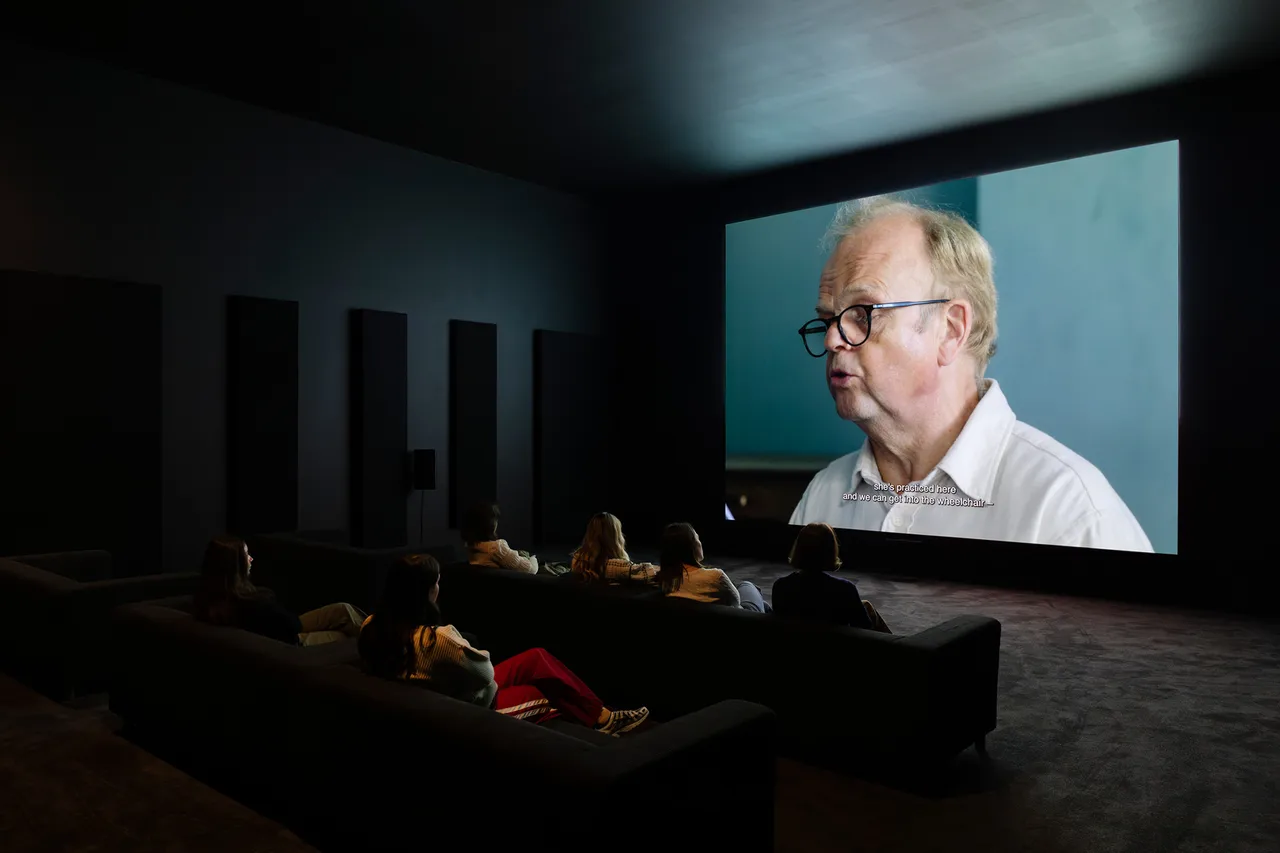
The exhibition closes with the artist’s two-hour film Nurses Come and Go, but None for Me, featuring Toby Jones reading Atkins’ late father’s sicknotes, written while dying from cancer. Here, the camera captures something his digital work cannot: real human faces reacting in the moment, spontaneous beauty that no algorithm can fake — at least not yet.
“My life and my work are inextricable,” Atkins reflects. “How do I convey the life-ness that made these works through the exhibition? Not in some factual, chronological, biographical way, but through sensations. I want it so the more you see, the richer, more complex, less authored, less gettable things become.”
Currently lecturing at University of Fine Arts Hamburg and previously at Goldsmiths, Atkins has been called “one of the great artists of our time” by curator Hans-Ulrich Obrist. This retrospective confirms why: in an age where digital intelligence is reshaping the final stretch of the 2020s, Atkins proves that even digital hearts can break, remaining our most eloquent chronicler of what it means to be irreducibly, messily human.
The exhibition by Ed Atkins is on view through August 25 at Tate Britain, Millbank, London SW1P 4RG.