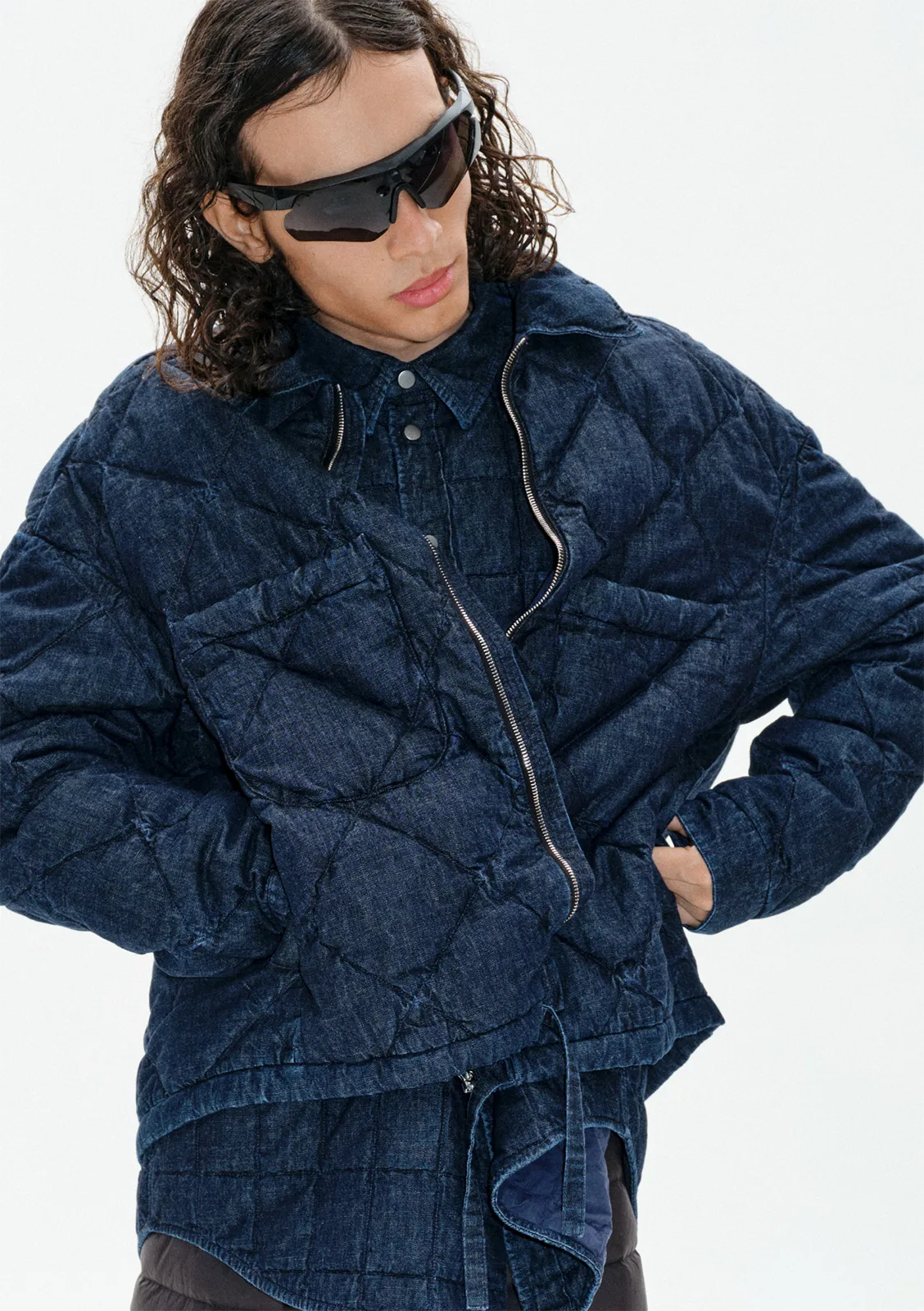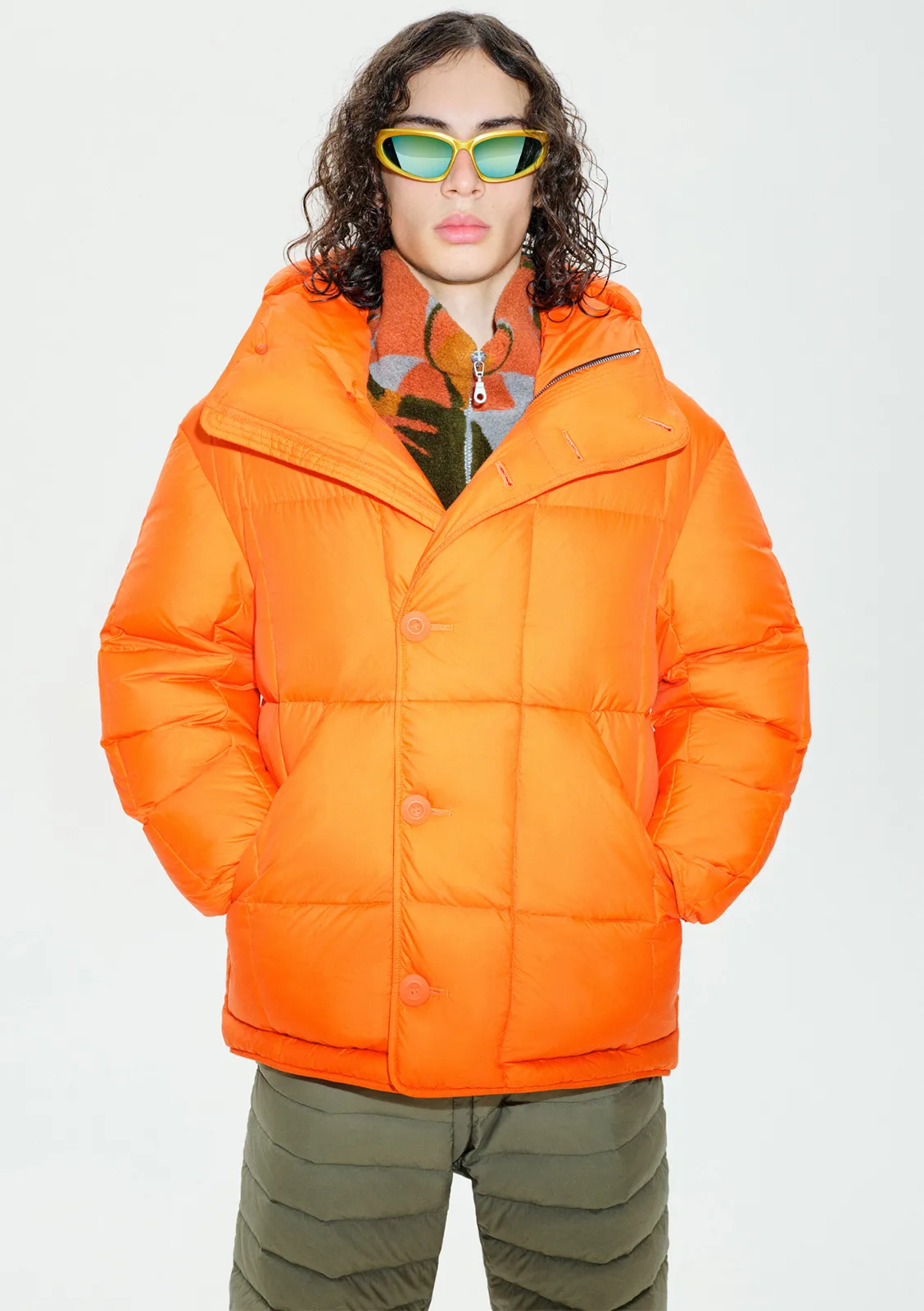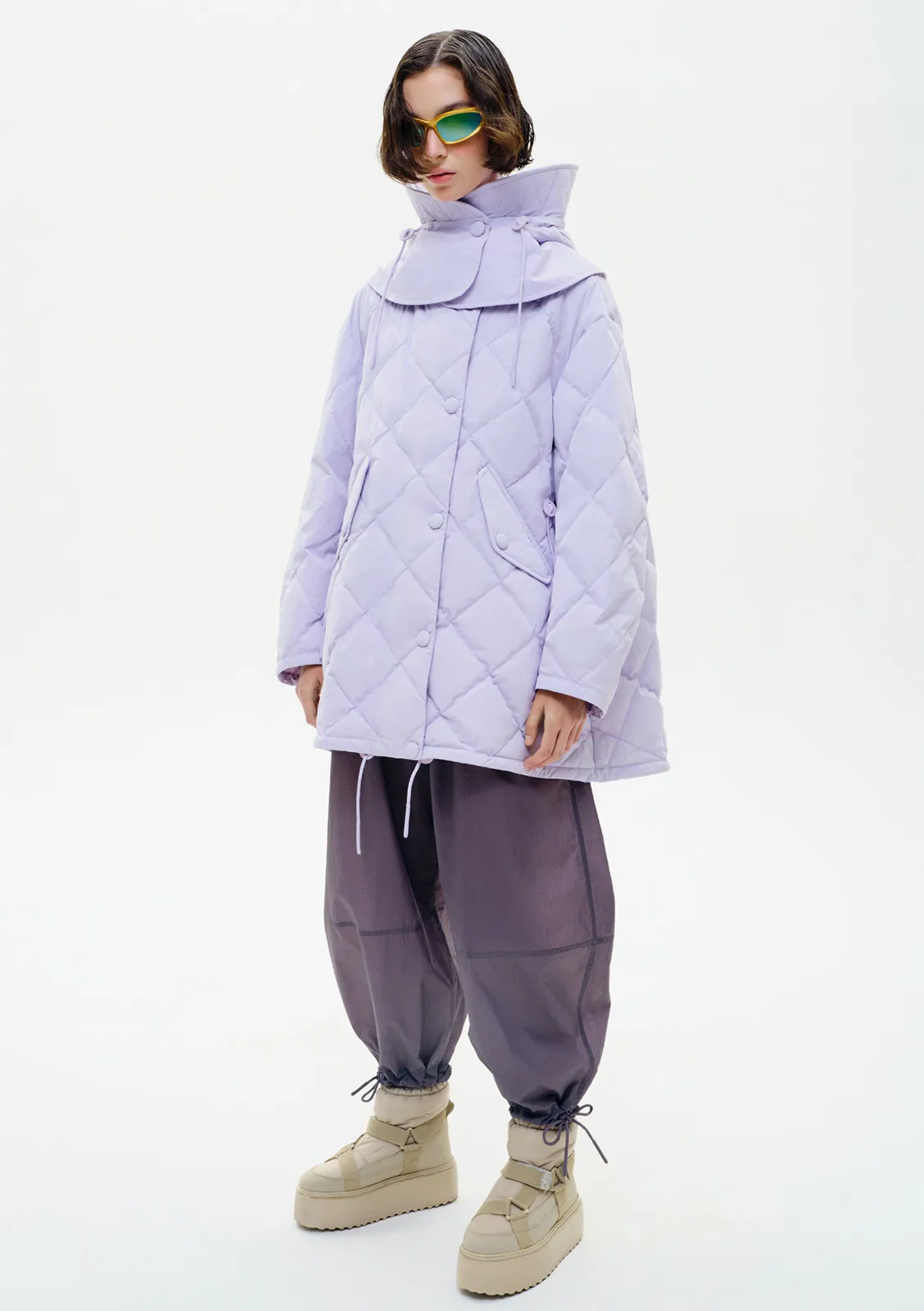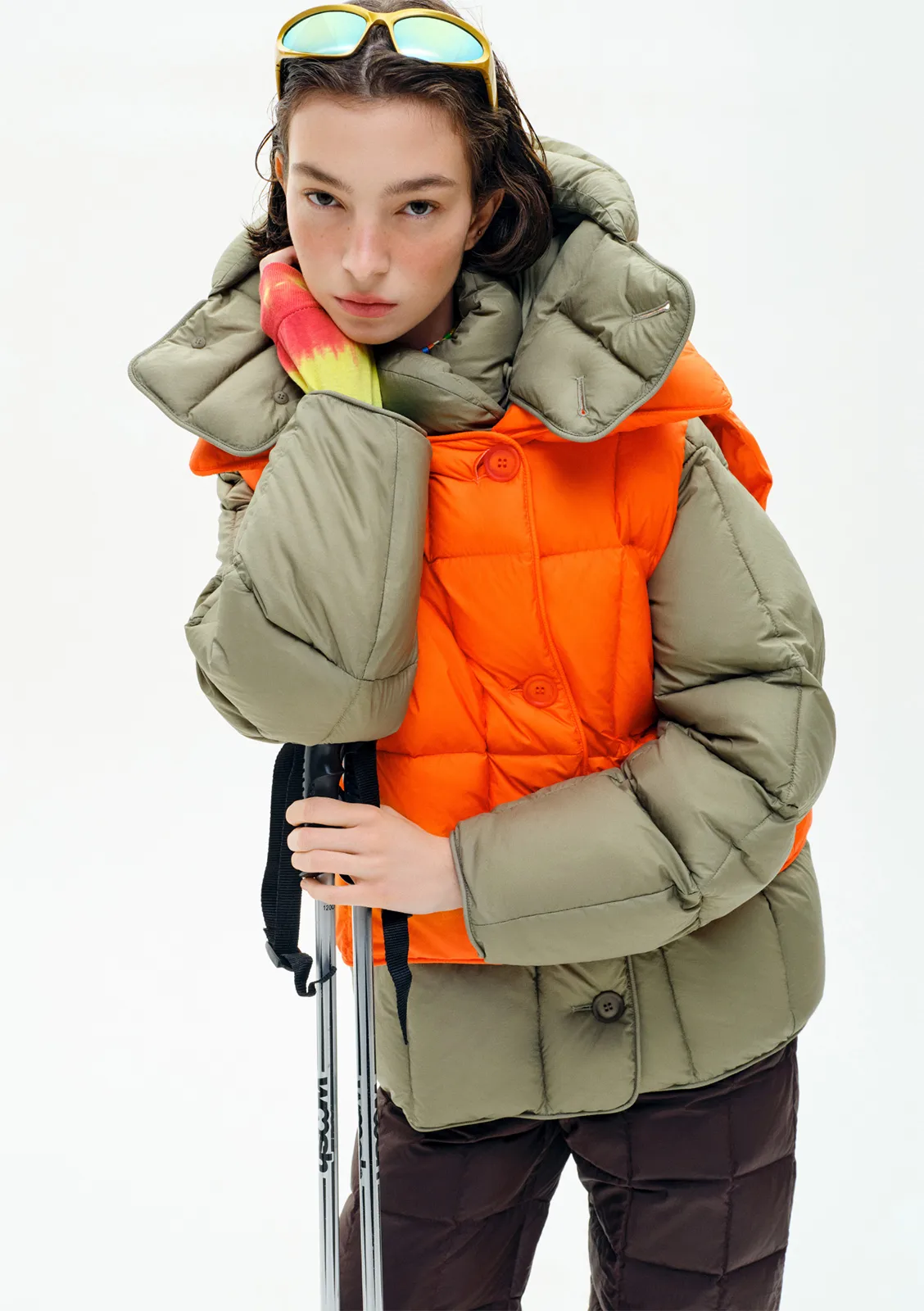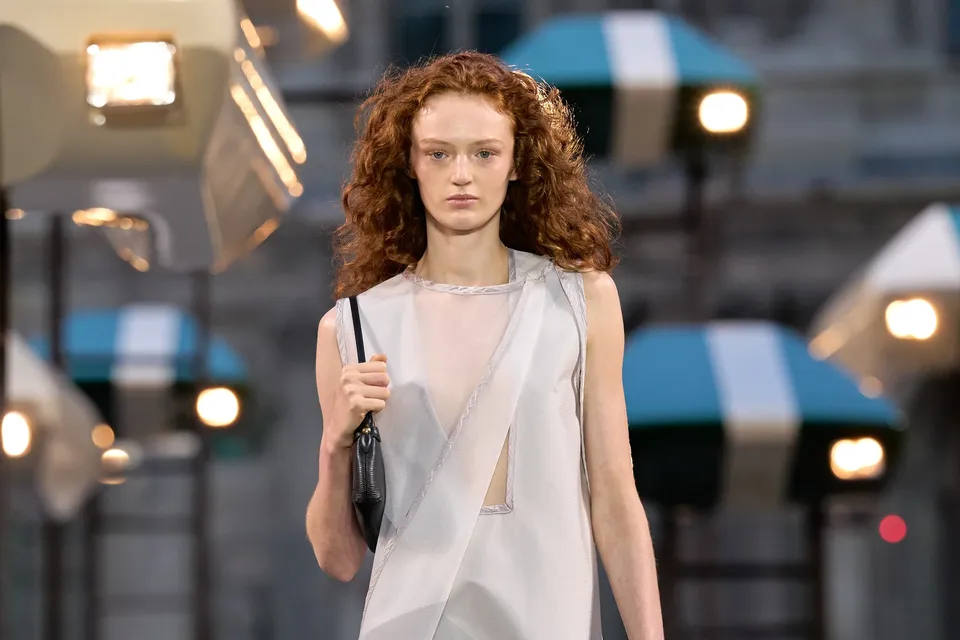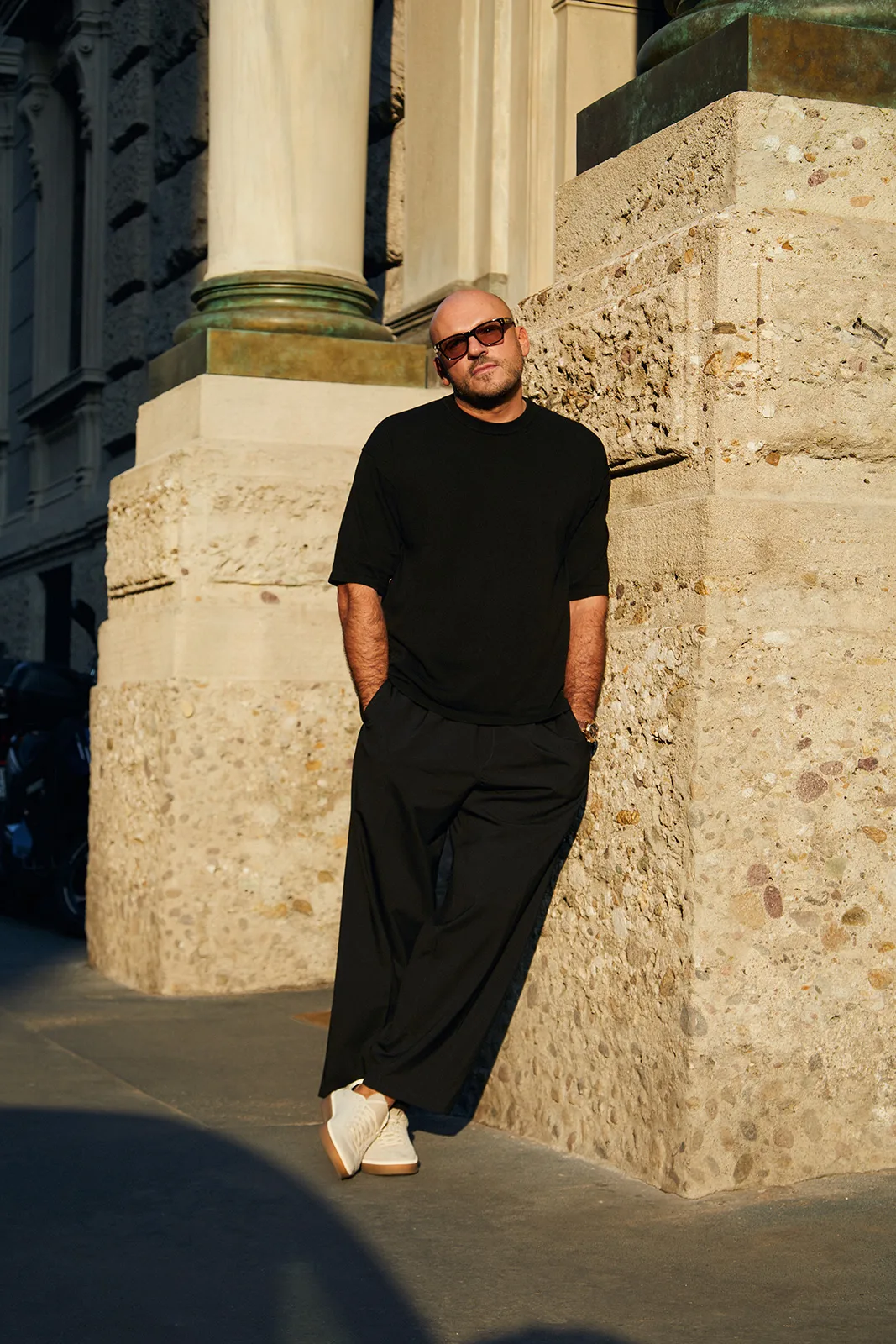
In Kyiv, where resilience has become a form of language, Dmytro Ievenko continues to redefine what outerwear can mean. Through his brand IENKI IENKI, founded in 2016 with just four jackets and an Instagram post, he transformed the puffer into an object of architecture and emotion; precise yet playful, protective yet refined. From Barneys to Net-a-Porter, the label’s rise was as unexpected as it was organic, born from instinct rather than strategy.
Merging Ukrainian craftsmanship with Northern heritage, Ievenko channels stories of endurance into garments engineered for modern life. Each piece is a dialogue between innovation and intimacy. “People often associate us with oversized puffers,” he says, “but for me, IENKI IENKI has always been about elegance. Volume was never the goal — function and proportion were.”
Produced entirely in Ukraine, the brand endures even through war, a quiet symbol of continuity amid disruption. Their bold silhouettes, drawn from both Evenki and Ukrainian traditions, celebrate the power of creation under pressure. In this interview, Ievenko reflects on designing through chaos, finding beauty in precision, and why true luxury begins not with opulence, but with survival.
Welcome to METAL. How’s your week been so far, and from where are you joining us today?
Hi METAL, great to be back! I’m in Paris for Fashion Week, attending a few shows and the BoF 500 gala. The city’s buzzing, and it’s nice to feel that spark of creativity everywhere again.
You started out in fashion on the retail side, first as a marketing director before co-founding Asthik Group. How did those early years working with other people’s brands shape the way you now run your own?
Fashion retail gave me an education that no design school could. It taught me not only what makes good clothes, but also how people connect to them. On the retail side, you see how desire really works — what draws someone in, what turns them away, what makes a brand feel personal. You witness the full process, from presentation and storytelling to that final, emotional moment of purchase. Those years also taught me how to bring other people’s brands to the market: how to seed demand, build relevance, and create real hype. That understanding became part of how I approach IENKI IENKI today.
Launching Asthik back in 2014, right in the middle of political unrest in Ukraine, was quite a leap. What did you take from that experience that later helped steer IENKI IENKI through uncertain times?
2014 felt uncertain at the time and launching a retail business in the middle of political unrest was definitely risky. But nothing compares to what we’ve been living through since 2022. For the past three and a half years, Ukraine has been facing a full-scale war, and it’s changed everything: how we live, think, and work. At the same time, it’s revealed an incredible resilience. Ukrainians have learned to keep moving, to build, to create, even under constant pressure. In many ways, what prepared us most wasn’t 2014 but the pandemic. That’s when we learned how to stay connected and keep the business running, even from different countries.
IENKI IENKI began in 2016 with just four puffers shot for Instagram, and soon found itself in Barneys, Harrods and Net-a-Porter. Was there a single moment when you realised this wasn’t just a small side project anymore?
IENKI IENKI’s story began with four jackets and an Instagram page. I shot them myself without a team or budget, only leaning on my intuition. It was a time when Instagram was still raw and spontaneous, not the marketplace it is today. Then, within a few posts, everything shifted. People from the fashion world started reaching out, asking where they could buy the jackets. The buzz was so sudden, you can’t plan or manufacture something like that. Two months later, we showed the collection in Paris, and more than three hundred stores placed orders in our very first season.
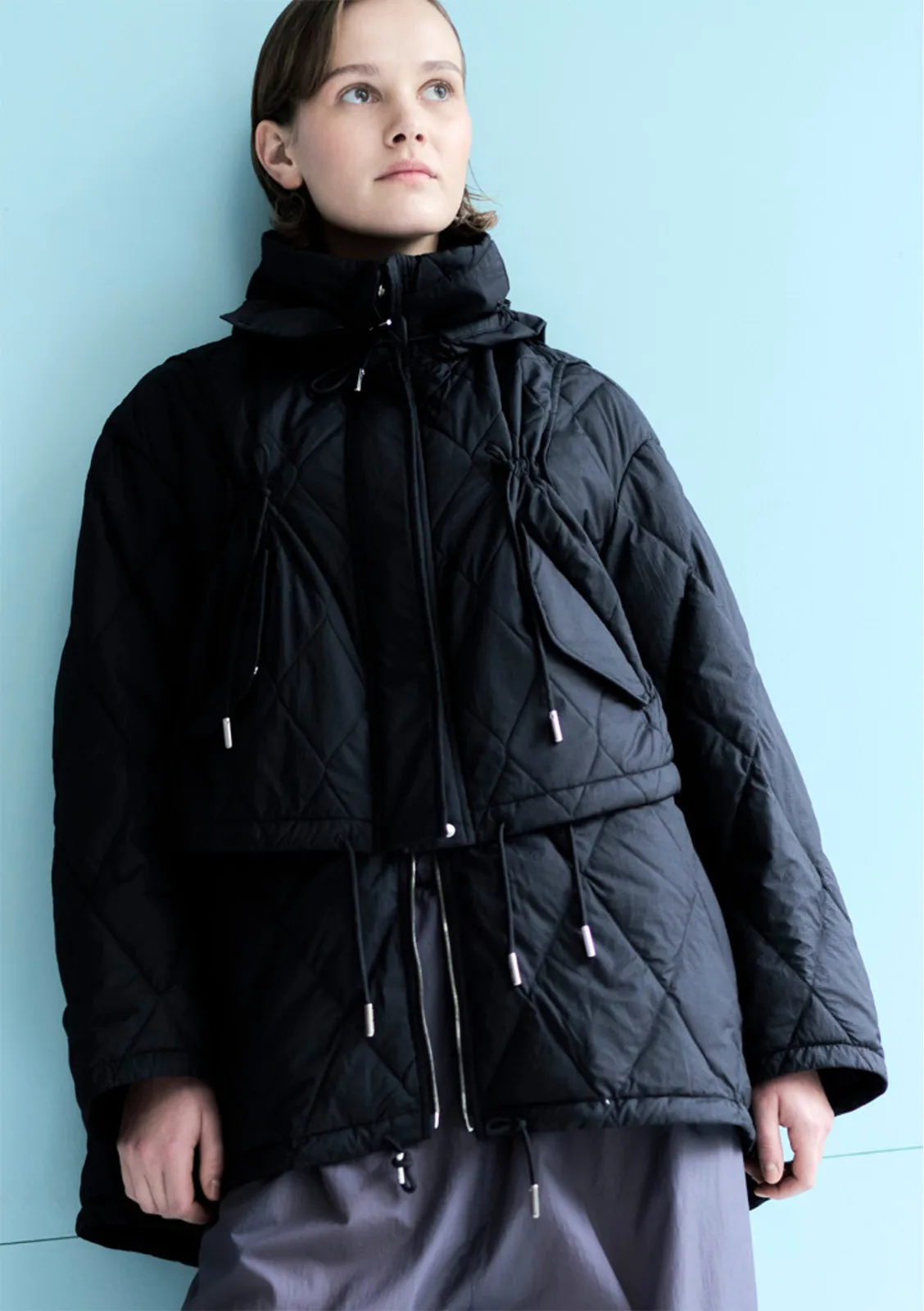
The brand’s name comes from your Evenki roots. What personal memories or cultural codes from that heritage still guide the way you approach design today?
There’s a story in my family that some of my distant ancestors came from the Evenki people in the North. It’s something that’s been passed down over generations, and the name IENKI IENKI came from that connection. I’ve always felt close to both sides, the Ukrainian and the Northern. They’re both about resilience, craft, and finding beauty in harsh conditions. That mix still influences how I see design today.
Ukrainian winters are famously harsh. How have you drawn on traditional Ukrainian dress or practical details from cold-weather clothing to create something that feels both functional and forward-looking?
It all goes back to the context I grew up in. Ukrainian winters are really harsh — not just cold, but wet, windy, and unpredictable. Living in those conditions teaches you what real functionality means from a young age. Growing up in Kyiv also played a big role. It’s a city where people have always cared about how they look, and when you’re surrounded by that sense of beauty, it naturally becomes part of your mindset. That contrast between practicality and elegance shaped me from the start, and it’s something I still bring into the brand today.
The Michlin Jacket, with its hourglass Michelin Man-inspired silhouette, quickly became a signature. Do you remember what sparked that shape, and how do you keep it evolving without losing its original character?
I’ve loved the Michelin Man, Bibendum, since I was a kid. His shape always fascinated me, it felt both familiar and strange, light yet powerful. To me, he’s one of the most perfectly balanced visual symbols ever created. The whole Michelin story, about travel and discovery, has always felt close to what outerwear represents for me. Naming the jacket Michlin was my way of paying tribute to that feeling. When it comes to evolution, we’ve continued experimenting with materials and details, but always stayed true to that original sense of playfulness and protection.
You helped set the trend for oversized technical puffers long before they were everywhere. How do you keep reinventing those silhouettes so they still feel new and not just nostalgic?
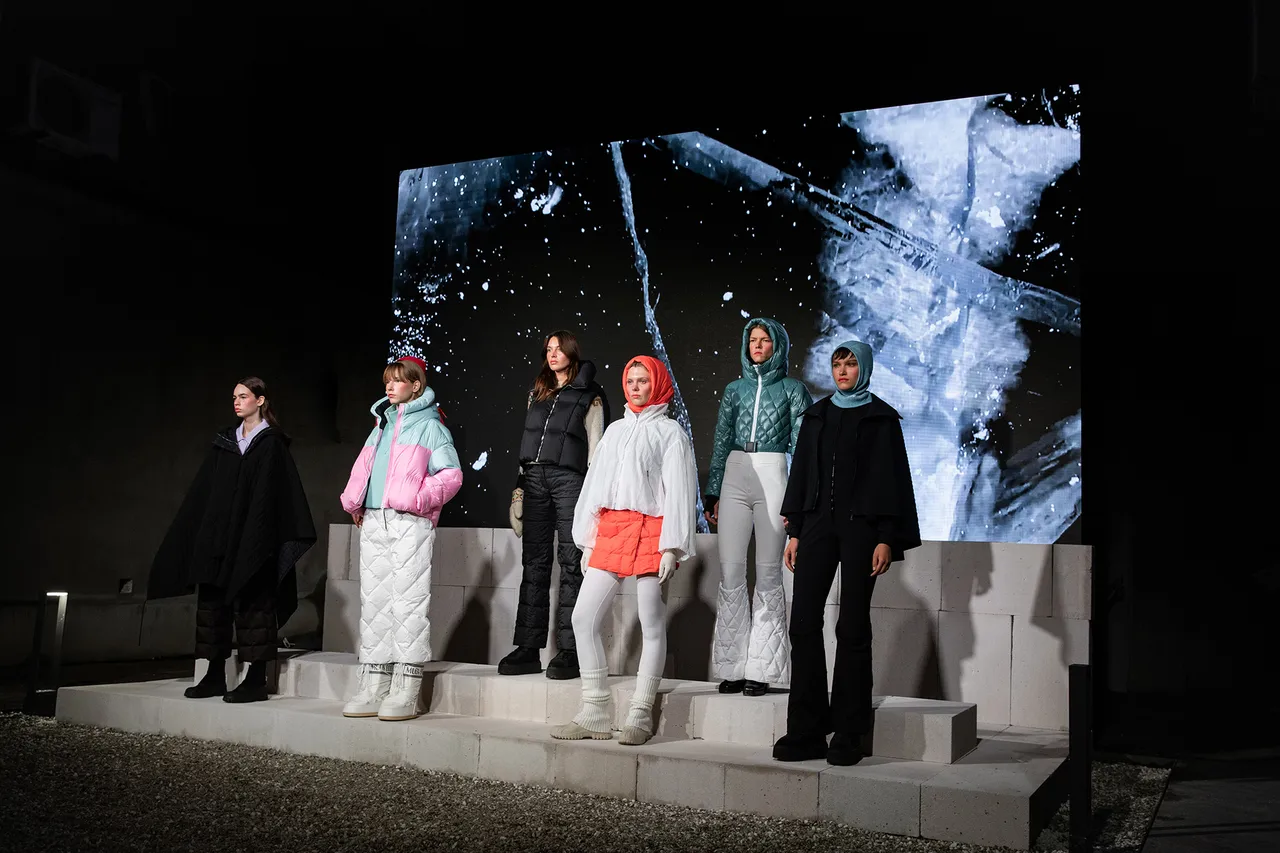
People often associate us with oversized puffers, but for me, IENKI IENKI has always been about elegance. Volume was never the goal — function and proportion were. We’ve always seen outerwear as something that can be both technically advanced and visually refined. The challenge isn’t to make it louder or more noticeable, it’s to make it smarter: lighter, warmer, and more precise in shape. Real innovation isn’t about chasing trends; it’s about refining them until they feel timeless. That’s how we keep evolving.
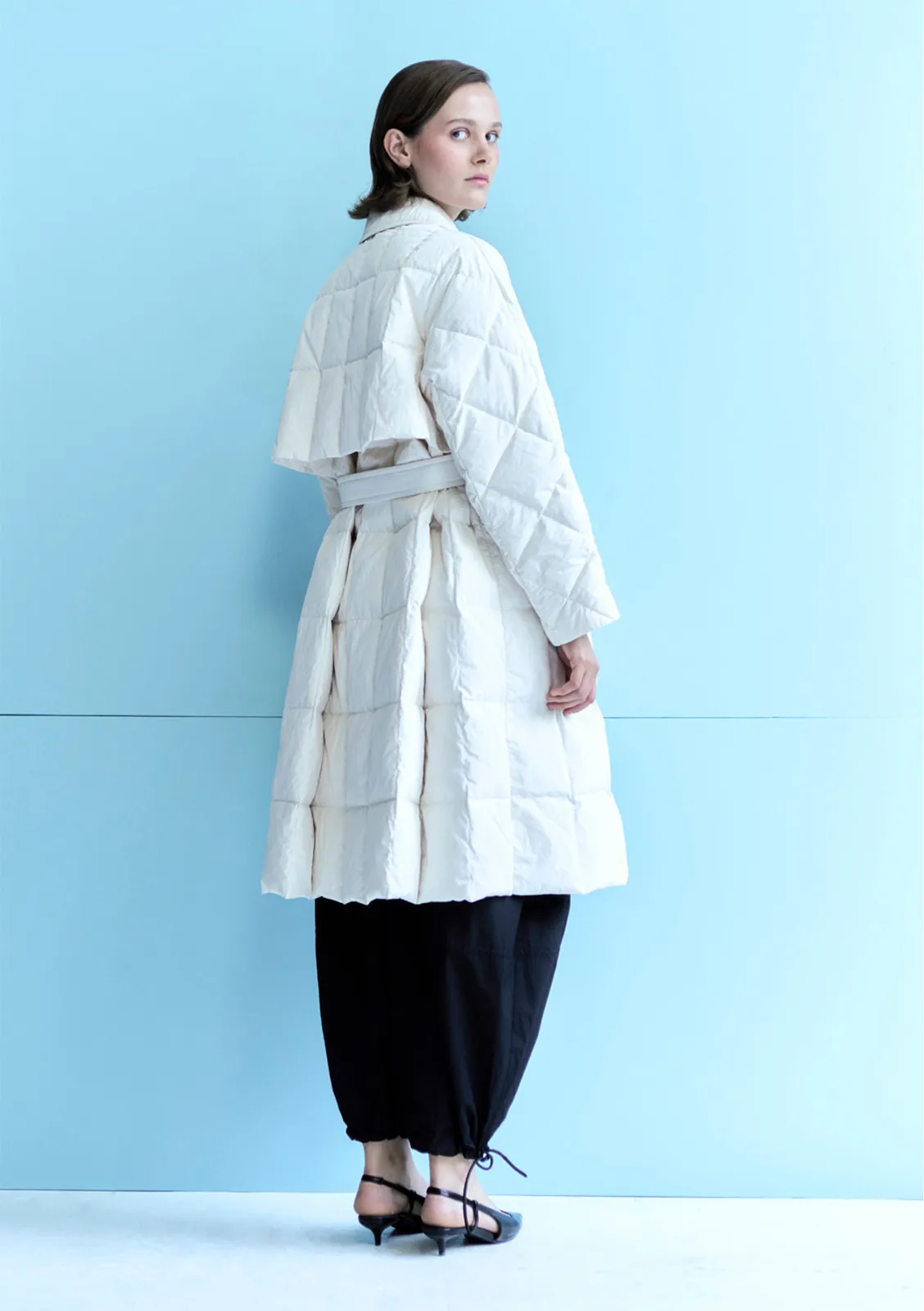
Quality has always been a non-negotiable for you, from a hundred percent goose-down fill to Riri zippers, Gore-Tex Infinium Windstopper and seam-sealed ski construction. Which of those details do you think people really notice once they start wearing the jackets every day?
How they feel in them. When you put on something from IENKI IENKI, you should feel protected, elegant, and completely at ease. And this is our goal, not for people to know the full power of the down or recognise the brand of our hardware, but to feel incredible without fully knowing why. That balance of comfort and confidence is what truly matters. What’s most rewarding is hearing from people who’ve worn their jackets for years and still feel they look current. For me, that’s the best proof that we are doing everything right.
You often talk about mixing heritage with innovation, from Northern silhouettes to ultrasonic bonding. What part of that conversation between tradition and technology excites you most right now?
It’s an ongoing dialogue between the silhouettes of Ukrainian and Northern heritage and the language of modern technology. We’ve been exploring this balance for years, so it now feels like a natural conversation. Right now, I’m excited about translating that idea into lighter, more transitional pieces; garments without insulation but with the same precision, protection, and movement. It’s about evolution, not reinvention. Tradition gives structure, technology gives freedom, and IENKI IENKI exists somewhere in between.
All your production has stayed in Ukraine. Since the full-scale invasion, what has been the toughest part of keeping that promise, and how has your team found the strength to keep going and stay creative?
The first weeks of the full-scale war were terrifying. No one knew what would happen, we were hiding in basements, trying to protect our families and figure out if the company even had a future. But after the shock came something else, a strong, constructive anger. We had just received one of our biggest wholesale orders when the war began, and that gave us direction: we refused to stop. No one would decide for us that our lives or our dreams were over. Part of the team relocated to the west of the country, near the Polish border, and kept production going there. As soon as it was safe, we returned to Kyiv and restarted full production. It’s still difficult and we’re constantly adapting, but we keep moving forward.
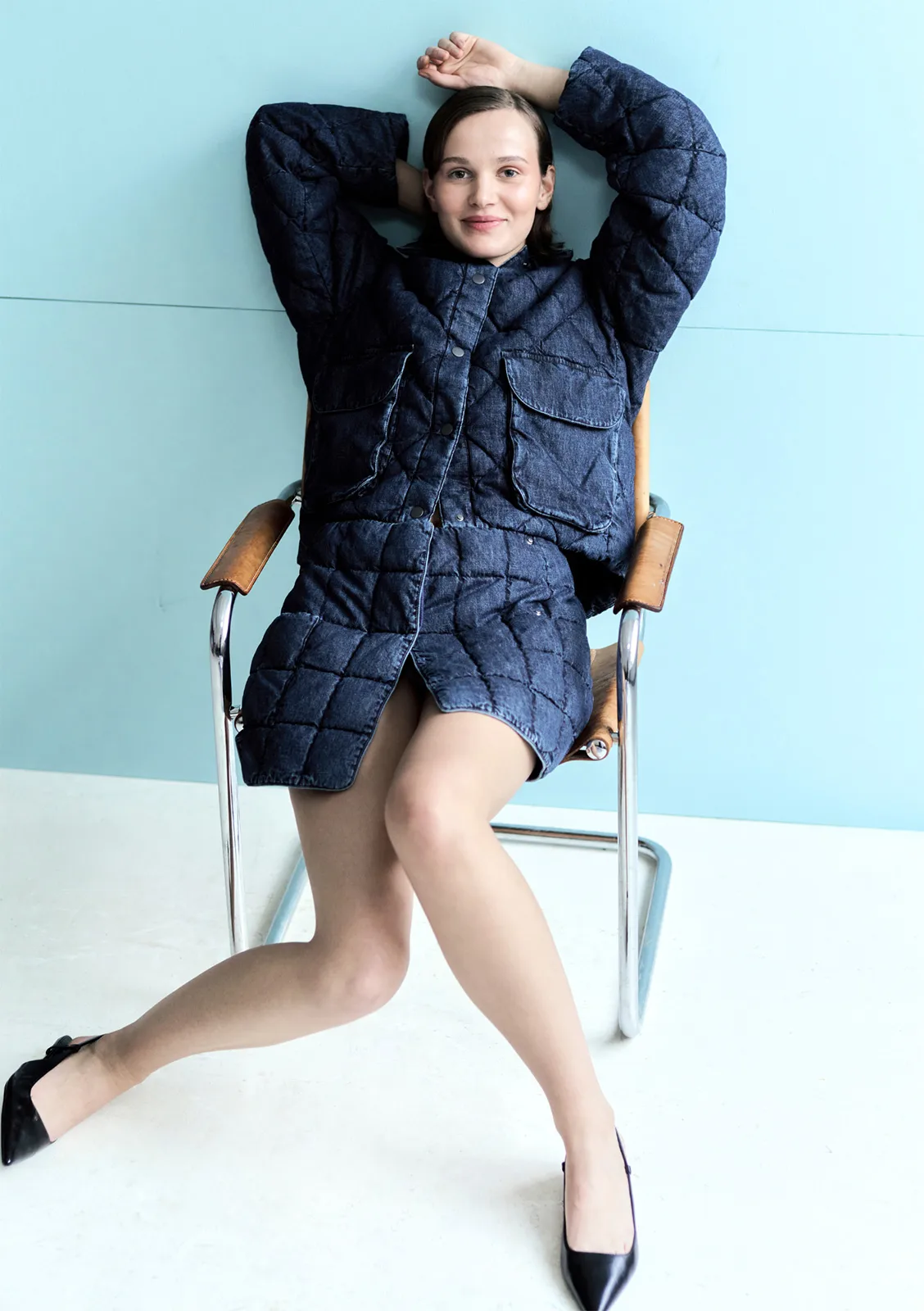
On a more personal note, how has living and working through war changed the way you think about fashion, whether as protection, as a piece of identity or even as a small source of hope?
Fashion is a very real part of everyday life. It evolves. Sometimes becoming more expressive, sometimes more utilitarian, but at its core, it reflects how we live and what we believe in. War doesn’t stop culture or fashion; if anything, it strengthens them. After February 24th, the Ukrainian fashion industry blossomed with renewed energy, an act of resilience and resistance. People will always need clothing, both as protection and as expression. What changes is the context, not the essence. For me, it’s not about holding onto fashion as a form of escape; it’s about recognising that creation itself is constant. Whether the world is calm or in crisis, the instinct to make something meaningful never disappears.
Has the experience of designing during wartime influenced the shapes, the colours, or even the materials you are drawn to now?
The war hasn’t directly influenced the shapes, colours, or materials we use; our visual language has stayed consistent. What’s changed is everything around it: the ways we work, communicate, and the awareness behind every decision. We’ve become more attentive and thoughtful toward each other, our partners, and the entire process. When you realise how fragile everything can be, you naturally start acting with more care and consciousness. It’s made us more mature as a team, more present in every detail of what we do.
Your jackets have been worn by the Hadid sisters, Hailey Bieber, Julianne Moore, and many others. Yet you often say the most rewarding part is seeing them in regular people. Do you remember a moment on the street that meant more to you than a celebrity sighting?
It’s hard to name just one moment, it happens naturally, all the time. I often meet people wearing IENKI IENKI on ski slopes, in different cities, at events, or while travelling, and conversations just start on their own. Recently in Paris, during fashion week, I spoke with a few people who still wear their jackets from our very first 2017 collection. They told me those pieces have become their go-to for winter, still looking new and relevant years later. That, to me, is the most rewarding feedback — when a design becomes part of someone’s life for many seasons. That’s the real meaning of longevity and sustainability.
You have built IENKI IENKI into a multi-million-euro label while navigating incredibly volatile times. What advice would you share with young Ukrainian creatives who dream of going global but want to stay true to their roots?
I’d probably say, don’t rush. The world feels hectic and uncertain right now, and it’s easy to get anxious or lose focus. But creativity takes time, and it needs a clear mind. Stay true to yourself, to your instincts, your roots, and the things that genuinely inspire you. Discipline matters, but so does patience. There’s so much noise around us today, so much turbulence. The hardest and most important thing is to stay calm enough to hear your own voice and to follow it honestly.