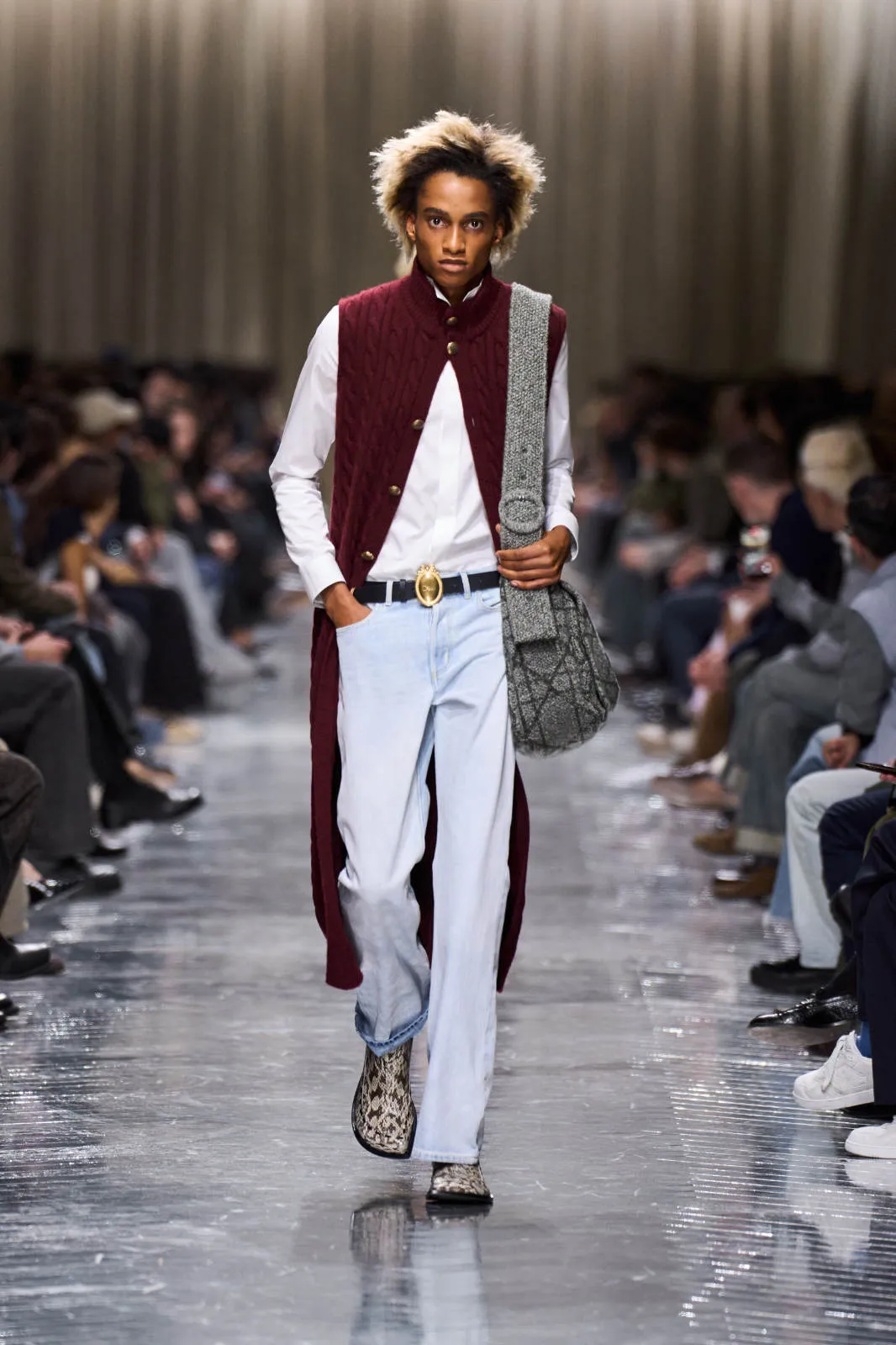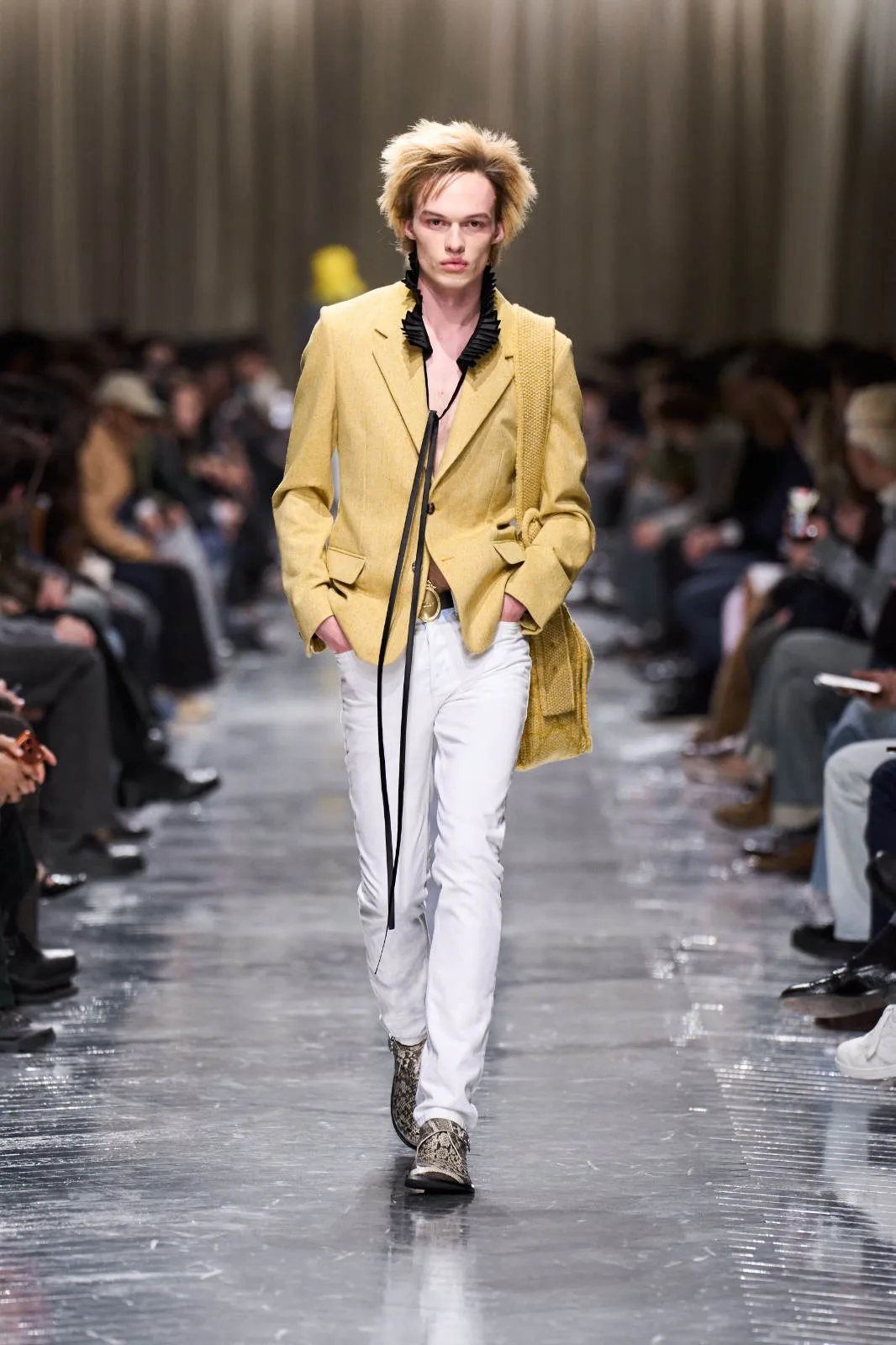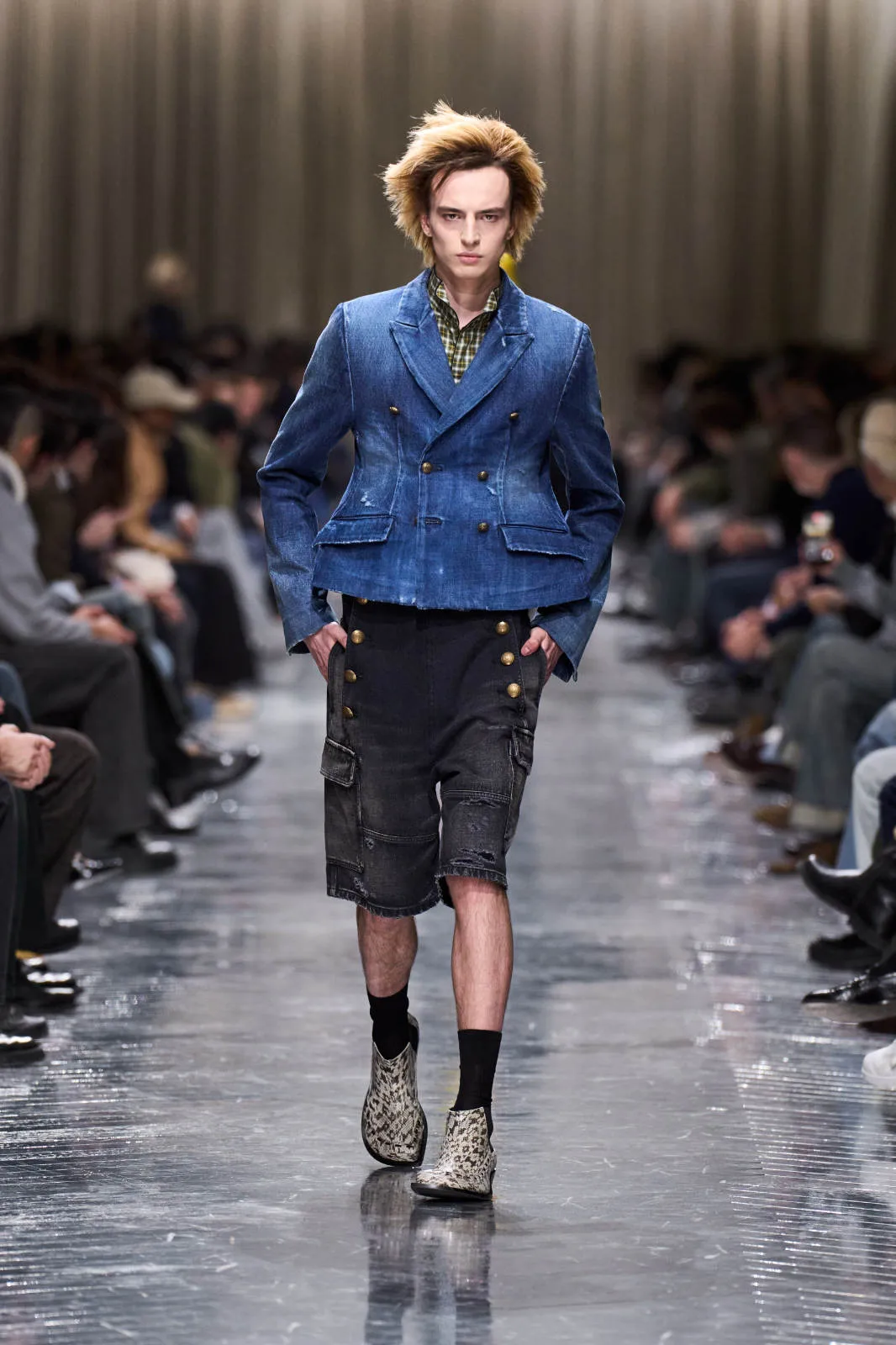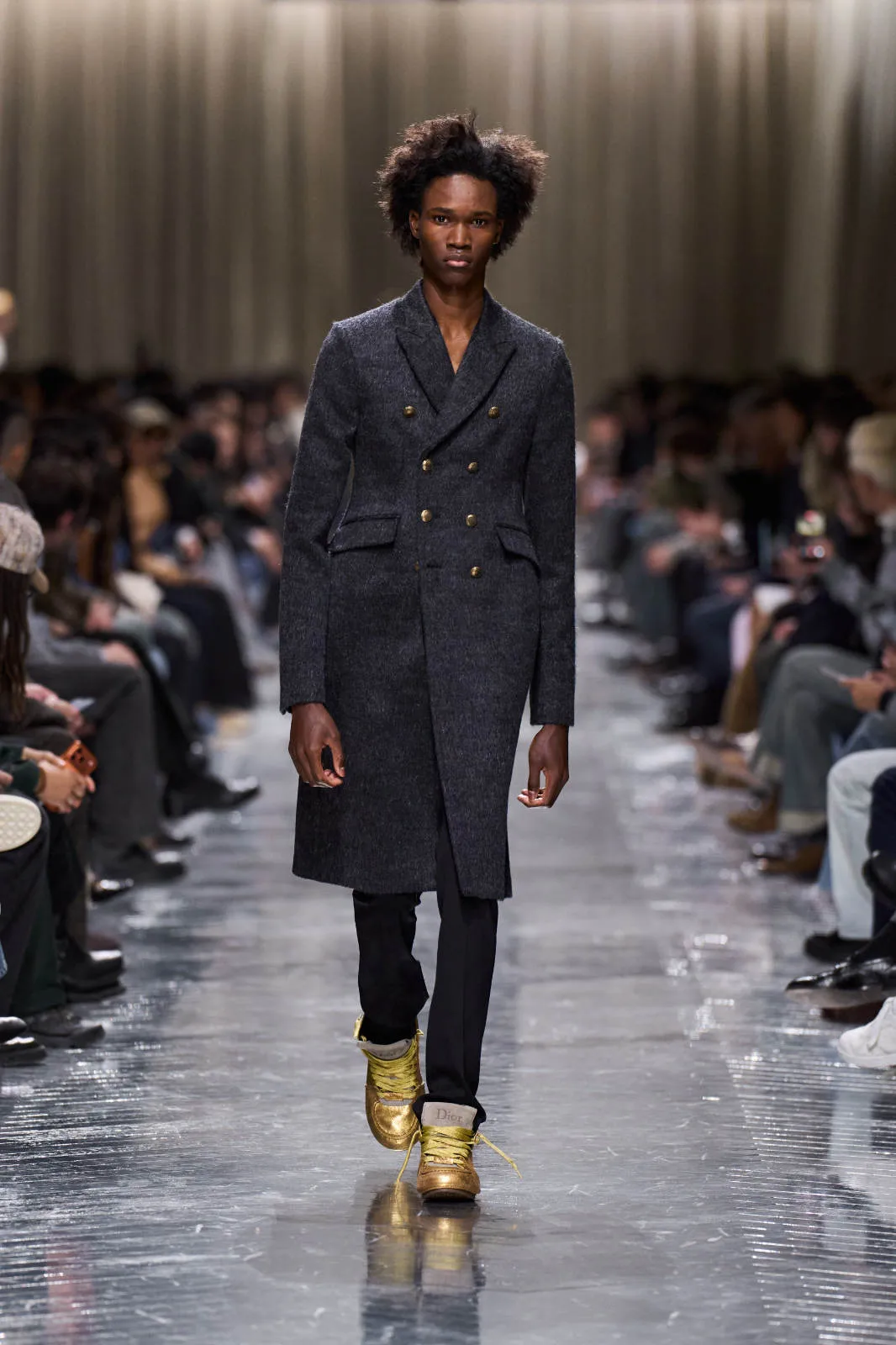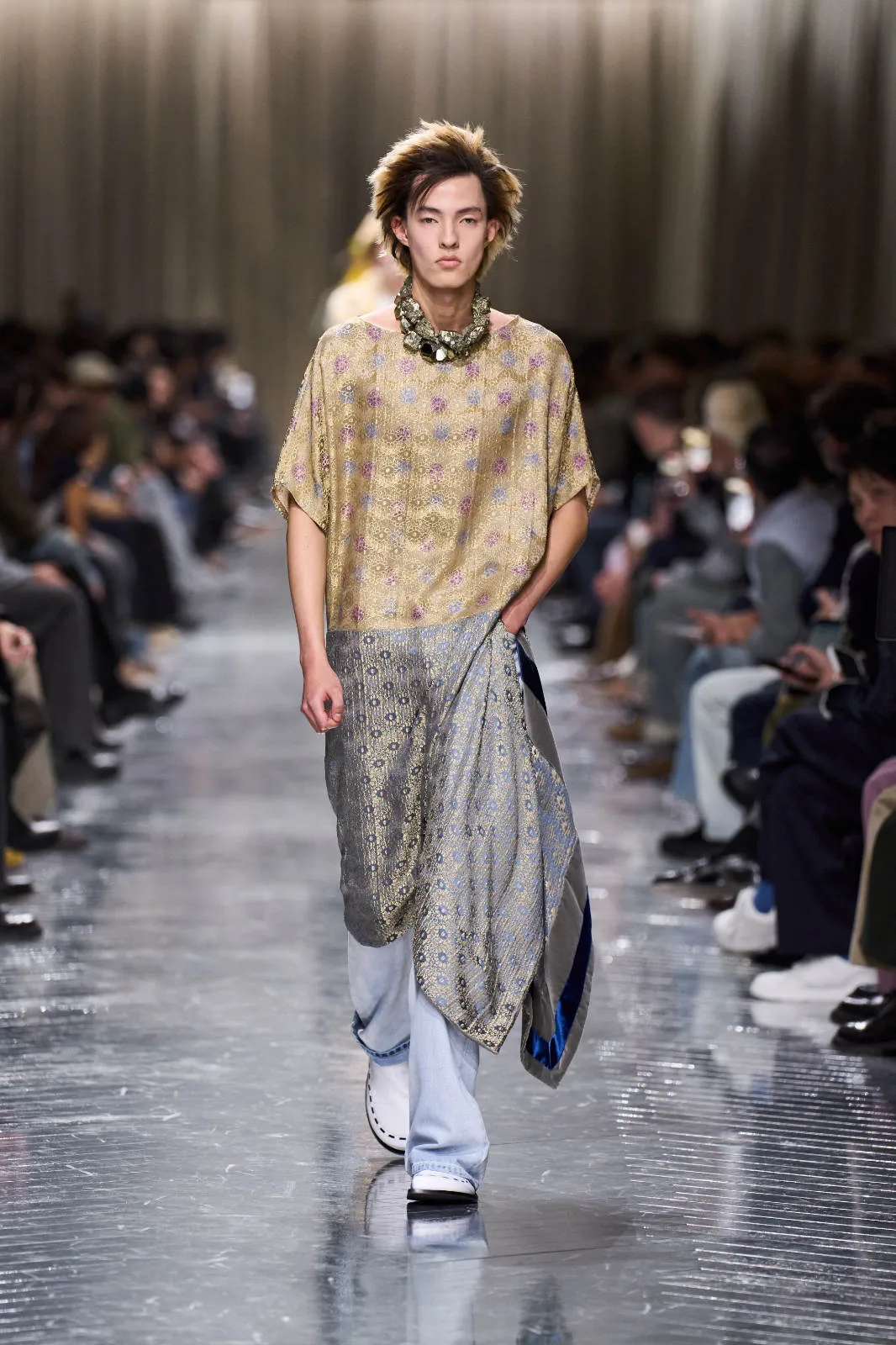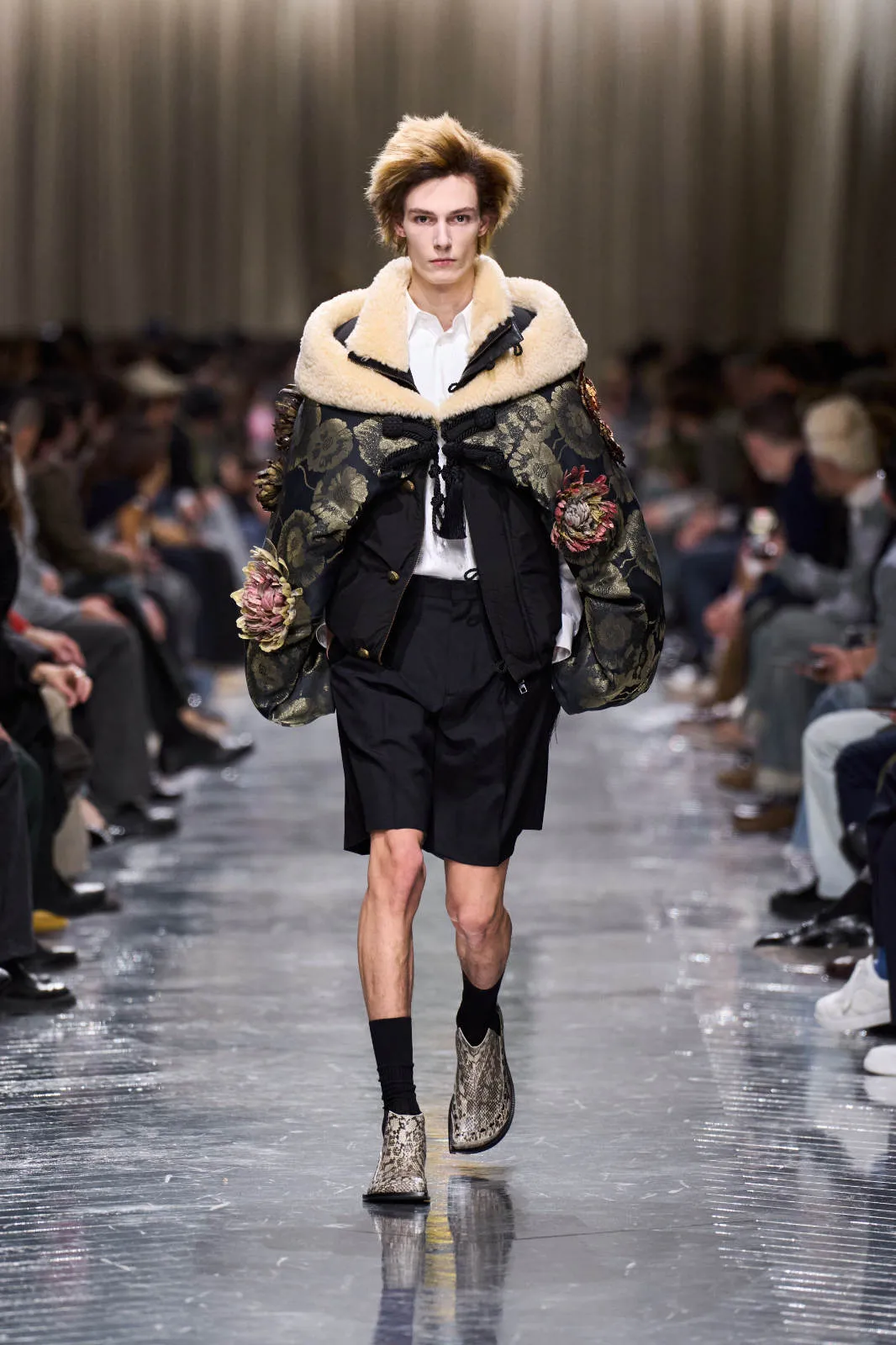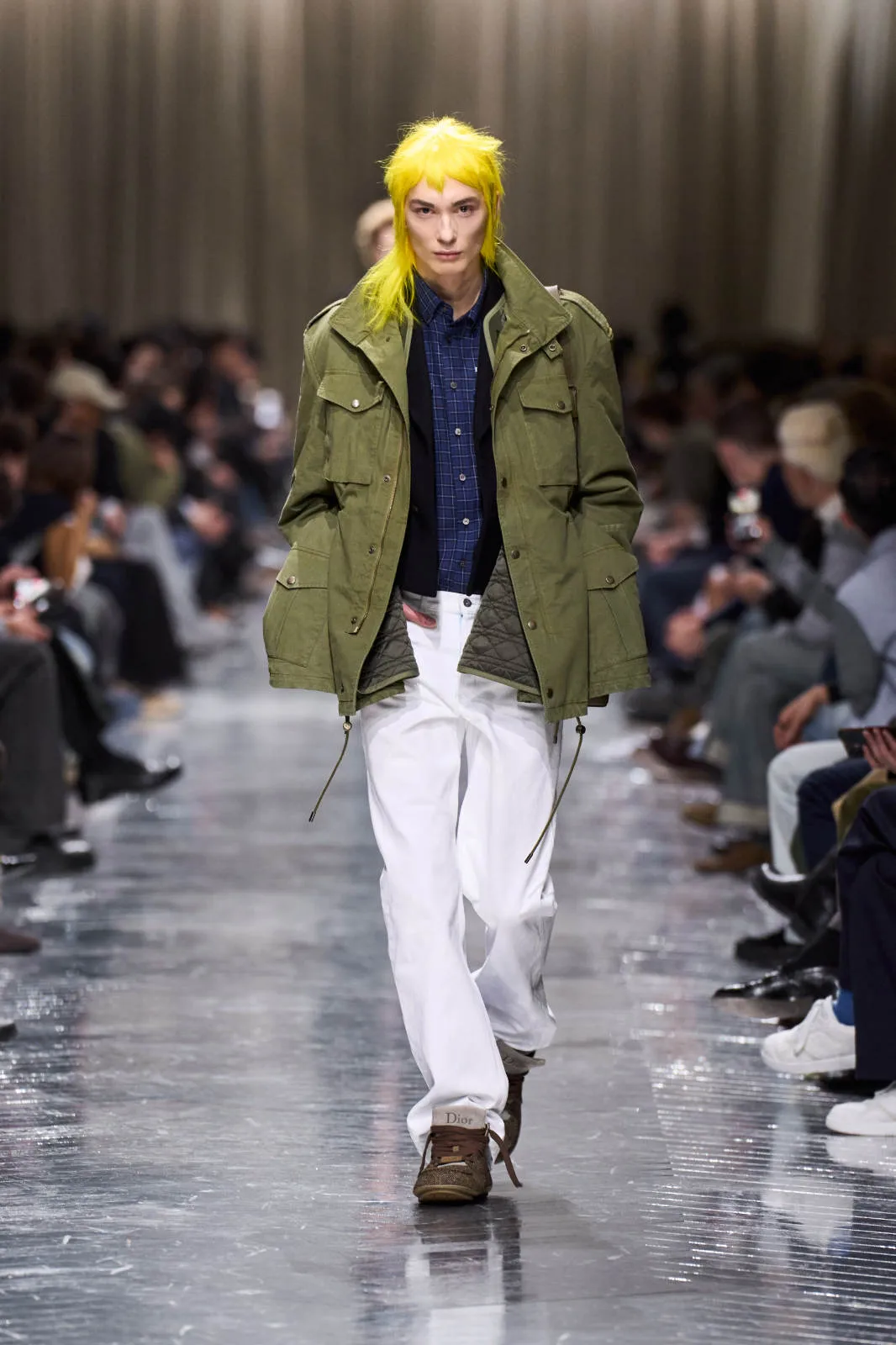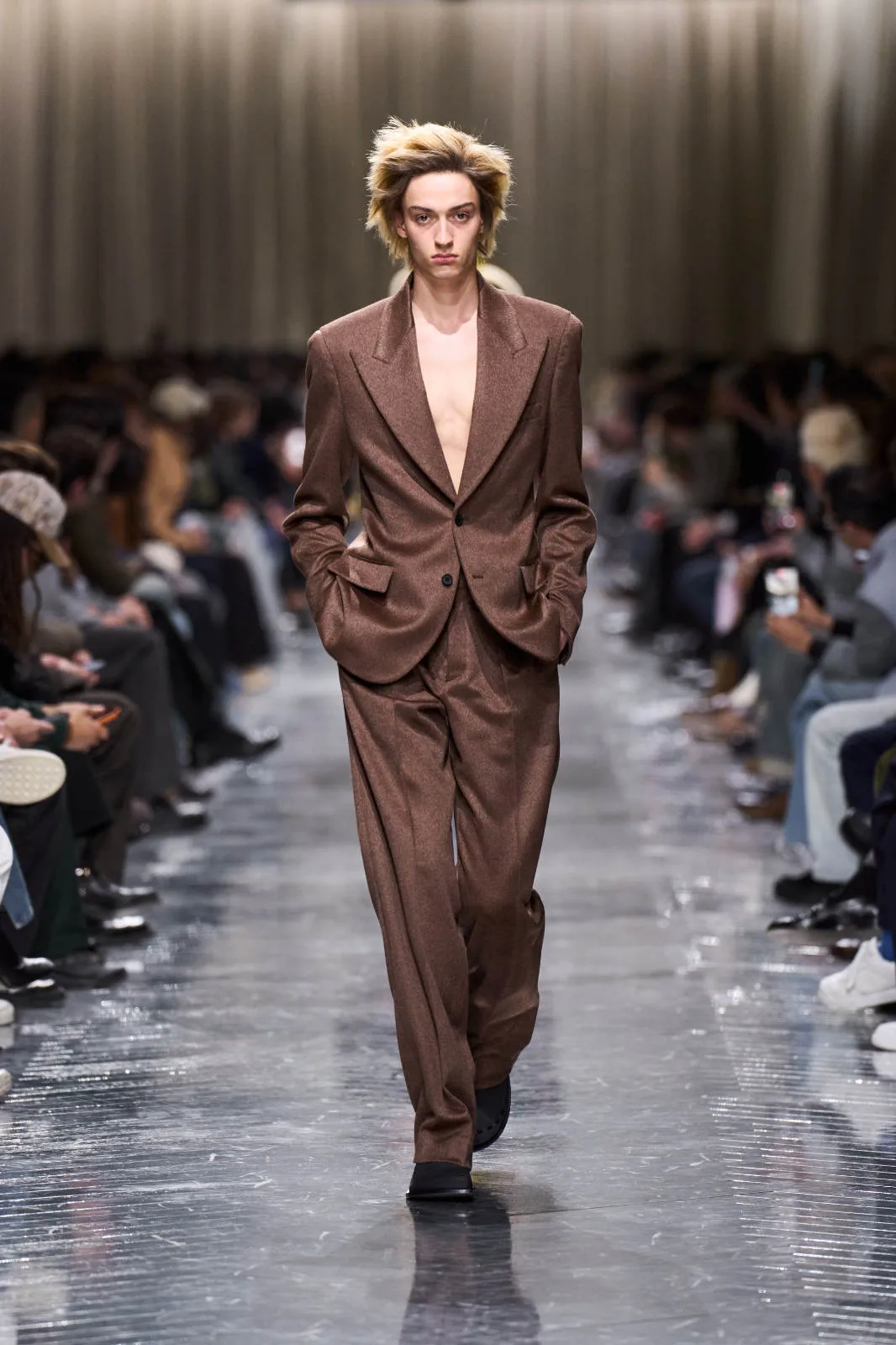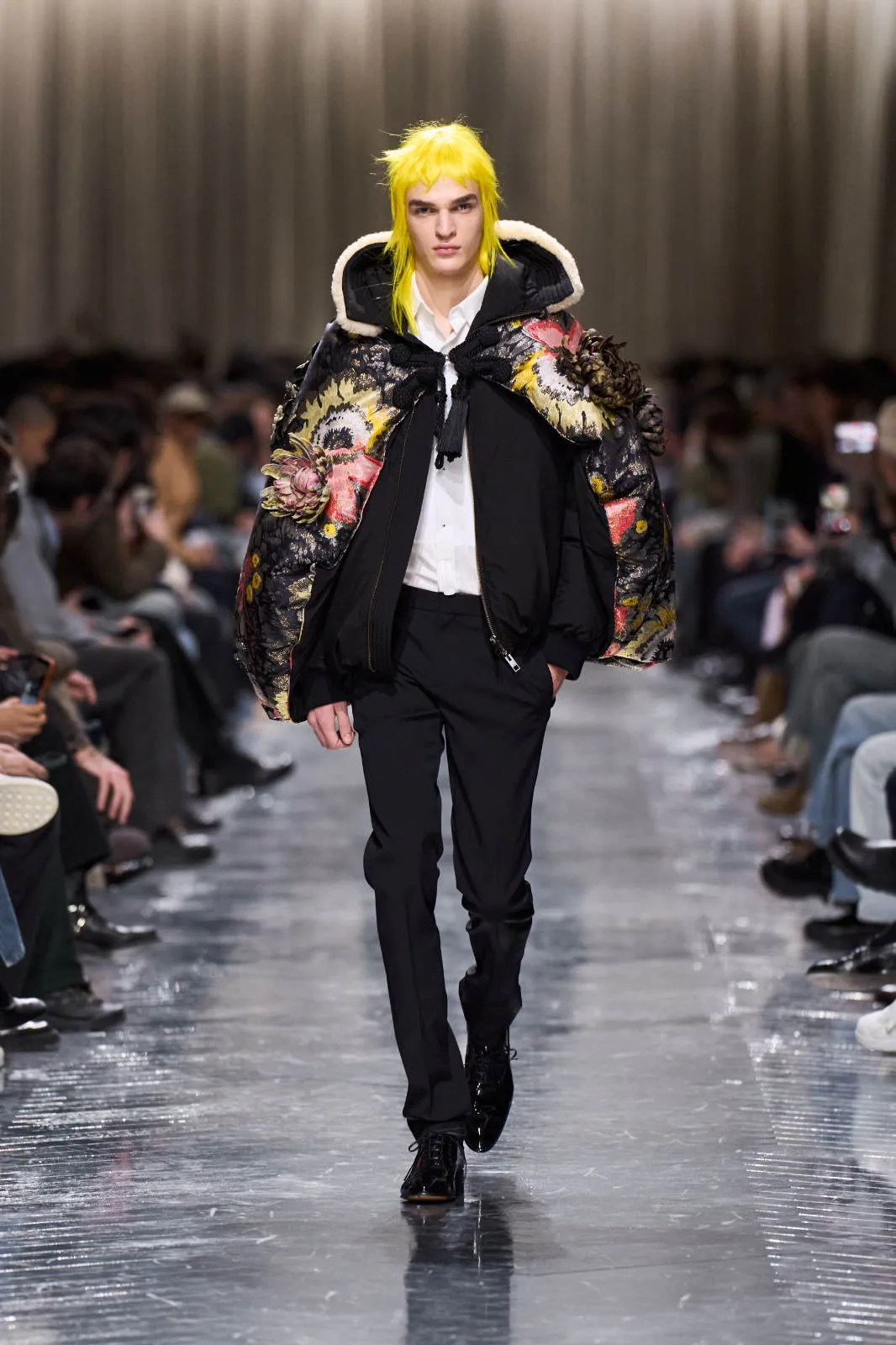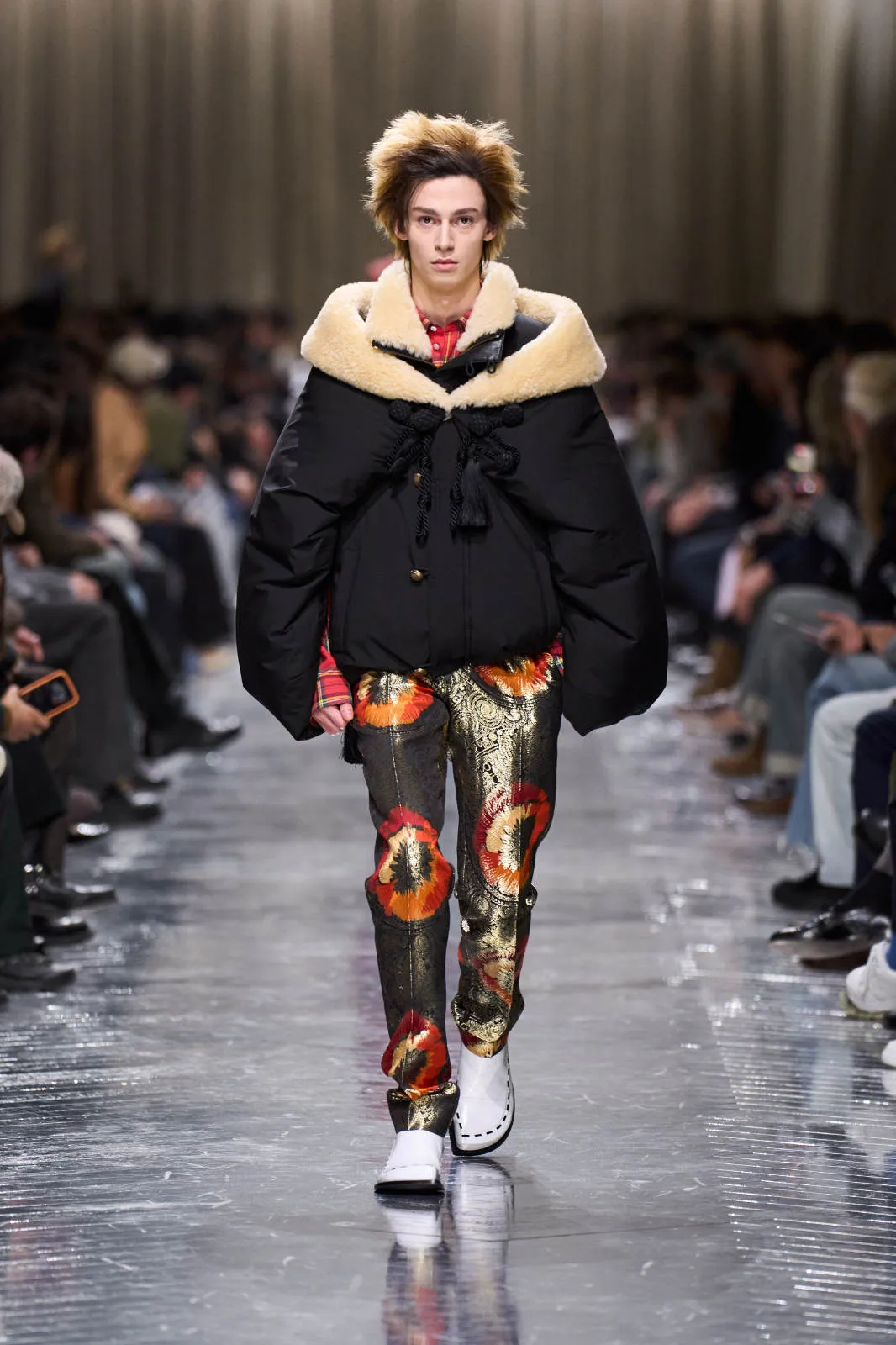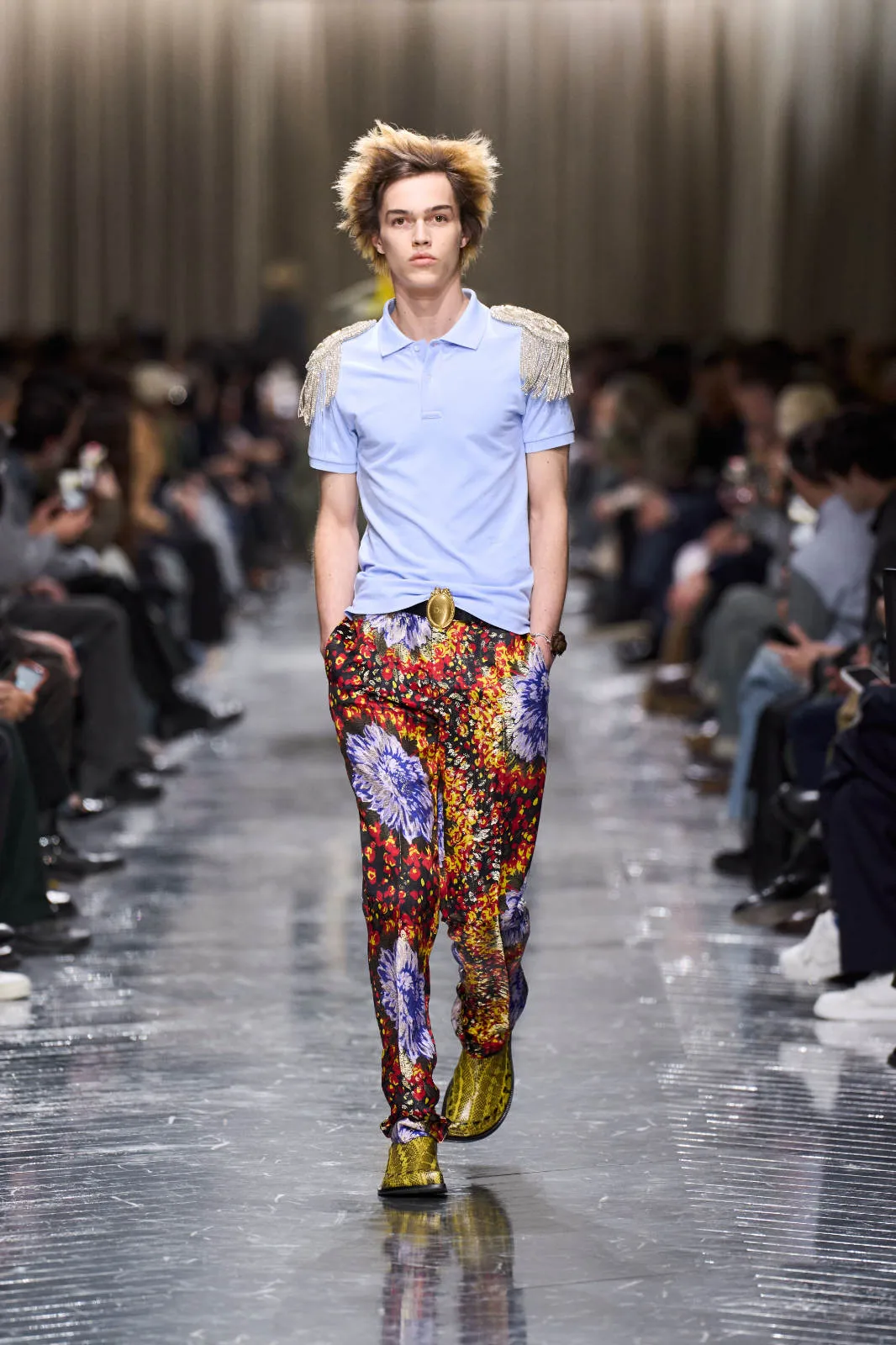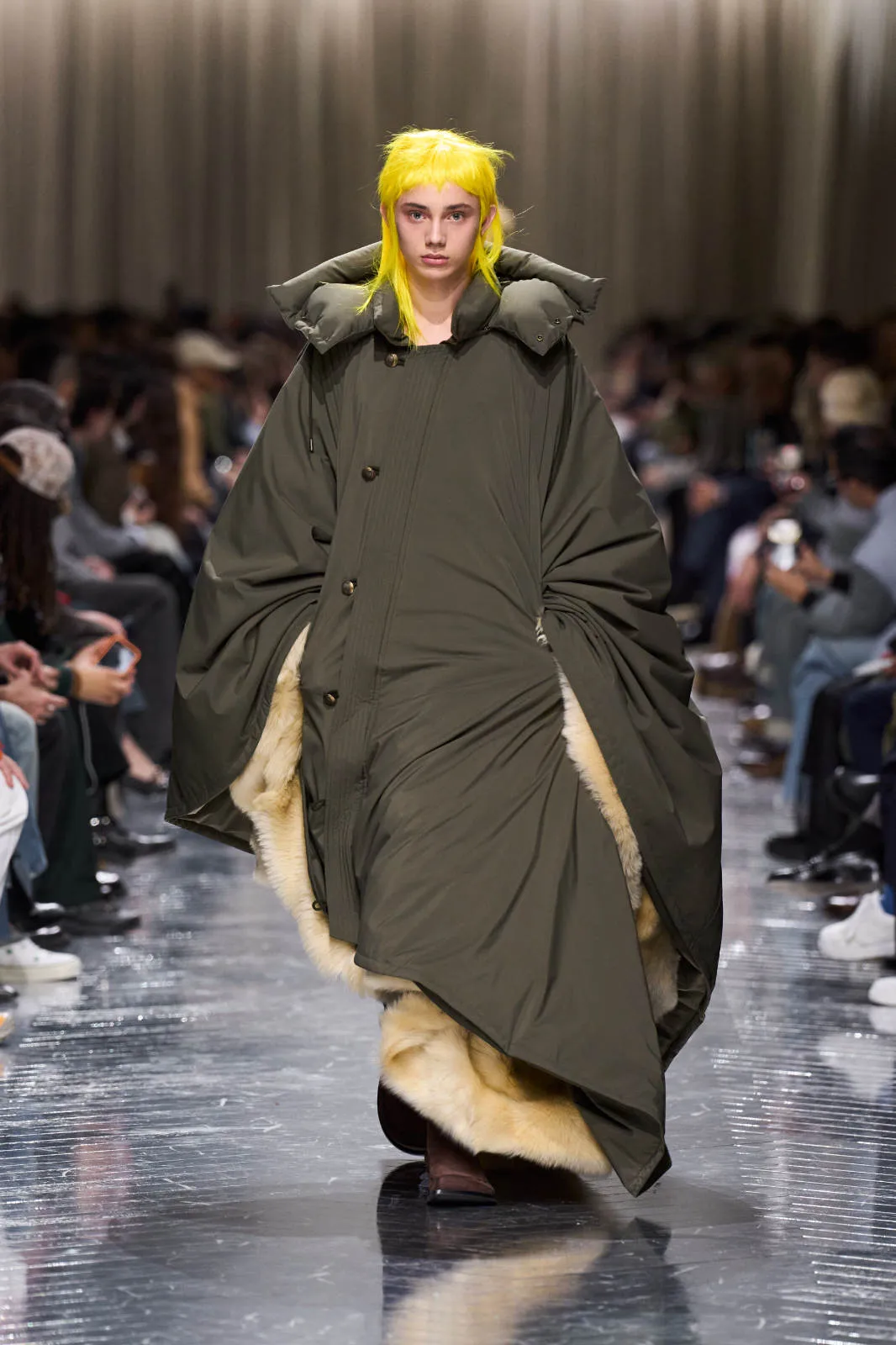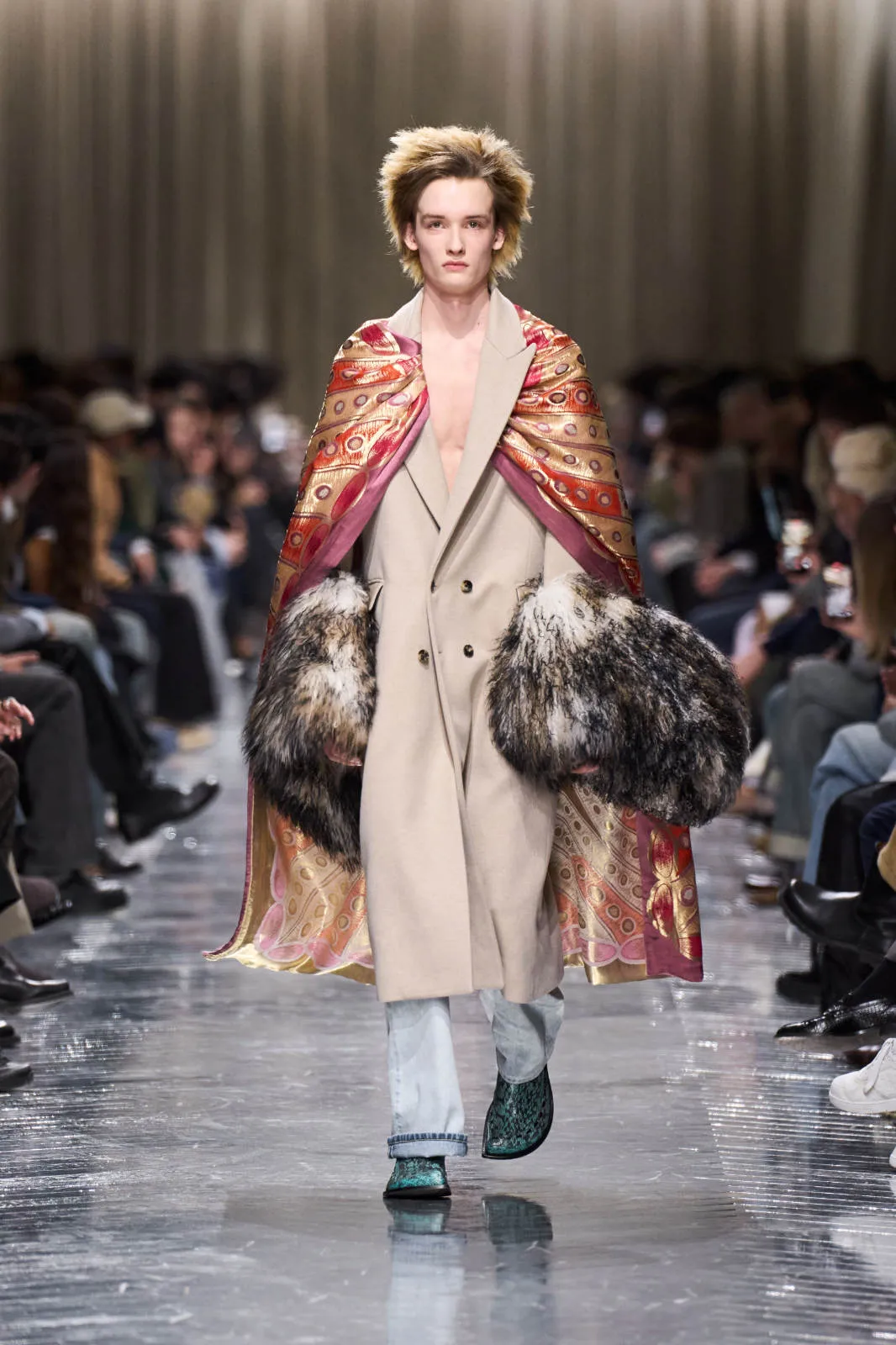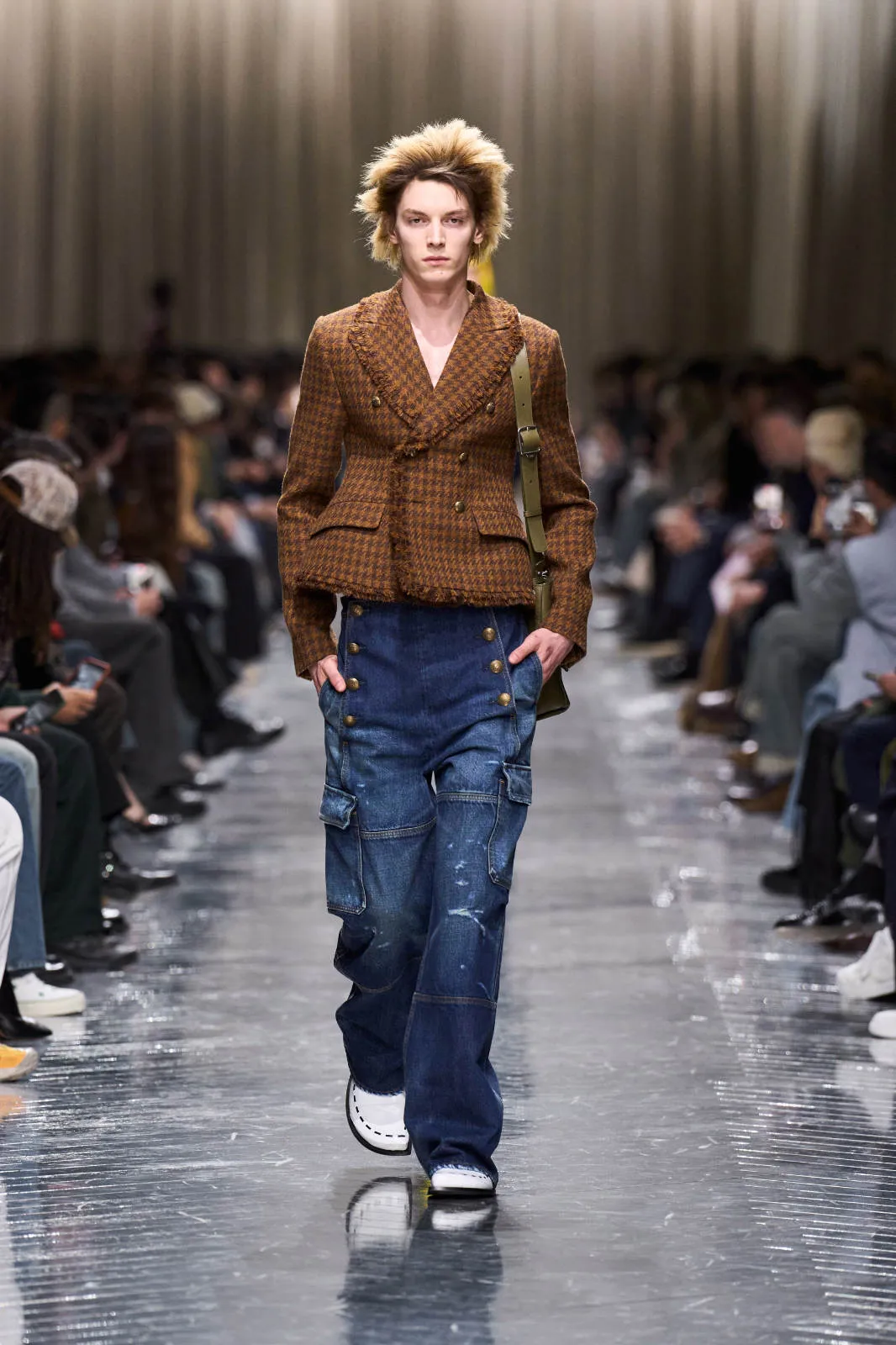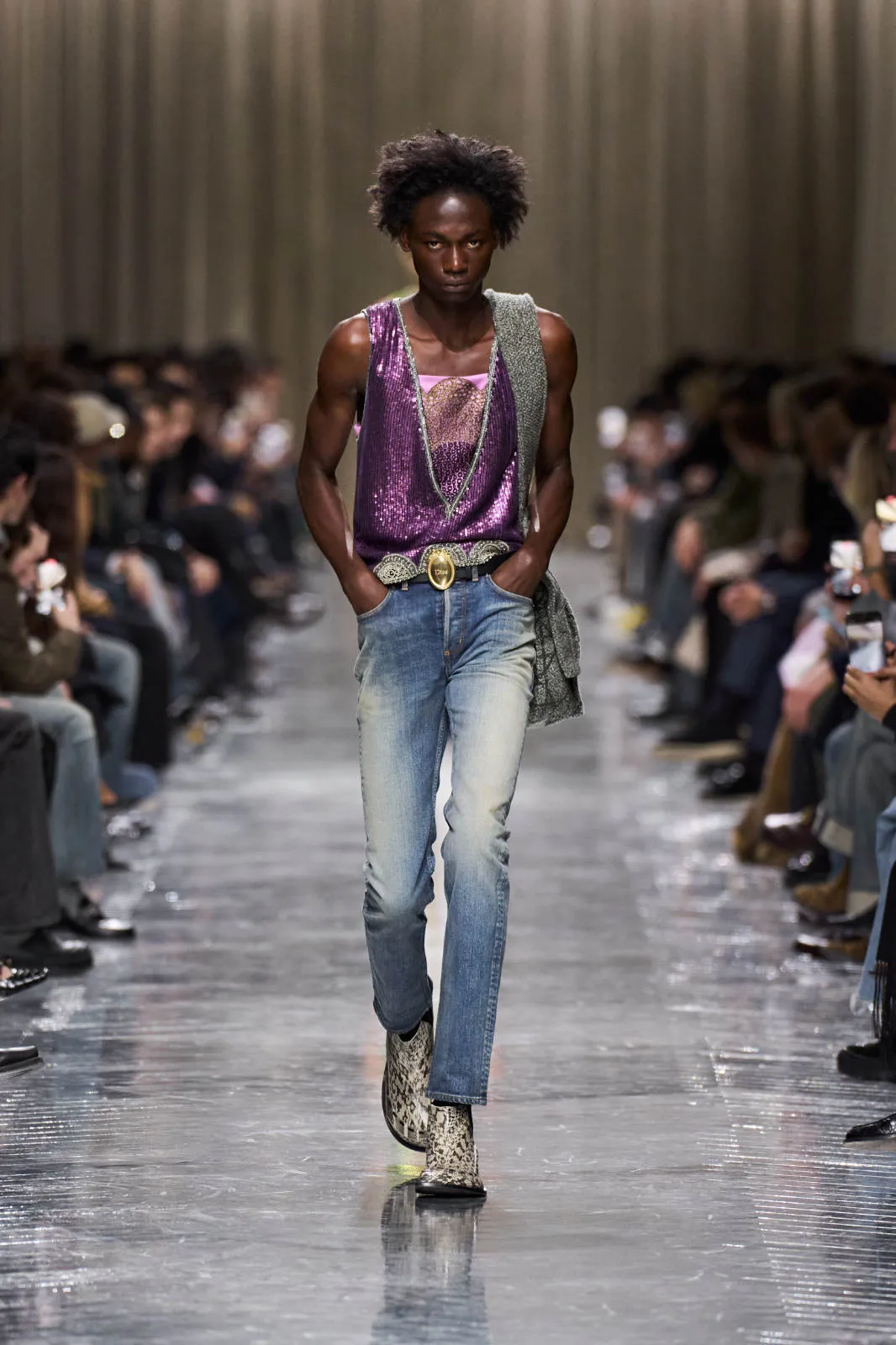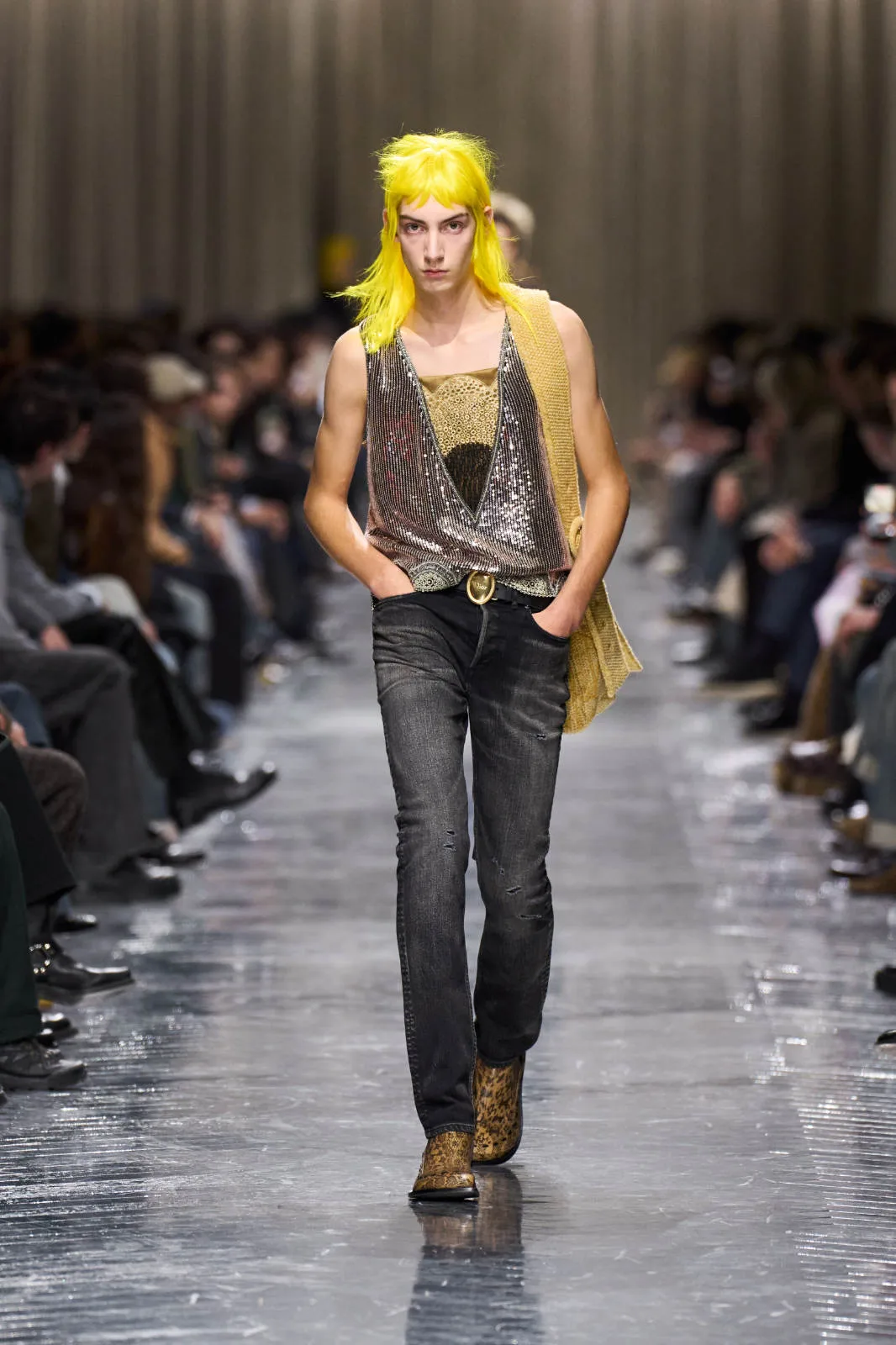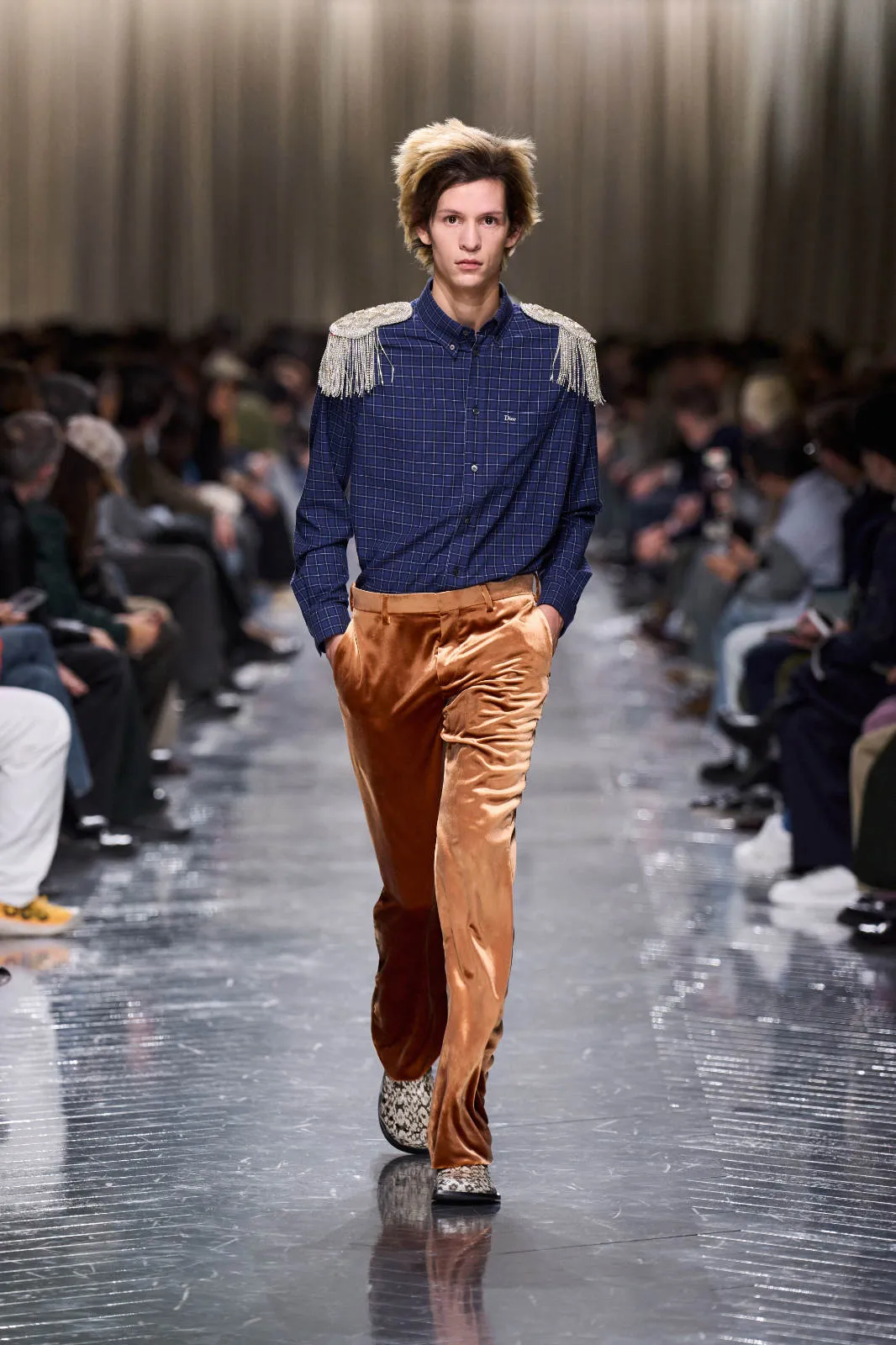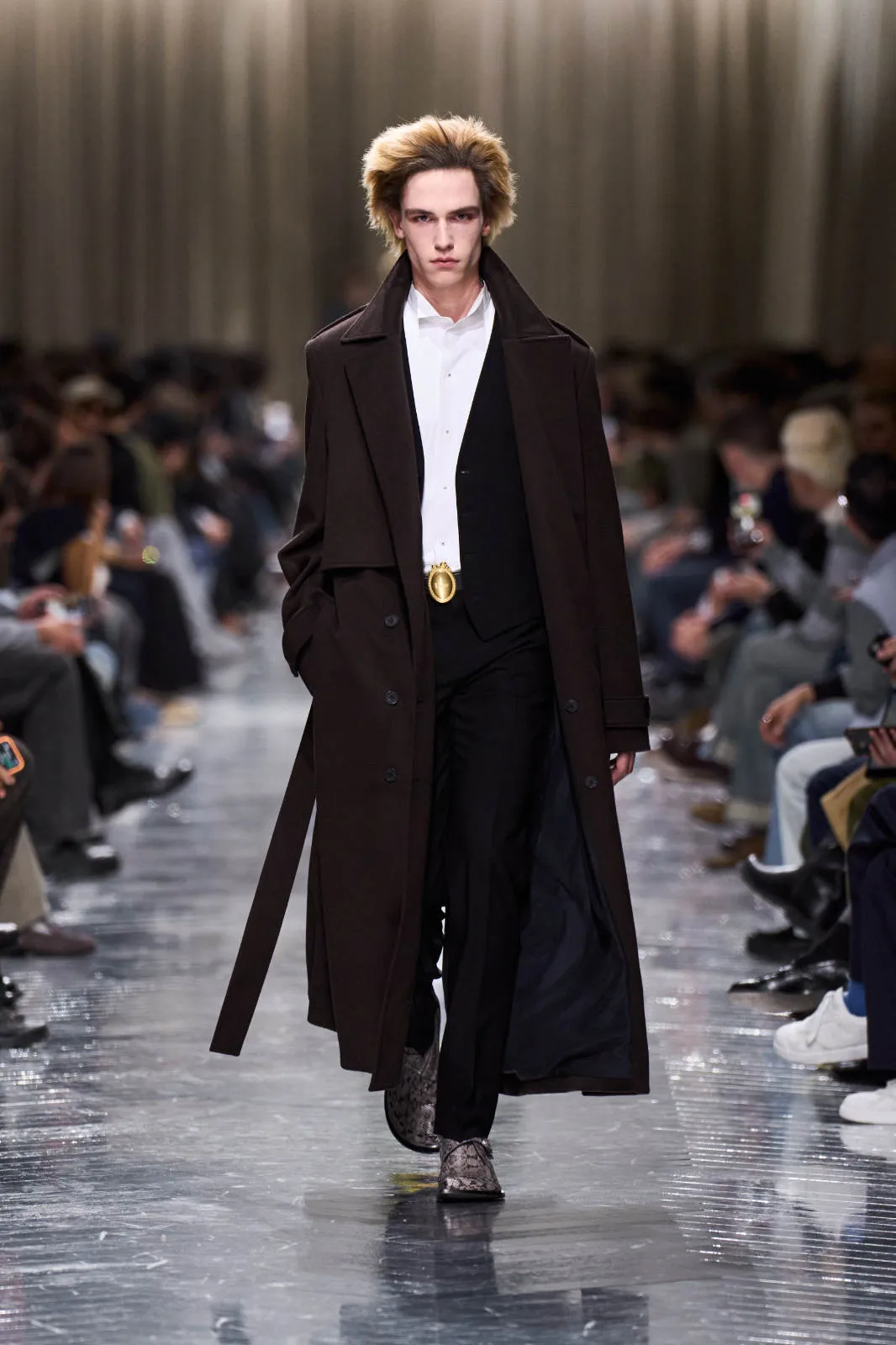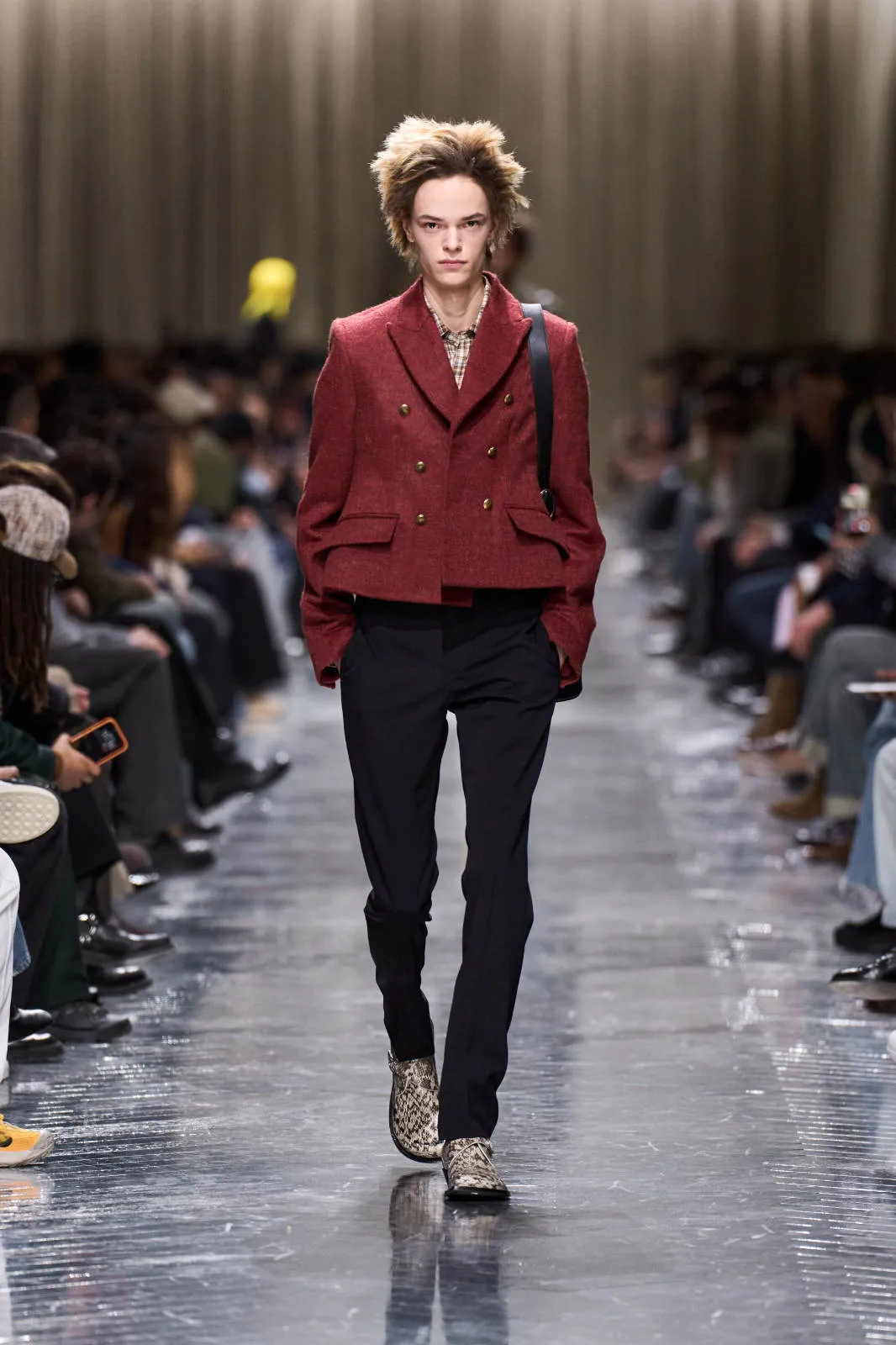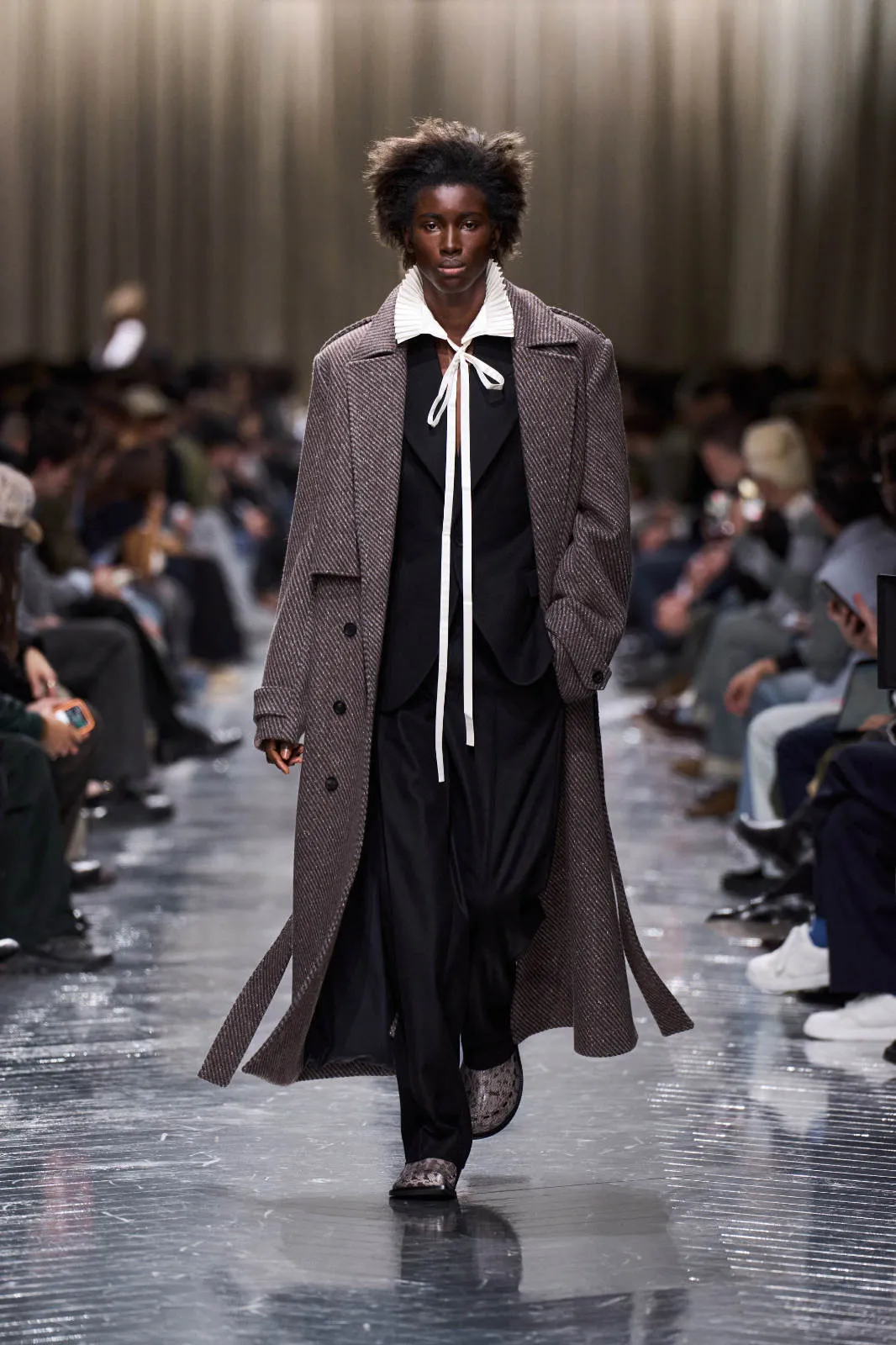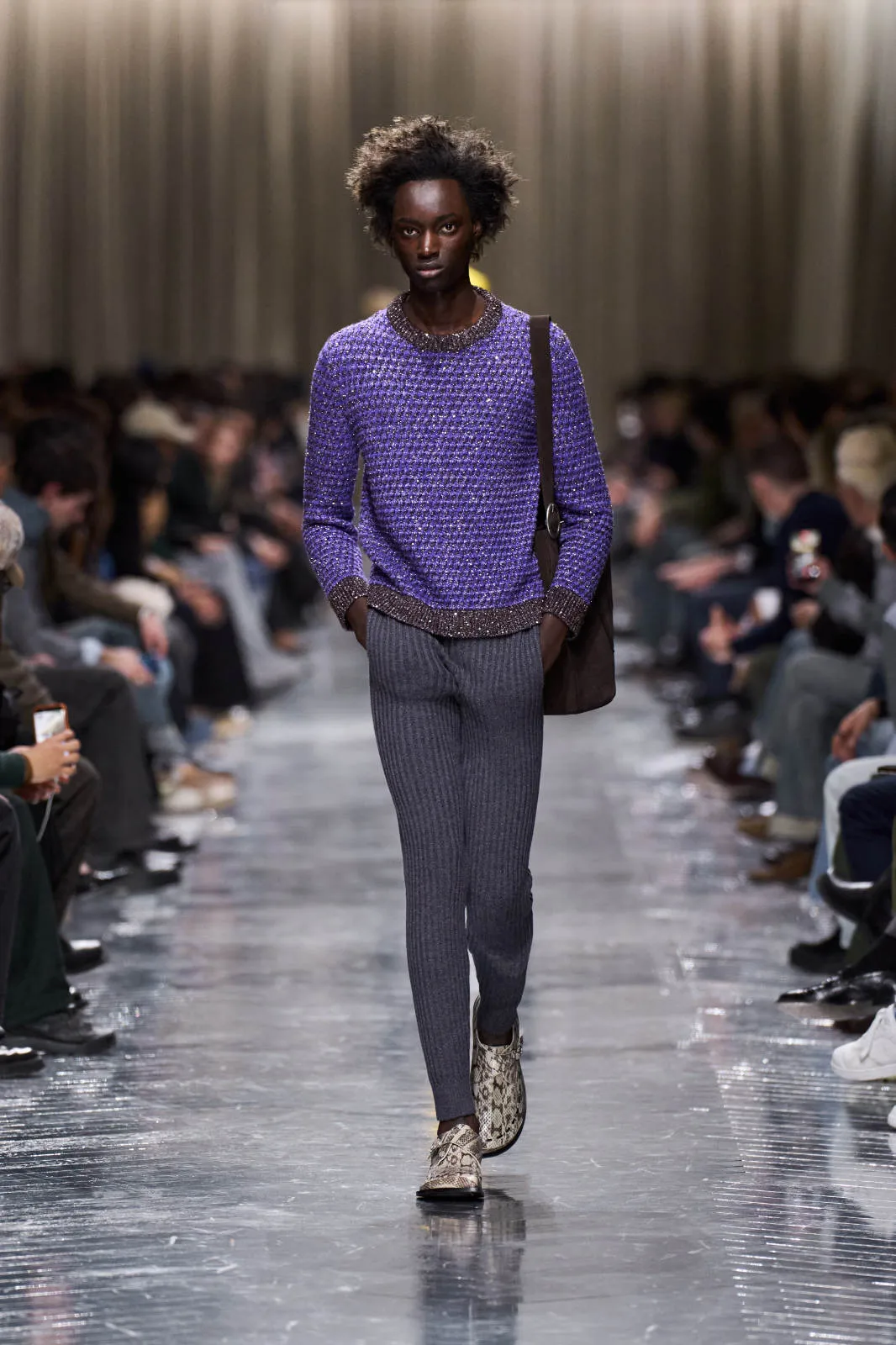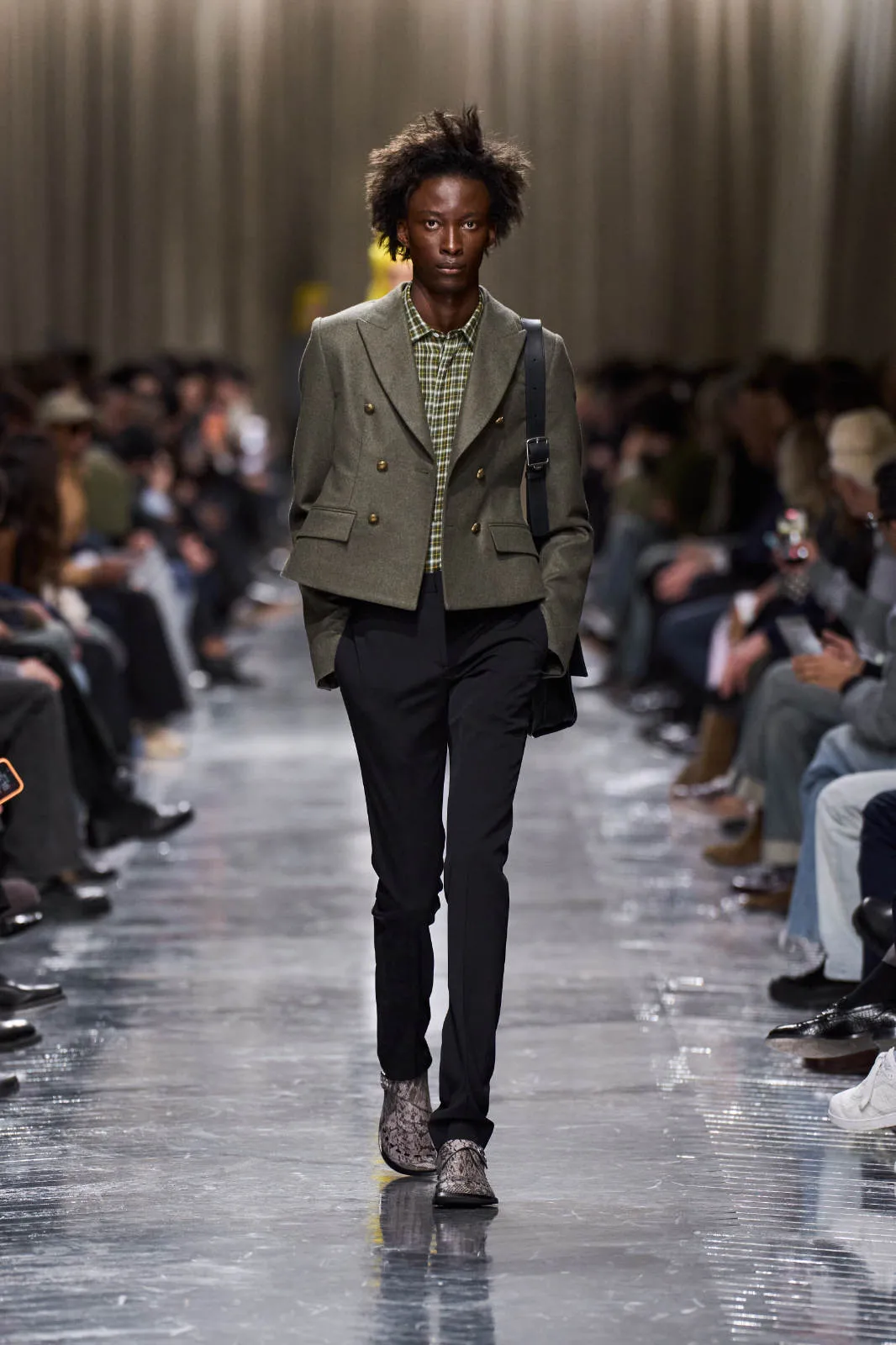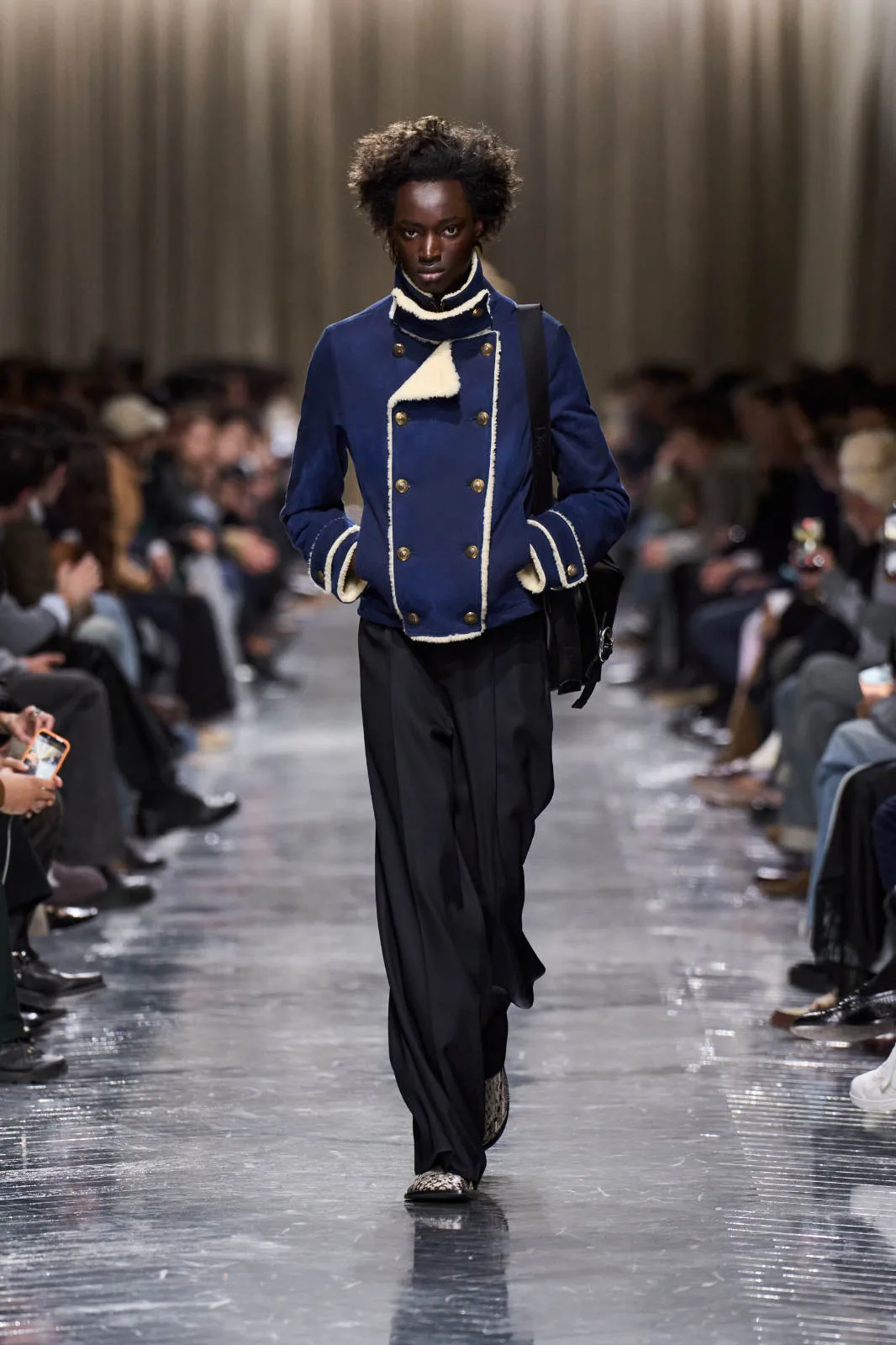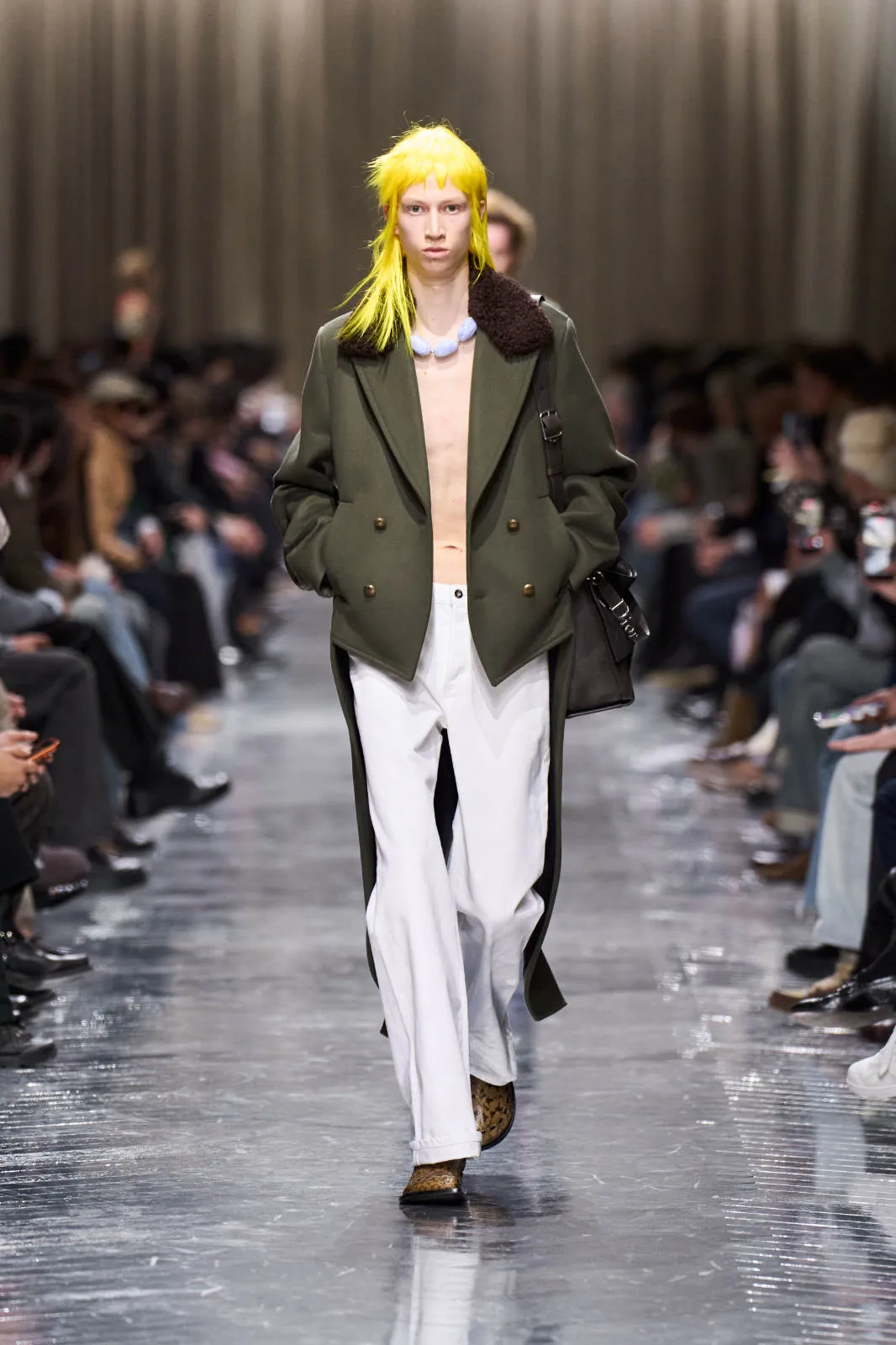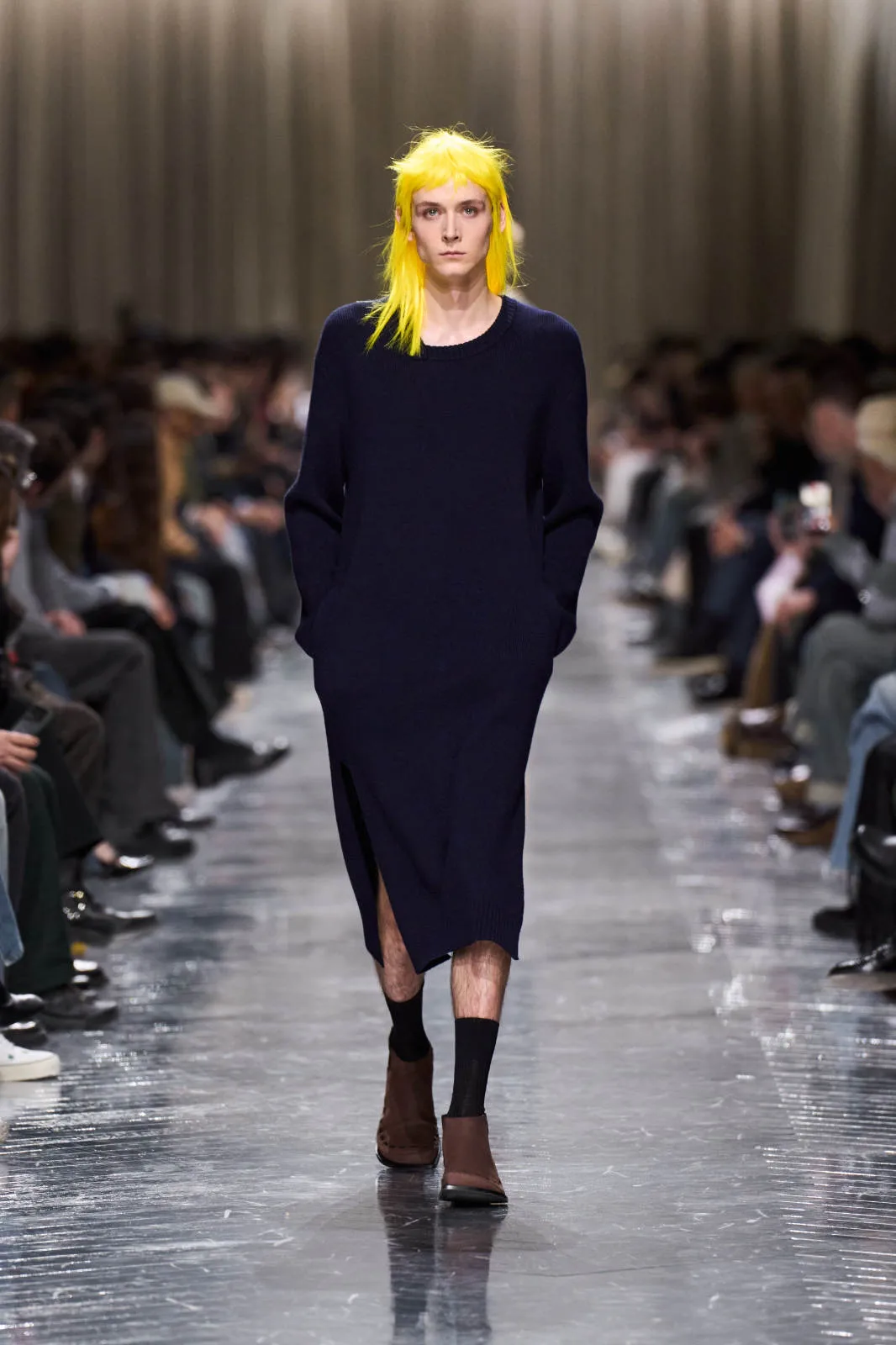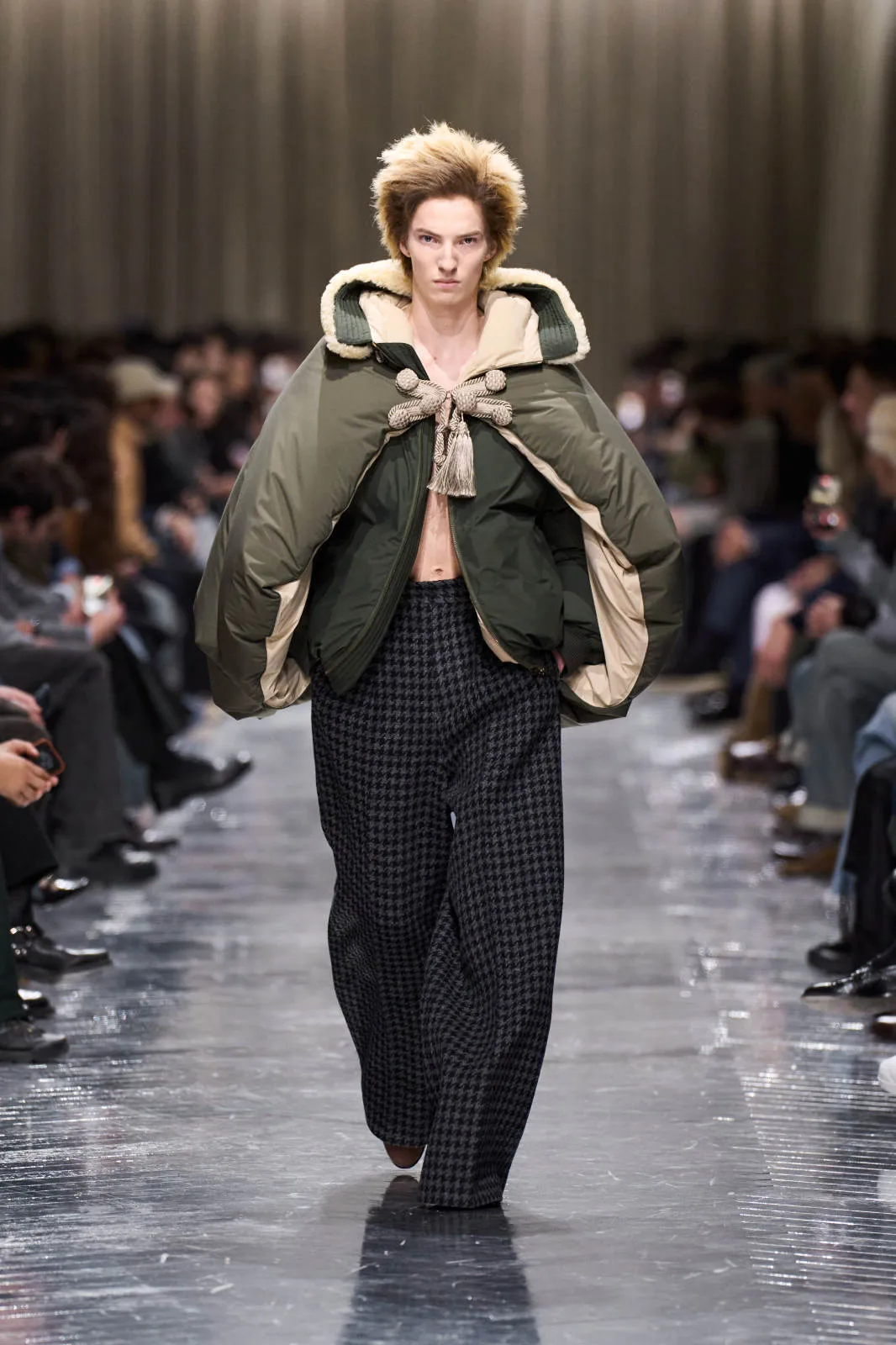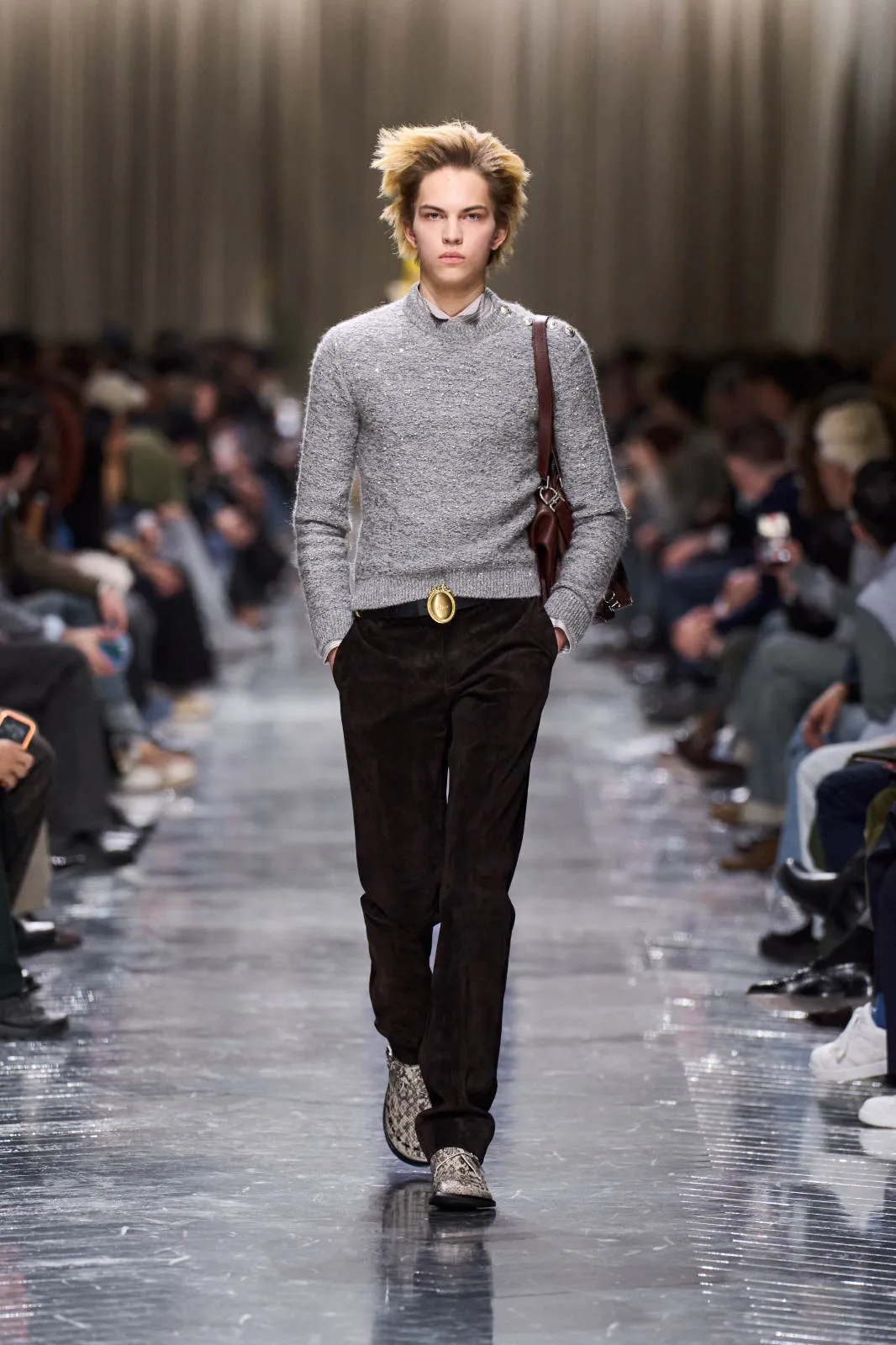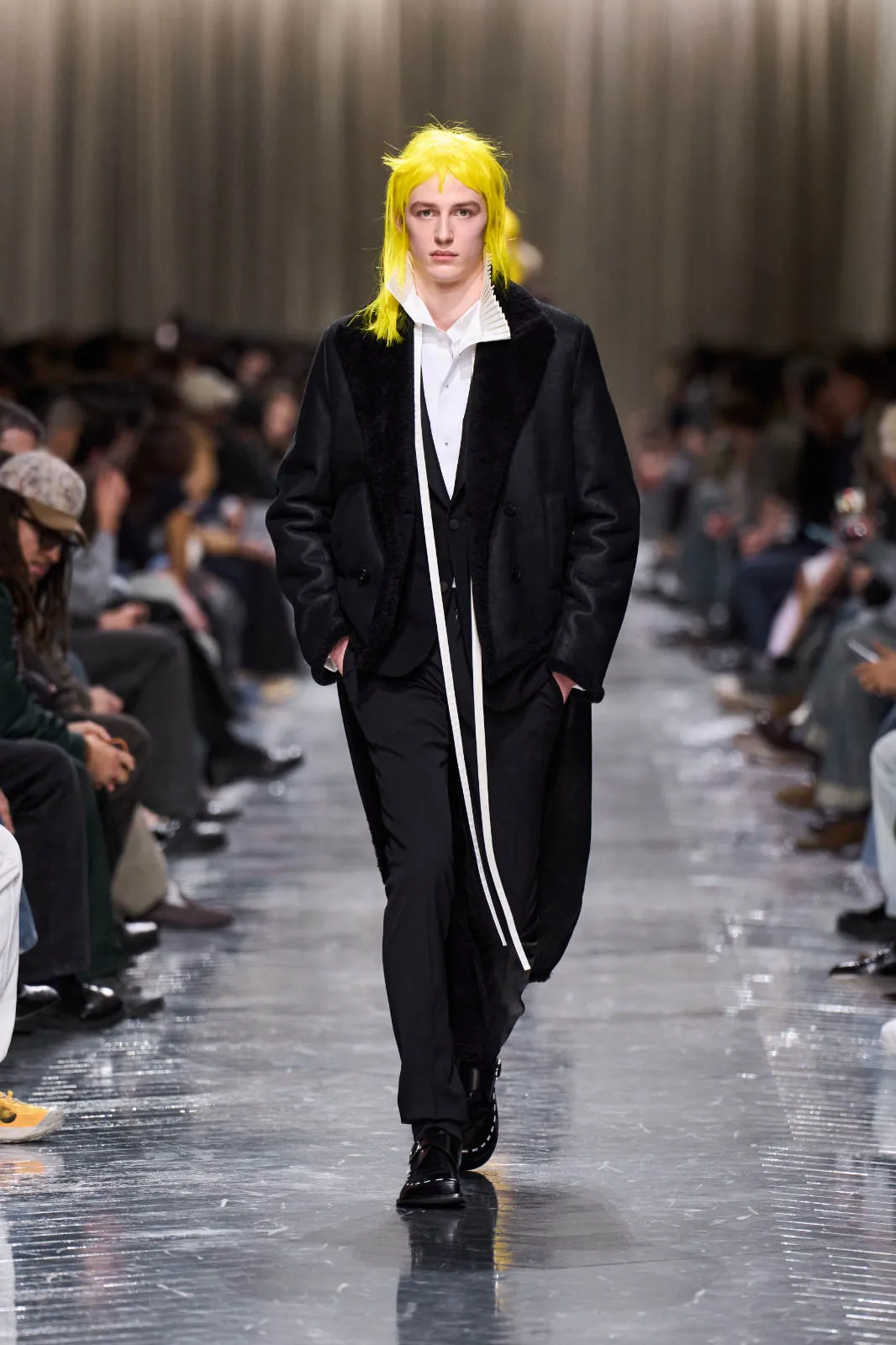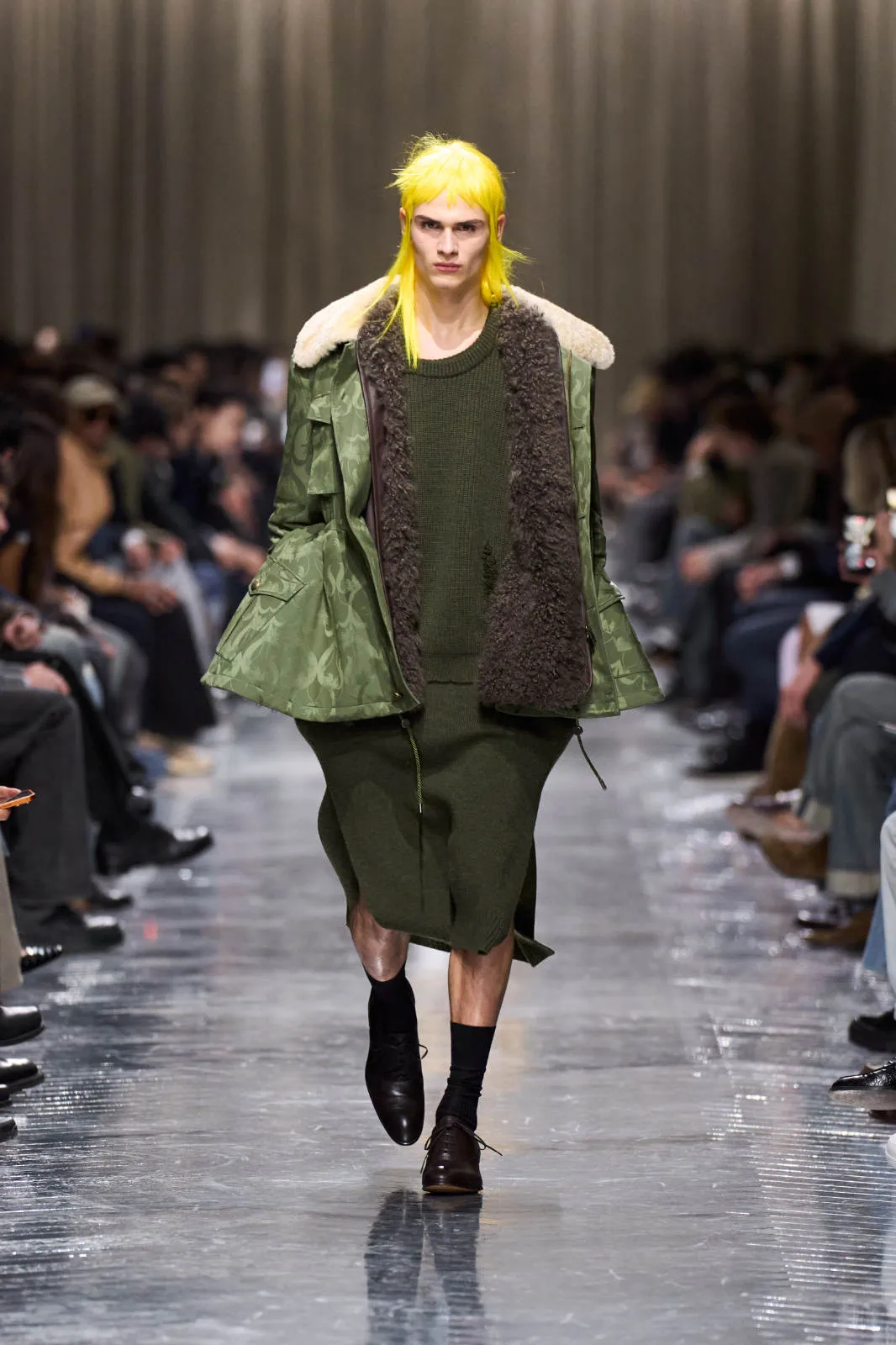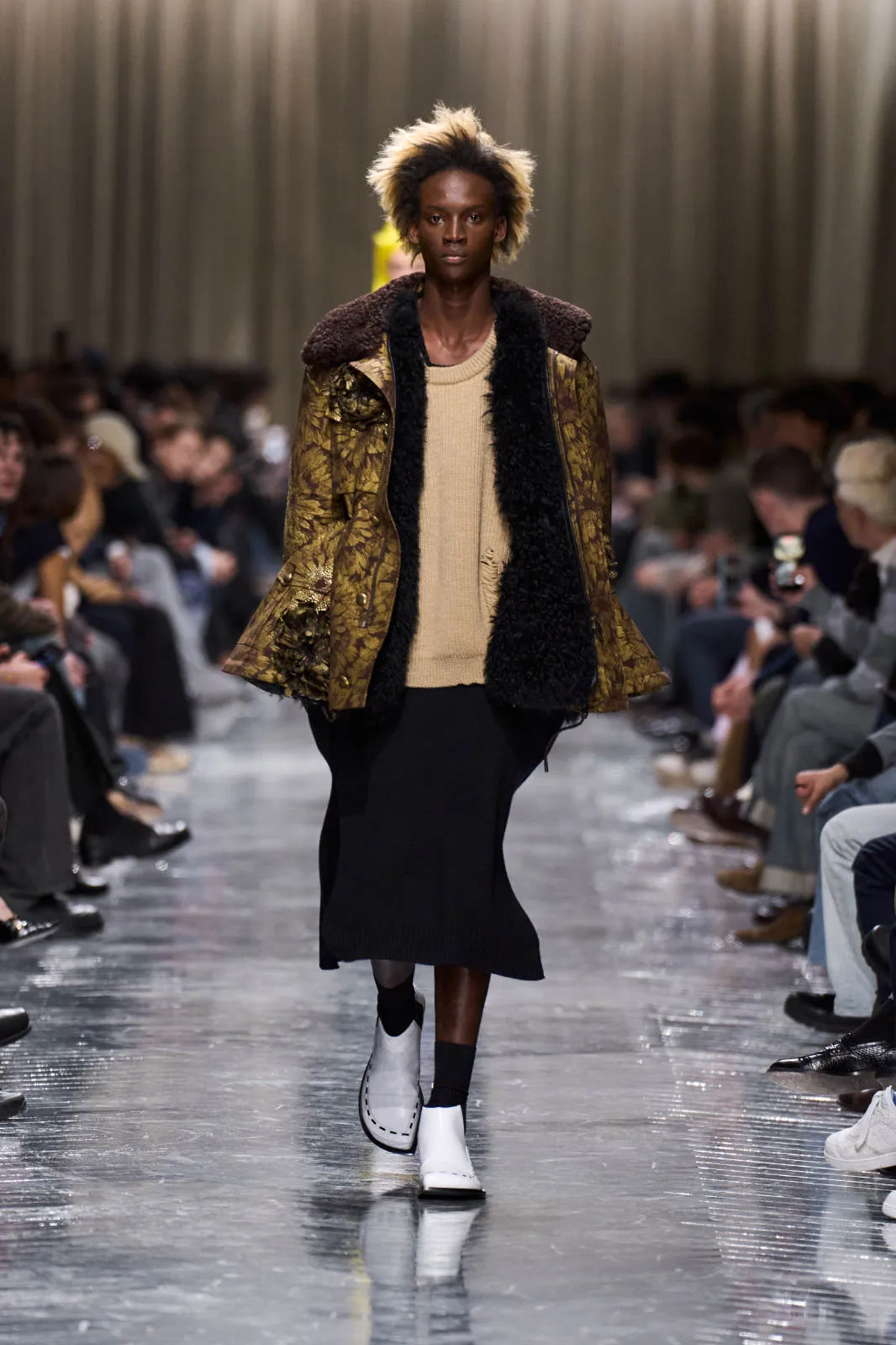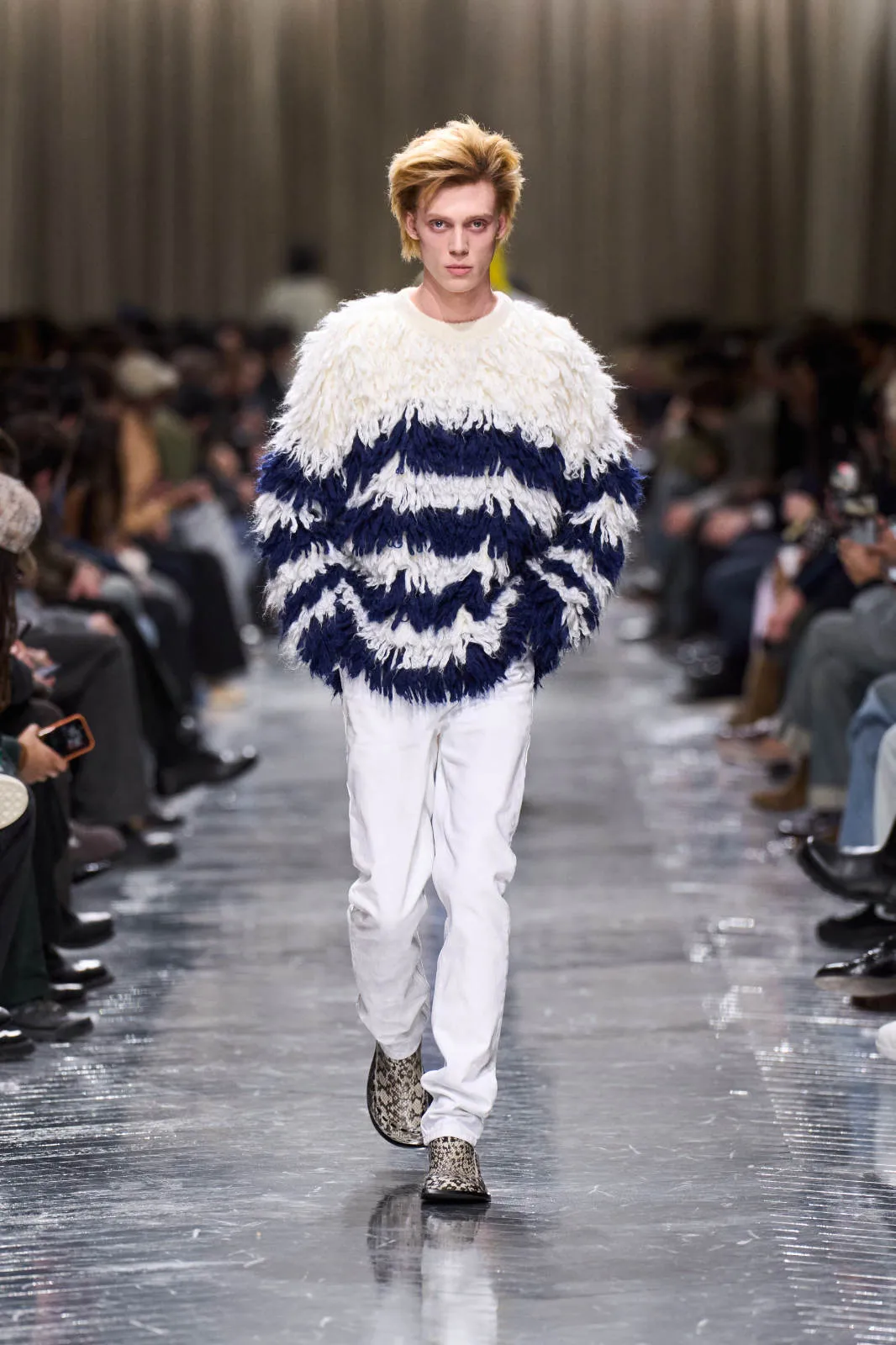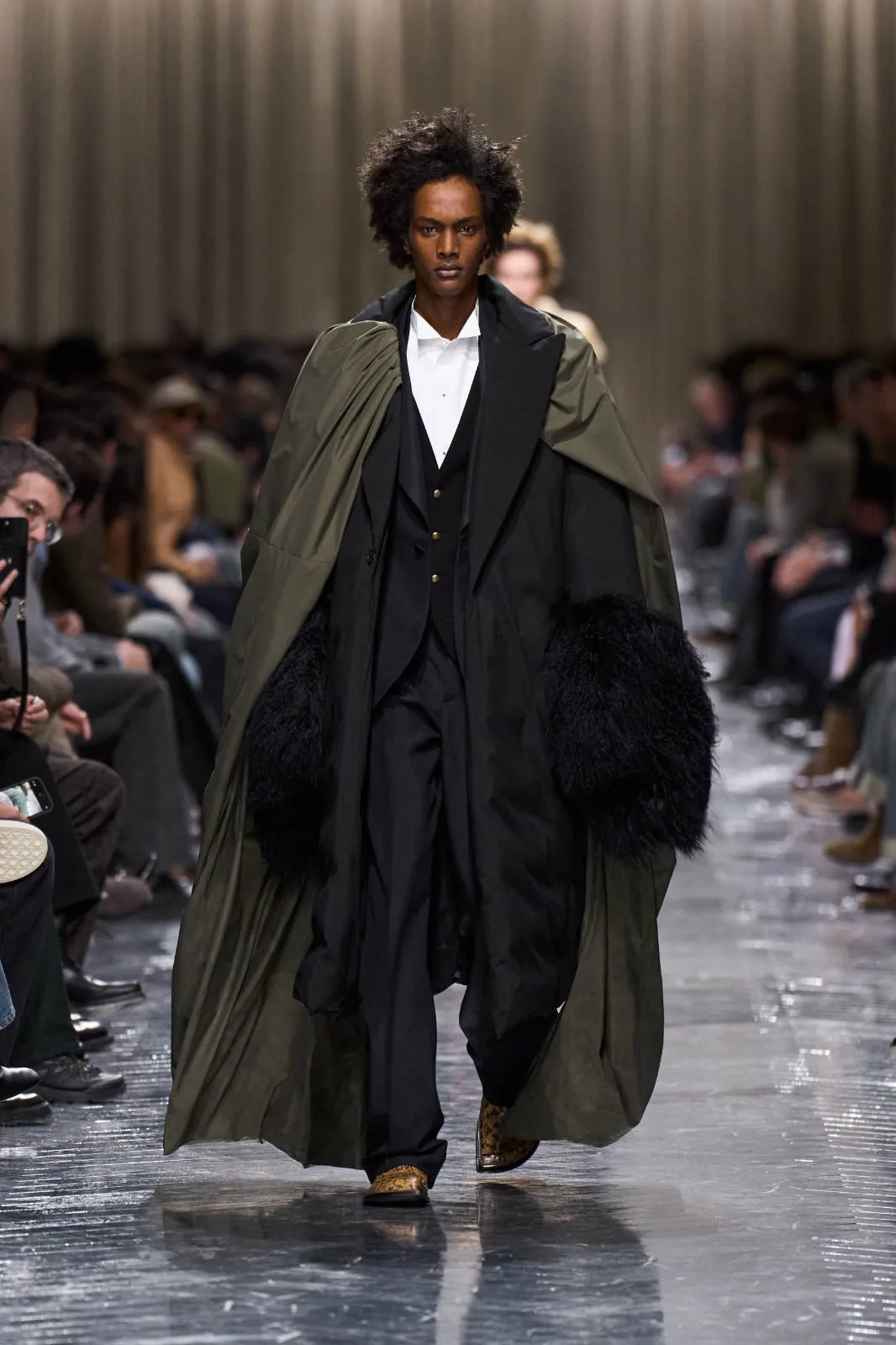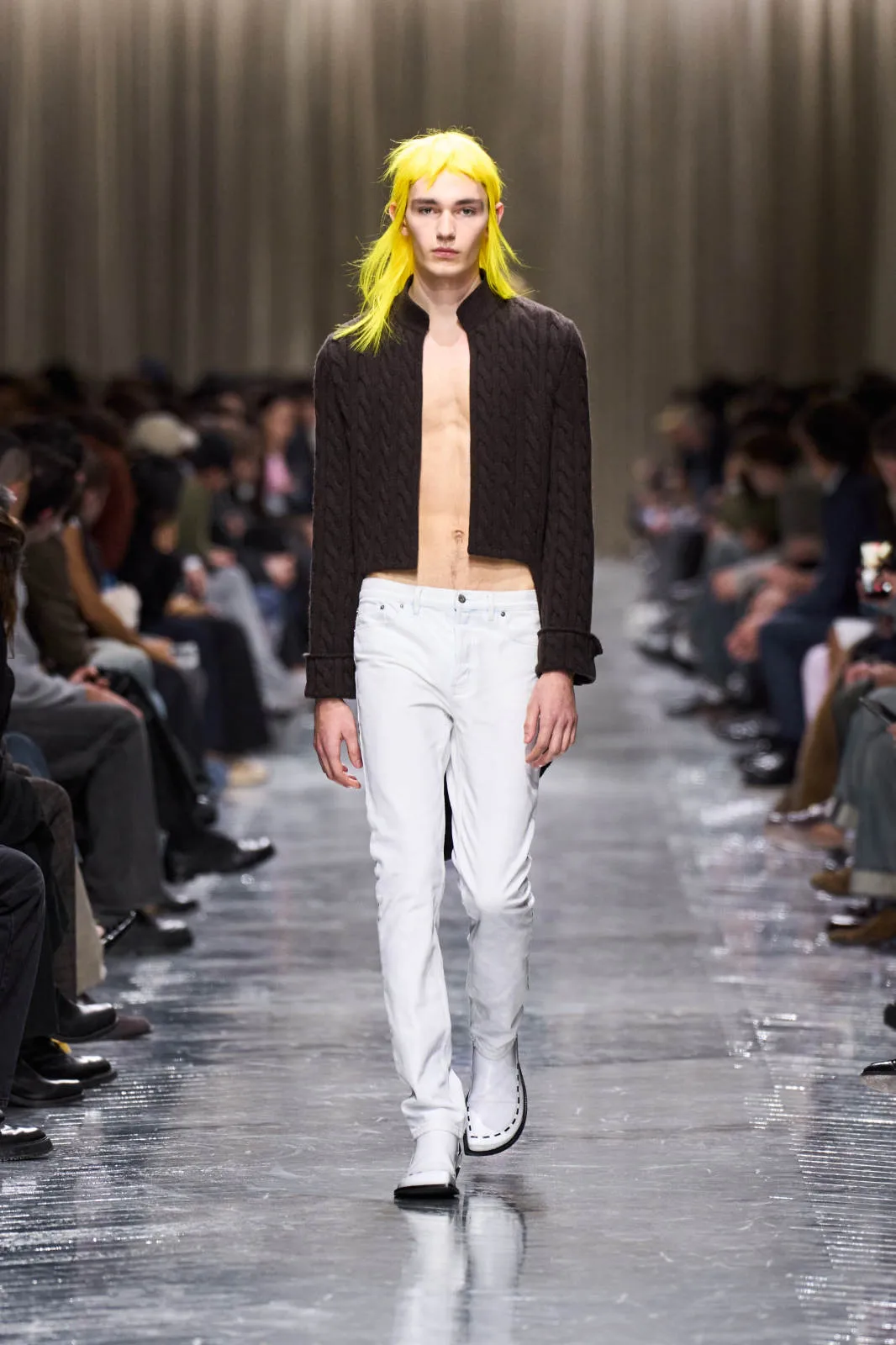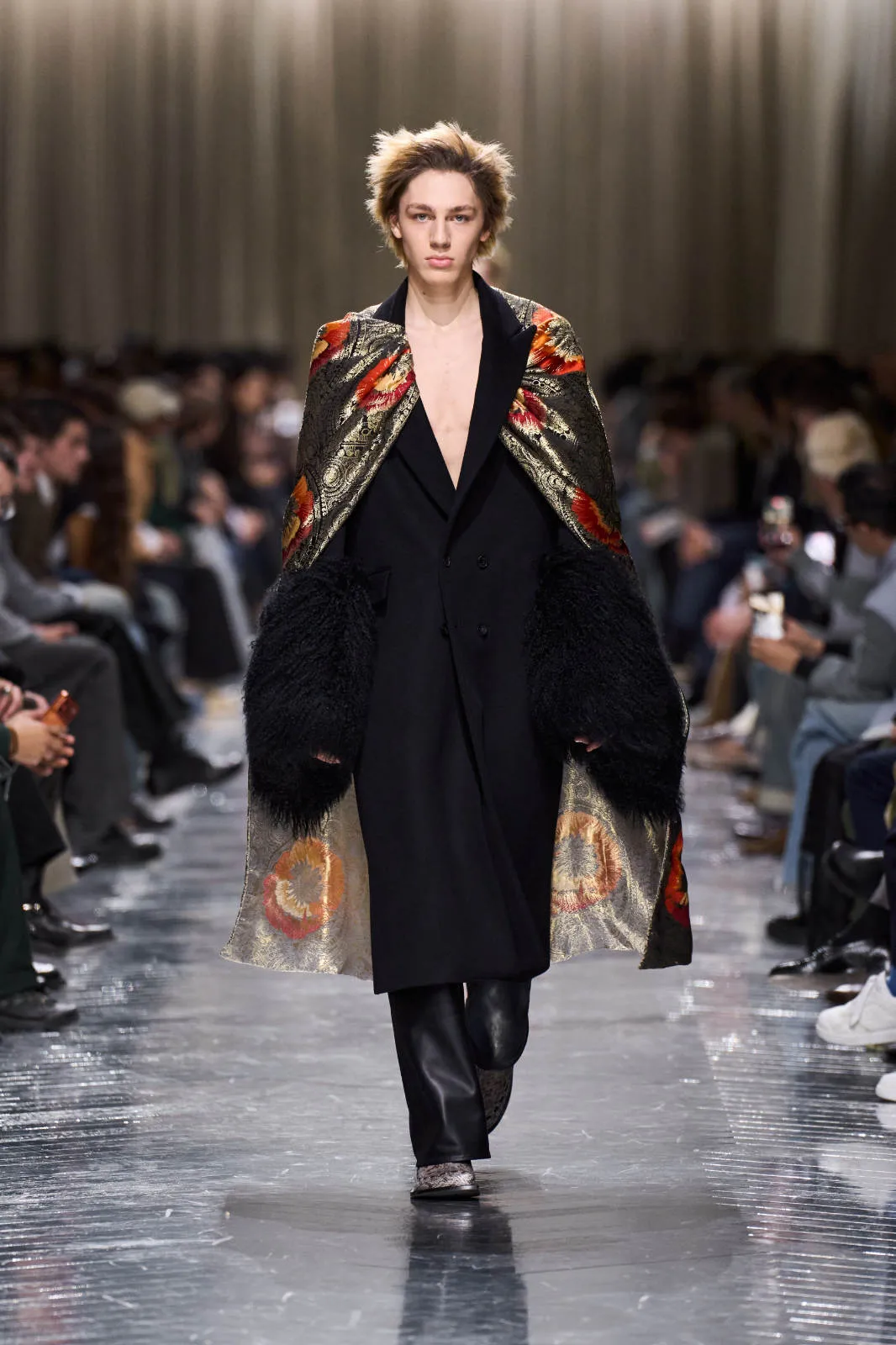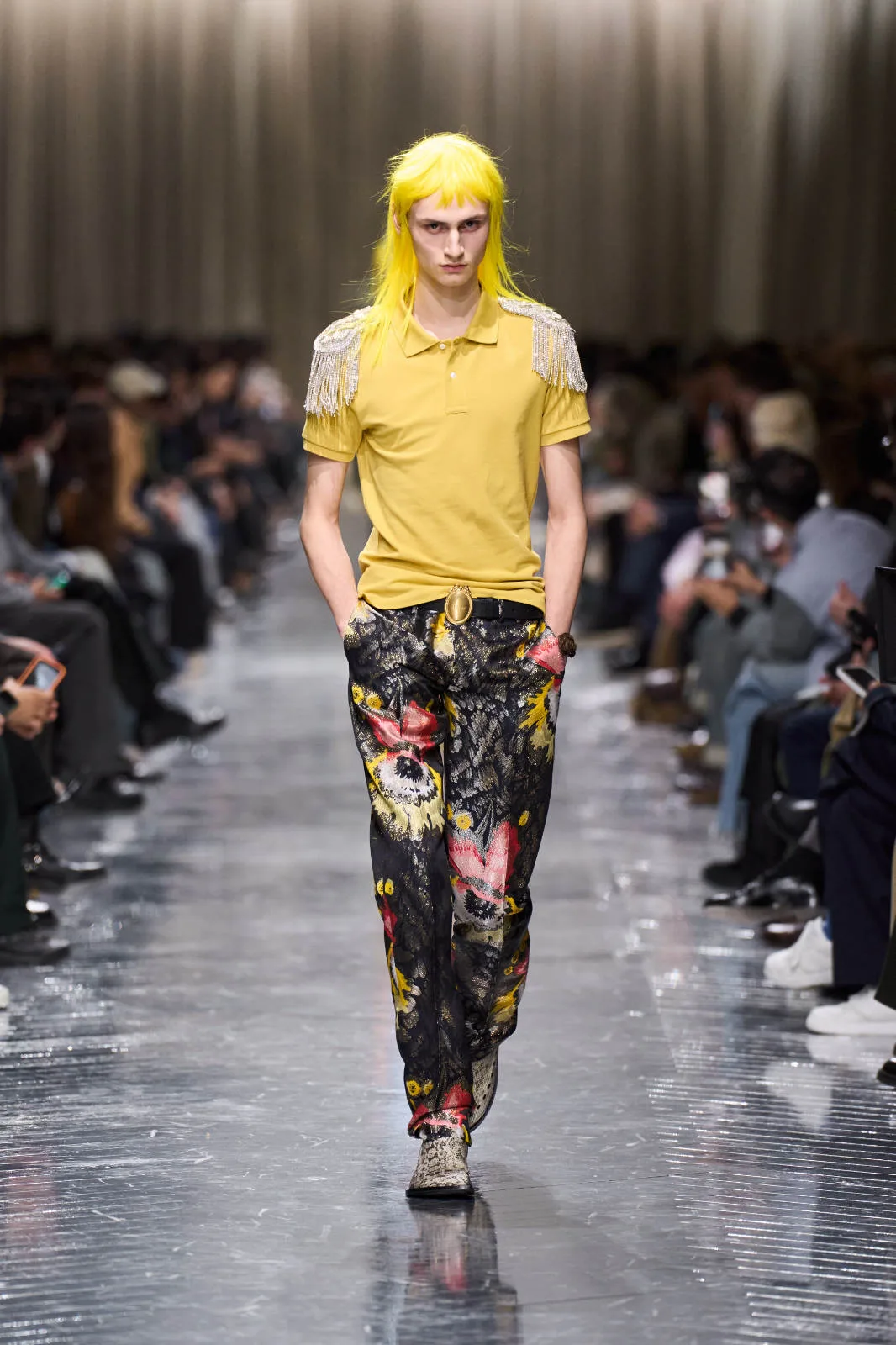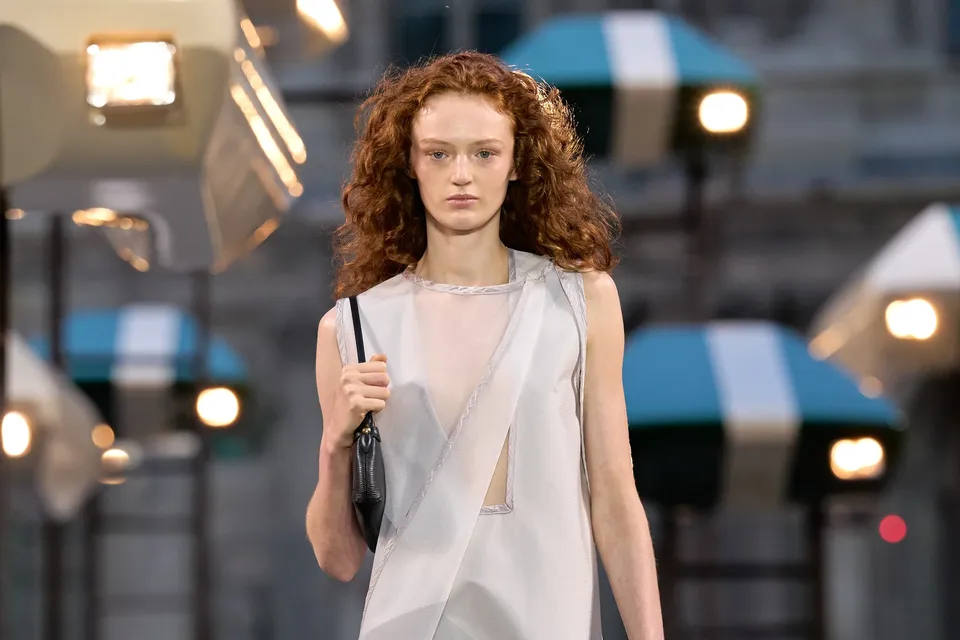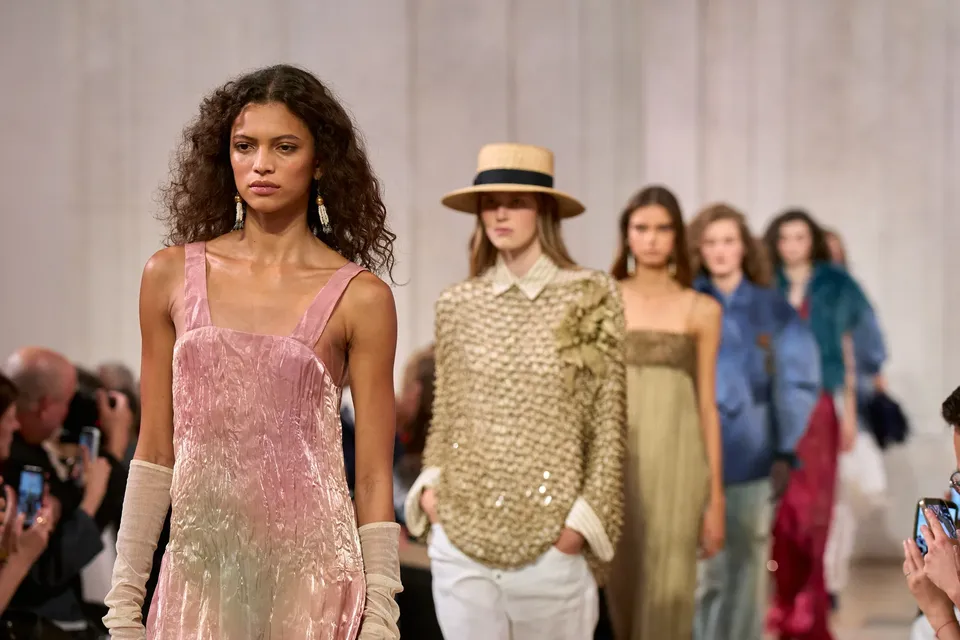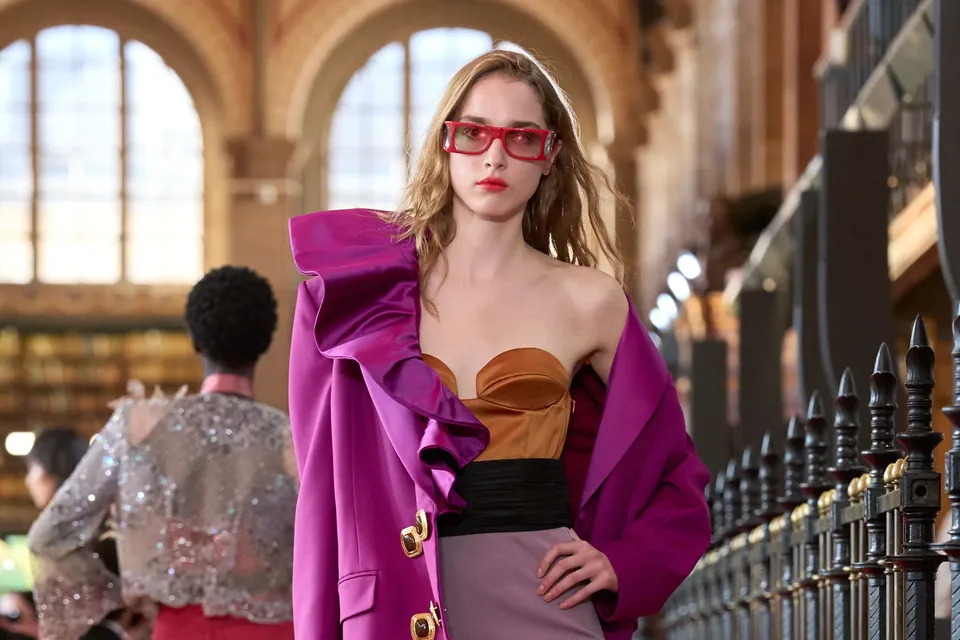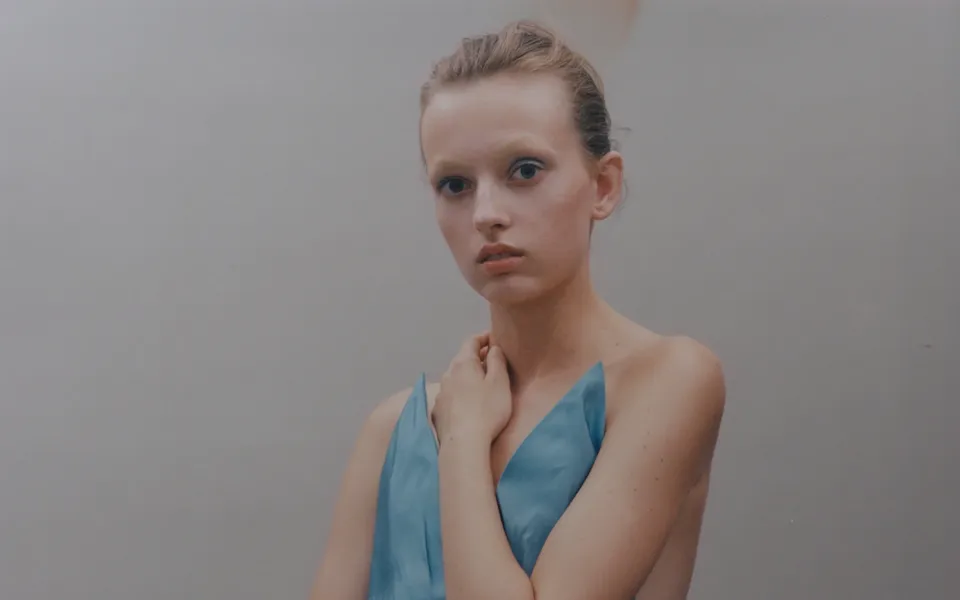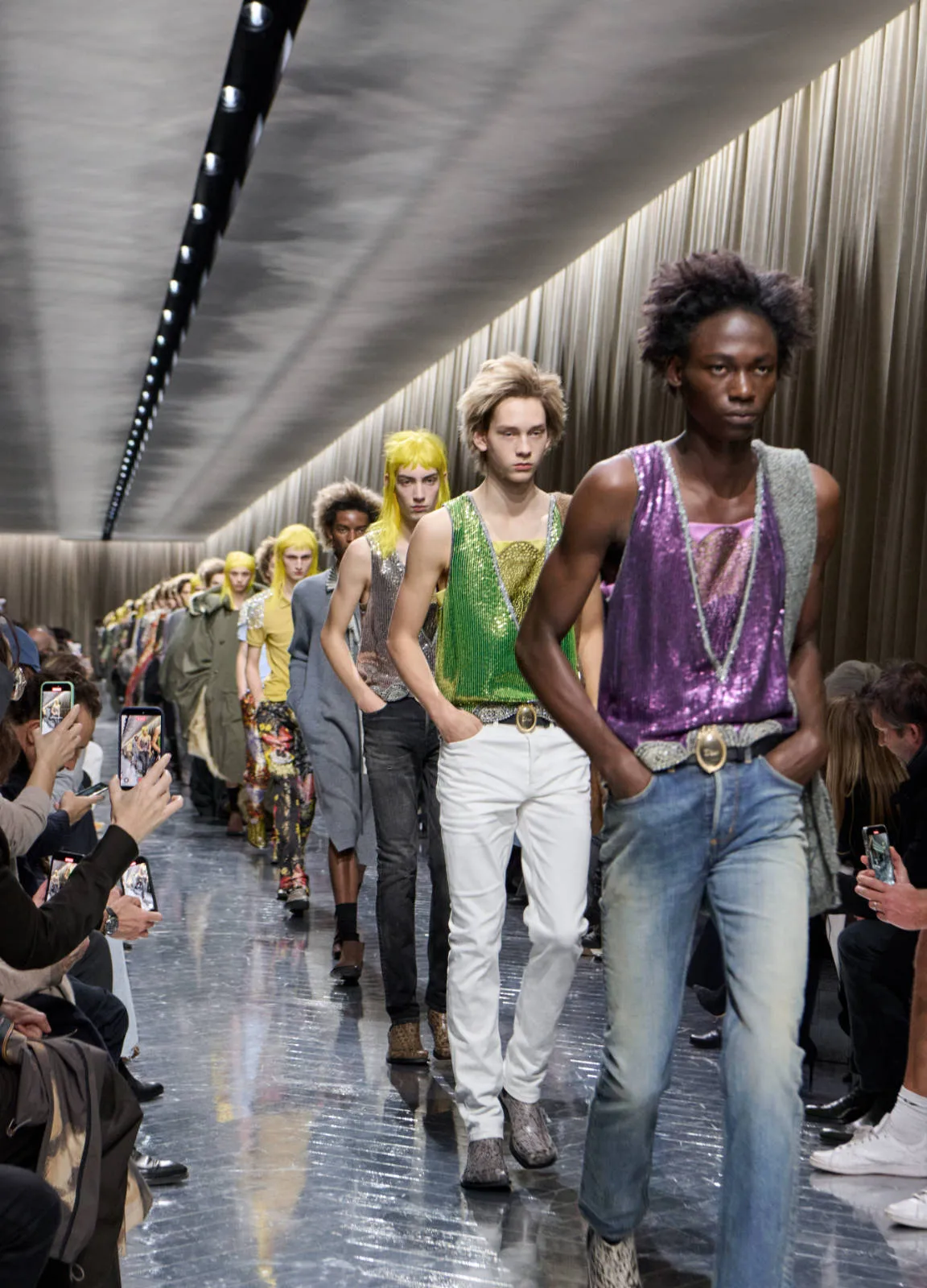
Jonathan Anderson presents his new venture chez Dior during Paris Fashion Week. Keeping his efforts and desire of turning the runways into rivers of references and inspiration that merge in the same sea, no matter how different their provenance is, he brings the visionary craft of the master Paul Poiret, the classical silhouettes of the maison he's now the head of and the modern take on eccentricity embodied by young artists like Mk.gee to continue on his exploration of what the new aristocracy would look like, in an attempt of not bringing the past to the present, but rather giving continuation to a story that already exists.
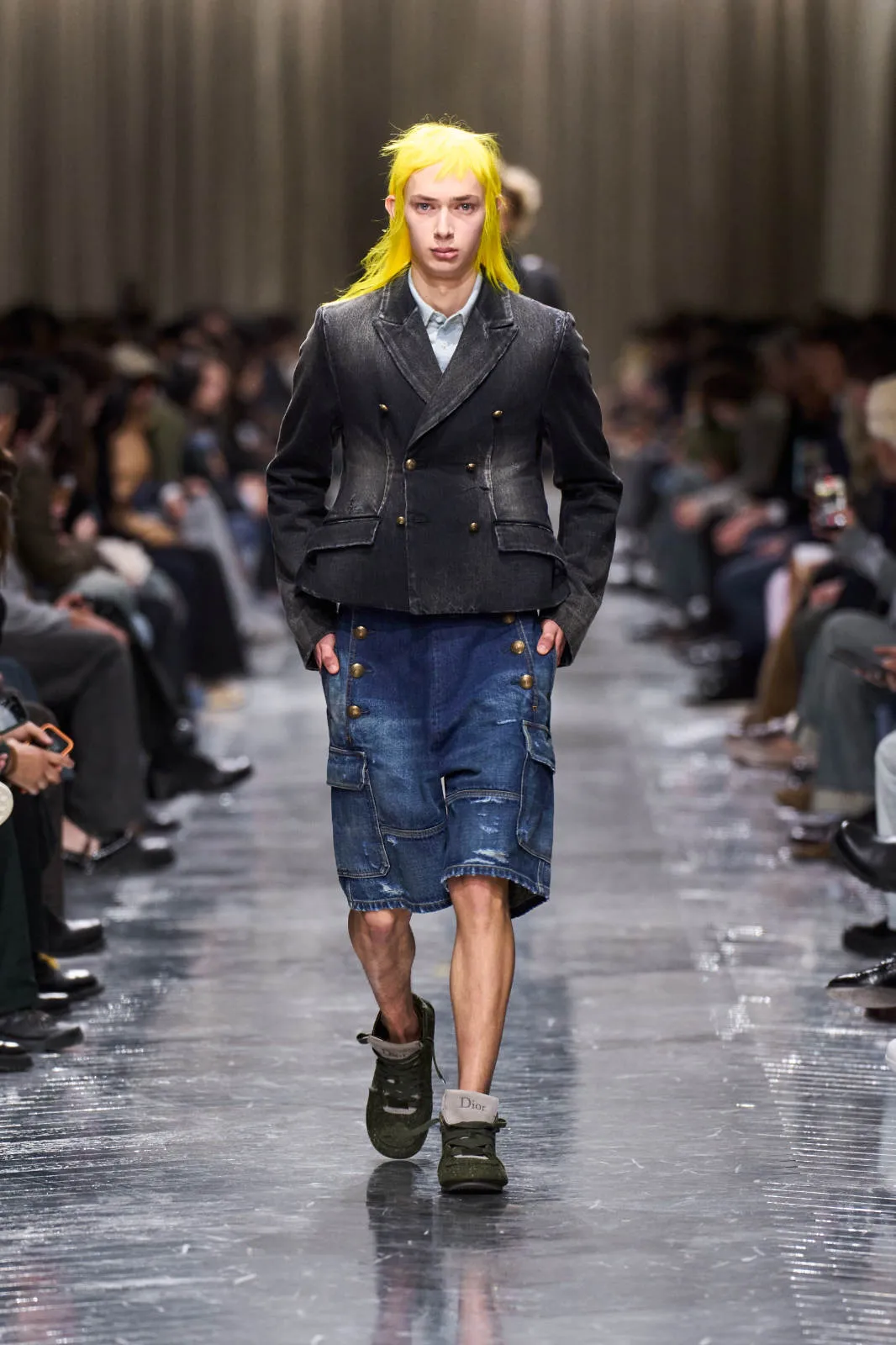
Is that a mini bar jacket with strange proportions in denim paired with cargo denim shorts with sailor-style buttons and a yellow mullet wig that looks straight out of a Junya Watanabe show? Yes, it is! Anderson's new class of cool kids seems a bit chaotic at first; they seem to not want to let go of the symbols and elements from the past that give them the status they think they have, like the ruffled collars, the flamboyant epaulettes or the golden belt buckles, but they also want to wear what's on now. It's hard for them to say no to an extra-large bomber, a preppy cardigan or statement footwear. But despite the mismatched energy, it wouldn't be a modern take on aristocracy without it being intellectual, and this time the masters that guided the path were Paul Poiret and, of course, Christian Dior.
With the reinterpretation of classic Dior silhouettes or the straightforward inclusion of Poiret designs, what we saw on the runway is not new per se, whether it is because the references and inspiration translated almost identically to the new garments or maybe because some looks or pieces may remind us of those of other brands, but the way of presenting them and merging them is definitely innovative.
Anderson seems to be very fixated on the idea of the “new aristocracy”, the evolution of a concept that already existed. Aristocracy, monarchy, and bourgeoisie — all of these terms seem to be fixated on the past (maybe because of the social implications and their dissonance with our current reality), but there’s still a field to explore the modernisation of their aesthetics, and this collection is the way the current Dior is doing so, by taking contemporary figures of style like Mk.gee — a key piece in the moodboard according to Jonathan — and connecting their timelines in a singular story. It’s this contradiction that creates a clash that, upon explanation and understanding, becomes less of a clash and more of a merge.
As for the “chaos” brought from the mix of styles and codes, is a lack of reference better than an excess of it? The ideal would be the middle point, but, being honest, something having more intention and thought behind it is better than having less. Maybe it's still a language hard to understand for some, while others may be fluent in it. As Anderson has explained, this is all part of the personal narrative he's building within the brand, with its history in mind and his own personal references infiltrated in every decision. It's normal we resonate with it more or less, but what is undeniable is that the creative exercise was done carefully and keeping in mind the rules and codes of the house he's inhabiting; it's the only way a creative director can live comfortably inside it while still finding his own freedom within its walls.
It's hard to think that with a collection like this, Anderson's first intention is to cater to everyone's taste, make every single person on the internet happy and be the best-selling designer the brand has ever had. While it's true he's no stranger to the viral/pop/celebrity factor of it all, every decision made and every extra or campy detail that may seem gimmicky to the untrained eye can be justified, and mostly with serious, well-thought-out references, never a "just because". This allows him to construct his work above a solid foundation that can be poked but rarely moved. Following the creative process he feels comfortable with, and that has taken him as far as he is, seems to be what Anderson wants to keep doing in this new venture, with the touch of his Irish luck and the tendency that more often than not the world ends up adapting to his view rather than the other way around.