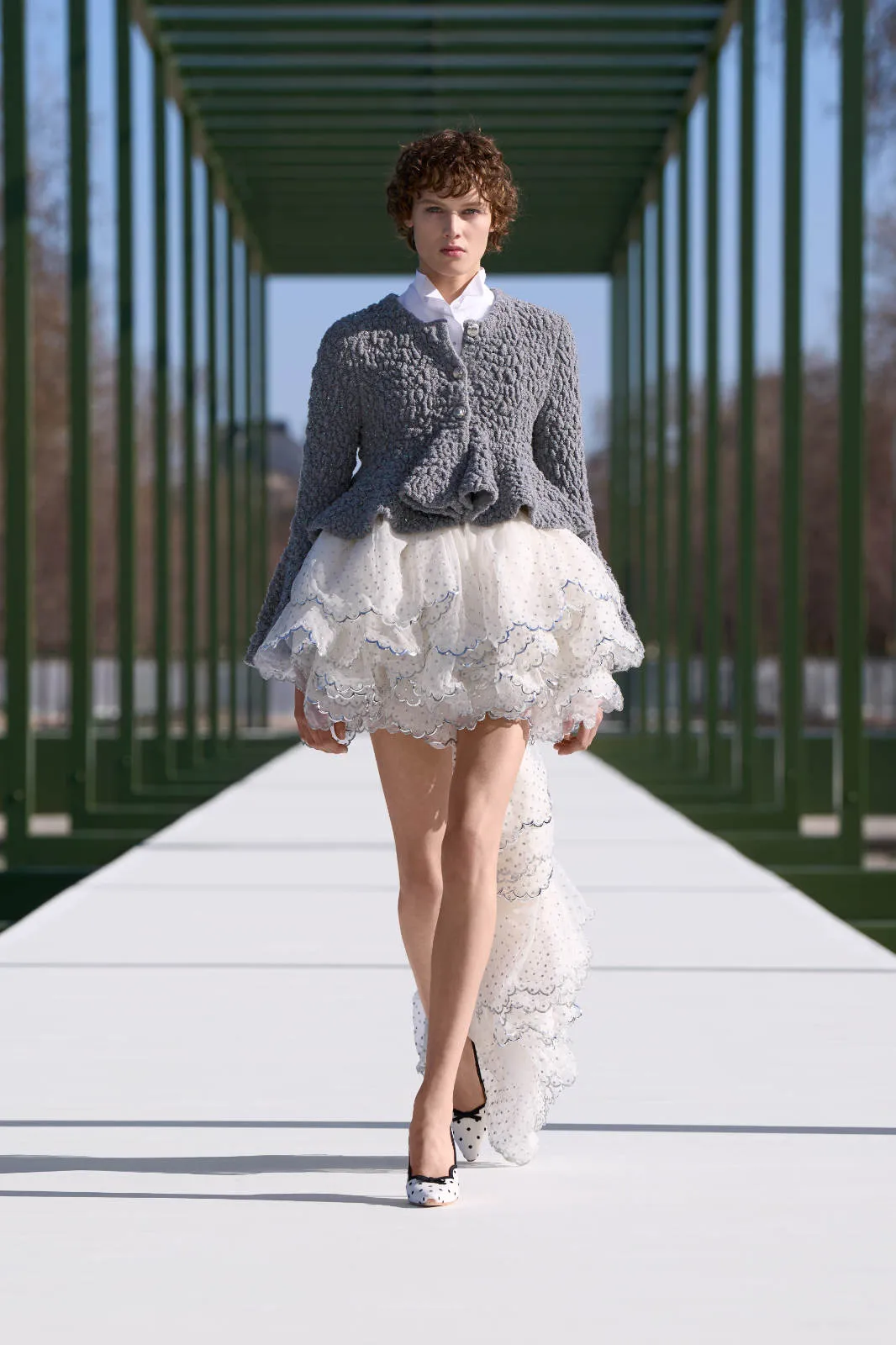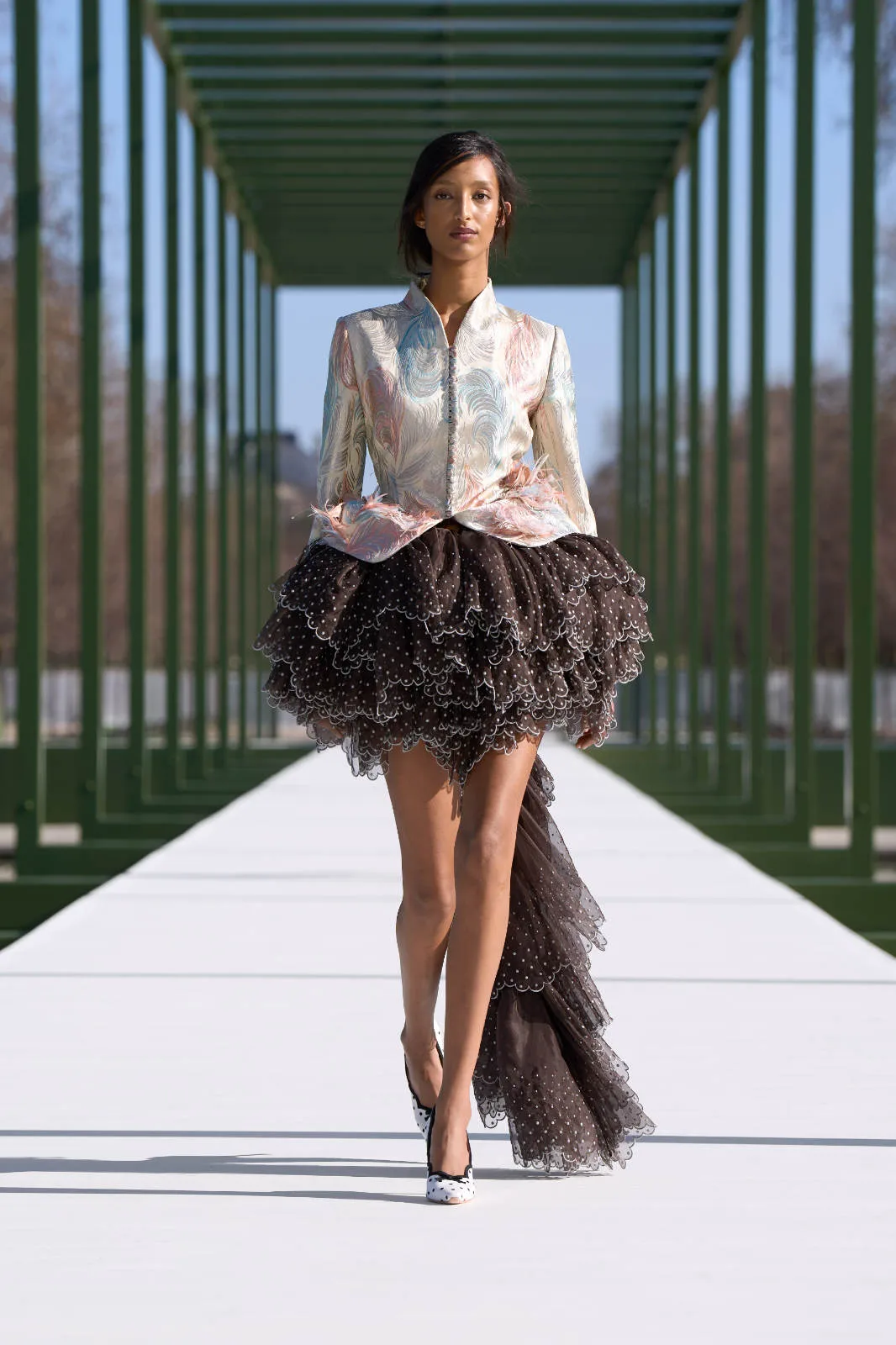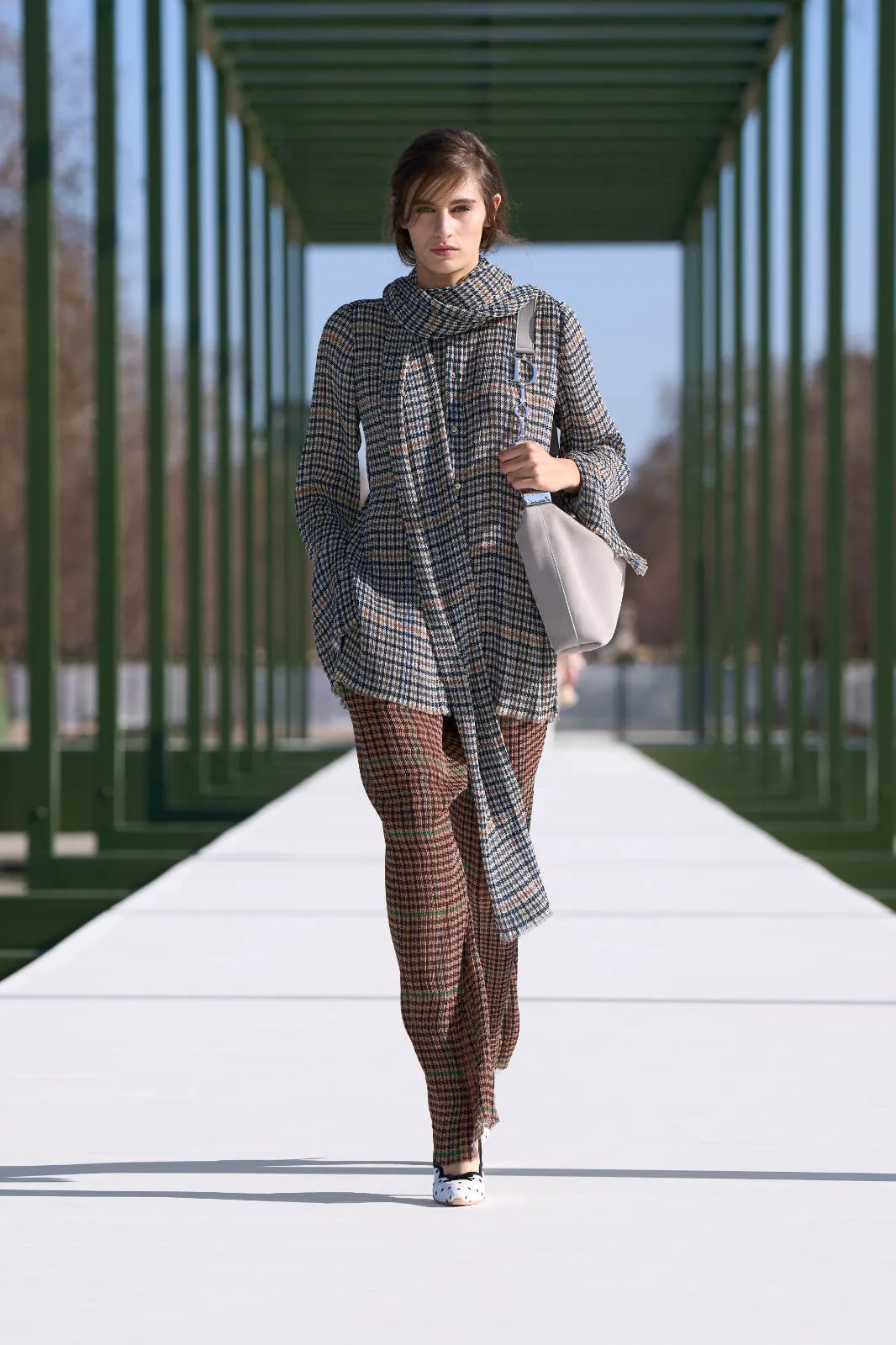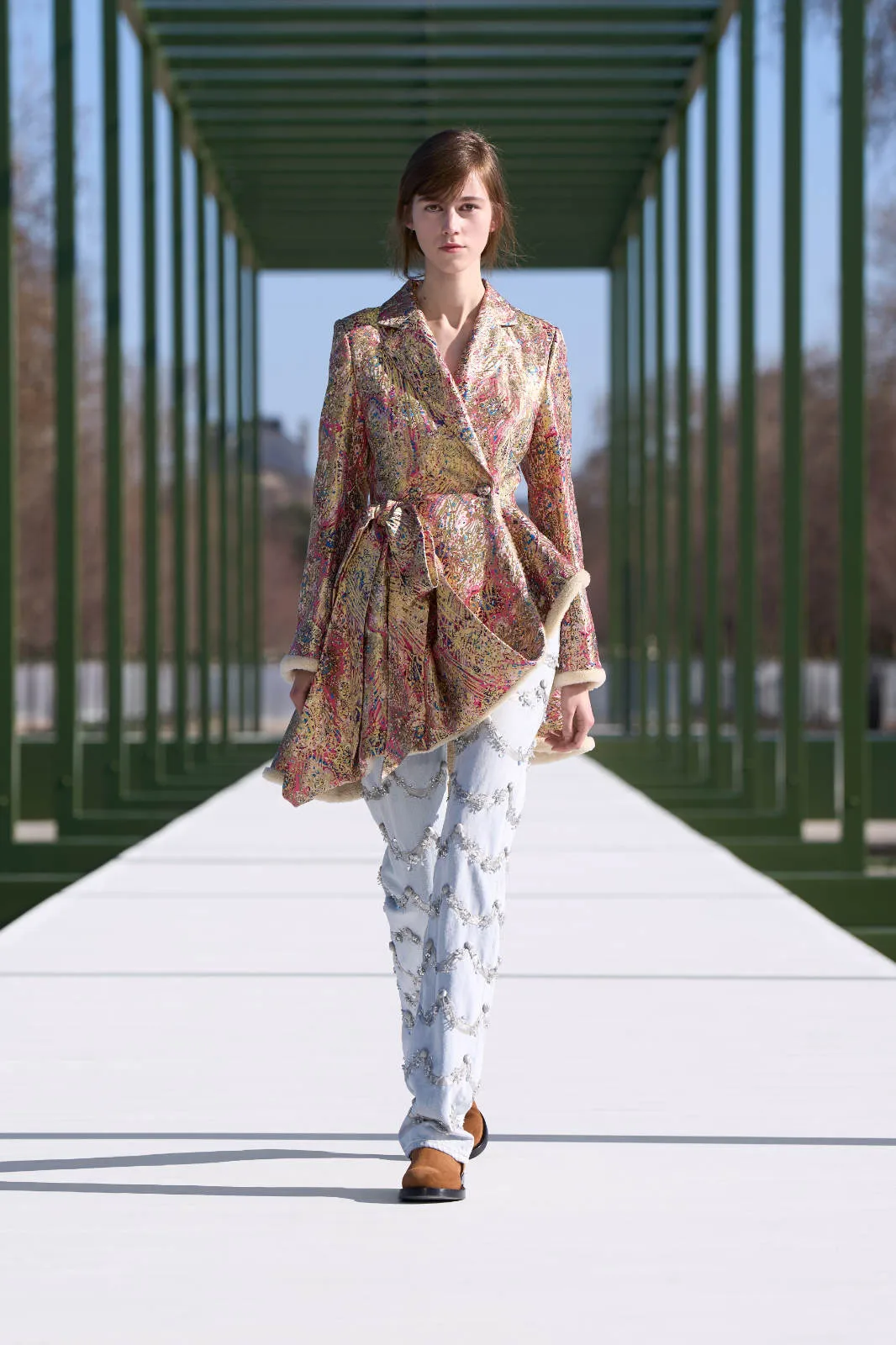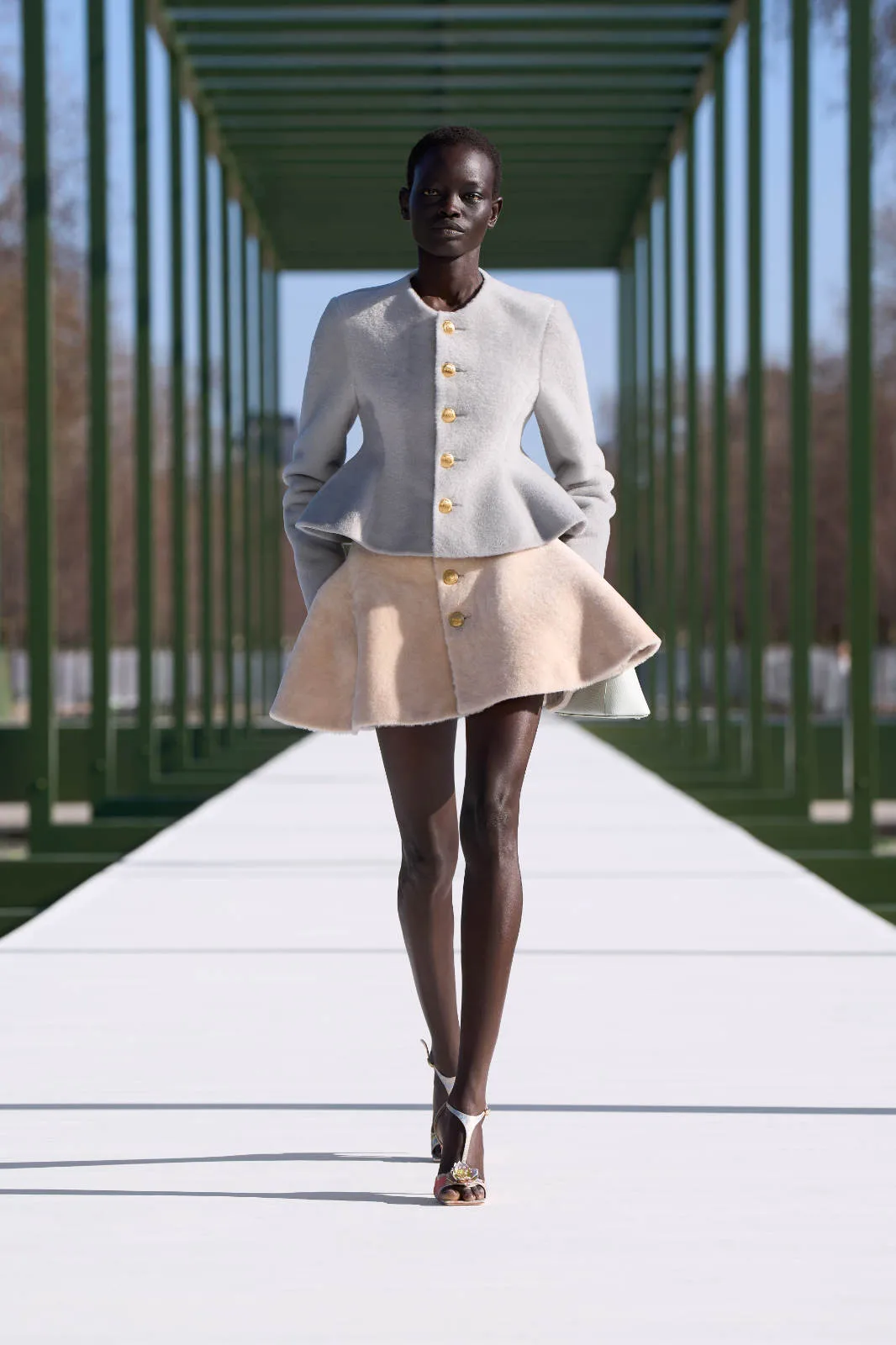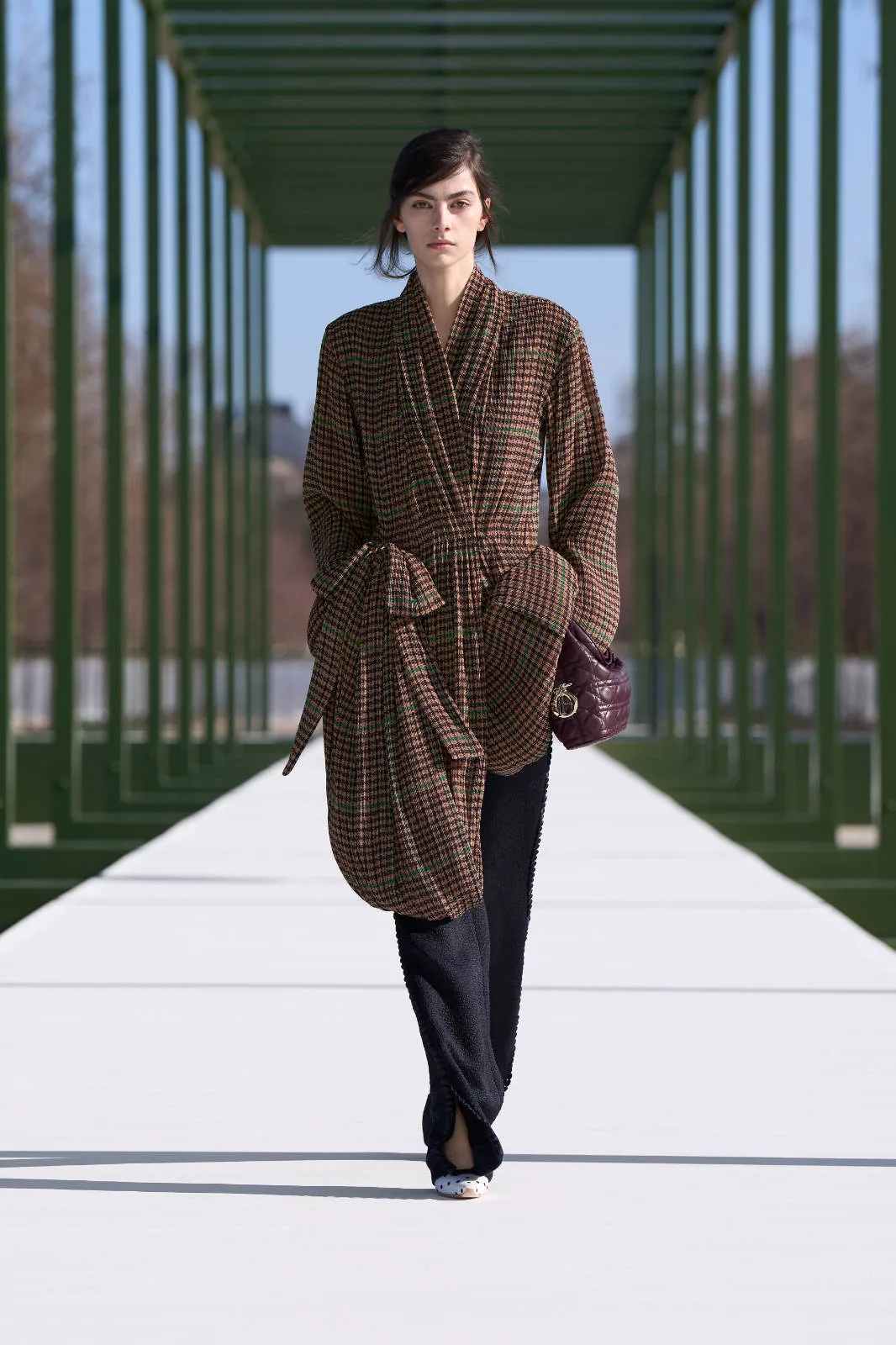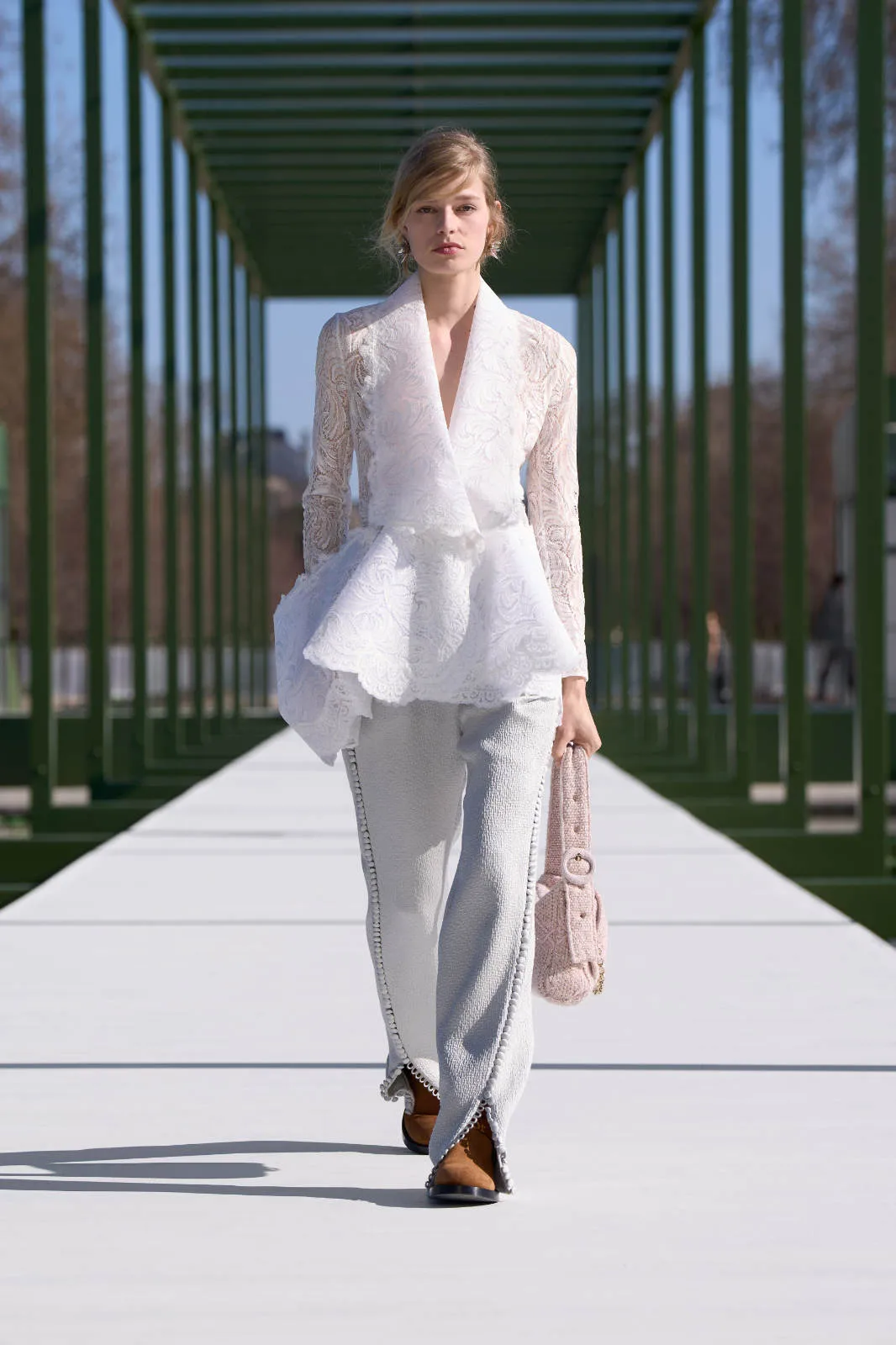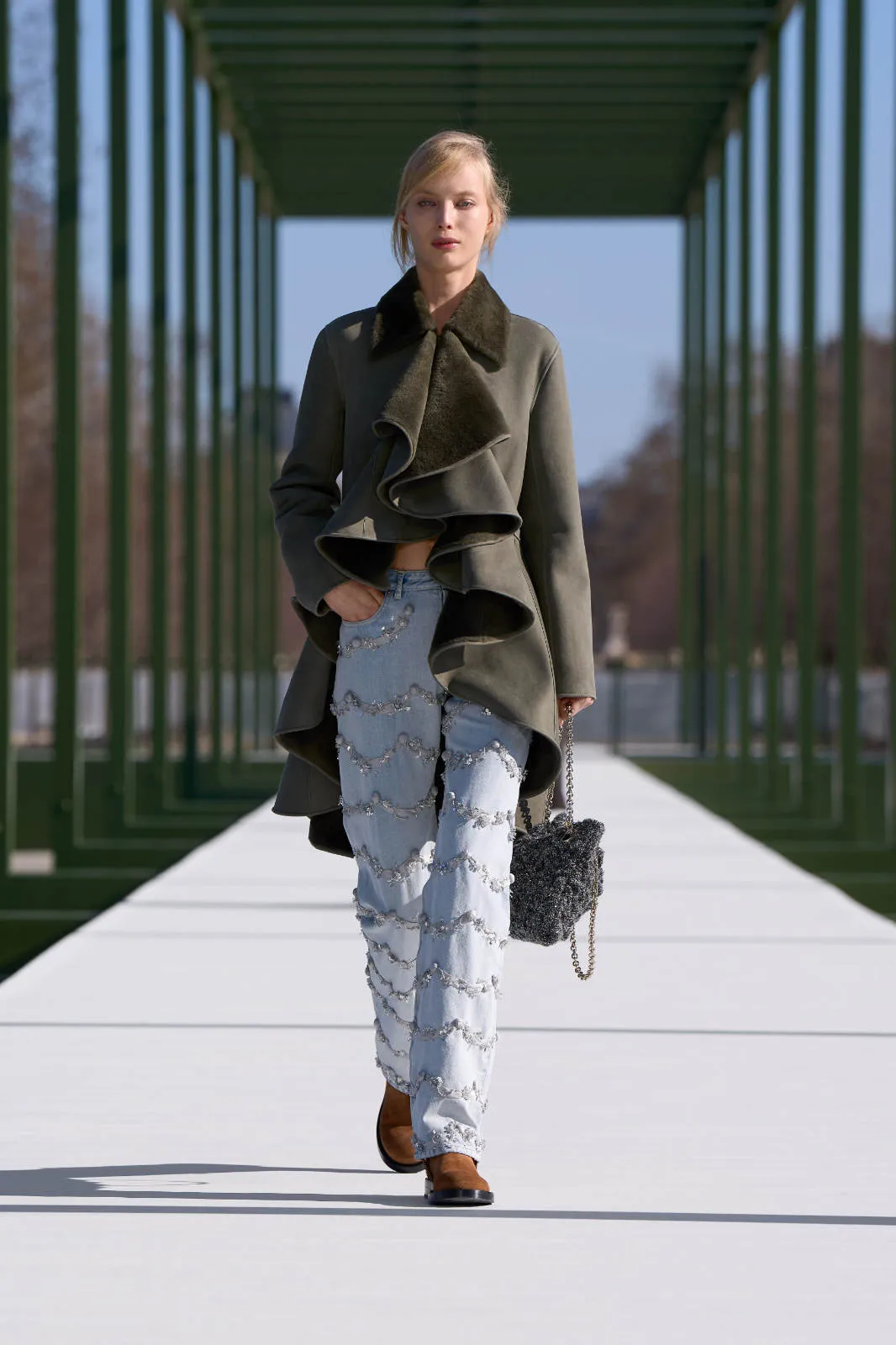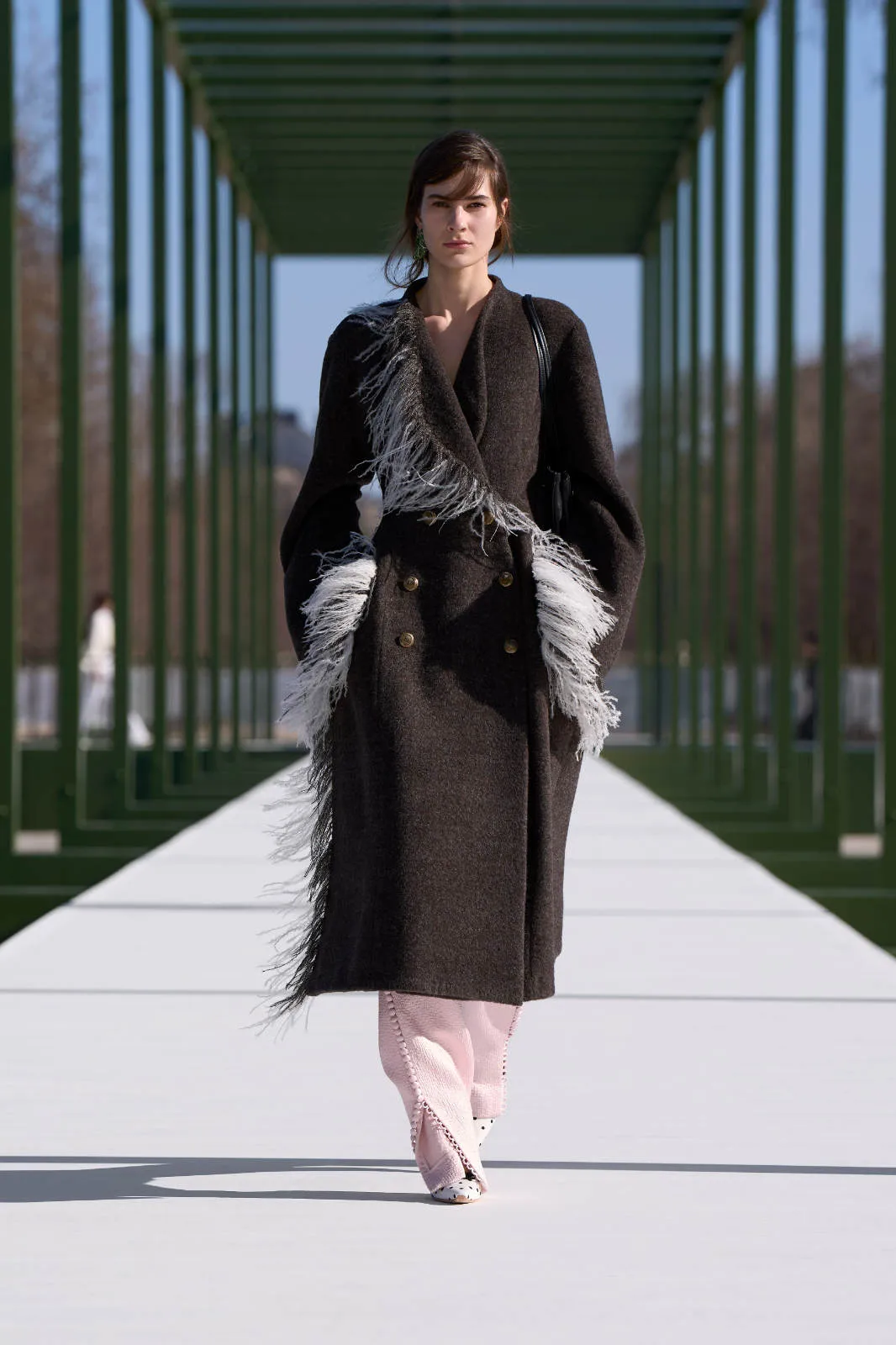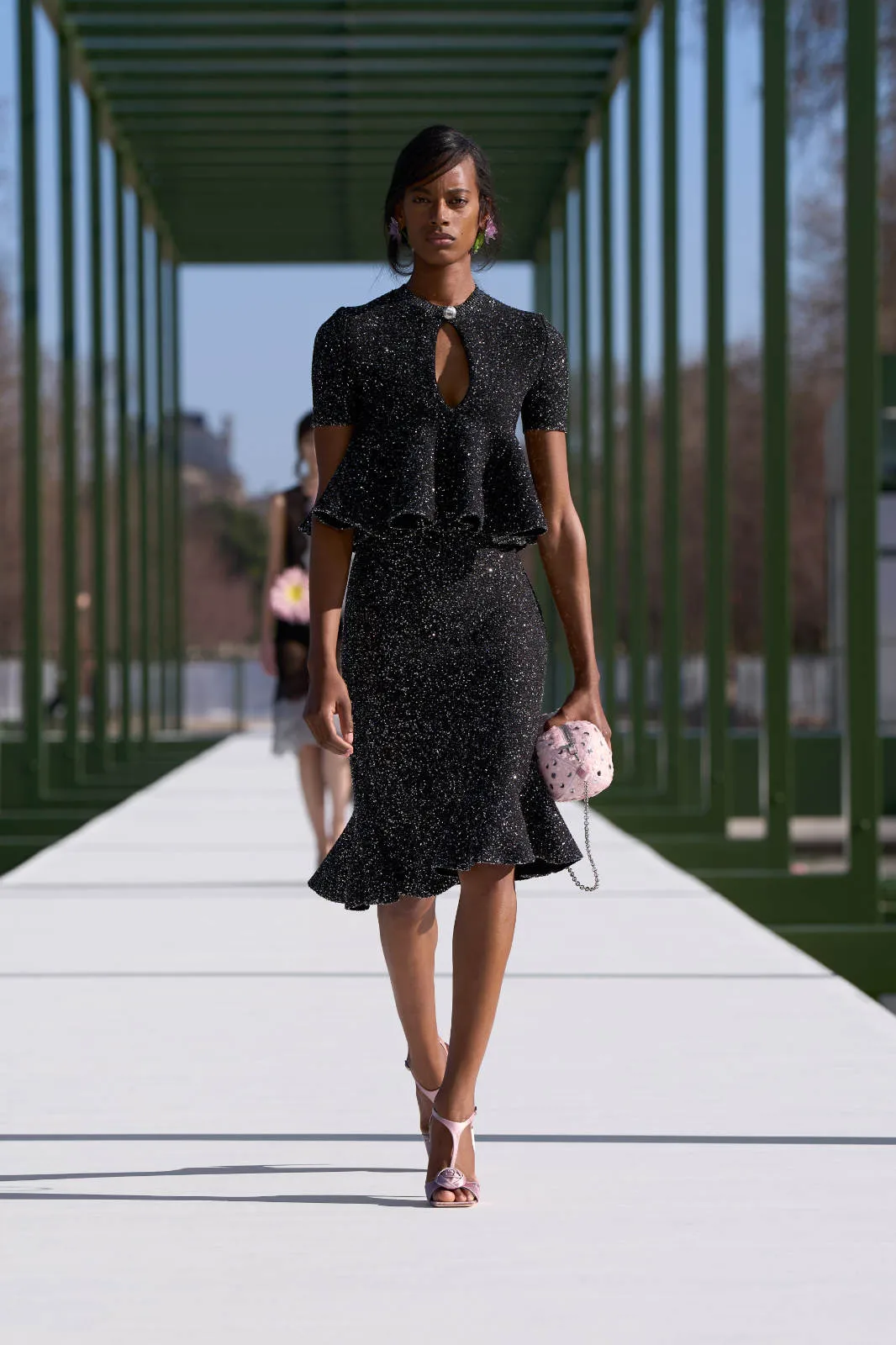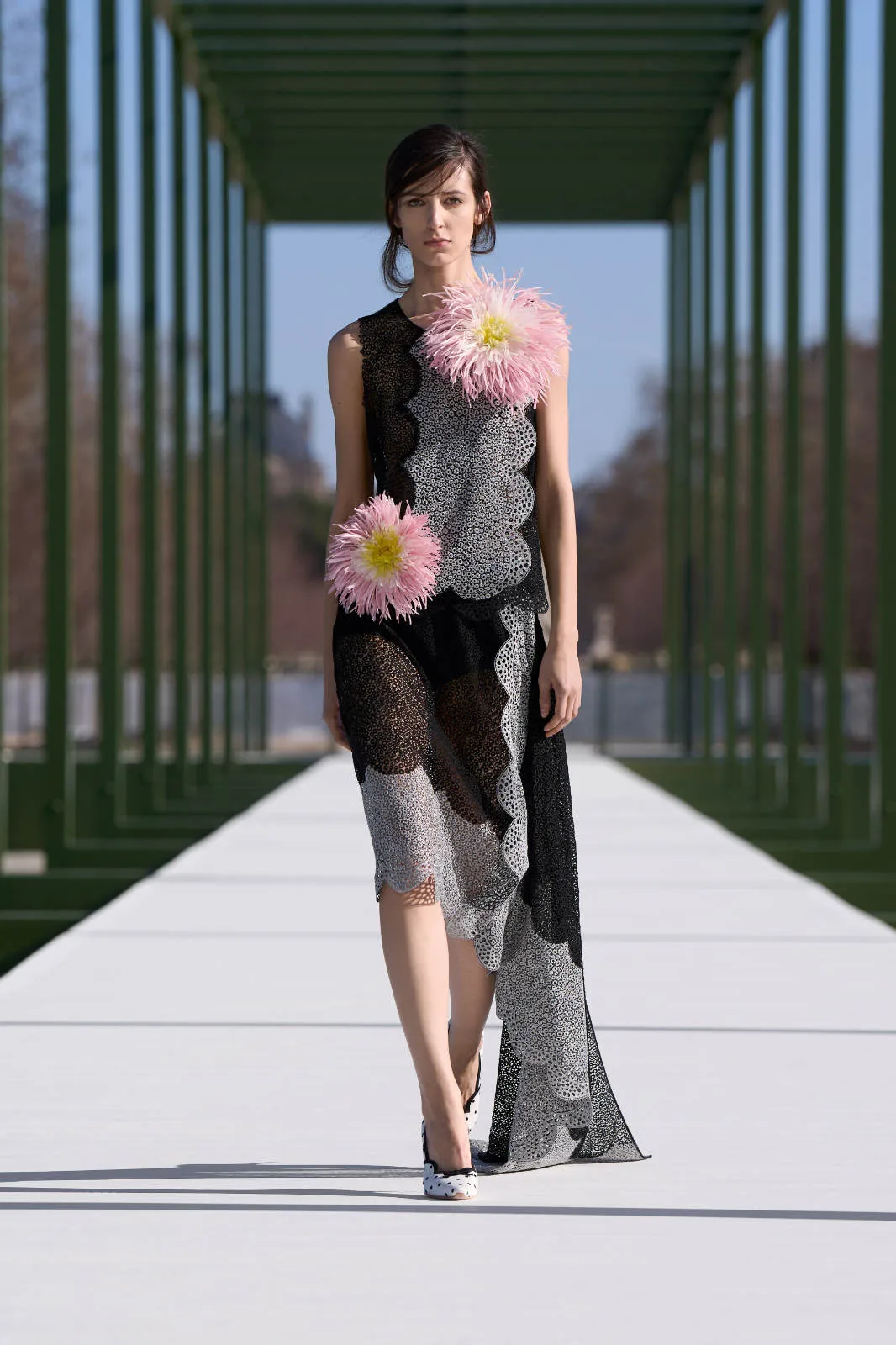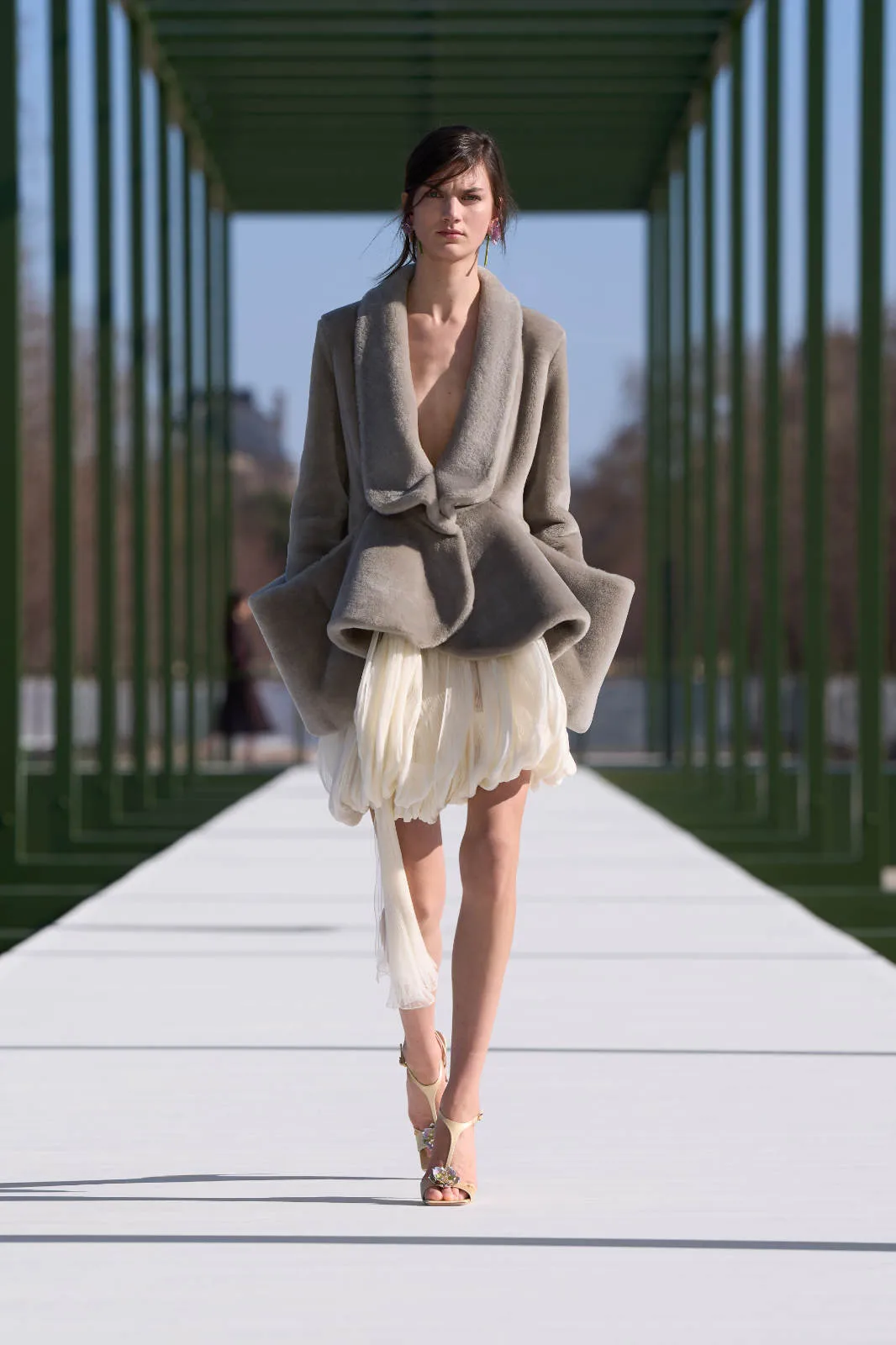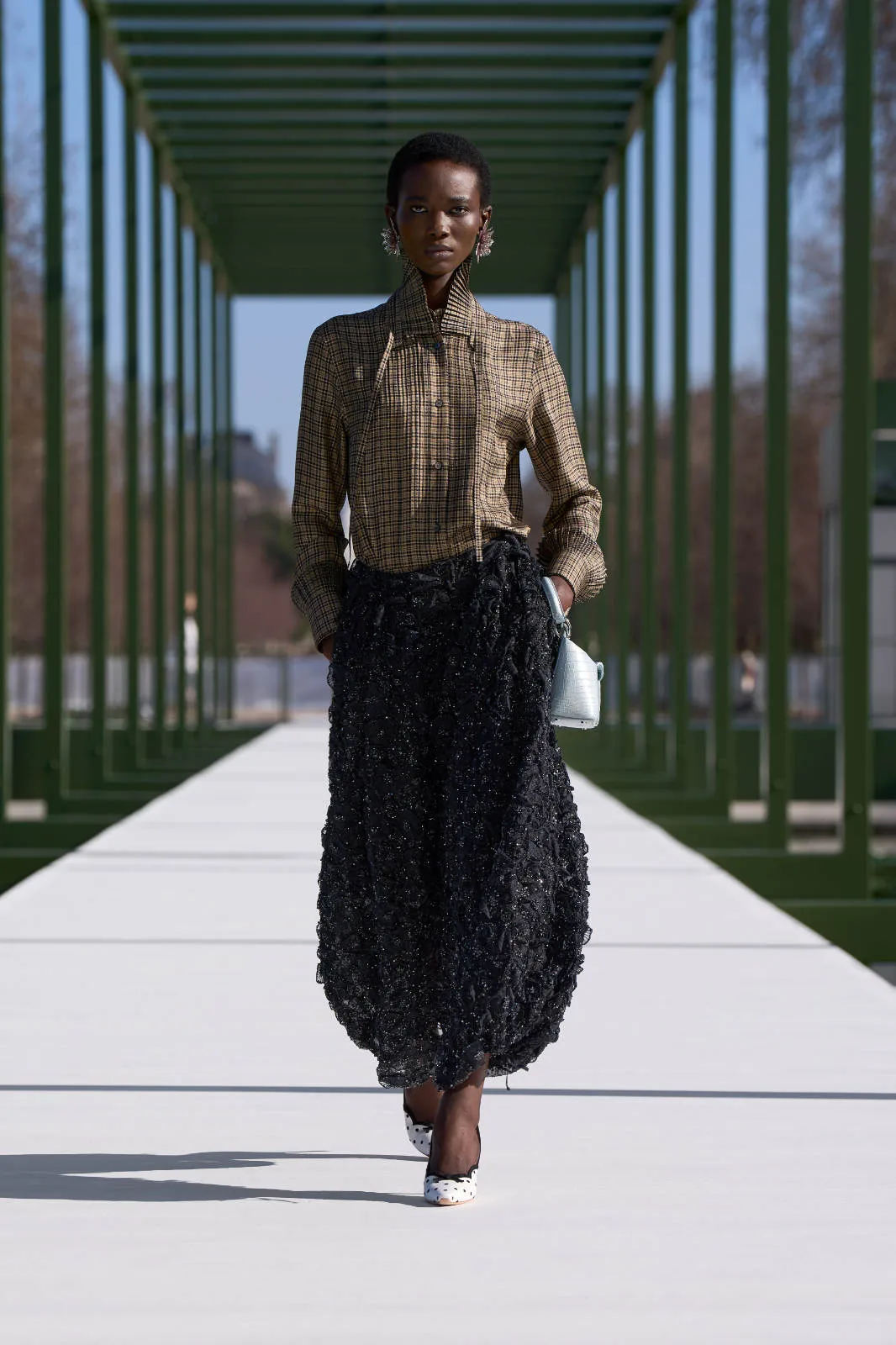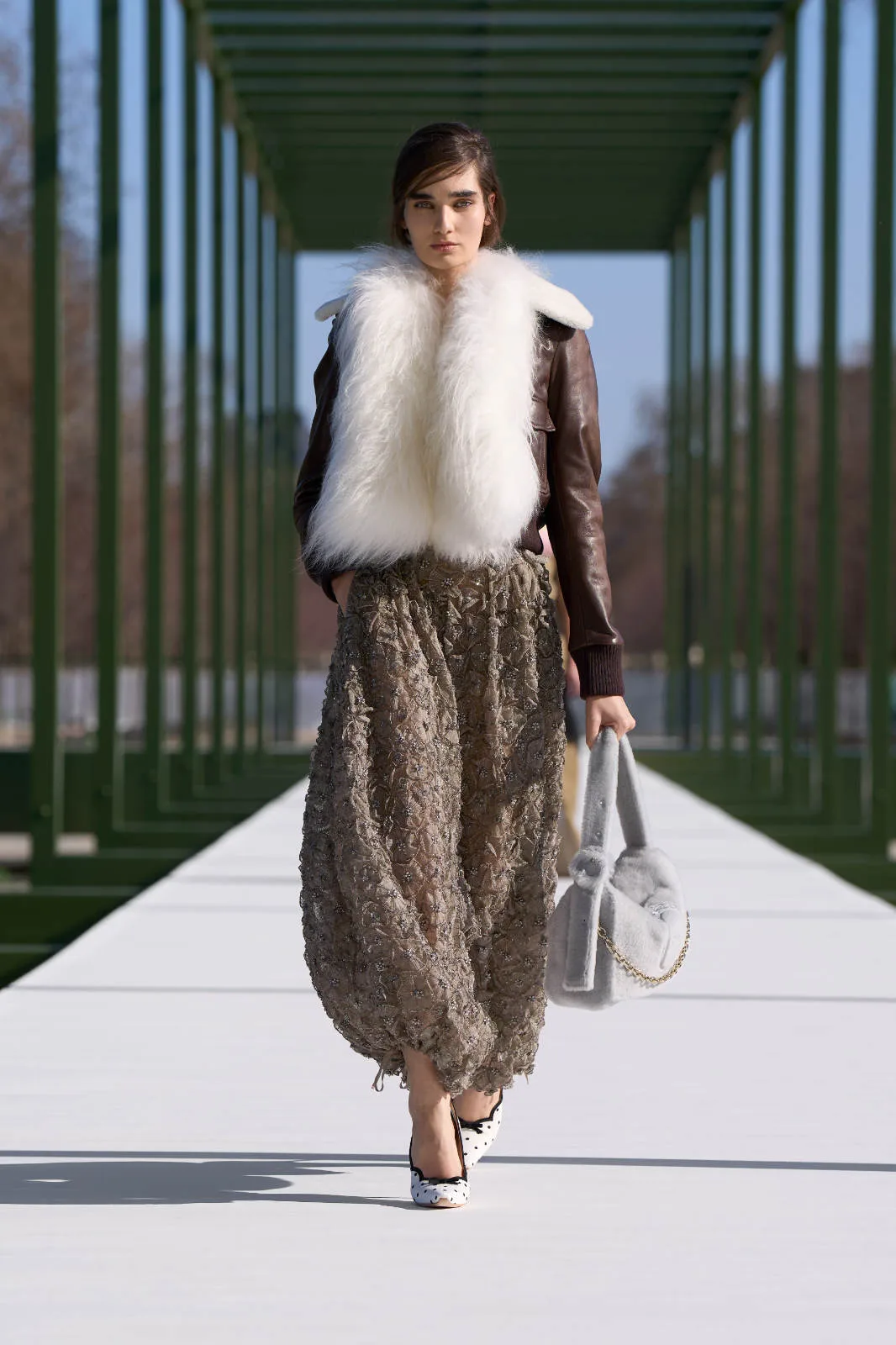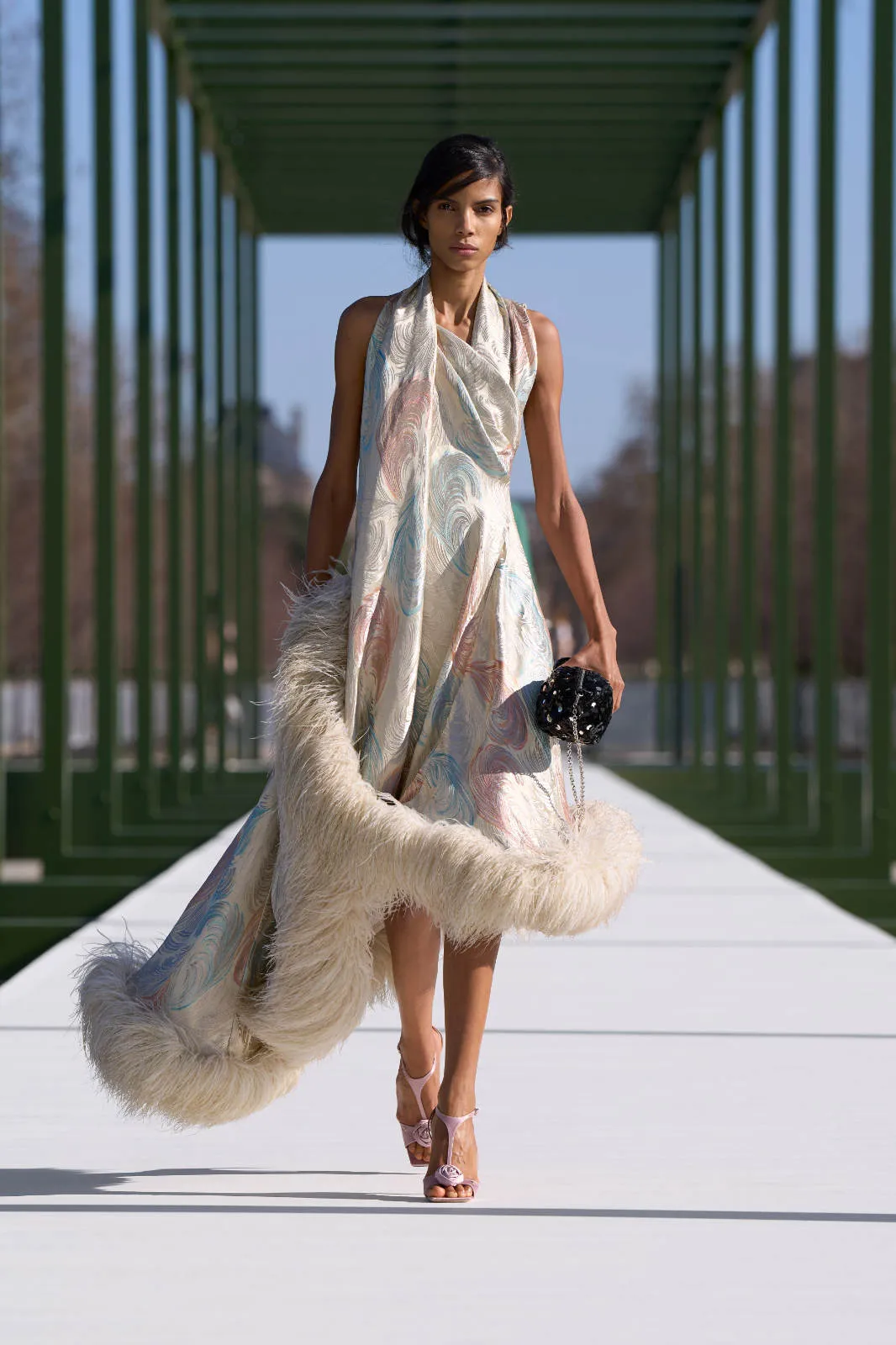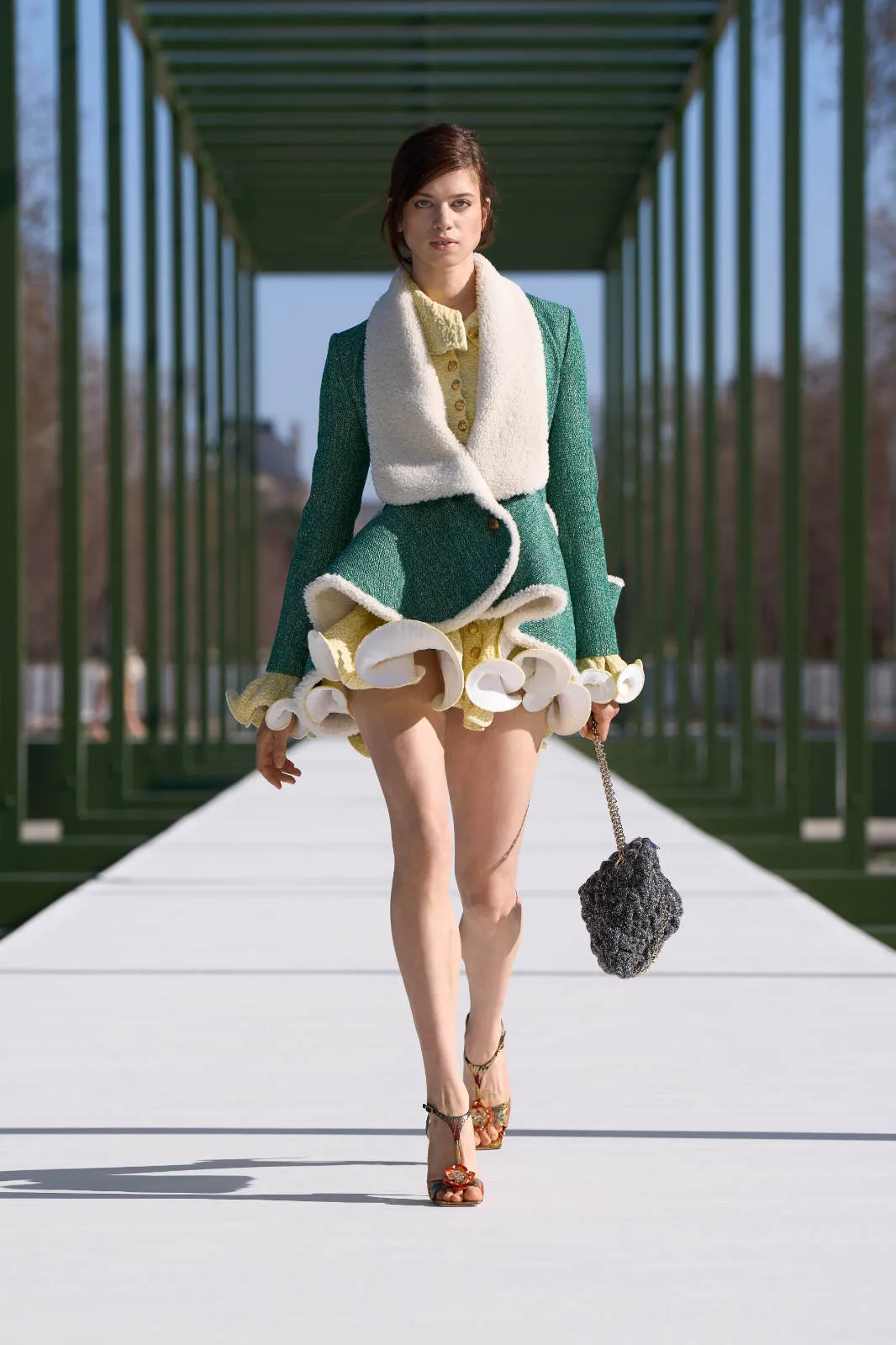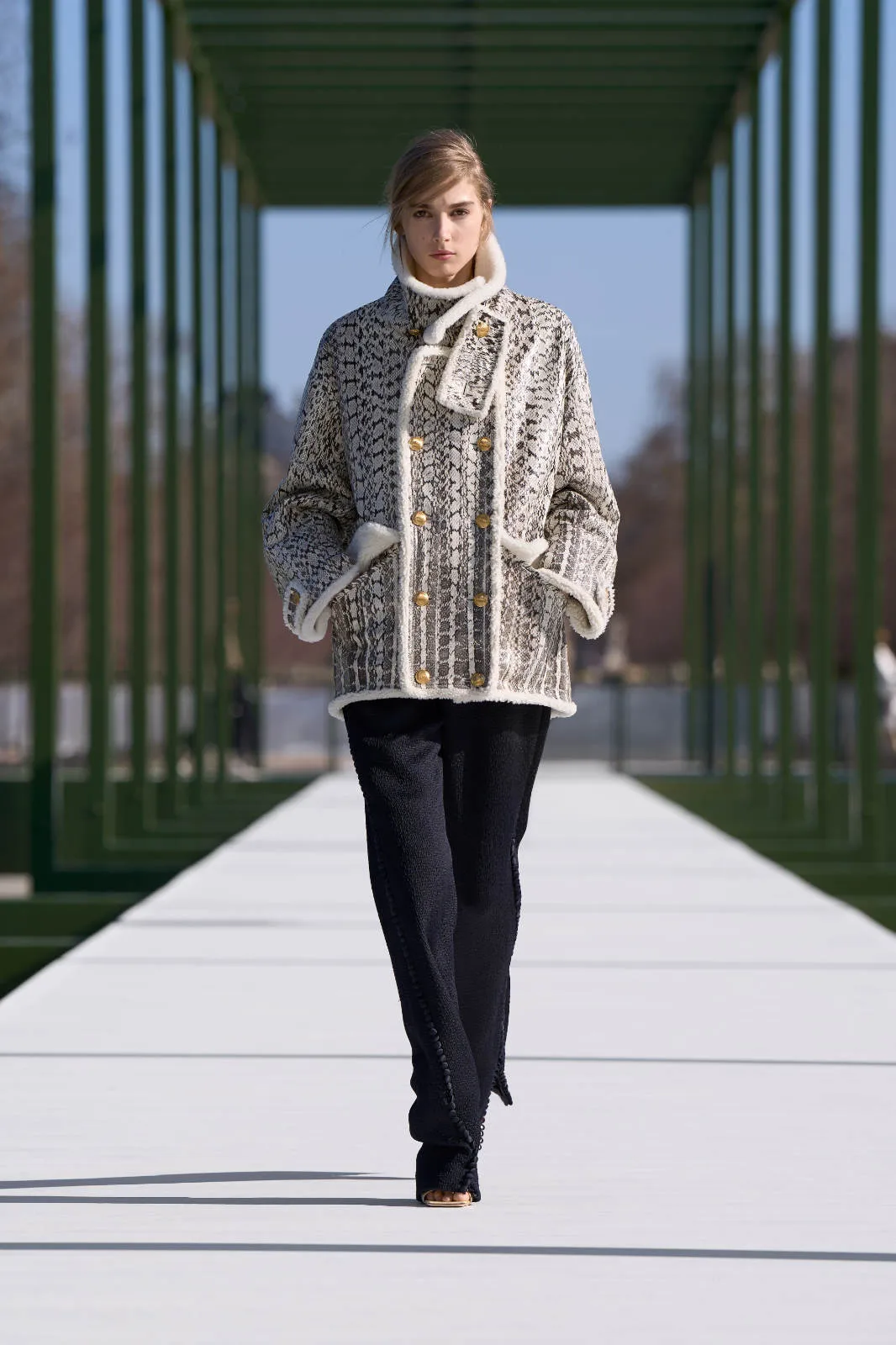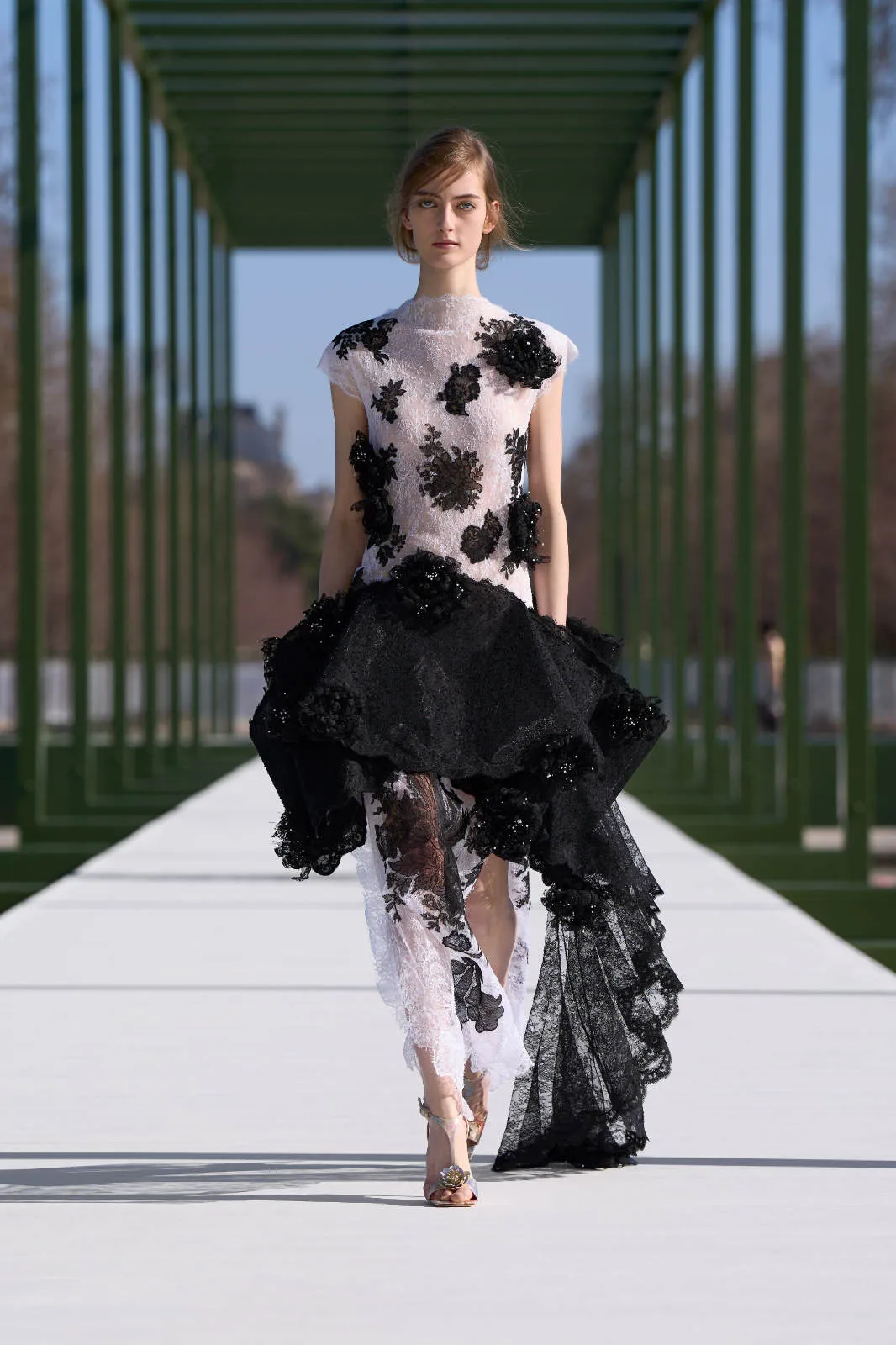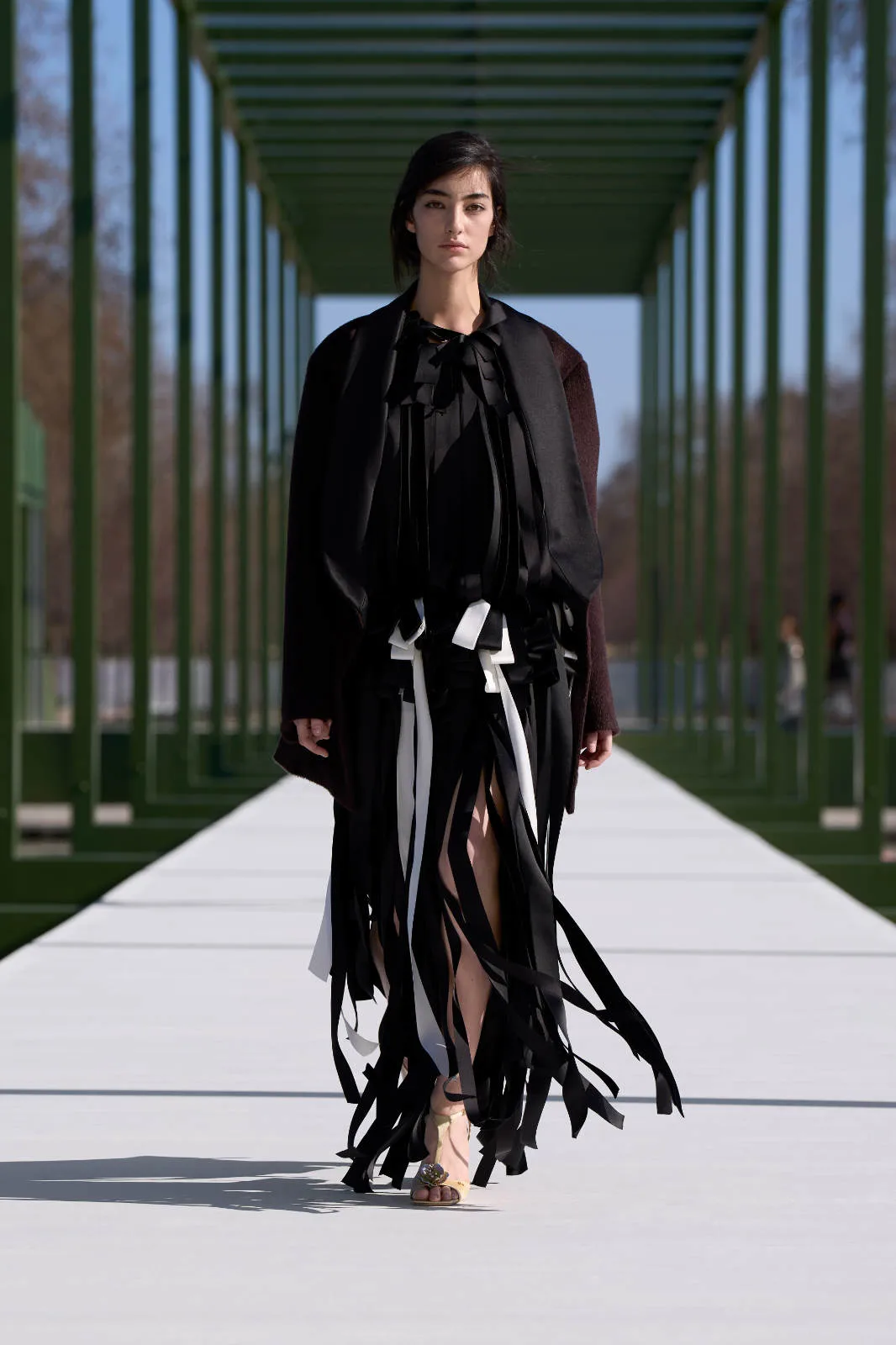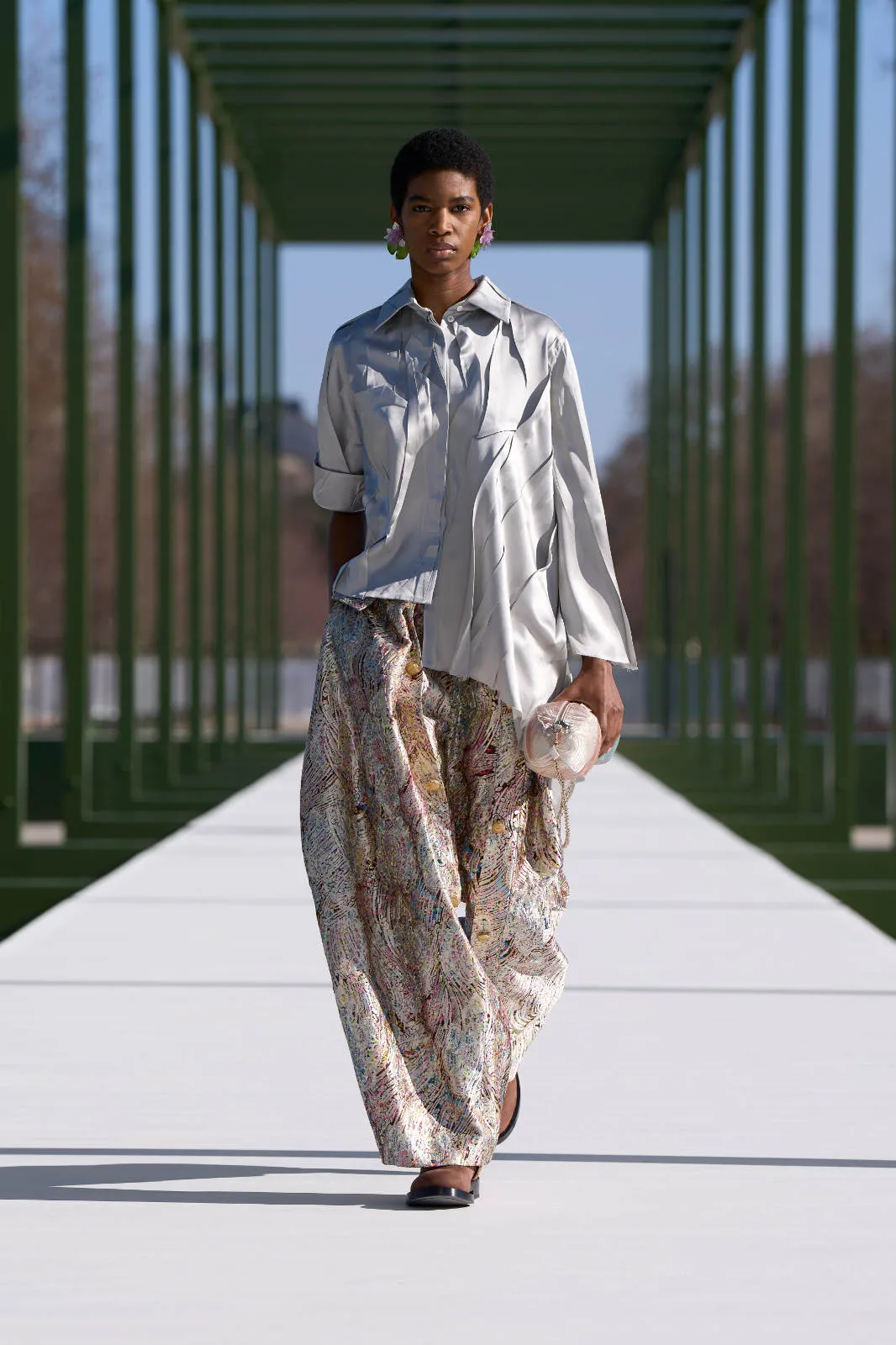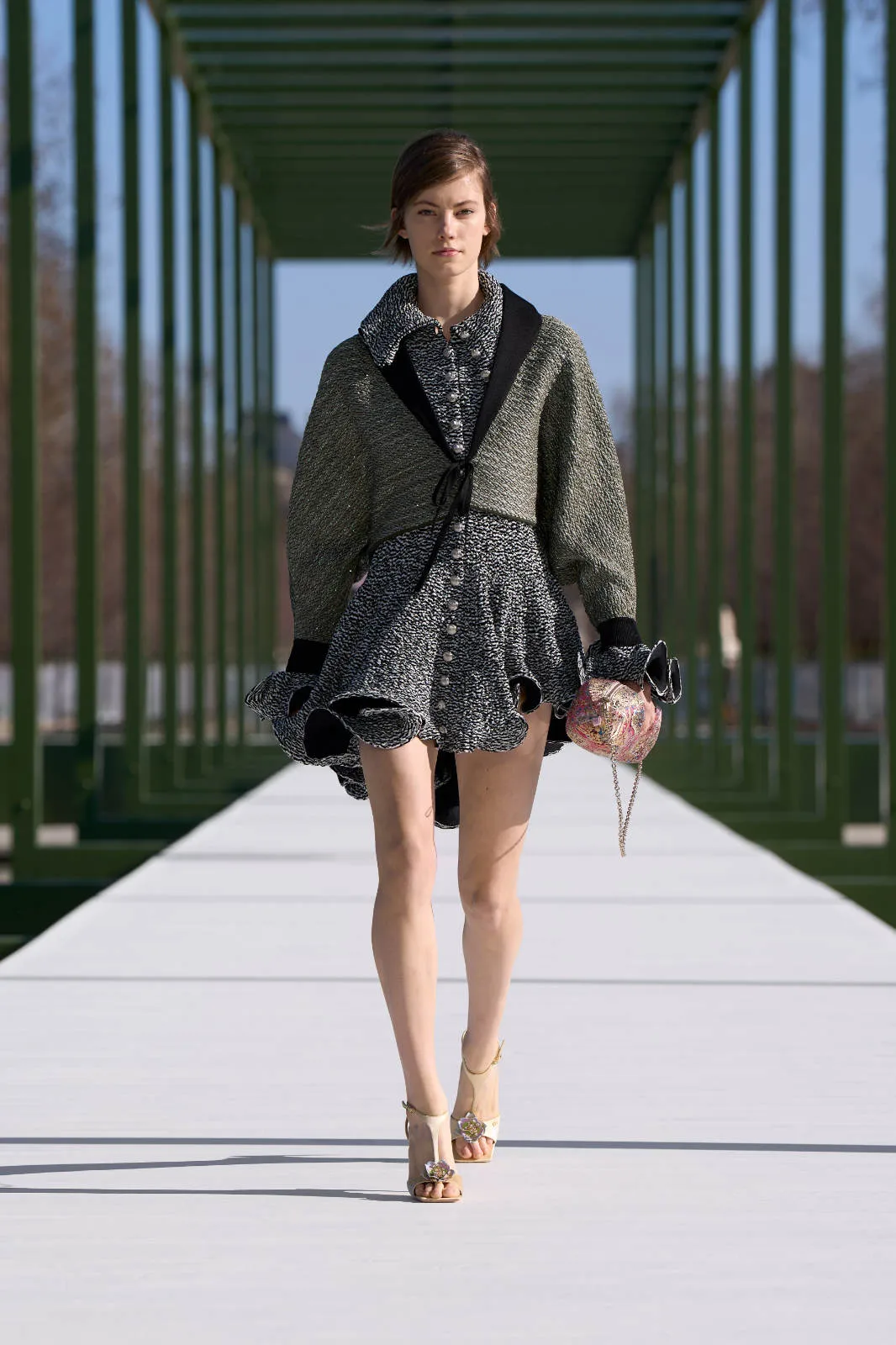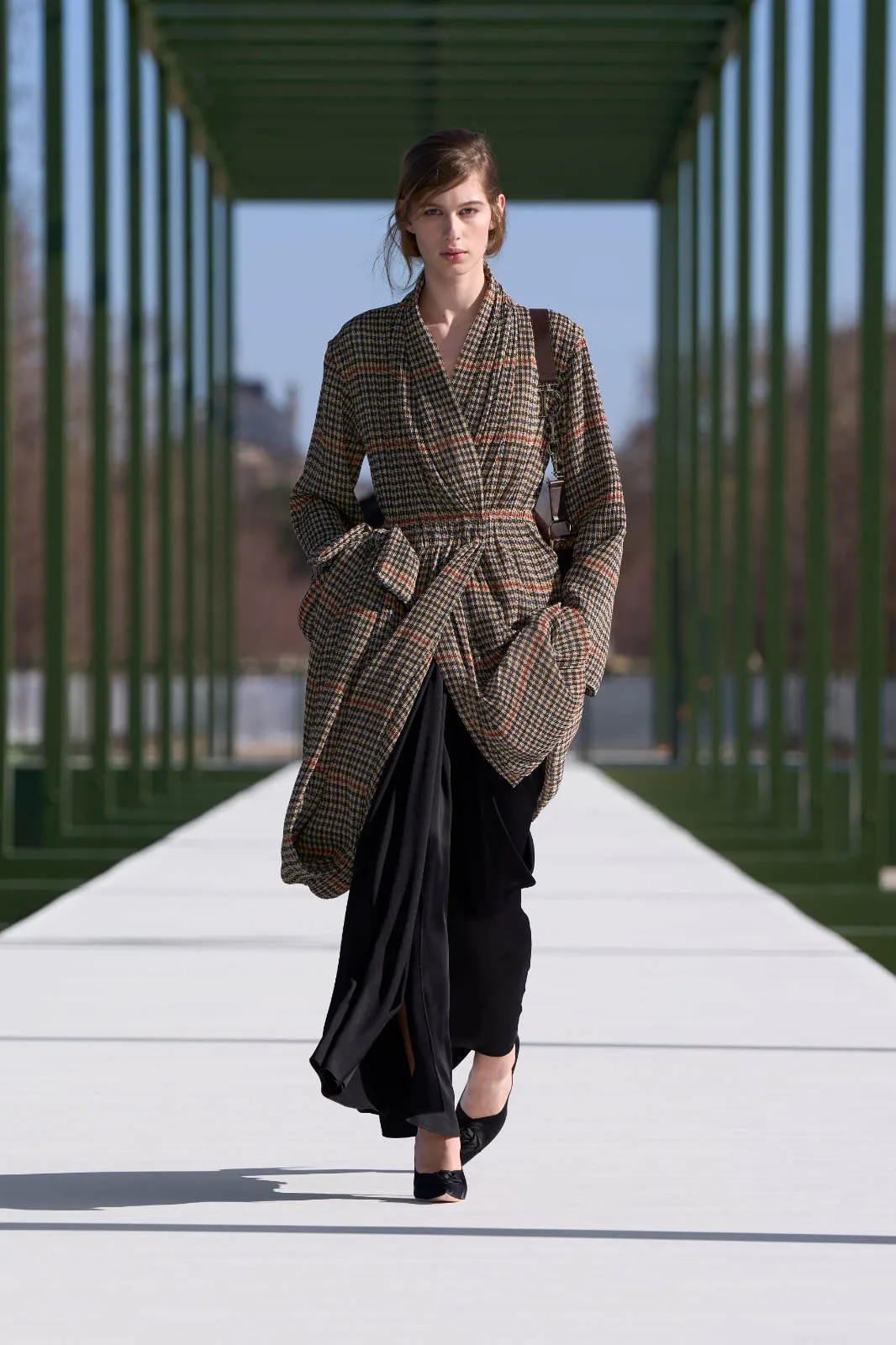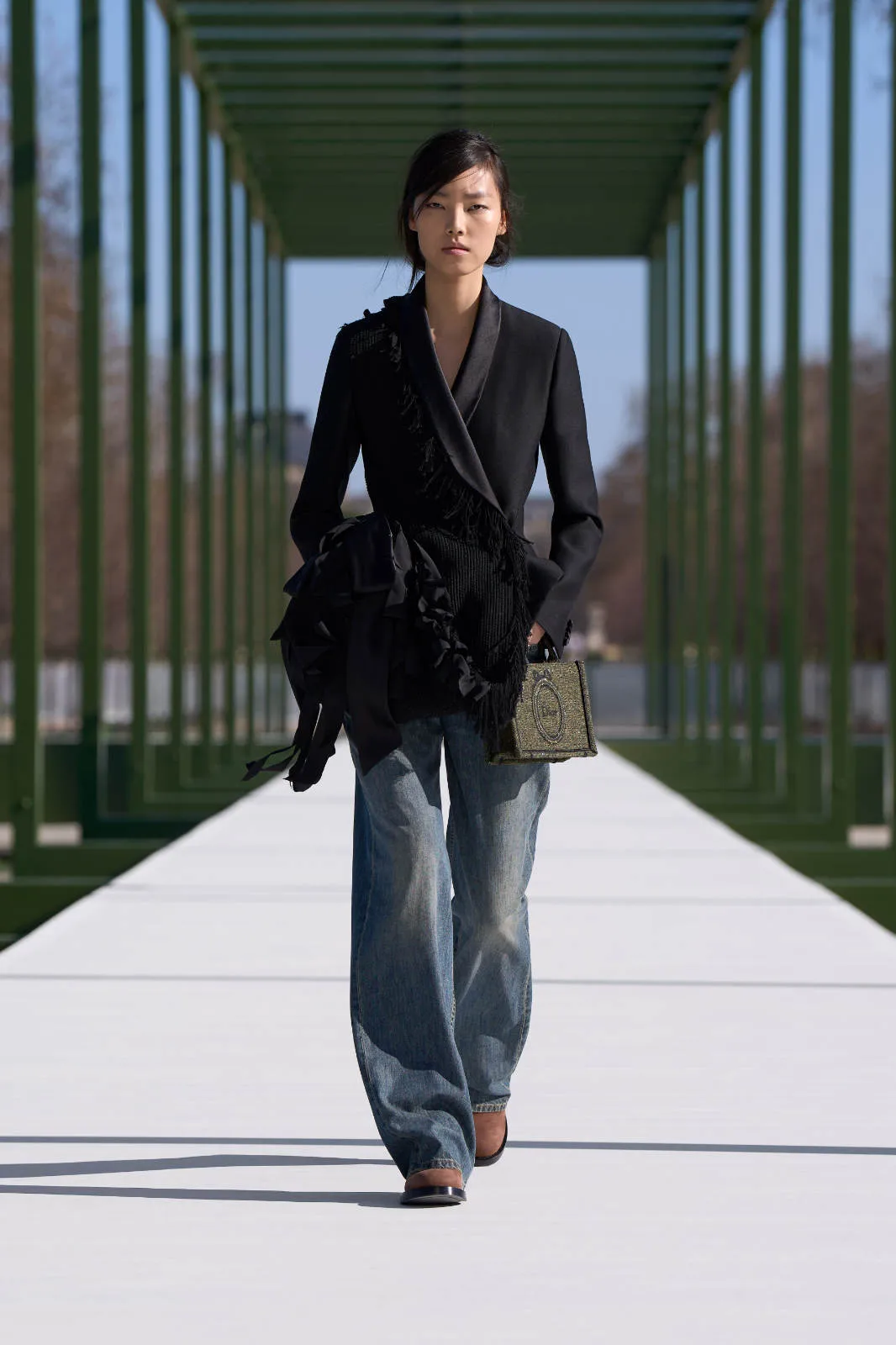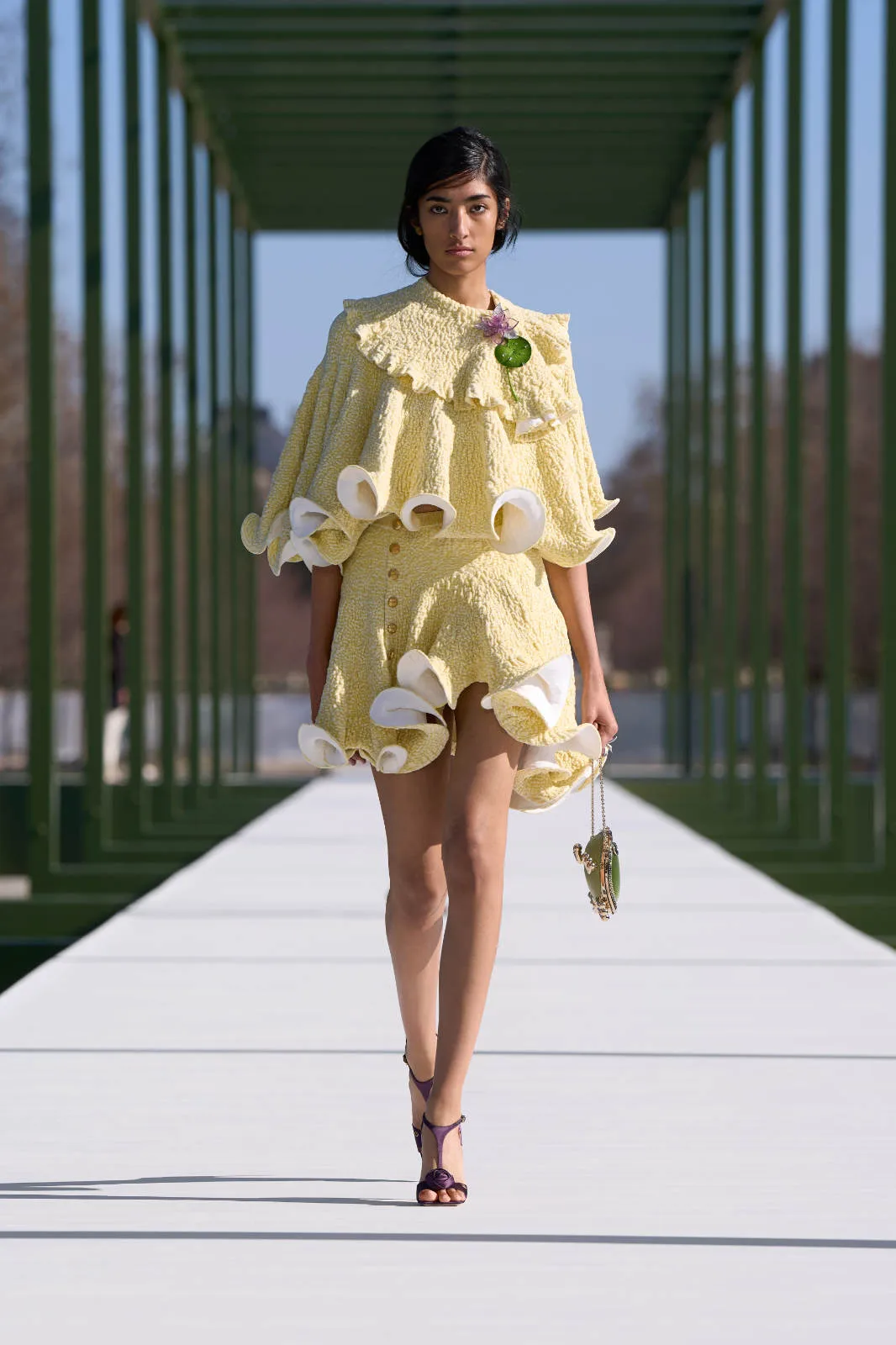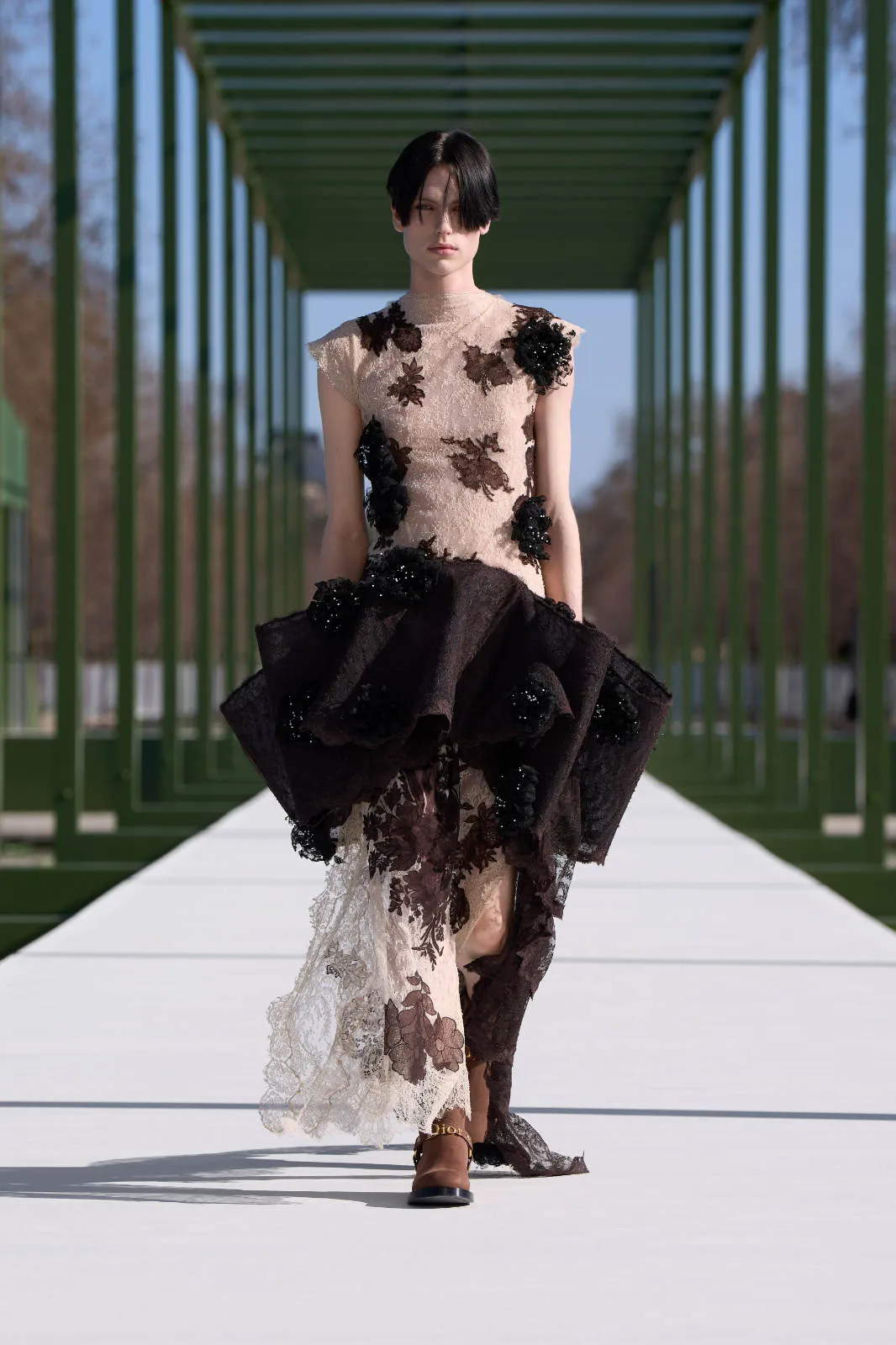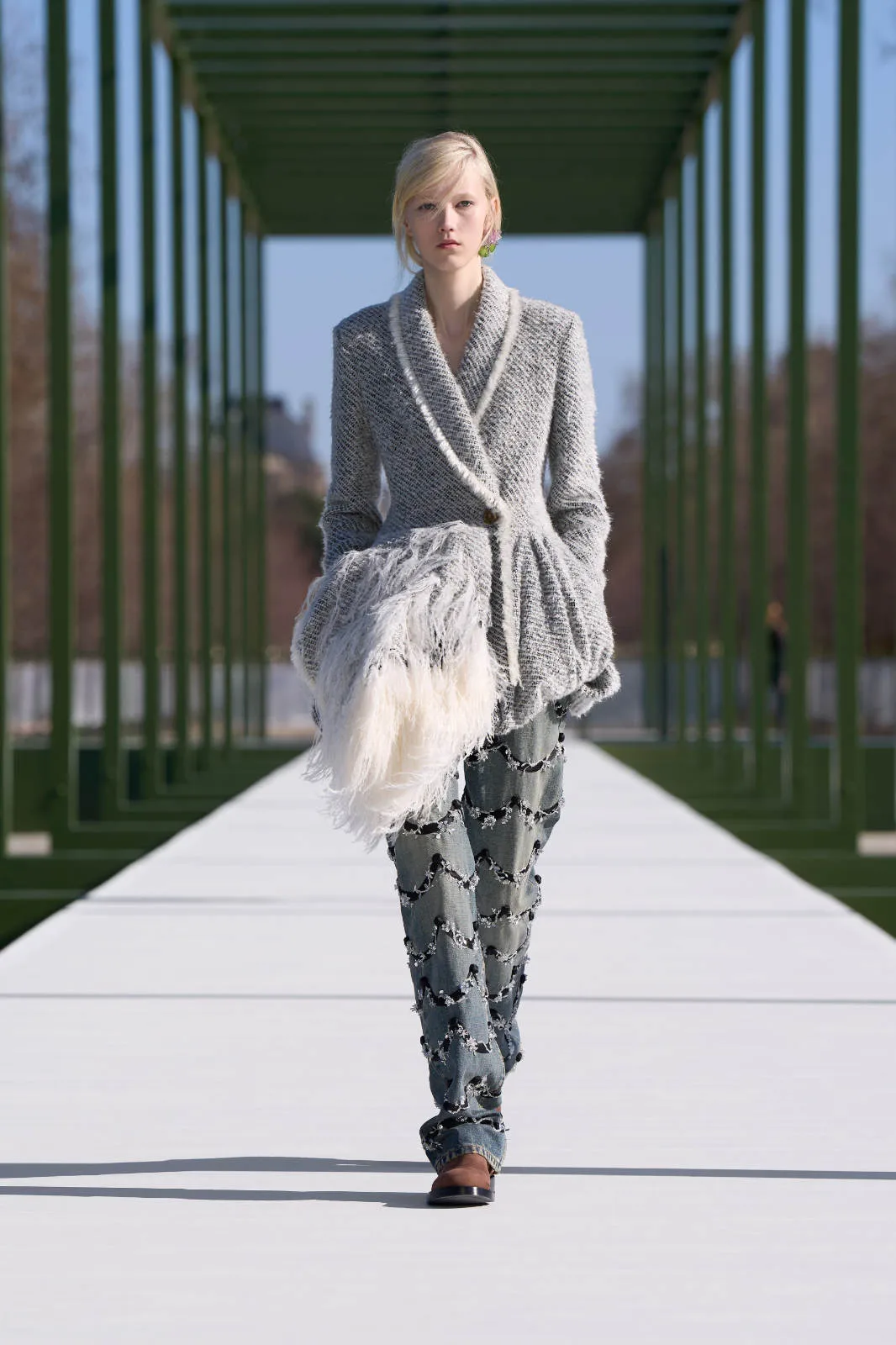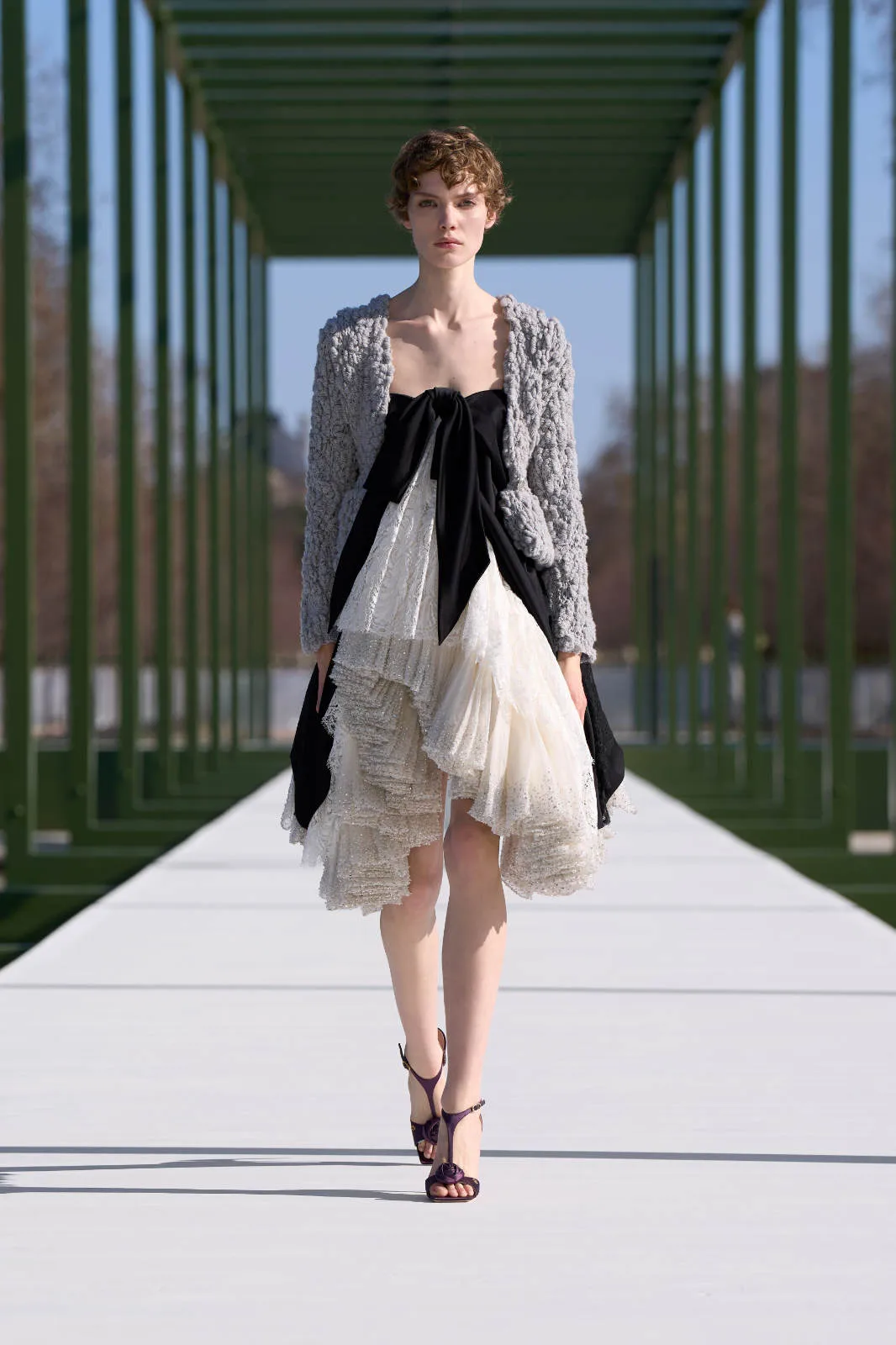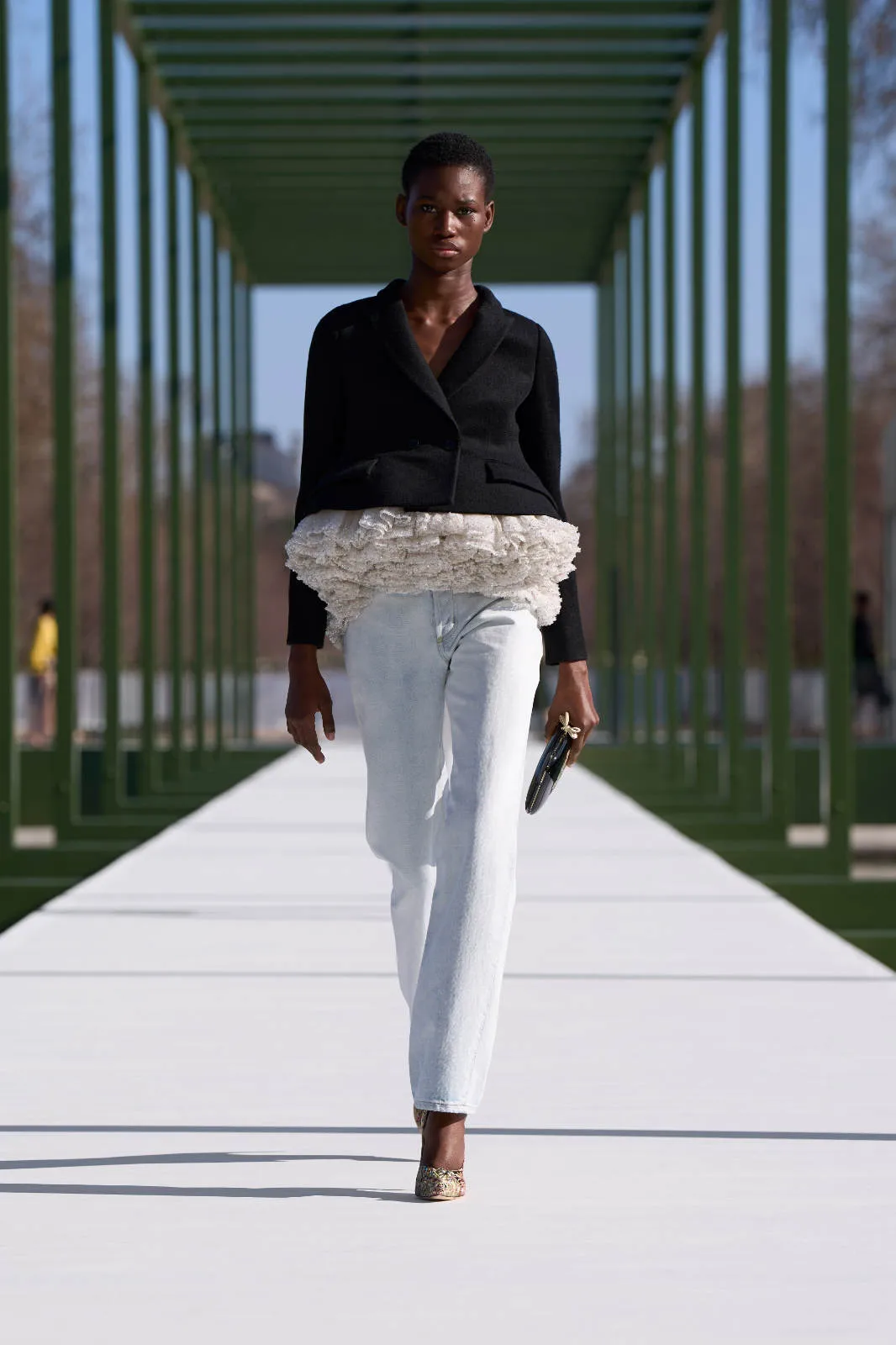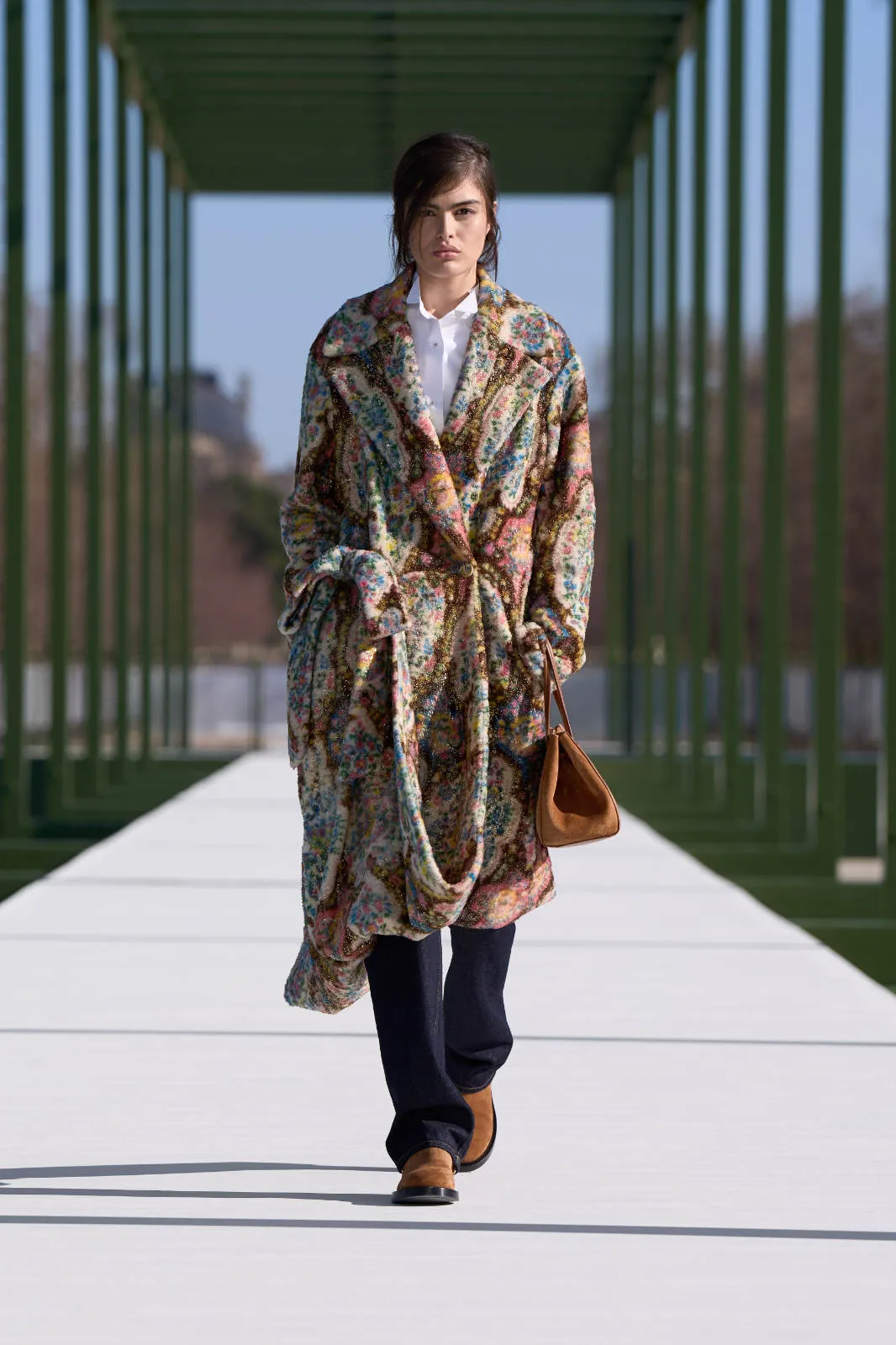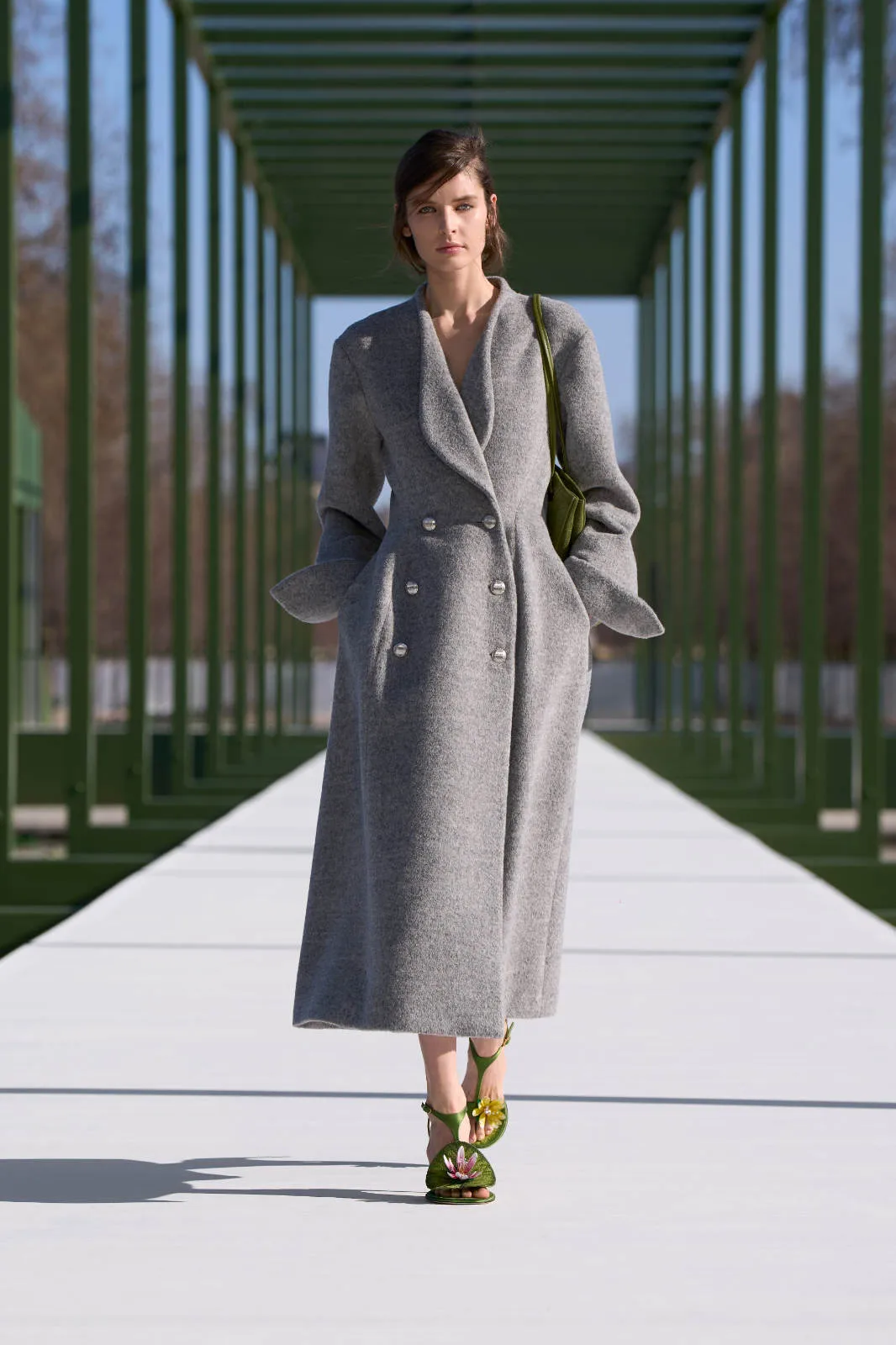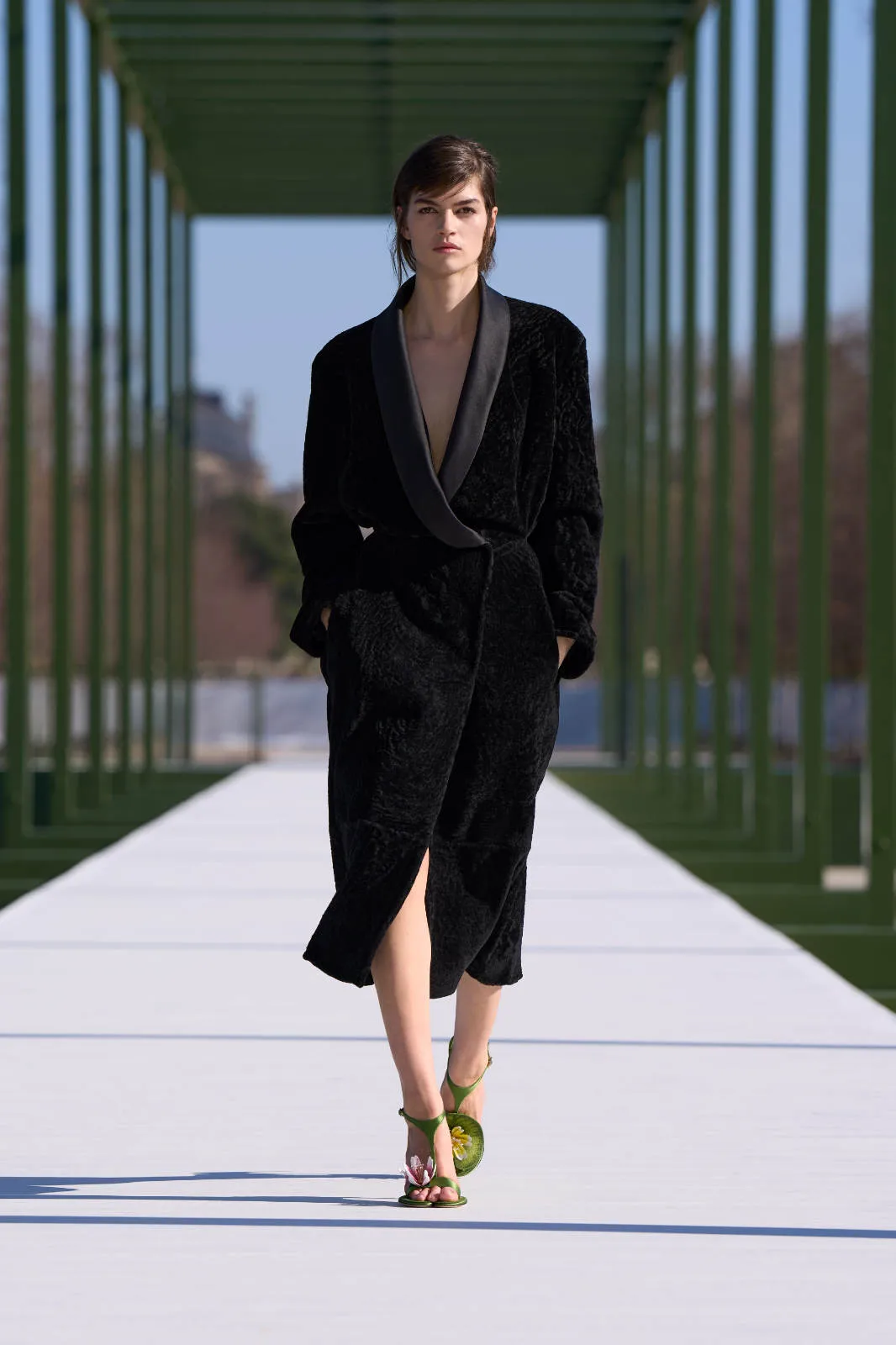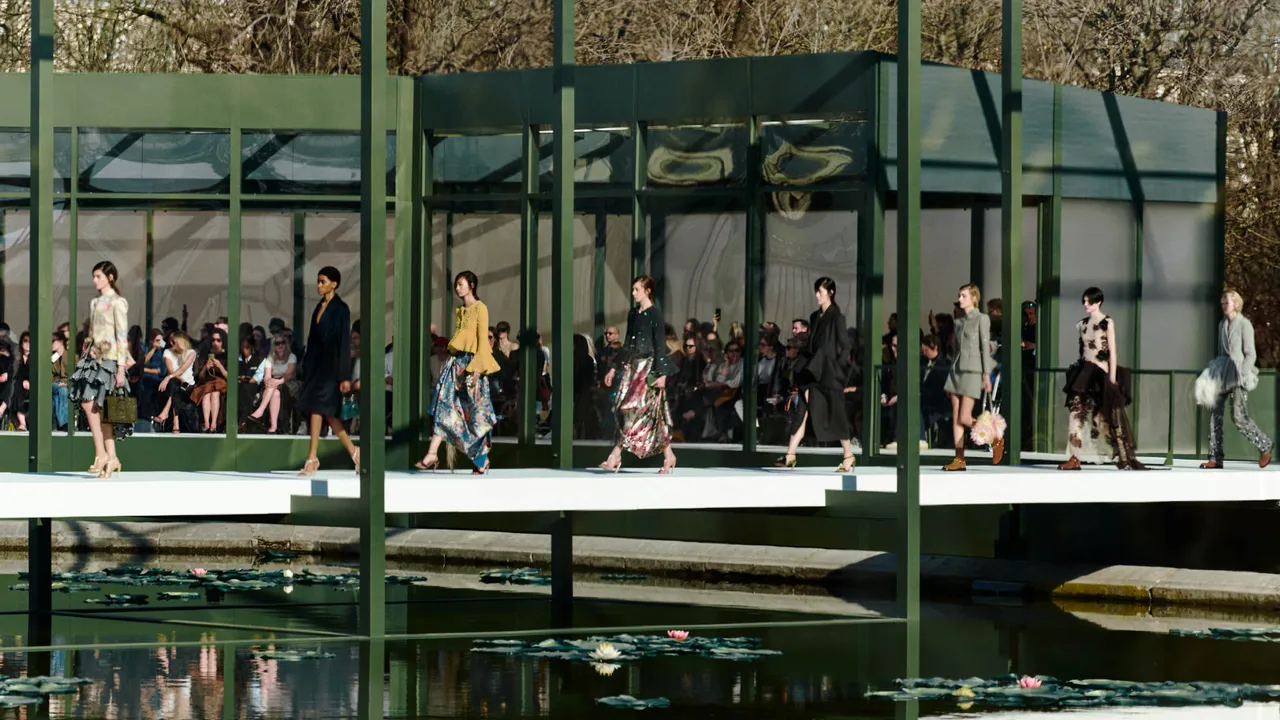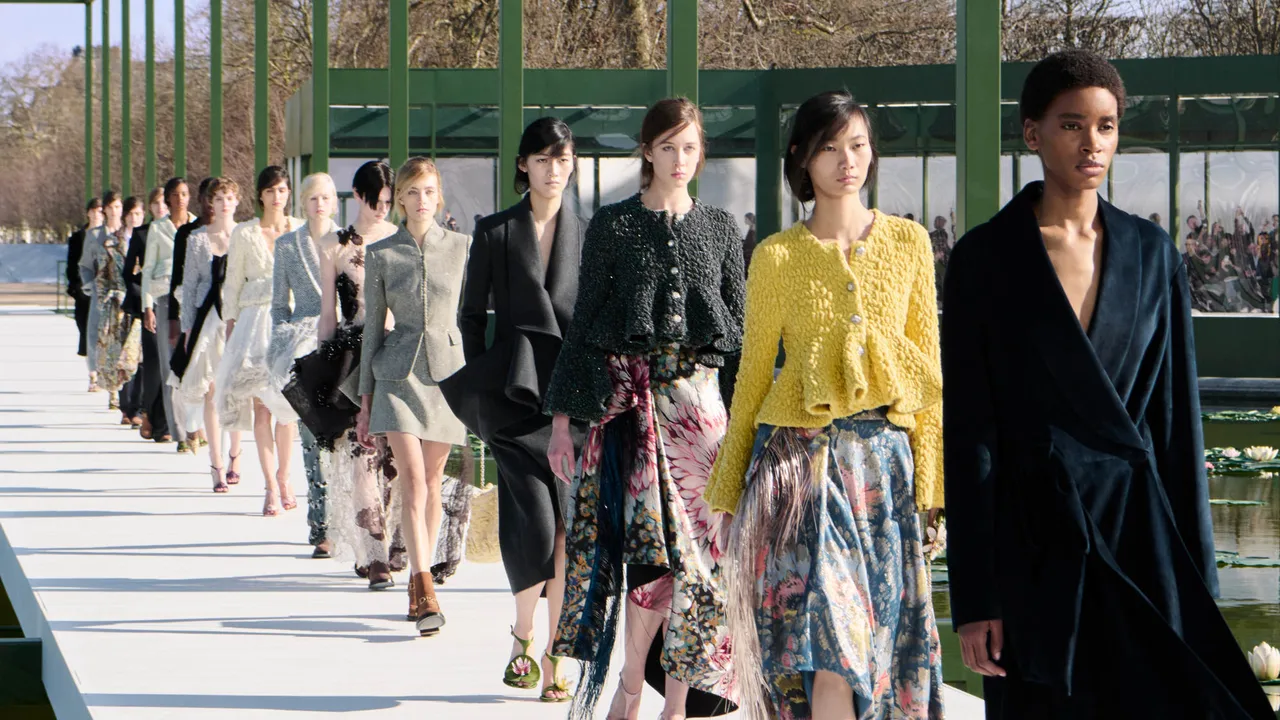
The Fall/Winter 2026 Dior show marks a definitive turning point for the French Maison, as Jonathan Anderson fully shed the ‘burden of proof’ from his debut to deliver a collection defined by romantic style and structural freedom. Staged within a vast glass pavilion in the Jardin des Tuileries, the venue functioned as a literal “performance of a promenade,” allowing spring light to flood a runway built over floating, artificial lily pads.
Anderson’s journey began with the polarising Spring/Summer 2026 debut, which featured a massive inverted pyramid and an archival ‘Dior box’ to process the weight of icons like the Junon and Vénus dresses created by Christian Dior. This was followed by the menswear and Haute Couture shows, which drew inspiration from nature and a symbolic bouquet of cyclamen gifted by John Galliano. While those earlier collections were lab-like experiments in real vs. fake materials, the Fall/Winter ready-to-wear show distilled these concepts into garments that felt more fluid, wearable, and emotionally direct.
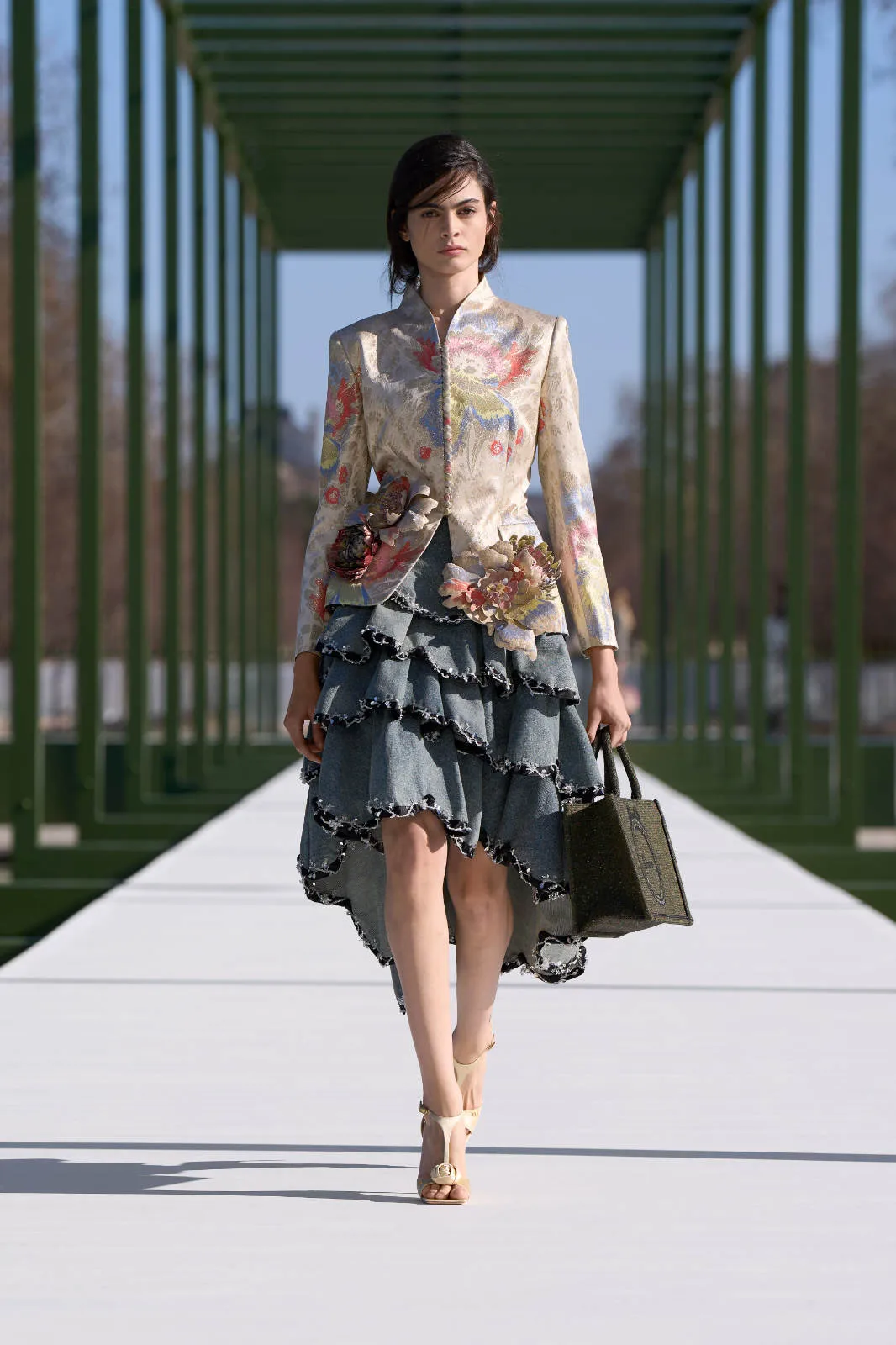
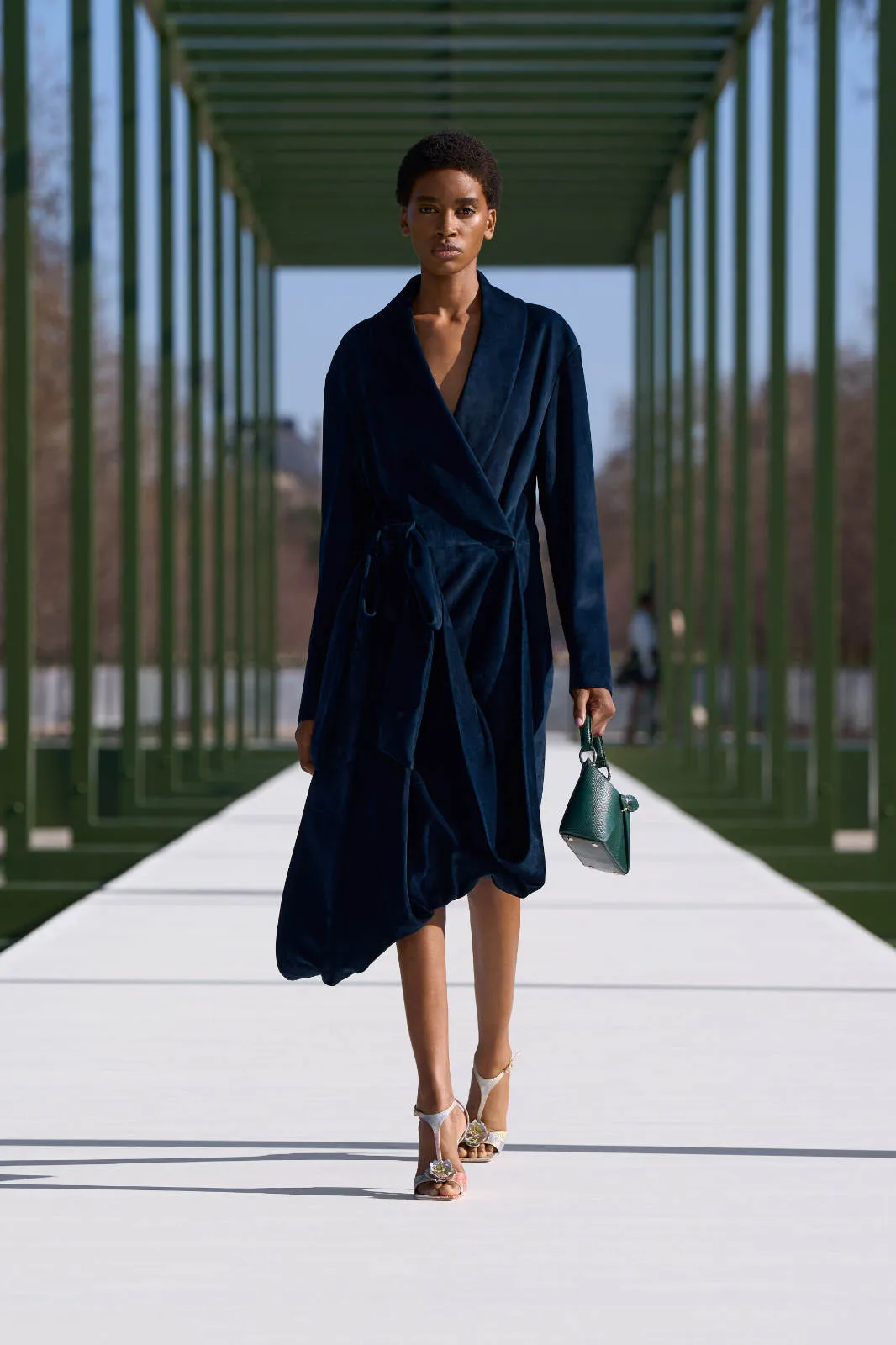
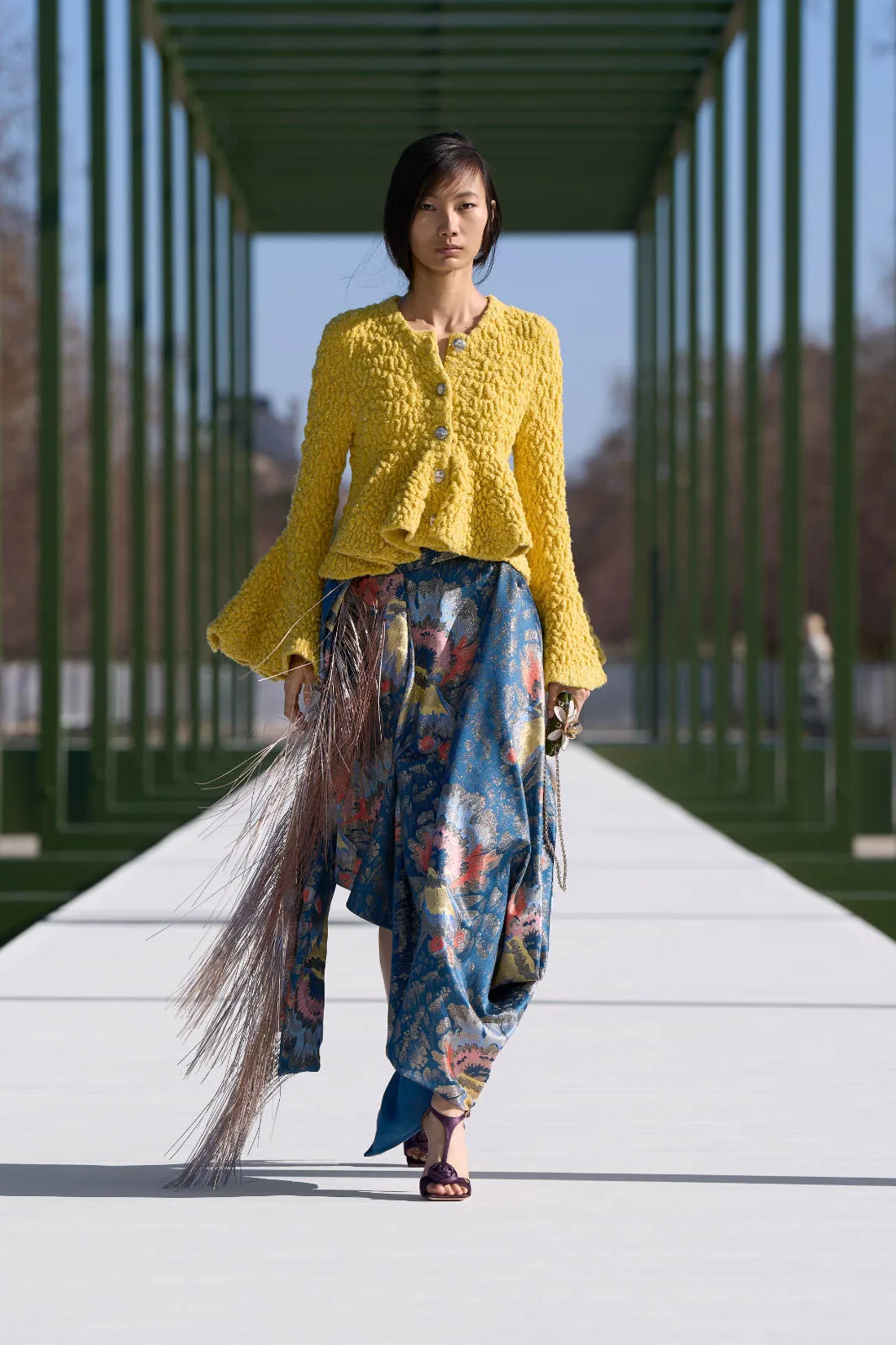
In the garments themselves, the rigid heritage of Dior was systematically loosened and subverted, offering a fresh reinterpretation through Anderson’s vision. The collection leaned deeply into romance: ruffles, fluid silhouettes, and soft movement everywhere. It felt like an ode to water, but also to another idea Anderson referenced: the promenade. There was something nostalgic in the thought that people once dressed up simply to go somewhere, to be seen, to take part in the ritual of walking through the city. By reclaiming the park as a site of social theatre, the collection bridged the gap between eighteenth-century Parisian culture and the erratic, high-concept energy that has become Anderson’s signature.
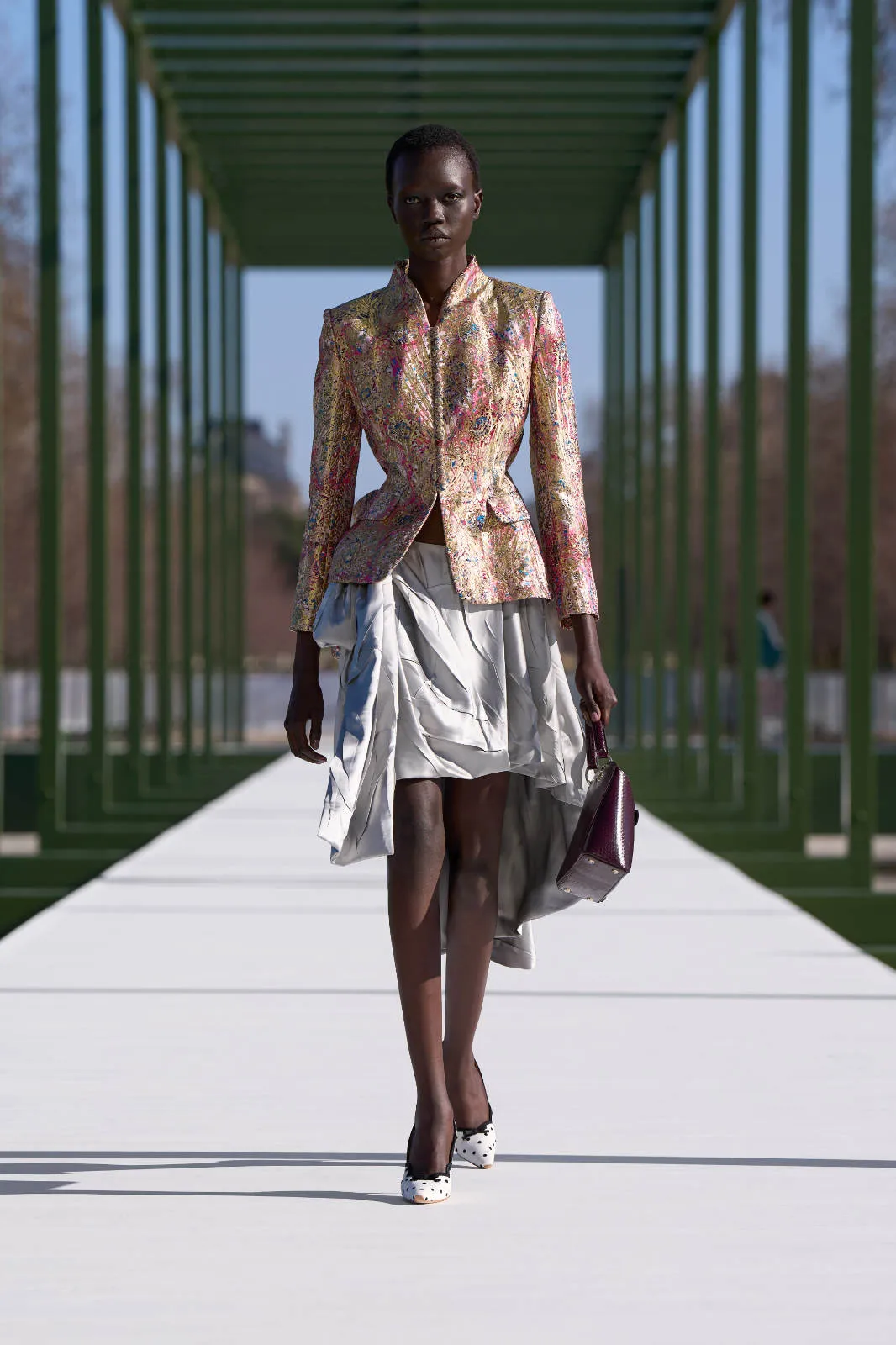
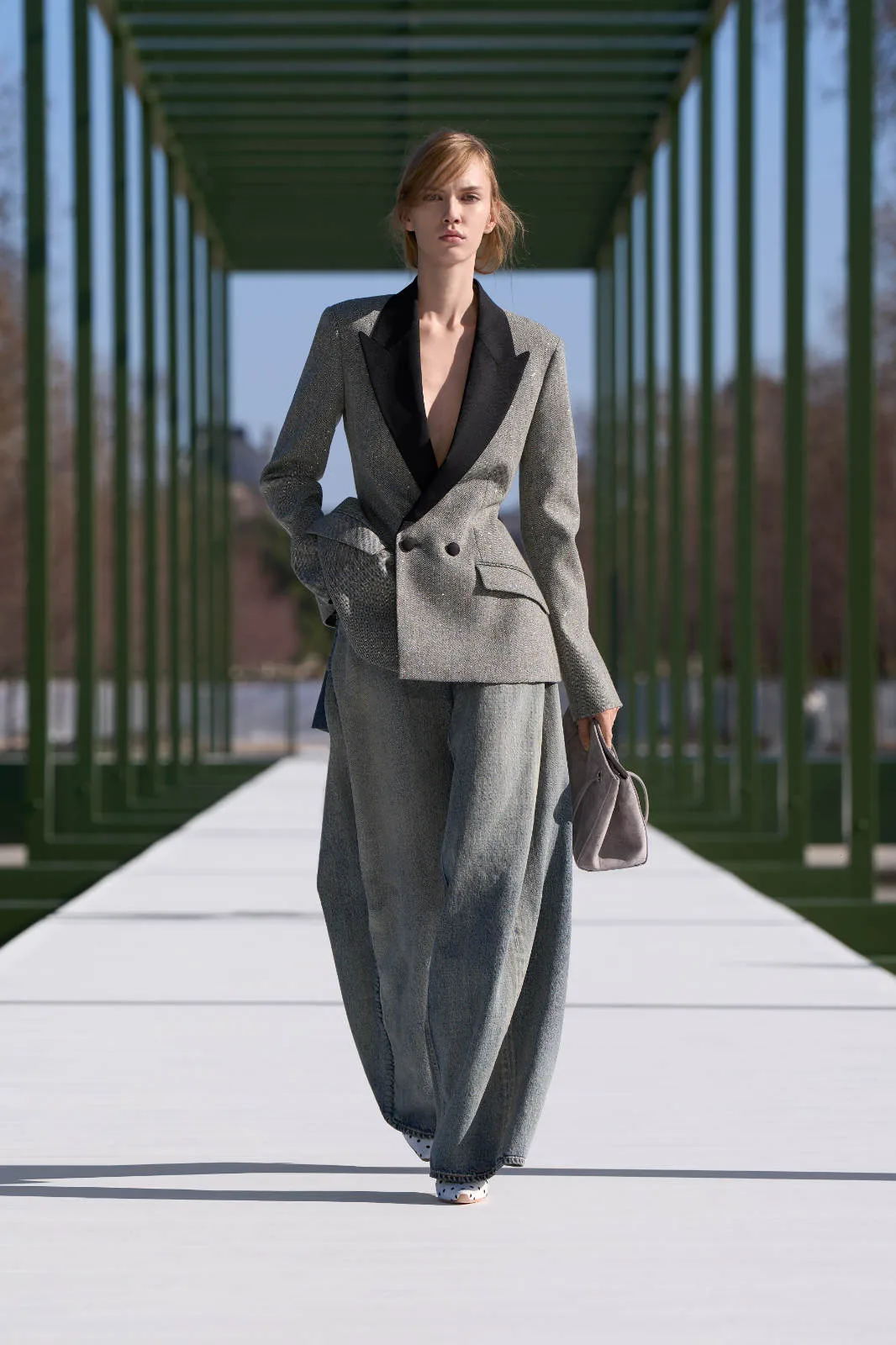
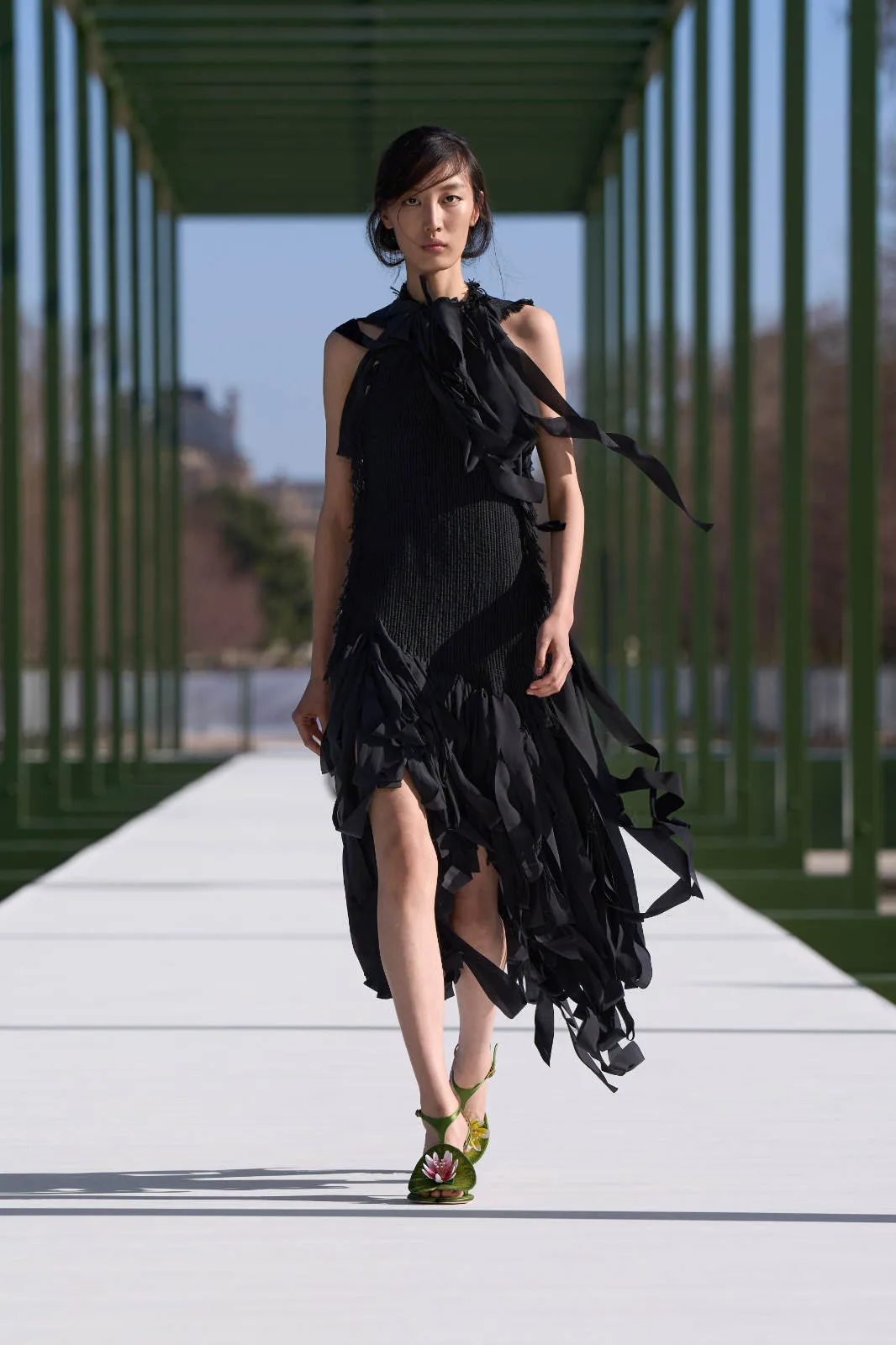
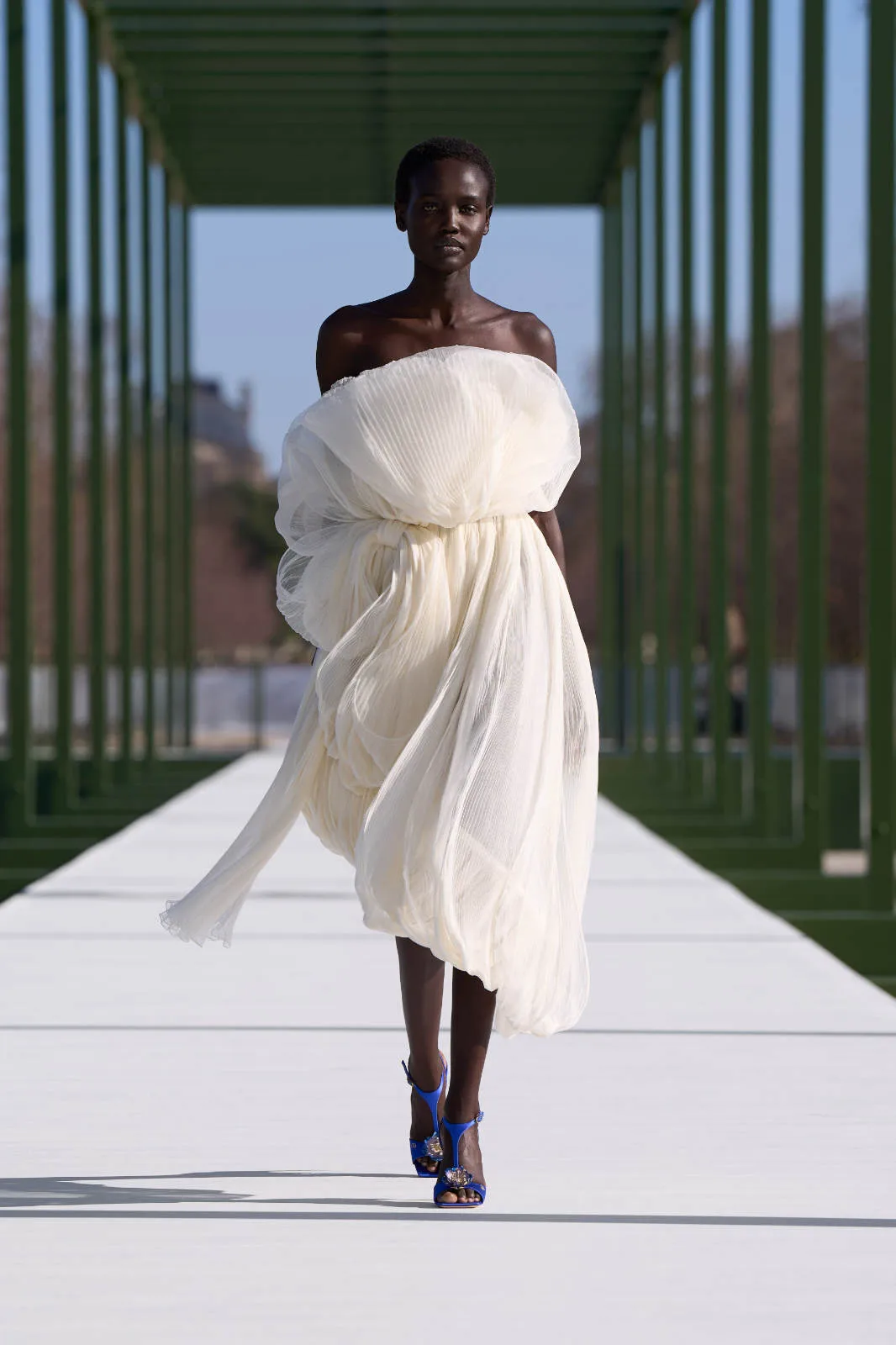
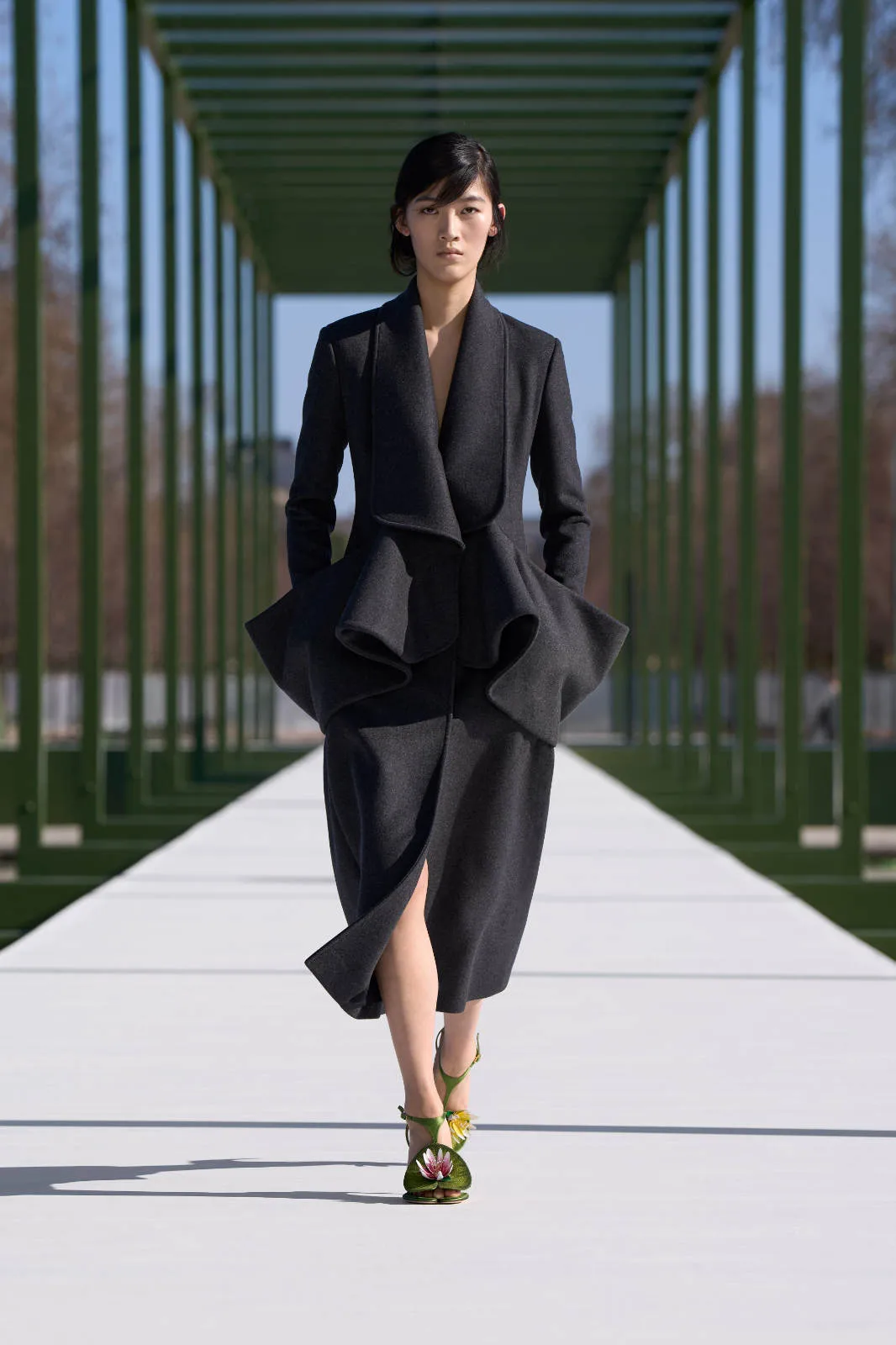
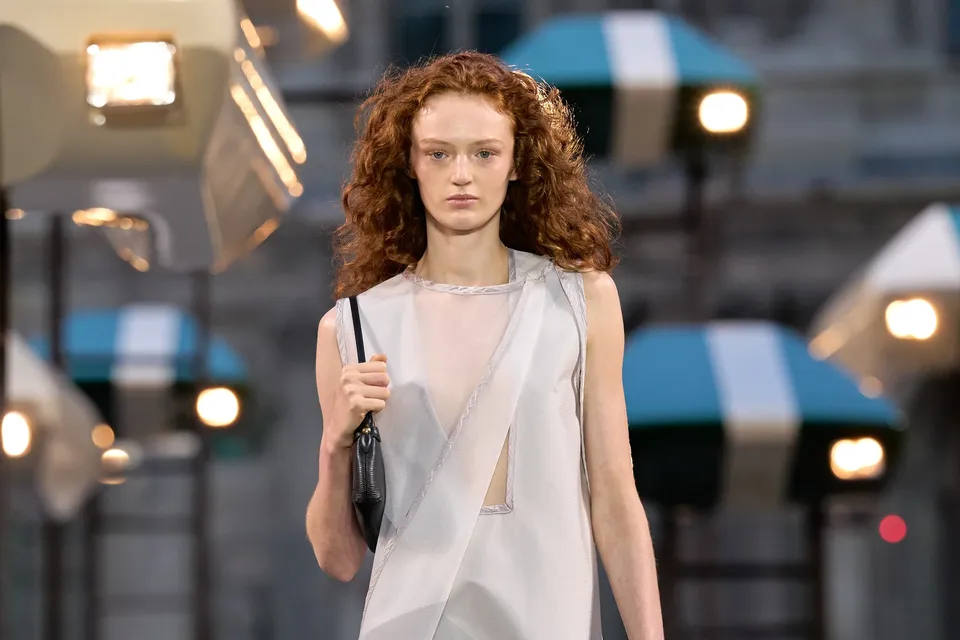
Ruffled, puffy skirts paired with miniature Bar jackets felt playful yet precise, while ballooned trousers, asymmetric coats, and layered textures expanded Dior’s traditional silhouette vocabulary. One of the most striking looks was a fluid white draped dress that captured the effortless movement and evident study of the human proportions (also, it was a subtle nod to his Haute Couture show). Fluid garments like a polka-dot dress also hit the runway, transforming the codes into a more fresh and commercial direction. Natural, organic forms shaped the collection, echoing the dreamlike atmosphere suggested by the water-lily motif seen in every variation you can imagine. Romantic prints appeared across jackets and dresses in multiple variations, reinforcing the mood without feeling repetitive.
The accessories amplified the theatrical dimension of the show and quickly became some of its most memorable elements. Anderson’s signature accessory design was anchored by new variations of the Maison’s bags. From the sculptural Peanut bag to the surrealist lily-pad heels, where rounded green leather platforms framed the foot like floating leaves, the details pushed Dior toward a more playful and contemporary visual language. Decorative embellishments, botanical-inspired jewellery, and new silhouettes completed the collection that balanced romantic fantasy with desirability, and, of course, staying true to Jonathan’s DNA.