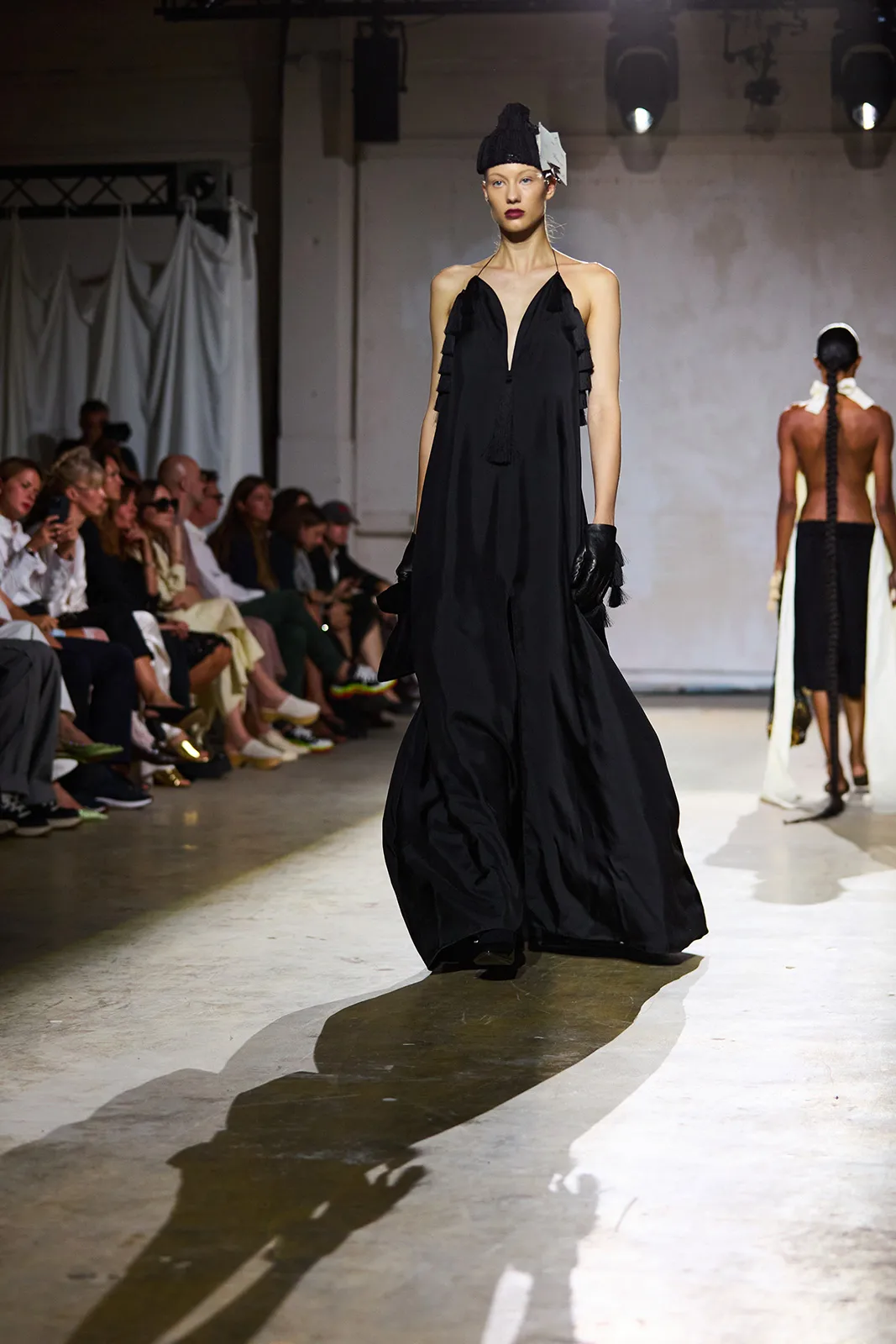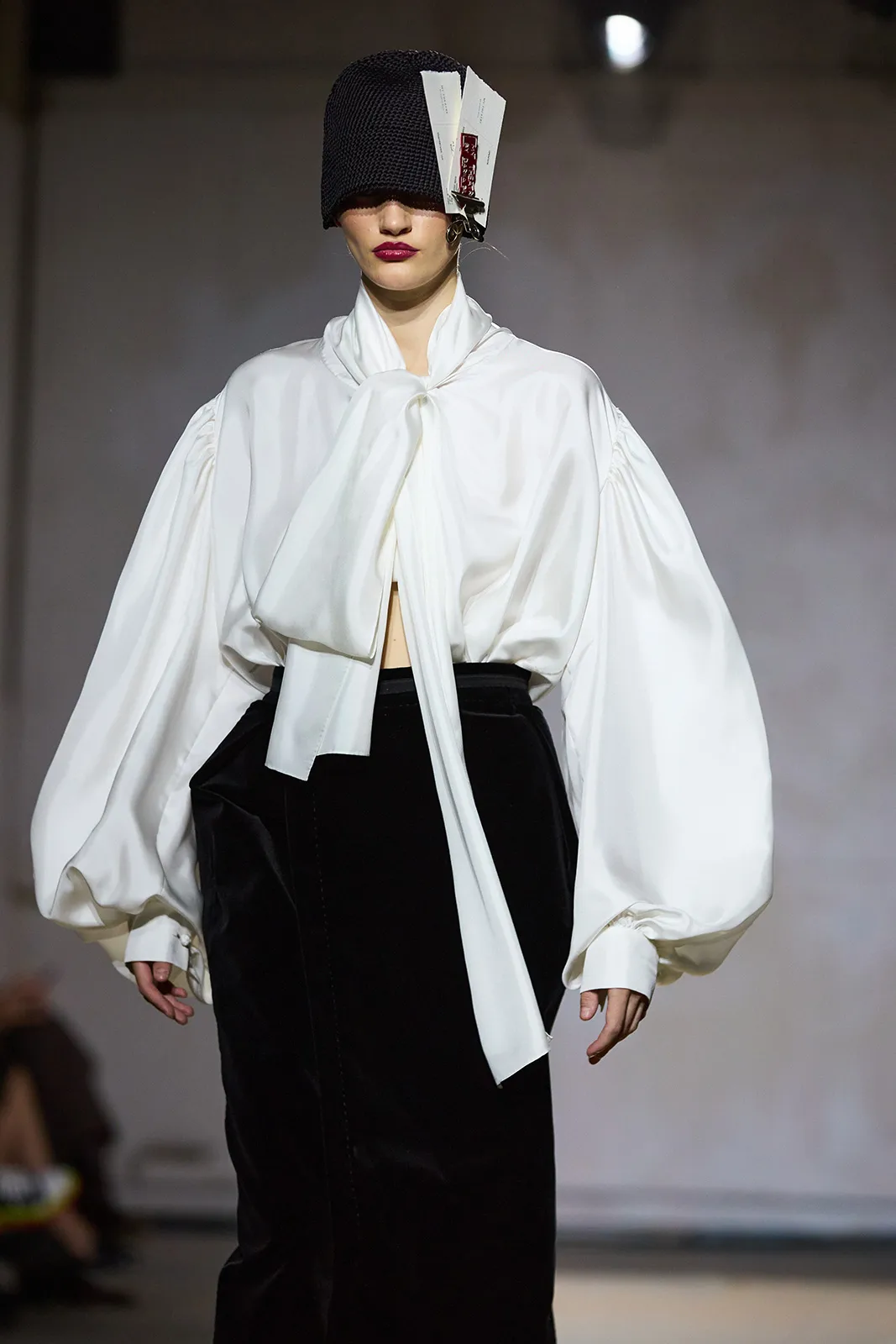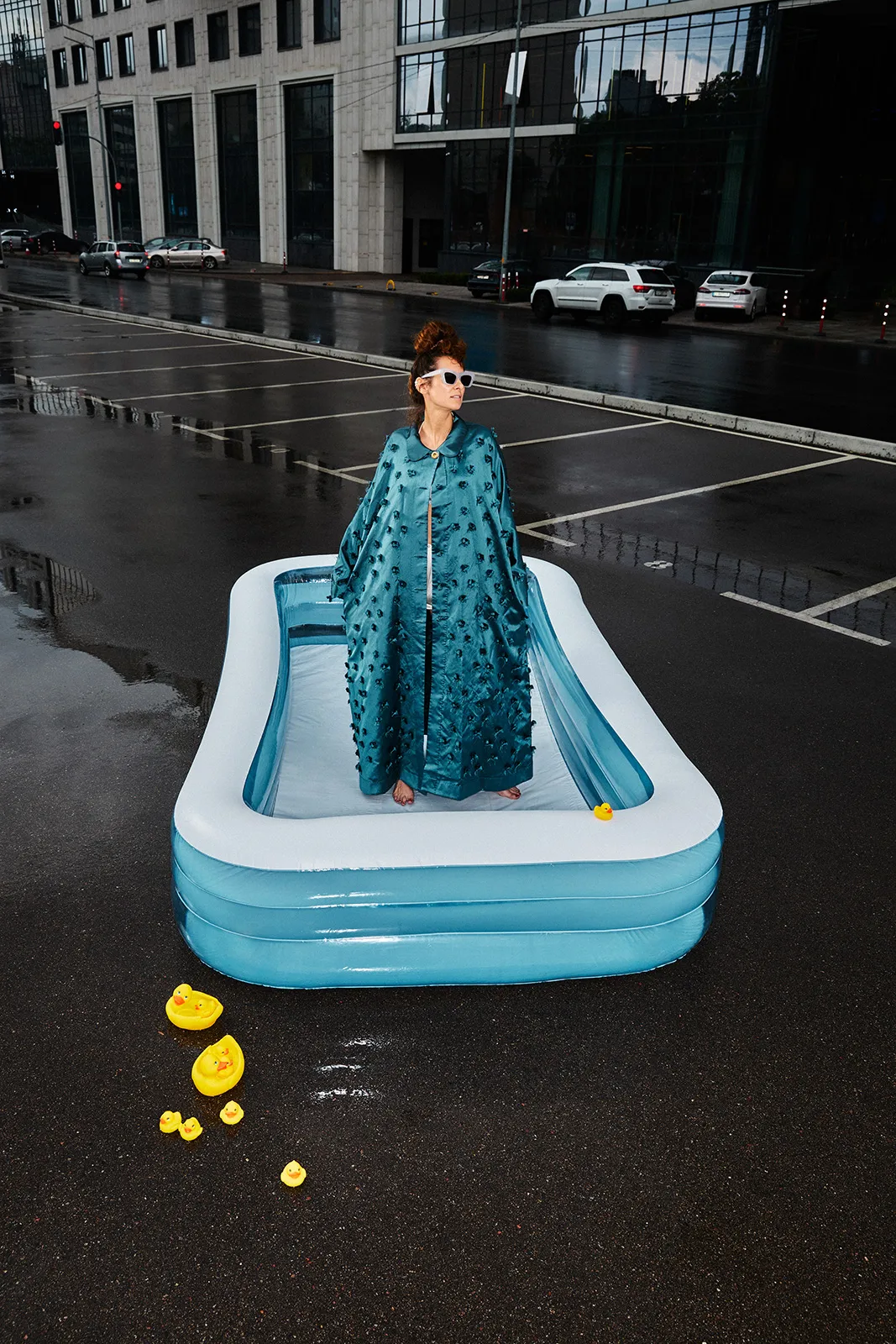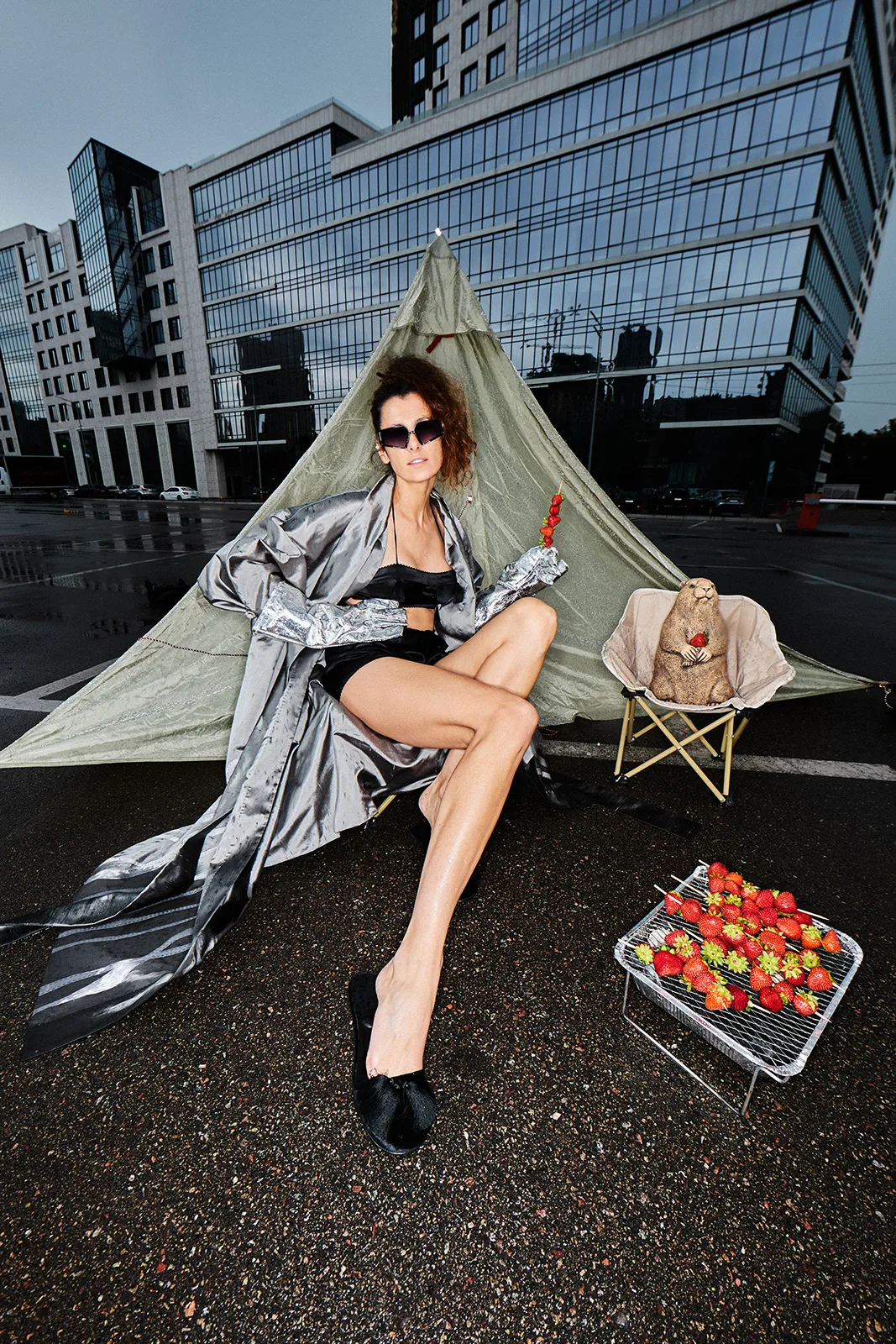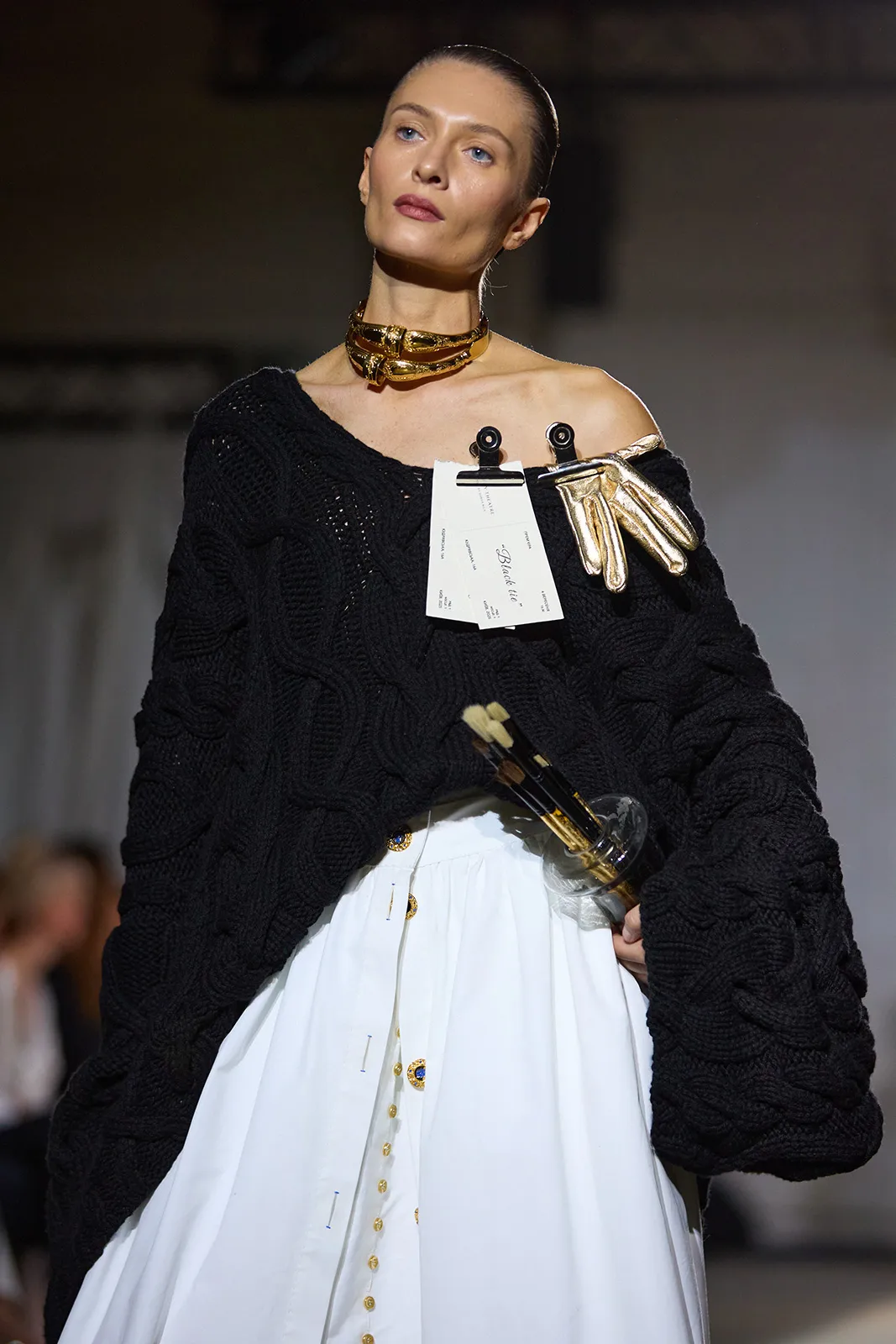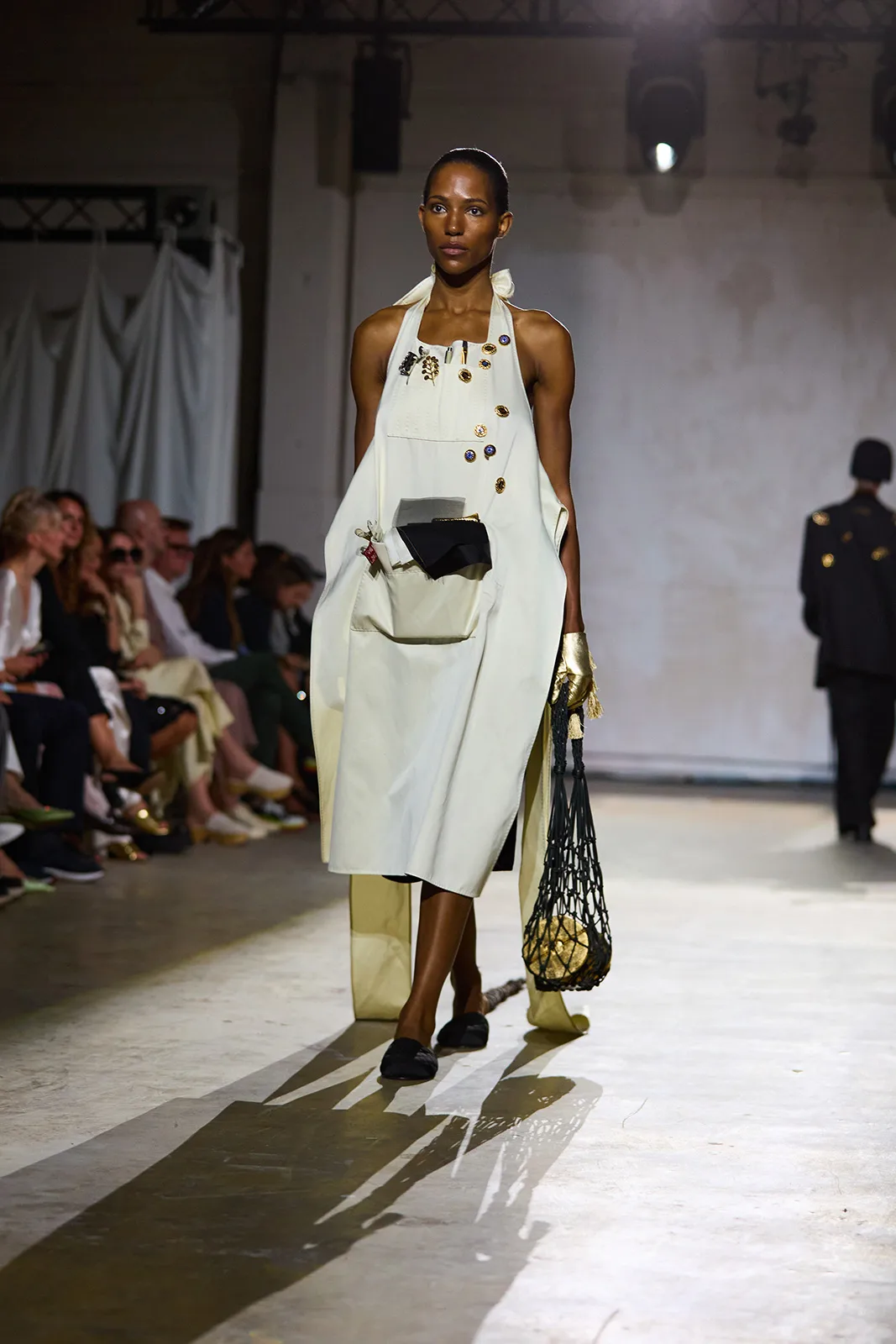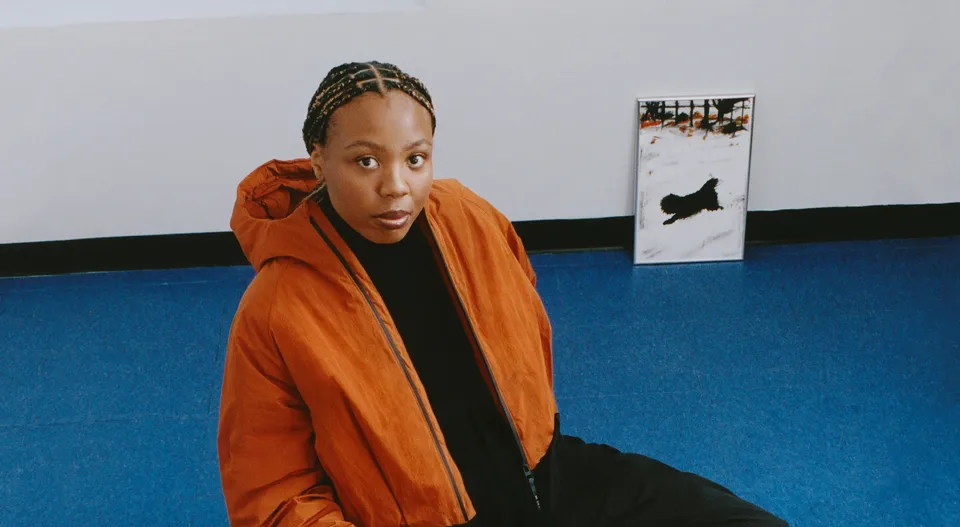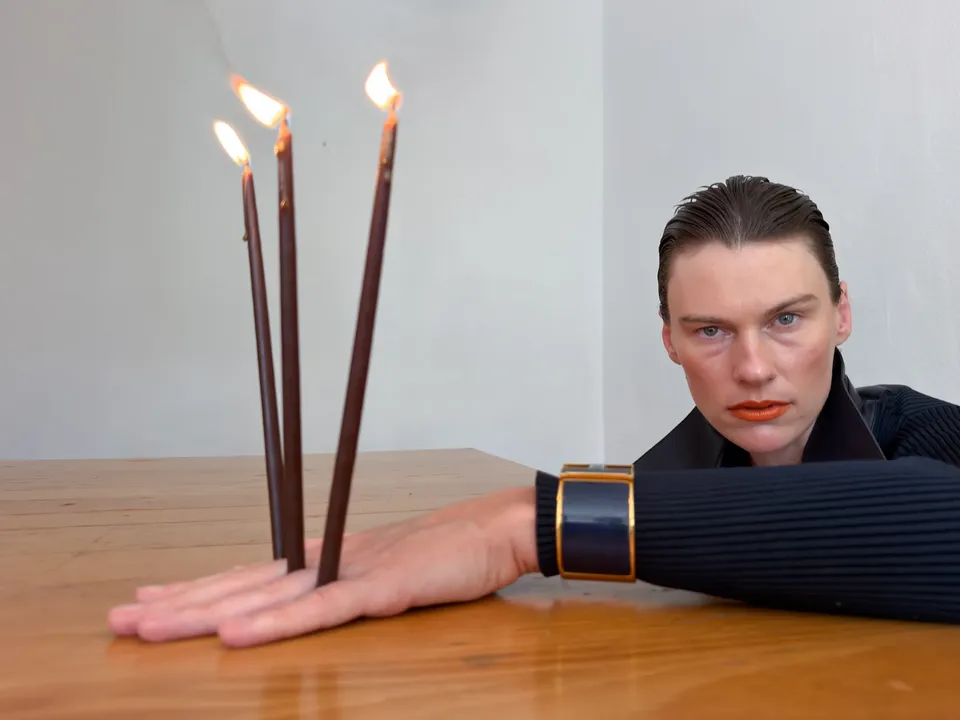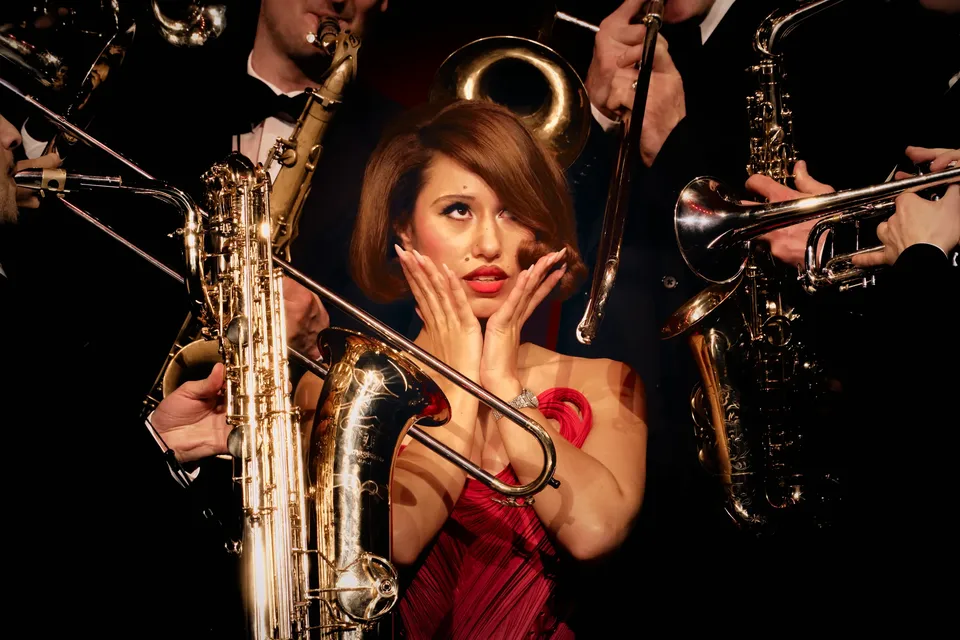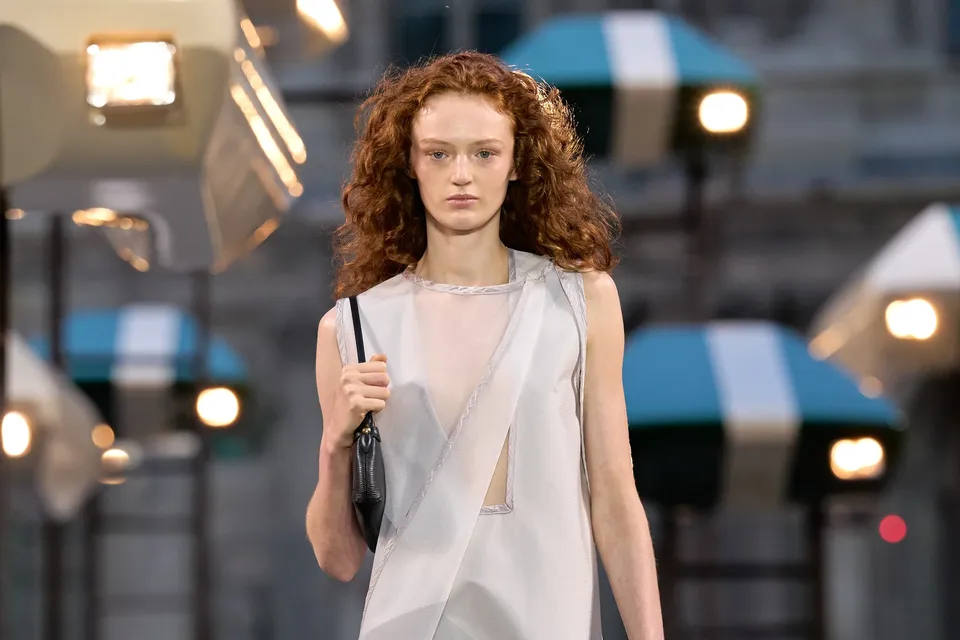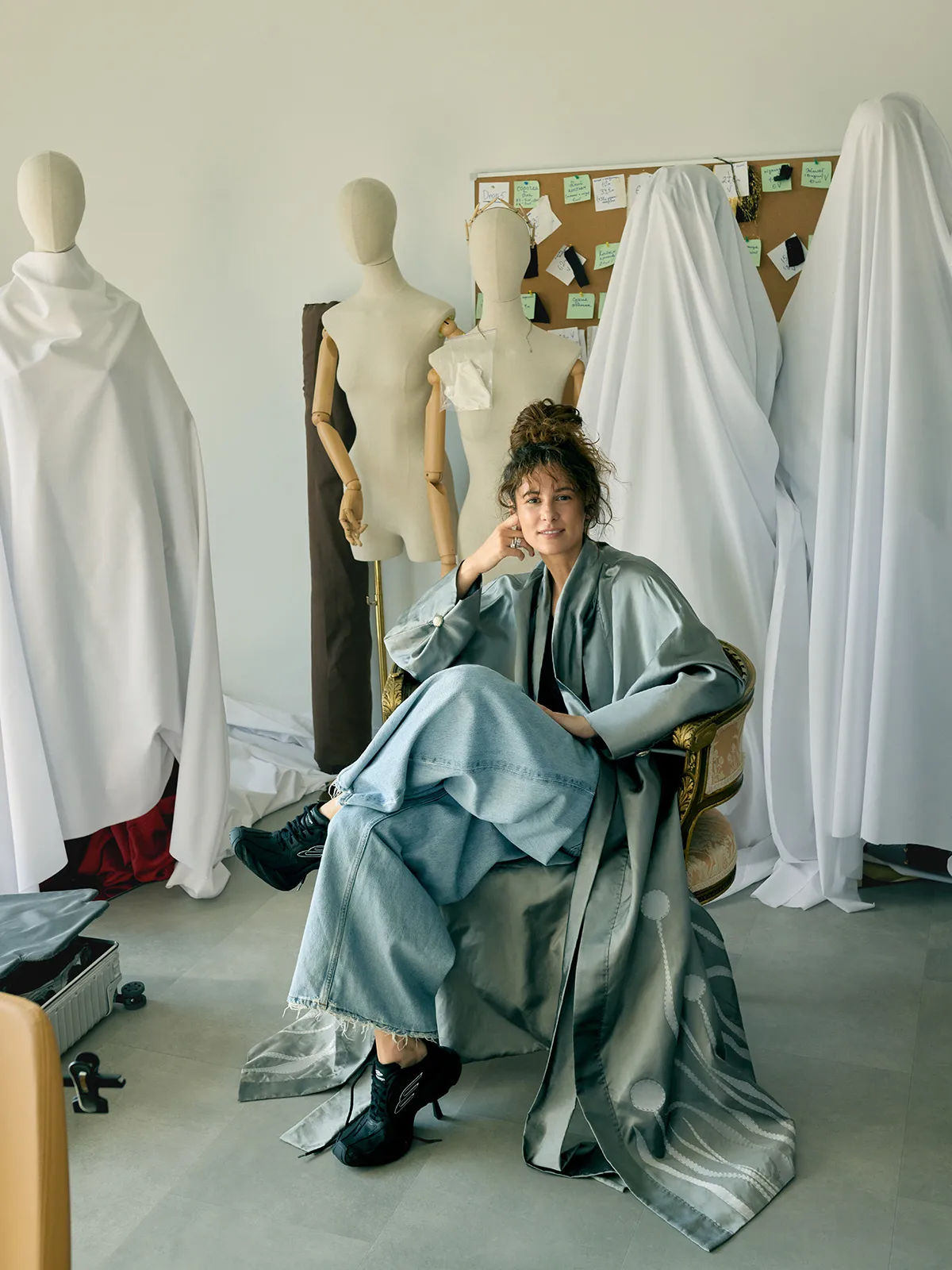
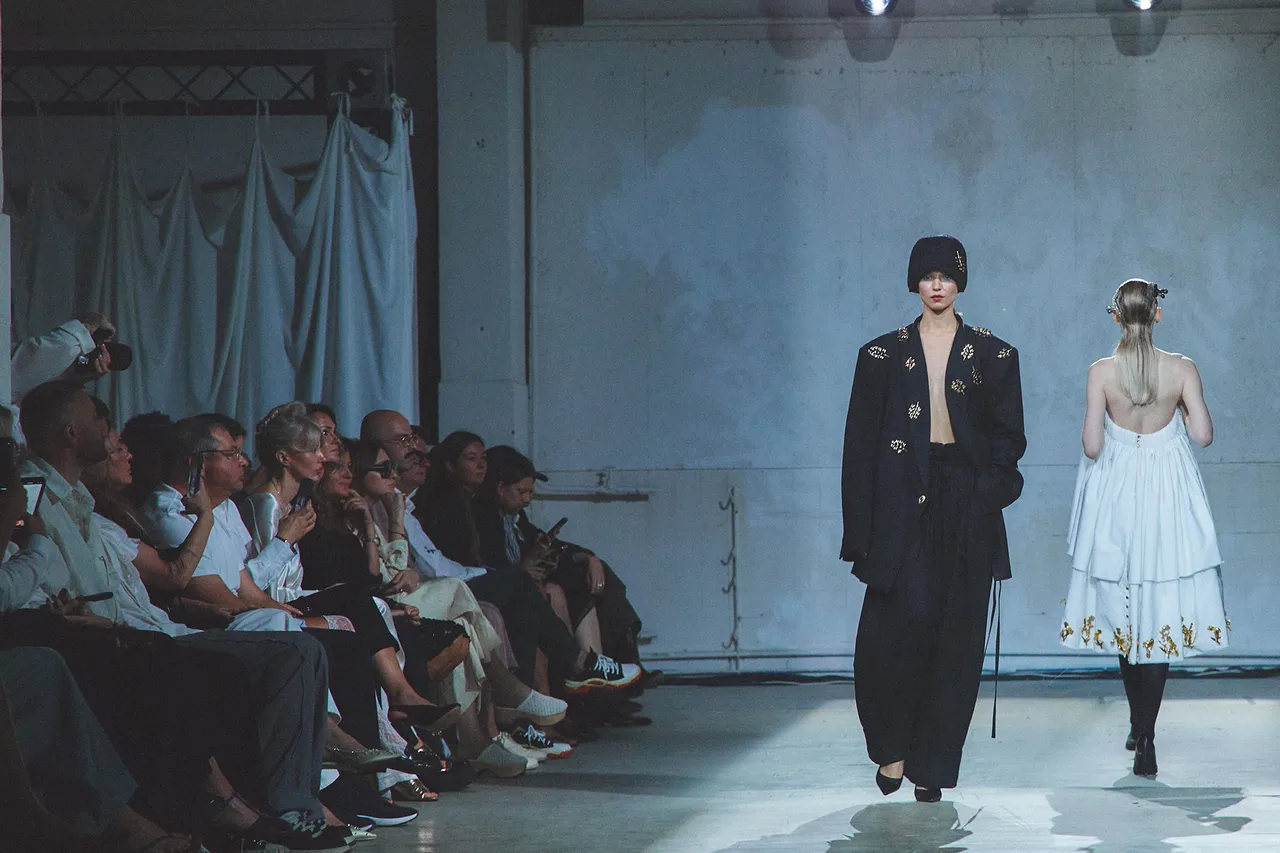
Dariia Bila’s world has always been built on stories. For over seventeen years, she’s dressed the characters of opera and ballet, shaping moods through colour, fabric, and light. Earlier this September, she stepped beyond the wings and into the runway spotlight, debuting MY THEATRE at Ukrainian Fashion Week SS26 in Kyiv. The show opened with the soaring aria Casta Diva and a red gown that unfurled like a stage curtain, a quiet nod to the theatre that shaped her creative voice.
Yet the beauty of that night unfolded under extraordinary pressure. “Just before the presentation, there was a threat of missile strikes and an air raid alert,” Bila recalls. “We’re working in an extremely anxious time of war, where priorities shift dramatically.” Some brands were unable to present their shows at all, making MY THEATRE’s thirty-nine-look debut not just a milestone for the brand, but also a testament to resilience and the will to keep creating.
Welcome to METAL! How are you, and from where are you answering our questions?
Thank you for the question. I’m currently preparing for the premiere of an opera at a theatre in Kyiv. And right now, after a rehearsal, I’m answering your questions.
You’ve just presented MY THEATRE for the first time at Ukrainian Fashion Week. How have these past two weeks been for you, and what balance do you make of this debut experience?
It has been an incredibly intense time: so much work, and of course, many emotions. Right after the fashion show, we began preparing for an exhibition within the framework of Ukrainian Fashion Week, and now I’m already immersed in opera rehearsals. So my time is completely devoted to work.
The show itself passed in an instant. After so many weeks of preparation, the moment on stage felt like a flash. Just before the presentation, there was a threat of missile strikes and an air raid alert. We’re working in an extremely anxious time of war, where priorities shift dramatically. Some brands were unable to present their shows at all.
The show itself passed in an instant. After so many weeks of preparation, the moment on stage felt like a flash. Just before the presentation, there was a threat of missile strikes and an air raid alert. We’re working in an extremely anxious time of war, where priorities shift dramatically. Some brands were unable to present their shows at all.
Your show combined runway with performance. Was it important for you to blur the line between fashion and theatre from the very beginning?
For me, it was incredibly important to create my debut show exactly the way I envisioned it: to open my own theatre and reveal who we are.
The opening moment, featuring the aria and the red gown, was striking. What story did you want that image to tell?
This operatic aria, which opened the show, reflects our belief in art in all its forms — through shape, music, voice, and movement. The dress itself was essentially a theatre curtain opening before the beginning of a performance. The aria was Casta Diva from Bellini’s Norma, performed by an incomparable soloist.
After nearly two decades in theatre, how different was it to step into the role of fashion designer on such a stage?
The world of fashion differs from theatre mostly on a technical level. But creatively, for me, there’s no distinction. I create space and imagery, and it doesn’t matter whether it’s costumes, scenery, clothing, or accessories. Whether it’s for the theatre or a runway, I am always inside the world of creation.
“I create space and imagery, and it doesn’t matter whether it’s costumes, scenery, clothing, or accessories.”
You presented thirty-nine looks, including pieces from previous collections. How do you decide what to carry forward and what to leave behind?
I wanted to introduce the audience to our journey, to show where we started and where we are heading. To reveal how our craft has evolved, and how, with each new collection, we continue to grow.
Every piece is handmade and can take up to ten hours to produce. In today’s fast fashion world, what does this pace give you as a designer?
For me, each collection is a new challenge. I want to create complex and powerful images — sometimes playful, sometimes serious, but always multilayered and crafted with attention to every stitch. This takes time and focus. I’m not chasing quantity, I’m interested in depth and quality: the idea itself, and how it is brought to life under the circumstances we are living in now.
Why the choice to work only with natural fabrics?
I’m a very sensitive person, physically as well. That’s why I choose natural, high-quality fabrics. Silk, velvet, fine cotton, wool, and cashmere; these are materials I wear myself. So I primarily work with them in my creations.
You’ve spoken about creation starting with sound, letters, colours, textures — almost like a dream turning into form. How does this way of thinking shape the way you design collections?
Each time, the process begins differently. Sometimes, I hear music that fills me so deeply I immediately sense what I want to create. Other times, it takes longer, and I begin from my own emotions. In fact, that’s how my brand was born; almost every collection is connected to a performance I’ve been working on. Inspiration often comes through the very act of creation.
Your aesthetic feels both restrained and theatrical. How do you manage to hold these two seemingly opposite forces together?
By intuition. I understand that there are always accents, and in any look, they need to be highlighted.
Ukraine’s designers are creating in the middle of a war. Has this reality changed the way you see your role as an artist?
Everything has changed. The war has changed all of us, both outwardly and inwardly. I have certainly become more determined. I act faster and with more strength than ever before. I understand that there is only the now, and I no longer postpone anything. There are fewer doubts, but more fears. Yet those fears are no longer about nuances; they are about life and death. Every day, there are attacks, and every day, people are killed. Drones and missiles strike residential buildings daily, and it is horrifying. That is why, when I wake up each morning, I realise: I am here, this day exists, and that means I must live it. And for me, living is inseparable from creating.
You still work on set and costume design for stage productions while developing MY THEATRE. How do these two practices intersect?
Everything is happening in parallel. I work on stage productions, I run MY THEATRE, and I create for a children’s project called Mister Pillow. Each of these worlds demands full emotional involvement and a different kind of focus. The theatre keeps me sharp and disciplined. It’s a space where everything must work, where costumes need to withstand daily performances, physical movement, quick changes, and technical challenges. It’s demanding and alive.
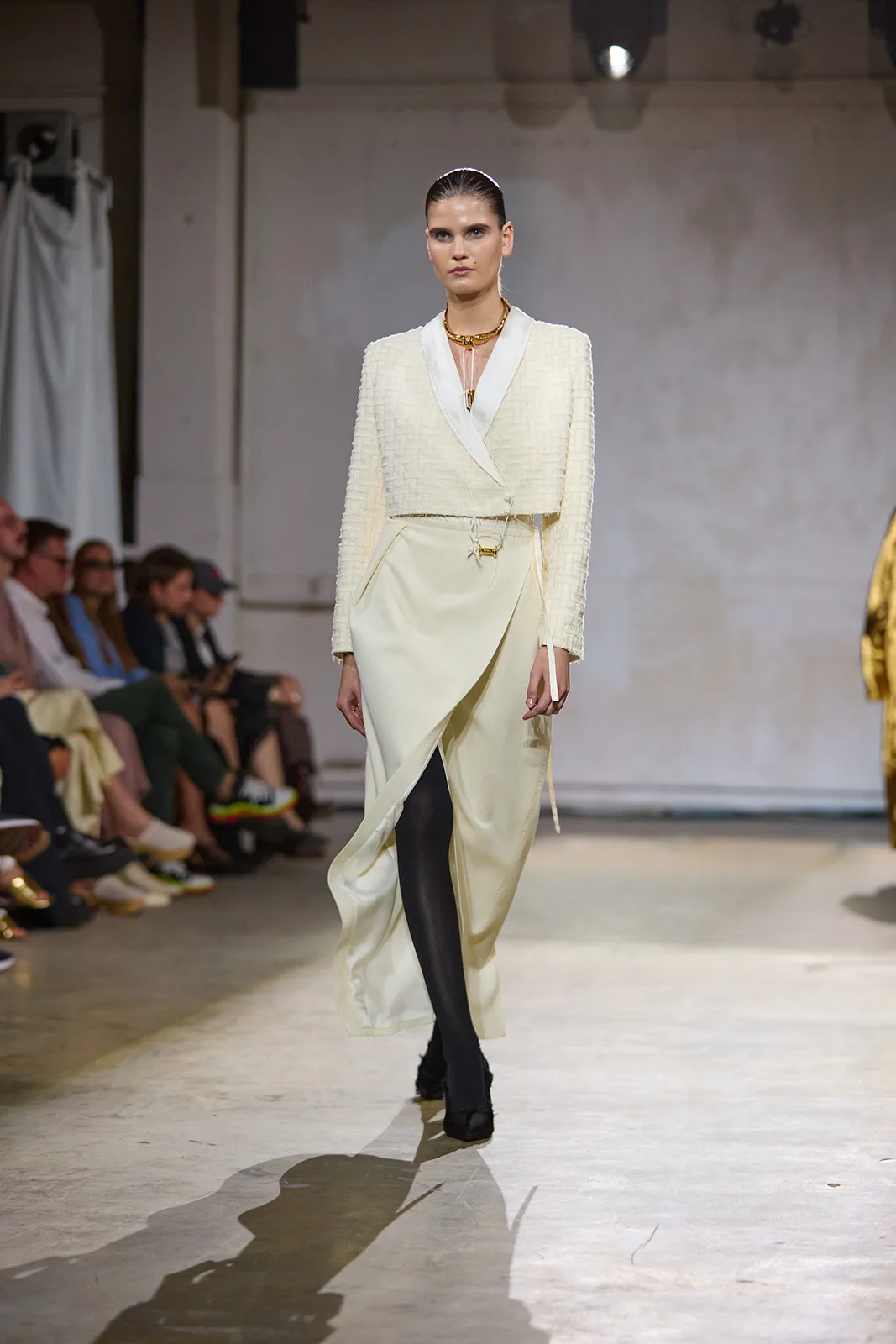
The brand, on the other hand, allows me to dive into incredibly delicate techniques: appliqué, hand embroidery, beadwork, the use of pearls and stones, hand-crafted buttons, and lots of hand-finishing with natural fabrics. I see it as an extension of my scenographic vision, but in a slower, more intimate rhythm.
And Mister Pillow is the project of my soul. It’s the warmest, kindest thing I’ve ever created. Through him, I try to offer children emotional support, imagination, and comfort. So all these directions grow from the same creative root. I just allow them to bloom in their own way.
The brand, on the other hand, allows me to dive into incredibly delicate techniques: appliqué, hand embroidery, beadwork, the use of pearls and stones, hand-crafted buttons, and lots of hand-finishing with natural fabrics. I see it as an extension of my scenographic vision, but in a slower, more intimate rhythm.
And Mister Pillow is the project of my soul. It’s the warmest, kindest thing I’ve ever created. Through him, I try to offer children emotional support, imagination, and comfort. So all these directions grow from the same creative root. I just allow them to bloom in their own way.
Do you usually start a collection with a clear story in mind, or do the stories emerge during the making?
It is always different. Sometimes I am inspired by the performance I am working on, and other times it comes from my own state, my mood, my emotions. I am not used to waiting for inspiration. For me, the very process of creating is what drives me.
Your debut at UFW felt like a statement of resilience. What does it mean to you to keep creating beauty in times of uncertainty?
It feels like a rescue for the soul when all the fear, pain, anger, and hope find their way out through creativity. At the same time, it’s a huge responsibility. When every moment becomes precious, when you don’t know what tomorrow will bring — where do you direct yourself, your team? Is it worth the time? Is it powerful enough? Does it deserve the energy and effort? What is the idea behind it? What is all this for? These are the questions I ask myself before starting any new work.
“The war has changed all of us, both outwardly and inwardly. I have certainly become more determined. I act faster and with more strength than ever before. I understand that there is only the now.”
Accessories, set design, atmosphere; MY THEATRE seems to go beyond clothes. Is your long-term vision to create a complete universe rather than just a brand?
I'm glad you felt that. This brand wasn’t born out of a desire to simply make clothes or accessories; it came from a deeper urge to create. My journey with theatre began early, and it was on the big stage that I first experienced the thrill of building entire worlds — through set design, costumes, characters, and visual language. That experience gave me a profound sense of wholeness, where every detail matters, where nothing is accidental. That’s why MY THEATRE by Dariia Bila is not just about garments, it’s about creating a world. A theatrical world. And I truly want to keep moving in that direction, taking bolder and more powerful steps forward with every project.
Looking back at your UFW debut, what did you learn from this milestone that will shape how you approach the next one?
It was truly a meaningful experience, not just for me, but, I believe, for many of the people involved in preparing and bringing the show to life. The first and most important thing is the team. When everyone around you is truly yours – in every sense of the word – you feel it. I’m very sensitive to energy, and indifference can be deeply upsetting to me. I’m grateful that this show was built by exceptional people who were genuinely inspired by the process and believed in the result. So, the first lesson is to build a strong, committed team.
The second: trust your instincts and don’t look sideways. Everyone creates their own story, and it's important to stay focused on your own path. The third: fashion is very different from theatre, especially in terms of budgets. In fashion, everyone has an assistant to the assistant, and that doesn’t always translate to impact or results. And finally, but perhaps most importantly: remember to hold onto the moment.
Everything moves fast, there’s constant rushing, but there are moments that deserve to be remembered. Moments we work so hard for. Like when you try on a look for the first time and it’s exactly how you imagined it. Like standing on the location and hearing the music in your head for the first time. Like the opera diva, who believed in the idea, came from Vienna despite the missile attacks, and performed the very aria I dreamed of. Like when the set is hung, and I know — this is it. Like when each member of the team has that fire in their eyes, determined to give everything. Like when the guests are seated, the lights go out, and backstage someone says, ‘We’re live’.
The second: trust your instincts and don’t look sideways. Everyone creates their own story, and it's important to stay focused on your own path. The third: fashion is very different from theatre, especially in terms of budgets. In fashion, everyone has an assistant to the assistant, and that doesn’t always translate to impact or results. And finally, but perhaps most importantly: remember to hold onto the moment.
Everything moves fast, there’s constant rushing, but there are moments that deserve to be remembered. Moments we work so hard for. Like when you try on a look for the first time and it’s exactly how you imagined it. Like standing on the location and hearing the music in your head for the first time. Like the opera diva, who believed in the idea, came from Vienna despite the missile attacks, and performed the very aria I dreamed of. Like when the set is hung, and I know — this is it. Like when each member of the team has that fire in their eyes, determined to give everything. Like when the guests are seated, the lights go out, and backstage someone says, ‘We’re live’.
You’ve designed for timeless operas and ballets as well as contemporary works. Does MY THEATRE draw more from the past, or do you see it as a leap into the future?
It always comes from my present moment, and that can look different each time, just like my theatre projects. Sometimes it starts with an emotion that doesn’t let me go and I try to express it through creation. Sometimes it’s the opera I’m currently working on. Sometimes it’s simply a melody I happen to hear.
Who do you imagine wearing your creations?
I believe it’s for those who feel the world deeply.
And what is the next challenge for your brand?
Paris. I would love to present my brand there one day.
Where would you like to be in ten years?
I just want to be. And to be happy