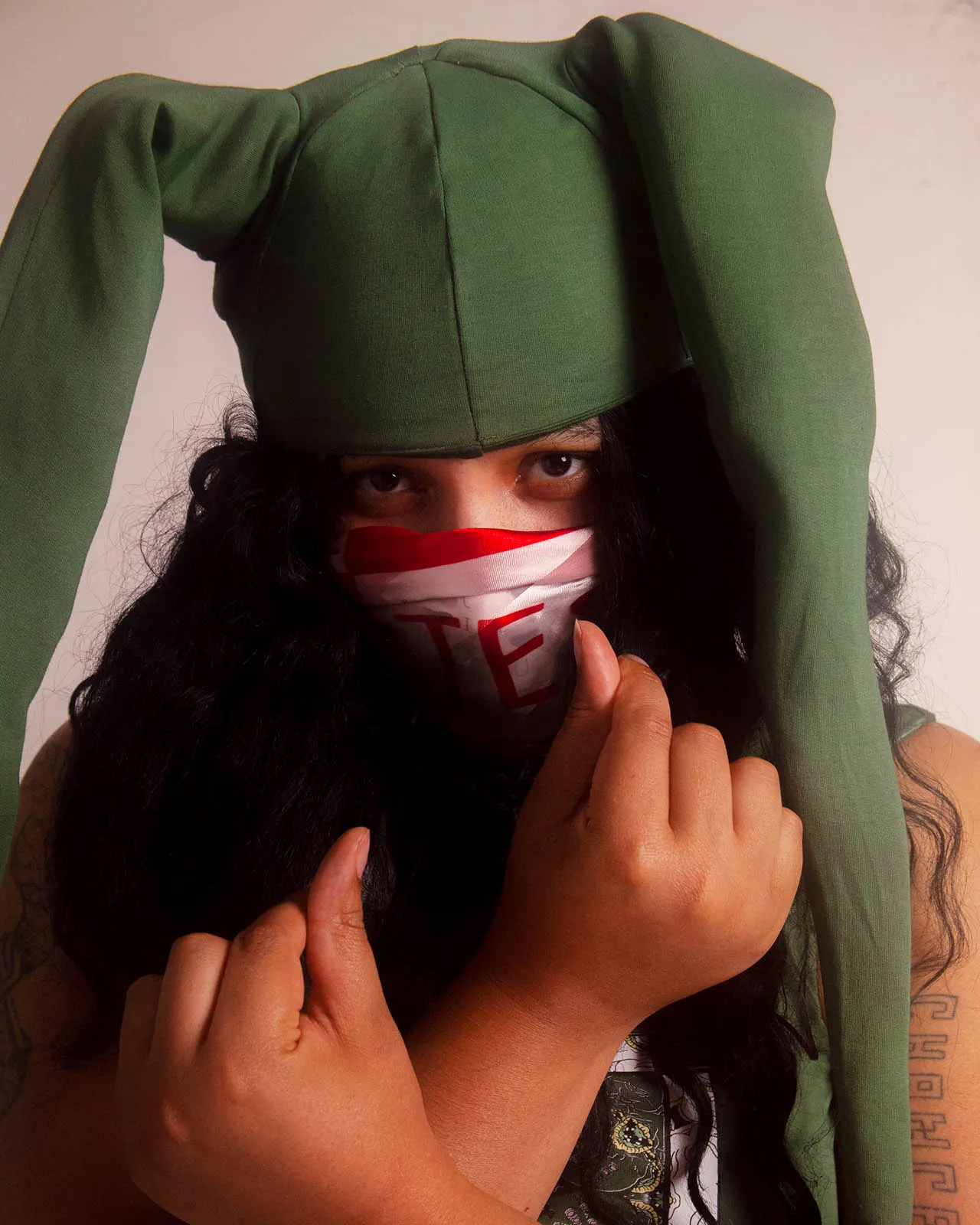
Danielle Brathwaite-Shirley is busy. After their show The Delusion at the Serpentine opened, the artist returned to their studio in Berlin where it’s long days of writing up narratives and late nights of drawing. “I just like working,” they shrugged when I caught them a couple of weeks after the opening, to delve into their artistic practice, “If it’s a work where I’m hitting my head against the wall, I’ll do it at like two or three am.”
Playing a Brathwaite-Shirley game in the early hours of the morning should come with its own warning. Liquid figures dance in pixel pools of vintage game design, they play on new-age fears around the fragility of digital existence and older tales passed through generations or excavated through urban legends. However, Brathwaite-Shirley would hardly want us to sit in the comfort of knowing how it goes and hijacks these tales with lived narratives of black trans experience – the unending sea becomes the middle passage, or you wonder if you can stop your gameplay progress as a cult criminal from an underground revolutionary. Brathwaite-Shirley makes sure you know where you are transgressing in a space that’s not yours to begin with, and where you can stay.
What made you shift your practice from London to Berlin?
Berlin is a really good base to do things internationally. My life in Berlin is a lot quieter. I'm infamous for overworking and where I live in Berlin allows me to work very hard, consistently. When you're building these games, thirteen-hour-days are very normal. You want to be able to be focused while experimenting with things that are very confusing and complicated, while making it simpler for the audience. I like that focus Berlin gives me. When I am in London or anywhere else, there's so many things to go to, which is amazing. I want to be able to dip in and out of that. Berlin allows me to have a very strict routine maintaining focus while working for a long time.
Did you know you’d be working with games while you were a student at Slade?
I was in the media department of my school, so they were very happy with us doing performances and films. They didn't know so much about games or animation, so we had to do that ourselves. They didn’t really teach us — they didn’t know how to, or they couldn’t be bothered — they just let everyone do what they did. I think something about Slade is that you either make a career or you don't. That's it. Are you gonna lead yourself to become an artist? Luckily that worked for me, and for some people it doesn't. It sounds quite brutal, but if you don't develop a practice, then you just don’t. You might develop it later, but that's what Slade is. It’s very hands-off. In other spaces you might have a lot more considerations on what you think art is and isn’t, which can either help you do really good on a traditional route or is really limiting. They were quite open for us to just do, rather than focus on the art market. Other schools were perhaps about making art saleable, but at Slade it’s more about making sure you’re making it on your own terms. Which I greatly appreciate.
So, when did you start getting into games?
When I began at Slade, I didn't really know what I wanted to do. One of the first things I did was make these large posters and drawings in Microsoft Paint, a bit like these over-the-top drawings I do now but more abstract. I started by making films which didn’t have 3D animation, they were a bunch of drawings and I collaged them alongside photographs of people in my life or myself. That was fun, but it didn’t feel like anything more than exploration. It wasn’t until I was filming a friend performing that the idea of adding 3D occurred to me and I started to take pictures which could immediately be turned into 3D animations.
Then they started becoming about people, I was around a lot of black trans people, so I started working around queerness, transness, archiving, death and a desire for a past. A lot of those early animations were inspired by the immense amount of games I had played by then, and they helped me figure out how to animate. I was teaching myself through replication. So, my animations started to look like games and have game-like options. It wasn’t until I finished Slade that I realised I needed to make games. I was struggling with the passivity of audiences watching my animations. I wanted them to feel responsible for what they’re seeing and have some agency.
Then they started becoming about people, I was around a lot of black trans people, so I started working around queerness, transness, archiving, death and a desire for a past. A lot of those early animations were inspired by the immense amount of games I had played by then, and they helped me figure out how to animate. I was teaching myself through replication. So, my animations started to look like games and have game-like options. It wasn’t until I finished Slade that I realised I needed to make games. I was struggling with the passivity of audiences watching my animations. I wanted them to feel responsible for what they’re seeing and have some agency.
You mentioned once that hearing a visitor say they could ignore what your work was about and just bathe in the visuals was what made you focus more on the content.
I think it was in 2019. That's when I shifted from making films to games because I didn't want anyone to have that opportunity to ignore anything. Since then, I've gone on this journey from making games that are very laser-focused on the transness and queerness to being around laying bare some of people’s emotions and letting them tackle that with someone else in the room. It’s a space that requires a lot from you. If you’re lazy, the work is lazy right back at you. It works as a conversation.
I want the show to be difficult, and people to feel frustrated. I don’t want you to leave saying it was a beautiful show. I prefer you go in and have a conversation which is difficult, or which doesn’t have a clear answer. I want to give the gallery some more of a function rather than a space to just see art. The other day my friends went in, and they had the usual discussion with someone who thought feminism was a way to oppress men. They were trying to explain why it wasn’t that, and that to me is what the show is about. A meeting because the space has been set up for that to happen, rather than a debate or a take-down.
I want the show to be difficult, and people to feel frustrated. I don’t want you to leave saying it was a beautiful show. I prefer you go in and have a conversation which is difficult, or which doesn’t have a clear answer. I want to give the gallery some more of a function rather than a space to just see art. The other day my friends went in, and they had the usual discussion with someone who thought feminism was a way to oppress men. They were trying to explain why it wasn’t that, and that to me is what the show is about. A meeting because the space has been set up for that to happen, rather than a debate or a take-down.
This exhibition too was designed to be around pockets of collectivity, which is different from the usual white cube space which highlights isolation within the collective. How did you navigate this, particularly through the gallery design?
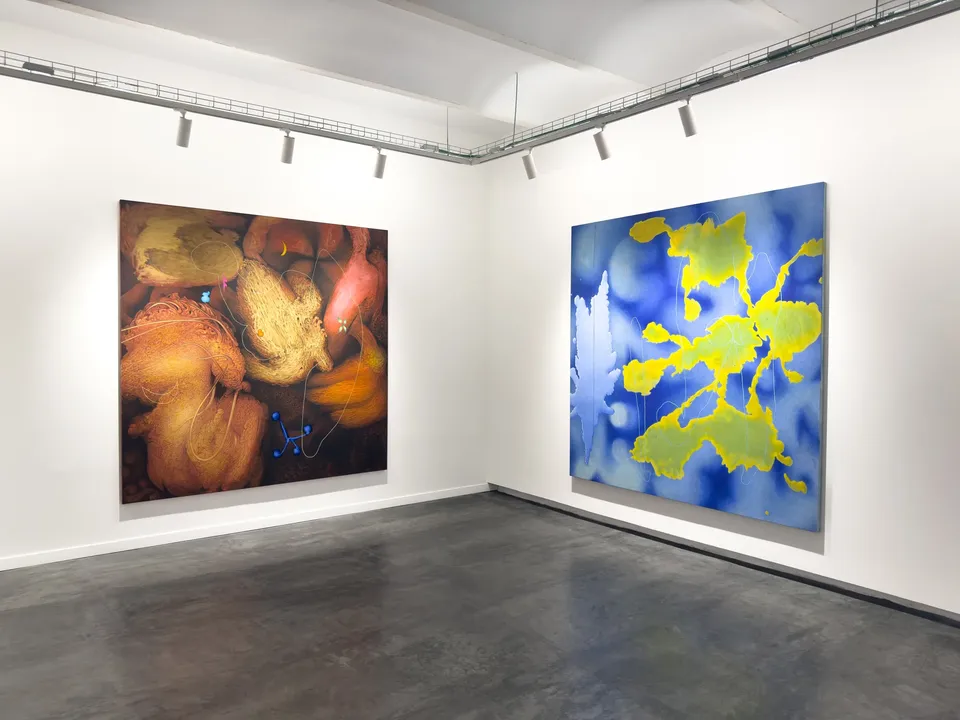
We always want to get away from this white cube thing. I feel people often see that as a space to be dressed with art, but for me it’s blank paper. There’s literally nothing there yet. I don’t want any of that blank paper to be there unless it has a particular message, which is why the gallery is totally converted in my work as I want you to look at every single detail – like the walls, and think about why we did them like that. I want people to think about everything rather than just the art being the only point of interest. The space builds the air in the room, what the colour changing from a light room into a darker room does to your eye. It’s making the gallery into an environment, and it’s usually grounded in something real, like the green grass is probably reconstructed from a picture of a fingernail of a living person. One space was based on my grandma’s house, which is why there were certain colours and religious themes. That’s also why the controllers at The Serpentine were things you’d find in the house, so it doesn’t feel like an interruption to entering the game.
You’re also foregrounding identity as part of the gameplay where we input our racial or sexual identity. How did that become a significant aspect of your games?
If you give people a set of choices, they might feel responsible for what they see, but it doesn’t feel like they are involved in that world. When you ask for their identity, their name or where they were born, it’s a small titbit about them which can put some pressure on their choices as now the game becomes a reflection of themselves. Earlier, people might not have felt culpable behind a particular game decision, but these additions are there so people feel like part of them is in the game, it has asked something from them and an essence of them remains as they go through choices.
Gaming historically has often been overtaken by straight men, often white. It’s interesting how they also have specific choices relegated to them in some of your games, where they can’t access certain spaces scared to trans experience.
The powerful thing about an interactive medium is that the experience is bespoke and no one else might pick the same options or open the door the same way. So, everyone's going to see a different kind of work. It’s not often that the audience reflects on who they are, in games. Games for a long time have been about selling, which makes sense as it’s expensive to do, but sometimes it leads to a fanbase that’s critical of new attempts to use the medium to do something else. It’s changed a lot with indie games, which are more inclusive and experimental. While larger companies are aiming for game identities designed for middle-aged men, many of my friends making indie games show that games can be so much more.
It definitely felt like I was inputting part of me into the game, which contributed to the horror. What is your personal relationship with horror?
I love horror. I like things that make me inadvertently react and with horror, I jump even if I'm not paying attention. I quite like the experience to be intense. Horror is really good at using very minimal cues that you can read, like you don’t want to go down a red hallway, it's just silly things like this. I try to figure out if I can reuse or reshape those cues and bubble that feeling up before the audience, which movies are so good at doing. I like when someone leads themselves through the game with emotion rather than through the intellectual thought believing that, I'm good at the games or I know how to do this. I like it more when it's more complicated like, I want to do that one but because of who I am, I should do the other one.
The queer experience is also one of horror in slightly older mainstream popular culture where figures of ambiguous gender or sexuality were the criminals or the ones to be afraid of. How do you draw upon that to build a new vocabulary in horror for the black trans experience?
Yes, considering Psycho or modern iterations like Insidious even. We are often seen as some sort of monster. If your child is queer, it’s horror. If your child is trans, it’s horror seeing them. The stories I heard about trans people when I grew up were equally horrible. Someone was speaking about spotting trans women by looking at their hands. Everyone looks like a monster in my work as I don’t want you to find it easier to empathise with someone who looks like a human. If everyone's at the same level of monster, you have to find empathy by their actions or their words. There’s a strong affinity of horror within queer cabaret scenes and we love it. It’s empowering to find power in being undesired or feared as a demon, as we’re not taking it the way people want us to, which is to put us down and break us.
Following that thread, how does exaggeration come to play in the way you sketch forms?
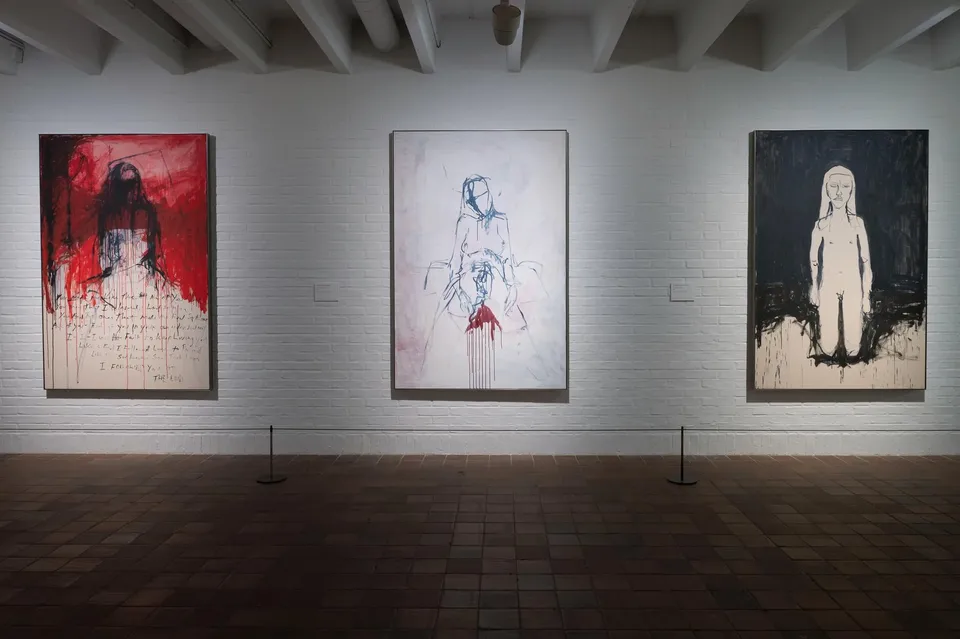
They’re not planned out – very reactionary. I’m in the business of feeling, so I’ll make them when I am feeling a certain way and just go with the flow. If I’m making one based on a picture of someone, I’m picking bits of them that I think have an essence of their soul. It’s like making a collage in a single sitting, evoking your feelings. It’s not I’ve got this feeling of fear, so this character is a representation of that. It’s a very diaristic practice and I make these forms after I’ve seen something or am thinking about something. A lot of them were made of news headlines about things happening around the world or where I was or comments I saw. To process it, I made a drawing. That’s how I do my diary, instead of writing down how my day was, I’ll draw three or four pictures of how I’m feeling, or something that stuck with me. The characters just spill out.
You mentioned black trans individuals around you filtering into your games. How did the community around you affect your practice?
It affects it deeply because those are the people I interact with. So, they are the ones I’m probably initially going to want to archive. Someone may tell me a story, and to archive it, I will try and model that person in 3D and end up building an entire environment because I couldn't get their essence in one person. I take it to an extreme that if a fictional world was built around you, what could happen. Community is something I’m always trying to reflect but it’s more of a science-fiction idea in the way I’m trying to archive the way they think or the essence of their soul. It’s more interesting to have a character based on someone I know, and you see the decisions they make as you follow them through an odyssey.
What does archiving mean to you, particularly as you mention trans ancestry which becomes so important for young queer people to archive, like I recall seeing a picture of Mary Jones in one of your works.
There was a photo of her quoting her as the “Man Monster” from 1836. An archive from my perspective is trying to capture the essence or the soul of a person, or way in which that person thinks. I am much more interested in the inner workings than on the surface, which the world is very much fascinated by. How transpeople move in the world, if they pass or not.
Physicality also is significant in your work, in terms of movement like in Get Home Safe where you transferred that physical movement into numbers. Sometimes these figures even become tropes in your work like faces with conjoined lips.
My process is very recycle-based. Images from one project will feed into the next one. The sculptures are made with fabrics from older works. It's almost like they are part of the same universe with the same DNA. Although I'm definitely not consciously thinking about making motifs, but because they exist in my head, they cross over. I add a lot of pockets and I just don’t know why. All the works are very collage-y, and they have a strong aesthetic, but anything can fit in that aesthetic. We have a rule that if something gets added to the project, you can’t take it out and figure out how to make it work. Same with drawings where there’s no editing a mistake. It’s interesting you say physicality as I have always considered my characters a bit floaty, and physicality is something I want to add more in, actually. We often work with the movement artist Malik Nashad Sharpe, who I worked with to see if I could make an archive just for movement, which is how we made She Keeps Me Damn Alive. Sometimes archiving appears in the way people walk in the game, or characters dancing a particular way.
In working with collage, are you drawing back from art history?
I wouldn’t say I’m taking from Dadaism. Some are more influenced by Caravaggio and mixed with a game reference, a book from the 2000s or a graphic novel from the 90s or Francis Bacon. More recent ones are inspired by the lineage of performance artists like Rebecca Allen. Some have been appreciated as art, others under-appreciated, and Slade was good at enabling us to make connections between things we considered art versus the more art historical. That’s what artists are good at, is looking at something overlooked and saying, this is art. Maybe that’s why games are getting more popular in the art world.
What draws you towards the early computer graphics from the 90s?
I'm always looking at older games. They had resolution limitations, so there was only so much detail they could put in, let’s say, a spaceship. The best thing about that was when you play the game for a long time, your imagination starts adding in the extra details. A perfect example of this is Silent Hill on PlayStation 1 where when you see a dead body, you can’t make out what happened to it, but you think about what could have happened. It becomes a lot more visceral than anything that you can render. That's why I use a lot of pixelated graphics because I want your brain to start filling in some of these gaps.
What are you reading or playing before you start a project?
The initial point for this exhibition was a book by Percival Everett called The Trees which I thought was really interesting as it uses something real like lynching and then tries to give them justice in a parallel universe, as our world could never give them the kind of justice or revenge that they get. I read House of Leaves which is a very strange book that thinks about how space can hold people or make them feel uncomfortable. I also played a lot of games, of course. Might and Magic VI was a massive influence in graphics as it had a 3D environment with 2D characters. Disaster Report on PlayStation 2 was the only game I’ve seen that tries to give you a sense of how much damage a tsunami does from a single person’s point-of-view. It’s quite a hard game to play if someone has been through a tsunami. I look at games as art, especially the engines they use. I see them as paintings that use a particular medium. If one game uses a particular kind of game engine to be built, that was never used again, it’s really interesting to use that medium again. Right now, I’m playing a game that is a sound novel, which were very popular in Japan as visual novels with movie sound. I really advocate more games as pieces of art to be studied, like we study Caravaggio.
You mentioned universe previously, how are you imagining the universe you’re building?
Oh god, it’s strange because I have this whole universe in my head, and it's changed now. The games are stages of different eras of time in the same universe. The progenitor of everything is Black Trans Sea, following which is a film Digging for Black Trans Life, and then it would be Black Trans Archive. Each period has rules, so one was focused on when the sea wakes up, which allows me to tell stories in particular ways. Then the whole universe has just been rewritten in this exhibition where the world has had this apocalypse moment. I wanted to figure out how to get the universe completely playable, which I don’t know how! The most successful thing I did this year was role-playing it like a Dungeons and Dragons experience, which was amazing. Then we realised I need to do a lot more, as role-playing really fleshes out the possible. The helpful thing about this universe is that a lot of things can just happen so I can’t really give you a distinct idea of it because it's always changing.
Do you see your work housed beyond a gallery?
For me it’s always important that some of the works exist for free. That's why so many of them are online, accessible from anywhere. We probably will do something like this for the show as well and you don’t have to go up the art world or know about art to just stumble upon it. I mean, it’s hard to stumble on anything online right now. I played most of my games for free, my favourite ones are online. I come from a lineage of amazing artists who made online interactive works in the early 90s, and artists doing amazing interactive shows in burlesque clubs. So, for me, the gallery is just one place where the work exists in a particular form.
When were you sure you wanted to be an artist?
Well, I was going to study Physics, and I was supposed to go to this University called Surrey. I'd done extra Maths classes, done my A-levels early, basically everything to do Physics. My partner at the time did an Art foundation course and I thought it was really interesting, maybe I could delay my Physics? So, I did, and when everyone was applying to art school, I had that moment of realisation when I decided I wanted to apply too. What helped me was I knew nothing about art, the best schools or how you’re supposed to present yourself as an artist or what’s considered the best art. I just wanted to create and that really helped me find my own way, which was probably very weird at the beginning and still is.
Who are you surrounded by or call your community in Berlin, after relocating your practice from London?
I found a good art community, a queer community. I'm also all about work right now. I'm quite lucky that wherever I go, I usually find people that I find very interesting to talk to and maintain long friendships with. It's about people who you trust and really get down to do some nitty-gritty work with, rather than just dreaming. There's a lot of amazing artists in Berlin who you can bounce ideas off of. I'm a very talky person, so it might not be a super cool artist but just finding someone to chat with. I will chat with literally anybody. If you speak to security guards at any art show, you hear a lot of interesting things.
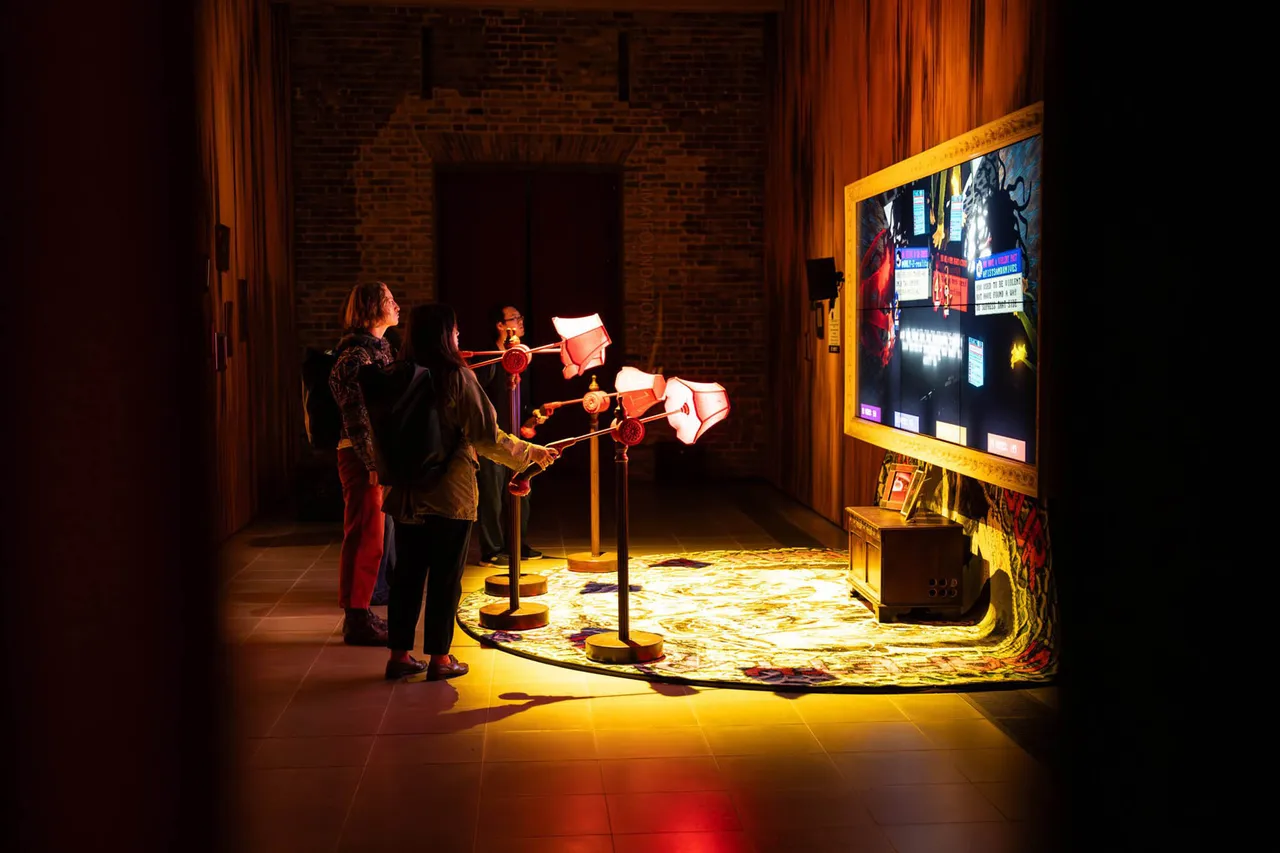
THE DELUSION, Danielle Brathwaite-Shirley, 2025. Commissioned and produced by Serpentine Arts Technologies. © Danielle Brathwaite-Shirley, photography: Talie Rose Eigeland.