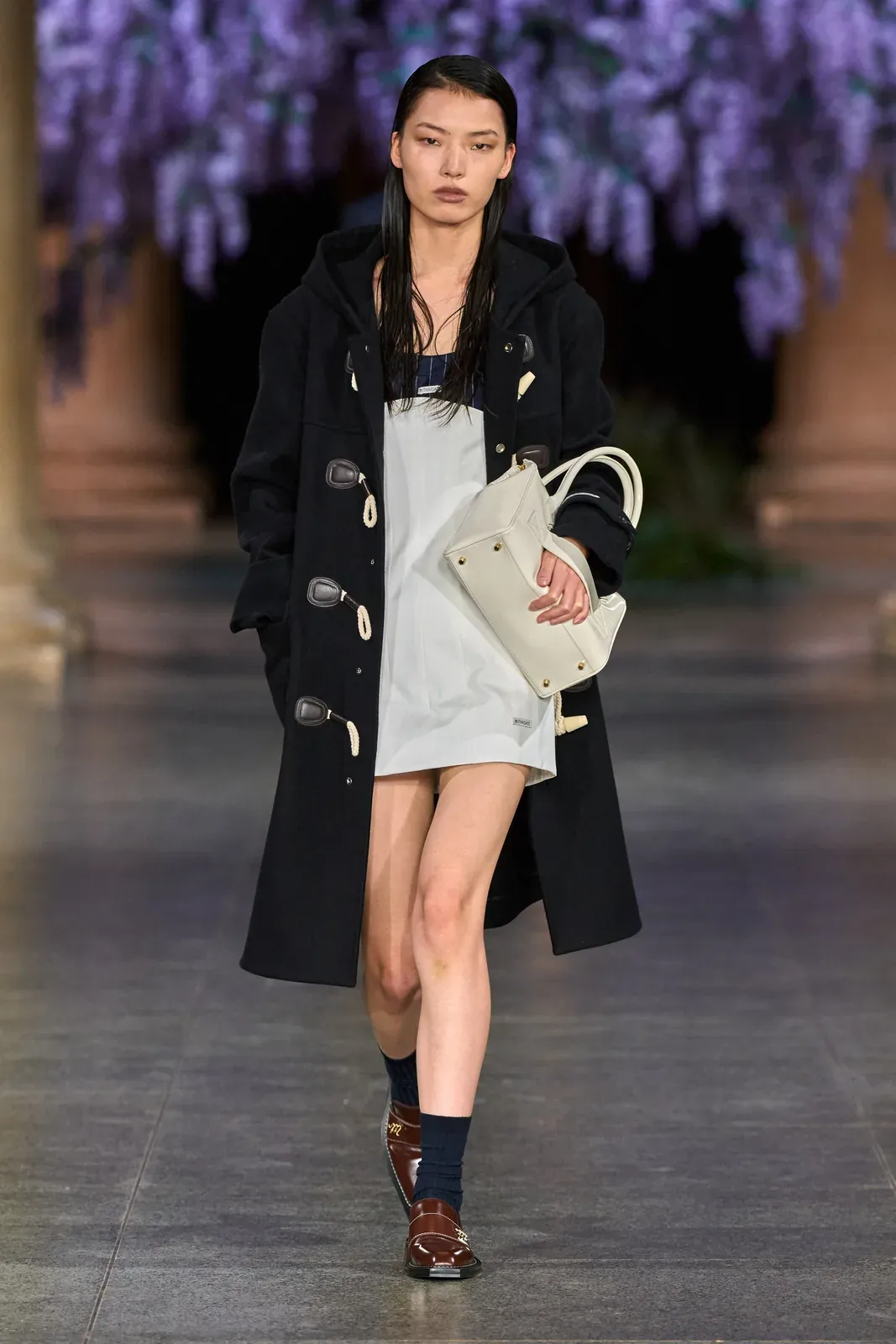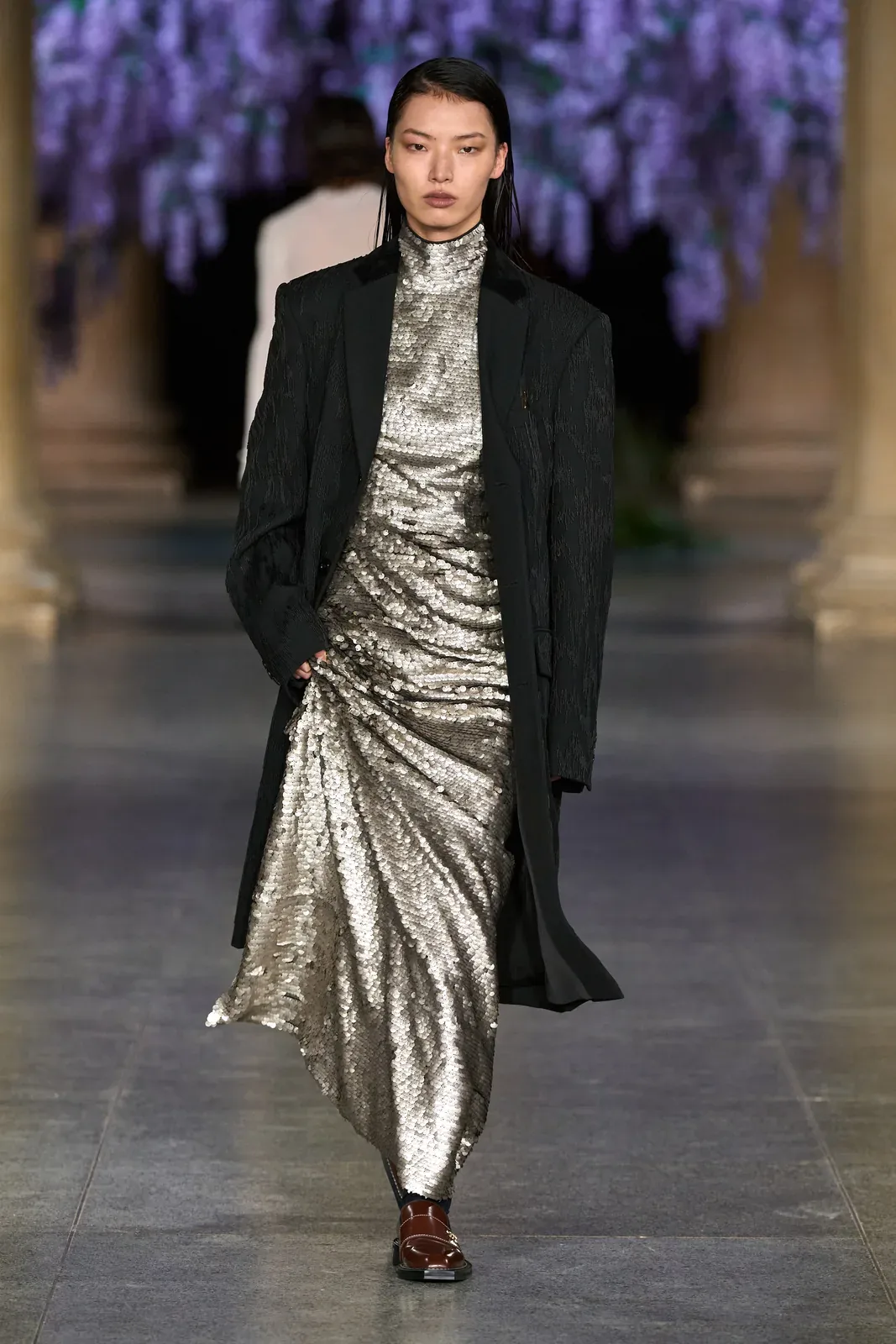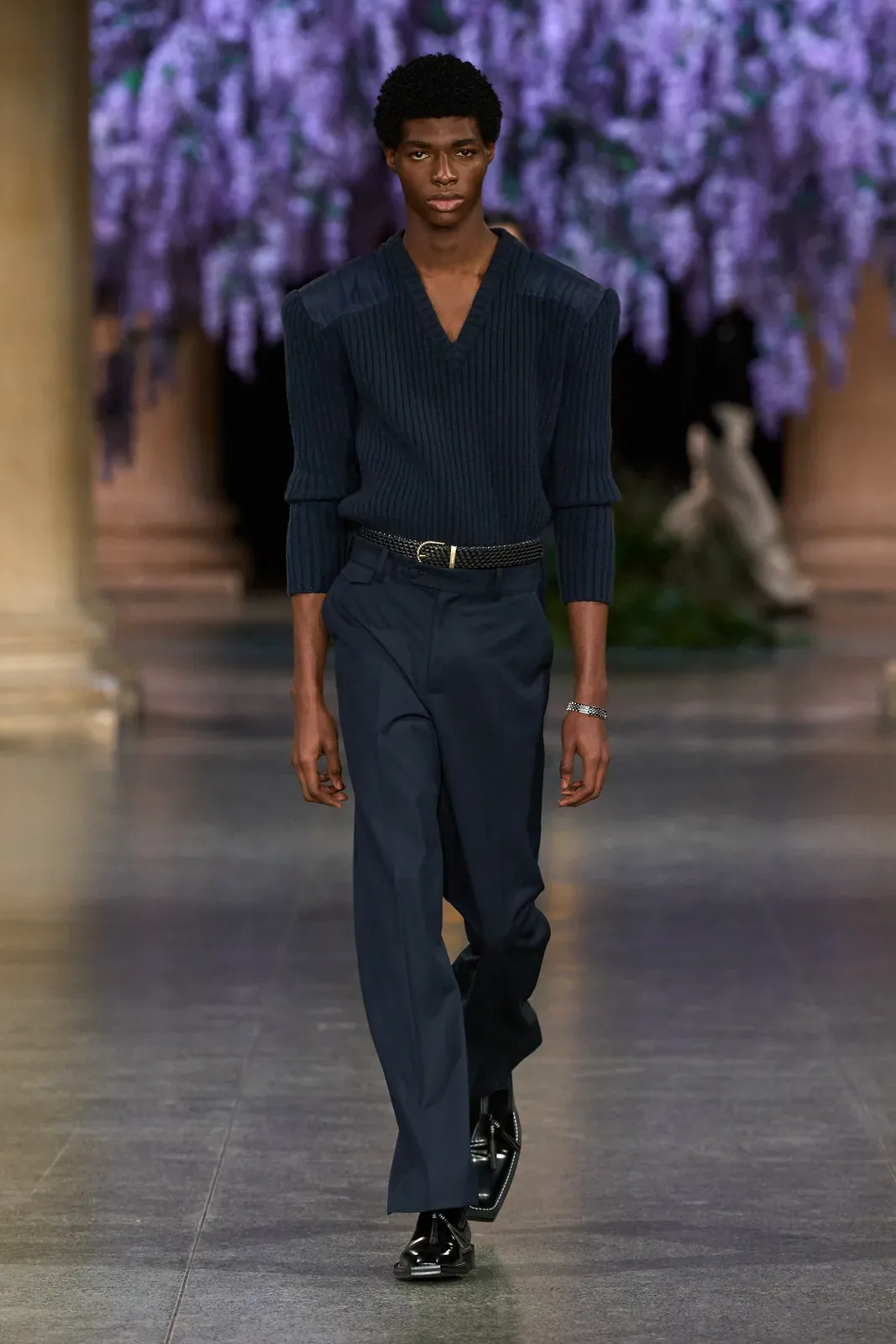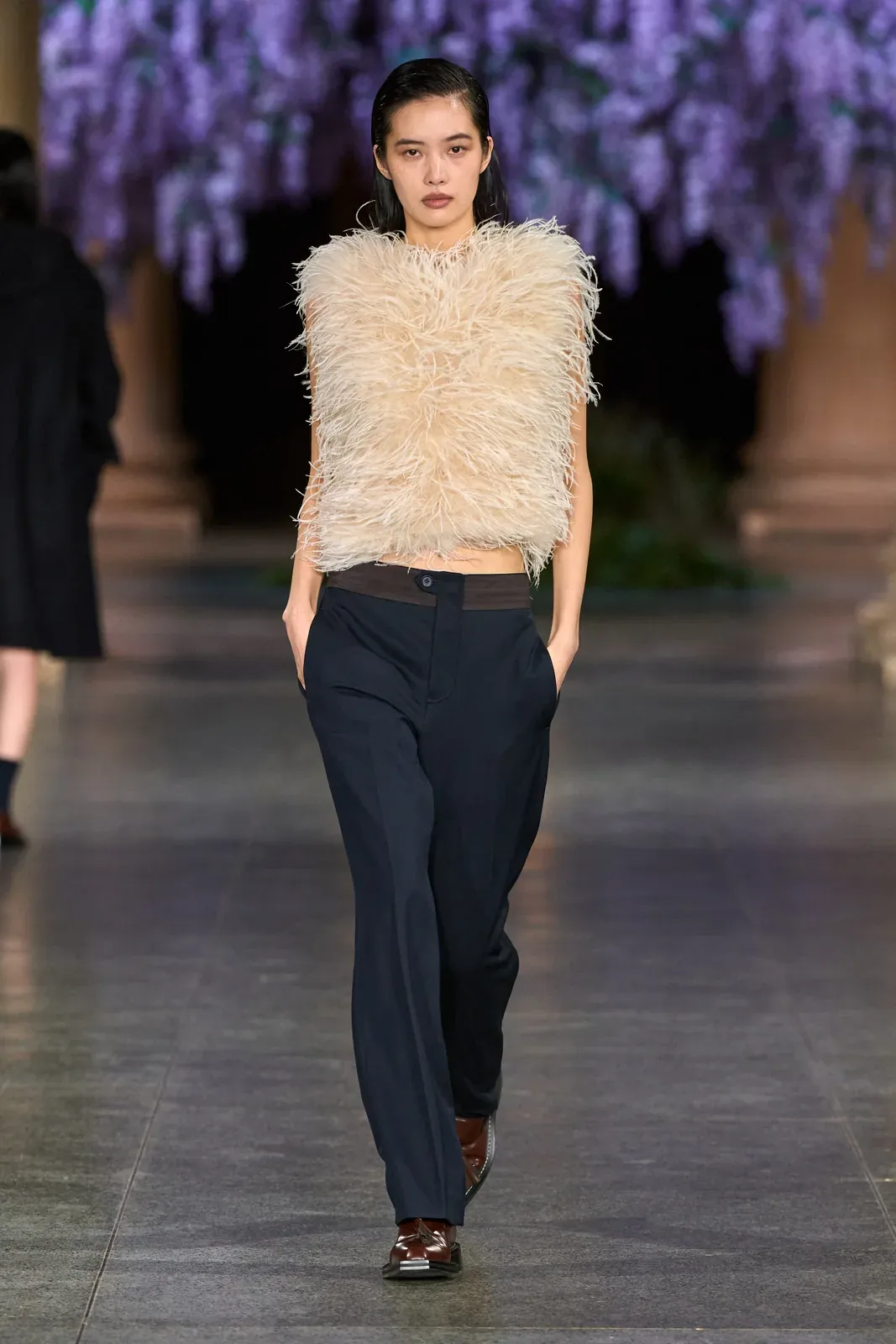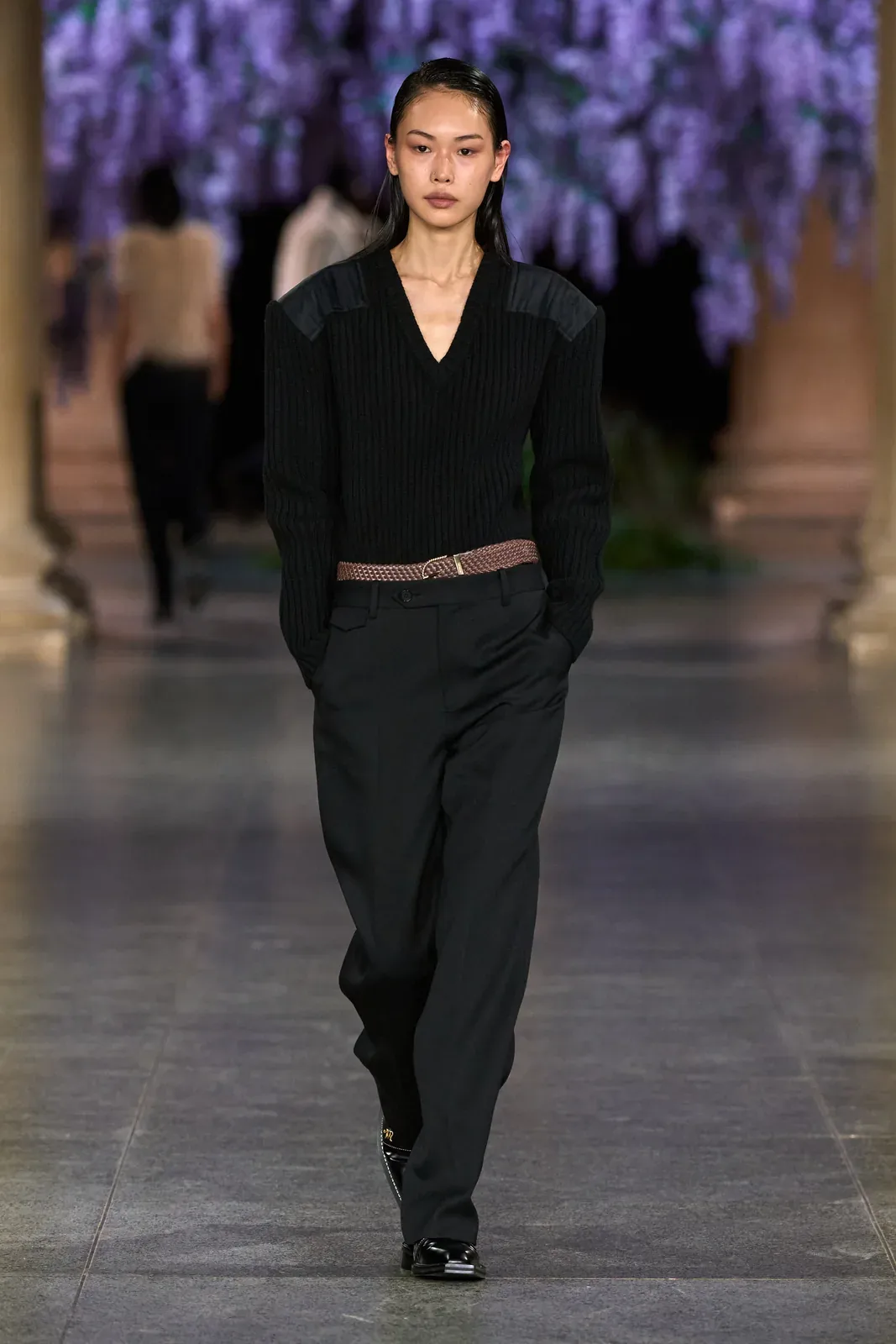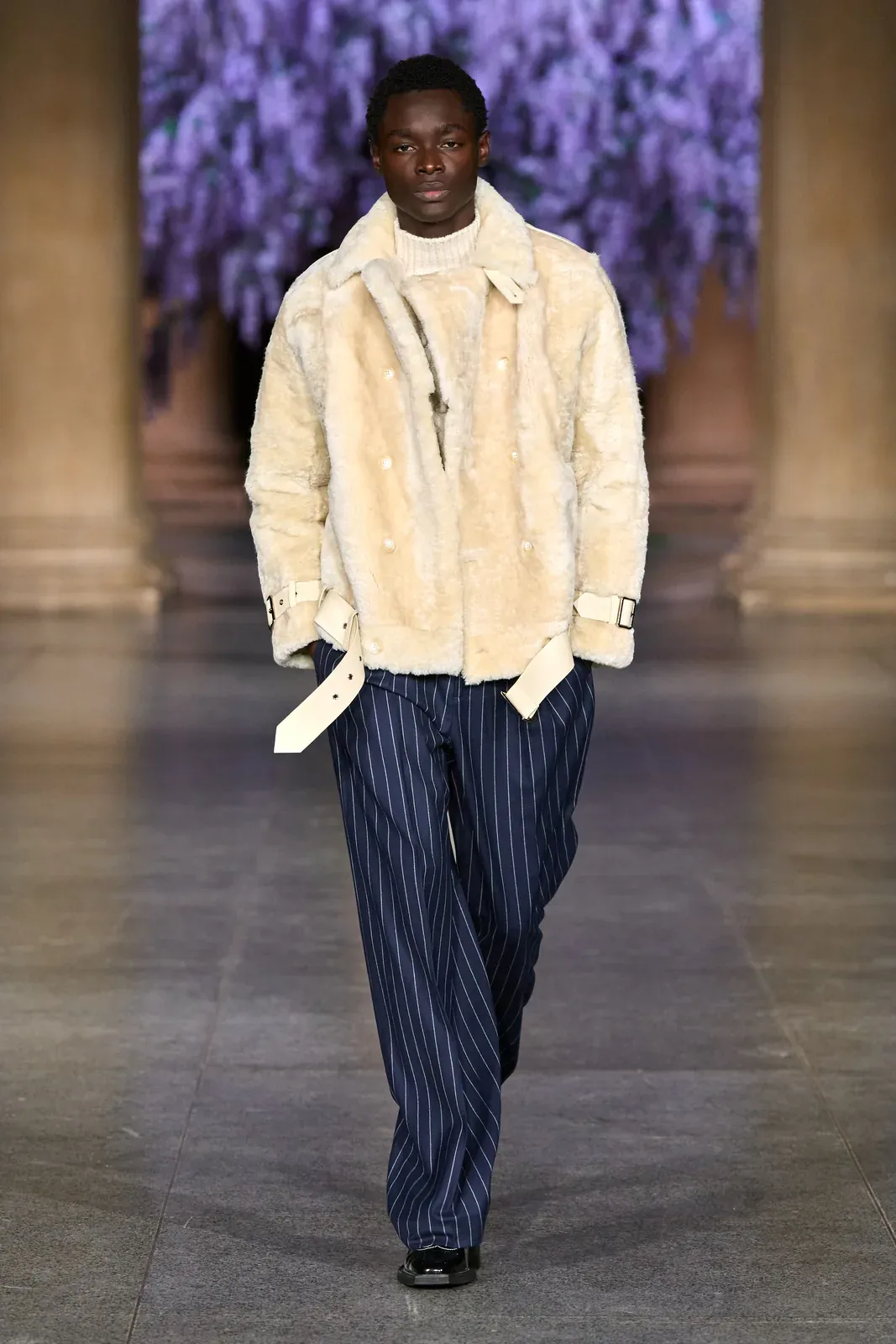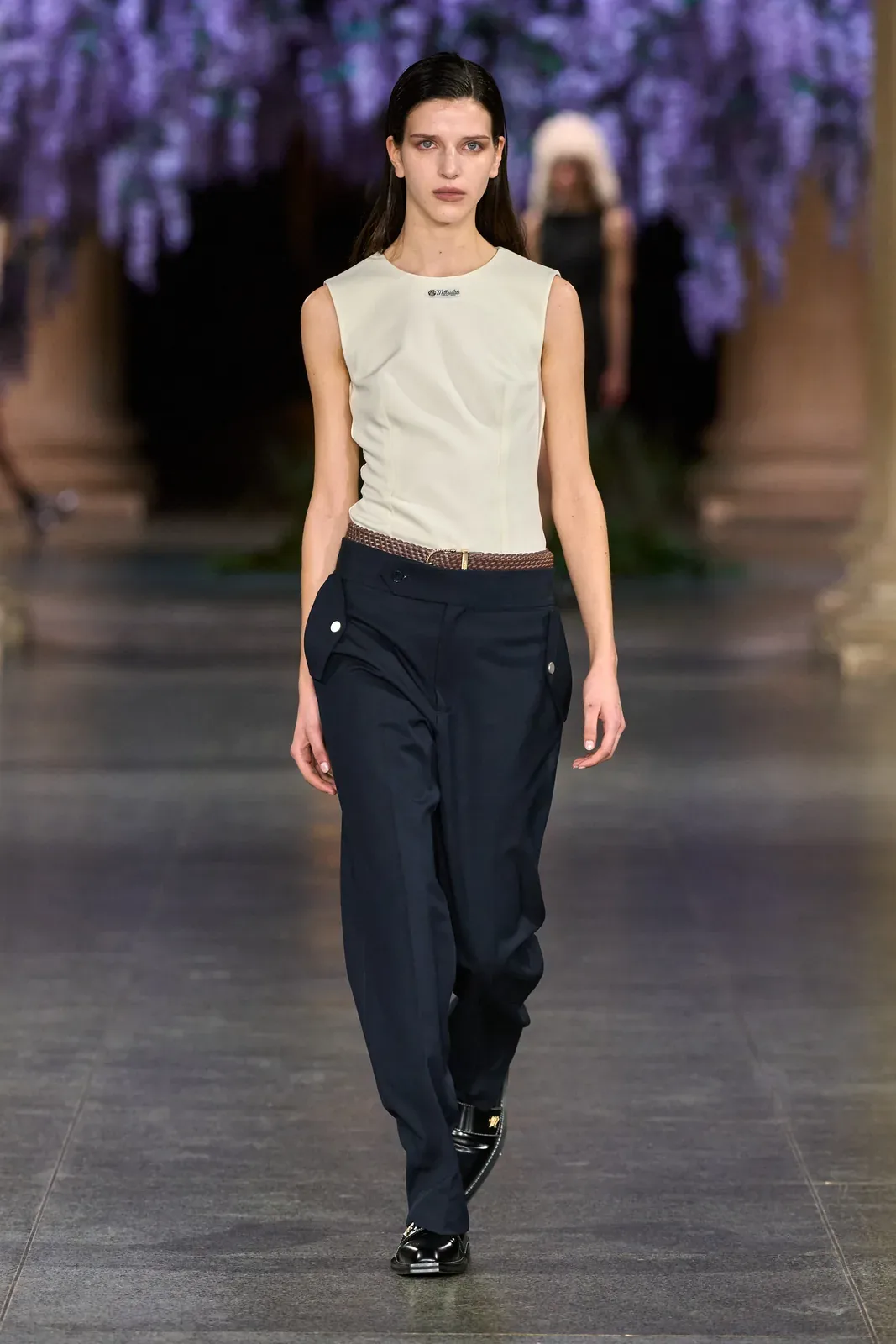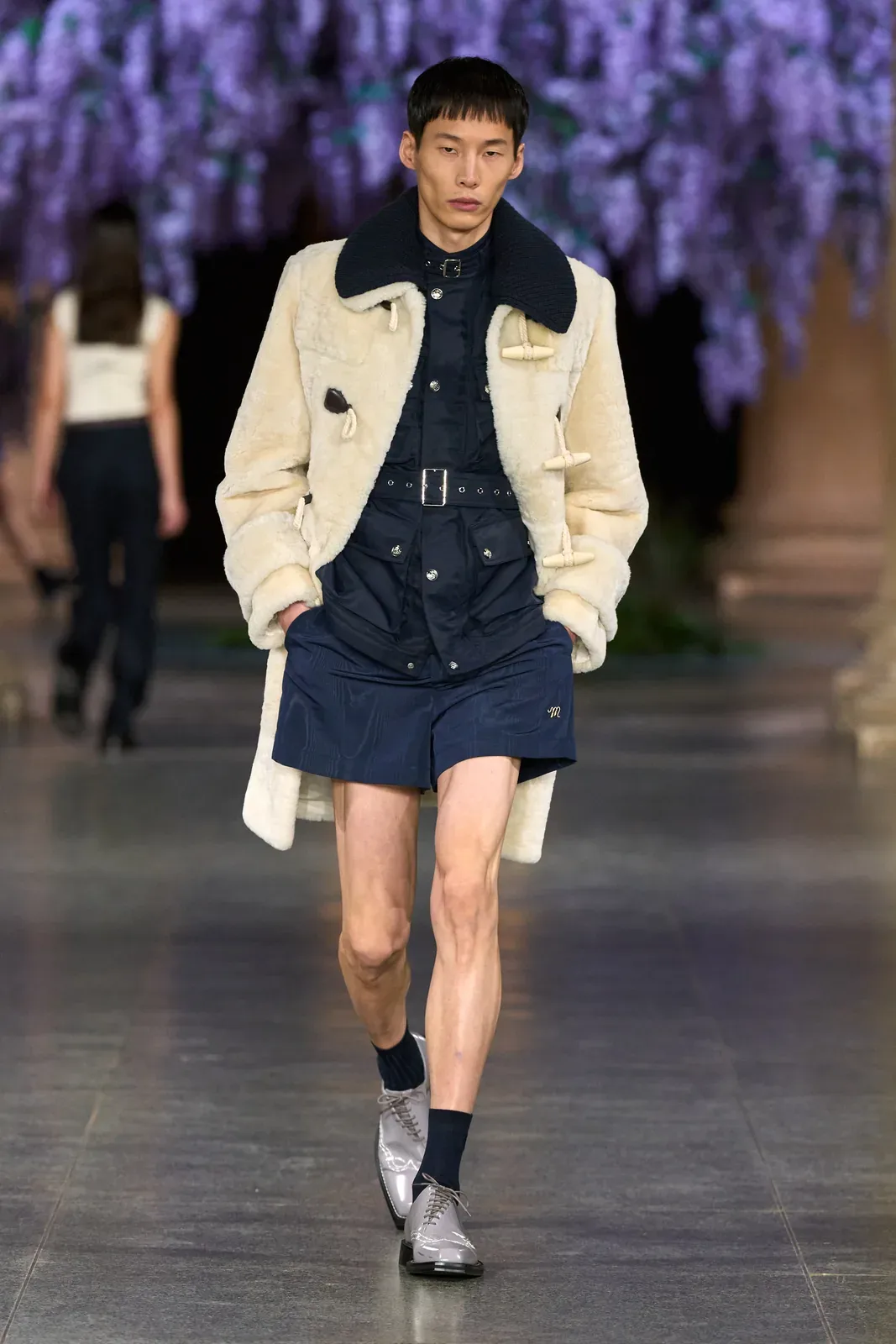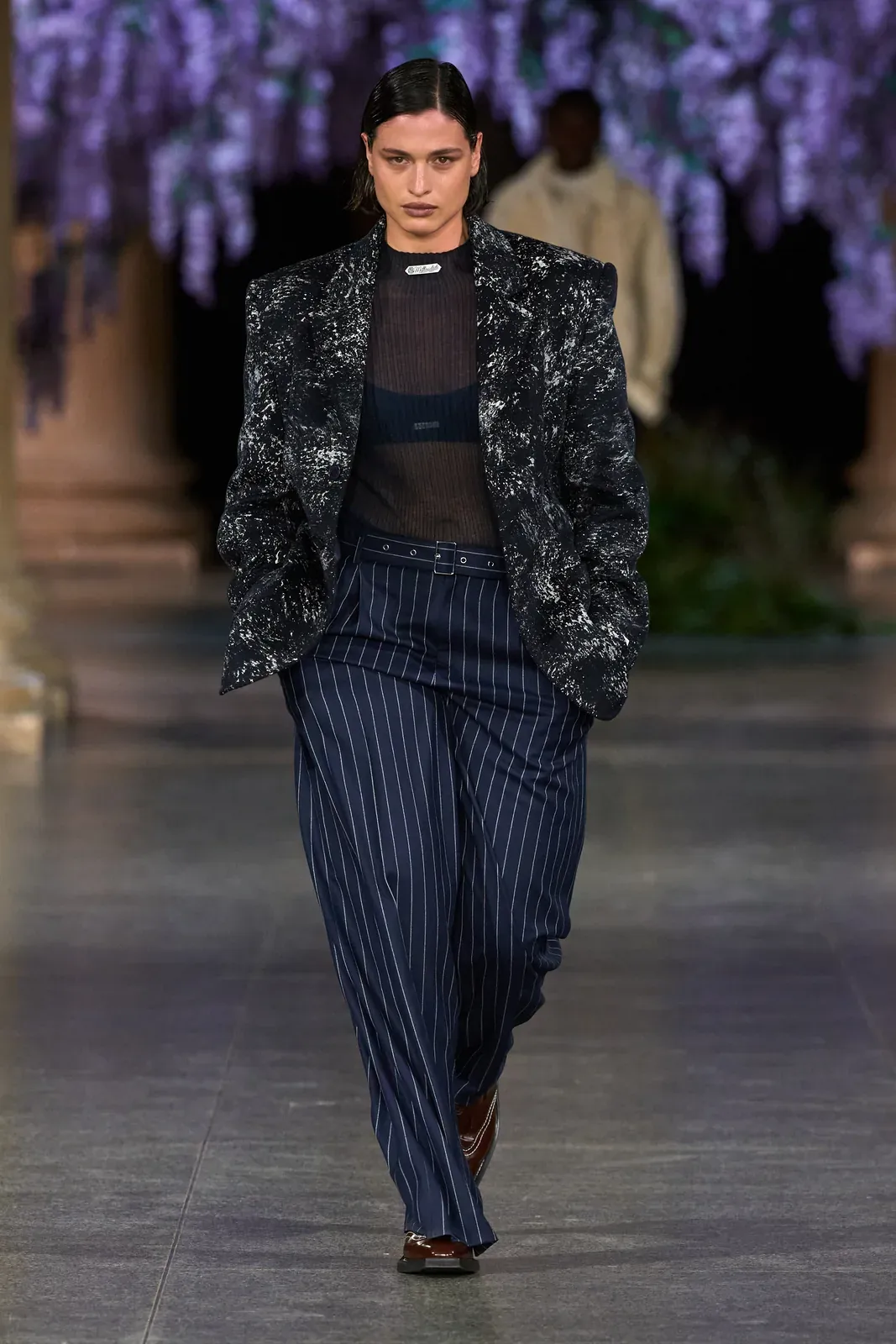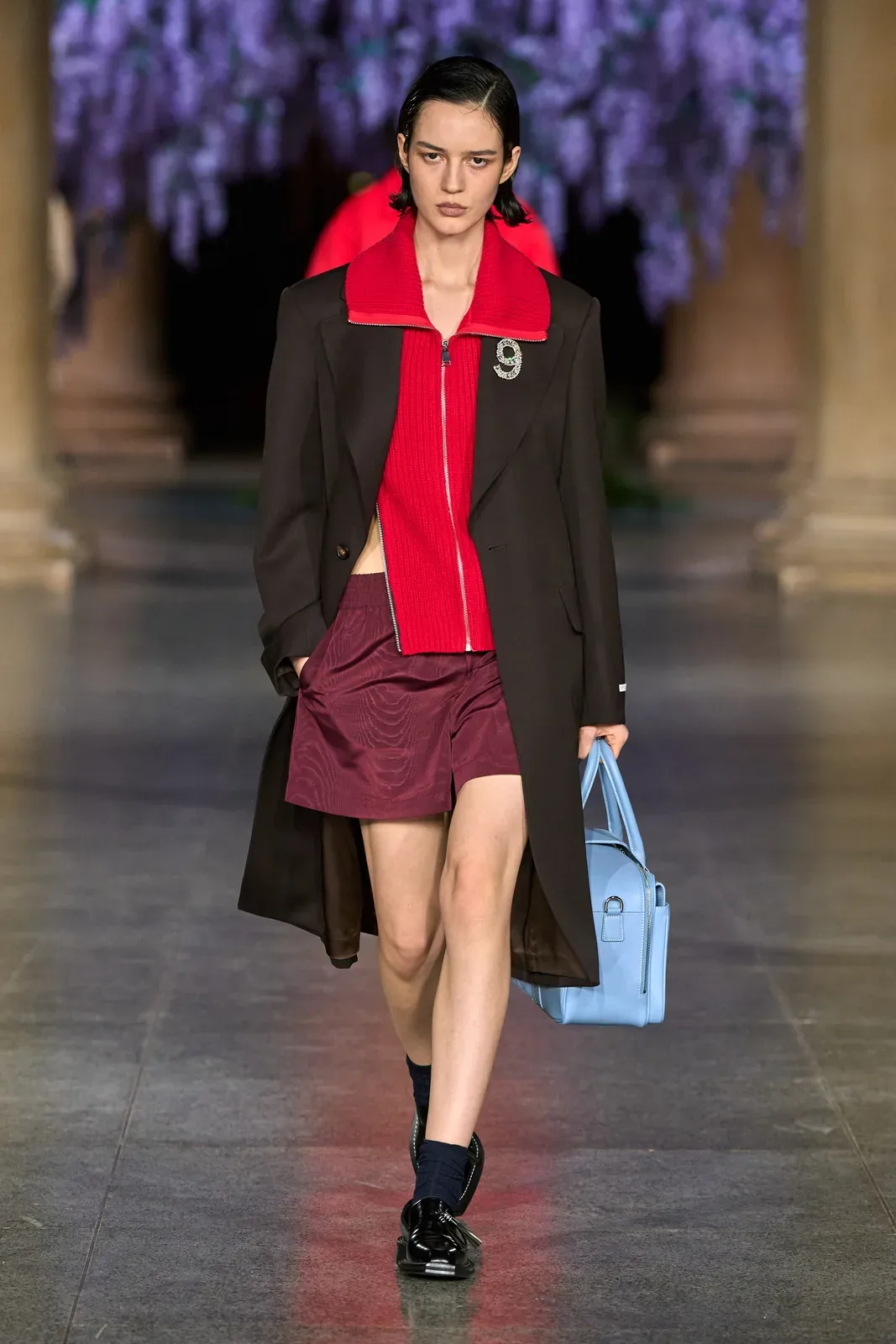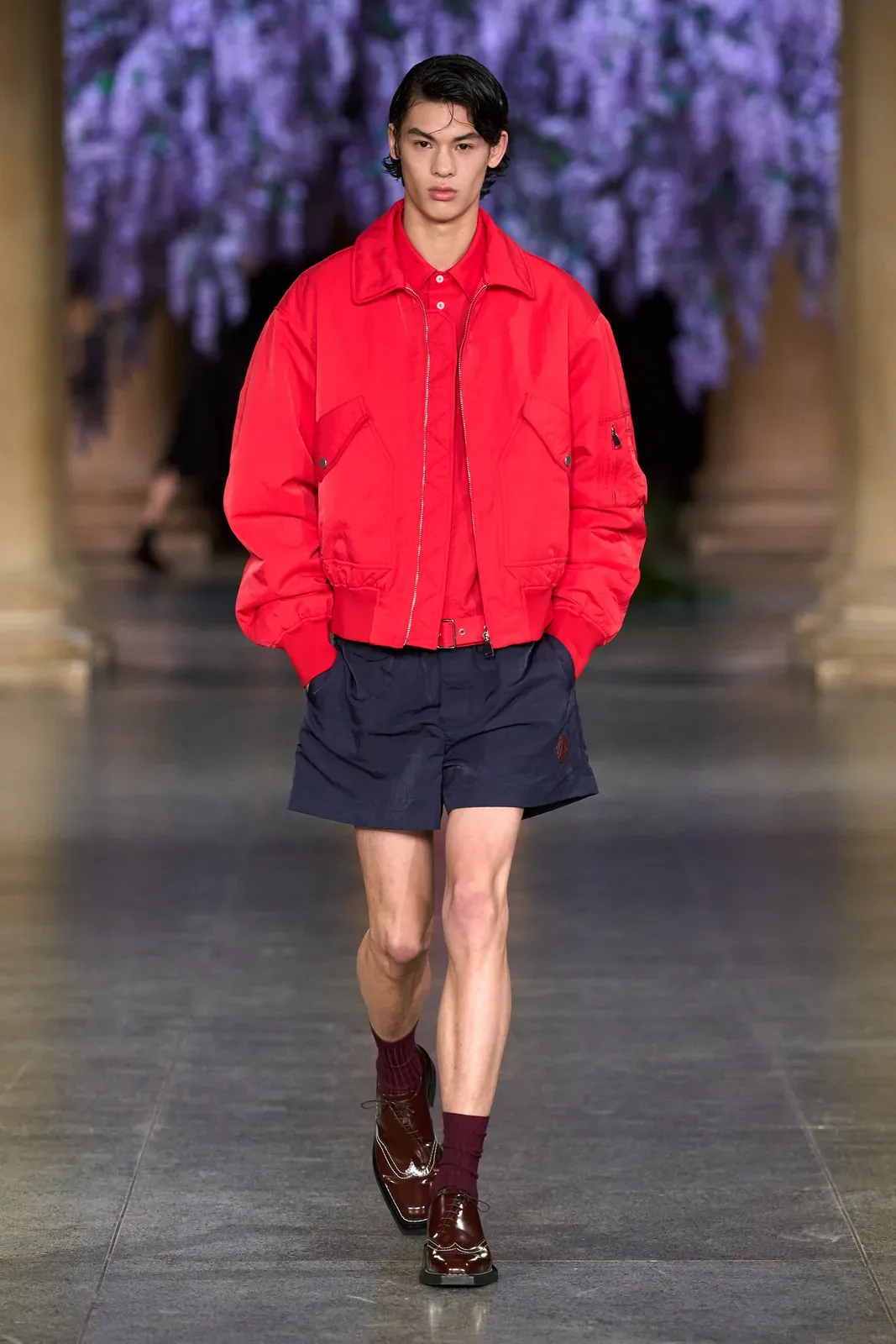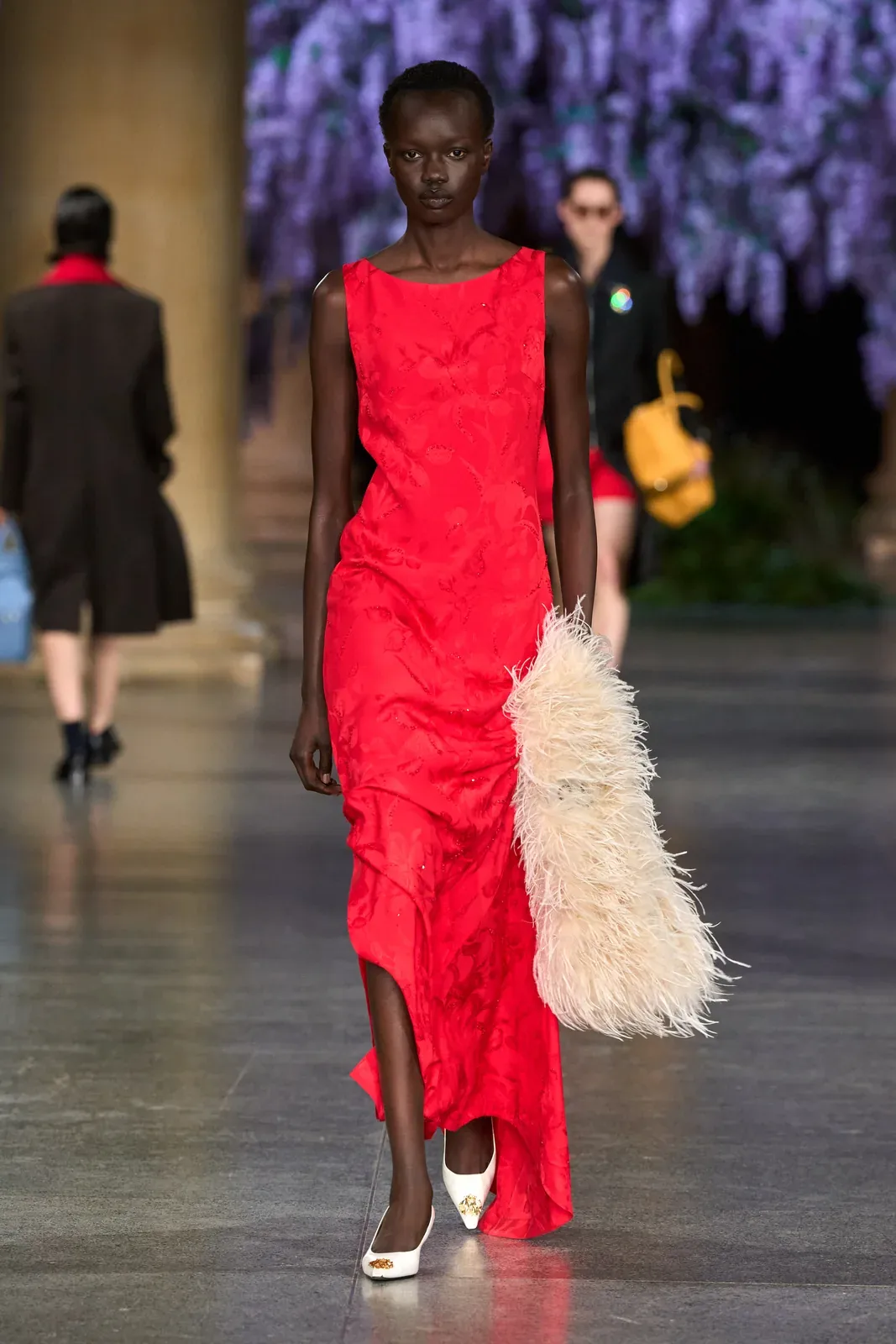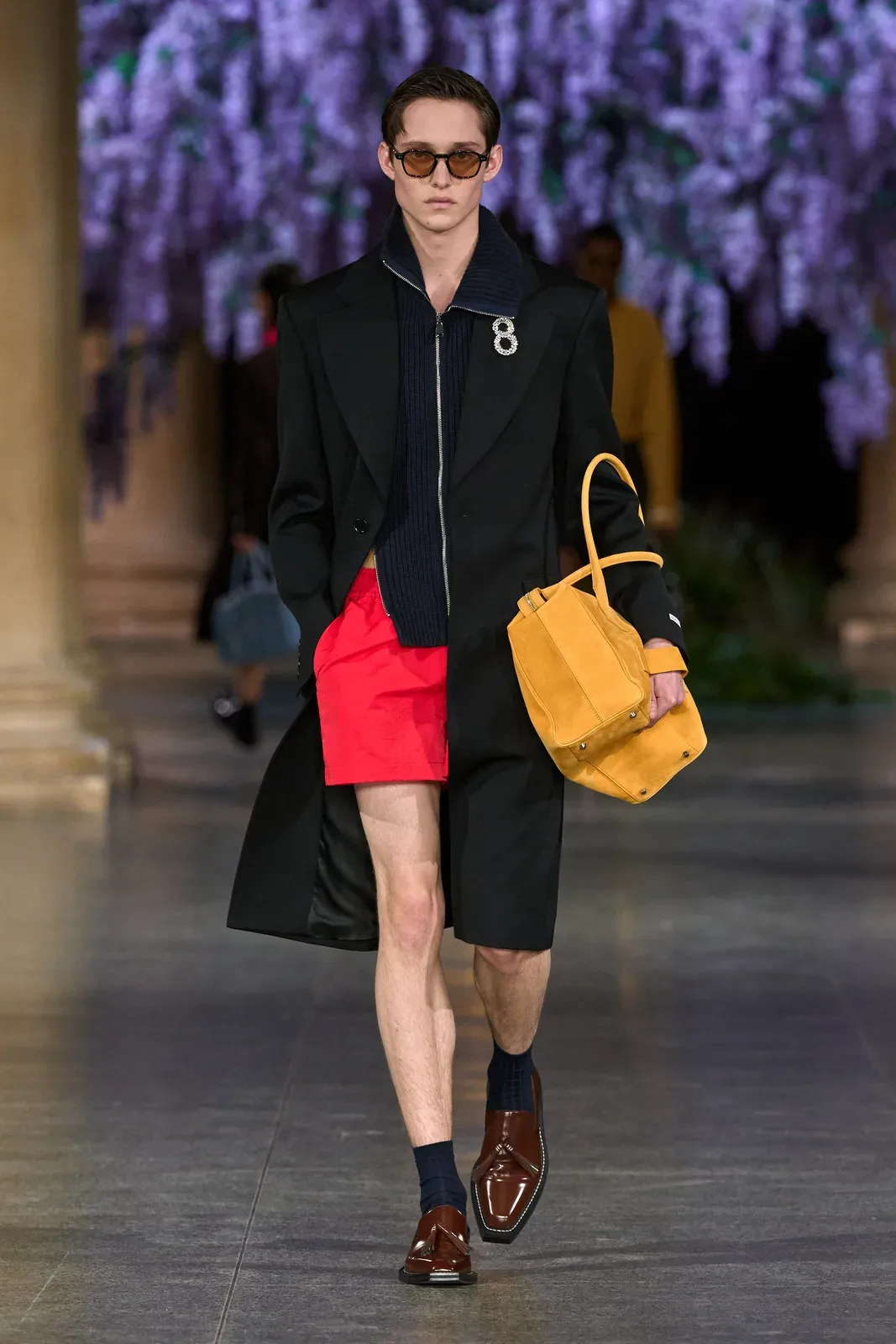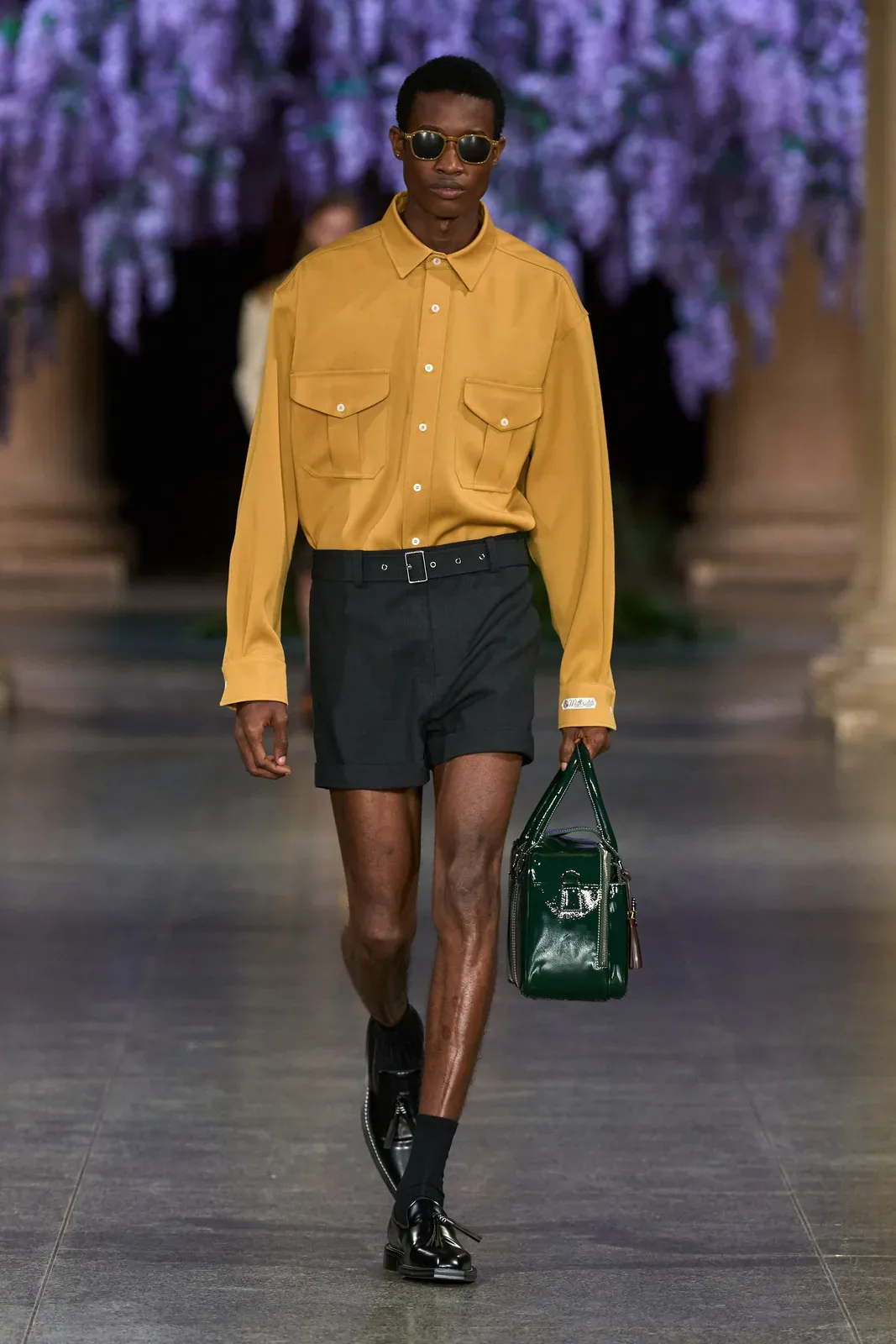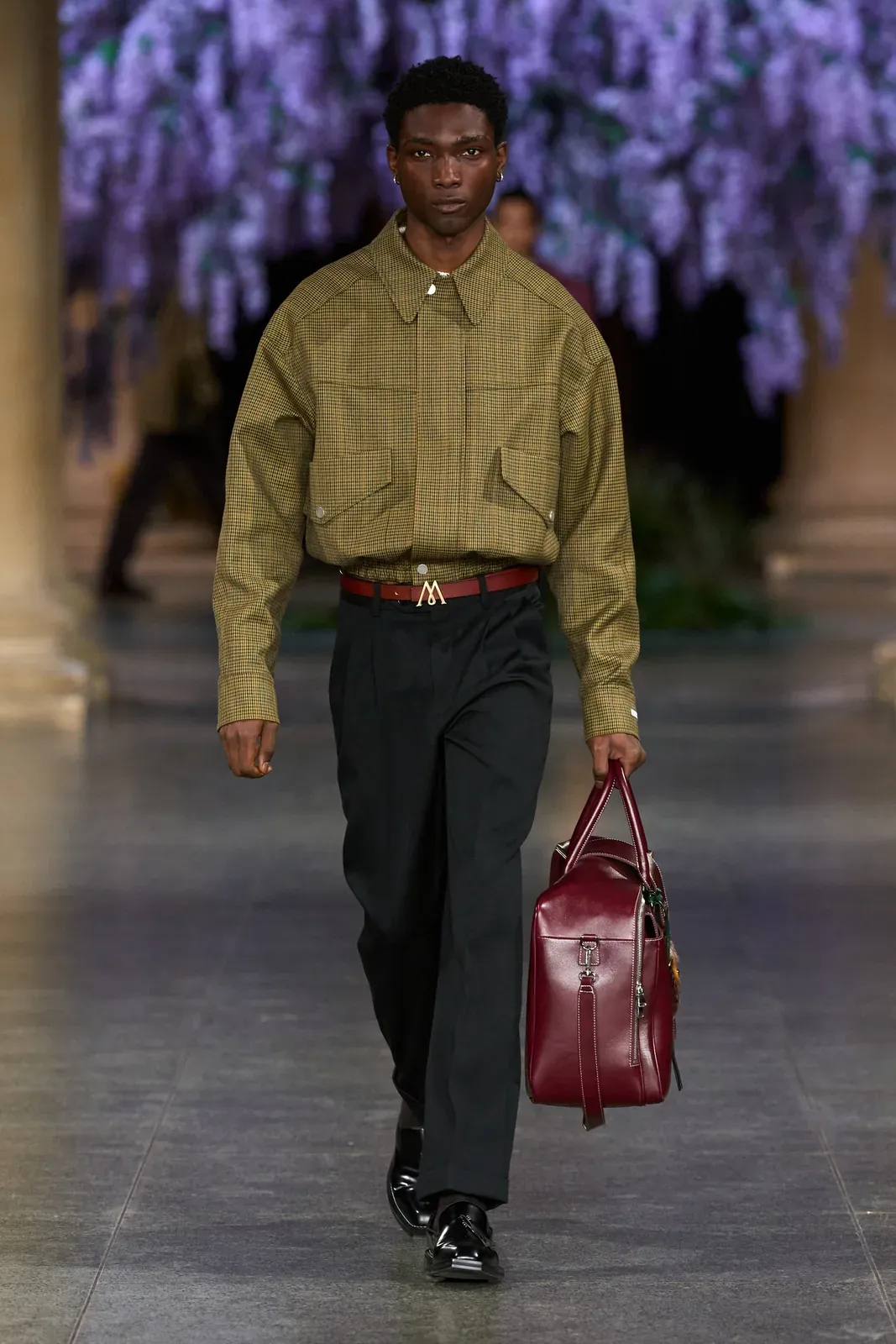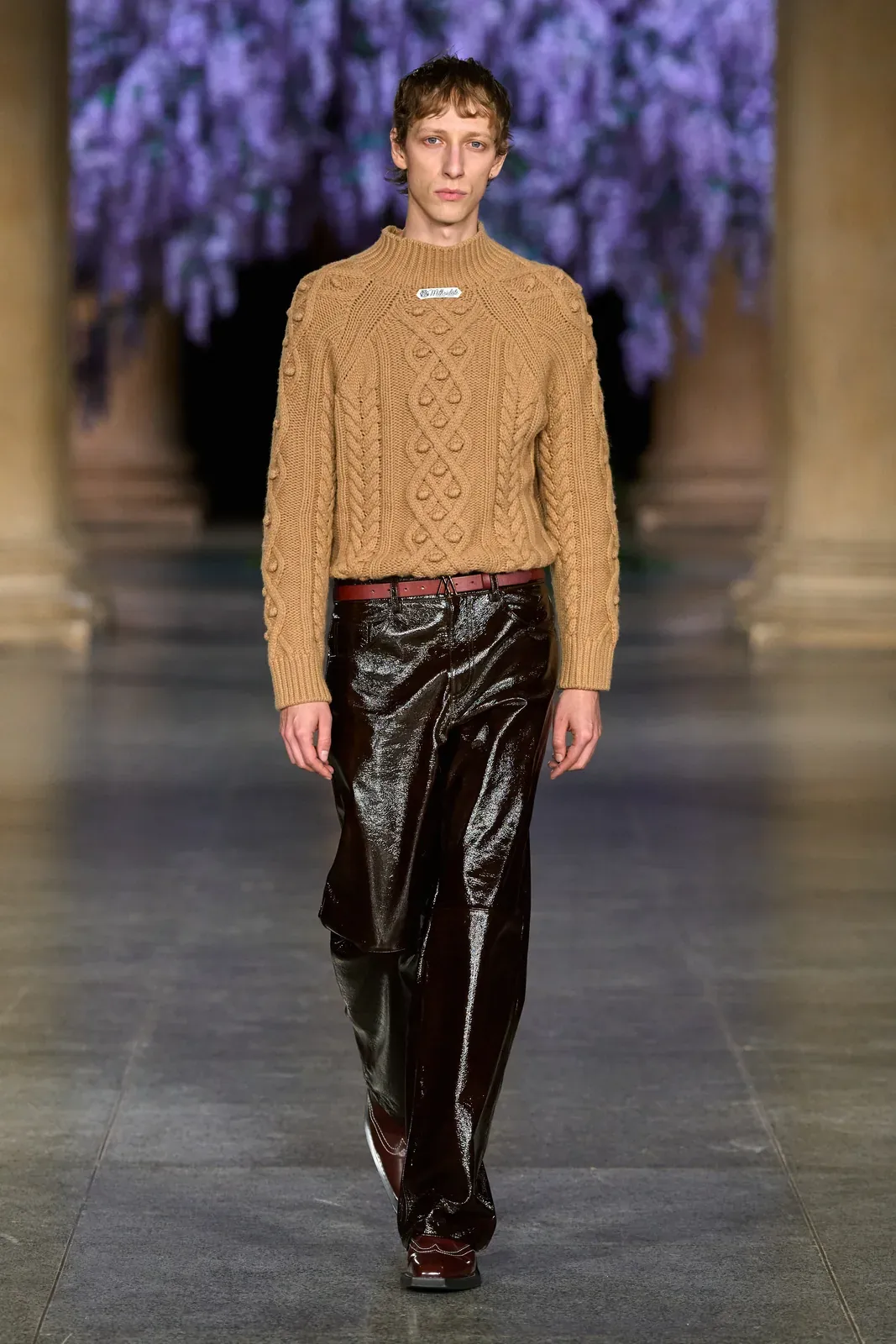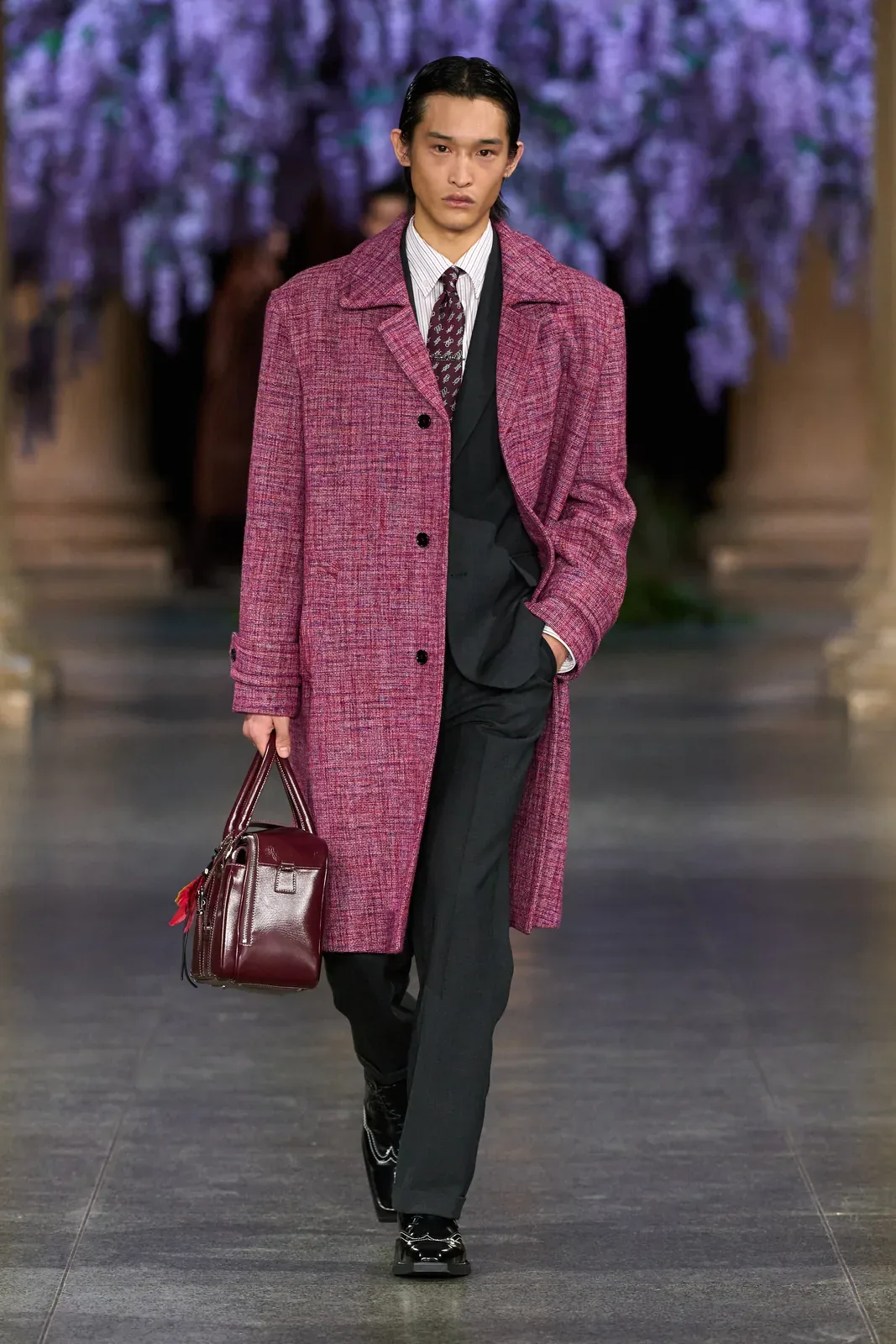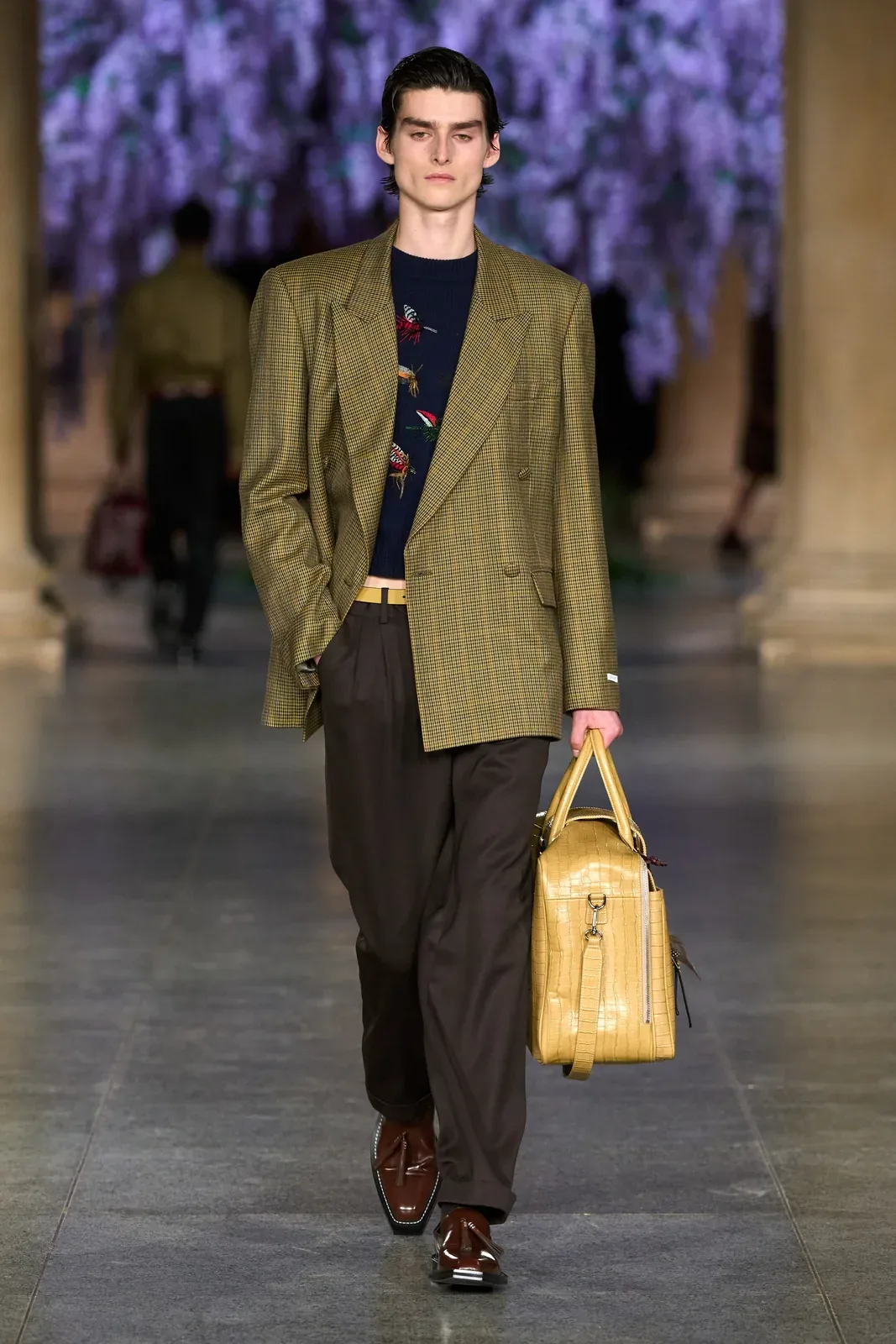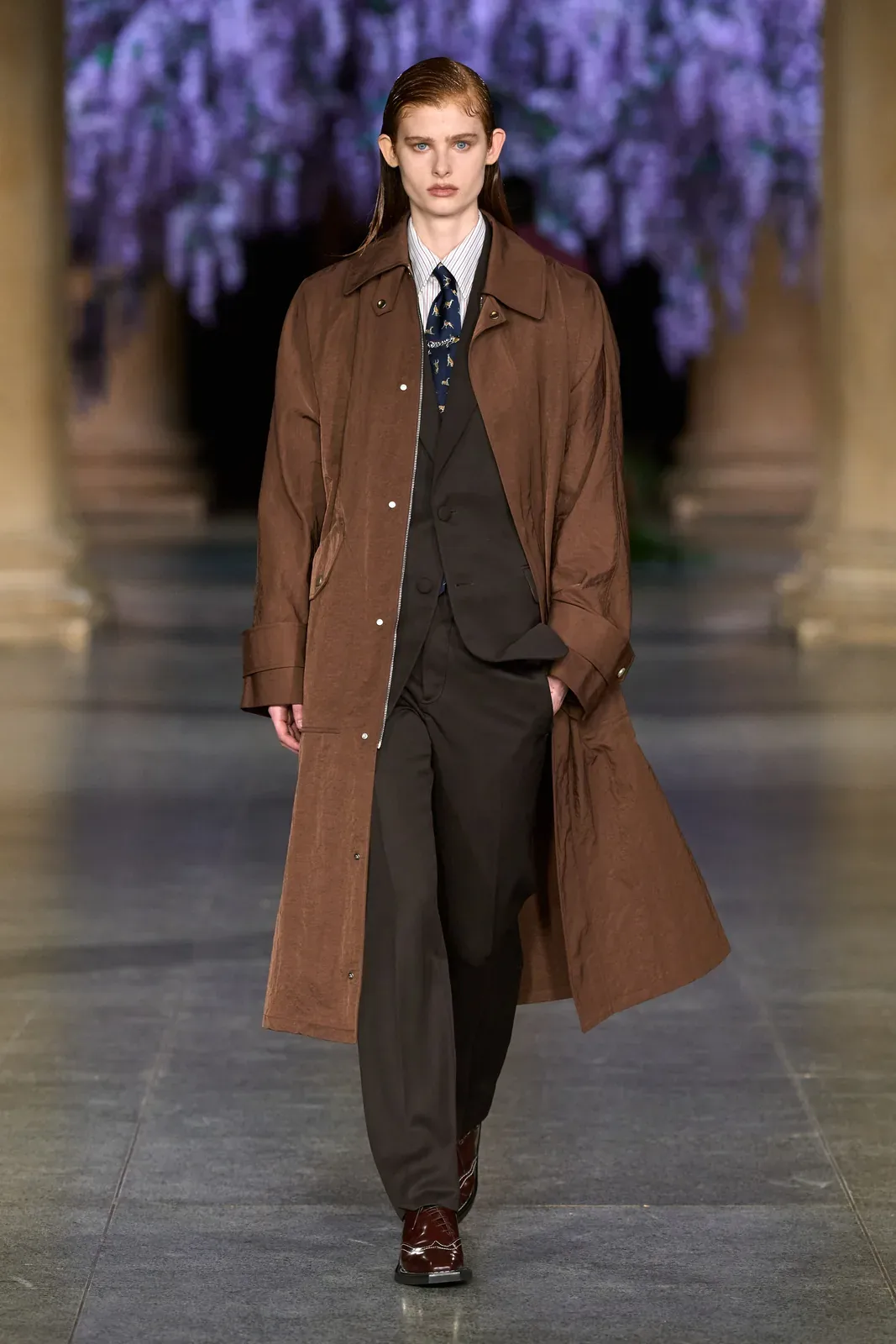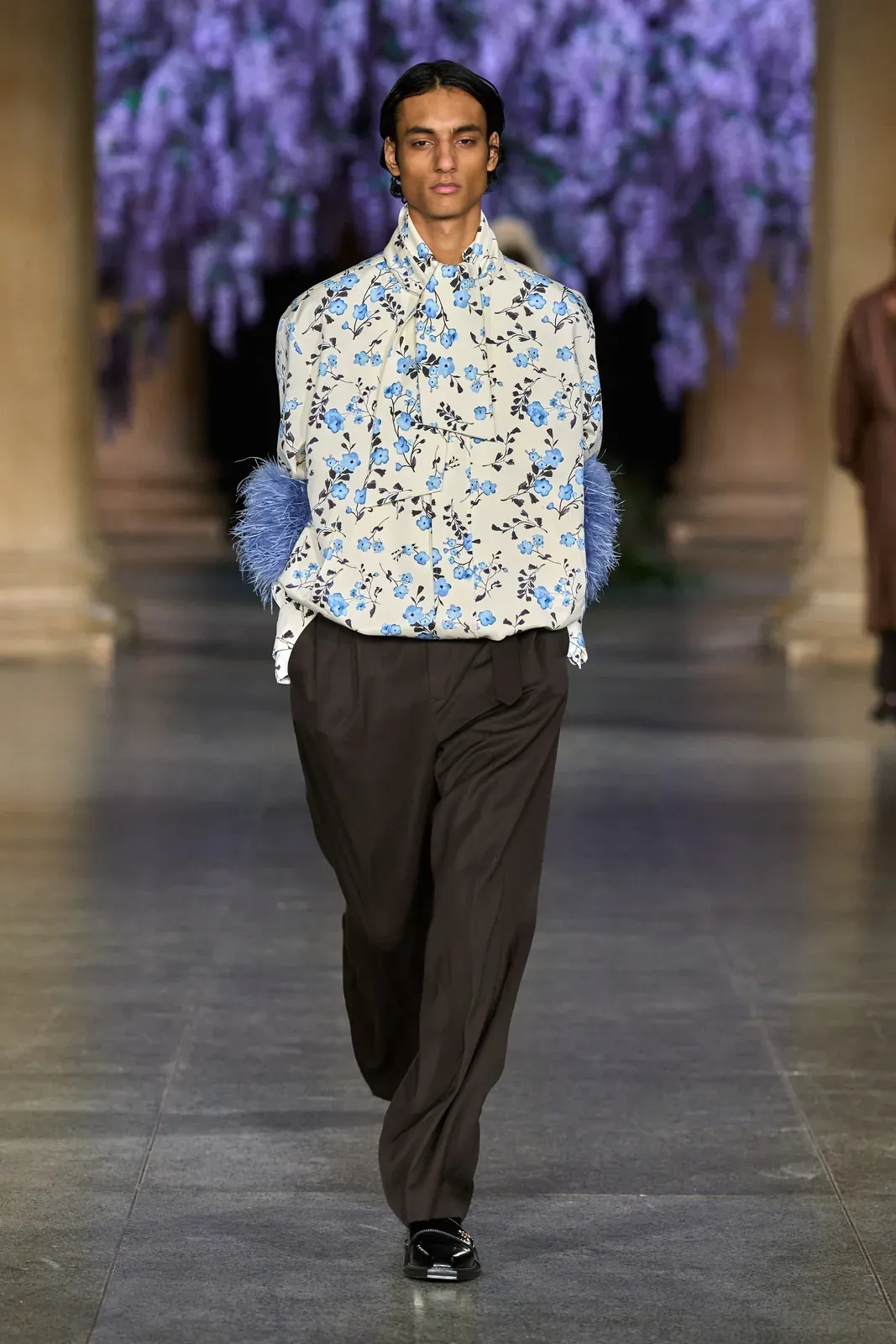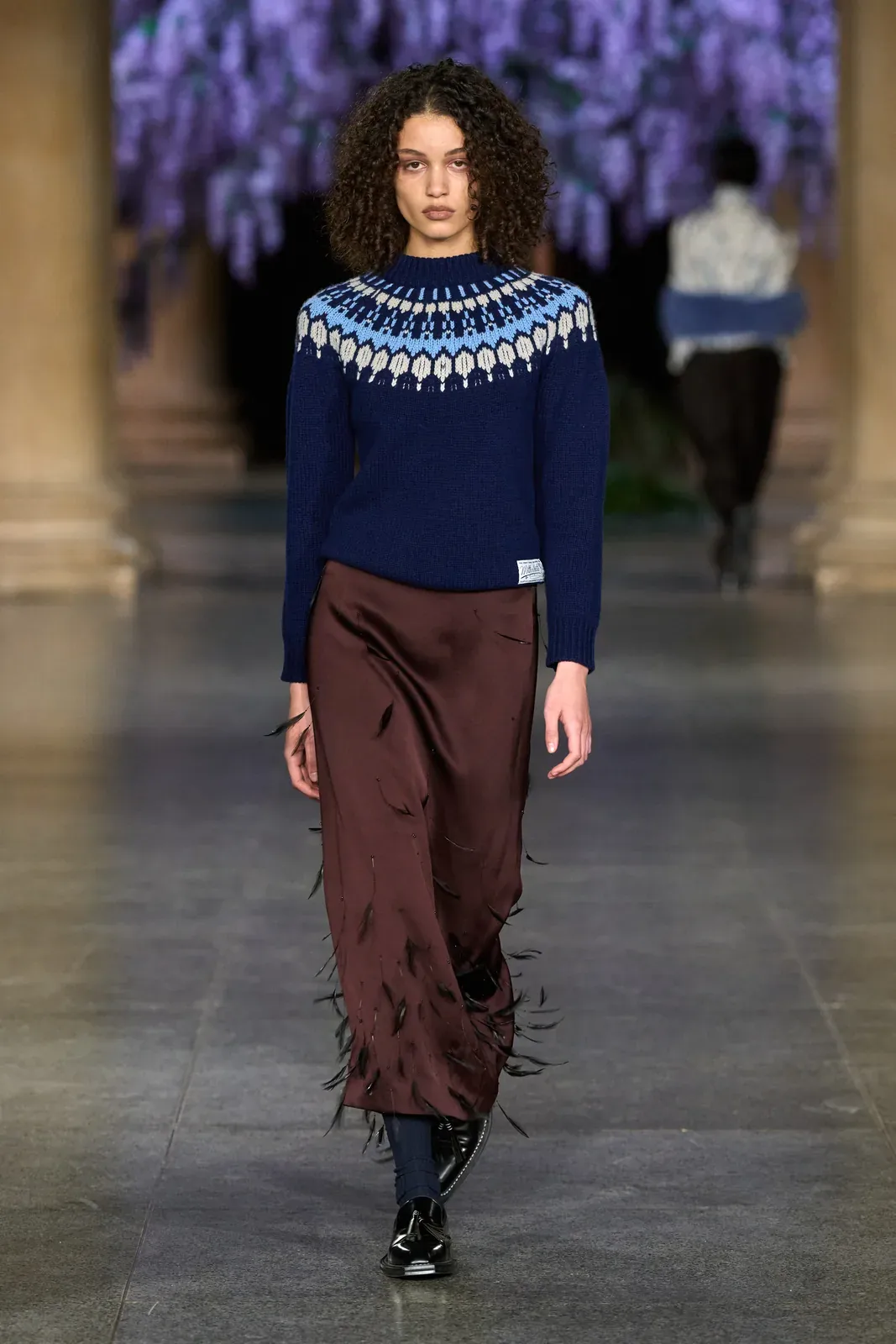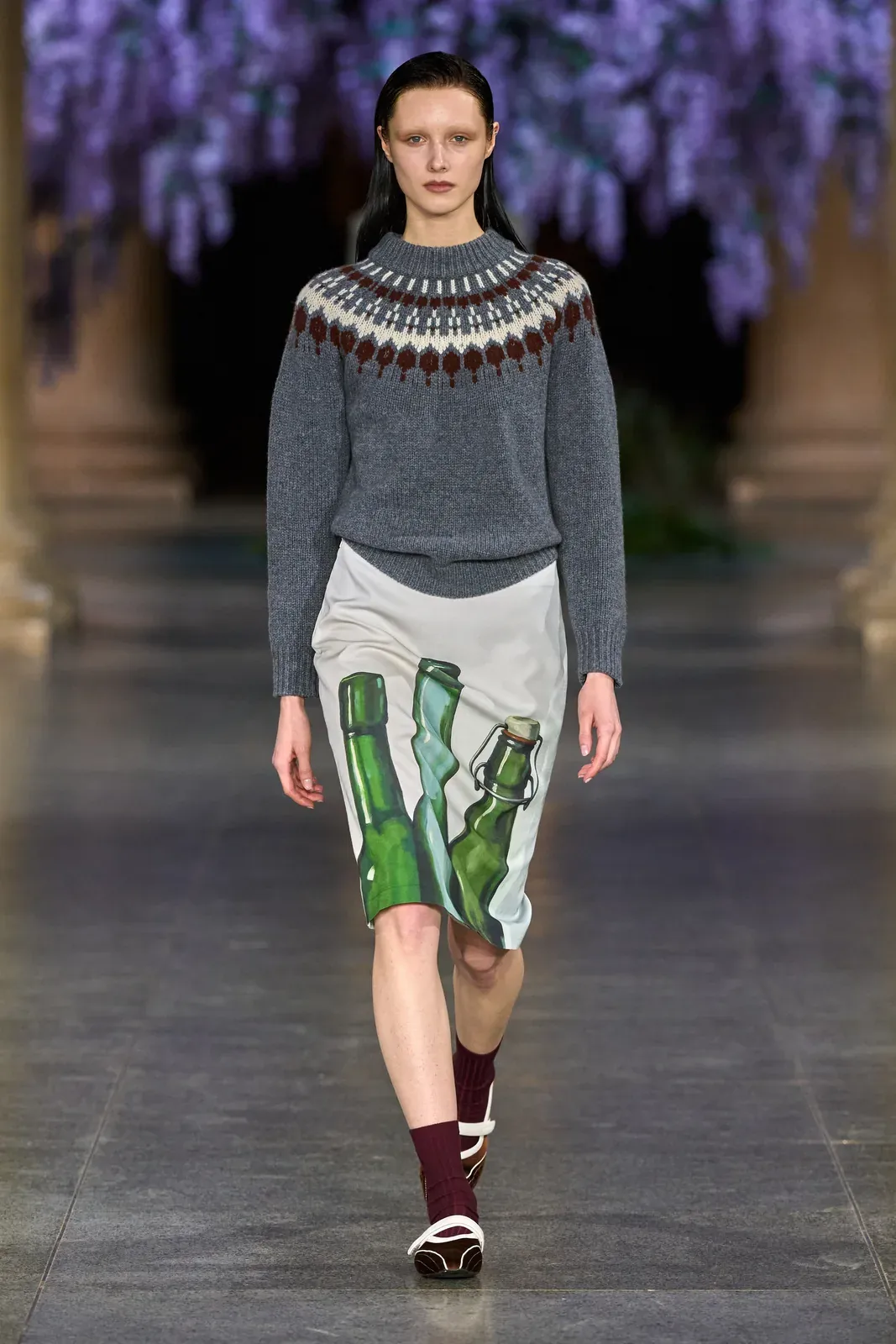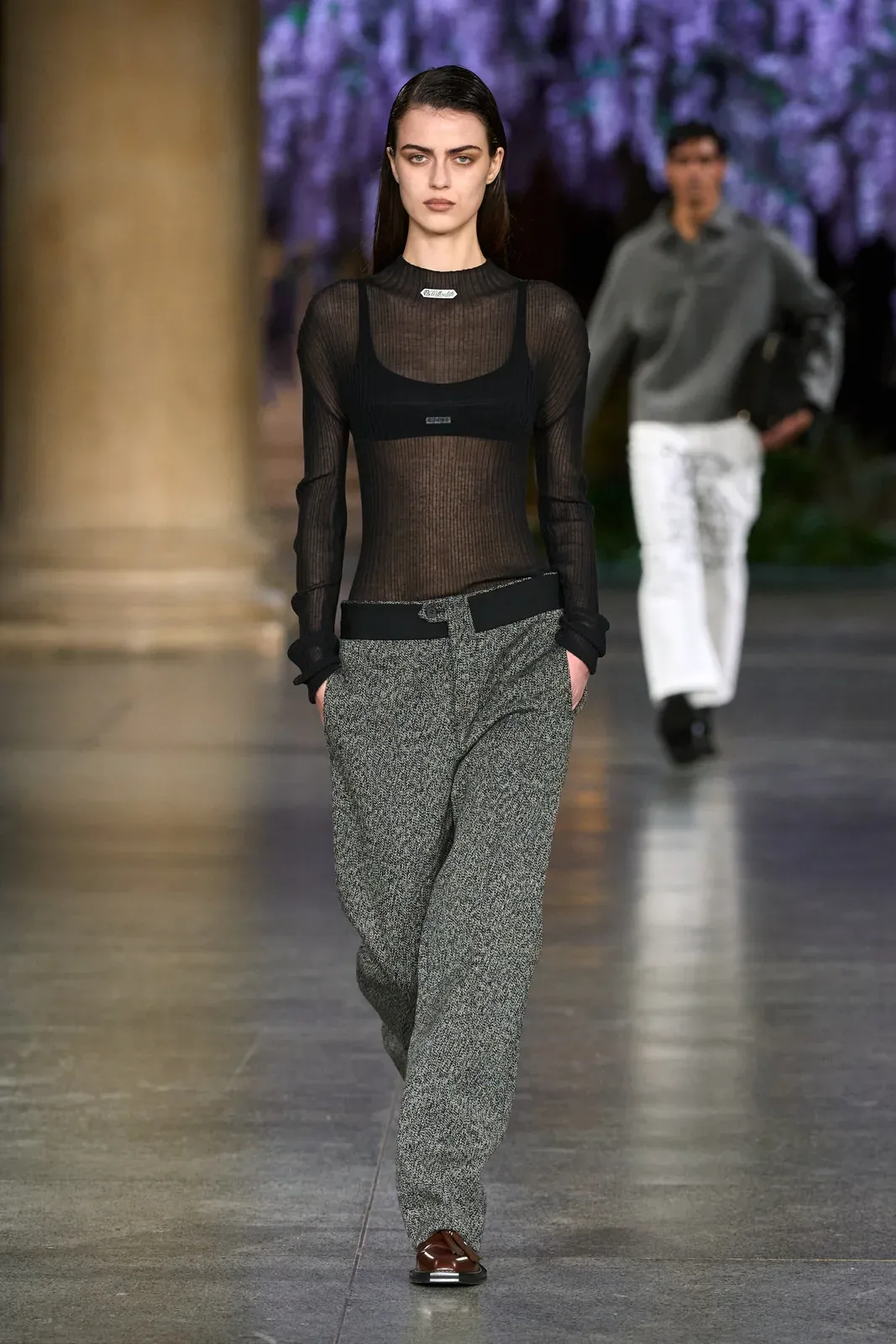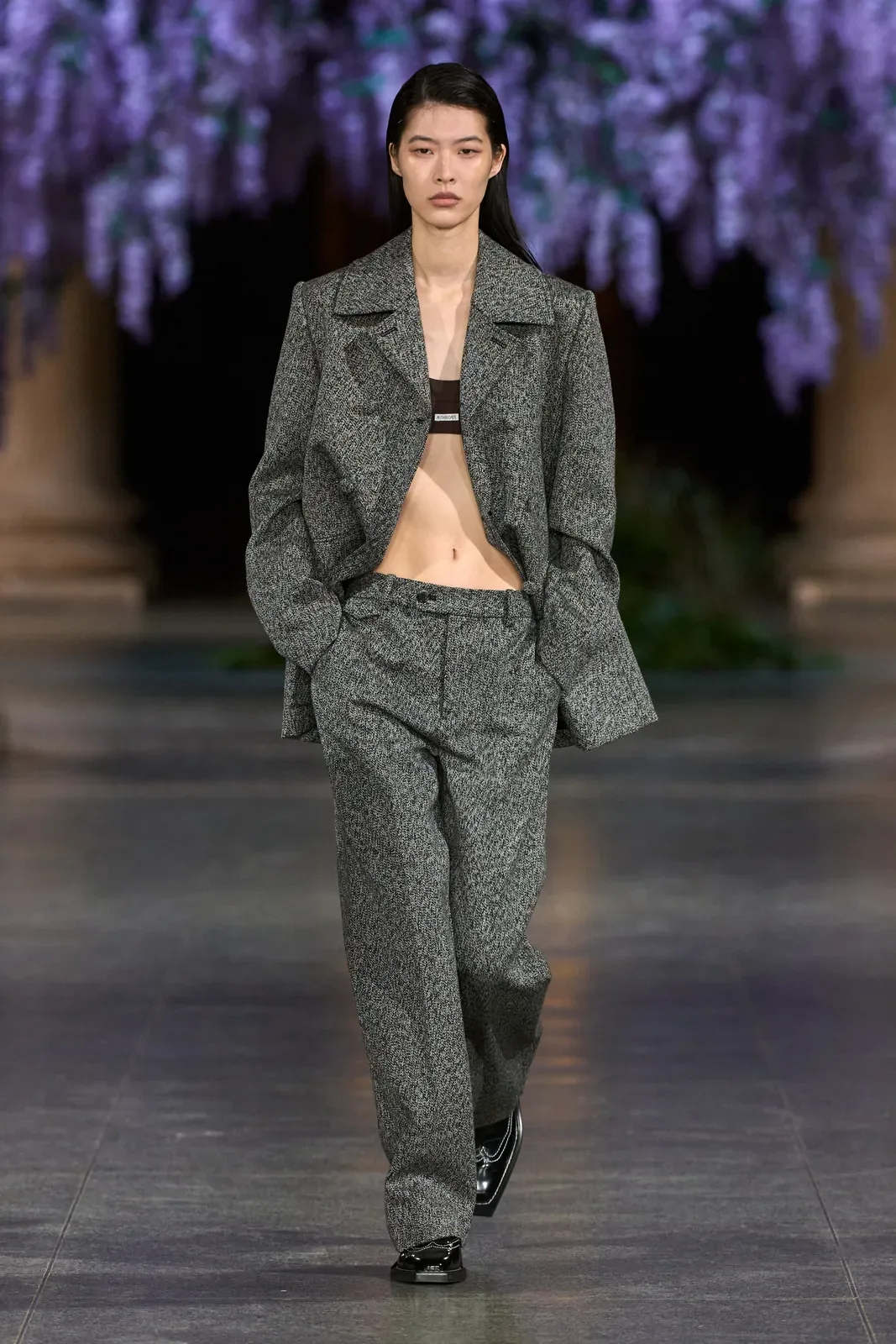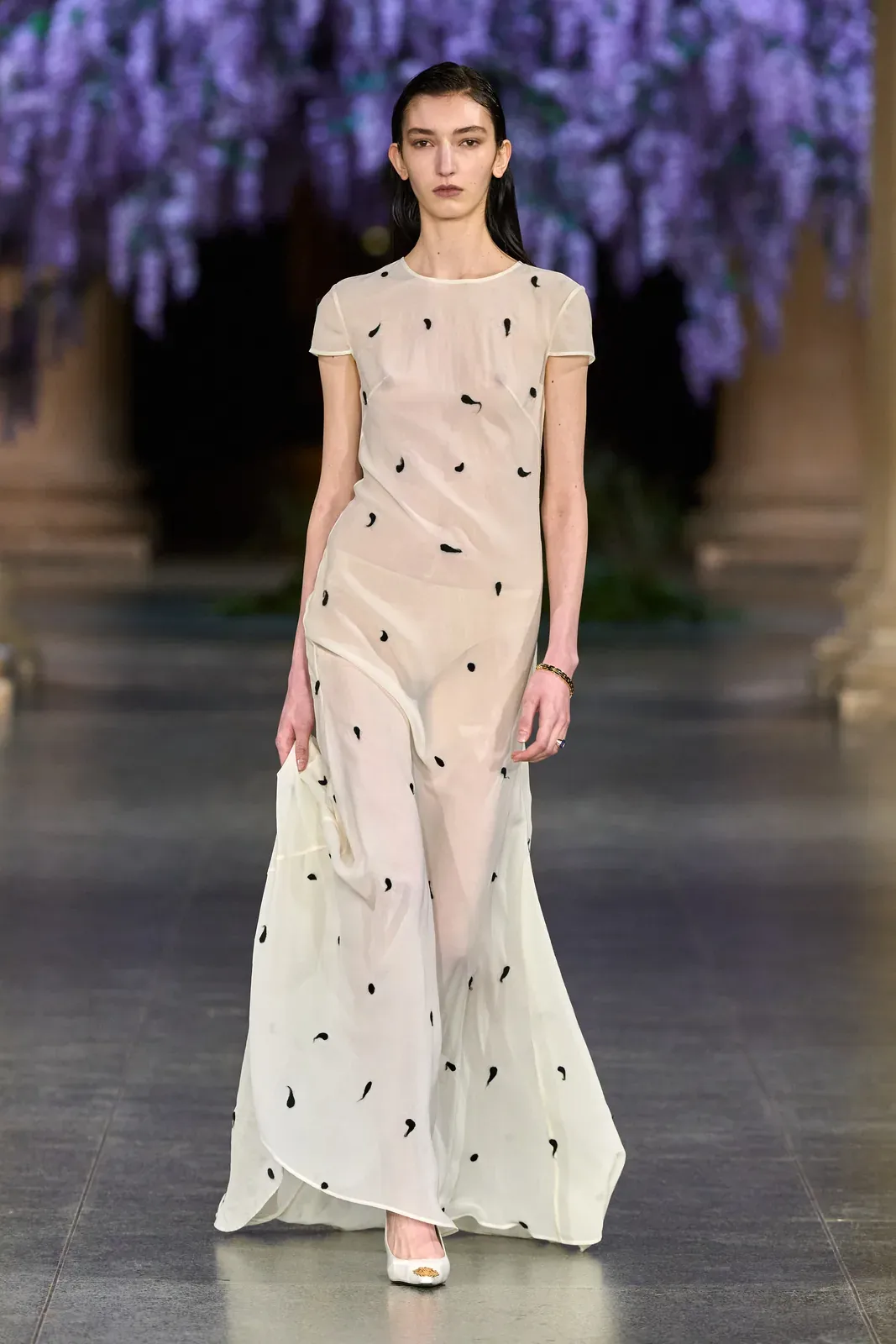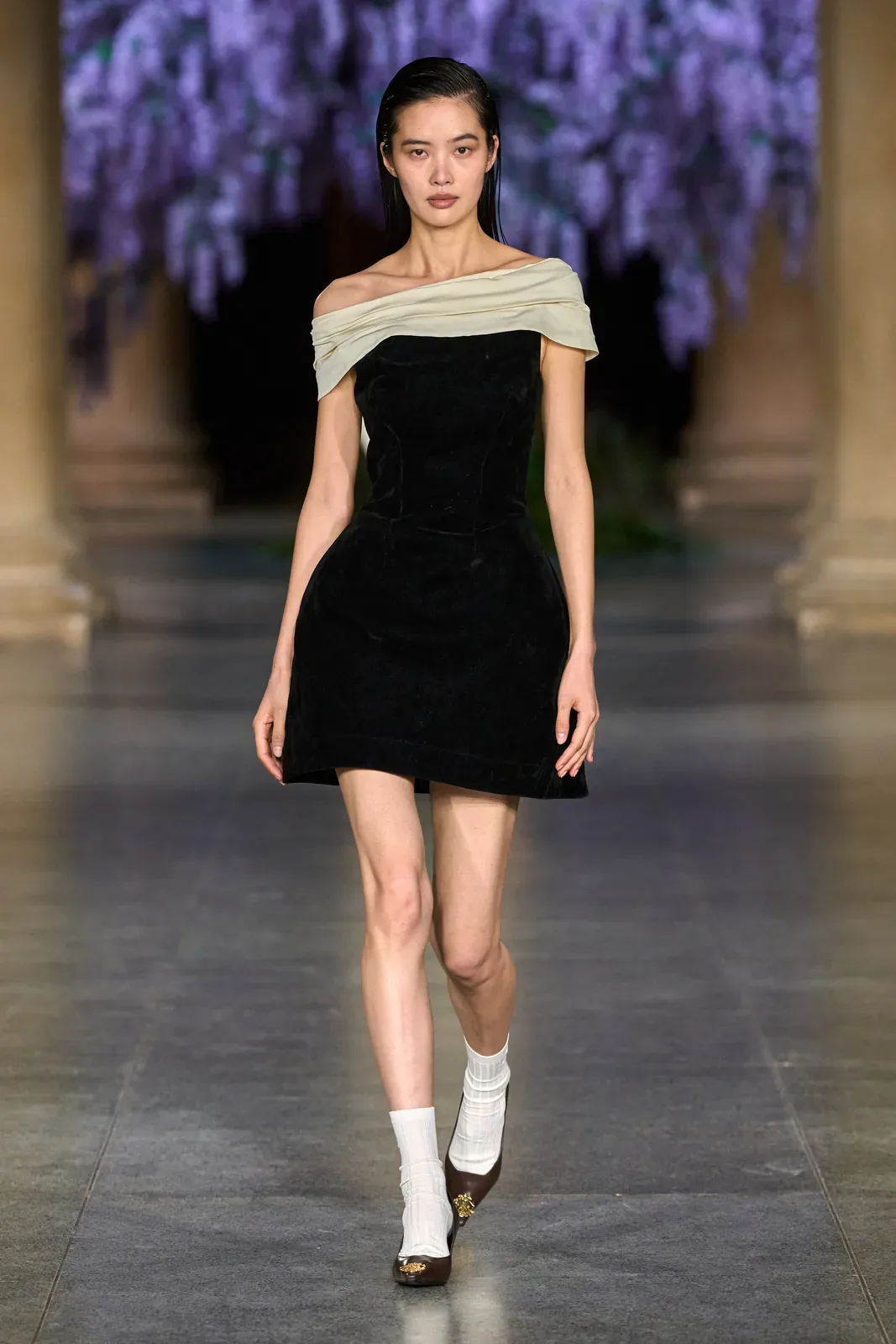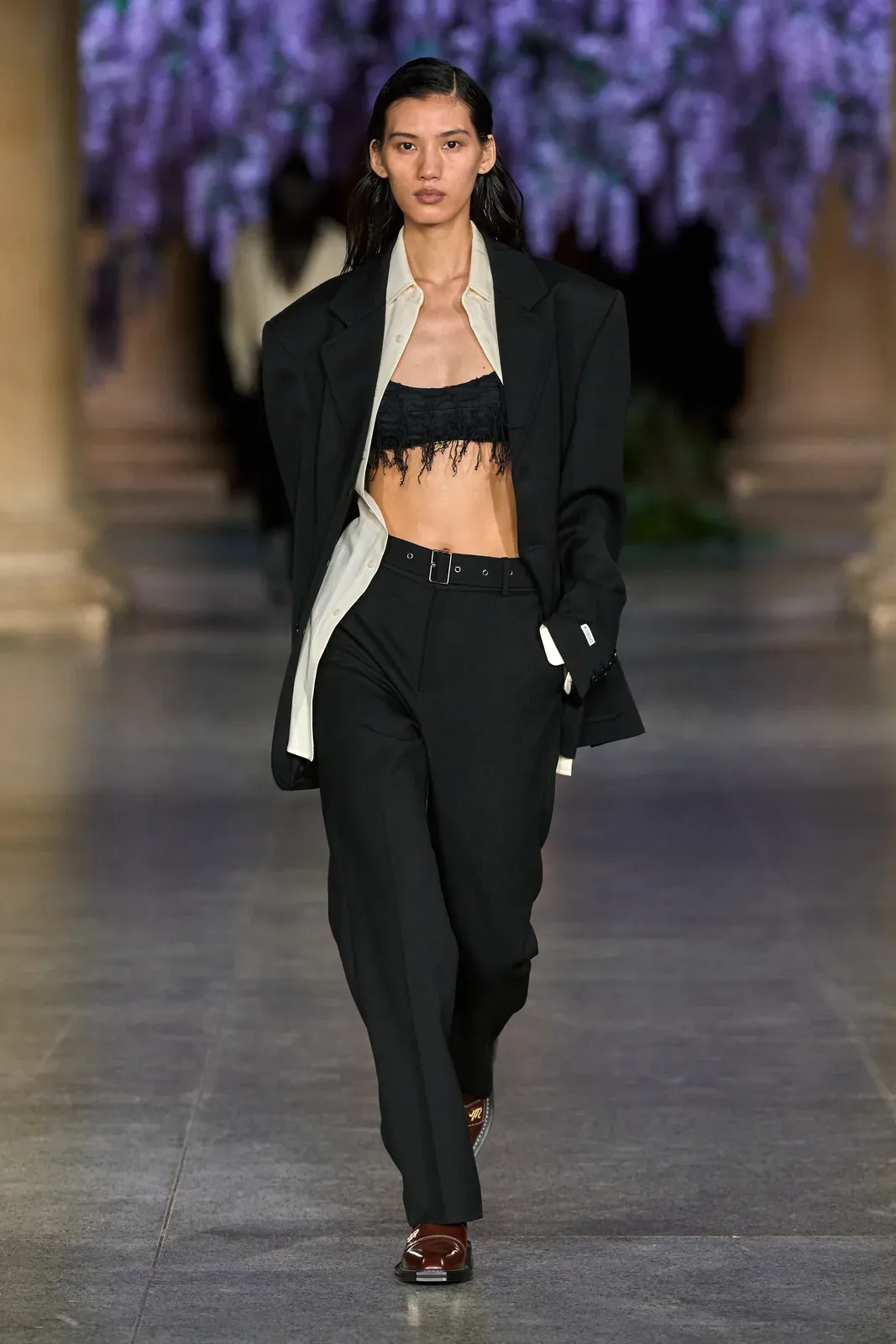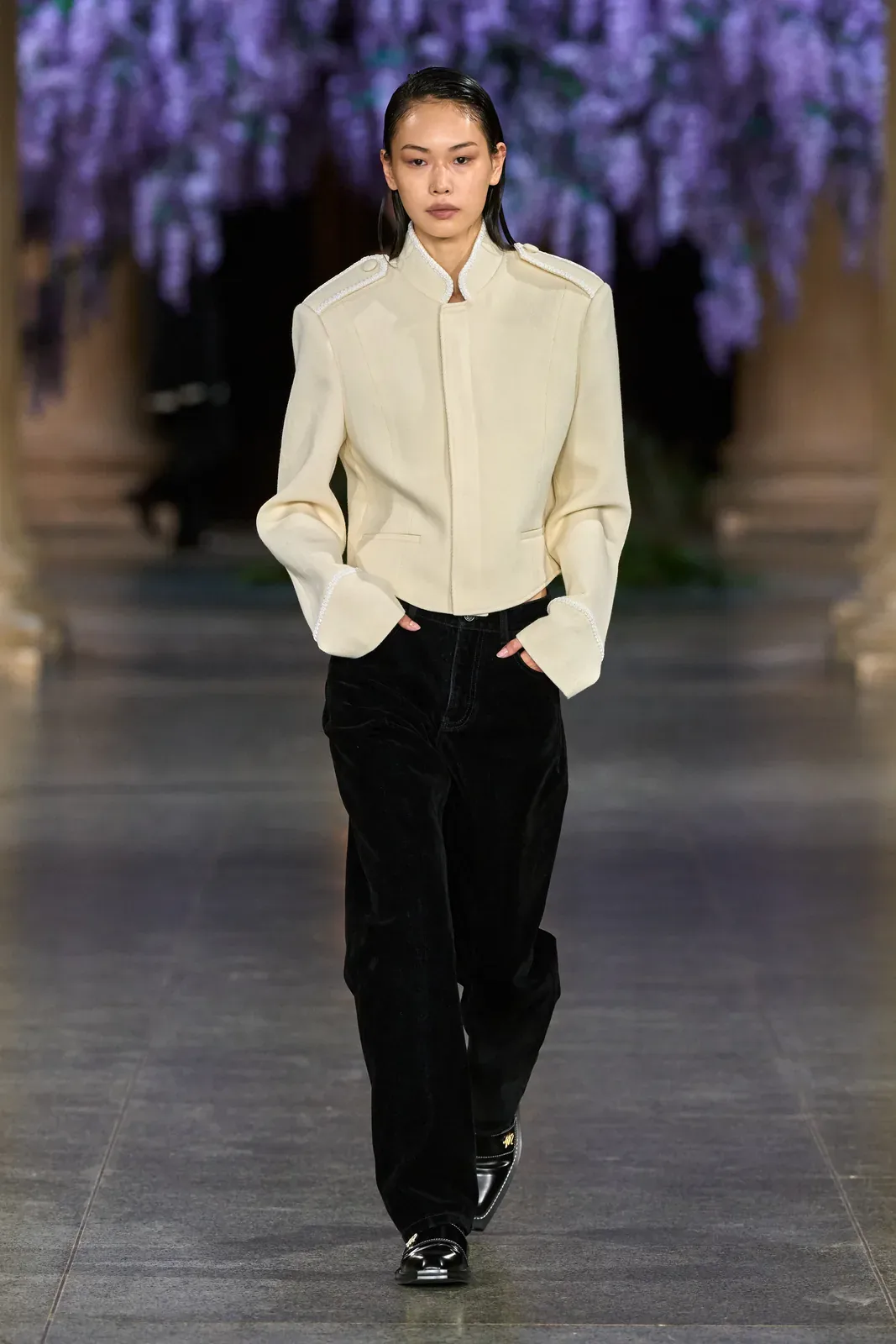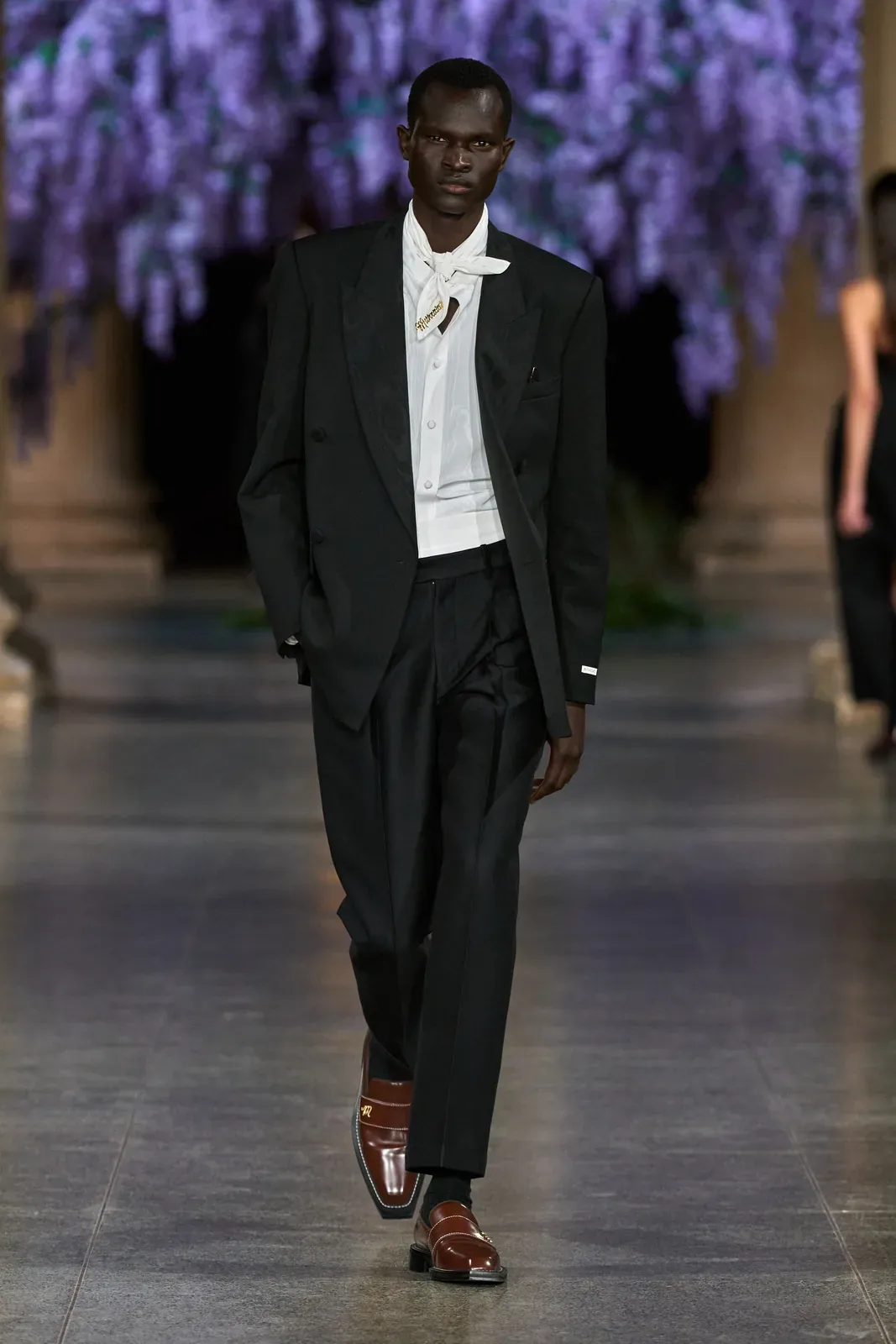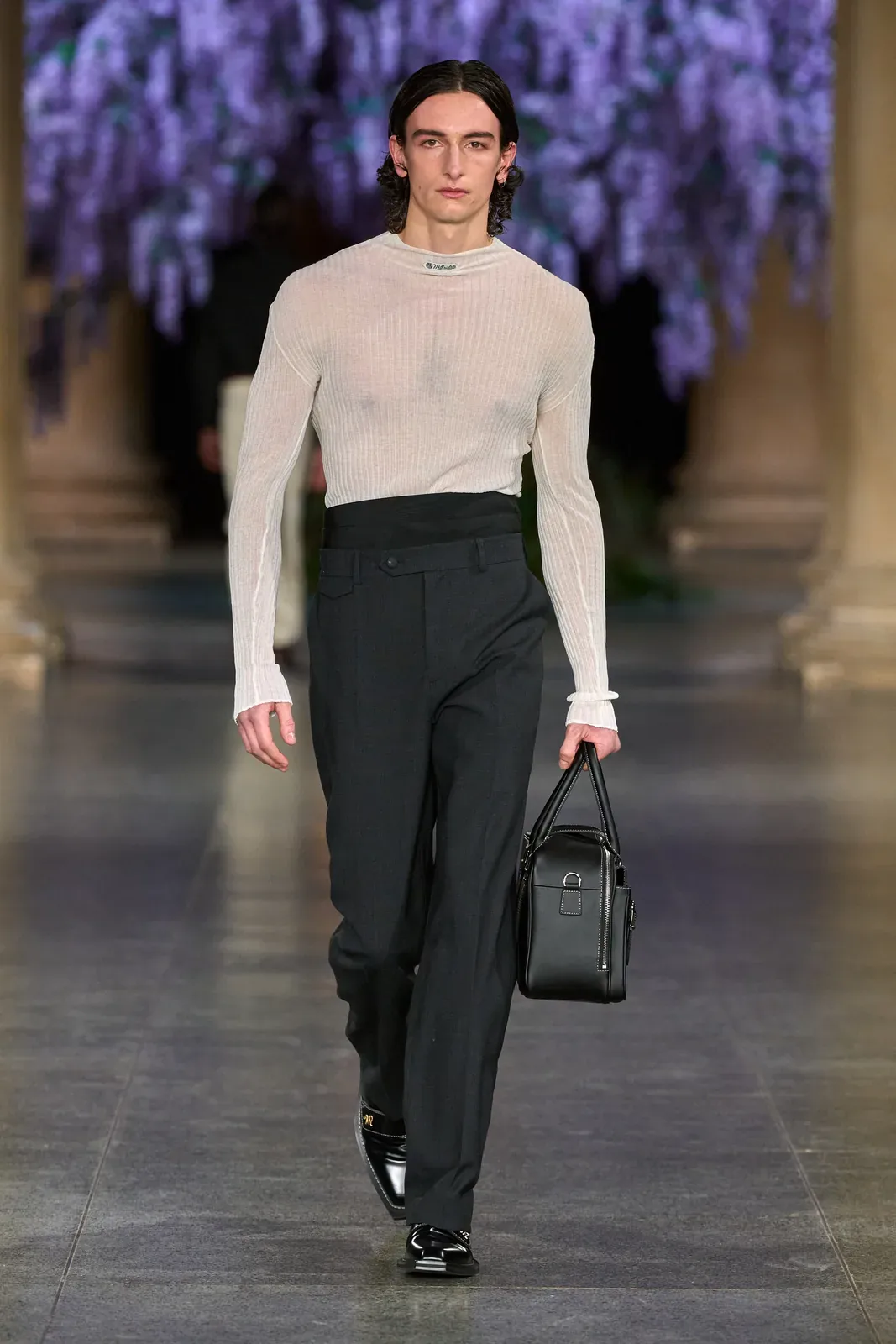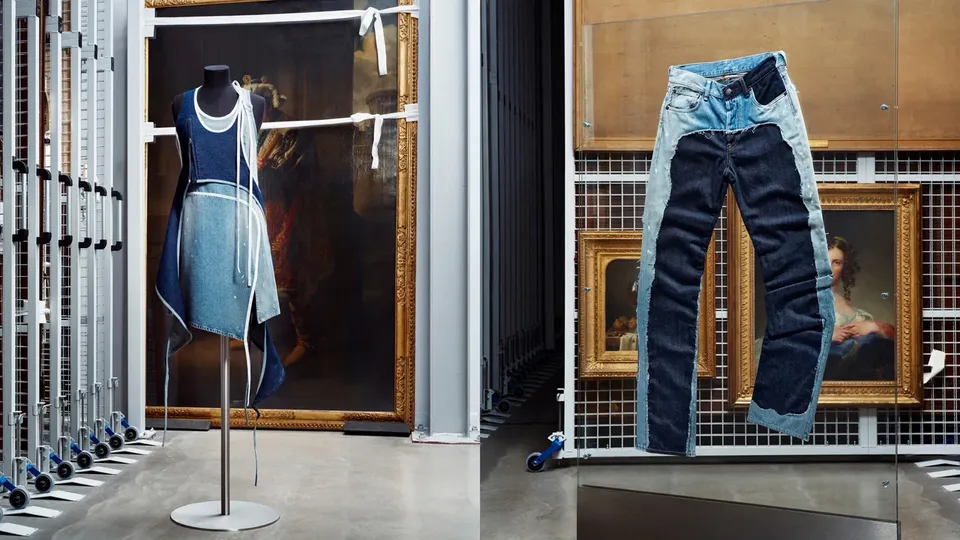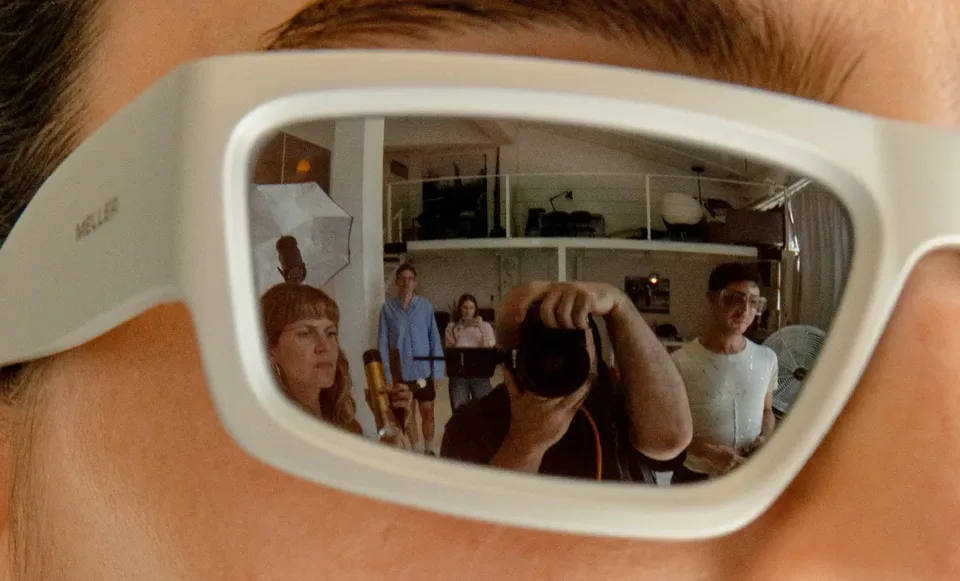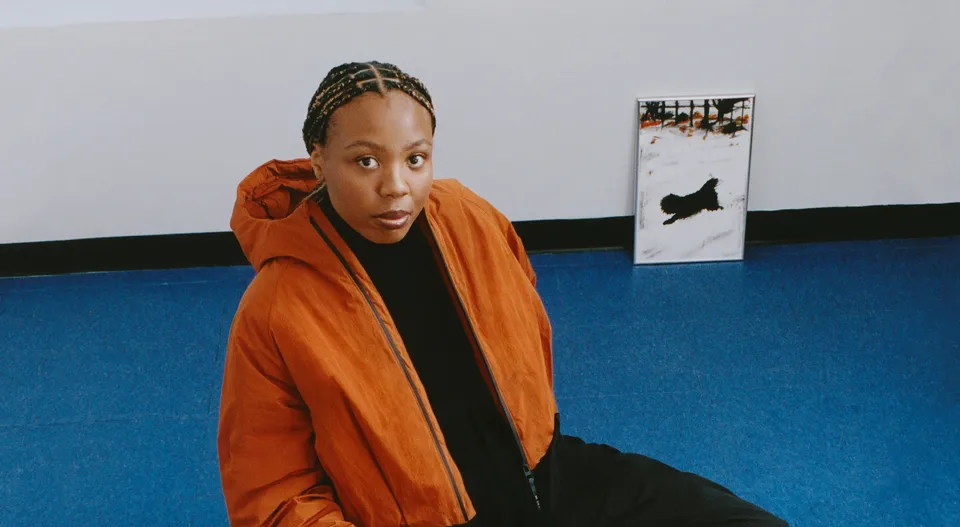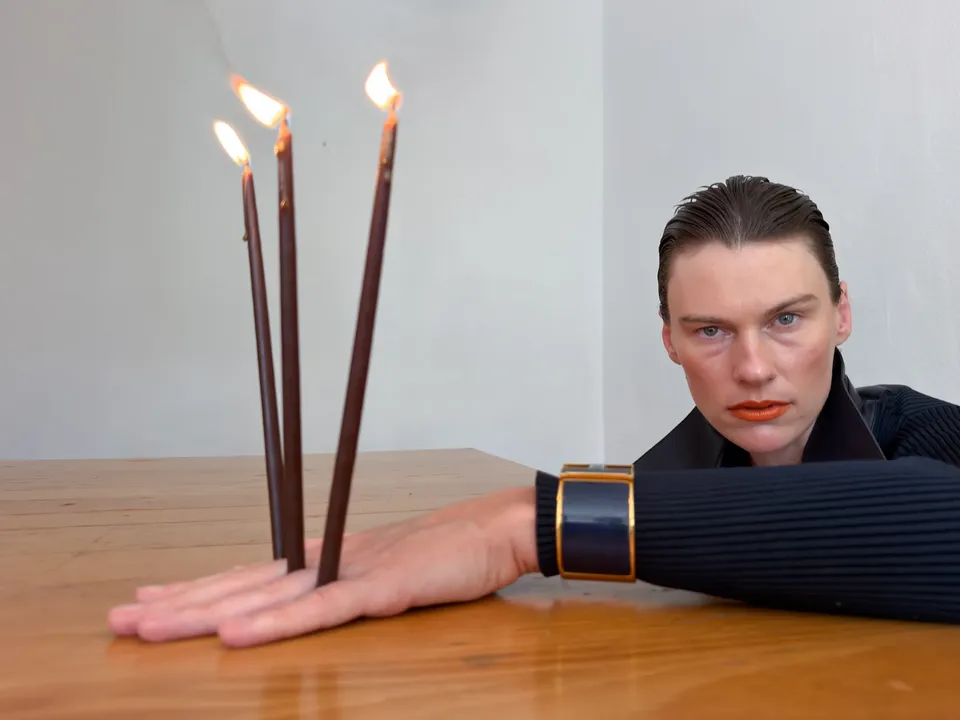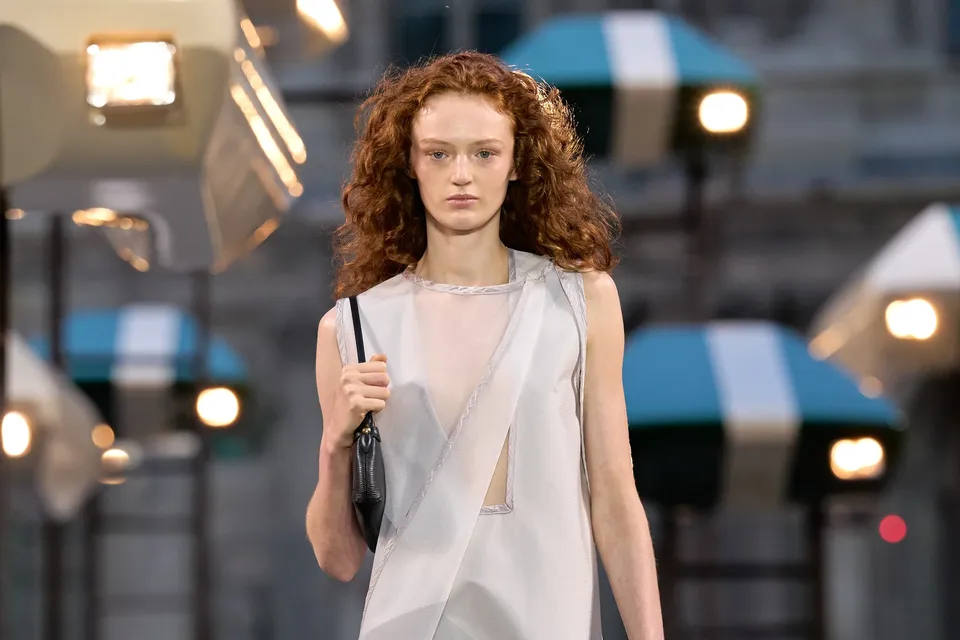
It’s been a year and a half since Daniel W. Fletcher took on the position of Creative Director at the Chinese luxury fashion house, Mithridate , and you can feel it through his elevated yet wearable designs. Fletcher takes inspiration from his Britishness: the rich royal colours, peacoats, traditional knitwear – while also remaining firmly anchored in the brand’s Chinese heritage – craftsmanship, the colour red, and, of course, the Wisteria for the Autumn/Winter Collection of 2026. It makes for a clear identity, one that celebrates cultural fusion and deepens the brand’s visual language.
Purple flowers dripping down off curved, interlaced branches and growing across the red-brick façades of houses take over the UK in late spring. Fletcher uses the motif of Wisteria to mesh Mithridate’s two lineages. Coming from the Guangzhou region of China, Wisteria was brought to London over two hundred years ago, signalling for Fletcher a direct exchange between the cities that he wanted to honour. We spoke with him about the personal journey behind the collection, international collaboration, and everywhere he finds contrast.
What is your favourite historical era of London in terms of fashion?
The 80s is the first one that comes to mind for me. It’s an era of fashion that’s often dismissed for its neon and Lycra. But in London the punks and New Romantics were leading the way and the intense contrasts in styles across the city (no doubt a reflection of the social and political shifts of the time) resulted in an era of fashion that I find really fascinating. The juxtaposition of that preppy Sloane Ranger with the Vivienne Westwood punks with Madonna and Mick Jagger thrown in, what’s not to love.
You said you took inspiration from the journey of the Chinese wisteria and its relation to your own journey. What is your first or strongest memory of the wisteria plant?
I don’t think I’ve ever seen as much Wisteria as I did this spring, maybe I was just more on the lookout for it than I had been in previous years since referencing it in the collection but it really did seem to be everywhere blooming across London this year. I first discovered the origin story of Wisteria coming to Europe when I was hosting a dinner at the studio for my first collection launch and looking for a flower with connections to both the UK and China and uncovered that the first Wisteria plant was brought to London from Guangzhou (also the birthplace of Mithridate) in 1816 and became the seed plant for all the Wisteria in Europe today.
Can you tell me a bit more about your own journey that you’re referencing?
My personal journey is one of town and country; I grew up in Cheshire and moved to London to study and I can really see both places reflected in my design language. Mixing something that feels quite country, British heritage inspired, with more city style pieces, like taking a rugby shirt from the Home Counties and incorporating details from Savile Row tailoring is a reflection of this journey I’ve taken as I’ve grown up as a designer.
“I’m always trying to find that balance between tradition and modernity.”
What about your journey with Mithridate?
I thought a lot about journeys for this collection, specifically about the Wisteria plant coming to the UK from China and the comparison with my own bringing Mithridate to London. The brand feels quite settled here now, we have our studio in Borough and we are laying down roots much in the same way the Wisteria did 200 years ago, I hope Mithridate has the same lifespan! I’ve spent a lot of time travelling between London and China, understanding how these two places and their cultures can interact to create something new, it’s a journey I’m enjoying unfold.
Your designs honour history while looking towards the future of fashion. What is the value in looking to the past to inform our futures? How do you seek to balance the two?
I’m always trying to find that balance between tradition and modernity. So much of my inspiration comes from classical resources like literature, artworks, vintage Savile Row suits but I don’t want to recreate these things, for me it’s more interesting to inject them with something new to produce something unexpected.
You reference very traditional British elements in your work, bridging them with Mithridate’s Chinese heritage. What does Britishness mean to you?
There’s often this feeling that British Heritage isn't that cool, but I’m ok with that. There’s a bit of a stuffiness to it that I enjoy poking fun at. There’re so many traditions that often make no sense to Britishness that when it comes to design there’s a lot to play with.
The collection also brings knitwear from Scotland and Ireland to the forefront. Combined with its Chinese roots, movement and migration seem to be central themes. What drew you to these questions and how did you choose these techniques to represent them?
Mithridate has really become a melting pot of British and Chinese cultures because of this unique situation we are in, where the design team and studio are in the UK but the origins and HQ are in China; this cross-border collaboration has led to new ways of creating. I’ve been introduced to techniques in China that I’ve been able to infuse with my British design inspirations to create something that feels new and often refreshes two elements that otherwise could be perceived as very traditional.
The colour palette feels very intentionally grounded, slightly earthy, but primarily inspired by everyday British life in Borough with pops of colour that enhance, not distract. What was the intention behind the palette?
There’s certain colours that I’m always drawn to; navy (very dark, never too blue), off-white (not too cream, never optic), burgundy (rich like wine, easy on the purple), chocolate brown (let’s say 40%, it shouldn’t look like Dairy Milk) and of course, black. It’s very subconscious now, it’s been 10 years of design that have led me to making the foundations of my collections based around this palette, but there’s always a sprinkling of other colours which define the season. For AW26 it was this rich tomato red which came from Chinese celebration decorations, and a soft blue of the Wisteria which inspired the collection then a touch of mustard, Colman’s of course.
“Mithridate has really become a melting pot of British and Chinese cultures because of this unique situation we are in.”
Contrast in material and style are staples in the collection. Why is this juxtaposition central to your designs? Where do you see contrast in your own life?
It’s funny, I’d not thought so much before this interview about how much juxtaposition influences my designs, but it really is present in so many parts of it. I think, outside of my designs, my home is probably the clearest example; it’s quite an industrial old factory building with a lot of brick and wood, so instinctively I wanted to soften it with my interior choices so there’s a lot of light colours and soft fabrics throughout.
The clothes feel grounded in wearable pieces but still experiment with existing structures and frames. How do you balance wearability with creative exploration?
I’ve never been a designer who makes things that are so out of this world that they are impossible to wear. I’m always looking to push the boundaries of creativity but ultimately fashion is still a business and I love to see the clothes in the context of the real world, not just in a photoshoot. Balancing that is often about choosing what area to push and which to pull back on, like if I’m going for a more avant-garde silhouette, I’d opt for a more classic fabric or vice versa. Rarely does throwing everything at one design produce a result that works for me.
What does the typical Mithridate buyer look like to you? Do you see that changing?
I’ve loved being out in London and seeing people wearing Mithridate for the first time, it’s nice to see it in the real world and not just on the runway or in the studio. We are still in the early stages though; we just entered into the wholesale market (we are launching with Galeries Lafayette in Paris this June) and are opening a new store in Guangzhou in October so I’m looking forward to meeting more of our customers and seeing how they interpret the brand.
How do you see Mithridate’s visual language evolving under your direction?
I’ve done my third show now; the first one was really about cementing the new look of the brand, establishing my own DNA for Mithridate. But the second two had more of a seasonal narrative, there was more storytelling, Spring/Summer 2026 was an 80s party between the city and the country, Fall/Winter 2026 was a journey from Guangzhou to Borough over land and sea and delved into our new home. I hope that as my tenure continues the identity will become clearer and allow me to play more with the storytelling. I want people to be able to look at something I’ve designed for Mithridate and know instantly that it’s ours, no logo required.