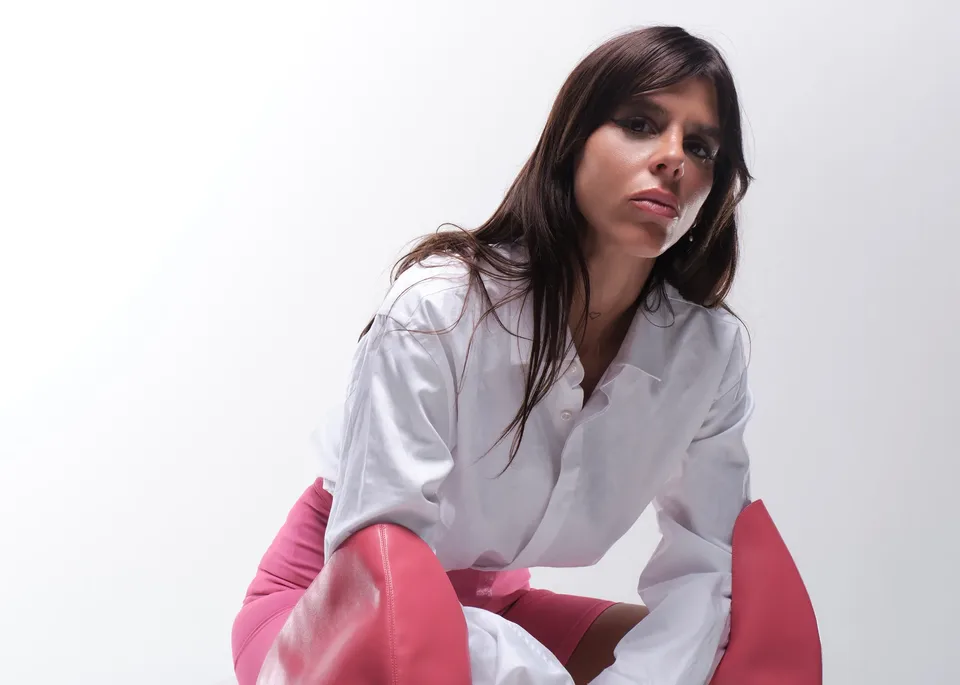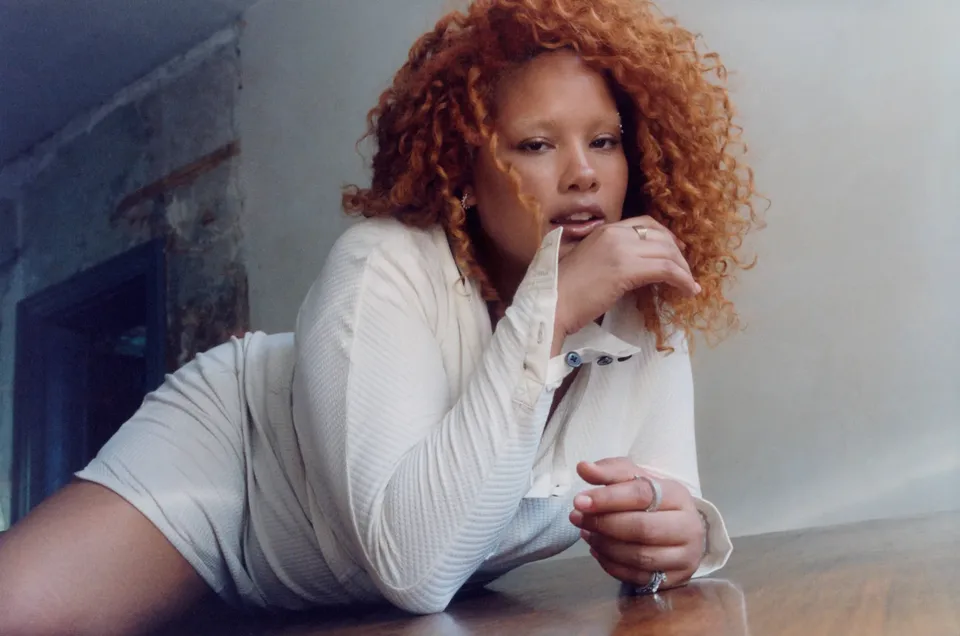
You might have heard their Like A Version cover of Martin Solveig and Dragonette’s Hello and wondered: who is that? Well, wonder no more. daine is the emo revival artist we needed so badly. In their own words, they’re also on a crusade to bring back millennial optimism, because someone has to do it. Writing and releasing songs since they were fifteen, the Filipino-Australian artist released their debut album, In Endless Awe & Agony, on 6 November via Pack. Records. Across eleven tracks and just under forty minutes, it mixes sadness with innocence and strength with vulnerability, all wrapped in sounds that recall Sky Ferreira at her Tumblr peak and the kinda-emo band Girlpool.
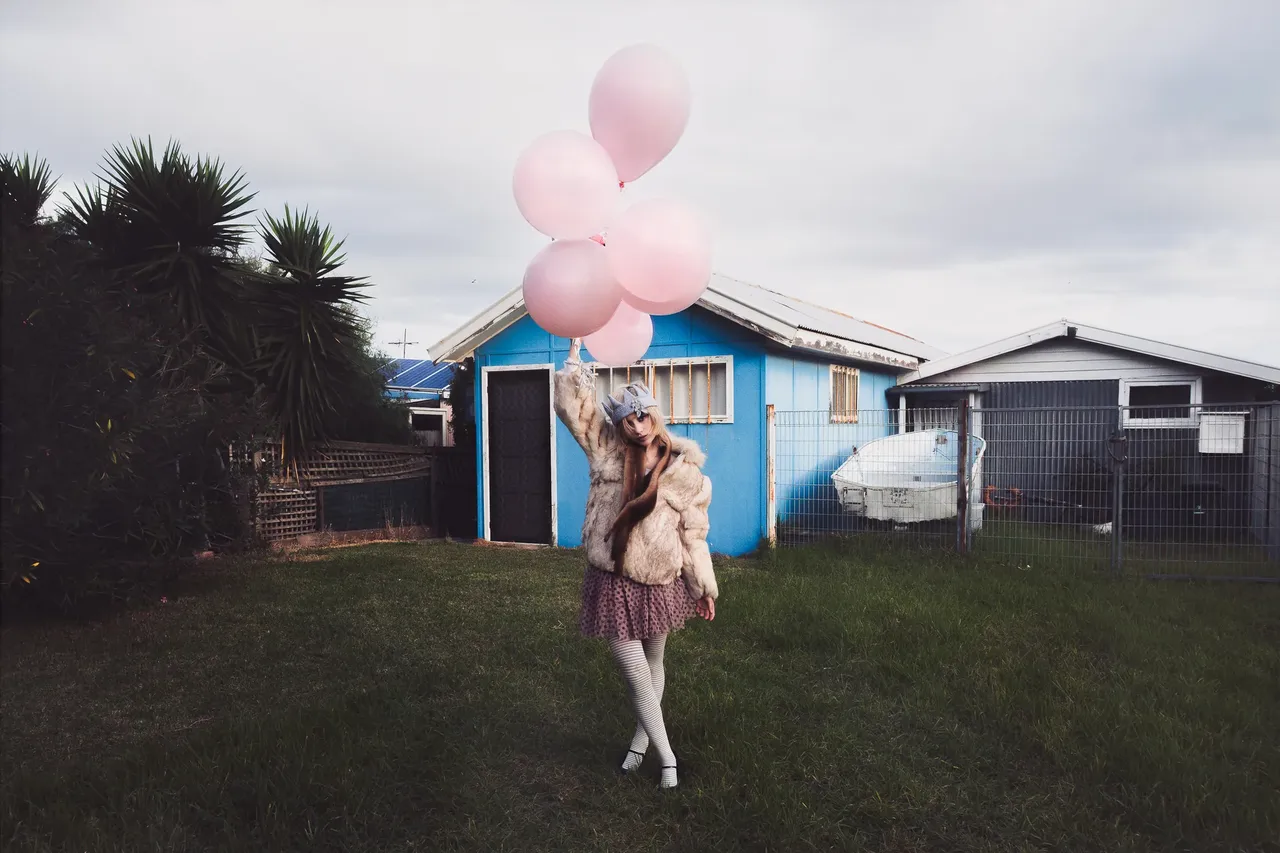
There’s a game of contrasts that follows you through the entire album: innocence and cuteness up front, agony and misery underneath. The music videos recall Tumblr’s pastel grunge trend, and the album cover shows daine holding a lamb (Hi, Sophia Stel, meet your twin!) before a pastel-coloured playground. Even the opener is called Silly Little Animal / Go! But don’t let that pastel exterior fool you. Behind it are the most gut-wrenching lyrics. There’s abuse, friendships destroyed because of mental health problems, broken hearts and hate. What’s so interesting about this record is daine’s ability to mix cute and sad in such a seamless way, stepping outside the traditional emo playbook of screamo and black clothes. They perfectly capture the broken-doll quality that other artists have struggled to pin down while also creating their own universe without owing anything to anybody.
The record begins with Silly Little Animal / Go!, a song about fame and disappointment, about how everything can change so quickly. It’s a vulnerable song that reminds us of the most intimate tracks from Sky Ferreira’s Night Time, My Time. The lyric that opens the album is quite a choice: “I think there’s a good chance that I’m wrong.” White Collar picks up the thread and takes aim at the fakeness of the industry. It’s the voice of an artist who just wants to make art without the hypocrisy that comes attached to it. The title alone conjures the suits and the office-hours version of creativity, where music is treated like a desk job. It’s heavier than the opener, and daine’s voice still sounds childlike, but this is an outburst of rage, not a tantrum. It’s less a kid who didn’t get their way than someone who has seen exactly how the machine works and doesn’t want to be swallowed by it.
Next comes one of the lead singles, Product of Profit (P.O.P), which carries the story forward. Its cover looks like a mugshot, as if to say: the industry did this to us. The song warns that when you turn yourself into a product designed to be profitable, you can lose yourself, as if your soul were being eaten alive. Midway through, there’s an interesting shift: the narrator starts to become the predator too, something that happens more than once on the record. daine has spoken openly about Carl Jung’s ideas and how they helped shape the album, letting them channel their emotions so the creativity could flow. That switch from prey to predator returns, at its darkest, on the closing track.
Wishing Well returns to desire, though not the fleshly kind. It’s a reflection on belief and on the beauty of human hope. Maybe the wishing well can help you. Maybe it’s a waste of a coin. Either way, there’s something tender about people trusting in something bigger than themselves, and that’s where the song finds its beauty. It’s another single, soft and steeped in a melancholy that lingers until the last note, and it shows a sweeter side of daine. Belief comes up again on God Figure, a song that could be (literally) about God or about an abusive relationship. Those parallels and metaphors are what make it so brilliant. The guitars weep, and the lyrics are probably the most emo on the album.
PQC is probably the most Tumblr-coded song on the record, especially its music video: the sound, the pastel colours, the cheerleader costumes and the bubbles all confirm it. It’s also a song whose meaning daine has hinted might be tied to Jungian psychology. We’re not Jung specialists, so you might have to read between the lines yourself.
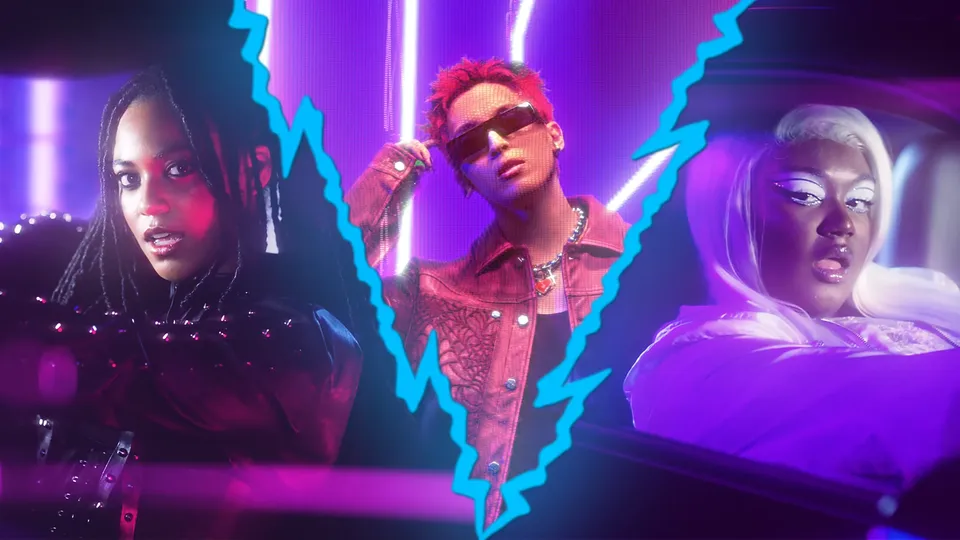
I Used to Kill with aldn is the record’s only featured collaboration. It’s lyrically dark but the hyperpop beats make it something you could dance to in your bedroom. daine does it again. They’ve described the video as “disturbing”; we find it more cathartic than disturbing, but to each their own. The song is about leaving a toxic relationship, and its progression reinforces that reading: it opens with soft acoustic guitar before exploding into hyperpop. Heartbreak comes first as denial, then as rage. I Used to Kill captures the darkness of that rage and the moment you realise what you’ve been holding in.
Don’t be fooled by Love Love (Love Love), one of the most danceable songs on the record. Its video could have come straight out of 2014: colourful filters, parking lots, city lights and, of course, palm trees (remember when everyone was obsessed with photographing palm trees?). Beneath the candy wrapping, the song is dedicated to a lost friendship, one that ended because of badly handled mental illness. daine looks back on it fondly, without an ounce of resentment. They want their friend back, but they know that, after what happened, it could be dangerous for them. It’s one of the saddest kinds of breakups.
(I Want You In) Dakota is where the album’s nostalgia goes under the microscope. It’s a lament for a generation whose adulthood seems to be slipping away before it has even begun. Everything has already been done. There’s nothing left to say, and since the present feels impossible to live in, the only option left is to live in the past (maybe this is what makes the art direction so nostalgia-coded?). The future, daine suggests, is already dead, and deep down we all know it. “Our adulthood is leaving before it’s began / And we’ve got nothing to say ‘cause every river’s been ran / Can’t dance in the present so we live through the past / The future killed itself, don’t we all know that?” It’s the key to daine’s crusade. If millennial optimism needs bringing back, it’s because a whole generation stopped believing the future would come.
In Endless Awe & Agony closes with a juxtaposition: first a Supervillain, then a Spider-man. Supervillain brings back the Sophia Stel sound. Its theme is indifference, which daine finds neither cool nor attractive, just plain stupid. It’s a critique of people who act sly, cold and ‘edgy’ to seem better than everyone else. We live under the cringe dictatorship, where everyone is trying to bring their curated online fantasy to life, as if that were fully possible. daine is basically asking: what the hell are you doing? That’s lame. And we agree. The opening line (“My bruised knees are plastered in the magazines”) hints that they were once like this too, but learned, and would like others to see it as well. The song ends with a poignant reminder that we’re not built to last, so we might as well live freely instead of wasting our lives on appearances.
Spider-man, on the other hand, is probably the most complex song on the record. It’s a gut-wrenching track about the relationship some people develop with their abusers after the fact, about loving someone who has harmed you. Yes, it’s dangerous. Yes, forgiving, talking it through and carrying on can be healthy if things have truly been settled. And yes, it’s still dangerous. The lyrics weigh up all of these ideas, because contradictory feelings are part of human nature. Towards the end, after all that deliberation, a wave of violence washes over daine and part of them wants revenge. That’s human nature too.
In Endless Awe & Agony is a fantastic and complex first record that sets the bar incredibly high for what’s to come from daine. It really represents how some people live: in endless awe (there’s a lot of beauty in the world) and agony (there’s a lot of pain too), a contradiction that follows the singer throughout the whole LP. Maybe it follows some of us through our everyday lives, too.