For anyone coming to it cold, Against Interpretation Club is Courtesy’s roving event series, built around invited artists’ and musicians’ work booked or commissioned for each edition. The project borrows its name from Susan Sontag’s eponymous 1964 essay, where she takes aim at a culture of treating artworks as coded messages to be cracked, filled with latent meanings, rather than experiences to be lived through. Instead, Sontag calls for a more sensual attention to art, what she famously dubs an “erotics of art,” that focuses on a work’s form, texture, rhythm, and atmosphere, and what it does to our bodies and our perception in the moment.
Sixty years on, in early 2024, Courtesy folded that provocation into her own work when launching the label Against Interpretation after obsessively reading Sontag a few years prior. “There’s something deeply tragic about her,” she says. “Her relationship to other people, her lovers and her son. As well as her substance abuse and compulsive relationship to work, taking Benzedrine [an amphetamine] and writing for days without sleeping. I just really like her. I miss the kind of sexy, controversial intellectual pop star she was. I think the only one we have left now is Slavoj Žižek.”
Around the same time, she began Against Interpretation Club, following Sontag’s principles in testing how far she could push different art forms inside a club setting without killing immediacy and, less philosophically-speaking, the communal enjoyment of nightlife. Ultimately, this idea emerged from a desire to freshen up her own conceptions of club performance. “It’s a personal project in terms of my interests and initially started as a way of making nightlife a continuously interesting place for me to work, selfishly,” she says. “I’m asking how do you make a night out feel exciting after having literally played more than a thousand DJ gigs?”.
London event producers Goodness brought Courtesy’s Against Interpretation Club to the Institute of Contemporary Arts, https://www.ica.art/ in what was the first show in the UK following events in Berlin at Schinkel Pavillon and OHM, and in Amsterdam at Club Raum. “Goodness were the guys that initially made this happen,” she says. “They believed in the concept of Against Interpretation Club and supported the event, which I am enormously grateful for.”
The ICA edition opened its doors at 7:30pm before closing out at 11pm, which is a far earlier closing time than Courtesy’s usual club sets, as well as previous Against Interpretation Club nights. She approached the running order differently as a result. “It’s the first time that I completely departed from nightlife and the party element, although people were still dancing at my closing set,” Courtesy notes. “I had to think about a different kind of energy in the curation than my usual idea of ‘bringing art into a club setting’.”
The programme began with a newly commissioned text written and performed by Berlin-based English artist Josephine Pryde. Courtesy envisioned her playing at the ICA following a visit there in August last year, when watching a performance by Lachlan Petras, Yasmin Saleh, and Amber Fasquelle in its theatre room. “After that, I had a pretty good idea what would work in that big black box,” she explains. “I had an urge to get her in there. But commissioning a reading performance was pushing it a bit, given her most recent big solo at Haus am Waldsee in 2024.”
There in Berlin, Pryde showcased How Frequency The Eye, a project building on perception, cognition, and language in the context of an art exhibition through her primary practice of photography, sculpture, and installation. Here, perpendicular to the theatre room’s in-built stage, Pryde sat regaling both humorous, diaristic accounts to set the evening’s tone. She weaved musings on identity and plugged arseholes with conceptions of fantasy from the movie Hot Milk (2025) and prescient observations from the 1990s about the influence of excess technology on libido and sexual relations.
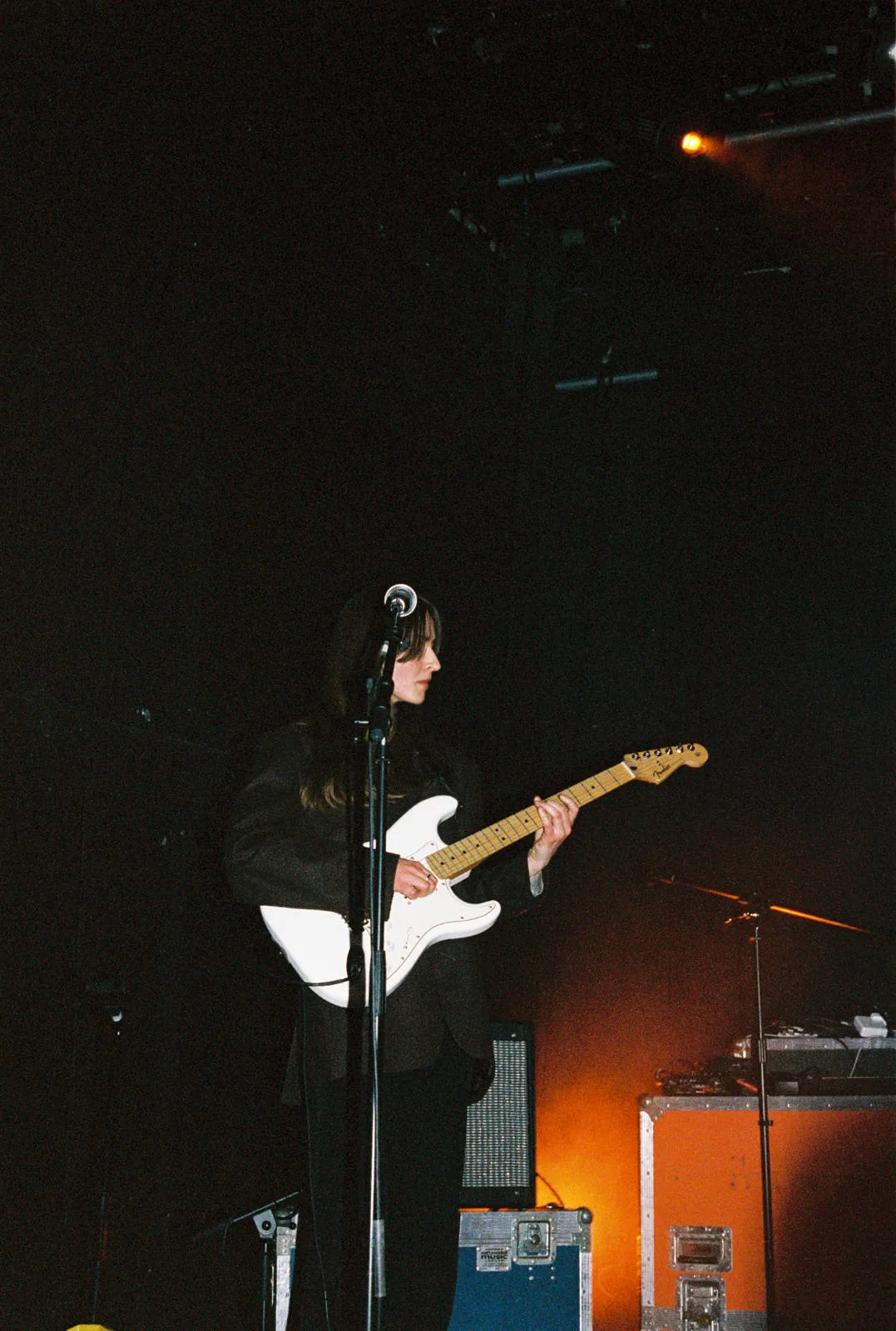
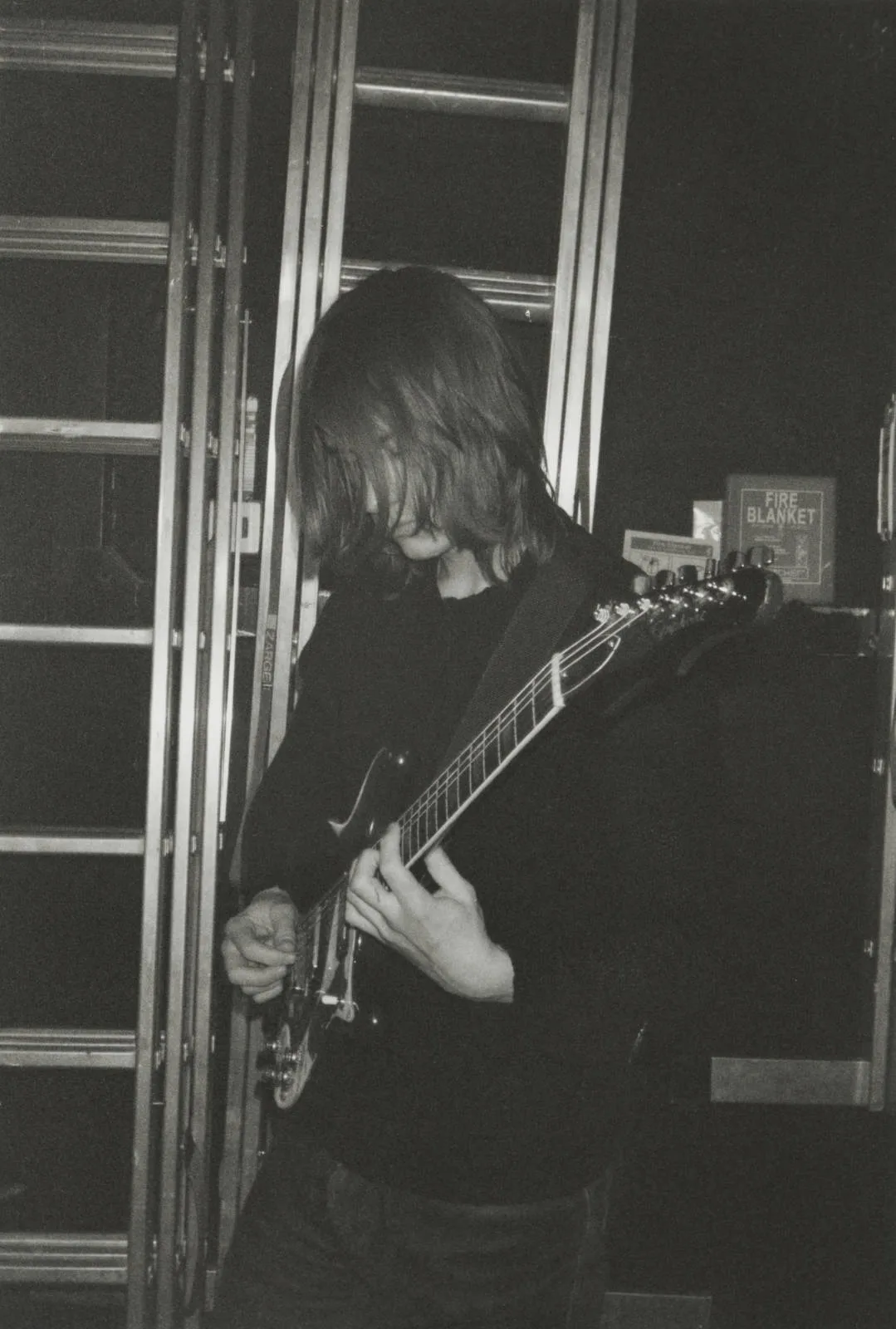
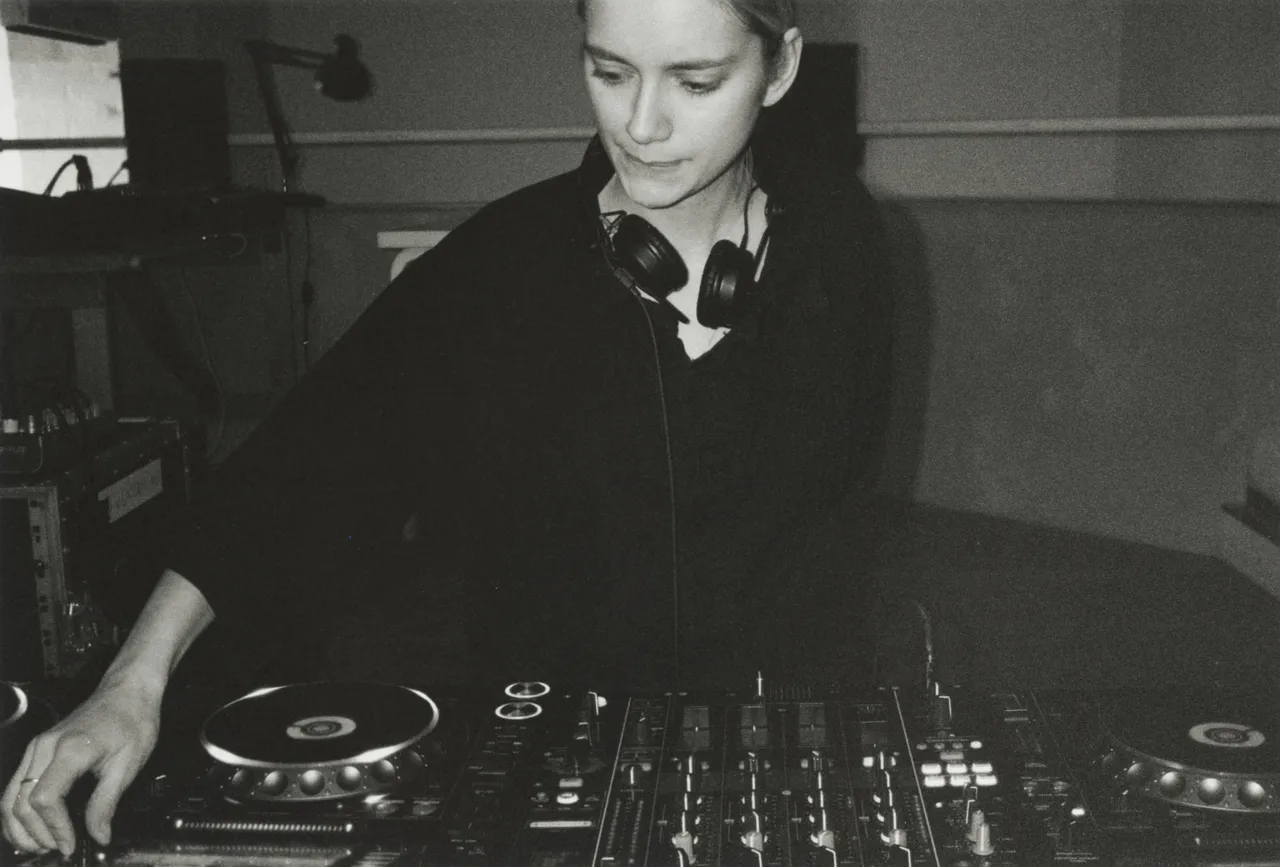
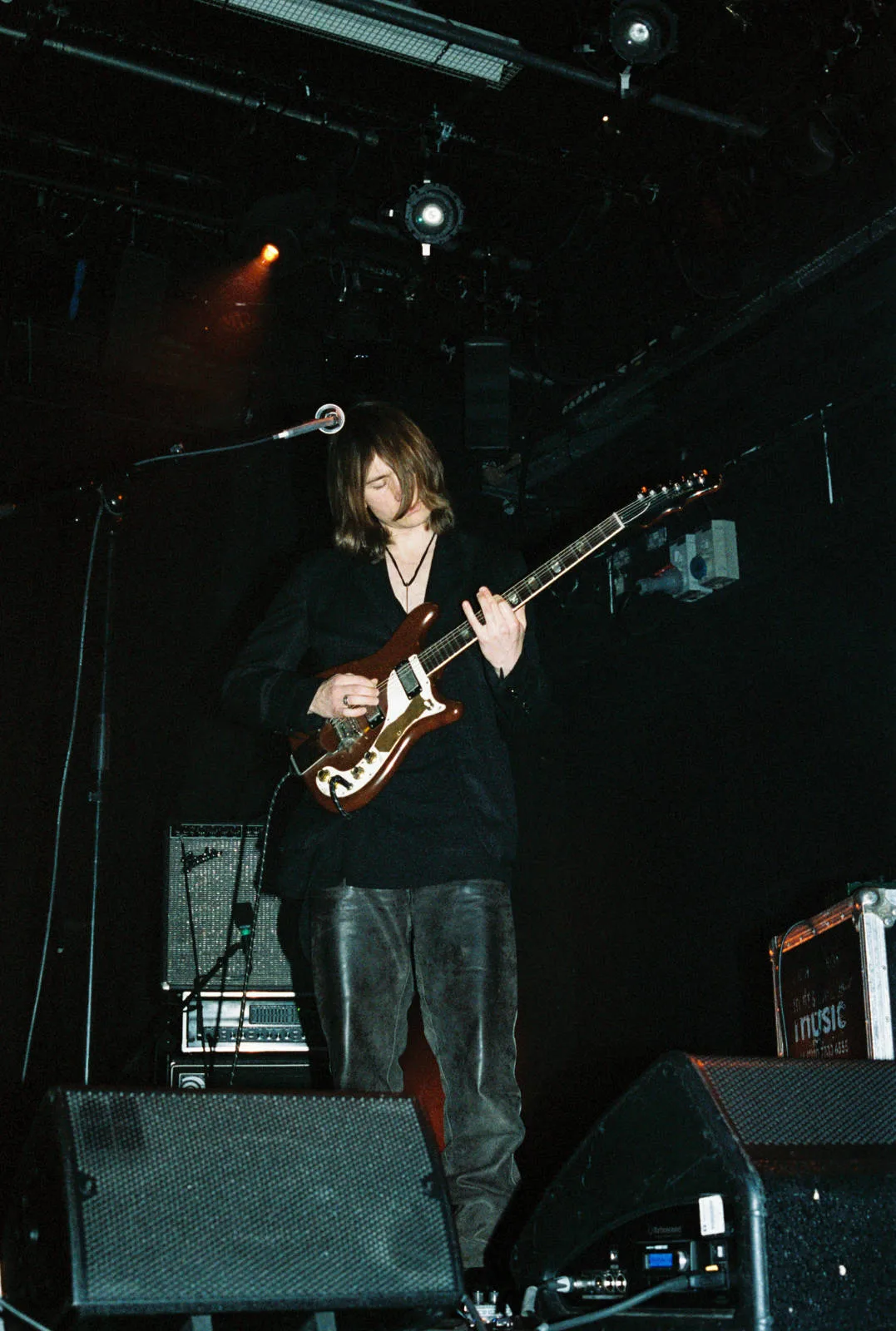
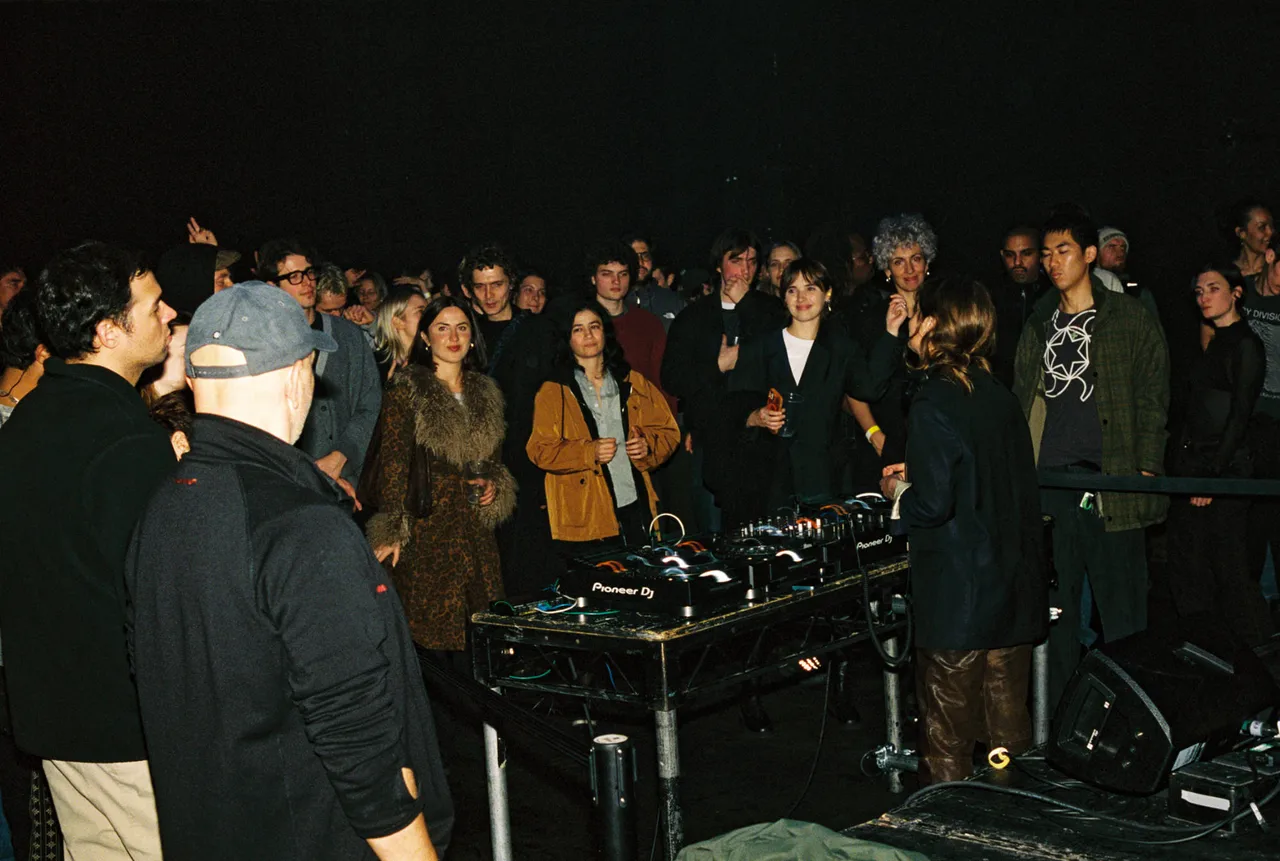
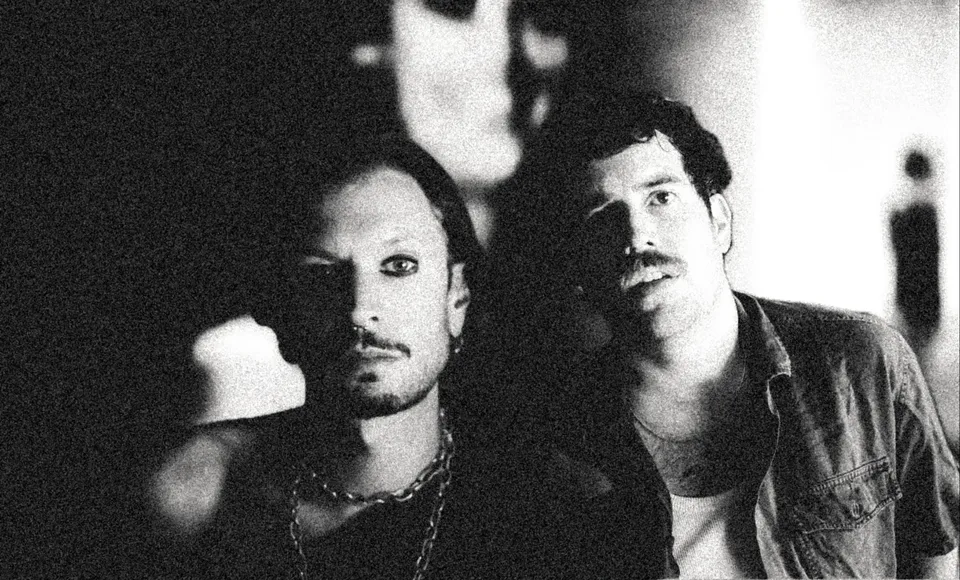
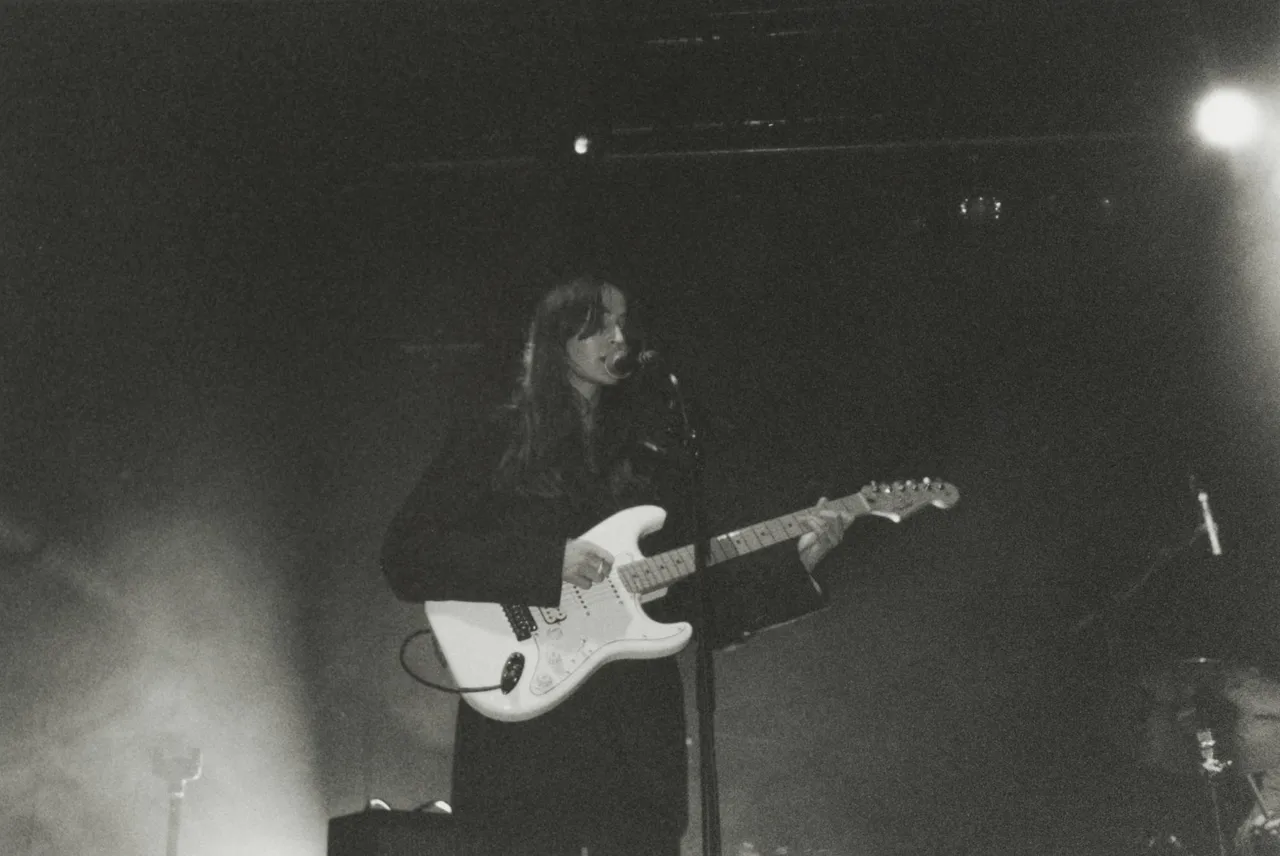
Courtesy also contrasts this theatre space – a square, sound-optimised arena with black painted walls, high ceilings and a sizeable main stage – with the cosy, seated area outside its doors (just above the ICA’s bar), fitted with plants and warm lamps. London art gallery Galerina carved a relaxed atmosphere in this break room zone, between live sets from German dream-rock band Roomer and digital collage artist Lolina (FKA Inga Copeland) on the theatre’s main stage. Courtesy concluded the evening in the same room, with a high octane forty-five-minute set until its 11pm closing time, opting to be amongst it by DJing on the dance floor itself. Both these spaces are down a thin hallway from the ICA’s gallery (currently housing found objects and sculptures by Tanoa Sasruka until mid-January), as well as a bookshop, and two cinema rooms. “I like its maze-like energy,” Courtesy says. “Of the bar and upstairs, versus the black box, where the sound is impeccable.”
Custom-made fans by German artist Hanna Stiegeler were also produced for the night, following a previous production of items for Against Interpretation Club at OHM earlier in the year. “I liked her work as an artist in painting, screen printing, sculpture and photography before we got to know each other,” she says of Stiegeler.
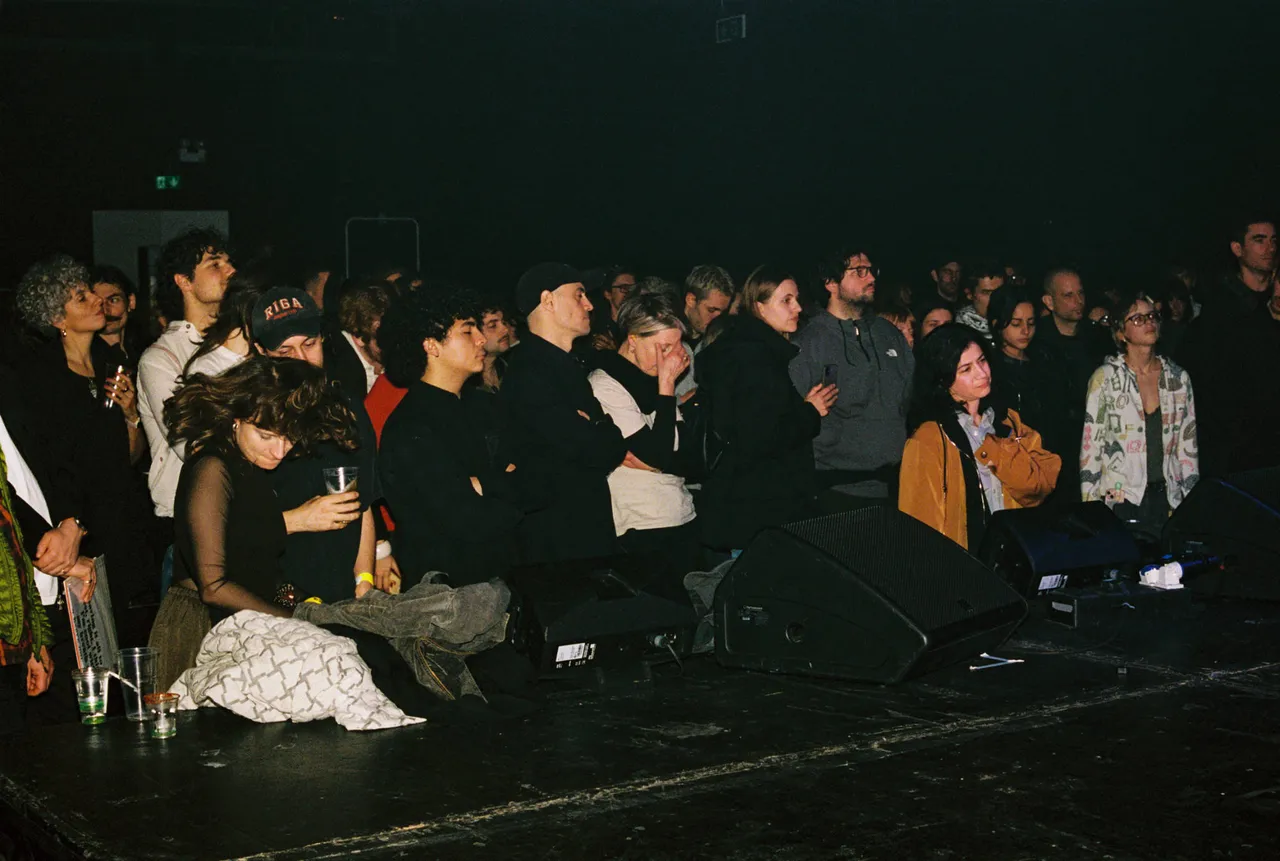
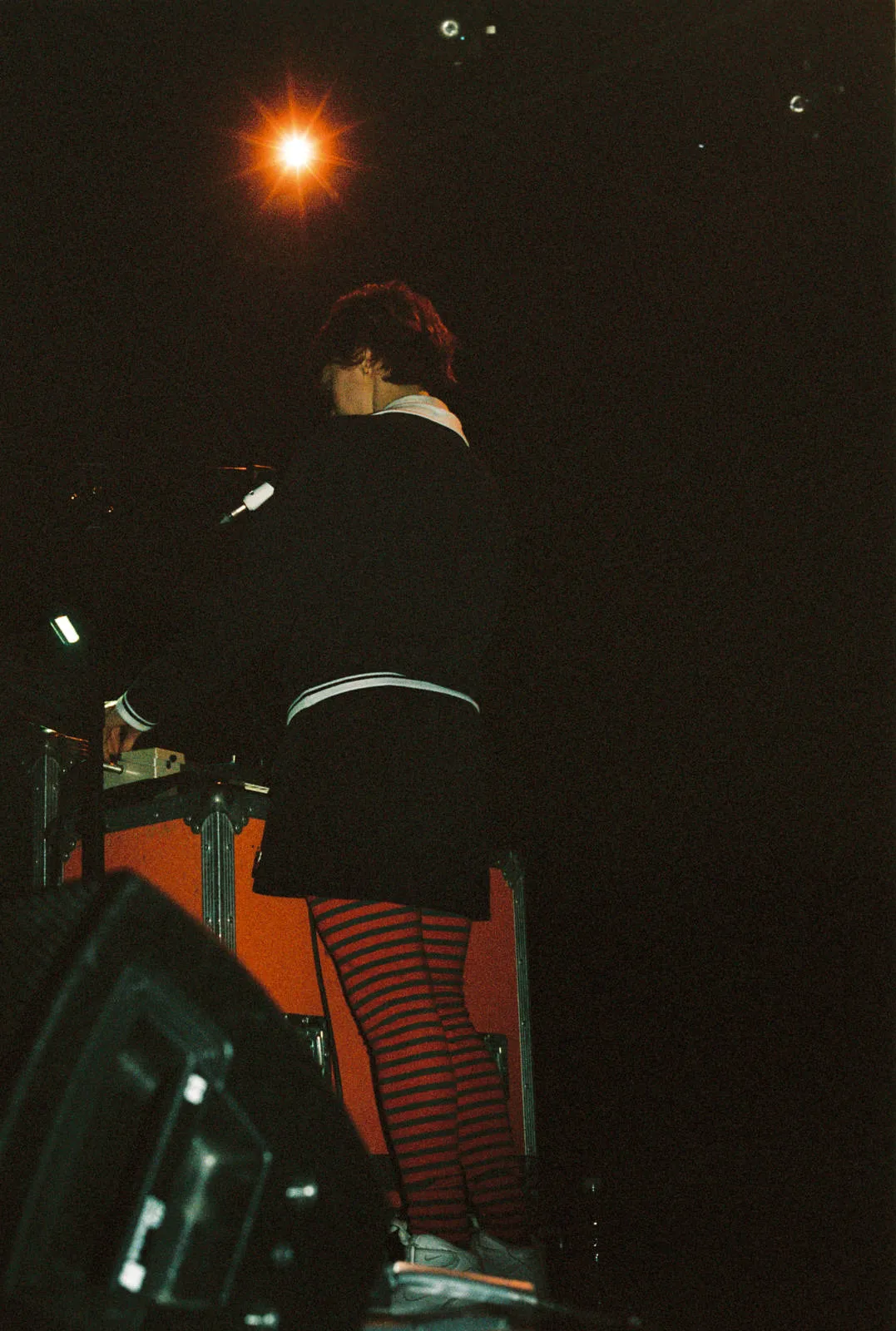
The programming, the space and the multidisciplinary nature of the artists combined to influence how attendees explored the evening. Some stayed upstairs for long stretches, chatting in the ICA’s seated area above the bar, clinking wine glasses amid Galerina’s mixes. Others opted to bob around in the darkness to Roomer’s soothing alt-rock, jerk to Lolina’s sample-based patchworks of rugged electronics, or move a little faster still for club-ready Courtesy. Many moved between all these types of movements and motivations, shepherded by Courtesy herself, who informed attendees of each next showing, with DV cam and point-and-shoot in hand to record the action. “I do the documentation of all the events myself,” she adds. “It’s part of the deal.”.
Taken together, the evening added up to an encounter akin to a multi-faceted, single-venue festival such as Berlin Atonal, where you can easily meander between different kinds of engagement with art, of contrasting sonics and presentation, in one building. In 2026, look out for Against Interpretation Club in a city near you.