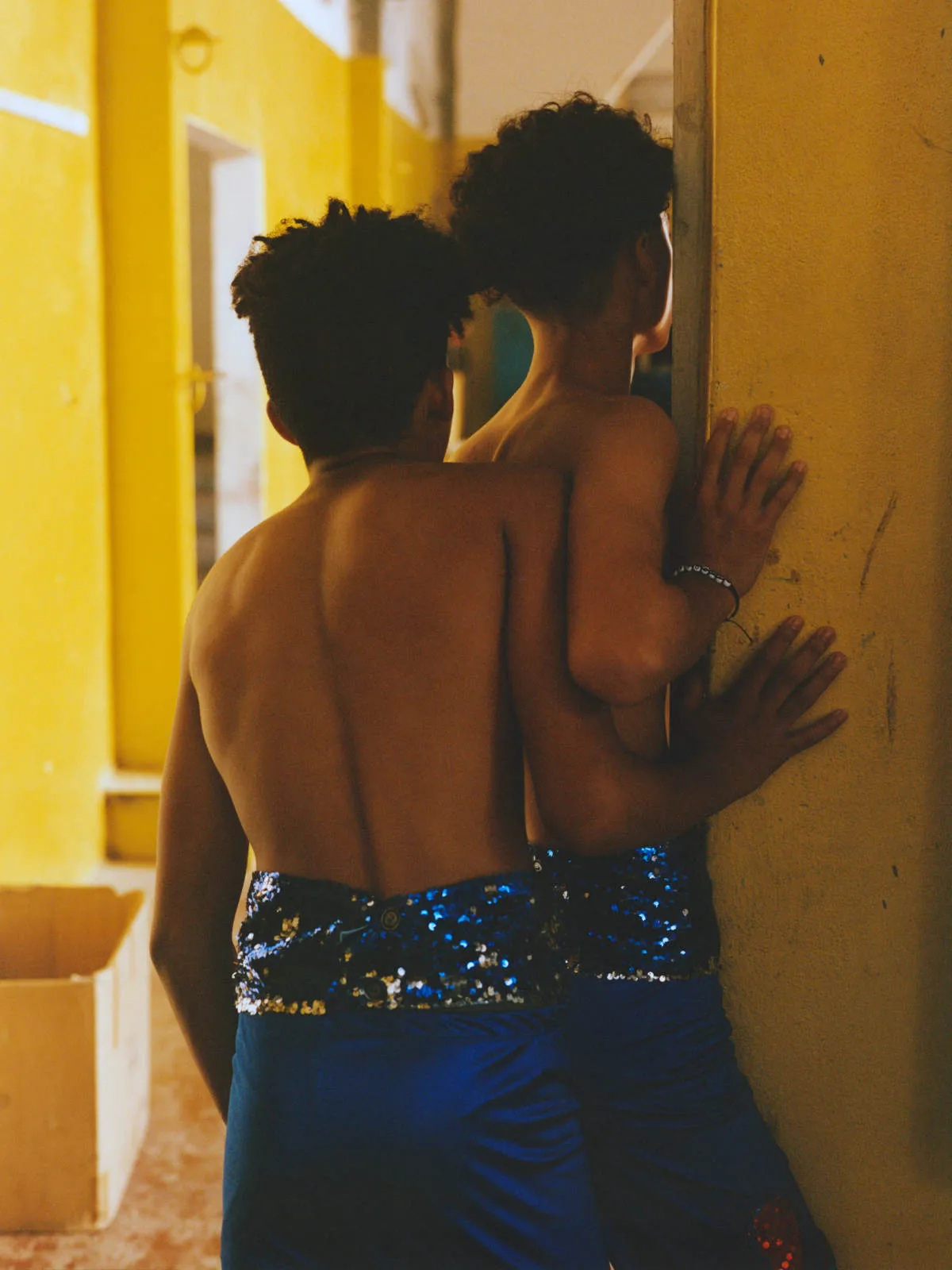
Vintage cars along the streets, tall sugar cane fields, mouthwatering congrí, thick smoke from the tastiest cigars, flamboyant mambo dancers. Do you see where we are? Not yet? Trading embargos, food shortages, persistent blackouts, mass exodus. Perhaps this is the side you’re more accustomed to seeing. This is Cuba, the ‘Pearl of the Antilles,’ where photographer Constanze Han has recently captured the talented young people in the National Circus School in Circus of a Revolution. In this series, she reframes the island through creativity as opposed to crisis, using the circus as the centre-stage to uplift a generation balancing not only towers, but artistry and unpredictable futures.
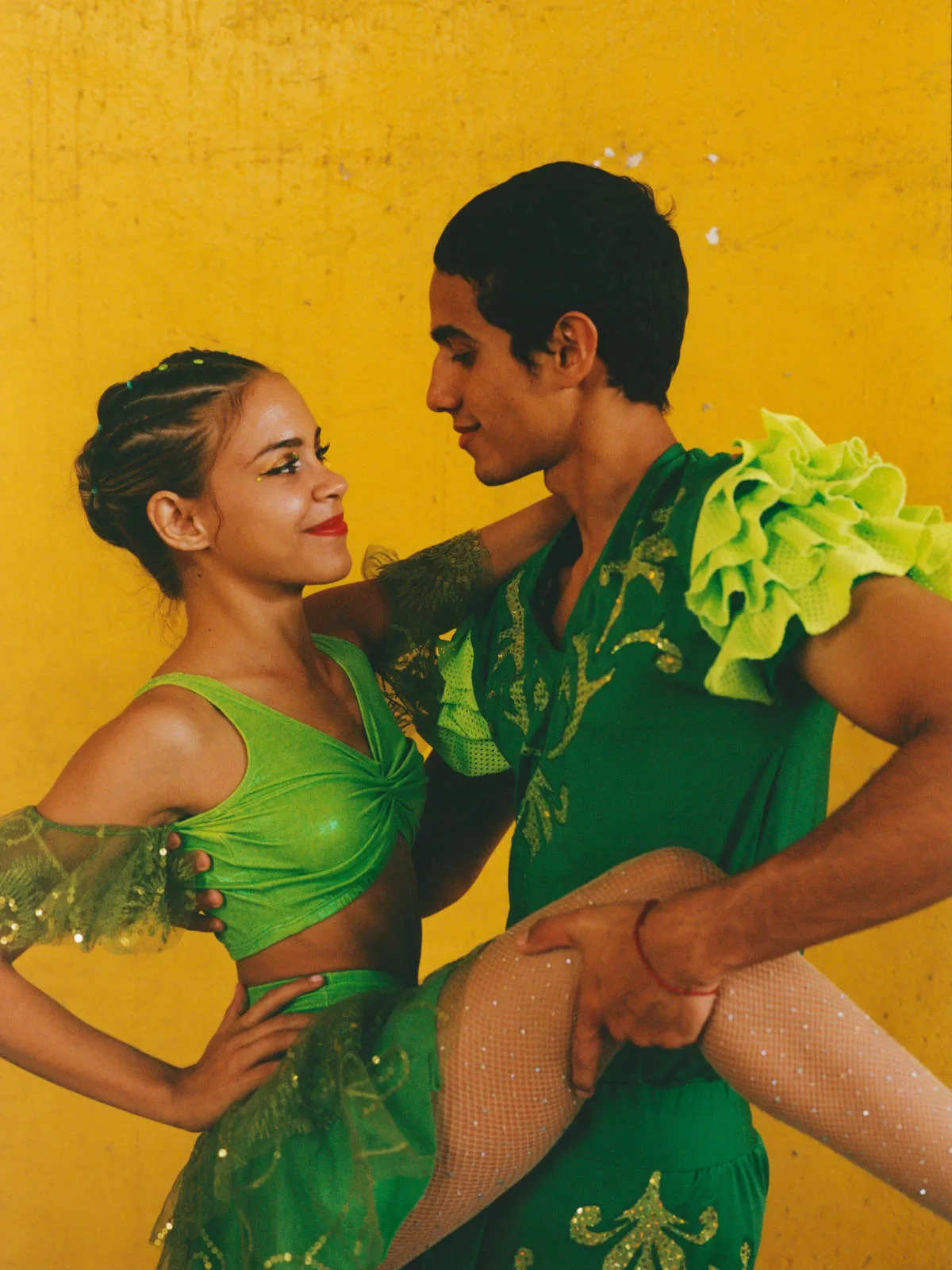
Steeped in cultural markers, such as the students’ modern spins on the traditional bolero and salsa dresswear, or sporting classic Cuban fedoras, the school is one of the many remnants of the island’s revolutionary history. Following Fidel Castro’s rise to power, his government nationalised institutions across Cuban society, including the arts. They were seen “not only as a tool to advance socialist and revolutionary goals but also as a way to cultivate cultural excellence for the nation,” says Han, who became curious about the circus’ whereabouts during her artist residency in Havana in 2024.
While touring the national arts university, Instituto Superior de Arte, she noticed an abandoned, dome-shaped building intended for the circus school. After learning about its past and reading the book El círculo mágico, she set out to find where the school had ended up and found them in the Siboney neighbourhood of Playa. Interested in “exploring narratives beyond shortages, blackouts, and migration,” Han sought to highlight the “vitality, playfulness, and cultural richness” of the island to bring some colour back to the limited, black-and-white image we have of Cuba.
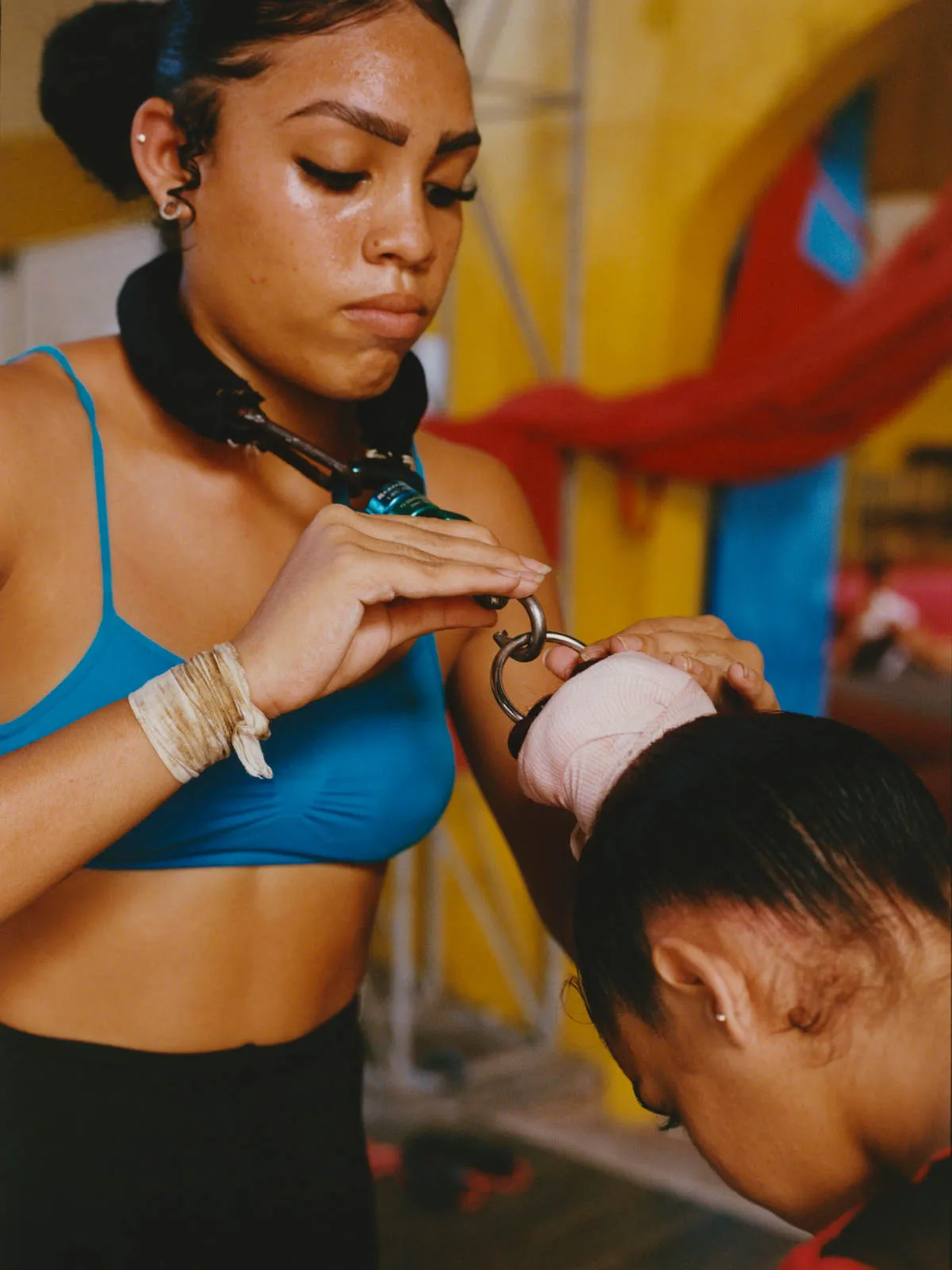
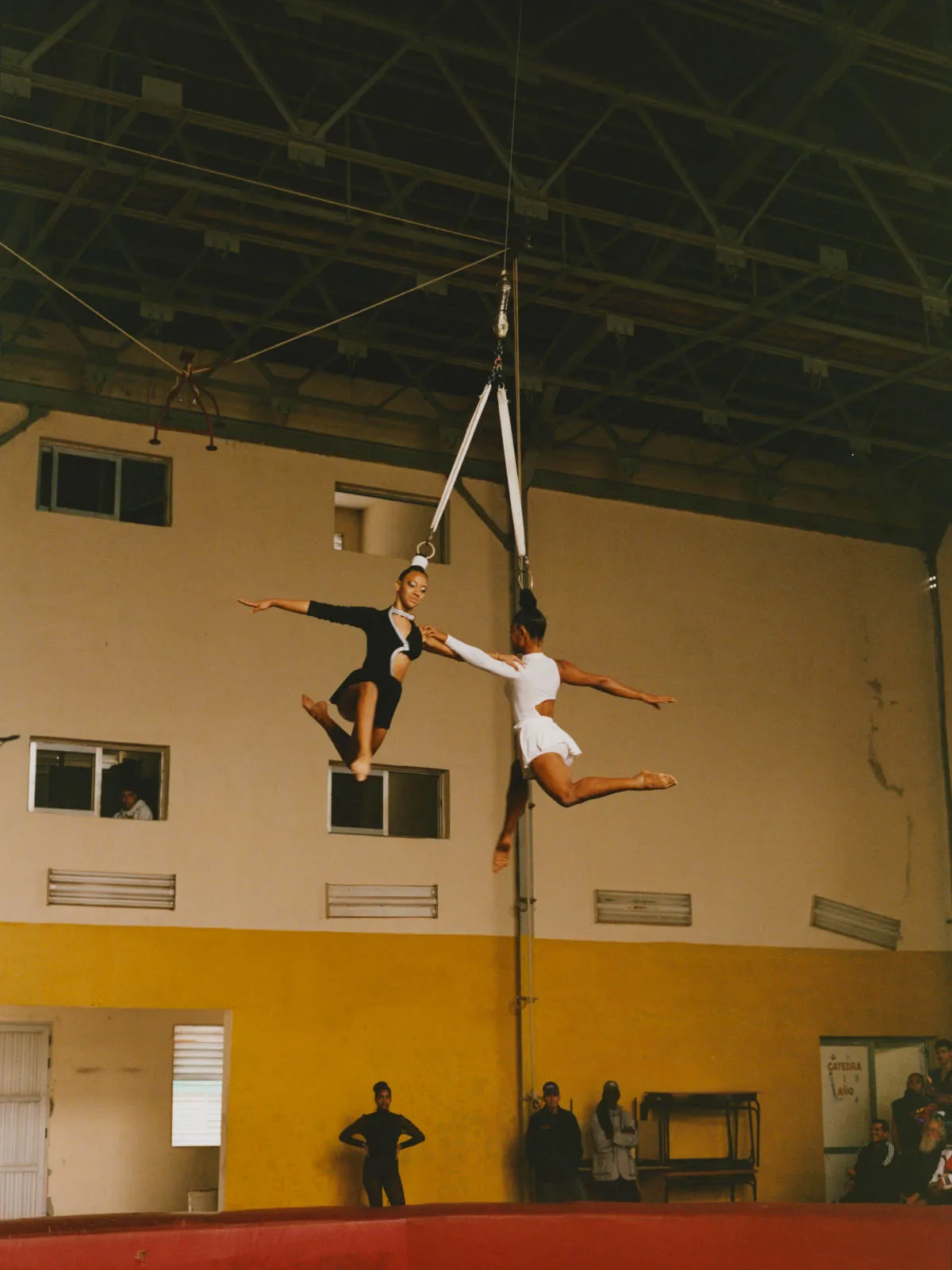
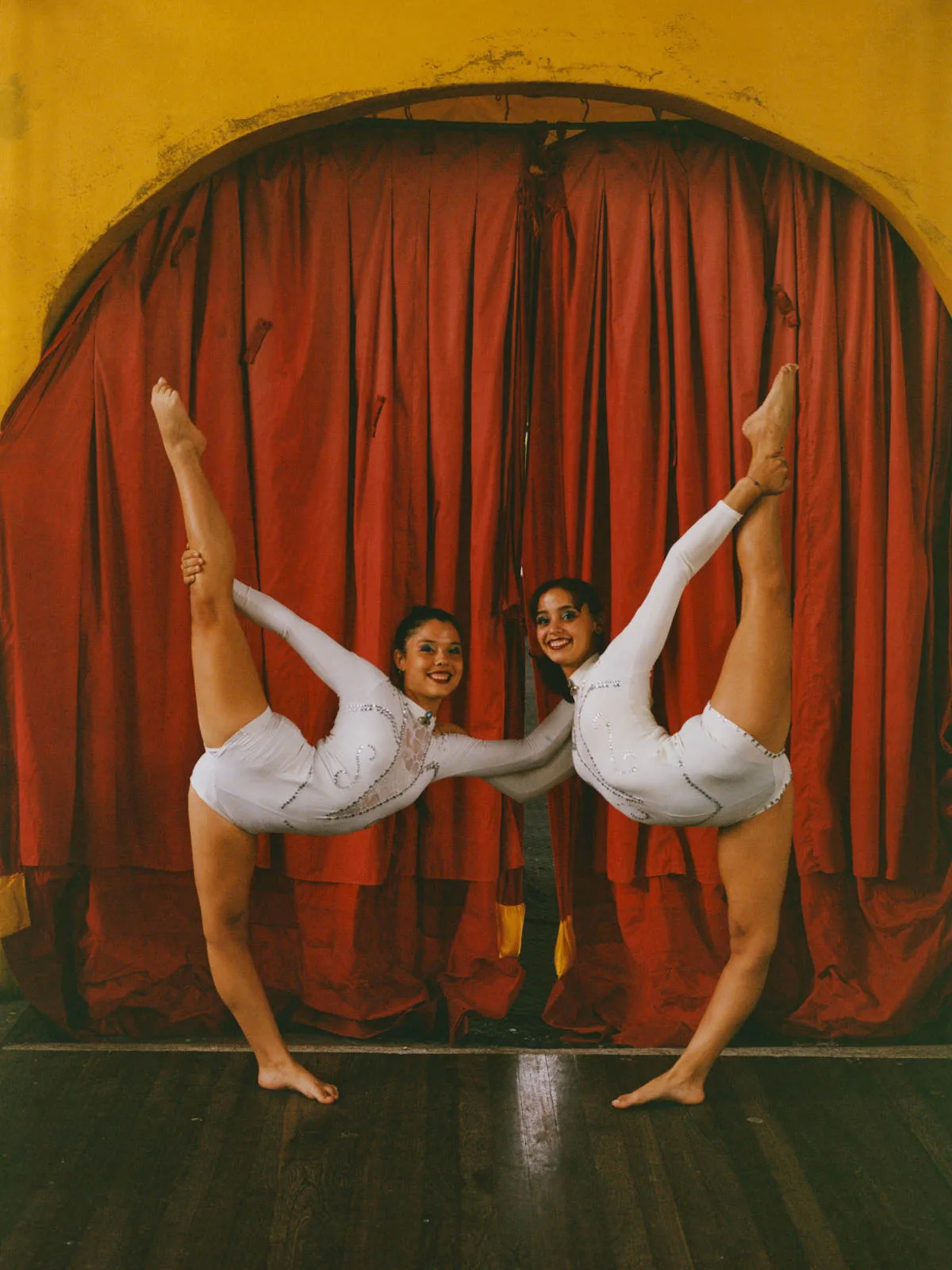
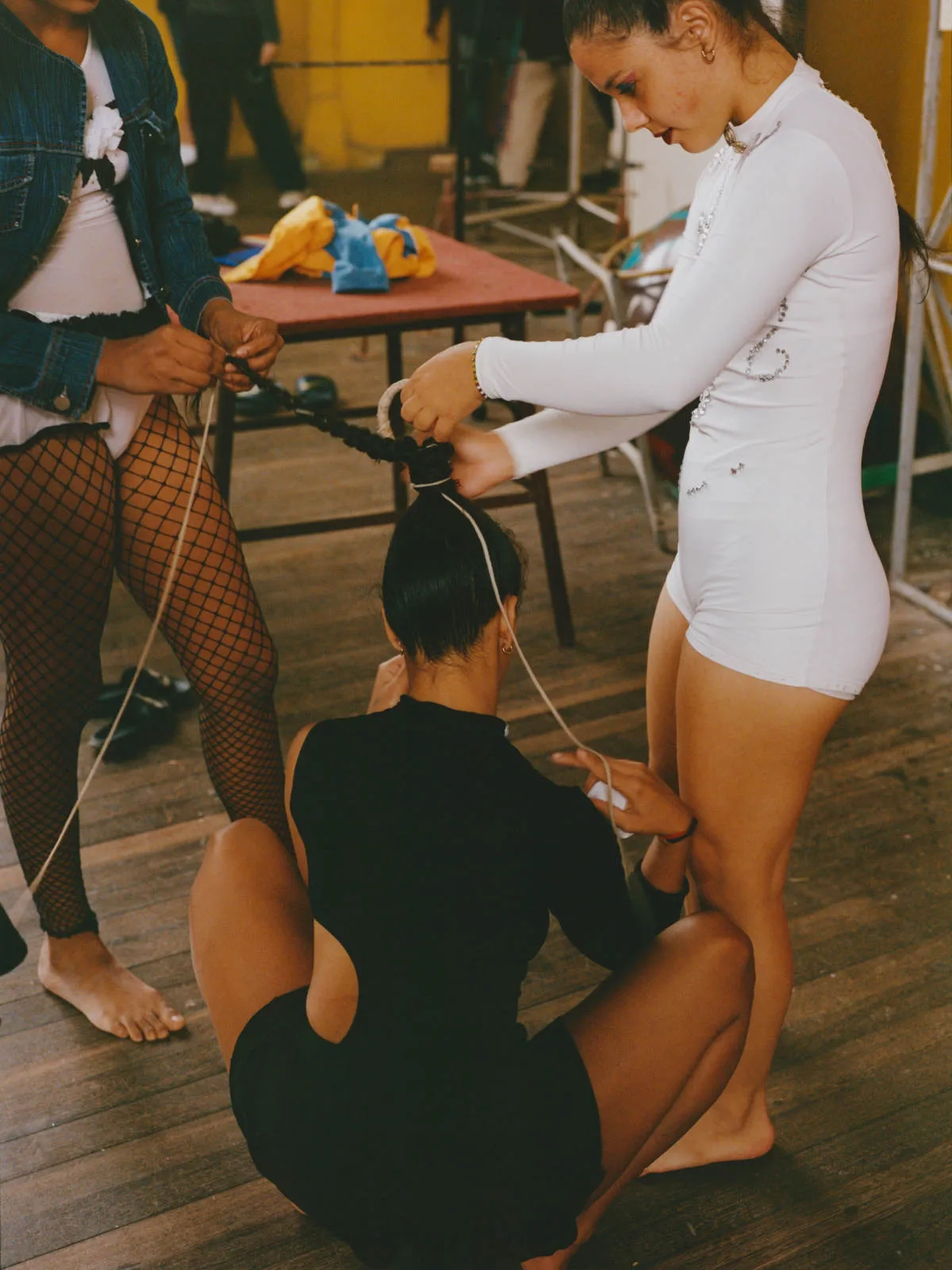
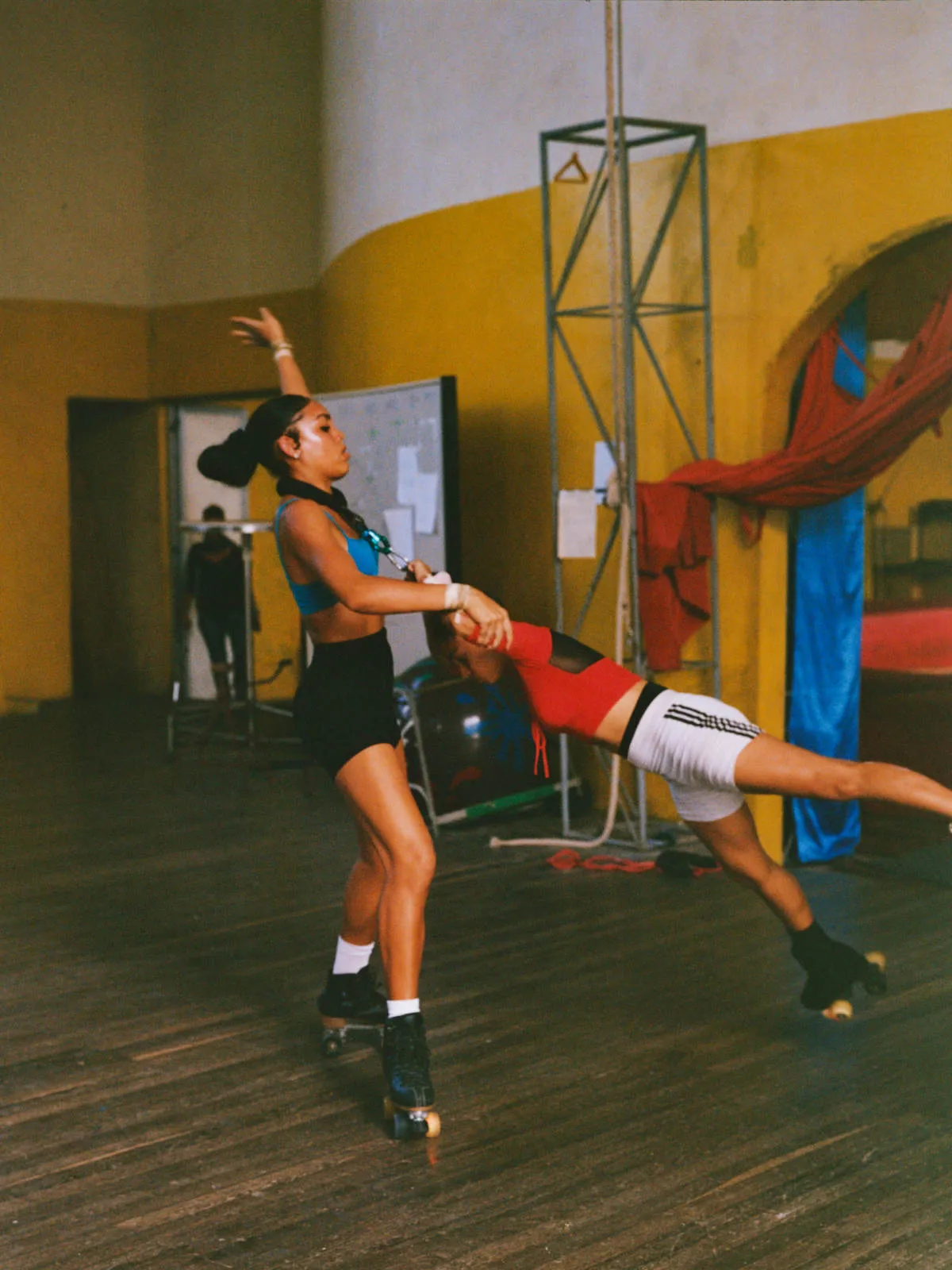
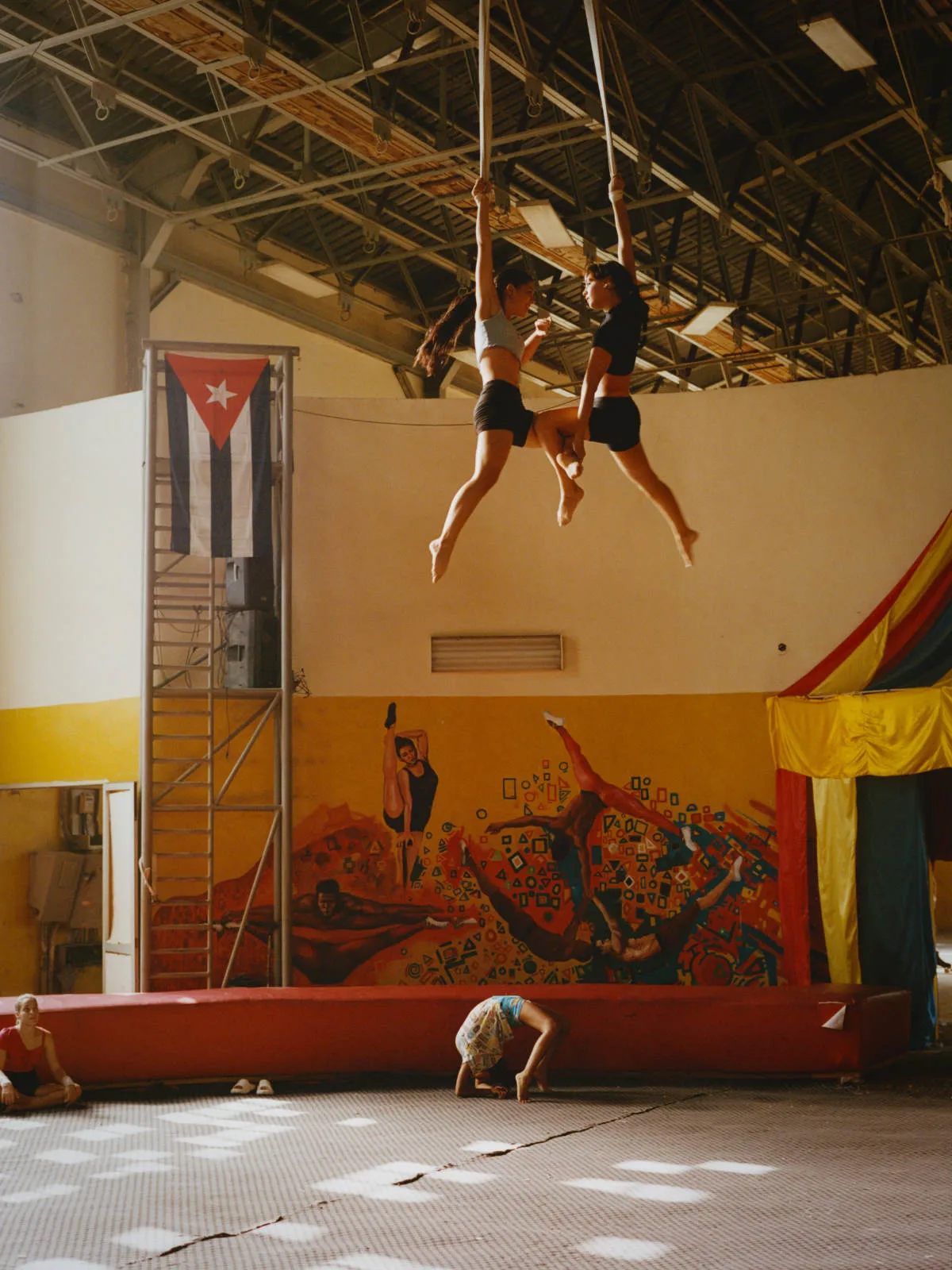
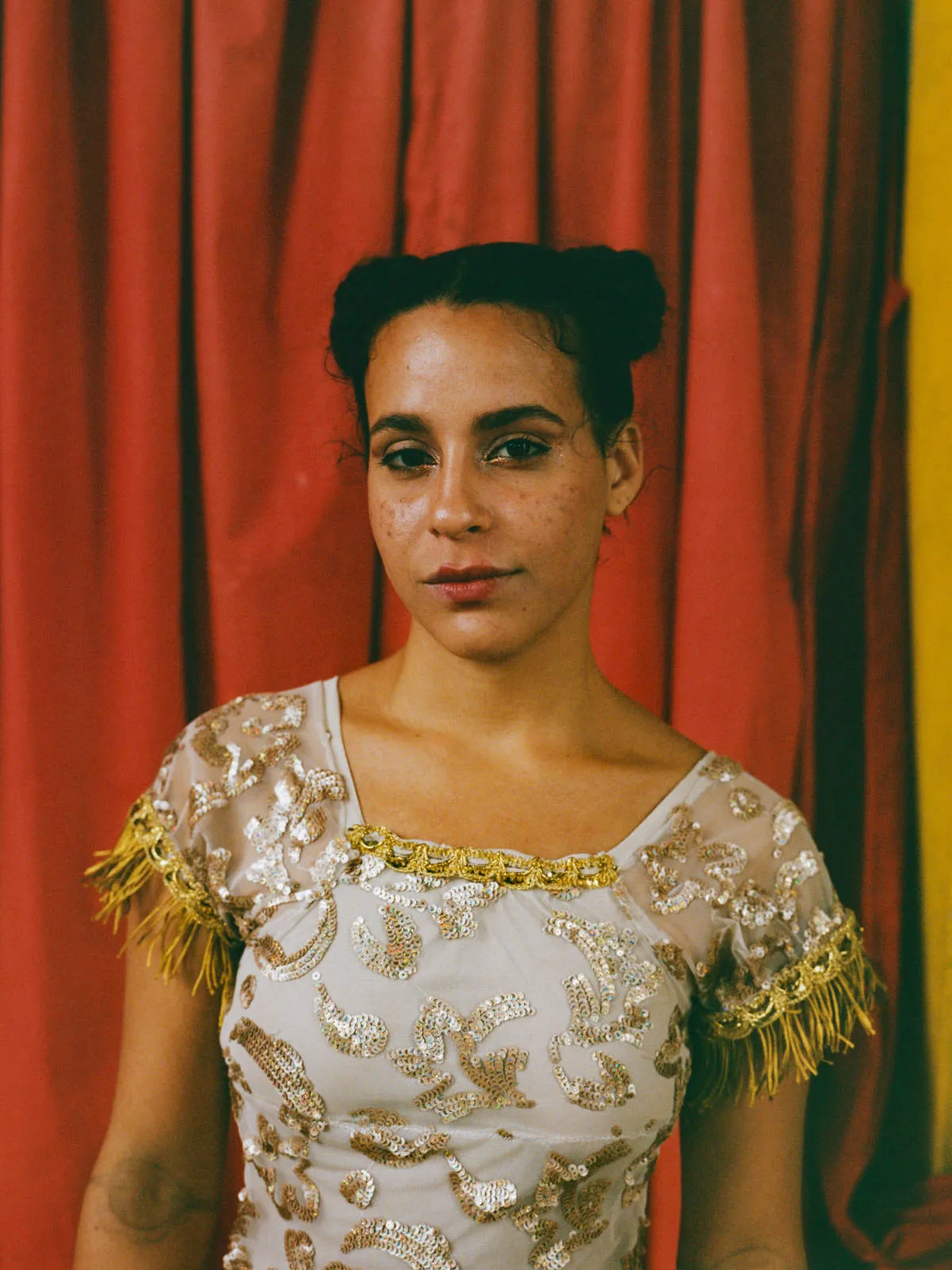
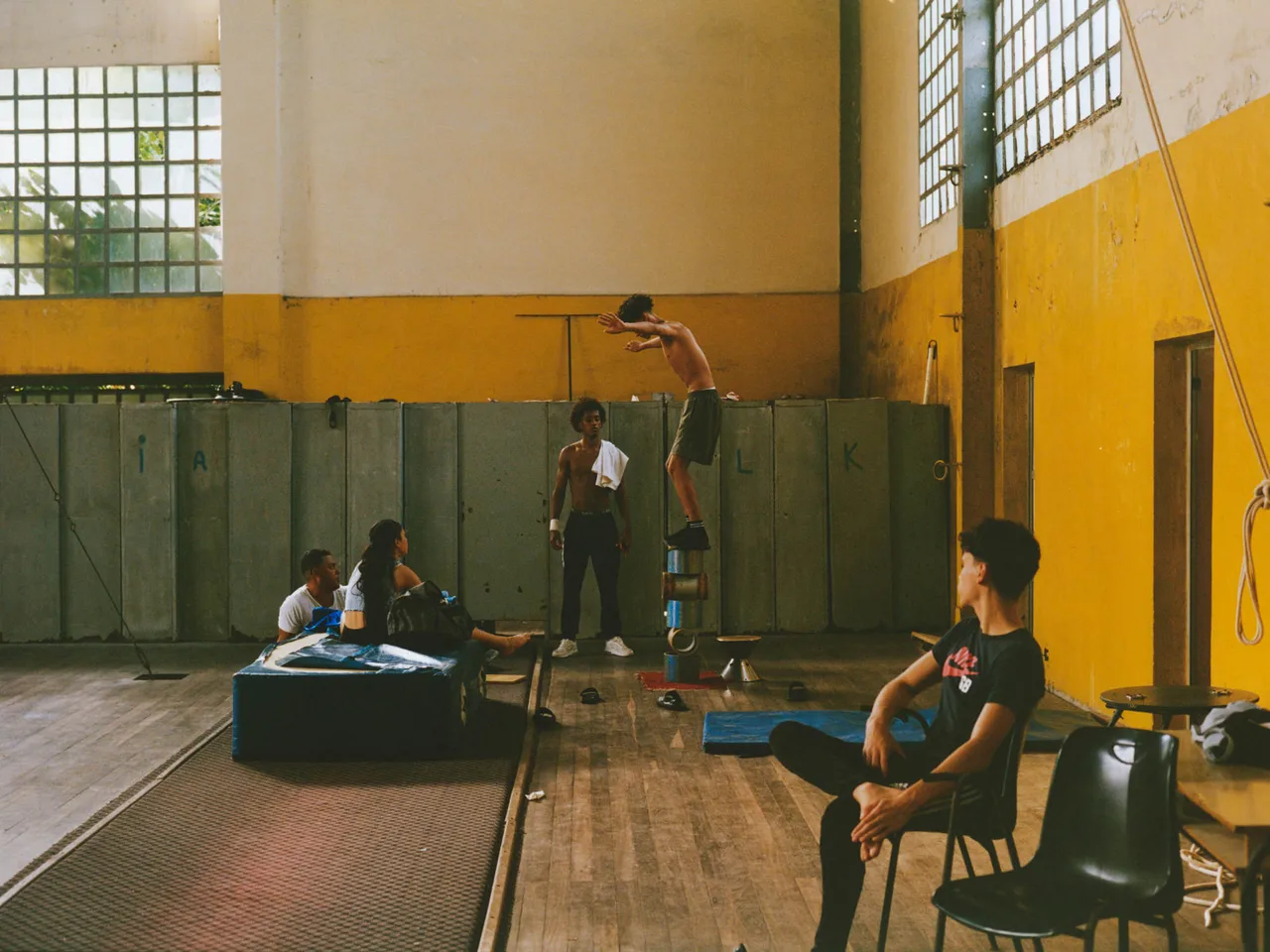
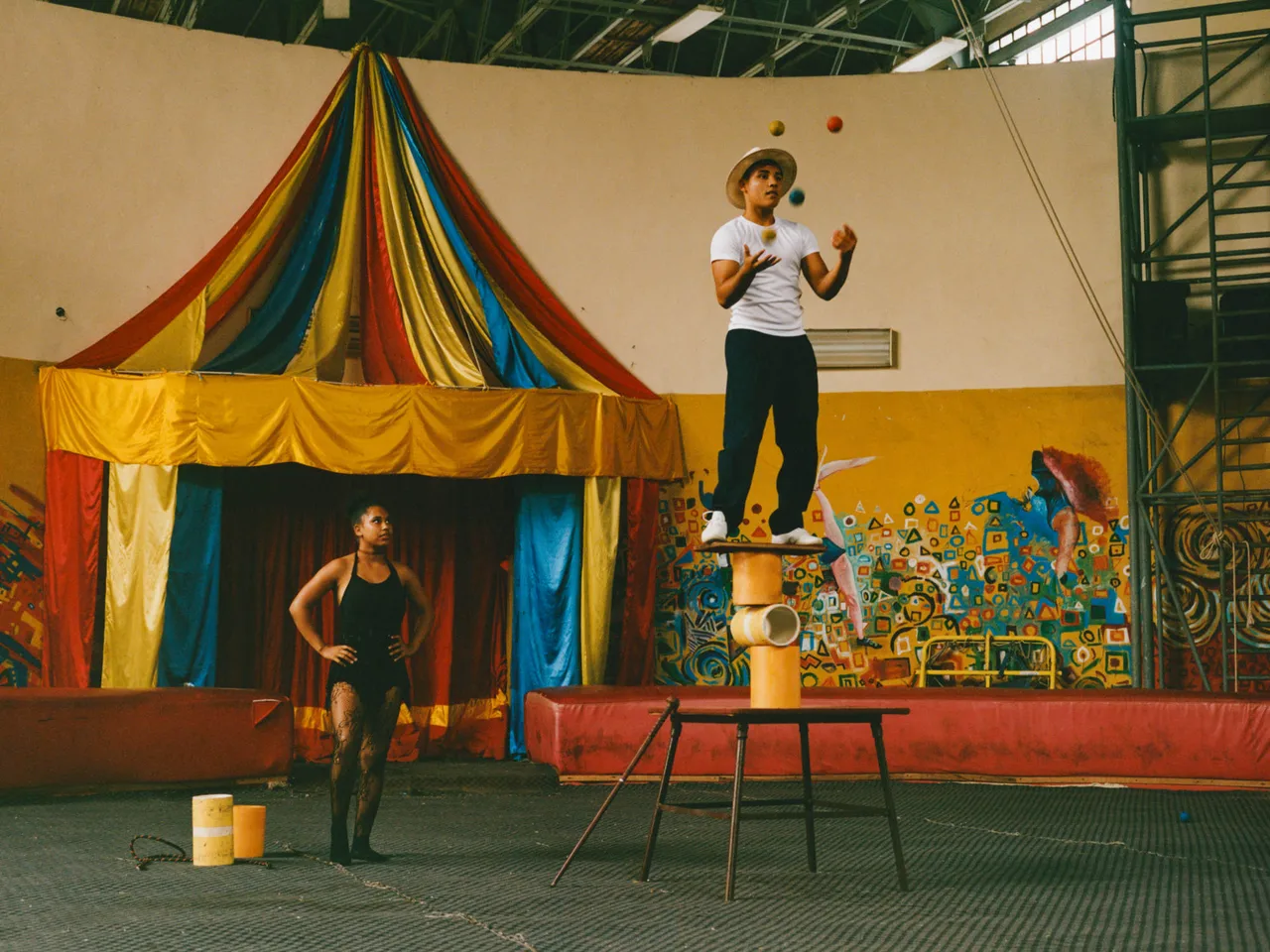
Informed by historical context and developed with a dedication to authentic representation of talent, Han’s images excel in their portrayal of the joy, dedication, and solidarity she describes. She went to their rehearsals, where vibrant costumes and perfected routines came to fruition. She saw their daily practices as girls suspended themselves in the air, held up by just the hair on their heads, as the Cuban flag hung proudly on the gym wall. The infectious smile of a boy juggling is complemented by the bright blues and reds of his rumba-style dresswear and the tricoloured circus tent in the background. The tight, slicked-back buns with metal rings sticking out the top hurt your scalp even before you see one girl swinging around the neck of the other on roller skates.
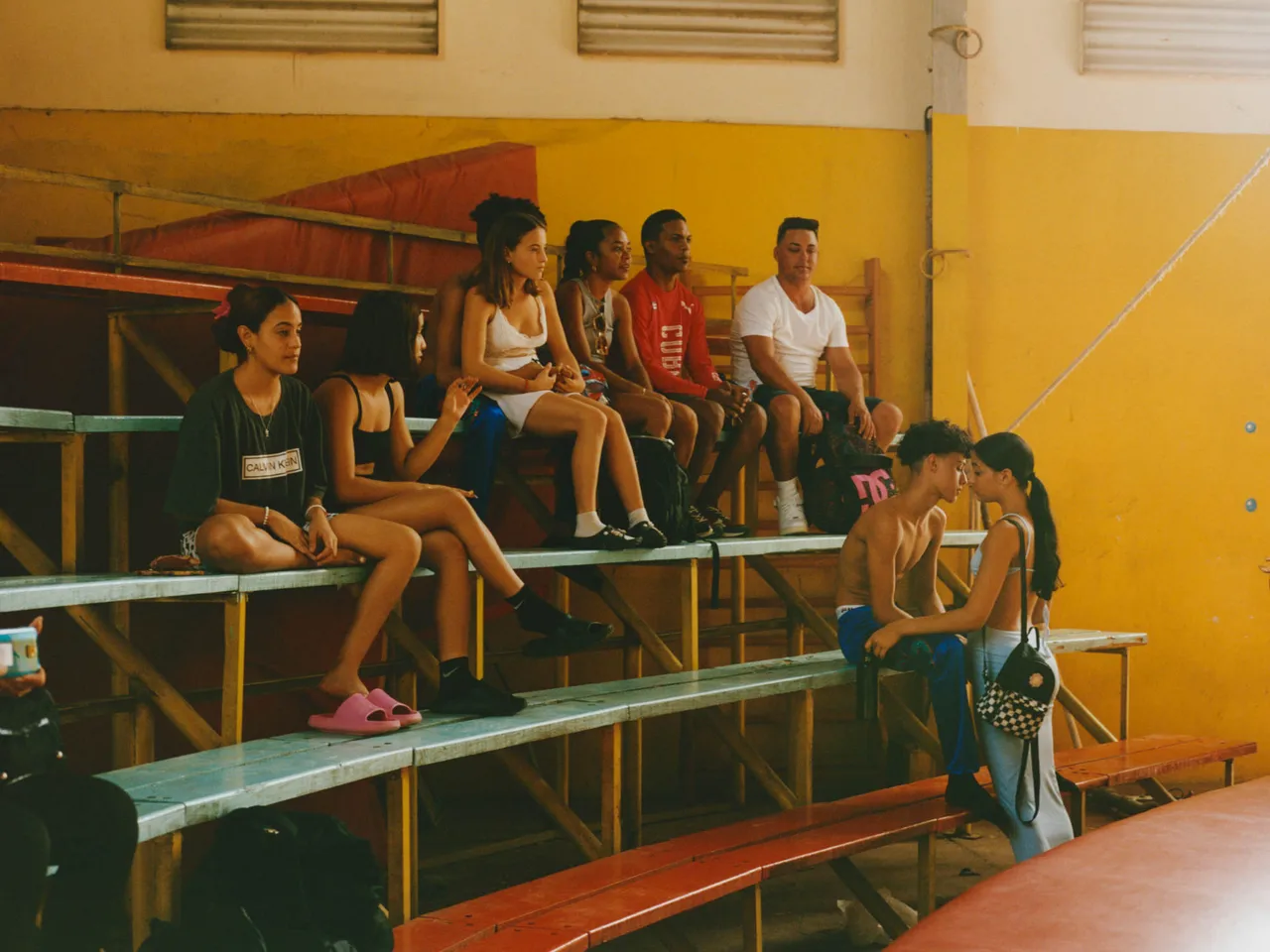
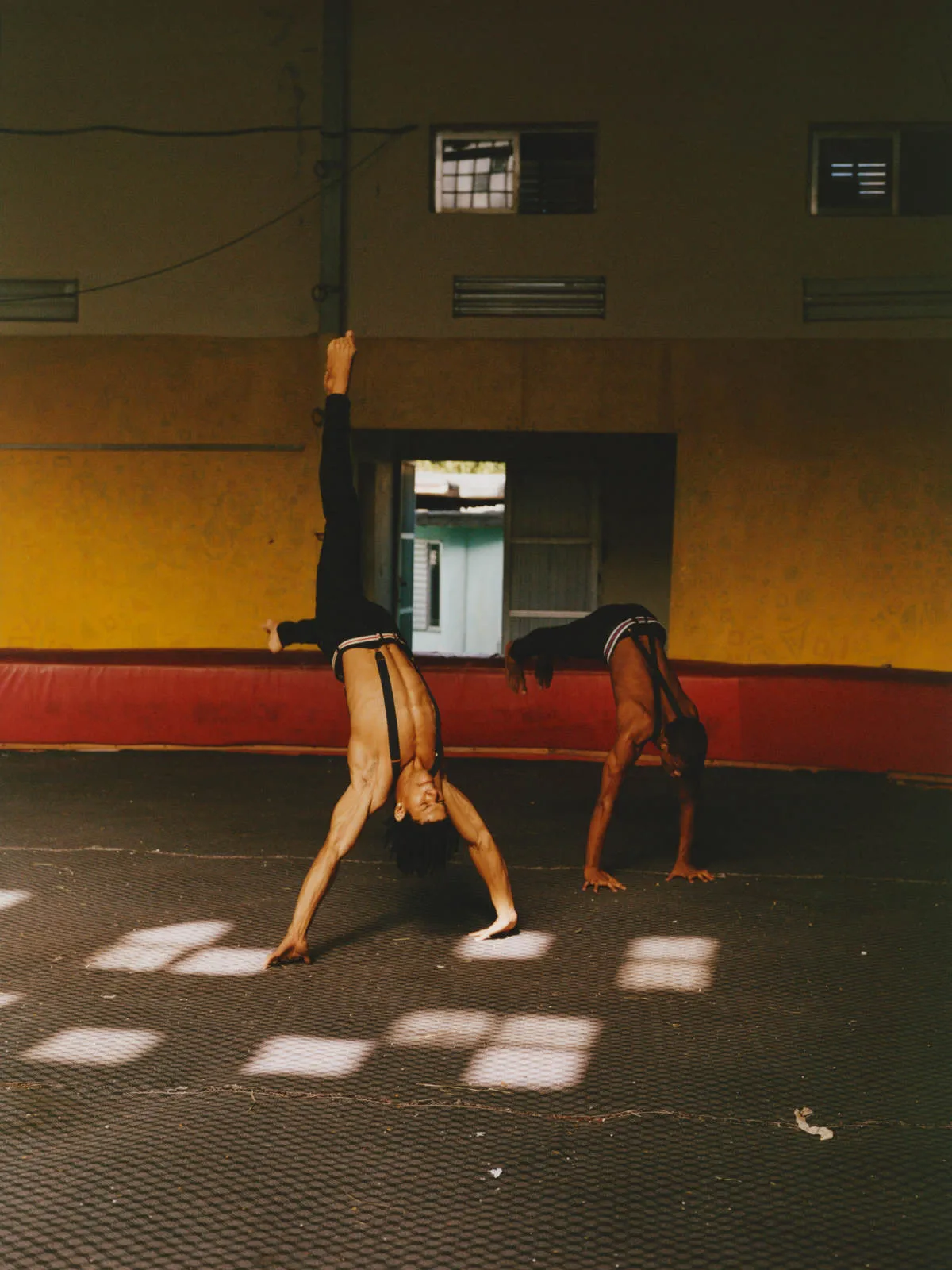
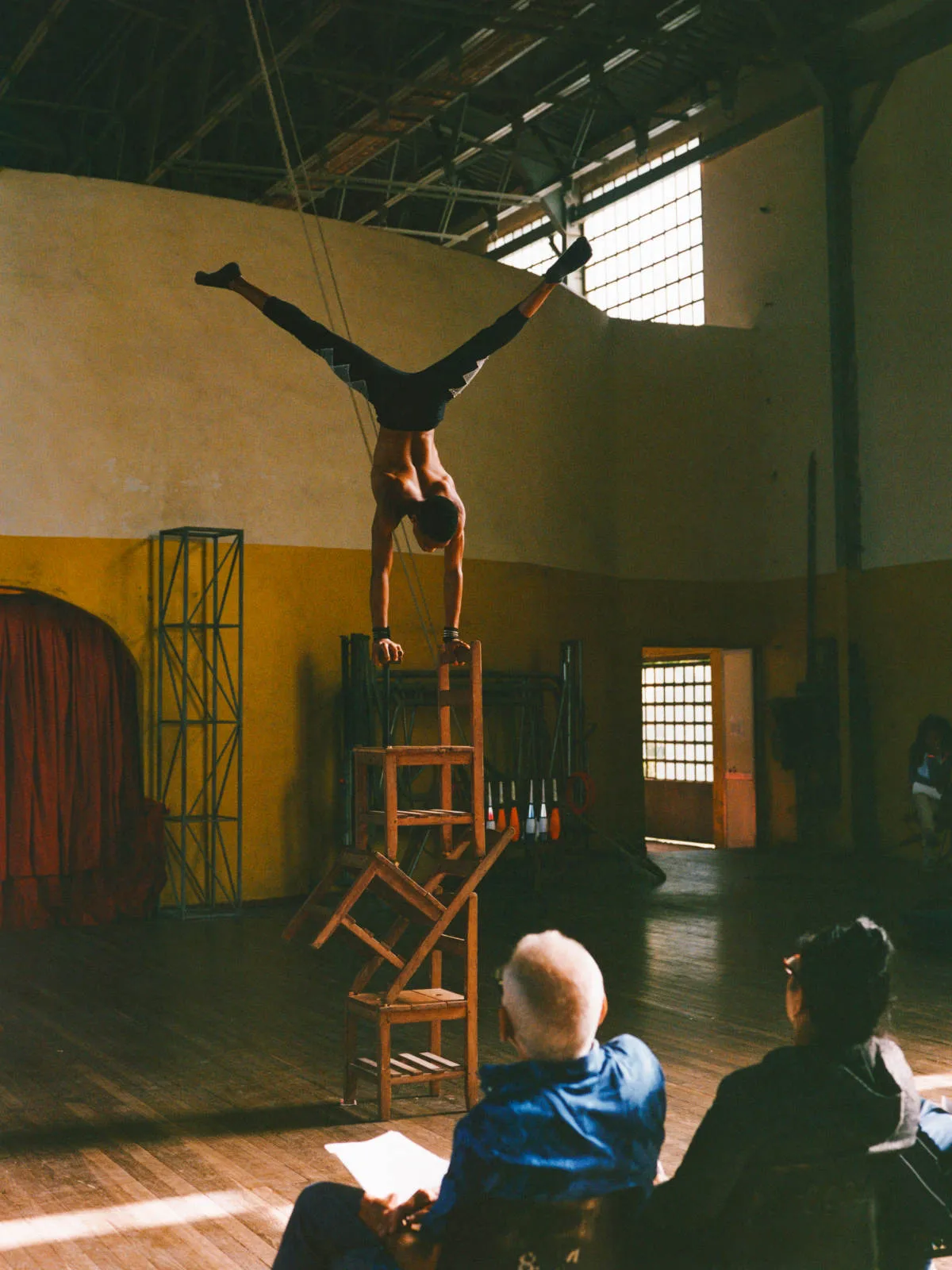
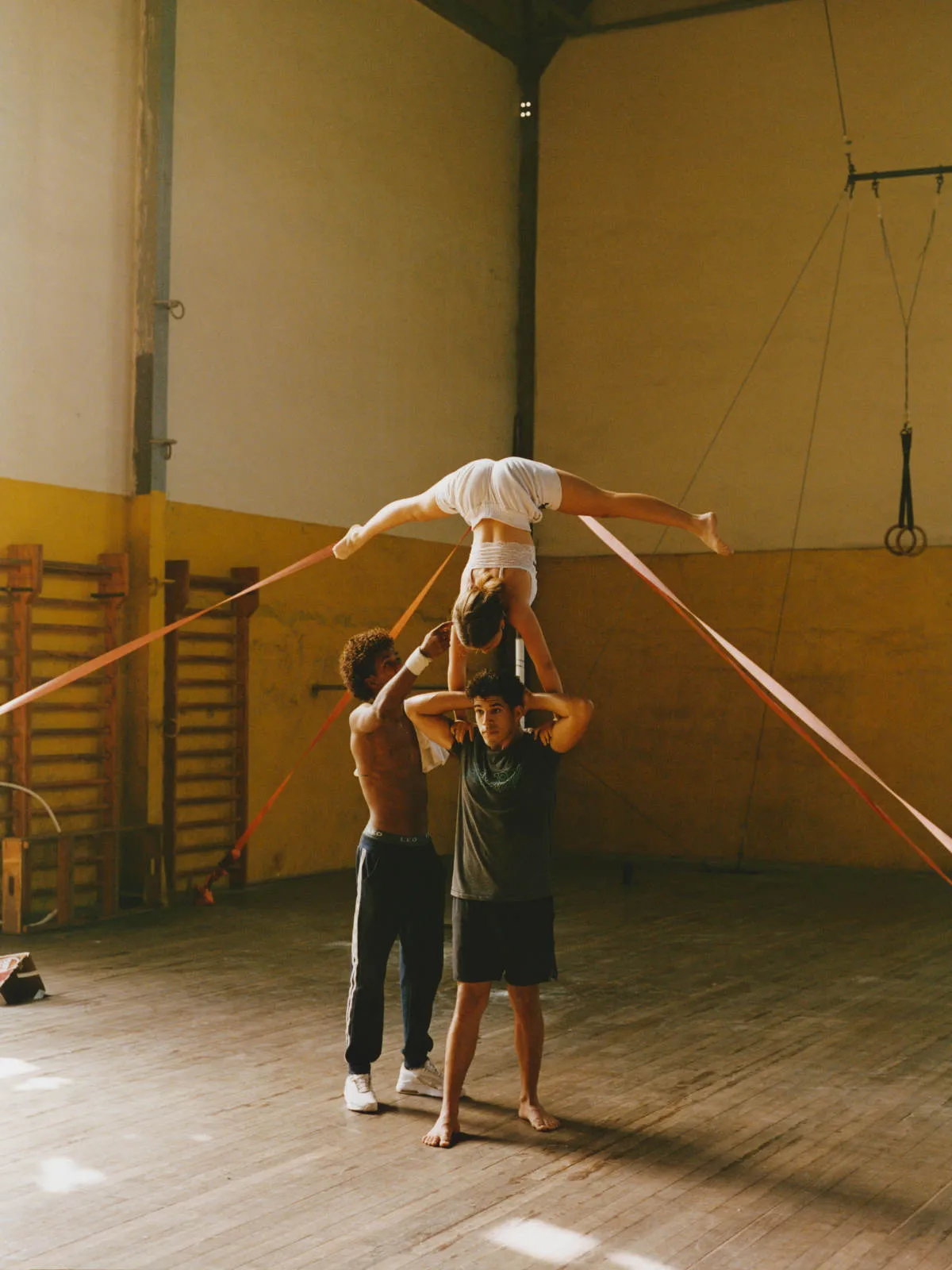
Their tactical training stems from Soviet influence, and their creativity blossoms from Cuba’s character. Han describes a “highly rigorous” training based on many Soviet techniques that’s elaborated by “a distinct local flavour” of “Cuban music, dance, Afro-Cuban, and Caribbean rhythms, developing style and expression alongside technical skill.” Han’s depiction of the school is heartwarming, eye-opening, and nerve-wracking. The warm tone hugs you as the daredevil stunts haunt you. There’s a nostalgia for childhood braveness to stack chairs and balance on the tower, and we’re reminded of the universal experience of a teenage relationship as the couples sit with one another on the bleachers.
Children with physical talents from across the island are detected early on and given a space where they can develop those skills and possibly pursue a path that leads them off the island. Of the students’ future dreams, Han says many “hope to work internationally, join travelling circuses or performance companies, teaching, or sometimes even major productions like Cirque du Soleil.” For some, leaving Cuba means success, but for others, staying and improving their conditions is the goal.
Young people are constantly innovating and taking inspiration from all across the world as social media constructs an online global community. Cuban youth “see models from outside Cuba and want to engage in them, whether in food, nightlife, skincare, or clothing.” They reflect an entrepreneurial impulse that often goes overlooked as economic hardships overshadow the creative output of the island. As Cuba makes headlines for all its delicate history, or widespread food shortages, or its distaste for the American government, Circus of a Revolution skilfully blocks out the noise to show the local experience. It doesn’t hide the old equipment, chipped paint, or broken windows of the gym, but it also doesn’t sensationalise them. You see raw talent, working with what they have, and excelling, proud of their Caribbean heritage and passionate about their futures.