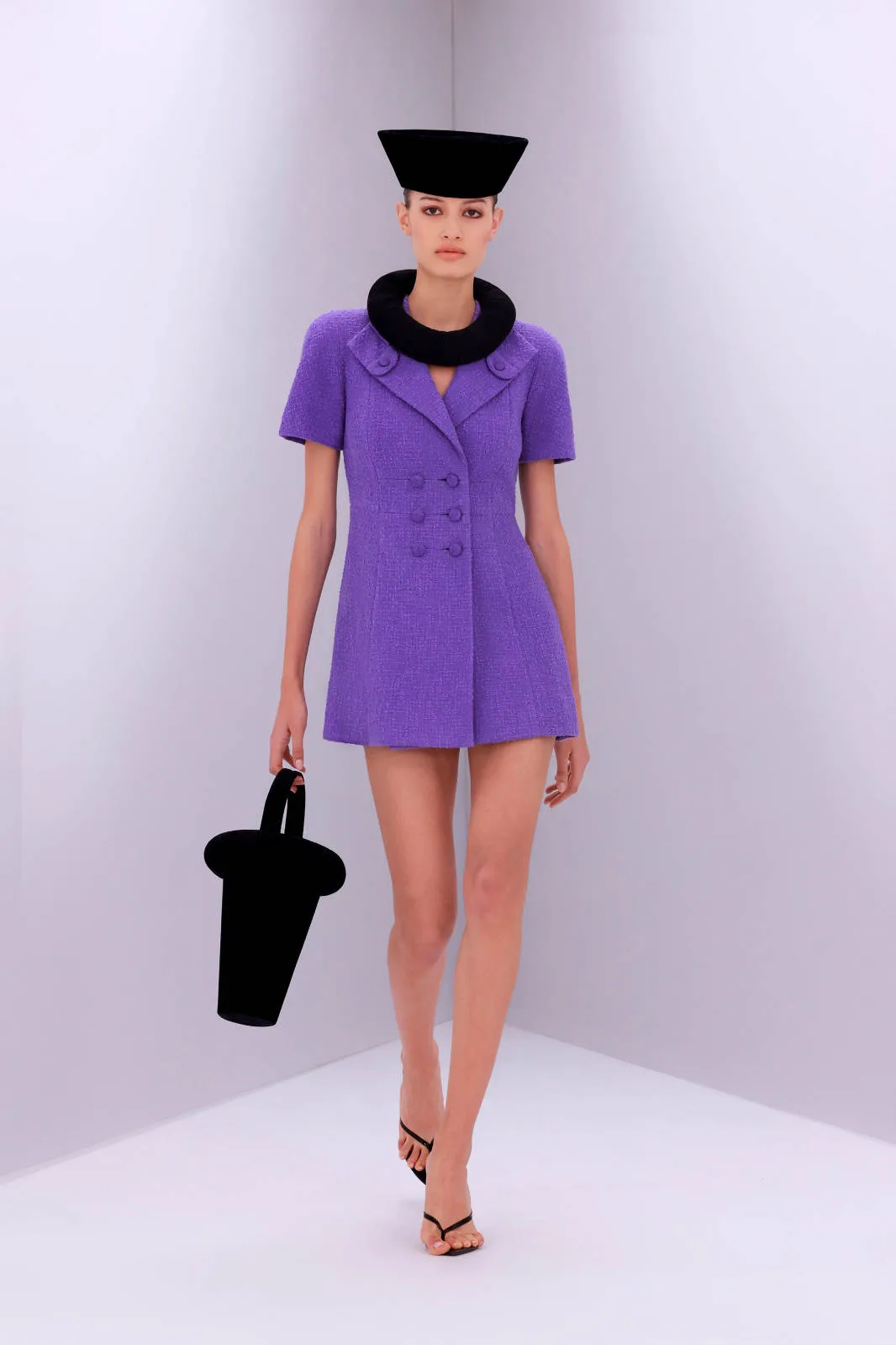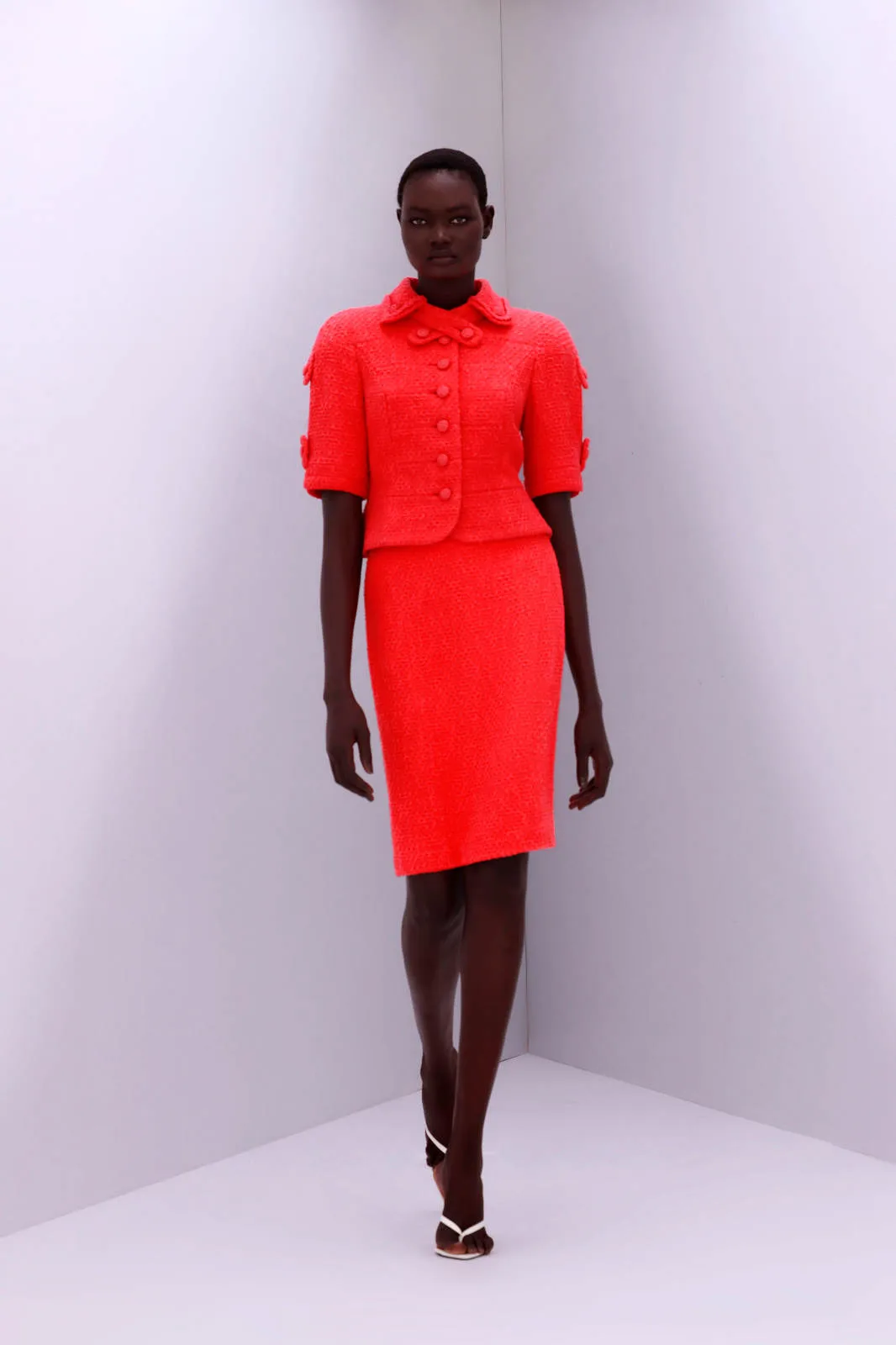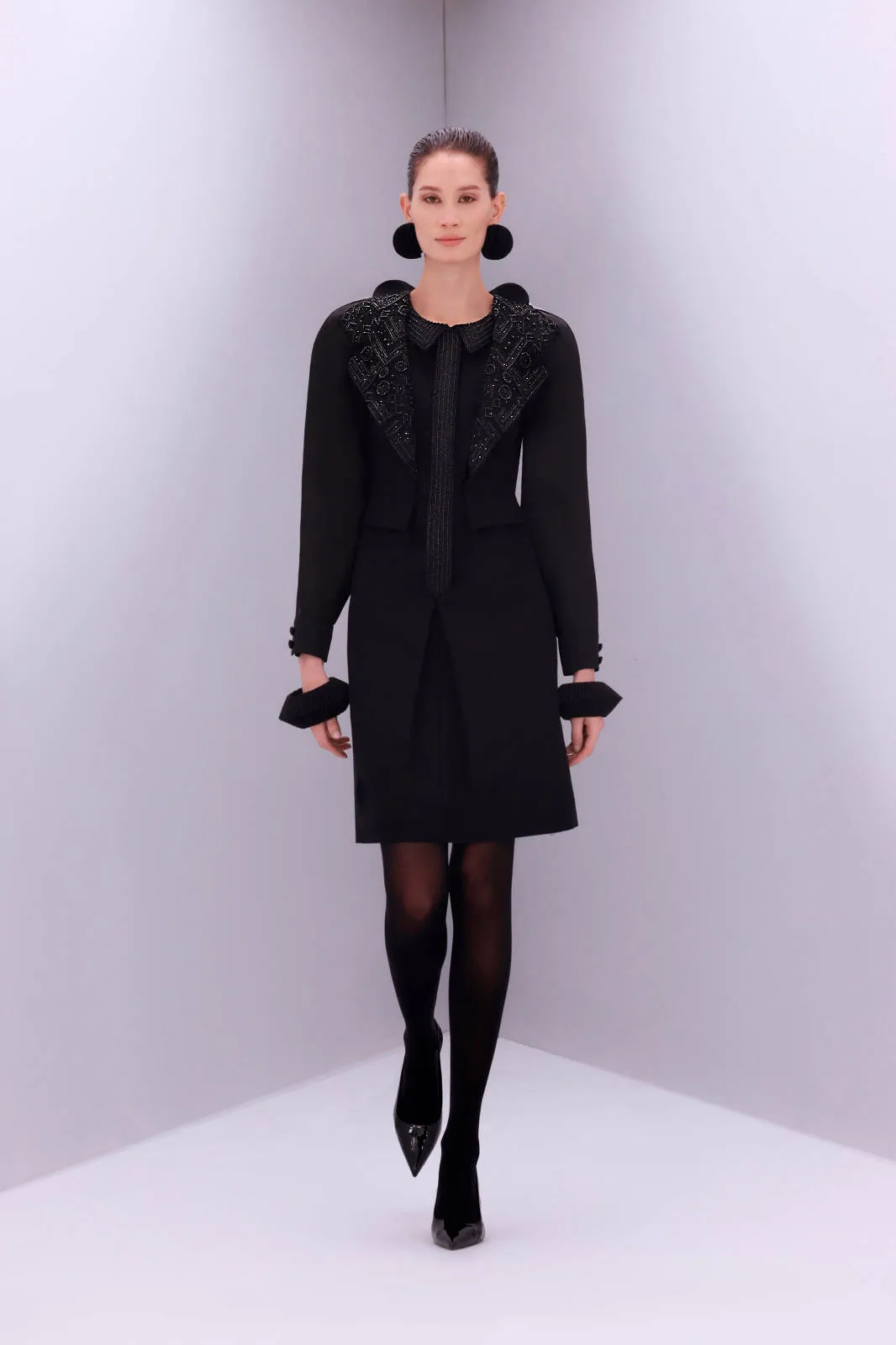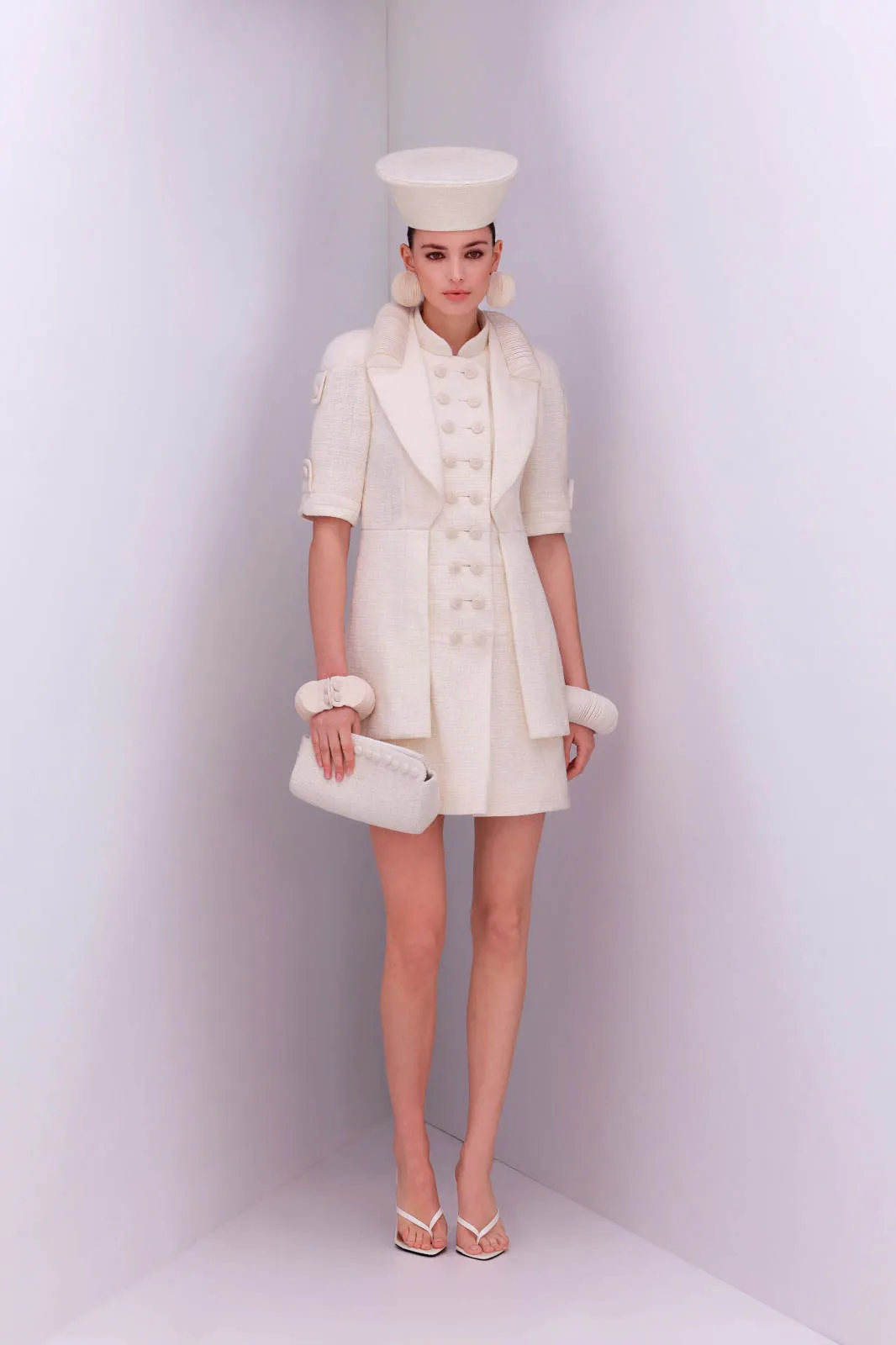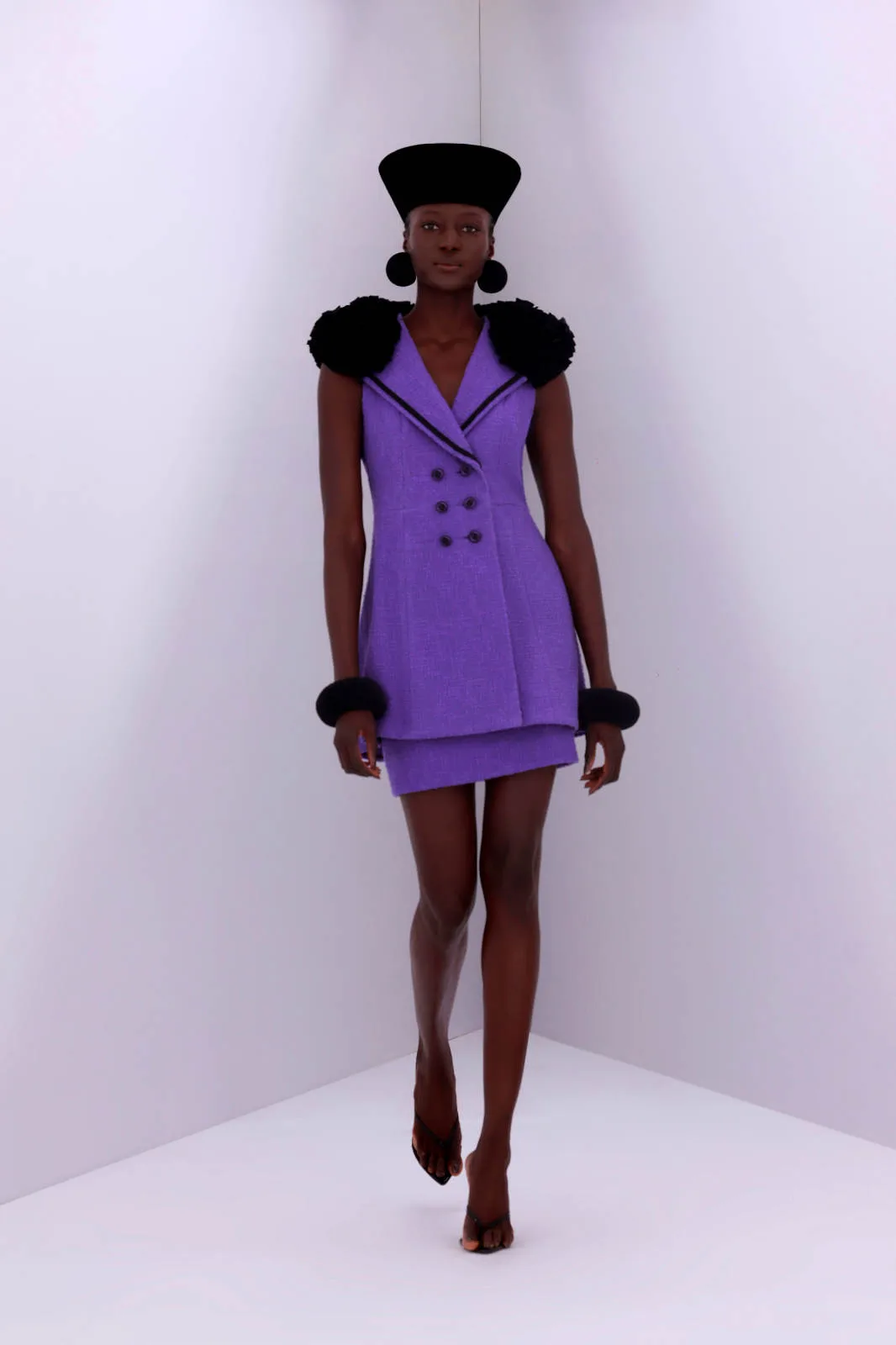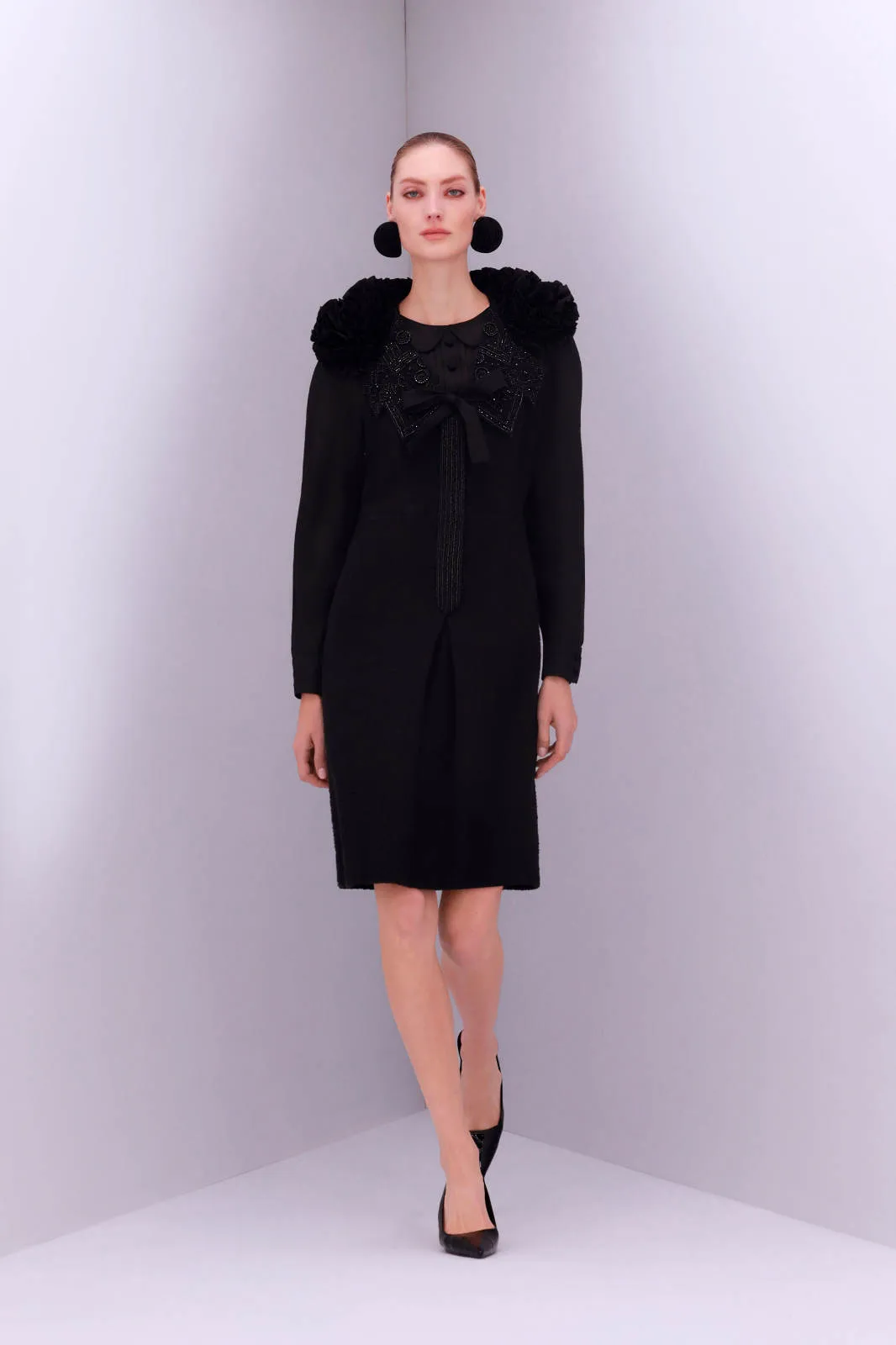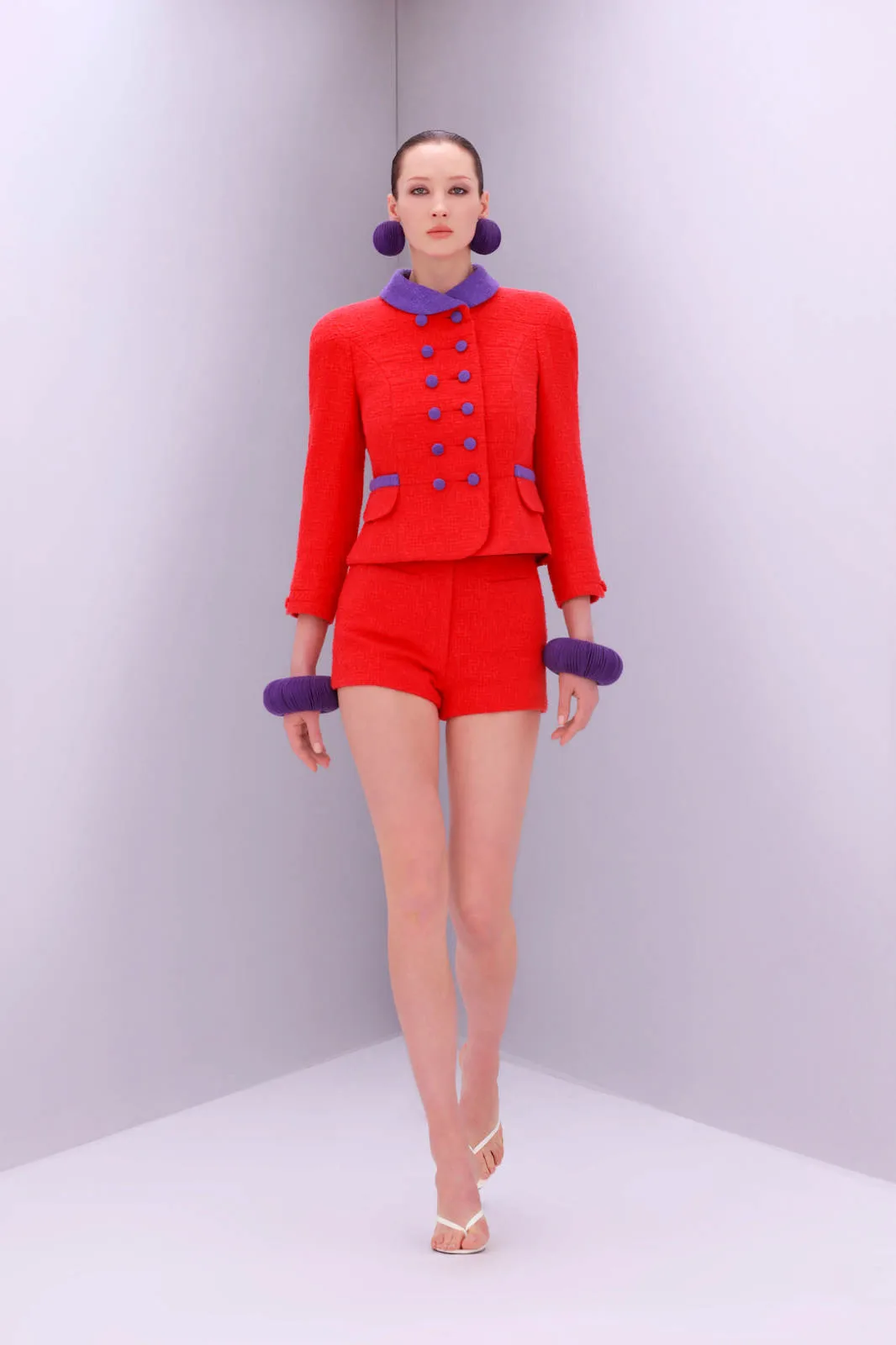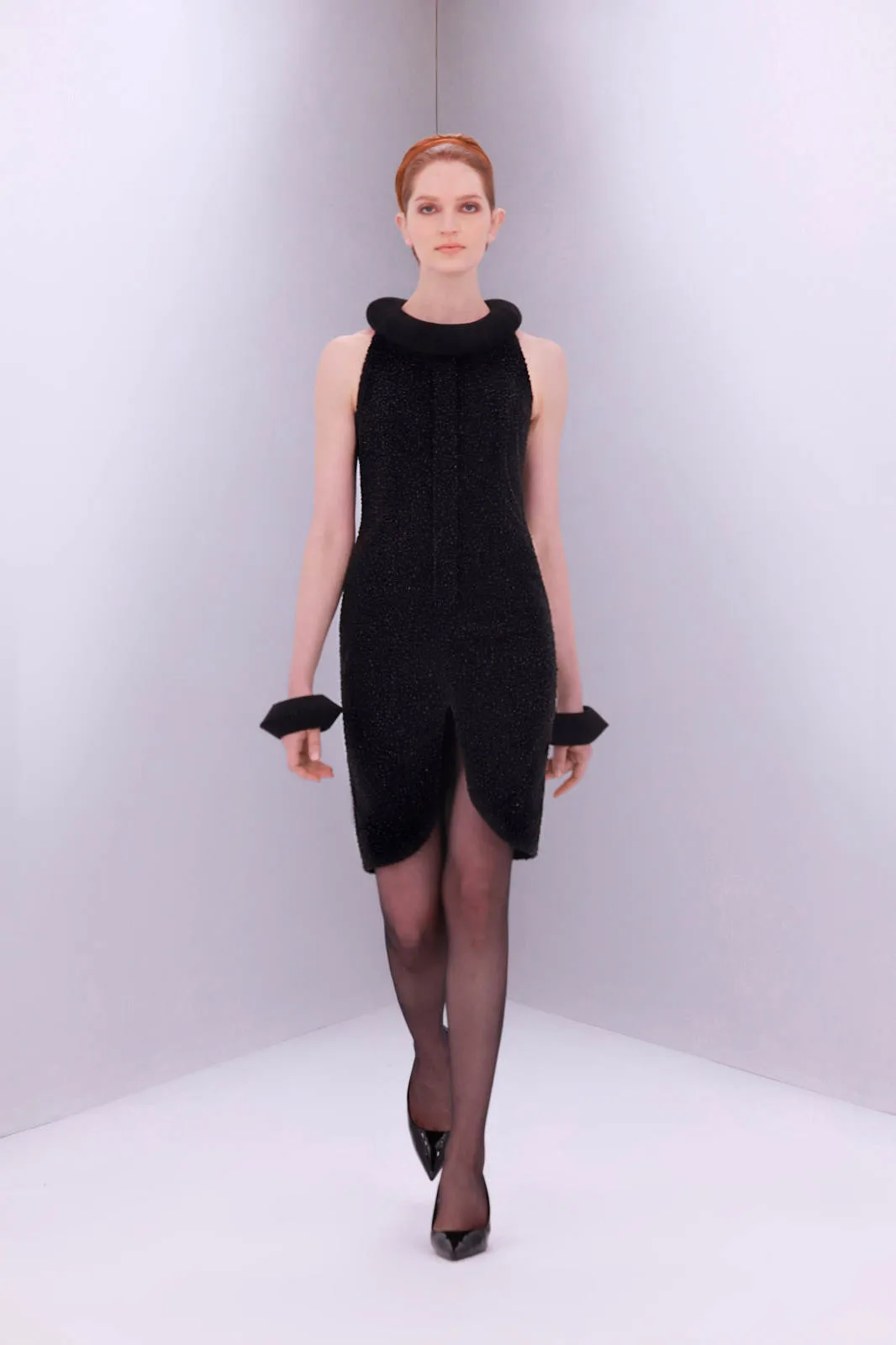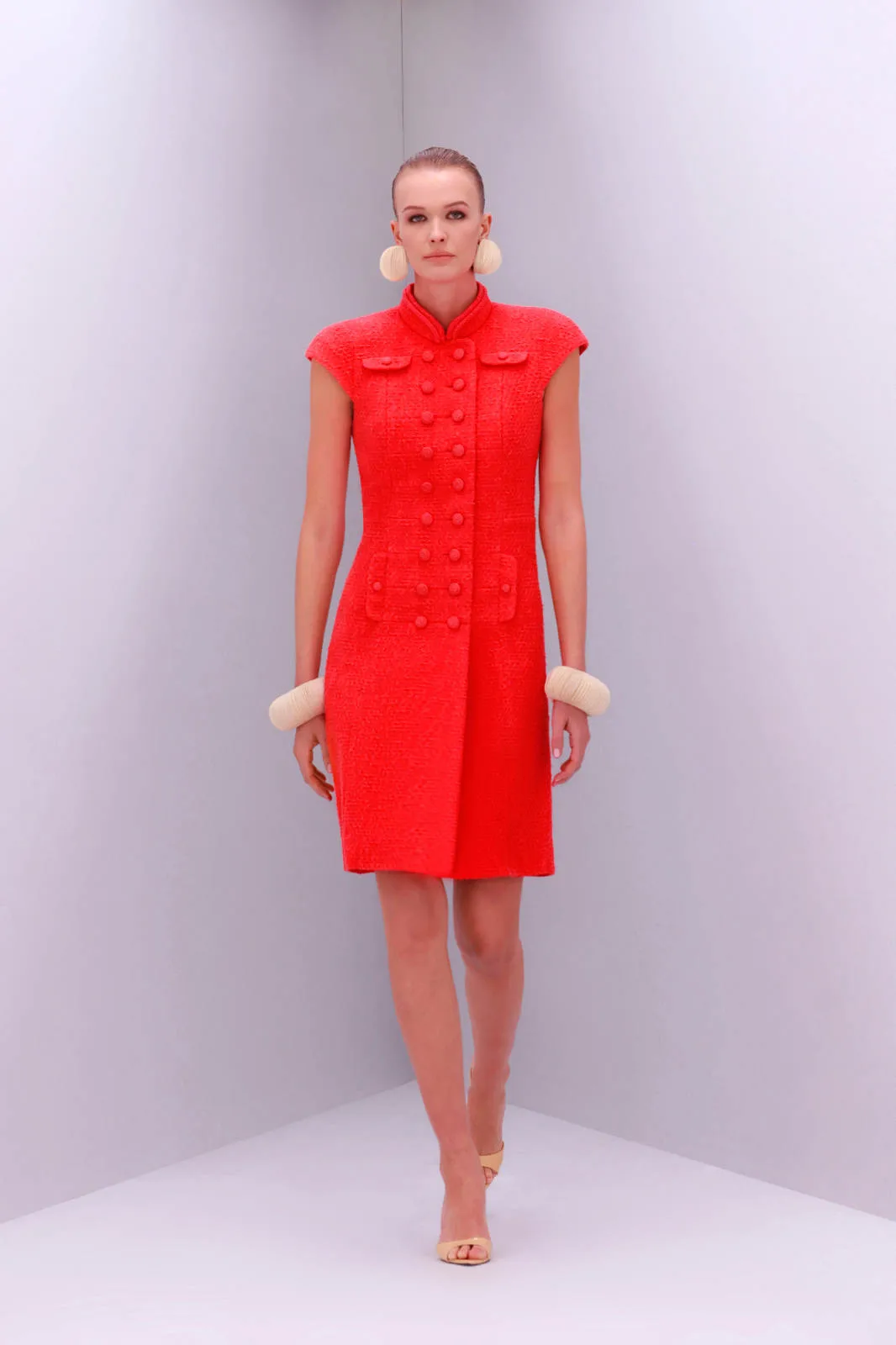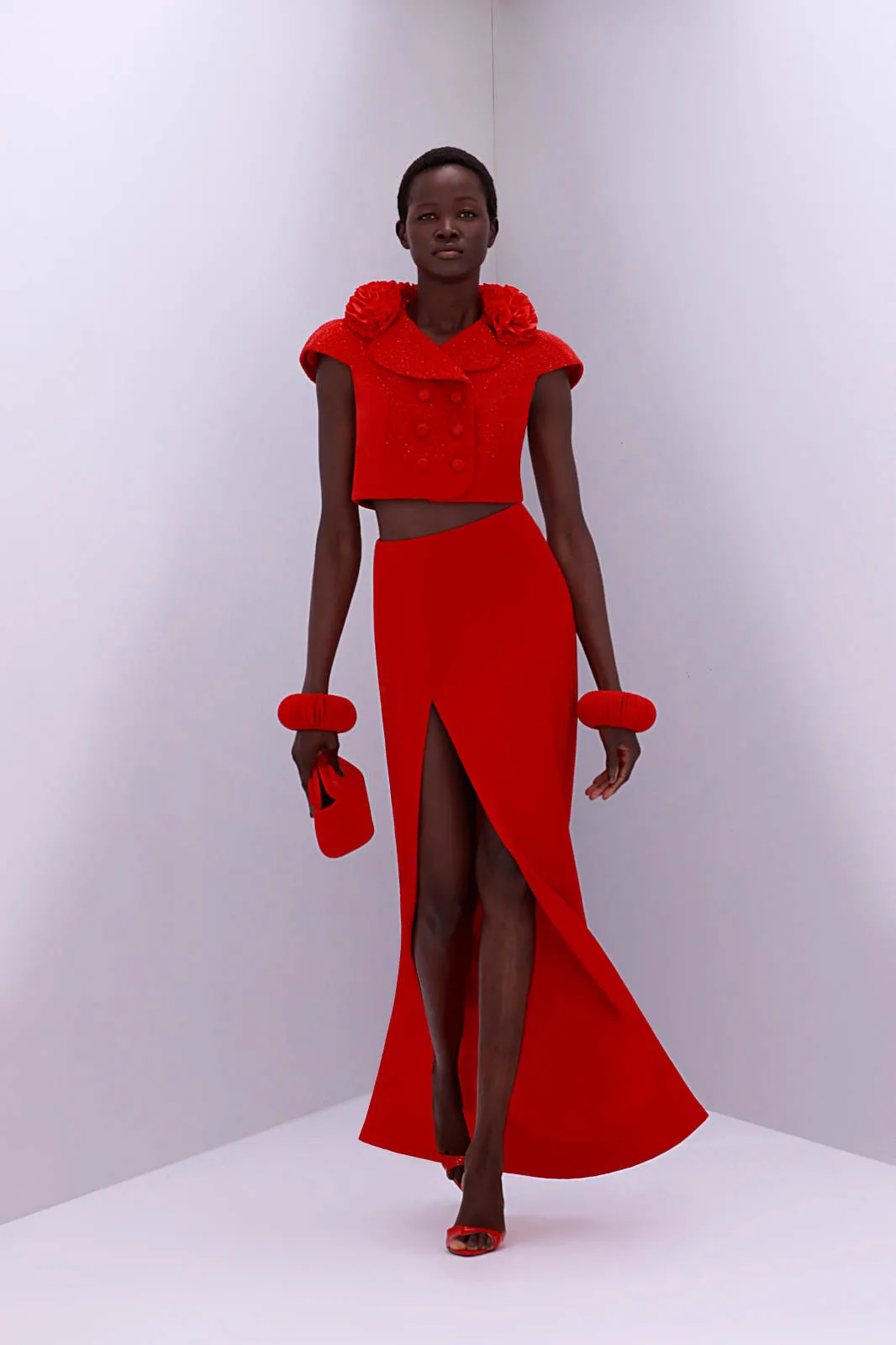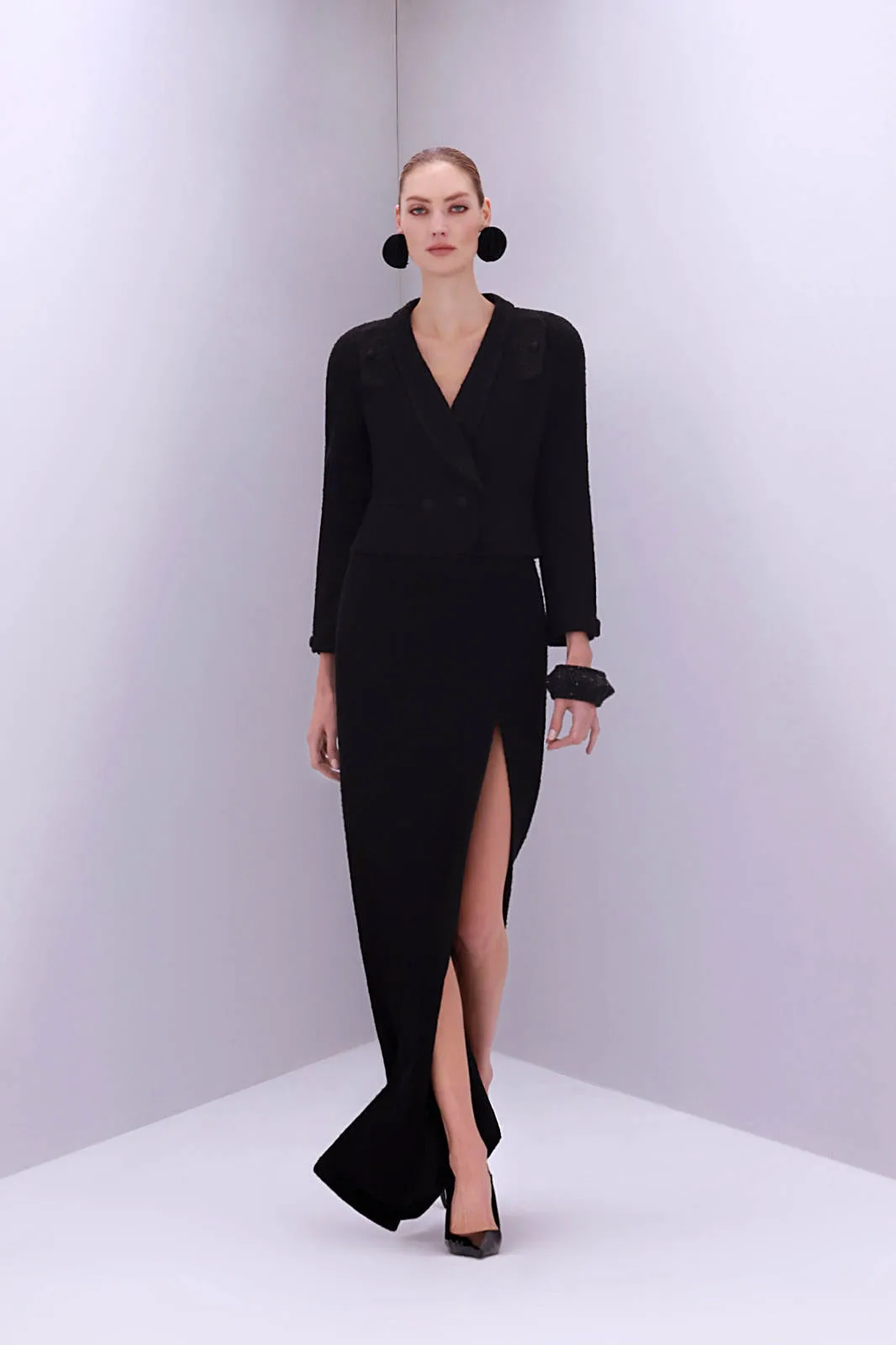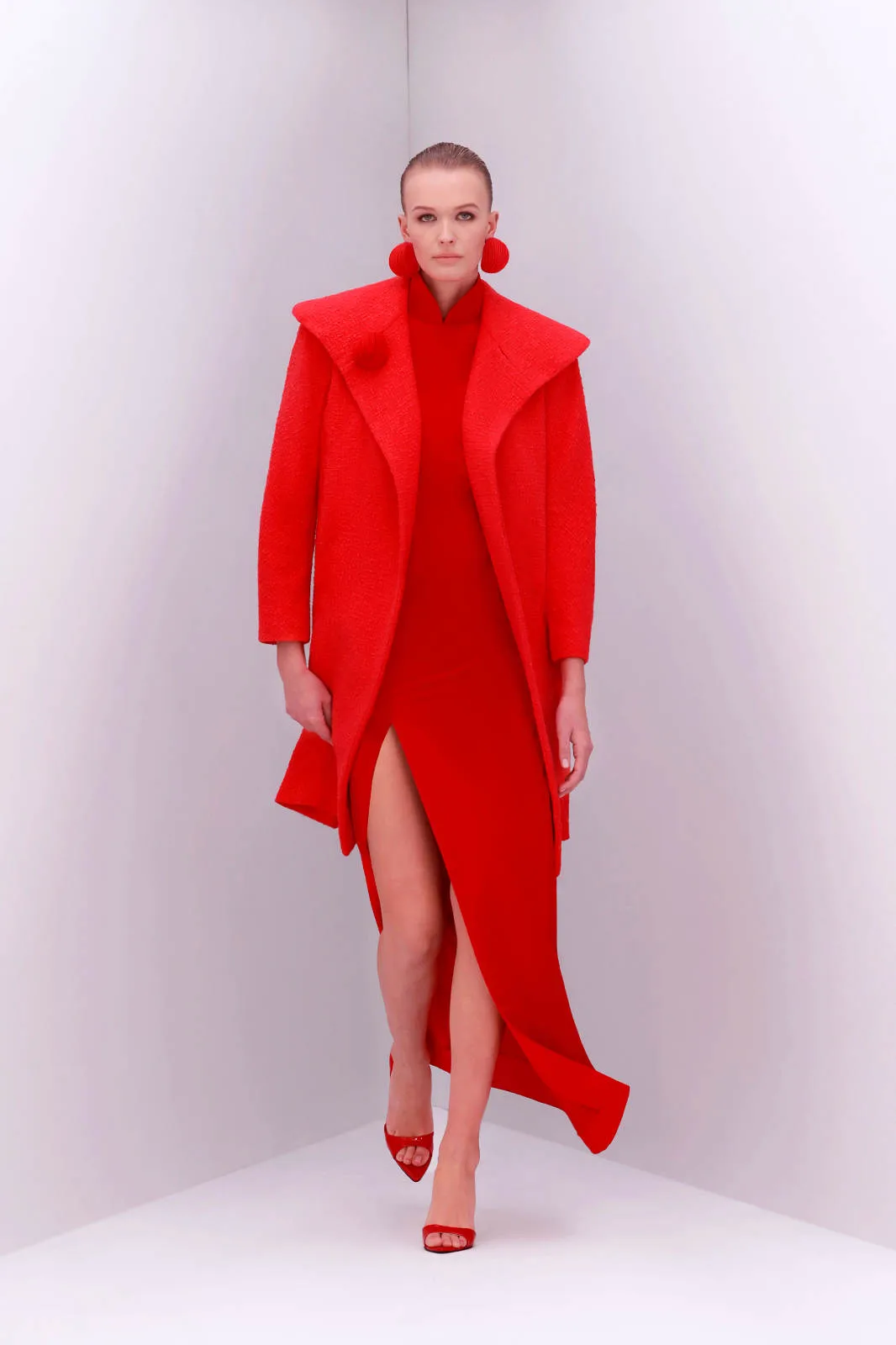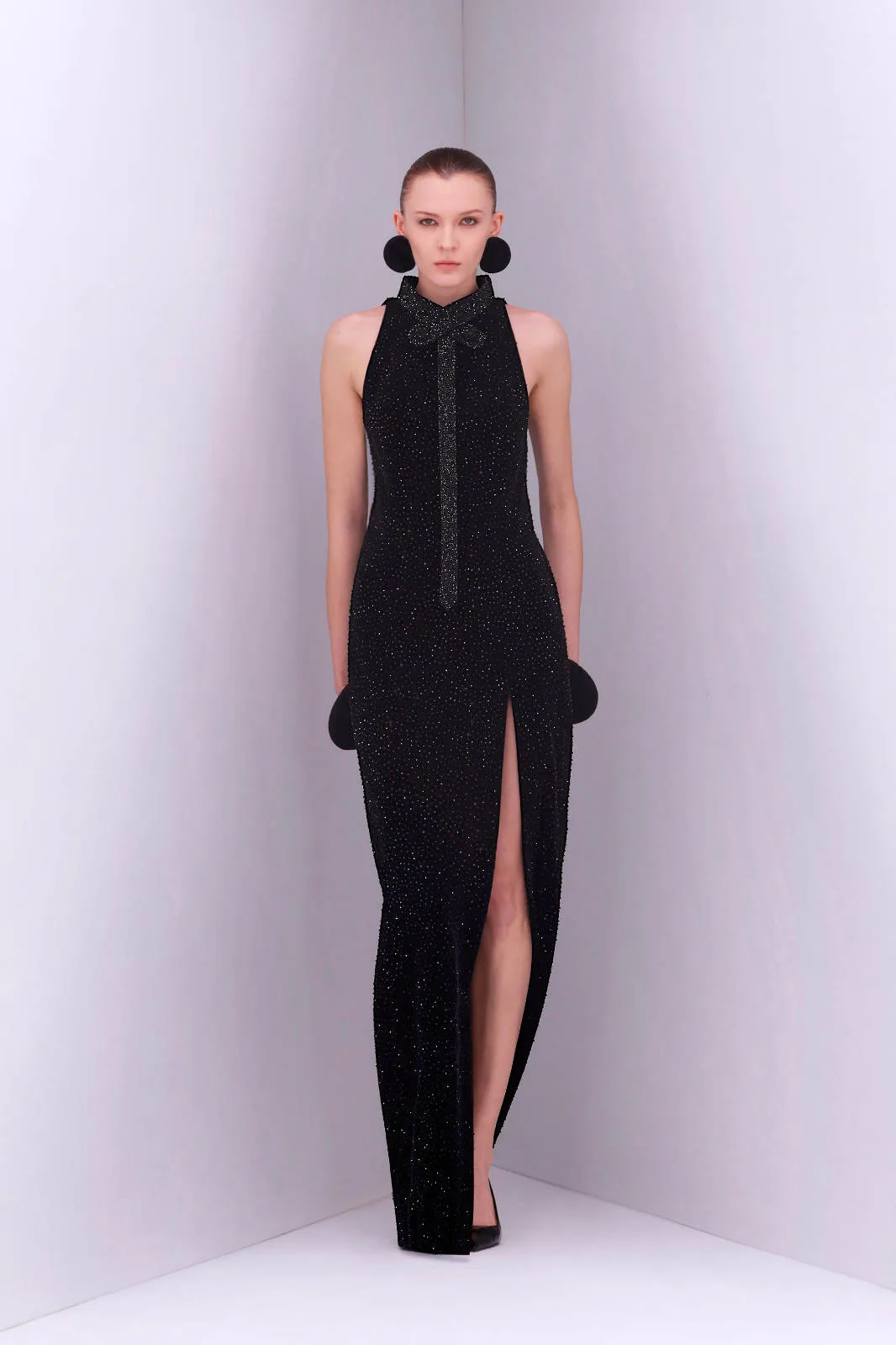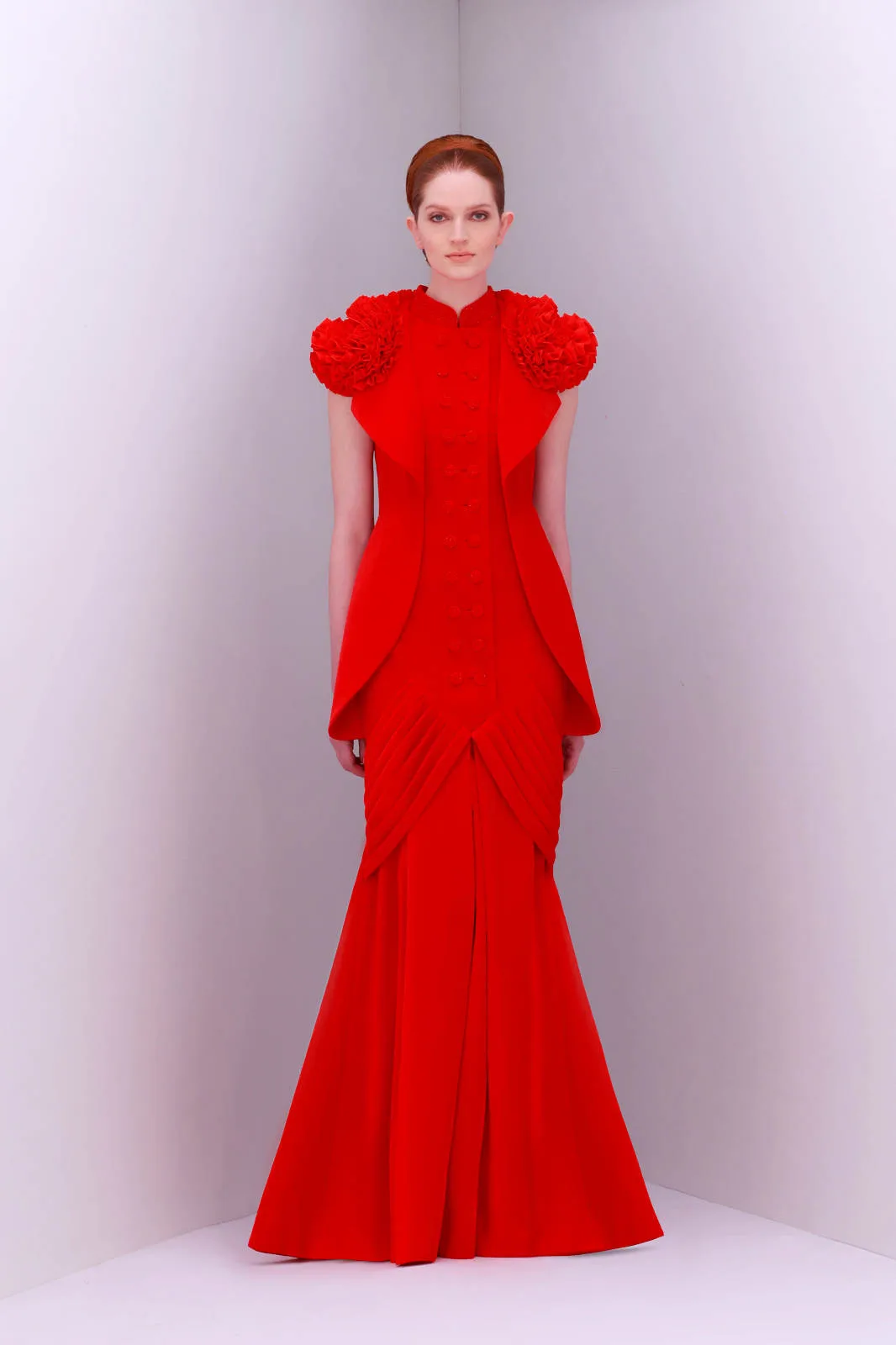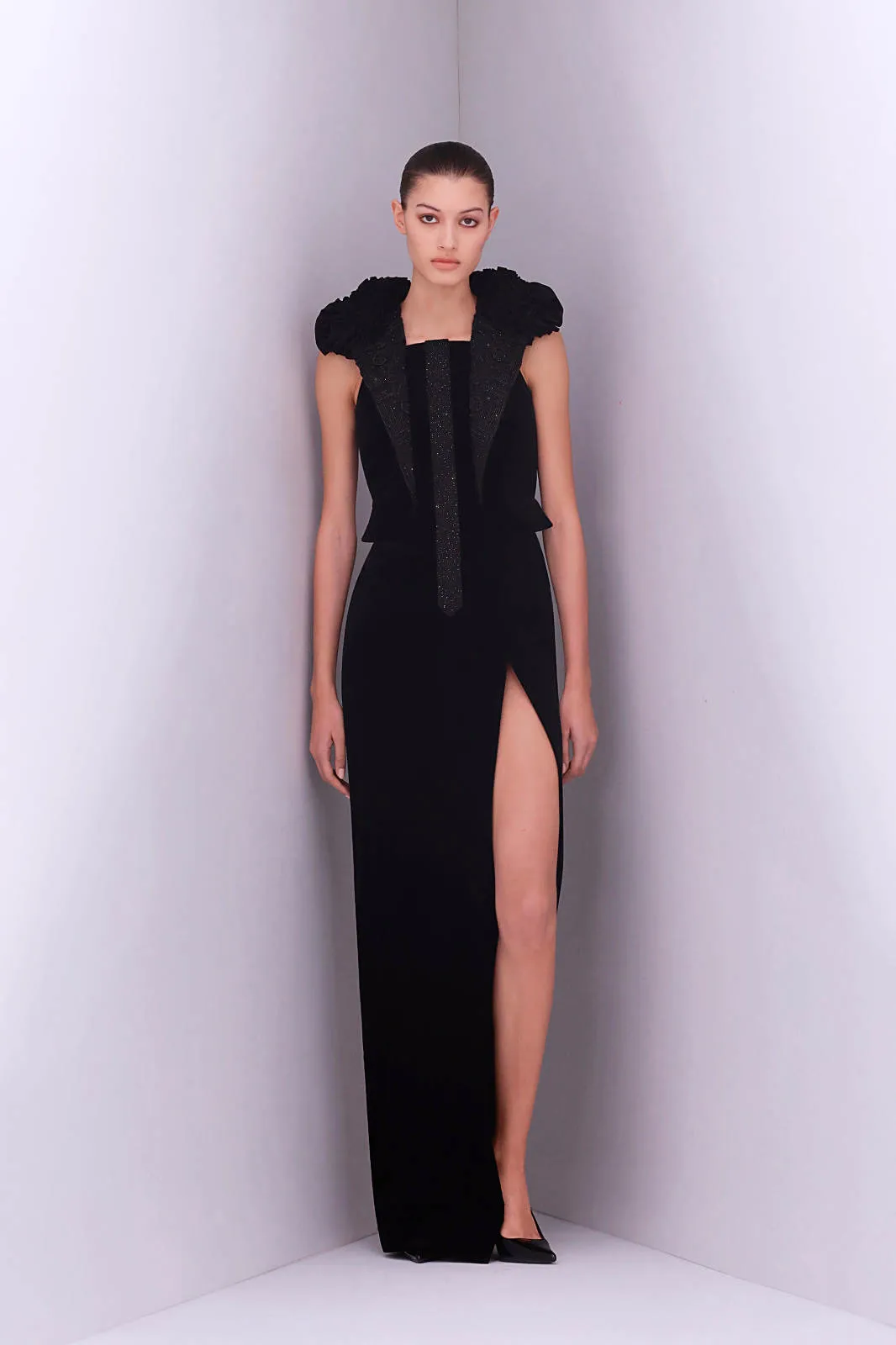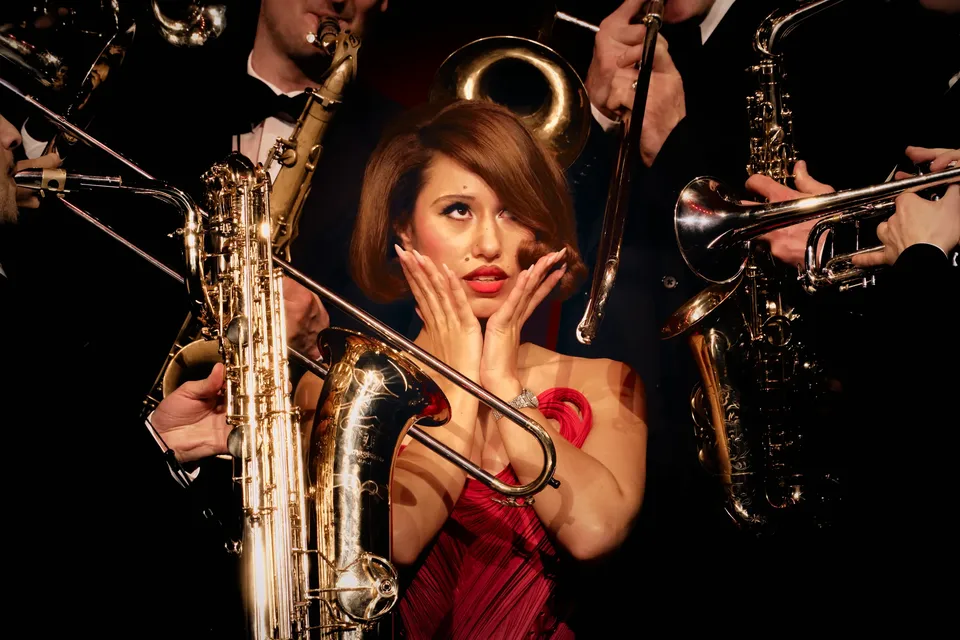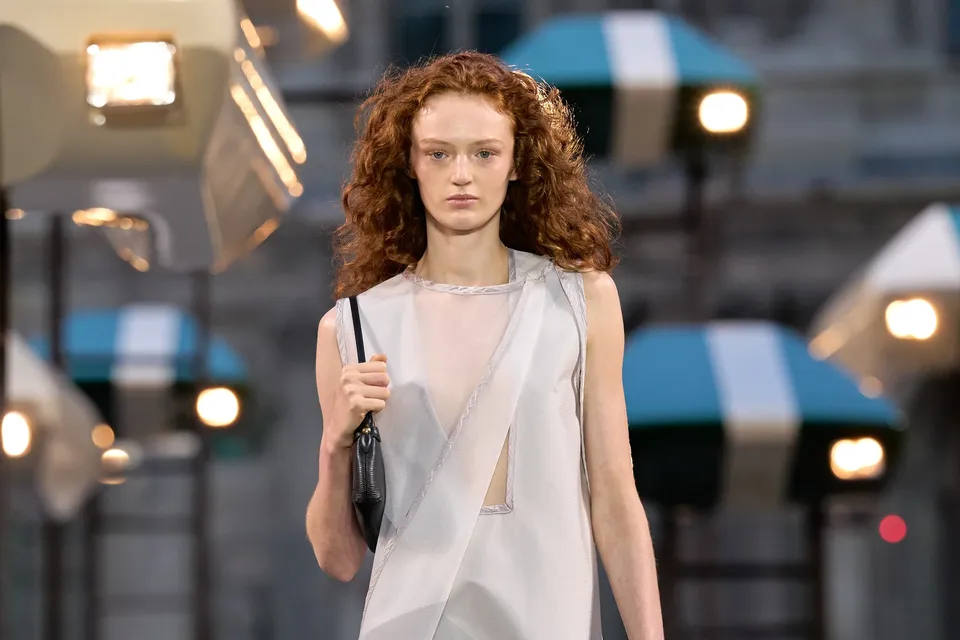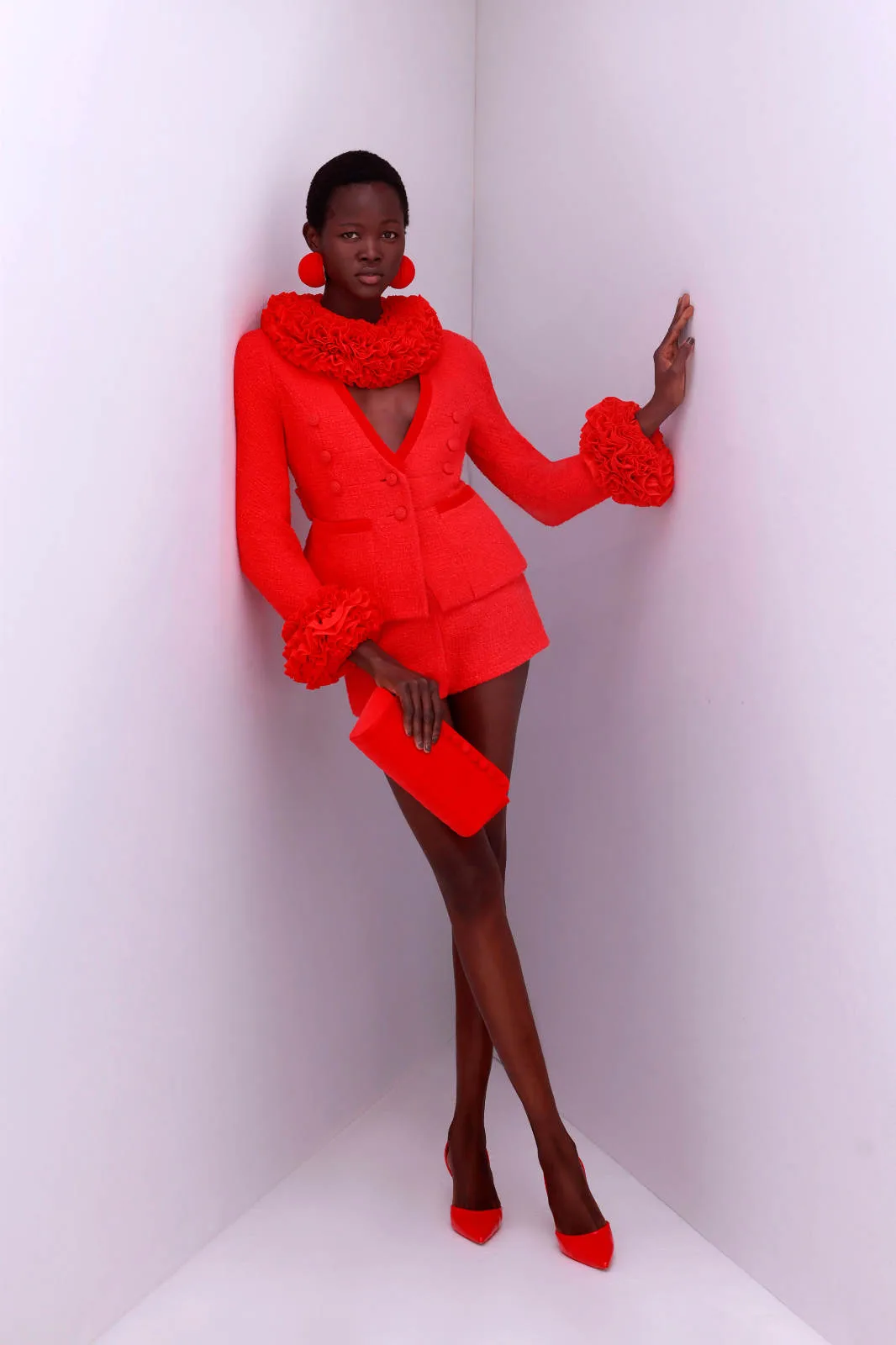
Chochengco is one of those brands that keeps reminding us that the interior must be as beautiful as the exterior. Built on a strong commitment to meticulous craftsmanship and sustainability, the New York-born brand once again reinterpreted traditional tailoring techniques at its latest show during Paris Haute Couture Week, maintaining its signature whimsical tone while introducing a fresh sense of delicacy and refinement. While the collection carries forward a design language familiar from previous seasons, it does so with a renewed sense of grace and Hollywood-esque glamour.
This transformation, embodied in Pretty Peplum (the name of the collection) becomes clear once we understand that it is inspired by the iconic film Pretty Woman, a cultural emblem of metamorphosis. We speak with Cho Cho Cheng, designer and creative director of the brand, to learn more about the inspiration behind Pretty Peplum, her vision of femininity, and her commitment to a sustainable and ethical design practice.
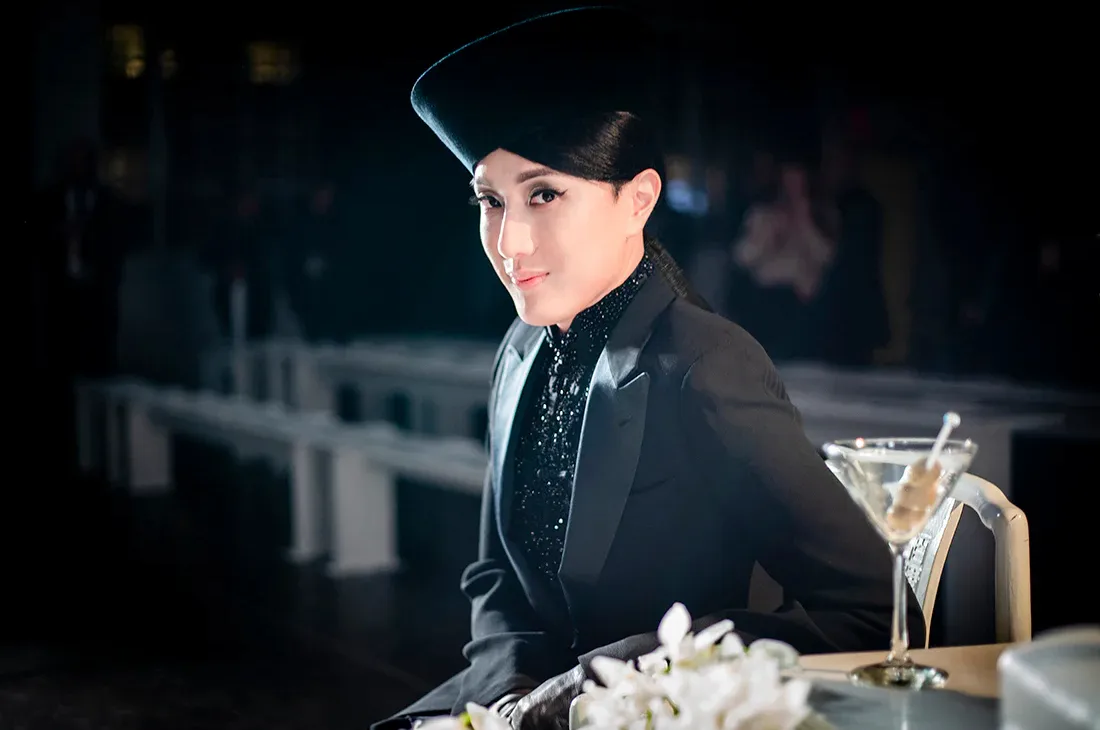
Congratulations on the show, it was a beautiful collection! Pretty Peplum draws inspiration from the iconic film Pretty Woman. What is it about this movie that made you want to reinterpret it through the art form of couture?
I’ve always loved the idea of metamorphosis, and Pretty Woman embodies that transformation so powerfully. It’s a story of a makeover not only of the body, but also of the soul and spirit, which felt especially meaningful to reinterpret through couture.
The peplum has long been a signature of the house. What keeps drawing you back to this silhouette, and how has its meaning evolved in Pretty Peplum?
I keep coming back to the peplum because it feels both androgynous and regal at the same time. It gives structure, but it also brings movement and a sense of grace. In Pretty Peplum, it took on an even stronger symbolism for me. It evokes the image of a butterfly preparing to take flight, which connects directly to the theme of transformation.
You’ve said that couture feels like a natural evolution for Chochengco. When did you first realise that couture, not just ready-to-wear, was essential to your practice?
I first realised couture was essential when I understood how sustainable it can be. A couture garment is made only after a client places an order, which keeps production intentional and reduces waste. That model aligns with my values and with the way I want to create. It made couture feel not like a luxury add-on, but like a core part of my practice.
“A couture garment is made only after a client places an order, which keeps production intentional and reduces waste. That model aligns with my values and with the way I want to create.”
The collection seems to embody a woman defined by classic glamour and a distinctly Hollywood femininity. What does contemporary femininity represent or mean to you today?
To me, glamour begins with comfort. It is about being comfortable in your own skin and feeling confident in a perfectly fitted Chochengco creation. Contemporary femininity is not one single thing. Hollywood glamour can be feminine, masculine, or androgynous, and I love that fluidity. It is also about personality and joy, and I believe a great sense of humour is part of true elegance.
There is a softness and delicacy this season that feels new compared to the more whimsical tone of previous collections. Was this a conscious emotional shift for the brand?
I am happy you felt that softness and delicacy. In many ways, it has been a natural emotional shift influenced by Paris itself. The city has a romantic energy that has lightened me. Being here makes me feel rosy, and that mood found its way into the silhouettes, the palette, and the overall spirit of the collection.
The brand is known for working exclusively with vegan materials. Were there any ideas or forms in this collection that you had to abandon, or reinvent, because they couldn’t be achieved ethically?
Fur is cruel, but I have always been drawn to the glamour and drama it brings to a look. Instead of abandoning that idea, I reinvented it. I began crafting cotton organdie in a way that simulates the texture and impact of fur, while staying fully ethical and aligned with my values.
“I believe a great sense of humour is part of true elegance.”
There is an ongoing debate around the idea that ‘vegan’ does not automatically mean sustainable. How do you evaluate the environmental impact of your materials beyond their ethical origin?
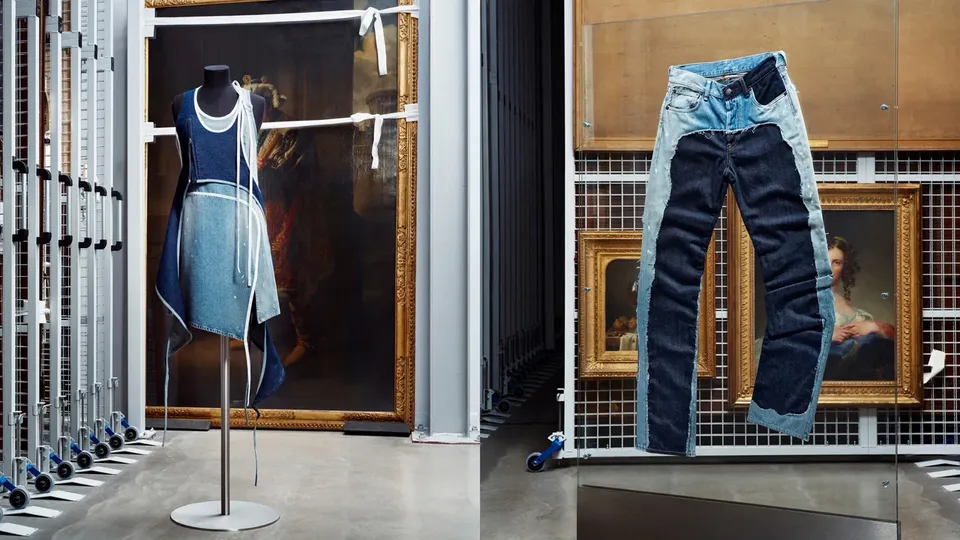
I agree that vegan does not automatically mean sustainable, which is exactly why my approach is both a hundred per cent natural and a hundred per cent vegan. I use almost exclusively cotton, with occasional linen for summer. Even details like shoulder pads are handmade from cotton. My goal is to ensure that everything is natural, vegan, biodegradable, and as sustainable as possible. I also strongly believe in recycling and upcycling. I reuse and restyle samples and fabrics until the very end, and when they can no longer be used for garments, I repurpose them, even turning them into cushion stuffing.
Looking back at the show, is there one moment (on or off the runway) that best encapsulates what this collection means to you?
One moment I will always remember is during fittings, when the sun was shining directly on the garments. Seeing the romantic shades of red, pink, and purple glowing in that light lifted my spirits. It reaffirmed my mission to create collections that feel happy and cheerful, and that bring optimism through beauty and craftsmanship.
And finally, do you have a favourite look from the collection?
Yes, my favourite is the first look. It is a cotton bouclé jacket trimmed with cotton velvet and decorated with cotton organdie ‘fur.’ It captures the balance I love between structure and softness, and it represents the couture craftsmanship and ethical values at the heart of the collection.