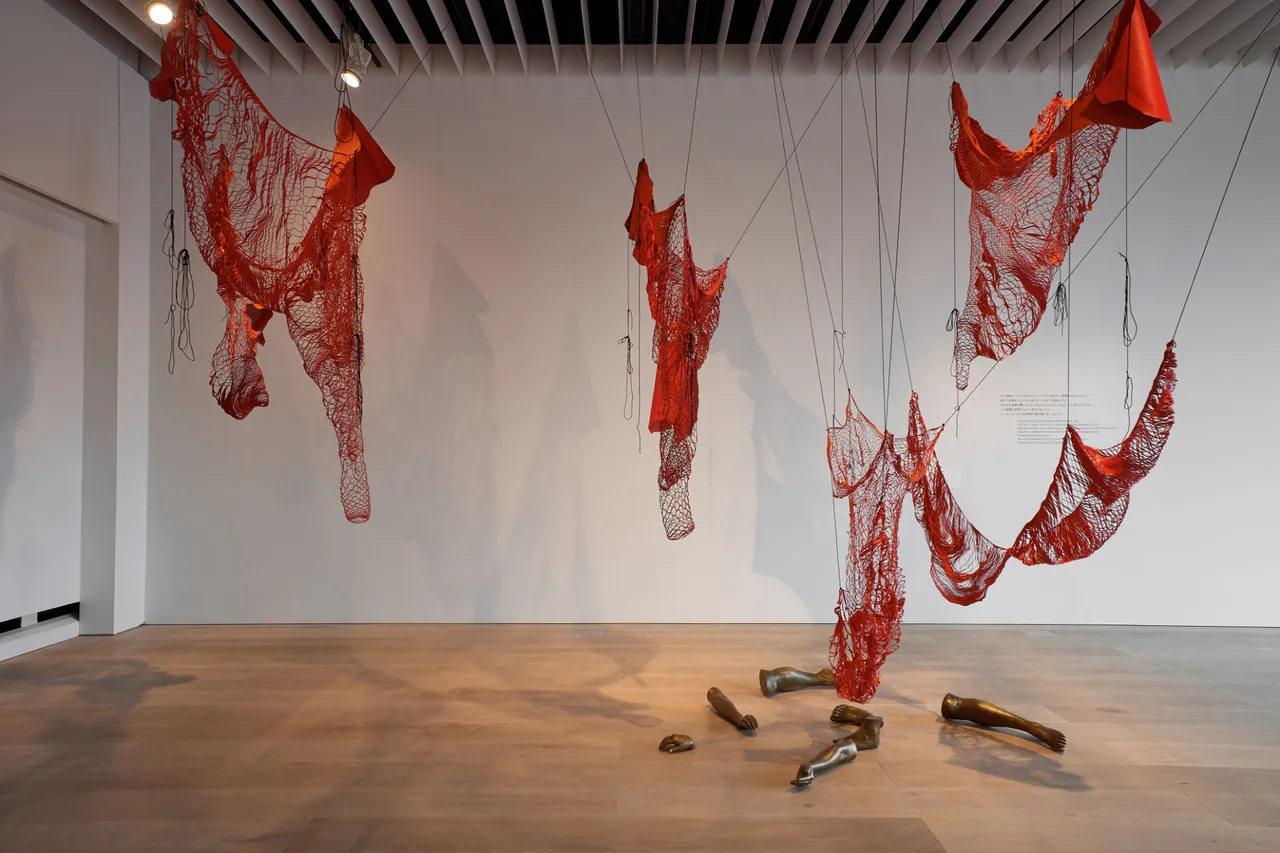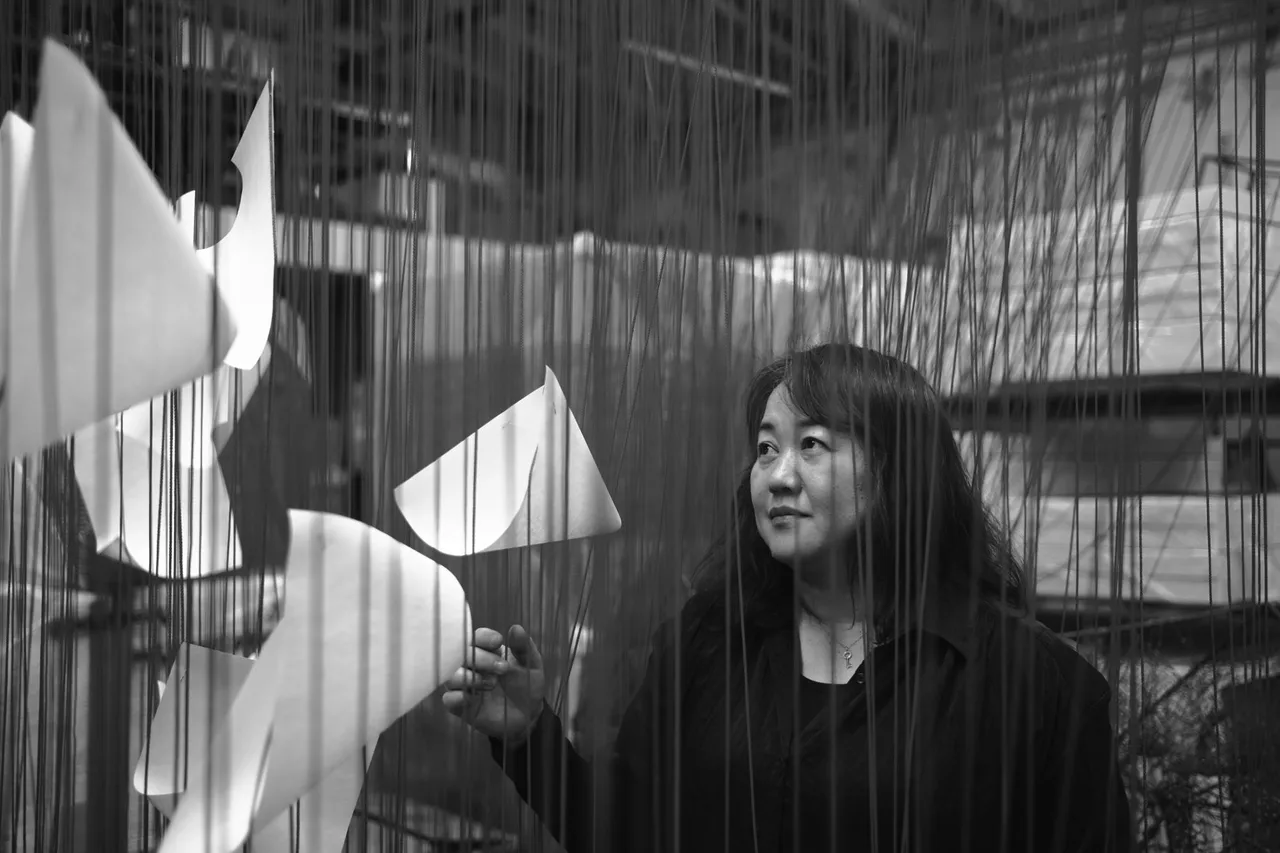
Beginning her career as a performance and installation artist in 1994, Chiharu Shiota has developed a personable and distinct style. Known for her encapsulating, dynamic use of thread, Shiota has created her own universe that viewers can walk through freely. Her new exhibition at MAO, Museo d’Arte Orientale, is an experience in itself, encouraging visitors to expect an emotional awakening, leaving them with a new sense of self.
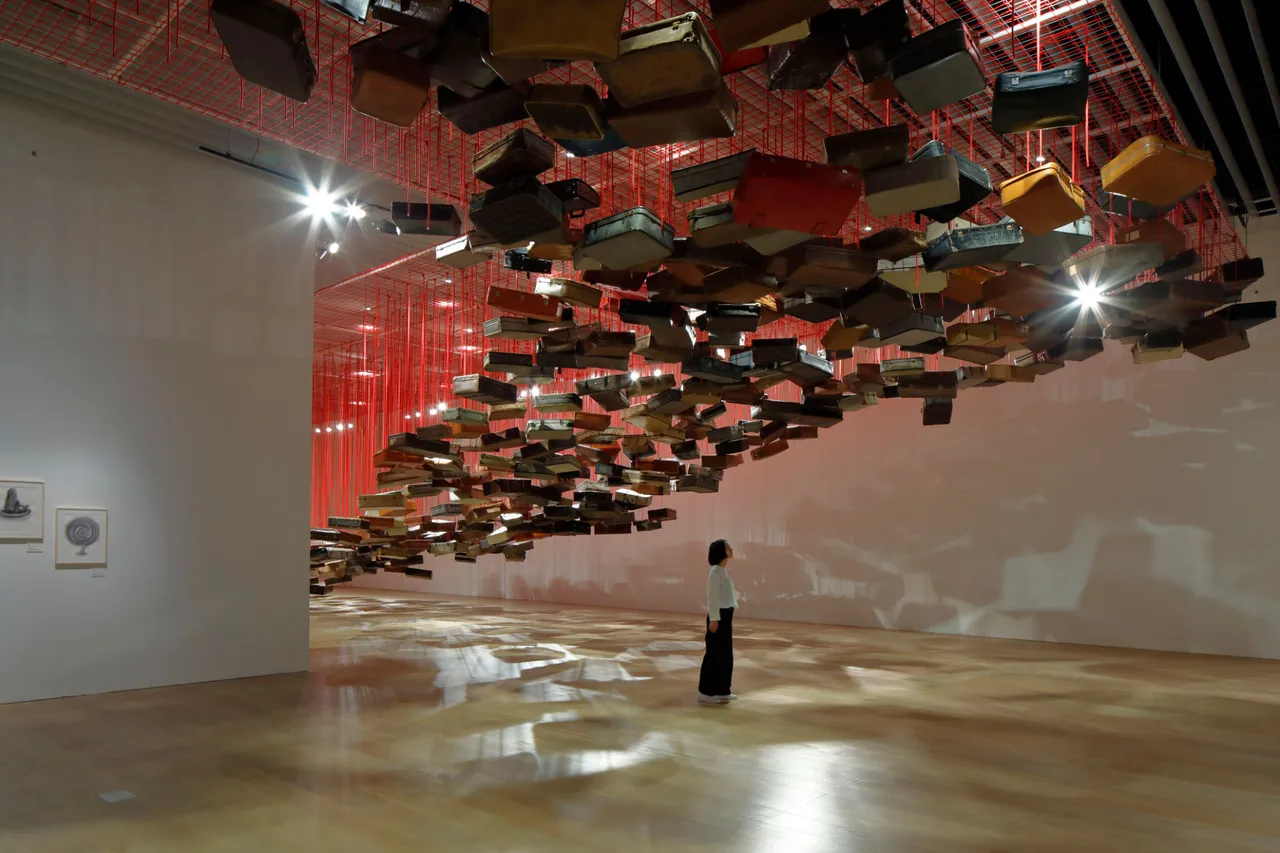
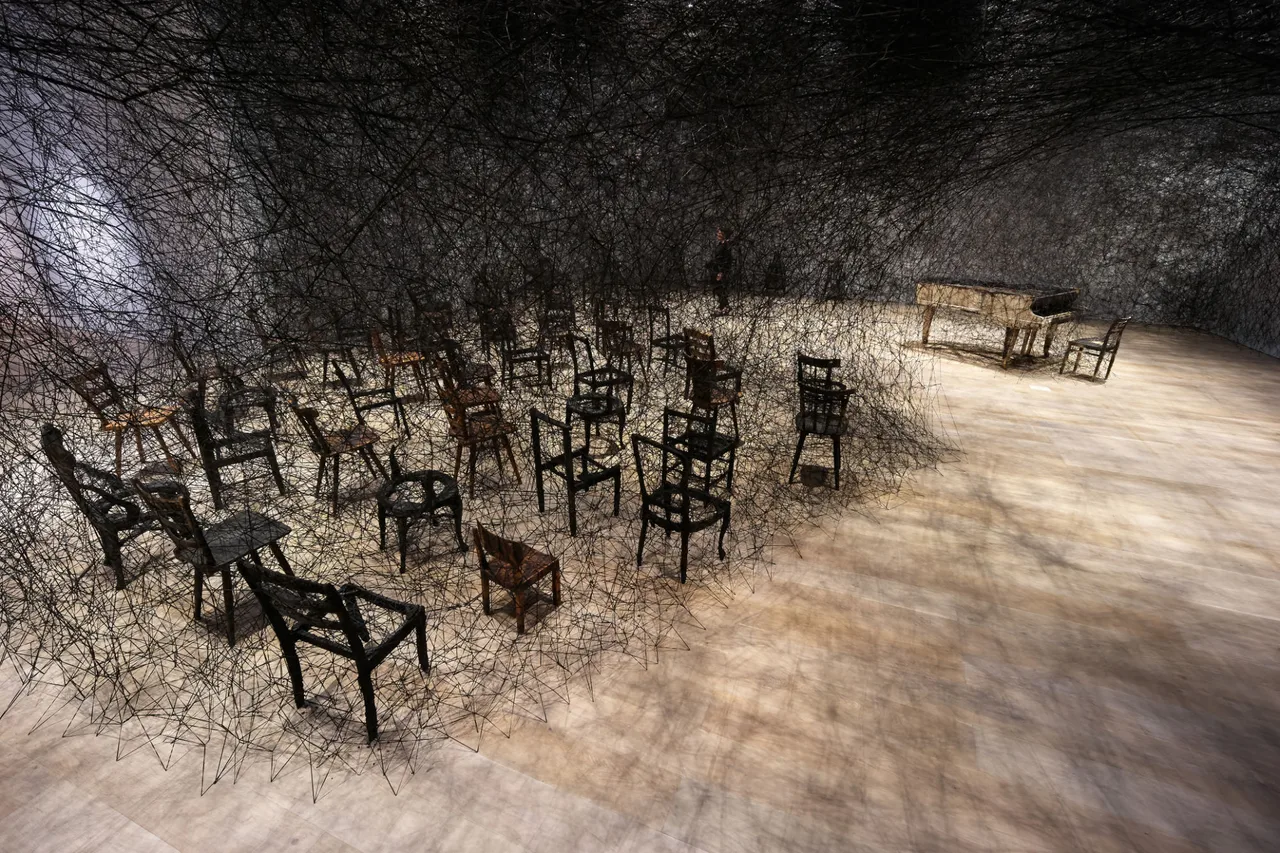
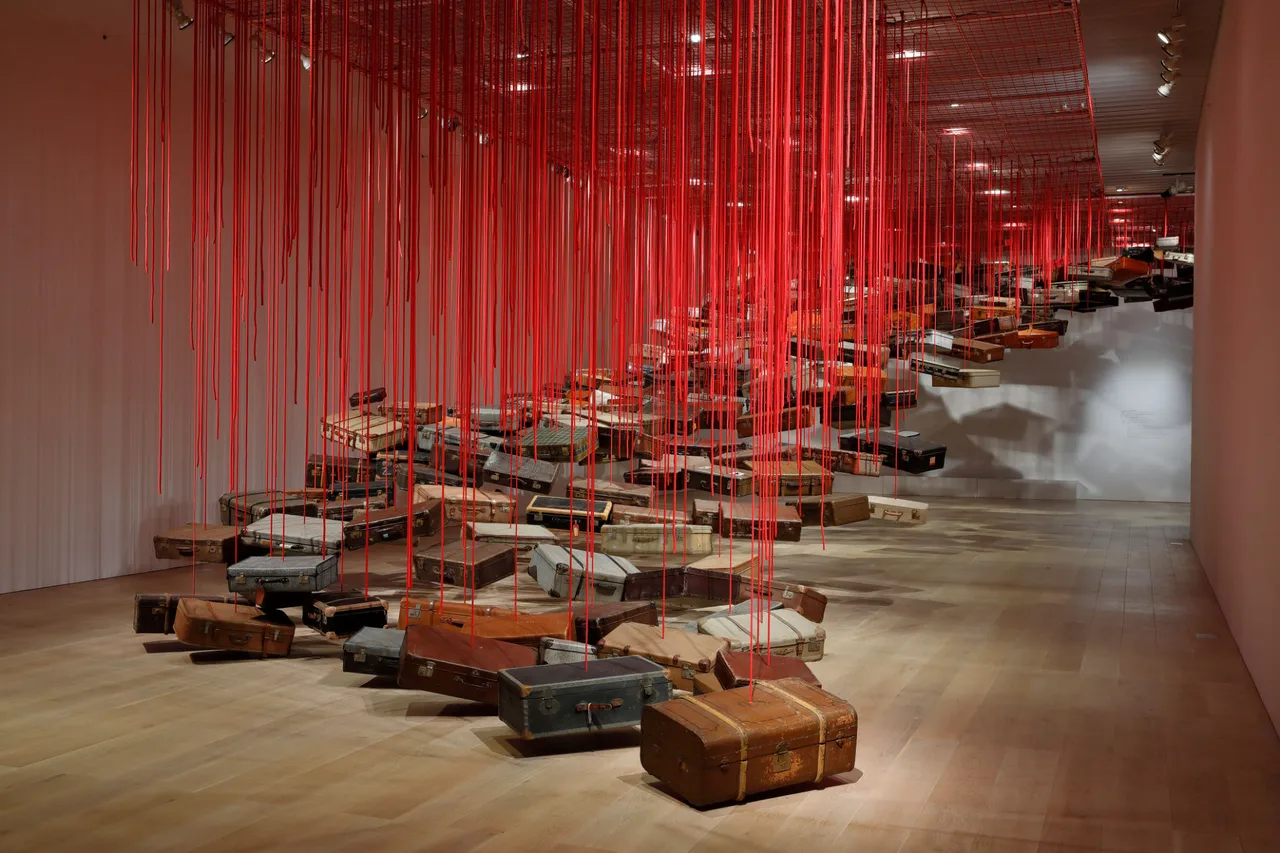
Although The Soul Trembles was primarily created because of Shiota’s personal encounter with the inevitability of death, this exhibition seeks to explore the universal and unavoidable constants of life experienced by everyone, not just the individual. The thread being the main motif for this idea of interconnection and the webbings of society. Pieces like Accumulation – Searching for Destination (2025), featuring suitcases suspended by red string, and In Silence (2025), displaying a burnt piano and chair engulfed by black string, incorporate themes of migration and change, reflecting the lingering feeling of loss.
As explained in her own words, this exhibition is about “others” and othering. Sensing the lives of those you do not know, and trying to contextualise their memories through performance. An understanding of presence and absence is key to appreciating what this exhibition wants from its visitors. Shiota is not looking to restrict her work to the singularity of positive or negative human emotion. She is seeking natural reactions that reflect the intricate and intentional efforts behind her work.
Hello Chiharu Shiota, and thank you for taking the time to discuss your most recent exhibition with us! The title of this exhibition, The Soul Trembles, is ominous and untelling. Why have you decided to look at the “general” soul rather than the “personal”?
This is from personal experience. When Mami Kataoka, curator and now director of the Mori Art Museum, visited me in Berlin in 2017, she told me she wanted to do a retrospective of my life, more than twenty-five years as an artist. I was very happy. But the next day, during a routine check-up at the hospital, I was diagnosed with cancer again. I had cancer twelve years earlier, and now it had returned. So, while preparing for the exhibition, I had to undergo chemotherapy and surgery. My daughter was only nine years old at the time, and I worried about her, how she would survive if her mother died, how she could understand death, and where she might think I would go. I thought a lot about life and death, and that is why I chose the exhibition title: because death is universal. Everyone is going to die; life is limited. This is everyone’s experience, not just mine. No one can escape death.
I’d like you to develop on this idea of the Other being represented in your work. Do you see this exhibition as a reflection of your unconscious self, or of an entirely different being?
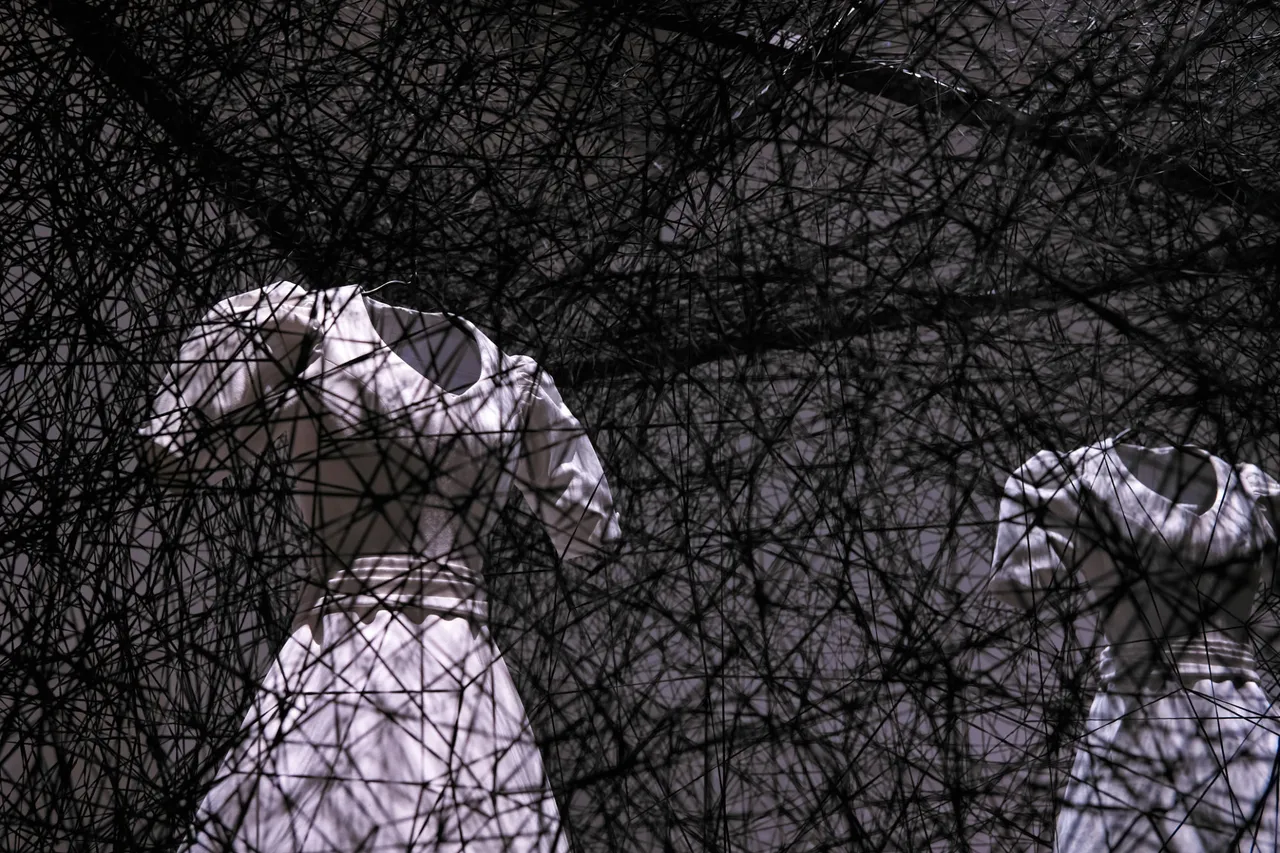
It can feel like the “other” because I am using other people’s memories. It is another person’s suitcase, or windows, or small doll furniture. I am using other people’s items and materials because they contain so much memory. Many years ago, when I was walking through a flea market in Berlin, I saw these old suitcases and felt that I needed to buy them. I had never met the people who owned them, but when I opened the suitcases at home, I found an old newspaper from 1946 and a packing list. Seeing that packing list made me feel as if I could sense this person’s life. This is the whole theme of my artwork.
There is an emphasis on movement within this exhibition, not just through the exhibition space but through alternating emotional states. Do you think it is important for art to sometimes evoke negative feelings, such as anxiety, and, if so, why?
I don’t know, people react to my work in very different ways. Some may feel negative emotions or even start crying, while others might feel happy, or find the dark room beautiful, or feel scared. Everyone is different. It’s not only about fear, and it’s not only negative feelings, each person experiences something different. That is why contemporary art is so interesting; there is no single answer and no single emotion that everyone feels.
Despite your pieces seemingly consuming the exhibition rooms, you still make space for the audience’s migration. Do you decide how open or confined these passages are to create some kind of connection or disconnection between the people who interact with your work?
I actually didn’t decide the pathway through the exhibition that was part of the curatorial work by Mami Kataoka and Davide Quadrio, the director of MAO. I create the artworks, but the curators decide how the audience moves through them. I decide how viewers walk inside the installations, but not how they move between the works.
What feelings and movements do you go through when dismantling your work? Do you tear it all down, or do you meticulously unpick every thread with intent? Do you trust others to dismantle your work?
I cut the thread at the end of the exhibition, and some I can use to re-knot the thread for future installations, but most of the material is destroyed. It’s not going to be entangled; creating the artwork is most important. I don’t have any feelings about the deconstruction. I am quite happy that it is gone; it just remains in memory. I usually like to think about how I could do it differently or better next time.
This exhibition is not just comprised of your physical work, but also of music, performance, screenings, and talks. Why have you decided to include an audio element in the space?
It’s a retrospective of my life as an artist, which also includes this collection of my theatre sets until now. This is part of my history.
Is In Silence (2008) accompanied by sound? Does it need to be?
The installation has to be in silence. The piano is burned, and there is no sound. I am creating the music with the black string.
This is not the first time you have worked with Mami Kataoka. Do you feel you both understand what you need from each other when curating exhibitions of your work? Additionally, how has it been collaborating with Davide Quadrio, Anna Musini and Francesca Filisetti?
This exhibition began in 2019. The curatorial process started with Mami Kataoka, and we have worked closely ever since. Davide Quadrio, the director of this institution, also contributed his own ideas; he knows this building well and curated the new work for the show. Anna and Francesca were also very helpful, and we all worked together very well.
Did the cultural revival in Osaka during your youth influence your creative output? Or was it nurture rather than nature that had the strongest influence?
I think the feeling of wanting to become an artist came from within myself. In Osaka, at that time, there wasn’t much. There was no contemporary art scene when I was little. The most exciting event was the Japan World Exposition in Osaka in 1970, but it focused more on technology than on art. So, I believe the desire to become an artist came from inside me.
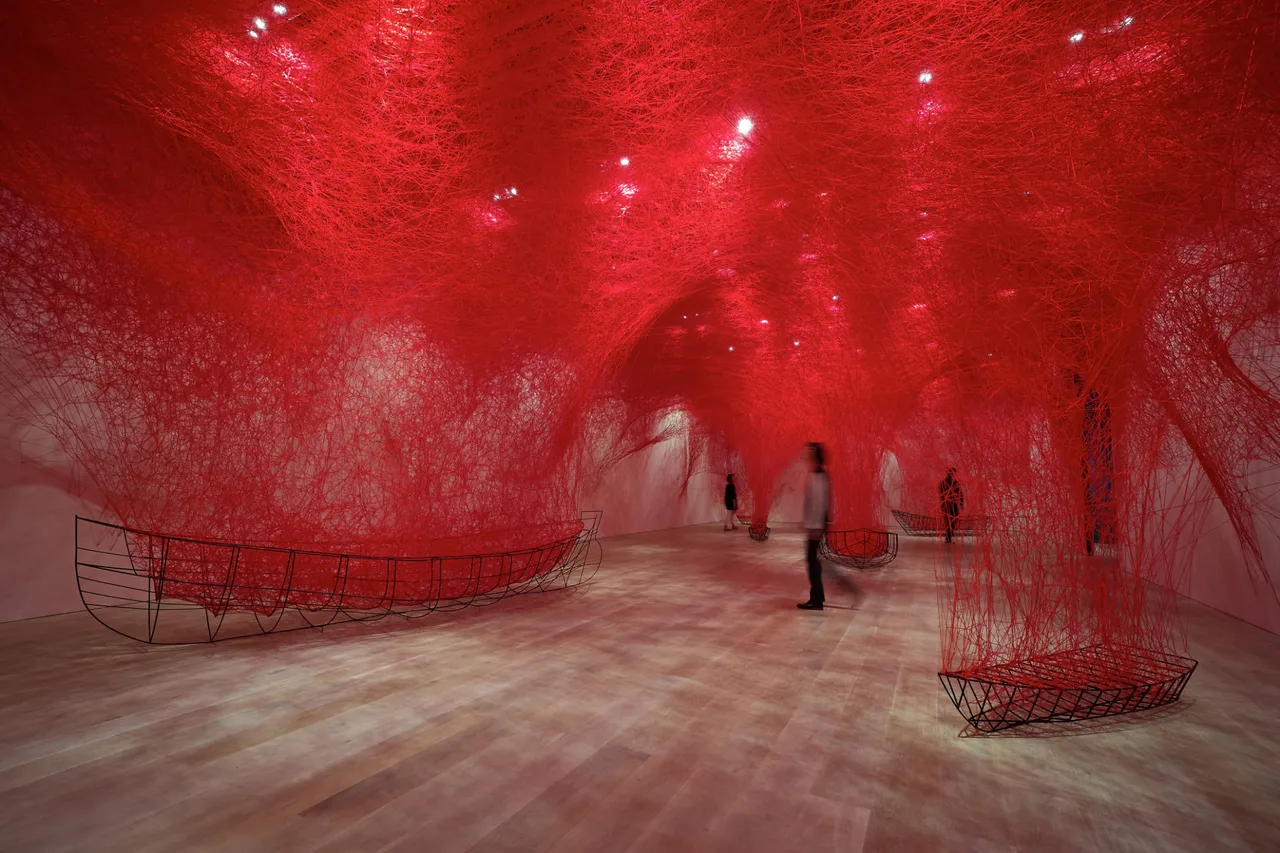
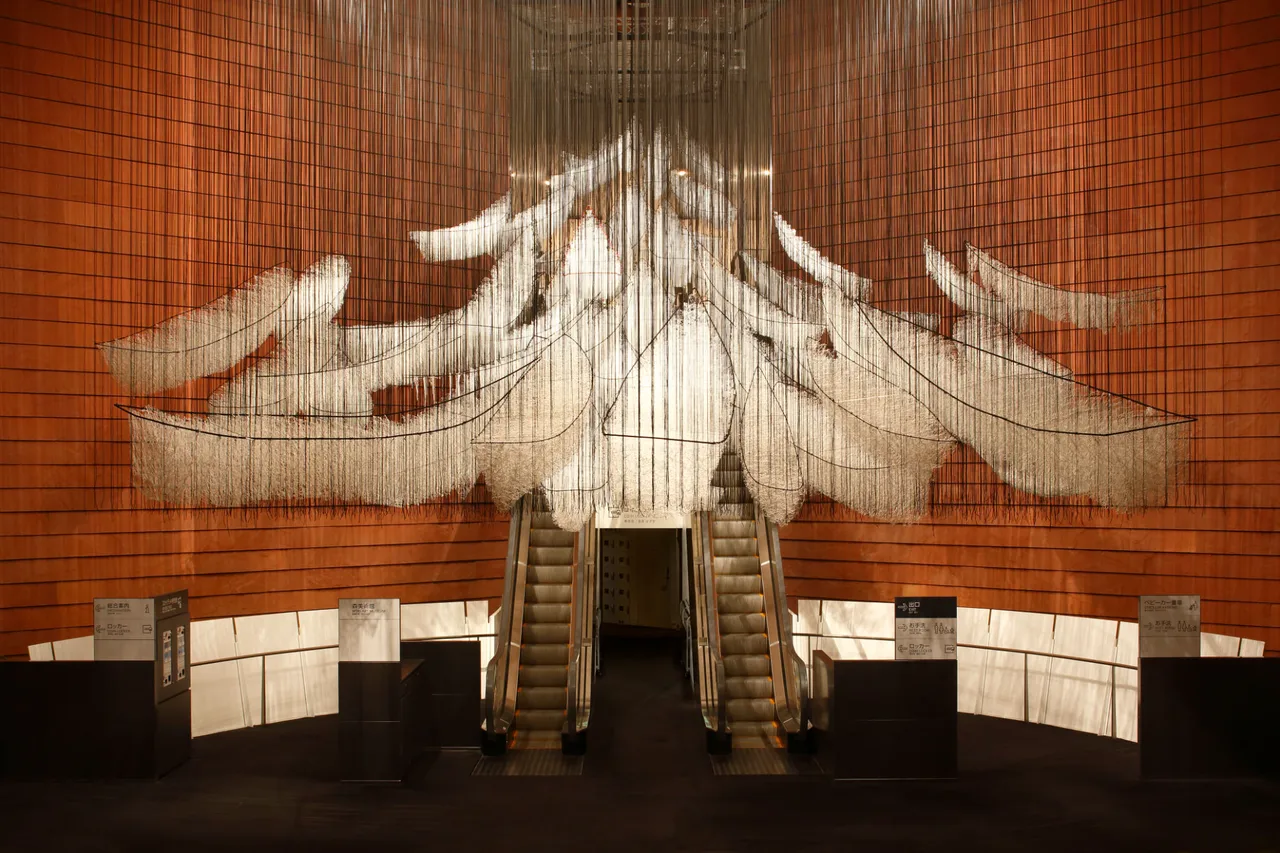
What determines the colour of wool that you use? Uncertain Journey (2016) and Where Are We Going (2017) both feature boat motifs, but one has red string and the other has white. To me, the red string appears much more uncontrollable. What are the feelings you are trying to evoke by having both these pieces included in the exhibition?
In 2015, I created the boat installation The Key in the Hand at the Venice Biennale using red thread. The following year, I wanted to continue working with the boat motif, but not with an original boat. I wanted to create a universal boat with black wire, almost like a pencil drawing. Then in 2017, I made the white boat for Le Bon Marché in Paris. It’s made from glued thread, which creates a very different visual effect. These works were created in different years and in different places, and inspired by different emotions, but in The Soul Trembles, they come together in the same space, allowing both journeys to be included.
Your artworks have been shown globally, from the Grand Palais in Paris to the Mori Art Museum in Tokyo and the Gropius Bau in Berlin. How important to you is it that your work is now being shown in its first Asian Art Museum, the MAO in Italy? Do you think this labelled space enhances your journey?
This is the first time this retrospective exhibition has been shown in Italy. It’s also the first time to be shown in an Oriental art museum and presenting my work alongside the museum’s own collection. This was very interesting because it isn’t a white-cube space; there are many stories of Buddha and many historical objects located next to my installations. It was more challenging for us, but I think it worked very well.
How does it feel to see your growth through space and time in this exhibition?
It’s like looking at a photo album, like when you were a child looking through your family album, looking at your identity. Looking at past artworks feels similar. I can remember what I created in 1999 or 1997, but the feelings from that time are gone. It almost feels like the work was made by a different person, just as a fourteen-year-old and a fifty-year-old are different. And I want to continue to create.
MAO Museo d’Arte Orientale
Via san Domenico 11, Turin
Now – 28 June 2026
Via san Domenico 11, Turin
Now – 28 June 2026