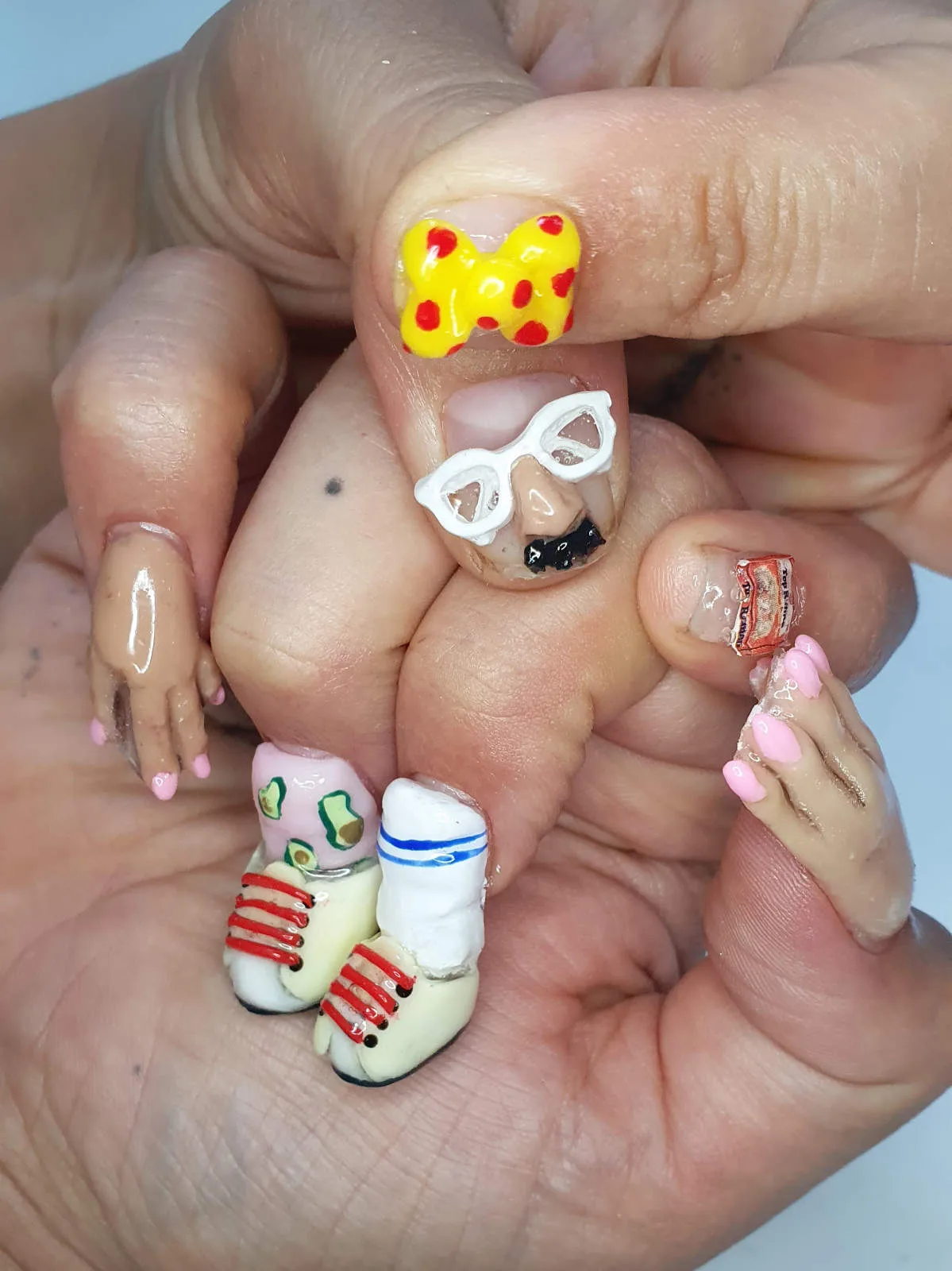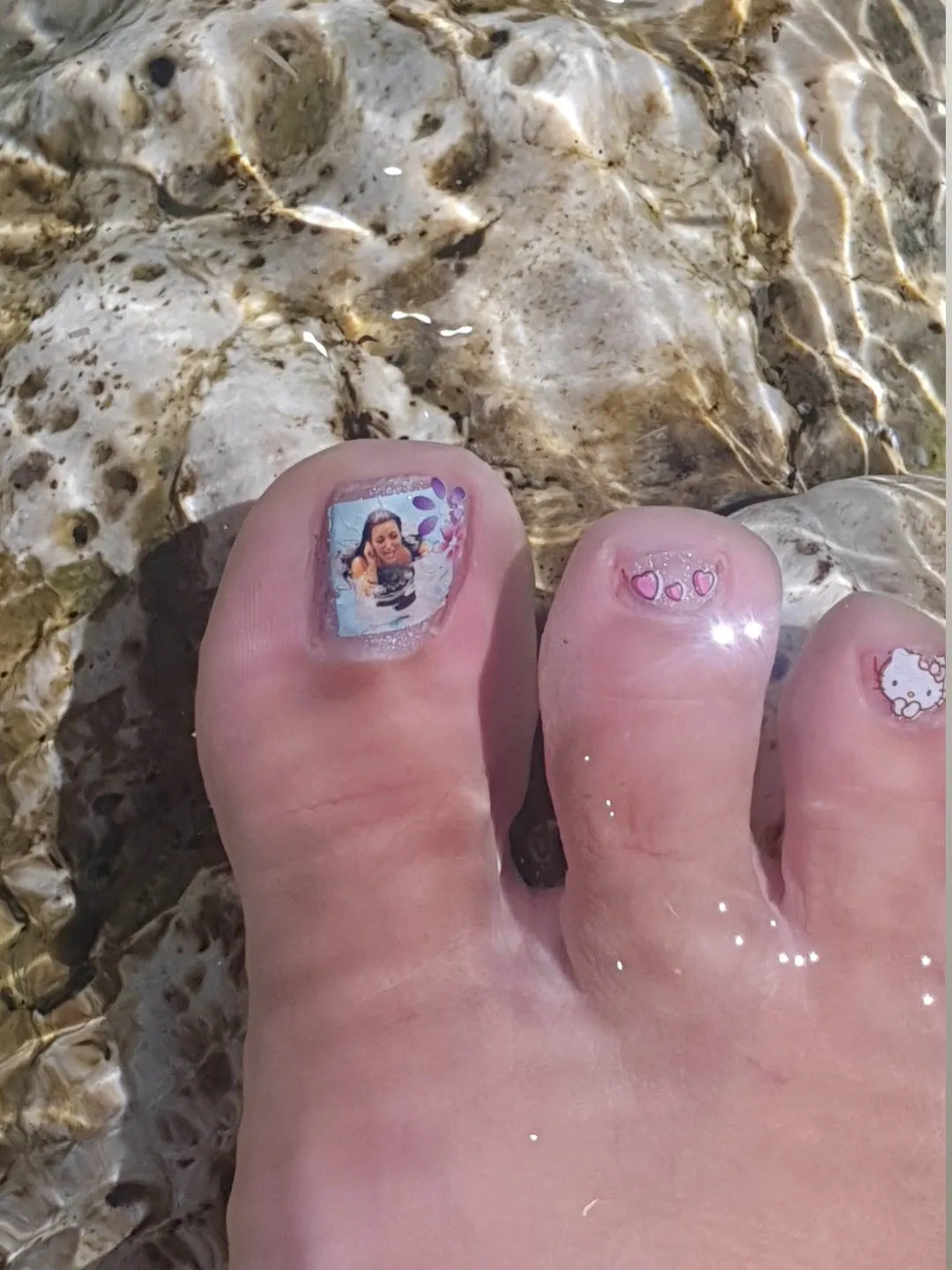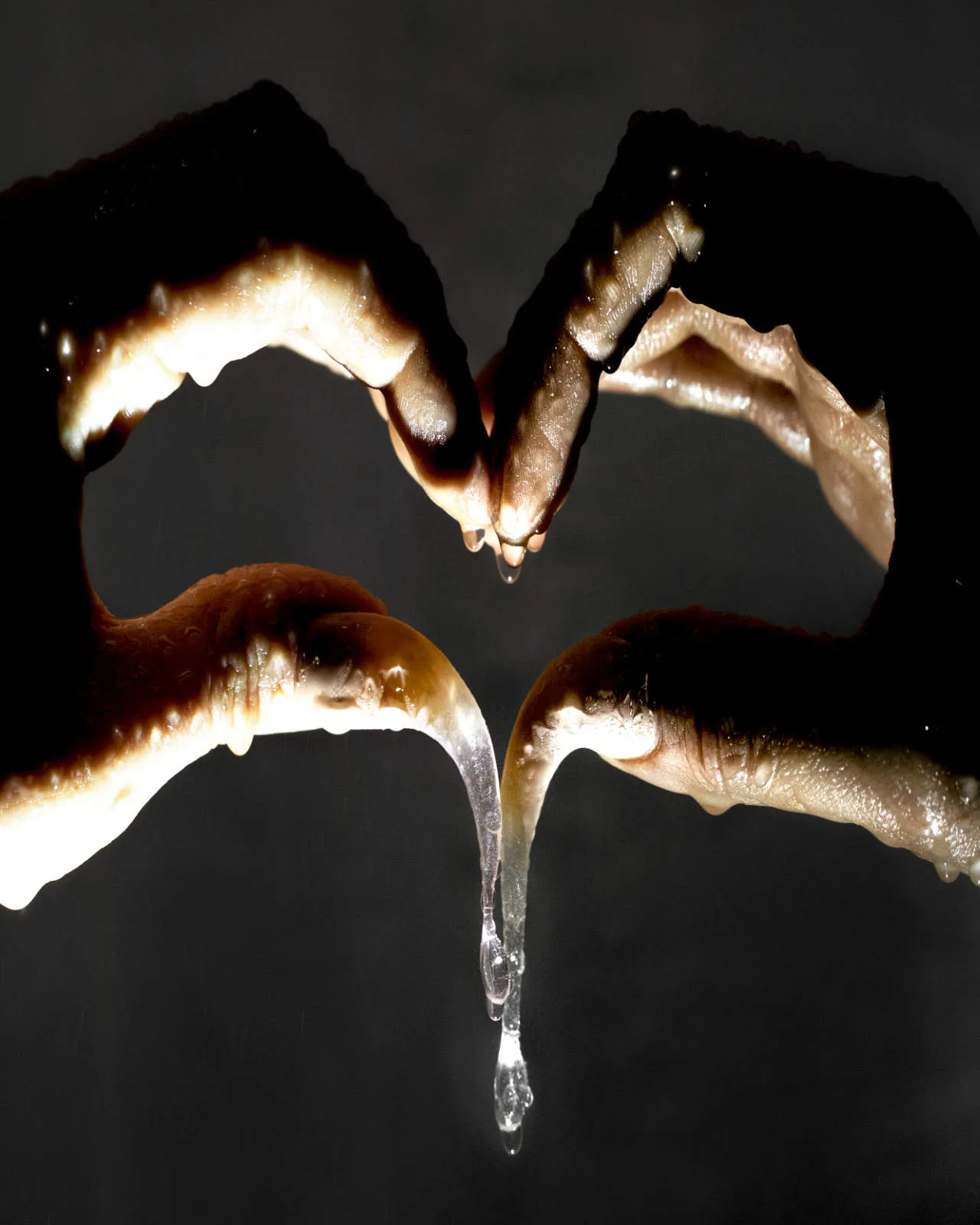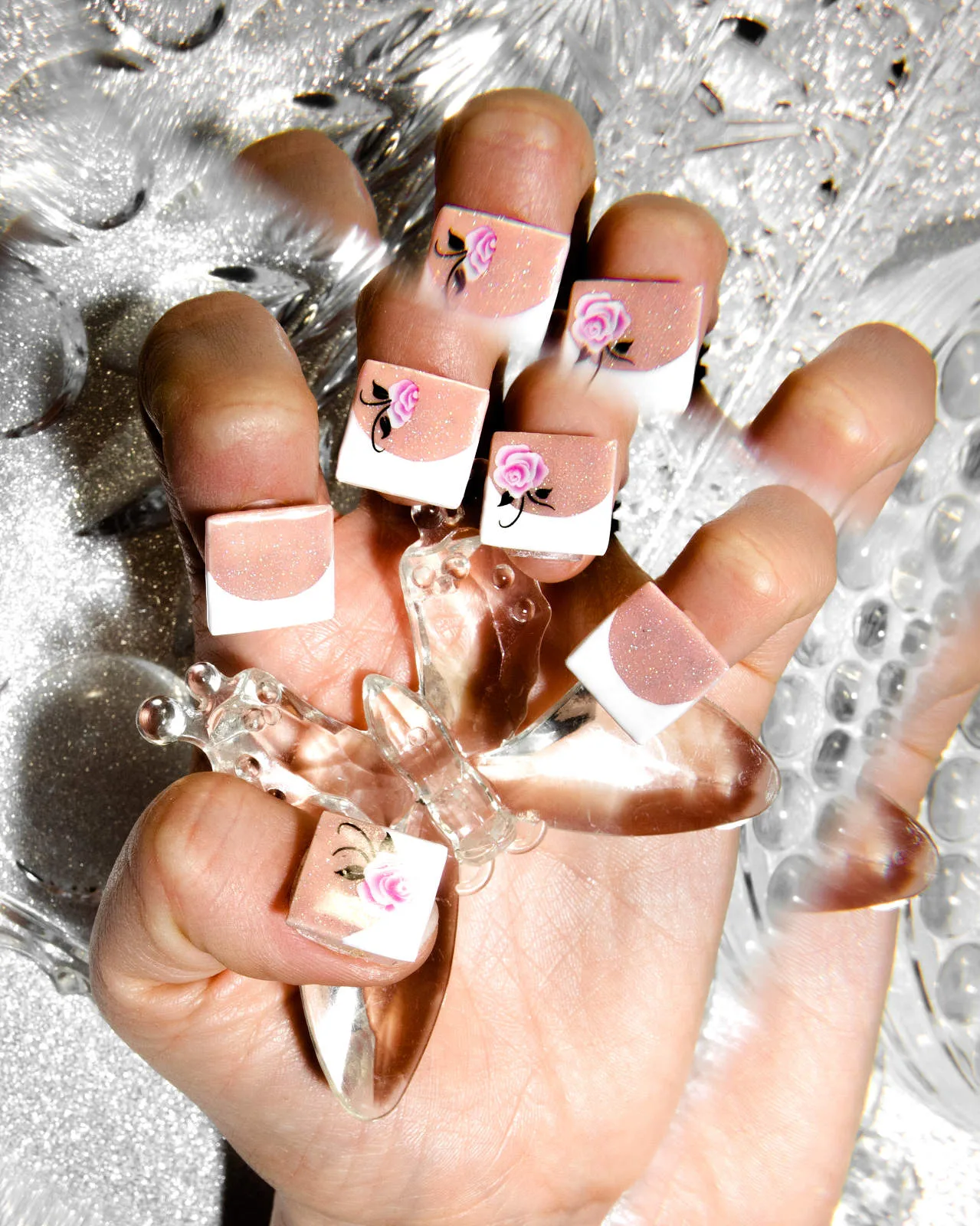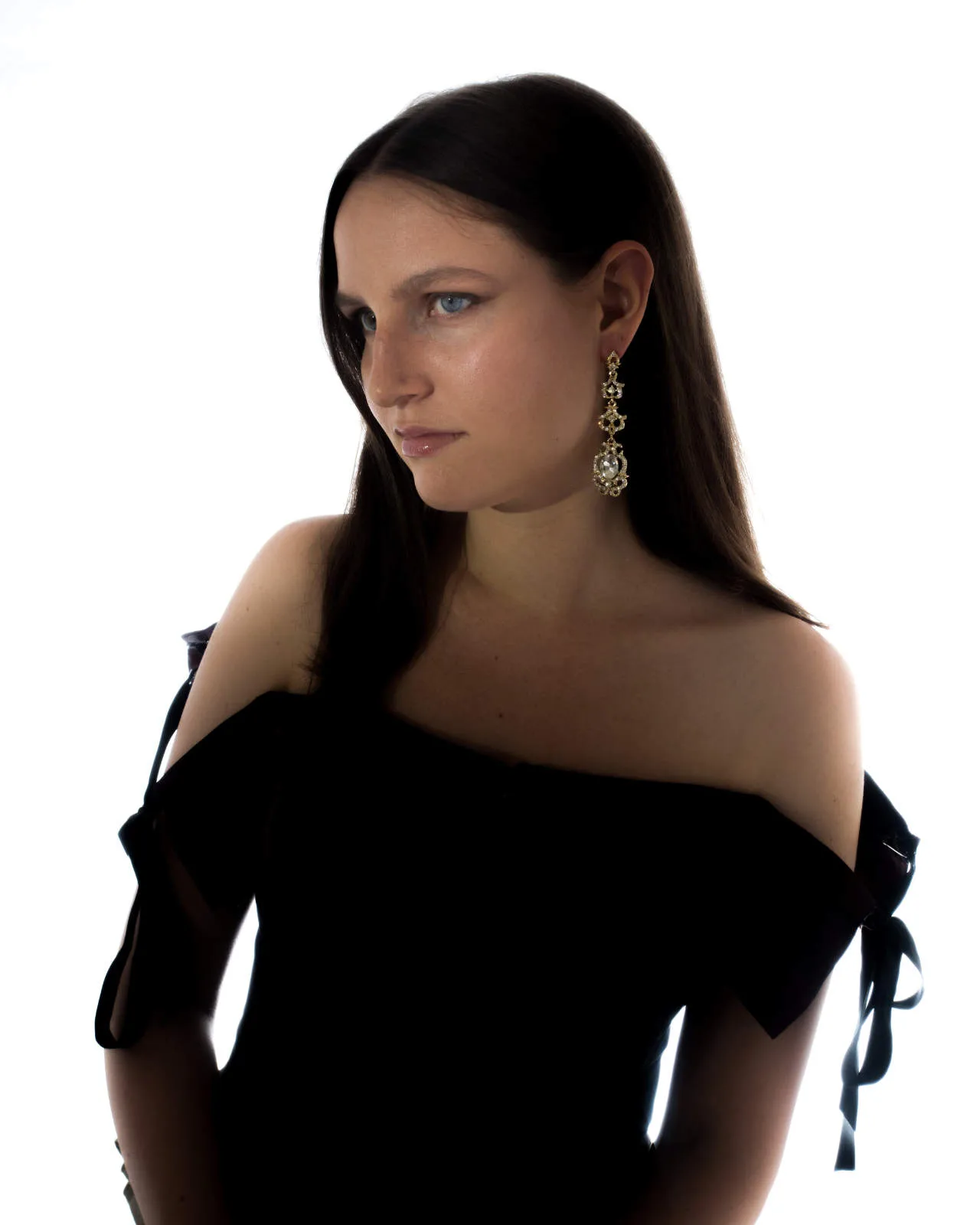
Nails change the way we perceive hands. That’s obvious. But they also change the way we perceive attitude. They can express emancipation and resistance. They can critique the patriarchal system we live in, and they can reflect cultural heritage. Exactly that is the speciality of Camilla Inge Volbert, the Berlin-based nail artist who captivates the internet with designs that are absolutely beautifully ugly.
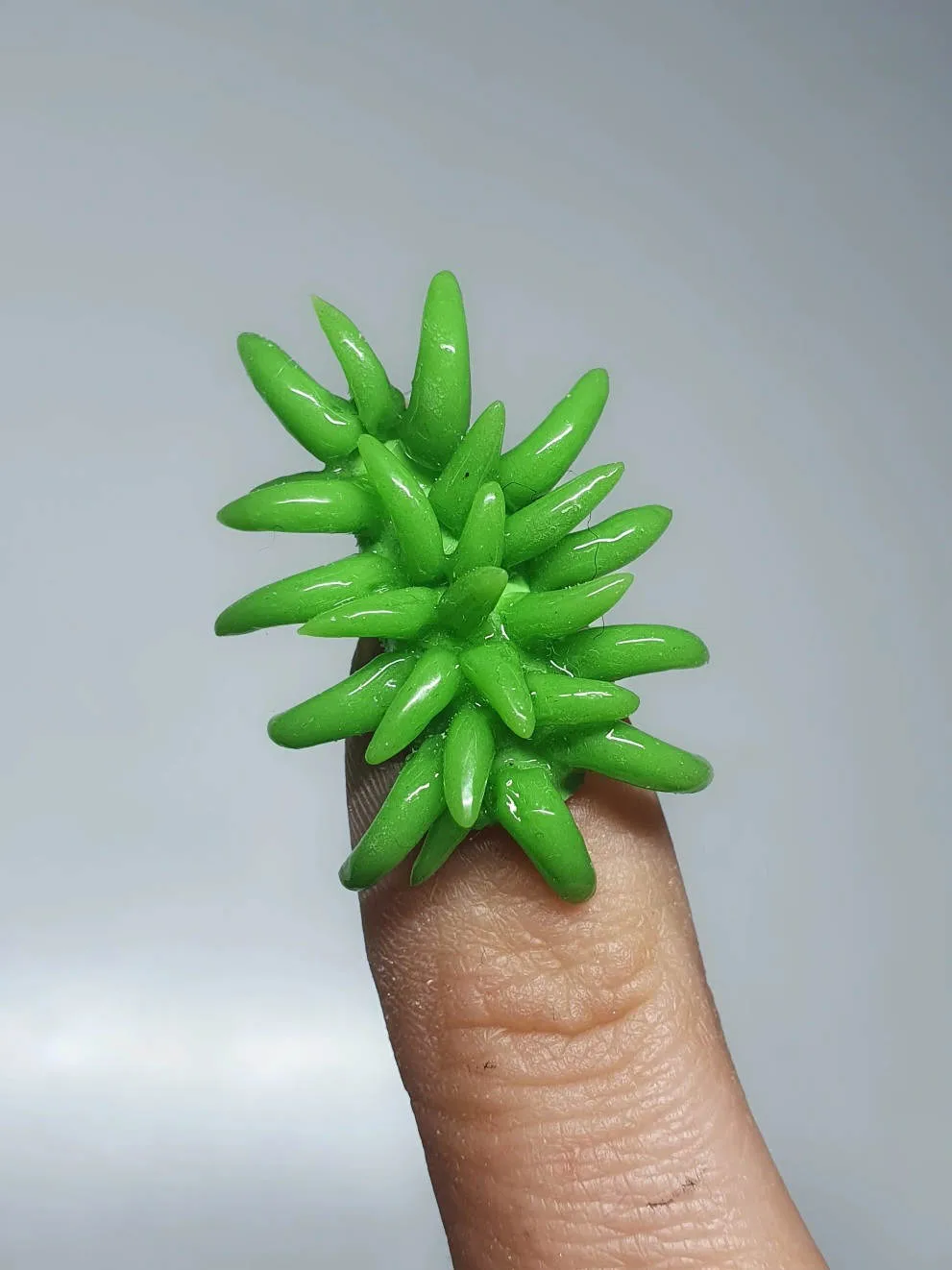
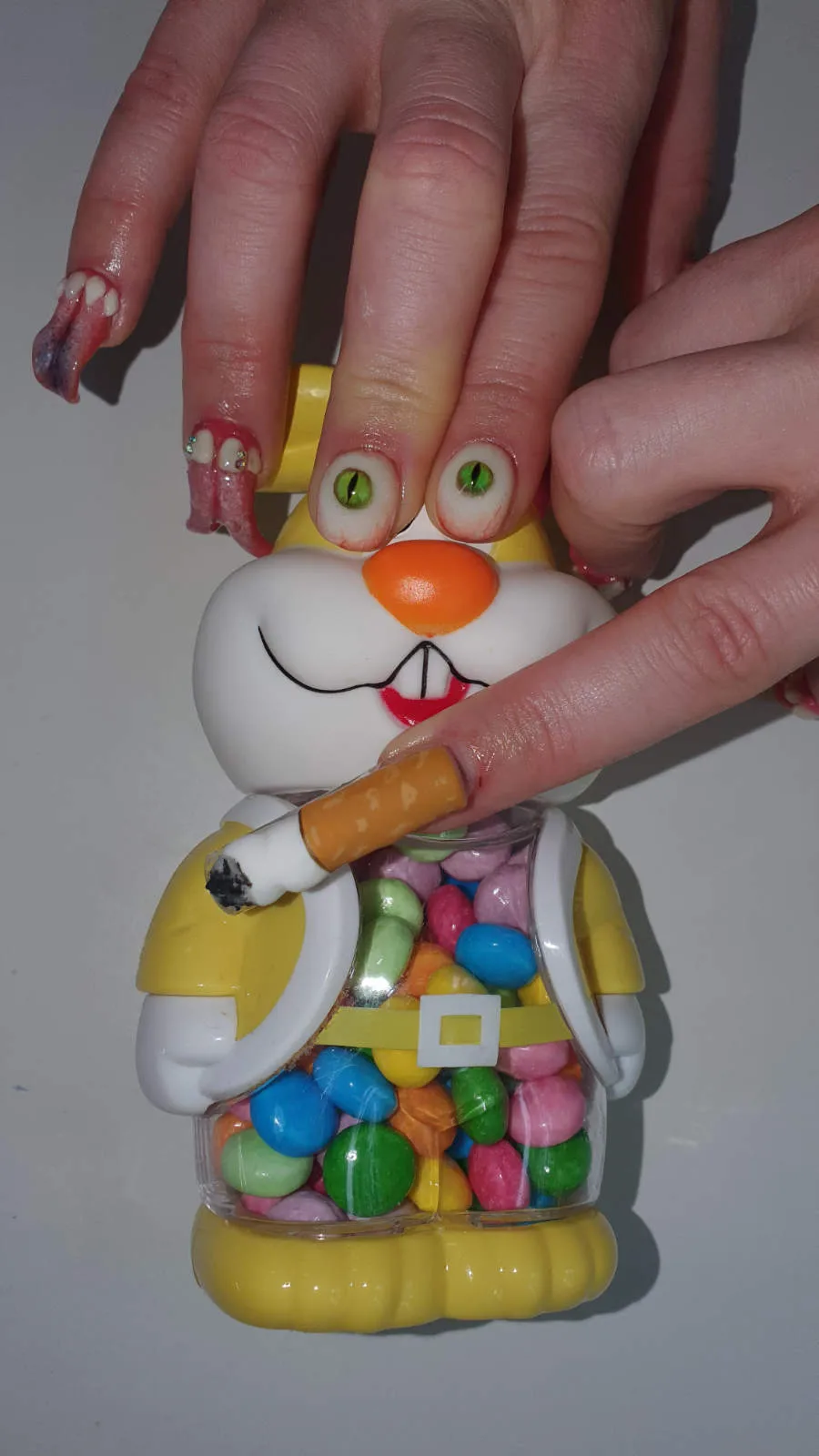
Just to be clear, ‘ugly’ means powerful in this case. Powerful because they break this heteronormative stigma that we (and women in particular) are not allowed to be too loud, too extra, too much. And that’s why Volbert’s creations are Y2K-coded and kitschy. Colourful, tacky, and sometimes disturbingly disgusting. They reclaim ‘ugly’, to summarise it. If you’re wondering what that might look like, just imagine shiny pickles on your thumbs. Or burned cigarettes glued onto transparent extensions. Imagine split tongues and braces (like the ones some kids had in high school). Think of hair, pointy claws and little monsters with eggshell-coloured teeth. Basically, there are no sculptural limits and the list could go on and on and on…
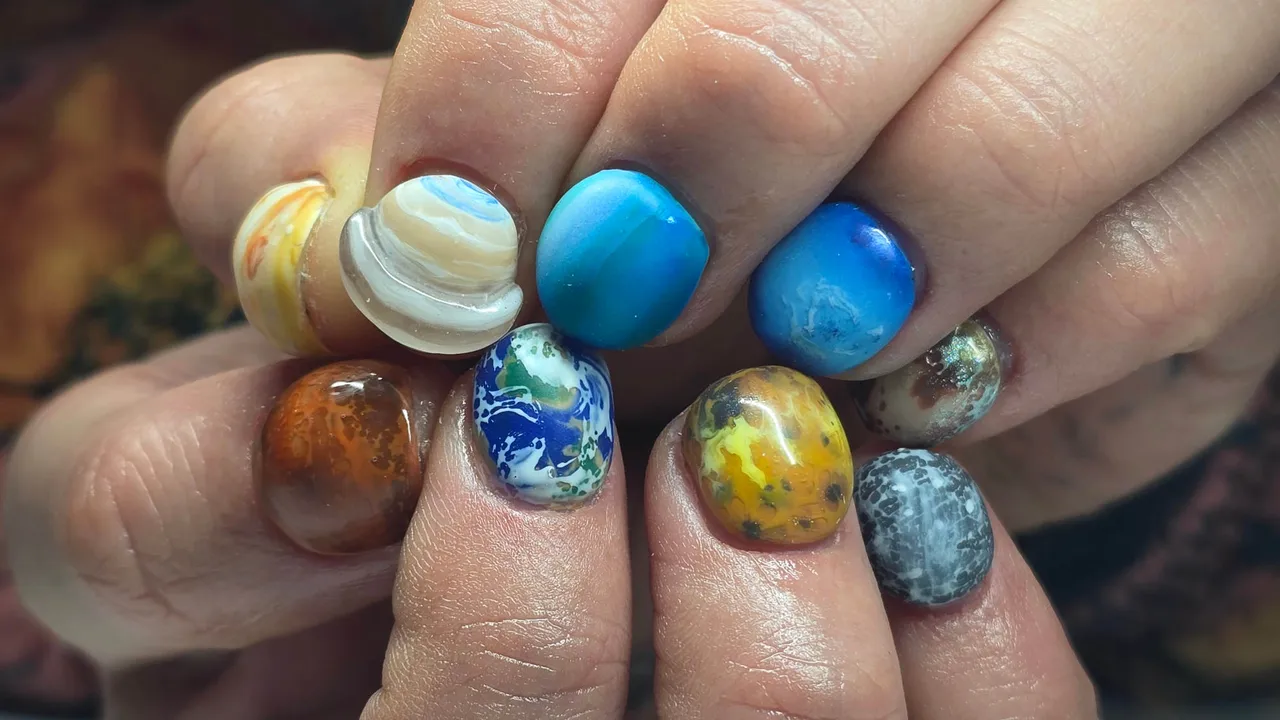
To bring these real-looking designs to life, Volbert mainly works with gel and all kinds of accessories like shells, stamps, foil, bows, dried flowers, and even the skin of an onion. All of it is self-taught, going back to when she started doing nails for projects during her fashion design studies around seven years ago. Since then, she has collaborated with the Bauhaus-Archiv, with Hugo, Zalando, and Balenciaga. She has worked on editorials with other artists like horsegiirL, and on shows at Berlin Fashion Week. And, she has successfully made everyone who follows her work bored with a simple manicure.
Now, in a time when themes like emancipation, feminism, resistance, otherness, and historical awareness can no longer be taken for granted, talents like Volbert are more important than ever. That’s why we sit down with the artist to talk about the cultural background of nails, about the connection to Christian symbolism, about holding hands, Nicki Minaj, and about whose nails she would love to do if she could choose whoever she wants.
Hi Camilla, if your nails had a smell today, what would it be?
Raspberry meringue milkshake.
Have you ever looked at someone’s hands and immediately known you would never do their nails?
When I saw the picture of Nicki Minaj holding hands with Trump, I knew I would never ever do her nails.
I’ve always wondered, in Legally Blonde, Jennifer Coolidge plays a nail artist who turns into a kind of best friend and therapist. How intimate is the act of doing someone’s nails for you? Do people talk a lot?
It depends. I think sometimes people tend to open up quicker as you spend a lot of time together, but I don’t usually know their friends, so ranting about someone, telling me secrets or gossip doesn’t really have consequences. I love this aspect of my job, but it can be quite challenging sometimes! I joke that I’m a professional hand holder — in many ways.
What’s more intimate, touching someone’s face or doing their nails?
Touching someone’s face!
Nail art carries a long political history, especially connected to Black women, class, and resistance. How do you personally navigate this history?
The adornment of hands and nails goes back a long, long time and has always been heavily shaped especially by class (even depictions of Confucius show him with long nails), so it is not surprising that it is still so prevalent in its recent history. To know the history and to be able to understand why certain dynamics are still prevalent to this day is such an important part of working with nails!
Acrylic nail extensions and what we call nail art today have their origins in the United States and have been pioneered by Black women. The industry is also heavily connected to immigration politics internationally, as its workers have historically been immigrants. In Germany, this is extremely relevant to the nail industry as most nail technicians are Vietnamese immigrants and their working conditions are very much influenced by the harsh immigration politics, which is especially important to understand for nail techs who do not have these same circumstances.
Acrylic nail extensions and what we call nail art today have their origins in the United States and have been pioneered by Black women. The industry is also heavily connected to immigration politics internationally, as its workers have historically been immigrants. In Germany, this is extremely relevant to the nail industry as most nail technicians are Vietnamese immigrants and their working conditions are very much influenced by the harsh immigration politics, which is especially important to understand for nail techs who do not have these same circumstances.
Gel nails are often sexualised, mocked, or dismissed. Why do you think they provoke such strong reactions?
The design of our nails and hands has been shaped by people outside of the straight white male design space and is therefore devalued and met with rejection. In the 80s and 90s especially, when long nails gained popularity, Black women were extremely sexualised in mainstream media, and so were their nails. After all, sexualisation is a tool of suppression in patriarchy.
Do you think the political meaning of nail art transforms over time? Do you also translate current global happenings into your work?
It’s always changing, and with more and more people being involved, I think its meanings become more and more complex. I love seeing it grow and go into a more multidisciplinary direction, and I definitely do feel very influenced by that as well.
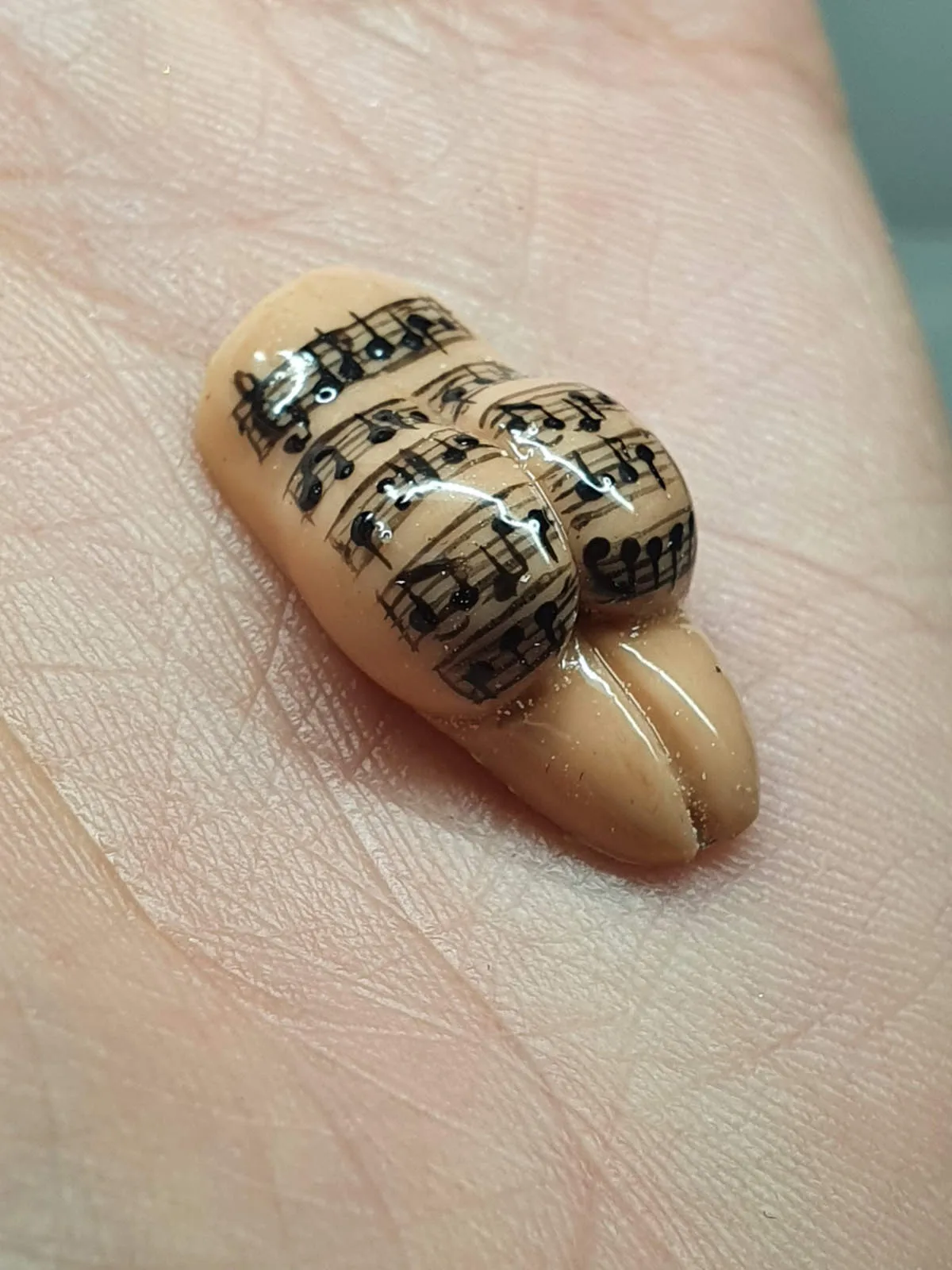
On Instagram, you posted the LiveLoveBurn ring and the matching necklace. In your caption you wrote about the “soundtrack to hell” and that it “must be the German national anthem.” Tell me more about that.
The ring I made with Regina Rupp consisted of three nails, so I immediately thought of triptychs and all the similarities of Christian Symbolism and its parallels to nail art. When I found that Hieronymus Bosch depicted musical notes on someone’s bum in the right panel in Garden of Earthly Delights, it made me giggle; it is a similar, very straightforward depiction of an idea or a personal reference that I see in nail art a lot. Using the German national anthem in this context should be every German’s first reaction to this, in my opinion.
I read in an interview that your sister painted your nails when you were children. Do you remember what your favourite design was?
She once painted a dolphin on her big toenail, it was the cutest thing ever!
You studied fashion design, but the shift to nail art happened very naturally. Do you ever miss working as a fashion designer?
Sometimes I miss being able to dedicate more time into a project, do more research and sketches. But the translation from the idea or sketch into a garment bothered me — it always felt like a ghost or shadow of my imagination. Nail design is a lot more playful, spontaneous, and vivid to me.
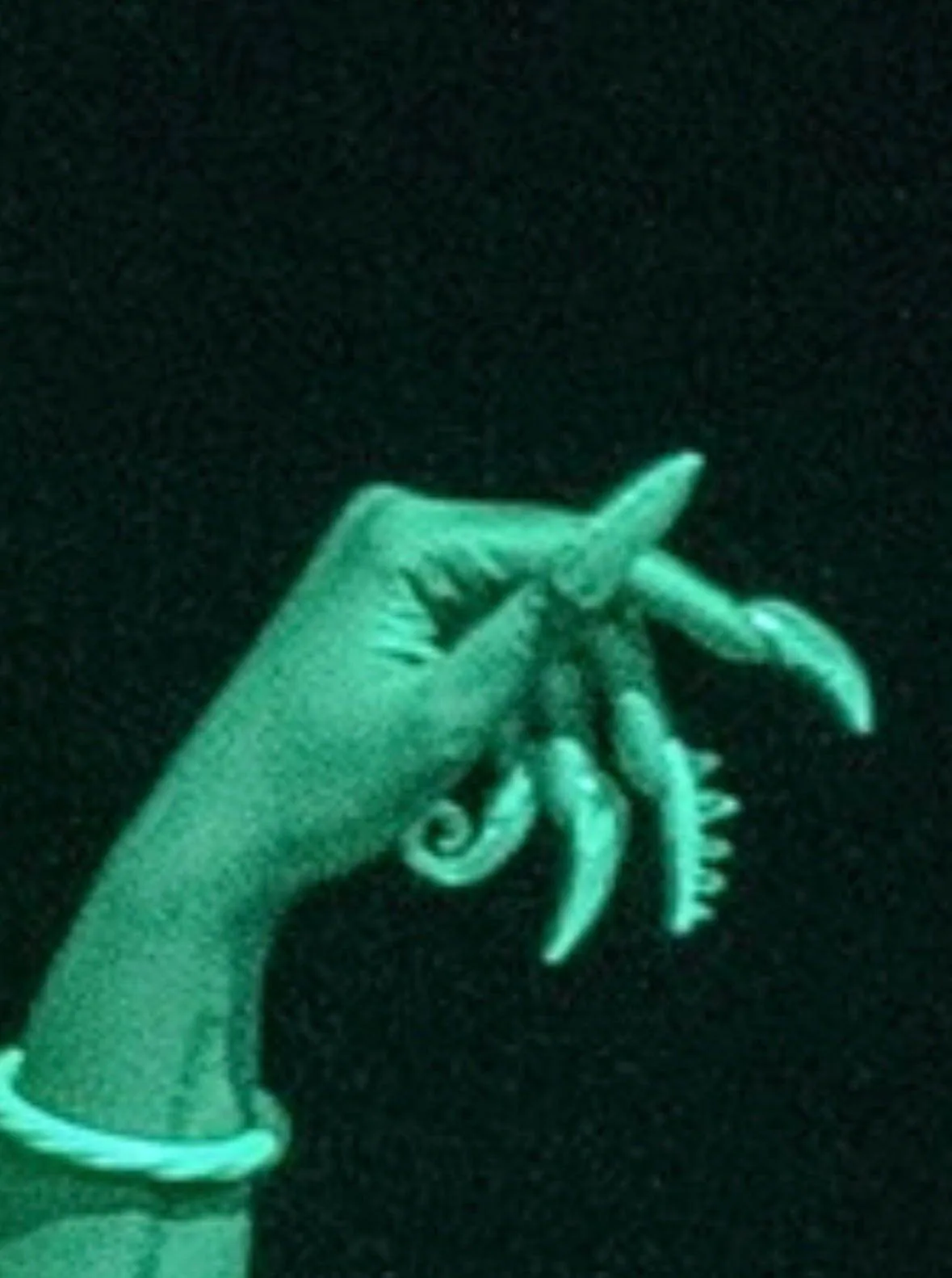
The nails you did for Marie Lueder at Berlin Fashion Week looked beautifully creepy. How long did it take to work on all those sets for multiple models?
I got booked on a very short notice, so I think I only had about one day and a half to work on it before the show. I definitely had some bruises from all the filing the day of!
You also created nail sets for shoots with Lia Lia and horsegiirL, so cool! If you could choose any person, dead or alive, to do their nails, who would it be? And even more importantly, how would you do their nails?
Maria Ortiz, mother of the long nail goddesses of Newark! I would love to hear her talk about the community she has created. I would whip out all the colours, patterns, and rhinestones that I have!
Hands are the body part we see the most, yet we style them the least. Why do you think nails stayed such an underestimated canvas in Western culture for so long?
I think in the West, hands were very much a symbol of Christianity, with Jesus’ hands nailed to the cross and the folded prayer hands as some of its most dominant images. Thus, they were a place of purity, and adornment had a symbolic meaning —wedding, episcopal or signet rings— or a spiritual function like a rosary. Moving away from aesthetics being influenced by Christianity is especially hard because it’s so tied to morals, like the obsession with vanity and purity.
Wearing long nails personally makes me feel very strong, confident, and feminine. What do you feel when you wear your own nail art? Does it depend on the design?
Sometimes excited, sometimes proud, sometimes self critical. I definitely don’t feel complete without my nails.
If someone says your nails are ‘too much,’ what do you hear between the lines?
I don’t expect everyone to want tongue-shaped nails or two-centimetre crystals on all ten fingers, but if you feel the need to tell me that my body is ‘too much,’ I suspect you might have a problem with women in general.