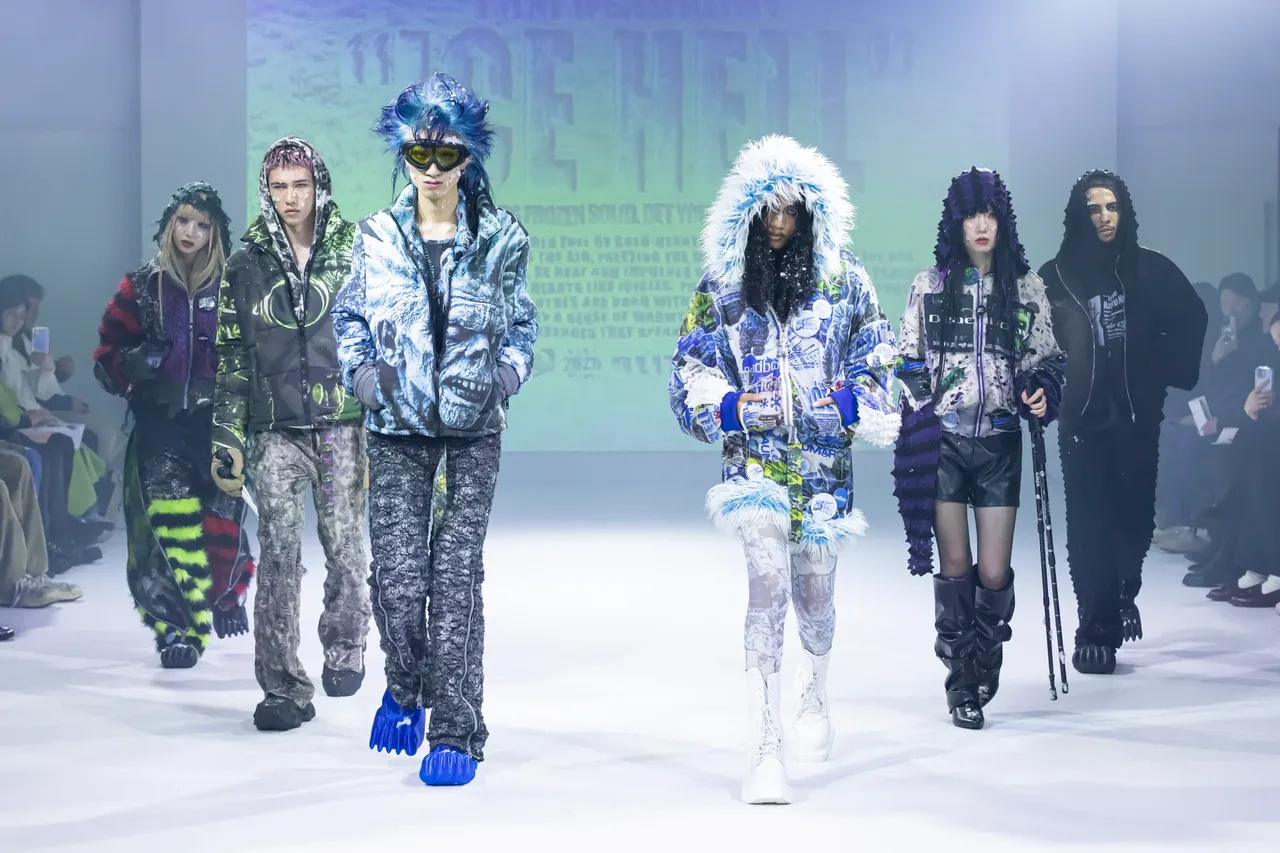
The youth are the future in all aspects. In the realm of fashion, everything happening at this moment is serving as reference material, inspiration, and food for thought for young minds in schools around the world, who are shaping their vision and voice to express their opinions on life and everything it entails through garments. Certain institutions have a special angle of education that has allowed them to become prolific cradles of talent, and that is the case of Bunka Fashion College, which, through more than 100 years of history, managed to reshape the industry with graduates who have become some of the most important names in fashion. Now, in 2026, the commitment to the craft and unique personal expression of the students is as strong as it was decades ago.
Kenzo Takada, Yohji Yamamoto, Tsumori Chisato, Jun Takahashi, NIGO, Auralee’s Ryota Iwai and the most recent LVMH Prize winner Soshi Otsuki all have one thing in common, and that is the place where it all began. Japan's first accredited fashion education school and one of the top institutions in the world embodies and encourages the free spirit and the exceptional taste of the country's inhabitants when it comes to anything related to aesthetics, beauty and expression. When we had the chance to visit it last year, we saw how the immense building seemed not big enough to hold the impressive creative output of its students. Every single student, no matter the year or specific course, has a world in their head, and they don't hesitate to materialise it through fashion without any restriction.
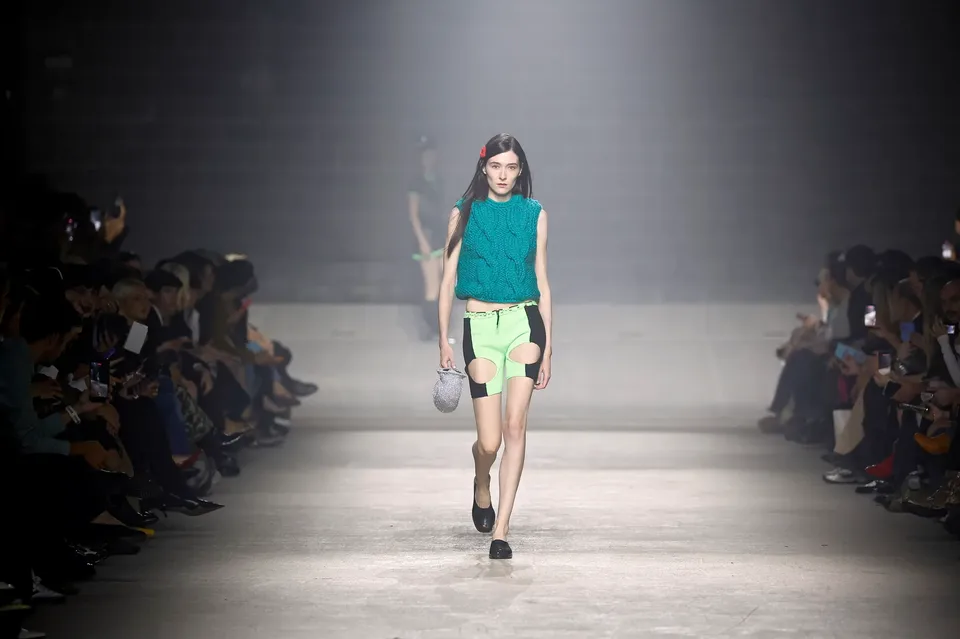
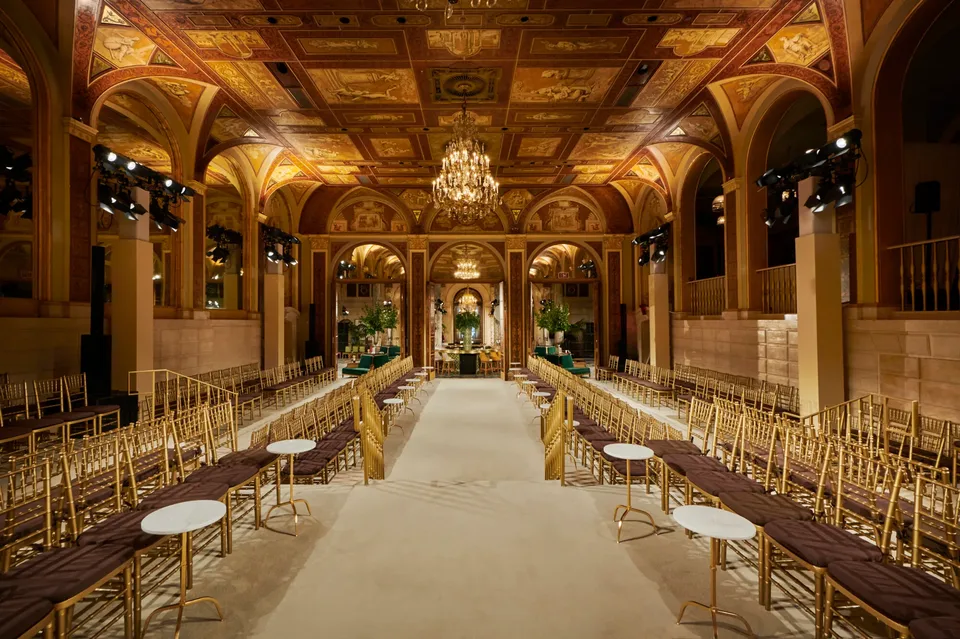
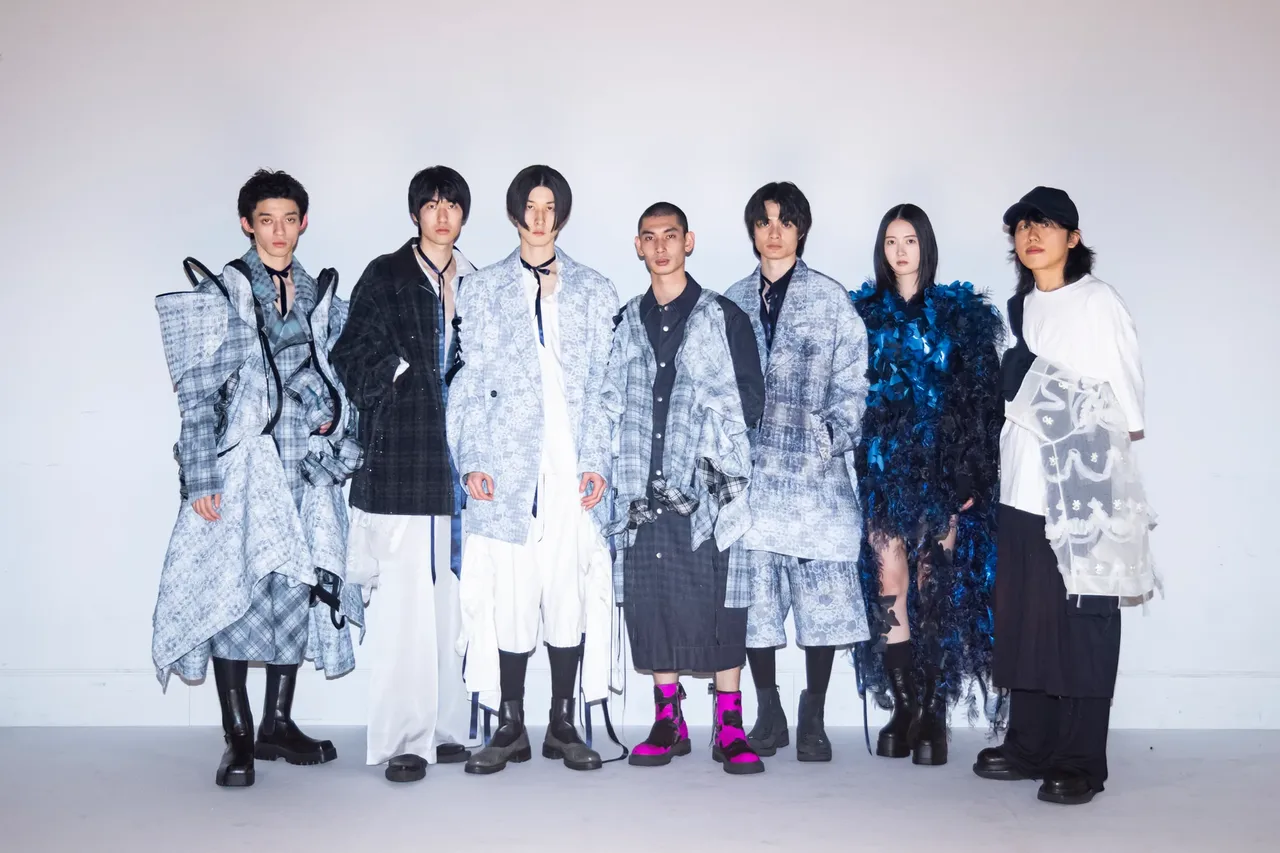
The school is always working on initiatives that encourage their students to present their work in real-life contexts and to get the first taste of what it feels like when others recognise and appreciate their creations. This is how individual was born: a contest where every student was invited to submit their collections, have them evaluated by a team of industry professionals and be selected to present them in a runway show under the Rakuten Fashion Week TOKYO umbrella. Here we had the chance to discover those five names that stood out over more than sixty proposals and who introduced their work to the world at Aoyama Grand Hall. Discover the collections of Bunka's top students.
HINAE KATSURA by Katsura Hinae
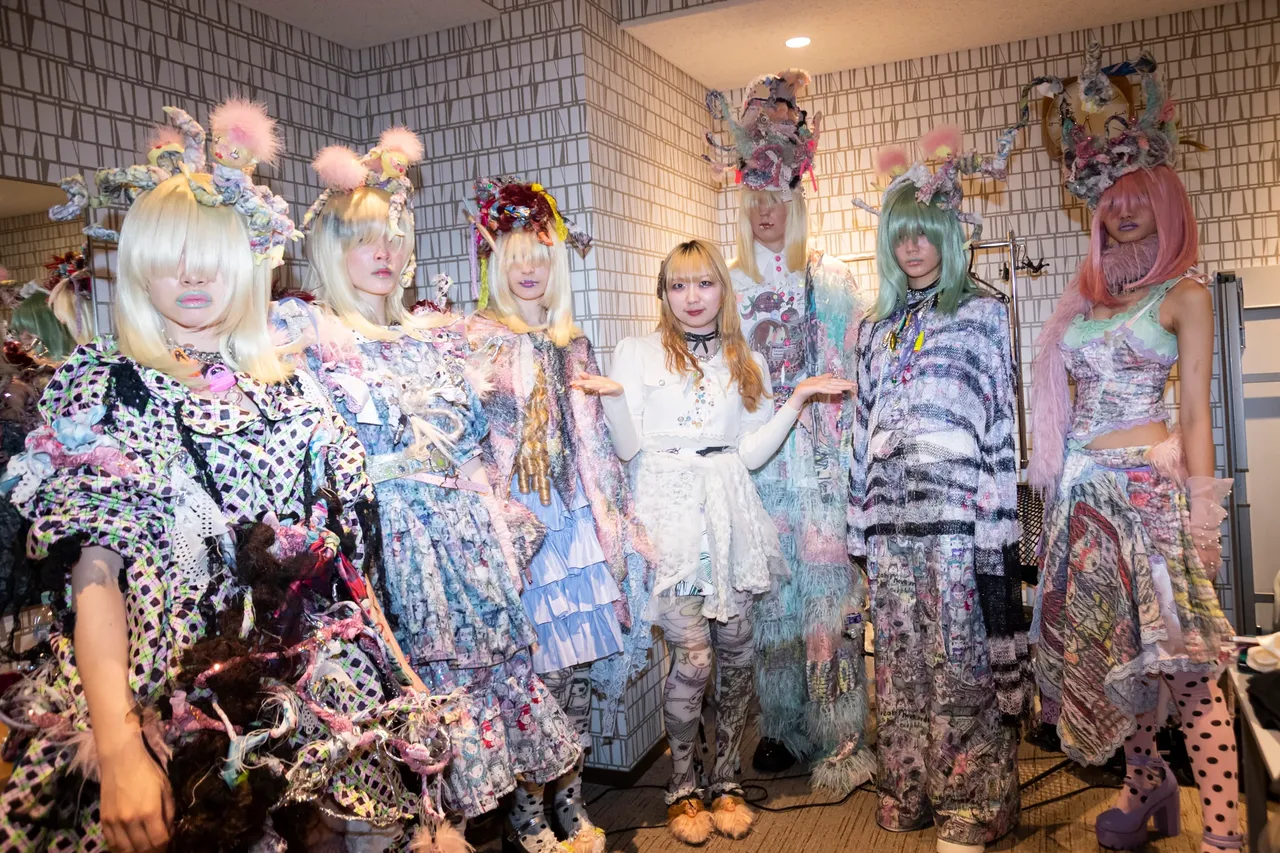
HINAE KATSURA, in her 4th year in the Advanced Fashion Specialist Course, has built a universe that seems to have jumped straight out of our Paradise Kiss dreams, one where fantasy, nostalgia, punk, kitsch, and girlish references meet and work in the perfect way we are used to seeing only in our favourite animations. We are not that far off since, aside from garments, where the childlike wonder and happiness are translated to well-constructed pieces where no detail is forgotten, with intricate headpieces and accessories that add to the fantasy of it all, Katsura also creates hand-drawn illustrations that become prints for her designs and animations that tease her collections. The animations are so, so good; we may need a whole storyline with many episodes and plots about the characters. We are not the only ones to love this artistic side of her brand; alongside fashion awards and showing her collection at Première Vision, she won the Bunka Fashion Illustration Exhibition 2025 Grand Prix.
Please introduce your work to the world. How would you describe what you do?
My work is centred around the concept of “remain a girl”. I create clothing and illustrations inspired by emotions, fantasies, and the small insecurities and fluctuations people carry inside their hearts. In my recent collection, My Green Grass, I explored the feeling of comparing oneself to others, while still wishing for one’s own world to remain the most special__. I expand my ideas through strange, dreamlike spaces and moments in everyday life that feel slightly surreal. Rather than simply making clothes, I want to create a world that excites people, moves their emotions, and allows them to freely enjoy what they love.
What’s your usual process when designing? What are the key elements that identify your brand and your style?
I usually begin designing not from the shape of the clothes, but from my own emotions and experiences. When a theme comes from something genuine inside me, I feel that the entire collection naturally gains consistency. I also often draw the fashion illustrations after the garments are completed. Even if something looks balanced in an illustration, it can appear completely different once it becomes an actual piece of clothing.
Because of that, I try not to be too restricted by the initial sketch and instead focus on the overall styling, atmosphere, and emotional balance. I think the defining elements of my style are hand-drawn details, a dreamy yet slightly strange mood, delicate craftsmanship, and the coexistence of softness and imperfection. I also pay close attention to hair, makeup, and headpieces so that the entire show feels like one complete world.
Because of that, I try not to be too restricted by the initial sketch and instead focus on the overall styling, atmosphere, and emotional balance. I think the defining elements of my style are hand-drawn details, a dreamy yet slightly strange mood, delicate craftsmanship, and the coexistence of softness and imperfection. I also pay close attention to hair, makeup, and headpieces so that the entire show feels like one complete world.
What is fashion to you?
To me, fashion is a way to honestly express what is inside me. It is not just about wearing clothes — I believe fashion has the power to move people emotionally and even create entire spaces and atmospheres. When I first fell in love with fashion, it gave me the feeling that “it’s okay to be myself”. So through my work, I would be happy if someone could discover a love for fashion or feel that they are free to express themselves however they want. More than having people fully understand every concept, I value whether they can enjoy the atmosphere of the show and simply feel comfortable existing within that world.
Deadbooy by Kakeru Nishiwaki
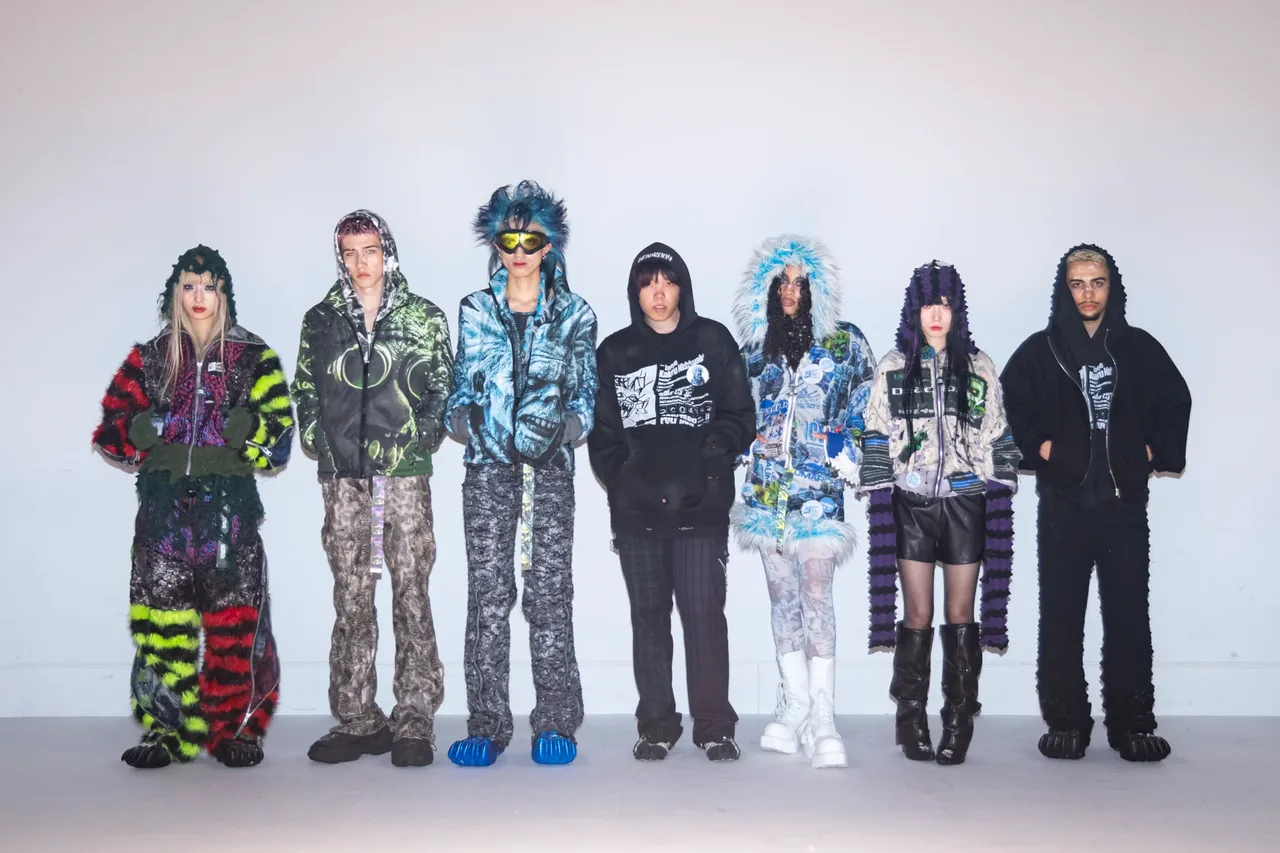
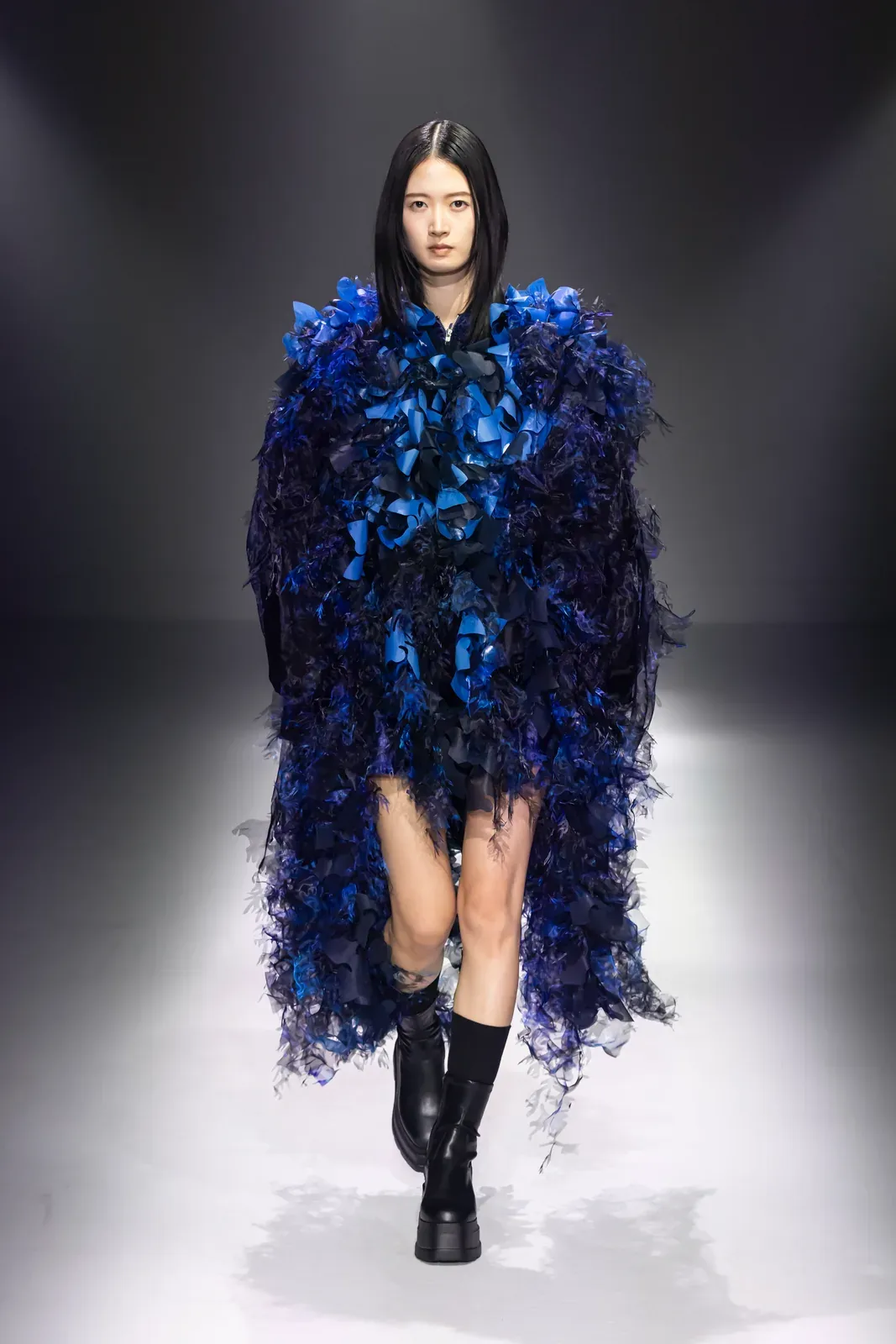
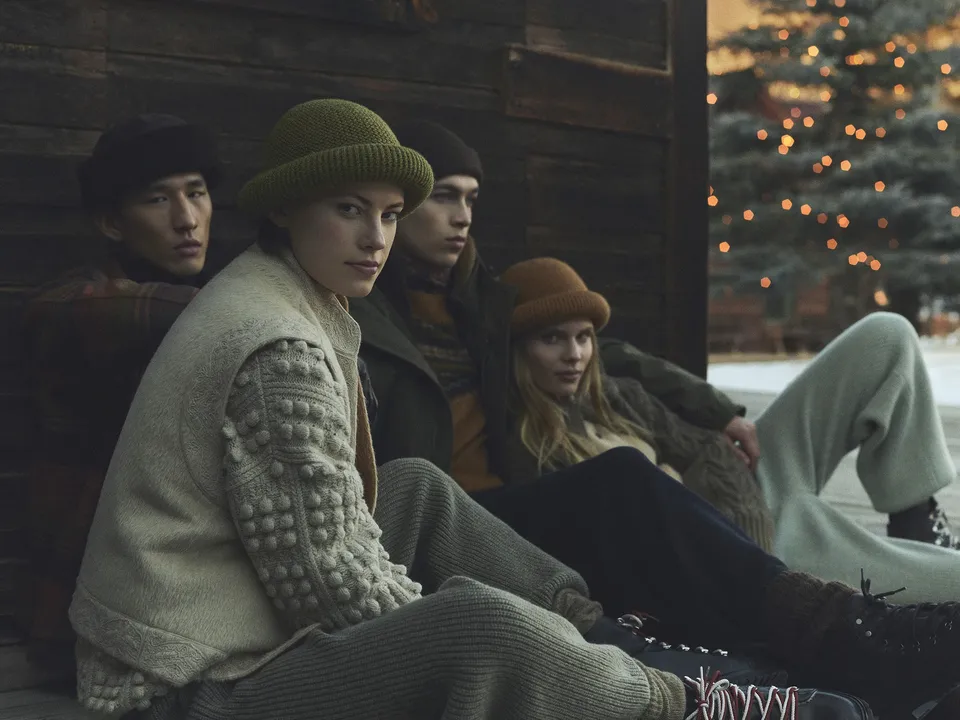
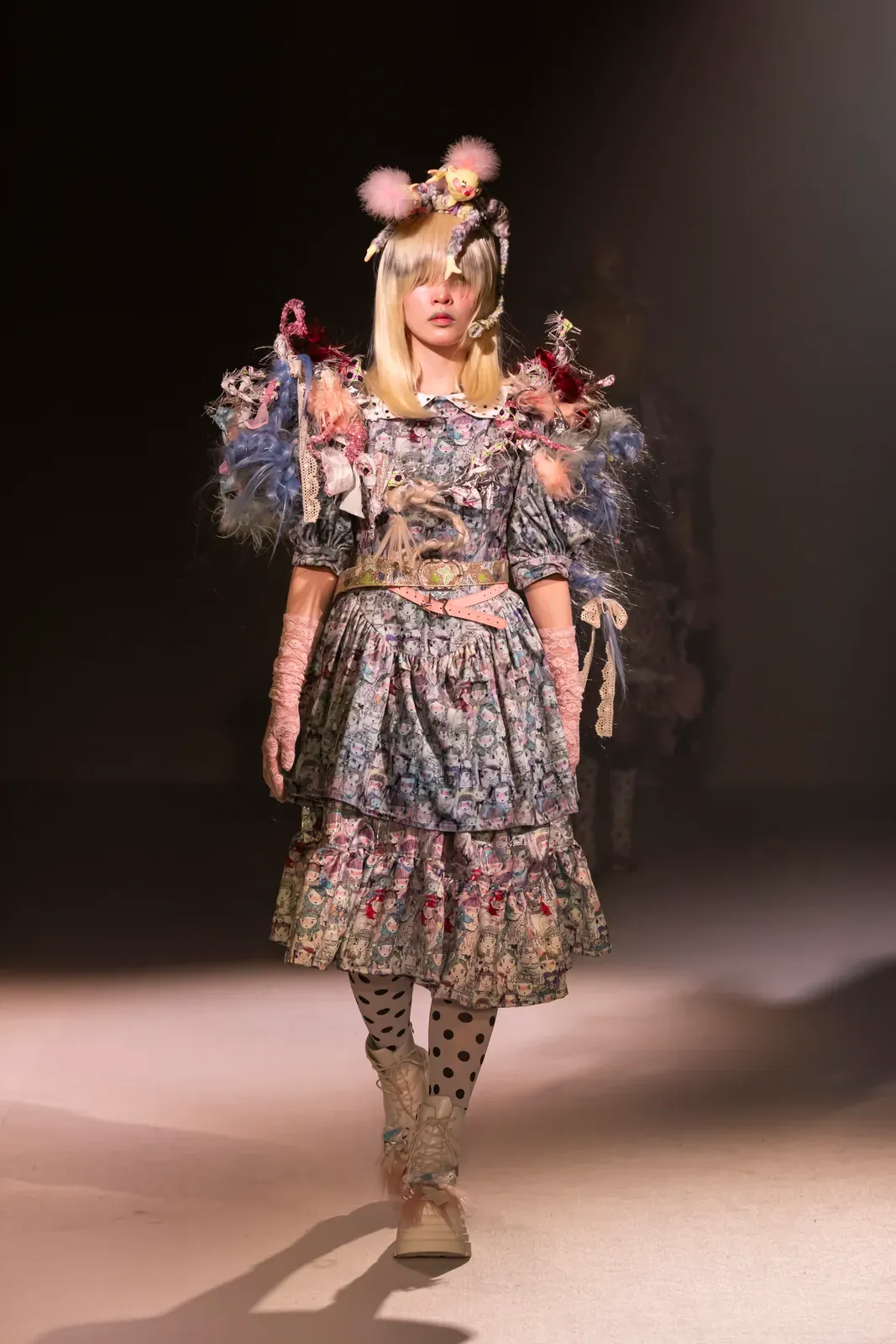
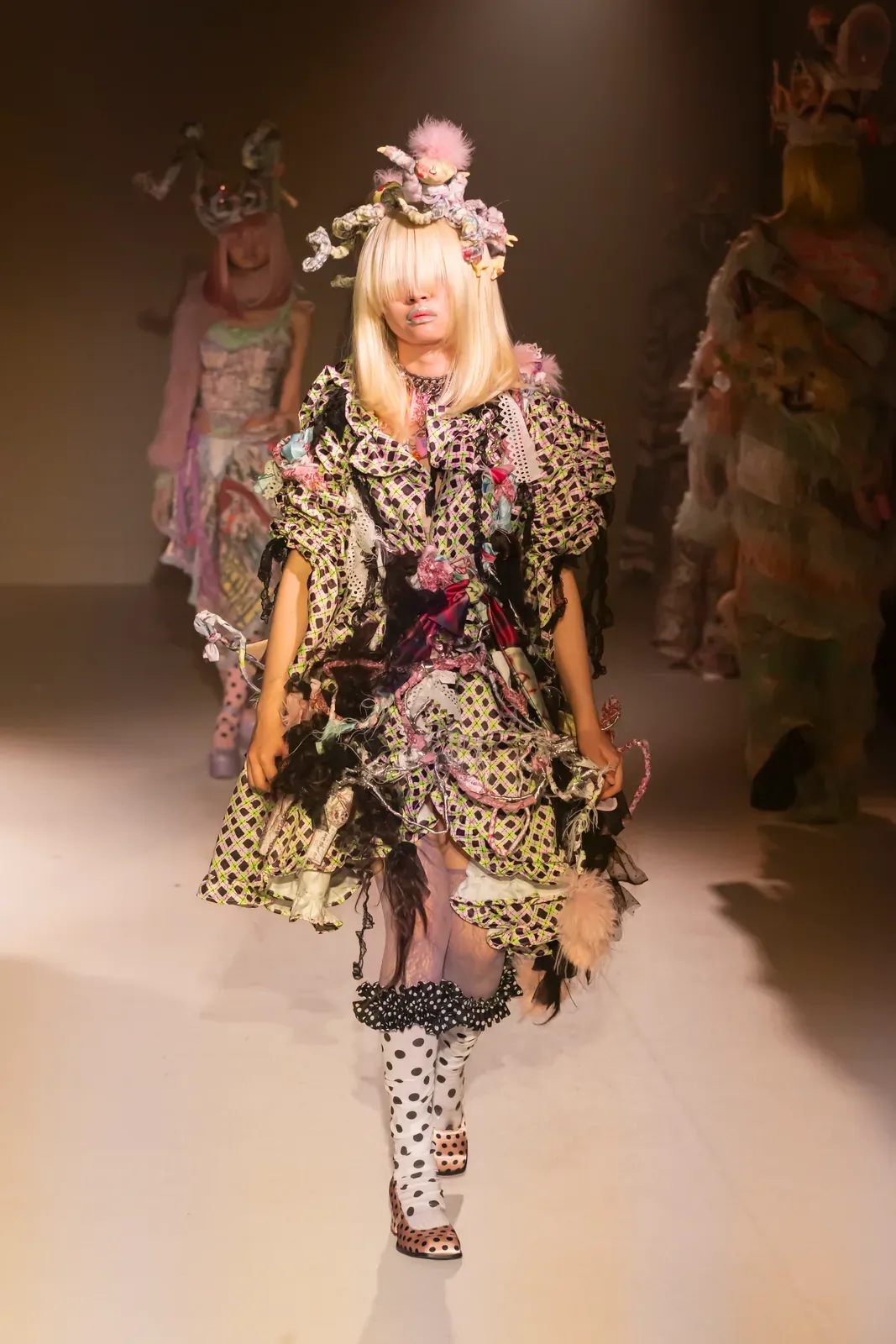
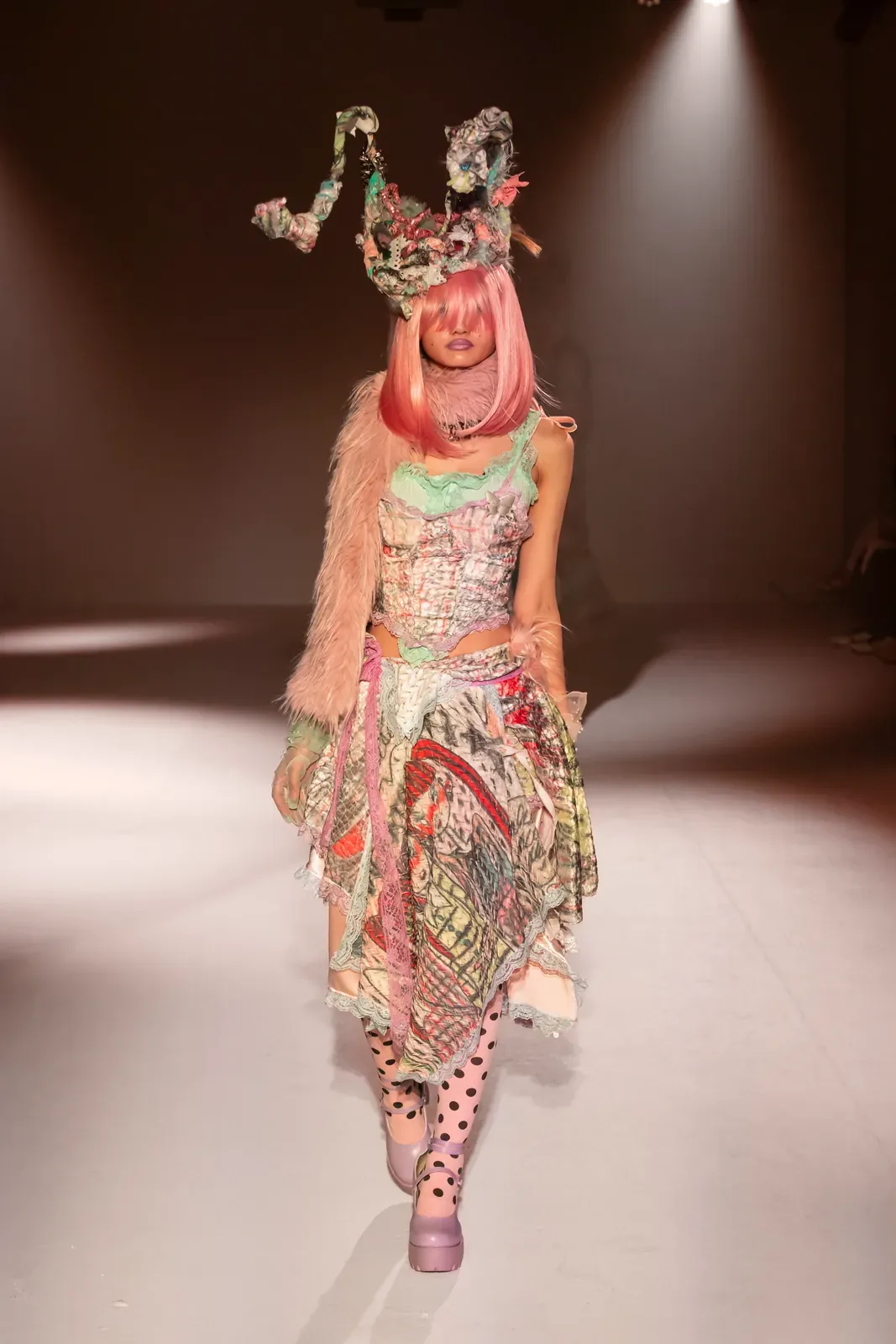
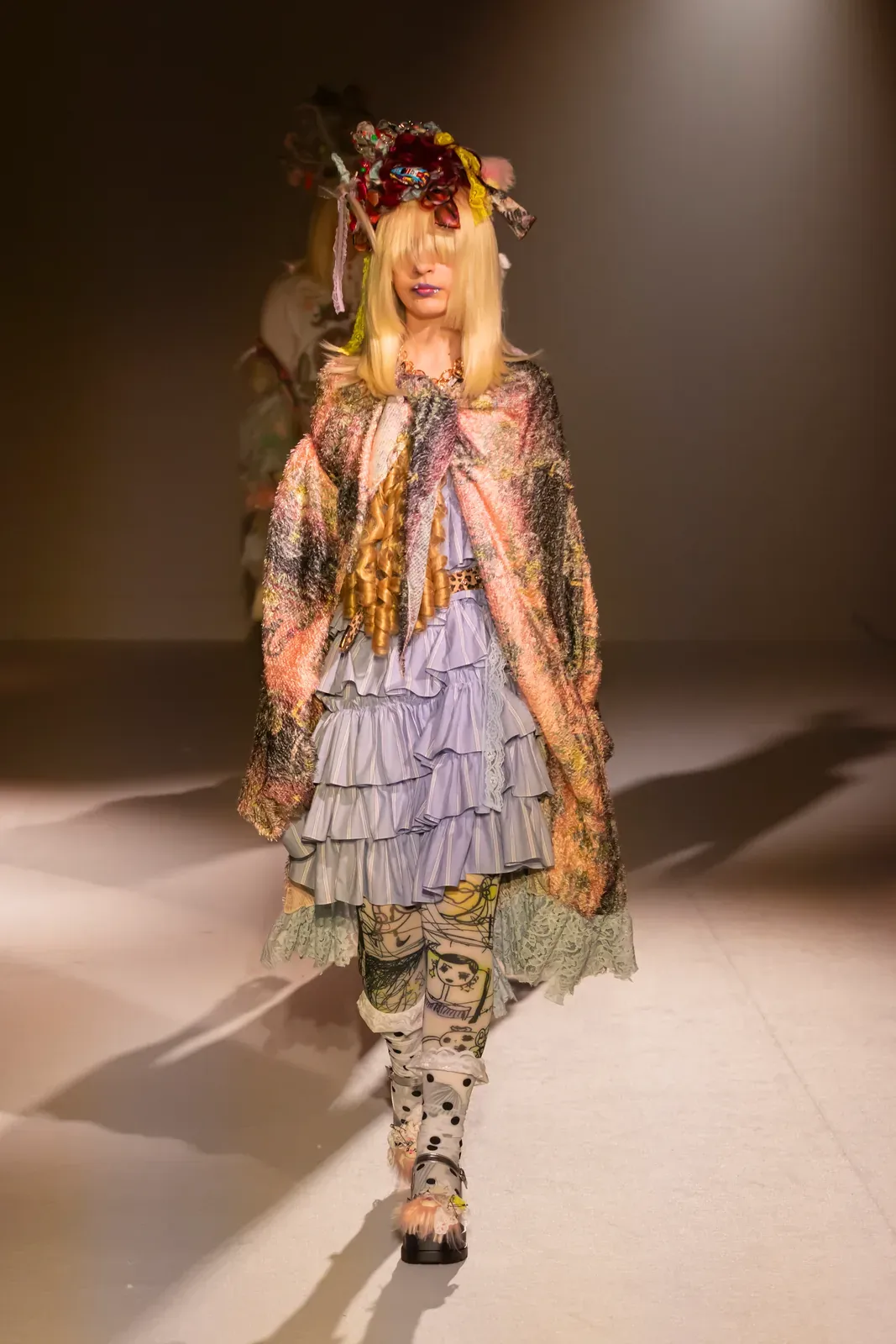
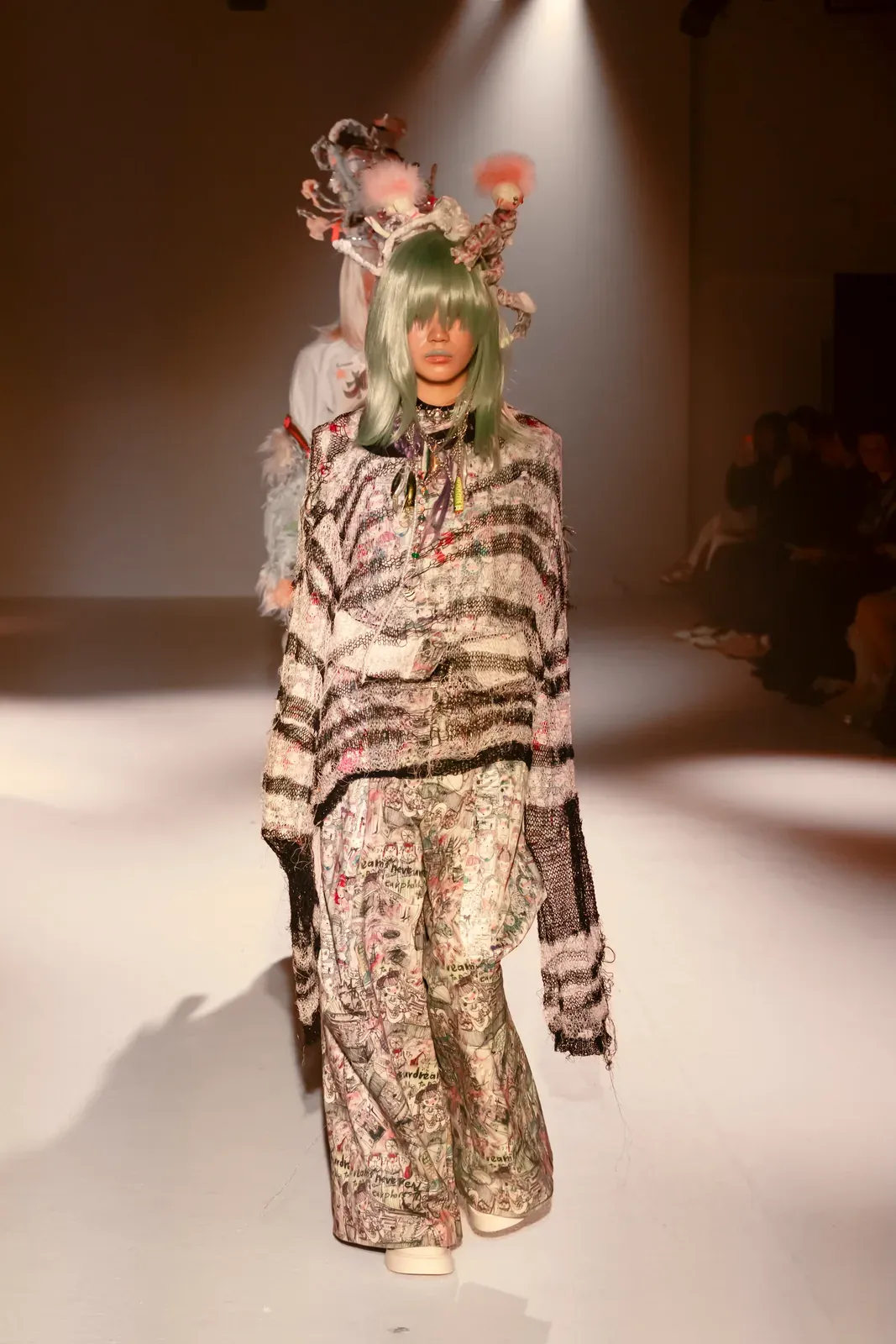
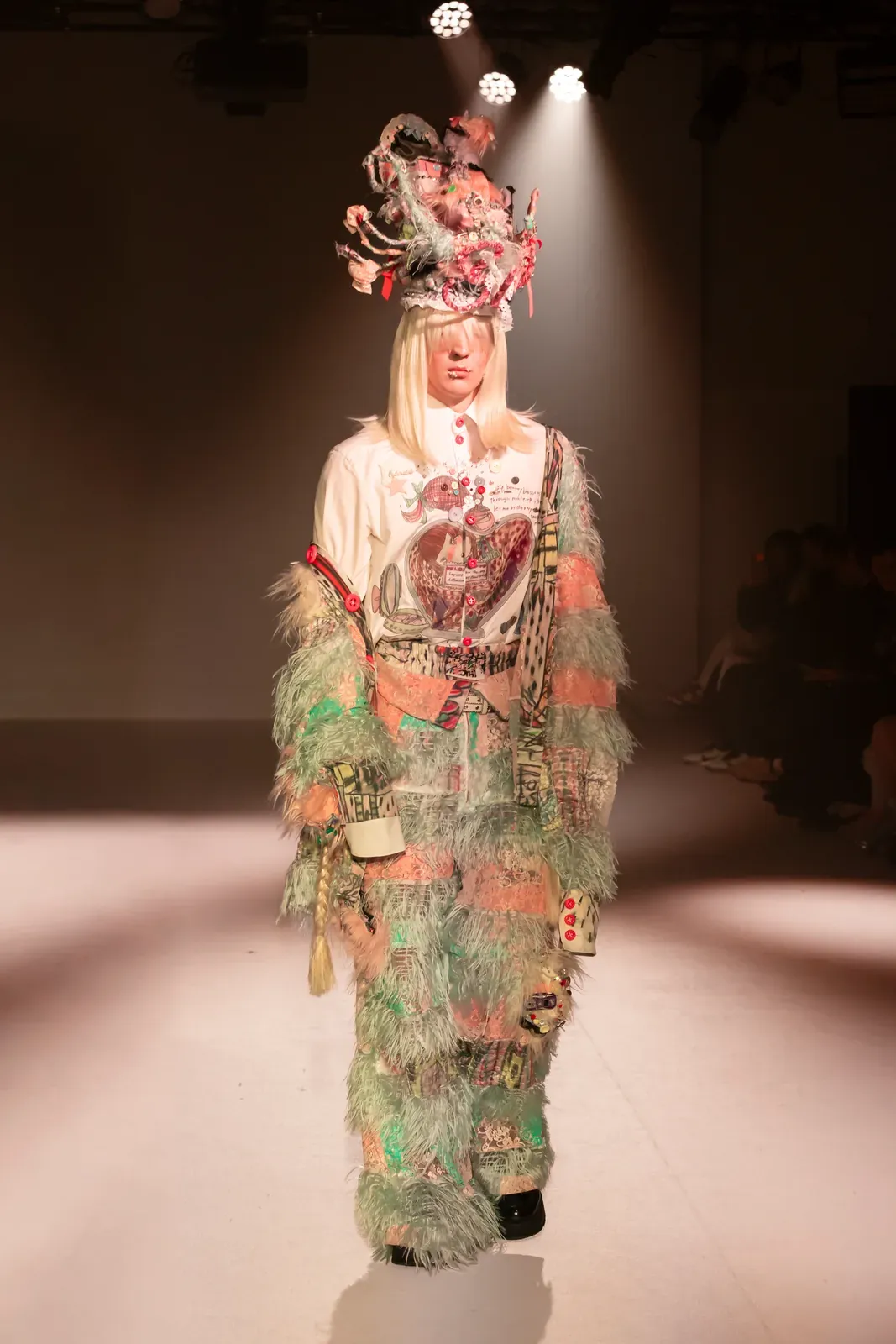
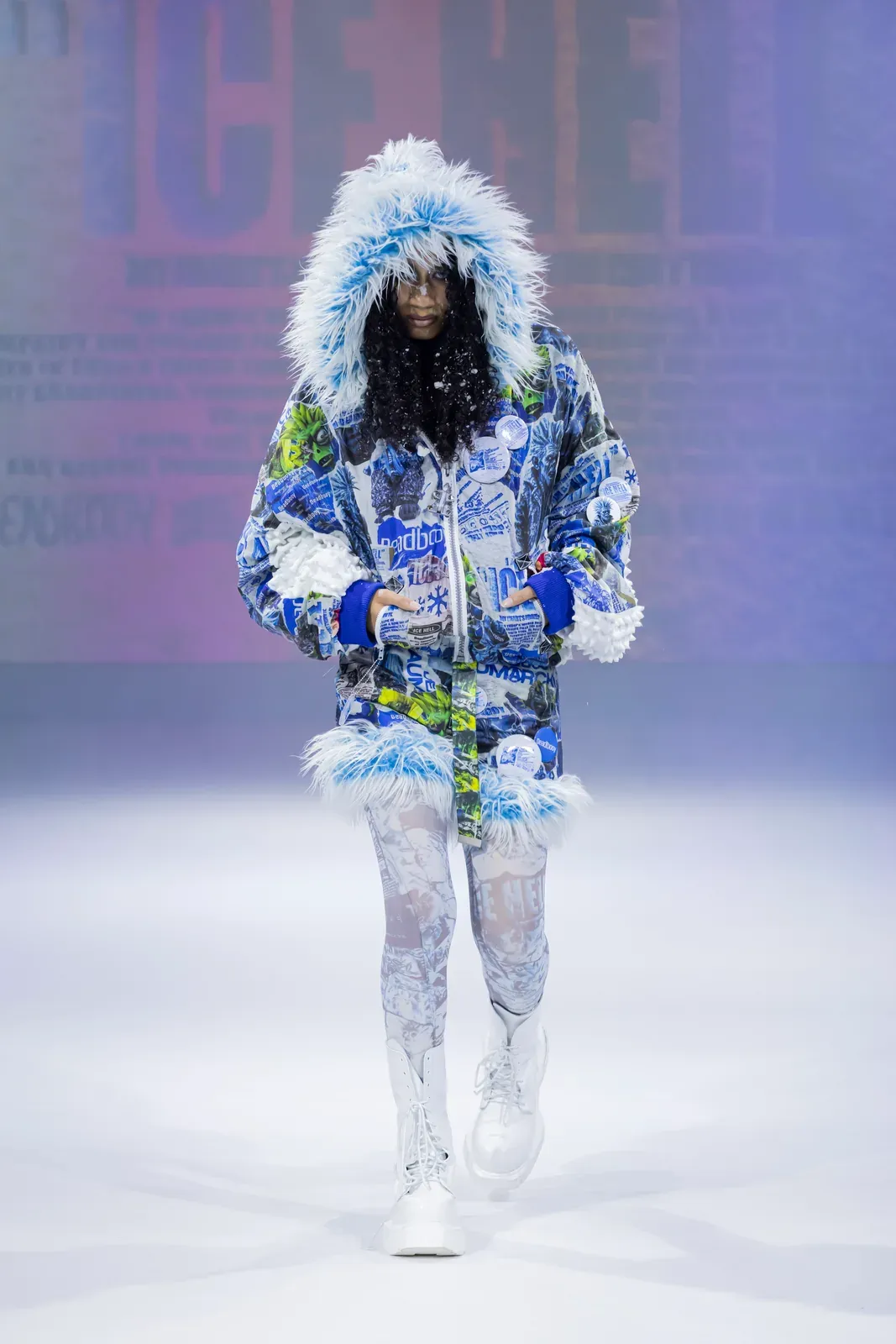
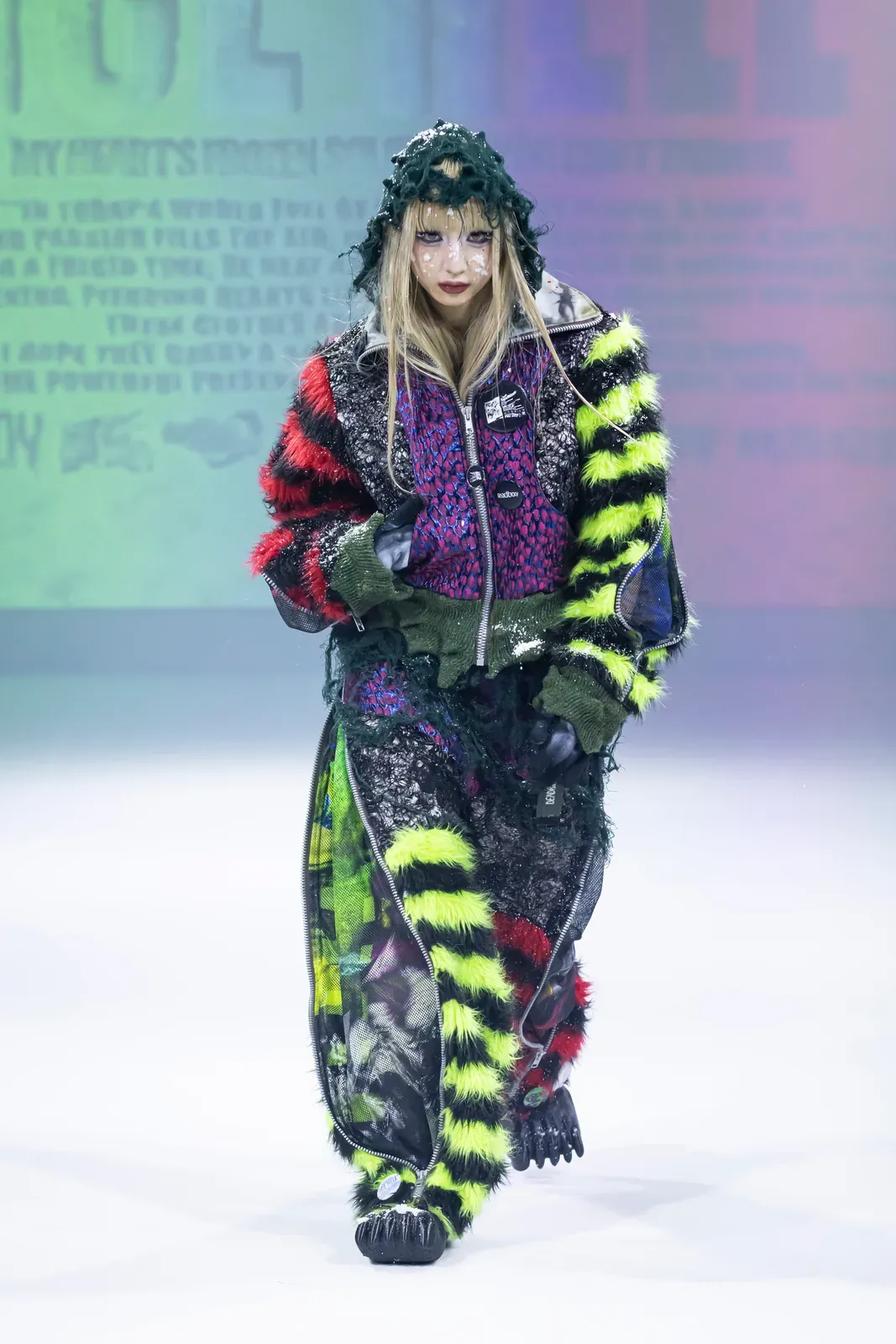
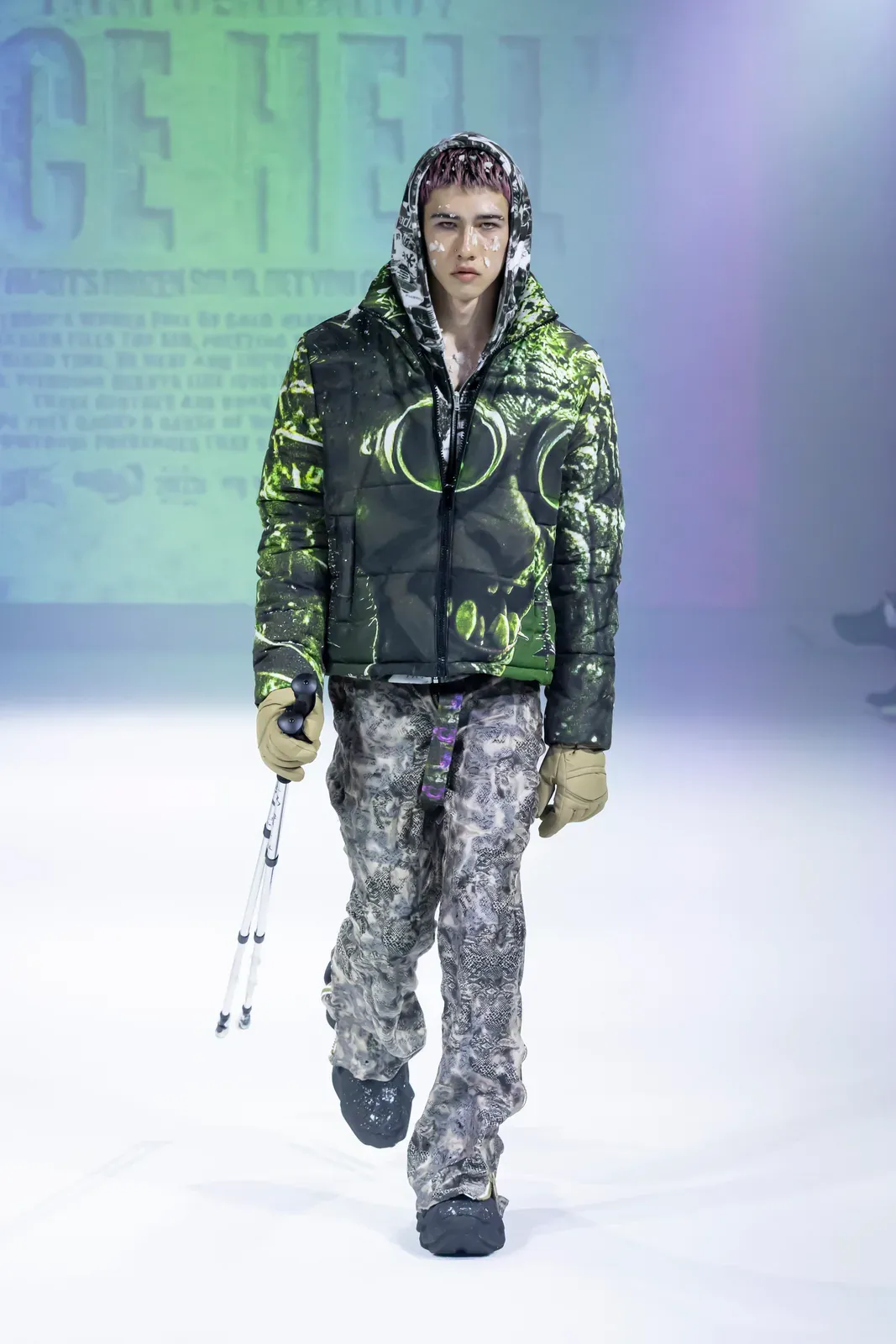
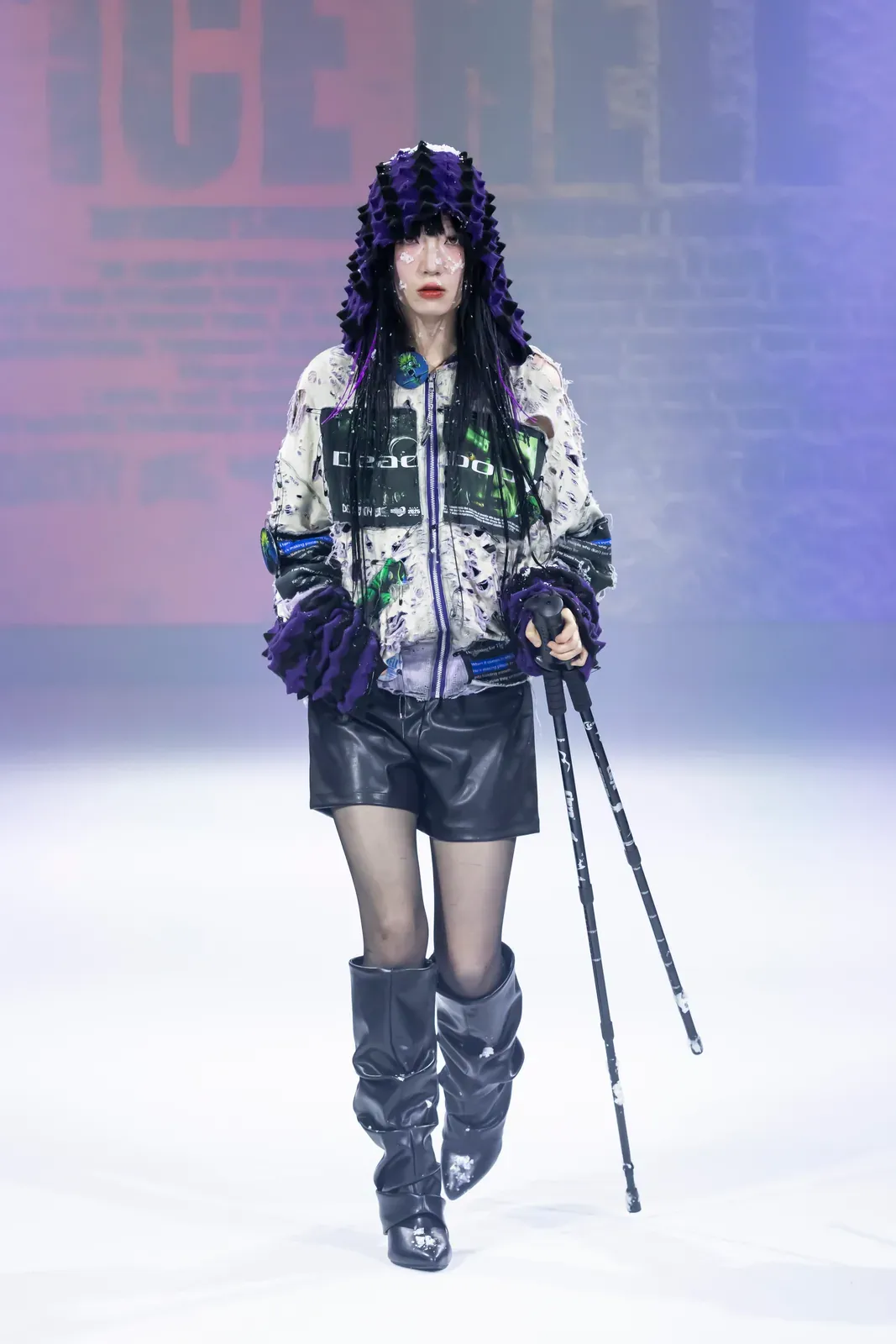
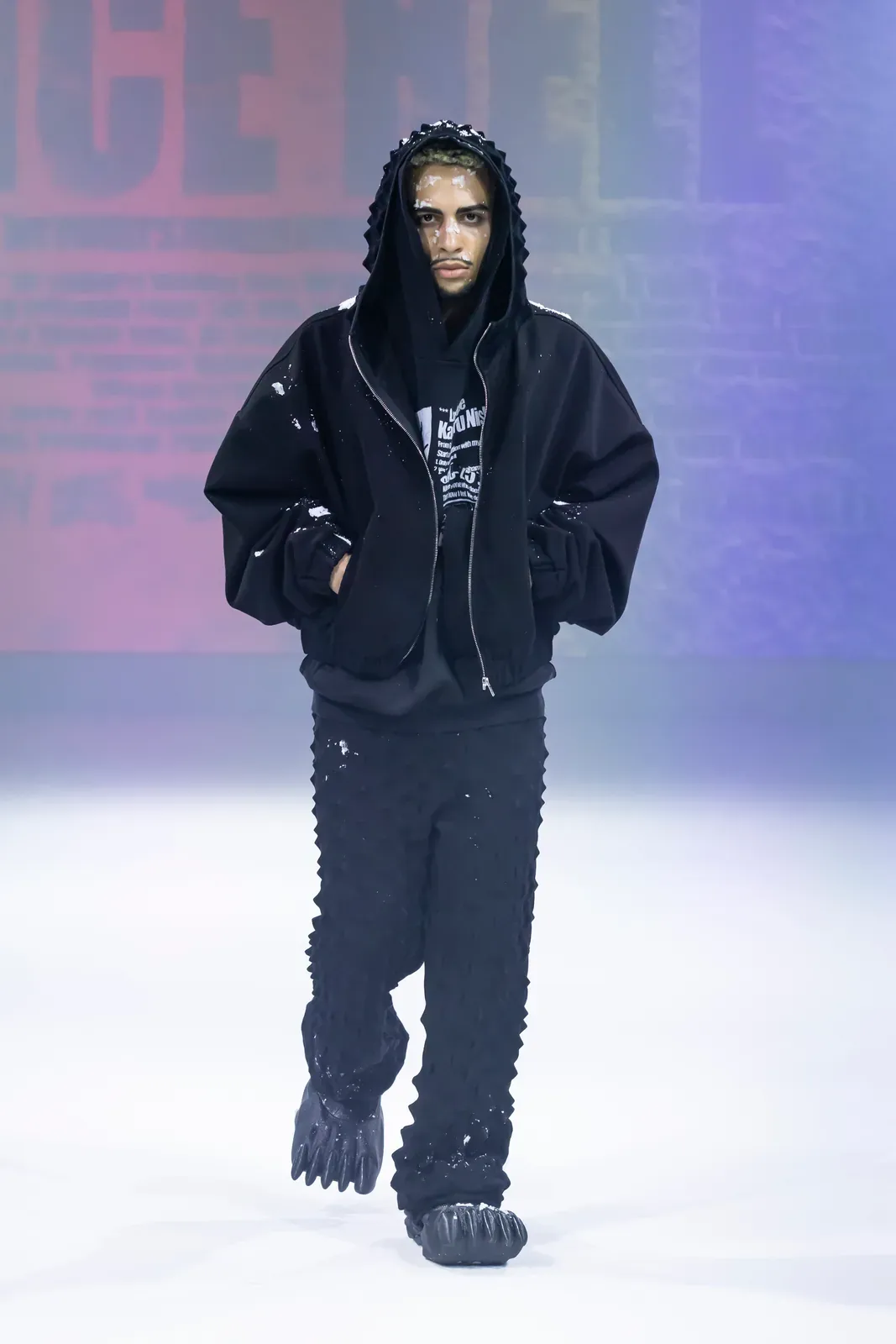
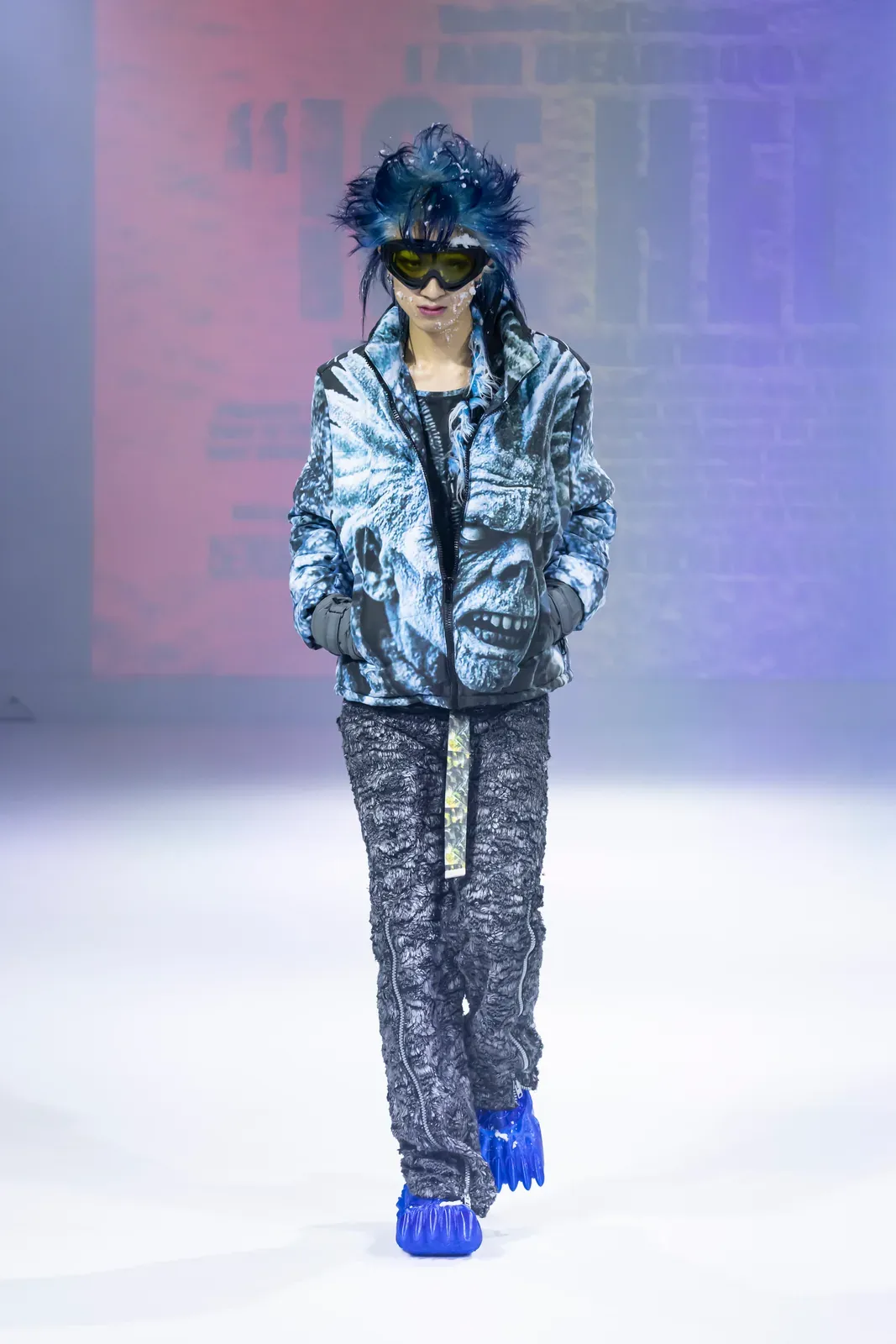
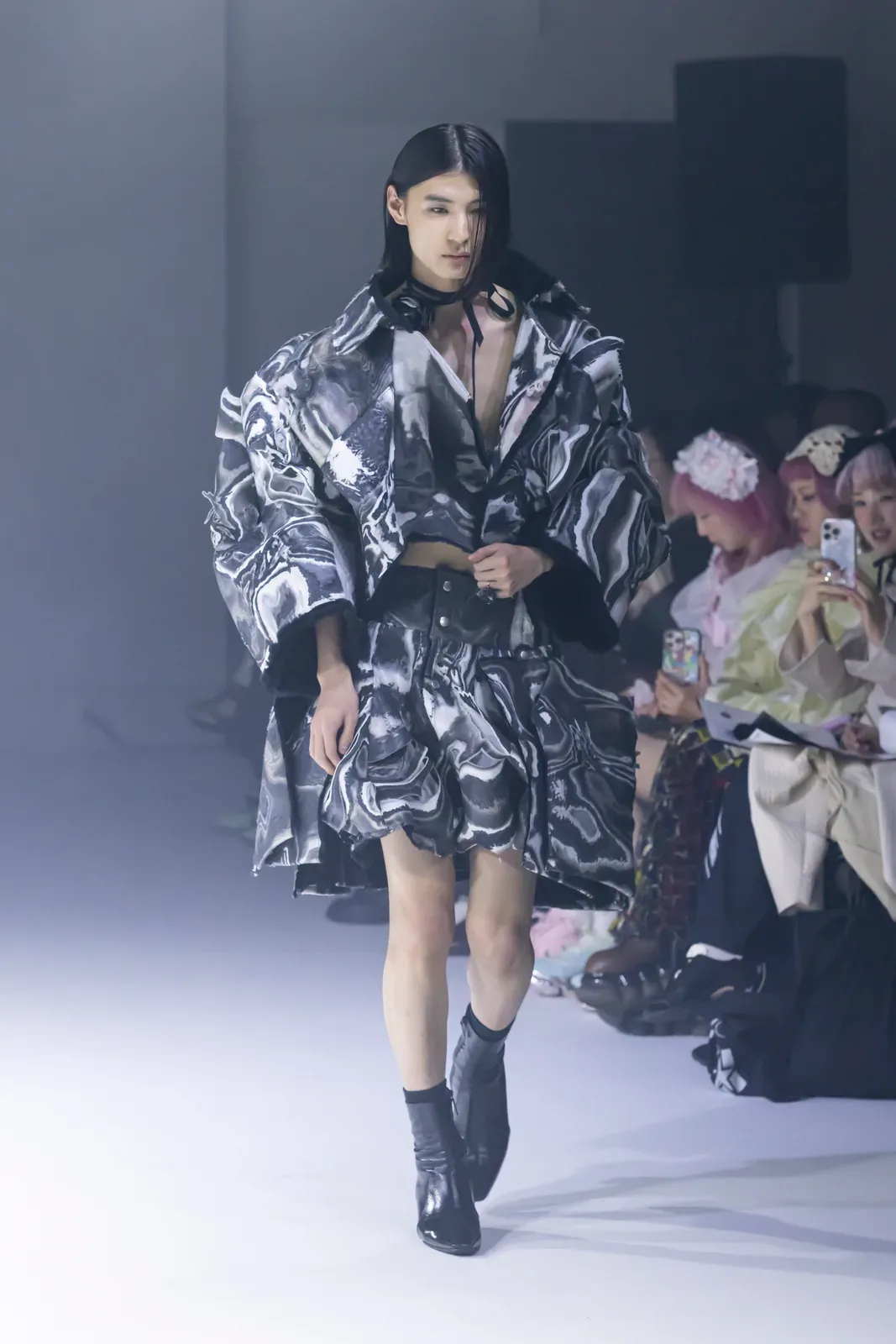
This third-year student in the Apparel Design Department has lost no time, with his own label already doing numbers, awards in Japan, Taiwan, and China, and big-name clients in his portfolio. In his work, where colours, textures, prints, and excess are the norm, hides a desire to materialise and reframe negative emotions, discomfort, and past wounds into designs that tell their own unique stories, turning something bad into opportunities to shape our own personal expression. We managed to meet him and see his pieces up close last September during our visit to the school, and the explorations of materials and possibilities when it comes to volume and textures make his work resemble sculptures at times; it is really impressive. CA7RIEL & PACO AMOROSO wore his pieces for the Fuji Rock Festival 2025, and artists like Lex and XG are also tapped into DEADBOOY.
Please introduce your work to the world. How would you describe what you do?
Deadbooy is a brand where I turn my emotions and personal experiences into clothing. I express dark feelings and memories through textures, graphics, and silhouettes instead of hiding them.
What’s your usual process when designing? What are the key elements that identify your brand and your style?
I usually start from emotions or images first, then build the design around them. Key elements of Deadbooy are spiky knits, distressed details, strong graphics, and rough textures.
What is fashion to you?
For me, fashion is a way to express myself without words. It’s also something that connects people who share the same feelings or mindset.
Fleur Douces Philharm by Yuuka Horie
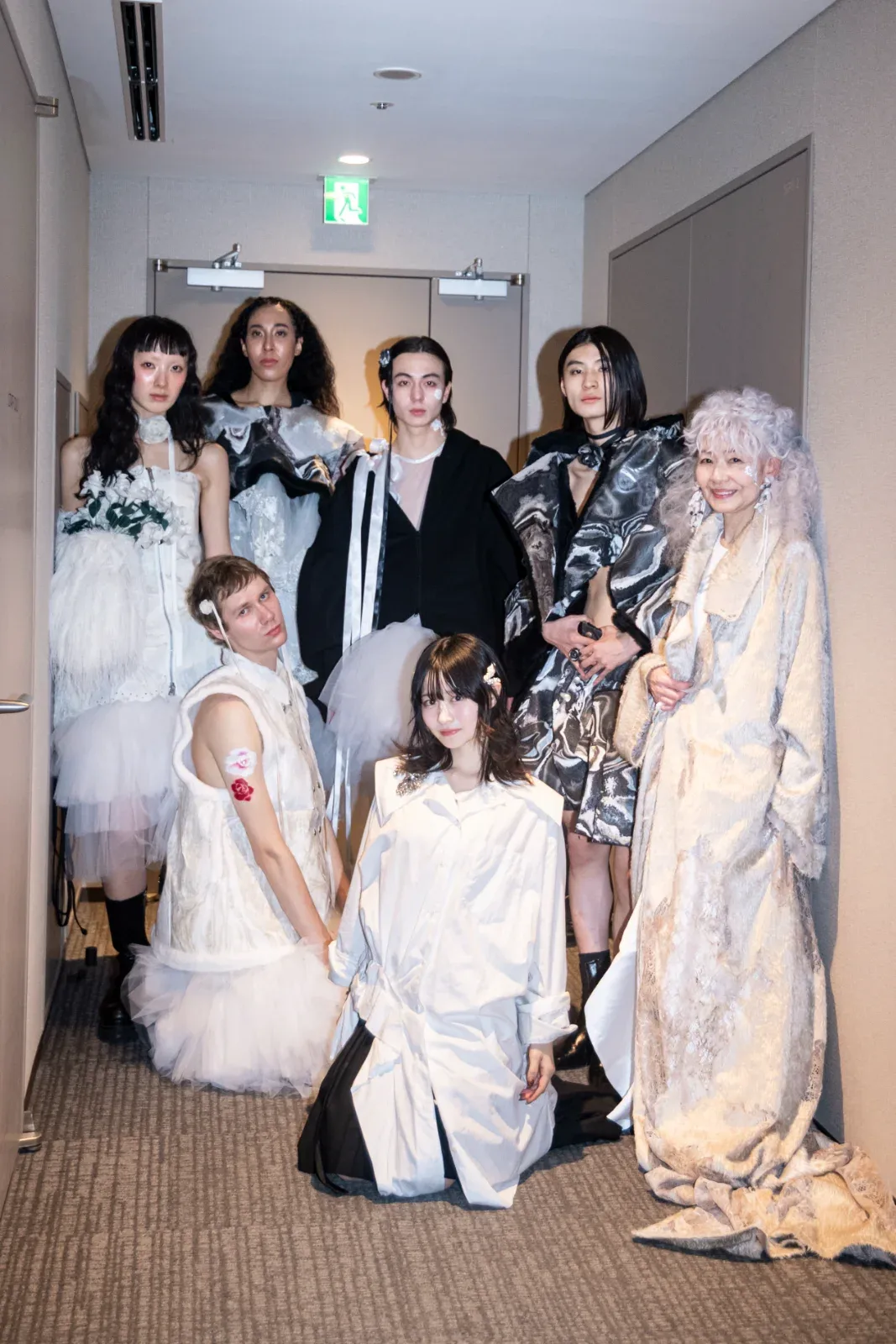
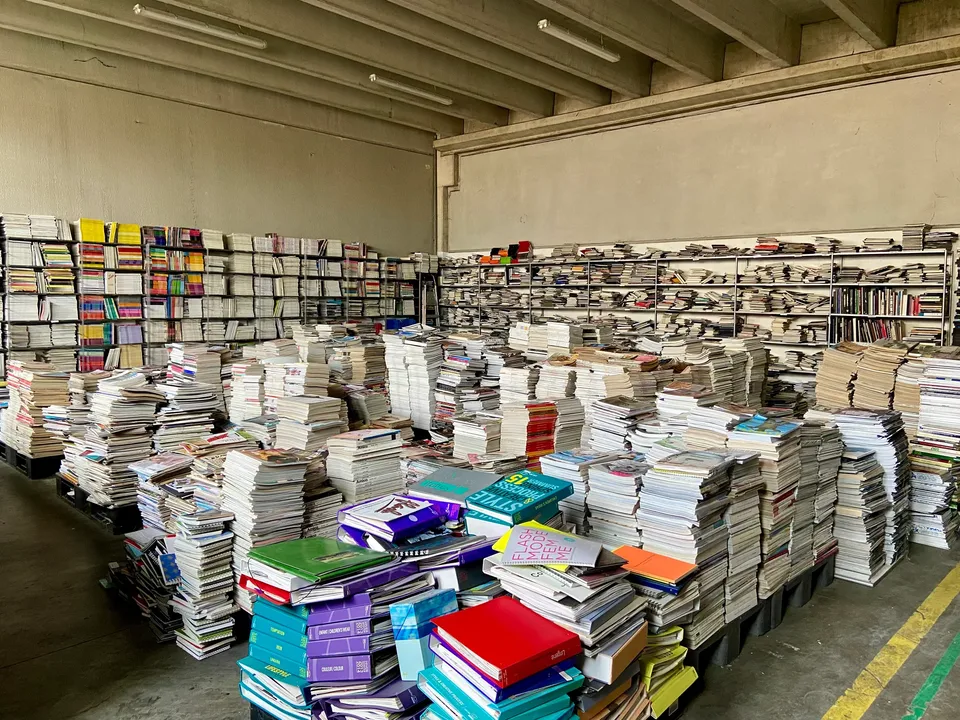
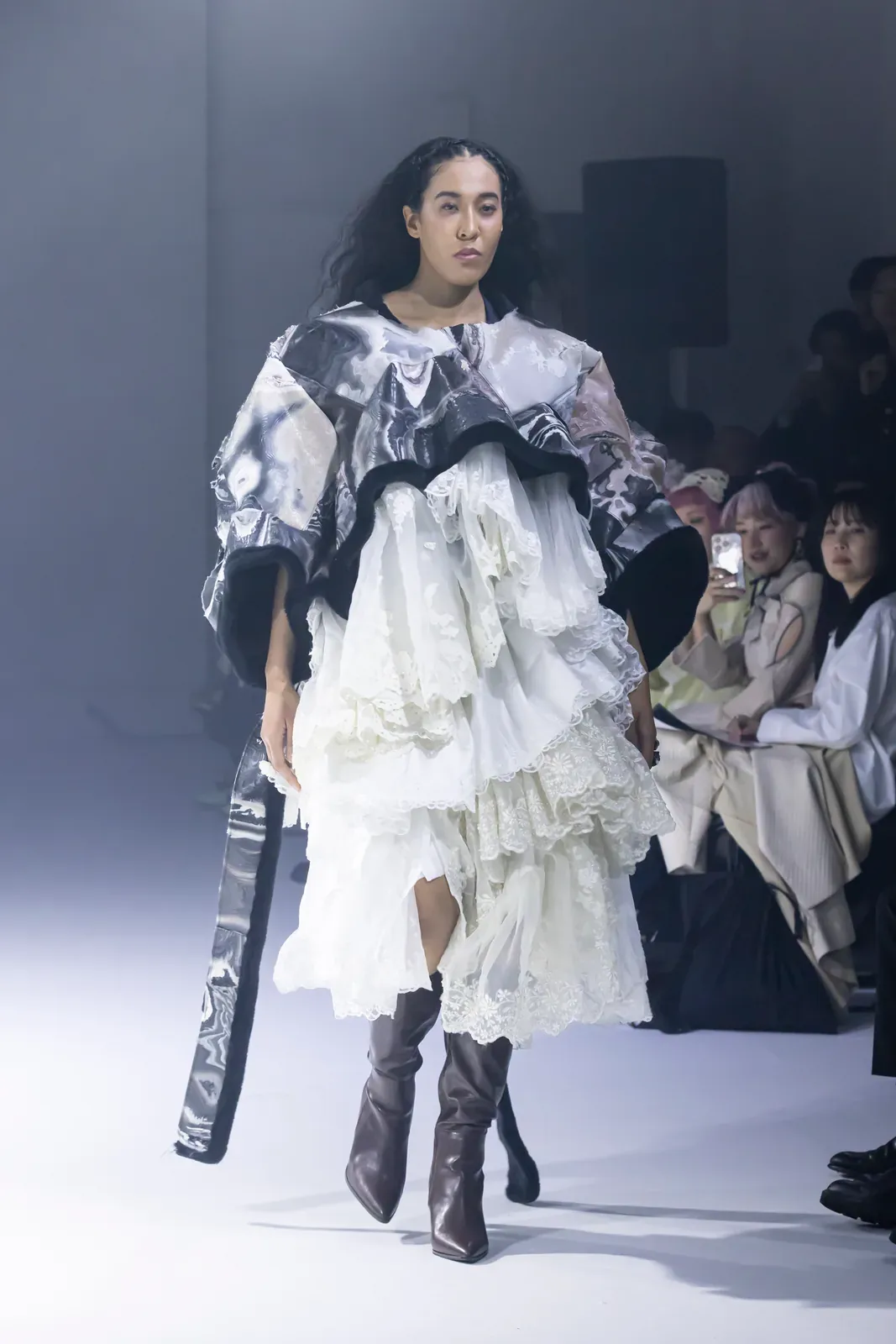
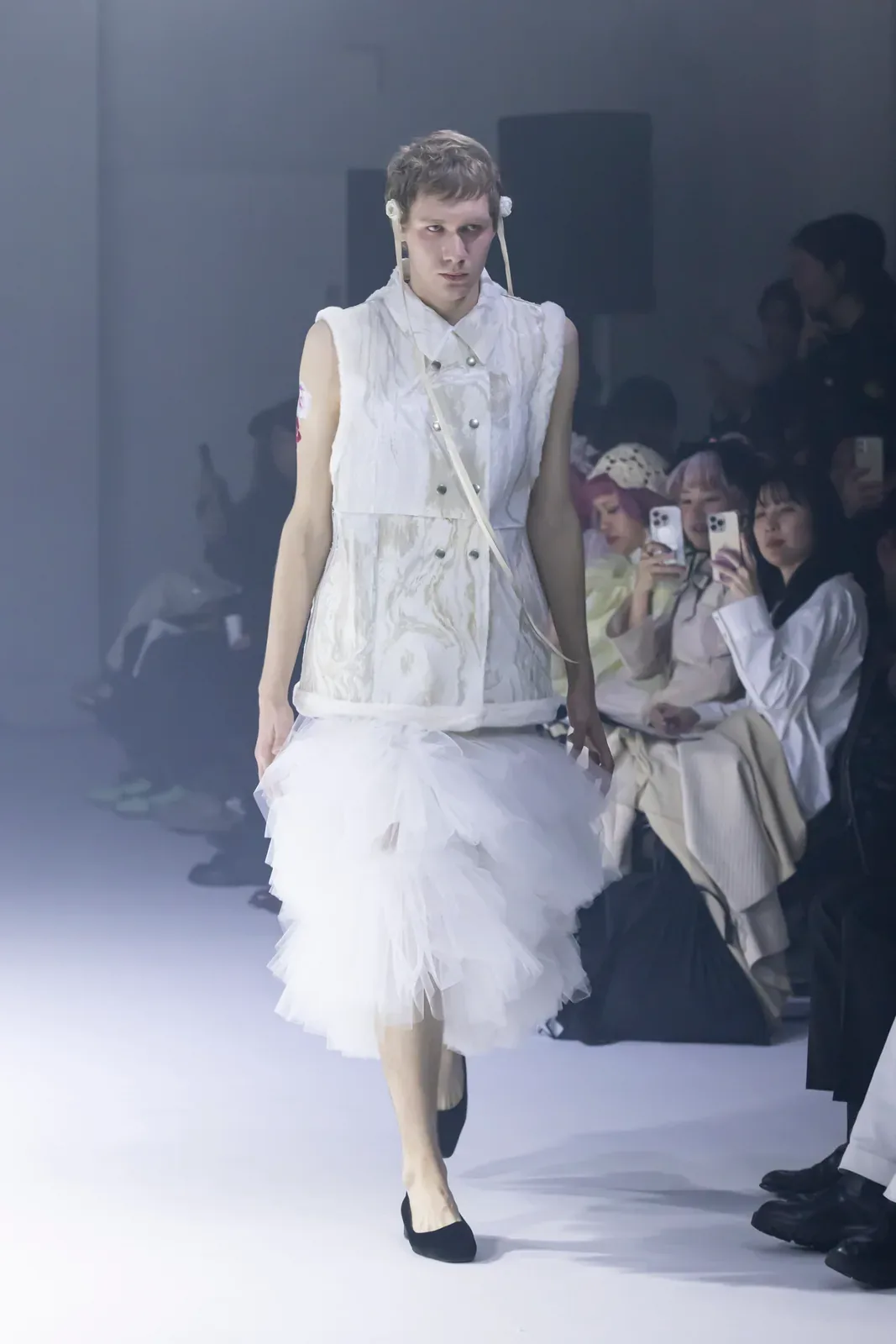
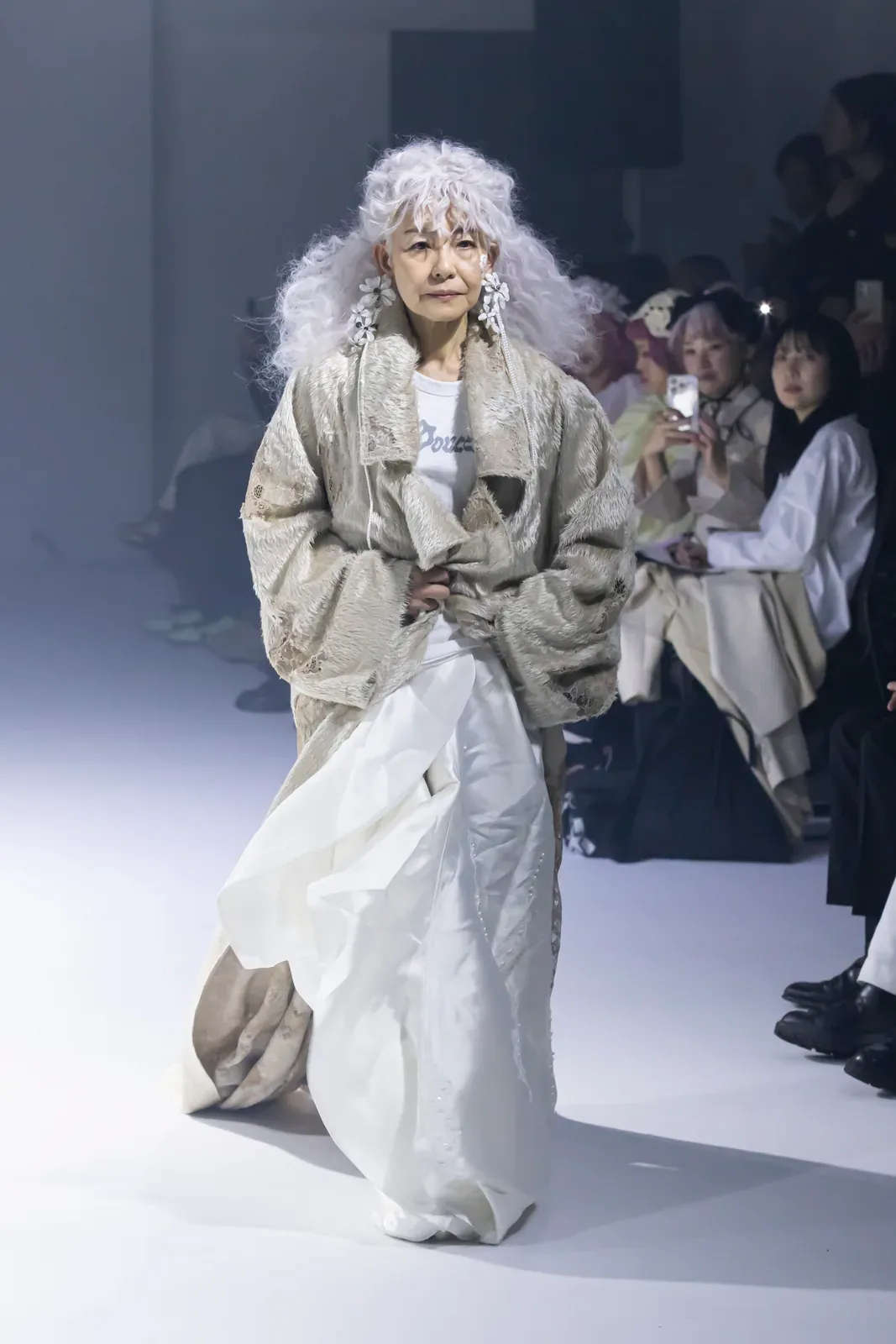
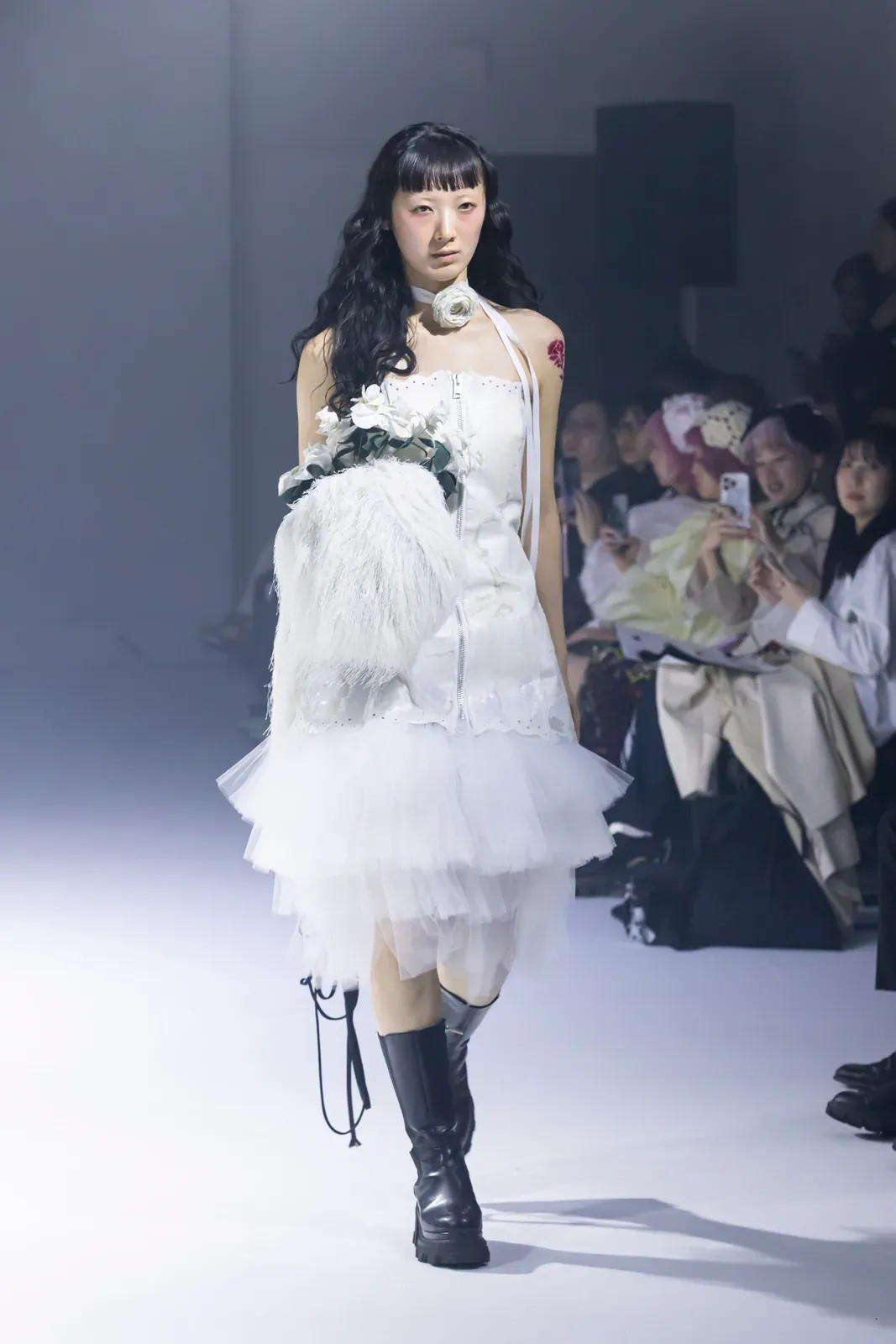
Created by a second-year student, Fleur Douces Philharm takes its name from the world of symphonic orchestras, shaped by the designer’s background in brass band performance. From here, her work unfolds with the sensibility of a musical composition, where silhouettes and fabric seem to float in a light but meaningful way. Her latest oeuvre explores a technique where weaving and knitting merge into one surface with the purpose of extending the life of existing materials and fabrics, used in this case to deconstruct and rebuild an abandoned wedding dress that was meant to be discarded, with all the symbolism behind it. In doing so, garments marked by the past are given another life, carrying a renewed sense of emotion and narrative. Aside from multiple award nominations, Horie was selected as one of the top 10 entries in Asia for the Furmark Futures Young Students Design Competition 2026.
Please introduce your work to the world. How would you describe what you do?
The theme of this collection is the reconstruction of wedding dresses. It all started when I discovered that an unexpectedly large number of wedding dresses are discarded simply due to minor stains or shifting trends. Around the same time, I came across an incredible textile processing technique, and connecting these two findings became the spark for this collection.
This collection focuses heavily on fabrics, and the technique itself was originally born from a sustainable mindset. It originated at a Japanese denim dyeing factory as a way to repurpose denim that couldn't be sold due to dyeing errors. Because this method requires a massive amount of fabric, I felt it was the perfect match for this project.
When I reached out to a wedding salon for support, they generously provided the dresses. Looking at it from another perspective made me realise just how many dresses are left over. Breathing new life into these voluminous gowns that were originally destined for the landfill, and watching them transform with entirely new expressions, has been a deeply thrilling project for me.
This collection focuses heavily on fabrics, and the technique itself was originally born from a sustainable mindset. It originated at a Japanese denim dyeing factory as a way to repurpose denim that couldn't be sold due to dyeing errors. Because this method requires a massive amount of fabric, I felt it was the perfect match for this project.
When I reached out to a wedding salon for support, they generously provided the dresses. Looking at it from another perspective made me realise just how many dresses are left over. Breathing new life into these voluminous gowns that were originally destined for the landfill, and watching them transform with entirely new expressions, has been a deeply thrilling project for me.
What’s your usual process when designing? What are the key elements that identify your brand and your style?
My ultimate motivation is always to create clothes that someone truly wants to wear. I focus deeply on patterns and fabrics — the very core of garment construction — always designing with the question of how to use them to bring joy to people. To me, the function of clothing doesn’t always need to be about convenience. When it’s “for the sake of fashion”, a detail that seems completely meaningless at first glance can actually bring a sense of comfort or delight to someone. I believe that is where the true intrigue of fashion lies, setting it apart from mere clothing.
That is exactly why, in today's world where efficiency and curation dominate every field, I want to design pieces that question the very meaning of why we dress and what fashion truly is — all through the lens of the “essential wastes” that fashion requires.
That is exactly why, in today's world where efficiency and curation dominate every field, I want to design pieces that question the very meaning of why we dress and what fashion truly is — all through the lens of the “essential wastes” that fashion requires.
What is fashion to you?
To me, fashion is a message to the world. At times, it is like a love letter; at others, like a picture book; and sometimes, it acts as a manifesto. I know that not all clothes in this world carry a positive meaning, and some may even convey messages that are difficult to accept. Yet, it is precisely because all of this is encompassed within fashion that I find every single bit of it beautiful.
KYOMA SAKAKIHARA by Kyoma Sakakihara
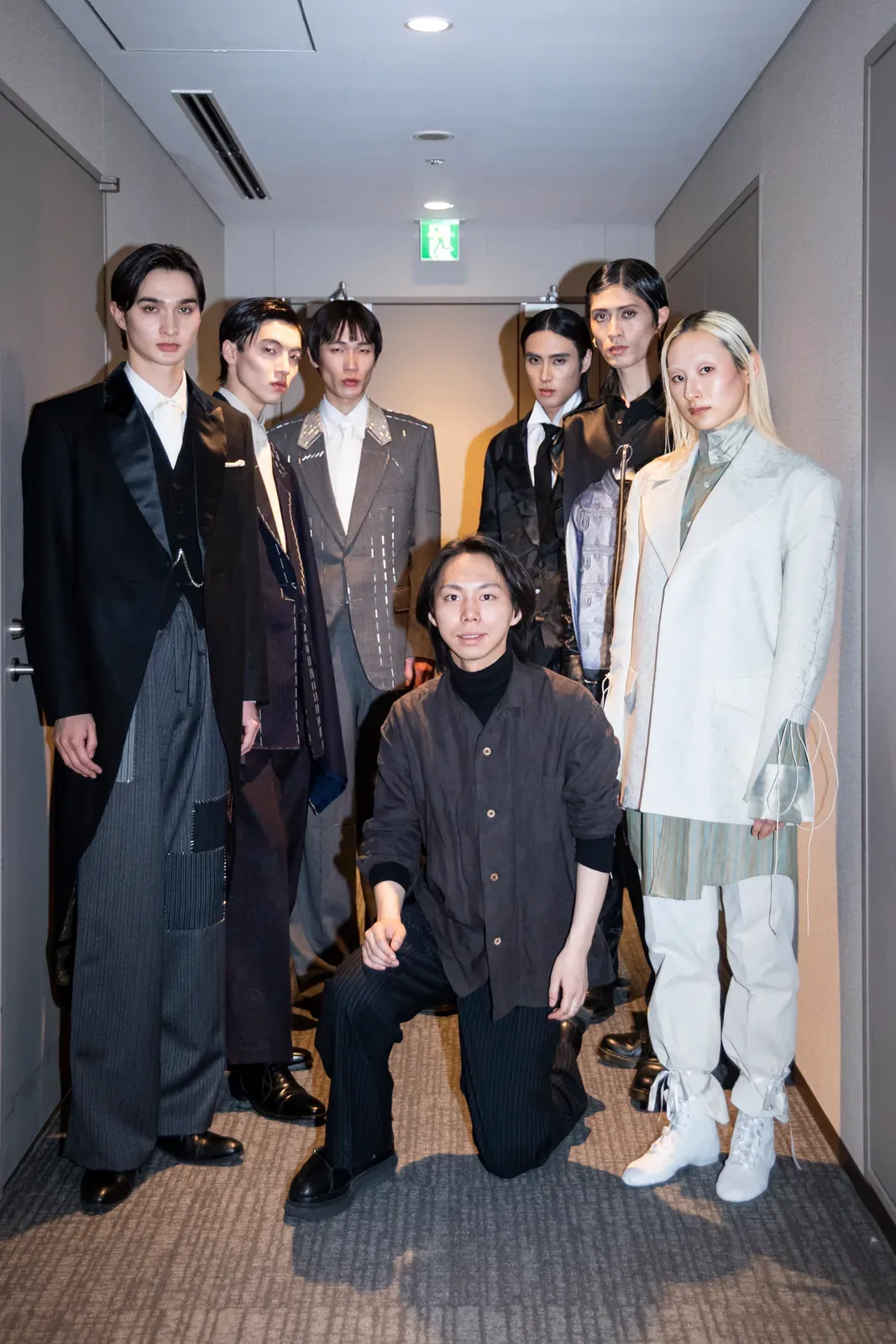
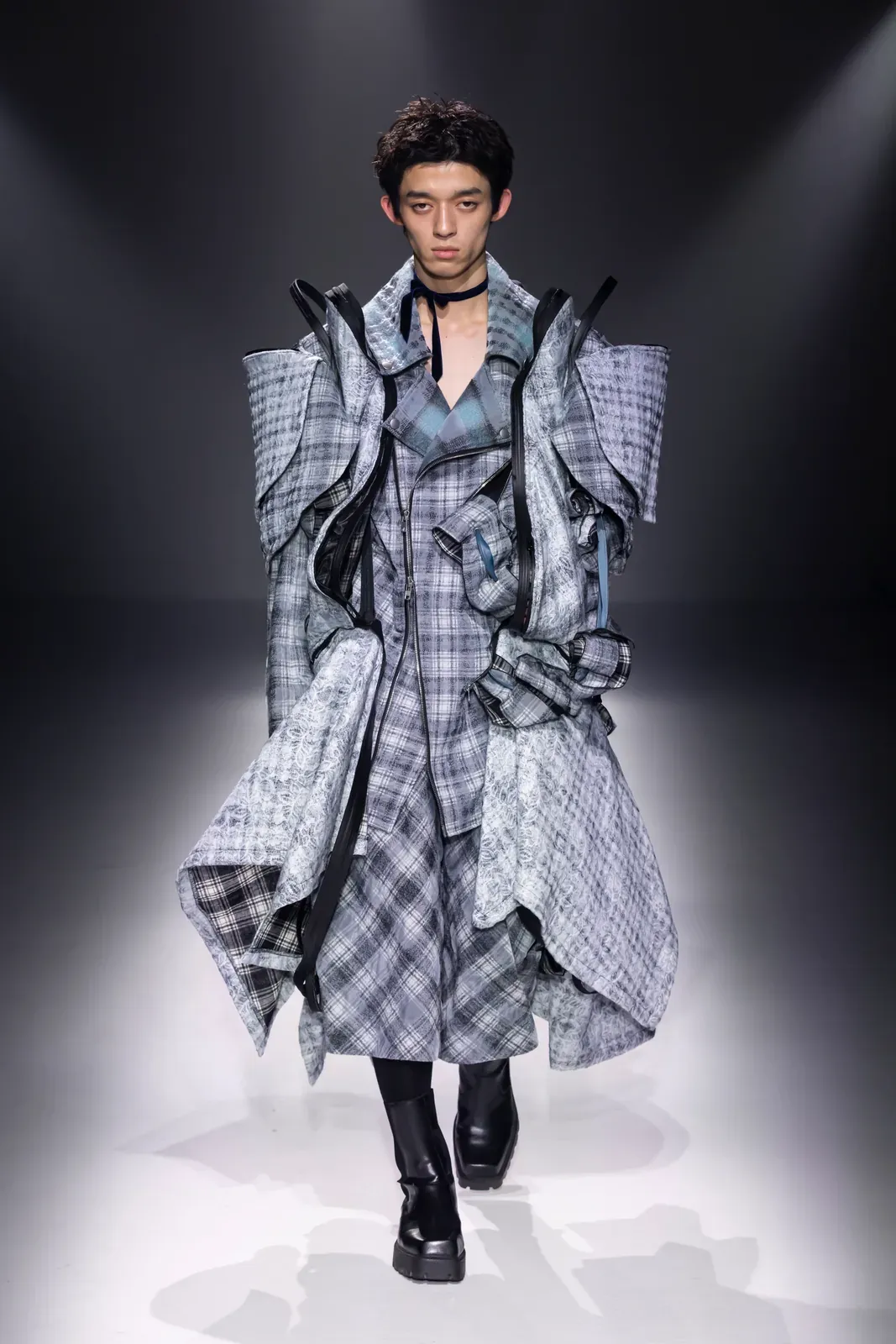
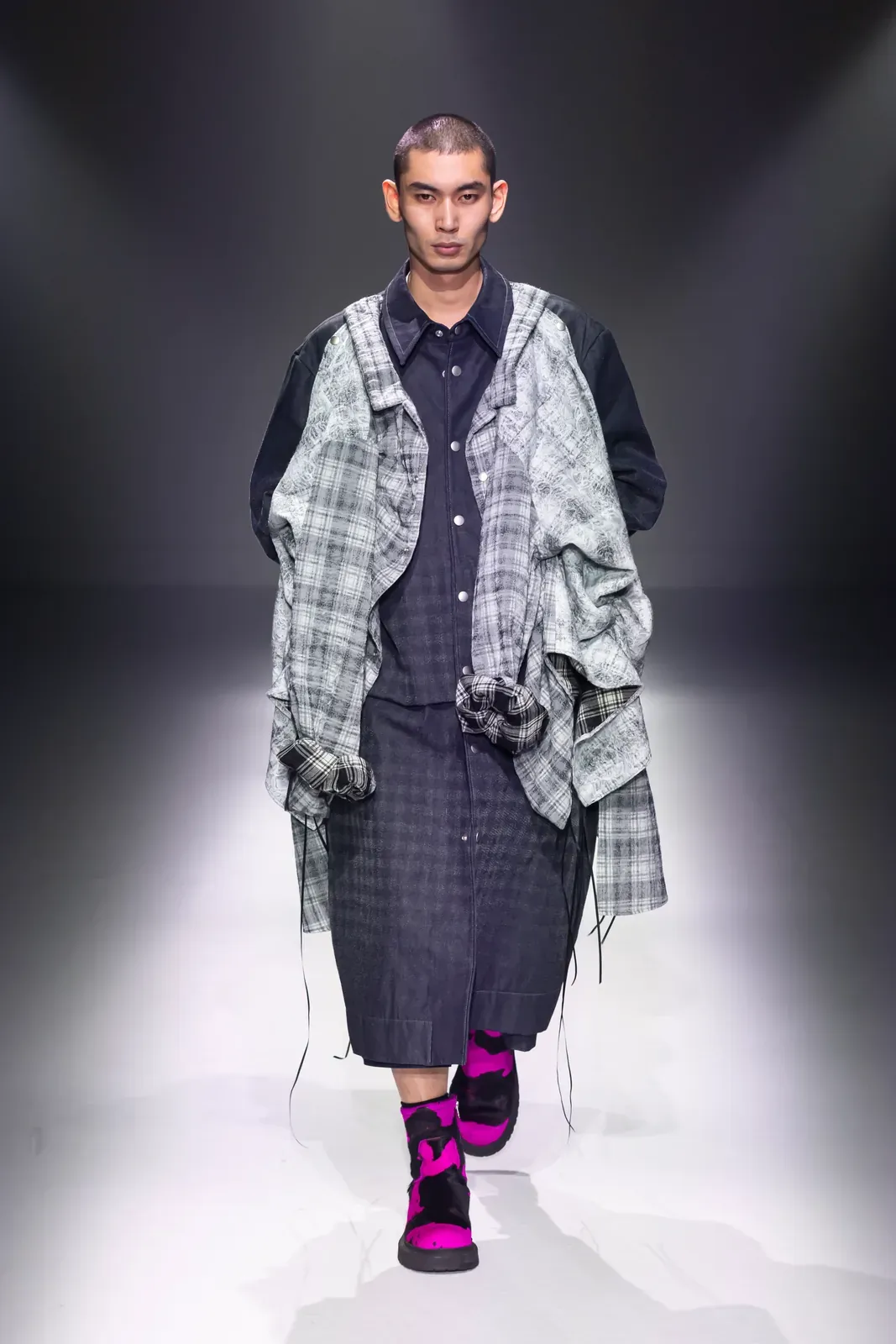
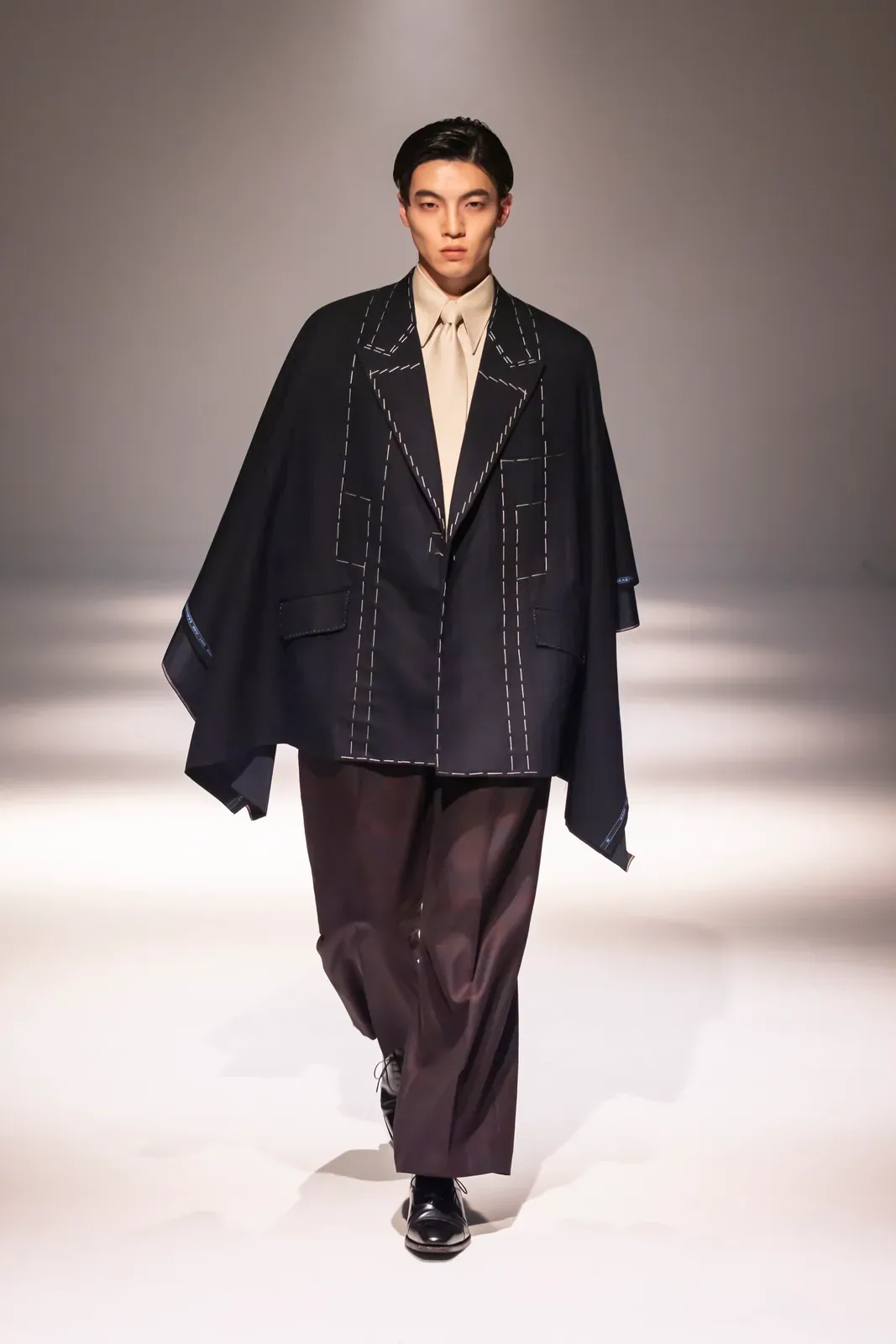
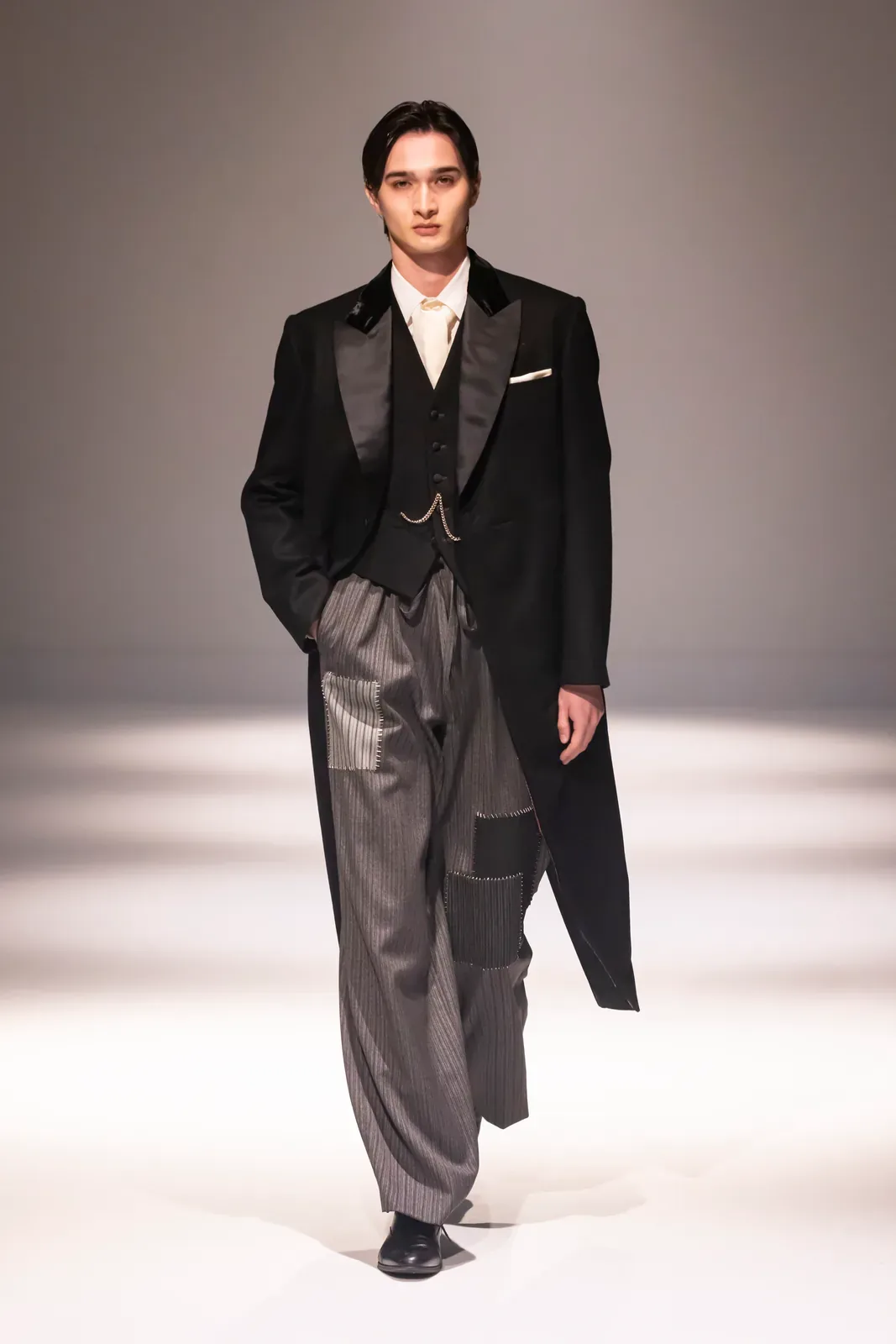
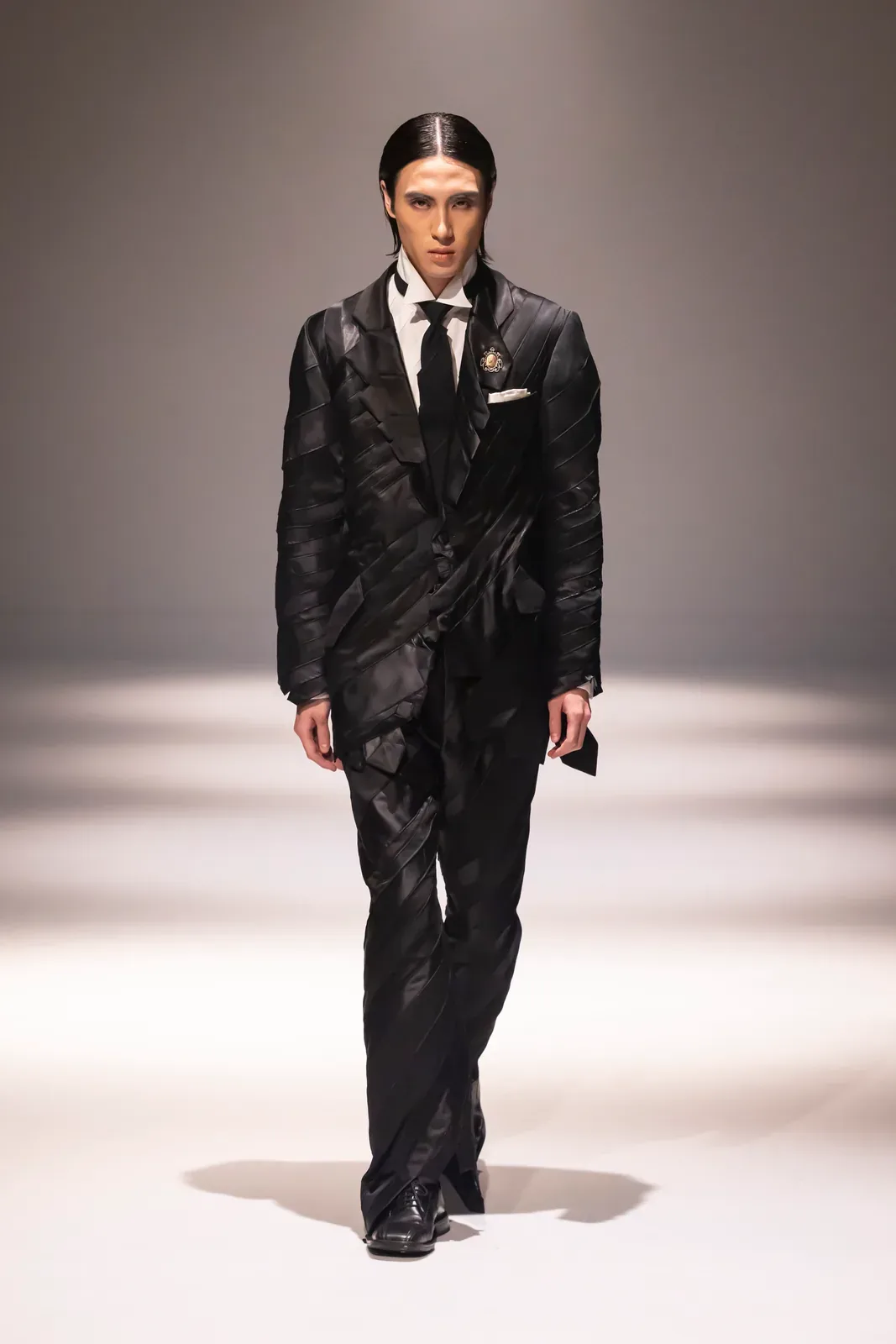
A third-year student in the Apparel Design Department but with a focus on menswear, Kyoma Sakakihara blends the careful and highly technical aspects of traditional dressing and refined tailoring with the contemporary edge brought out by more modern references as well as the inherent innovation involved when working with a sustainable mindset, like he does. Perfectly fitted suits where not only the outer part is important but also the details that are often overlooked, like the stitches, become main protagonists of the garments, coexisting with other interesting pieces like a suit made out of what seem to be ties that intertwine and wrap the body. Sakakihara recently won the JFW New Creator Award Grand Prize and got to exhibit his work in the JFW booth at Première Vision in Paris.
Please introduce your work to the world. How would you describe what you do?
I create with an interest in the memories embedded in garments and the traces of time left within them. I am also strongly influenced by Japanese craftsmanship, sensitivity to detail, and the quiet beauty that exists within imperfection. Rooted in menswear, I reinterpret traditional elements through a contemporary lens, proposing a new approach to tailoring alongside a sensual style.
What’s your usual process when designing? What are the key elements that identify your brand and your style?
I am strongly influenced by the style and atmosphere of 1930s Europe. In particular, the presence of the people and the atmosphere of the garments seen in the photography of August Sander have had a significant impact on my design work. In my process, I closely observe vintage garments and often deconstruct them to study their structure, translating those elements into my designs. I am also inspired by architecture and nature rooted in everyday life, as well as the elegance hidden within daily moments. Currently studying British tailoring, I explore new possibilities for tailoring by reconstructing traditional elements through a contemporary perspective.
What is fashion to you?
Fashion is passion.
OGURA TAKUMI by Takumi Ogura
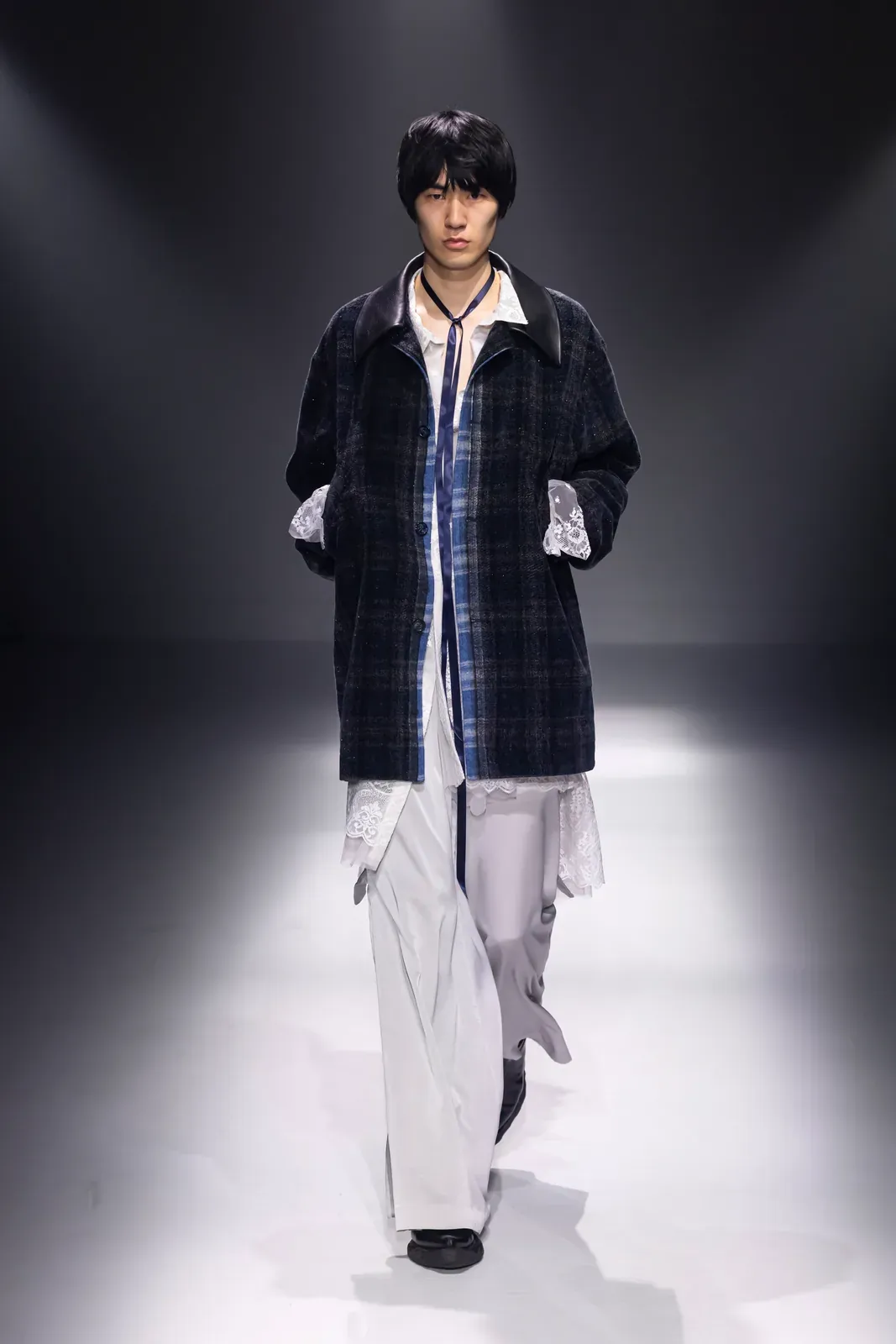
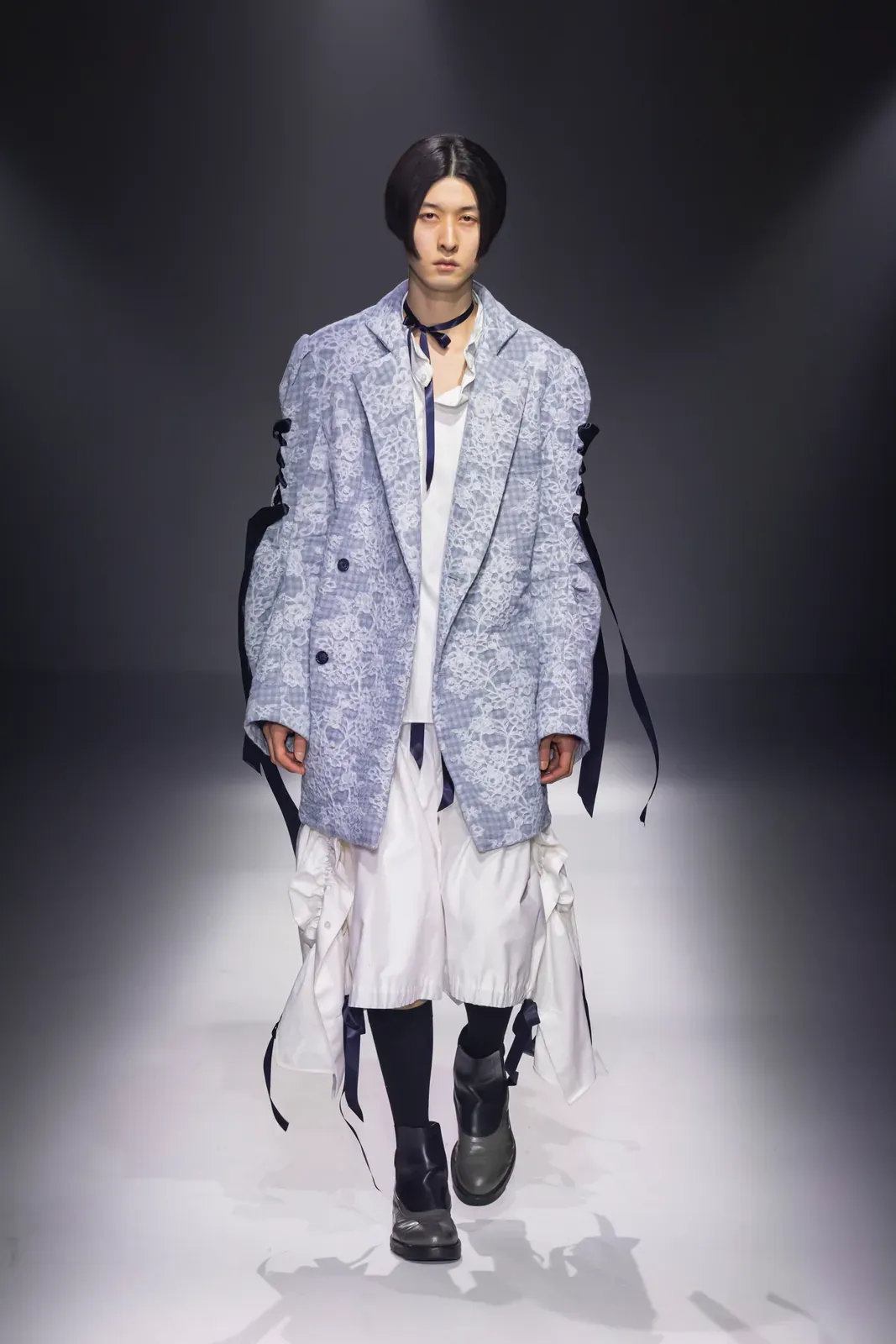
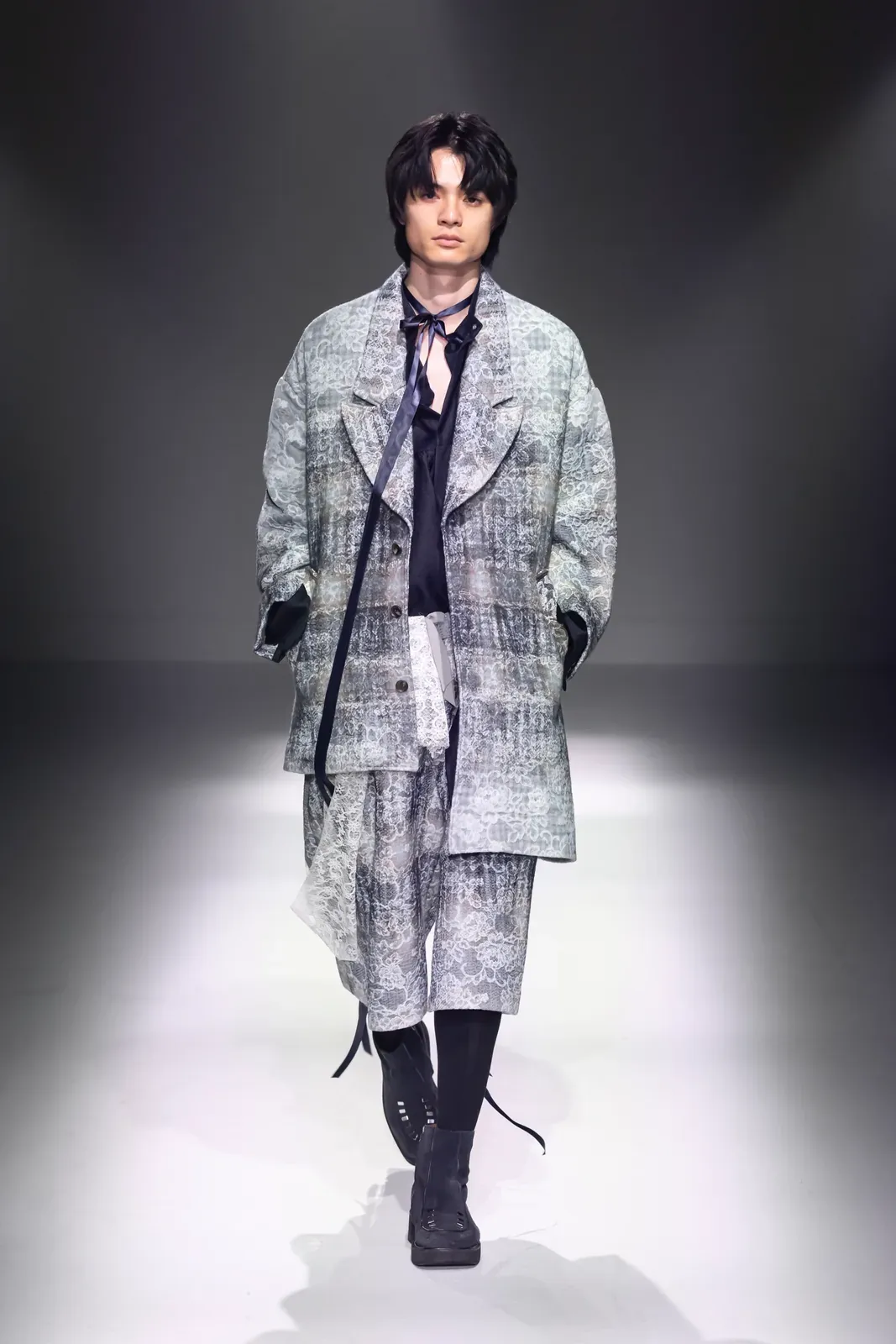
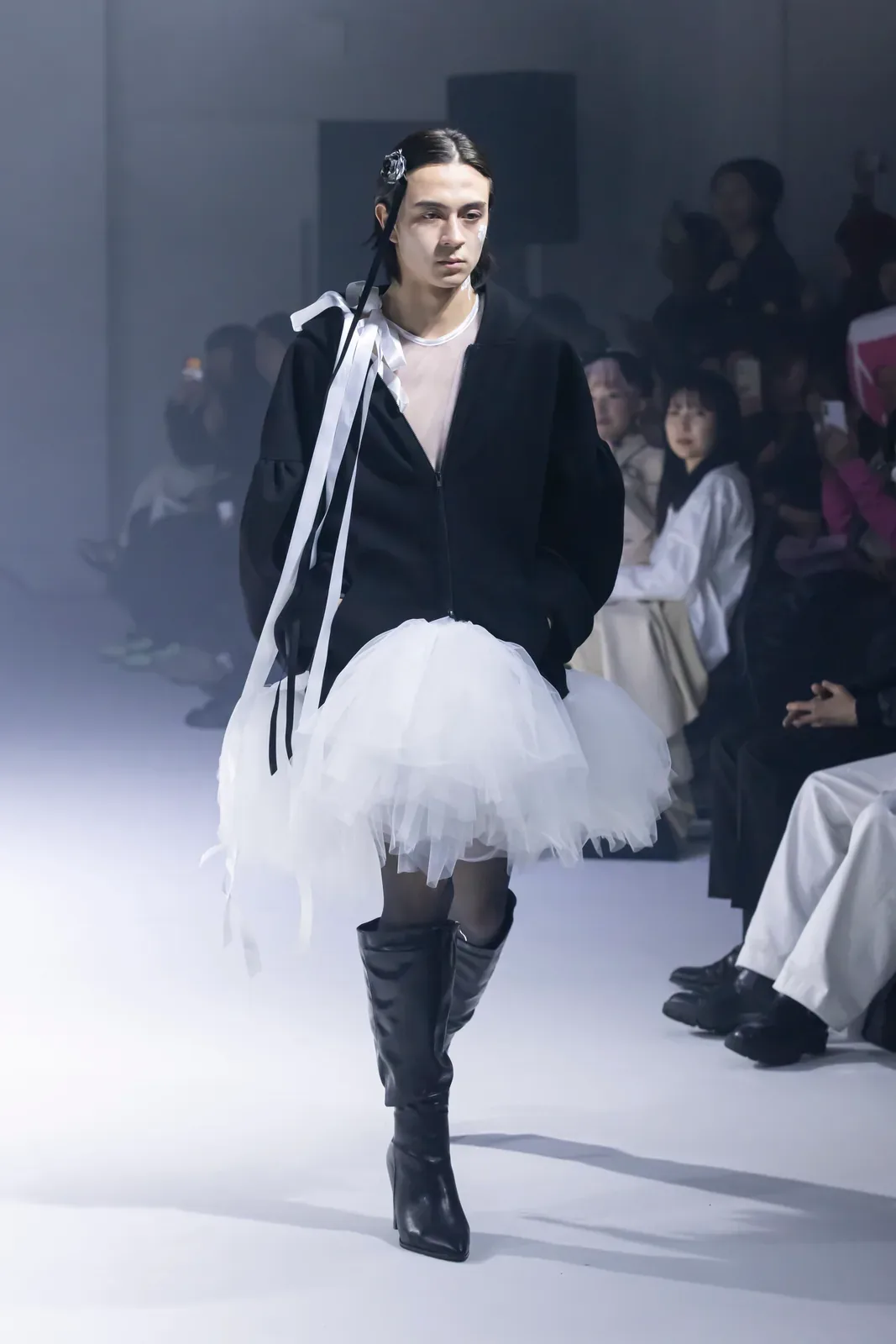
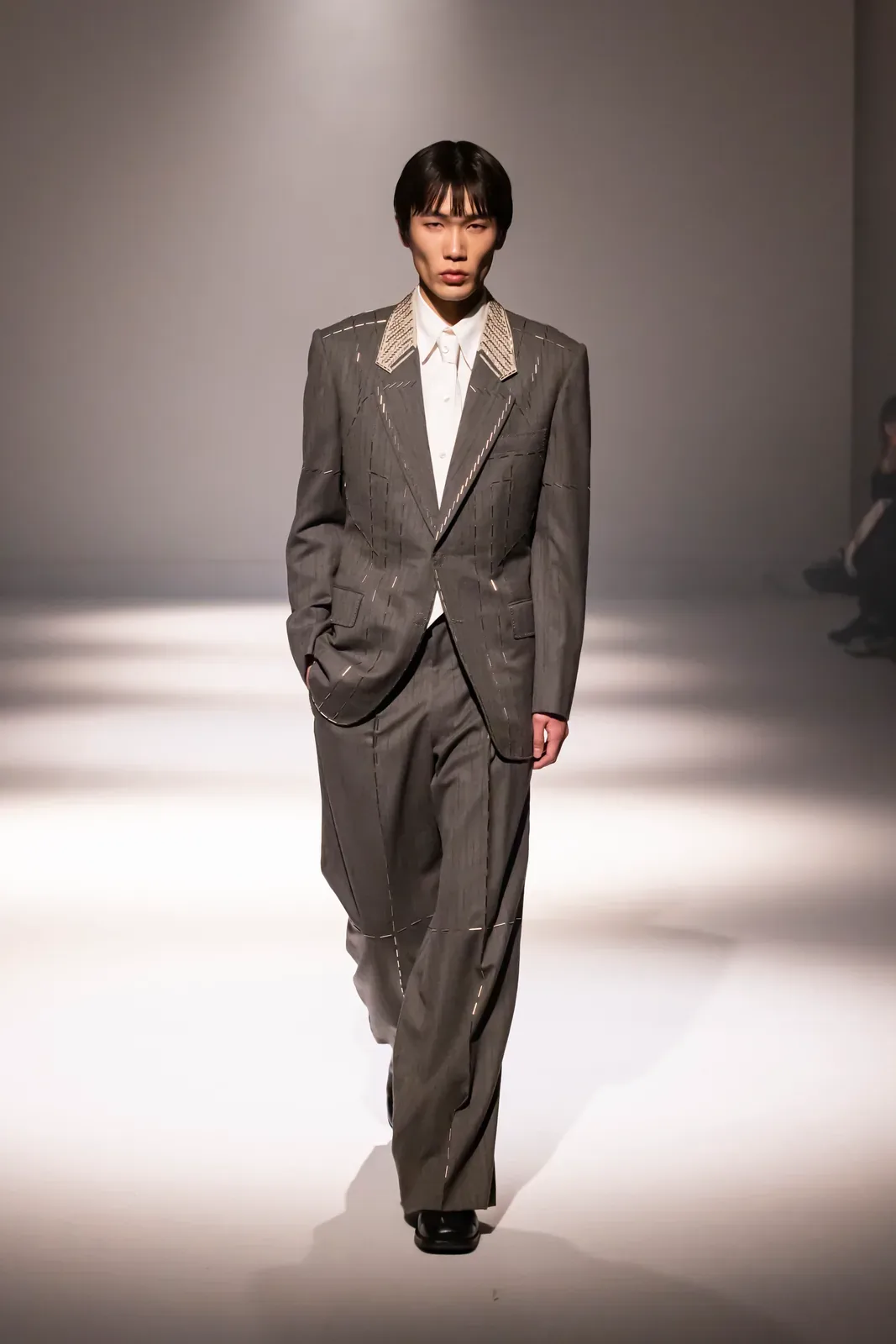
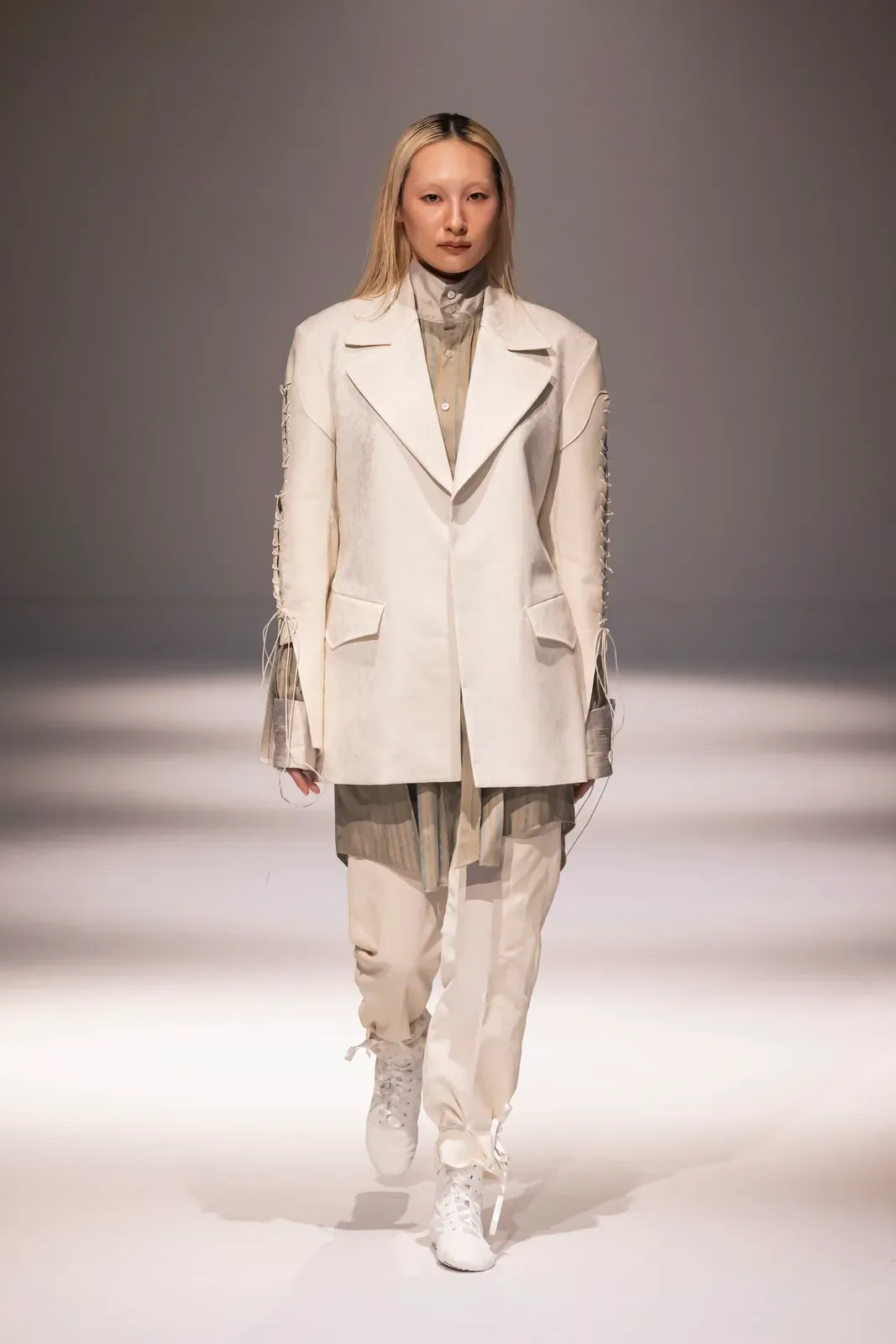
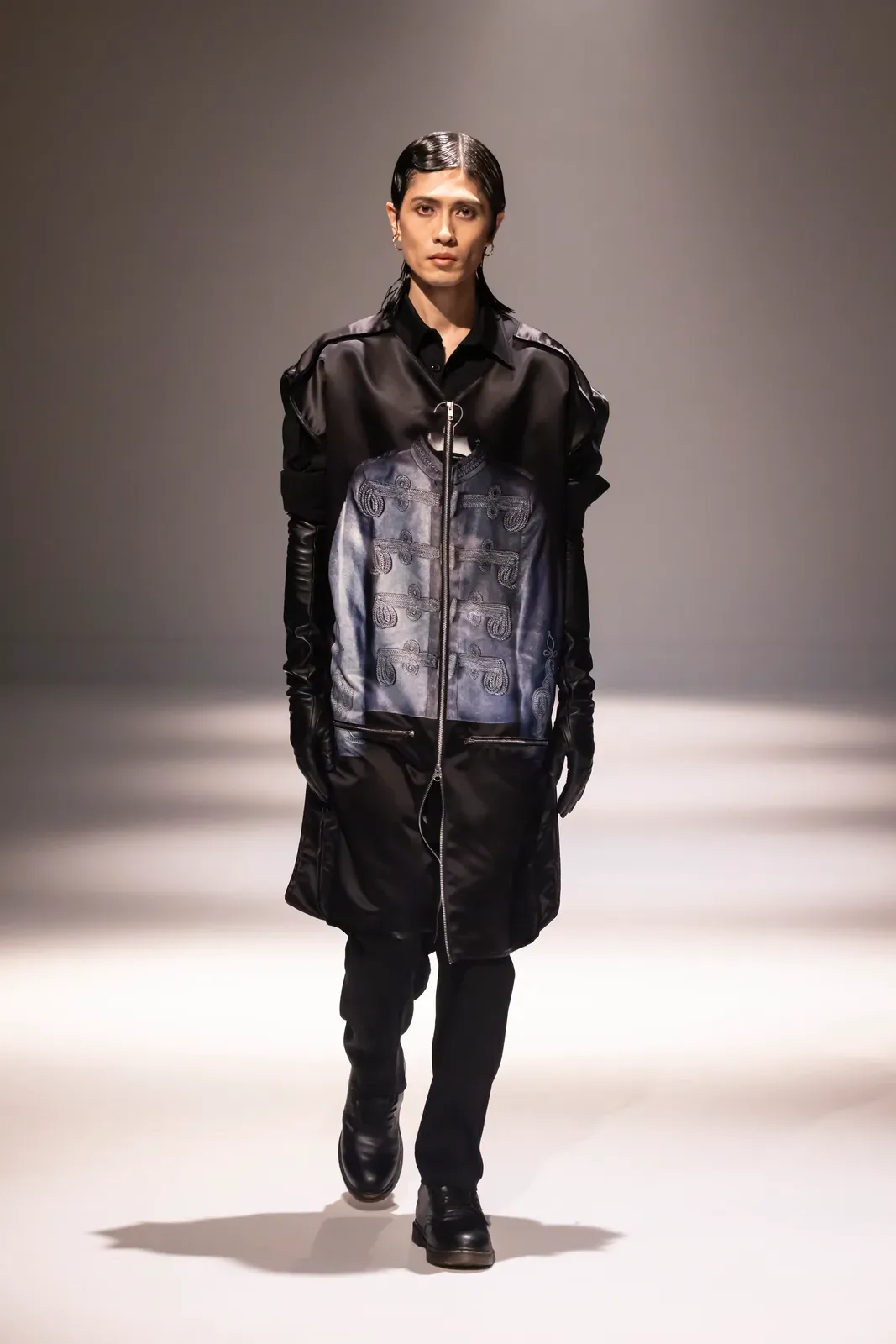
Also in the third year of the Apparel Design Department, Ogura Takumi draws from personal experience as well as art, culture, and history to shape his work. His designs aim to widen the possibilities of menswear and question the conventions that still define it, exactly what he did with his collection where, under the name of The Groom of the Future, he imagines a wardrobe where ceremonial or exceptional dress becomes part of the everyday, shifting established ideas around masculinity and occasion through clothing. Blending, literally, in the same garment the usual materials and silhouettes from the everyday clothing of the men's wardrobe with lace, ribbons, and delicate fabrics linked to celebratory moments, he creates a whole new idea of dressing up without having to mind the occasion. Successfully participating in many fashion competitions around Japan, he most recently was a finalist at the Next Fashion Designer of Tokyo 2026.
Please introduce your work to the world. How would you describe what you do?
This collection is an attempt to dissolve the boundaries of conventional masculinity and create a new image of men’s fashion. The idea began when I attended weddings of friends and family and realised how limited the options were for men’s formalwear. Everything felt uniform and constrained. Inspired by the sense of celebration, romance, and emotional uplift that weddings carry, I wanted to bring those feelings into everyday life rather than confining them to a single special occasion. I believe menswear can hold more beauty, softness, romanticism, and emotional depth. This collection was created with that intention in mind.
What’s your usual process when designing? What are the key elements that identify your brand and your style?
My design process often begins with a sense of discomfort or questioning toward existing values and social norms, asking myself, “Does it really have to be this way?” I’m interested in going beyond conventions and transforming what is considered “extraordinary” into something that can exist naturally in everyday life. On top of that, I explore and organise the things that currently inspire me — culture, art, film, music, architecture, and many other fields — as well as everyday phenomena and experiences around me, and then mix those influences together.
I also place great importance on encounters with fabrics and textile production regions across Japan. Often, I decide silhouettes and forms through a kind of dialogue with the fabric itself, responding to its texture, movement, and atmosphere through direct touch and experimentation. One of the key elements that defines my work is the idea of creating “space for emotion”. This can appear through draping, oversized silhouettes, texture, comfort, romanticism, and strength. And finally, I always like to leave a small sense of fantasy within the work.
I also place great importance on encounters with fabrics and textile production regions across Japan. Often, I decide silhouettes and forms through a kind of dialogue with the fabric itself, responding to its texture, movement, and atmosphere through direct touch and experimentation. One of the key elements that defines my work is the idea of creating “space for emotion”. This can appear through draping, oversized silhouettes, texture, comfort, romanticism, and strength. And finally, I always like to leave a small sense of fantasy within the work.
What is fashion to you?
To me, fashion is something that can change and expand a person’s world. Through clothing, people can connect with others or become a slightly different version of themselves than they were yesterday. Fashion is not simply about wearing garments — it can become a trigger for discovering new emotions, perspectives, and possibilities.