Ask anyone living in Berlin what the worst month of the year is, and you’ll get the same answer every time. January. Absolutely. Christmas is over; the colours of the city become dull shades of grey, not to mention the minus seven degrees. But when Berlin Fashion Week arrives at the end of the month, none of that matters anymore because then, finally, everyone seems to wake up from the winter fatigue, wrapping themselves in faux fur coats, leather stilettos, and gloves as they make their way across the ice to the show venues. Chatty conversations start to flow, new talents emerge, established brands shine, and dreamy storytelling takes centre stage.
So, while you were at home enjoying the warmth of your living room, we’ve rounded up our ten favourite collections from this season. From Richert Beil and their quirky dinner programme to Kasia Kucharska’s fierce yet tender take on motherhood. From SF1OG’s reflections on privacy and Dagger’s beer-drinking angel to Lou de Bètoly’s femme fatale and Haderlump’s interpretation of the style icon Marlene Dietrich, we’ve got it all neatly sorted for you.
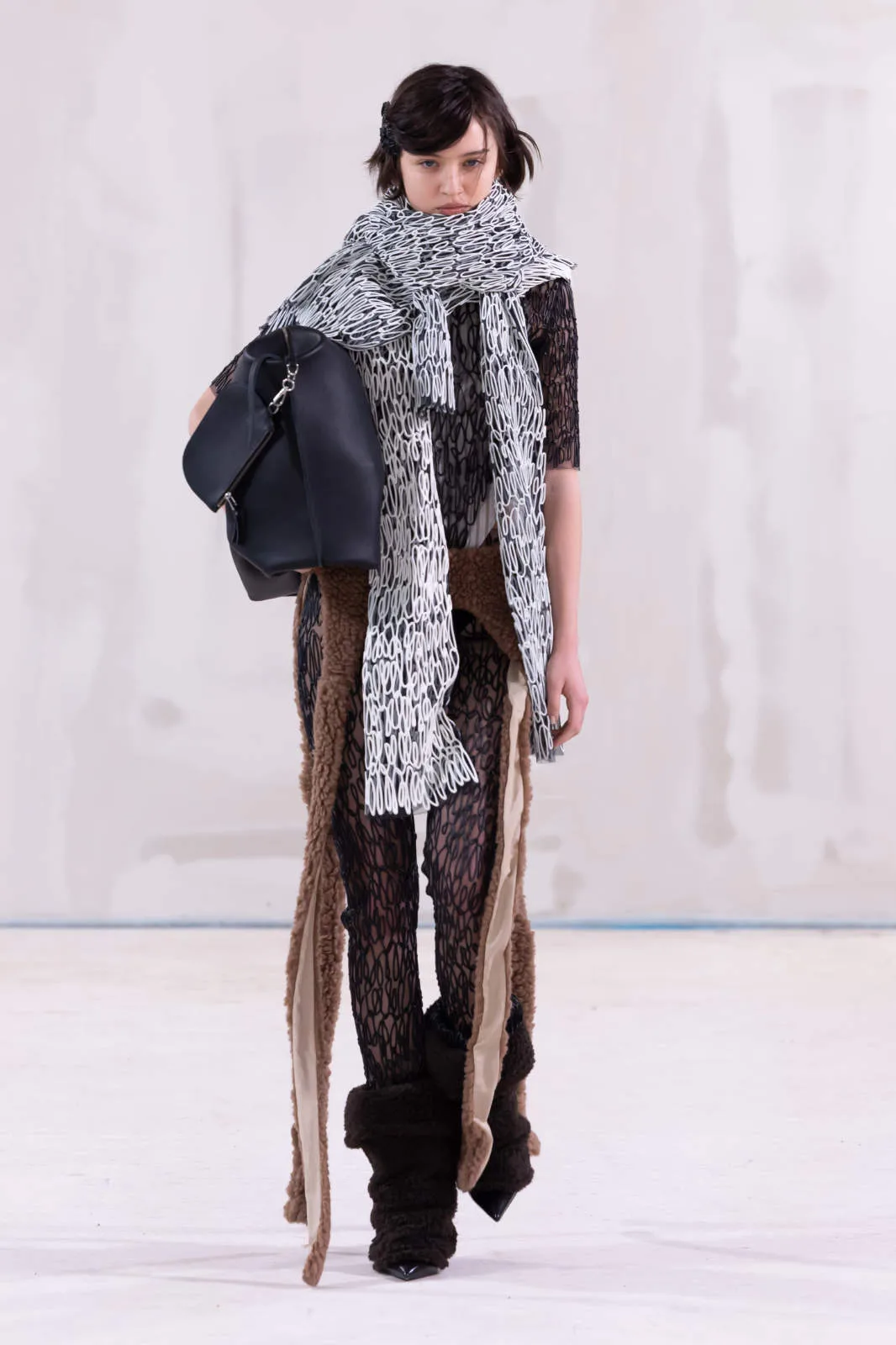
Kasia Kucharska
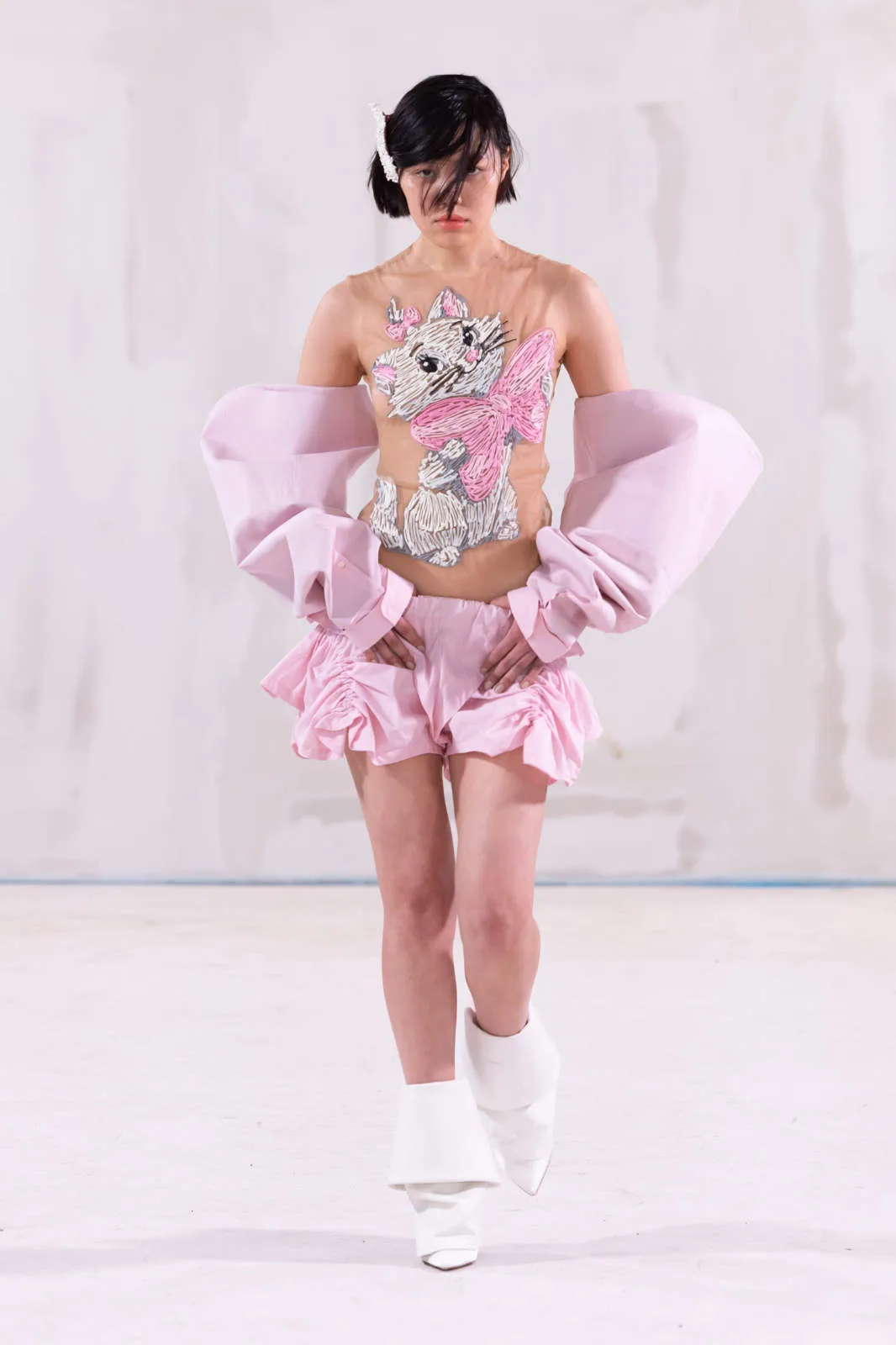
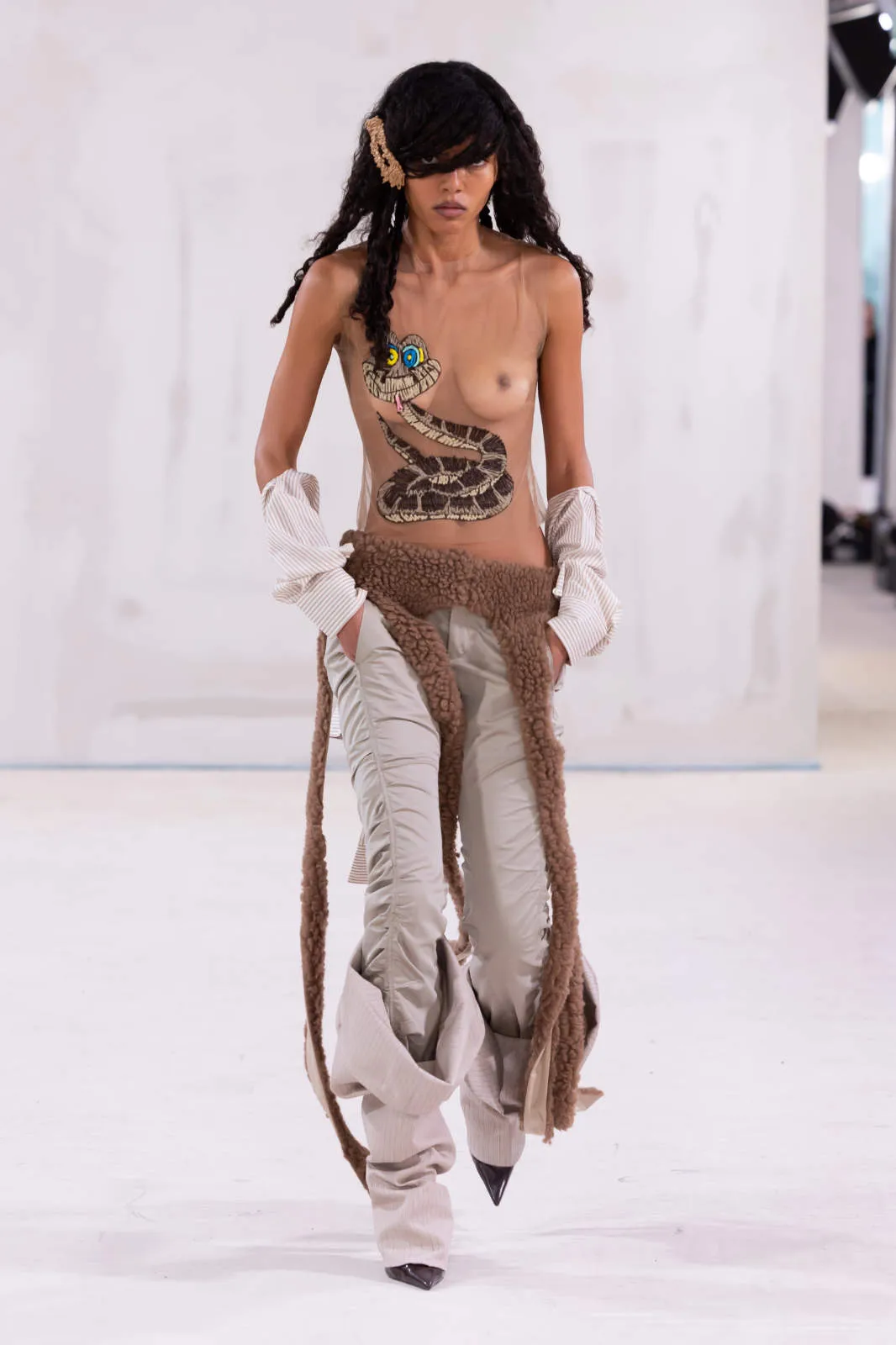
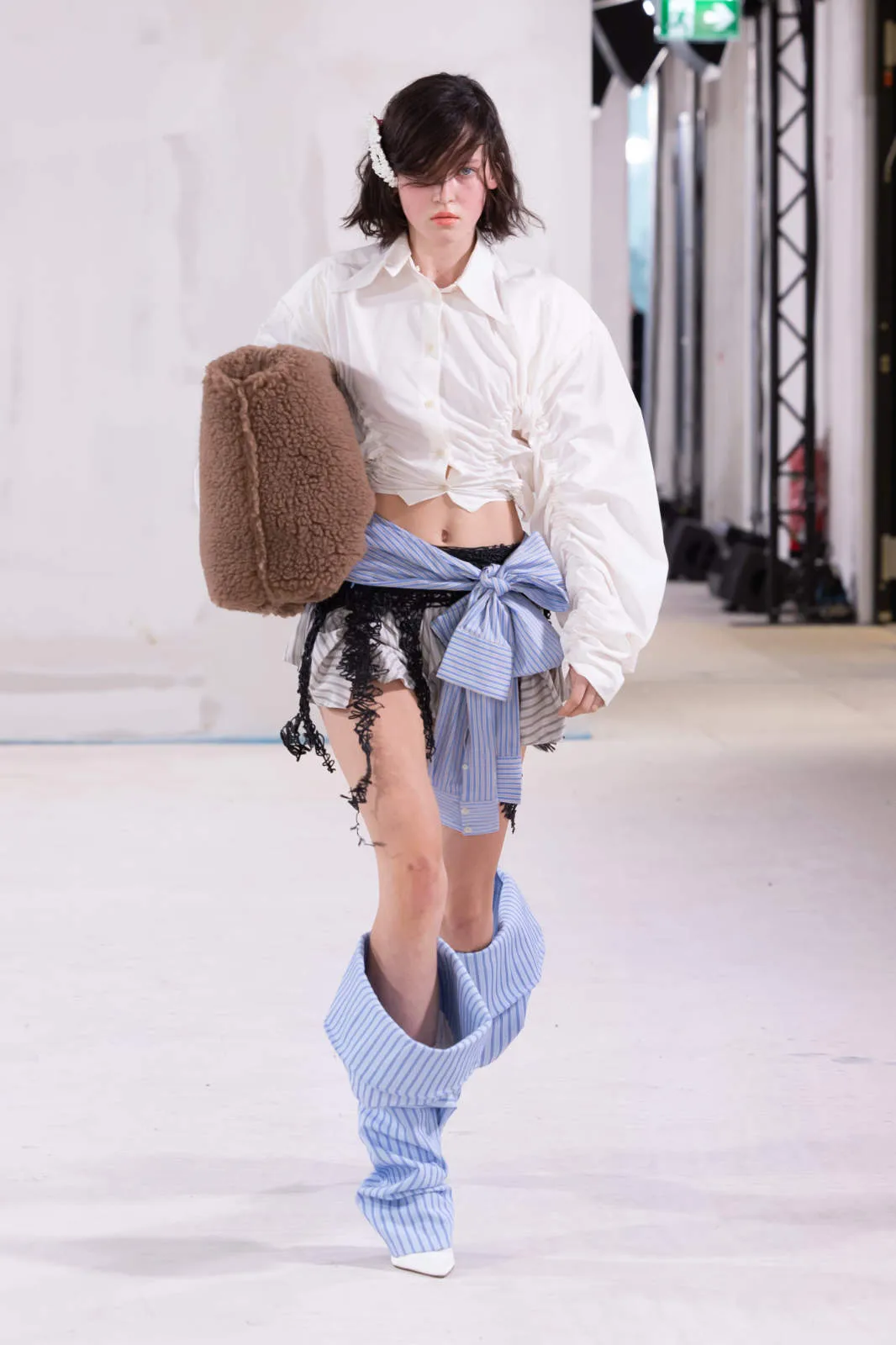
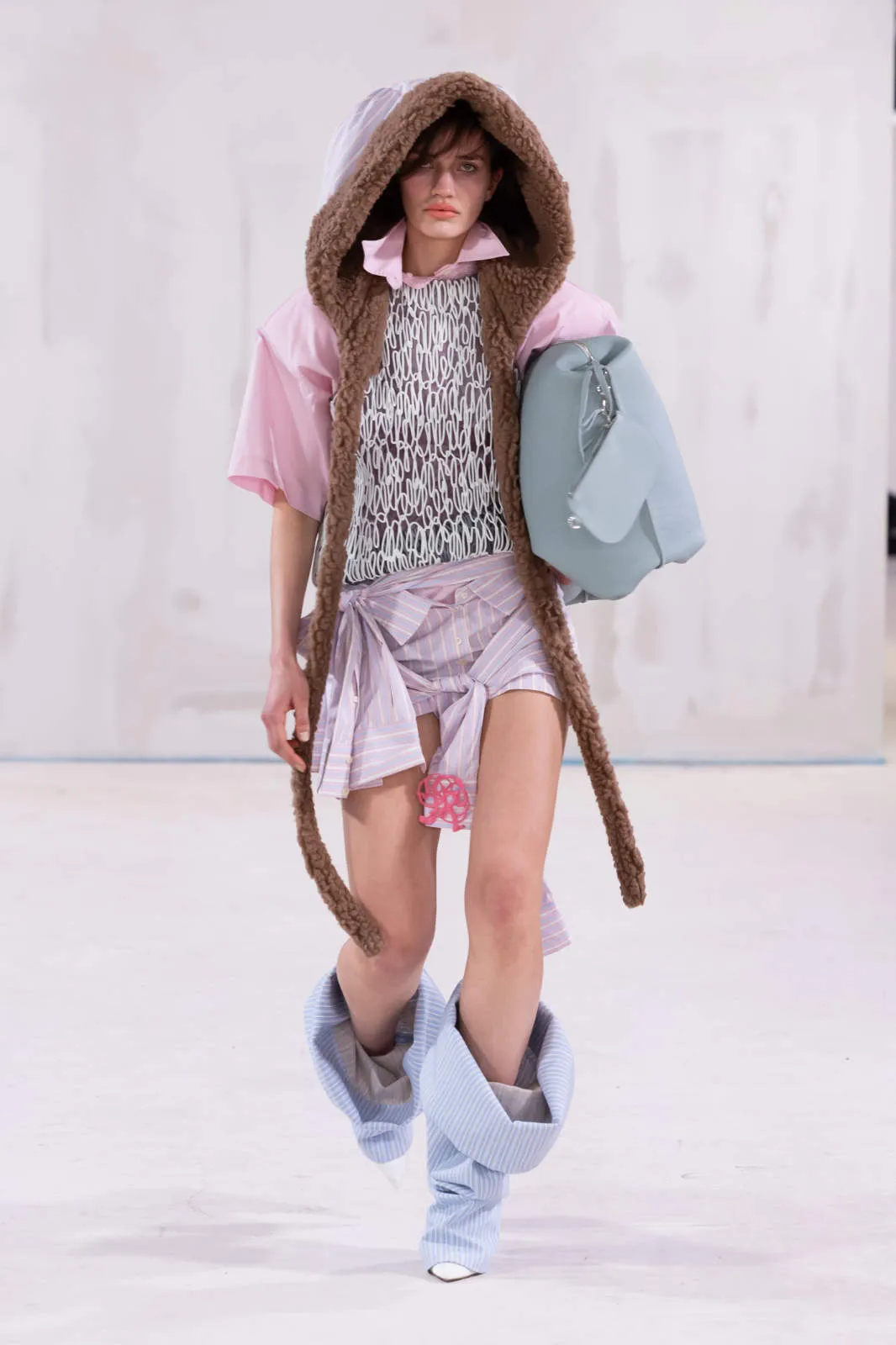
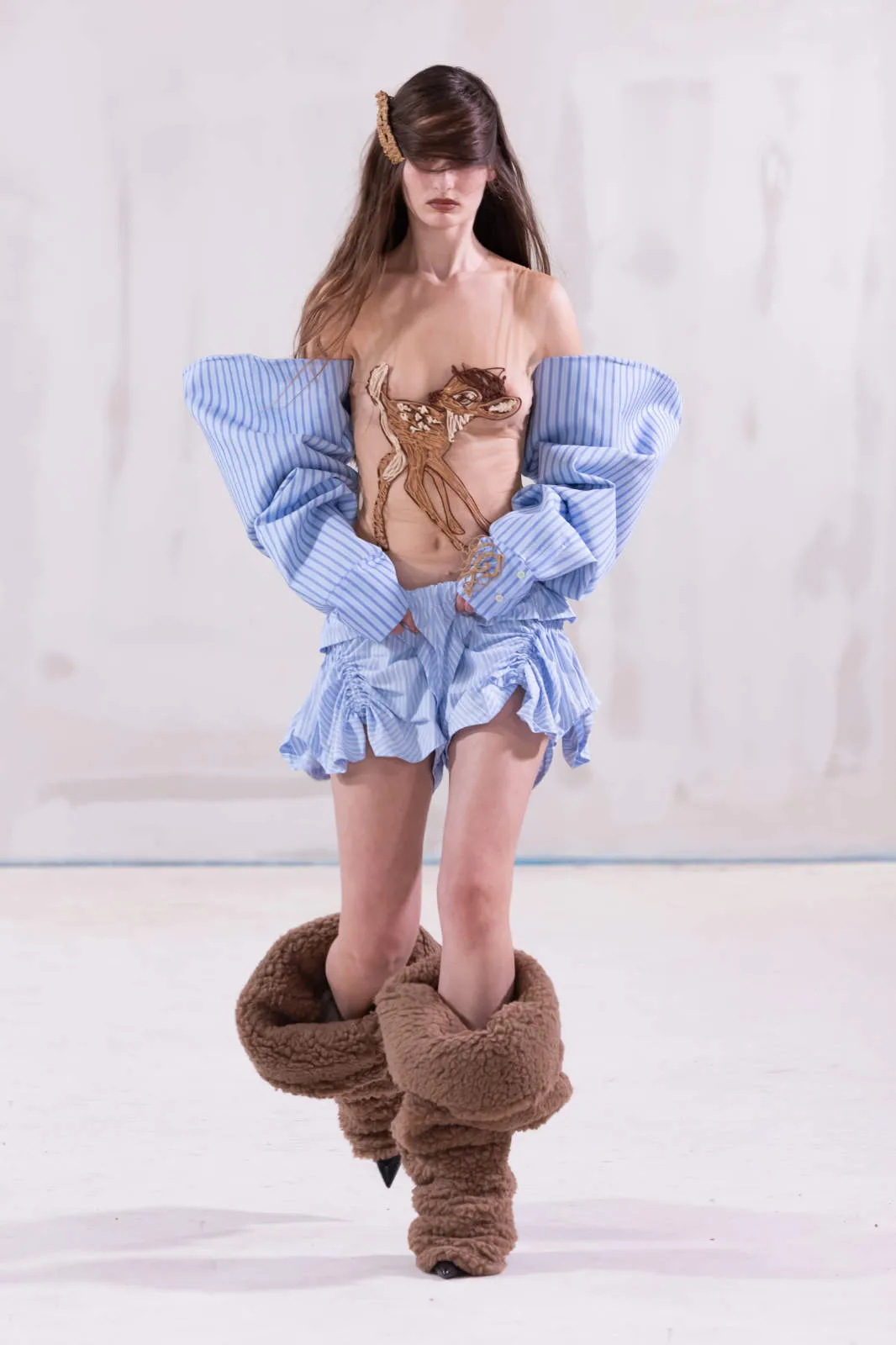
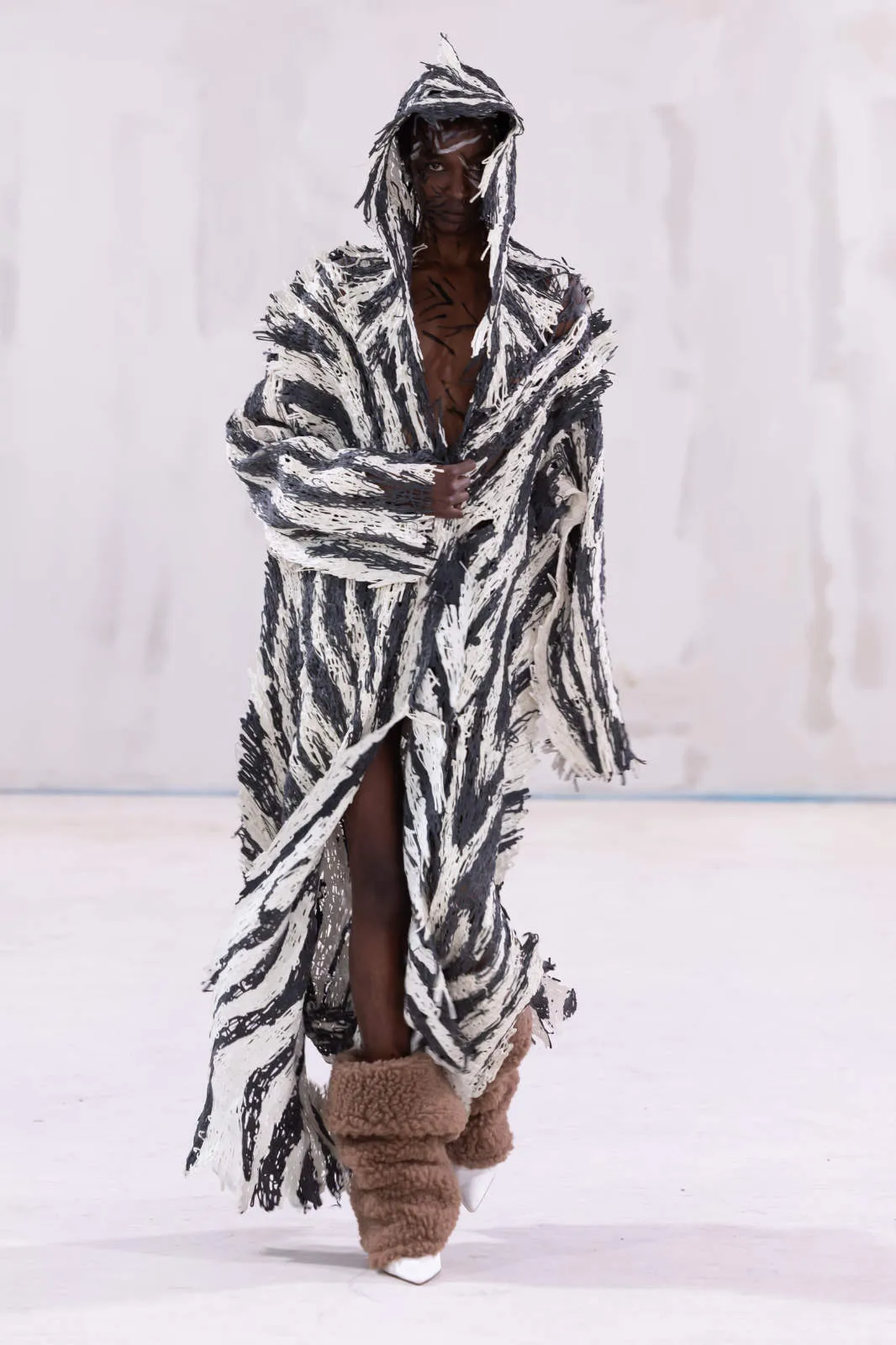
Anyone who is up-to-date with the fashion scene in Berlin has already heard this before, but Kasia Kucharska is known for one thing in particular: latex. Yet not in a skin-tight, shiny, obvious way as we know it from other brands. No, Kasia Kucharska’s latex is poured into patterns, into floral motifs, creating a kind of futuristic lace, surrounded and supported by transparent mesh. You can see it as handbags, for example, as leggings, shoes, and chokers, or, as in the latest F/W 2026 collection, as Disney characters. There was Marie from The Aristocats, Bambi, and one of the 101 Dalmatians. There were animal prints reminiscent of a zebra or a tiger, as well as the hypnotic snake from The Jungle Book. Nostalgia and cinematic heroes; comfort characters, you could say. Once a means of projection, now fragments of beloved childhood memories.
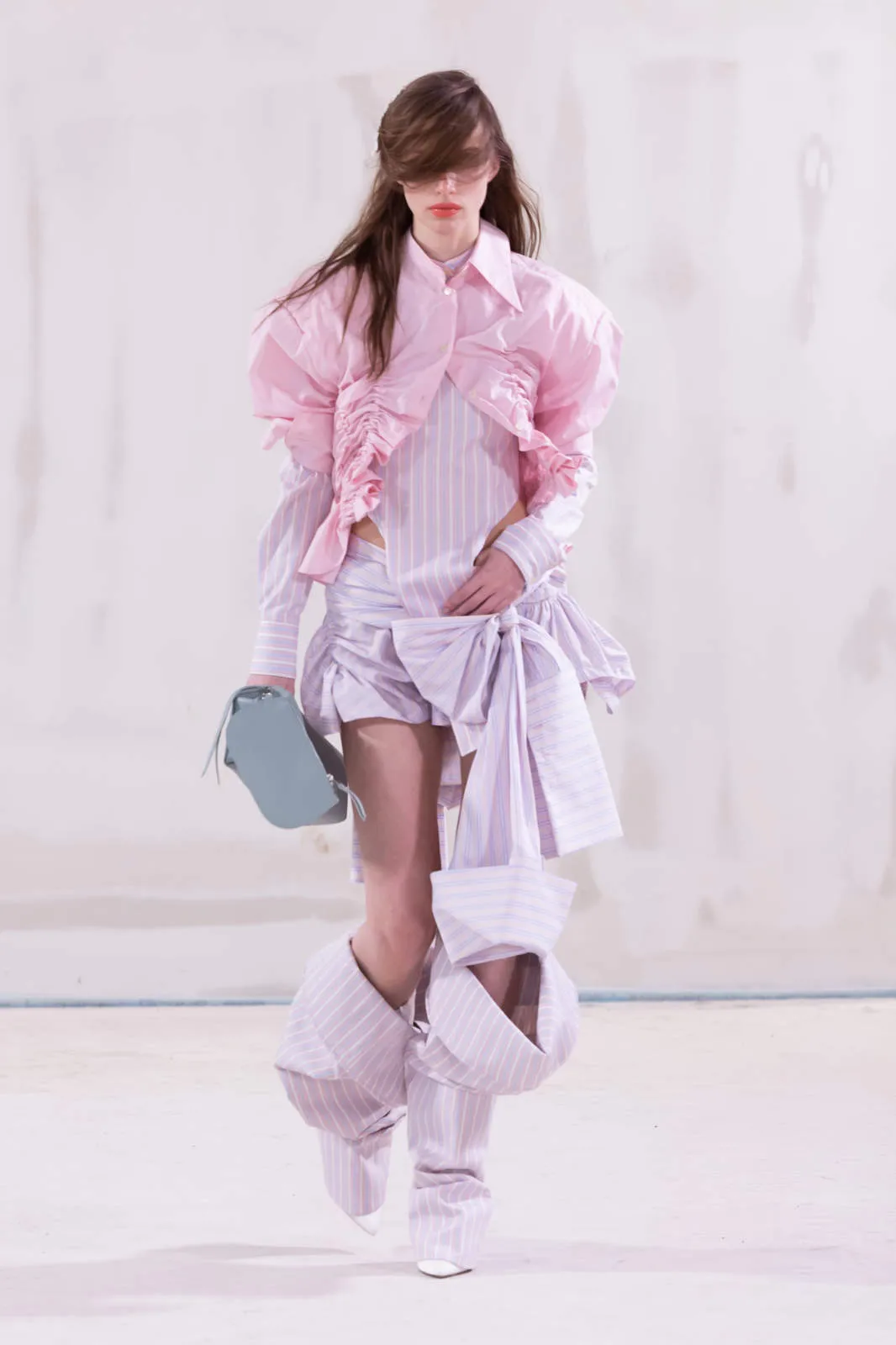
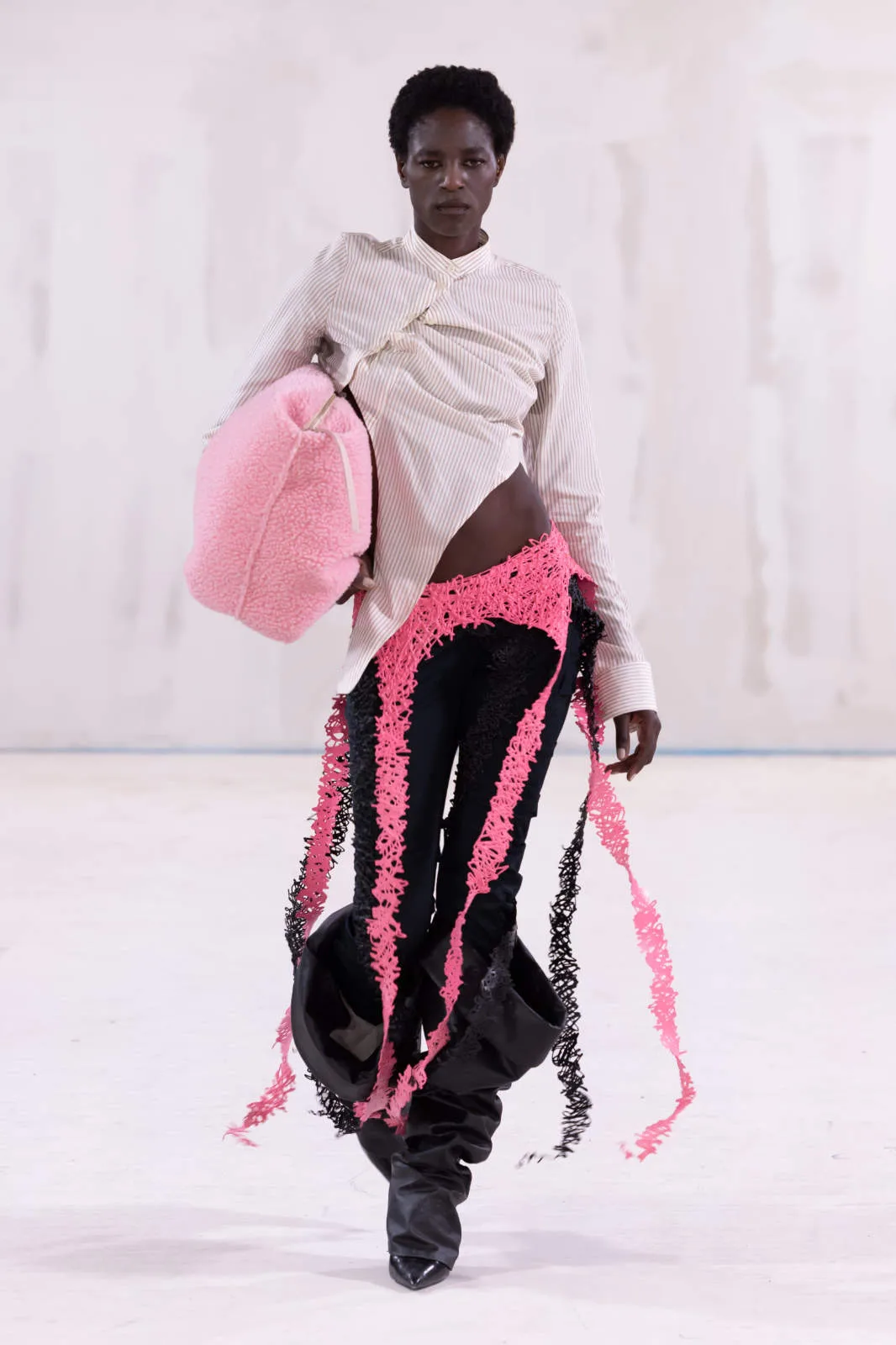
But that’s not all. The collection, which was shown high above the grey roofs of Kreuzberg, reflected on motherhood, on overwhelming love, frustration, pressure, and the need for protection and safety. So, what sounded cute and cuddly so far was interrupted by the models’ strong, determined walk, by quickly created abstract strokes in the patterns. Black colliding with baby blue or cotton-candy pink. Deconstructed shapes as well as the shirt as a recurring symbol for structure and attention. The pieces were made for a modern woman who takes on multiple roles in daily life, a woman who is constantly in motion, limited in her time. She needs clothes she can put on rapidly while anger and happiness coexist inside her. It’s an honest take on female strength, where not everything has to be picture-perfect, where ambivalence can be an empowered attitude.
Richert Beil
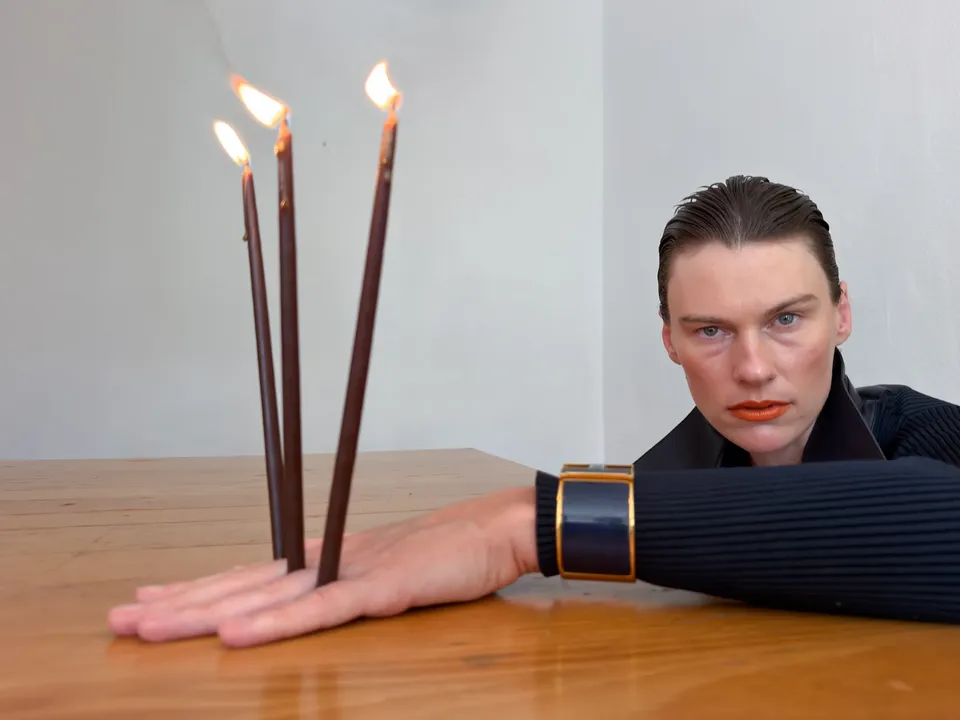
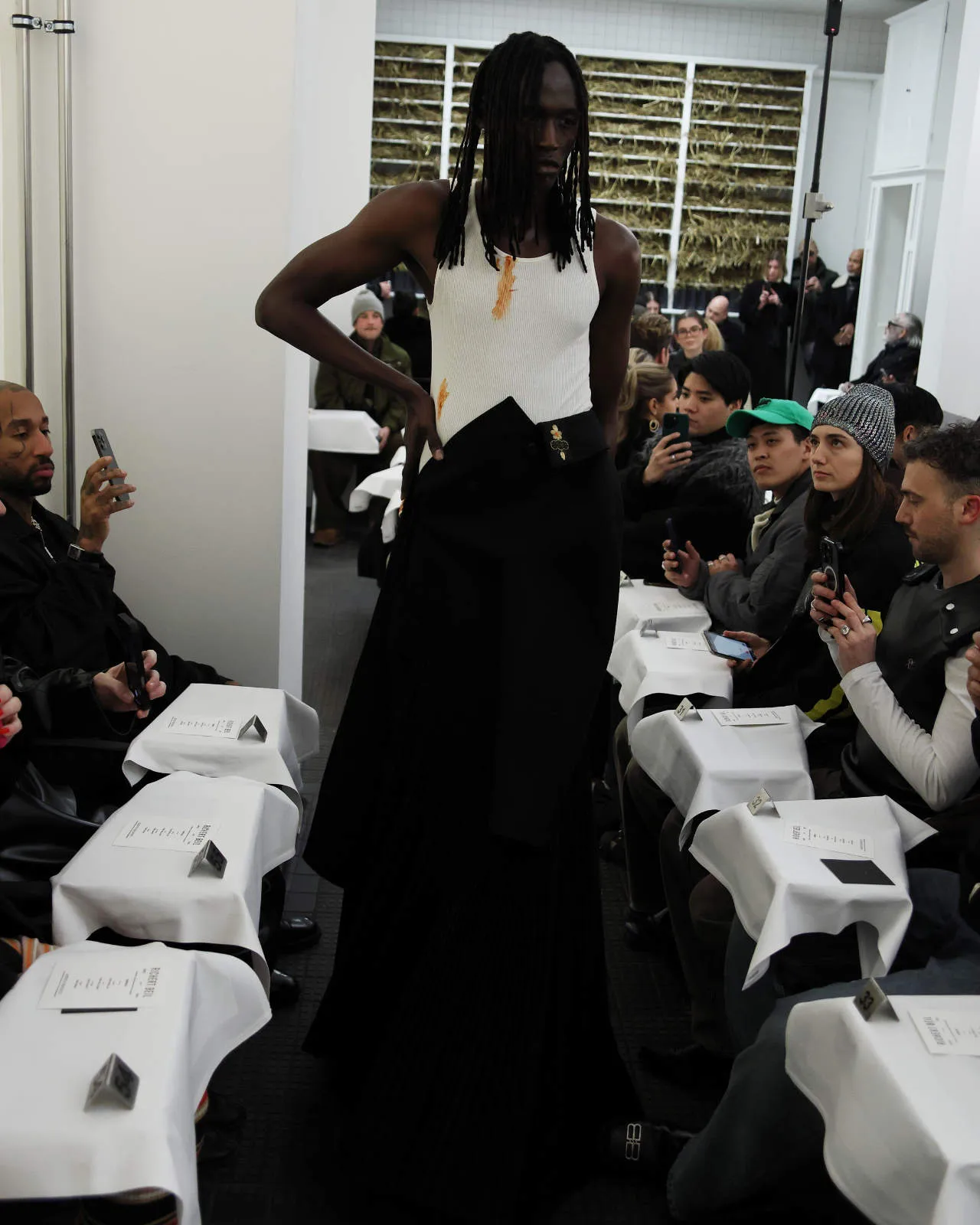
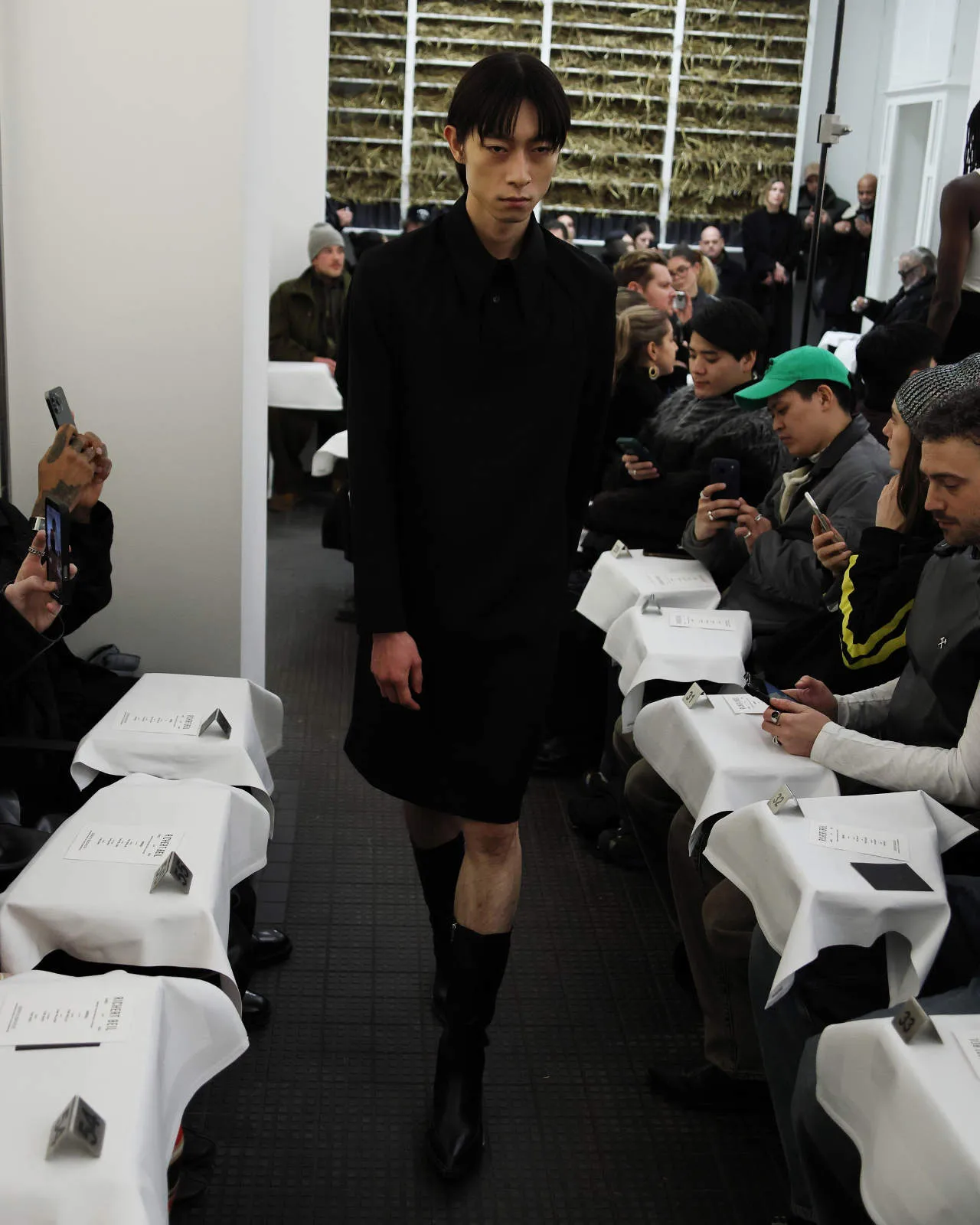
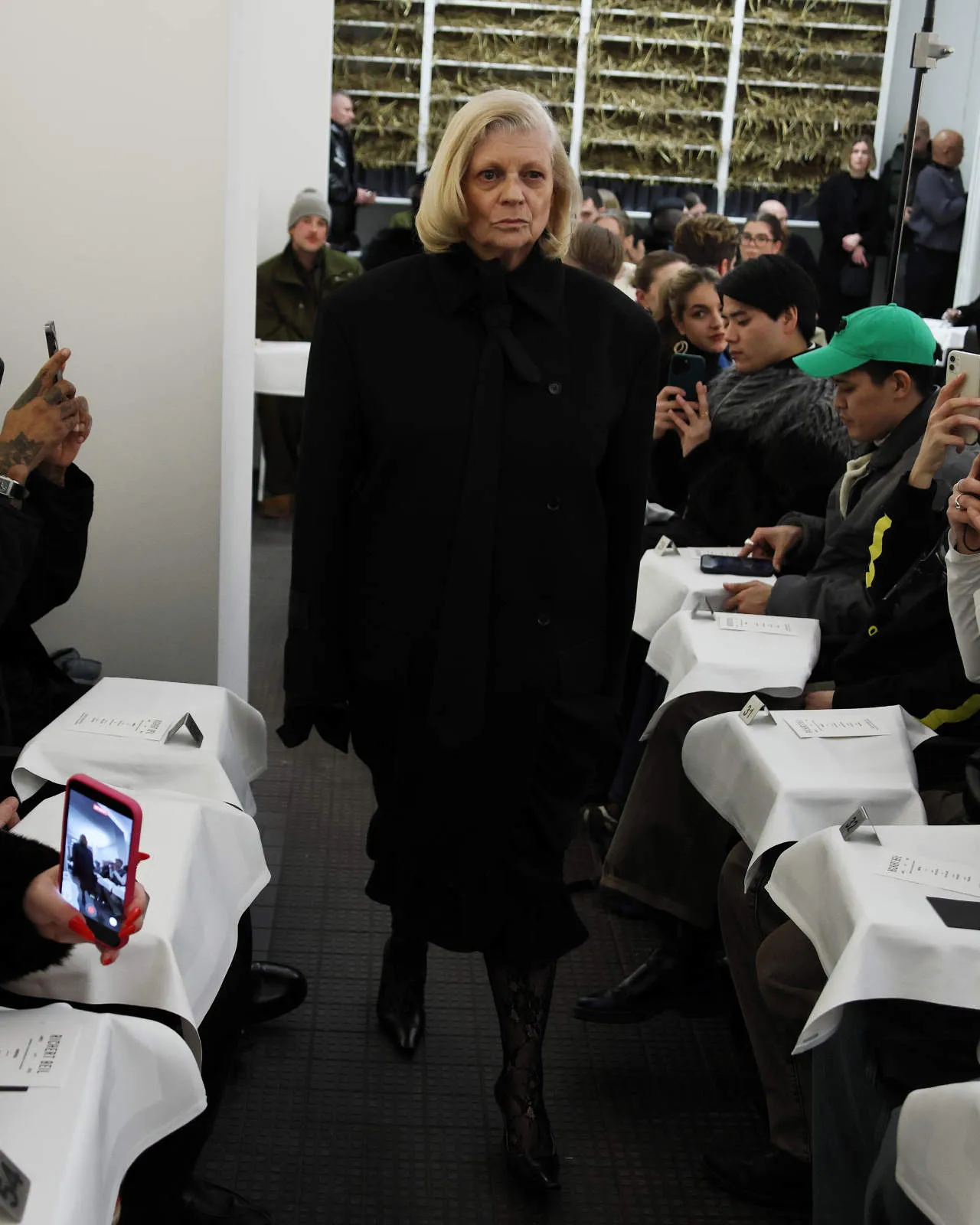
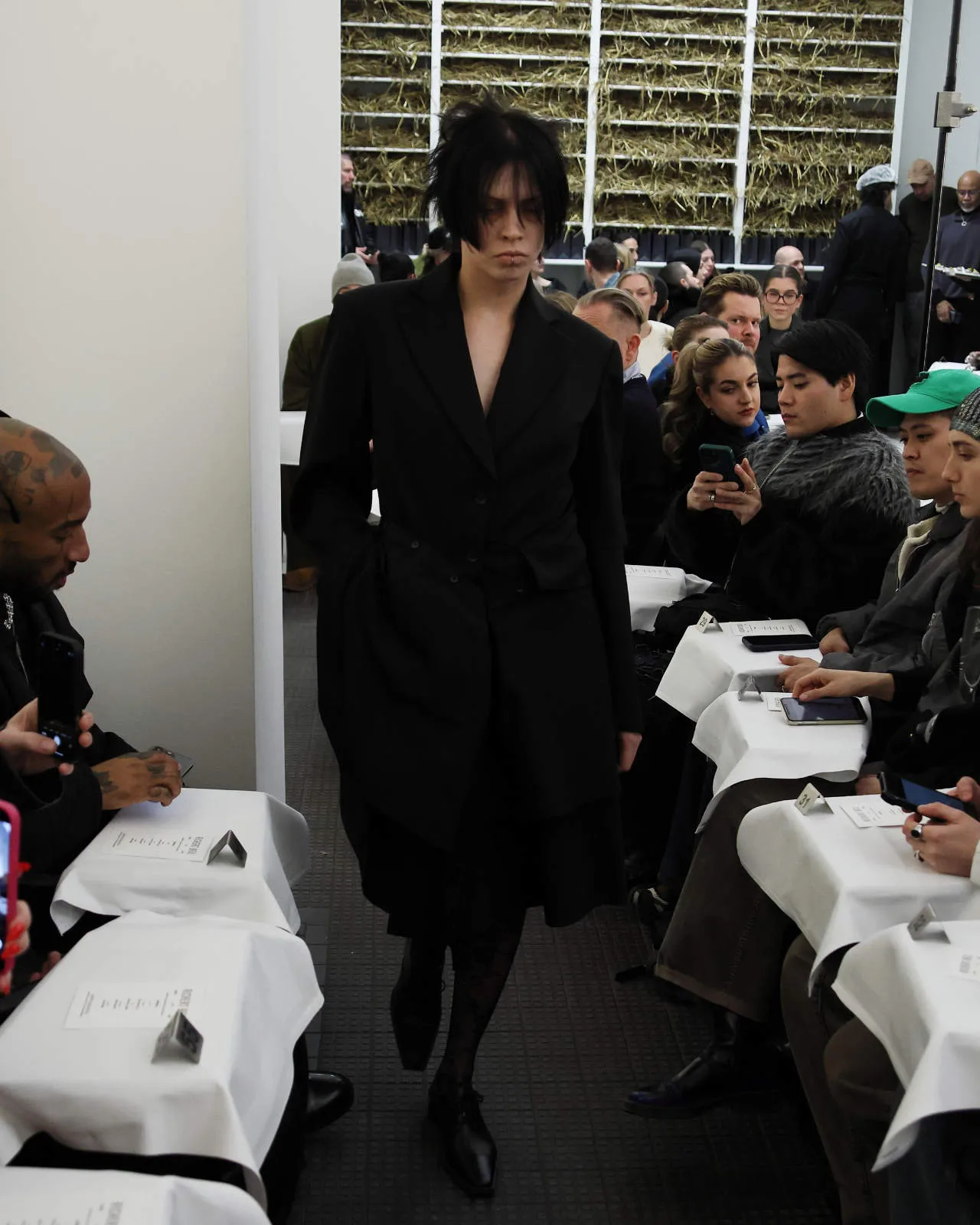
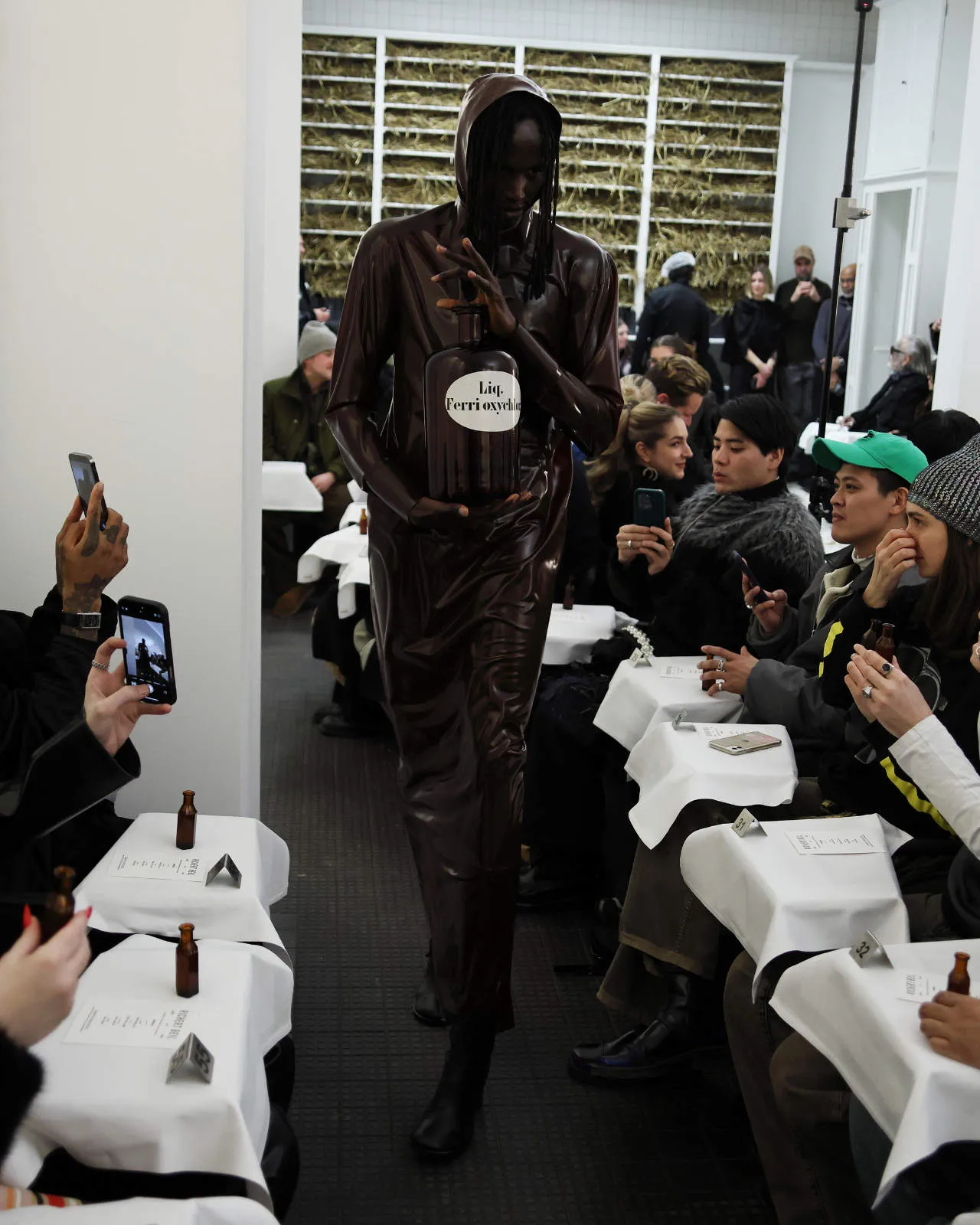
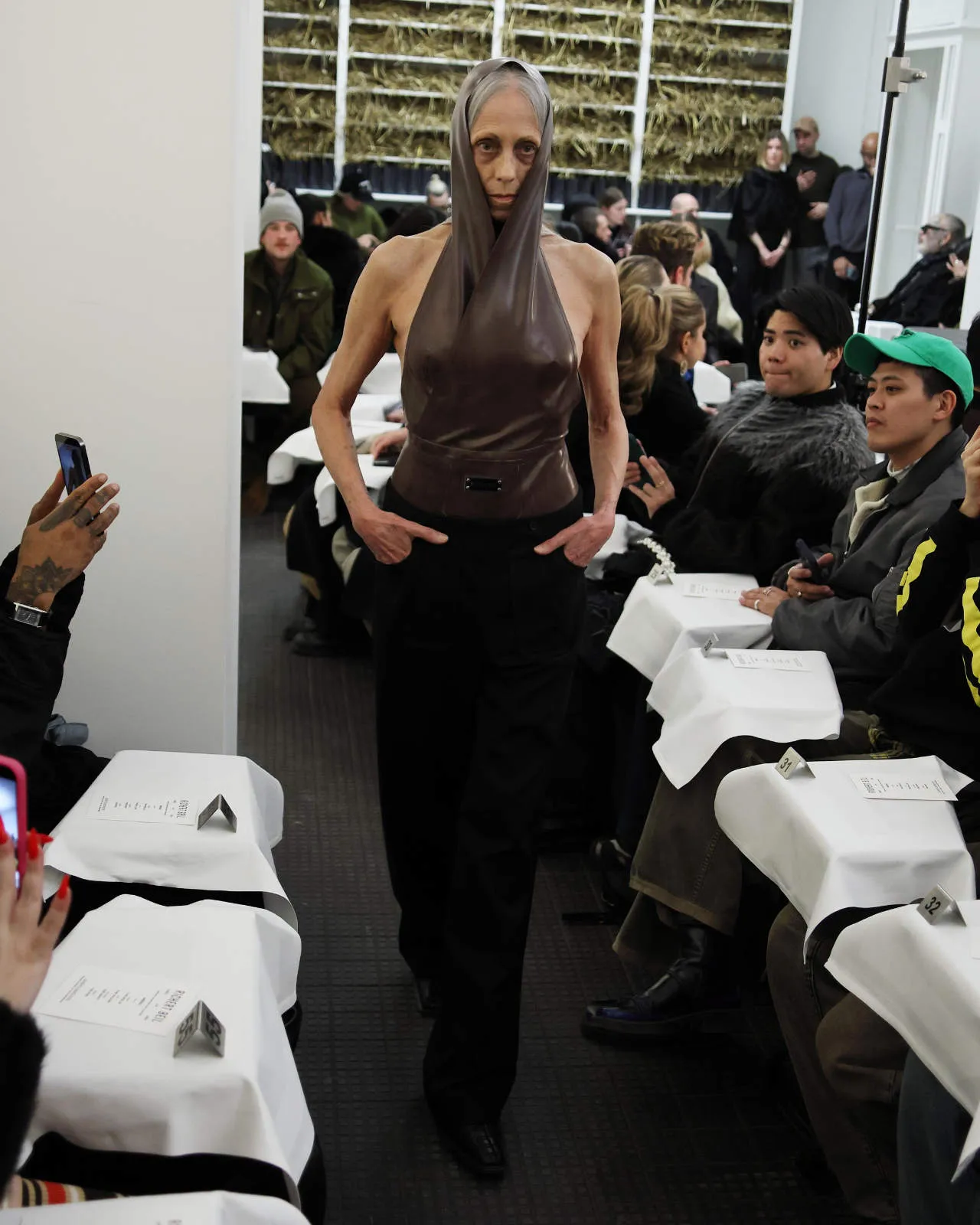
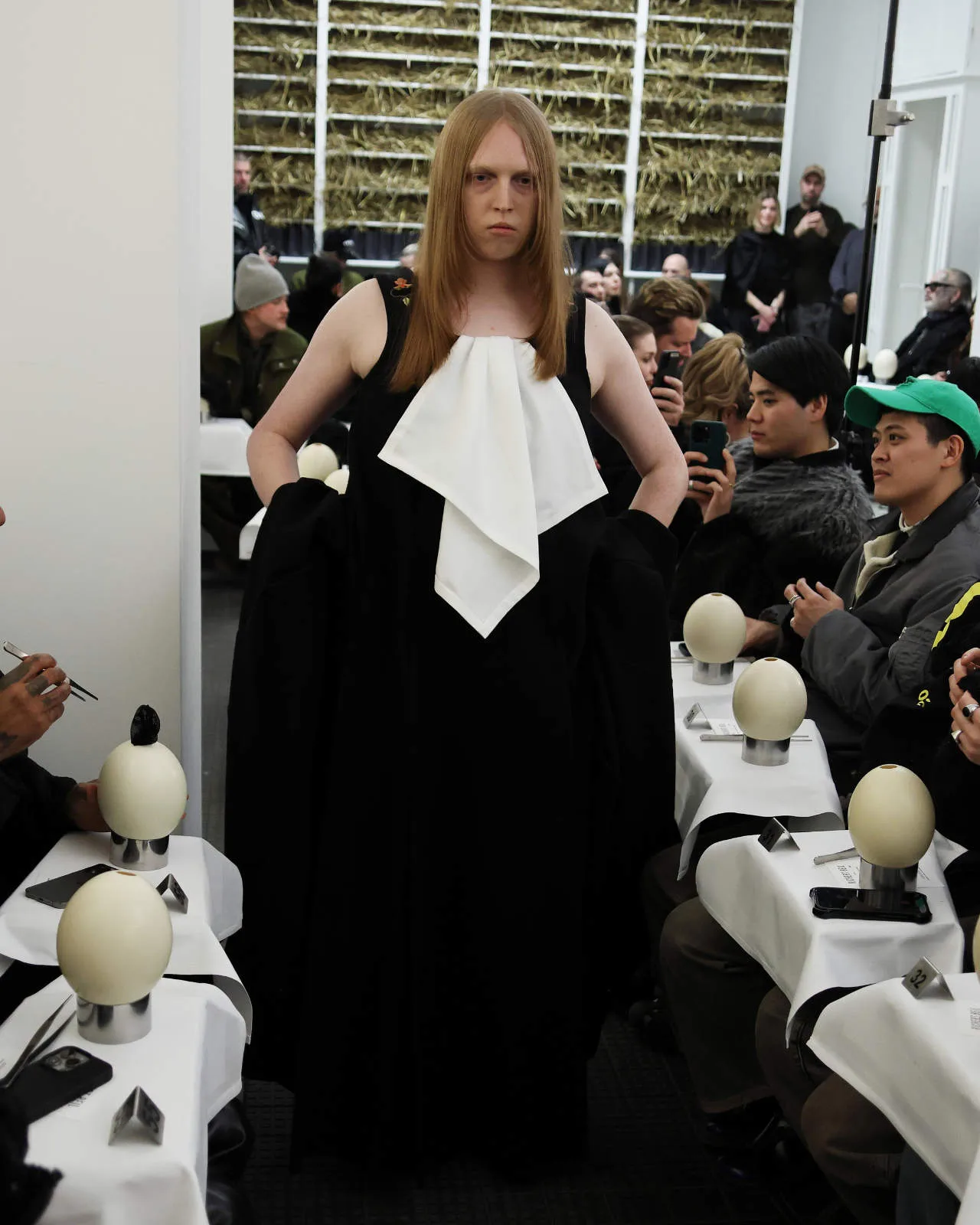
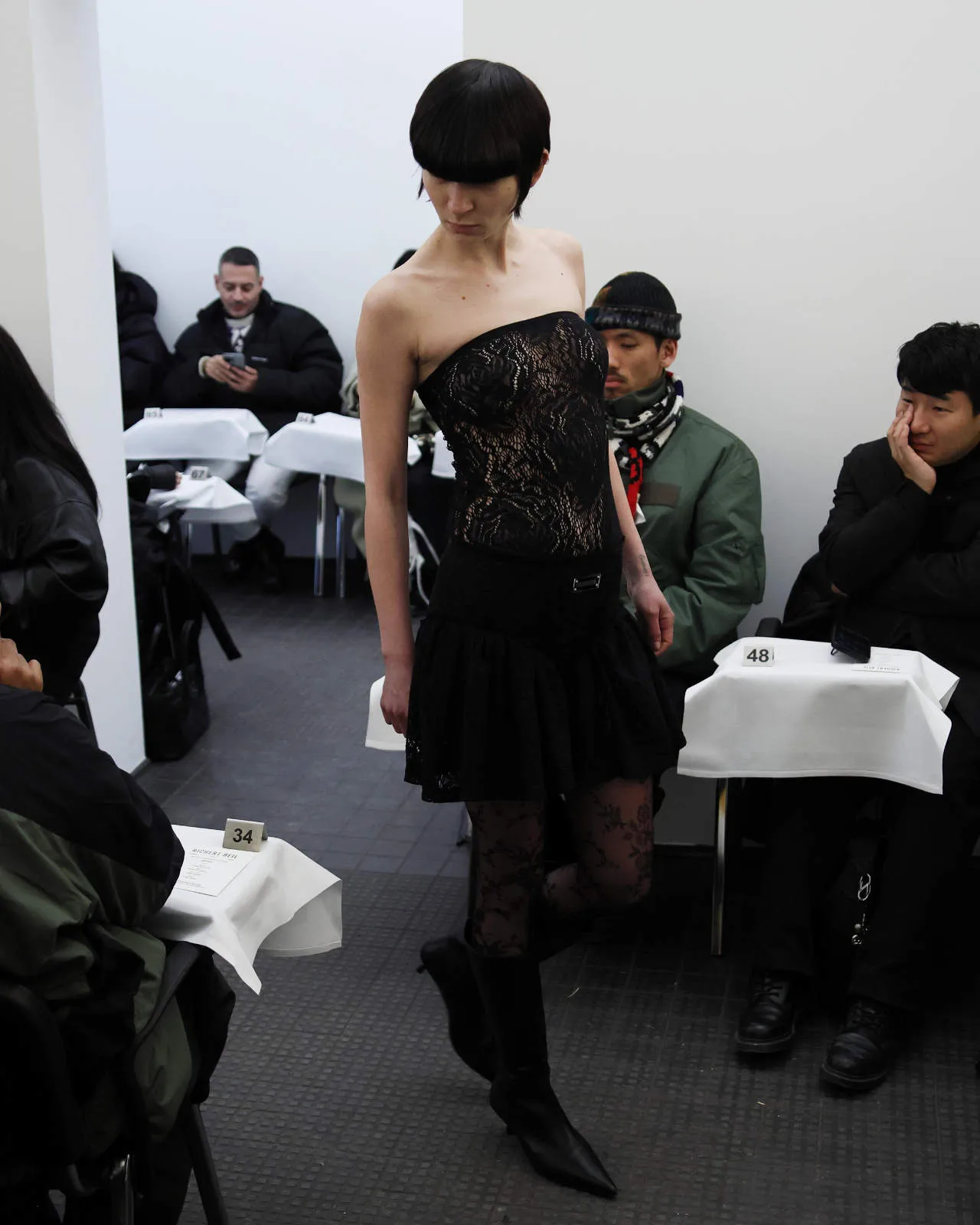
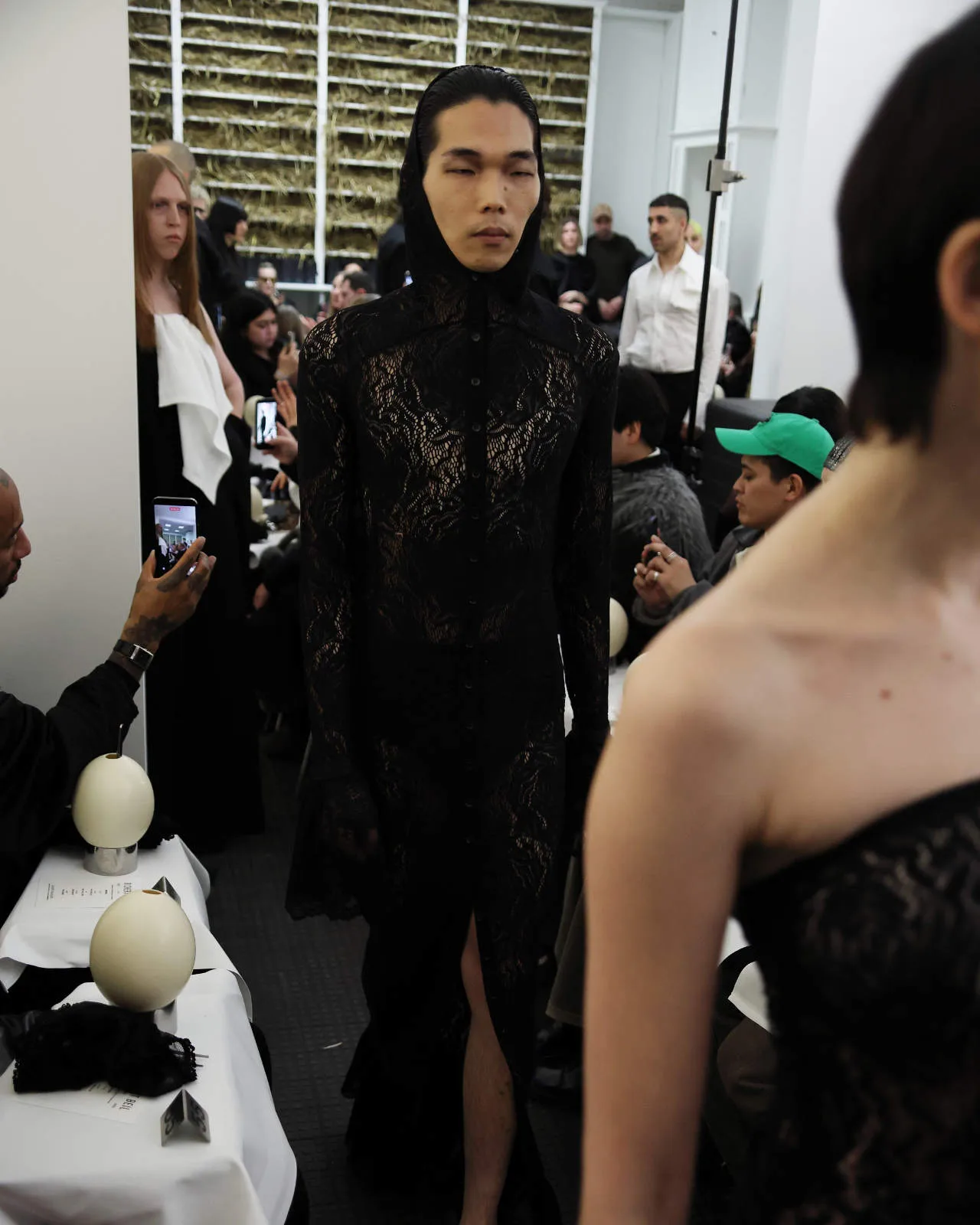
Every season, Richert Beil is one of the most anticipated shows, and this time, the wait felt even longer. The brand founded by Jale Richert and Michele Beil was scheduled as the very last show of the last day, a small detail on the official calendar, but one that turned out to be perfect because at any other point of Berlin Fashion Week, the time simply would not have been enough. Let me explain. The F/W 2026 show, titled Landei (literally “country egg”, meaning country bumpkin), unfolded as a four-course dinner. Each guest had their own small table with a white tablecloth and number. Two models served each course calmly and deliberately, while in between, characters matching the dishes appeared. A brown, transparent look with Richert Beil’s signature hood echoed the glass of The Shot, the third course, and right before The Egg, a model mimicked a hen with her arms.
The collection was full of surprises: a tailored skirt that looked like a voluminous coat, embroidered stains, a cook peeking in eerily, durable materials, precise shapes, garments not tied to a season, and a 135-year-old pharmacy filled with hay. In the background, there was an ever-changing, sometimes unsettling soundtrack playing, punctuated by the kitchen bell signalling the next course. It was a runway show turned time-consuming procedure, a strong rebellion against fashion driven by speed, visibility, and scale. Every look demanded focus and patience, forcing the audience to ask themselves whether an independent creative practice can survive in a performance-driven world. And then there was the last course, The Egg, a giant ostrich egg that, when turned, revealed a black lace panty, leaving guests smiling, slightly shocked, and utterly delighted.
OBS
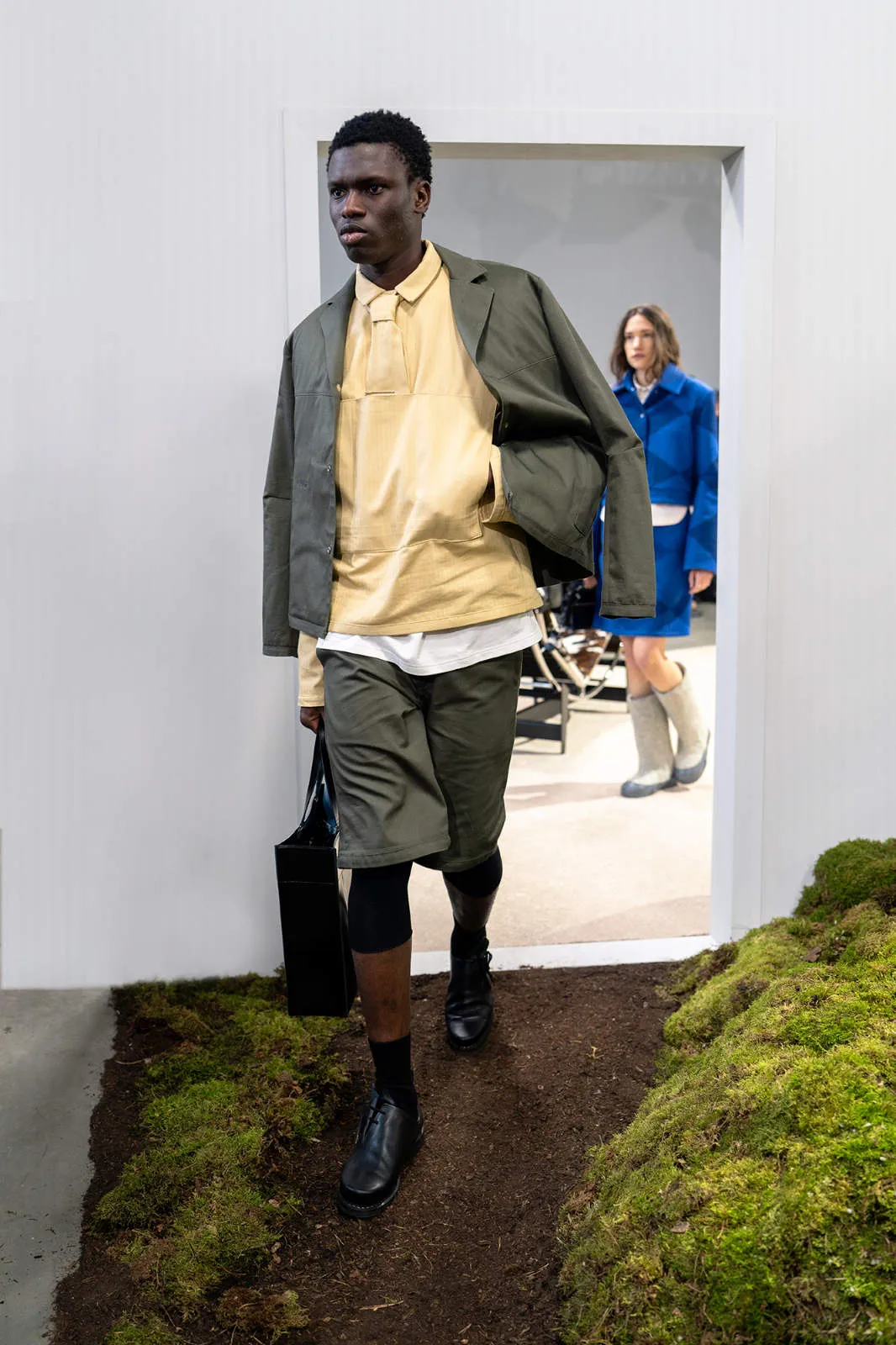
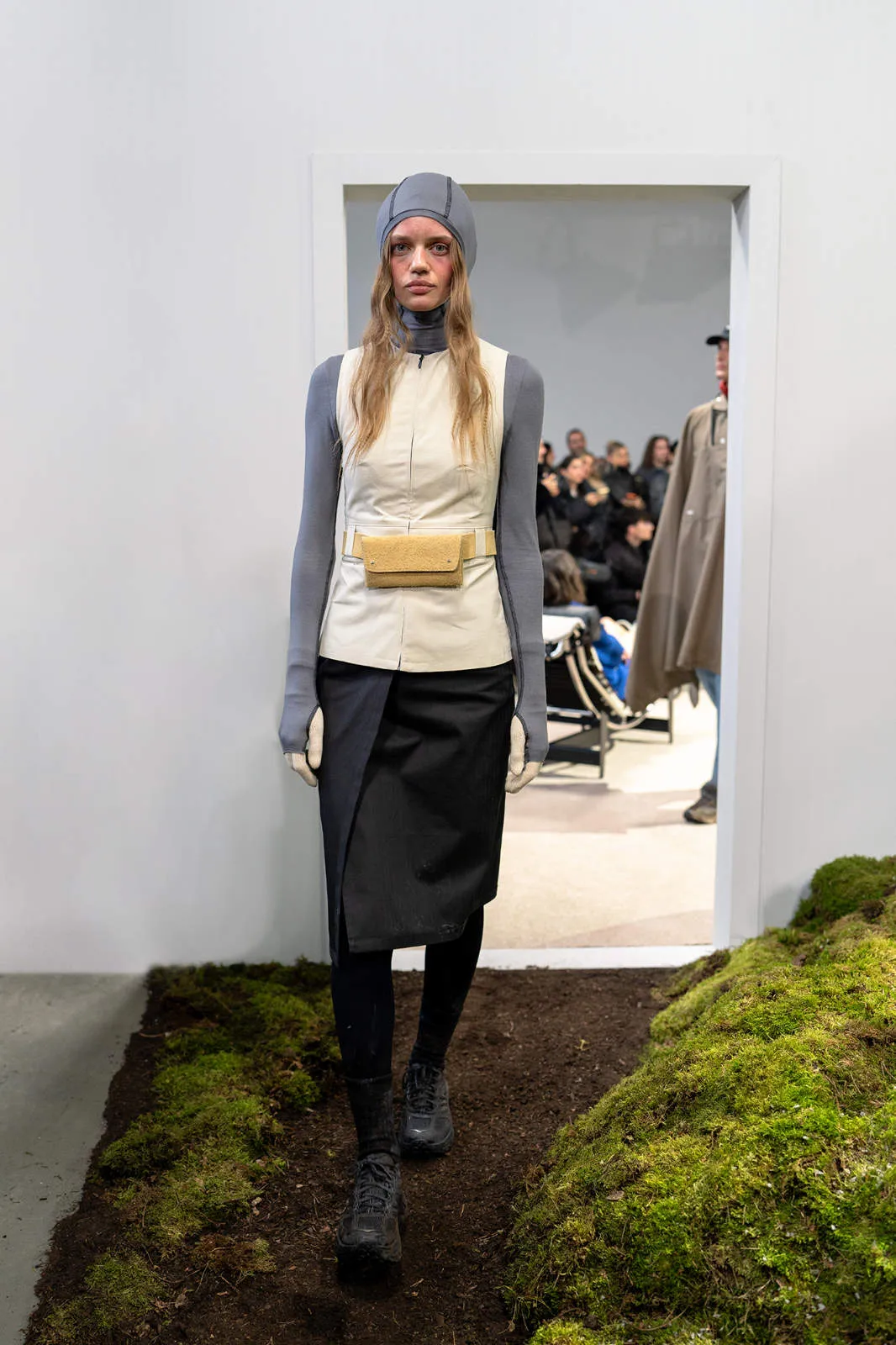
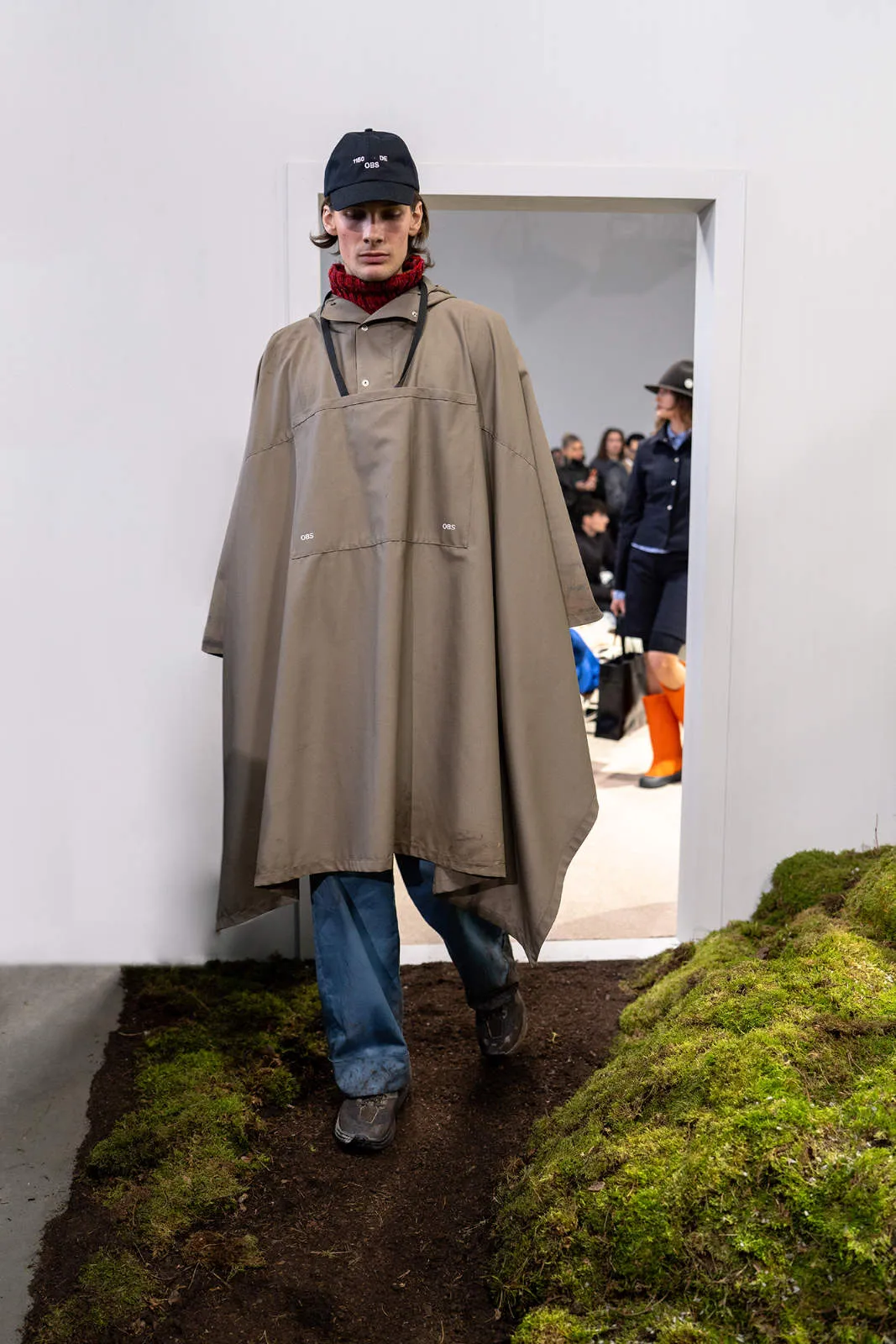
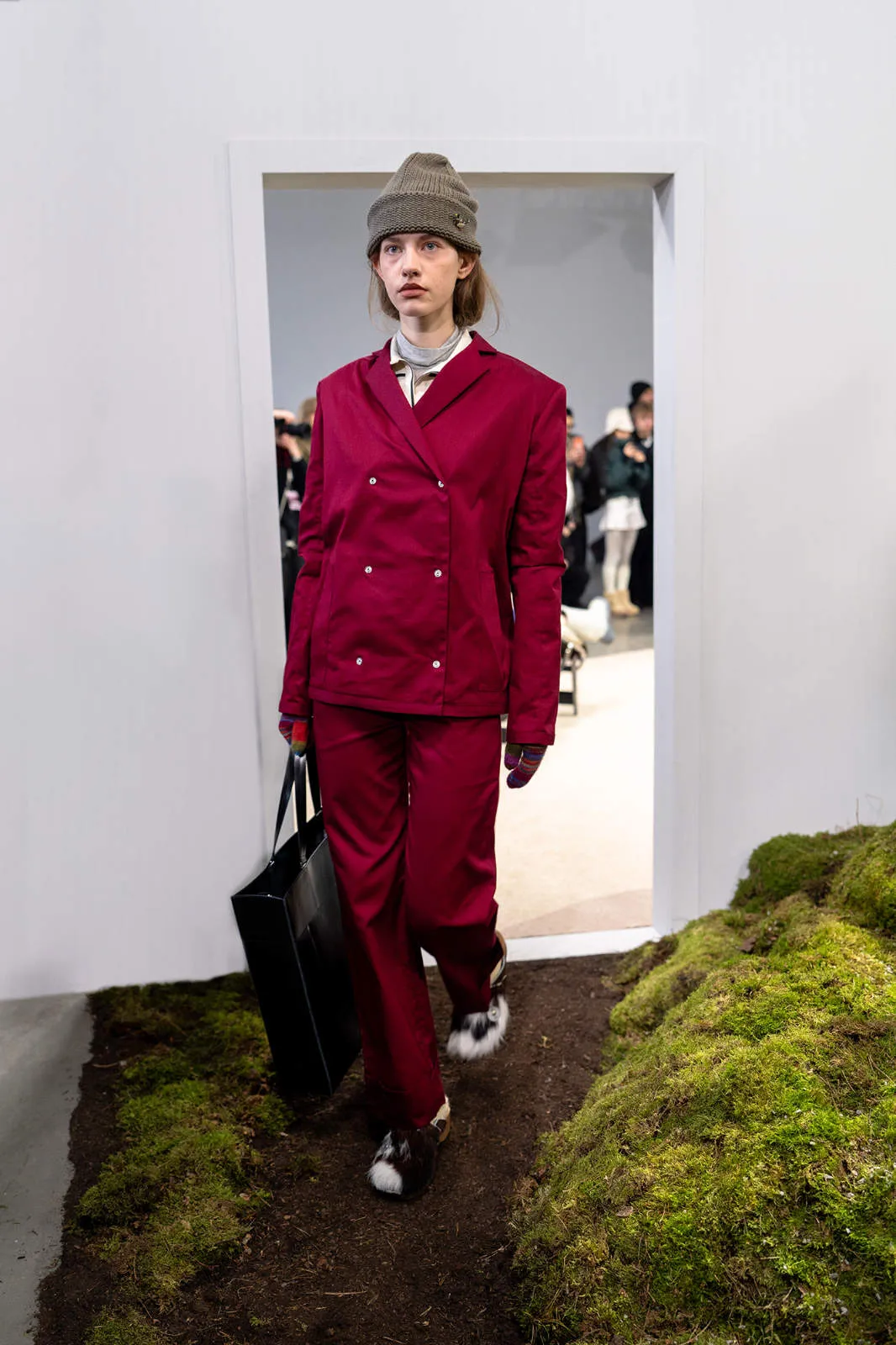
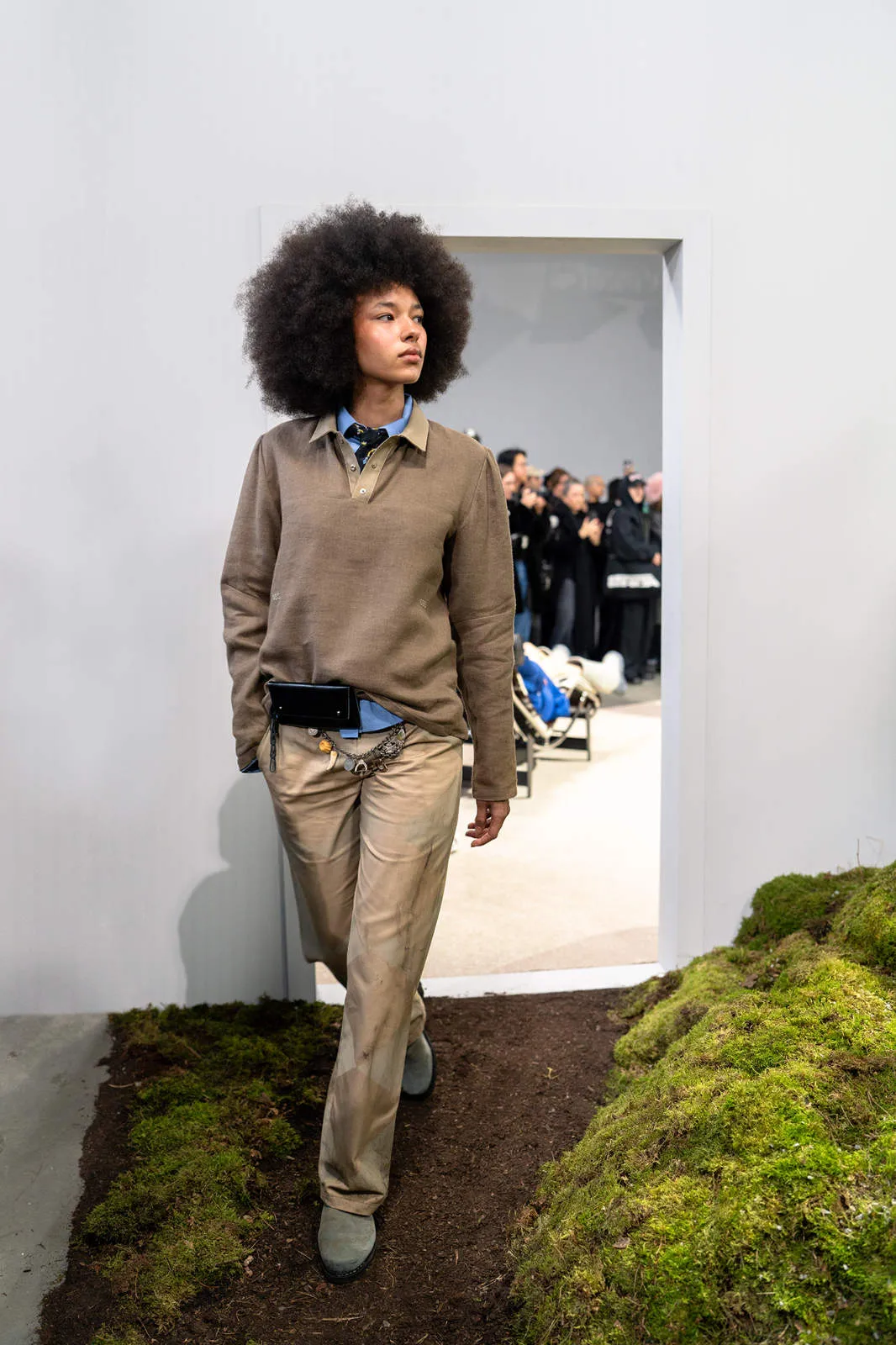
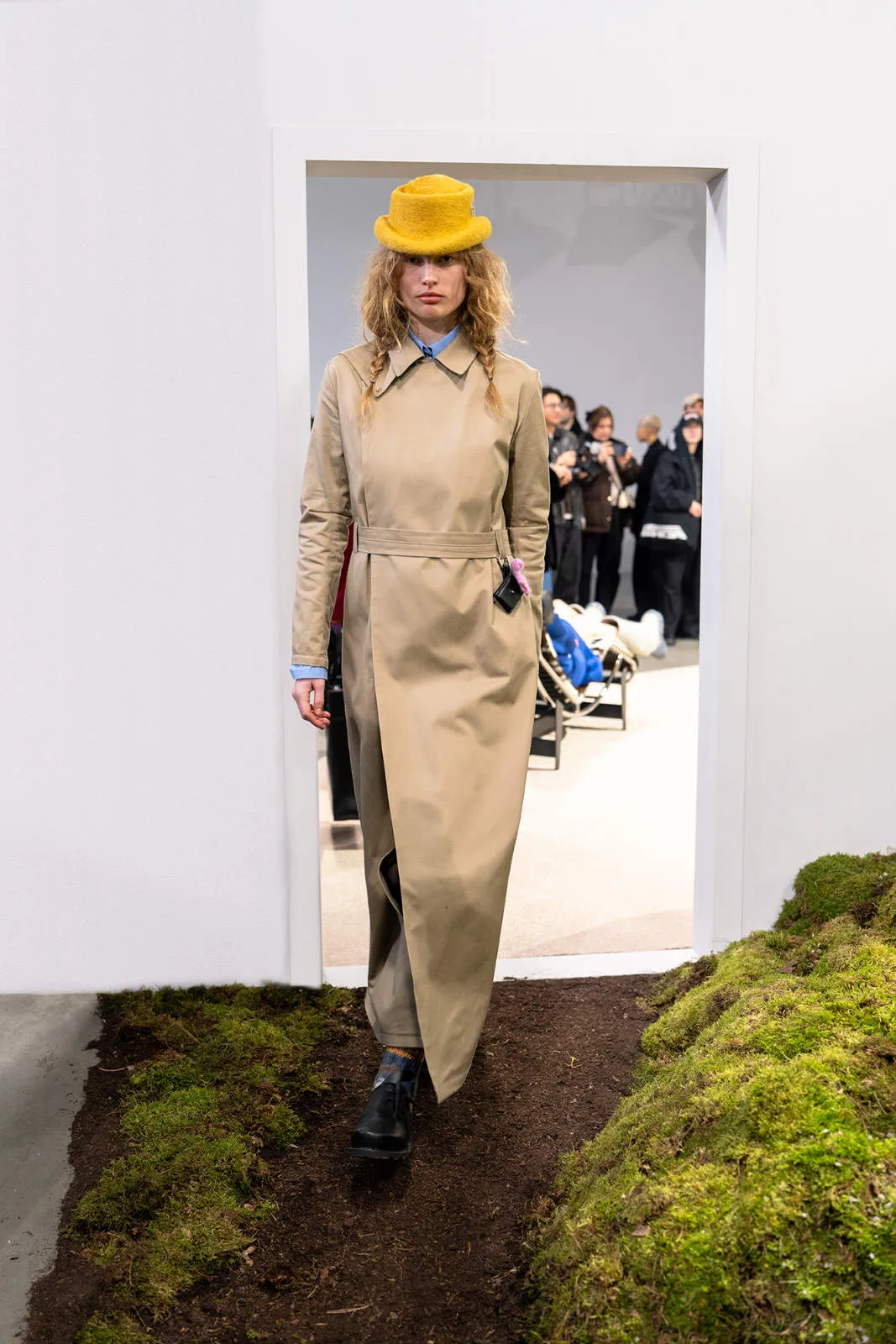
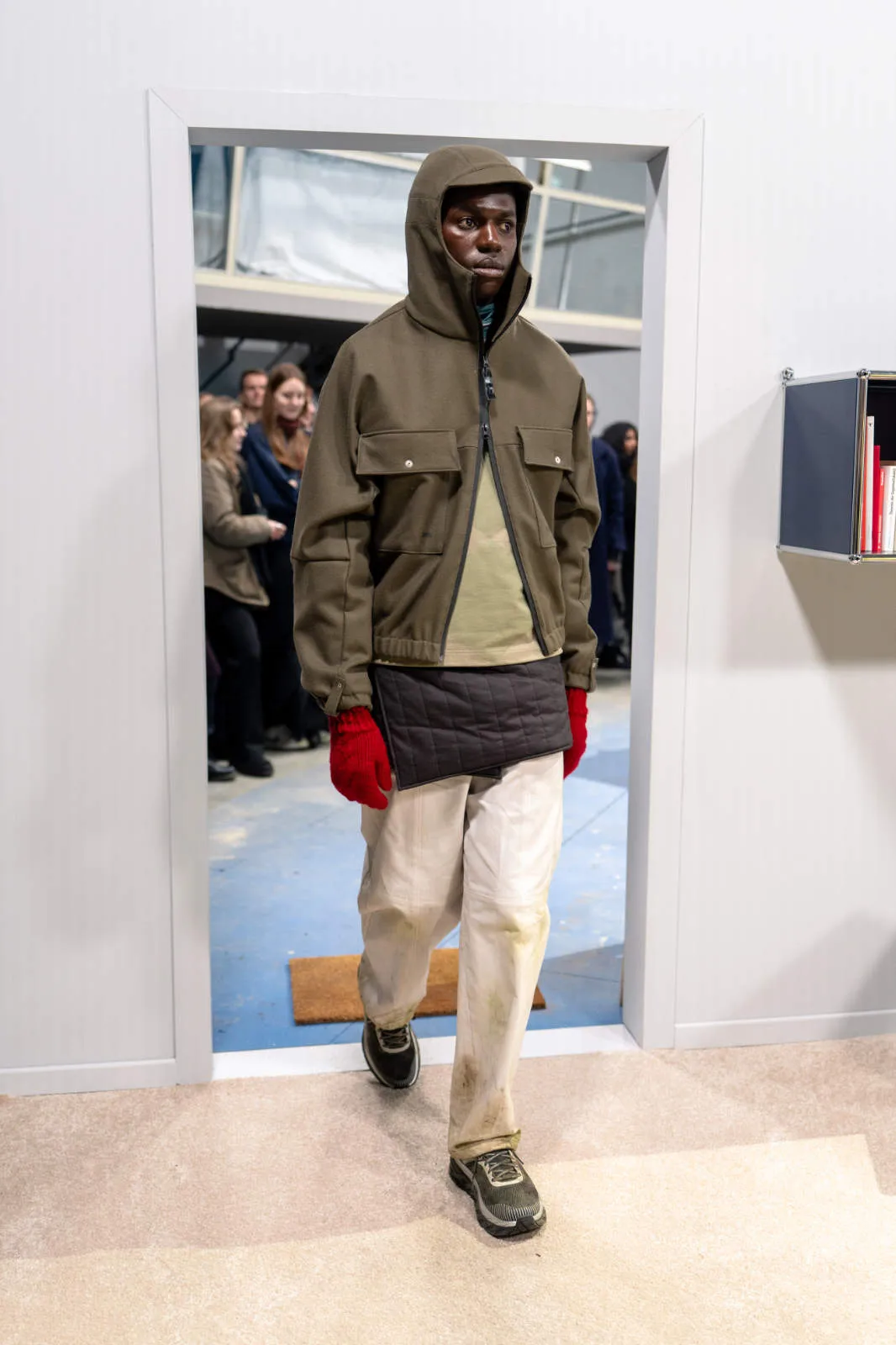
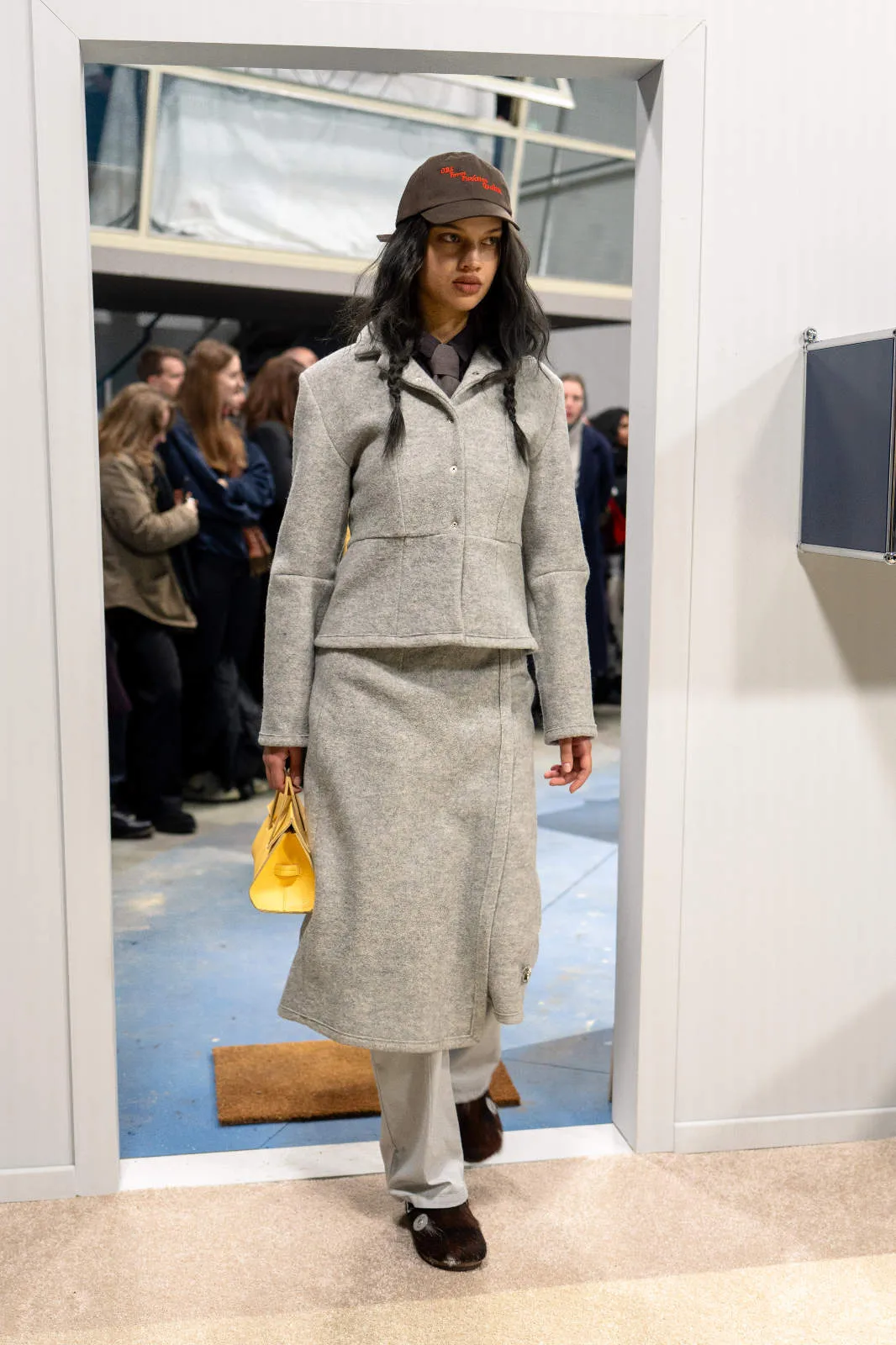
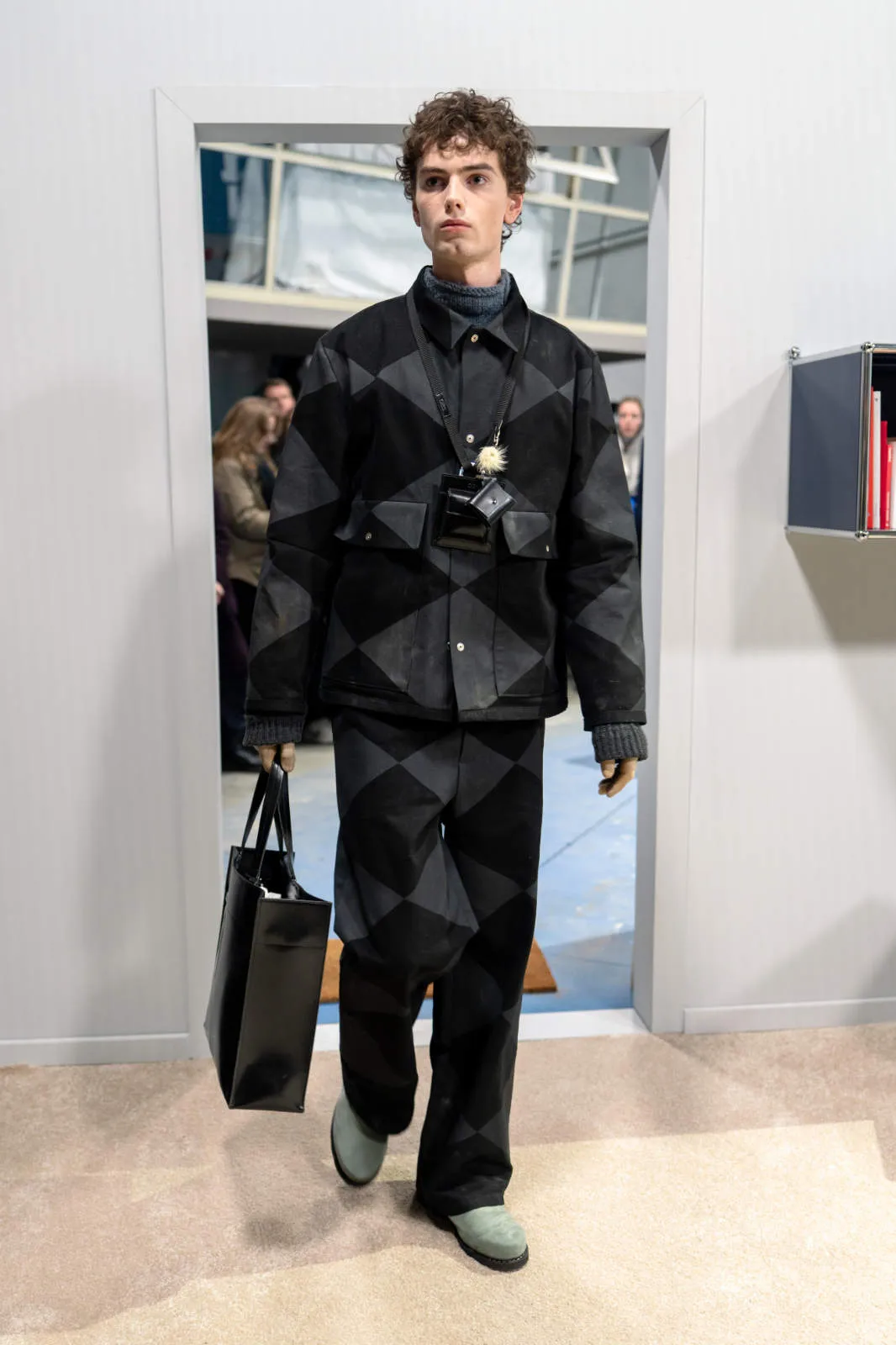
Another highlight this season was OBS, the Augsburg-based brand known for its construction-driven design language. With OBS, every unnecessary detail is stripped away, leaving focus on purpose, quality, and utility. Form follows function, yes, but their collections are never boring. For their F/W 2026 show … auf uns ist Verlass! (which translates to “…you can count on us!”), the set was a circular island in the middle of the room, divided into the brand’s three main workspaces. Guests followed the models from the workshop into the office, filled with stylish USM Haller interiors, and then into a garden that resembled a topographical Bavarian mountain landscape. The constant movement broke the traditional front-row hierarchy and transformed architecture, crowd, and clothing into a living, interconnected experience.
Why bring Augsburg to Berlin? Because the city, with its around 300,000 inhabitants, is a sanctuary for OBS, far from urban overstimulation, where nature allows for peace, vision emerges from making, and craftsmanship can flourish undisturbed. Collaborations brought hypnotic hats from Hutfabrik Lembert, footwear from HOKA, and pieces made with the Zollner family from Garmisch. Guests could admire Japanese cotton twill, vegetable-tanned leathers, Austrian Walkloden, simple capes, long straight coats, geometric diamond patterns, and high, felt-look boots with rounded plastic toes. Overall, OBS’ collection felt like a playful, immersive design statement that celebrates craft and precision. Definitely a moment to forget overconsumption and fast-paced trends.
Lou de Bètoly
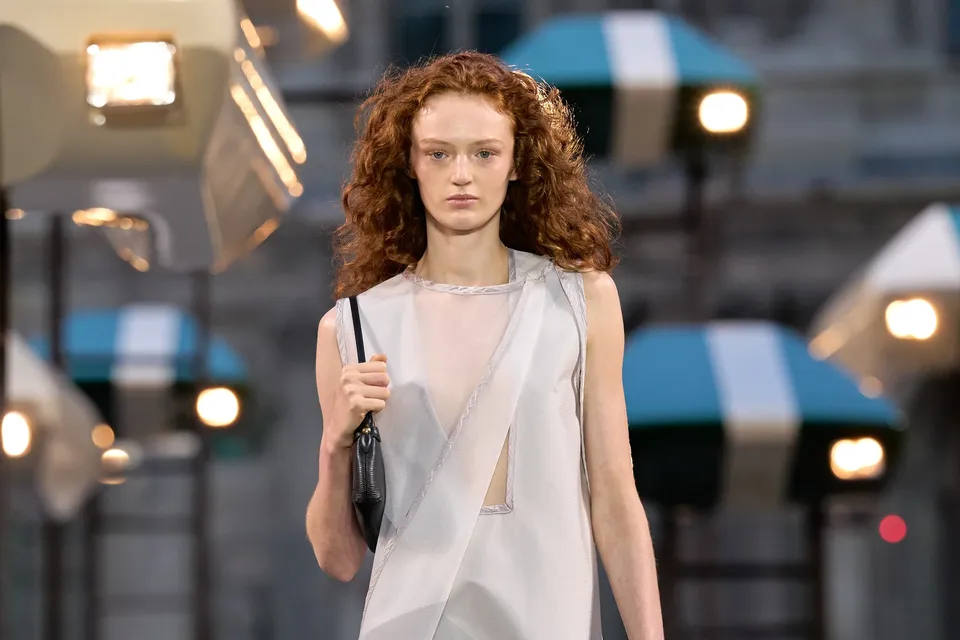
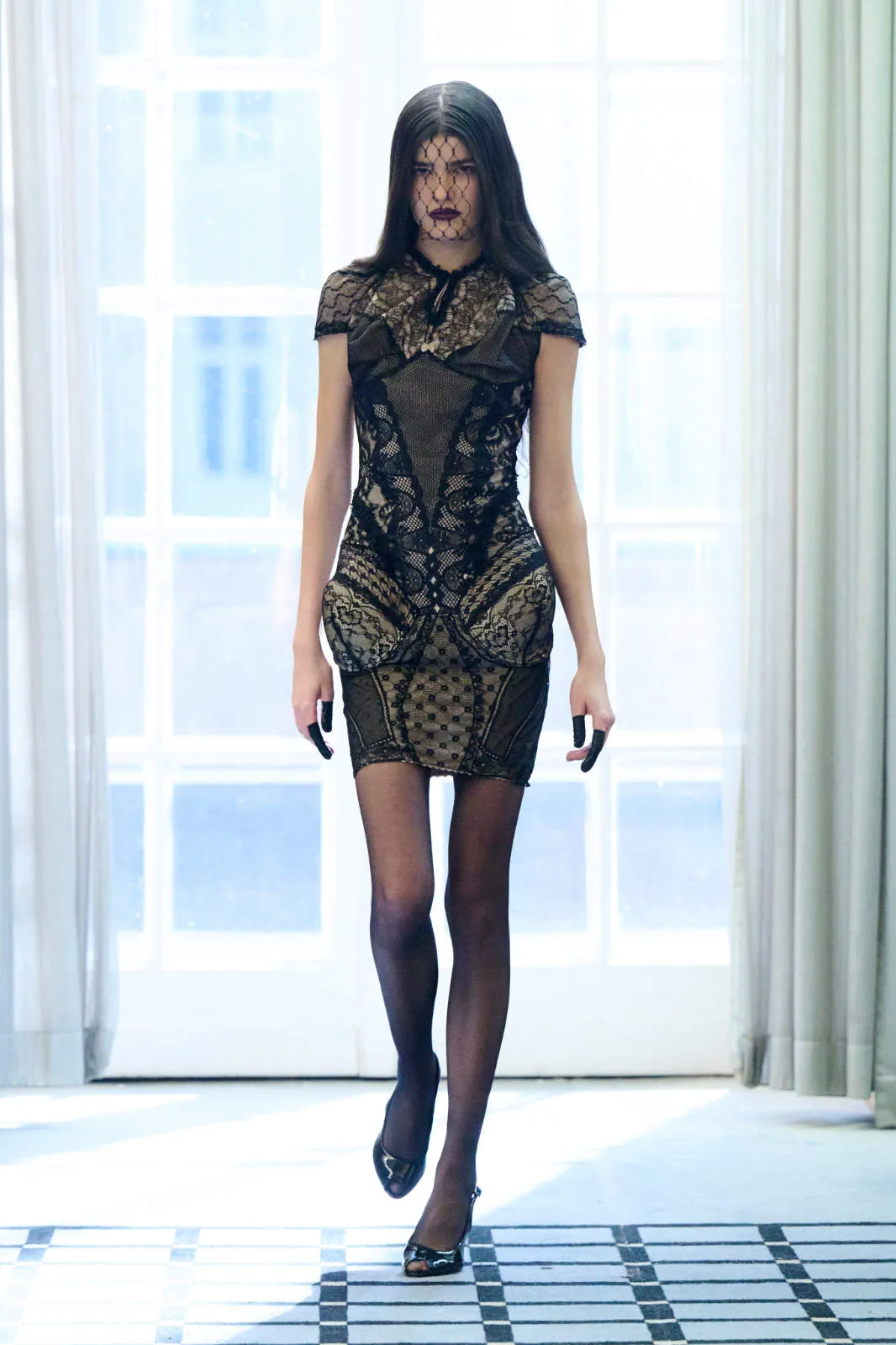
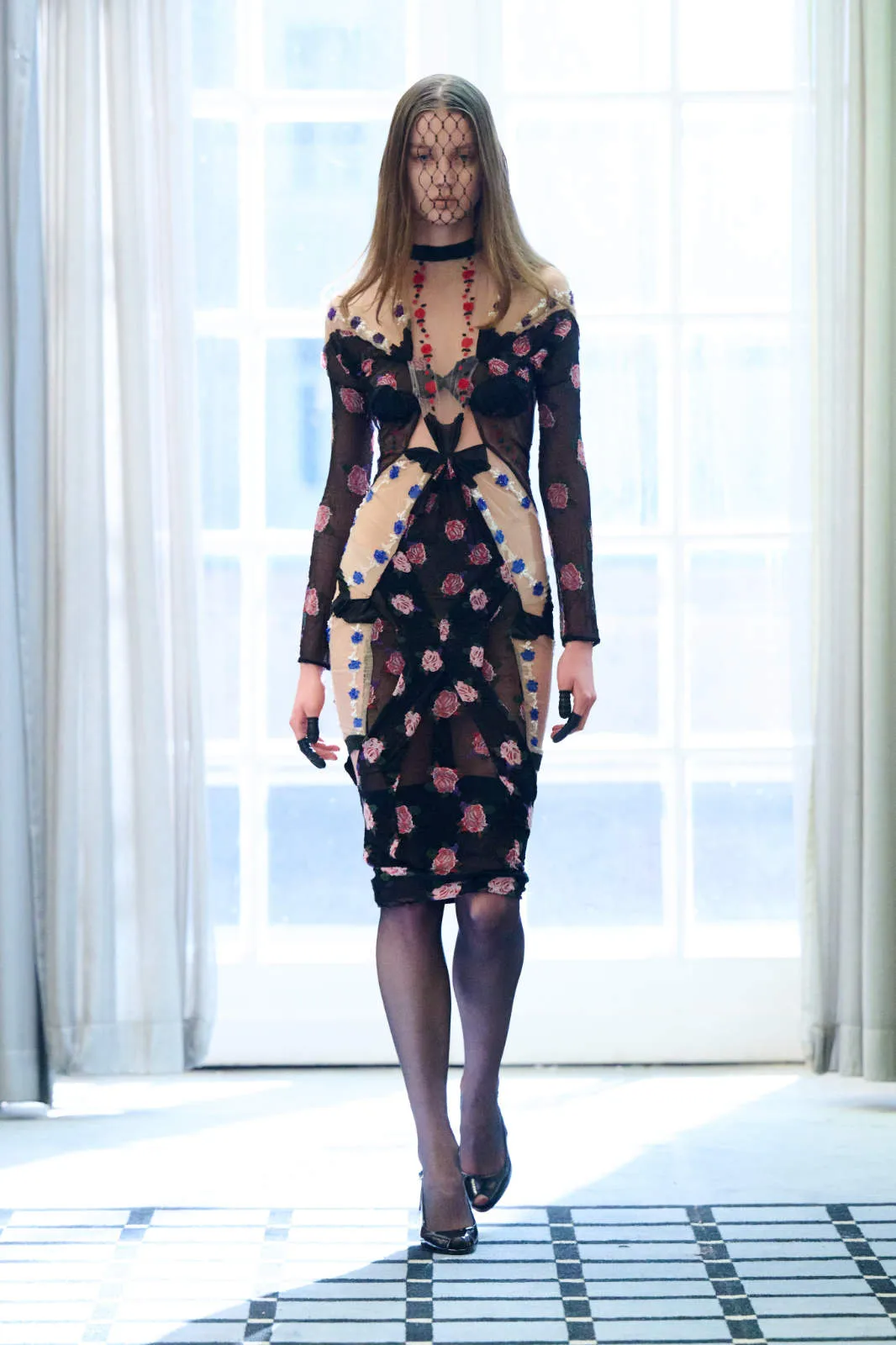
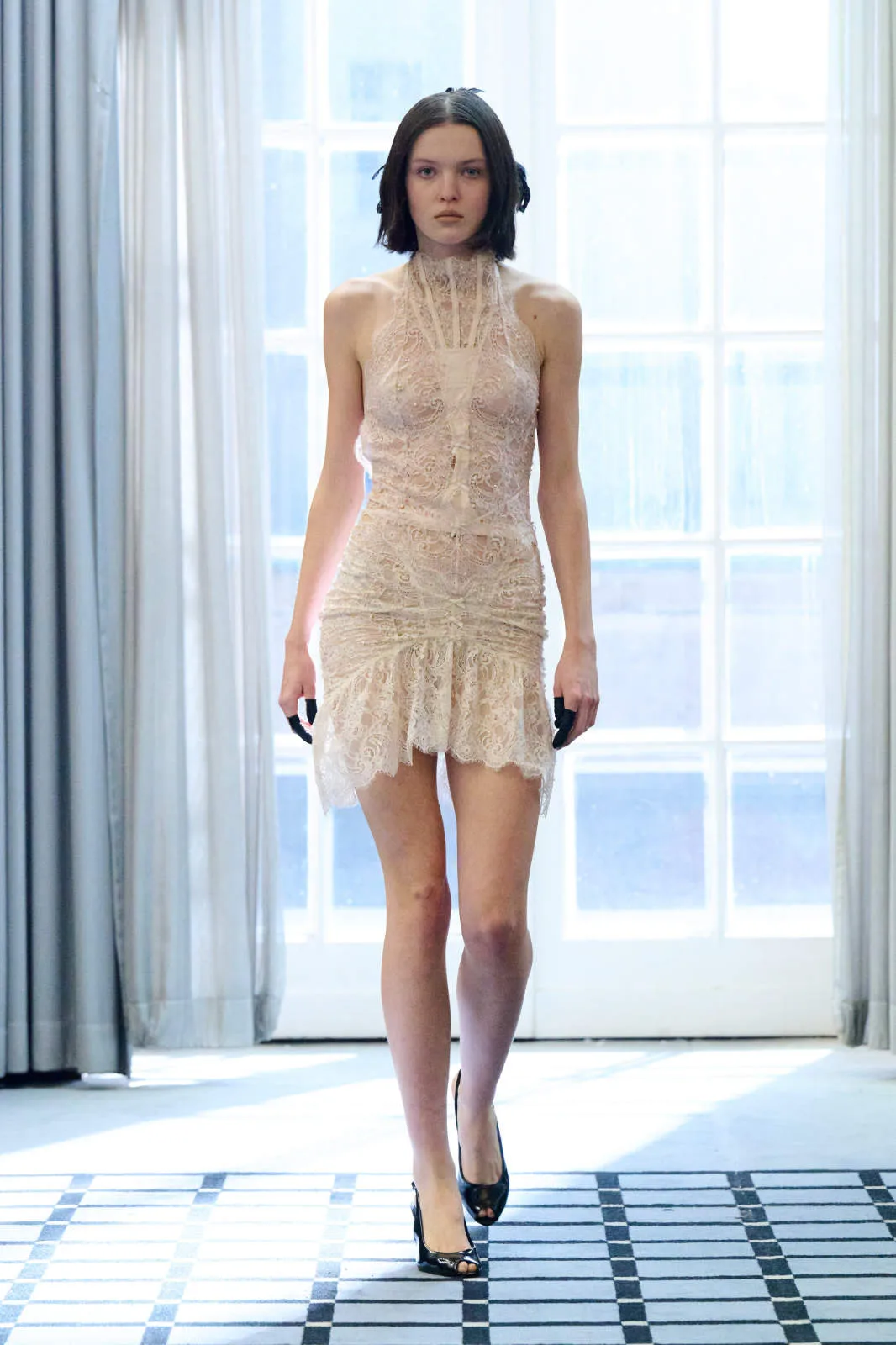
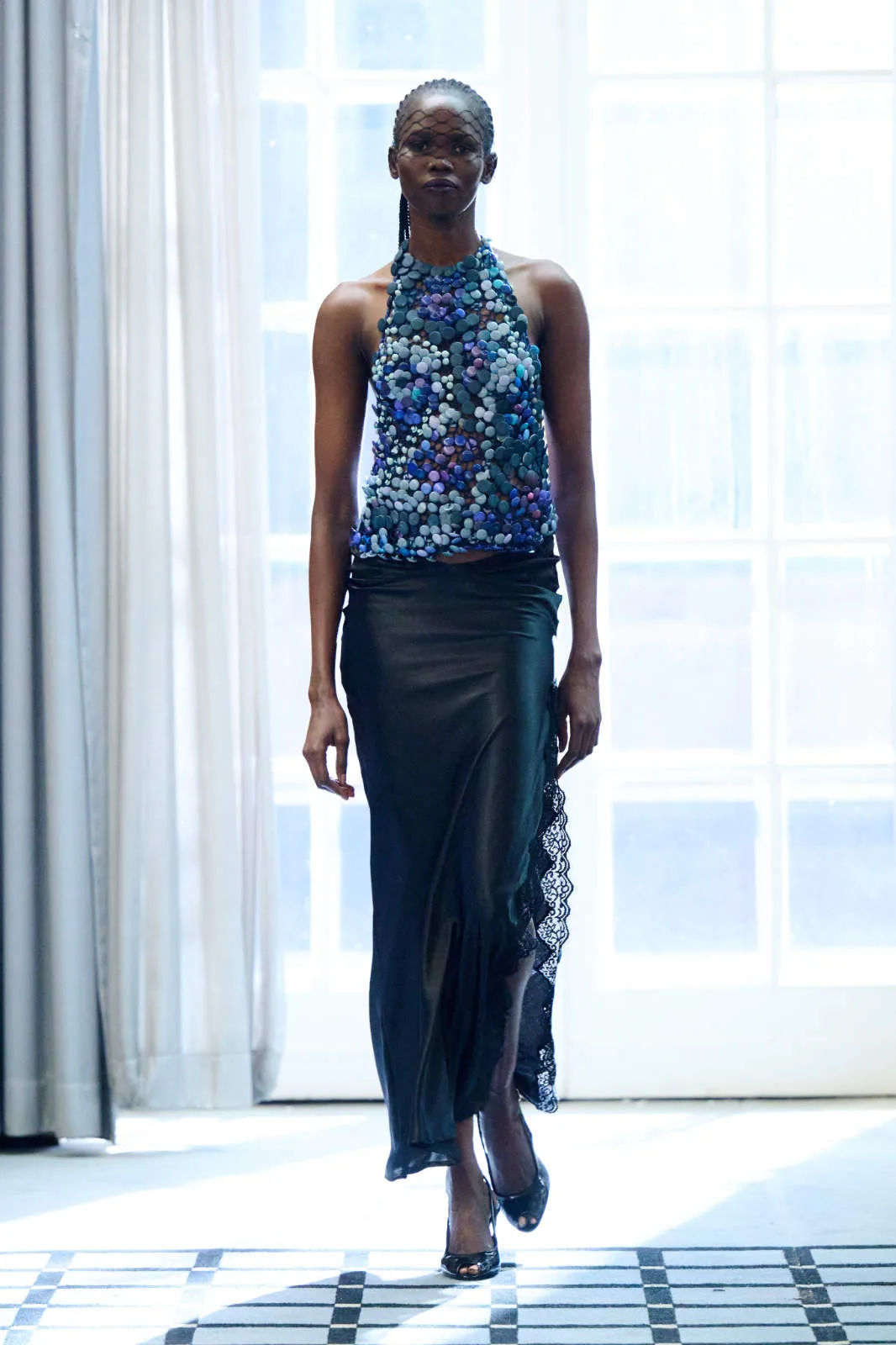
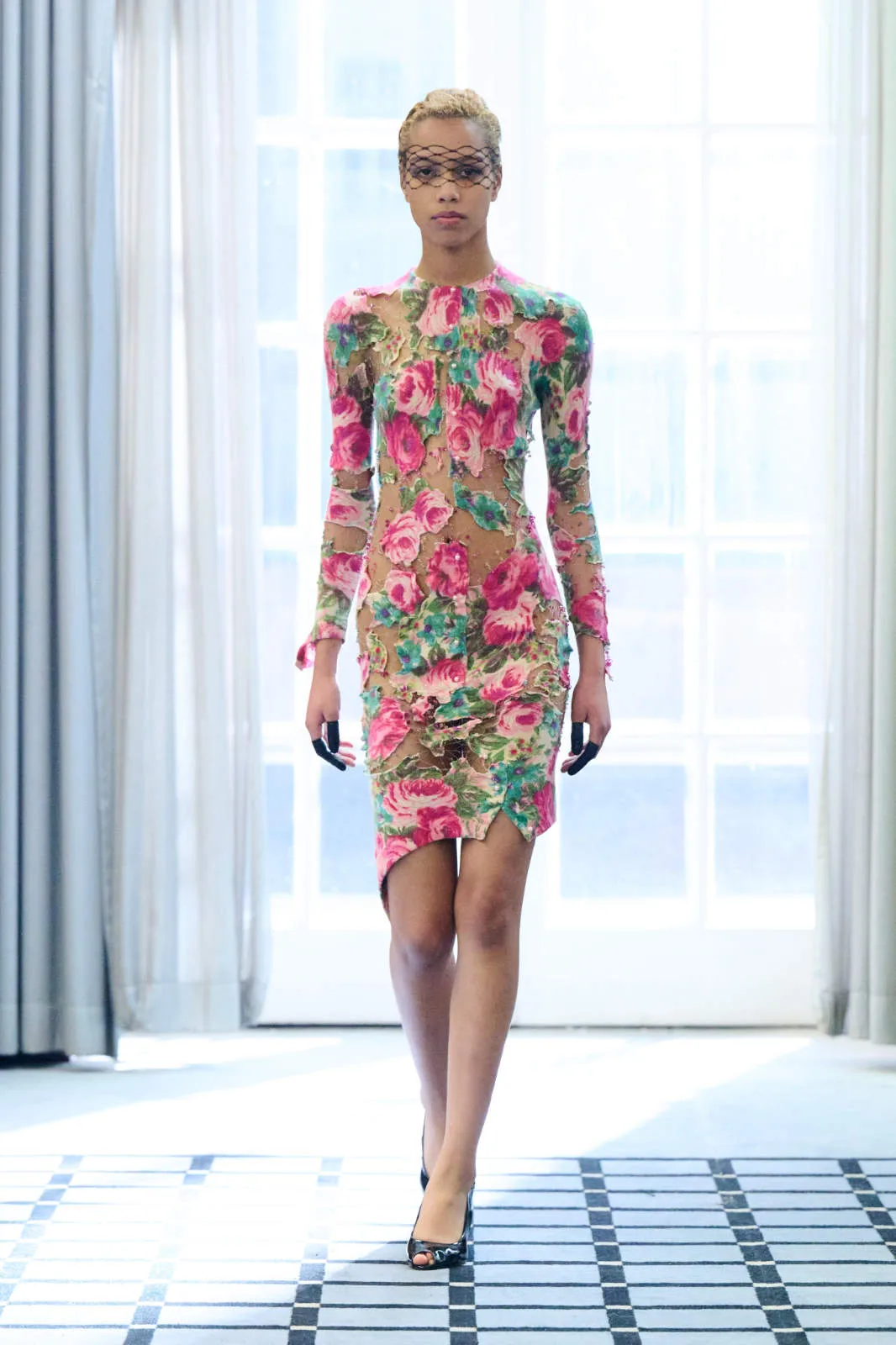
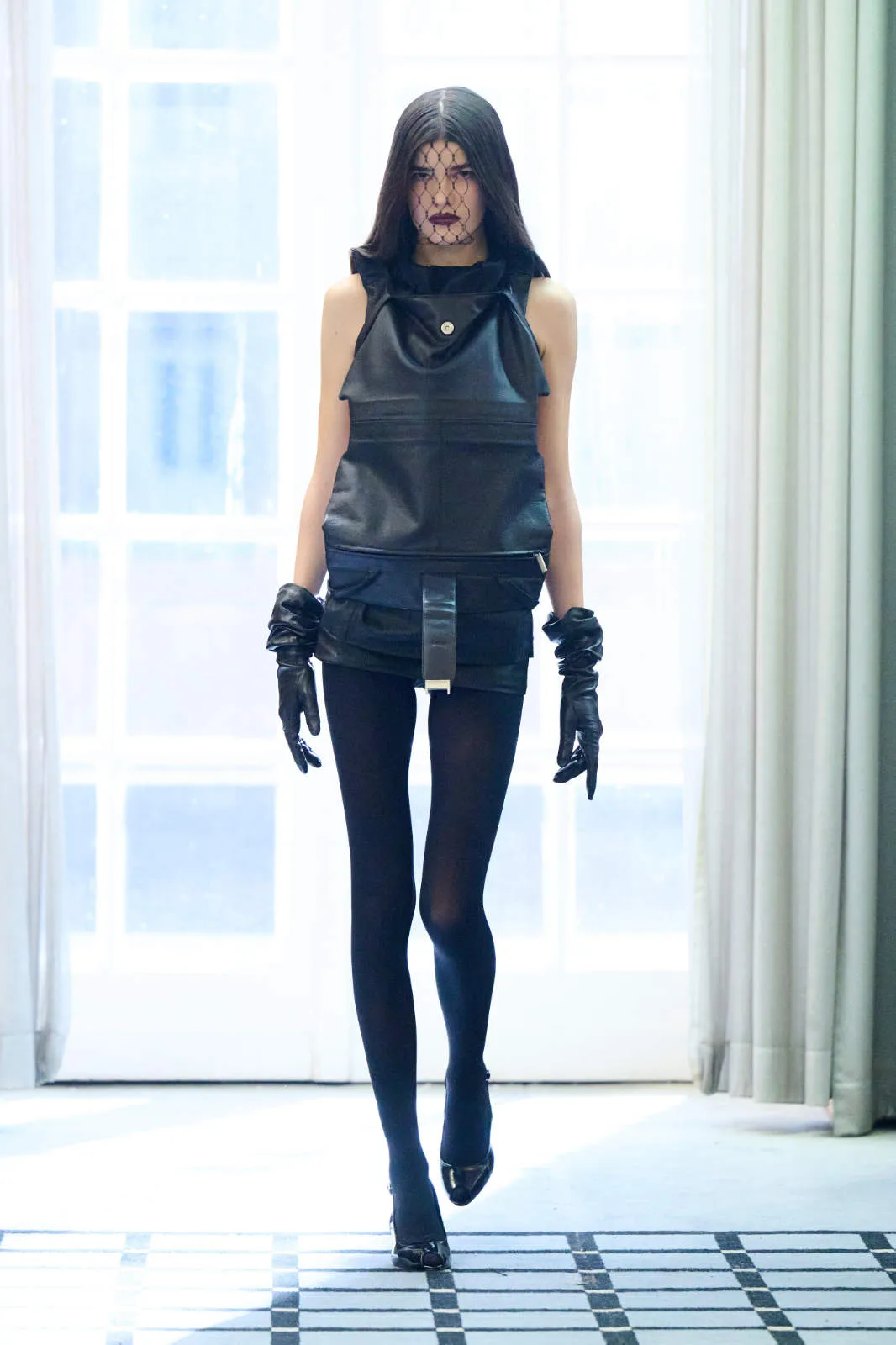
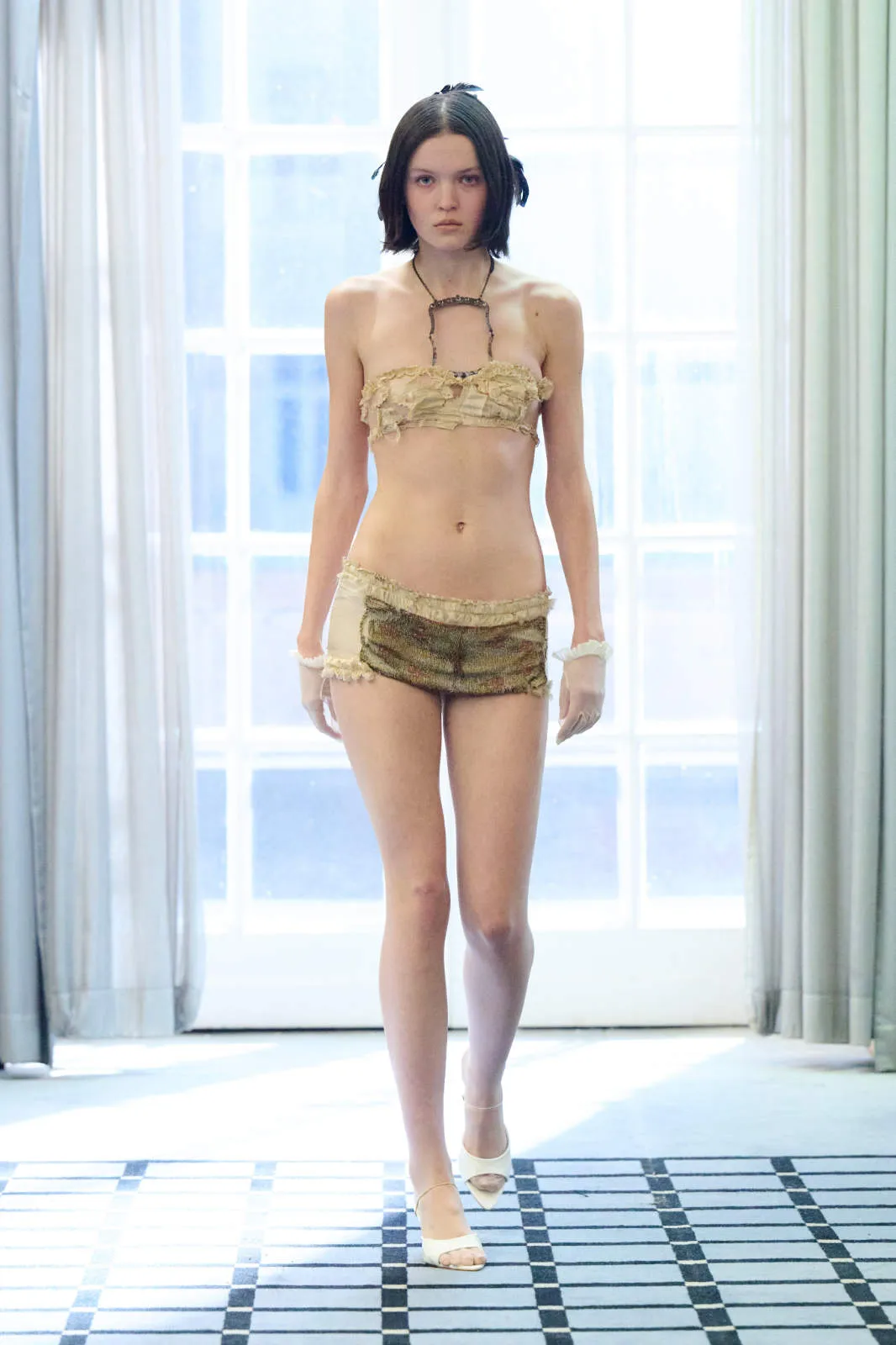
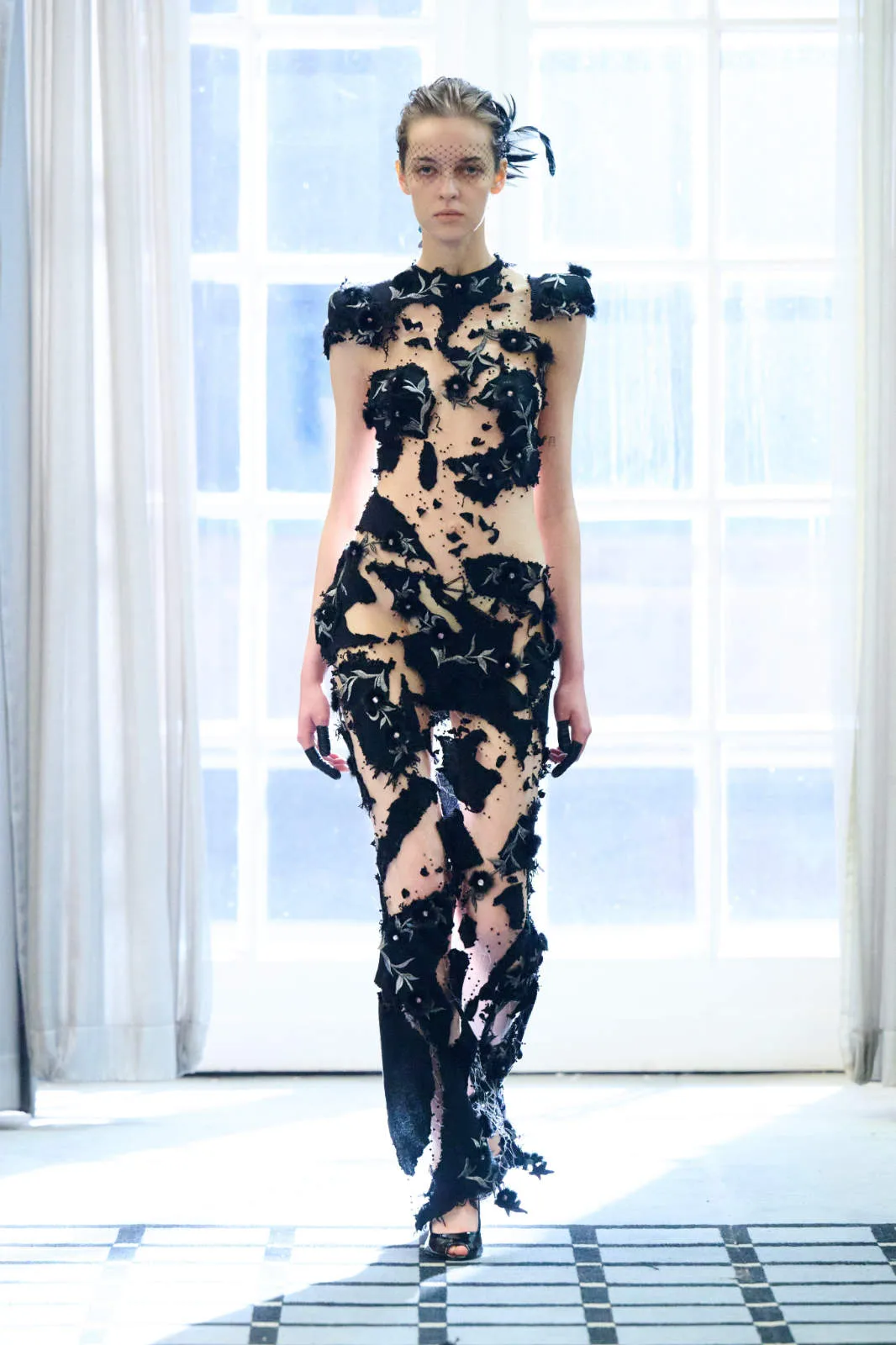
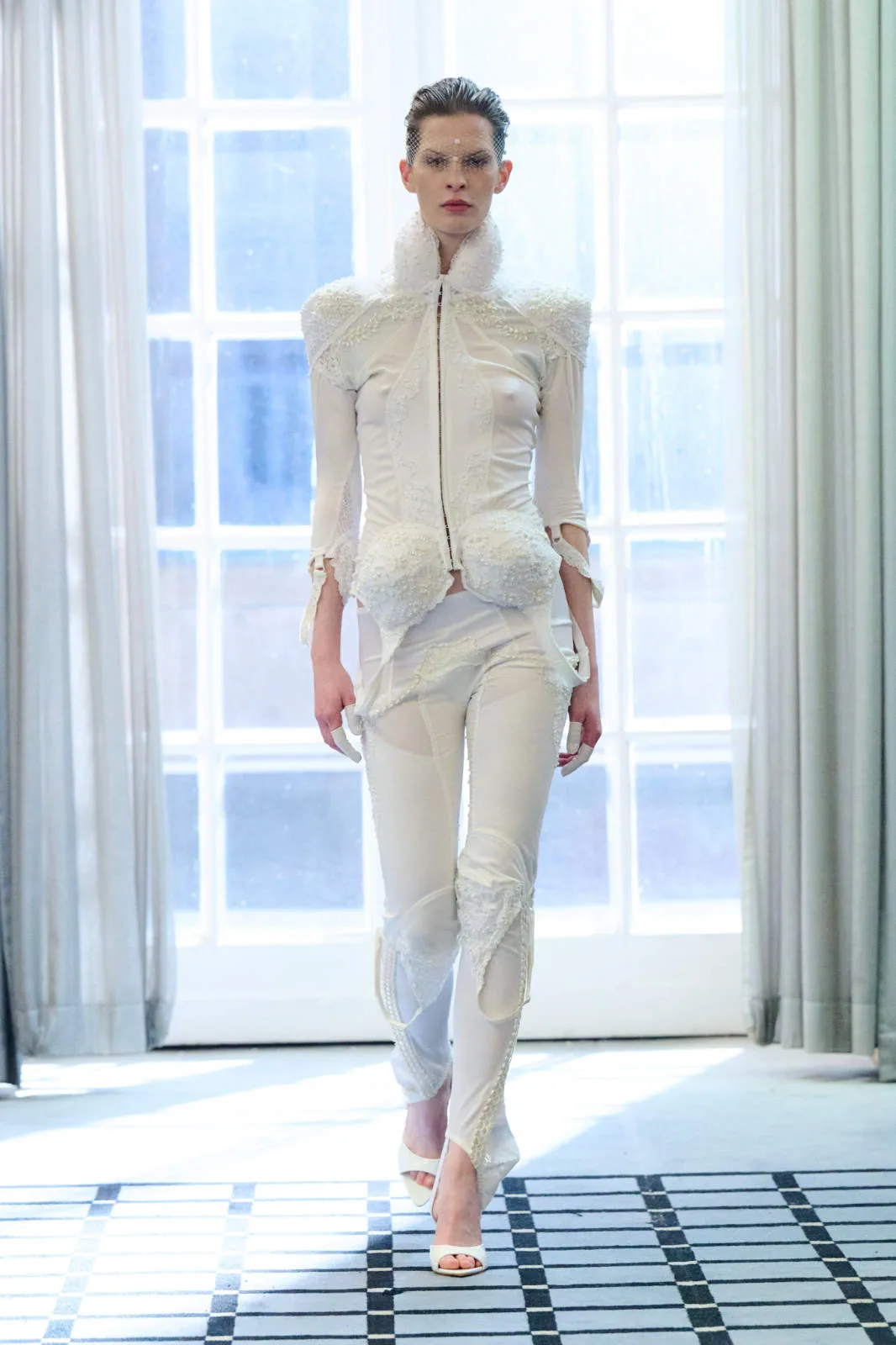
Lou de Bètoly, the anagram of Odely Teboul, is the Berlin-based French designer everyone should be watching. The brand feels like an alter ego, a surreal persona bringing to life delicate, hyper-feminine, expressive yet nostalgic garments. This season, that persona appeared as an extravagant femme fatale, straddling the line between past and future. The past is everywhere in the materials, sourced from flea markets, personal collections, and production leftovers. Found in tens of thousands of buttons, washed and sorted during Teboul’s childhood, now turned into a shiny, armour-like cocktail. Or, found in century-old bags that were deconstructed into tops and skirts, as well as, in true Lou de Bètoly fashion, old bras that were cleverly repurposed as hip details, almost like abstract panniers.
But this femme fatale that we saw at the F/W 2026 show is not stuck in the past. She moves into the future with the very same bras transformed into futuristic high collars hiding the model’s neck, wide shoulders, bright blue gloves, leather details, and tight leggings. Teboul plays with fabric in ways that defy traditional sewing rules, stitching wool to silk, lace to crystal beads and nylon, and tangled yarn scraps into tender corsets and tights. It is the perfect mix of fragility and chaos, innovation and history, obsessive craftsmanship and seductive, fantastical femininity. Perhaps the most poetic moment came outside the venue at the town hall of Schöneberg, where the weekly flea market vendors were packing away their stalls, a charming reminder of the world that gives these garments their magic.
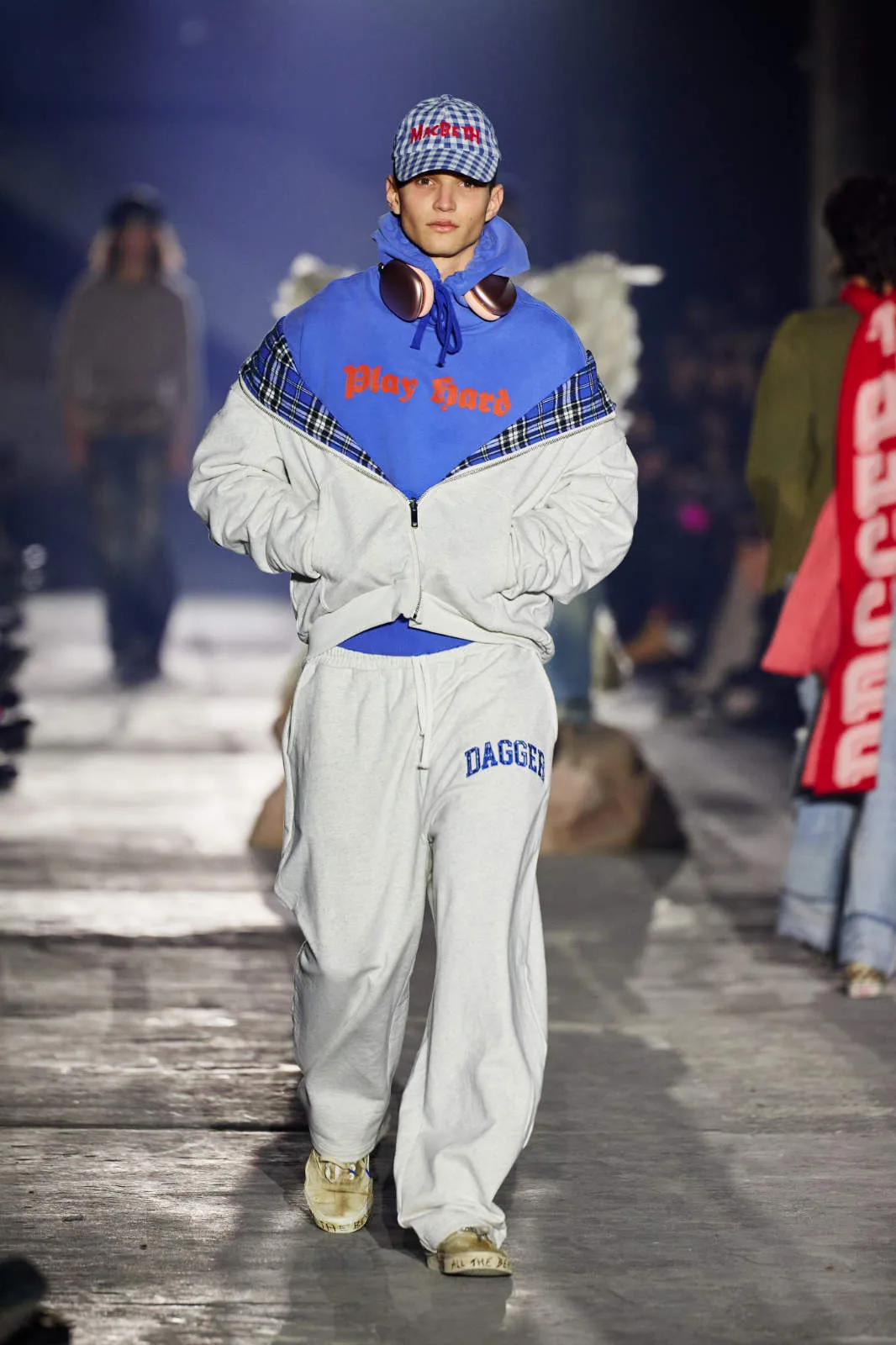
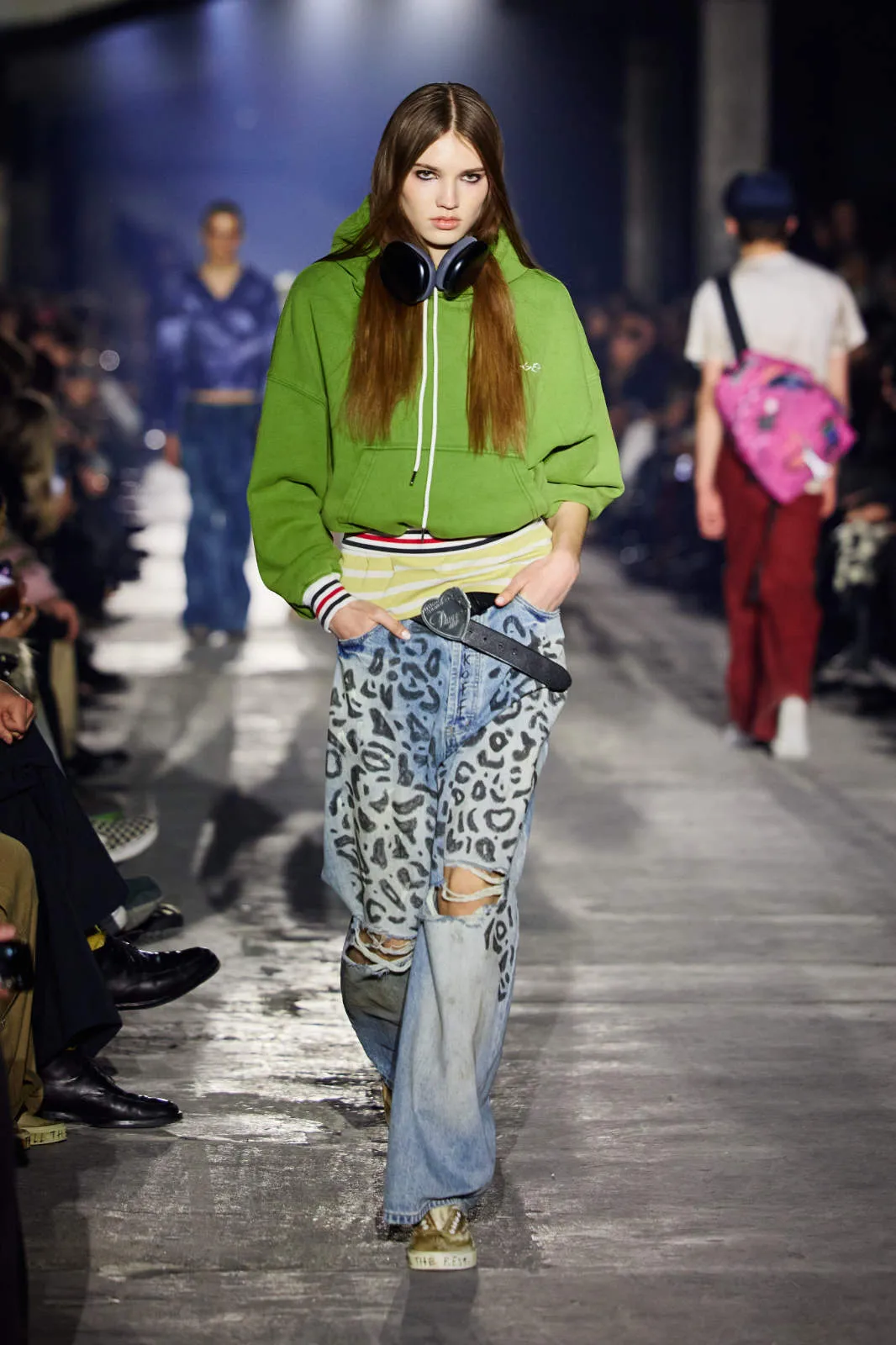
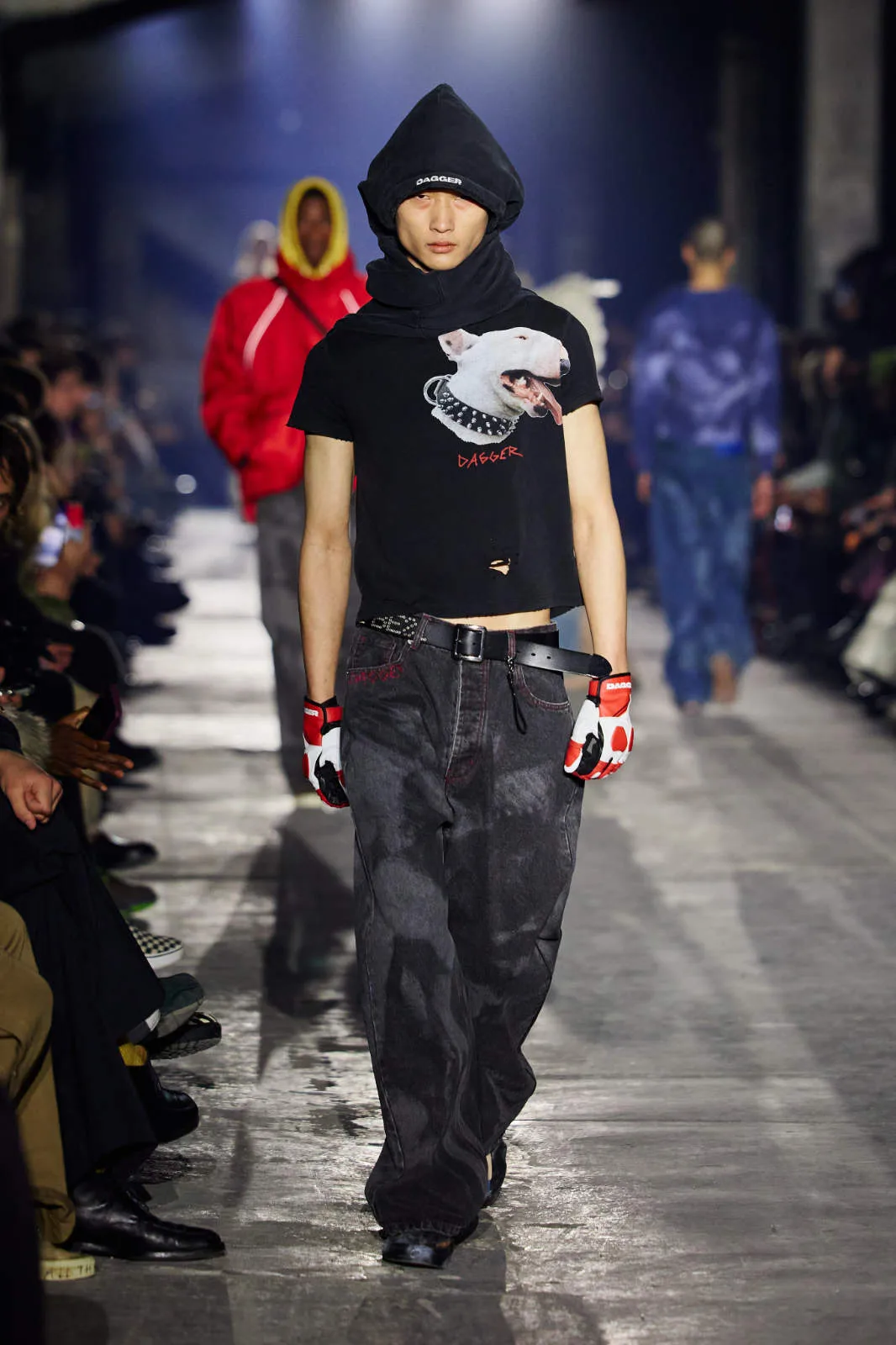
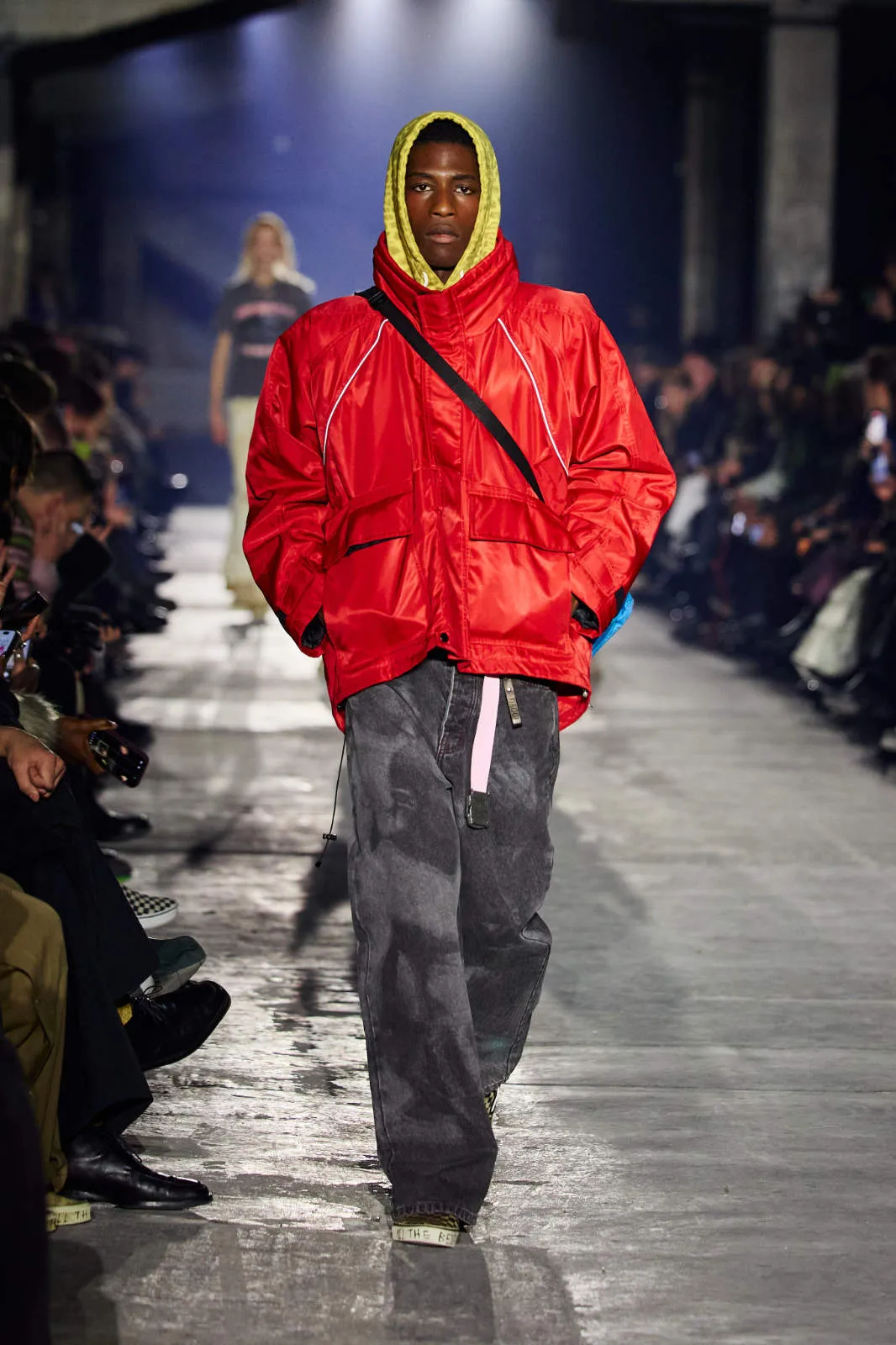
DAGGER
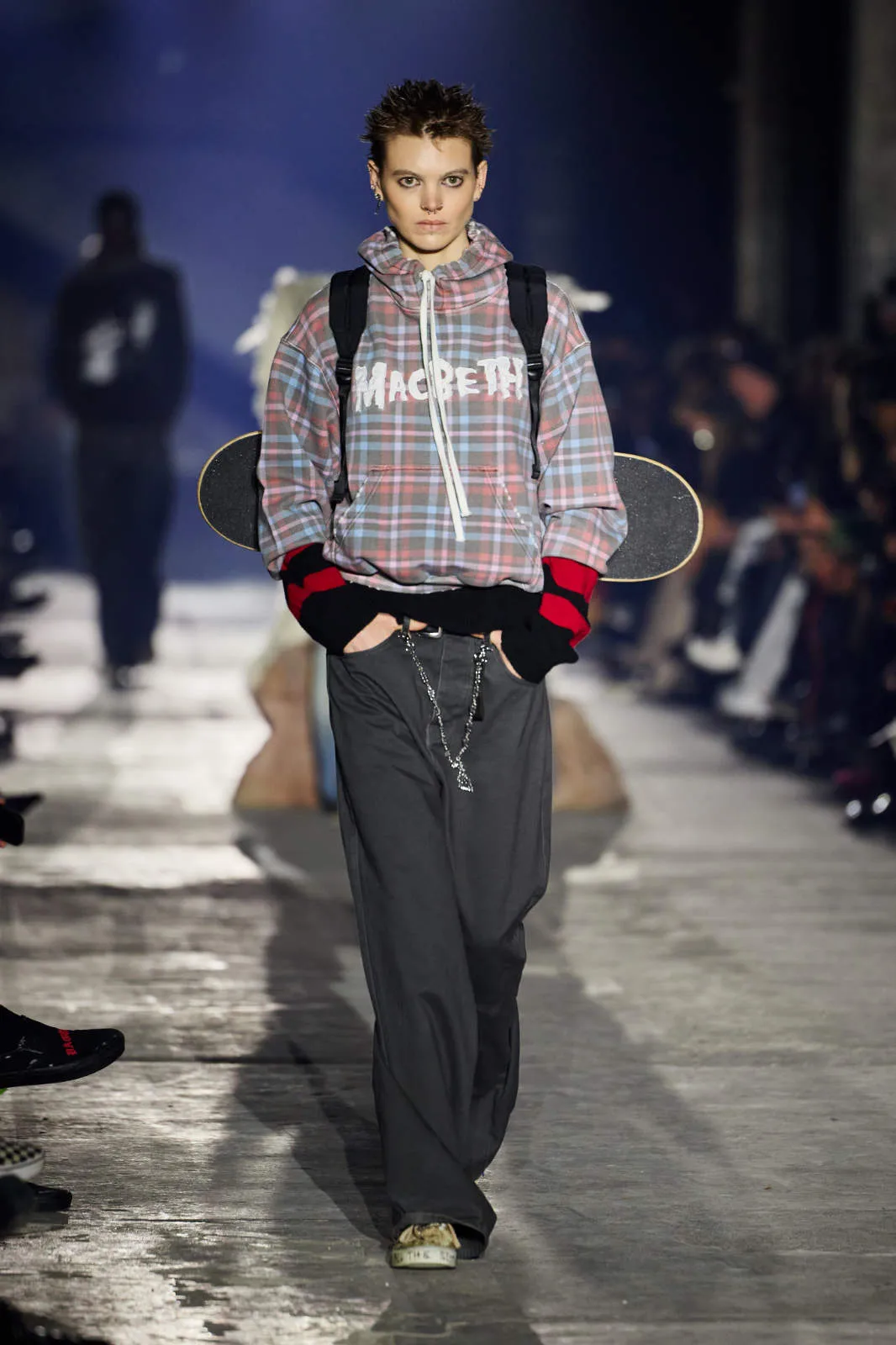
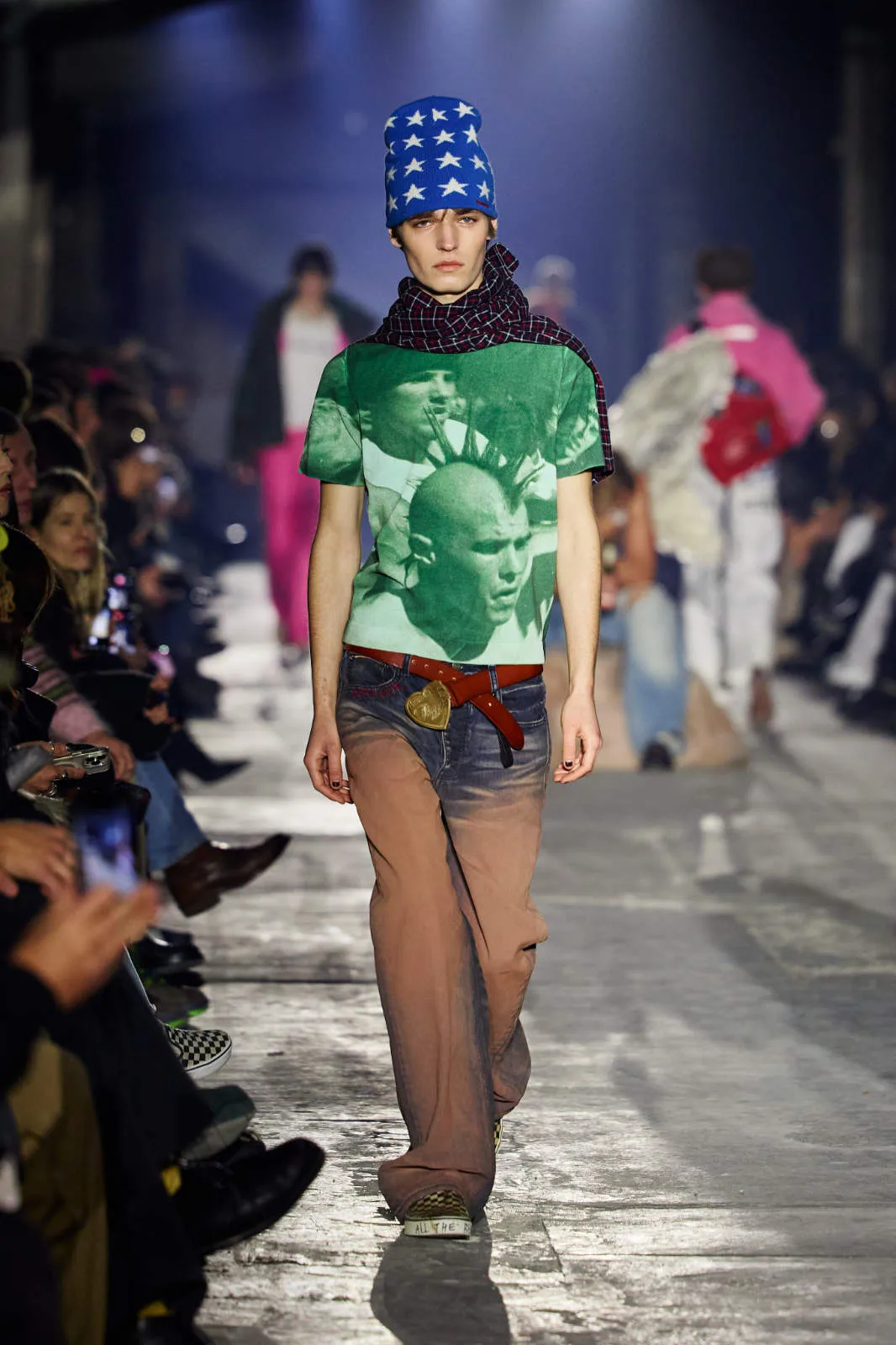
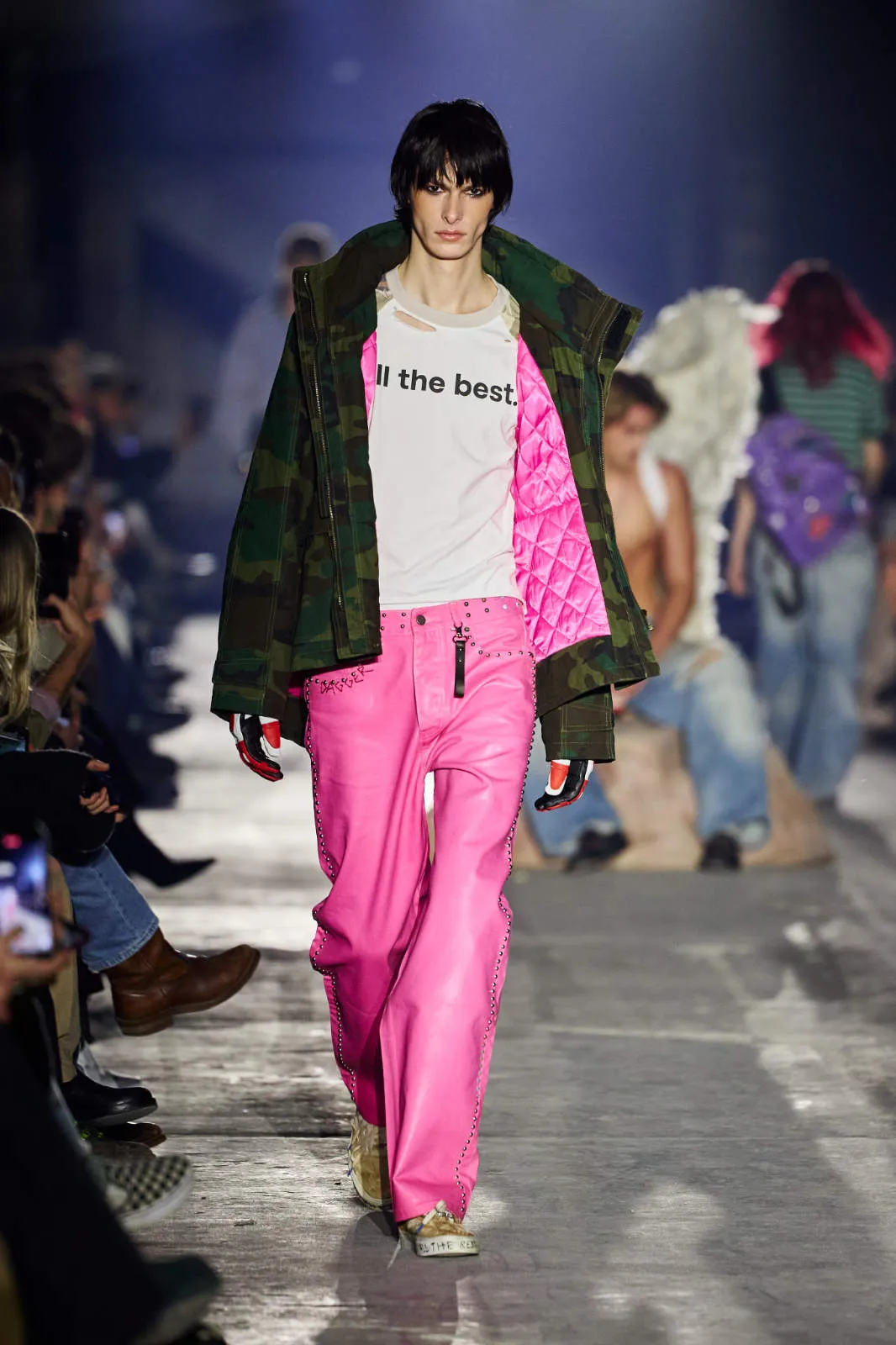
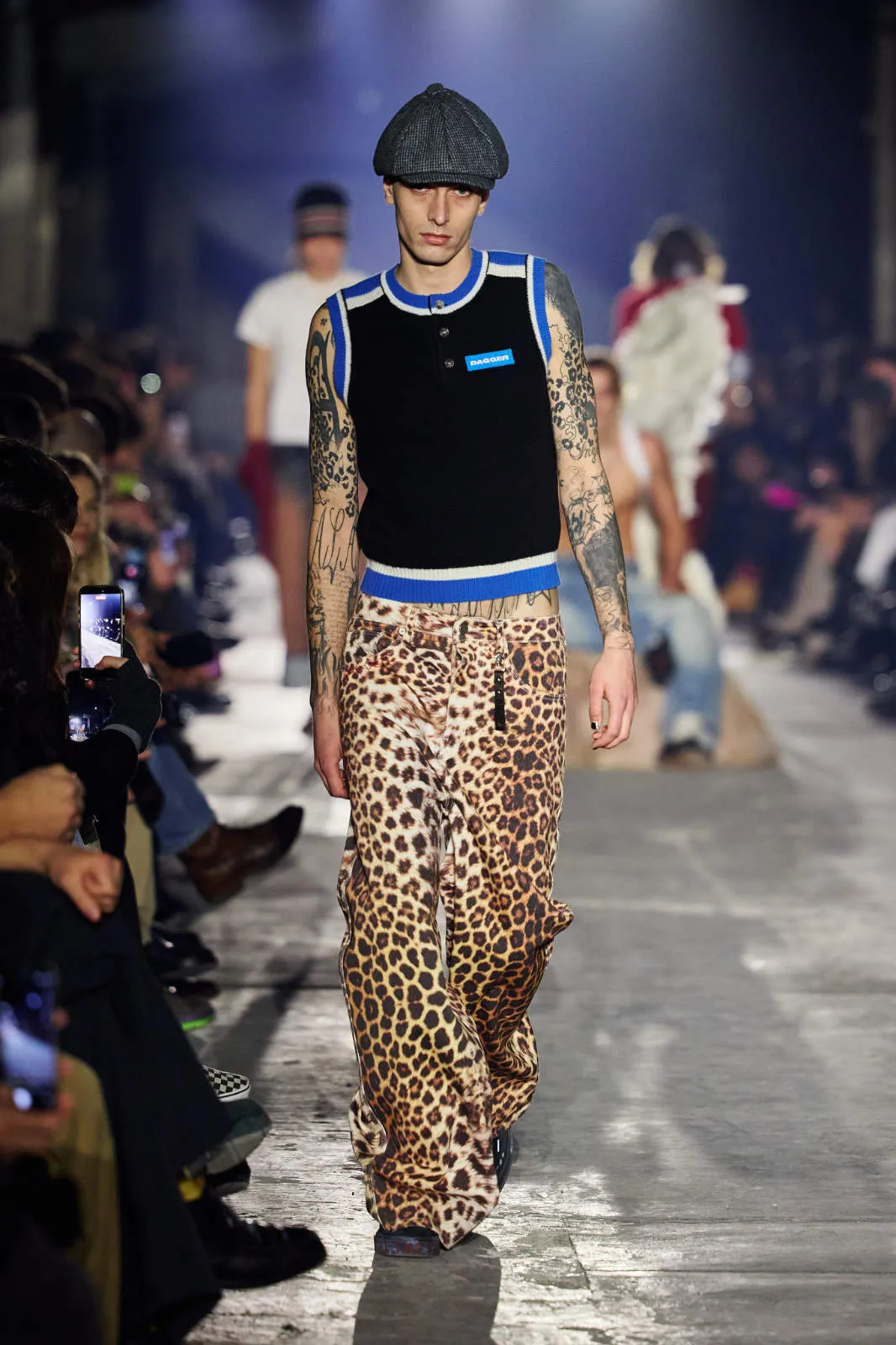
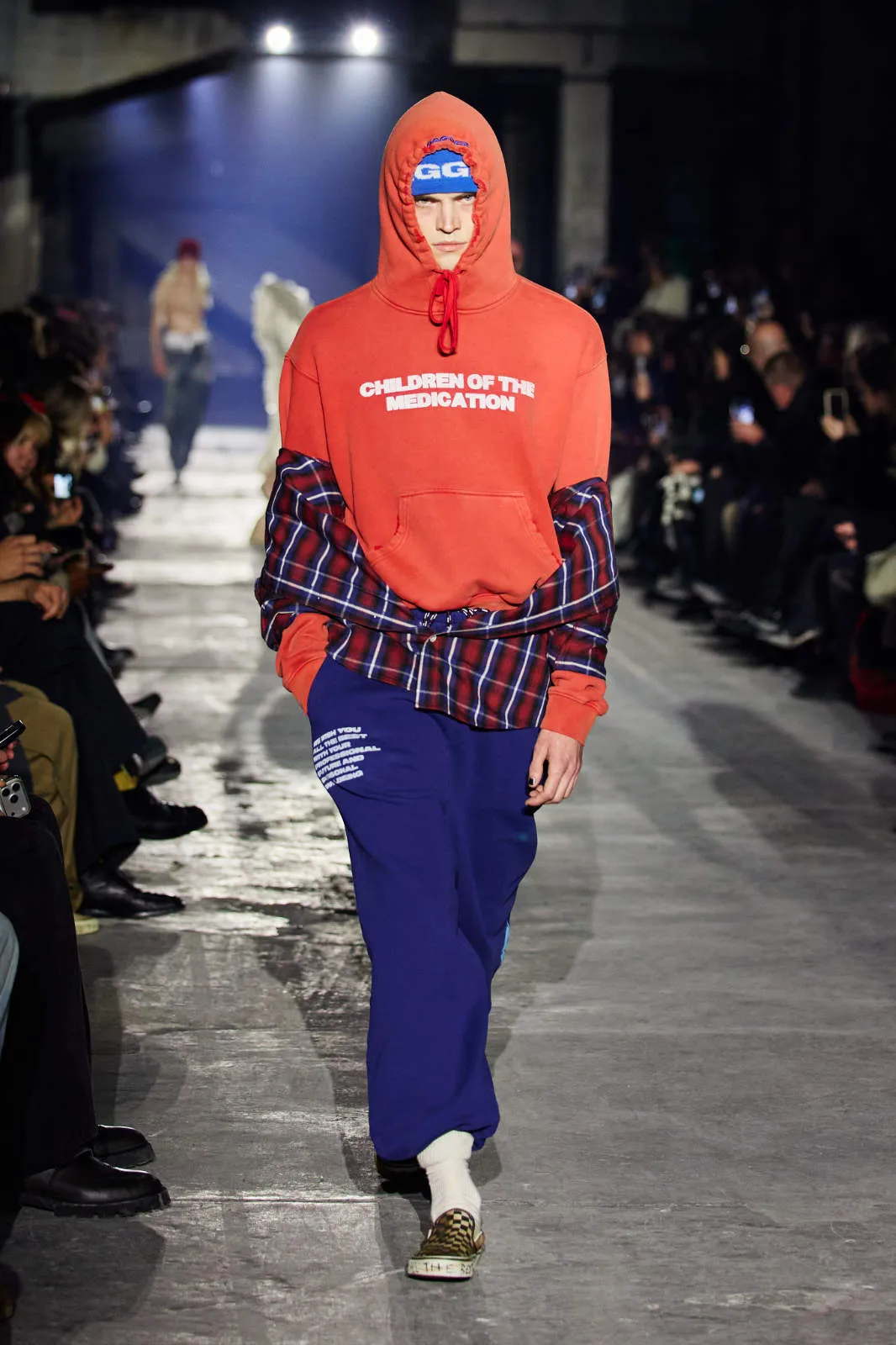
This collection by DAGGER was easily one of the most fun to watch this season at Berlin Fashion Week. One of the few shows where the audience actually nodded along to the soundtrack. Because, from the moment the models stepped onto the runway at Kraftwerk, you could instantly read a character and feel a mood. The mood of youth and frustration, survival and fragility, but also the strength that comes from finding your people. Titled Play Hard, the collection was inspired by the designer’s teenage years in Portrush, a working-class seaside town in Northern Ireland, a place where opportunities felt limited, and skate culture became a way out, a form of escape and resistance.
The Berlin-based brand DAGGER, founded in 2020 and named after a ceremonial blade, translated this spirit into clothes that felt rough, raw, wearable, beautiful, and slightly unsettling. Vans slip-ons were customised with drawings and handwritten notes. Eastpak backpacks, once used to carry an entire world, were covered in patches and sketches. There were T-shirts with “Macbeth” printed in bright blue, spiked hair, baggy jeans, stained denim, scarves, hats in all kinds of shapes, hoodies, and loose grey sweatpants. It all recalled that kid who hates school, skips class, and desperately wants more from life. A feeling probably many can relate to. The moment that tied everything together came right at the beginning, when a topless, beer-drinking angel walked the runway, dreamy and lost, sat down on a rock, and stared into the distance. A perfect image of vulnerability, rebellion, and quiet hope. Very well done.
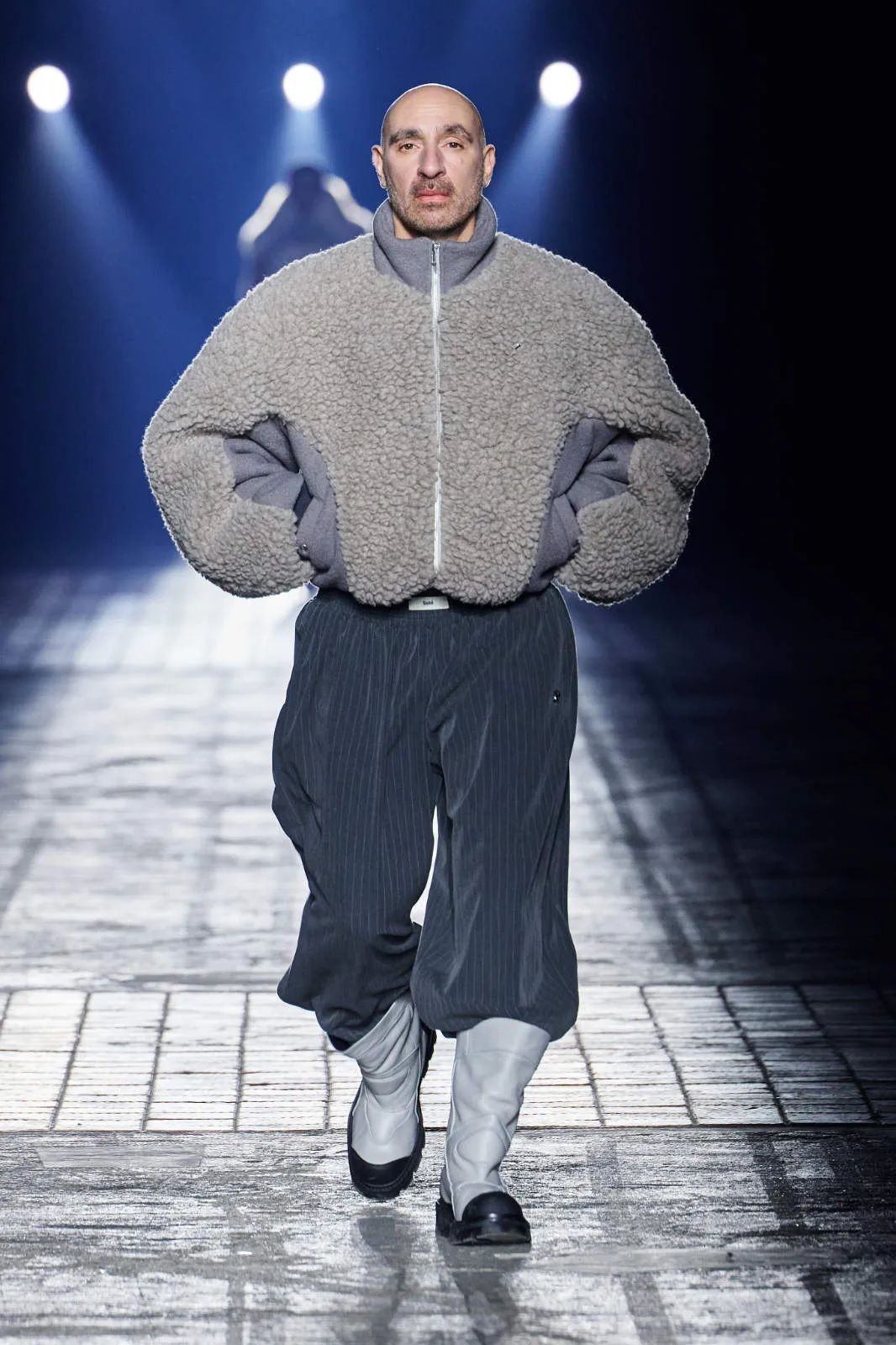
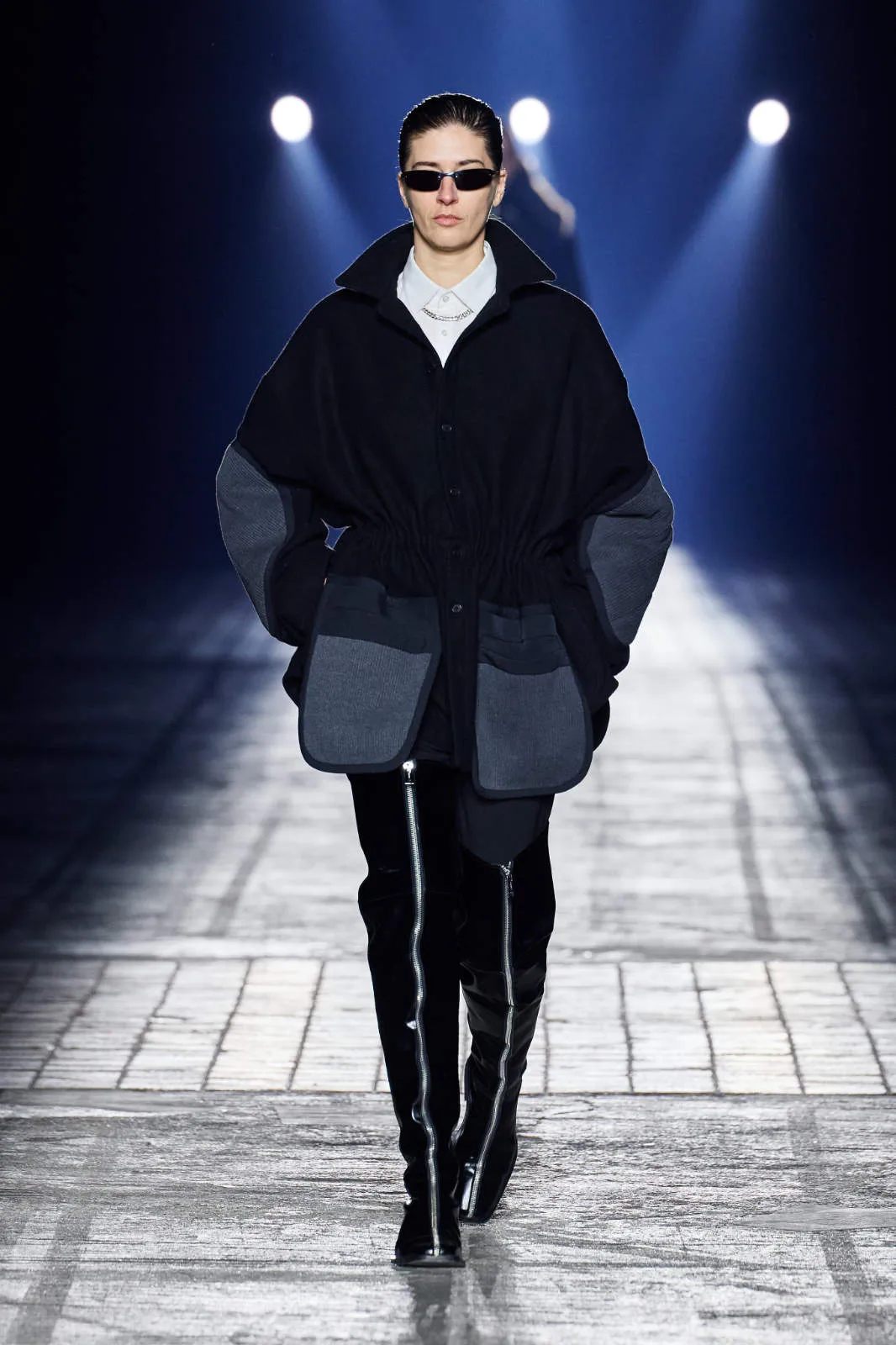
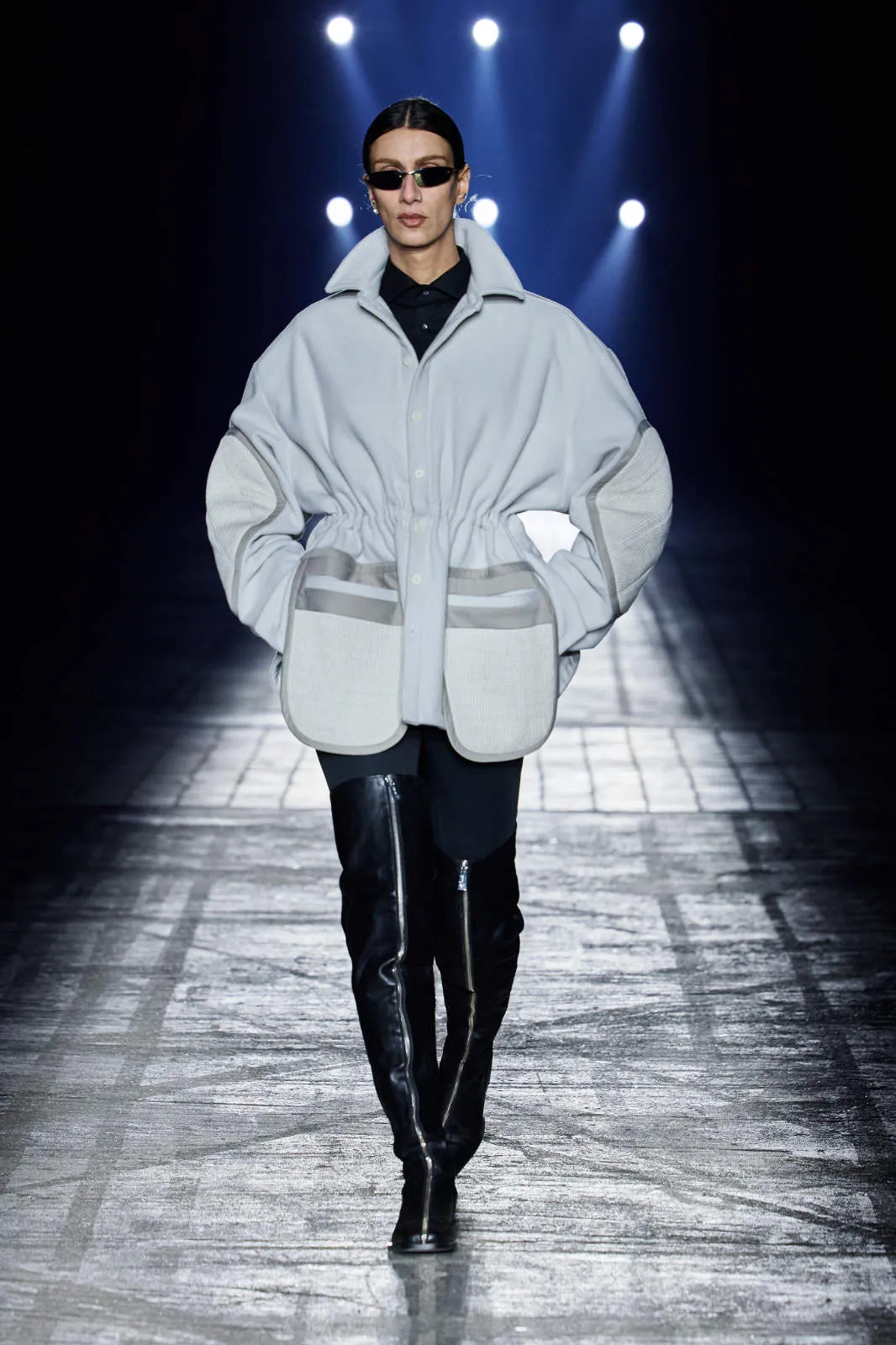
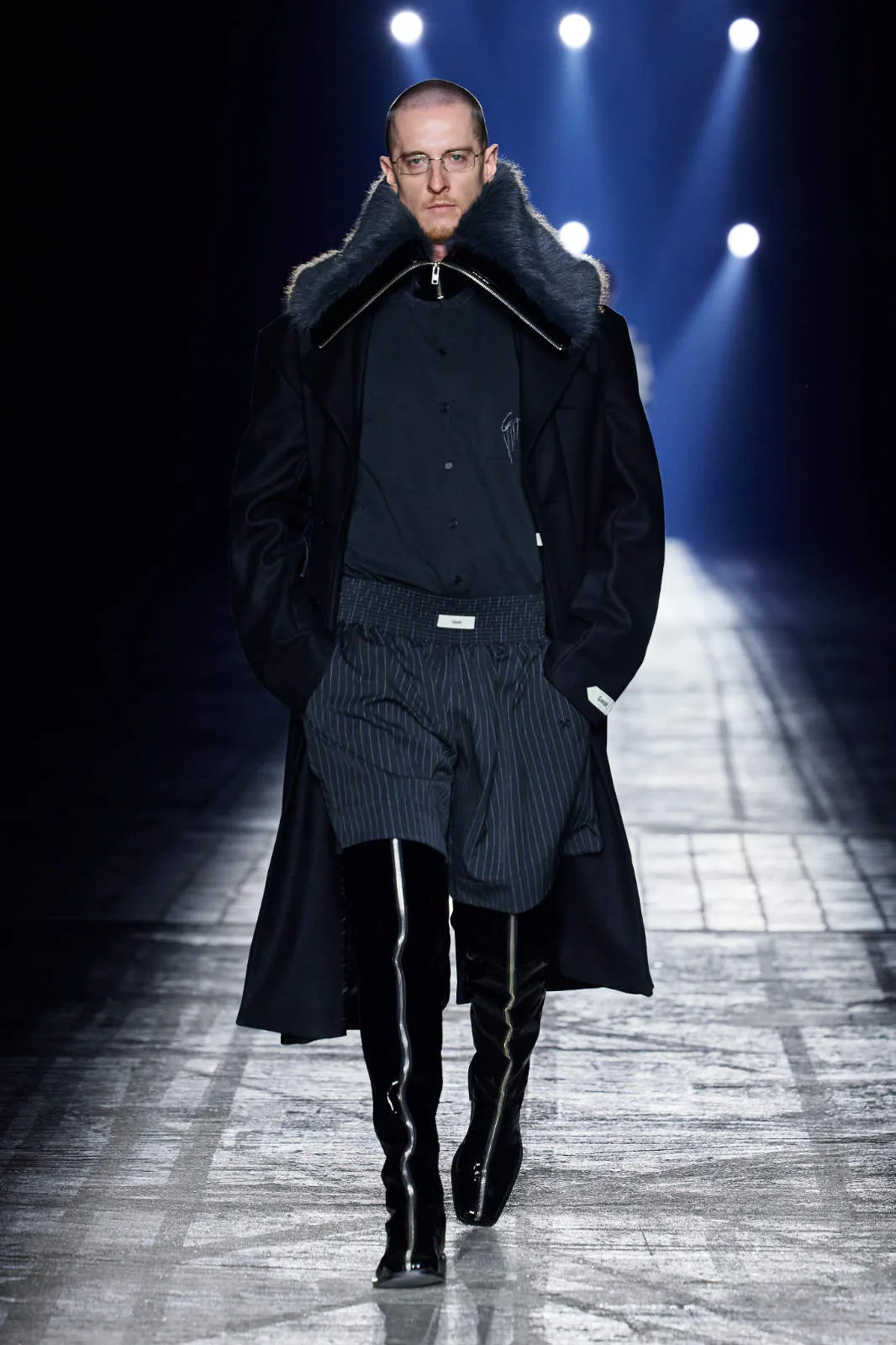
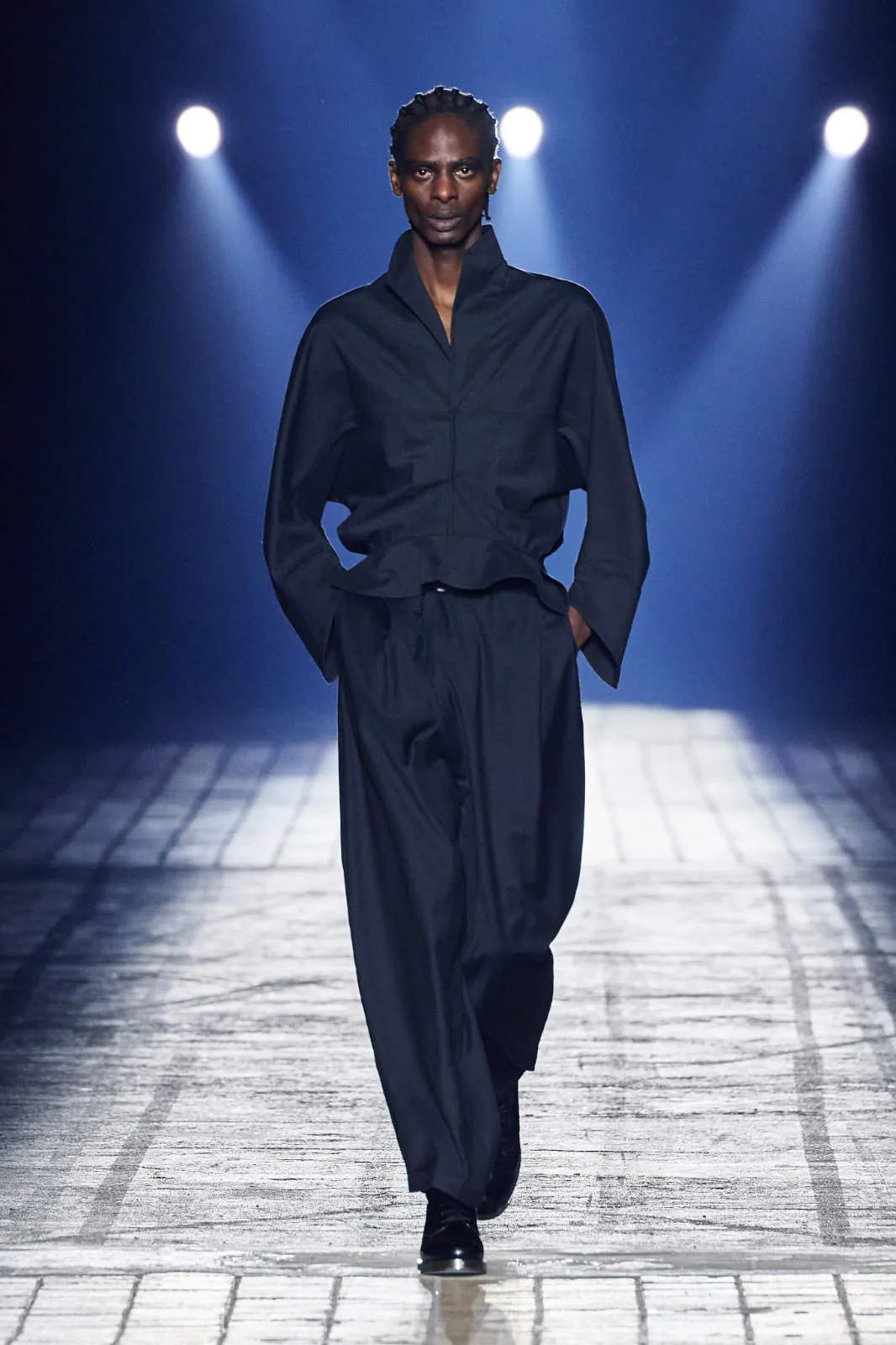
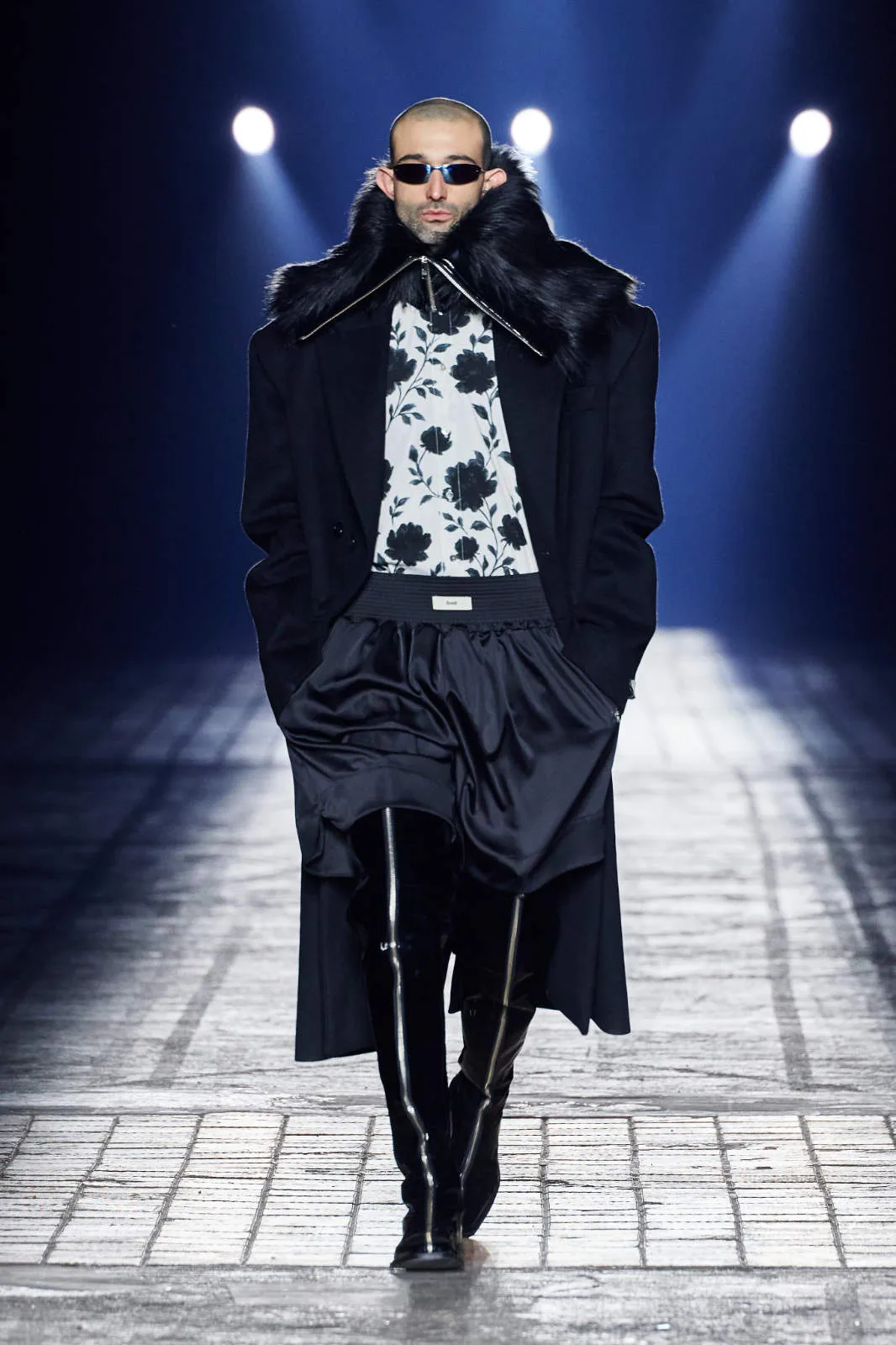
GmbH
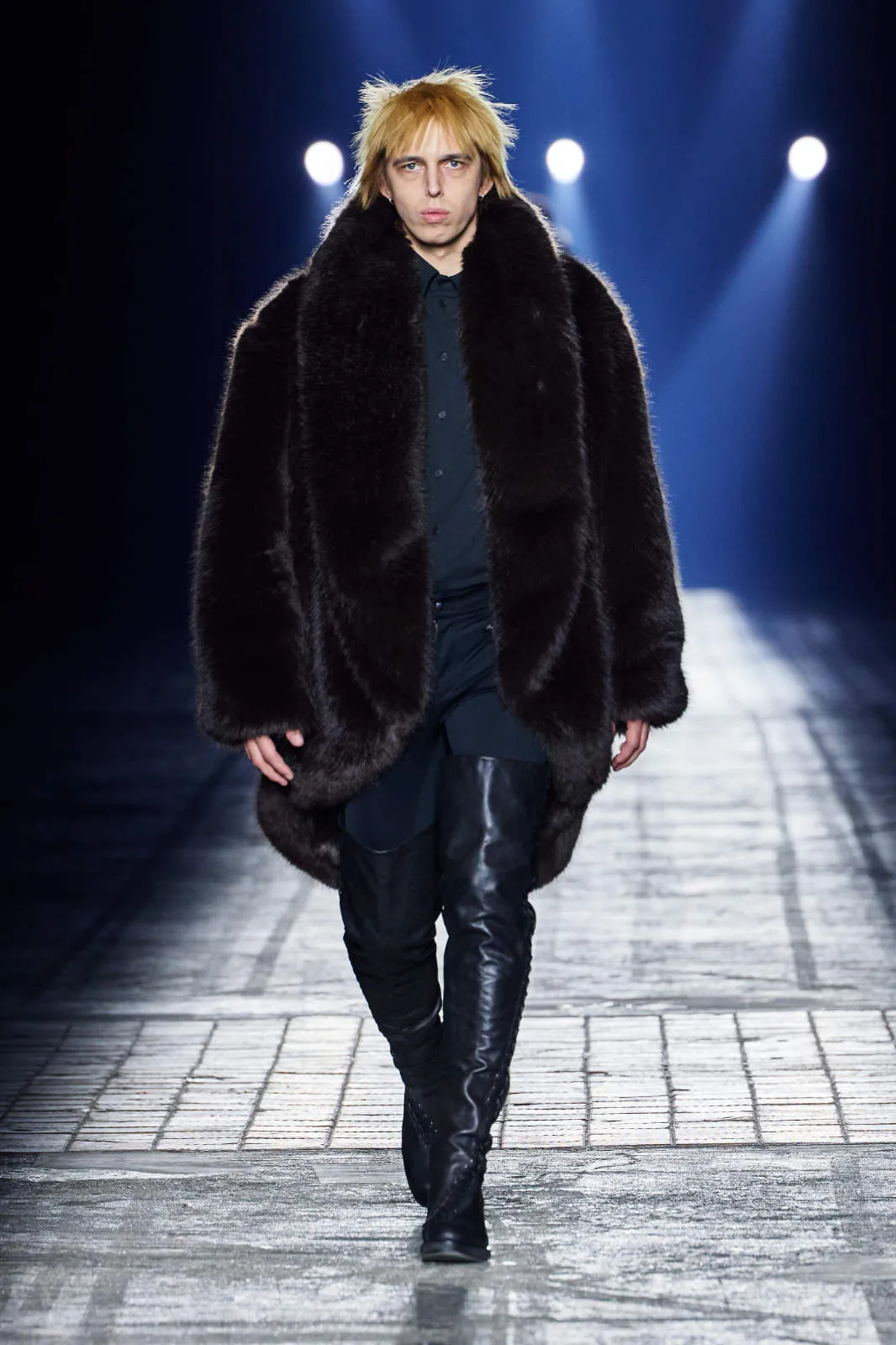
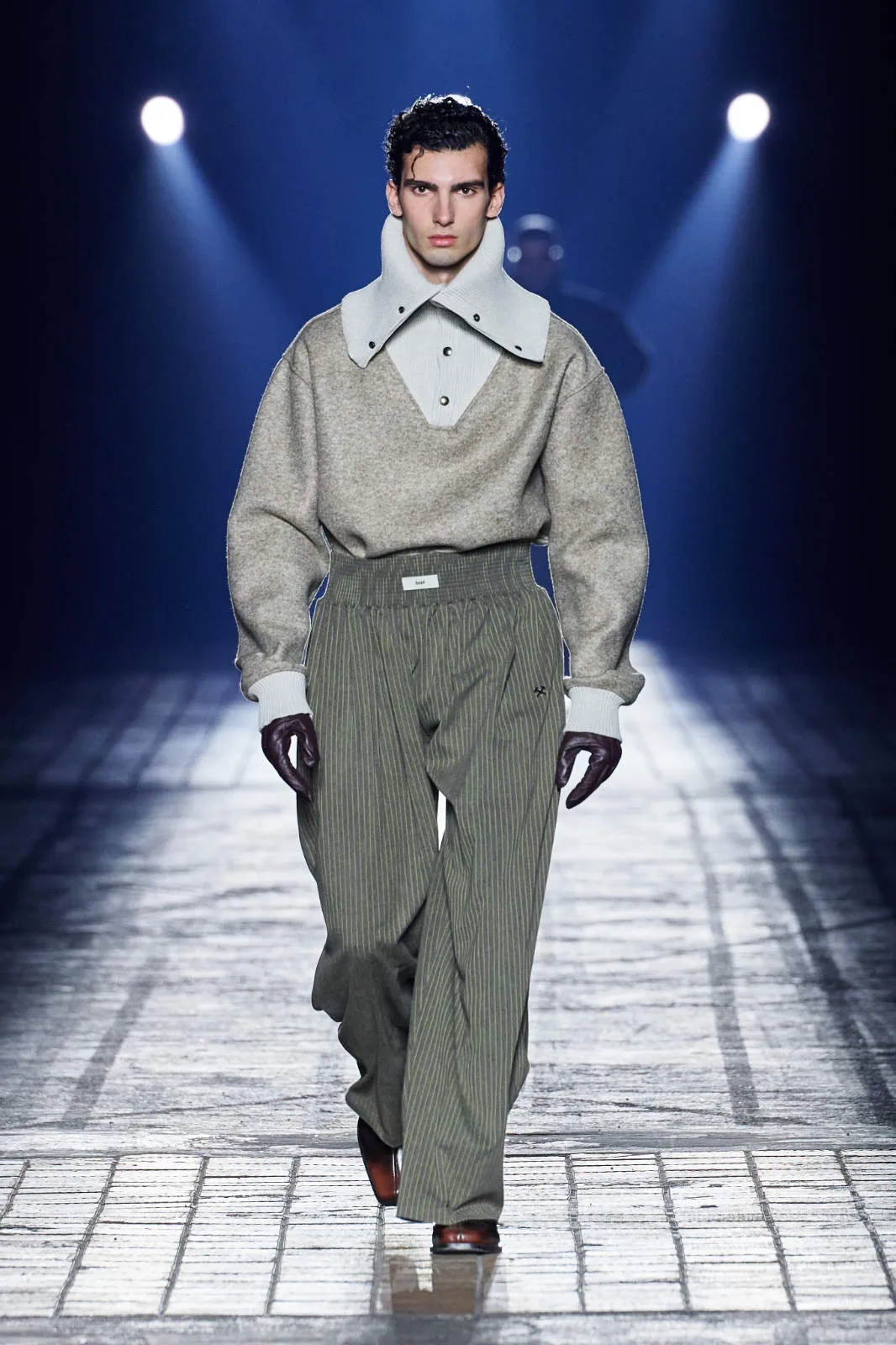
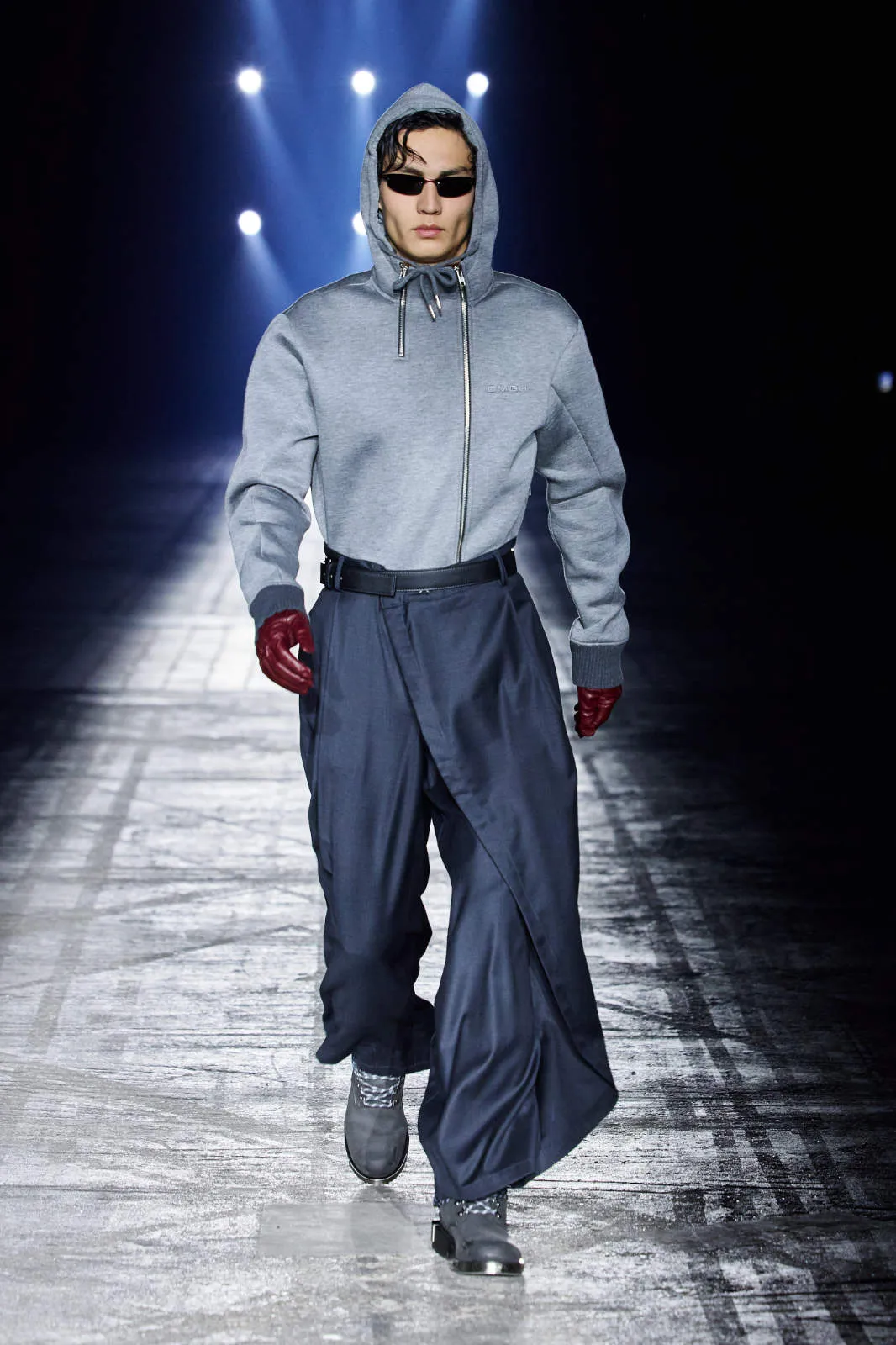
Obviously, when talking about the best collections of Berlin Fashion Week, we have to talk about GmbH, probably the biggest and most advanced brand showing here. Founded by Benjamin A. Huseby and Serhat Işık in 2016, it remains one of the few labels unafraid to use their stage, or in this case their runway, as a political space. Titled Doppelgänger, the collection was rooted in a disturbing word that surfaced earlier this winter: Friedensangst, the fear of peace. A word that exposes how deeply broken the systems around us are, when peace itself becomes a threat to profit.
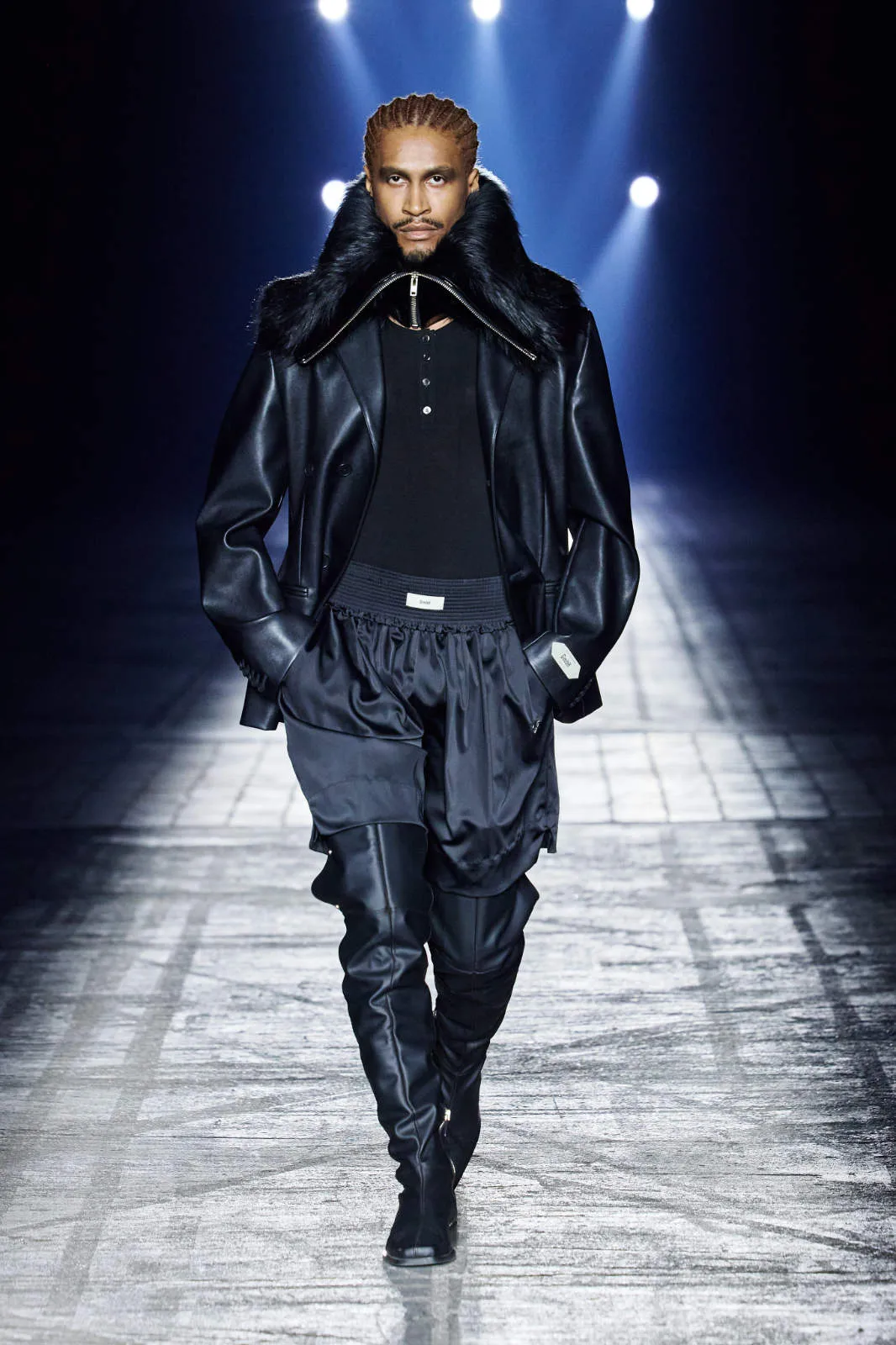
So, GmbH responded with a collection shaped by grief, rage, and resistance, drawing inspiration from Berlin’s early 1980s experimental music scene, from industrial sounds, club culture, and figures like Blixa Bargeld. A Berlin that once stood for counterculture and utopian ideas. As those values are being eroded by greed and repression, GmbH continues to push back through their work. Clothes turned into codes. Into a warning. Carrying memory, anger, and beauty in the darkness, reminding us that silence has never been an option. The outcome: high collars framing the face and shoulders like armour, skin-tight tops meeting leather trousers with the brand’s signature white stitching running down the front and over-the-knee boots, and fur scarves and heavy coats adding weight and tension. Everything felt controlled, deliberate, maybe even lonely in a way. But definitely powerful.
SF1OG
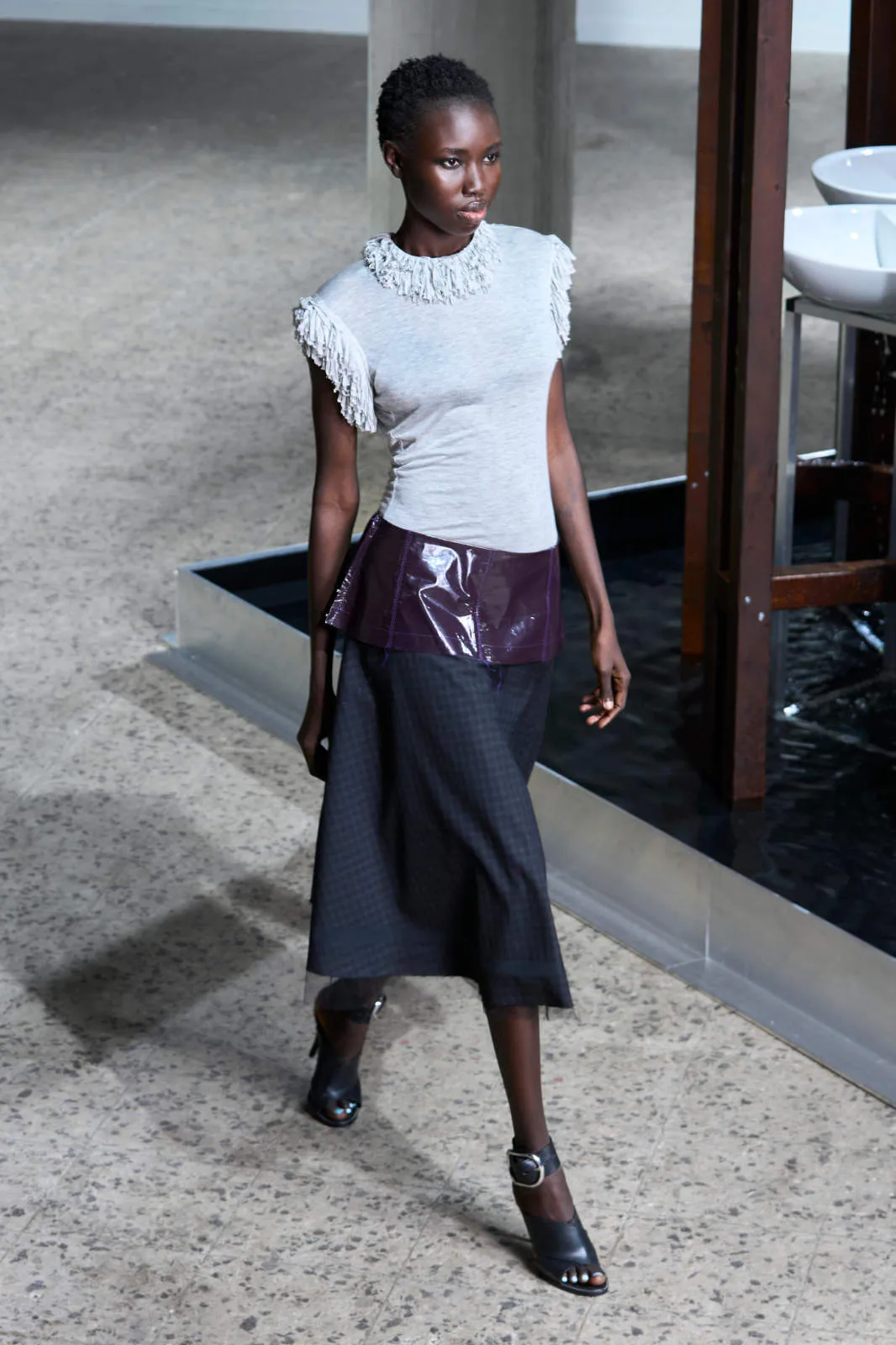
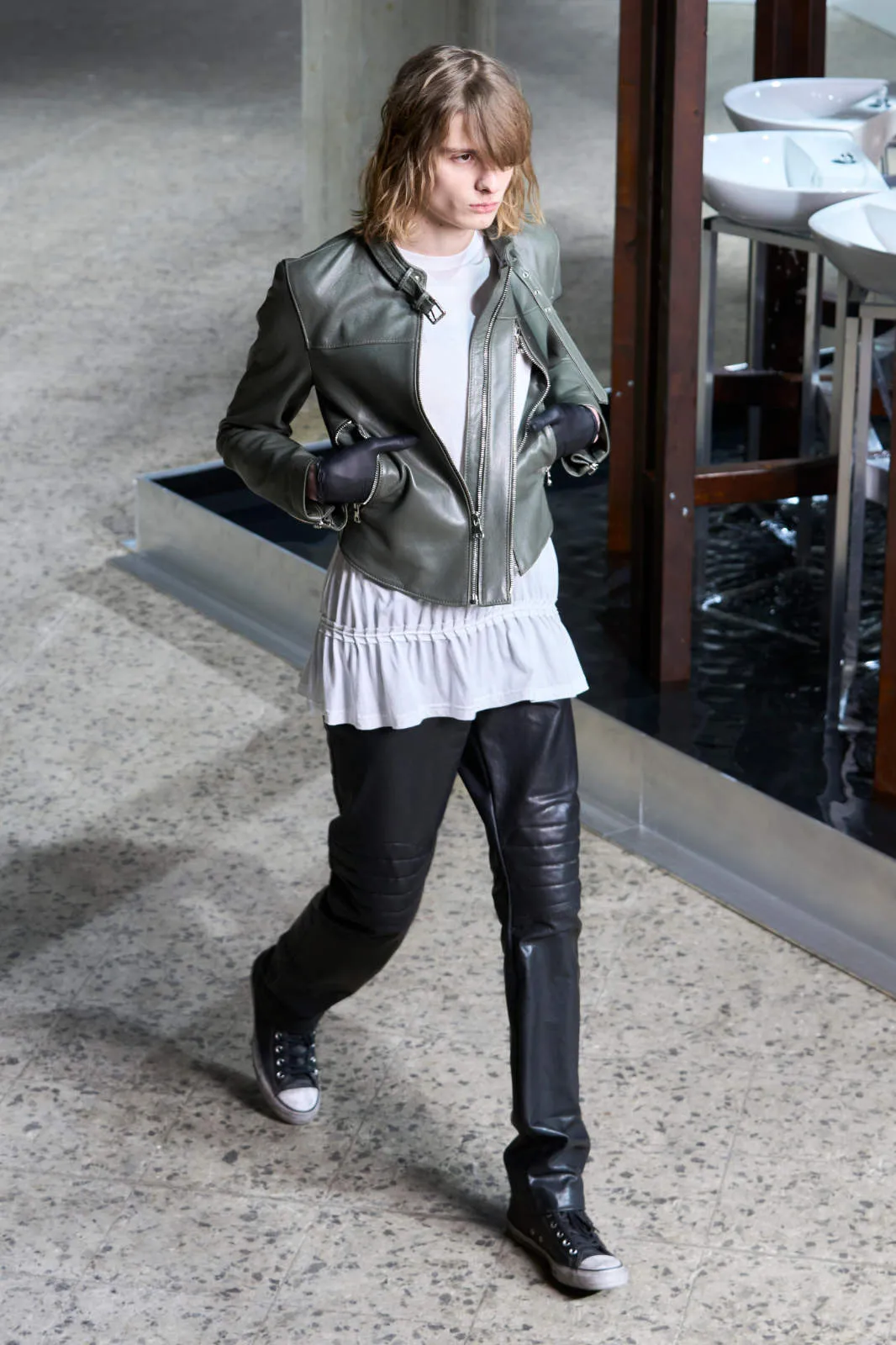
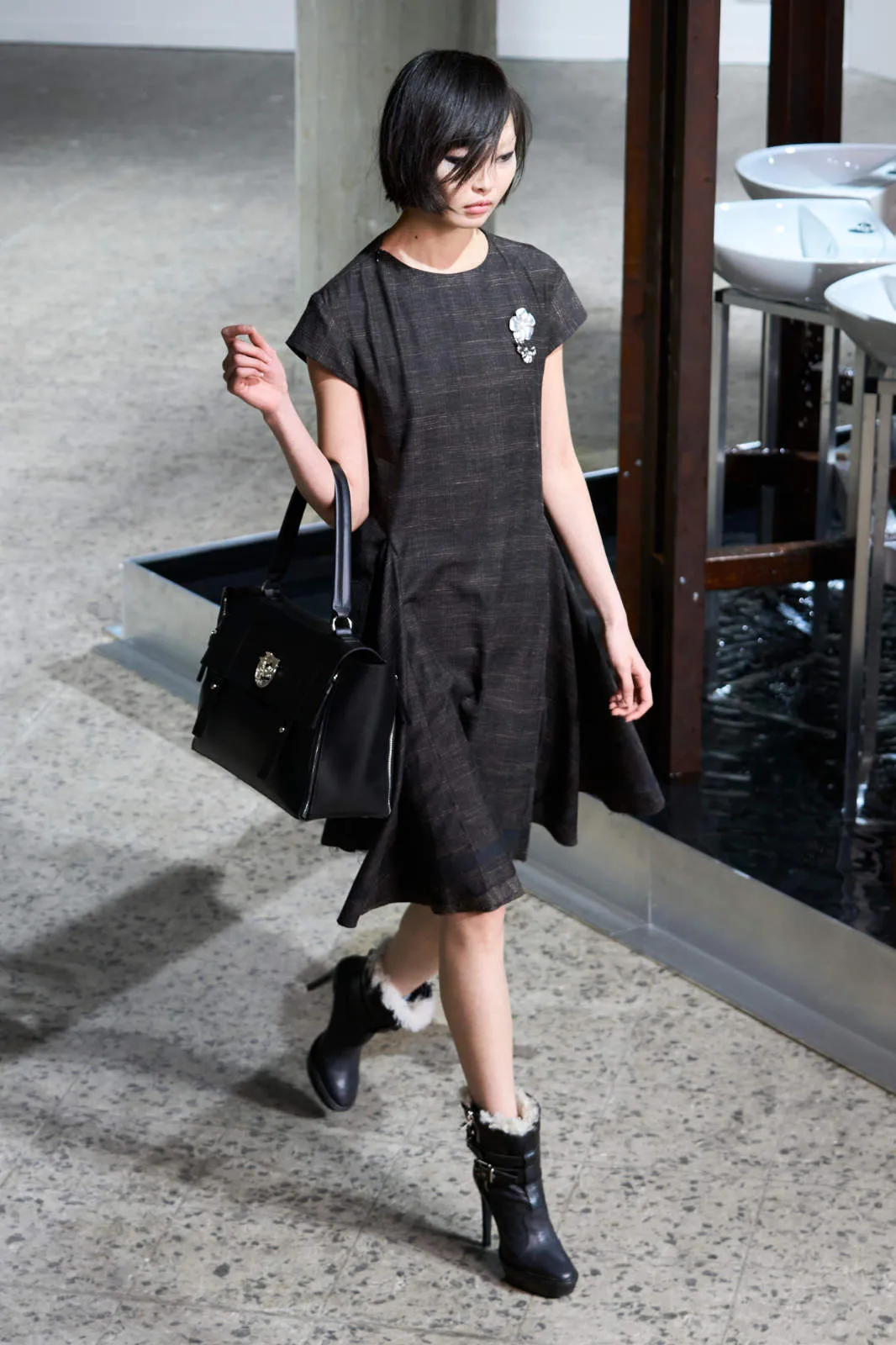
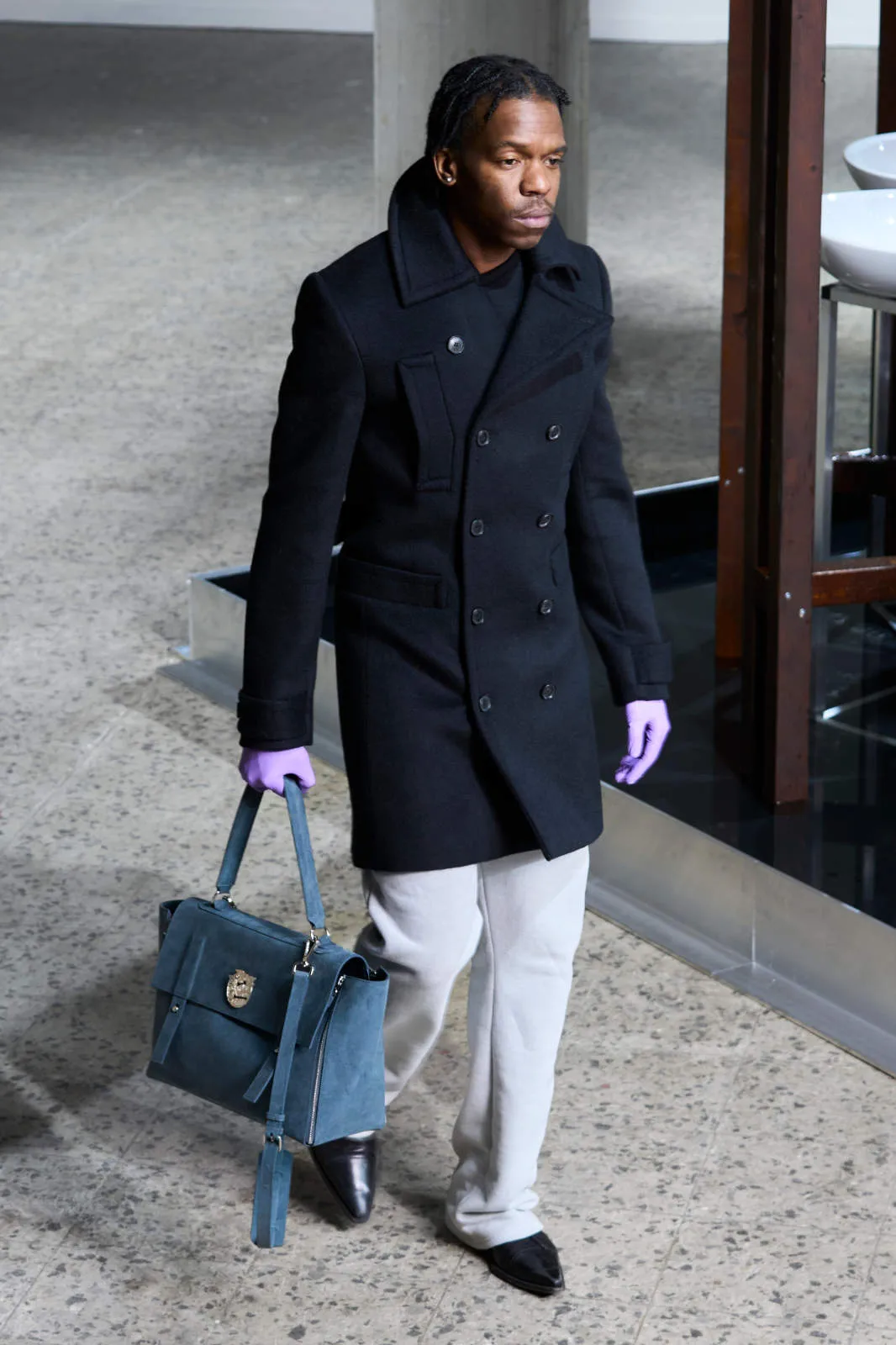
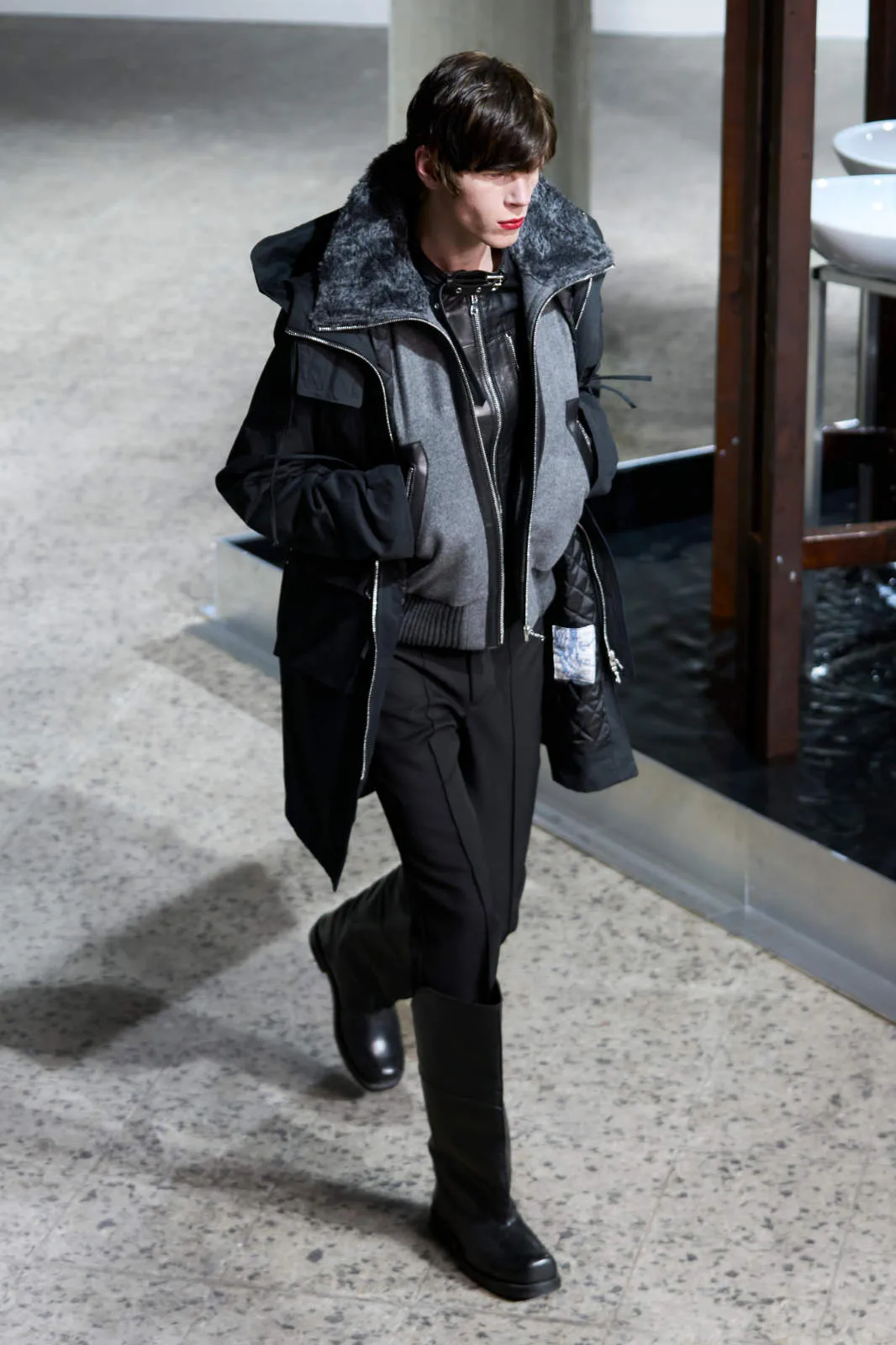
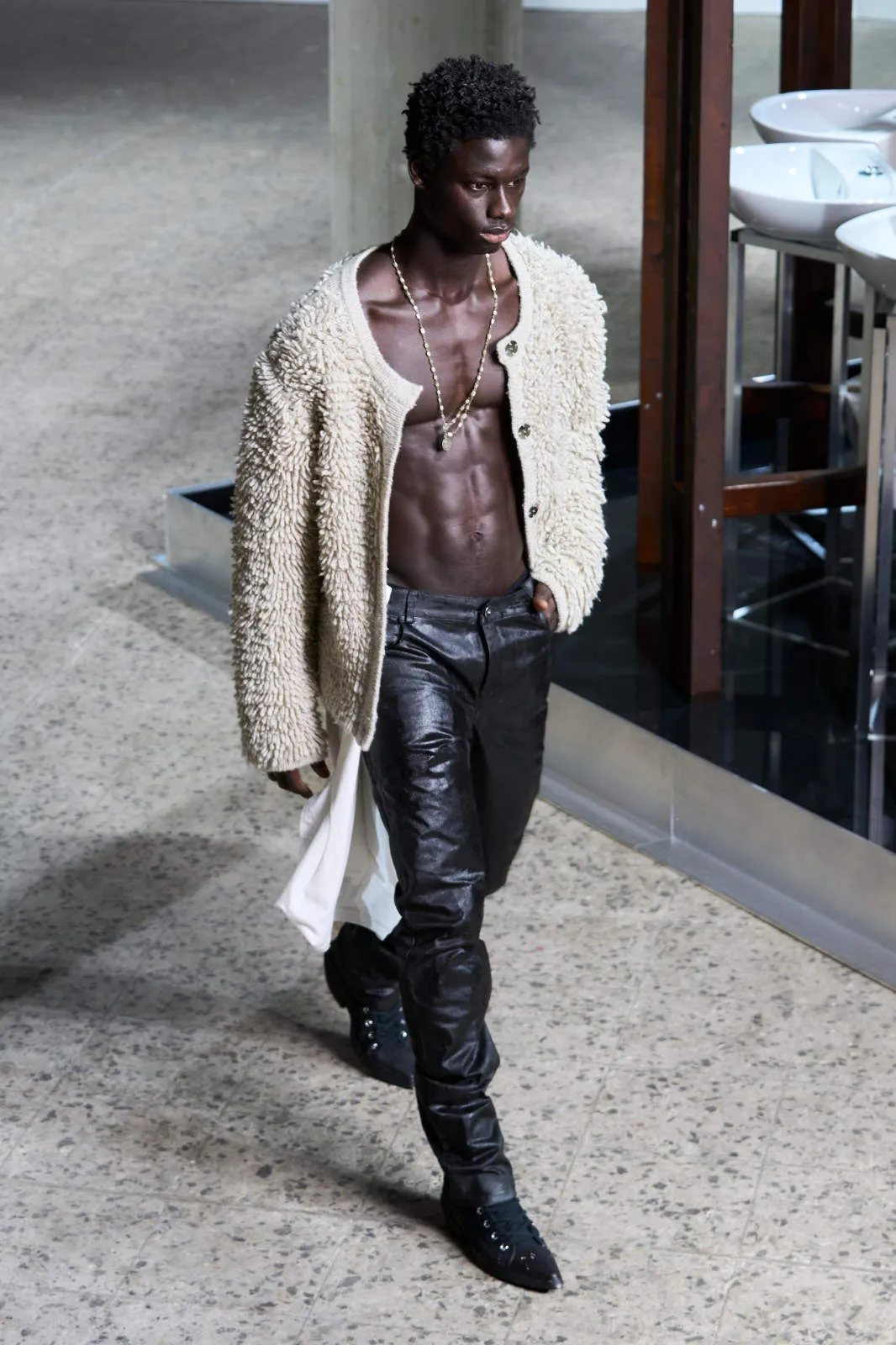
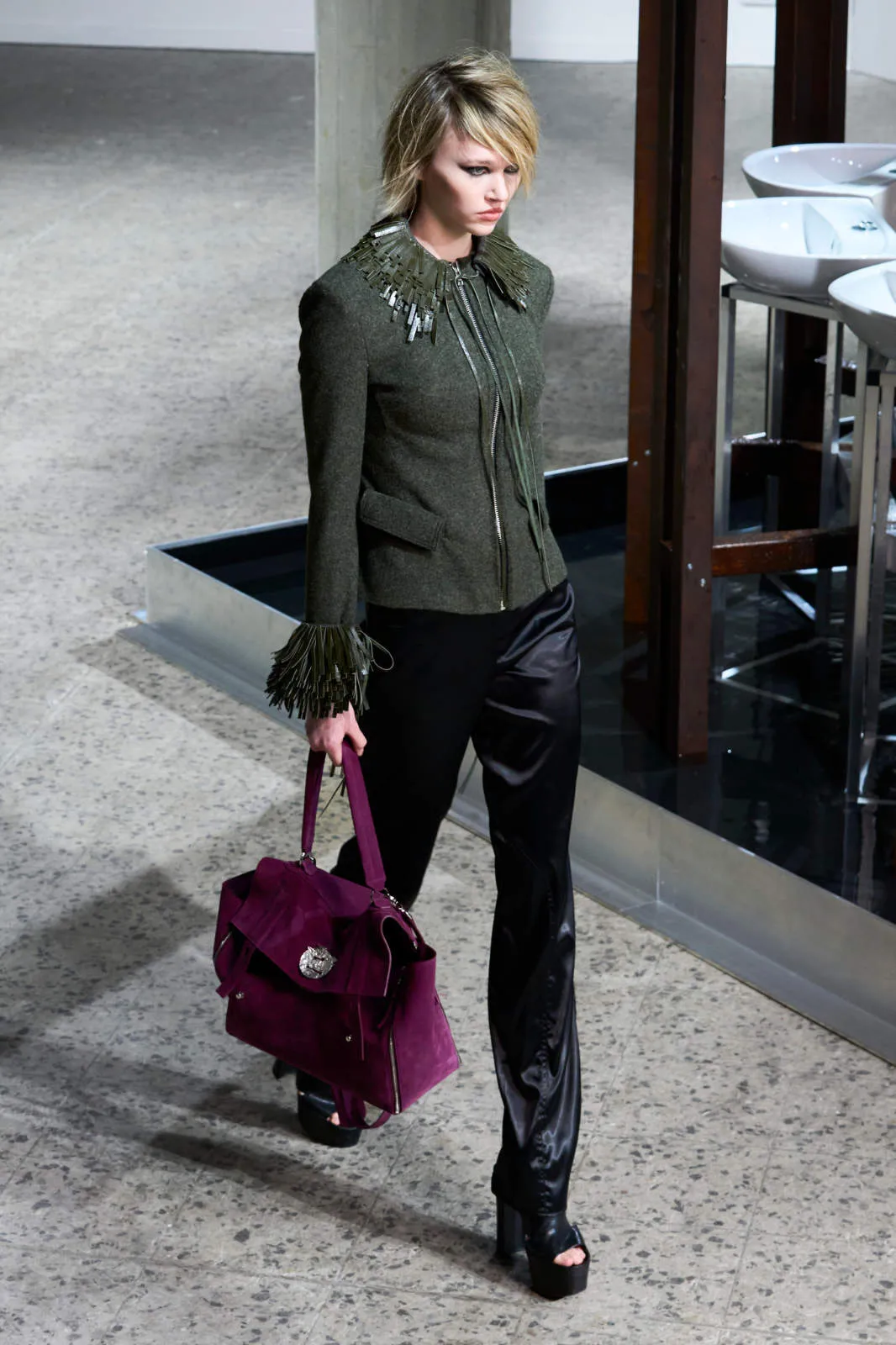
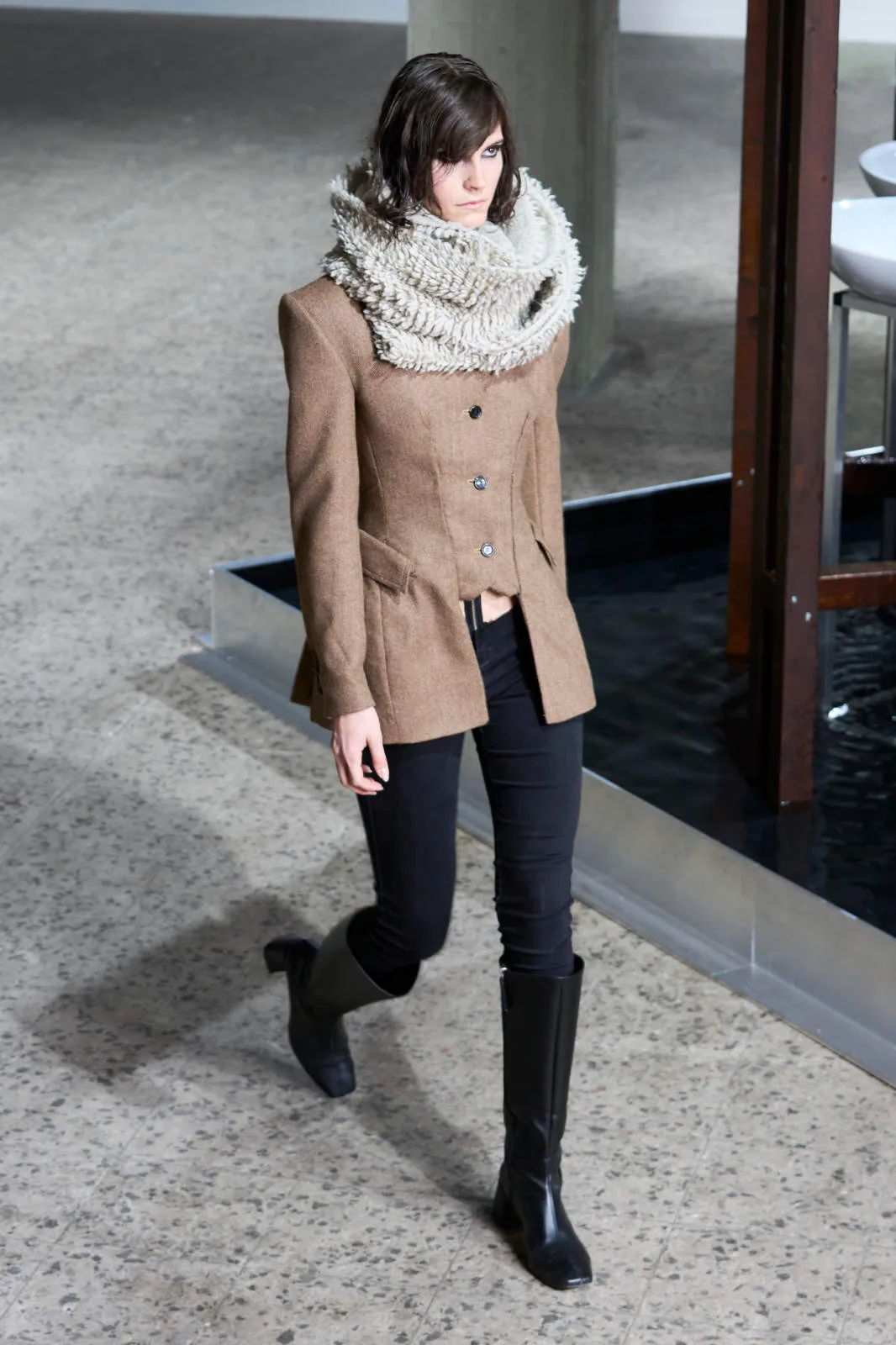
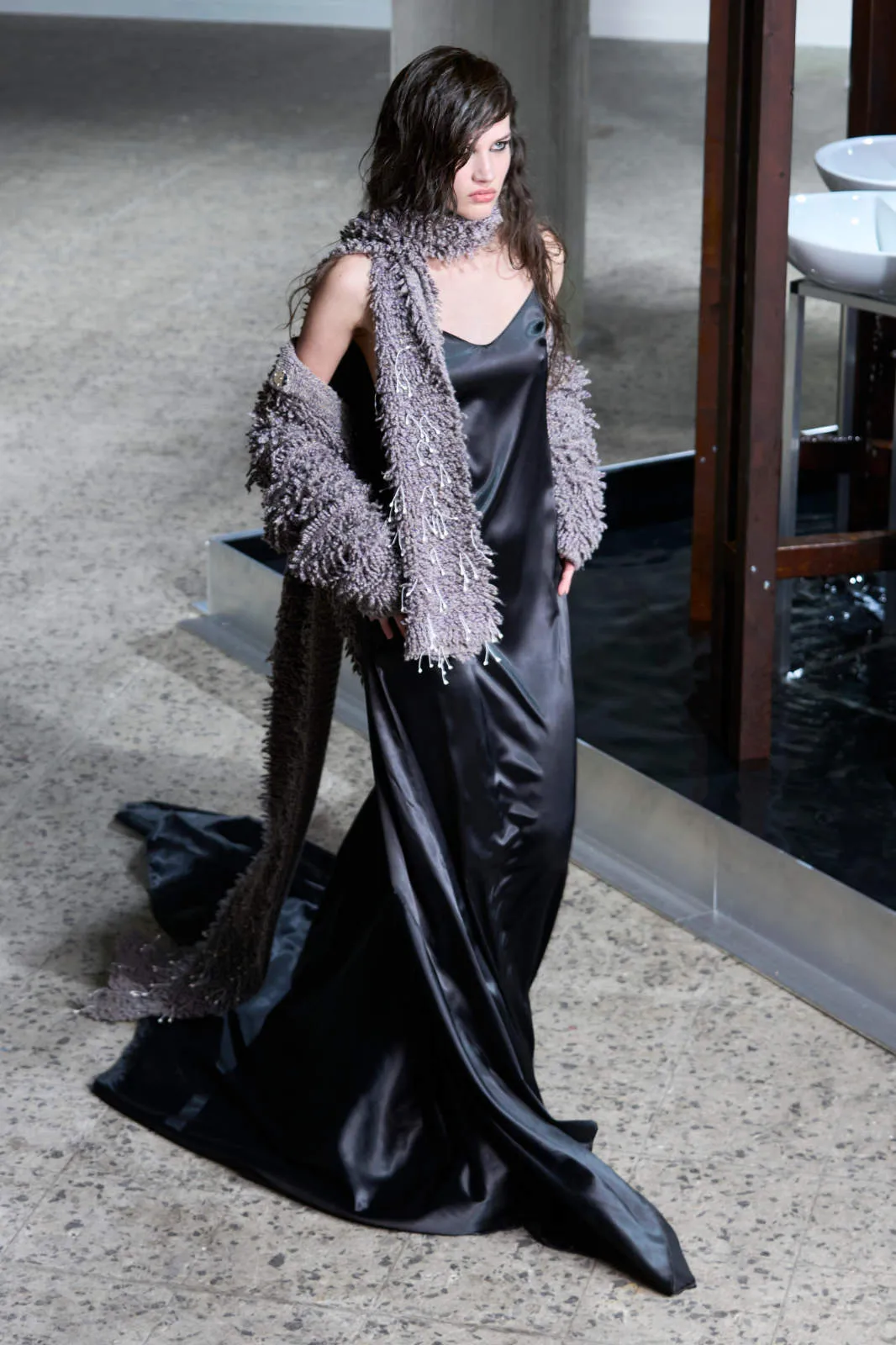
Who are you when no one is watching? Do you feel freer? Do you walk around naked at home or sing in the shower? Are you quieter, shedding the roles you play for the world? Maybe you dance in the living room to a song only you can hear. Maybe you laugh at thoughts too silly to share. Maybe your mind wanders wherever it wants, without rules, without judgement. Whatever you do, only you know. You decide what to hide and what to share, and that was the central theme of SF1OG’s latest collection, inspired by late 2000s paparazzi imagery and Victorian mourning attire, exploring the acts of hiding, revealing, uncovering and protecting in two very different ways.
Because paparazzi photographs of figures like Amy Winehouse and Lindsay Lohan are invasive, capturing intimate moments never meant to be seen. Moments where observation becomes a collective fascination with fragility. Victorian mourning dress, on the other hand, allowed women to express grief while remaining contained and shielded from scrutiny. These ideas appeared in extremely high collars, sculptural jackets, historical prints on upcycled linen, and silver hardware reminiscent of family crests. Waisted silhouettes alternated with fully covered looks or pieces revealing skin through rebellious cuts, deep décolletés, or off-shoulder shirts. Mohair was sourced from old Steiff teddy bears. Fur stored by the designer’s family for thirty years. There were waxed surfaces, velvet-like denims, and hand-stitched removable leather collars, all combined into a collection that perfectly balanced commercial viability, storytelling, sustainability, and creative imagination.
Unvain
If you have been following Berlin Fashion Week closely, you might have noticed that this season welcomed a few new names to the official calendar. Unvain was one of them. Founded by Robert Friedrichs in 2020, the brand finally made the leap from a social media project to a highly anticipated, self-titled debut runway show, and instead of leaning on external references, the collection focused entirely on the brand’s own design language. A bold move at a time when inspiration often feels over-explained and competitive, but it paid off!
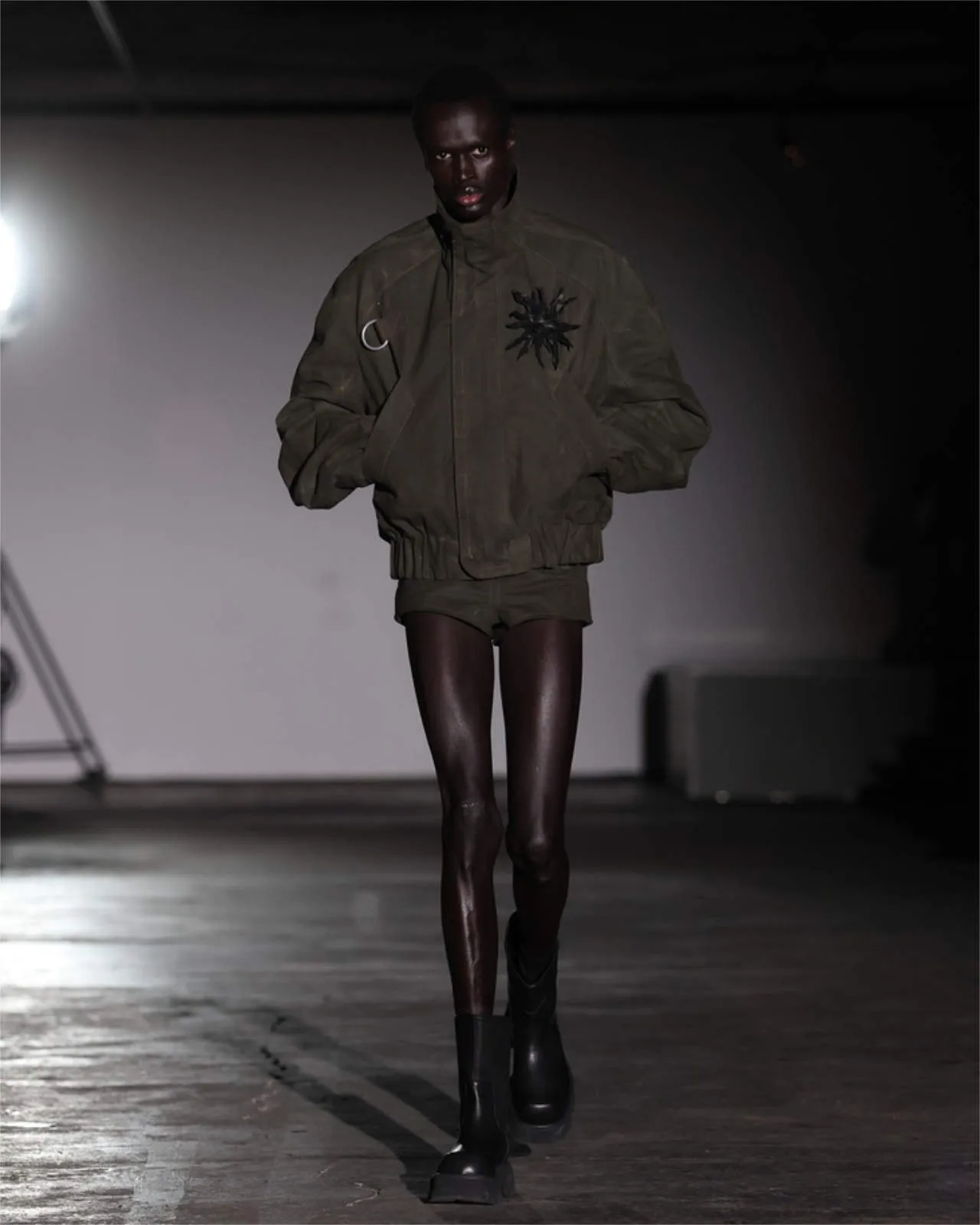
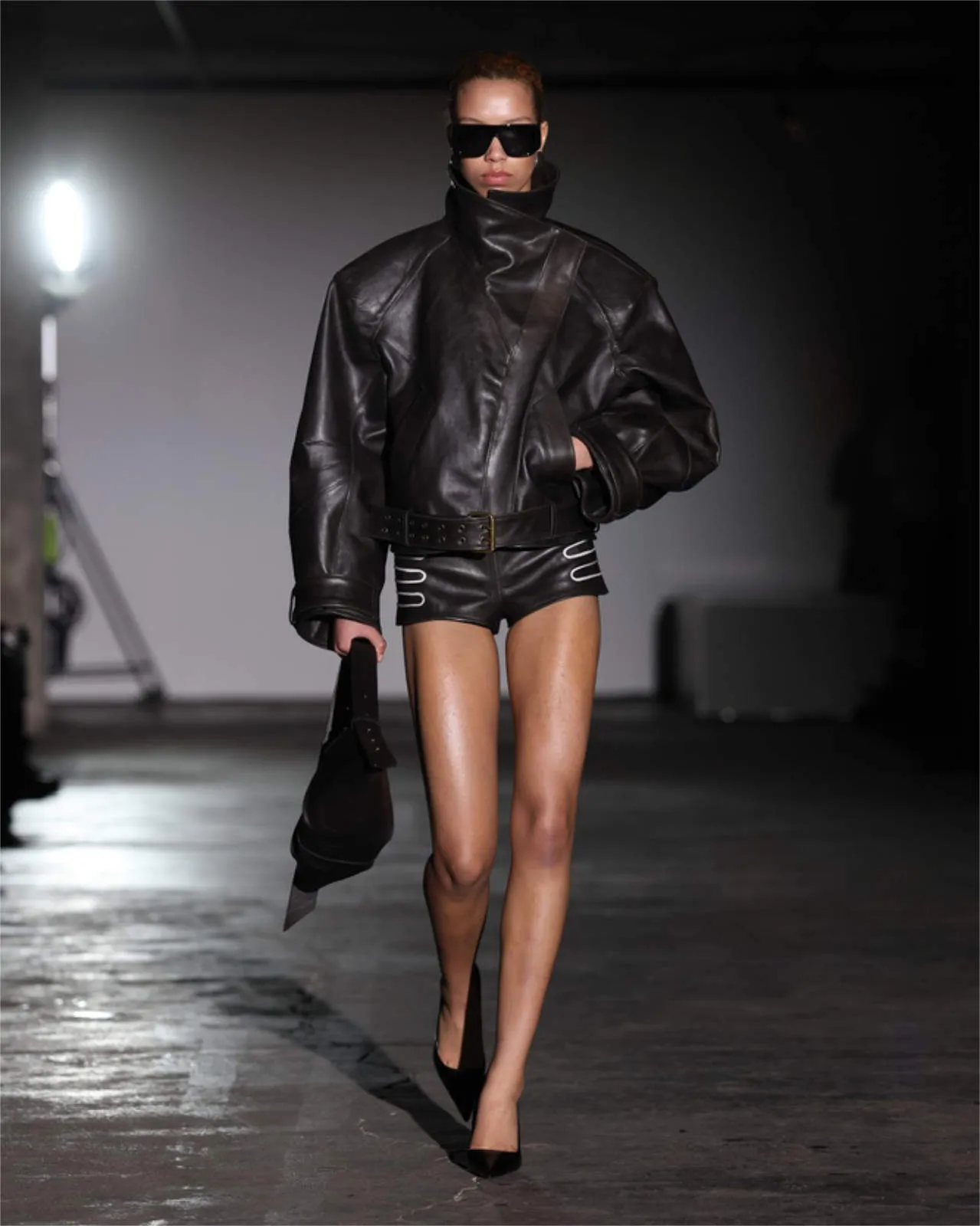
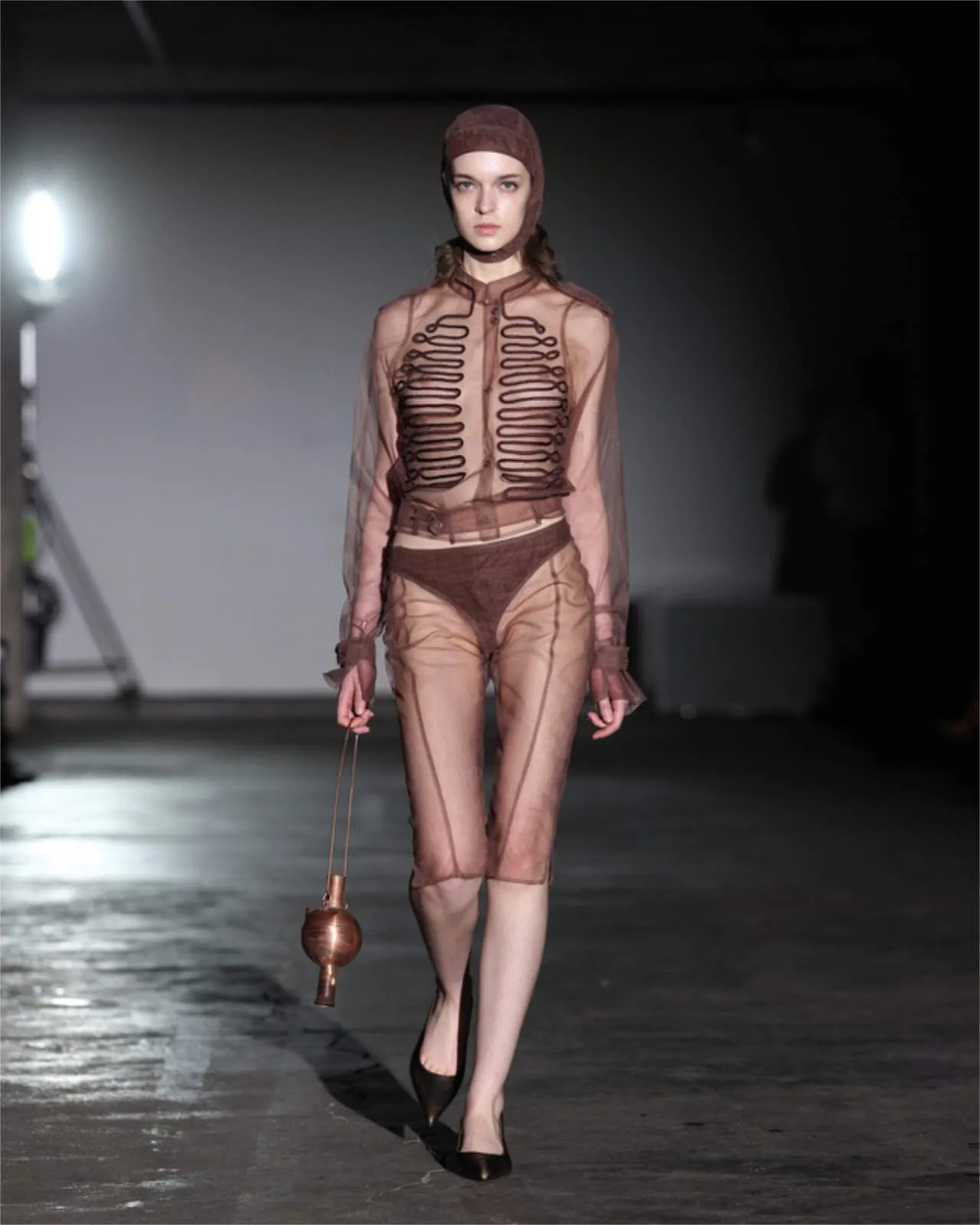
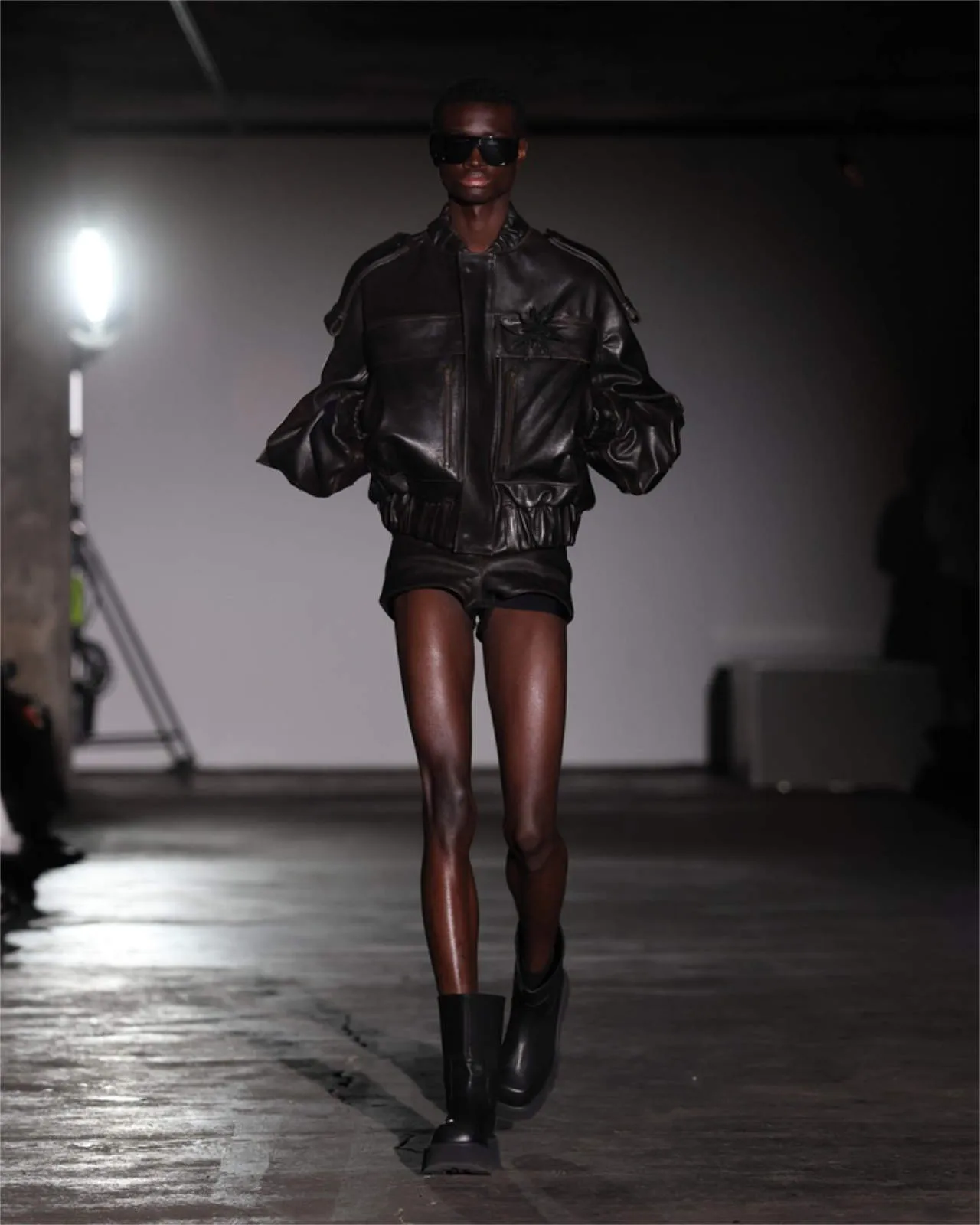
Looking inward resulted in a sensual mix of Brutalist elements and architectural shapes, paired with elegant, soft, and subtly rebellious pieces. Some looks felt apocalyptic yet wearable; others explored the tension between severity and sensitivity. There was a black dress with a wide hood and Napoleonic jackets in white leather or transparent mesh. There were indie sleaze rock star touches like black sunglasses, leather jackets, and bootleg cut denim. A dark green coat with a dramatic long train. To deepen the experience inside the Feuerle Collection, a former Second World War telecommunications bunker, Friedrichs collaborated with Ryoke on a scent installation. Models carried incense burners that released the fragrance layer by layer until the space was completely filled with the self-developed scent. It pulled the audience into a world where military roughness met spirituality, where familiarity and estrangement existed side by side, and where personal identity took centre stage.
Haderlump
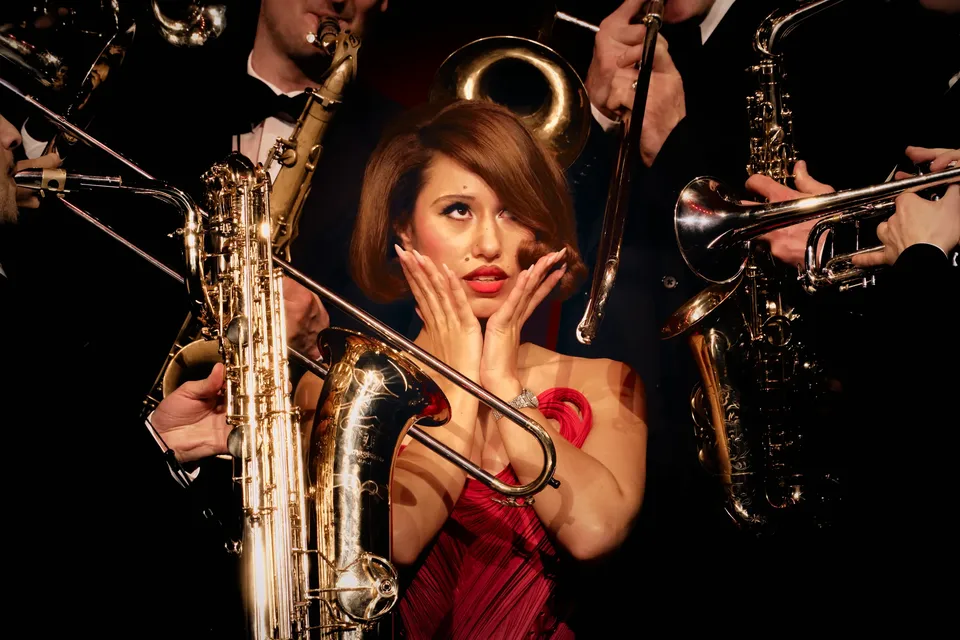
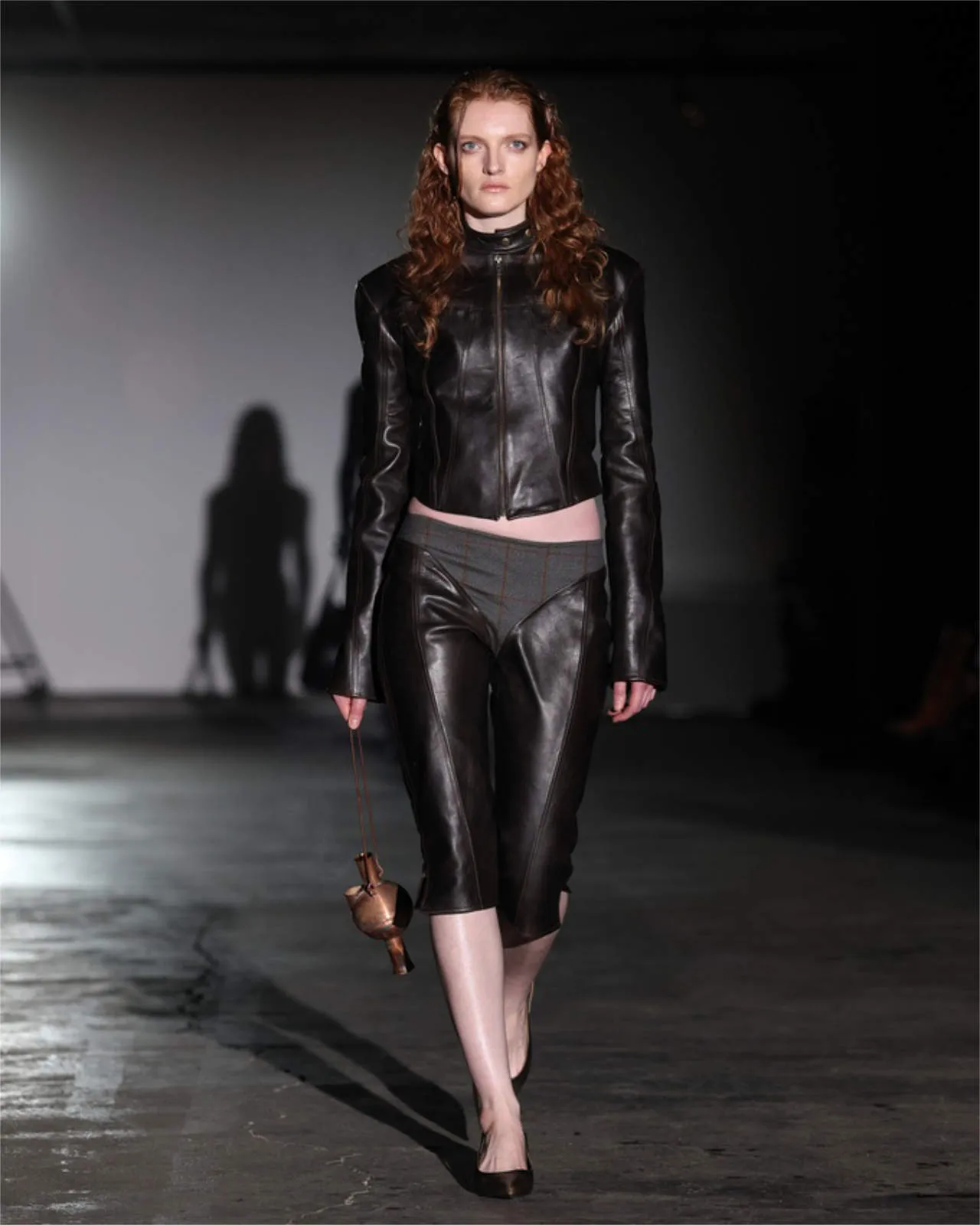
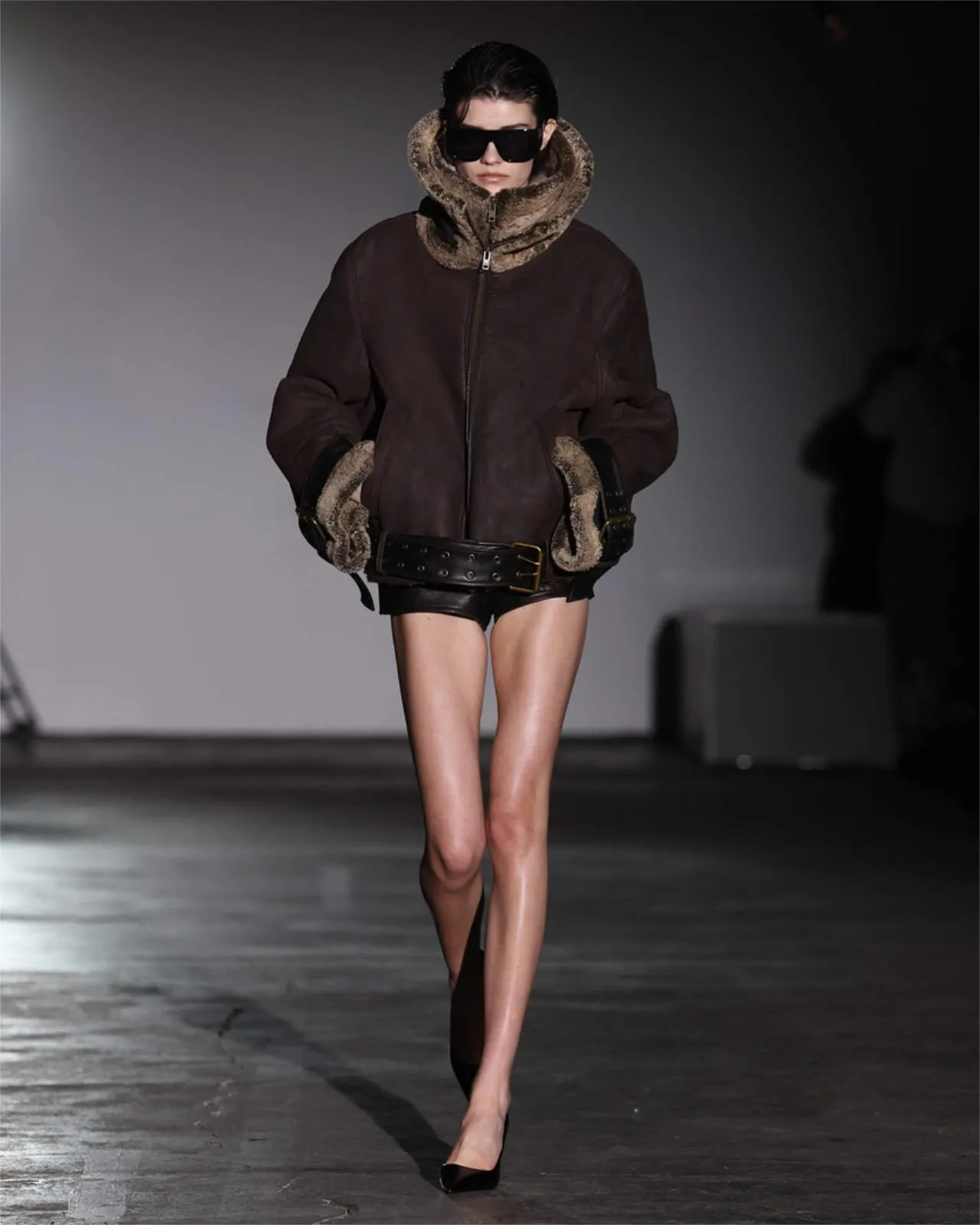
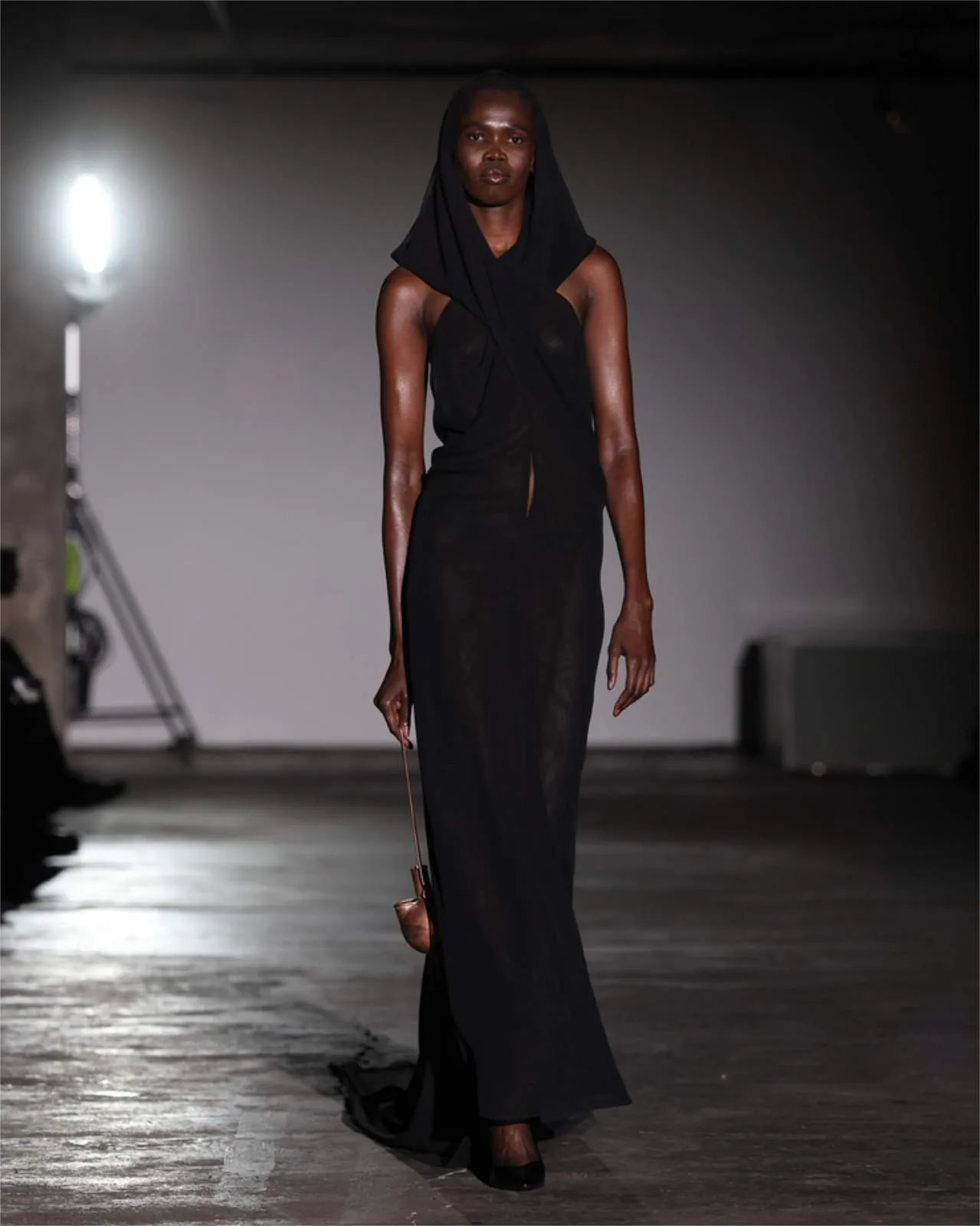
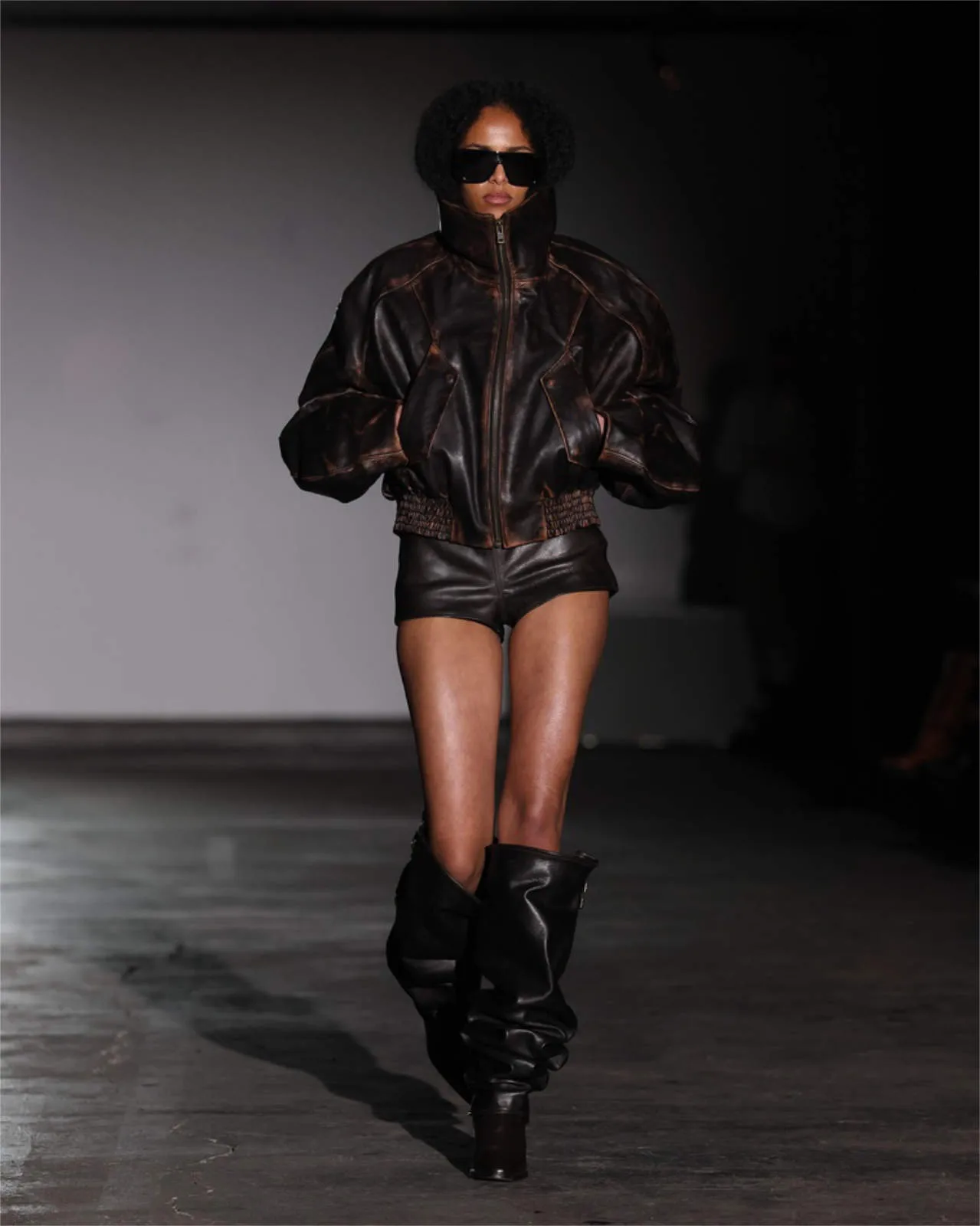
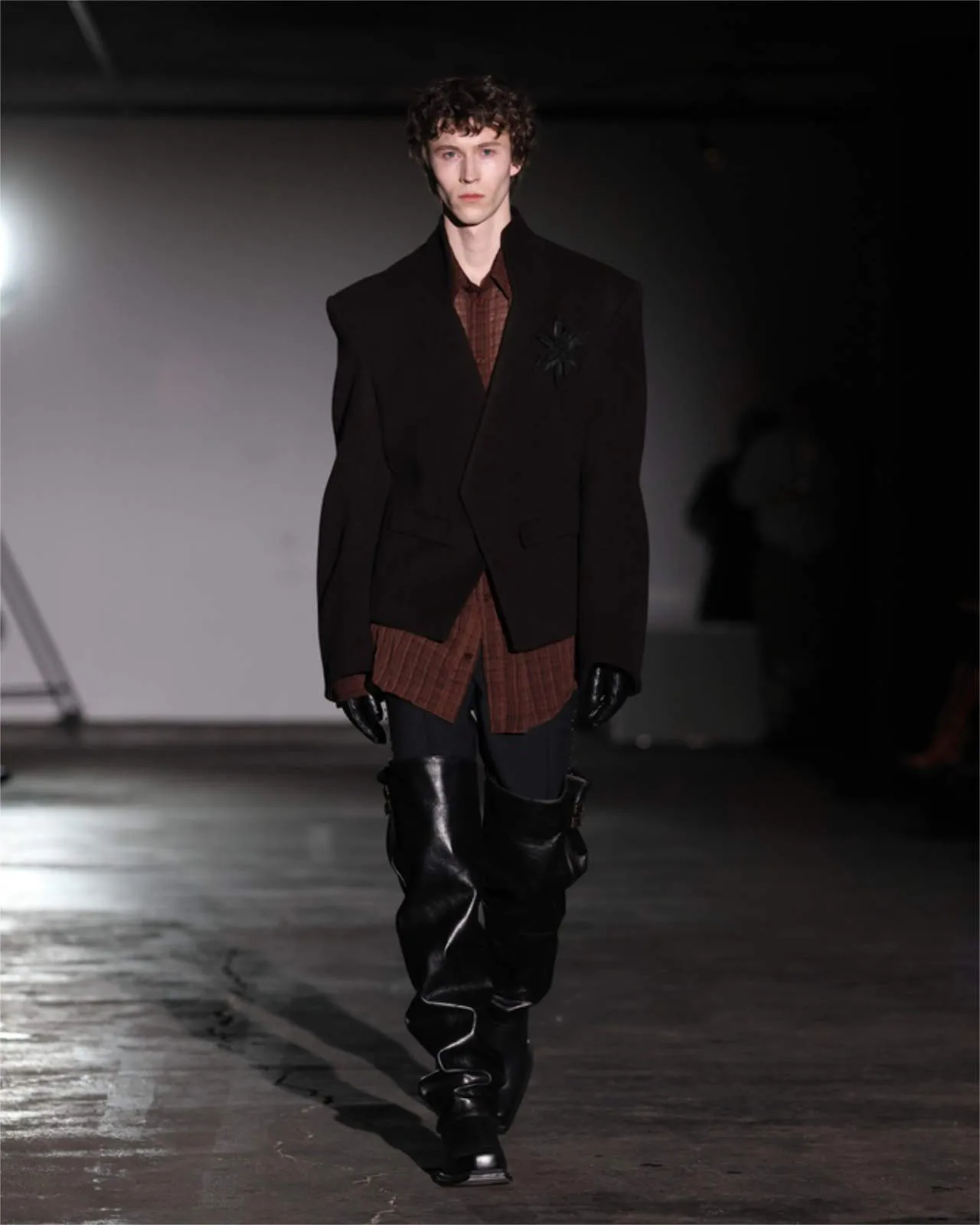
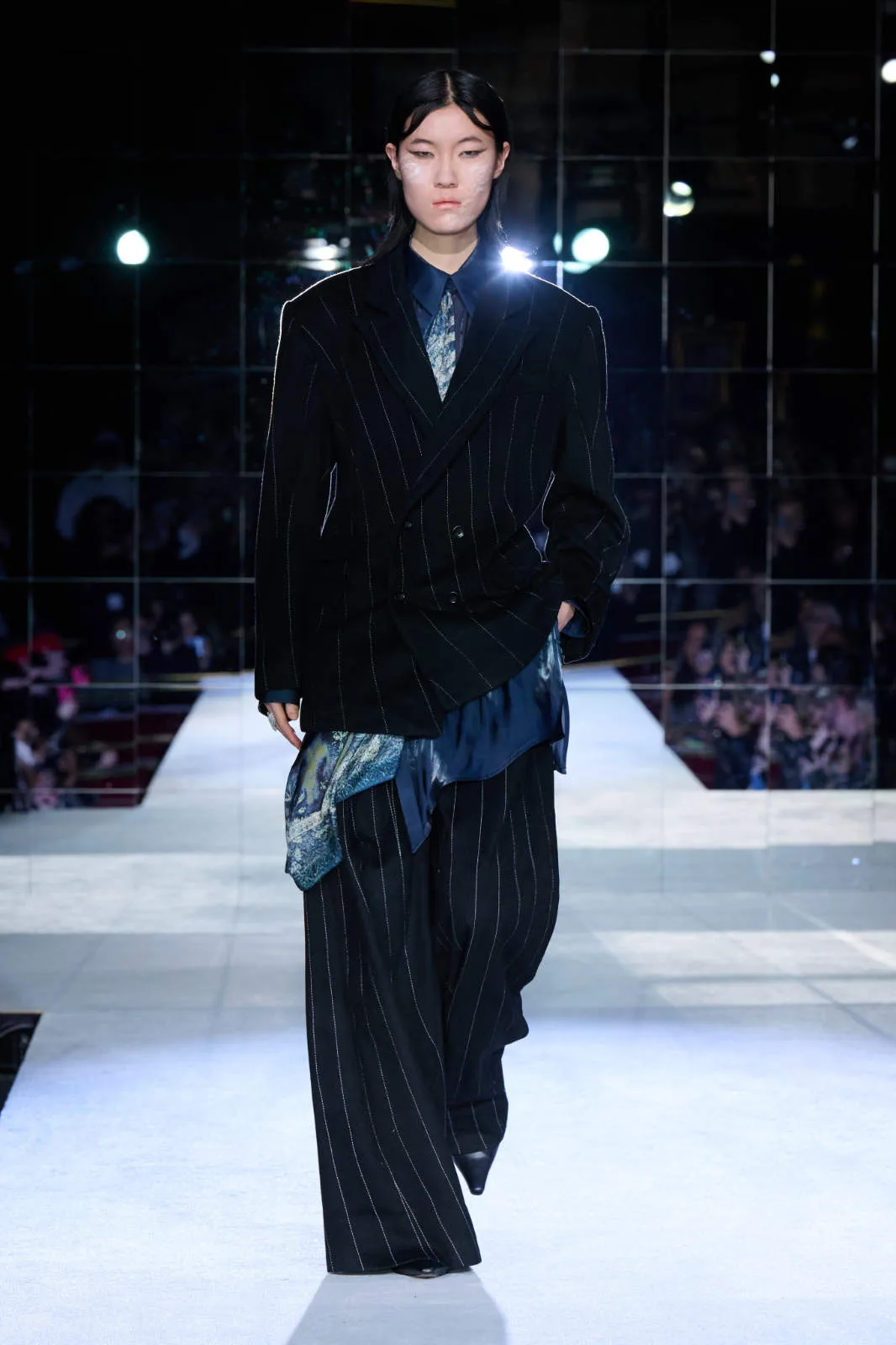
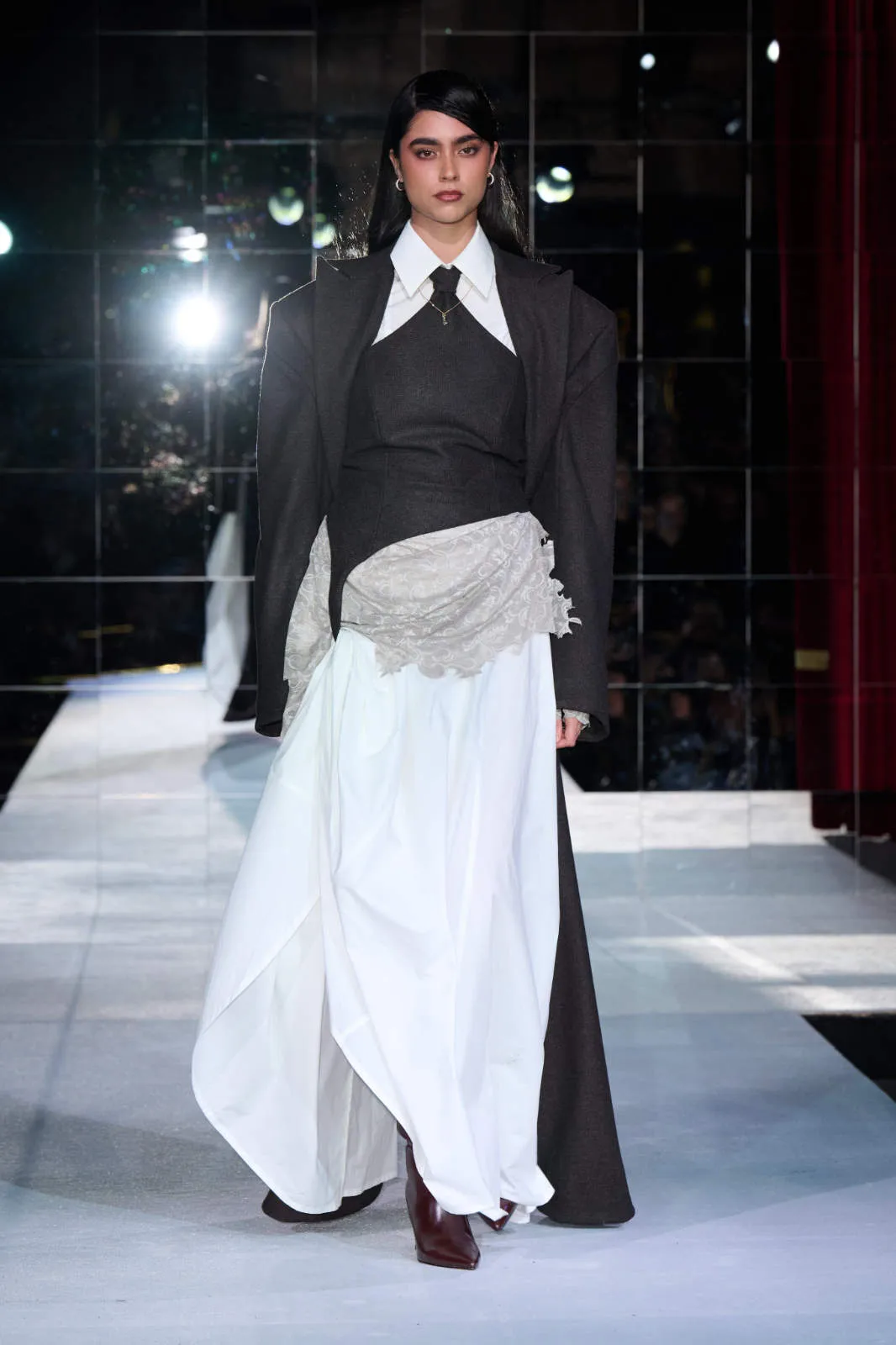
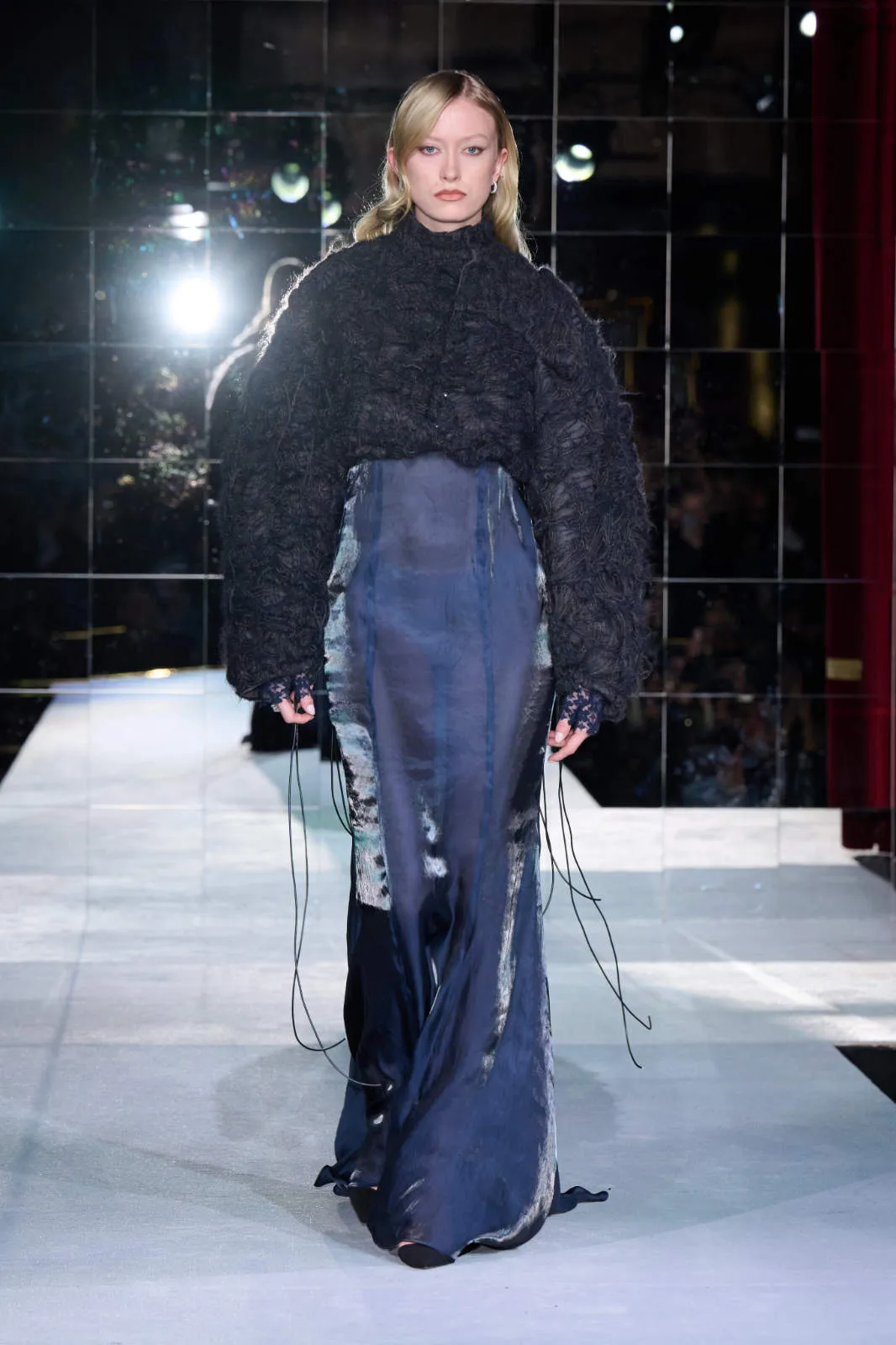
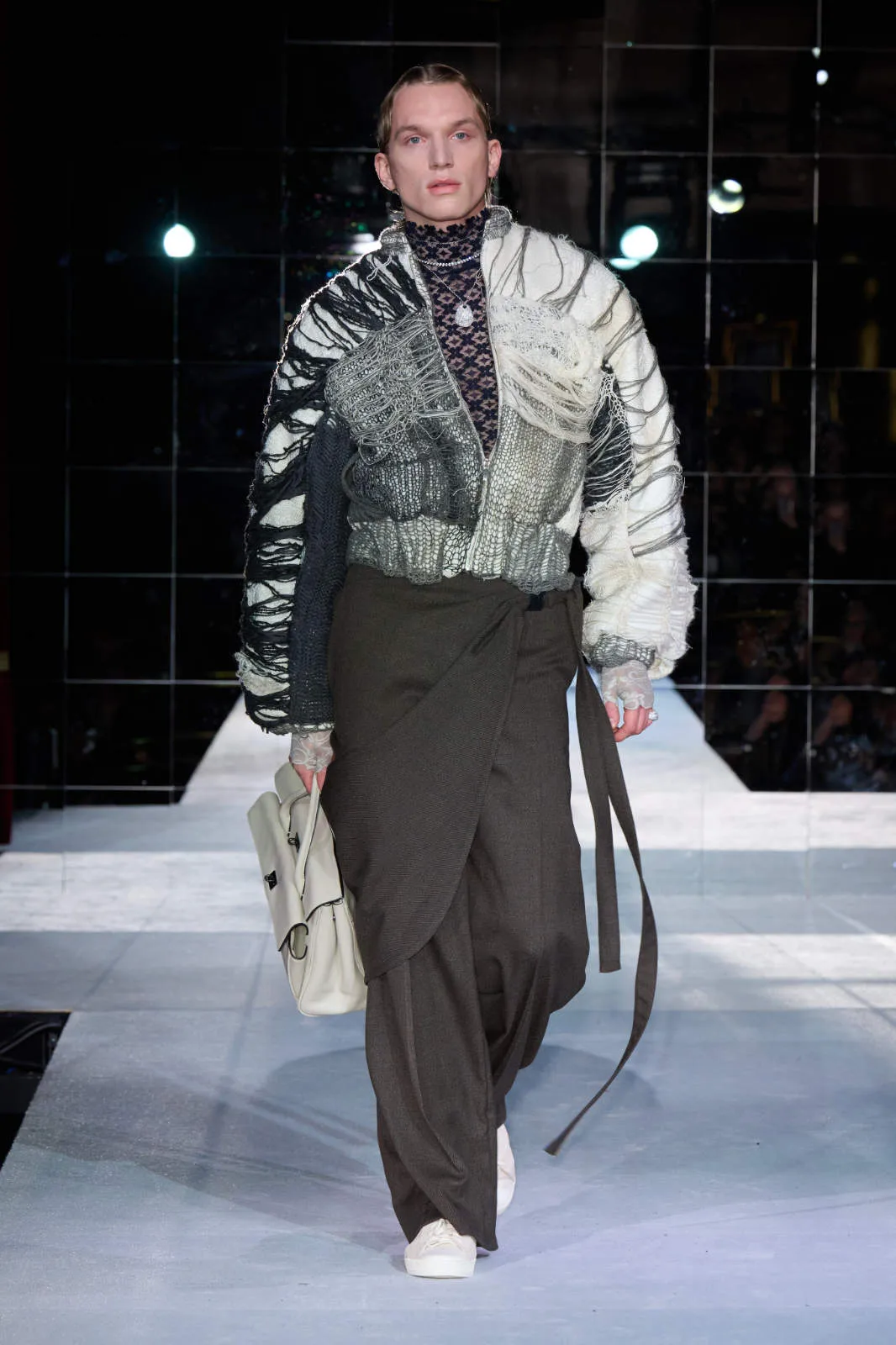
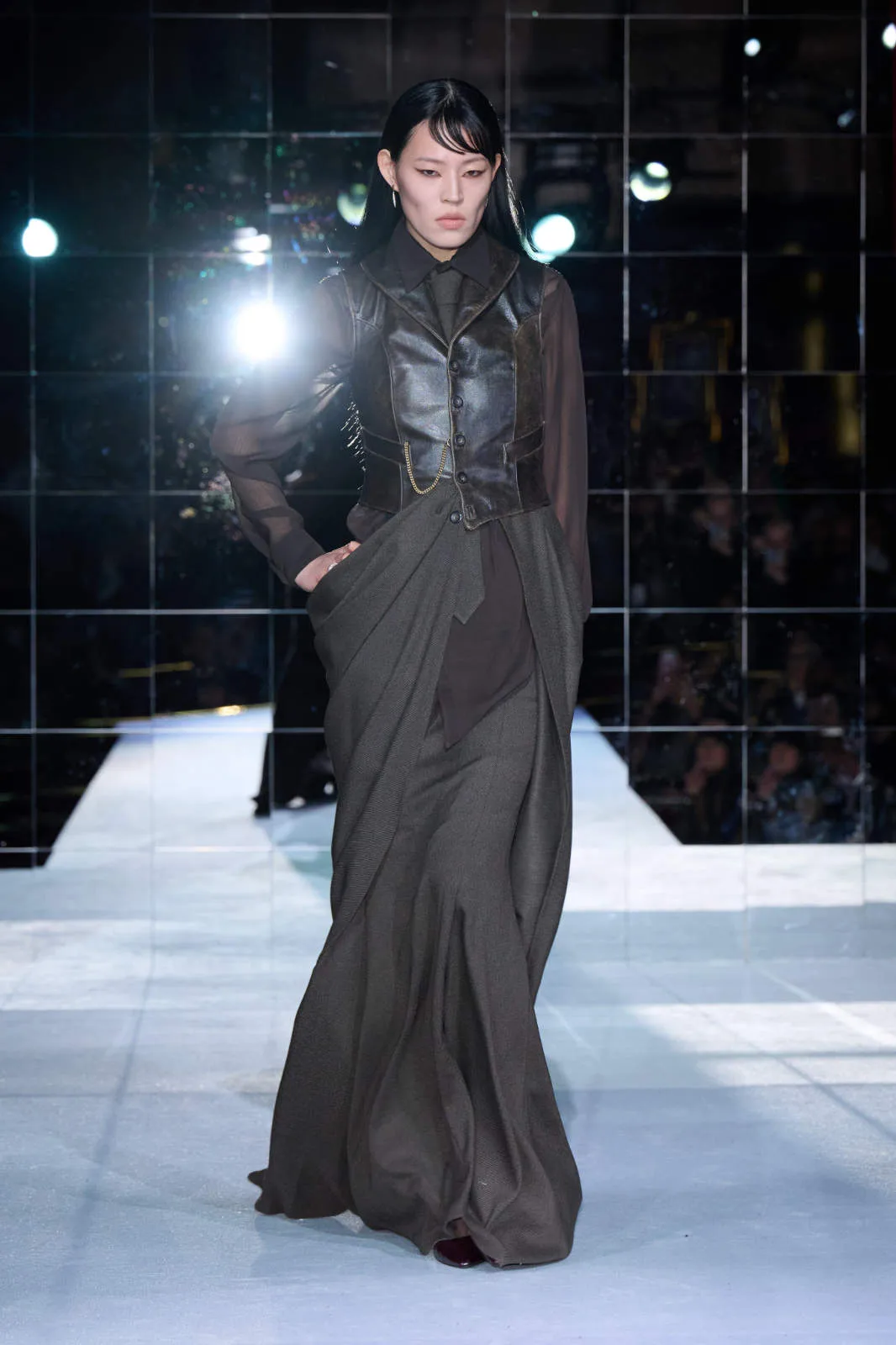
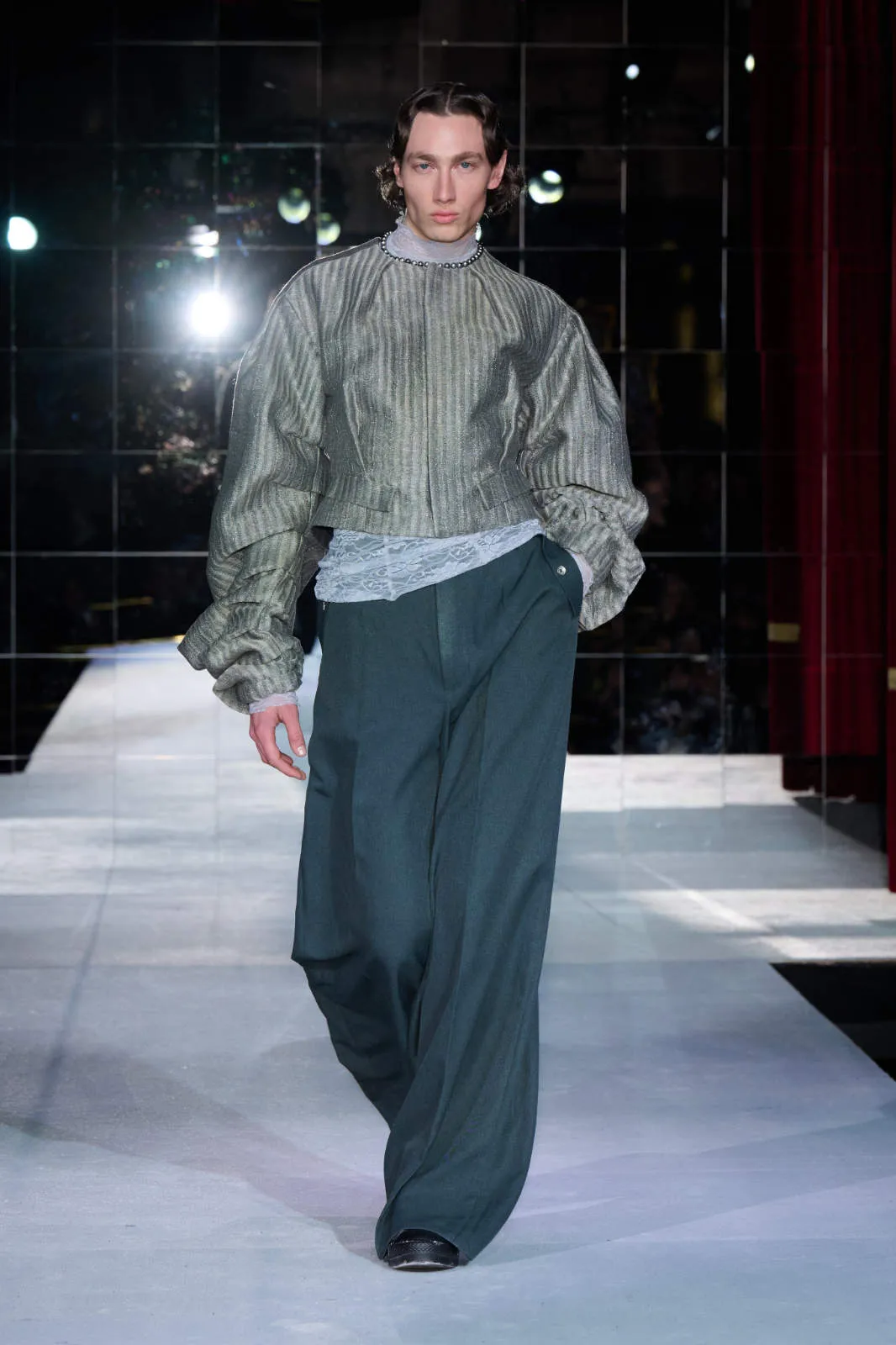
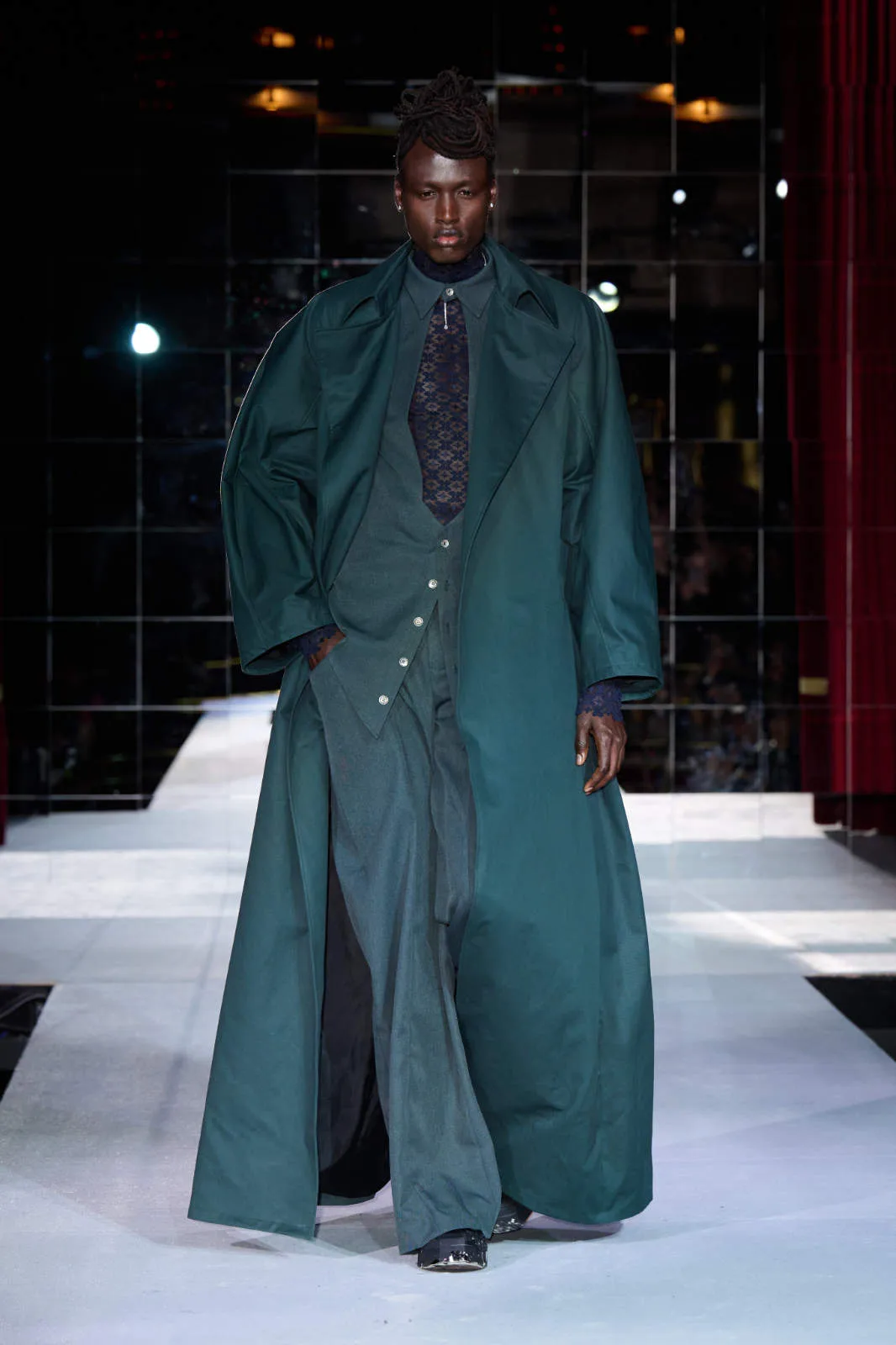
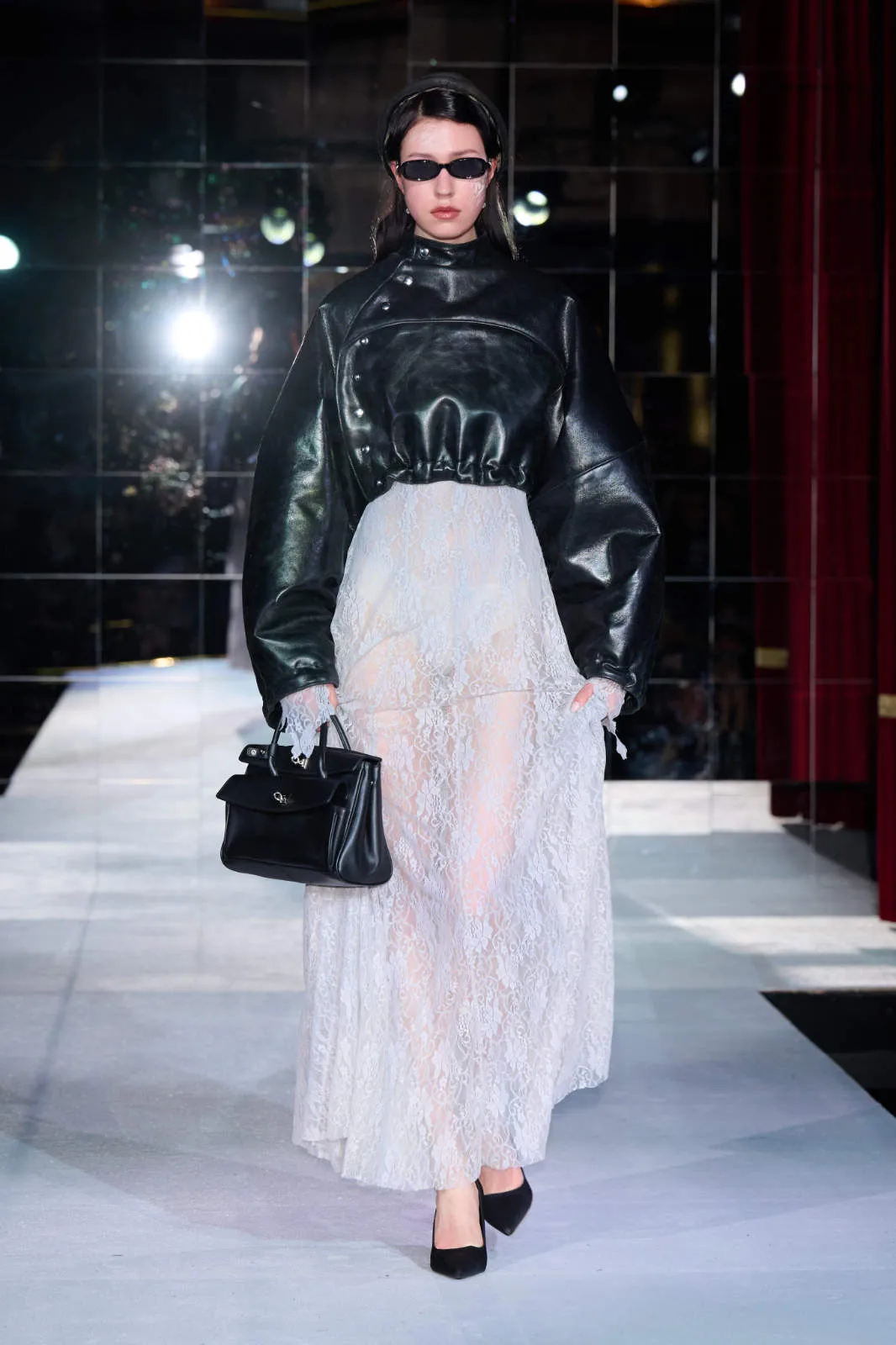
Haderlump has been a strong presence on the official Berlin Fashion Week calendar since 2023. Over the years, the brand has collaborated with DHL, staged shows in front of an aeroplane at the former Tempelhof airport, and presented collections in an empty subway tunnel. Dark looks with hoods, flowing silhouettes, wide shoulders, and strong characters have become part of their signature. And with each season, the brand seems to sharpen its vision, this one included. Titled Varius, Latin for 'different' or 'various', the show at the historic Wintergarten Varieté in the west of Berlin marked a clear level up. This time, the focus was entirely on well-made tailoring, drawing inspiration from none other than Marlene Dietrich.
The German-American actress and singer is remembered for living freely and unapologetically, provoking on stage and refusing to conform to gender norms. Refusing to be put into a box. To reflect that visionary spirit, the collection showed elegant, traditionally feminine gowns alongside wide trousers. There was lace paired with leather, denim, and heavy wool. Muted tones of grey, cream, brown, and black were occasionally interrupted by accents of red and blue, noticeably more colour than Haderlump usually allows itself. Models walked slowly across the stage of the old variety theatre (where Dietrich herself once performed, by the way), framed by velvet curtains and centred by a huge mirror. The runway became a space where versatility was celebrated, from public performance to private identity, and a loud, stylish reminder of how important such spaces still are, especially in a city where they cannot be taken for granted anymore.
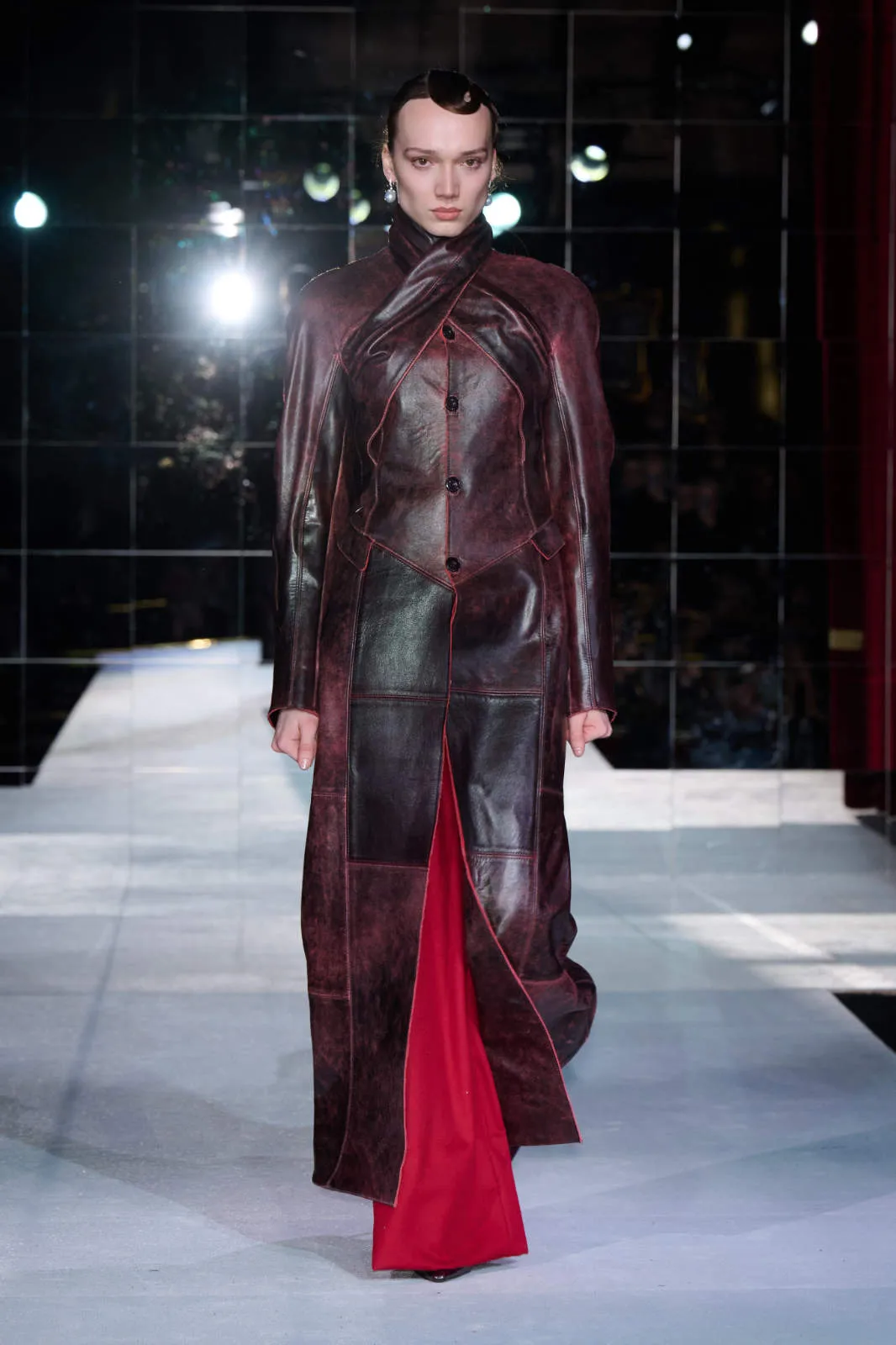
Marke
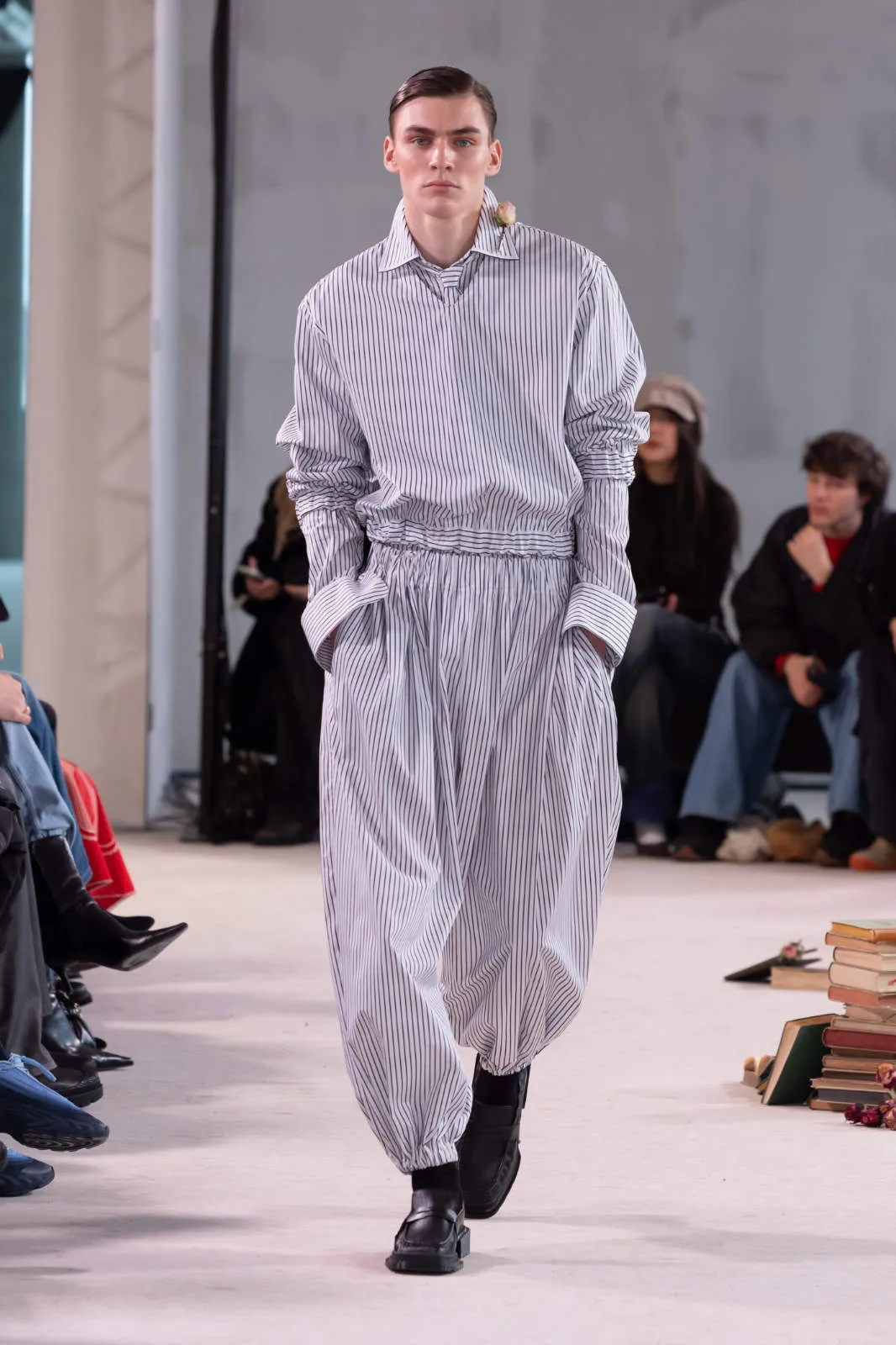
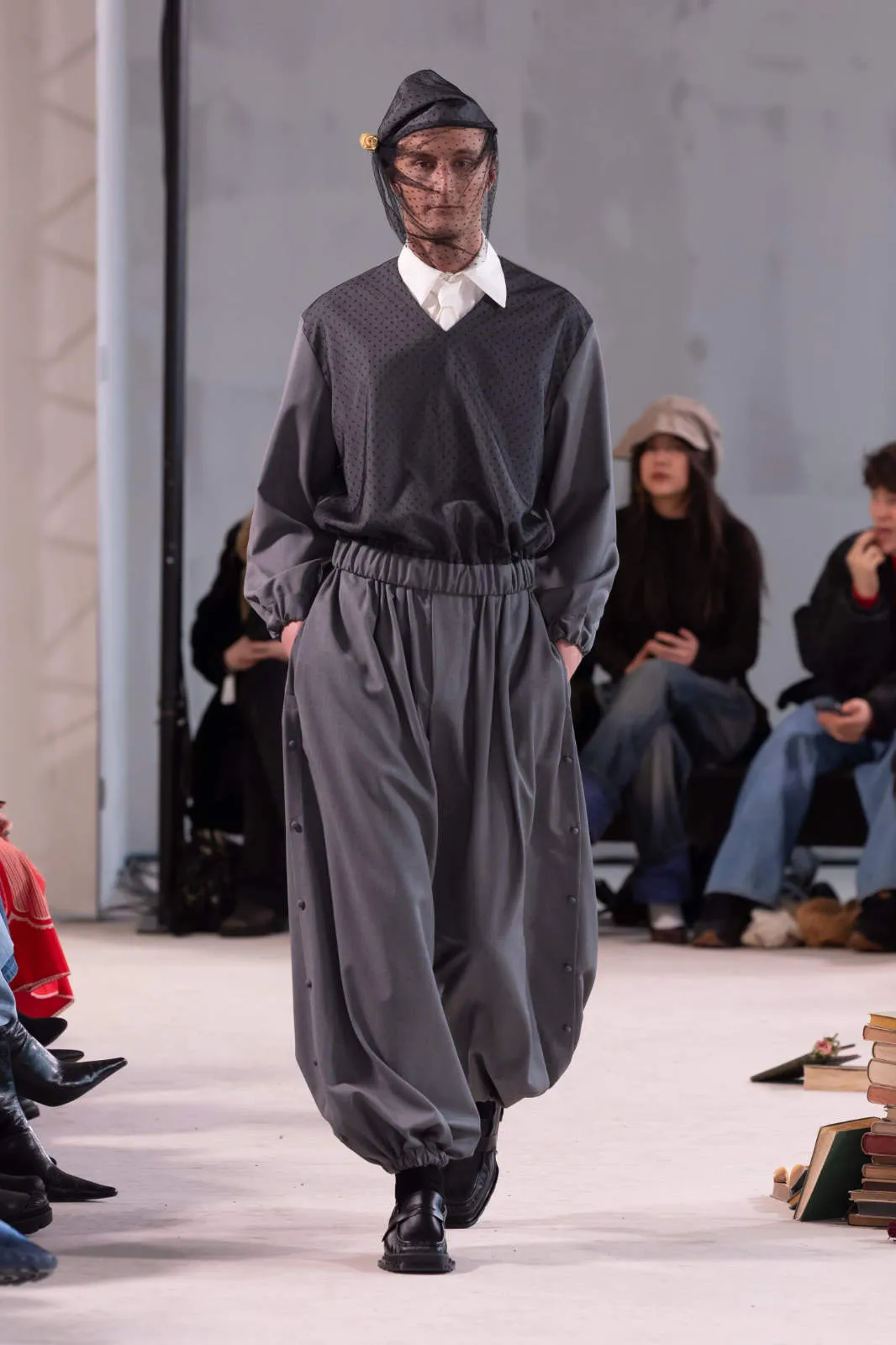
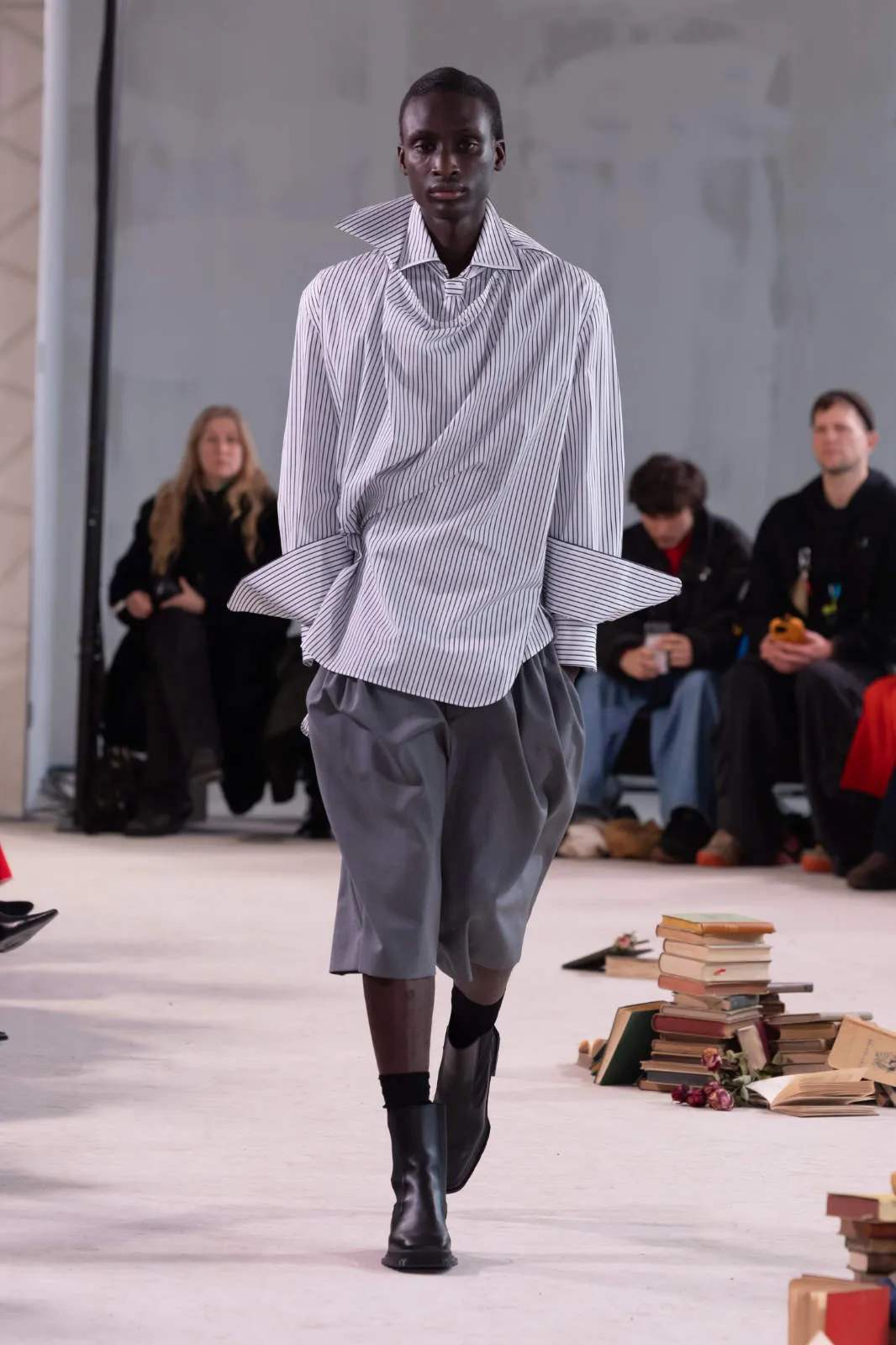
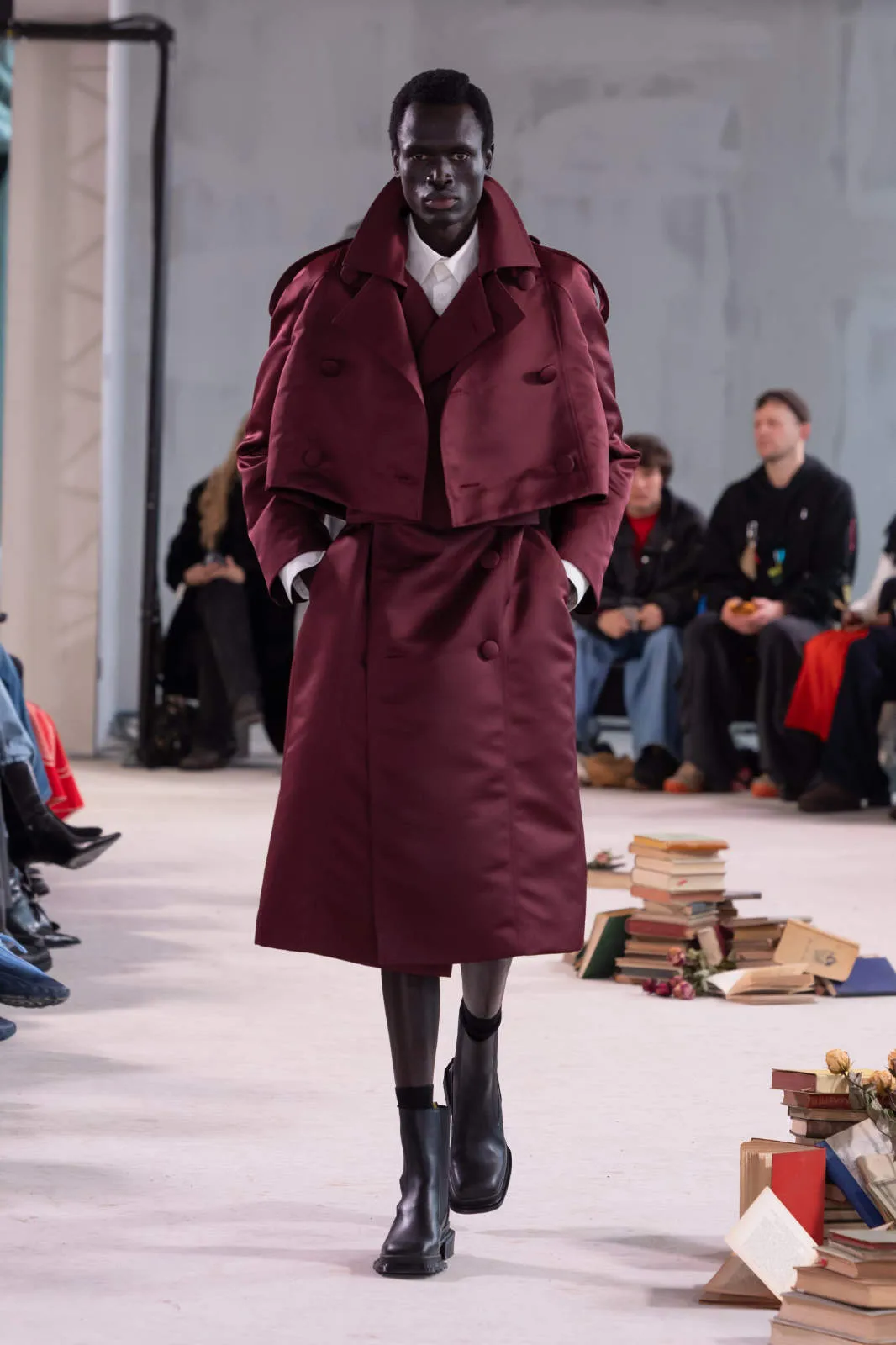
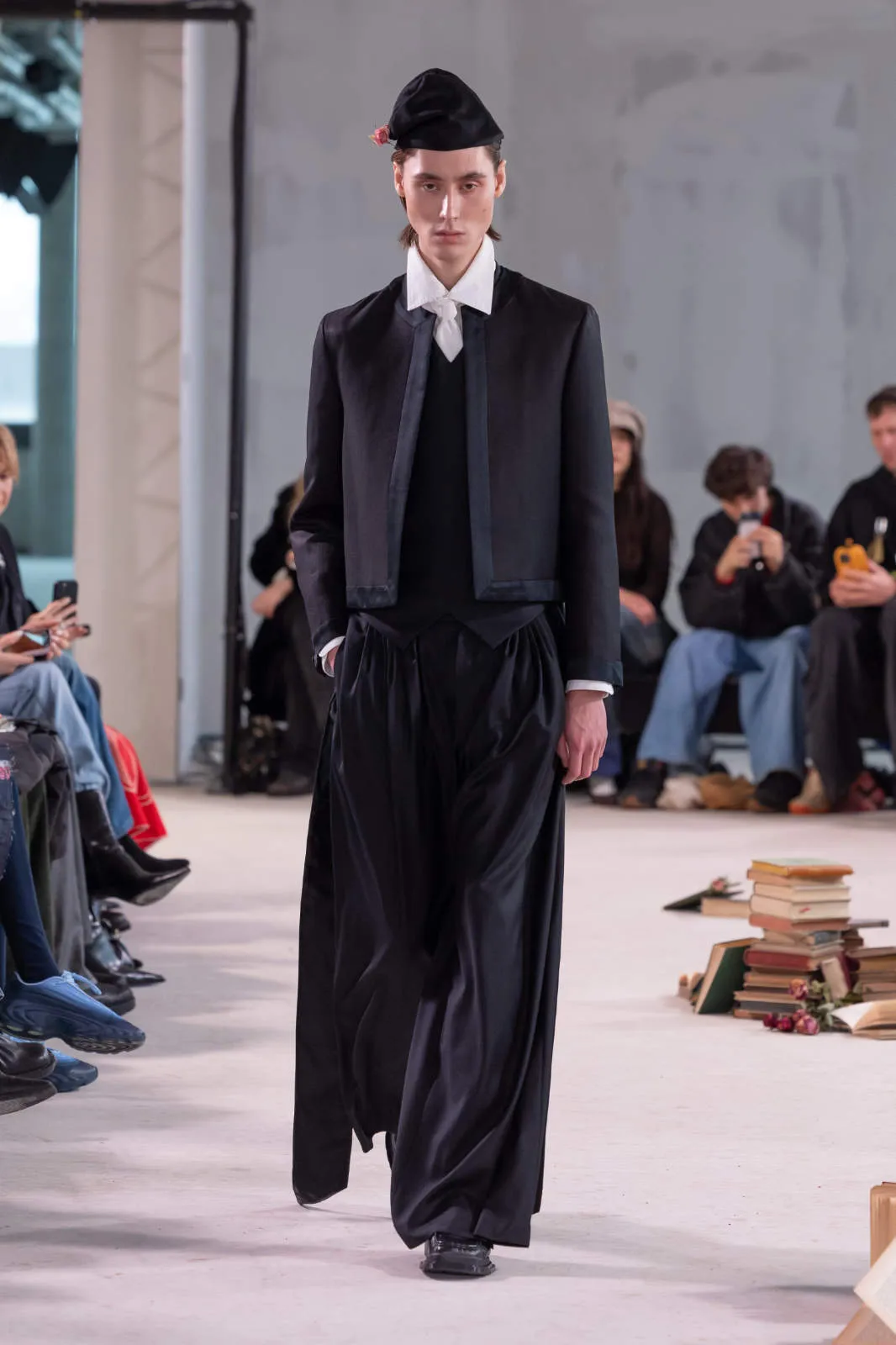
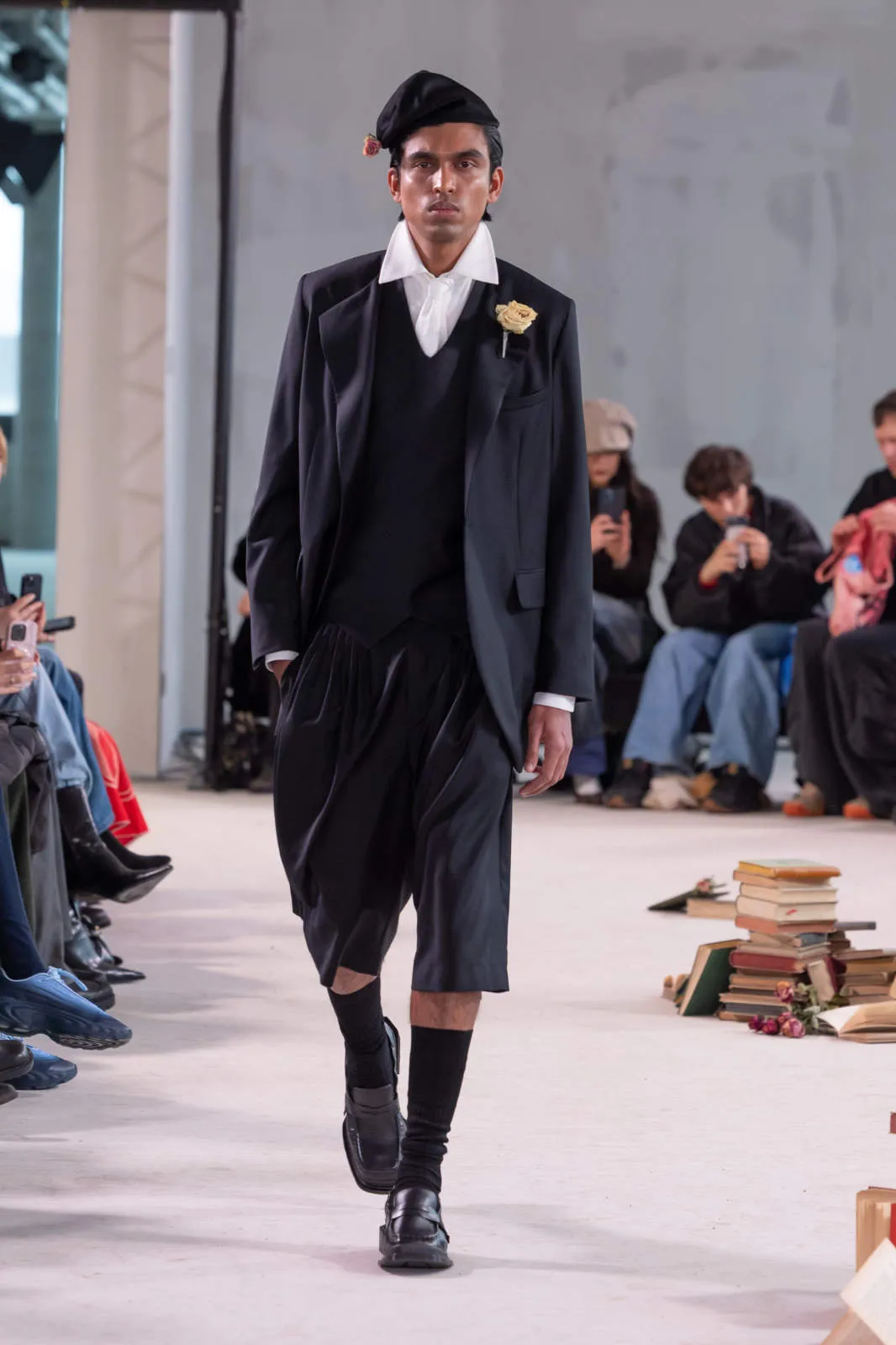
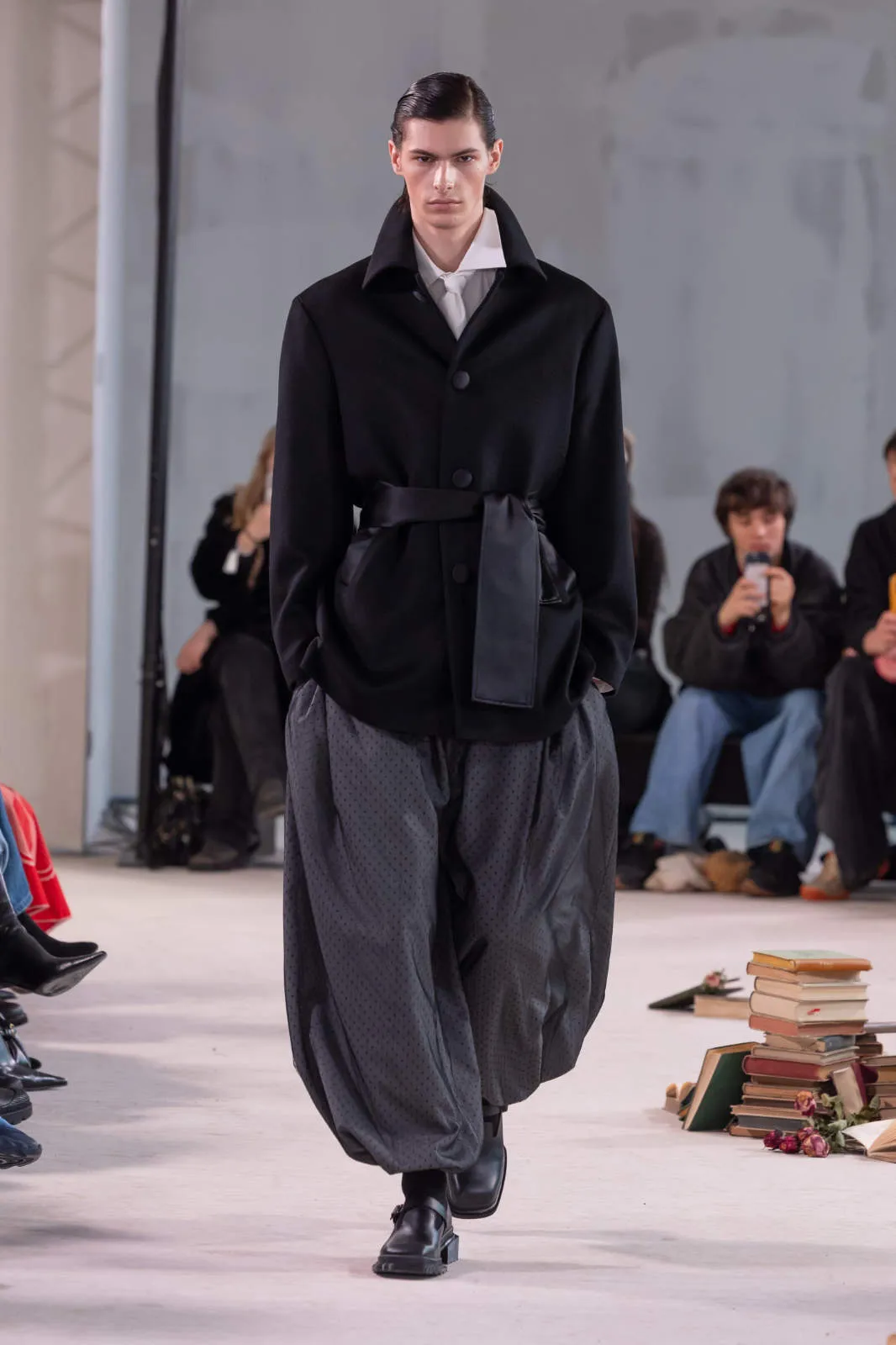
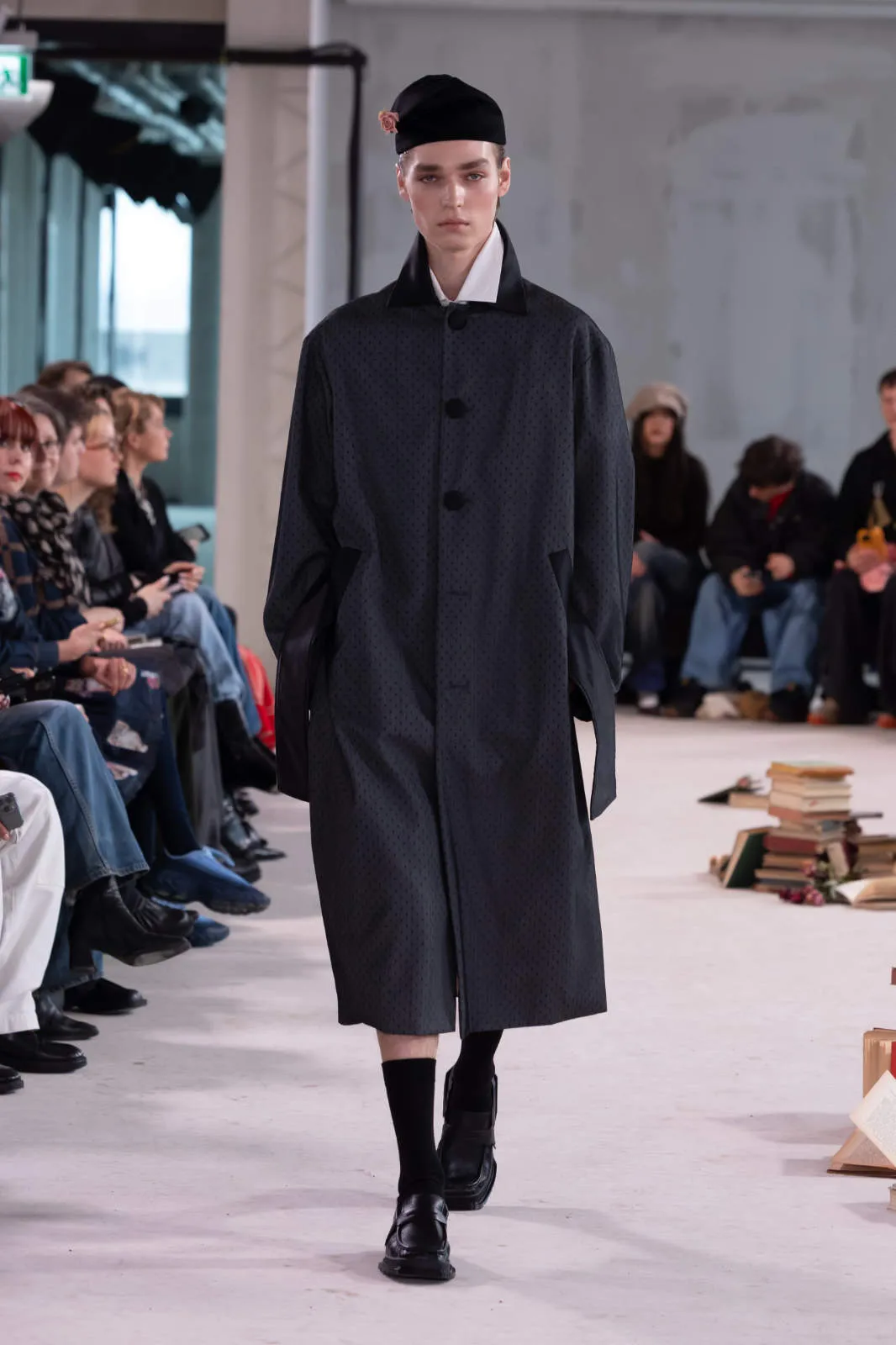
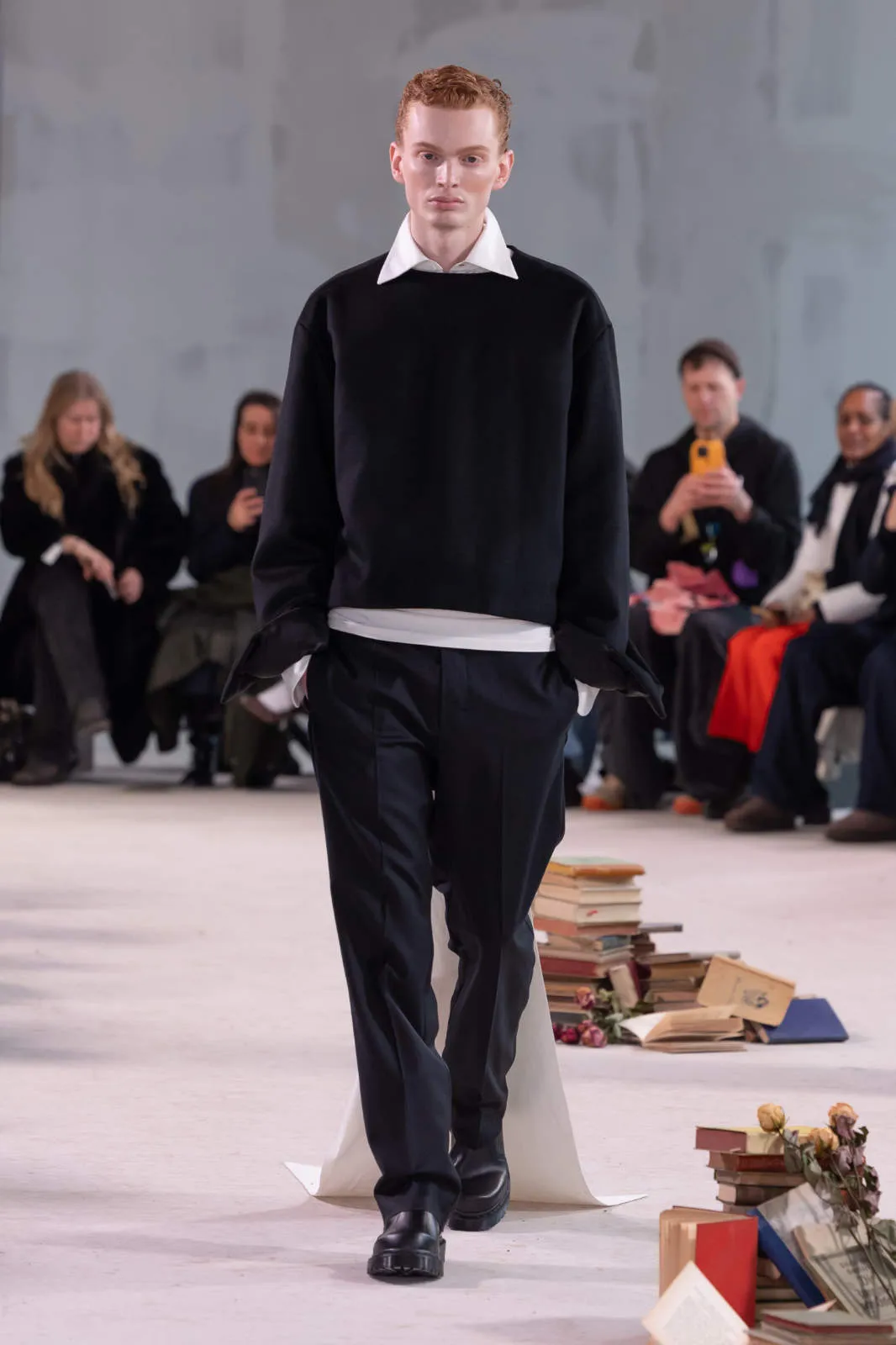
When entering the location for Marke’s F/W 2026 show, you could immediately notice one thing. Old books and dried flowers were piled up on the floor. A symbol of fading beauty and excess. Because the main inspiration for this collection, titled The Owl, was the feeling of helplessness and disbelief in the face of endless information and misinformation. It reflected a world where knowledge is abundant yet rarely questioned, where scrolling never ends, and where unreason and division feel eerily reminiscent of the pre-Enlightenment era.
From that sense of unease, Marke built a collection that balances history and reflection. Referencing late Rococo decadence and classical menswear, hinting at Neo-Rococo social elitism and performative hedonism. There were slimmed suits with traces of volume with delicate polka-dot tulle overlays, veils, and hats adorned with just a single rose. Fabrics were rich, substantial, and considered: Australian Merino wool, cashmere, silk duchesse, and striped cottons, while the colour palette stayed sober through mainly greys, eggshell, and black. Dressed in that way, the models slowly strolled around these tiles of books and flowers, somehow reminding one of sad sailors, yearning for a reality that is grounded by poetry, thought and knowledge. And to be honest, we get it. Consuming and spreading misinformation is a sad business. And a dangerous one as well.